The Daily Grindhouse: The Town That Dreaded Sundown (dir. by Charles B. Pierce)


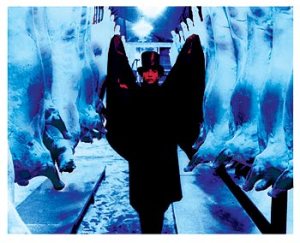
Down here in Texas, we love our legends and the Phantom Killer is one of the most haunting.  In 1946, as American soldiers were returning from World War II and the country was looking forward to a future of peace and prosperity, an unknown killer stalked the moonlit streets of my former hometown of Texarkana, Texas.  (Technically, of course, Texarkana is located in both Texas and Arkansas.  In Texas, it’s usually assumed that the killer had to be from the Arkansas half of the town.)  From February until May, he attacked 8 people and killed 5 of them.  He stalked lovers who were parking at night and those that survived said that he hid his face underneath a white mask.  Despite the best efforts of both the Texas Rangers and the Texarkana police, the Phantom Killer was never captured and his reign of violence ended just as mysteriously as it began.

(My personal theory is that he ended up moving to California where he later became the Zodiac killer because, seriously, the two cases are so disturbingly similar.  Eventually, he left California and moved to Ohio and, living under a false name, he killed himself in 2002. )

When you read the facts of the Phantom Killer’s murder spree (not to mention all of the rumors and urban legends that have sprung up around the case), the main thing that jumps out at you is just how much it all truly does sound like a low-budget horror film.  Therefore, it’s not surprising to discover that, in 1976, the case served as the basis for just that.  What is surprising is just how effective The Town The Dreaded Sundown is.

The film was directed by Charles B. Pierce, an independent filmmaker who was based in Arkansas.  Pierce had previously directed The Legend of Boggy Creek, a “documentary” that was about the mysterious Bigfoot-like creature who is rumored to live in Fouke, Arkansas.  (Fouke, incidentally, is a town that my family briefly called home though none of us ever saw or heard any Bigfoots wandering about.)  Using the money that he made off of the Boggy Creek film, Pierce wrote, directed, and produced The Town The Dreaded Sundown.

Using the same technique that made The Legend of Boggy Creek such a success, Pierce filmed The Town That Dreaded Sundown on location in Texarkana and, along with established actors like Ben Johnson, Andrew Prine, and Tina Louise Dawn Welles, Pierce cast the film with local citizens.  When seen on screen, it’s obvious that these citizens are not professional actors.  However, what they may lack in talent they make up for authenticity.  (If nothing else, The Town That Dreaded Sundown is a rare Texas-set film in that it doesn’t feature any yankees butchering the dialect.)  The fact that the film is narrated by a grim-sounding narrator only adds to the film’s documentary-like feel.

Admittedly, the film does take some liberties with the story of the Phantom Killer but what’s important is that it’s accurate when it matters.  The film gets the basic facts correct and even the most outlandish of embellishments (such as a scene where the killer uses a trombone to kill one of his victims) don’t detract from the film’s power to frighten and disturb.  If nothing else, these feel like the type of details that one might spontaneously mention while telling an old ghost story.  Unlike a lot of “true crime” films, The Town The Dreaded Sundown never devotes too much time to trying to figure out the killer’s motives or drop hints as to his identity.  Instead, the film emphasizes the fact that the Phantom Killer could never be understood and was never stopped.  He simply existed, a malevolent force of evil.  This makes the film far more effective than it would have been if Pierce had spent the movie trying to explain that which can not be explained.

Unfortunately, The Town That Dreaded Sundown has never been released on DVD but it does show up occasionally on TCM.  Keep an eye out for it!

Film Review: Gabriel Over The White House (dir. by Gregory La Cava)


This is a strange one.

Released in 1933, Gabriel Over The White House is an unapologetic work of propaganda.  It tells the story of President Judson Hammond (Walter Huston), a likable but unimpressive political hack who seems to be blissfully unconcerned with the fact that, as the film begins, the country is mired in an economic depression, crime is out of control (largely as the result of the prohibition of alcohol), and the world is teetering on the edge of another world war. 

As the result of a suspicious car crash, Hammond spends several days in a coma.  When Hammond finally wakes up, he is a changed man.  Not only is he personally more aggressive but he now sometimes seems to be listening to a voice that only he can hear.  His secretaries even catch Hammond apparently talking to himself.  A lot of people would probably suggest that this indicates that Hammond may be going crazy but, in this film, they instead speculate that perhaps he’s talking to (and taking his orders from) the angel who is responsible for bringing him out his coma.  “Gabriel over the White House,” as one of them puts it.

Whether as a result of divine guidance or his own personal psychosis, Hammond quickly sets out to solve the country’s problems by setting himself up as a dictator.  He declares martial law, dissolves Congress, and announces that, from now on, all laws will be made by him.  Instead of legalizing alcohol, he announces that only the government will be allowed to sell it and he deals with poverty by redistributing everyone else’s money.  He also starts a new national police force  that arrests any and all dissenters.  These dissenters are charged with treason and tried by a military tribunal.  Those found guilty are immediately executed.  While delivering one guilty verdict, Judge Franchot Tone takes the time to praise President Hammond for suspending all legal rights.

Here’s the thing that makes this film so different and disturbing.  The movie is totally and completely on the side of President Hammond.  Walter Huston plays the role with a Lincolnesque sort of gravity and the film’s supporting cast spends most of their time assuring us that things have never been better than they are under Judson Hammond’s dictatorship.  In short, this is an American film that says that what the country needs is a dictator who will unite the country by blaming every problem on one group of scapegoats and execute anyone who shows the slightest hint of dissent.

(Even more interestingly, Gabriel Over The White House premiered the same year that Adolf Hitler came to power in Germany.)

This being an election year, it’s tempting to try to draw some sort of parallel between Gabriel Over The White House’s pro-dictatorship message and our own current political situation.  That’s especially true for someone, like me, who naturally distrusts any type of authority.  And I have to admit that, as I watched the film, I did find myself comparing the fictional President Hammond to both a certain real-life president and a certain presidential candidate who, like their cinematic counterpart, often seems to be rather smug in their belief in their own moral superiority. 

But, to be honest, it’s difficult for me to compare Gabriel Over The White House to our current situation because Gabriel Over The White House is so heavy-handed and just so weird that it’s difficult to take seriously.  It’s not so much the idea that a President would become a dictator as much as it’s the fact that, with the exception of a few millionaires and a few bootleggers, nobody else in the film seems to be too concerned about this.  This is a propaganda film.  There’s no room for ambiguity and that lack of ambiguity makes it difficult to take the film seriously as anything other than just wish-fulfillment on that part of elitists who are sick of having to deal with the opinions of those outside of their social circle.

Even while advocating the type dictatorship that would soon be epitomized by the likes of Hitler, Mussolini, and Stalin, Gabriel Over The White House was one of the many pacifist-themed films that were released between the two world wars.  We’ve grown so used to the idea of the world being perpetually at war that it’s easy to forget that, long ago, the world was actually so horrified by the first World War that a lot of very serious, powerful, and intelligent people dedicated themselves to trying to figure out a way to ensure that there would never be another one.  Just as films today are obsessed with environmentalism, the films of this earlier period were obsessed with world peace.  While some films advocated world government and many attempted to recreate the horrors of World War I as the ultimate deterrent, Gabriel Over The White House might be unique as one of the only American films to suggest that world peace could best be achieved by dictatorship.

(It’s interesting to compare these old pacifist films — even vaguely disturbing ones like Gabriel Over The White House — to the current political climate in the United States, where our leaders brag about personally choosing who to kill from week to week.) 

As I stated at the start of this review, Gabriel Over The White House is a strange film.  In fact, it’s one of the strangest films I’ve ever seen.  It’s also an invaluable resource for anyone who is fascinated with history.  It’s a true look into the psyche of a proud nation that’s confidence had been shaken by the twin calamities of war and economic depression.  Watching a film like this, which seems so desperate to try to convince us that not only can the world’s problems be solved but that they can be solved by following a set of very specific steps, it’s a little easier to understand how desperate and shaken people can give up their freedom to a dictator who seems to say all the right things.

Gabriel Over The White House is not the easiest film to see put it pops up on TCM occasionally.  (That’s how I saw it.)  It’s a film so strange that it simply has to be seen.

The Daily Grindhouse: Chappaqua (dir. by Conrad Rooks)


At the risk of sounding like every other girl who has ever sat in a corner of Starbucks and spent a few hours writing emo poetry in her Hello Kitty notebook, I love the Beat Generation.  I’ve read all of Jack Kerouac’s novels, Allen Ginsberg’s poems, and William S. Burroughs’ cut-ups.  I’ve even tried to listen to the music of the Fugs and I just recently finished reading the very first Beat novel, John Clellon Holmes’ Go.  It was my interest in the Beats that led to me discovering Chappaqua.

Originally filmed in 1966 and released a year later, Chappaqua was produced, written, and directed by Conrad Rooks.  The son of the president of Avon, Rooks had a lot of money and a lot of addictions.  In 1962, Rooks checked into a European clinic where he detoxed and claimed to have been cured of his drug dependency through something called “sleep therapy.”  Chappaqua is based on his experiences both as a drug addict and a patient and, since Rooks was something of a hanger-on in the American underground art scene, the final film featured cameos from such counterculture figures as Allen Ginsberg and William S. Burroughs.

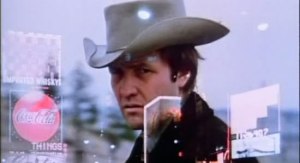
In the film, Rooks plays himself, a young man who is usually seen wandering aimlessly from one location to another.  The film is edited in such a way that you’re never quite sure where Rooks is going to be from one scene to another.  Most famously, the film’s opening features Rooks wandering across the countryside of Nebraska while images (and sounds) of New York’s 42nd Street are superimposed over his face.  Later on in the film, Rooks will just as abruptly turn up walking through the streets of India and meditating with a random guru.  Rooks, it quickly becomes apparent, is a man with no true home, a wanderer who seems to randomly alternate between being lost and being on a mission.

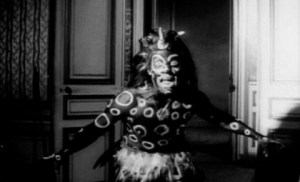
For most of the film, however, Rooks is in a small clinic outside of France.  Along with telling his doctor (played by Jean-Louis Barrault) about how he came to be addicted to drugs and alcohol, Rooks goes through withdrawal and has the surreal hallucinations that dominate the majority of the film.  During one hallucination, Rooks sees himself as a gangster gunning down a midget in a parking garage.  Then, suddenly, Rooks is no longer a gangster and instead, he’s a vampire speaking in an over-pronounced Transylvanian accent.   A druid appears and does a jig in the middle of the Stonehenge and a witch doctor shows up and starts to dance through the halls of the clinic.  Throughout it all, Rooks is haunted by the image of a stunningly beautiful woman (Paula Pritchett) in a white dress, kneeling by a placid lake.  Observing all of this is the menacing figure of Opium Jones (played by William S. Burroughs), who continually encourages Rooks to stay on drugs and who may, or may not, be a figment of Rooks’ imagination.

How to explain the odd (and occasionally frustrating) charm of Chappaqua.  This is truly a pretentious mess of a movie, full of symbolism that is both obvious and willfully obscure.  However, there’s a strange charm to the film’s pretension.  The film may not make much sense but it’s never incoherent.  Largely thanks to cinematographer Robert Frank, the visuals of the film are so strong and striking that they often provide the narrative drive that the film would otherwise lack.  Chappaqua is, ultimately, just a fascinating film to watch.

My main reason for enjoying and recommending Chappaqua, is that the film truly is a time capsule.  Both the film’s strengths and its flaws can be linked back to the fact that it was made in 1966.  It’s a true cultural artifact and, therefore, it is a must-see for anyone who is interested in either the Beats or the counter-culture that was indirectly descended from them.

A Very Late Film Review: Extremely Loud and Incredibly Close (dir. by Stephen Daldry)


Earlier this month, I finally found the time to see Extremely Loud and Incredibly Close, the critically reviled “prestige” picture that was the center of a minor scandal when it received an Academy Award nomination for best picture back in January.

That nomination, by the way, is the only reason that I made a point of DVRing the film when I saw that it was going to be on HBO.  I had already been turned off by the film’s trailer and the subject matter (a little kid trying to make sense of 9-11 by wandering around New York with a mute old man) seemed like the sort of thing that could only have been made effective by a Roberto Rossellini or a Vittorio De Sica.  Say what you will about director Stephen Daldry (and I think that both Billy Elliott and The Reader are excellent films), he’s not an Italian neorealist.  Extremely Loud and Incredibly Close seemed like just the film to bring out his worst instincts as a filmmaker.

Having now finally seen the film, I am sorry to say that my initial instincts were correct.  Extremely Loud and Incredibly Close is the type of film that gives a bad name to good intentions.  This is the type of film that you watch and you know that you should be touched by the subject matter but it just all feels so forced, heavy-handed, and ultimately quite empty.

The film tells the story of Oskar (played by Thomas Horn), a brilliant child who is also a bit abrasive and neurotic.  At one point, Oskar says that he’s been tested for Asperger syndrome but that the tests were “inconclusive.”  What’s interesting about this is that in the book that this film is based on, the possibility that Oskar might be autistic is never stated or even hinted at.  Instead, he’s just an abrasive kid and, to be honest, the film’s decision to make Oskar autistic feels less like characterization and more like narrative laziness.  It’s hard not to feel that the filmmakers introduced autism as a way to avoid dealing with the fact that Oskar (especially as played by Thomas Horn) is perhaps one of the most abrasive and annoying characters in film history.

Oskar’s life falls apart when his father, Thomas (Tom Hanks), is killed on 9-11.  He obsessively listens to the final 6 messages that his father left on the family’s answering machine, even while he hides those messages from his mother (Sandra Bullock).

A year later, Oskar is exploring his father’s closet and finds a vase that has an envelope in it.  Inside the envelope is a key and written on the envelope is the word “Black.”  Convinced that the key is a final message from his father, Oskar looks up the address of every single person in New York whose last name is Black and sets about tracking each one of them down and demanding to know if they knew his father.  Eventually, he’s joined in his quest by a sad-eyed mute (Max Von Sydow) who lives with Oskar’s grandmother.

Extremely Loud and Incredibly Close is based on a novel and the film’s central idea — that Oskar’s quest is his way of trying to make some sort of sense out of the September 11th terrorist attacks — is one that works better as a literary metaphor than as an actual story.  While Oskar’s quest might seem poignant on paper, it becomes narcissistic and rather insensitive when seen on film.  You find yourself wondering why so many New Yorkers are willing to let this obnoxious and rather annoying little brat into the homes, especially when he usually responds to their hospitality by being rude and condescending.

(In the film’s defense, it does try to address that very issue at the end of the movie but it does so in a way that just doesn’t seem that plausible.)

Ultimately, the film feels like a rather crass exploitation of a true-life tragedy and it’s made even more offensive by Daldry’s heavy-handed approach to the material.  This is the type of material that needed more than a hint of realism and instead, Daldry seems to feel that it’s necessary to manipulate us into thinking that 9-11 was a national trauma (as if we didn’t already know that).  The all-star approach that Daldry takes to casting his story also serves to undermine the film’s message.  At moments when you should be wrapped up in the unfolding melodrama, you find yourself saying, “Hey, it’s John Goodman!  There’s Viola Davis!  Oh look!  Jeffrey Wright!”  Extremely Loud and Incredibly Close ultimately feels less like a film about a national trauma and more like a slick Towering Inferno-style disaster flick.

The film’s one saving grace is Max Von Sydow, who dominates this entire film without saying a word or even having that much screen time.  One wishes that Daldry had told his 9-11 story through Von Sydow’s sad eyes and just left the kid at home.

Scenes I Love: Keep On Dancing All Through The Night!


Yesterday, I featured my favorite scene from 1996’s The Brady Bunch Movie.  Today, my scene that I love is my second favorite scene from that same film.  In this scene, the Brady kids save the day (and their house) with this exciting performance of Keep On.

I love the way that the song just fades out when the Bradys stop to take their final bow.

The Daily Grindhouse: Abduction (dir. by Joseph Zito)


Before I went on vacation, I searched through my film collection and I found a banged-up VHS tape that I had ordered off of Amazon a while back.  I had been inspired to order the tape because it contained a movie based on a true crime case that I was oddly obsessed with at that time.  However, as is typical with my obsessions, I had pretty much lost interest by the time the movie actually showed up on my doorstep.  Hence, that tape sat unwatched until last week when I finally curled up on my couch and watched it.

Released in 1975, Abduction is an example of the “Ripped-From-The-Headlines” genre of grindhouse filmmaking.  These films specialized in taking sordid true stories and giving them an even more sordid cinematic interpretation.  They were often advertised as the film that would tell you “the shocking true story!” or “the story that they don’t want you to know.”  Despite a disclaimer at the beginning of the film that informs us that any resemblance to anyone living or dead is “purely coincidental,” Abducted tells us “the shocking true story!” behind the kidnapping of Patricia Hearst.

In 1974, newspaper heiress Patty Hearst was a 19 year-old student at Berkeley who was kidnapped from her apartment by a group of left-wing revolutionaries known as the Symbionese Liberation Army (SLA).  The SLA was led by a charismatic escaped prisoner who called himself Field Marshal Cinque and who announced — via a messages that Hearst read into a tape recorder — that Hearst was being held hostage in the name of social justice.  The police and FBI spent several months unsuccessfully searching for Hearst until one day, the SLA released an audio tape in which Hearst announced that she had now joined the SLA and wanted to be known as Tania.  Hearst was soon robbing banks and went from being a hostage to a wanted criminal.  When she was arrested in 1975, Hearst claimed to have been brainwashed by the SLA and people still debate whether she was a sincere revolutionary, a calculating criminal, or just a weak-willed victim.

One of the more fascinating aspects of the Hearst case is that, a year before Hearst was kidnapped, a book called The Black Abductor  was released.  The Black Abductor tells the story of an heiress named Patricia who is kidnapped by a group of left-wing revolutionaries led by a charismatic escaped prisoner and who eventually decides to join with her violent captors.  No one was sure who actually wrote the book (though it was credited to a “Harrison Chase”) and the FBI apparently investigated whether or not the book had been used as a blue print for the actual kidnapping.

(I actually have a copy of the Black Abductor.  I found it in the nostalgia section of Half-Price Books, mixed in with the usual collection of detective novels, westerns, and tv novelizations.  I squealed a little when I recognized the title and wow, did I ever get the strangest look at the front register when I paid for it.  The book itself is actually pretty boring.)

Abduction, probably in order to avoid a lawsuit from the Hearst family, is officially based on the novel Black Abduction and not the kidnapping of Patty Hearst.  That said, the movie (which was released after Hearst had robbed her first bank but before she was arrested) is totally about the kidnapping of Patty Hearst.

In Abduction, Hearst is called Patricia Prescott and her father is no longer in the newspaper business.  Instead, he’s a real estate developer who is planning to destroy the ghetto and replace it with high-income housing.  Patricia (played by Judith-Marie Beragan) is kidnapped and her older boyfriend is beaten up by a group of revolutionaries.  Patricia is held prisoner in a barren apartment and, in a disturbingly clinical scene, is raped (and filmed) by both the group’s leader (an escaped prisoner, of course) and a female member of the group.  Scenes of Patricia being slowly brainwashed are intercut with scenes of a brutal FBI agent beating up liberal grad students and Patricia’s parents (played by Hollywood veterans Leif Erickson and Dorothy Malone) obsessively watching video tapes of their daughter being sexually assaulted.

Abduction is one of those low-budget, relentlessly sordid films that really can’t stand on its own as a work of art but, never the less, remains a fascinating portrait of the time that it was made.  In true exploitation fashion, the film is deliberately made to appeal to both sides of the cultural divide.  When the FBI agent played by Lawrence Tierney is seen smirking as his partner smacks around a smug leftist, the filmmakers are both appealing to the paranoia of the liberals and providing wish fulfilment for the right.  By the same token, when Patricia stands in a doorway with a smoking shotgun in her hands, it’s an image that’s calculated to be empowering, erotic, and frightening all at the same time.   Like many grindhouse film, Abduction might not be a great (or even good) film but as a reflection of the psyche of the times that produced it, it’s an invaluable document.

Lisa Marie Does Julius Caesar (dir. by Joseph L. Mankiewicz)


As some of you may know, I’ve spent the past two years on a mission.  It is my goal to eventually see and review every single film that has ever been nominated for best picture.  After taking a few months off, I am now ready to continue that quest.  For that reason, I recently sat down and watched the 1953 best picture nominee Julius Caesar.

Julius Caesar is an adaptation of William Shakespeare’s classic play about political intrigue, assassination, and demagoguery in ancient Rome.  (Technically, what follows is full of spoilers but come on, people — it’s Shakespeare!)  The citizens of Rome love their leader, Julius Caesar (played here by a very imperial Louis Calhern) but a group of senators led by Cassius (John Gielgud) fears that Caesar’s popularity will lead to the collapse of the Roman Republic.  Cassius recruits Caesar’s close friend Brutus (James Mason) into a conspiracy to assassinate Caesar on the Ides of March.  However, once the deed has been done and Brutus has explained the motives behind the assassination to the Roman public, the previously underestimated Mark Antony (Marlon Brando) delivers his famous “Lend me your ears!” speech and soon, the people of Rome turn against the conspirators.  In the end, the conspiracy’s efforts to save the Roman Republic instead leads to the birth of the Roman Empire.

Speaking as someone who loves both Shakespeare and history, it was an interesting experience to watch this particular version of Julius Caesar.  As directed by Joseph L. Mankiewicz (who later revisited the material in the infamous 1963 Best Picture nominee Cleopatra), Julius Caesar present a very traditional (and occasionally stagey) interpretation of Shakespeare’s play.  However, by this point, we’ve become so used to Shakespeare being presented with a gimmick (like modern-day costumes, for instance) that the traditional approach almost feels like something new and unexpected.  That said, Julius Caesar is definitely not the Shakespearean film to show to your friends who stubbornly insist that Shakespeare is boring or impossible to follow.  Julius Caesar was obviously made by people who appreciate Shakespeare and that remains the film’s best audience.  

When Julius Caesar was first released in 1953, it received a lot of attention because of the casting of Marlon Brando as Mark Antony.  An outspoken method actor who had been nicknamed “the mumbler” precisely because of his own internalized style of acting, Brando was considered to be too contemporary of an actor to be an effective Shakespearean.  Once the film was released, critics agreed that Brando had proven that, even while mumbling, he made for an electrifying Mark Antony and that, despite only having a few scenes, his charismatic presence dominated the entire film.  Out of an impressive cast, Brando received the film’s only nomination for acting.

It is true that, even when seen today, Brando does dominate the entire film.  He delivery of Mark Antony’s famous oration over Caesar’s bloody corpse remains one of the best Shakespearean performances to have ever been preserved on film.  It’s odd to watch this young, sexy, and energetic Brando and compare him to the legendary eccentric that we all usually think of whenever we hear the man’s name. 

That said, Brando’s performance would not be half as effective if it wasn’t surrounded by the more traditional (but no less compelling) performances of James Mason and John Gielgud.  Mason brings a brooding intensity to the role of Brutus and Gielgud is the Cassius by which all future Cassiuses must be judged.  Their performances might not be as flamboyant as Brando’s but they’re no less important.  Ultimately, the clash between the acting style of Brando and the styles of Gielgud and Mason nicely parallel the conflict over the future of the Roman Republic.

Julius Caesar won the Oscar for best art design and was nominated for picture, actor, cinematography, and original score.  Brando lost the award for best actor to Stalag 17’s William Holdenwhile the Oscar for best picture of 1953 went to a far more contemporary film, From Here To Eternity.  Brando, however, would win best actor the next year for his performance in On The Waterfront. 

Scenes I Love: It’s a Sunshine Day!


Hi there!  You may be reading this post on September 22nd (or even later) but I’m sitting here writing it on August 23rd.  That’s because, starting on the 22nd, I will be on vacation for the next two weeks.  Jeff and I will be traveling America, searching for ghosts, adventure, and love!  YAY!

However, fear not, for I will be checking in from the road and I am also writing up and scheduling a few posts ahead of time.  Like this one!

Since this is the start of my vacation, I felt it would be only appropriate to feature a scene that I love specifically because, every time I see it, it makes me feel incredibly happy.  That scene comes from the 1996 film, The Brady Bunch Movie.

The Brady Bunch Movie is one of my favorite movies of all time and I’m happy to say that it’s one that seems to pop up on cable every few weeks or so.  In the scene below, the Bradys put on their Sunday Best, go to Sear’s, and let us all know that it’s a sunshine day!

(By the way, I recently noticed that Mr. Brady and Mrs. Brady spend most of this scene handling a vibrator.  It only took me a few dozen times to notice.)

Film Review: Branded (dir by Jamie Bradshaw and Aleksandr Duleyran)


Is it too early to declare that Branded is the worst film of 2012? 

Probably.  After all, there’s still 3 more months left in October and who knows what could happen.  I’m still holding out hope that Zero Dark Thirty will be just as bad as I’m expecting it to be and I recently realized that I find the trailer for The Sessions to be kind of annoying.  There’s still a slight chance that I’ll see a film worse than Branded before 2013.

However, I do think that it’s safe to say that Branded is the worst film of 2012 so far.

At the very least, Branded deserves the award for 2012’s most deceptive trailer.

On the basis of the trailer, you would be perfectly justified in expecting Branded to be a rip-off of John Carpenter’s classic They Live.  You would be justified in expecting that the film would be a thriller, involving aliens using advertising to control people’s minds.

What you would not expect is that Branded would turn out to be an overlong, extremely preachy and didactic film about a Russian advertising guru who, after producing an ill-fated reality show, spends 6 years living as a shepherd until he happens to ritualistically sacrifice a red cow and is therefore inspired to lead an advertising war against fast food companies.  You wouldn’t expect the film to be such a confused mess that, while watching it, you actually find yourself standing up to leave the theater because you’ve mistakenly assumed that the film is over (as I did several times).  You also probably wouldn’t expect that the entire film would be narrated by yet another cow, this one floating around in the night sky and sending down lightning bolts to both enlighten and destroy various advertising gurus.

All of that happens and more!  And you know what?  As interesting as it may appear to be in writing, it’s all unbelievably dull when watched on-screen.  The Russian advertising genius is played by Ed Stoppard and his American girlfriend is played by Leelee Sobieski and, as a couple, they have absolutely zero chemistry.  You never believe their relationship and, as such, it’s difficult to understand why Sobieski’s character is so determined to make things work with a guy who appears to be insane.  Sobieski’s father is played by Jeffrey Tambor.  Whereas everyone else in the film underplays to the point that they sometimes appear to be sleepwalking, Tambor overplays every scene, as if he thought he was appearing in an episode of Arrested Development instead of this movie.  In the end, the best performance in the film comes from the talking cow in the sky, even if she seems awfully proud for a character who spends the entire movie spouting banal clichés.

(Seriously, did you know that advertising is a form of manipulation?  Well, you do now!  Thanks, Space Cow!)

For no particular reason, Max Von Sydow is in the film as well.  His role is really just a cameo and the entire time he’s on-screen, he’s got a small smile on his lips as if he’s saying, “Did you really pay money to watch this crap?”

In its defense, there is one — and only one — impressive scene in Branded but you can see that scene in the trailer for free.

There might be a worse film than Branded released this year.

But I doubt it.

The Daily Grindhouse: The Clones (dir. by Lamar Card and Paul Hunt)


How, you may be asking, did I come to see The Clones, an extremely obscure and low-budget science fiction thriller from 1973?

It all started when I first saw the trailer for the film on 42nd Street Forever, a compilation of old school grindhouse trailers.  For whatever reasons, the trailer for The Clones fascinated me.  Whether it was the extremely dry narration or the fact that the trailer actually ended with a quote from a then-member of the U.S. Senate, I felt that The Clones was a film that I, as a student of film and history, simply had to see.

How obscure is this film?  It’s so obscure that The Clones has never even been released on DVD.  In order to see the film, I had to go on Amazon and order a used VHS copy from a some guy in Indiana.  When it arrived in the mail, the first thing I noticed was the big “Property of the St. Augusta Public Library” that was stamped on the back of the worn video box.

The fact that my copy of The Clones had obviously seen better days actually added a lot to the viewing experience.  Much as true grindhouse fans treasure every scratch and auditory pop whenever they watch a film like Fight For Your Life or Last House on Dead End Street, I found myself oddly proud that my copy of The Clones had obviously survived so much just so that it could eventually end up as a part of my video library.

As for the film itself, The Clones is one of those wonderful low-budget films that deserve to be rediscovered.  Dr. Gerald Appleby (well-played by an actor named Michael Greene) is a nuclear scientist who discovers that he’s been cloned and that the clone has essentially been out living his life whenever the original Appleby has been at work.  Though it’s hinted that he’s being set up by foreign spies, the reason for Appleby’s cloning remains obscure throughout the entire film.  Whether this narrative obscurity is intentional or not, it actually serves the film well as it helps to transform Appleby into almost a Kafkaesque figure.

When Appleby attempts to reveal to the proper authorities that he’s been cloned, he finds himself accused of being an imposter and is forced to literally run for his life.  The majority of the film deals with Appleby being chased across the California desert by not only the mad scientist who cloned him (a wonderfully demented Stanley Adams) but also by two ruthless federal agents.  The two federal agents are played by Otis Young and Gregory Sierra, two character actors who appeared in several films during the 70s.  Sierra and Young are a lot of fun to watch in this film and it’s hard not to like them, even if they technically are villains.  They both just seem to be having so much fun trying to kill our hero.

From what little information that I’ve been able to gather about this film’s production, it appears that The Clones was one of the first motion pictures to attempt to take advantage of the paranoia that most people feel over the prospect of humans being cloned.  When seen today, the film’s story is a bit predictable because, to be honest, there’s really only so much when you can do with cloning as a plot device.  However, The Clones remains an oddly effective film.  The low budget (and lack of special effects) actually contributes to the film’s success.  Without the crutch of spectacle, The Clones is forced to pay attention to things like characterization.  How’s that for a concept?

The film eventually climaxes with a genuinely exciting shoot out in a deserted amusement park and then it all ends, in typical 70s fashion, in a climax that manages to be both fun and depressing at the same time.

The Clones is not necessarily an easy film to see but it’s well worth the effort.