6 More Film Reviews From 2014: At Middleton, Barefoot, Divergent, Gimme Shelter, The Other Woman, and more!


Let’s continue to get caught up with 6 more reviews of 6 more films that I saw in 2014!

At Middleton (dir by Adam Rodgers)

“Charming, but slight.”  I’ve always liked that term and I think it’s the perfect description for At Middleton, a dramedy that came out in January and did not really get that much attention.  Vera Farmiga is a businesswoman who is touring colleges with her daughter (Taissa Farmiga, who is actually Vera’s younger sister).  Andy Garcia is a surgeon who is doing the same thing with his son.  All four of them end up touring Middleton College at the same time.  While their respective children tour the school, Vera and Andy end up walking around the campus and talking.  And that’s pretty much the entire film!

But you know what?  Vera Farmiga and Andy Garcia are both such good performers and have such a strong chemistry that it doesn’t matter that not much happens.  Or, at the very least, it doesn’t matter was much as you might think it would.

Hence, charming but slight.

Barefoot (dir by Andrew Fleming)

Well, fuck it.

Sorry, I know that’s not the best way to start a review but Barefoot really bothered me.  In Barefoot, Scott Speedman plays a guy who invites Evan Rachel Wood to his brother’s wedding.  The twist is that Wood has spent most of her life in a mental institution.  Originally, Speedman only invites her so that he can trick his father (Treat Williams) into believing that Speedman has finally become a responsible adult.  But, of course, he ends up falling in love with her and Wood’s simple, mentally unbalanced charm brings delight to everyone who meets her.  I wanted to like this film because I love both Scott Speedman and Evan Rachel Wood but, ultimately, it’s all rather condescending and insulting.  Yes, the film may be saying, mental illness is difficult but at least it helped Scott Speedman find love…

On the plus side, the always great J.K. Simmons shows up, playing a psychiatrist.  At no point does he say, “Not my tempo” but he was probably thinking it.

Divergent (dir by Neil Burger)

There’s a lot of good things that can be said about Divergent.  Shailene Woodley is a likable heroine.  The film’s depiction of a dystopian future is well-done. Kate Winslet has fun playing a villain.  Miles Teller and Ansel Elgort are well-cast.  But, ultimately, Divergent suffers from the same problem as The Maze Runner and countless other YA adaptations.  The film never escapes from the shadow of the far superior Hunger Games franchise.  Perhaps, if Divergent had been released first, we’d be referring to the Hunger Games as being a Divergent rip-off.

However, I kind of doubt it.  The Hunger Games works on so many levels.  Divergent is an entertaining adventure film that features a good performance from Shailene Woodley but it’s never anything more than that.  Considering that director Neil Burger previously gave us Interview with the Assassin and Limitless, it’s hard not to be disappointed that there’s not more to Divergent.

Gimme Shelter (dir by Ron Krauss)

Gimme Shelter, which is apparently based on a true story, is about a teenage girl named Apple (Vanessa Hudgens) who flees her abusive, drug addicted mother (Rosario Dawson).  She eventually tracks down her wealthy father (Brendan Fraser), who at first takes Apple in.  However, when he discovers that she’s pregnant, he demands that she get an abortion.  When Apple refuses, he kicks her out of the house.  Apple eventually meets a kindly priest (James Earl Jones) and moves into a shelter that’s run by the tough Kathy (Ann Dowd).

Gimme Shelter came out in January and it was briefly controversial because a lot of critics felt that, by celebrating Apple’s decision not to abort her baby, the movie was pushing an overly pro-life message.  Interestingly enough, a lot of those outraged critics were men and, as I read their angry reviews, it was hard not to feel that they were more concerned with showing off their political bona fides than with reviewing the actual film.  Yes, the film does celebrate Apple’s decision to keep her baby but the film also emphasizes that it was Apple’s decision to make, just as surely as it would have been her decision to make if she had chosen to have an abortion.

To be honest, the worst thing about Gimme Shelter is that it doesn’t take advantage of the fact that it shares its name with a great song by the Rolling Stones.  Otherwise, it’s a well-done (if rather uneven) look at life on the margins.  Yes, the script and the direction are heavy-handed but the film is redeemed by a strong performance from Vanessa Hudgens, who deserves to be known for more than just being “that girl from High School Musical.”

Heaven is For Real (dir by Randall Wallace)

You can tell that Heaven is For Real is supposed to be based on a true story by the fact that the main character is named Todd Burpo.  Todd Burpo is one of those names that’s just so ripe for ridicule that you know he has to be a real person.

Anyway, Heaven Is For Real is based on a book of the same name.  Todd Burpo (Greg Kinnear) is the pastor of a small church in Nebraska.  After Todd’s son, Colton, has a near death experience, he claims to have visited Heaven where he not only met a sister who died before he was born but also had a conversation with Jesus.  As Colton’s story starts to get national attention, Todd struggles to determine whether Colton actually went to Heaven or if he was just having a hallucination.

You can probably guess which side the movie comes down on.

Usually, as a self-described heathen, I watch about zero faith-based movies a year.  For some reason, I ended up watching three over the course of 2014: Left Behind, Rumors of War, and this one.  Heaven is For Real is not as preachy (or terrible) as Left Behind but it’s also not as much fun as Rumors of War.  (Rumors of War, after all, featured Eric Roberts.)  Instead, Heaven Is For Real is probably as close to mainstream as a faith-based movie can get.  I doubt that the film changed anyone’s opinion regarding whether or not heaven is for real but it’s still well-done in a made-for-TV sort of way.

The Other Woman (dir by Nick Cassavetes)

According to my BFF Evelyn, we really liked The Other Woman when we saw it earlier this year.  And, despite how bored I was with the film when I recently tired to rewatch it, we probably did enjoy it that first time.  It’s a girlfriend film, the type of movie that’s enjoyable as long as you’re seeing it for the first time and you’re seeing it with your best girlfriends.  It’s a lot of fun the first time you see it but since the entire film is on the surface, there’s nothing left to discover on repeat viewings.  Instead, you just find yourself very aware of the fact that the film often substitutes easy shock for genuine comedy. (To be honest, I think that — even with the recent missteps of Labor Day and Men, Women, and Children — Jason Reitman could have done wonders with this material.  Nick Cassavetes however…)   Leslie Mann gives a good performance and the scenes where she bonds with Cameron Diaz are a lot of fun but otherwise, it’s the type of film that you enjoy when you see it and then you forget about it.

5 Documentaries That I Saw in 2014: Bansky Does New York, Captivated: The Trials of Pamela Smart, The Last Patrol, Private Violence, Stop At Nothing: The Lance Armstrong Story


So, here it is 2015.  That means that next week, I’ll be posting my picks for the best and the worst of 2014.  However, before I do that, I need to get caught up on reviewing what I saw in 2014.  So, let’s get started with 5 quick reviews of 5 documentaries that I saw in 2014.

 Banksy Does New York (dir by Chris Moukarbel)

To be honest, any film about Banksy is going to start with the automatic handicap of not being Exit Through The Gift Shop.  No matter how good or bad the other documentary may be, it’ll never be as good as Exit Through The Gift Shop.  Banksy Does New York is no exception.

Banksy Does New York chronicles the artist’s wonderfully subversive “31 works of art in 31 days” tour through New York City.  For 31 days, new Bansky graffiti and installations appeared throughout New York City.  It was up to the city’s residents to track down and discover Bansky’s latest work.  (Making things difficult is that New York City, at that time, was being ruled by a tyrannical philistine named Michael Bloomberg, a man who has all the personality of a James Bond villain.)  With Banksy remaining predictably off-screen, Bansky Does New York instead focuses on the aficionados who spent 31 days trying to track down Bansky’s work before it was destroyed by the jack booted thugs of the Bloomberg administration.

And that’s where Banksy Does New York struggles because, ultimately, Banksy is always more interesting than the majority of the people who claim to love him.  Ultimately, the documentary is valuable as evidence that Bansky’s New York tour actually happened but it provides little real insight.

Captivated: The Trials of Pamela Smart (dir by Jeremiah Zagar)

Captivated tells the true story of Pamela Smart, a teacher who was accused of convincing two of her students to murder her husband.  As the film shows, the Smart trial became a big media event and movies were made that were based on the crime and … *yawn.*

Sorry.

Usually, I love true crime documentaries but Captivated just bored me to tears.  As far as the film’s point about media and celebrity are concerned — oh my God, who cares!?  It’s been made so many times!  I’m sorry but I refuse to get excited over any more documentaries that serve to only make the same point that’s been made by hundreds of other documentaries and self-impressed think pieces.  If you can’t offer me any more insight than I might find in an article on Salon, then why should I pretend to be impressed?

The best part of Captivated were the clips that they showed from other, better films that had been inspired by the case.

The Last Patrol (dir by Sebastian Junger)

In this sad but ultimately triumphant documentary, filmmaker Sebastian Junger walks across America with two veterans who have recently returned from Afghanistan and a combat photographer.  Along the way, they talk about the war, the struggle to adjust to being back home, and what the future holds.  They also talk to several people that they meet during the journey and ask them what they think about America.  One thing that quickly becomes apparent is that everyone — regardless of whether they supported the war or not, regardless of whether they like Barack Obama or not — seems to share a similarly pessimistic outlook as far as the future of America is concerned.  Ultimately, The Last Patrol becomes less a celebration of America and more a tribute to the ability of humans to survive bad times.  It definitely makes for interesting viewing.

Private Violence (dir by Cynthia Hill)

Private Violence is probably one of the most important documentaries to have been released in 2014.  I first saw it on HBO and I’d recommend that everyone else keep an eye out for it as well.  In a stark and matter-of-fact way, it follows the story of Deanna Walters, an Oklahoma police officer who was abducted and, over a four-day period, savagely beaten by her estranged husband.  The film shows Deanna’s attempts to both rebuild her life and her struggle to get legal justice.  (Despite nearly killing her, Deana’s husband was not initially arrested for the crime.)  Working with Deanna and other abused women is Kit Gruelle, a former victim of domestic abuse who is now an advocate and who leads the viewer through the frustrating and often infuriating world of the courts, law enforcement, and shelters.  Anyone who thinks that domestic abuse is not a problem or that victims were “asking for it,” should be forced to watch Private Violence over and over again.

 (Though the film was submitted for consideration for the Best Documentary Feature Oscar, it was not about the Koch brothers so it didn’t make the list of semi-finalists.)

Stop At Nothing: The Lance Armstrong Story (dir by Alex Holmes)

I’ve always had mixed feelings about Lance Armstrong.  On the one hand, I really didn’t care much about him when everyone thought he was a hero.  But then, when it was revealed that he essentially cheated his way to the top, I suddenly found myself wondering what it was like to be literally one of the most hated people in the world.  Personally, I found it interesting that, suddenly, not only was it socially acceptable to hate another human being but it was practically expected.  You could look at anyone on the street and know that person probably hated Lance Armstrong.  It was all a bit overboard, I thought.

Anyway, Stop at Nothing: The Lance Armstrong Story is a collection of talking head interviews with people who knew Lance Armstrong before his career was destroyed and, essentially, they spend most of the film talking about how much they all hated Lance before the scandal and how much they hate him now.  I’ve never heard so much ill will directed at a cancer survivor.  Stop at Nothing will be interesting to people who want to have their negative feelings about Lance Armstrong justified but it really doesn’t add anything new to the story.

Two Late Holiday Reviews: Santa Claws and Happy Christmas


So, Christmas is over and, at this point, you’re probably sick of hearing about Christmas movies.  However, before we say goodbye to 2014 and welcome the new year, I wanted to take this opportunity to tell you about two new holiday films that I saw this month.

Santa Claws

Directed by Glenn Miller and produced by the wonderful people at the Asylum, Santa Claws tells the story of what happens when Santa Claus comes into contact with three adorable kittens.  Unfortunately, it would appear that Santa is highly allergic to cats and he ends up sneezing so much that he falls off the roof of a house.  Of course, this means that it’s up to the three kittens to climb into Santa’s sleigh and deliver the rest of the gifts.  Fortunately, Santa’s sleigh is equipped with a GPS system and two talking reindeer.

Did I mention that the kittens can talk too?

Because they so totally can!

Okay, okay — this is the type of low-budget, straight-to-DVD family film that critics are always snarky about.  But you know what?  I’m a cat person and I think kittens are the cutest things in the world.  And when they’re capable of talking, it’s even better!  Whatever flaws the movie may have had (and it had more than a few), the kittens were cute and really, that’s all that matters.

Add to that, Santa Claws was full of Asylum in-jokes.  For instance, one creepy, Santa-obsessed character also happens to love (and own) Sharknado.  When the kittens pulls up the list of who has been naughty and who has been nice, one of the names at the top of list is that of frequent Asylum actor (and star of A House Is Not A Home) Gerald Webb.

Ultimately, Santa Claws is cute fun for cat lovers.  Watch it on a double bill with the Grumpy Cat Christmas movie.

Happy Christmas

And, after you watch Santa Claws, you can watch a film that basically takes place in an entirely different universe.  Happy Christmas was this year’s film from director Joe Swanberg.  Swanberg, of course, is one of the major figures in the mumblecore movement, making films that feature improvised dialogue and which treat the mundane realities of life with the same reverence that most mainstream films reserve for chase scenes and CGI explosions. Swanberg’s previous film, Drinking Buddies, was one of the best of 2013.

Happy Christmas never works as well as Drinking Buddies but fans of both Swanberg and the mumblecore movement will probably enjoy it.  Anna Kendrick plays Jenny, an irresponsible woman who might be an alcoholic.  When she breaks up with her boyfriend, Jenny ends up moving in with her older brother Jeff (played by Joe Swanberg, himself).  The rest of the film follows Jenny as she goes to parties with and embarrasses her friend Carson (Lena Dunham), dates an amiable pot dealer named Kevin (Mark Webber), and bonds with Jeff’s wife, Kelly (Melanie Lynesky).

Kelly is a novelist who has been suffering from writer’s block.  With the help of Jenny and Carson, she starts to work on what Jenny refers to as being a “trashy, sexy mom novel.”  Probably the best scene in the film features Jenny, Carson, and Kelly just sitting around and debating the best euphemisms to use while writing a sex scene.

(As well, I think that any writer can relate to Kelly’s situation here.  Who hasn’t been tempted to just sell out and just write something that’s totally commercial and goes against every idealistic dream you’ve ever had about being a serious writer?)

Many viewers will probably dismiss Happy Christmas as being a film where nothing really happens but I think they’re being shortsighted.  There’s a lot going on in Happy Christmas — you just have to be willing to look underneath the surface.  Though Happy Christmas rejects the melodramatic conventions that we’ve come to expect from most movies, that doesn’t mean that the film itself is plotless.  By the end of this rather short film, neither Kelly or Jenny is the same person that she was at the start of the film.  They’ve both changed for the better but — much as in real life — that change isn’t always obvious.  But the change is there, waiting to be discovered by those perceptive enough to notice.

Finally, it’s interesting to see both Anna Kendrick and Melanie Lynesky playing against type here.  Kendrick especially seems to be having a lot of fun, finally getting to play a character who doesn’t always do the right thing.

And so, next Christmas, watch Happy Christmas when you want to think and watch Santa Claws when you need an excuse to go, “Awwwwww!”


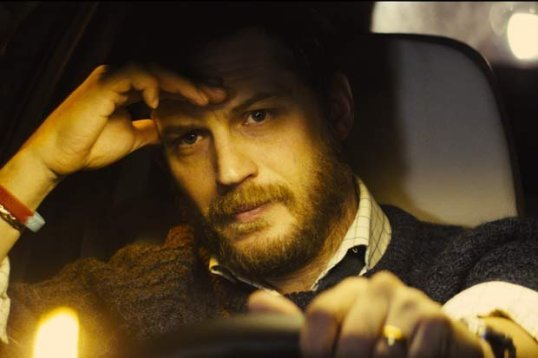
Film Review: Locke (dir by Steven Knight)


When Locke first premiered in American theaters earlier this year, I have to admit that I didn’t pay much attention to it.  On the one hand, I was intrigued by the fact that the entire film was apparently just Tom Hardy driving around in a car and taking hands-free phone calls from people. Tom Hardy, after all, is one of my favorite actors and I’ve always felt that he deserves to be known for a lot more than just being the bad guy in The Dark Knight Rises.  At the same time, a lot of the reviews made it sound as if Locke was a thriller in the style of Getaway or Need For Speed and I’ve reached the point where I’m only interested in car chases if they involve Jonah Hill and Channing Tatum.

So, I didn’t really pay much attention to Locke and I didn’t think that I would regret my decision to not see the film.  However, a few months later, the Los Angeles Film Critics named Tom Hardy as their choice for best actor of the year for his performance in Locke.  And then, so did the Toronto Film Critics.  In Houston, Indiana, San Diego, Detroit, and St. Louis, Tom Hardy’s performance was acknowledged as being worthy of consideration.

And I thought to myself, “Well, I guess I better see Locke…”  And, earlier today, I finally got a chance to do just that.

My first two immediate reactions:

1) All of those critics who made Locke sound like the Getaway owe me (and probably a lot of other people) an apology.  Locke may have been advertised as being a thriller but it’s actually a very moody character study.  Despite the fact that he has a name that feels appropriate for an action movie, Ivan Locke is not a criminal, a cop, or a superspy.  Instead, he’s a rather ordinary man whose perfectly structured life falls apart over the course of one very long drive.  And, though Locke does spend the entire film driving his car and staring out at the road while either taking phone calls or delivering a bitter monologue to the estranged father that he imagines is sitting in the back seat, there’s not a single car chase to be found in Locke.  This is not an action film.  The only thing chasing Locke are his regrets, his obligations, and one mistake that he’s determined to “make right.”

2) Tom Hardy is a great actor.  He is literally the only character to appear on screen and it’s up to him to carry the entire film.  He manages to do just that, giving a performance that will probably be imitated in acting classes around the world for at least the next ten years or so.  Depending on who is calling him on the phone, Locke can be charming, forceful, caring, narcissistic, and even a little bit desperate.  However, he’s always in control.  It’s only when Locke is off the phone and he’s alone with his thoughts and his imaginary father that Locke allows his anger to come through.  It’s been said that the key to great acting is to be found in the eyes and Hardy’s eyes are on fire all through Locke.  It’s really a great performance.

Unfortunately, that doesn’t necessarily mean that Locke is a great film.  It’s a good film.  Hardy gives too masterful of a performance for the film to be anything other than good.  But at the same time, Locke ultimately feels like an experiment that doesn’t quite work.  You can admire the film’s attempt to tell a compelling story without leaving the confines of Locke’s car and still admit that the film doesn’t quite pull it off.

But, that said, Locke is worth seeing for Tom Hardy’s performance.  Tom Hardy probably won’t receive his first Oscar nomination for Locke but his performance is brilliant nonetheless.

tom hardy


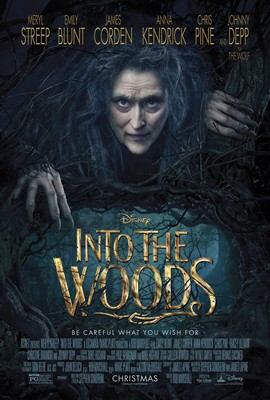
Film Review: Into the Woods (dir by Rob Marshall)


I had such a mixed reaction to Into the Woods, the latest Rob Marshall-directed musical adaptation, that it’s hard to really know how to start my review, let alone how to conclude it.

So, I’ll start by answering the most important question that you probably have about this film.  I think sometimes that film snobs like me tend to forget that, for most people, it’s just a question of whether or not the film is worth the time, effort, and money that it will take to sit through it.  In other words, having seen Into the Woods, do I recommend it?

Yes, I do.  Well, kind of anyway.  As I said before, it’s complicated.  But, for the most part, I enjoyed Into the Woods.  The audience that I saw it with (and the theater was absolutely packed) seemed to really love the film and there was even a smattering of applause at the end of it.  Into the Woods is a crowd-pleaser.  It’s a well-made film.  It’s perfectly cast.  It’s full of funny moments.  The costumes are absolutely to die for.  (I’m totally in love with the gown that Anna Kendrick gets to wear to the ball.)  Meryl Streep will probably get an Oscar nomination.  Chris Pine deserves to be given a lot more awards consideration than he’s received.  It’s such a good film and yet…

And yet, I never loved Into the Woods like I thought I would.  I watched it and I kept thinking about how much I, of all people, should have loved this film.  I love musicals.  I love spectacle.  I love fairy tales.  I love revisionism.  I love satire.  I love handsome, charming men, like the one played by Chris Pine.  In a perfect world, Anna Kendrick would be my best friend and we’d spend all of our time going to wine tastings and watching Lifetime movies.  Into the Woods was full of everything that I should have loved and the final song actually brought tears to my mismatched eyes but I never quite came to love the film.  Something was just off.

Before I go any further, I should admit that my reaction may have been influenced by outside factors.  On the one hand, all of the Bowman girls are together right now for the holidays and I loved the fact that, as I watched Into the Woods, I was watching it with my sisters and all four of us were sharing in the experience.  Really, that’s the ideal way to watch something like Into The Woods.  This is the type of movie that was specifically made to be watched and appreciated by large groups, preferably made up of people who understand and appreciate the conventions of musical theater.

On the other hand, we had the most obnoxious woman ever sitting directly behind us.  She laughed through the entire film, regardless of whether anything funny was happening on screen or not.  (The film features a lot of comedy but it grows progressively darker with each passing minute.)  It wasn’t just that she wouldn’t stop laughing as much as it was that her laugh was so insincere.  You could tell that she was laughing because she wanted everyone to be impressed with the fact that she “got” the film.  But ultimately, all she did was get on everyone’s nerves with her inability to understand that we weren’t there to listen to her dry heave of a laugh.  We were there because we wanted to see Into the Woods.  The experience was not meant to be about her.  It was about the movie.

As for what the film is about, it’s an adaptation of the famous Stephen Sondheim musical in which the Baker (James Corben) and the Baker’s Wife (Emily Blunt) attempt to break the spell of a not-quite-evil-but-definitely-bad-tempered witch (Meryl Streep).  By bringing the witch several things (the majority of which can be found in the woods that sit right outside their village), they can lift the curse that has made it impossible for the Baker’s Wife to get pregnant.  Along the way, they run into everyone from the witch’s daughter, Rapunzel (MacKenzie Mauzy) to Jack the Giant Slayer (Daniel Huttlestone) to Cinderella (Anna Kendrick) to the Big Bad Wolf (Johnny Deep, playing up the sexual subtext of the story of Little Red Riding Hood) to not one but two charming princes (played by Chris Pine and Billy Magnussen)!  Into the Woods starts by poking gentle fun at the fairy tales of old and then gets darker and darker until, by the end of the film, only a few characters are left alive.

It’s a great idea and it’s gorgeously executed but yet the film itself never quite makes the transition from being good to being great.  Towards the end of the musical, the surviving characters sing about missing their loved ones and it brought tears to my eyes but that was one of the few moments when the film itself actually made an emotional connection.  Otherwise, I spent a lot of time feeling curiously detached from what was happening on screen.

Thinking about Into The Woods, it’s hard not to compare it to 2012’s version of Les Miserables.  In Les Miserables, all of the songs were recorded live on set.  And, for all the unfair criticism that Russell Crowe received for his singing, this brought a definite raw power and immediacy to the entire production.  What some of the actors may have lacked in conventional singing ability, they made up for with the sheer power of their performances.  In Into The Woods, the majority of the songs were pre-recorded.  Everyone sounds almost too perfect.  There’s none of the vitality or danger that came with Les Miserables or even Rob Marshall’s previous musical, Nine.

(As far as casting, direction, and almost everything else is concerned, Into The Woods is a hundred times better than Nine but it still never manages to produce a moment as vibrantly silly and memorable as Kate Hudson’s performance of Cinema Italiano.)

Into the Woods does have a uniformly excellent cast.  Everyone — even the much-criticized Johnny Depp — does a wonderful job with their role.  Meryl Streep has been getting all of the awards-consideration, largely because she’s Meryl Streep and, if she could get a nomination for giving that performance in August: Osage County, then she can probably get a nomination for anything.  (And don’t get me wrong — Meryl’s great and all but there’s still a part of me that would have loved to have seen what a less self-enamored performer — like Marion Cotillard or Helen Mirren — could have done with the role of the Witch.)  But, to me, the film’s best two performances really came from Anna Kendrick and Chris Pine.  Whether pausing to strike a heroic pose or casually trying to seduce a woman who he meets in the woods or explaining that he’s been raised to be charming and not sincere, Chris Pine is never less than outstanding.

So, to get back to the only question that really matters, did I like Into The Woods?  I did but I did not love it, which is unfortunate because I really wanted to love it.

However, overall, I recommend Into The Woods.

Just don’t watch it alone.

Or with anyone who has an annoying laugh.

Into_The_Woods_(film)


The Stuff You Find On Netflix: Rumors of Wars (dir by Paul Tomborello)


You can sometimes find the strangest stuff of Netflix.  And, if you’re like me and you try to review every single thing that you see, you can end up reviewing the strange stuff that you end up watching on Netflix.

For example: Rumors of Wars.

According to the imdb, Rumors of Wars had a theatrical release in May of this year but I had never heard of it until I happened to come across it on Netflix.  Earlier this week, I did a search on “2014 films,” and my natural hope was that the search would return results like The Grand Budapest Hotel and maybe a James Franco film or two.

Instead, I got Rumors of Wars.

Rumors of Wars is one of the many dystopian films that have come out this year.  For whatever reason, a lot of filmmakers have shared this vision of the future this year and none of them seem to be very optimistic.

In Rumors of Wars, the future is represented by bombed out cities, black-clad soldiers, and frightened refugees being rounded up and shot.  The soldiers work for a man named Zurn and they’re quick to say that their mission is to “unify the world in peace and harmony.”  When one refugee is spotted to be wearing a cross, a soldier sneers, “The only thing this symbolizes is your primitive thinking!”  Another refugee, when confronted by the approaching soldiers, says, “Time to join the one world government!”

Can you guess where this is going?

While the rest of the soldiers are busy burning books and watching a hologram of a blonde with big boobs telling them to keep fighting for the glory of Zurn, Shaw (Ben Davies) secretly reads a diary that he came across during an earlier refugee roundup.

The diary was written, in the days before the one world government, by a college student named Roxy (Jennifer Cooper).  Roxy writes about how, following a series of terrorist attacks that the film suggests were all “false flag” operations, the government decrees that everyone should have a microchip inserted into their hand.  The microchip will allow the government to both regulate what people eat and keep track of all of America’s gun owners.  However, since the microchip also allows people to get discounts on otherwise expensive commodities like food and gasoline, the populace willingly gives up their freedom.

The microchips, incidentally, are made by the Zurn Corporation.  And who is in charge of the Zurn Corporation?  Mr. Zurn, of course!

And, of course, Mr. Zurn is played by Eric Roberts.

Now, Eric Roberts is only on-screen for about two minutes but he makes the best of those two minutes.  Seriously, Roberts gives a performance that is so manic and so over-the-top and so extremely weird that it might be the best performance of his career.  Certainly, it livens up the movie.

(Of course, it helps that Roberts spends the length of his screen time telling a weird story about picking up a calf.)

Anyway, the film alternates between Roxy in the near future and Shaw in the far future and, for an independent, low-budget, right-wing, evangelical movie, it’s actually surprisingly competent.  This is nothing like Left Behind.  Rumors of Wars can actually pass for a real movie.

Now, I know what you’re asking — just how preachy does this movie get?  By the standards of the genre, it’s actually less preachy than most but still preachy enough that it’ll probably annoy militant nonbelievers.  (As for us casual skeptics, it all depends on just how casual you really are.)  In my case, I was able to tolerate the film’s preachy moments because I appreciated all of the anti-government propaganda and the over-the-top atmosphere of paranoia.

So, that was the latest strange thing that I saw on Netflix.  Rumors of Wars.  Was it great?  No.  But it wasn’t terrible and that’s probably the biggest shock of all.

Film Review: Whitey: The United States of America vs. James J. Bulger (dir by Joe Berlinger)


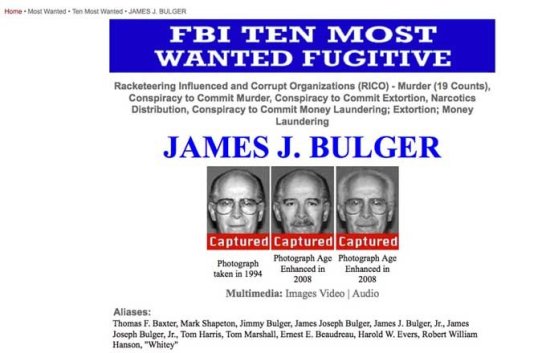
When I was younger, my family used to frequently visit relatives in Arkansas.  (Except, of course, when we were actually living in Arkansas but that’s another story…)  Any time that we were driving to Arkansas for a visit, we would always stop at this little park in Oklahoma.  We’d eat lunch and then I’d run into the rest stop and I’d look at this big aquarium that was full of gold fish.  And then after looking at the aquarium, I’d run over to the corner where they had all of the latest wanted posters and I’d look at who the FBI was searching for that year.

What always fascinated me was that, while there were always new faces posted in that corner, there were also posters that stayed up there for years.  And, in my own weird little way, seeing those posters became something of a ritual that I always looked forward to.  What fascinated me was reading about how each of these dangerous fugitives could be identified.  One guy, for instance, was described as being a fancy dresser and a big tipper and, since I had heard horror stories about being a waitress from several of my relatives, I wondered how bad the guy could be if he was a big tipper.  I was always interested to see who was thought to be in Mexico and who may have escaped up to Canada and I’ll admit that there was a part of me that always wondered if maybe they could be in Oklahoma, eating at that very park!

Whitey_Bulger_Arreste_Brow_t670

From the first time I saw James J. Bulger’s poster in the corner, it made an impression on me.  First off, there was his picture, which made him look like an assistant principal.  Then there was his long list of aliases.  (Even back then, I was obsessed with lists and names.)

And finally, there were all of his identifying details.

For instance, the poster told me that he was fluent in several languages.  The poster said that he had recently been sighted in Europe, which I often fantasized about visiting.  It said that he was traveling with his girlfriend and that both of them loved animals….

Loved animals!?

I loved animals!

And, of course, then I would notice that this cultured and multilingual animal lover was wanted for 19 counts of murder, drug trafficking, extortion, and a whole lot of other things.  The list of crimes told me that this James “Whitey” Bulger was not a good man but the identifying traits suggested something else.

(Another reason that Whitey made an impression on me is that he looked a lot less scary than Osama Bin Laden, who — the last few times we stopped at that rest stop — had invaded the corner…)

So, that was my first impression of Whitey Bulger.

My second impression came about a few years later when I read that the demonic gangster played by Jack Nicholson in The Departed was reportedly based on Bulger.  I’m not sure if the real life Bulger used to carry around someone else’s severed hand but still…

And finally, my third impression came from the documentary that I watched last night on Netflix, Whitey: The United States of America vs. James J. Bulger.  After spending 12 years in that corner, Bulger was eventually arrested in Florida and returned to his hometown of Boston, where he was put on trial for all of the crimes that had been listed at the top of that wanted poster.  Veteran documentarian Joe Berlinger was in Boston for the trial, interviewing Bulger’s defense attorneys, a guy who calmly talked about a number of murders that he committed with Bulger, and the relatives of several of Bulger’s victims.  Bulger himself even got a few words in, calling up his defense attorneys from jail and doing his best to present himself as being a gangster with a code of honor.

Indeed, from the start of the trial, Bulger’s main concern seems to be with convincing people that he had a code of honor.  He has no hesitation about admitting to being guilty of most of the charges against him.  What upsets him is that people are saying that he was a FBI informant and that’s why, for so long, he was able to avoid going to jail despite committing crimes in broad daylight.  Bulger’s argument is that the Boston FBI fabricated evidence of him being an informant in order to cover up the fact that he was paying all of them off.

(Bulger also suggests that he was given blanket immunity by a special prosecutor in return for saving the prosecutor’s life.)

It’s an interesting suggestion.  (Since the FBI refused to interviewed for the documentary, we only get Bulger’s side of the story.)  However, regardless of whether or not you believe Bulger’s claims, the documentary makes clear that — whether they were on his payroll or using him as an informant — the FBI essentially allowed Bulger to spend several years doing anything and killing anyone that he wanted.  By the end of the film, you can understand why the families of Bulger’s victims are often just as angry at law enforcement as they are at Bulger.

Whitey is a good documentary and it’s currently available on Netflix.  If you’re into true crime, like I am, you’ll enjoy it.  At the very least, I’m thankful that this documentary shined a little bit of light on that corner.

Bulger

The Joy Of Under the Electric Sky


EDC

There’s a moment in the documentary Under the Electric Sky that moved me beyond belief.

For the first 90 minutes of the film, we’ve followed different people as they experience the 2013 Electric Daisy Carnival.  Some of them are sweet, some of them are oafish, some of them are people that I would want to hang out with, and some of them I definitely would go out of my way to avoid.  The one thing that they have in common is that they love EDM and that love has brought them to Las Vegas.

One of the more likable of them is a young, wheelchair bound man named Jose.  Up until this point, we’ve seen Jose wheeling his way through the crowd, having a good time but still frustrated by the fact that he can’t see the stage from his wheelchair.  And then, while Hardwell is performing on stage, a group of strangers lift up Jose’s wheelchair, literally holding him on their shoulders so that he can see the stage.

And you know what?  I fully realize that this could have been arranged beforehand.  I understand that someone involved in production could have asked those people to lift up Jose because he or she knew it would make a perfect film moment.  But I don’t care.  It’s such a wonderful moment and it perfectly encapsulated everything that I love about the EDM scene.  It’s a moment that brought tears to my eyes when I saw it and it’s still bringing tears to my eyes as I write about it.

EDC2

As far as the rest of Under the Electric Sky is concerned, if you’re into EDM, you’ll enjoy it.  And if you’re one of those people who doesn’t get EDM — well, sucks to be you, doesn’t it?

Admittedly, the film was produced by the same people who put on the EDC and, at its weakest, it felt like a mix between an infomercial and an A&E reality show.  But at its frequent best — like in the moment described above and in the brief moments where artists like Avicii, Armin Van Buuren, and Above & Beyond open up to the camera — it’s a wonderful and heartfelt tribute to one of the most loving and misunderstood subcultures in the world.  At it’s best, Under the Electric Sky is a blast of pure musical joy and, with the world the way it is right now, we could all use a little joy.

Under the Electric Sky is currently available on Netflix and yes, I recommend it.

EDC 3


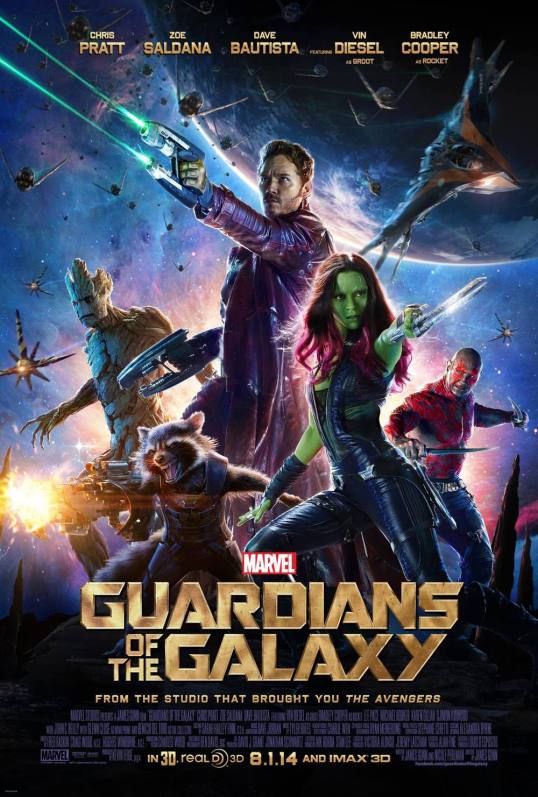
For Your Consideration #10: Guardians of the Galaxy (dir by James Gunn)


GuardiansoftheGalaxy

As of right now, as far as I’m concerned, Guardians of the Galaxy is the best film of 2014.

Now please understand, I live in fly-over country and that means that there’s still quite a few films that I need to see.  Next week and through the new year, I plan to see Foxcatcher, Inherent Vice, Into the Woods, Wild, and quite a few other films.  And any one of those films could, potentially, become my new favorite of 2014.

But, as of right now, Guardians of the Galaxy is my favorite.

Of course, Guardians of the Galaxy is not the type of film that will ever get a major Oscar nomination.  It’s unfairly dismissed as being pure entertainment or just a summer blockbuster.  A few critics group have been nice enough to mention it but, for the most part, Guardians of the Galaxy is not the type of film that’s going to be given serious consideration for the big awards.

Except, of course, by me.

Below are ten reasons why I think Guardians of the Galaxy deserves serious consideration:

we_are_groot_by_aktheneroth-d7tsk7n

1) Never underestimate the importance of escapism.

Usually, when a film is described as being “escapist entertainment,” it’s a back-handed compliment.  The implication is that the film may be entertaining but it has nothing to do with real world issues and therefore, it’s not as important as other films.  We’re allowed to enjoy it but we’re supposed to feel guilty about it.

But you know what?

Sometimes, we need to be able to escape.  That was certainly true this year.  2014 will not be remembered as a great year for humanity.  From January to December, it’s been an endless parade of cruelty and intolerance.  And no, we should never pretend that we live in a perfect world.  We need to be aware of what’s happening outside of our own little corner of the world.

But that doesn’t mean that we haven’t earned the right to escape for 122 minutes.  In fact, I would argue that 122 minutes of pure entertainment is something that we need to make time for if we are going to remain strong enough to face and perhaps change the realities of the world.

In short, when I walked out of the theater after watching Guardians of the Galaxy, I felt better than when I had first taken my seat.  I felt happy.  I felt enthusiastic.  I felt ready to face this fucked up world of ours.

There is a place for pure, unadulterated escapism in cinema.

Not every film has to be a somber, self-important mess like Man of Steel.

Thank God.

2) The unappreciated subtext of Ronan

However, Guardians of the Galaxy is not pure escapism.  Much as in this case of The Purge Anarchy and Capt. America: The Winter Soldier, there is a deeper subtext to the film.  You just have to be willing to look for it.

One of the more frequent complaints about Guardians of the Galaxy is that the villain, Ronan (Lee Pace), isn’t particularly interesting and it is true that, when compared to Tom Hiddleston’s Loki or Iron Man’s villains, Ronan does seem to be a bit bland.  His goals and his motivation are pretty simple.  He destroys stuff and he kills people.  Why?  Because he’s the bad guy.

But, let’s take a closer look at Ronan.  Ronan is a fanatic who believes that only his way is the correct way and only his beliefs are pure.  Anyone who has different beliefs must be unpure and therefore, if they don’t agree to convert to his way of believing, Ronan is justified in destroying them.

Does that sound familiar to anyone?

For all the complaints that Ronan was a one-dimensional villain, the same can be said of Joseph Kony, Kim Jong-un, and Jihadi John, and Fred Phelps.  The same can be said about a lot of evil people but that does not make them any less evil or dangerous.  Ronan may be a simple villain but he’s also the type of villain that we can find all over the world.

The one thing that all Ronan-style fanatics have in common is a complete lack of imagination and humor.  When Peter Quill stood up to Ronan by dancing, it was more than just a crowd-pleasing scene in a big action movie.  It was a call-to-arms to not allow ourselves to be held hostage by the Ronans of the world.  It was a plea to not let the fanatics among us steal our imagination and our right to find joy in our own individual way.

In short, it was a lesson that the entire world needs to learn.

Guardians_of_the_Galaxy_43350

3) I Am Groot

Yes, yes, I know.  At this point, we’ve all had to listen to hundreds of friends, relatives, and strangers who have gotten it into their heads that they can perfectly imitate Vin Diesel saying, “I am Groot.”  But, seriously — there’s a reason why everyone fell in love with that catch phrase and that’s because both Diesel and the film do more with those three words that most actors can do with a four-page monologue.

And if you didn’t tear up when you heard, “We are Groot,” then I’m sorry.  You may be too cynical for your own good.

4) Introducing … James Gunn!

If you’ve read my review of Super or Arleigh’s review of Slither, then you know that James Gunn has long been a favorite of ours.  One of the joys of the success of Guardians of the Galaxy has been watching him become a favorite of everyone else as well.  And he deserves every bit of that success.  Working within the confines of the summer blockbuster genre, Gunn has created a film that works as both a superior action movie and as a quirky comedy.  With Guardians, James Gunn proved that it is possible to make a mainstream film without selling out your own individual style.

5) Introducing … Chris Pratt!

Even before he played Peter Quill, Chris Pratt was one of those actors who I have always been happy to see on screen.  He just has such a naturally likable presence.  But nothing he had done previously had prepared me for the pure joi de vivre that he brought to the role of Peter Quill.  Whether he was trying to convince people to call him Star-Lord or hilariously attempting to “rally the troops” or daring Ronan to a dance-off, Chris Pratt was a joy to watch.  If nothing else, Guardians of the Galaxy is the film that proves that Chris Pratt is a star (perhaps even a Star-Lord).

6) And let’s not forget Michael Rooker and Benicio Del Toro

Michael Rooker and Benicio Del Toro are both such quirky and unpredictable actors that I’m always happy to see either one of them on screen.  Having both of them in one movie is even better.  Rooker is perhaps the only actor alive who could not only be believable as a blue-skinned alien with an Alabama accent but who could also make that character into one of the most compelling in the film.  As for Del Toro, I know that his defiantly eccentric performance was controversial but personally, I loved the strange energy he brought to all of his scenes.

GuardiandoftheGalaxy

7) And …. everyone else!

One thing that I really loved about Guardians of the Galaxy is that there were no wasted roles.  Every character — from Peter to Zoe Saldana’s Gamora to John C. Reilly’s upright military guy to the people who only had a line or two — felt real.  For a lot of viewers (including me), Rocket Raccoon (voiced by Bradley Cooper) was an easy favorite.

Guardians-of-the-Galaxy-rocket-with-gun

However, if I had to pick a best performance, I’d go with Dave Bautista as Drax.  Bautista did so much with so little.  As written, Drax is a physical dynamo with a need for revenge and absolutely no sense of humor.  That’s a pretty standard character for a film like this.  However, Bautista did so much with that character that poor, literal-minded Drax ultimately became one of the most intriguing characters in the film.  My favorite Drax moment came when, in response to hearing that everything goes over his head, he explained that nothing could go over his head because he would reach up and grab it.

8) That soundtrack

I have to admit that I didn’t care as much for Interstellar as some people did.  One of my big problems with the film came down to Hans Zimmer’s score.  It was so loud and overbearing that I actually found myself covering my ears.  But what really bothered me was how unnecessary it was.  Whenever Matthew McConaughey or Anne Hathaway made a profound statement or the spaceship started to shake, the music would suddenly blast in my ear.  It was like having Hans Zimmer in my head, repeatedly shouting, “IMPORTANT!  IMPORTANT!  EXCITING!  EXCITING!”

BLEH!

And it made me appreciate how much I loved the soundtrack of Guardians of the Galaxy.  By using songs that you would never expect to see in a science fiction epic, that soundtrack both mocked the genre’s natural tendency towards self-importance and also forced us to take another look at familiar scenes.  From the minute Peter started dancing to Come and Get Your Love, I knew that I was watching a special movie.

9) The Prison Break

From planning to execution, this was without a doubt one of the best action sequences of the year.  From Rocket laying out his overly complicated plan while Groot tries a much simpler method in the background to Peter asking for the guy’s leg to the use of The Pina Colada Song, this was a perfect scene.

10) And finally … Dancing Groot!

Dance

And those are just a few reasons why I think Guardians of the Galaxy is the best film I’ve seen this year so far.

Guardians-of-the-Galaxy-gang

(For a differing opinion, check out Ryan’s review here.)


For Your Consideration #9: Under the Skin (dir by Jonathan Glazer)


Under the Skin is one of the most brilliantly divisive films of the year.  To some, it’s a pretentious mess, a collection of seemingly random scenes and obscure themes.  To me, however, it is one of the most haunting films that I’ve ever seen.  It’s a film that’s full of mysteries and questions, one that often demands that we supply our own answers.  It’s one of the best films of the year and anyone who disagrees needs to rewatch it.

From the opening scene, Under the Skin is a dream of dark and disturbing things.

In Scotland, a silent motorcyclist (Jeremy McWilliams) finds a young woman’s dead body lying on the side of the road.  He picks up the body and puts it in the back of a van.  Inside the van, a naked woman (played by Scarlett Johansson) takes the dead woman’s clothes.  As soon becomes apparent, both the motorcyclist and the woman are not human.  They’re aliens and they’ve come to Earth on a mission that is deliberately left obscure.  Though they never speak to each other, the motorcyclist always seems to be nearby.

The woman drives the van across Scotland.  She stops men in the street and, after asking for directions, then attempts to coerce them into her van.  (What makes these scenes especially effective is that the majority of them actually feature Johansson talking to nonactors who just happened to be nearby when she drove up.)  The woman smiles and flirts and has little trouble convincing the majority of the men she meets to get into the van with her.

She drives them to an isolated building where the men follow her inside.  As they step into a pitch black room, both the woman and her latest man start to undress.  The naked man starts to walk towards the woman and is so hypnotized by the sight of her that he doesn’t even realize that the floor has become liquified and he’s sinking.  As Johansson watches coldly, each man eventually vanishes, leaving behind only his empty skin.

(Warning: The two scenes below are definitely NSFW.  Watch with caution.)

Detached from her surroundings, the woman can only watch as real human beings go about their lives.  When she sees a man unsuccessfully try to save a drowning couple on the beach, she reacts by striking the man on the head with a rock.  She drags the man away, leaving the couple’s terrified toddler on the beach.  When the motorcyclist later visits the beach, he too ignores the child.  (Perhaps no scene left me more disturbed and inspired more nightmares than this one.)

It’s only when the woman picks up a man with a severe facial disfigurement (a poignant performance from a nonactor named Adam Pearson) that she finally starts to show some emotion.  The man is as much of an outsider as she is, with the main difference being that he can’t hide who he really is under a disguise.  The woman feels sorry for him and this sudden shock of empathy causes her to reconsider her mission.

However, even as the woman attempts to flee to the Scottish highlands, the motorcyclist is never far behind.  And, unfortunately, neither are real humans…

Under the Skin is pure cinema, a collection of scenes that alternate between being naturalistic and surreal, disturbingly serious and darkly humorous.  Perhaps appropriately for a film about appearances, Under the Skin is a movie that is full of haunting images, the type that, 8 months after first being seen, remain vivid in your mind.  It’s up to the viewers to decide what those images mean.

(For all of the discussion that I’ve seen online about what Under the Skin is truly about, it seems pretty obvious to me that the main message of the film is that guys are so led by their penis that they’ll even allow themselves to sink into a liquid void if there’s a chance they might get laid beforehand.)

Under the Skin has been a player (albeit a minor one) in the precursors leading up the Oscars.  A few of the braver critical groups have nominated it for best picture and have also honored Scarlett Johansson for her wonderful work as an outsider who is both slowly discovering what it means to be human while also dealing with the reality that, try as she might, she will never truly belong in this world.  However, with all that in mind, Under the Skin is probably too divisive and unique a film to ever truly appeal to the Academy.

But that’s okay.

Under the Skin is also a film that we’ll still be discussing years from now.

Film Review Under the Skin