A Movie A Day #146: The Dogs of War (1981, directed by John Irvin)


Jamie Shannon (Christopher Walken) is a professional mercenary who is hired, by a British businessman, to overthrow the government of Zangaro.  Though Zangaro is currently ruled by a ruthless dictator, Shannon’s employers want to replace him with someone even worse, all so they can get their hands on the country’s platinum mines.  After Shannon is captured and tortured by the government, he wants nothing else to do with Zangaro.  Instead, he wants to return to New York and propose to his ex-wife (JoBeth Williams).  But, when she turns down his proposal, Shannon and his mercenary army return to Zangaro.

Before winning an Oscar for The Deer Hunter and becoming one of our most popular character actors, Christopher Walken was a finalist for the role of Han Solo in Star Wars.  If not for George Lucas’s decision to hire Harrison Ford to read lines for the actors at the auditions, Christopher Walken’s career could have developed far differently.  The Dogs of War, which was Walken’s first big film after the high of The Deer Hunter and the low of Heaven’s Gate, features Walken playing a character who has much in common with George Lucas’s original conception of Han Solo, an amoral mercenary who will work for anyone who pays him.  Walken is almost too good as Jamie, playing the part as being so aloof and ruthless that it is sometimes hard to feel any sympathy for him at all.  If he had taken that approach to playing Han Solo, audiences would have really been shocked when Han returned to attack the Death Star.  They would probably be worried that he had returned because the Empire offered him a thousand credits to kill Luke.

The Dogs of War has an intriguing premise but it’s a very slow movie that gets caught up in all the minutia that goes into staging a coup.  It’s exciting when Walken and his mercenaries finally attack the dictator’s compound but it takes forever to get there.  The book, by Frederick Forsyth, is a well-written page turner but the film adaptation largely falls flat.

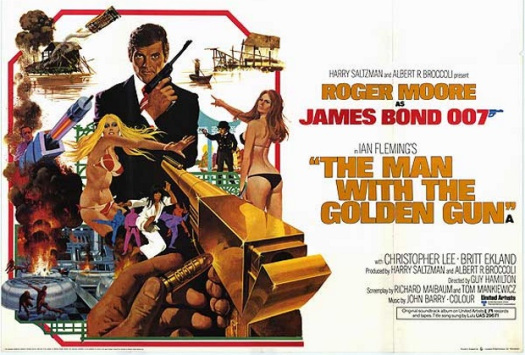
Remembering Roger Moore: THE MAN WITH THE GOLDEN GUN (United Artists 1974)


gary loggins's avatarcracked rear viewer

I didn’t realize Sir Roger Moore was 89 years old when I first heard he’d passed away on May 23. But as Mick Jagger once sang, time waits for no one, and Moore’s passing is another sad reminder of our own mortality. It seemed like Roger had been around forever though, from his TV stardom as Simon Templar in THE SAINT (1962-69) though his seven appearances as James Bond, Agent 007.

There’s always been a rift  between fans of original film Bond Sean Connery and fans of Moore’s interpretation. The Connery camp maintains Moore’s Bond movies rely too much on comedy, turning the superspy into a parody of himself. Many point to his second, THE MAN WITH THE GOLDEN GUN, as an example, but I disagree. I think the film strikes a good balance between humor and suspense, with Roger on-target as 007, and the great Christopher Lee (who’d guest starred in Moore’s syndicated…

View original post 482 more words

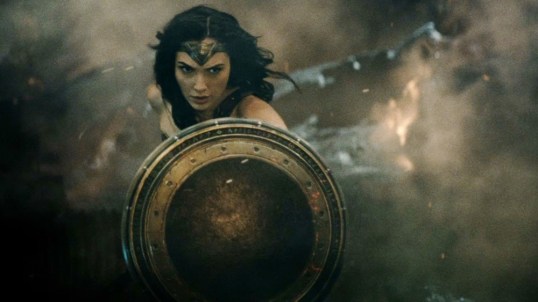
Film Review: Wonder Woman (dir by Patty Jenkins)


Wonder Woman is awesome!

I spent a while trying to think of the best way to begin this review.  There’s a lot to be said about Wonder Woman, as both a film and as a character.  Over the next few weeks, we’re going to be flooded with think pieces.  Is Wonder Woman too feminist or not feminist enough?  Does Wonder Woman herald a new direction for the DC Expanded Universe or is it destined to just be an anomaly among the ruins of crap like Man of Steel and Suicide Squad?  Does it announce the arrival of new star?  Is Wonder Woman pro-war or a plea for peace?  Does Wonder Woman live up to the rapturous early reviews or is it destined to suffer the same fate as the initially acclaimed, later-reviled Ghostbusters reboot?

Those are all legitimate questions.  They’re all worthy of debate and discussion.  And I look forward to reading everyone’s thoughts on blah blah blah blah….

Yes, Wonder Woman is empowering, both as a film and as a character.  It’s amazing to think that, with all the super hero adaptations that have come out over the past ten years, Wonder Woman is the first one to center around a female super hero.

Yes, Wonder Woman does finally prove that DC Expanded Universe can produce a good film, though I do have to say that two of the best things about Wonder Woman is that it had very little to do with any of the other DCEU films and it felt more like an MCU film.  With the period setting (the film takes place during World War I) and it’s weary view of the wars that men fight, Wonder Woman has far more in common with the first Captain America film than it does with Man of Steel.

Yes, Gal Gadot is going to be a huge star and her performance here suggests that she has range beyond action films and comic book melodramas.

Yes, Wonder Woman is a plea for peace but it’s a sincere and honest plea and one that does not ignore the realities of human nature.

And, finally, yes, Wonder Woman deserves those good reviews and I believe it will stand the test of time.
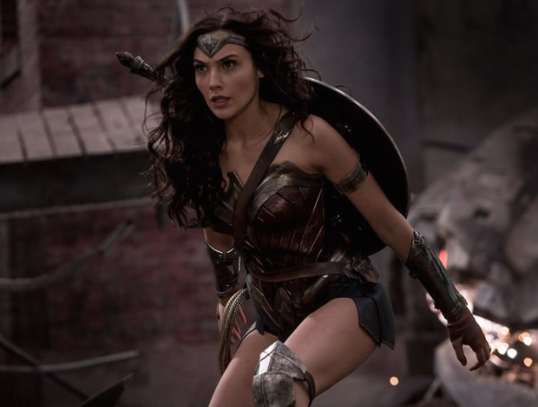
When all is said and done, what really matters is that Wonder Woman is freaking awesome!  The teaming of director Patty Jenkins and star Gal Gadot has resulted in one of the most entertaining and exciting comic book movies of recent times.  Usually, I resent it when an audience breaks into applause at the end of a movie, largely because it makes me feel as if I’m being pressured to make a snap judgment about a movie’s worth before I’ve had time to give it proper thought.  However, this time, when the applause broke out at the Alamo Drafthouse, I happily joined in.

I could be wrong about this but I don’t think Wonder Woman is ever actually called “Wonder Woman” at any point during the film.  If she was, I missed it and I’m sure someone will correct me in the comments.  Instead, she is referred to by her proper name, Diana.  When the film opens (after the obligatory modern-day prologue), Diana is a child living on the island of Themyscira, the home of the legendary Amazons.  Diana is the only child among the Amazons.  The daughter of Queen Hippolyta (Connie Nielsen), Diana dreams of becoming a warrior but her mother refuses to allow it.  When Diana is trained, it’s in secret by her aunt, General Antiope (Robin Wright).  At one point, Antiope tells Diana that if she’s going to be warrior, she’s going to have to be prepared to fight for everything.  No victory, Antiope tells her, will ever come easily.  I nodded at that line and I’m sure every other woman in the audience did so as well.  We understood what Antiope was saying.

In 1918, for the first time in centuries, a man reaches the island.  His name is Steve Trevor (Chris Pine) and he’s an American spy.  No sooner does Steve’s plane crash on the beach then a boat full of Germans arrive.  After a genuinely exciting battle (perhaps the first exciting action scene to appear in any of the DCEU films), Steve reveals that the world is at war.  Suspecting that it is the influence of Ares, the god of war, that is causing people to kill one another, Diana defies her mother’s orders and leaves the island with Steve.  Steve’s goal is to keep the Germans from developing and deploying a lethal gas.  Diana, meanwhile, plans to track down and kill Ares.

While Steve is convinced that, as a result of human nature, wars are inevitable, Diana is resolute in her belief that all the evil in the world can be linked to Ares.  Their conflicting world views give Wonder Woman far more emotional depth and intellectual resonance than any of the other films that have, so far, been a part of the DC Expanded Universe.  By refusing to indulge in portentous hypermasculinity, it avoids becoming a pretentious slog like Man of Steel or Batman v Superman.  By refusing to treat war, death, and violence as a joke, it avoids falling into the soulless trap that imprisoned Suicide Squad.  When Diana runs and leaps into battle, she’s not just fighting for good against evil.  She’s fighting for the soul of humanity.

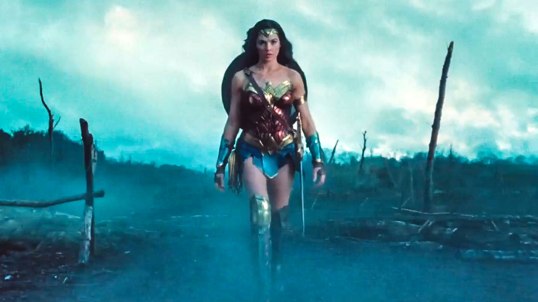
Some of the action scenes in Wonder Woman are nothing less than amazing.  The scene where Diana crosses the aptly named “No-Man’s Land” is destined to be remembered as a classic moment in comic book cinema.  I don’t want to spoil too much of the film but I will say that you’ll also never forget the way that Diana takes out a German sniper.  It’s an amazing moment, one that is matched by the film’s final battle.  Again, I don’t want to spoil anything so I’ll just say that the film’s finale brought tears to my eyes.
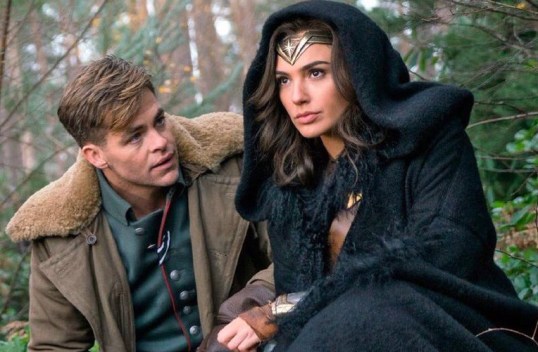
After providing Batman v Superman with its only good moments, Gal Gadot finally gets the film that she deserves and she gives an amazing performance.  As played by Gadot, Diana is confident but never arrogant, occasionally naive but never foolish.  She’s a fighter, one who refuses to surrender even when the rest of the world tells her to go home.  (There’s a rather interesting throw-away line, in which Steven’s secretary says that she’s looking forward to getting to vote in her first election.  Wonder Woman is saving a world that wouldn’t even allow her a voice in selecting the man who are constantly putting it in danger.)  Gal Gadot gives a charismatic and star-making performance.

Also giving a good performance — perhaps a career best if you take Hell or High Water out of the equation — is Chris Pine.  When Pine first appears, he seems to be doing a riff on his too-perfect Prince Charming performance in Into the Woods.  But, as the film progresses, Pine brings unexpected depth to this role.  Special mention should also be made of David Thewlis, who may not have a huge role but who makes the most of his limited screen time.

But, with all that in mind, the most important thing that I can tell you about Wonder Woman is that the film is an absolute blast, a fast-paced and exciting action film that is complimented by strong performances and an unexpectedly poignant subtext.

It’s empowering.

It’s entertaining.

It’s worthy of the applause that filled the Alamo Drafthouse.

In short, it’s absolutely awesome.

See it this weekend.
(Now, Marvel, where’s that Black Widow movie that y’all better be developing?)

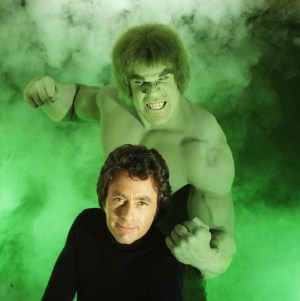
A Movie A Day #145: The Incredible Hulk: A Death In The Family (1977, directed by Alan J. Levi)


Following the events of The Incredible Hulk and with the world convinced that he is dead, Dr. David Banner (Bill Bixby) is hitchhiking his way across California, hoping to reach a hospital where research is being done on the effects of gamma radiation.  When he stops off in an orange grove, he spots a young, crippled woman named Julie (Laurie Prange).  When Julie faints, David carries her back to her mansion.  It turns out that, after the mysterious death of her father, Julie stands to inherit millions.  David suspects that her doctor (played by William Daniels) may be poisoning her and he gets a job working on the grounds of her mansion.  At first, David thinks that his biggest problem is going to be the head groundskeeper (Gerald McRaney), who is jealous of David’s relationship with Julie.  But, actually, it’s Julie’s stepmother (Dorothy Tristan) that David has to watch out for.  When David tries to protect Julie and a bitter hermit (John McLiam) from the stepmother’s evil plans, he soon finds himself being pursued through the swampland by both men with guns and tabloid journalist Jack McGee (Jack Colvin).  They are all making David Banner angry and they’re about to discover that they wouldn’t like David Banner when he’s angry.

This was the second pilot for The Incredible Hulk.  It aired a week after the first pilot and, like that one, it was also given a theatrical release in Europe.  While the first movie established David Banner’s backstory and explained why he transformed into the Hulk whenever he bumped his head on a door frame or twisted his ankle, A Death in The Family is more typical of the series that would follow.  Like every subsequent episode, A Death In The Family opens with David Banner finding an odd job and ended with him walking down the road with his thumb stuck out.  In between, Banner helps a special guest star.

Watching the second pilot, it’s easy to see why CBS took a chance on The Incredible Hulk even though, at the time, comic book adaptations were considered to be a risk.  Both Bill Bixby and Lou Ferrigno really throw themselves into playing Banner and his alter ego and the show takes the idea seriously.

There’s nothing special about the pilot’s story.  The stepmother and the doctor are obviously guilty from the start.  But the plot (and the 90 minute running time) does allow for four appearances by the Hulk.  David Banner even gets attacked by a grizzly bear, which brings the Hulk right out.  David Banner always had the worst luck with wild animals and barbed wire.  The Hulk, though, just throws the grizzly bear over into the next pond.  The bear is not harmed.  The Hulk may have been angry but he was never really dangerous.

Finally, for the record, Death In the Family featured the first of many aliases that David Banner would assume over the next four years.  This time, he’s David Benton.

A Movie A Day #144: The Incredible Hulk (1977, directed by Kenneth Johnson)


It may seem hard to believe now but there was a time when comic book adaptations were considered to be a risky bet at best.  In 1977, Marvel Comics sold the television rights for four of their characters to Universal Productions. This led to three unsuccessful pilots (one for Dr. Strange and two for Captain America), a Spider-Man series that lasted for two seasons, and The Incredible Hulk.  As opposed to the other Marvel adaptations, The Incredible Hulk series was popular with fans and (some) critics and ultimately lasted for four seasons.
It all started with a 90 minute pilot that aired in 1977.  Haunted by the car accident that caused the death of his wife and his inability to rescue her, Dr. David Banner (Bill Bixby) is researching why, in times of extreme stress, ordinary people can suddenly experience moments of super human strength.  What he theorizes is that it is a combination of body chemistry and gamma radiation caused by sun spots.  Eager to test his theory, David straps himself into a chair and zaps himself with gamma radiation.  At first, it seems as if nothing has changed.  But when David’s driving home, he gets a flat tire.  When he struggles to change the tire, in the middle of a hurricane nonetheless, David gets mad.  Suddenly, his eyes turn green and soon so does the rest of him as David Banner is transformed into the Incredible Hulk (Lou Ferrigno, except for one shot where the Hulk is played by Richard Kiel).  The Hulk runs through the woods, accidentally scaring a girl and getting shot by a hunter.  When the Hulk falls asleep, he transforms back into David, who has no memories of what he did while he was the Hulk.  While David and his colleague, Elaina Marks (Susan Sullivan), investigate what happened to him, tabloid reporter Jack McGee (Jack Colvin) tries to uncover the results of David and Elaina’s research.

Other than introducing the Hulk and giving Banner a backstory, the pilot didn’t have much in common with the series that followed.  Along with being a comic book adaptation, the series was also a remake of The Fugitive.  With everyone convinced that the Hulk had murdered both him and Elaina, David was always on the run and trying to find a way to cure his condition.  Every episode would begin with David working a new odd job and getting involved in a new situation and almost every episode ended with David hitchhiking while the show’s famous piano theme played over the final credits.  Because David was always either getting beaten up or tangled in barbed wire, the Hulk would show up twice an episode.  David Banner just couldn’t catch a break.

The pilot seems to take forever to get going, devoting a lot of time to David and Elaina doing research.  In those days before the success of The Dark Knight and the MCU legitimized comic books as a cultural force, The Incredible Hulk was determined to show that it was not just a show for kids.  Today, the pilot is too slow-paced and self-consciously serious but still contains the elements that made the show itself became a success.  Bill Bixby takes his role seriously and Lou Ferrigno is the perfect choice for the Hulk.  Decades after they first aired, the Hulk-transformation scenes are still undeniably cool.  It was also during the pilot that Dr. Banner uttered those famous and oft-parodied words: “Mr. McGee, don’t make me angry.  You wouldn’t like me when I’m angry.”

As of this week, reruns of The Incredible Hulk are now being shown, daily, on both H&I and the El Rey network.  I will be watching.

Lisa Watches An Oscar Nominee: Separate Tables (dir by Delbert Mann)


As some of you may know, I have been on a mission for a while now.  My goal is to see and review every single film that has been nominated for best picture by the Academy of Motion Picture Arts and Sciences.  (Of course, with the 1928 nominee, The Patriot, being a lost film, that may seem like an impossible mission.  No matter!  For me, nothing is impossible.  What Lisa wants, Lisa gets.)  For that reason, I spent part of last night watching the 1958 best picture nominee, Separate Tables, on TCM.

Separate Tables is one of the more forgotten of the best picture nominees but then again, the 50s were not the greatest decade as far as the Academy was concerned.  Consider some of the other films released in 1958: Big Deal on Madonna Street, High School Confidential, Indiscreet, The Last Hurrah, Machine-Gun Kelly, The Fly, The Blob, The Horror of Dracula, The Revenge of Frankenstein, Some Came Running, Thunder Road, A Touch Of Evil, and Vertigo!  The thing they all have in common is that none of them were nominated for best picture but Separate Tables was.

That’s not to say that Separate Tables was, in any way, a bad film.  Actually, it’s a pretty good film and I’m glad that I watched it.  It’s not bad at all.  However, it is … what’s the right term to use here?  Stately perhaps?  Maybe stagey.  Separate Tables is based on two one-act plays and, though it’s obvious that some effort was made to open up the material, it still feels undeniably stage-bound.  Separate Tables was directed by Delbert Mann, who had previously won an Oscar for his lively direction of Marty.  With Separate Tables, his direction is far less lively.  Watching it, you get the feeling that he was not only straight-jacketed by the theatrical origins of the material but also by the fact that the film was clearly made to win Academy Awards.

So, ignore the direction and pay attention to the performances.  Separate Tables works best as a tribute to good acting.  The film follows the lives of several guests at an English seaside hotel.  Some people are just staying for a few days.  Some people live at the hotel.  John Malcolm (Burt Lancaster) is a moody writer, a recovering alcoholic who is planning on asking the hotel’s manager, the level-headed Pat Cooper (Wendy Hiller), to marry him.  Of course, then his ex-wife, Anne (Rita Hayworth), shows up.  As quickly becomes obvious, John and Anne may hate each other but they also love each other.  Neither one is particularly sympathetic but, in their scenes together, Lancaster and Hayworth do create a fascinating portrait of mutual self-destruction.  Ultimately, you’re left with the impression that both of them are so self-destructive that they belong together, if just to keep from drawing anyone else into their messed up orbit.

And then there’s Major Pollock (David Niven).  David Niven won the Oscar for Best Actor for his role as Major Pollock and he does give an excellent performance.  Major Pollock is one of those roles that often seems to attract comedic actors looking for a chance to prove their dramatic abilities.  When he first appears, he seems to be a bit of a joke but then, as the film progresses, we learn that he’s actually struggling with his own demons.  In the case of Major Pollock, those demons are more hinted at than defined.  As we learn at the start of the film, Pollock was convicted of “harassing” several “young women” at a movie theater.  Separate Tables does not make clear how young or, for that matter, the exact details of the harassment.  Some residents of the hotel want Major Pollock to be kicked out of the hotel.  Some residents say that it is none of their business and that everyone deserves a second chance.  John Malcolm is in the latter group, though he’s more concerned with his ex-wife than with the scandalous Major (who, to no one’s great surprise, isn’t actually a major and whose war stories have all largely been lies).  Also seeking to defend Major Pollock is the shy Sibyl (Deborah Kerr, playing against type).  Sibyl’s mother (Gladys Cooper) is among those most determined to exile Pollock.

And really, the only reason this plotline works is because of the performances of Niven and Kerr.  As written, it’s way too vague about the exact details of what it was that Pollock did.  We’re just told that he was caught “behaving immorally.”  (According to Wikipedia, Pollock was originally written as being gay but, apparently, that was considered to be too controversial for 1958, hence the mention that Pollock’s crime involved “young women.”)  But Niven gives such a soulful and wounded performance that, much like Sibyl, you want to believe the best about him.  You want to give him a second chance, even though you know he’s going to let you down.  As Major Pollock, David Niven uses his trademark charm to paint a portrait of a man who is painfully aware that he has little to offer beyond charm.

At the same time, I was surprised by how little screen time Niven actually had in Separate Tables.  The majority of the film is taken up with Lancaster and Hayworth.  Niven definitely deserved some consideration for best supporting actor but best actor?  Not in the year that saw Orson Welles in Touch of Evil and James Stewart in Vertigo.

Separate Tables is not a great film, at least not in the way that we might wish that a film nominated for best picture would be.  It’s way too stagey and vague.  But, with all that in mind, it’s still wonderfully acted and always watchable.  It may not be great but it is very, very good.

Separate Tables was nominated for best picture but lost to Gigi.

A Movie A Day #143: The Bull of the West (1972, directed by Jerry Hopper and Paul Stanley)


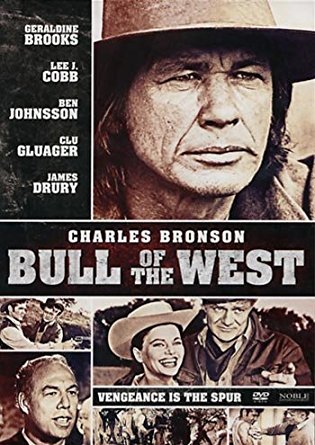
Welcome to the American frontier.  The time is the 1880s and men and women everywhere are heading out west in search of their fortune.  While stowing away on a train, veteran cowboy Johnny Wade (Brian Keith) meets the naive Steve Hill (Gary Clarke) and becomes a mentor to the younger man.  Johnny teaches Steve how to shoot a gun and, when they get off the train at Medicine Bow, Wyoming, they get jobs working on the ranch of Georgia Price (Geraldine Brooks).  When Georgia and Johnny plot to overgraze the land, Steve must decide whether he’s with them or with a rival rancher, Judge Garth (Lee J. Cobb).
At the same time, Ben Justin (Charles Bronson) has arrived in town with his son, Will (Robert Random), and his new wife (Lois Nettleton).  Ben is determined to start his own ranch but, because of his taciturn and stubborn personality, he alienates the Cattleman’s Association, which led by Judge Garth and Bear Suchette (George Kennedy).  Will wants to help his father but Ben keeps pushing him away.  It’s up to Judge Garth’s foreman, the Virginian (James Drury), to bring the family together.

Just like The Meanest Men In The West, The Bull of the West was created by editing together footage from two unrelated episodes of The Virginian.  It works better for the Bull of the West because the two episodes had similar themes and the footage mixes together less awkwardly than it did in The Meanest Men In The West.  But Bull of the West is still just a TV show edited into a movie.  The main reason to see it is because of all the familiar western faces in the cast.  Along with Bronson, Keith, Cobb, and Kennedy, keep an eye out for Ben Johnson, DeForest Kelley, and Clu Gulager.

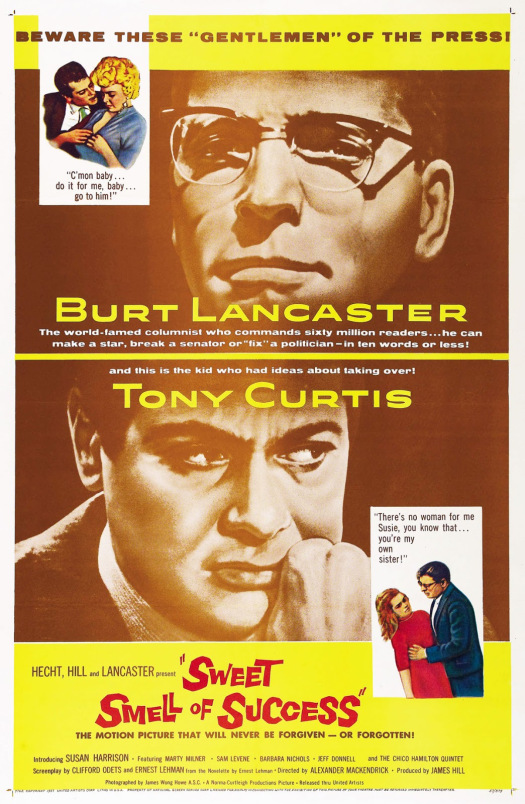
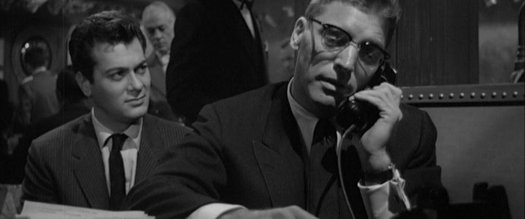
A Malignant Odor: SWEET SMELL OF SUCCESS (United Artists 1957)


gary loggins's avatarcracked rear viewer

Watching SWEET SMELL OF SUCCESS is like taking a slog through a sludge-filled, rat infested sewer. It’s “a cookie full of arsenic”, with two of the most repellant characters to ever worm their way across the silver screen. It’s also a brilliant film, with superb performances from stars Burt Lancaster and Tony Curtis, wonderfully quotable dialog by Clifford Odets and Ernest Lehman, tense direction by Alexander Mackendrick, and stunning black and white photography by James Wong Howe . It’s a movie that demands repeated viewings; just make sure to take a shower after each one!

Powerful Broadway columnist J.J. Hunsecker is dead set on destroying the relationship between his kid sister Susie and up-and-coming jazz guitarist Steve Dallas. To achieve this goal, he uses his toady, press agent Sidney Falco. Sidney, forever trying to curry favor with the great Hunsecker, pimps out cigarette girl Rita to rival columnist Otis Elwell, in exchange for…

View original post 739 more words

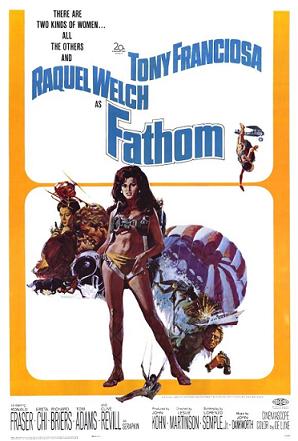
Lisa Cleans Out Her DVR: Fathom (dir by Leslie H. Martinson)


(Lisa is currently in the process of cleaning out her DVR!  It’s going to take her forever but, with the help of Dexedrine and energy drinks, she is determined to get it done!  She recorded 1967’s Fathom off of FXM on April 3rd of this year!)

Fathom is a spy spoof, one that was made the height of the initial James Bond craze.  It’s very much a late 60s film, in everything from the way the film looks to the overly complicated storyline to the film’s cultural attitudes.  This is one of those films that you know was probably considered to be “naughty” when it was released but, seen today, it’s all rather quaint.  There’s no nudity, there’s no cursing, and there’s very little violence.  However, it does feature in Raquel Welch in a lime green bikini and you just know that, when this film came out, there were probably people bemoaning it as the end of civilization.  “What happened to the movies that you could take the entire family too!?” they probably wailed.  That’s the way history works.  What was once daring now seems remarkably innocent.

I watched the film last night but I’d be lying if I said I could follow the plot.  I think that was intentional on the part of the filmmakers.  Fathom satirizes the spy films of the late 60s by taking all of their familiar elements to their logical extreme.  Spy thrillers feature unexpected twists and turns.  Fathom has a new twist every 10 minutes or so.  Spy thrillers feature sudden betrayal and double agents.  With the exception of Raquel Welch, literally no one in Fathom is who they initially claim to be.  It becomes exhausting to try to keep up.  In many ways, Fathom plays out like an old serial.  Every few minutes or so, there’s another cliffhanger.  Oh no, Raquel Welch is on an out-of-control motorboat!  Oh no, the bad guys have got Raquel Welch on an airplane!  Oh no, Raquel Welch is being chased by a bull and she’s wearing a red dress!  ¡Olé!

Raquel plays Fathom Harvill, who works as a dental hygienist except for when she’s touring Europe as a member of the U.S. parachute team.  She’s recruited by some spies to help track down a nuclear triggering mechanism, one that is being hidden somewhere in Spain.  The Scottish secret service just wants her to parachute into a villa owned by a mysterious American named Peter Meriweather (Anthony Franciosa) and plant a recording device.  Things don’t go quite as smoothly as they should and soon, Fathom’s going from one extreme situation to another.

(Even though Peter is supposed to be a suave, James Bond-type, Franciosa gives such an oddly intense performance that it feels like a dry run for his later work in Dario Argento’s Tenebrae.  Interestingly enough, in Argento’s film, Franciosa’s character is named Peter Neal.  Is it possible that Peter Meriweather changed his last name?)

But really, the entire plot is just an excuse to get Raquel into that lime green bikini and she totally owns the moment.  Raquel Welch is one of my favorite of the old film stars because she never apologized for who she was.  She had the body, she was sexy, she knew it, and she used it to her advantage.  Of course, when seen today, it’s disappointing that Fathom spends the entire movie being rescued by men but then again, I imagine that just the idea of a woman being a secret agent was revolutionary in 1967.  Actually allowing her to get out of situations on her own might have made heads explode.  If Fathom were made today, Fathom would at least get one scene where she gets to kick some ass, Angelina Jolie-style.

Anyway, Fathom is an enjoyably silly spy film.  Don’t worry about trying to follow the plot and, instead, just enjoy it as an over-the-top time capsule.  It doesn’t get more 1967 than Fathom.

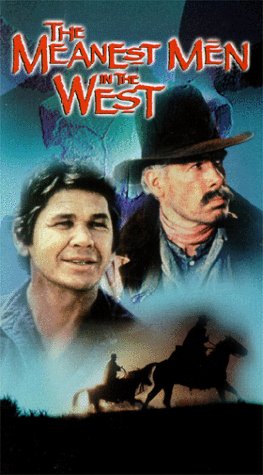
A Movie A Day #142: The Meanest Men In The West (1978, directed by Sam Fuller and Charles S. Dubin)


The Meanest Men In The West may “star” Charles Bronson and Lee Marvin and Sam Fuller may be credited as being one of the film’s two directors but don’t make the same mistake that I made.  Don’t get too excited.

There was once a TV western called The Virginian.  Starring James Drury as a ranch foreman, The Virginian ran for nine seasons on NBC.  A 1962 episode, which was written and directed by Sam Fuller, featured Lee Marvin as a sadistic outlaw who kidnapped The Virginian’s employer, a judge played by Lee J. Cobb.  Five years later, another episode features Charles Bronson as a less sadistic outlaw who kidnapped the Judge’s daughter.

The Meanest Men In The West mixes scenes from those two episode with western stock footage, a bank robbery that originally appeared in The Return of Frank James, an intrusive voice-over, and an almost incoherent prologue, all in order to tell an entirely new story.  Now, Charles Bronson and Lee Marvin are brothers and rivals.  After Marvin snitches on Bronson’s plan to rob a bank, Bronson blames his former friend, The Virginian.  In order to get the Virginian to come to his hideout, Bronson kidnaps Cobb’s daughter.  The Virginian manages to convince Bronson that he didn’t betray him, just to arrive back at the ranch and discover that Cobb has been kidnapped.  Meanwhile, Bronson and his gang set off after Marvin and his gang.  It ends with Charles Bronson, in 1967, shooting at Lee Marvin, who is still in 1962.

The Meanest Men In The West is so clumsily edited that the same shot of Charles Bronson holding a gun is spliced into a dozen different scenes.  Filmed on different film stocks, the Bronson scenes and the Marvin scenes look nothing alike and, since the two episodes were filmed five years apart, James Drury literally ages backwards over the course of the film.

The Meanest Men In The West is for Charles Bronson and Lee Marvin completists only.  I think Bronson and Marvin are two of the coolest individuals who ever existed and even I had a hard time making it through this one.  If you do watch it, keep an eye out for a young Charles Grodin, thoroughly miscast as a tough outlaw.