Gothic Art: Alfred Hitchcock’s REBECCA (United Artists 1940)


gary loggins's avatarcracked rear viewer

REBECCA is unquestionably a cinematic masterpiece. I remember watching it for the first time in a high school film class, enthralled as much by its technical aspects as the story itself. This was Alfred Hitchcock’s  first American film, though with a decidedly British flavor, and his only to win the Best Picture Oscar. There’s a lot of film noir shadings to this adaptation of Daphne DuMaurier’s  Gothic novel, as well as that distinctive Hitchcock Touch.

“Last night I dreamt I went to Manderley again”, begins Joan Fontaine’s narration, as the camera pans down a dark road overgrown with brush and weeds, fog rolling in all around, as we come up on the once majestic castle called Manderley, now lying in ruins. This first shot was all done with miniatures, another wonderful example of Hitchcock’s innovative use of the camera, looking and feeling totally believable (take that, CGI!). Flashbacks bring us to when Fontaine’s character, who’s…

View original post 570 more words

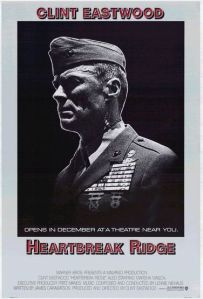
A Movie A Day #203: Heartbreak Ridge (1986, directed by Clint Eastwood)


The year is 1983 and things are looking bad for the Second Marine Division of the U.S. Marine Corps.  The officers are almost all college graduates like Major Powers (Everett McGill) and Lt. Ring (Boyd Gaines), men who have never served in combat but who are convinced that they know what it means to be a Marine in the 80s.  Convinced that they will never have to actually fight in a war, the latest batch of recruits is growing soft and weak.  All of the slackers have been put in the Recon Platoon, where they are so undisciplined that they think that wannabe rock star Cpl. Jones (Mario Van Peebles) is a good Marine.  MARIO VAN PEEBLES!

They haven’t met Sgt. Highway yet.

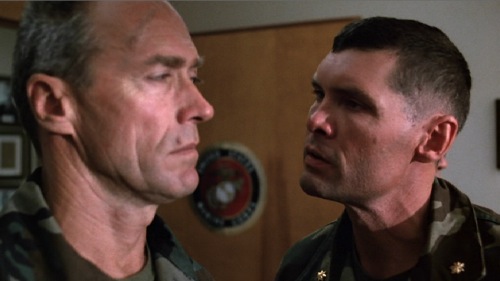
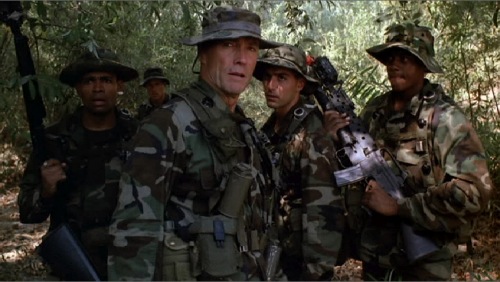
Gunnery Sgt. Thomas Highway (Clint Eastwood) has seen combat, in both Korea and Vietnam.  He drinks too much.  He fights too much.  He has chased away his wife (Marsha Mason), despite his attempts to understand her by reading Cosmo and Ladies Home Journal.  Major Powers may think that Highway is a relic but Highway knows better than to worry about what a college boy thinks.  The Recon Platoon may think that they can defy him but that haven’t seen Highway throw a punch yet.  Everyone may think it’s a waste of time to learn how to fight but little do they know that America is about to invade Grenada.

Heartbreak Ridge is all about Clint Eastwood.  Without Clint Eastwood, it would just be another basic training film.  With Clint Eastwood, it is a minor masterpiece and a tribute to America’s fighting spirit.  In 1986, no one was better at glaring at a young punk or glowering at a clueless superior officer than Clint Eastwood.  Even the running joke of Highway reading women’s magazines works because it is impossible not to laugh at Clint Eastwood intently studying an issue of Cosmo.   Clint may have been 56 when he directed and starred in Heartbreak Ridge but he was still believable beating up men who were less than half his age.  (Mario Van Peebles thinks he’s going to be able to stand up to Clint Eastwood?  Get outta here!)  There is never any question that Highway is going to able to whip everyone into shape.  The only question is how many terse one-liners are going to be delivered in the process.   By the time Highway and his platoon reach Grenada, everyone is ready to watch Clint put the communists in their place and Clint does not disappoint.

Reportedly, the U.S. Marine Corps. initially supported Heartbreak Ridge but, in case of life imitating art, disowned the finished picture, feeling that the film’s portrayal of The Corps was inaccurate and the sergeant’s “training” methods were too old-fashioned to actually be effective.

Thomas Highway would disagree.

One final note: Bo Svenson has a small role as the man trying to steal Marsha Mason away from Clint.  If you have ever wanted to see Dirty Harry and Buford Pusser fight over the Goodbye Girl, here’s your chance.

A Movie A Day #202: Broken Bars (1995, directed by Tom Neuwirth)


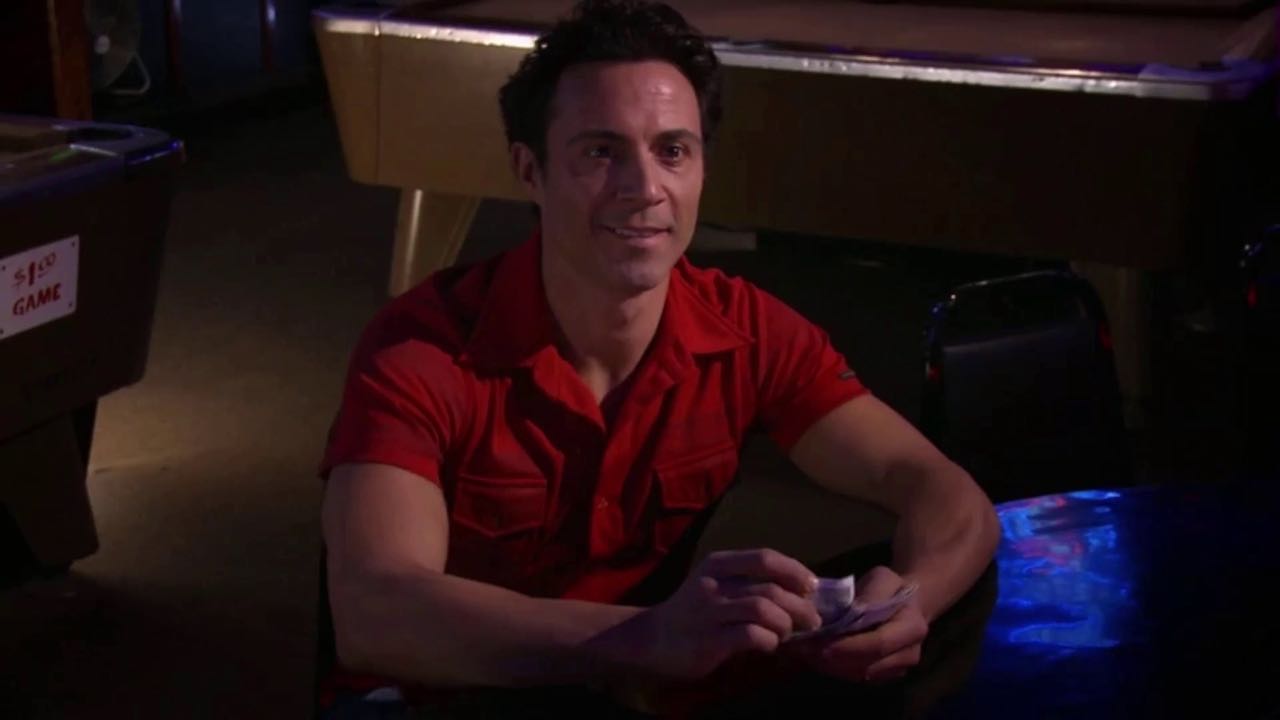
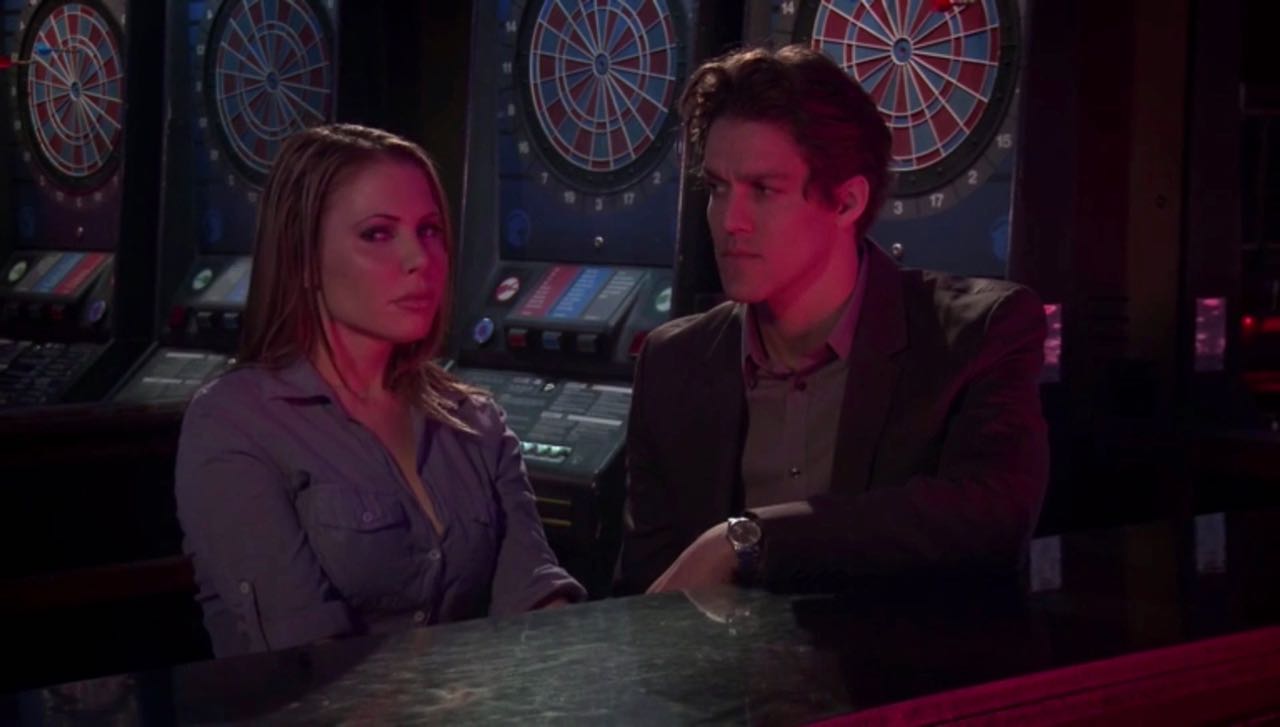
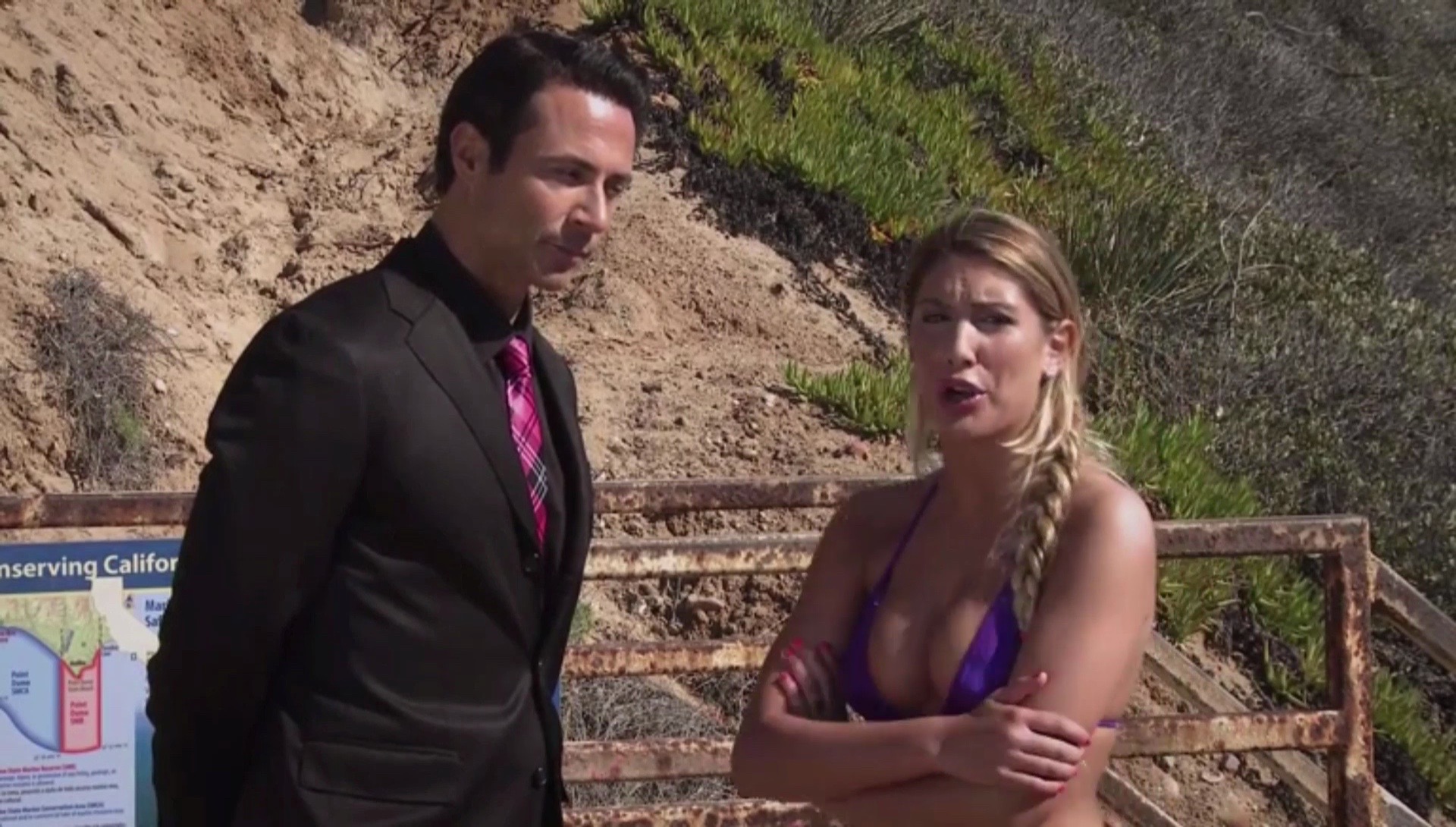
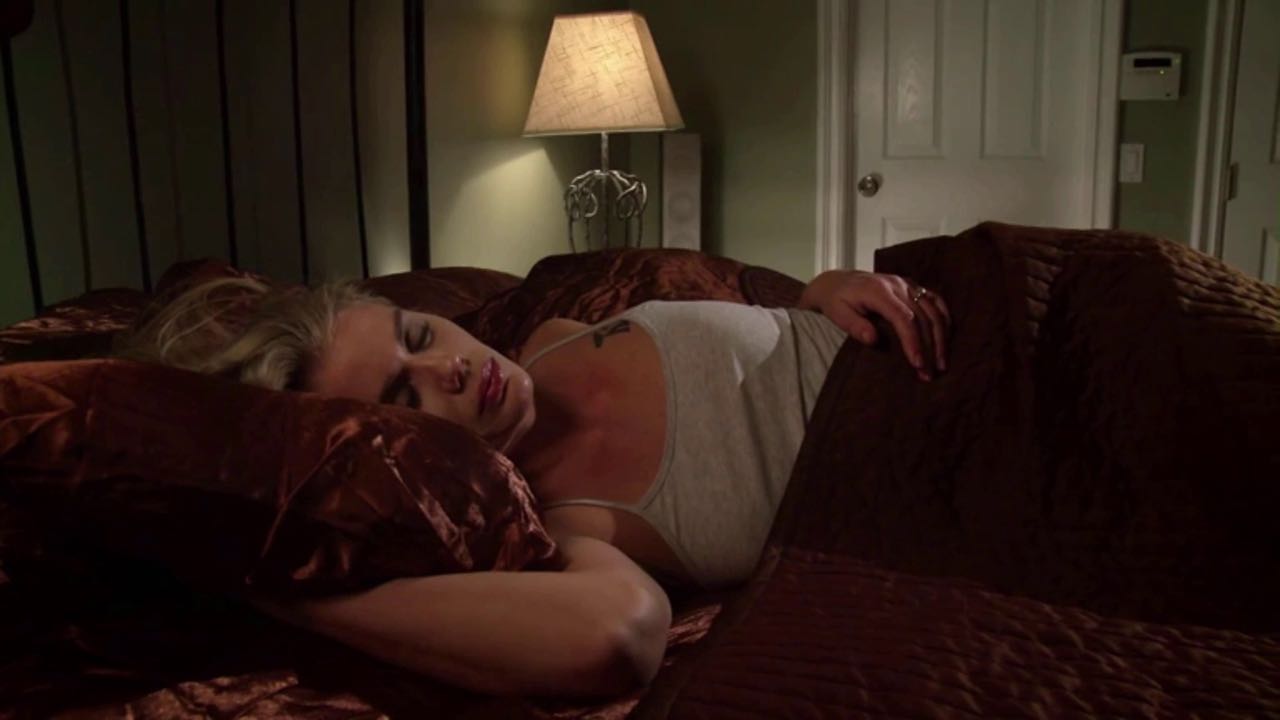
The streets are being flooded with lousy, synthetic heroin.  Could the source be somewhere inside of Trabuco Federal Prison?  That is what Nick Slater (Ben Maccabee) has been assigned to find out.  Nick is a tough cop but now he is going undercover, pretending to be a tough but incarcerated bank robber.  Nick  discovers that Trabuco is like no other prison out there.  For one thing, Wings Hauser is the warden.  Warden Pitt is a smirking Aryan who forces his prisoners to box for his amusement and who enforces discipline with a CIA-style torture chamber.  (Because the Warden is a boxing fanatic who likes to reward his best fighters, he also regularly brings prostitutes into the prison, which allows the film to reach its quota of B-movie nudity.)  Even worse, Warden Pitt and the head of the Aryan Brotherhood, Jigsaw (Paulo Tocha) are working together.  Only Nick can end Warden Pitt’s reign of terror but he will have to survive prison first.  Fortunately, Ben knows how to throw a punch and deliver kick and he is going to have to do a lot of both if he is going to make it out alive.

Broken Bars is a dumb but entertaining movie, with plenty of action and Wings Hauser villainy.  Ben Maccabee’s a credible 90s style action hero.  He may not be as good an actor as Dolph Lundgren or as fast as Jean-Claude Van Damme but, by the end of Broken Bars, there is no doubt that he could easily knock out Steven Seagal.  It’s no surprise that the best thing about the movie is Wings Hauser.  As anyone who ever watched late night Cinemax in the 90s knows, Wings Hauser was usually the best thing about any movie that he appeared in.  As a character, Warden Pitt is demented even by the standards of Wings Hauser and Hauser obviously had a ball screaming his lines.  B-movie stalwart Joe Estevez also shows up, playing a good guy for once.

Joe Estevez and Wings Hauser in the same movie?  Who cares if it’s any good?  Hauser and Estevez together is just another way of saying, “Must see.”

Rockin’ in the Film World #11: HAVING A WILD WEEKEND (Warner Brothers 1965)


gary loggins's avatarcracked rear viewer

For those of you who weren’t around during the heyday of the 60’s British Invasion, The Dave Clark Five were second only to The Beatles in popularity. The group came hot on the heels of The Fab Four, appearing on Ed Sullivan for two straight weeks, and had a solid string of hits from 1964 to 1967: “Glad All Over”, “Bits & Pieces”, “Because”, “Any Way You Want It”, “Over & Over”. Yes, they were BIG, folks!  Propelled by Clark’s up-front drumming and lead singer Mike Smith’s growling vocals, The Dave Clark Five had the teenyboppers screaming in the aisles, and since A HARD DAY’S NIGHT was a smashing success, a movie starring the boys was the next logical step.

Director John Boorman

HAVING A WILD WEEKEND begins like it’s going to be a clone of that film, then turns into something completely different thanks to first-time director John Boorman, who would later give…

View original post 495 more words

Late Night Cable Movie Review: The Love Machine (2016, dir. Dean McKendrick)


It’s been awhile since I wrote a review of a feature film. Let’s see if I can still get through one of these. How hard can it be? It’s a Dean McKendrick movie.

If you’re gonna watch this, then I hope you have seen McKendrick’s The Deadly Pickup (2016) and Model For Murder (2016) since this is basically a third film in what could be an unofficial trilogy.

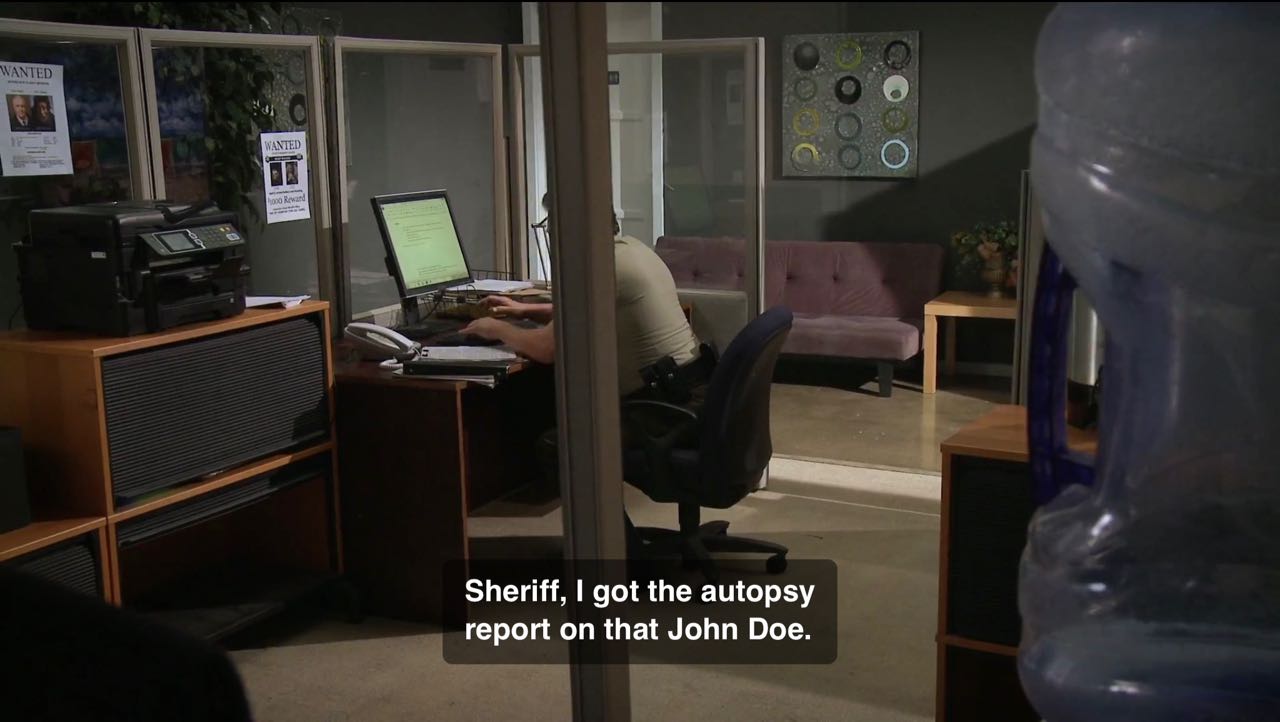
The movie begins, and we see what looks like an amplifier with two voltage gauges, a pressure gauge stuck on top, and something that shoots a beam out of it, which I’m sure comes from another one of McKendrick’s films.

Much like this set, which is where Sarah Hunter’s character from Model For Murder was killed.

Model For Murder (2016, dir. Dean McKendrick)

Model For Murder (2016, dir. Dean McKendrick)

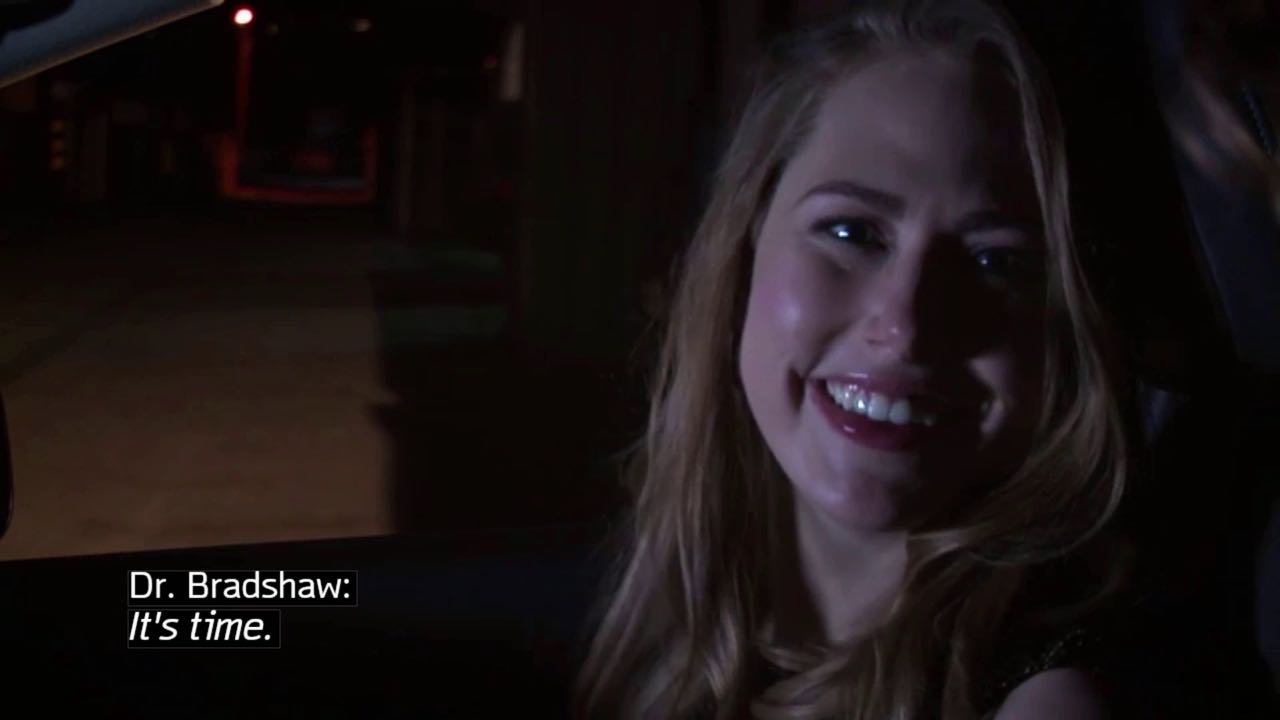
In this film, Carter Cruise is playing Bair. She is in a session with psychologist, Dr. Stephanie Bradshaw (Jennifer Korbin). Bradshaw asks her what she does when she sees an attractive man. She wants to know what her first thoughts are. Those first thoughts are of stock footage from The Deadly Pickup.

The opening kill.

And Rick!
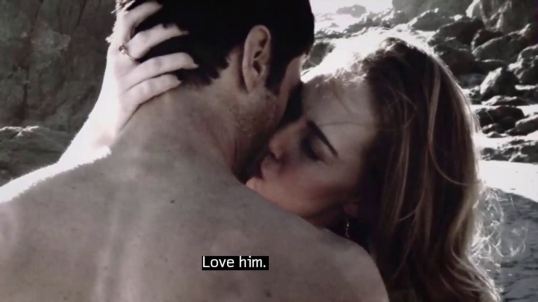
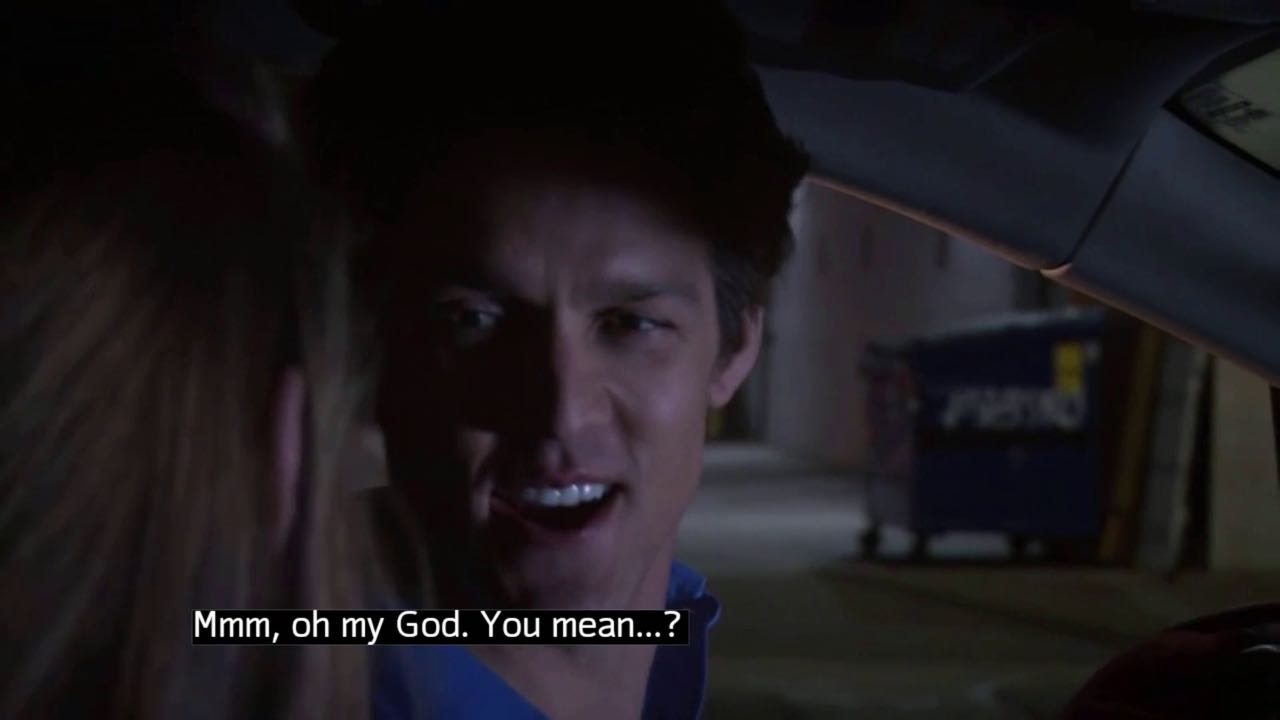
You remember Rick, right? He’s the guy who got pricked with her poisonousness ring, yet still managed to stumble from the car where they had sex…
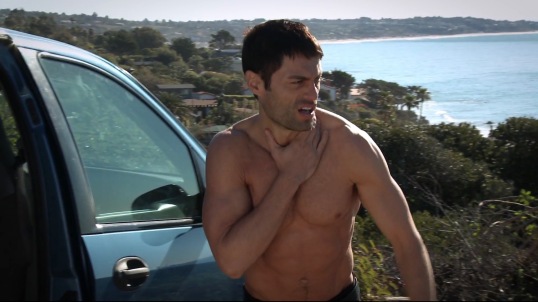
The Deadly Pickup (2016, dir. Dean McKendrick)

The Deadly Pickup (2016, dir. Dean McKendrick)

so that he could die somewhere else.
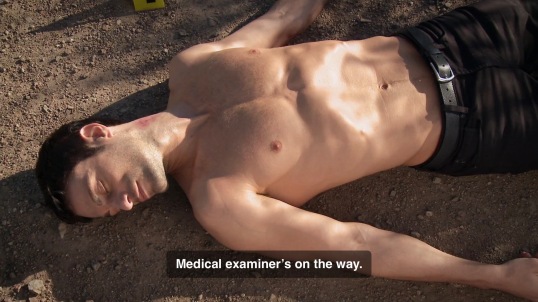
The Deadly Pickup (2016, dir. Dean McKendrick)

The Deadly Pickup (2016, dir. Dean McKendrick)

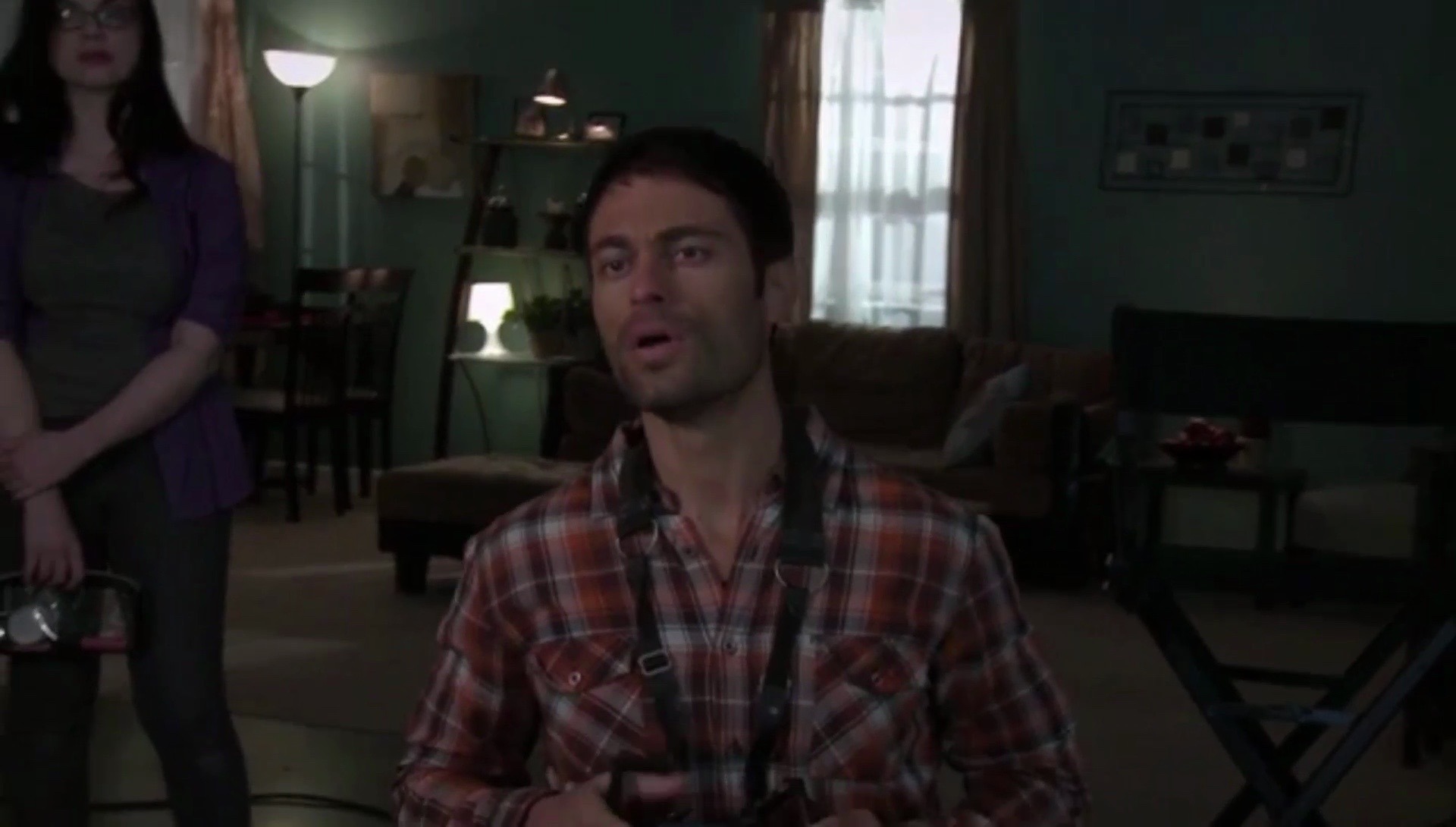
Then he came back in Model For Murder as a photographer.
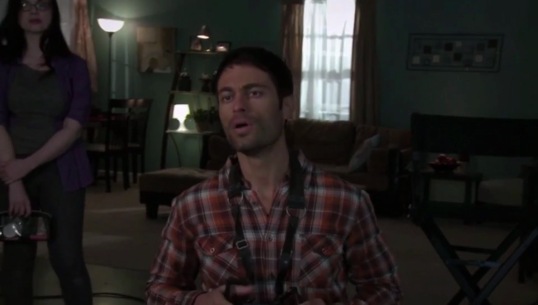
Model For Murder (2016, dir. Dean McKendrick)

Model For Murder (2016, dir. Dean McKendrick)

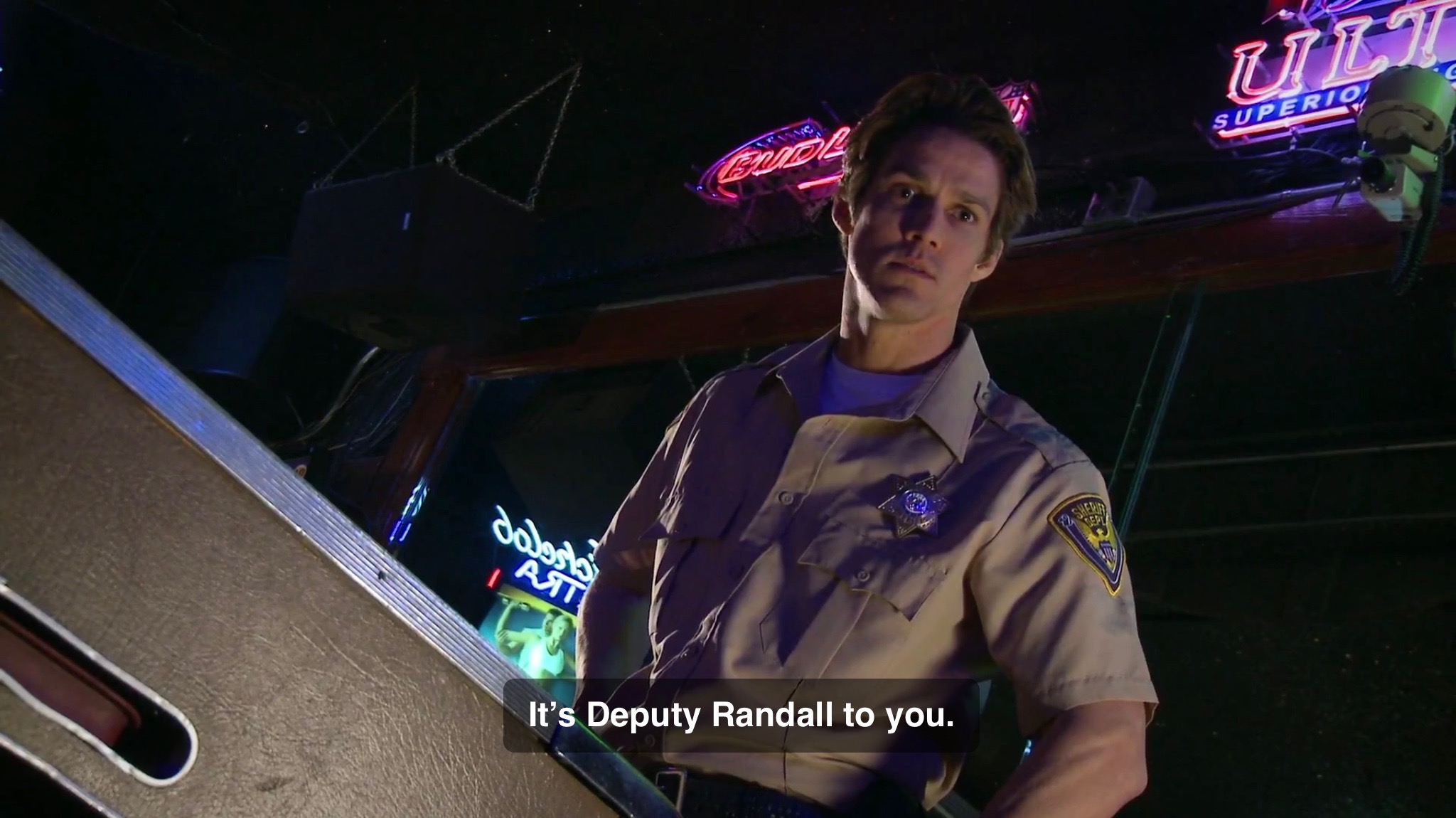
There’s also a flashback to Charlie who had to be rescued from Cruise by Deputy Randall.
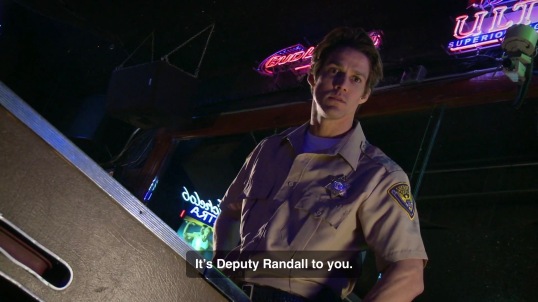
The Deadly Pickup (2016, dir. Dean McKendrick)

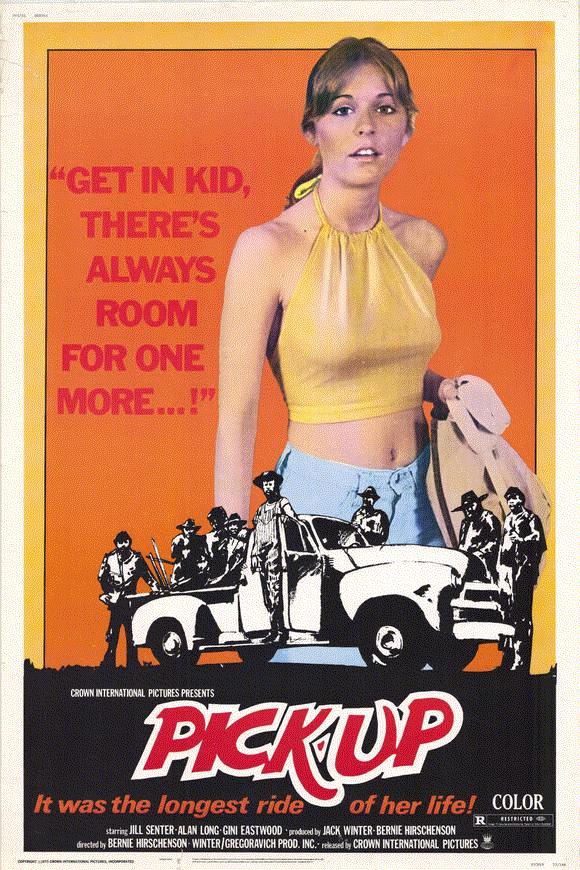
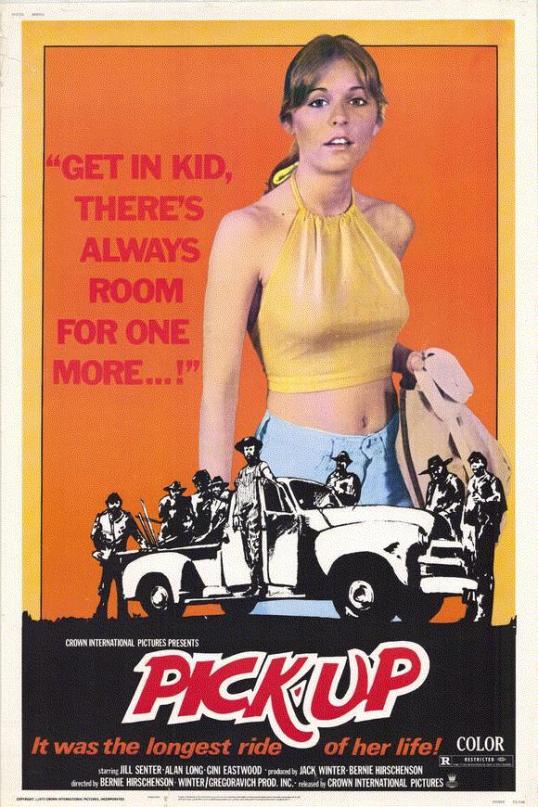
Don’t worry, Deputy Randall, who was promoted to detective in Model For Murder, makes a return in this film. Like Cruise, he is playing a different character. However, unlike Cruise, he is played by Billy Snow via the pseudonym of Alan Long. Makes sense to use the name of an actor from 1975’s Pick-up.
After the reused footage, the doctor turns up the dial on the machine, then asks her again what she wants to do with the attractive man.
Perfect! I can’t say the same about these opening credits though. This dance number with Erika Jordan goes on just short of forever.

It only exists so she can give a lap dance to one of our main characters, Don (Justin Berti), in order to introduce us to him.
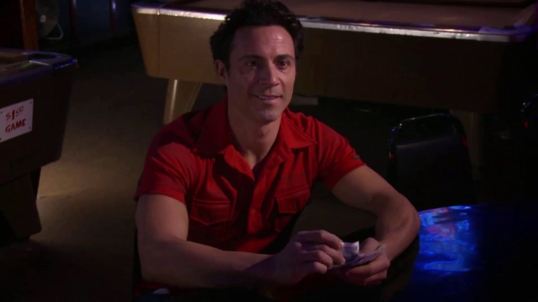
It also gives me an excuse to wonder what led her from working as a detective to dancing at this club.
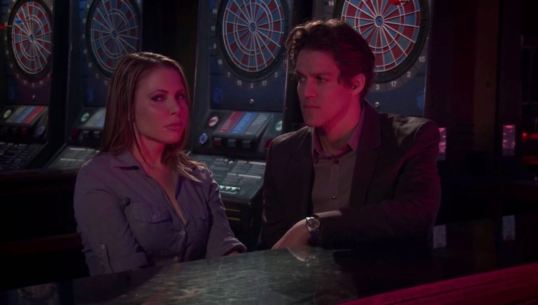
Model For Murder (2016, dir. Dean McKendrick)

Also, Don has gone from managing models to sadly having to visit this strip club.

The Deadly Pickup (2016, dir. Dean McKendrick)

The Deadly Pickup (2016, dir. Dean McKendrick)

After a shot of a street somewhere, we cut to the bedroom where Erika Jordan and Billy Snow had sex in Model For Murder.
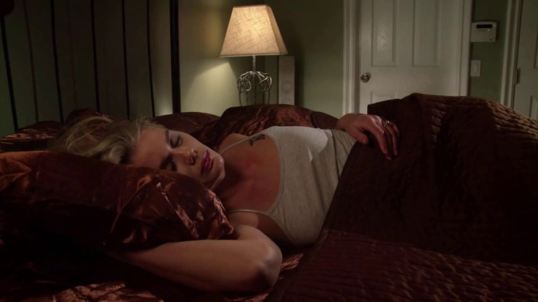
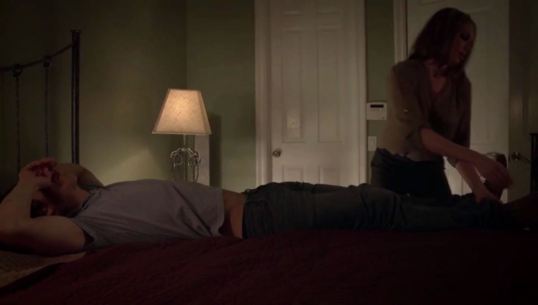
Model For Murder (2016, dir. Dean McKendrick)

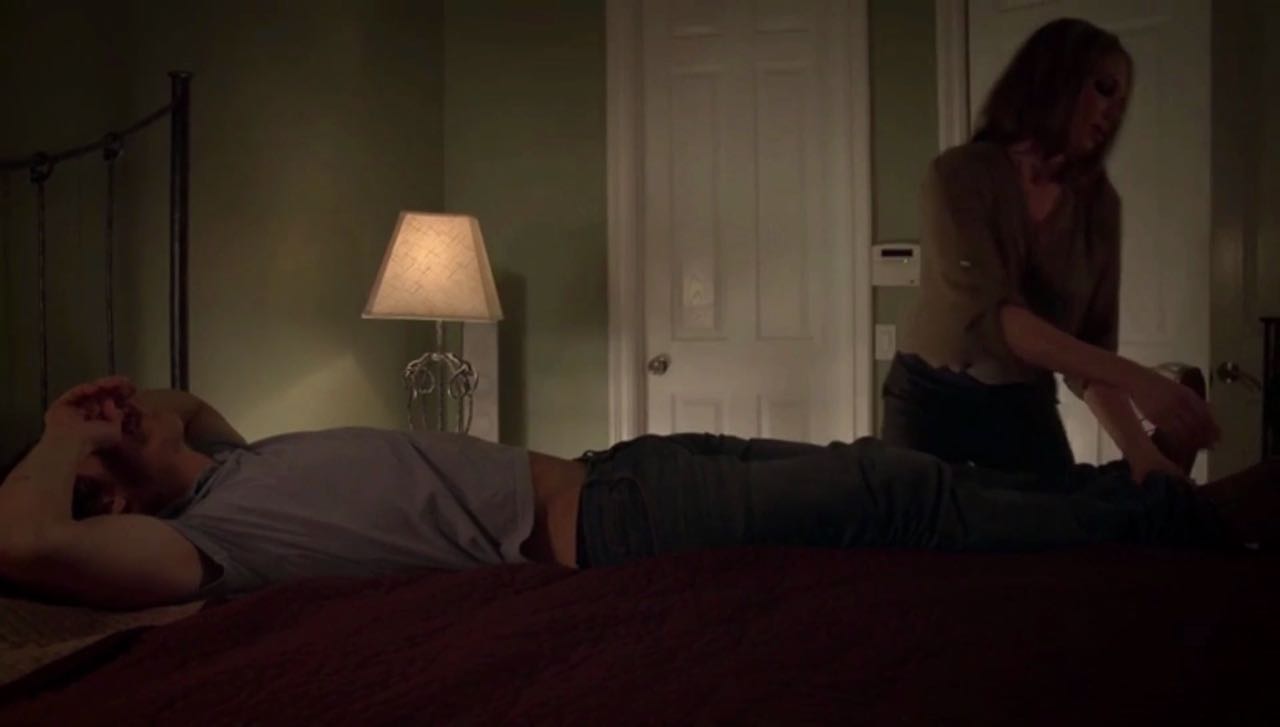
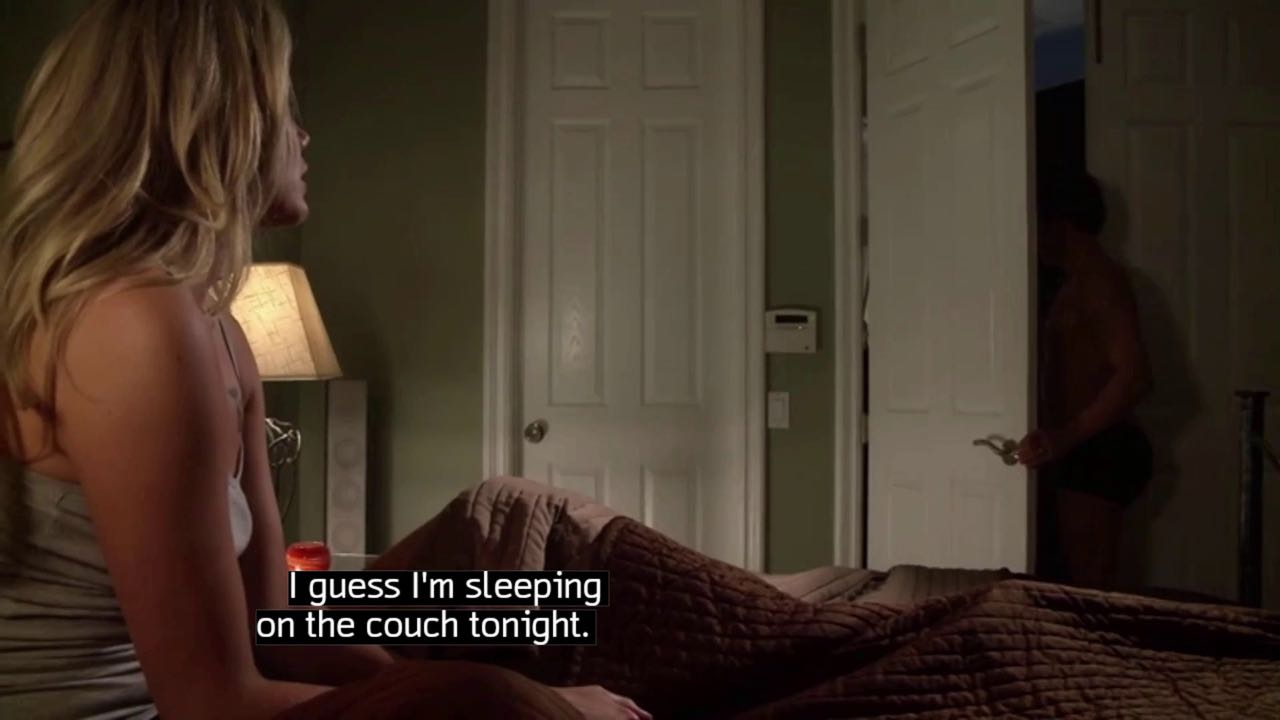
This is where we meet Don’s wife, Jane (Alice Haig). They are having trouble with their marriage. He wants to try couples therapy, but she is reluctant, so he leaves to sleep on the couch, which judging by the paint on the walls, is probably in the same building as the room from earlier.
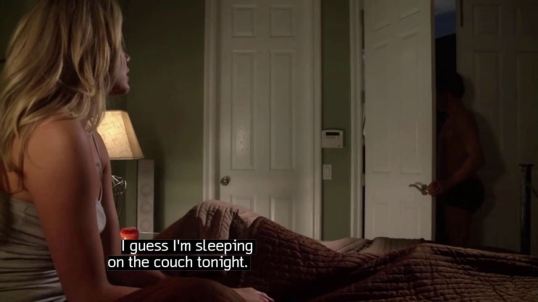
Meanwhile, at the $20 Oil Change…

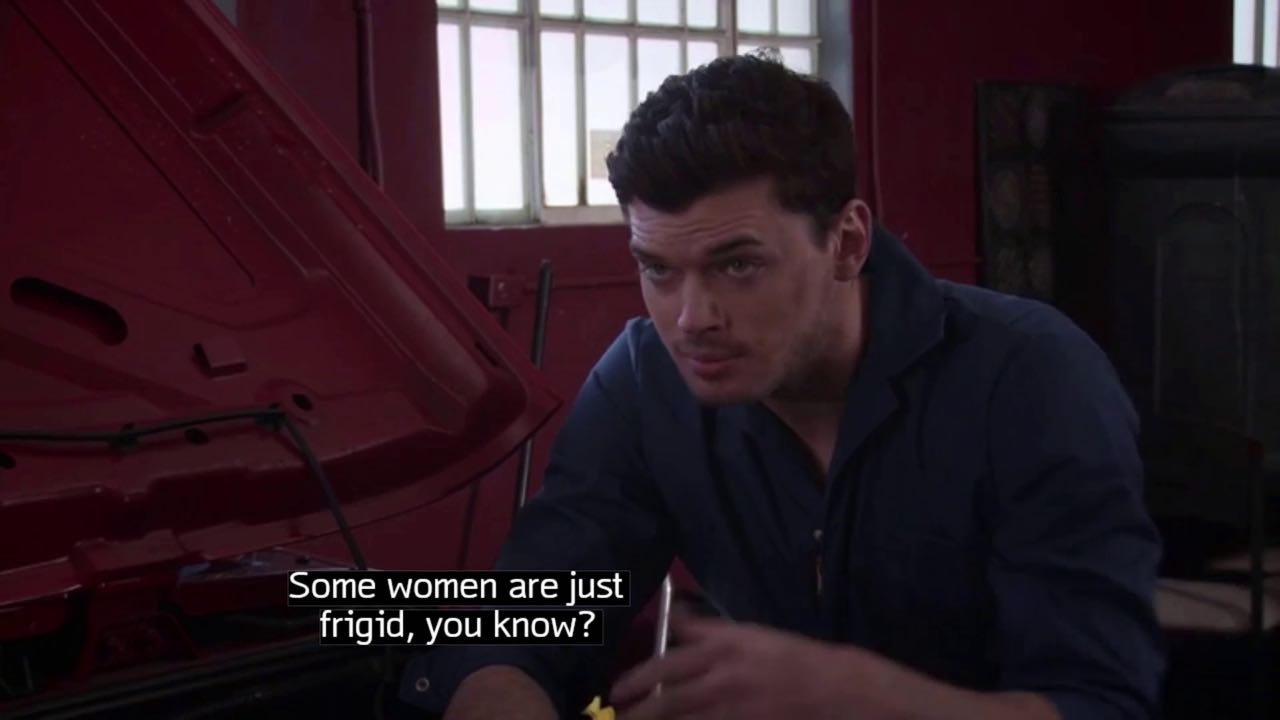
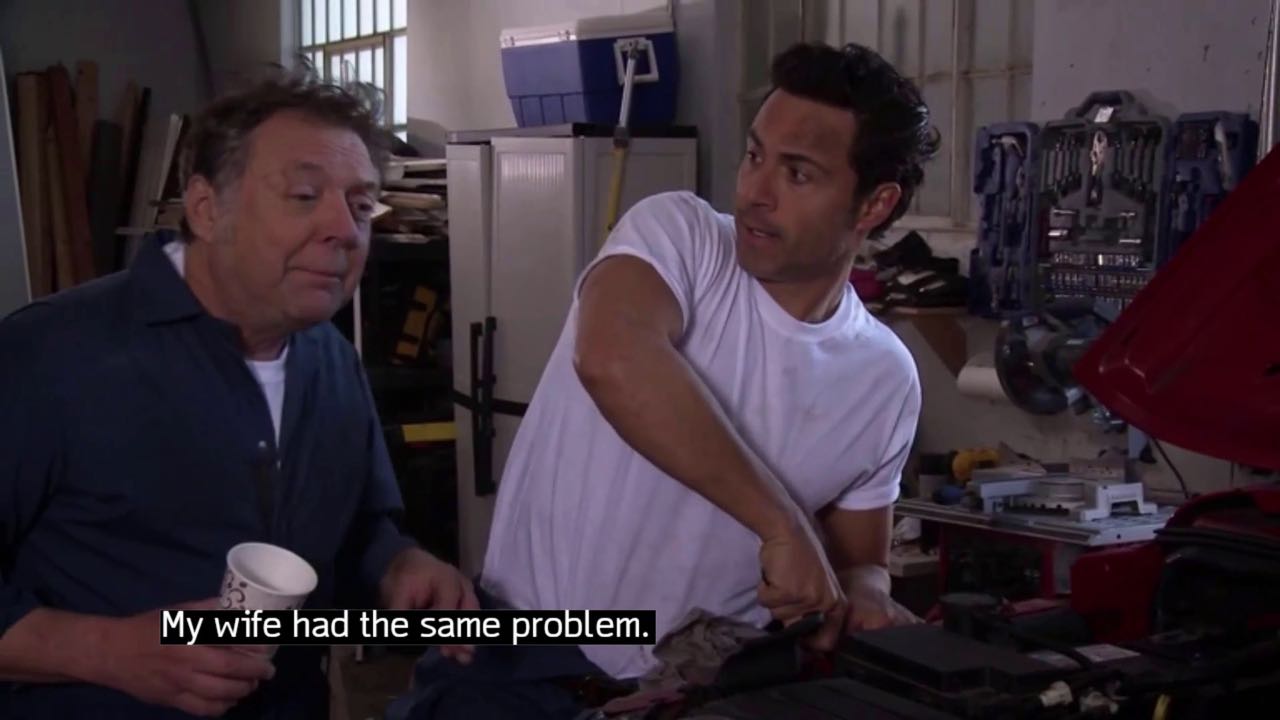
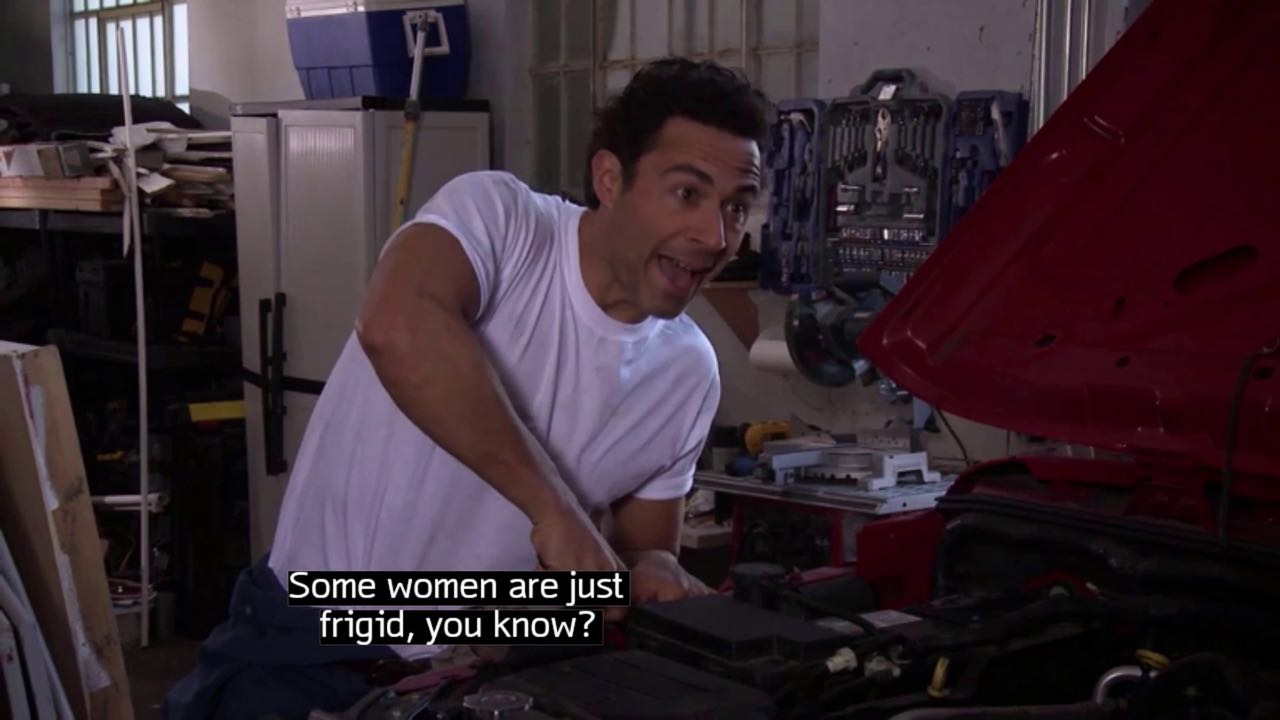
Don strikes up a conversation with his friend John (Michael Hopkins) concerning his marriage problems.
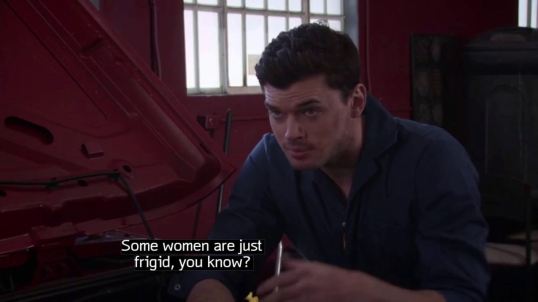
I know I said something similar when I talked about Model For Murder, but welcome back to the world of the living, Josh. You might remember Michael Hopkins as Carter Cruise’s first victim in The Deadly Pickup. Or you don’t, because you have a life, haven’t seen all three movies, and certainly haven’t paid this much attention to them.

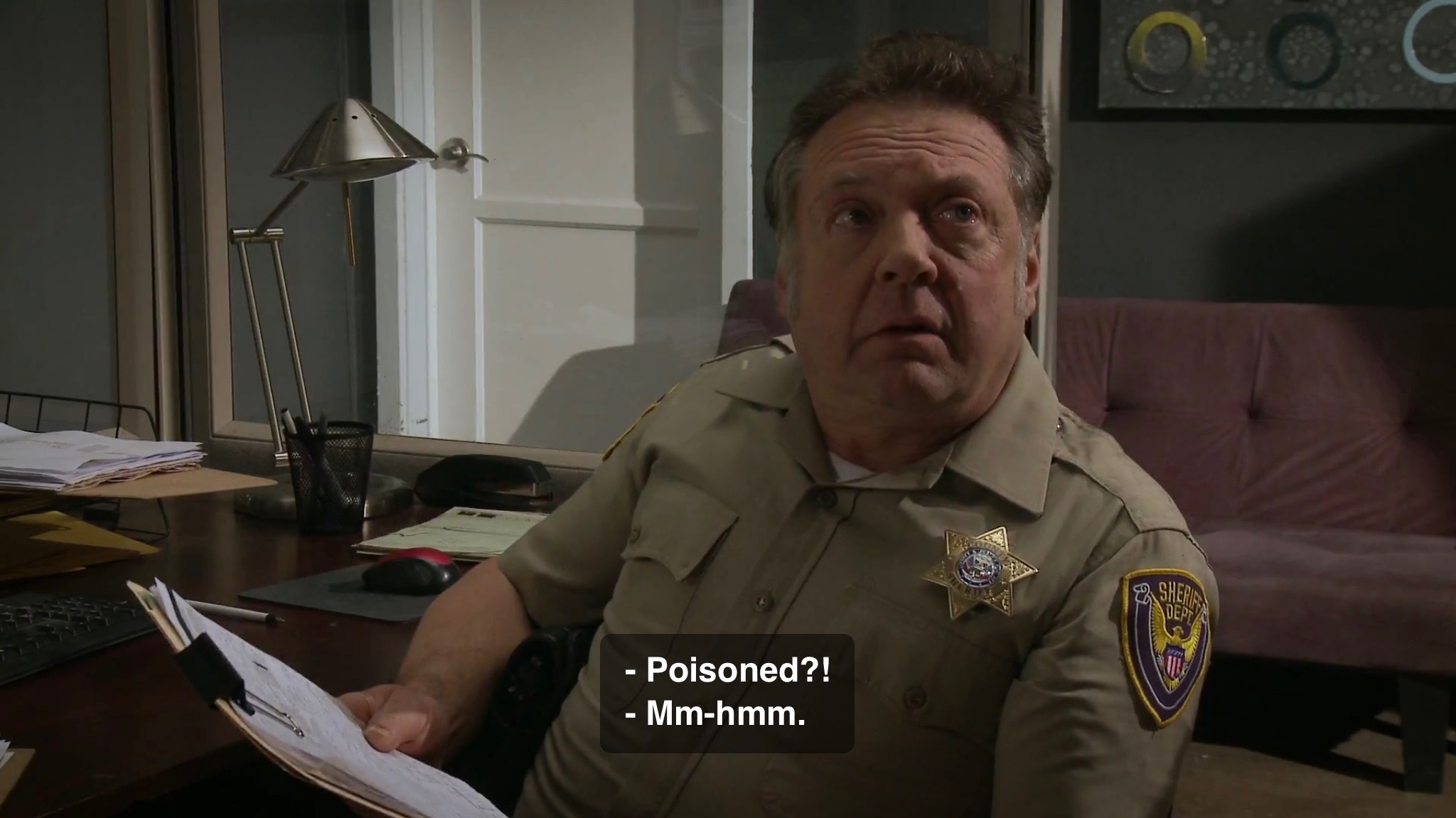
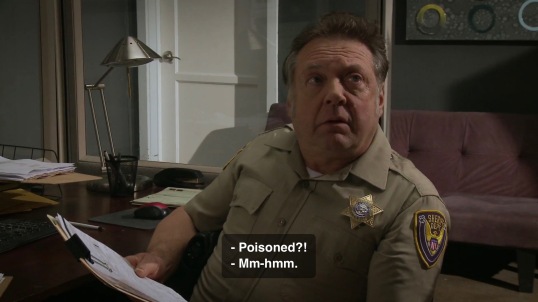
We also get the return of Sheriff Bates…
The Deadly Pickup (2016, dir. Dean McKendrick)

The Deadly Pickup (2016, dir. Dean McKendrick)

except this time Michael Gaglio owns this $20 Oil Change.
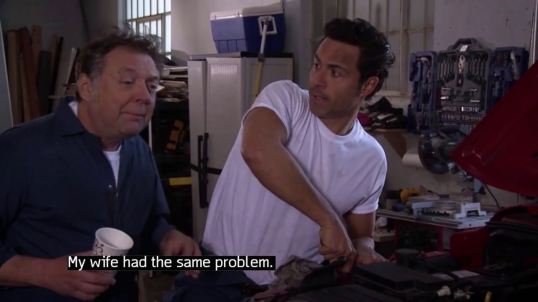
And I got this humorous shot of Justin Berti.
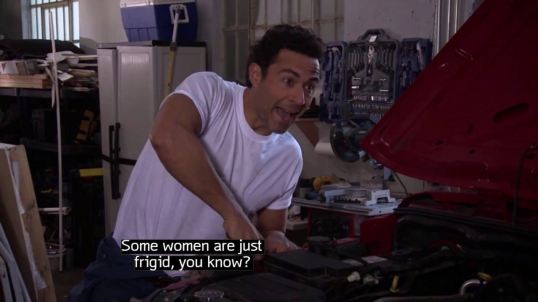
It doesn’t have to do with anything. I just thought I’d share it with you.

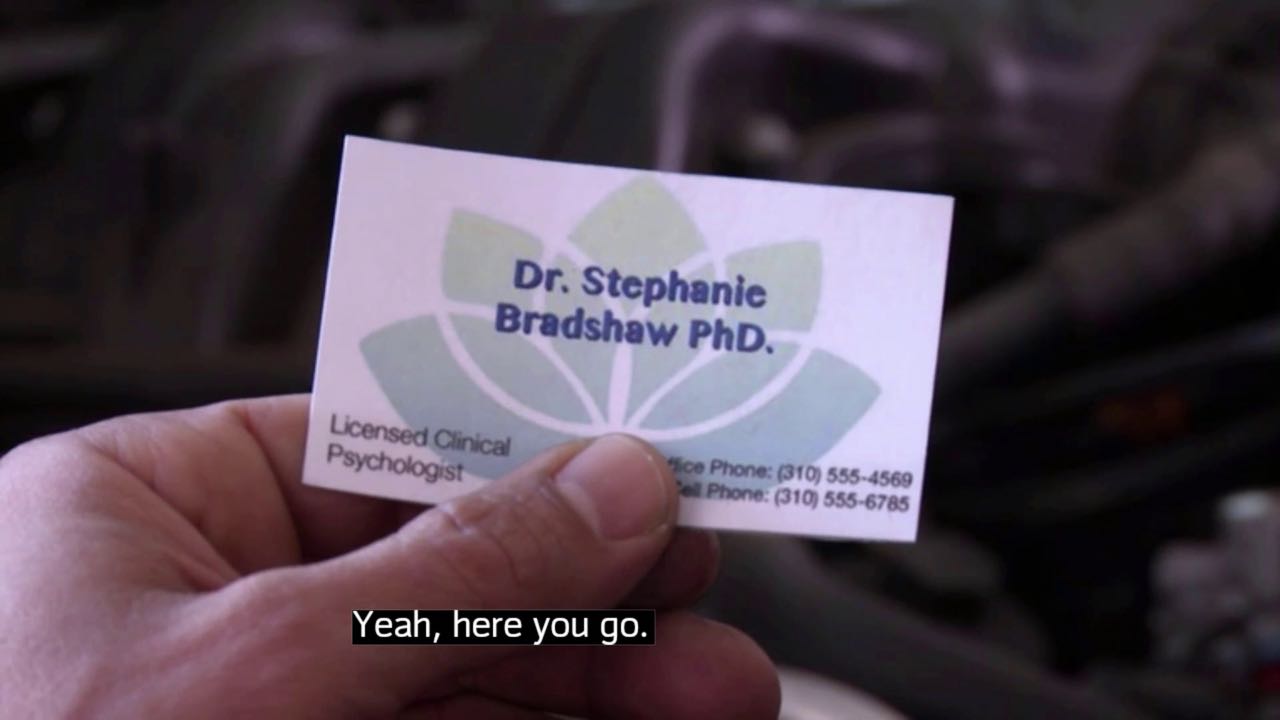
John suggests a therapist that worked for him and his wife, Angie.
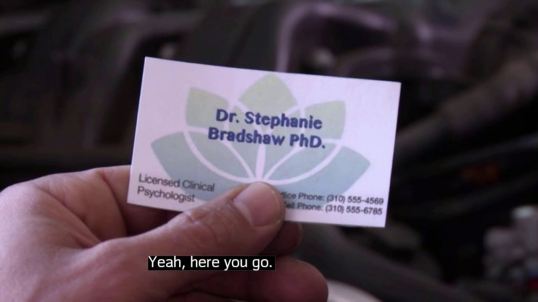
Then we get what looks like a new set.
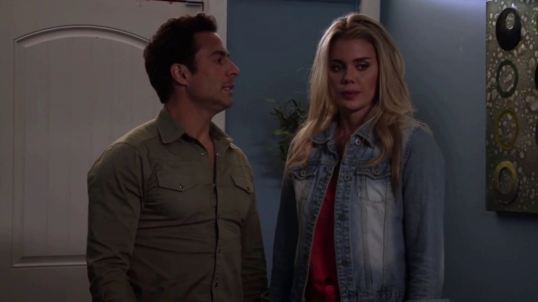
Sure, it appears to have been decorated by the same people who did the police station in The Deadly Pickup, but I couldn’t find it anywhere else.
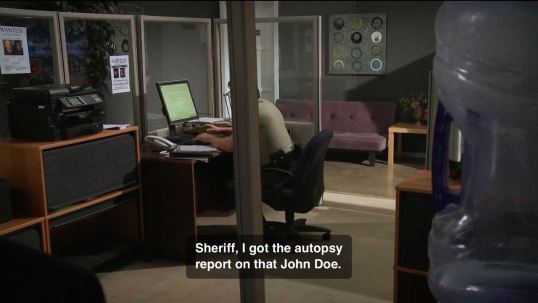
The Deadly Pickup (2016, dir. Dean McKendrick)

The Deadly Pickup (2016, dir. Dean McKendrick)

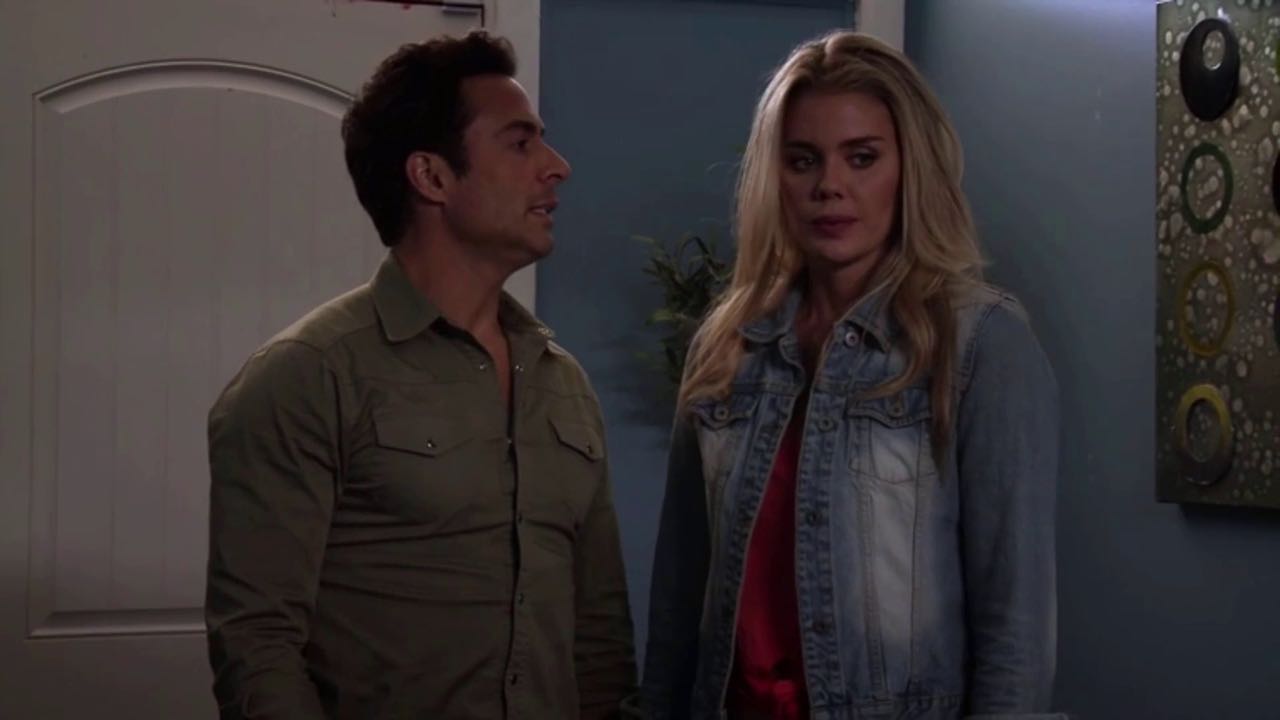
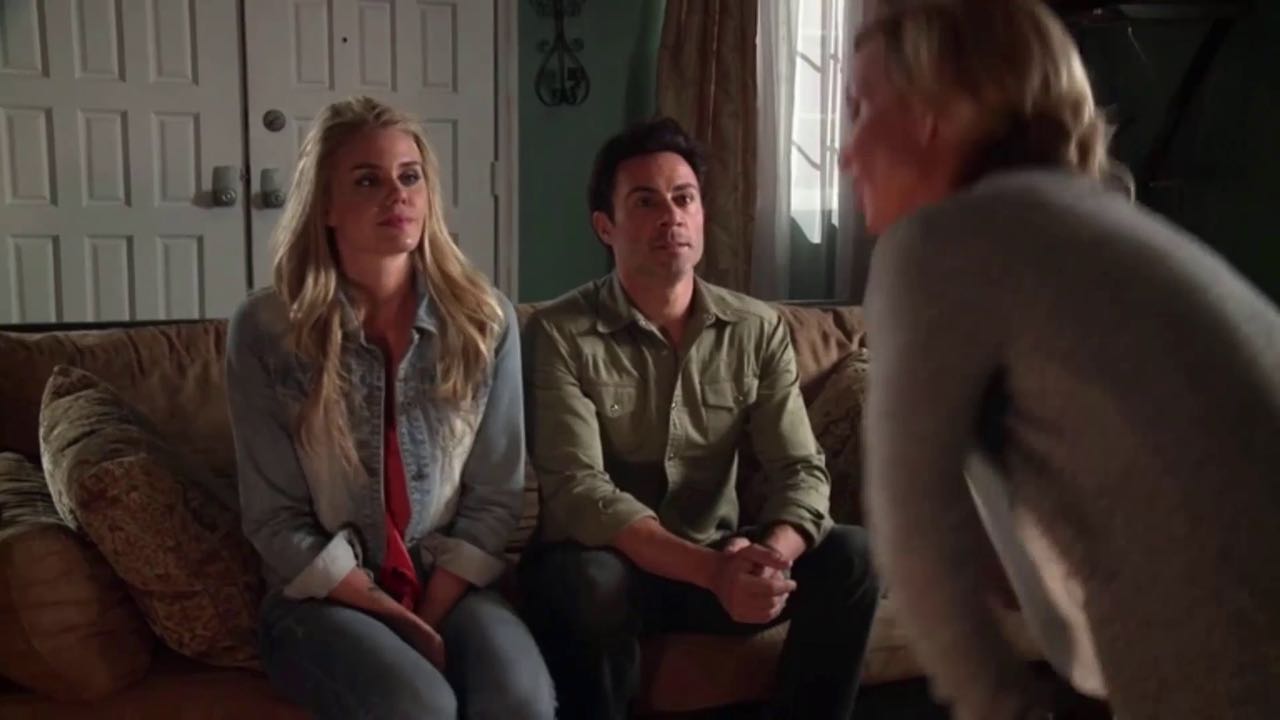
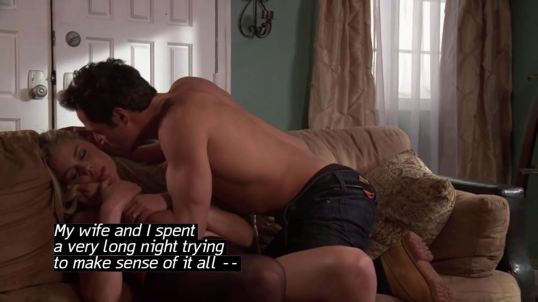
Inside, the doctor gets the story from Don and Jane about their troubles while they sit on the couch that Rick had sex on in Model For Murder.
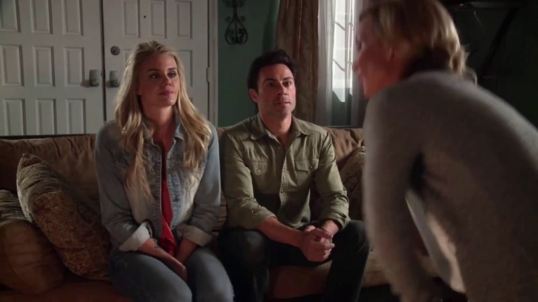

Model For Murder (2016, dir. Dean McKendrick)

Of course she’s an ideal candidate to be zapped by that machine. The questions ultimately lead the doctor to asking Jane about her sexual fantasies. This time we don’t get stock footage. It’s just another reused set. She dreams of sunbathing on the set of the sexual encounter with a murder victim her husband told police about in Model For Murder.


Model For Murder (2016, dir. Dean McKendrick)

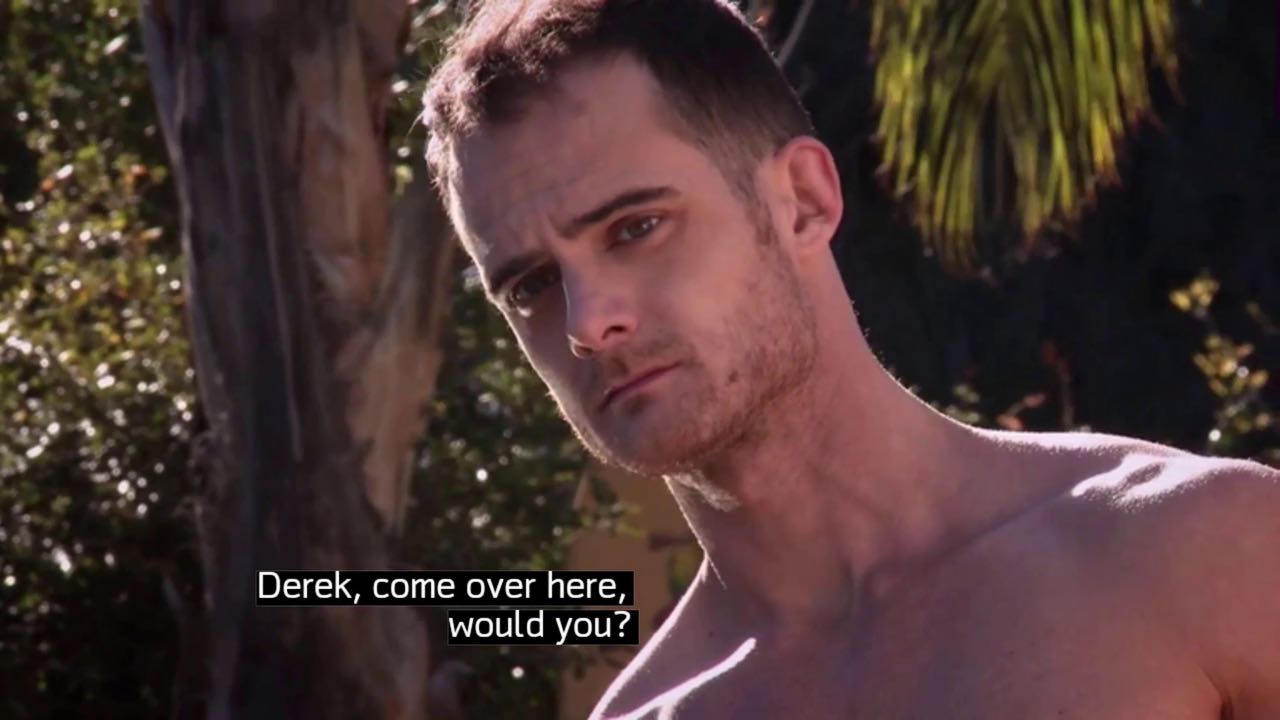
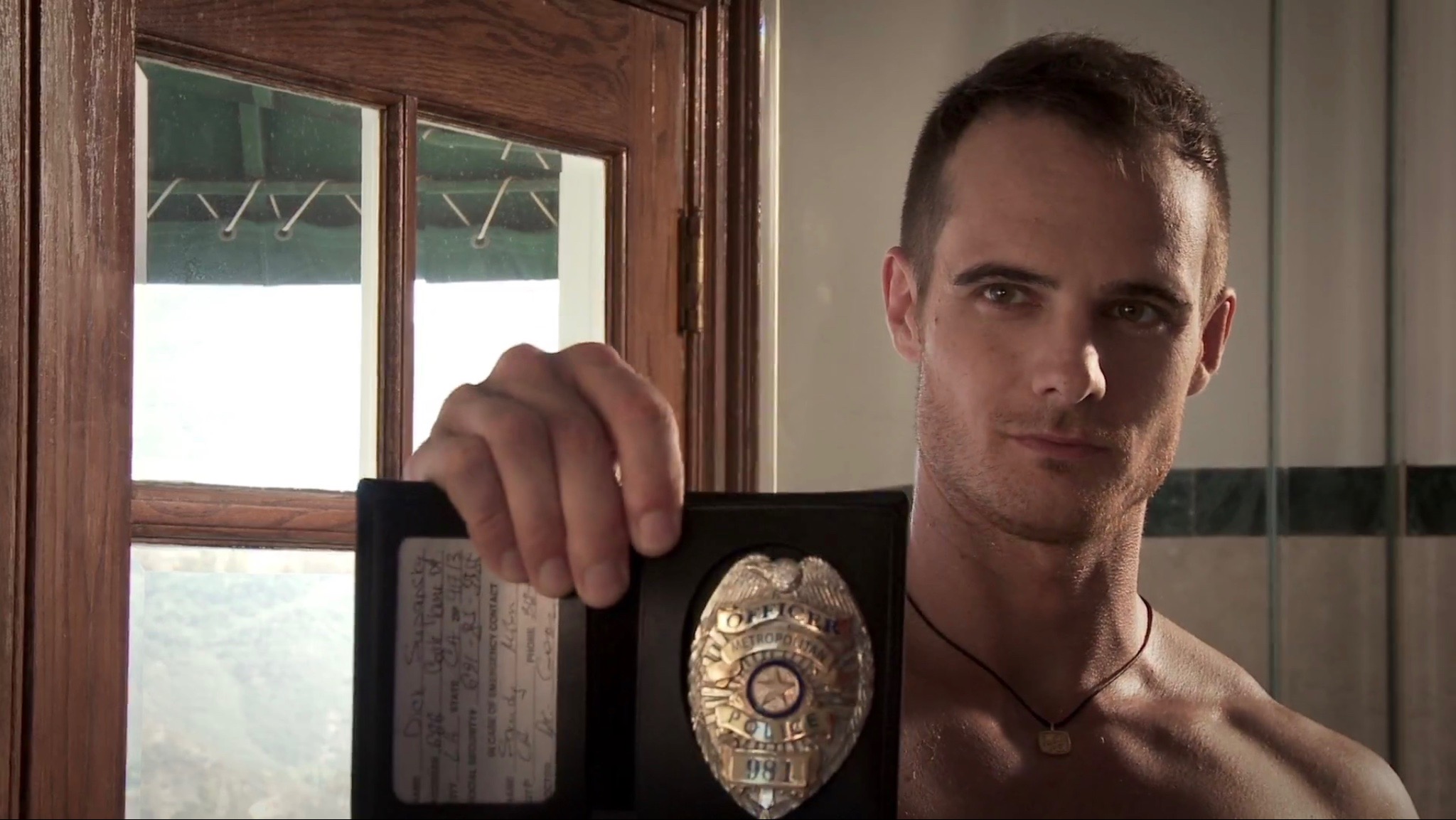
And of course there’s a pool boy (Robbie Caroll). You may remember him as the police officer who arrested Katie Morgan at the beginning of Vixens From Venus (2016).
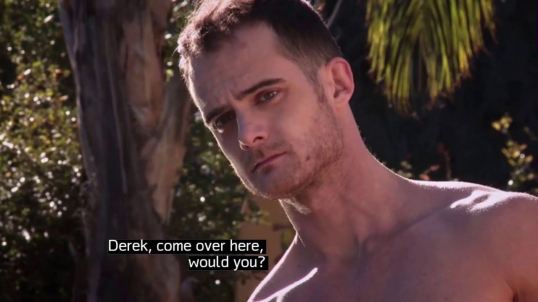
Vixens From Venus (2016, dir. Sal V. Miers)

Much like Jordan, his career seems to be on the downswing. He was once a police officer, and now he’s been reduced to being a pool boy.

This is the first sex scene of the movie. I would love to have heard the conversation on the other end of this that Jane was having with the doctor.

While this scene happens, we are treated to a few minutes of a soundalike of Take Five by The Dave Brubeck Quartet.

The session went well, and a follow-up appointment is set.

Now we get to find out what the outcome of these treatments is when we get to meet John’s wife, Angie (Pepper XO).
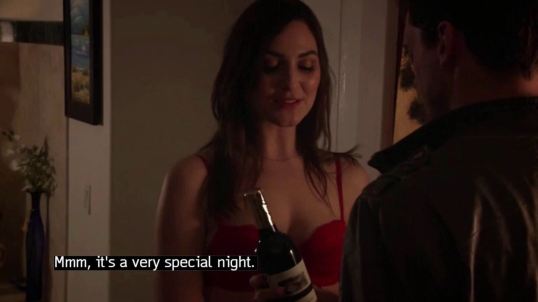
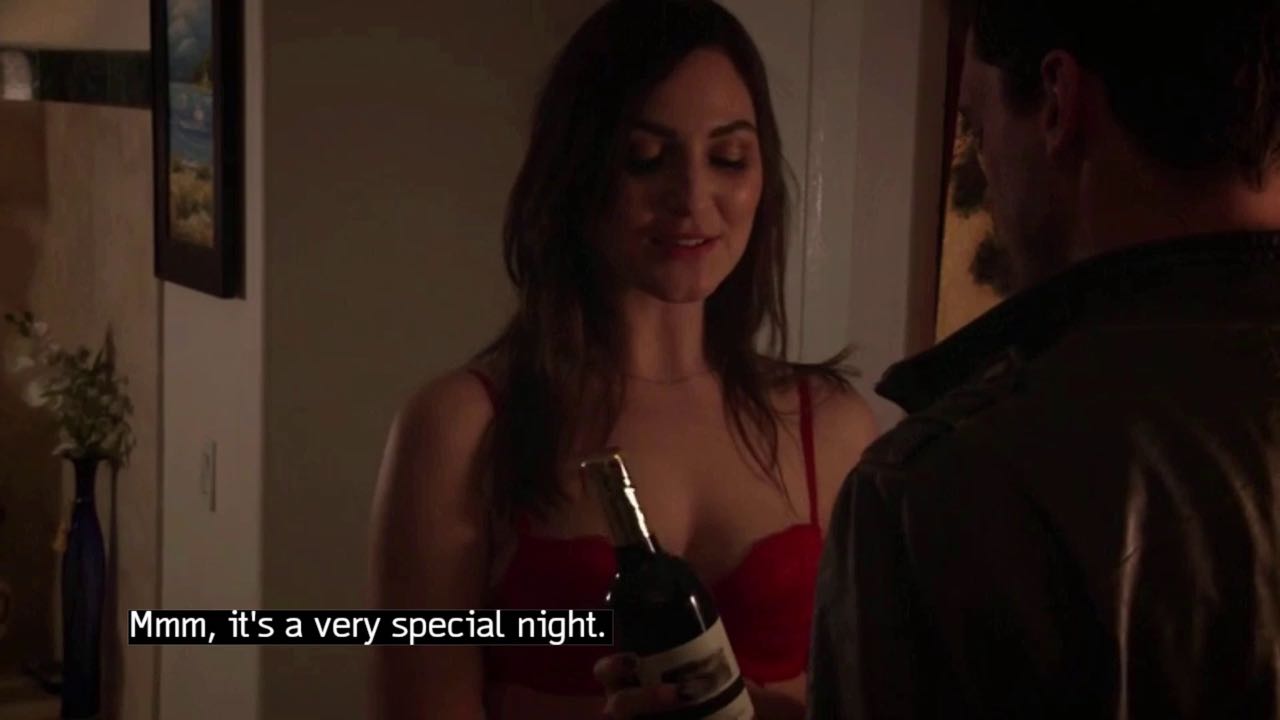
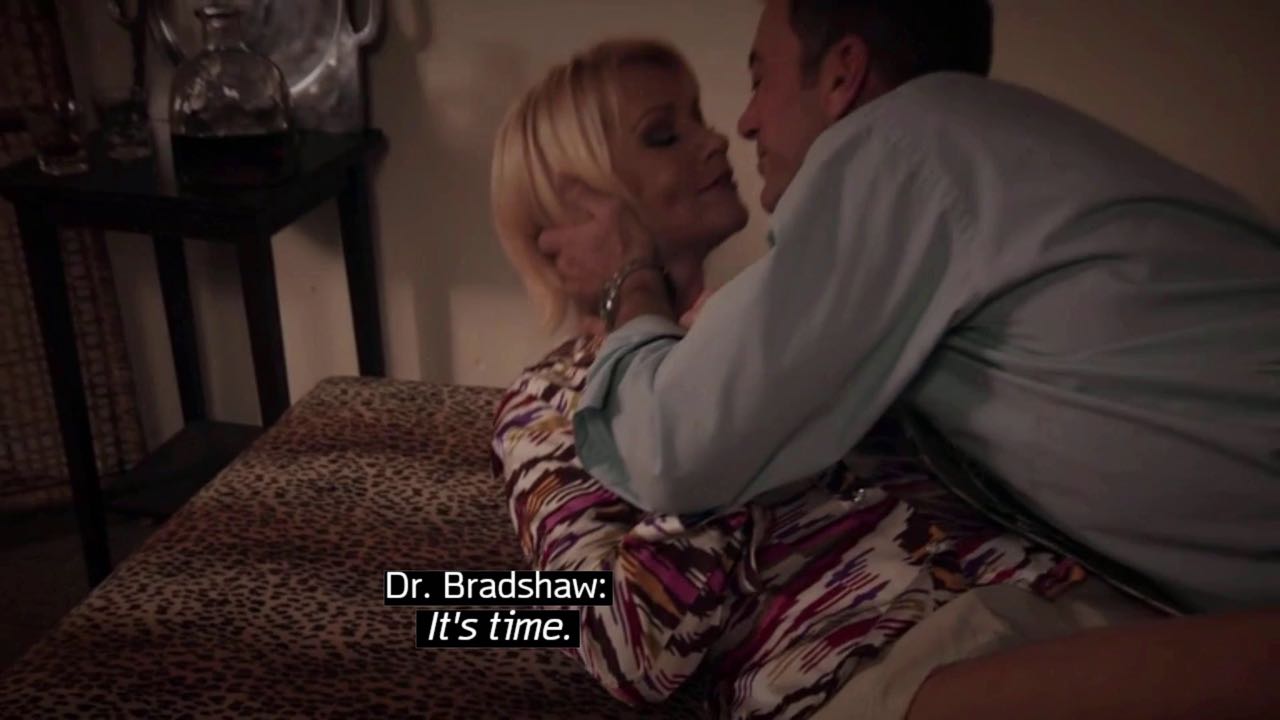
A call comes in from the therapist who tells Angie that “it’s time.” That means it’s time to have sex on Brian and Traci’s bed from The Deadly Pickup.


The Deadly Pickup (2016, dir. Dean McKendrick)

The Deadly Pickup (2016, dir. Dean McKendrick)

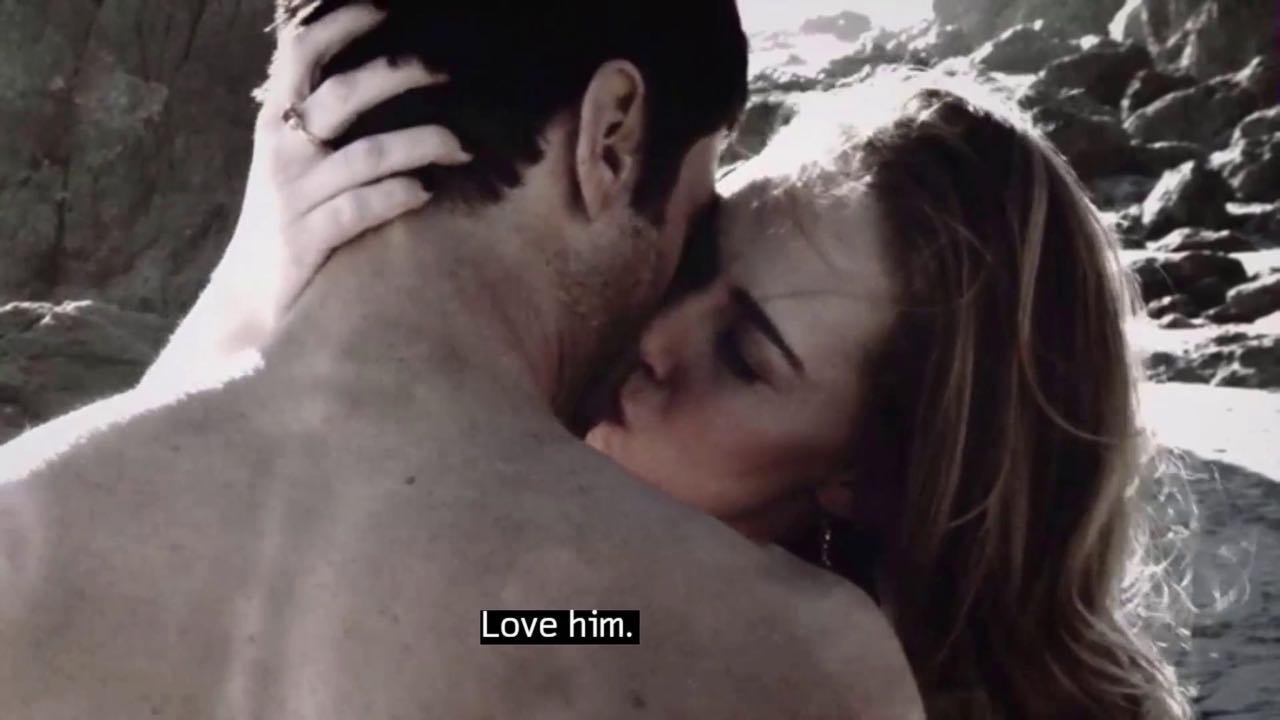
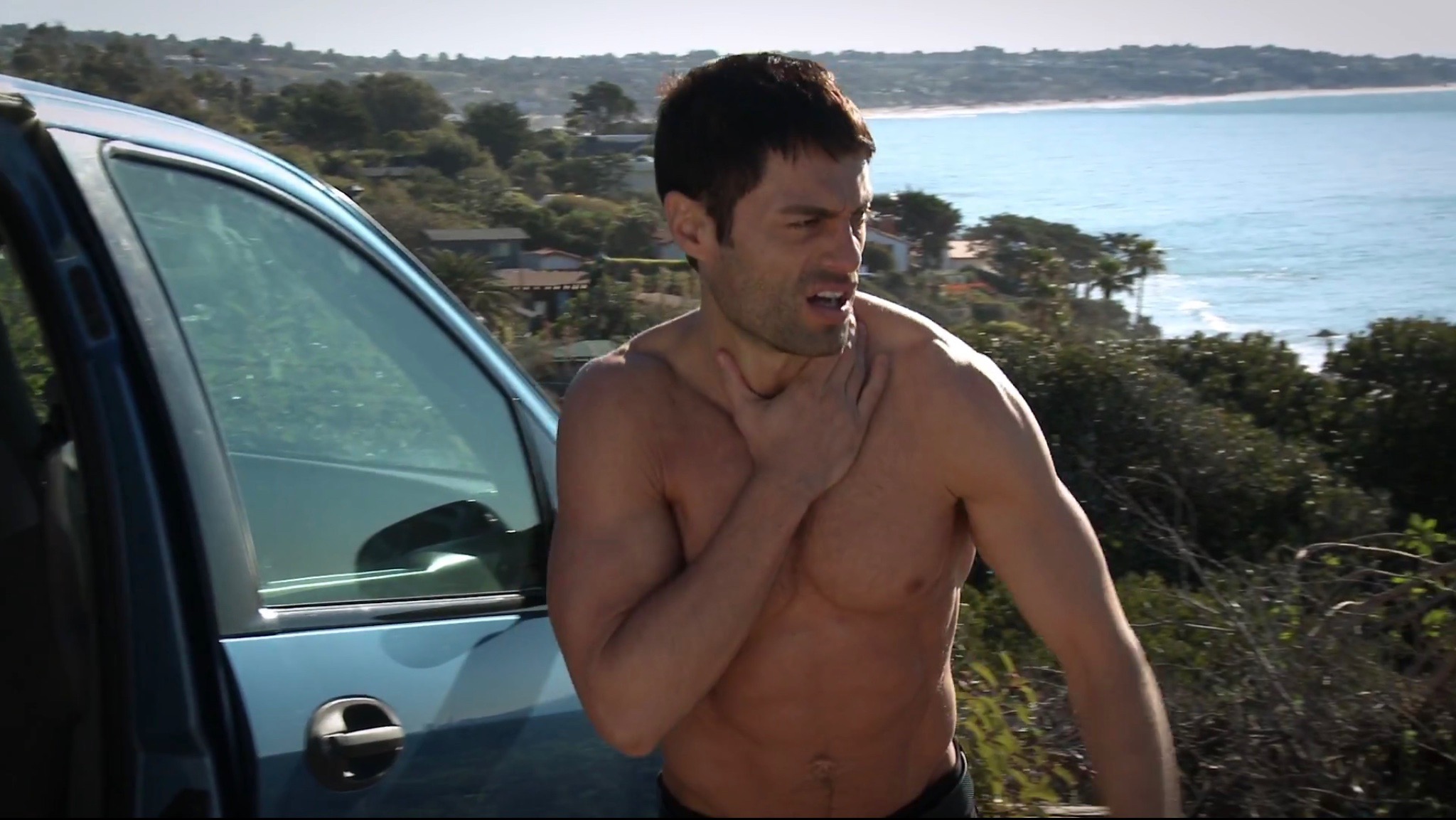
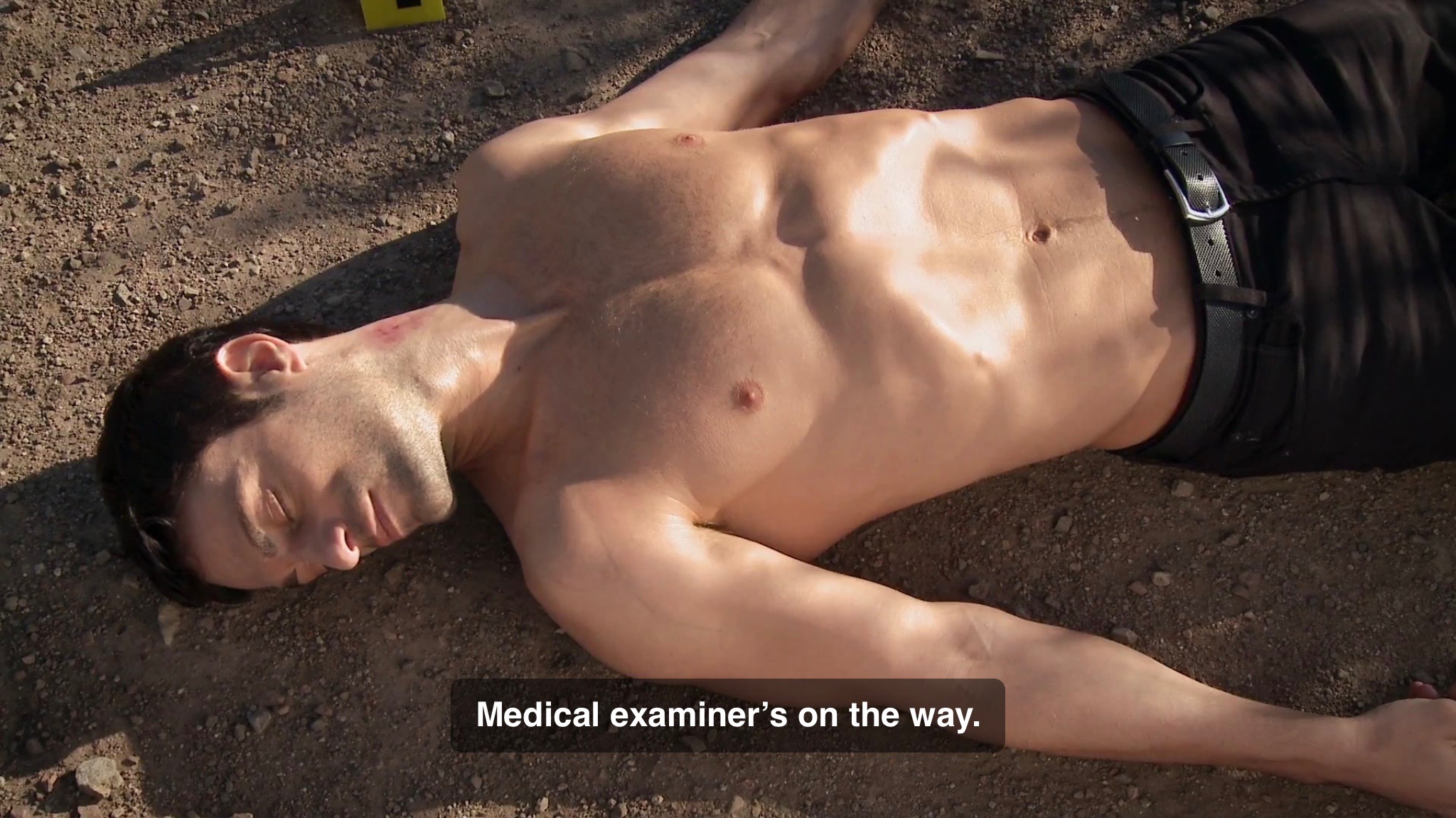
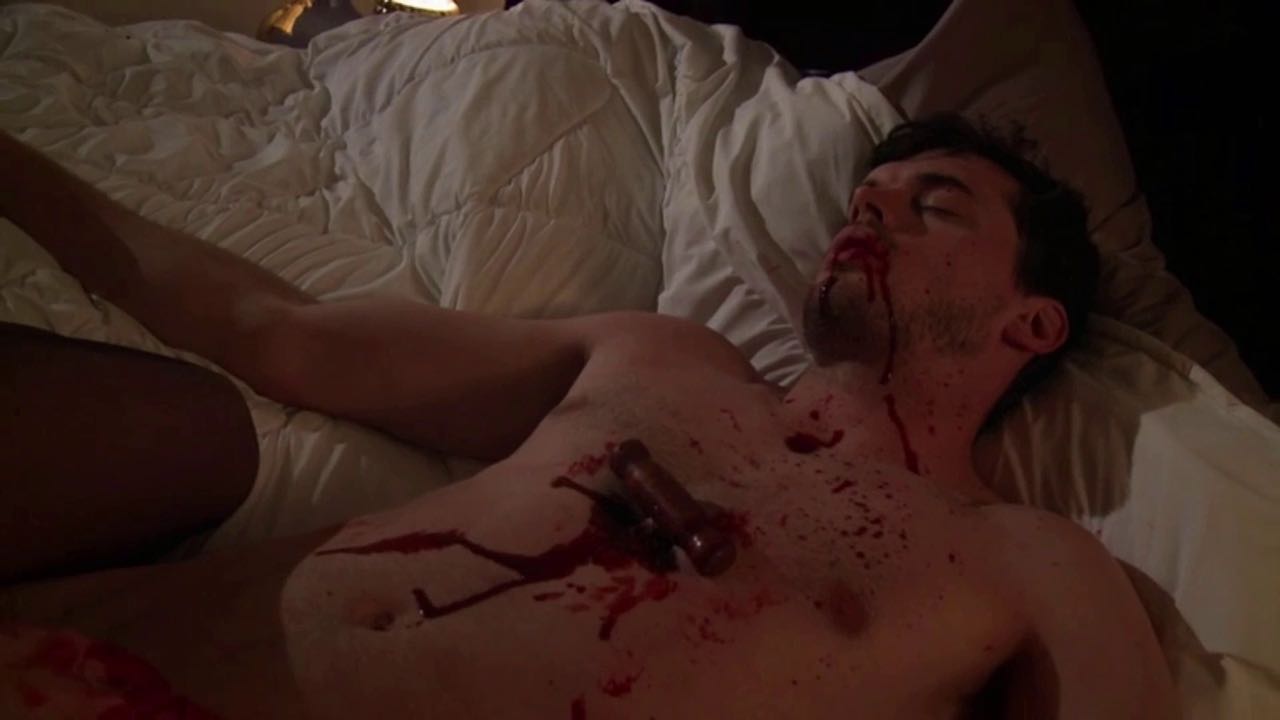
It also means that it’s time for John to die from a corkscrew to the chest.
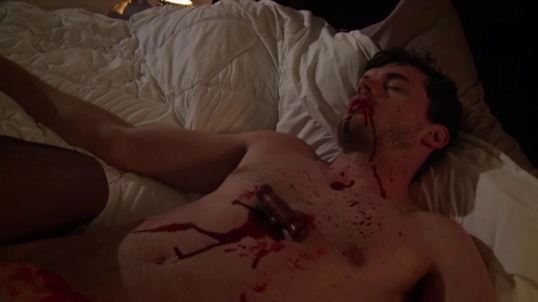
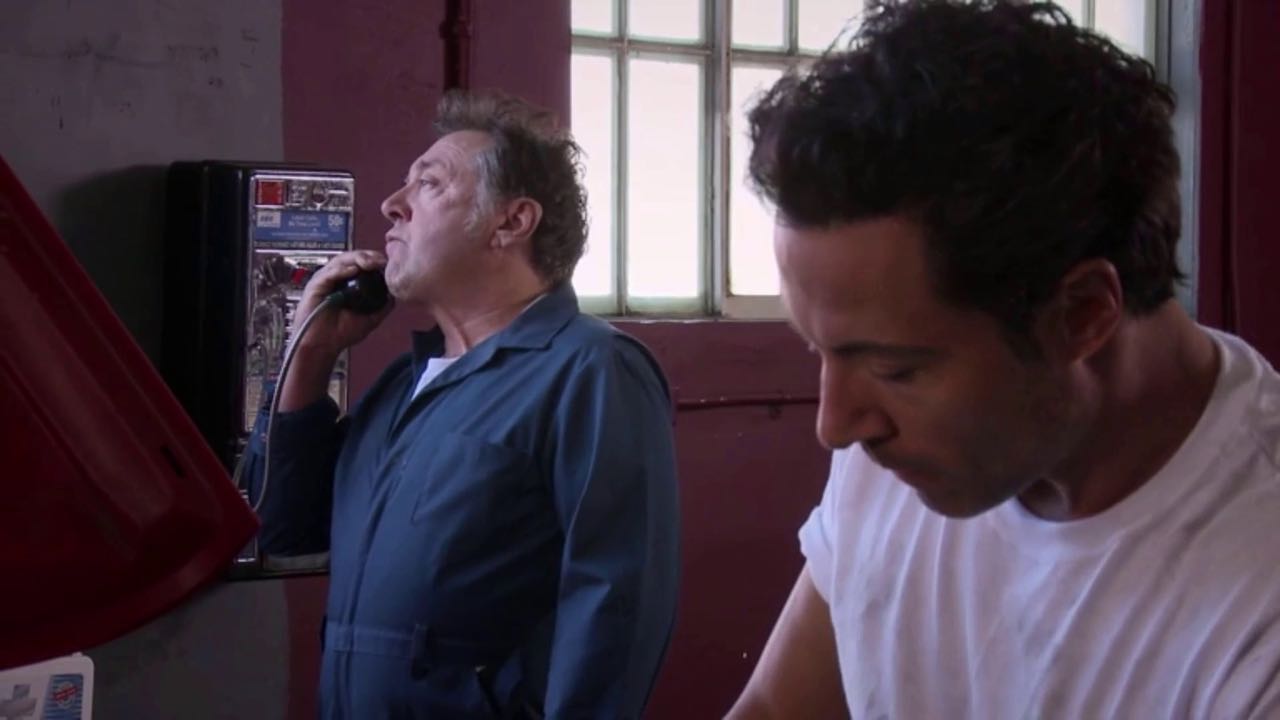
The next morning, Jane tells Don that she thinks the treatments are going well, and Don goes off to work to have the bad news broken to him about his friend being killed. But before Don receives the bad news, we get to see that the $20 Oil Change has an SBC payphone in 2016.
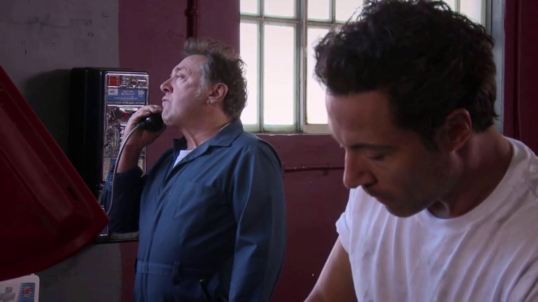
Gaglio breaks the news to Don, which leads the film to immediately cut to two people having sex on a leopard-print bed. I have no idea who they are.
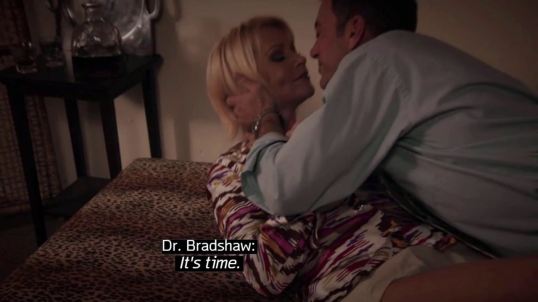
She gets a call from the doctor, and he’s dead.

Now Jane meets Jeff (Billy Snow). If he looks worried here…
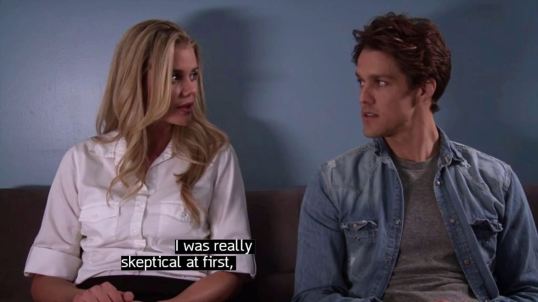
it’s because of who his wife is.

Jane goes in for another treatment. While she is under the control of the machine, the doctor forces herself upon Jane. No joke. They really could have left this scene out–no matter how short it is.

Don now breaks the news to Jane about John’s death so that we know the two of them have a reason to start being suspicious of the doctor. That’s not important though, because the scene that I was waiting for, finally happens.
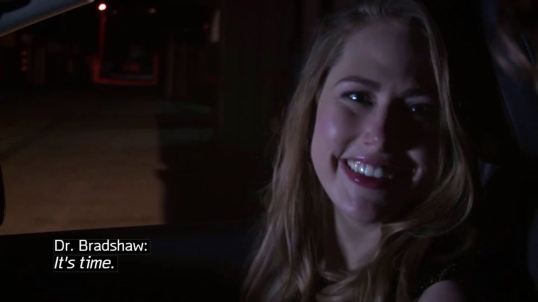
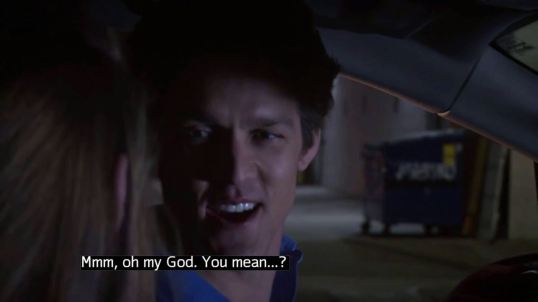
Breezy finally gets her revenge on Deputy Randall. Does the rest of the film really matter now?

Okay, fine. Jane is lying in bed when she has a dream of Christine Nguyen doing a shower scene. I’m not kidding. They randomly inserted a shower scene by having Jane dream about one out of the blue for no apparent reason.

With the death of Billy Snow, Don is convinced things are fishy with the doctor, and he tries to talk Jane out of seeing her. It doesn’t work.

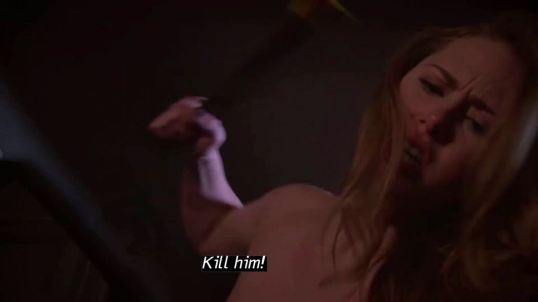
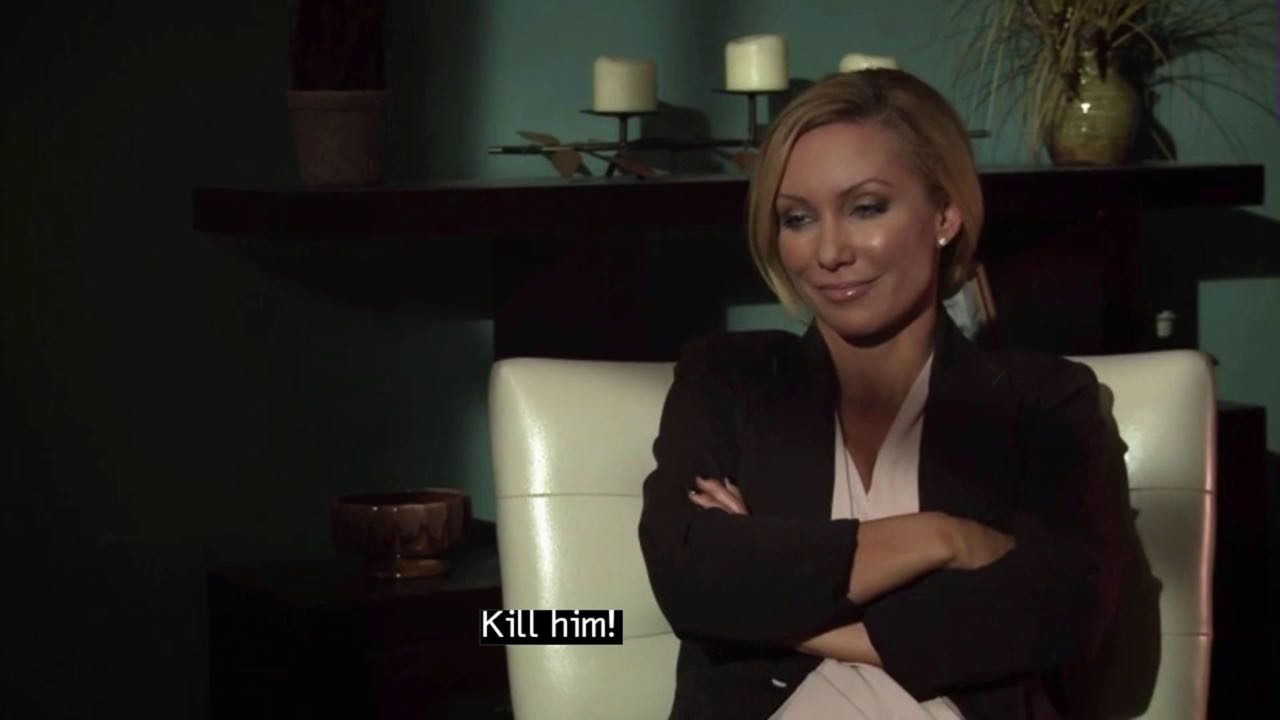
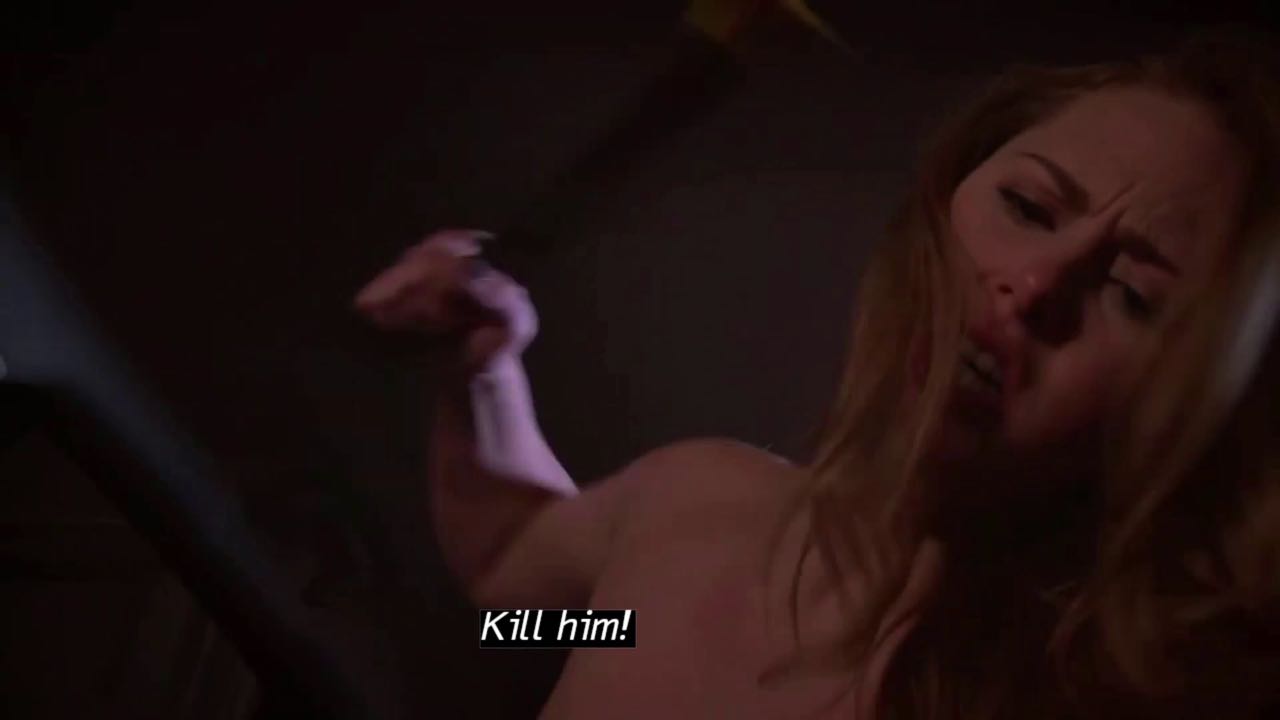
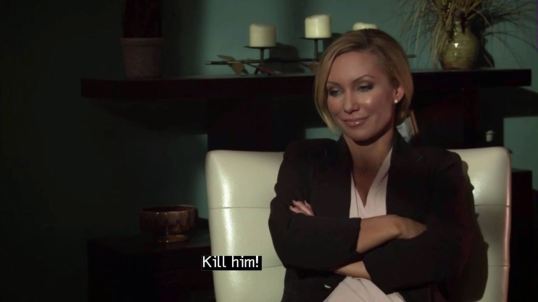
Then they have another shower scene. I have to give them some credit. They do end it with pertinent information to the plot. Jane remembers the doctor’s “Kill him” line.

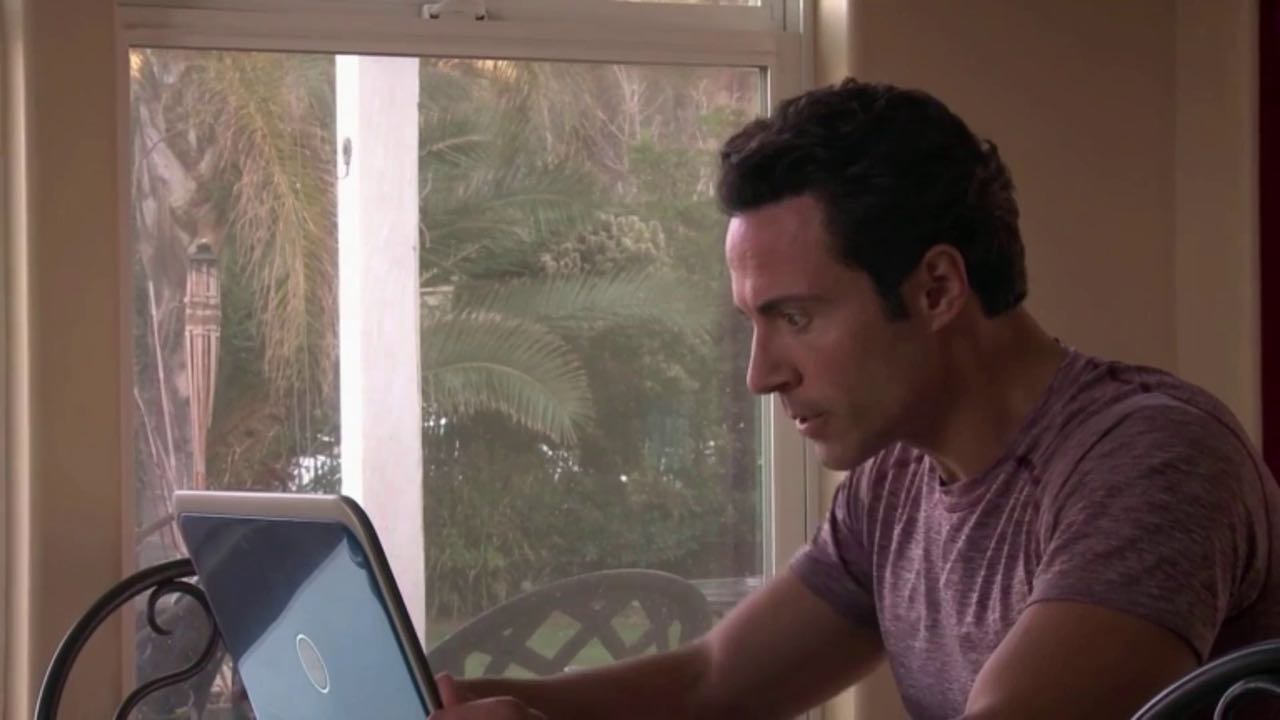
Don does some intense research online about the doctor.
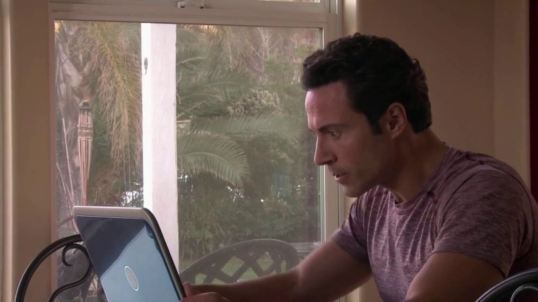
Long story short, something bad happened to her, so she’s taking revenge on other people.

Don now races to save his wife from this monster. Unfortunately, Don’s an idiot, and Jane zaps him with the machine, leading to a sex scene. However, since we are at the end of the film, when Jane pulls a gun to shoot him, he takes it away from her.
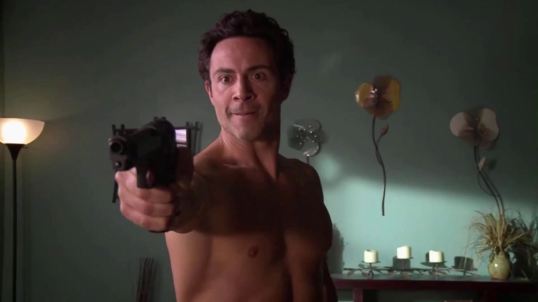
The doctor comes in, and I kind of love Don because he doesn’t hesitate for second. She pulls a knife, and he shoots her.
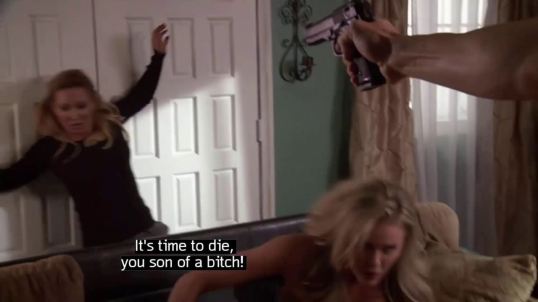
A quick shot at the machine, and Jane is free from its power. A couple lines of dialog are exchanged, then the movie abruptly ends.
So, that’s The Love Machine.

For the people watching for entertainment value, it doesn’t have much to offer other than getting to see Carter Cruise do in Billy Snow.

For people watching for the sex, it doesn’t have much either. There are a couple of sex scenes, and two shower scenes shoehorned into the movie. The one scene of girl-on-girl is kind of disturbing seeing as the doctor does sexually assault her. Then the movie adds confusion since that encounter is what appears to trigger her to have a dream about a woman taking a shower. Yet, it’s never followed up on.

I almost would have preferred the doctor to win in the end by taking Jane away with her. Sure, it would have been dark, but it would have been something memorable about this movie.

I can’t recommend this one.

A Movie A Day #201: L.A. Bounty (1989, directed by Worth Keeter)


Sybil Danning vs. Wings Hauser?  What could go wrong with that?

Cavanaugh (Wings Hauser) is an insane drug dealer who is also an artist.  When he is not coming up with elaborate ways to kill people, Cavanaugh can be found painting in his warehouse and talking to himself.  Cavanaugh spends a lot of time talking.  Ruger (Sybil Danning) is a former cop turned bounty hunter.  In the tradition of Clint Eastwood, Ruger rarely speaks.  Ruger has good reason to hate Cavanaugh.  When she was a cop, Cavanaugh killed her partner.  Now that Cavanaugh has kidnapped a local politician, Ruger is the obvious choice to track down Cavanaugh, get revenge for her partner, and save the next mayor of Los Angeles.

A typical low-budget late 80s action film, L.A. Bounty is distinguished by the contrast between the ferocious overacting of Wings Hauser and the underacting of Sybil Danning.  This was one of Danning’s final starring roles before she retired from the movies.  (She has recently returned, with cameos in two Rob Zombie productions.)  It is interesting to see Danning in the type of role that would typically go to either Clint Eastwood, Charles Bronson, or maybe even Chuck Norris.  According to the imdb trivia section for L.A. Bounty, Danning only has 31 lines in the entire movie, which is more than I can remember her saying.  Danning, however, is such a strong physical presence that she does not have to say anything to make her point or show how tough she is.  Hauser, on the other hand, never stops talking, moving, and laughing.  This is one of Hauser’s craziest performances, which is saying something.  From scene to scene, Hauser’s performance is so consistently bizarre that it keeps things entertaining.

L.A. Bounty may not be anything spectacular but fans of Danning and Hauser will not be disappointed.

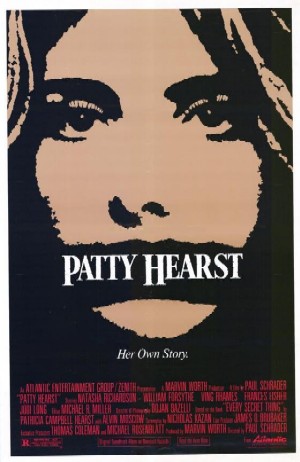
Film Review: Patty Hearst (dir by Paul Schrader)


The 1988 film, Patty Hearst, is based on a fascinating true story.

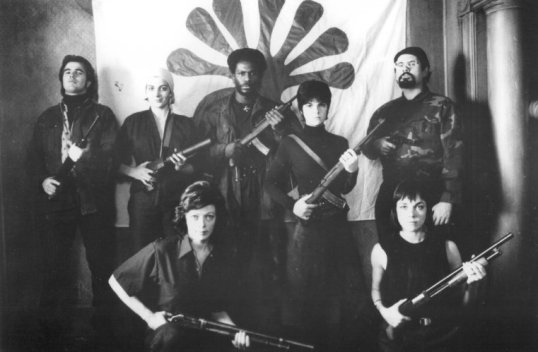
In 1974, newspaper heiress Patty Hearst was a 19 year-old student at Berkeley who was kidnapped from her apartment by a group of self-styled leftist revolutionaries known as the Symbionese Liberation Army (SLA).  The SLA was led by a charismatic escaped prisoner who called himself Field Marshal Cinque and who announced — via messages that Hearst read into a tape recorder — that Hearst was being held hostage in the name of social justice.  The police and FBI spent several months unsuccessfully searching for Hearst until one day, the SLA released an audio tape in which Hearst announced that she had now joined the SLA and would now be known as Tania.  Hearst was soon robbing banks and went from being a hostage to a wanted criminal.  When she was arrested in 1975, Hearst claimed to have been brainwashed by the SLA and people still debate whether she was a sincere revolutionary, a calculating criminal, or a victim.
(From what I’ve read about the Hearst kidnapping, I guess the modern day equivalent would be if Kendall Jenner disappeared and then resurfaced in Portland, setting cars on fire with Antifa.)

What can said for sure is that, after being arrested and convicted of bank robbery, Patty Hearst was sentenced to 7 years in prison.  Hearst served less than three years before her sentence was commuted by President Jimmy Carter.  Twenty years later, another President — Bill Clinton — gave her a full pardon.  Needless to say, the rest of the SLA did not receive a pardon or, for that matter, even a commutation.  The majority of them, including Field Marshal Cinque, died in a fiery explosion that came at the climax of a gun battle with police.  The rest were arrested, convicted, and ended up serving their full sentences.  Of course, while the majority of the SLA came from middle and upper middle class backgrounds, only one of them was the heir to a fortune.  When she was arrested, Patty may have given her career as being an “urban guerilla,” but ultimately, she was the granddaughter of William Randolph Hearst.

(Regardless of whether you believe Patty Hearst was brainwashed or not, it’s an undeniable fact that it’s easier to be a revolutionary when you know you won’t face any serious consequences if the revolution eventually fails.  If the members of the SLA were around today, they could just spend their time on twitter, retweeting John Fugelsang’s thoughts on Jesus.  But, in 1974, there was no twitter…)

Based on Every Secret Thing, Hearst’s own account of her kidnapping and subsequent life as a fugitive, Patty Hearst opens with the heiress (played by Natasha Richardson) being kidnapped and held prisoner by the SLA.  For the first fourth of the film, we see everything exclusively through Patty’s eyes.  She spends her days locked in a dark closet that’s so tiny that she can barely stand.  Whenever the door is opened, shafts a bright light flood both the closet and the screen, blinding not only Patty but the audience as well.  At first, Patty cannot even see the faces of the people who have kidnapped her.  All she knows are their voices.  Whenever that door opens, neither Patty nor the viewer knows whether she’s going to fed, berated, comforted, or raped.  All four of them happen to her, several times over the course of her time in that closet.  It’s harrowing to watch, all the more so because Natasha Richardson gives such an empathetic and bravely vulnerable performance as Patty.  When Patty is finally allowed to leave that closet, the audience is almost thankful as she is.  And, when Patty gets out of the closet, the look of the film changes as well.  It goes from being darkly lit to almost garishly colorful.  Patty’s entire world has changed.

The first part of the film is so powerful that it’s not surprising that the rest of Patty Hearst suffers by comparison.  Once Patty gets out of the closet and declares her allegiance to the revolution, she becomes a bit of a dead-eyed zombie and the focus naturally shifts to the rest of the SLA.  Ving Rhames gives a powerful performance as Cinque, the head of the SLA.  Cinque may be a passionate revolutionary but he also has a dangerous messianic streak.  Even worse, the film suggests, is Cinque’s lieutenant, Teko (William Forsythe).  Teko claims to be a revolutionary but ultimately reveals himself to be as much of a misogynist as those who he claims to oppose.  (Today, Teko would probably be one of those guys arguing that it’s okay for him to use the C word because he’s an “ally.”)  Whereas Cinque has no doubt about his revolutionary commitment, Teko always seem to be trying to prove something to everyone, especially himself.

Ultimately, Patty becomes almost a bystander to her own story.  For a time, she is the most famous bystander in the country.  Though the film is sympathetic to Patty, Natasha Richardson plays her with just a hint of ambiguity.  Ultimately, Patty comes across as someone desperately searching for an identity.  Since she is not sure who she ultimately is, it’s easy for Patty to become an “urban guerilla” and it’s just as easy for to her go back to being an heiress.  By the end of the film, it’s obvious that Patty is just as confused by her life as everyone else.

Patty Hearst was directed by Paul Schrader, who is best known for writing the scripts for such films as Taxi Driver and Rolling Thunder.  (Among Schrader’s other directorial credits: Blue Collar, Hardcore, American Gigolo, Cat People, and The Canyons.  Needless to say, he’s had an interesting career.)  In many ways, Patty Hearst is probably more relevant today than it was first released.  Considering that our culture is currently dominated by people pretending to be revolutionaries and celebrities famous solely for being famous, Patty Hearst feels rather prophetic.

Watching this film and experiencing Patty’s transformation from vapid heiress to brainwashed political activist to briefly notorious celebrity, I realized that we now live in a world of Patty Hearsts.

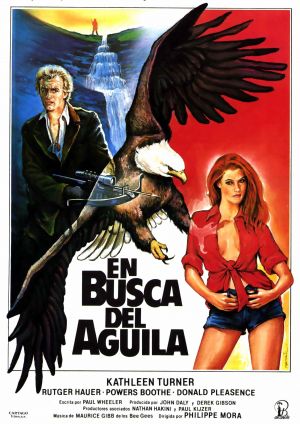
A Movie A Day #200: A Breed Apart (1984, directed by Philippe Mora)


Sometimes, the story behind a movie is more interesting than the movie itself.
Rutger Hauer stars in A Breed Apart, playing an eccentric environmentalist named Jim Malden.  Malden loves nature but he hates people, with the exception of a local storekeeper named Stella (Kathleen Turner) and her young son.  The local fishermen (one of whom is played by Hauer’s Blade Runner co-star, Brion James) may hate him but they are no match for Malden’s guerilla tactics.  Recently, a new breed of bald eagle has been discovered and Malden is determined to protect it.  At the top of a cliff, there is a nest full of eagle eggs and Malden will not let anyone near them.

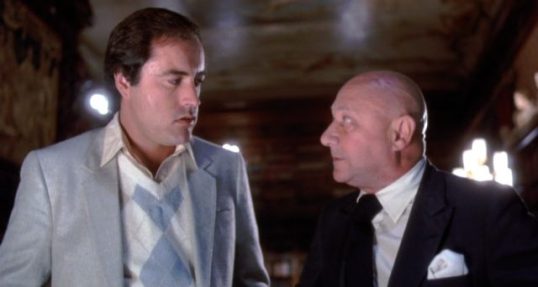
Rich collector J.J. Whittier (Donald Pleasence) is determined to get those eggs for himself.  In order to deal with Malden, Whittier hires famous rock climber, Mike Walker (Powers Boothe).  Disguising himself as a nature photographer, Walker attempts to befriend Malden so that he can get to the eggs.  Even as Malden shows Walker why it is important to protect the environment, Walker falls in love with Stella.

With a cast like this, A Breed Apart should have been far more interesting than it was.  It provides a rare chance to see both Rutger Hauer and Powers Boothe playing heroes but neither seemed to really be into their roles.  Kathleen Turner was sexy but saddled with a terrible accent while Donald Pleasence seemed to be in a different movie.  When I watched A Breed Apart last night, I thought it seemed like a very disjointed movie.  For instance, the movie abruptly jumped from Stella and Walker first meeting to the end of their first date.  There was a random scene of Malden putting on war paint, while remembering the sound of helicopters.  War paint combined with helicopters in an 80s movie usually means that someone is having a Vietnam War flashback but Malden’s military background is never mentioned again.  Even Walker’s conversion to Malden’s cause and rejection of Whittier’s money seemed to happen offscreen.

According to Wikipedia, It turns out that there was a reason for all that.  A Breed Apart was filmed in North Carolina.  After principal filming was completed, four reels of film were sent back to Los Angeles.  However, only three reels ever arrived in California.  One reel disappeared and has never been found.  The footage that actually did make it to Los Angeles was reorganized and edited to try to disguise the fact that a huge part of the movie was missing.

It didn’t work.

(ADDENDUM 9/4/2017: Originally, both myself and a lot of other reviewers, were under the impression that one reel of film went missing and, as a result, the film had to be reedited to make up for the missing footage.  This story is presented as fact on Wikipedia, which is where I and I assume a lot of other people originally got it.  The lesson here is not to use an online encyclopedia that anyone can edit for a primary or even a credible source.  In the comments below, Director Philippe Mora has let me know that there was no lost reel and that, instead, there are several different cuts of the film kicking around, some of which are incomplete and some of which are ok.  Since Mora actually worked on the film, he is a far more credible source than an anonymous Wikipedia article.  I apologize to Mr. Mora for the mistake.)

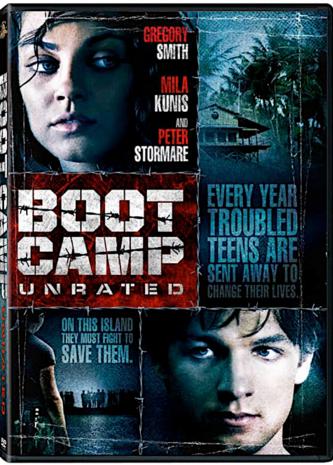
Film Review: Boot Camp (dir by Christian Duguay)


Occasionally, if you’re lucky, you come across a film that so totally and completely conforms to your own worldview that you’re forced to wonder if maybe you wrote the script and then somehow forgot about it.

That was certainly the case, for me, when I recently watched 2008’s Boot Camp, a teen melodrama with an anti-authoritarian subtext.  Check out the trailer:

In Boot Camp, Mila Kunis plays Sophie.  Sophie is rich and, in the eyes of her parents, out of control.  She talks back.  She sneaks out of the house.  She hangs out at all the wrong clubs and with all the wrong people.  You know the story.  We’ve all seen the talk shows.  Sophie’s parents are convinced that the only way that they can get Sophie under control is to exile her to what the film calls a “tough love boot camp.”

The boot camp is located on an island, just a few miles away from a luxurious resort.  From the minute Sophie arrives, she is told that escape is impossible and she can only leave after the facility’s founder, Dr. Arthur Hall (Peter Stomare), says that she can.  Some people have been at the camp for years, waiting for Dr. Hall to announce that they’re rehabilitated.

The rest of the film follows Sophie and several other inmates as they try to survive boot camp without surrendering their free will.  It’s not easy.  Though he is more than happy to take their money, Dr. Hall resents the parents and his program is mostly designed to brainwash the inmates into thinking of him as being their new father figure.  The camp is staffed with brutes, sadists, and rapists.  When one inmate drowns, the staff tries to cover up his death.  Eventually, like the inhabitants of the Island of Dr. Moreau, Sophie and the other inmates have no choice but to rise up in rebellion against their masters.

“Tough love boot camps” are a real thing.  They used to be hugely popular with daytime talk show audiences and I know that Dr. Phil still has a ranch to which he sends “out of control” teens.  (I put “out of control” in quotes because, often times, it seems that “out of control” is code for “thinking for yourself.”)  The idea is that rebellious teenagers are sent to the camp, where they get yelled at until they agree to stop being so rebellious.  Over the years, there’s been a lot of debate over whether boot camps actually work.  If I had been sent to a boot camp, I think I would have just lied about my feelings and put on a repentant good girl act just to get the yelling to stop.  I’d be perfectly humble and contrite for three months and then, as soon as I got out of the camp, I’d go back to sneaking out of the house, skipping school, shoplifting, doing drugs, and whatever else got me sent to the camp in the first place.  From what I’ve seen of the whole boot camp experience, it seems to be more about brainwashing than anything else.  What’s the point of having well-behaved children if they can’t think for themselves?

But, then again, boot camps have never really been about  helping the teenagers sent to them.  Instead, they’ve always been about making lousy parents feel better about themselves.  Parents who have spent the last 14 years totally fucking up their children get to pat themselves on the back because they sent their kids to boot camp.  Other adults, bitter over having lost their youth, get to say, “It’s time to teach those ungrateful children to respect authority.”  As for the people who run the boot camps, it’s less about the inmates and more about power and money.

That’s certainly the message of Boot Camp.  In fact, I was taken by surprise to discover just how much Boot Camp conformed to my own thinking on … well, on just about everything.  Make no mistake, Boot Camp is a flawed film.  There’s nothing subtle about Christian Duguay’s direction and, with the exception of Mila Kunis, none of the performances are as memorable as you might hope that they would be.  Peter Stomare is way too obvious in his villainy, giving a performance that belongs in the Overacting Hall Of Fame.  (You’ll find Stomare’s Dr. Hall in the villain wing, right next to Christoph Waltz in SPECTRE.)

But, even with all that in mind, it was impossible for me not to get excited when Sophie and her fellow out-of-control teens finally made their move against their tormentors.  The final third of Boot Camp turns into a celebration of disobedience and rebellion and it was impossible for me not to be thrilled by it.  Considering the increasingly Orwellian nature of American culture, we need more movies that celebrate revolution and individual freedom.  At a time when we’re being told that we “have to do this” or “have to do that,” Boot Camp says, “Nobody has to do anything, beyond what they choose.”

It’s an important message and one that people need to start heeding.


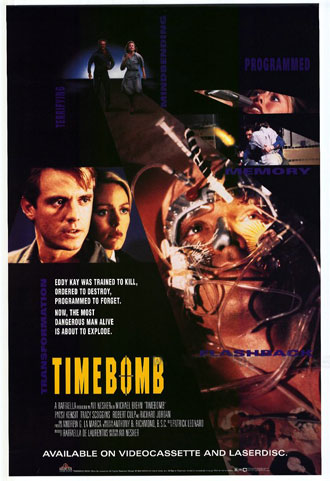
A Movie A Day #199: Timebomb (1991, directed by Avi Nesher)


Recall Total Recall?

If you do, Timebomb will seem very familiar.

Michael Biehn is a mild-mannered watchmaker who surprises himself when he fearlessly rushes into a burning building and saves a mother and her baby.  After he shows up on the evening news and is hailed as being a hero, he is attacked by an assassin (martial arts legend Billy Blanks) and discovers that he instinctively know how to defend himself.  When he starts having disturbing nightmares and strange flashbacks, he sees a psychiatrist (Patsy Kensit).  They discover that Biehn’s problems go back to when he was a part of a military brainwashing experiment.  The man behind the experiment (Richard Jordan) now wants Biehn dead.  Pursued by another brainwashed assassin (Tracy Scoggins), Biehn and Kensit go on the run.

Like many action movies from the early 90s, Timebomb has an extremely cool premise but lacks the budget necessary to make the most of it.  After a good start and some surreal moments (including a scene where Biehn and Kensit visit the lab where Biehn was “created”), Timebomb ends up just being another shoot ’em up.

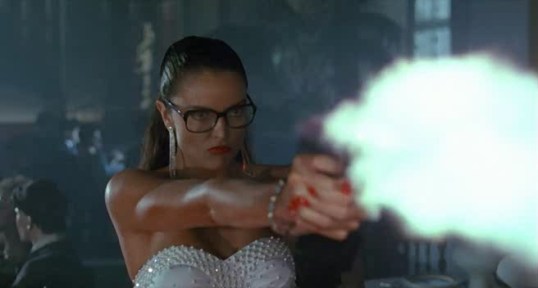
Luckily, Timebomb has a really good cast.  Richard Jordan is an effective villain and old pro Robert Culp has a small role as one of Jordan’s collaborators.  The always underrated Michael Biehn is a great hero, precisely because he’s not some huge, indestructible guy.  He’s not Stallone or Schwarzenegger or even Jean-Claude Van Damme.  (Timebomb was originally envisioned as a Van Damme vehicle.)  In Timebomb, Michael Biehn is the everyman action hero.  Plus, any movie that features Tracy Scoggins as a gun-toting assassin is going to be worth watching.