Review: Rare Exports (dir. by Jalmari Helander)


“The real Santa was totally different. The Coca-Cola Santa is just a hoax.” — Pietari Kontio

Rare Exports: A Christmas Tale is a quirky Finnish film that turns the cheerful Santa story upside down, mixing horror, laughs, and holiday vibes in a bold way. Directed by Jalmari Helander in 2010, it builds on his earlier short films and unfolds in the bleak, snowy wilds of Lapland. Starting with a kid’s innocent curiosity, it dives into creature-filled madness, offering a fun alternative to typical Christmas movies. The film’s unique premise grabs you right away, promising something far removed from the sanitized holiday fare we’re all used to, and it delivers on that with a blend of folklore, tension, and unexpected twists that linger long after the credits roll.

The plot centers on young Pietari in a remote village where his dad and neighbors herd and slaughter reindeer for a living. An American-backed dig nearby uncovers something ancient and icy, sparking trouble like missing kids and odd thefts. Pietari reads from a book portraying Santa as a terrifying punisher rather than a gift-bringer, and soon the village captures a wild, elf-like creature to exploit, only to confront the bigger threat emerging from the frost. This setup masterfully builds suspense through everyday rural life clashing with supernatural intrusion, where the slow reveal of the mound’s secrets heightens the stakes. Pietari’s journey from wide-eyed boy to resourceful hero forms the emotional core, as he grapples with myths coming alive while the adults bumble through denial and desperation. The narrative weaves in economic pressures on the herders, adding a layer of realism to the fantastical elements, making the horror feel grounded in human struggle.

The movie’s mood captures that chilling isolation of deep winter, with vast snowscapes and biting winds making every sound feel ominous. Practical effects bring the skinny, feral beings—wild-eyed old men with fangs who move like beasts—to life in a raw, creepy style that avoids digital gloss for something viscerally unsettling. Pietari, played with earnest intensity by a young actor who nails the mix of fear and determination, anchors the emotion as he outsmarts the clueless grown-ups. It blends youthful adventure with sharp violence, from brutal bites and chases across frozen lakes to fiery clashes that punctuate the cold palette. Cinematography plays a huge role here, using long takes of barren landscapes to evoke vulnerability, while close-ups on the creatures’ grotesque features ramp up the dread without relying on jump scares. The film’s pacing ebbs and flows like a blizzard—calm buildup giving way to frantic bursts—keeping viewers on edge throughout its compact runtime.

Humor keeps things lighthearted, skewering Christmas clichés with glee, from red-suited abominations to the absurdity of weaponizing holiday icons against ancient evils. Burly locals stuffing their caught creature into a Santa outfit for a quick ransom scam leads to hilarious chaos, blending slapstick with dark undertones as plans unravel spectacularly. The short runtime flies by, blending Finnish authenticity—complete with subtitles that capture the dry wit—with brisk energy that never lets momentum sag. Deeper notes on faith, family bonds, and rural struggles hide under the fun, all tied to old pagan roots of the holiday myth, prompting thoughts on how modern traditions mask primal fears. These comedic beats provide relief without undercutting tension, creating a tonal tightrope walk that Helander navigates with confidence, much like his protagonists dodging fangs in the snow.

Still, it has rough edges holding it back from perfection. Some plot turns feel too convenient, like the hasty shift from fear to scheming among the villagers, which can pull you out of the immersion if you’re paying close attention. A few characters lack depth, especially the overconfident American outsider whose motivations come off as cartoonishly smug without much backstory to flesh them out. Women barely appear, relegated to minor roles or off-screen mentions, giving it an old-school, male-dominated feel that hasn’t aged as gracefully in modern viewing. The monsters, while initially shocking, grow predictable in their attacks after repeated encounters, diluting the novelty midway through. The wild finale, packed with explosive action and a cheeky resolution, might leave straight horror seekers cold—it’s more a playful genre mash-up than nonstop unrelenting terror, prioritizing fun over lingering nightmares.

The real locations sell the unforgiving outdoors, with Finland’s rugged terrain ramping up the ancient-evil vibe through authentic blizzards and icy caverns that no studio set could replicate. A clever soundtrack pairs eerie hums and dissonant strings with festive twinkles for ironic tension, underscoring scenes of quiet horror or frantic pursuits without overpowering the natural sounds of cracking ice and howling gales. Acting feels grounded across the board, with the dad character delivering tough warmth through gruff line delivery and physical comedy, while the ensemble of villagers comes across like real, weathered folks rather than polished performers. Helander expands his original shorts smartly, keeping the cheeky core intact while scaling up the stakes for feature-length thrills, showing a director comfortable with both intimate scares and big set pieces.

Beyond the surface-level scares and laughs, Rare Exports invites reflection on cultural myths and commercialization—how Santa’s image has been sanitized from something feral into a mall mascot, and what happens when the wild origins claw their way back. It’s a film that thrives on subverting expectations, starting as a kid’s adventure tale before morphing into a survival thriller with creature-feature flair. The practical makeup and prosthetics on the beasts deserve special mention for their handmade creepiness, evoking classic horror without the uncanny valley pitfalls of CGI. Editing keeps the energy taut, cutting between Pietari’s discoveries and the adults’ mishaps to build parallel dread.

As holiday counterprogramming, Rare Exports shines for fans of weird cult picks, great for group watches where reactions to the escalating weirdness become part of the fun. It holds up on repeats with hidden nods to its short-film origins, like recurring motifs and visual gags that reward eagle-eyed viewers. If you like folklore twists in films with adventure flair—think pseudo-documentaries hunting trolls or rural legends gone wrong—this delivers original entertainment despite its quirks. Ultimately, its charm lies in balancing the grotesque with the gleeful, crafting a Christmas tale that’s equal parts frightful and festive, proving that sometimes the best gifts come wrapped in fangs and fur.


Brad reviews CHRISTMAS CRASH (2009), starring Michael Madsen and Alexandra Paul! 


As I scrolled through the “Recommended” movies on Tubi last night, I came across this one movie, CHRISTMAS CRASH, that intrigued me. It sounded sort of like a Hallmark movie, but it starred Michael Madsen, an actor I couldn’t possibly imagine in a Hallmark movie. Check out this description on Tubi… 

An unhappily married couple is presumed dead after their private plane crashes in the woods, but reconnects as their survival offers a second chance.” 

All bad grammar aside, it was very late at night and I was looking for something that required zero functioning brain cells, and this seemed to fit the bill. Also, I had recently watched Madsen in the theatrical release of KILL BILL: THE WHOLE BLOODY AFFAIR, where he was so good, so I thought I’d check out his performance as the husband reconnecting with his wife, played here by Alexandra Paul (BAYWATCH). 

After watching CHRISTMAS CRASH, all I can say is that I still can’t imagine Michael Madsen in anything that resembles a Hallmark movie. To say that he was “miscast as the beleaguered husband attempting to reconnect with his wife while attempting to survive the trek back to civilization after the plane crash” just may be my understatement of the year. There was nothing about his performance that seemed remotely realistic from the very beginning to the very end. Still, his uncomfortable line delivery, whether it be in a tense board meeting, out in the middle of the woods, or at a Christmas party at the end of the movie, is my favorite part of the movie. It was oddly enjoyable in a way that I can’t quite explain. Alexandra Paul does come off a little better as she proves to have some determined survival instincts, but this will not be on anyone’s list of career highlights. 

CHRISTMAS CRASH has some pretty Canadian scenery as the married couple fly their plane over some beautiful mountains before crash landing in a beautiful, frigid lake. Luckily for them though, they’re able to swim to the shore, start a small, but obviously very warm, fire and somehow not succumb to hypothermia. And the weather, at least based on the news reports their terrified daughters are seeing on TV, is so terrible that search and rescue efforts have to be suspended. The problem is we never see any of this bad weather. What we’re shown looks fine! I laughed out loud when I saw that weather report coupled with beautiful sunshine! I will admit that I was worried about the big gash on Madsen’s lower leg after the accident, especially since it looked so dirty. But after the initial application of a homemade tourniquet, it wasn’t really mentioned any further. After about thirty minutes of screen time with no grody scenes of leg re-dressing, I quit worrying about it. And then there are the wolves that attempt to make a snack of our couple. I’ve seen THE GREY with Liam Neeson and I’ve been to Yellowstone, so I know that wolves are very dangerous. Let’s just say that the wolves of CHRISTMAS CRASH are too easily fended off with a medium-sized stick to ever feel too dangerous. There was this one moment where it appeared a wolf might have been biting on Madsen’s injured character for a moment, but after they run off, it’s never mentioned or shown that he was injured in any way, so I guess that wolf didn’t have any teeth. 

My initial thoughts on at least a superficial connection between CHRISTMAS CRASH and the Hallmark channel did prove perceptive, as the movie is directed by Terry Ingram. A quick review of Mr. Ingram’s directorial credits on IMDB reveal an extensive connection to Hallmark, with generic titles such as HATS OFF TO CHRISTMAS, ‘TIS THE SEASON FOR LOVE, and THE MISTLETOE SECRET. Despite the director’s apparent love of the season and the fact this movie is titled CHRISTMAS CRASH, it sure doesn’t feel very Christmassy. With extremely limited changes, this movie could be set in any season, so don’t expect any feelings of genuine Yuletide spirit. 

Overall, I’d say the best thing about CHRISTMAS CRASH is that it’s a 90 minute movie that has potential value in a “so bad it’s funny” kind of way. I think it would be fun to watch with friends, or as a “Live Movie Tweet” on social media. I watched the whole movie, had a few unintentional laughs, and when it was over around 1:00 in the morning, I went to bed none the worse for the wear.

Holiday Film Review: Finding Mrs. Claus (dir by Mark Jean)


Mrs. Claus (Mira Sorvino) has left the North Pole and is living it up in Las Vegas!

Now, don’t panic.  The plot of 2012’s Finding Mrs. Claus does not involve the Kringles going to divorce court.  Can you imagine how traumatic that would be?  It would ruin Christmas for everyone and I have a feeling that Santa probably wouldn’t put much effort into his job afterwards.  Or, even worse, the court might award the Workshop to Mrs. Claus and she might let her new boyfriend, Tony the Gigolo, take over the business.  If that ever happens, I hope everyone’s okay with their chimneys smelling like Axe body spray on Christmas morning.

Fortunately, Mrs. Claus and Kris (Will Sasso) are still very much in love.  It’s just that Mrs. Claus gets upset when she sees how exhausted Kris is at the end of the day.  When she comes across a letter from a little girl in Las Vegas who wants her mom to find a new husband for Christmas, Mrs. Claus decides to give her husband a break and take care of it herself.  With the help of Calvin the Elf (Geoff Gustafson), she loses his white wig and her old German clothes and she is transformed into …. well, Mira Sorvino.  Mrs. Claus heads to Las Vegas, intent on spreading Christmas cheer.

Kris, when he wakes up, is not happy to discover that his wife is missing.  Grabbing Calvin, he heads down to Vegas to find her.  (He loses the beard on the way to America.)  If Kris can’t find Mrs. Claus before Christmas, there’s going to be a lot of disappointed children in the world.  While Mrs. Claus tried to find a husband for Noelle (Laura Vandervoort), Kris tries to find his wife.

And yes, as you probably already guessed as soon as I mentioned that this movie takes place in Las Vegas, there is an Elvis impersonator sight gag.  It happens quickly but seriously, it’s a Lifetime Christmas film that’s set in Vegas.  There has to be an Elvis impersonator somewhere!

What’s that?  Do I hear you being cynical out there?  Well, stop it!  It’s a cute movie!  It’s a holiday movie that features Mira Sorvino being glamorous as Mrs. Claus and Will Sasso being cheerfully clueless as Santa.  Both Sorvino and Sasso really throw themselves into their roles and the fact that both of them are so well-intentioned but yet so naive about life outside of the North Pole actually make their story a rather sweet one.  While Mrs. Claus understood the importance of blending in with Las Vegas, Santa never seemed to get why anyone would doubt him when he explained what he did for a living.

In the end, this is the type of silly, sentimental, and earnest film that works nicely during the holidays.  The holiday season is a good time to be reminded that not everything has to be dark and depressing.  Towards the end of the film, a character spots a shooting star and makes a wish and it’s hard not to feel that it’s a moment that the film has earned.

I enjoyed it.  It’s a merry film.

Brad reviews CURLY SUE (1991), starring James Belushi and Kelly Lynch!


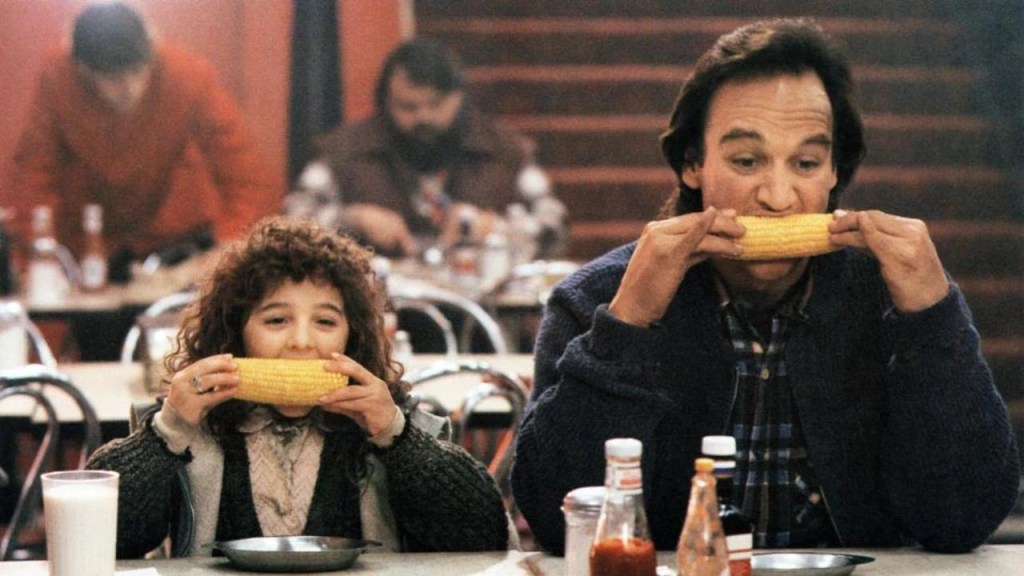
Bill Dancer (James Belushi), a homeless drifter and small-time con artist, and his 9 year old companion Curly Sue (Alisan Porter), survive by running somewhat harmless scams against rich people. While traveling through Chicago they target Grey Ellison (Kelly Lynch), a rich, career-focused divorce attorney, tricking her into thinking that she ran over Bill with her Mercedes. Normally the pair are just after a free meal and maybe a little cash, but Bill doesn’t have the heart to take too much from Grey since she’s so darn pretty. Through a variety of circumstances, she actually does run over Bill the next day. This time she brings him and Curly Sue up to her fancy apartment so he can recover, despite the objections from her snobby boyfriend Walker (John Getz). As the three get to know each other, Grey forms an especially close connection with Curly Sue, and learns that Bill isn’t her actual dad, even though he’s raised her since she was a baby. Knowing that Grey can give Curly Sue a better life than he can, Bill thinks about leaving. But can he ever leave the girl he sees as a daughter? And can Grey discover a compassion for others and the maternal instinct that she’s been missing? 

As is often the case with movies I choose to write about, I had a sense of nostalgic warmth while watching CURLY SUE this morning for the first time in three decades. I saw CURLY SUE at the movie theater with my high school girlfriend in the fall of 1991. I remember enjoying the film and even buying it on VHS as a gift for my mom because I knew she would like it. In the years before she could record her Hallmark movies on her DVR, Mom watched that VHS tape many times. 

Quite different from his classic teen comedies, CURLY SUE, which is the final film directed by John Hughes, can only be described as unapologetically sentimental. Sure the movie is formulaic and pure syrup, but I still enjoy it anyway. This heartwarming fairy tale will make you believe that an unconventional, loving family can emerge from the most unexpected of circumstances. It will suggest that there are some things more important than any amount of money can buy. It will make you laugh out loud at times, and yes, it will even bring a tear to your eye as some of the more emotional scenes play out. CURLY SUE wants to manipulate its audience’s emotions, and it will happen if you just go with it. On the down side, if you catch this film in the wrong kind of mood, or if you’re feeling especially cynical, that magic will disappear and you probably won’t enjoy the movie at all. 

As for the performances, as a fan of James Belushi, I like him as the gruff but likable Bill. I also enjoy Kelly Lynch as the she evolves from a person married to her work to someone who starts to care deeply about the people around her. Probably the most important performance in the film comes from Alisan Porter as Curly Sue. If you don’t find her cute and adorable, then you’ll probably have a hard time watching the movie. I personally found her to be quite precious so that was not a problem for me. Once again, the movie version of early 90’s Chicago as our setting is something I enjoy as well. 

Overall, CURLY SUE is not in the same league as Hughes’ best work like PLANES, TRAINS AND AUTOMOBILES, and there will be many who downright dislike the schmaltzy nature of the film. However, if you’re in a nostalgic mood for an earnest, early ‘90s heart-tugger, this movie might just hit the spot.

Guilty Pleasure No. 93: Porky’s (dir. by Bob Clark)


Porky’s is one of those movies that plays very differently depending on when you first see it. On the surface, it is a loud, lewd early‑’80s teen sex comedy about a bunch of high‑school boys in 1950s Florida trying to get laid and get even, but underneath the pranks and bare flesh there are streaks of surprisingly serious material about prejudice, masculinity, and power. That mix of dopey laughs and darker undercurrents is exactly what makes the film interesting to talk about, and also what makes it so divisive today.

Set in the 1950s and released in 1981, Porky’s follows a tight‑knit group of teenage boys whose main goals in life are sex, sports, and practical jokes. Their adventures eventually take them to Porky’s, a sleazy backwater strip club run by the hulking, corrupt Porky, who humiliates them and sets up the revenge plot that drives the back half of the film. Around that spine, the story wanders through locker‑room banter, elaborate pranks, and various attempts to sneak into the girls’ showers or otherwise spy on naked bodies. It is very much a “horny boys on the prowl” narrative, and the film never pretends to be anything else.

What keeps it from being just another disposable sex comedy is the way some of those side stories hit harder than expected. One of the kids is brutally abused by his father, and the film doesn’t treat it like a throwaway detail; those scenes have a rawness and anger that clash with the goofy tone elsewhere. There is also a thread about anti‑Semitism and racism in their community, with one character confronting his own bigoted upbringing as he befriends a Jewish classmate and pushes back against the prejudice around him. That material is handled in a pretty straightforward, earnest way, which is jarring given how crude the surrounding humor can be, but it does show that writer‑director Bob Clark had more on his mind than dirty jokes.

The humor, for better or worse, is what most people remember. Porky’s leans heavily on slapstick and sex‑obsessed gag setups: peeping through holes in shower walls, mistaken identities during sex, ridiculous anatomical bragging, prank phone calls, and elaborate schemes that escalate into full‑on chaos. Some of the set pieces are staged with real comic timing, and if you’re on its wavelength, these sequences can still land as big, cathartic laughs. Others feel juvenile in the worst way, stretching one joke way past its breaking point, or punching down at easy targets rather than punching up at the hypocritical adults the boys are constantly butting up against.

Viewed from today’s lens, a big chunk of that humor is undeniably uncomfortable. The movie is saturated with sexist, homophobic, and racist language, and a few of the “pranks” involving the girls are essentially sexual harassment played for laughs. At the time, it was sold as a gleefully politically incorrect romp; now, those same scenes read as mean‑spirited or creepy in a way that undercuts the supposed lighthearted tone. The film occasionally tries to complicate this by giving some of the female characters sharper edges or letting them turn the tables, but it never fully escapes the fact that the camera is mostly aligned with the boys and their fantasies.

That said, Porky’s is not entirely dismissive of its women. There are moments where adult women, in particular, are allowed to call out the boys’ behavior or assert their own sexuality in ways that undercut the usual “conquest” narrative. The movie also makes a point of ridiculing hypocritical authority figures—teachers, coaches, cops, and parents—whose prudish public morals don’t match their private behavior. When Porky’s is skewering bigotry, religious hypocrisy, and small‑town moral panics, it feels sharper and more progressive than its reputation as a dumb “tits‑and‑ass” comedy suggests. Those flashes of insight are part of why some viewers argue that, beneath the sleaze, the film is quietly critical of the very attitudes it seems to indulge.

Performance‑wise, the cast is made up largely of unknowns who sell the illusion that this is a real, scrappy group of friends rather than polished Hollywood teens. The camaraderie feels genuine; their constant ribbing, in‑jokes, and shifting alliances are believable enough that you can see why the movie became a touchstone for a certain generation of viewers. Bob Clark’s direction is surprisingly controlled for such an anarchic script. He keeps the story moving, balances multiple subplots, and stages the bigger comic payoffs in a way that feels almost like a live‑action cartoon. The downside is that this slickness can make the nastier gags pop more, for better and worse.

On a technical level, Porky’s is very much a product of its time, but not a cheap one. The period detail—cars, music, clothing, diners, and dingy roadside bars—helps sell the 1950s setting, giving the film a nostalgic sheen that softens some of its rougher edges. The soundtrack leans on era‑appropriate rock and roll, which adds energy to the locker‑room and party scenes. The film also doesn’t shy away from male nudity, which was less common in comedies of the time and adds to its reputation as equal‑opportunity when it comes to what it exposes, even if the gaze is still clearly tilted toward ogling women.

Where Porky’s can stumble is in tone. The shifts between broad farce and serious drama can be abrupt. One minute you are watching a drawn‑out gag about a teacher trying to identify a student by his anatomy; the next, you are plunged into a grim confrontation with an abusive parent. That whiplash can pull you out of the movie, because the emotional weight of the dramatic scenes doesn’t always get enough breathing room before the script lurches back to naughty antics. As a result, some viewers feel the darker elements trivialize real issues, while others think those same scenes give the film more substance than its imitators.

Even if someone has never seen Porky’s, they have probably felt its influence. The film was a massive box‑office hit relative to its budget and paved the way for a wave of raunchy teen comedies through the ’80s and ’90s, eventually echoing into movies like American Pie and beyond. Its success made it clear that there was a huge audience for R‑rated, adolescent sex comedies that mixed crude jokes with a veneer of coming‑of‑age sentiment. You can see its blueprint in later films: packs of horny friends, elaborate revenge schemes, school authority figures as comic foils, and a big, raucous set piece as the payoff.

Whether Porky’s “holds up” is going to depend a lot on your tolerance for outdated attitudes and offensive language. If you go in expecting a cozy nostalgia trip, you may be surprised by how sour some jokes taste now, and how casually the film treats behavior that would be framed very differently in a modern story. If you approach it as both a time capsule and the prototype of a genre, it becomes easier to see its strengths—the lively ensemble, the willingness to poke at racism and hypocrisy, the low‑budget ingenuity in its set pieces—alongside its very real flaws.

Porky’s is neither the hidden gem some defenders make it out to be nor the irredeemable trash its harshest critics describe. It is a messy, uneven, often funny, often cringeworthy movie that captures a particular moment in pop culture, both in what it laughs at and what it takes for granted. If you are curious about the roots of modern raunchy teen comedies and prepared for the rough, politically incorrect ride, it is still worth a look as a piece of film history and as an example of how comedy ages—for better and for worse.

Previous Guilty Pleasures

  1. Half-Baked
  2. Save The Last Dance
  3. Every Rose Has Its Thorns
  4. The Jeremy Kyle Show
  5. Invasion USA
  6. The Golden Child
  7. Final Destination 2
  8. Paparazzi
  9. The Principal
  10. The Substitute
  11. Terror In The Family
  12. Pandorum
  13. Lambada
  14. Fear
  15. Cocktail
  16. Keep Off The Grass
  17. Girls, Girls, Girls
  18. Class
  19. Tart
  20. King Kong vs. Godzilla
  21. Hawk the Slayer
  22. Battle Beyond the Stars
  23. Meridian
  24. Walk of Shame
  25. From Justin To Kelly
  26. Project Greenlight
  27. Sex Decoy: Love Stings
  28. Swimfan
  29. On the Line
  30. Wolfen
  31. Hail Caesar!
  32. It’s So Cold In The D
  33. In the Mix
  34. Healed By Grace
  35. Valley of the Dolls
  36. The Legend of Billie Jean
  37. Death Wish
  38. Shipping Wars
  39. Ghost Whisperer
  40. Parking Wars
  41. The Dead Are After Me
  42. Harper’s Island
  43. The Resurrection of Gavin Stone
  44. Paranormal State
  45. Utopia
  46. Bar Rescue
  47. The Powers of Matthew Star
  48. Spiker
  49. Heavenly Bodies
  50. Maid in Manhattan
  51. Rage and Honor
  52. Saved By The Bell 3. 21 “No Hope With Dope”
  53. Happy Gilmore
  54. Solarbabies
  55. The Dawn of Correction
  56. Once You Understand
  57. The Voyeurs 
  58. Robot Jox
  59. Teen Wolf
  60. The Running Man
  61. Double Dragon
  62. Backtrack
  63. Julie and Jack
  64. Karate Warrior
  65. Invaders From Mars
  66. Cloverfield
  67. Aerobicide 
  68. Blood Harvest
  69. Shocking Dark
  70. Face The Truth
  71. Submerged
  72. The Canyons
  73. Days of Thunder
  74. Van Helsing
  75. The Night Comes for Us
  76. Code of Silence
  77. Captain Ron
  78. Armageddon
  79. Kate’s Secret
  80. Point Break
  81. The Replacements
  82. The Shadow
  83. Meteor
  84. Last Action Hero
  85. Attack of the Killer Tomatoes
  86. The Horror at 37,000 Feet
  87. The ‘Burbs
  88. Lifeforce
  89. Highschool of the Dead
  90. Ice Station Zebra
  91. No One Lives
  92. Brewster’s Millions

Holidays On The Lens: An American Christmas Carol (dir by Eric Till)


On Christmas Eve, a miserly businessman is visited by a series of ghosts who help him understand the true meaning of Christmas, along with showing him a frightening vision of a possible future.

And that businessman was named …. Benedict Slade!

Yeah, the name’s have been changed and the action has been updated to Depression-era New England but this is basically the story of Scrooge.  Henry Winkler stars as the Scrooge character in the 1979 made-for-TV movie.  His old age make-up was done by none other than Rick Baker!

The Films of 2025: F1 (dir by Joseph Kosinski)


“Do they have the car?”

“We have the driver.”

Those two lines of dialogue, uttered towards the end of the film, pretty much sums up F1, a terrifically entertaining movie about Formula One racing.

Brad Pitt stars as Sonny Hayes, a former FI prodigy who, in the early 90s, suffered a traumatic crash at the Spanish Grand Prix.  The crash nearly killed him and it temporarily ended his career as an F1 driver.  Sonny has spent the past thirty years as a drifter, gambler, and as a race car driver for hire.  He lives in a van and is haunted by nightmares of his crash.  When he wakes up in the morning, he groans as he stretches his tattooed, beat-up, but still muscular body.  He dunks his face in a sink full of ice.  He’s aging but he hasn’t surrendered just yet.  The film opens with Sonny helping to win the 24 Hours of Daytona race.  After his victory, he’s approached by his former teammate, Ruben (Javier Bardem).  Ruben is in charge of the APEXGP F1 team.  He needs a driver to partner with the young and arrogant Joshua Pearce (Damson Idris).  Sonny agrees, though only after Ruben asks if Sonny wants a chance to show that he’s the best in the world.  Sonny may be one of the oldest guys on the track but he’s still got something to prove.

If F1 came out in 80s, the 90s, or even the Aughts, it would be viewed as a well-made but predictable racing film, one in which a fairly by-the-numbers script was held together by Brad Pitt’s overwhelming charisma and Joseph Kosiniski’s kinetic direction.  And that certainly is a legitimate way to view the film in 2025.  On the other hand, coming after both the scoldy Woke Era and the authoritarian COVID Era, a film that celebrates competing without guilt, that says that it’s more fun to win than to lose, and which doesn’t apologize for embracing a culture of driving fast and breaking the rules feels almost revolutionary.  Just as he did with Top Gun: Maverick, director Joseph Kosinski reminds the audience that it’s okay to be entertained.  Not everything has to be a struggle session.  Not everything has to be a rejection of the things that once made you happy.  F1 is a film that invites you to cheer without guilt or shame.

It’s a good film, one that is full of exciting racing scenes and gasp-inducing crashes.  After both this film and Top Gun: Maverick, there’s little doubt that director Joseph Kosinski knows how to harness the power of Hollywood’s few true movie stars.  That said, as good as Brad Pitt is, Damson Idris is equally impressive, playing Joshua, a young driver who learns that there’s more to being a great driver than just getting good press.  When we first meet Joshua, he’s young and cocky and arrogant and one thing that I respect about the film is that, even after Joshua learns the importance of teamwork and trust, he’s still more than a little cocky.  He never stops believing in himself.  He doesn’t sacrifice his confidence on the way to becoming the best.  Though the film is definitely on Sonny’s side when it comes to their early conflicts (one can practically here the film saying, “Put down your phone, you young whippersnapper!”), it’s smart enough to not make Joshua into a caricature.  Instead, he’s just a young man trying to balance celebrity and talent.  Kerry Condon also gives a good performance as APEX’s technical director, though her romance with Sonny does feel a bit tacked on.  (Far too often, whenever a female character says that she’s not looking for a relationship, movies refuse to take her word for it.)

When I first heard about F1, I have to admit that I wondered if Kosinski was deliberately following up the Top Gun sequel with a remake of Days of Thunder.It is true that F1 does have a lot in common with other racing films but, in the end, it doesn’t matter.  Brad Pitt’s star turn and Joseph Kosinski’s direction makes F1 into an absolutely thrill ride and one of the best of 2025.

On Strike for Christmas (Dir Robert Iscove), Review by Case Wright


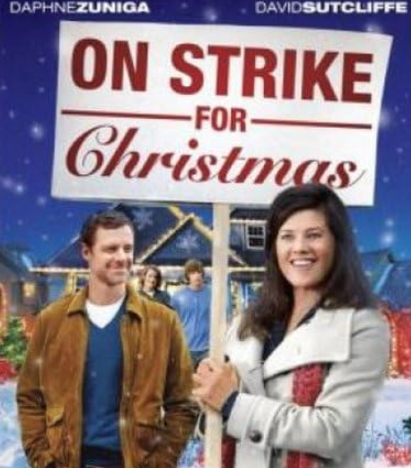
On Strike for Christmas was fun because I got to live tweet it with Lisa and that’s always a blast. The story is straight forward- Joy (Daphne Zuniga), a SAHM, is fed up with being unappreciated for her hard work in prepping for Christmas; so, she goes full-commie and strikes/organizes the other moms to fall into the perils of communism by unionizing the moms to stop all Christmas prep! Honestly, I could’ve reviewed this film for Horrorthon based upon the Marxist plot line!

I want to stay as positive as I can because it’s Christmastime but the film took a WEIRD left turn! First, the grandmother, the mom, the dad, AND the two sons were really close in age; so, you had serious teen mom vibe. Second, it was obvious that ALL of the actors had the hots for each other! It was like infamous Folgers ad (see below ).

If you are unfamiliar with the Folgers ad above, the plot is that a brother returns from Africa and the actors couldn’t help but show their attraction for one another. The same distracting event happened in this film too and not just once or twice – no no no – the sexual tension in this film was like Madmen season 1 levels and in nearly every scene.

There was one scene where the mom dressed up and the son gushed on how hot she was and it was very uncomfortable. I swear, find someone who looks at you like these actors looked at each other!!!

There were some funny parts to the film; such as, the obligatory trope that the boys and dad tried to make cookies and it’s a disaster. However, it really felt like the family had a lot of problems before this because the mom proceeded to not only go on strike, but to talk to journalists about all of her family were just POSs. I mean really if you’re already at the point where you feel comfortable going to the press about what garbage people your husband is and your son’s, the marriage is already over. And in her case, it certainly was awkward at Valentine’s Day when her dad and sons/boyfriends gave her chocolate all at the same time!!! I can only imagine what the hallmark card would look like!!!

Lisa noticed that the mom wasn’t just going on strike herself, but she proceeded to break up every family in the town. Joy needs to be stopped! I mean, it’s bad enough that she’s led all these poor people down the path of socialism and communism, which is just painful for me, but she’s also splitting up all these families!

Maybe that’s what happened in Russia? It was all just a big kerfuffle over cookies and icing and the next thing you know – nukes are pointed right at the good old US of A!!!

It should be noted that eventually the strike does end and the families try to pick up the pieces of their shattered lives. I think that was very insensitive of Joy because she always had her son/boyfriend’s number to fall back on during those cold winter nights!!!

Guilty Pleasure No. 92: Brewster’s Millions (dir. by Walter Hill)


Walter Hill’s Brewster’s Millions (1985) isn’t a perfect movie by any stretch, but it’s the kind of film that sneaks up on you. It may not be sharp enough to qualify as great satire or consistent enough to hit every comedic note, but it has an undeniable charm that pulls you in regardless. It’s loud, uneven, and often ridiculous, yet few comedies from the 1980s are as weirdly entertaining when they’re firing on all cylinders. For many movie fans, it’s that quintessential “guilty pleasure”—a film you know has problems, but that somehow feels impossible to turn off once it starts. And in many ways, that’s exactly where Brewster’s Millions finds its lasting appeal.

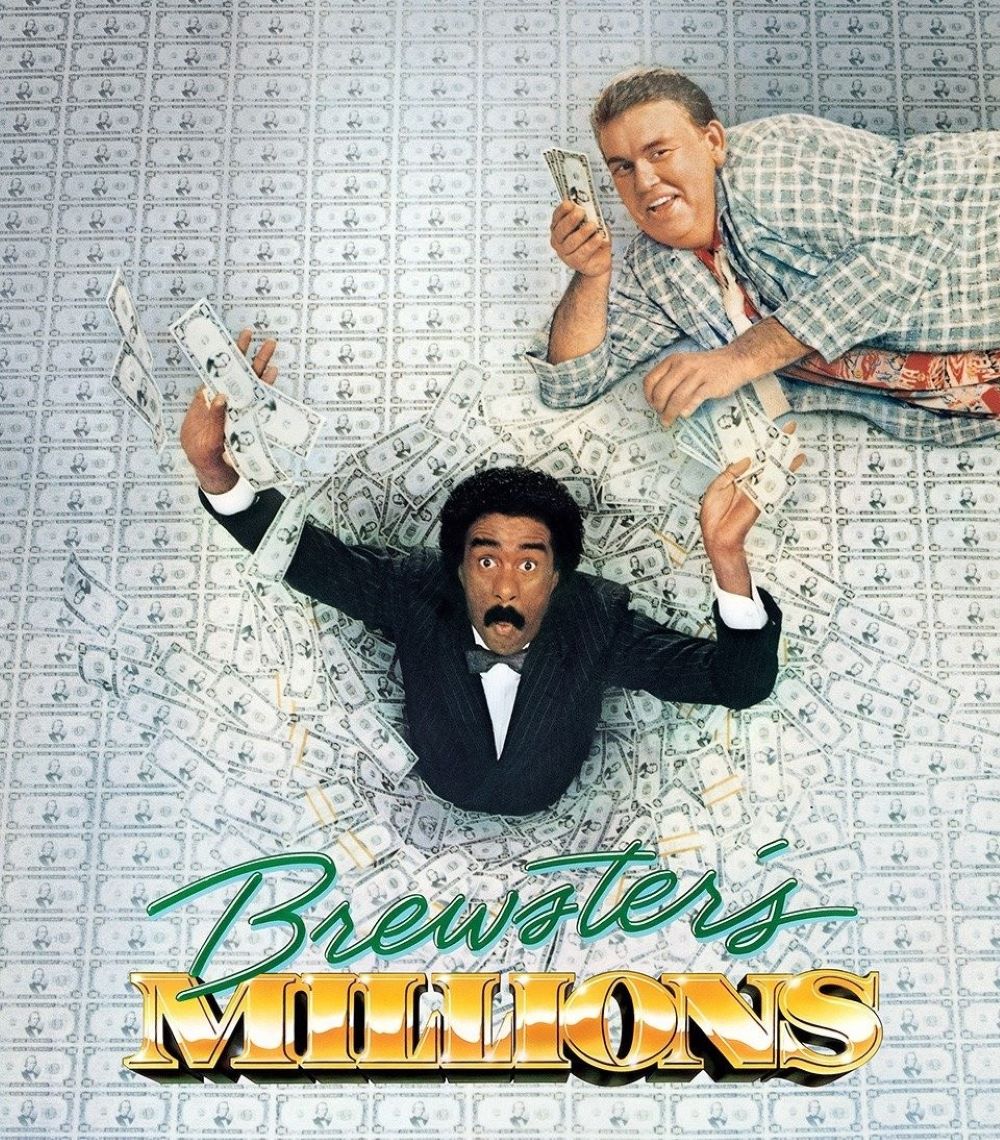
The setup alone is too fun to resist. Richard Pryor stars as Montgomery Brewster, a minor league baseball pitcher who unexpectedly inherits the opportunity of a lifetime—to claim a $300 million fortune from a distant relative. The catch? Before he can get it, he has to spend $30 million in 30 days under a bizarre set of conditions that make financial ruin easier said than done. He can’t give the money away, can’t destroy it, can’t buy assets or investments that retain value, and can’t tell anyone why he’s doing it. Fail, and he gets nothing. Succeed, and he becomes one of the richest men alive. It’s the sort of gleefully absurd premise that could only have come from Hollywood in the 1980s, and it’s immediately clear that the film wants audiences to sit back, grab some popcorn, and watch Pryor tear through cash in increasingly funny and desperate ways.

Richard Pryor is, without doubt, the heart and soul of the movie. He imbues Montgomery Brewster with equal parts manic energy and human frustration, giving the character a real emotional arc beneath all the comic spectacle. Pryor’s talent for blending humor with exasperation makes Brewster’s predicament believable, even when it’s insane. Watching him scramble to lose money while the world keeps rewarding him is strangely satisfying. Pryor understood how to play ordinary men caught in extraordinary circumstances, and that quality grounds the film when it could have easily spiraled into total silliness. In scenes where he loses his patience with accountants, schemes wild spending sprees, or watches his good intentions backfire, Pryor’s comic timing keeps the chaos enjoyable.

John Candy adds another layer of charm as Brewster’s best friend and teammate, Spike Nolan. Candy brings warmth, loyalty, and that unmistakable good-heartedness that made him one of the decade’s most beloved comedic actors. The chemistry between Pryor and Candy keeps the film buoyant even through its weaker stretches. Their friendship defines the film’s tone—it’s loose, goofy, and full of bro-ish camaraderie. Without Candy’s infectious energy, the movie’s more hollow comedic beats might have hit the floor with a thud. Together, they create a dynamic that feels real, even inside a premise that’s totally absurd.

As a director, Walter Hill feels like an odd fit for this kind of broad comedy, but that’s part of what makes Brewster’s Millions interesting. Hill, better known for tough, kinetic action films like The Warriors and 48 Hrs., approaches this farce with a surprising amount of structure and visual precision. The film looks slicker and sharper than most comedies of its kind, which gives the excess on-screen an unintentionally epic flair. Hill’s direction keeps the story moving, and though he’s not naturally a comedic filmmaker, his grounded style adds a peculiar edge to all the craziness. It’s chaos with discipline—an aesthetic that somehow works in the movie’s favor.

Still, Brewster’s Millions can’t quite escape its shortcomings. The pacing is uneven, especially in the middle, where the film loses some steam as Brewster cycles through increasingly repetitive spending gimmicks. The story flirts with satire but rarely commits, brushing up against deeper commentary on wealth, politics, and capitalism before retreating to the comfort of broad comedy. The “Vote None of the Above” subplot, where Brewster’s money-wasting political campaign taps into voter cynicism, is one of the smartest parts of the film—but it’s introduced and resolved too quickly to leave a mark. And while the movie is full of lively energy, not every gag lands; a few supporting performances veer into caricature, and some jokes feel very much of their time.

Yet these flaws are partly what make Brewster’s Millions such a delightful guilty pleasure. It’s the cinematic equivalent of junk food—high on calories, low on nutritional value, but deeply enjoyable all the same. Pryor’s constant exasperation, the sheer absurdity of trying to “waste” money legally, and the exaggerated set pieces (like the overblown parties or his failed attempts to lose at gambling) make for irresistible entertainment. Even when the humor dips into predictable territory, the concept keeps pulling you back in. There’s a giddy satisfaction in watching Brewster try—and fail—to lose money, especially because the universe just won’t let him.

The romance subplot with Lonette McKee’s character, Angela Drake, adds just enough heart to balance the absurdity. McKee gives a grounded, intelligent performance that prevents the love story from feeling tacked on, even if it never fully takes center stage. Her presence keeps Brewster tethered to some kind of reality, and the moral through-line—learning that not everything valuable can be bought—lands gently rather than preachily. It’s not profound, but it fits the breezy tone perfectly.

As a comedy of excess, Brewster’s Millions is very much a product of its time. The slick suits, the gaudy parties, the blind faith in wealth, and the Reagan-era optimism about money’s moral neutrality all ooze from every frame. That time-capsule quality is part of its modern appeal. Watching it today, you can’t help but smile at how on-the-nose it feels—a movie from the “greed is good” decade that accidentally ends up mocking the very mindset it sprang from. It’s self-aware only in flashes, but those flashes are enough to make you recognize the movie’s satirical edge hiding beneath its loud surface.

In the end, that’s what makes Brewster’s Millions endure as a lovable guilty pleasure. It has flaws you can’t ignore—uneven pacing, scattershot tone, underdeveloped ideas—but none of them outweigh its charm. Pryor’s comic genius makes even the weakest joke land better than it should. Candy’s warmth keeps the film light. And Hill’s straightforward direction infuses the lunacy with just enough realism to make it believable. The result is a movie that’s too silly to take seriously but too fun to dismiss. You watch it, laugh at its audacity, shake your head at the logic gaps, and yet somehow come away smiling.

Brewster’s Millions may not be a comedy classic, but it’s easy to see why people keep revisiting it. It’s comfort food cinema—lighthearted, clumsy, and endlessly watchable. And like all the best guilty pleasures, it doesn’t need to be perfect to make you happy. Sometimes, seeing Richard Pryor outsmart the meaning of money for two hours is more than enough.

Previous Guilty Pleasures

  1. Half-Baked
  2. Save The Last Dance
  3. Every Rose Has Its Thorns
  4. The Jeremy Kyle Show
  5. Invasion USA
  6. The Golden Child
  7. Final Destination 2
  8. Paparazzi
  9. The Principal
  10. The Substitute
  11. Terror In The Family
  12. Pandorum
  13. Lambada
  14. Fear
  15. Cocktail
  16. Keep Off The Grass
  17. Girls, Girls, Girls
  18. Class
  19. Tart
  20. King Kong vs. Godzilla
  21. Hawk the Slayer
  22. Battle Beyond the Stars
  23. Meridian
  24. Walk of Shame
  25. From Justin To Kelly
  26. Project Greenlight
  27. Sex Decoy: Love Stings
  28. Swimfan
  29. On the Line
  30. Wolfen
  31. Hail Caesar!
  32. It’s So Cold In The D
  33. In the Mix
  34. Healed By Grace
  35. Valley of the Dolls
  36. The Legend of Billie Jean
  37. Death Wish
  38. Shipping Wars
  39. Ghost Whisperer
  40. Parking Wars
  41. The Dead Are After Me
  42. Harper’s Island
  43. The Resurrection of Gavin Stone
  44. Paranormal State
  45. Utopia
  46. Bar Rescue
  47. The Powers of Matthew Star
  48. Spiker
  49. Heavenly Bodies
  50. Maid in Manhattan
  51. Rage and Honor
  52. Saved By The Bell 3. 21 “No Hope With Dope”
  53. Happy Gilmore
  54. Solarbabies
  55. The Dawn of Correction
  56. Once You Understand
  57. The Voyeurs 
  58. Robot Jox
  59. Teen Wolf
  60. The Running Man
  61. Double Dragon
  62. Backtrack
  63. Julie and Jack
  64. Karate Warrior
  65. Invaders From Mars
  66. Cloverfield
  67. Aerobicide 
  68. Blood Harvest
  69. Shocking Dark
  70. Face The Truth
  71. Submerged
  72. The Canyons
  73. Days of Thunder
  74. Van Helsing
  75. The Night Comes for Us
  76. Code of Silence
  77. Captain Ron
  78. Armageddon
  79. Kate’s Secret
  80. Point Break
  81. The Replacements
  82. The Shadow
  83. Meteor
  84. Last Action Hero
  85. Attack of the Killer Tomatoes
  86. The Horror at 37,000 Feet
  87. The ‘Burbs
  88. Lifeforce
  89. Highschool of the Dead
  90. Ice Station Zebra
  91. No One Lives

Holidays On The Lens: Beyond Tomorrow (dir by A. Edward Sutherland)


After three eccentric businessman arrange for a young couple to get together right before the holidays, a plane crash kills the three men.  However, their ghosts remain on Earth to watch over the couple and to take care of some unexpected holiday business.  The film is a holiday film and a comedy and a romance and a musical and a ghost story and a melodrama and finally an oddly sincere meditation on life and death.

From 1940, here’s Beyond Tomorrow!