VAMPIRES (1998) – Happy Birthday, John Carpenter!


In celebration of the 77th birthday of the great Director John Carpenter, I decided to watch his 1998 film VAMPIRES, starring one of my favorite actors in James Woods. I specifically remember the first time I ever read that this movie was being made and that it would star Woods. It was 1996, and I had just been hired to work for a company called Acxiom Corporation in Conway, Arkansas. It was at this job that I first had access to this new thing called the Worldwide Web. As far as I know, it was the first time I had ever looked at the internet. Of course, I immediately started completing searches on some of my favorite actors, including James Woods, when I came across VAMPIRES as a movie currently in production. These were the first times in my life that I was able to find out about new film projects without looking in a magazine or watching shows like Entertainment Tonight.

In VAMPIRES, James Woods stars as Jack Crow, the leader of team of vampire hunters who get their funding from the Vatican. We’re introduced to the team when they go into a house in New Mexico and proceed to impale and burn a nest of vampires. While the rest of the team celebrates the mission that night in a hotel filled alcohol, drugs, and whores, Jack can’t escape the feeling that something isn’t right, as he doesn’t believe they got the “master vampire” of the group. Unfortunately, Jack is right to worry. As they’re partying, the master vampire Valek (Thomas Ian Griffith) interrupts the fun and proceeds to kill everyone there, with the exception of Jack, his partner Tony (Daniel Baldwin), and Katrina (Sheryl Lee), a prostitute he decided to just bite on. Valek isn’t just a regular old master vampire, either. As it turns out, he’s the original vampire, and he’s on a quest to find the Berziers Cross, an ancient Catholic relic, that will allow him and other vampires to walk in the daylight. Against this backdrop, Jack, Tony, and a priest named Adam (Tim Guinee) use Katrina, who now has a psychic link with Valek, to try to kill the ultimate master vampire Valek, his cleric accomplice Cardinal Alba (Maximillian Schell), and just hopefully, save mankind in the process!

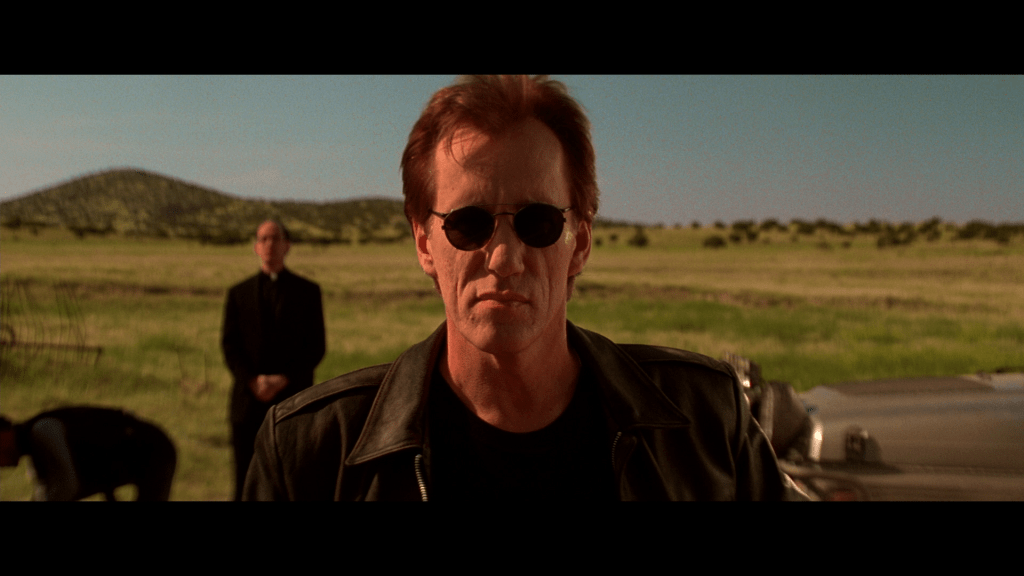
I know that VAMPIRES is not the most well-known or beloved John Carpenter film. He’s done so many great movies, but VAMPIRES is special to me as it was the first of his films that I ever saw in the movie theater. And the opening 30 minutes of the film is as badass as it gets. Carpenter is a master of the set-up. There’s lots of slow motion as Carpenter’s guitar riffs rock the soundtrack and the camera moves in on James Woods, with his cool sunglasses and black leather jacket, just before his team goes in and destroys a vampire nest at the beginning of the film. I also think the set-up of Thomas Ian Griffith as Valek is awesome, as he strolls up to the hotel room while the vampire hunters celebrate, completely unaware of the carnage about to befall them. Griffith has never looked cooler than he did in his long black coat and long hair, both blowing in the wind. These were awesome moments that illustrated Carpenter’s ability to project a sense of visual cool and power that I was mesmerized with. I wanted to see what happens next. And as a 25-year-old man at the time of VAMPIRE’s Halloween release in 1998, I also gladly admit that I really enjoyed the beauty of a 31-year-old Sheryl Lee. I would have definitely done everything I could do to save and protect her. The remainder of the film may have not been able to keep the same momentum as those first 30 minutes, but it’s a solid, enjoyable film, buoyed by the intense performance of Woods!
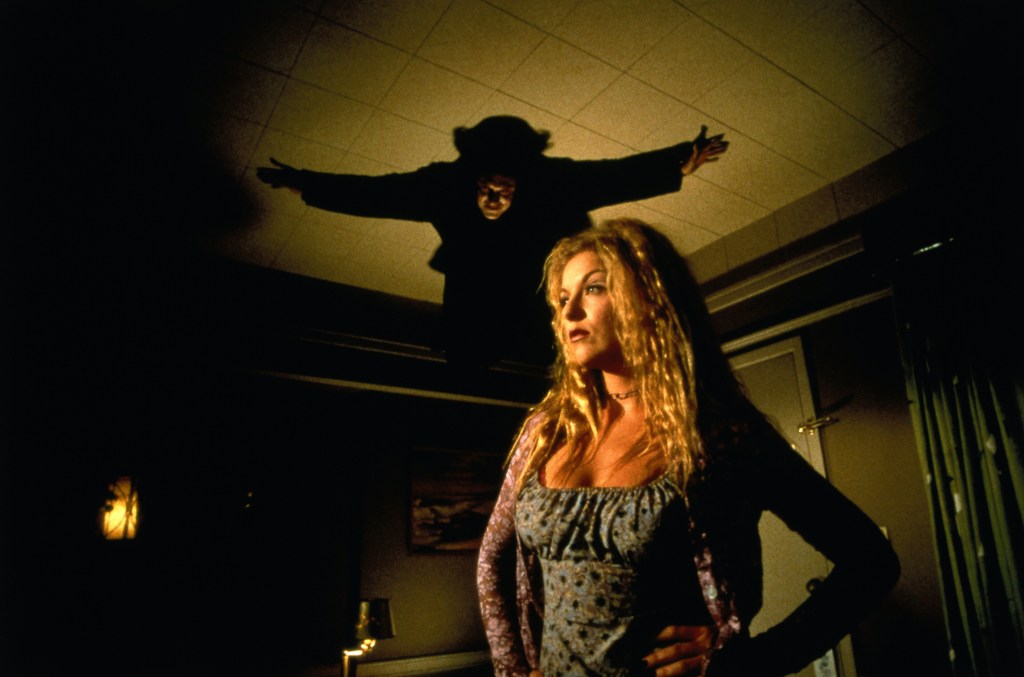
Vampires (1998) Directed by John Carpenter Shown: Thomas Ian Griffith, Sheryl Lee

There are several items of trivia that interest me about VAMPIRES:

  1. John Carpenter had a good working relationship with James Woods on the set, but they had a deal: Carpenter could film one scene as it is written, and he would film another scene in which Woods was allowed to improvise. The deal worked great, and Carpenter found that many of Woods’ improvised scenes were brilliant.
  2. VAMPIRES was John Carpenter’s only successful film of the 1990’s. Its opening weekend box office of $9.1 million is the highest of any John Carpenter film.
  3. The screenplay for VAMPIRES is credited to Don Jakoby. Jakoby has some good writing credits, including the Roy Scheider film BLUE THUNDER (1983), the Cannon Films “classic” LIFEFORCE (1985), and the Spielberg produced ARACHNAPHOBIA (1990). The reason Don Jakoby interests me, however, is the fact that he had his name removed from the film I’ve seen more than any other, that being DEATH WISH 3 (1985), starring Charles Bronson. Even though Jakoby provided the script for DEATH WISH 3, due to the drastic number of changes, Jakoby insisted his name be removed. The script is credited to the fake “Michael Edmonds” instead.
  4. As I was typing up my thoughts on VAMPIRES today, I learned of the death of the director David Lynch. This brings special poignancy to the fact that John Carpenter cast Sheryl Lee after seeing her on Lynch’s T.V. series TWIN PEAKS (1990).
  5. Frank Darabont, who directed one of the great films of all time, THE SHAWSHANK REDEMPTION (1994), has a cameo as “Man with Buick.” Fairly early in the film, after Crow, Montoya, and Katrina crash their truck escaping the hotel massacre, they encounter the man at a gas station and forcefully take the Buick. This is a strong sign of just how respected John Carpenter was by other great filmmakers at the time.

John Carpenter has directed some absolute classics like ASSAULT ON PRECINCT 13 (1976), HALLOWEEN (1978), ESCAPE FROM NEW YORK (1981), THE THING (1982), and BIG TROUBLE IN LITTLE CHINA (1986). There’s no wrong way to celebrate a man who has brought such joy into our lives through his work. Today, I’m just thankful that he has been given the opportunity to share his talents with us!   

Guilty Pleasure No. 74: Van Helsing (dir by Stephen Sommers)


What can I say about this 2004 action horror film that can do it justice at just how it perfectly represent what I call a “guilty pleasure”.

Van Helsing by Stephen Sommers (him being at his most Stephen Sommersist) was suppose to be a new action franchise with Hugh Jackman as it’s lead. One must remember that in 2004, Hugh Jackman was still at the height of his popularity as an action star with roles as Wolverine in the X-Men film franchise and, in another guilty pleasure of mine, Swordfish.

This film was suppose to catapult him to the stratosphere and taking the action star role from aging ones such as Arnold Schwarzenneger, Sylvester Stallone and Bruce Willis. Instead Stephen Sommers reached for that brass ring and failed, but did so with a mish-mash of horror properties blended haphazardly to give us a film that tried to be too much yet also not enough.

Hugh Jackman in the title role was more than game to try and prop up the film’s convoluted plot. Kate Beckinsale was stunning as usual and hamming it up in what I could only guess is here version of a Transylvanian accent. Even Richard Roxbrough in the role of Dracula, miscast as he seem to be in the role, gave a campy and scenery-chewing performance that his performance went past bad and circled back to being entertaining.

Yet, for all its flaws, I actually enjoy Van Helsing for what it was and that was a modern version of those Abbott and Costello mash-up with the Universal horror characters of the 40’s and 50’s. One cannot mistake this film on the same level as Nosferatu (Murnau, Herzog and Eggers versions) and Sommers definitely cannot be mistake for the three auteurs who had their own take on the abovementioned film. But Sommers does make thrilling, though some would say repetitive, action films.

Did I turn my brain off watching Van Helsing?

I sure did, but it still didn’t stop me from being entertained…and I cannot ever sat anything bad about a film with Kate Beckinsale in a tight black-red leather corset. It’s against some sort of law to do so.

Previous Guilty Pleasures

  1. Half-Baked
  2. Save The Last Dance
  3. Every Rose Has Its Thorns
  4. The Jeremy Kyle Show
  5. Invasion USA
  6. The Golden Child
  7. Final Destination 2
  8. Paparazzi
  9. The Principal
  10. The Substitute
  11. Terror In The Family
  12. Pandorum
  13. Lambada
  14. Fear
  15. Cocktail
  16. Keep Off The Grass
  17. Girls, Girls, Girls
  18. Class
  19. Tart
  20. King Kong vs. Godzilla
  21. Hawk the Slayer
  22. Battle Beyond the Stars
  23. Meridian
  24. Walk of Shame
  25. From Justin To Kelly
  26. Project Greenlight
  27. Sex Decoy: Love Stings
  28. Swimfan
  29. On the Line
  30. Wolfen
  31. Hail Caesar!
  32. It’s So Cold In The D
  33. In the Mix
  34. Healed By Grace
  35. Valley of the Dolls
  36. The Legend of Billie Jean
  37. Death Wish
  38. Shipping Wars
  39. Ghost Whisperer
  40. Parking Wars
  41. The Dead Are After Me
  42. Harper’s Island
  43. The Resurrection of Gavin Stone
  44. Paranormal State
  45. Utopia
  46. Bar Rescue
  47. The Powers of Matthew Star
  48. Spiker
  49. Heavenly Bodies
  50. Maid in Manhattan
  51. Rage and Honor
  52. Saved By The Bell 3. 21 “No Hope With Dope”
  53. Happy Gilmore
  54. Solarbabies
  55. The Dawn of Correction
  56. Once You Understand
  57. The Voyeurs 
  58. Robot Jox
  59. Teen Wolf
  60. The Running Man
  61. Double Dragon
  62. Backtrack
  63. Julie and Jack
  64. Karate Warrior
  65. Invaders From Mars
  66. Cloverfield
  67. Aerobicide 
  68. Blood Harvest
  69. Shocking Dark
  70. Face The Truth
  71. Submerged
  72. The Canyons
  73. Days of Thunder

The Films of 2025: Dead Before They Wake (dir by Andy Crane and Nathan Shepka)


It’s always interesting to compare American films about the UK with the films made by the people who actually live there.

American films about the UK are all about meeting quirky people, visiting clean and brightly-lit castles, maybe falling in love with a member of royalty, and perhaps discovering that your father is actually a member of Parliament played by Colin Firth.  If the action moves out of London or into Scotland or Wales, one cab be assured that it will involve an American having car trouble outside of a goat farm and then meeting an eccentric but handsome veterinarian.  If the film takes place in Scotland, the veterinarian and his randy father will wear a kilt.  The same thing will happen if the film is set in Wales because most Americans don’t know the difference between Scotland and Wales.

Films about the UK that are actually made in the UK tend to be visually moody and full of people dealing with economic uncertainty while living in depressingly tiny flats.  The cities are often portrayed as being covered in graffiti and no one, not even the film’s hero, is ever particularly happy.  British films about the UK are full of melancholy, rainy atmosphere and are often as violent as American films about the UK are quirky.

Dead Before They Wake takes place and was filmed in some of the darkest corners of Glasgow.  Nathan Shepka plays Alex, a nightclub bouncer who occasionally takes on other jobs.  He’s someone who knows how to handle himself in a fight and he often returns to his small and cramped home with split knuckles and a bruised face.  At the same time, he’s also a loving son whose deaf and very ill father is in a retirement community.  (His father encourages Alex to settle down and get married.)  Outside of his father, the only person with whom he has an regular contact is Gemma (Grace Cordell), a teacher who moonlights as a stripper to make extra money.  (That said, she still finds herself receiving an eviction notice.)  Alex pays Gemma to have sex with him but it’s obvious that there’s something more to their relationship than just a transaction.  They’re two people lost in an increasingly dark world.

Alex is approached by a shabby but well-intentioned attorney named Evan (Sylvester McCoy).  Evan hires Alex to track down a 14 year-old girl who Evan believes has been abducted by a sex trafficking ring.  The girl’s mother is a heroin addict.  The girl’s father is a government official.  Alex reluctantly takes the job and he soon manages to link the girl’s disappearance to a low-rent operation run by Amar (Manjot Sumal).  Amar is someone who is very protective of his own teenage daughter but who has no problem with the idea of abducting girls who are the same age or younger and forcing them to work in his makeshift brothel.  While Alex tries to find a way to infiltrate Amar’s operation, a mysterious man named Holden (Patrick Bergin) watches from the shadows.

Though the plot may remind some of Taken, Dead Before They Wake is far more thoughtful than any Liam Neeson’s admittedly entertaining thrillers.  Alex is not a former secret agent with a precise set of skills.  He’s just a tough guy who knows how to throw (and take) a punch and his investigation of Amar’s operation pushes him over the edge not because he’s trying to rescue a family member but because Alex is a human being who cannot believe or forgive the amount of depravity that he discovers during his investigation.  Throughout the film, there are hints that Amar’s operation is actually fairly small-scale when compared to some of the others.  A meeting with a representative of a national syndicate brings to mind the scandals of the late British DJ Jimmy Savile, who may not be well-known in the States but who, in the UK, became a symbol of depravity when it was revealed, after his death, that he was a prolific pedophile and sex abuser whose actions were largely ignored and sometimes even covered up by the British establishment.

Throughout Dead Before They Wake, there are scenes and details that establish that the film is more than just a revenge flick.  Gemma’s struggle to survive financially is handled with sensitivity and Grace Cordell gives an authentic performance in the role.  The scene where she tries to hide her growing fear upon learning that a picture of her dancing has appeared online and been seen by at least one of her students is wonderfully-acted.  The film contrasts Alex’s small flat with the large home that is owned by Amar and the film opens with a disturbing scene that shows just how exactly Amar kidnaps the girls who he then gets hooked on drugs and forces to work for him.  Dead Before They Wake is about much more than just action.

Dead Before They Wake does have its flaws.  Towards the end of the film, we’re expected to believe that one character overlooked something so obvious that it momentarily makes it difficult for us to suspend our disbelief.  But, for the most part, this is a disturbing and effective thriller, one that concludes on a proper note of Scottish melancholy.

SLING BLADE (1996) – #ArkansasMovies, my celebration of movies filmed in the Natural State!


I love watching movies that are filmed in my home state of Arkansas. We’ve had our share of big stars show up in the Natural State. Burt Reynolds, Billy Bob Thornton, Bill Paxton, Robert De Niro, Dennis Quaid, Matthew McConaughey, Tom Cruise and Andy Griffith have all filmed really good movies here. Martin Scorsese directed one of his very first movies in southern Arkansas. It’s going to be fun revisiting some of my favorite Arkansas movies and sharing them with you!

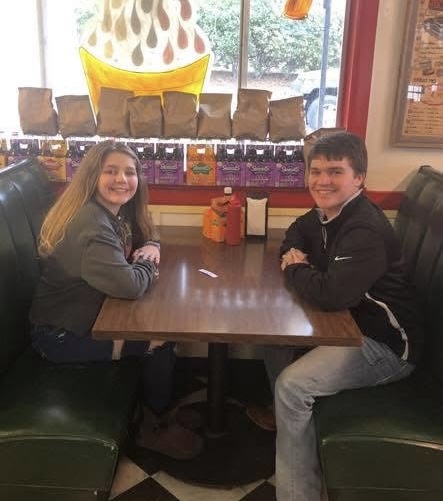
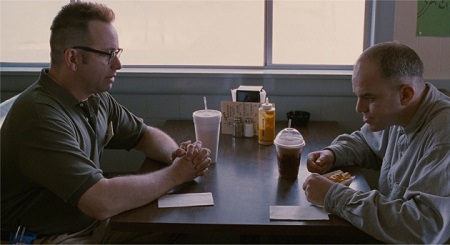
I live out in the country in Saline County, Arkansas. Back in 1996, Billy Bob Thornton wrote, directed and starred in a little film made right here called SLING BLADE (1996). It’s one of my favorite movies. Here’s a picture of our son and daughter sitting at the same table at Garry’s Drive-In Diner where Billy Bob Thornton and John Ritter sat in the movie. 

Thornton stars as Karl Childers, a developmentally disabled man who was abused as a child by his parents and the other children in the community. At the age of 12, he murdered his mom and her teenage lover Jessie Dixon with a sling blade. After 30 years in the mental hospital, the state decides he’s no longer dangerous, so they give him his stack of books and send him on his way. Karl has no clue of how to get on with his life, but the administrator of the hospital (James Hampton) helps him get a job as a small engine mechanic in his hometown. Hanging out at the laundromat one day, Karl meets a boy named Frank (Lucas Black) and helps him carry his bags of clothes back to his house. The two become friends and start hanging out a lot together. Frank introduces Karl to his mom, Linda (Natalie Canerday), and her gay best friend and boss, Vaughan (John Ritter). Karl also meets Linda’s abusive and alcoholic boyfriend, Doyle (Dwight Yoakam). Karl grows to love Frank and Linda. When he witnesses a drunk Doyle’s abusive and threatening behavior towards Frank and Linda one night, Karl starts thinking that Doyle may really hurt his friends someday. He decides he’s going to make sure that can never happen. 

First and foremost, I love SLING BLADE because of Billy Bob Thornton’s performance as Karl Childers. He had been developing the character of Karl for many years before the movie was made. He loved pulling “Karl” out when he was just hanging out and goofing around with his friends. He based his character on bits and pieces of so many different people in his life. As a native Arkansan, many of the words he says and the way he says them reminds me of different people I’ve known over the years. His opening monologue where he describes the murders of his mother and the young Jessie Dixon is a masterpiece in and of itself. Thornton created a truly unique character, and that’s extremely rare these days. It’s a performance for the ages and continues to inspire terrible imitations to this day!

The remainder of the cast in SLING BLADE is so good and natural. Lucas Black is phenomenal as Frank. Billy Bob Thornton has been asked how he got such a great performance from the then 12-year-old boy from Alabama. He says he didn’t get that performance; that’s just the kind of actor Lucas Black is. The relationship between Karl and Frank is the key to the film working, and Black is perfect. Natalie Canerday is excellent as Frank’s mom, Linda. She’s from Russellville, Arkansas, so her accent is authentic, and she just blends perfectly into the film. John Ritter provides a very solid supporting performance as Linda’s gay friend who cares deeply for her and Frank. Thornton was part of the cast of Ritter’s early 90’s sitcom with Markie Post called HEARTS AFIRE. He actually wrote this screenplay while working on the show. The two were great friends off camera and Ritter actually worried that he wouldn’t be able to give a serious performance opposite Thornton’s portrayal of Karl. And then there’s country music superstar Dwight Yoakam as the abusive bully Doyle Hargraves. He’s simply great in the film. He doesn’t just portray Doyle as a monster either. There are many people in this world like Doyle Hargraves, and Yoakam is able to capture that. Director Jim Jarmusch has a memorable cameo in the film. He sells Karl his “french fried potaters.” And the great Robert Duvall even makes a short appearance in the film as Karl’s dad. Duvall was over in the Memphis area filming his own movie A FAMILY THING, which was written by Thornton. He just made the 2 hour drive over for the day and filmed his scene.

Every scene filmed in SLING BLADE is filmed here in Benton and Saline County. The opening and closing scenes between Thornton and actor J.T. Walsh at the “nervous hospital” were filmed at the old Benton Services Center, which is now a psychiatric nursing home just outside of Benton. I’ve driven by the location of the home where Linda and Frank lived. I drive by the laundromat where Karl meets Frank every time I go eat at Garry’s Sling Blade Drive-in. I’ve driven out to the bridge over the Saline River that is prominently featured in the film (see picture below). Heck, I even went to college at the University of Central Arkansas with one of the young ladies who interview Karl at the beginning of the film. I love this movie, and I’m so proud that it was filmed in my backyard. 

SLING BLADE is an incredible film with a truly unique character at its center. The film is at times funny, heartbreaking, violent, slow, awkward, dramatic, and thrilling. It’s a resounding success for Billy Bob Thornton as a director, actor, and writer, even winning him an Oscar for his screenplay. I give this film my highest recommendation. 

I’ve included the trailer for SLING BLADE below:

Past reviews in the #ArkansasMovies series include:

Lisa Marie Reviews An Oscar Nominee: Mississippi Burning (dir by Alan Parker)


1988’s Mississippi Burning opens on a lonely Mississippi backroad in 1964.  A car is pulled over by the police.  Inside the car are three young men, one black and two white.  Judging from their nervous expressions and the sound of the people who stopped them and the fact that they’re in Mississippi during the 60s, we can guess what is about to happen to the people in the car.

With the three men, who were civil rights activists who were involved in voter registration efforts, officially considered to be missing, the FBI sends down two agents to find out what happened.  The two agents are Alan Ward (Willem DaFoe) and Rupert Anderson (Gene Hackman).  Ward is a Northerner who does things by the book and who resents having to deal with lax Southern law enforcement.  He is serious-minded and, just in case we need a reminder of how serious he is, he wears bar-rimmed glasses that make him look like the world’s most fearsome IRS agent.  Anderson is from Mississippi.  He’s a talkative good ol’ boy who was a sheriff before he joined the FBI.  “You know what has four eyes but can’t see?” Anderson asks, “Mississippi.”  It’s a tense partnership, as Ward sometimes disapproves of Anderson’s methods and Anderson thinks that Ward doesn’t understand how things work in Mississippi.

From the first minute we meet local law enforcement, we know that they’re the killers.  Just the fact that one of them are played by Brad Dourif is evidence enough.  However, no one in town is willing to say a word against the police or their cronies.  The white citizens are either too intimidated or they agree with what happened to the three civil rights workers.  (The three men are often referred to as being “outside agitators.”)  The black townspeople live in fear of the Klan and have no reason to trust the word of white FBI agents like Ward and Anderson.

Ward and Anderson investigate the case, hoping that they can find some bit of evidence that will prove the guilt of Sheriff Stuckey (Gailard Sartain), Deputy Pell (Brad Dourif), KKK leader Clayton Townley (Stephen Tobolowsky), and maybe even the town’s mayor (R. Lee Ermey).  One advantage that the FBI has is that the murderers are incredibly stupid.  Another is that Deputy Pell’s abused wife (Frances McDormand, giving the film’s best performance) might be persuaded to testify against her husband.

Mississippi Burning is an example of both powerful filmmaking and problematic history.  Like Ridley Scott, director Alan Parker got his start making commercials and he brought the same sensibility to his movies.  He knew what audiences wanted to see and he made sure to give it to them.  Mississippi Burning looks fantastic and is full of memorable performances.  (Both McDormand and Hackman received Oscar nominations).  The action moves quickly and the villains are so hateful that watching them end up getting humiliated really does bring about a sort of emotional release.

At the same time, this is a film about the Civil Rights era that presents the FBI as being the heroes.  And while it’s true that the FBI did investigate the real-life murders that inspired this film, Mississippi Burning leaves out the fact that the FBI was just a rigorous in harassing and wire tapping Martin Luther King as they were in keeping an eye on the leaders of the Klan.  It’s a film about racism in which the heroes are as white as the villains.  Gene Hackman gives a good performance as Rupert Anderson but the film never really delves all that deeply into Anderson’s feelings about racism in the South.  We’re told that he was a sheriff in Mississippi but we never learn much about what type of sheriff Anderson was.  He’s opposed to the Klan but, historically, the same can be said of many segregationists in the 60s, many of whom felt the Klan’s activities brought unwanted federal attention to what was happening in their home states.  By not delving into Anderson’s own history as a member of Mississippi law enforcement or the FBI’s own more problematic history when it comes to the civil rights movement, the film provides viewers with the escape of viewing the bad guys as being aberrations as opposed to being the norm in 1964.  In the end, Mississippi Burning is an effective thriller with strong heroes and hateful villains.  Just don’t watch it for historical accuracy.

Mississippi Burning was nominated for Best Picture but it lost to Rain Man.

Trading Places (1983, directed by John Landis)


It all starts with a bet.

As Christmas approaches, Mortimer (Don Ameche) and Randolph Duke (Ralph Bellamy) make a bet to determine whether it’s nature or nurture that shapes someone’s future.  The fabulously wealthy owners of Duke & Duke Commodity Brokers, the brothers casually frame their director, Louis Winthrope III (Dan Aykroyd), for everything from dealing drugs to sealing money to cheating on his girlfriend (Kirstin Holby).  After Louis is kicked out of both his job and his mansion, the Dukes hire a street hustler named Billy Ray Valentine (Eddie Murphy) to take his place.  Earlier Winthrope tried to get Valentine arrested for approaching him in the street.  Now, Valentine is living in Winthrope’s mansion, with Winthrope’s butler and Winthrope’s job.

While Winthrope tries to survive on the streets with the help of a outwardly cynical but secretly kind-hearted prostitute named Ophelia (Jamie Lee Curtis, in her first non-horror starring role), Billy Ray surprises everyone by using his street smarts to become a successful, suit-wearing businessman.  The Dukes, of course, have no intention of keep Billy Ray Valentine on as their director.  Not only are the Dukes snobs but they’re racists as well.  Once their one dollar bet has been settled, they start planning to put Billy Ray back out on the streets with Winthrope.

Trading Places was Eddie Murphy’s follow-up to 48 Hrs and he again showed himself to be a natural star while playing the type of role that could have been played by Dan Ayrkroyd’s partner, John Belushi, if not for Belushi’s early death.  (Jim Belushi has a cameo as a party guest.)  Murphy gets to show off a talent for physical comedy and Trading Places is one of the few films to really take advantage of Dan Aykryod’s talents as both a comedian and actor.  Winthrope goes from being a coddled executive to being as streetwise as Valentine.  This is probably Aykroyd’s best performance and he and Eddie Murphy make for a good team.

But the real stars of the film are four actors who weren’t really thought of as being comedic actors, Denholm Elliott, Don Ameche, Ralph Bellamy, and especially Jamie Lee Curtis.  Ophelia is a much edgier character than the “final girls” that Curtis was playing in horror films and Curtis steals almost every scene that she’s in.  Ameche and Bellamy are great villains and it’s fun to watch them get their comeuppance.  What screwball comedy would be complete without a sarcastic butler?  Denholm Elliot fills the role of Coleman perfectly.

Trading Places was a box office success when it was released and it’s now seen as being one of the new Christmas classics, a film for the adults to enjoy while the kids watch Rudolph and Frosty.  I think the movie ends up going overboard towards the end with the gorilla and Dan Aykroyd wearing blackface but, for the most part part, it’s still a very funny and clever movie.

The Films of 2025: Laws of Man (dir by Phil Blattenberger)


Laws of Man opens with two U.S. marshals driving through the desert of Utah.  Tommy Morton (Jackson Rathbone) is young and impulsive, a Korean war vet who is quick to open fire.  Frank Fenton (Jacob Keohane) is older and more cautious.  He also served in the military, though his service was during World War II.  Frank is haunted by flashbacks to a particularly gruesome battle.  Tommy and Frank may spend most of their time wearing black suits in the desert but neither one breaks a sweat.

The year is 1963.  Kennedy is in the White House.  The communists are on the move.  And Tommy and Frank are busy executing arrest warrants in the most desolate part of the country.  An attempt to arrest Mormon cult leader Crash Mooncalf (Ricard Brake) leads to a bloody shootout that leaves Mooncalf and his followers dead.  Their next assignment leads them to a small town in Nevada, where Bill Bonney (Dermot Mulroney) and his violent family is suspected of killing local ranchers and stealing their land.

From the minute that Tommy and Frank arrive in Nevada, something feels off.  They stay at a cheap motel, where Tommy picks up a woman named Dinah (Ashley Gallegos) and Frank spends his time talking to a bartender named Callie (Kelly Lynn Reiter).  An old rancher named Don Burgess (Forrie J. Smith) shows off his gun and says that he would rather suffer a violent death than give up his land.  A traveling preacher named Cassidy Whitaker (Harvey Keitel) approaches Frank in the parking lot and starts talking about sin and redemption.  Meanwhile, FBI agent Galen Armstong (Keith Carradine) appears to be curiously unconcerned with the Bonneys and their reign of violence.  As for the sheriff (Graham Greene), he spending his time sitting outside a burned-out ranch house.  The charred bodies of the owners are still inside, seated around the dinner table.

An attempt to arrest Bill Bonney at his home leads to a violent shootout, one in which no one is killed but Bill is still not happy about having a bunch of bullet holes in his roof.  Tommy and Frank attempt to serve the arrest warrant, just to discover that it’s not going to be as easy as they thought.  Frank, whose World War II flashbacks are getting more and more intense, wants to leave town.  Tommy, however, is obsessed with discovering what exactly everyone is hiding.

And, through it all, people who know their history will notice that the film is taking place in November of 1963 and the 22nd is rapidly approaching….

Laws of Man gets off to a strong start but begins to meander about halfway through.  Luckily, the film’s final third features a wonderfully insane twist that recaptures the viewer’s attention.  No matter what you may think is going on in the film, it can’t prepare you for just how weird things eventually get.  Laws of Man is an entertaining film, one that is occasionally a bit too self-consciously quirky for its own good but which ultimately works.  Jackson Rathbone and Jacob Keohane both give strong performances in the lead roles and the familiar faces in the film’s supporting cast all do their best to bring the film’s often surreal world to life.  Dermot Mulroney and Keith Carradine give especially strong performance while Harvey Keitel appears to be having fun as the offbeat preacher.

Laws of Man managed to truly take me by surprise.  For fans of paranoid cinema, it’s definitely worth making time for.


Lisa Marie Reviews An Oscar Nominee: Alice Adams (dir by George Stevens)


Katharine Hepburn was famous for both her relationship with Spencer Tracy and the films that she made with him.  They were such frequent co-stars and so associated with each other that “Hepburn-Tracy” became a film genre in and of itself, one that promised a bit of comedy, a bit of drama, and some sharp-witted romance.  That said, I have to admit that one of my favorite of Katharine Hepburn’s film is one that she made not with Spencer Tracy but instead with Fred MacMurray.  Alice Adams is a Tracy-Hepburn film without Tracy.

First released in 1935 and based on a novel by Booth Tarkington (who was quite a big deal back in the day even if, like Arrowsmith‘s Sinclair Lewis, he’s somewhat forgotten today), Alice Adams stars Hepburn as the title character.  Alice is the daughter of Virgil Adams (Fred Stone) and his wife, who is only referred to as being Mrs. Adams (Anne Shoemaker).  Virgil is a sickly man who has worked as a clerk at a glue factory for several years.  Despite living in a rather large house and having a maid named Malena (Hatti McDaniel), the Adams family is not wealthy.  However, Mrs. Adams desperately wants the family to be rich and Alice carries herself with the airs of a wealthy woman, despite the fact that everyone in town knows that she’s not.  Alice love her family and is loyal to them, even if her younger brother (Frank Albertson, who later played Sam “Hee Haw” Wainwright in It’s A Wonderful Life) appears to be addicted to gambling and her mother is constantly browbeating her father for not being more ambitious.  Her family may embarrass her but we know she wouldn’t trade them for all the money in the world.  That’s why we like Alice, even if she does sometimes act like a snob.

However, when Alice meets and falls for the wealthy Arthur Russell (Fred MacMurray), she lies about her social background and tries to present herself as being just as rich as him.  When she invites Arthur and his parents to her house for a dinner party, she frantically tries to keep up the charade of being wealthy.  Meanwhile, Virgil finds himself wrongly accused of stealing from his boss (Charley Grapewin) and, as a result, the family’s financial future is put in jeopardy.

Alice Adams is a mix of screwball comedy and social drama.  On the one hand, Alice’s desperate attempts to throw the perfect party are frequently very funny.  Katharine Hepburn was always at her best when she played a flighty character and the contrast between Alice’s sophisticated airs and Alice’s actual personality makes me laugh every time that I watch the film.  At the same time, there’s a definite undercurrent of melancholy to the film.  Alice and her mother are both so desperate to be rich that they’ve both been blinded to just how wonderful their lives really are.  Alice may like Arthur and Arthur definitely likes Alice but one never forgets that a part of Alice’s attraction to Arthur is that Arthur can give her the life to which she aspires.

Alice Adams features one of Hepburn’s best performances and it’s a rare Hepburn performance to which anyone watching should be able to relate.  At some point in our lives, we’ve all felt like Alice.  We’ve all been Alice, even if we don’t want to admit it.  Fred MacMurray’s natural likability serves him well as Arthur.  He comes across like a genuinely nice guy and we definitely want him and Alice to end up together.

Alice Adams was nominated for Best Picture but it lost to a much bigger production, Mutiny on the Bounty.  Bette Davis beat Katharine Hepburn for Best Actress.  Davis later said that she felt Hepburn should have won.

Beverly Hills Cop (1984, directed by Martin Best)


Two years after teaming with Nick Nolte in 48 Hrs., Eddie Murphy returned to the action genre in what remains he best-known action comedy, Beverly Hills Cop.

We all know the story.  Eddie Murphy is Axel Foley, a streetsmart detective in Detroit whose childhood friend, Mickey (James Russo), is murdered because of something that he saw while working as a security guard in Beverly Hills.  Axel plays by his own rules and gets results even as he gives his boss, Inspector Todd (Gil Hill), heartburn.  Todd refuses to allow Foley to investigate Mickey’s death so Axel puts in for some vacation time and catches the first plane to Beverly Hills.

In Beverly Hills, he meets up with another childhood friend, Jenny (Lisa Eilbacher).  Axel thinks that Mickey’s murder was ordered by a shady businessman named Victor Maitland (Steven Berkoff).  The Beverly Hills Police Department orders Axel to leave Maitland alone and to return to Detroit.  Axel won’t go until he gets justice for Mickey.  Lt. Bogomil (Ronny Cox) assigns Taggart (John Ashton) and Rosewood (Judge Reinhold) to follow Axel in Beverly Hills.

Like 48 Hrs., the story is serious but the comedy comes from how the well-drawn characters interact with each other and from seeing how Axel reacts to the strange and wealthy world of Beverly Hills.  Axel has the same reactions that we would have but, because he’s played by Eddie Murphy, he always has the perfect response to everything that he sees, whether it’s dealing with a snooty hotel clerk or with someone like Serge (Bronson Pichot), Jenny’s co-worker who speaks with an unidentifiable accent.  Even more so than in 48 Hrs or Trading Places, Murphy reveals himself to be a natural star here.  One reason why we like Axel is because he’s not just funny but he’s also the type of confident hero that we all wish we could be.  He’s not intimidated by Beverly Hills for a second.

It’s now impossible to picture anyone else in the role of Axel Foley but, when the film’s script was first being shopped around, it was originally offered to Sylvester Stallone, who said the story had potential but was missing something.  He rewrote the script and took out all of the humor, turning it into a grim and serious action film.  (It is rumored that Stallone later turned his version of the script into Cobra.)  Fortunately, Stallone eventually dropped out of Beverly Hills Cop so that he could co-star with Dolly Parton in Rhinestone.  Producers Don Simpson and Jerry Bruckheimer, then at the start of their producing careers, then offered the role to Eddie Murphy, who took Stallone’s script and added back all of the humor.  Murphy also ended up ad-libbing several of the film’s best one-liners, improvising the hotel lobby scene and the meeting with Serge on the spot.

Beverly Hills Cop was a huge success, cementing Murphy’s status as a star and proving that Murphy could carry a movie on his own.  The film still holds up, certainly better than any of the sequels that followed.  Even though Murphy was clearly the main attraction, the movie also gave actors like John Ashton, Judge Reinhold, Ronny Cox, Bronson Pinchot, and even Paul Reiser a chance to shine.  The villainous performances of Steven Berkoff and Jonathan Banks would serve as a model for countless bad guys through the 80s and 90s.  Beverly Hills Cop is a movie that makes you happy that Sylvester Stallone didn’t have a better sense of humor.

The Films of 2025: Alone In Venice (dir by Jules East)


Venice is my favorite city in Italy.

I mean, it’s such a cliché, isn’t it?  Tourists always fall in love with Venice, even though the majority of us really don’t know much about the city beyond the canals and the gondolas.  I spent a summer in Italy and Venice was definitely the city that had the most American visitors.  Sadly, the majority of them didn’t do a very good job representing the U.S. in Europe.  One night, a bunch of drunk frat boys approached me, all wearing University of Texas t-shirts.  One of them asked, “Are you from Texas?”

“No,” I lied.

“You sound like you’re from Texas!” his friend said.

“No, ah’m not from Texas,” I said, “Sorry, y’all.”

That’s not something that would have happened in Florence or even Naples!  In Rome, handsome men on motor scooters gave me flowers.  In Venice, on the other hand, I had to deal with the same jerks that I dealt with back home!

I still fell in love with Venice.  And yes, it did happen while riding in a gondola.  At that moment, I felt like I was living in a work of art.  I can still remember looking over the side of the gondola and watching as a small crab ran across someone’s front porch.  That’s when I realize that, by its very existence, Venice proved that anything was possible.

It is said that Venice is slowly sinking.  That Venice has a reputation as being a dying city would probably have come to a surprise to the drunk Americans who were just looking for a girl from Texas that summer.  And yet, Venice has always been associated with death.  Just consider Thomas Mann’s Death in Venice and the subsequent film adaptation from Luchino Visconti.  Consider the controversial Giallo in Venice and Don’t Look Now.

Venice is a city that is beautiful at day and ominous and menacing at night.  That’s certainly something that’s captured in Alone in Venice.

Made for an obviously low-budget but featuring some stunning shots of its title city, Alone In Venice tells the story of Saul Larson (Apollo Luce), a young actor who has spent the last year in Venice.  He says that he was told to stay in the city by a Chinese film director who is in love with him.  He says that he’s waiting for her to come out to Venice to join him.  At one point, he says that she has even arranged for him to be classified as a permanent resident of the city so that he doesn’t have to worry about his visa expiring.  How she did that is never really explained, though its implied that, while she’s arranged for him to stay in Venice forever, she’s also trapped him there.  He can live in Venice but he can’t leave it.

A friend from America (played by Lisa Jacqueline Starrett) visits him and tells him that she thinks that he’s being used.  She points out that he’s living in a crummy apartment that doesn’t even have a good view and that the director is 1) married and 2) hasn’t contacted him in months.  A man named Tommaso (Luca Rosini) invites Saul back to his place and it’s implied that the two have a brief affair, though Saul continues to obsess  over the director and her love of orchids.  When the prostitute who lives down the hall offers herself to Saul for free, Saul appears to have a panic attack.  Saul insists that the director exists and that she will be coming for him in just a few days.

The majority of the film is made up of scenes of Saul walking around and sometimes running through Venice.  The city is the main attraction here.  At day, the city is vibrant and full of life.  At night, the city is full of shadows and a frightening clown makes an appearance.  There’s more than few shots that owe a debt to Don’t Look Now and its sequences of Donald Sutherland chasing after the figure in the red raincoat.

What does it all mean?  The film largely leaves that up to the viewer.  Whether or not the film works will depend on how much tolerance the viewer has for open-ended storytelling and unanswered questions.  (As you may have guessed, neither one is particularly an issue for me.)  Saul is committed to believing that his director is coming for him and occasionally, there’s something a bit disturbing about his obsession with her.  Throughout the film, he’s given plenty of opportunities to move on, whether it’s returning to America with his friend or pursuing a new relationship.  Instead, he chooses again and again to be alone in Venice.