Artist Profile: David Lynch (1946– )


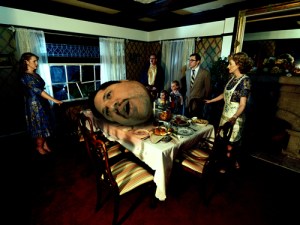
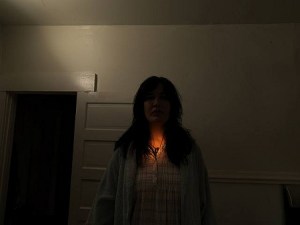
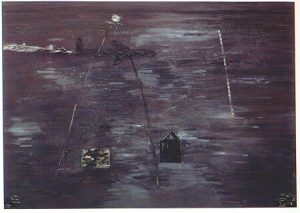
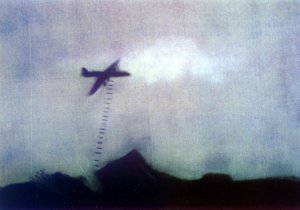
Best known as a film director, David Lynch is also a prolific and acclaimed photographer and painter.  In the catalogue for a recent exhibition in Tokyo, Lynch wrote,  “”When it comes to painting, it´s the darker things I find really beautiful. All my paintings are organic, violent comedies. They have to be violently done, and primitive and crude, and to achieve that I try to let nature paint more than I paint and stay out of the way as much as I can. In fact, I don´t paint with a brush too much any more – I prefer to use my fingers. I´d bite them if I could.”

Here’s a sampling of David Lynch’s artwork:

Artist Profile: Dennis Hopper (1936 — 2010)


Fractured Girl

Fractured Girl

Dennis Hopper was best known as an actor but he was also a prolific and influential sculptor, painter, and photographer.  He took up photography as a hobby in the 1960s and eventually became so acclaimed that he was even profiled in an issue of Better Home and Gardens Magazine as a “photographer to watch” for in the future.  Hopper was also an important art collector.

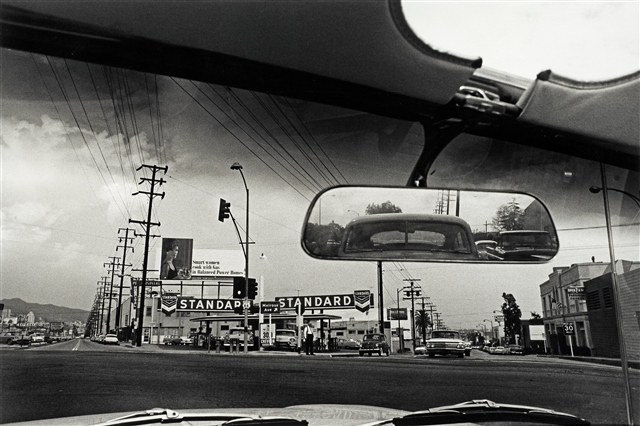
Below are some of my favorite Hopper photographs:

Double Standard

Double Standard

Andy Wahol

Andy Wahol

Bruce Conner (in tub), Toni Basil, Teri Garr, and Ann Marshall

Bruce Conner (in tub), Toni Basil, Teri Garr, and Ann Marshall

Donald Factor

Donald Factor

Larry Bell

Larry Bell

Paul Newman

Paul Newman

Tuesday Weld

Tuesday Weld

Biker Couple

Biker Couple

After the Fall

After the Fall

Artist Profile: Diane Arbus (1923–1971)


Arbus 1

Teenage Couple on Hudson Street

“Giving a camera to Diane Arbus is like giving a hand grenade to a child.” — Norman Mailer

Diane Arbus was born in 1923 in New York City.  She started out as a commercial and fashion photographer but she is best known for her work featuring men and women who would never appear in a fashion spread.  Her stark, black-and-white pictures of outsiders and fringe dwellers always found the humanity in her subjects.  Though she committed suicide in 1971, Arbus continues to influence artists to this day and her work remains powerful.

Below are a few of my favorite photographs of hers:

Arbus 2

Arbus 3Arbus 4Arbus 5Arbus 6Arbus 7Arbus 8Arbus 9Arbus 10

SDCC 2011: The Avengers Line-Up Concept Art Posters


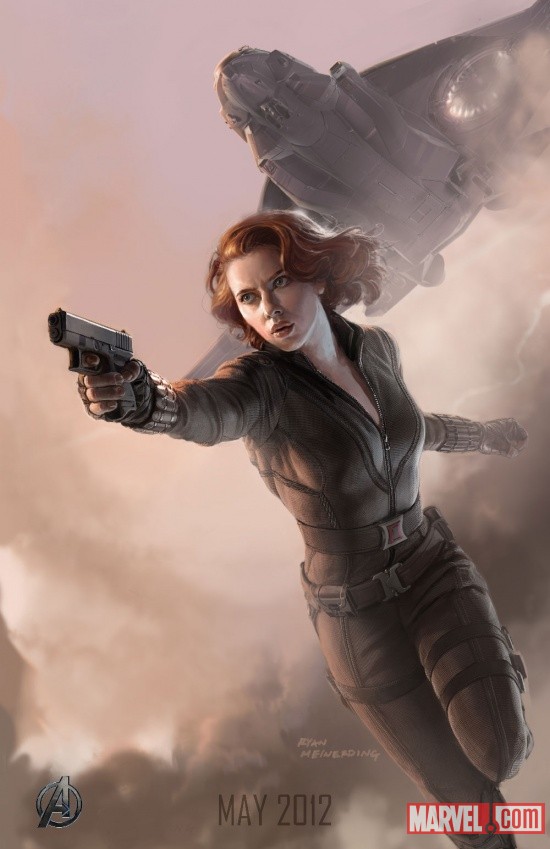
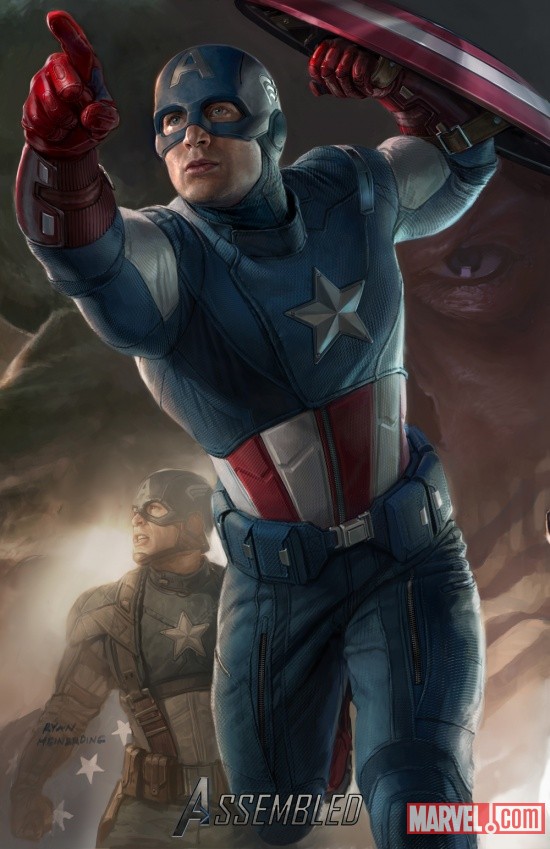
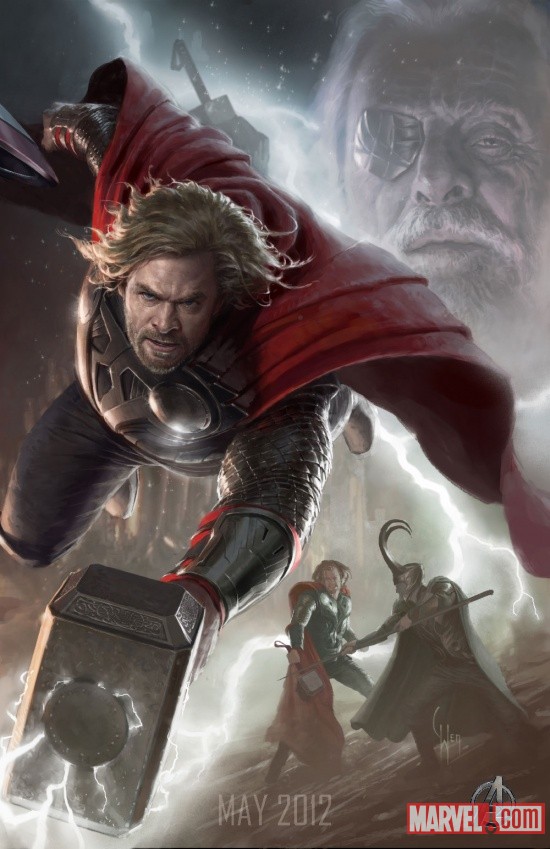
One great thing Marvel has done this year for San Diego Comic-Con 2011 was the begin the major media and ad campaign for their 2012 summer tentpole blockbuster in The Avengers. This is a superhero team project which has been 3-4 years in the making. It all began with 2008’s Iron Man and finally concludes with 2011’s Captain America: The First Avenger. In-between these two films we got other members of Marvel Comics’ iconic Avengers team make their introduction through their own films and/or make appearances in all the films like Thor, the Hulk, Nick Fury, Black Widow, Hawkeye and SHIELD.

One of the coolest things to come out of the Marvel Studios/Paramount Pictures part of Comic-Con 2011 was the release of the concept art posters for not just The Avengers but for all the characters who make up the team. Each character poster shows each team member (even SHIELD gets their own with Nick Fury leading the agents) in a striking pose with background images showing scenes from past films which comprises what is being called “Marvel’s Cinematic Universe”. That term is just one way of saying that these films do not follow the timelines set down in the primary Marvel Comics universe (Marvel-616).

I’m not exactly sure who was the artist responsible for these concept art, but they’re great and brings to mind such cover artwork as Alex Ross, Drew Struzan and Dave Dorman. I’m sure someone over on Twitter or on Facebook will be able to figure out just who this awesome artist is. Some of the details in the background should make the comic book fans quite happy like the Quinjet in the Black Widow poster and the SHIELD Helicarrier which appear in both the Hawkeye and SHIELD posters.

With Comic-Con winding down the hype machine for The Avengers will definitely be on full swing with New York Comic-Con this October up next. Captain America: The First Avengers is now out in the theaters earning universal acclaim. The Avengers will assemble for a May 4, 2012 release date.

Source: Marvel

Artist Profile: Frank Frazetta


FRANK FRAZETTA

For the latest “Artist Profile” I have picked one of the icons and giants in the realm of fantasy art. This artist has influenced many artists who looked up to him as a mentor and inspiration. His work has also fired up the imaginations of writers and filmmakers the world over. The artist I speak of was the great Frank Frazetta.

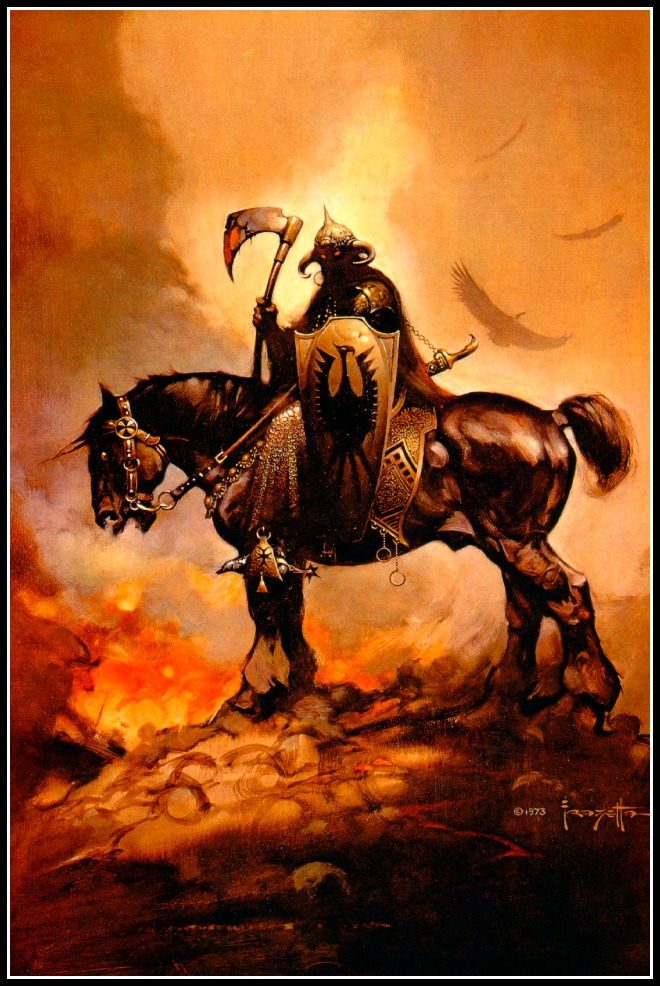
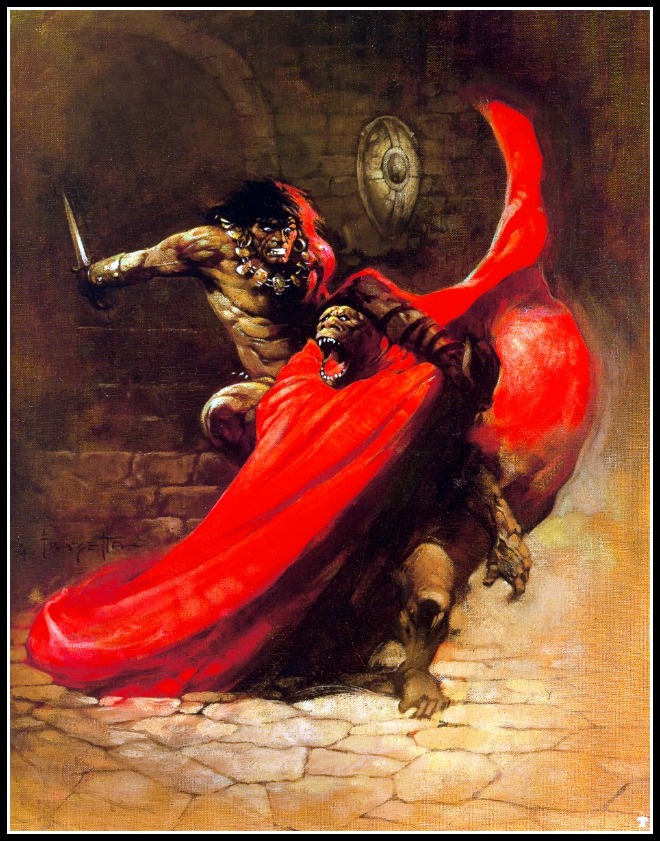
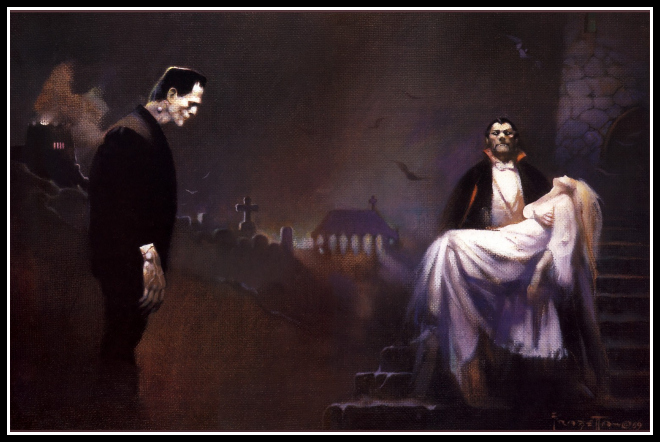
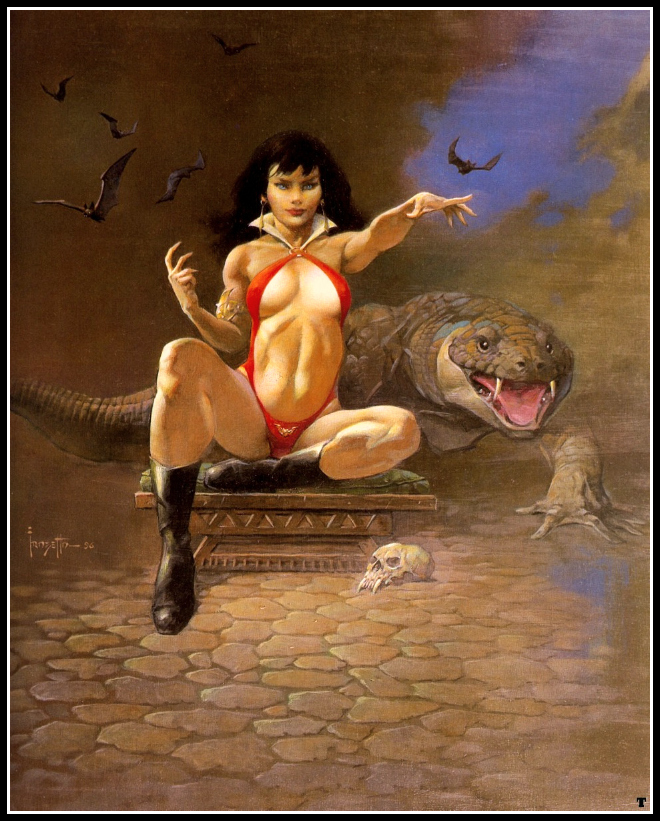
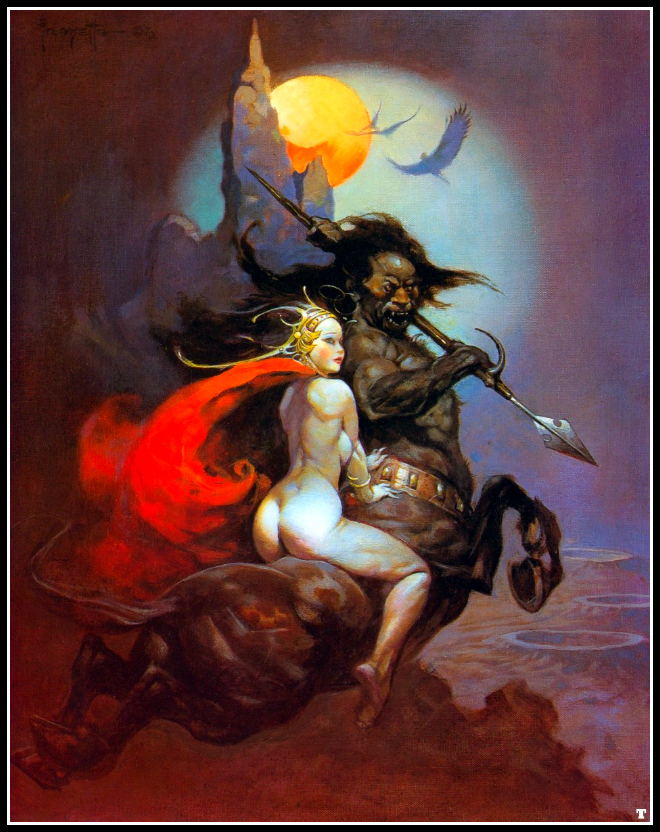
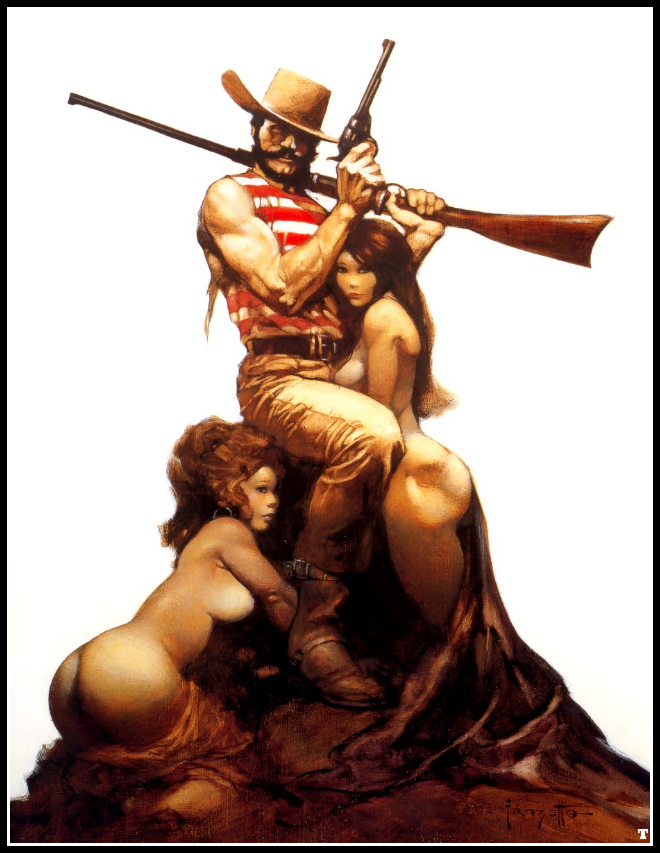
Frank Frazetta is one of those artists whose work has become so recognizable that people know it’s his artwork even without any sign pointing it out. He has been in the forefront of fantasy artwork since he switched from doing comic strips and comic books during the 40’s and 50’s to painting covers for Warren Comics such as Vampirella, Creepy and Eerie. It was during this same time period that he began to create some of his most iconic pieces when he painted the covers for the paperback editions of Edgar Rice Burroughs classic character such as Conan and John Carter of Mars. In fact, one of the Conan paintings he did, Conan the Destroyer, sold for $1.5million dollars at an auction this past Summer of 2010.

He would add to his body of work during the 1970’s by painting album covers for such rock bands as Dust, Nazareth, Molly Hatchert, Wolfmother and Yngwie Malmsteen. One such album cover was an earlier original painting Frank used for the band Molly Hatcher. It would introduce a character who has spawned it’s own industry of comic books, posters, novels, games and collectible statues. This painting is The Death Dealer (the picture above) and it has become the one piece of Frazetta artwork which a majority of his fans around the world consider his best work.

Frank Frazetta passed away on May 10, 2010 in a Florida hospital near his home. Frank’s legacy is not just the hundred or so of paintings he had kept through the decades of his career, but also the uncounted artists he had influenced. Fantasy artists of renown themselves such as Boris Vallejo, Julie Bell, Joseph Vargo, Ken Kelly and Brom. The pieces of work chosen for this profile are just the tip of the work Frank left behind for future generations to study and admire.

Artist Profile: H.R. Giger


Luis Royo inaugurated the artist profile feature and he’s now followed up by Swiss surrealist painter and sculptor H.R. Giger.

Many who follow the heavy metal and the visual effects scenes know who H.R. Giger is. This artist who hails from Switzerland has been responsible for some of the most iconic images in science-fiction film history. Just looking at the samples of his work on this page one has to automatically notice how the designs look very similar to the alien creature in Ridley Scott’s sci-fi/horror classic Alien.

Scott had seen some of Giger’s art pieces from his Necronomicon IV art collection and instantly knew that this Swiss artist was the one to design his alien and the spacecraft it was to be discovered in. Giger’s alien and environment design were so masterful that he won an Oscar for Best Visual Effect in 1980 for his work in Alien. This accolade got him noticed to head the art design for a failed Dune film adaptation by Chilean filmmaker Alejandro Jodorowsky.

It was to great disappointment that when David Lynch finally worked on Dune only the basic designs Giger had created for the production was used. As one watches Lynch’s Dune bits and pieces of Giger’s signature biomechanical design does pop out. This is especially true when the film switched over to focus on scenes dealing with the Harkonnen and Giedie Prime.

Giger would go on to do some art and set designs for such films as Poltergeist II: The Other Side, Alien 3 and Species. Even now he has been tasked by Ridley Scott to work on his latest film, Prometheus, and come up with new creature designs.

H.R. Giger’s style is one of nightmarish and surreal landscapes and figures which some have described as Satanic, perverse and disturbing. He combines biological anatomy with the mechanical to create works of art that have become favorite of certain heavy metal subgenres like industrial metal and death metal. While most of his works were created using airbrushing techniques to create monochromatic pieces he has, of late, switched over to using pastels, markers and inks.

One wonders what sort images goes through such an artists’ mind to come up with some of the artwork Giger has become famous (and in some circles, infamous) for. Maybe the fact that Giger suffers from night terrors and this has led to heavily influencing the images he creates. In the end, H.R. Giger’s work defnitely falls under the old adage of “beauty lie in the eyes of the beholder”.

Official H.R. Giger Website
Cave of Forgotten Dreams by Werner Herzog (Official Trailer)


One of the films to be announced after the success of James Cameron’s Avatar that would also make use of 3D cameras came from an individual who many wouldn’t consider as a proponent of 3D filmmaking. Even during and after the production of this documentary film this filmmaker still is not a total convert to the process. What he did do is use the most advanced filmmaking technique to capture on film exactly what he wanted and 3D filmmaking was the only to give his vision justice.

The filmmaker I’m talking about is the great German director Werner Herzog. The film in question is his documentary about the cave paintings in the Chauvet Cave, Cave of Forgotten Dreams.

In an unprecedented move the French government allowed Herzog to film this documentary in the Chauvet Cave but with some heavy restrictions on what sort of equipment he  and his crew could use. They were also limited in where they could stand to film scenes within the cave. Despite these restrictions what scenes people saw during a showing at the 2010 Toronto International Film Festival gave enough people an impression of Herzog’s vision.

The documentary will be released by IFC films this Spring of 2011 with the History Channel getting the rights to show it on TV. This is one of the films of 2011 of which I am very interested in seeing and the fact that it’s Herzog working in 3D is something that needs to be experienced on the big-screen.

Artist Profile: Luis Royo


LUIS ROYO


Art is a word that has a broad meaning. It could mean art in the sense of how some people perceive music and films. Some people have begun to look at video games and similar entertainment media as art. I will always look at art, first and foremost, the realm of painters and those who create images on canvas and other similar materials. I also consider such individuals as purveyors of their own brand of entertainment. While some may not find entertainment when looking upon the works of masters in a gallery for others it’s the highest form.

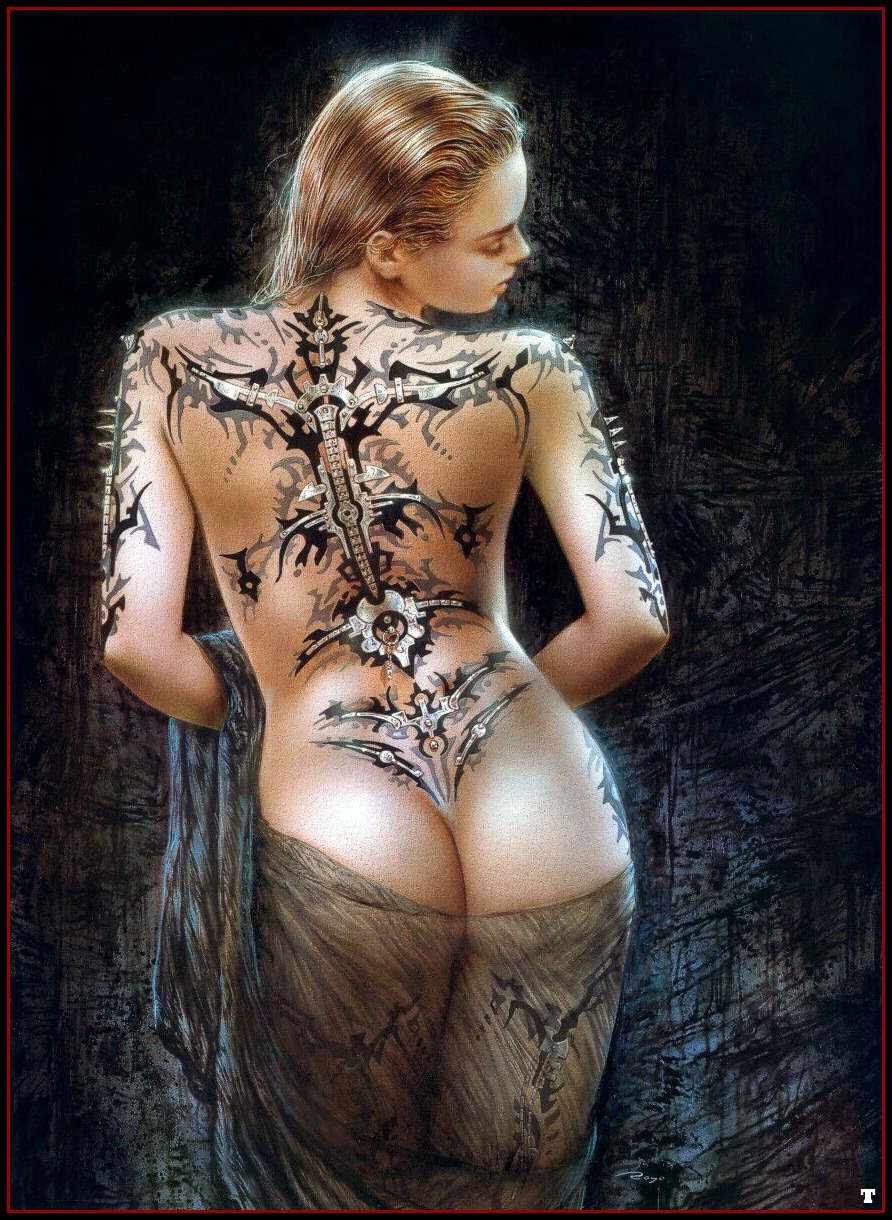
To start of a feature that will profile artists who have contributed to the furthering of their craft I choose one of my favorite artists of any field today. The first artists chosen is Spanish fantasist Luis Royo whose work has spanned several decades. His distinctive style of blending the sensual and erotic female form with very dark and apocalyptics settings and background has made Luis Royo one of the preeminent artist in the scifi and fantasy literary world. Royo has done covers for genre literature and has even branched out to creating covers for heavy metal bands and video game titles.

Luis Royo’s particular style was first limited to sketches whose images then unveils fully once he has put brush (both traditional and mechanical air) to the canvas. Such pieces have become quite sought after by collectors. While he’s not averse to having his pieces sold to private buyers it’s usually a rare thing for him to sell from his own collection. Most of his artistic pieces owned by private art collectors have been those sold by owners who had contracted Royo to do the piece for them.

In the 1990’s he began to create pieces both in sketch and finished form and collected them into artbooks. These books usually had their artwork fall under a specific theme Royo had in mind to tie everything together. Such collected artbook like Malefic, Prohibited, Tattoos and Subversive Beauty have become fan favorites and one doesn’t have to look too hard to find them in bookstores and comic book collectible shops.

In the last couple of years, he has begun to branch out to creating his artistic pieces using other mediums. He has begun to bring his own paintings to three-dimensional life through sculpture which he saw as just a logical step in his evolution as an artist. Maybe he’ll begin to learn how to adapt his subversive beauties beyond canvas and sculpture and into the world of CGI. From this artistic genius I wouldn’t put it past him not to make that next step into the digital realm.

Official Luis Royo Website