It’s been awhile since I’ve put a new AMV and this time I thought this latest entry is quite appropriate and one which fellow writer Lisa Marie would really enjoy.
Last week Natalie Portman won the Academy Award for Best Actress for her powerful performance in Black Swan. This latest AMV is one which combines two things that Lisa Marie will appreciate most: ballet and French music. The video takes scenes from the magical girl anime series, Princess Tutu, which eerily looks like certain scenes from Aronofsky’s film. The music the creator, Chiikaboom, used is “Le Bien Qui Fait Mal” from the rock musical Mozart L’Opera Rock.
I haven’t really seen much of Princess Tutu and I definitely haven’t listened to much French music outside of classical. I will admit that this AMV has a certain dark appeal to it and the combination of scenes lifted from the anime and the music used makes it quite badass.
Creator: Chiikaboom
Anime: Princess Tutu
Music: “Le Bien Qui Fait Mal” from Mozart L’Opera Rock
eroge: is a portmanteau of erotic game. It is a Japanese video or computer game that featured erotic content (usually pornographic in nature) and used anime-style artwork in a visual novel format.
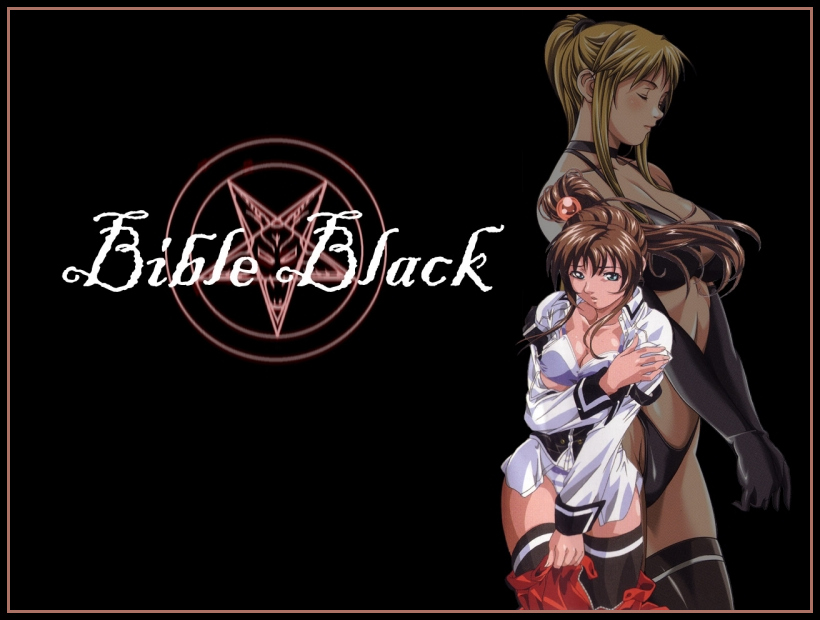
Hentai as a genre first reached wide recognition through the notorious Chōjin Densetsu Urotsukidōji, a 1980s OVA that fused graphic sexual imagery with apocalyptic horror and violent fantasy. That work established many of the conventions that would define adult anime for decades—its blend of mythology, grotesque excess, and surreal eroticism pushing the boundaries of animation’s narrative potential. Bible Black represents a later evolution of that tradition, taking the transgressive energy of Urotsukidōji and refining it through a more contained setting, structured storytelling, and psychological tension. Where its predecessor reveled in grandiose chaos, Bible Black turned inward, exploring horror through ritual, secrecy, and moral decay within familiar, everyday environments.
Originally developed as an eroge visual novel, Bible Black featured the artwork of its creator, Shoujo Sei. The game’s popularity within Japan’s adult gaming market grew rapidly, fueled by its striking blend of erotic storytelling, occult imagery, and a sinister undercurrent that set it apart from typical romantic visual novels of its time. Its success inevitably drew the attention of Milky Studio, an animation company already known for adapting adult-oriented games into OVAs. Within a few years, Milky Studio produced the first Bible Black anime series—a six-episode OVA that closely followed the storylines and choices from the original game.
The anime adaptation centers on a high school caught in a web of witchcraft and forbidden rituals. While the premise may sound familiar to fans of the supernatural or occult genres, Bible Black distinguished itself by merging sexual and mystical elements in a way that felt both deliberate and unsettling. The first OVA mirrors the game’s basic storyline, introducing viewers to a world where innocent facades collapse under the weight of temptation and corruption. Later sequels and prequels expanded on this mythology, delving into the origins of the dark book that drives the narrative and introducing new characters entangled in its influence. In doing so, the series built a continuity resembling a twisted mythos—an interconnected body of stories that deepened its immoral mystique.
To describe Bible Black merely as “popular” within its niche would be an understatement. Its reputation extends far beyond its target audience, circulated through anime forums, recommendation threads, and cultural commentary as a kind of benchmark for erotic horror. It is the title almost universally cited when discussing adult-oriented anime, whether out of reverence for its artistic boldness or infamy for its transgressive imagery. For many viewers—particularly Western audiences in the early 2000s—it represented their first exposure to Japanese erotic animation beyond parody or rumor, granting it a strange, almost legendary status within the genre’s history.
What separates Bible Black from lesser works is the precision with which it fuses its erotic and occult motifs. The narrative’s backbone—the pursuit and misuse of a magical grimoire—offers an allegory for unchecked desire and the cost of power. Rituals blend seamlessly with acts of seduction, and the visual motifs of pentagrams, candles, and bloodstained rites serve as metaphors for obsession and spiritual decay. This combination gives the anime an intensity uncharacteristic of typical adult fare, as every encounter is charged not only with physical desire but also with moral and supernatural consequence. Rather than treat sexuality as isolated spectacle, the series enfolds it within its darkly coherent world, ensuring that sin and pleasure remain inseparable.
The “harem” narrative structure, common to many eroge and visual novels, is used here with a more perverse edge. The typical male protagonist surrounded by female admirers becomes a focal point not of romantic fulfillment, but of temptation and corruption. In Bible Black, that dynamic is steeped in manipulation and control—sex as both a weapon and a spiritual act. This inversion of a familiar trope contributes to the series’ enduring fascination, as it refuses to comfort the viewer with the conventions of fantasy romance. Instead, it constructs an atmosphere of moral ambiguity and psychological pressure, leaving few characters untainted.
The setting amplifies the discomfort. By situating its story within the environment of a high school—a space symbolically associated with innocence and growth—Bible Black subverts expectations. The classrooms and corridors that should represent order and safety become arenas for forbidden rites and hidden depravity. This juxtaposition between the mundane and the macabre intensifies the sense of violation that defines the series. It’s not only a story of erotic ambition but of how institutional and moral structures collapse when confronted by unchecked desire and occult power.
Visually, the anime reflects its early-2000s production values with surprising sophistication. Milky Studio preserved the visual style of Shoujo Sei’s original artwork—marked by angular features, bold contrasts, and expressive eyes—while enriching the material with atmospheric lighting and strong sense of color. The palette alternates between the sterile brightness of school life and the dim, saturated tones of ritualistic scenes, crafting a visual rhythm that heightens tension between two worlds. Despite the limited resources typical of an OVA, the series achieved a memorable aesthetic identity, merging the glossy surfaces of contemporary anime with the raw suggestiveness of eroge art.
As Bible Black expanded into sequels like Bible Black: New Testament and various side stories, its universe deepened both narratively and tonally. The newer installments explored different perspectives and timeframes, revealing the long shadow of the original events. This serial approach—rare for hentai productions—allowed the franchise to form a loose continuity, almost like a dark fantasy saga built around erotic and esoteric principles. The cumulative effect was that Bible Black ceased to be a one-off novelty and became a defining thread in the history of animated erotic horror.
Its cultural impact extends further still. Bible Black served as one of the first major adult anime titles to gain substantial attention outside Japan during the rise of online fan communities. Through fan distribution and unofficial translations, it became many Western viewers’ first encounter with themes such as futanari—depictions involving gender transformation or dual sexual anatomy—which had previously remained obscure outside Japan. The OVA thus became not only a product of its domestic industry but also a cultural export that introduced global audiences to the specialized lexicon and aesthetics of Japanese hentai.
Critically, Bible Black remains an object of contention. Its explicitness renders it indefensible to some, yet others recognize within it a degree of thematic intent that surpasses mere sexual provocation. It approaches the occult not with romantic mysticism, but as an allegory for moral erosion and human vulnerability. Erotic acts in the series often parallel spiritual corruption, suggesting that the boundary between pleasure and damnation is perilously thin. The result is an anime that provokes both physical and intellectual reactions—equally discomforting in its carnality and symbolism.
Even after more than two decades, Bible Black maintains relevance and recognition. Later works have tried to replicate its formula—mixing fetishes with supernatural dread—but few possess its coherence or audacity. Its imagery, tone, and structure continue to influence adult creators seeking to merge explicit content with narrative ambition. Moreover, the series exemplifies a moment in anime history when the medium’s adult side dared to pursue storytelling complexity rather than rely solely on erotic novelty.
Viewed today, Bible Black endures as both time capsule and touchstone. It captures an era when the boundaries between mainstream anime and adult experimentation briefly blurred, and when eroge culture translated successfully to animation with both narrative depth and artistic conviction. Whether judged as an expression of taboo horror, a stylistic artifact of its generation, or a benchmark for the fusion of sex and the supernatural, Bible Black stands as one of the most distinctive and controversial works in anime’s underground lineage. Its lasting infamy, like its allure, lies in its refusal to separate desire from darkness—a union as seductive as it is terrifying.
With the most recent anime of the day choice being the series Azumanga Daioh I thought it would be appropriate that the latest “AMV of the Day” come from the series as well.
This particular AMV won the Best Comedy category in Nekocon X (2007). The AMV is called Azumanga Daioh – Little Girls and it combines scenes from the series with the Oingo Boingo song, “Little Girls”. Starring prominently in this video is the aforementioned creepy male teacher Kimura-sensei. In fact, this video pretty much highlights just how creepy and how much a dirty old man Kimura-sensei really is and the lyrics of the song doesn’t help him much.
For those in the know they’ll see a certain bear pop up in the video several times and those appearances add to the comedy of the video. There’s really not much else to say about this video. It has to be seen to truly experience.
The latest choice for “anime of the day” is the one and only Azumanga Daioh.
Azumanga Daioh is the extremely popular and critically-acclaimed series that was adapted from the manga of the same by. The manga ran for over three years and has been collected into three massive volume called tankobon. It’s creator is mangaka Azuma Kiyohiko and just looking at the name one sees the etymology of the series’ name.
The anime adaptation was done by anime studio J.C. Staff and shown by the Japanese tv network TV Tokyo over 26 episodes. The North American license used to be under ADV Films before it’s inevitable collapse wherein the North American licensing rights was bought by a Houston-based company called Aesir Holdings. One could still find the anime series on DVD which is great news since Azumanga Daioh is one of the best slice-of-life genre series with characters fully realized and storylines which range from comedic to drama with the two overlapping at times.
The series is about the lives of six Japanese high school girls and how their friendships evolve through their times together at school and out of it. There’s fan favorite Chiyo Mihama, the child prodigy, who struggles to fit in with her classmates who happen to be five years older. Then there’s the athletic Kagura whose friendly rivalry with the reserved Sakaki forms one subplot in the series. There’s Osaka the transfer student who fills in the role of the spacey and eccentric character in the series with Yomi and Tomo rounding out the cast of friends.
While most of the series focuses on the six friends other characters come in and out of their lives such as their homeroom teacher Yukari Tanizaki and their phys.ed instructor, Minamo Kurosawa. Then there’s Kimura-sensei. It’s this character that may have some viewers watching the series with a bit of discomfort as this character becomes a borderline obsessive with the teenage high school girls he teaches, especially the six girls who the series focuses on. While the series never goes over the line with Kimura-sensei’s behavior some people may still get turned off by it and dismiss the series. Here’s to hoping that doesn’t happen because Azumanga Daioh does a great job of exploring the lives of these six high school girls as their friendships with each other grows.
The anime doesn’t go overboard with surreal and way-out-there scenes. Most of the series really just shows routine, day-to-day activities that the girls go through in high school, but the writing is so spot-on that watching the series will definitely bring back fond, nostalgic memories of one’s own time in high school. There are some surreal moments, but they’re usually reserved for times when Osaka’s spaciness gets the better of her. This usually involves her imagining weird things about Chiyo-chan’s pigtails.
Azumanga Daioh does fall under the moe label due to the cuteness of the animations with special regard to the youngest in the group, Chiyo-chan. This moe aspect plus the fun and heartwarming stories involving the girls make this anime a fine choice to be the latest “anime of the day”.
I’ll readily admit, I’m not a huge fan of AMVs. Don’t get me wrong, when they’re good, they’re really fun and entertaining to watch. The thing is, 99% of AMVs suck. Seriously, most of them are just a mashup of some fan’s favorite scenes from an anime put to a song they like that really don’t fit together. But, the ones that are good, tend to be really good. You can tell when someone takes the time and the effort to put together something that they can be proud of.
This AMV is one of those good ones. There hasn’t been anyone yet that I’ve shown this to that hasn’t gotten hopelessly hooked on it. It’s the perfect blend of a high energy song, clips that make sense with the words of the song, and really good editing. It was made by JaddziaDax, but I’m not certain where it premiered at. All I do know is that it is impossible to watch this and not wind up singing along on the subsequent playthroughs. And there will be subsequent playthroughs. The first time I watched it, I immediately had to play it again, and again, and before I knew it I was on my fifth consecutive viewing. Now that’s a sign of a good AMV! So, feel free to watch this, but just be forewarned, you might not be able to look at a can of Bumblebee Tuna without thinking of this AMV again.
I realize that entertainment is very subjective. One person’s masterpiece is another person’s trash. Still, there are some anime that are just so good that no matter who you are, no matter what your interests, as long as you’re a fan of anime, you should be watching it. The first example that comes to mind for me is a well received, yet fairly unknown title called Aria.
Now, I know what some people are thinking. “Is there a lot of action? Explosions? Naked girls? Blood and guts? It’s at least fast paced, right?” There is none of those, but you know what? You’re still going to enjoy it anyways. Thus is the power of slice-of-life shows. There is no action at all, yet you’re left with a big smile on your face after each episode.
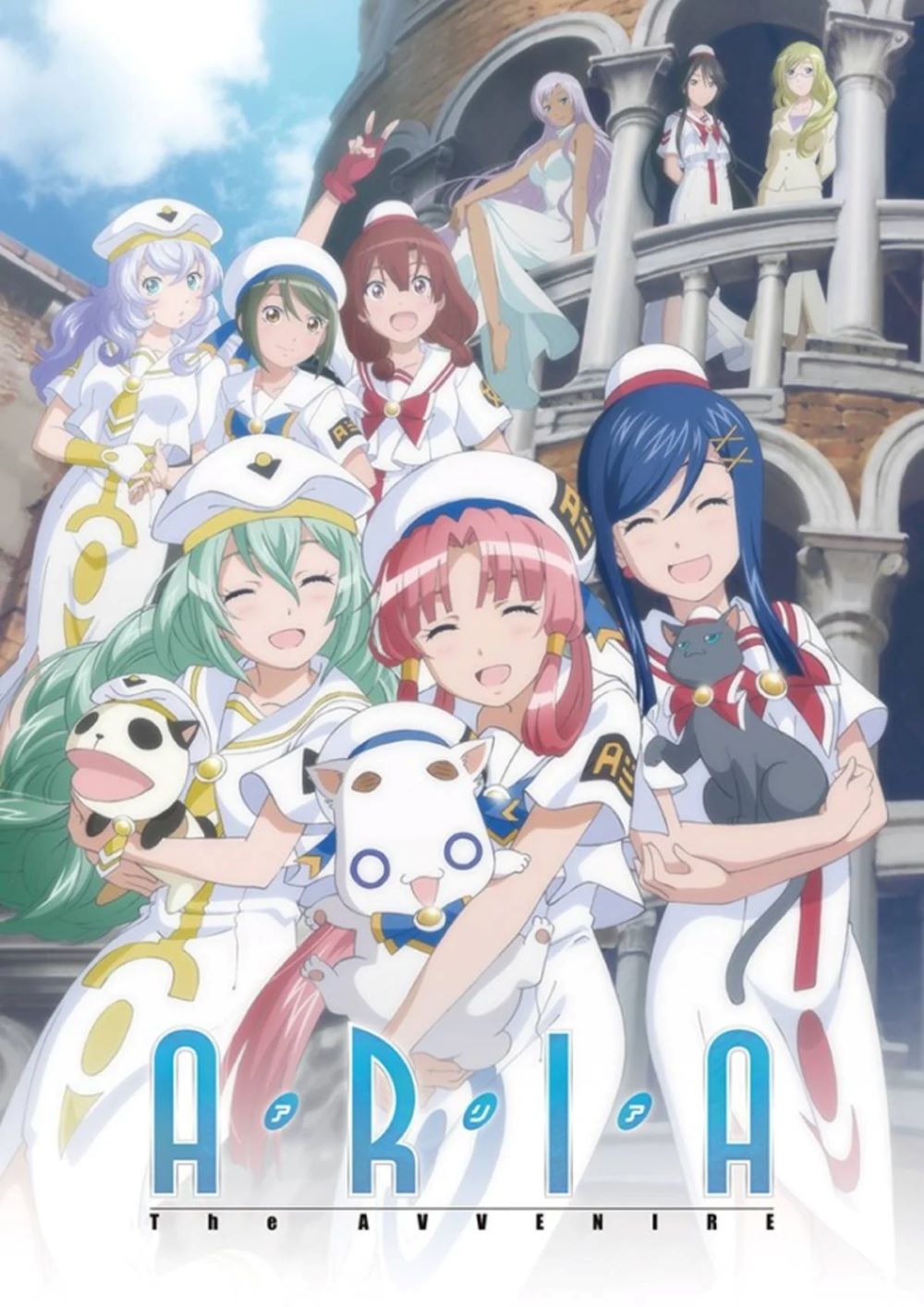
The story of Aria revolves around a young girl named Akari who leaves Manhome (Earth) and comes to the Martian city of Neo Venetia to become an Undine, or gondola pilot. This is obviously modeled after the Italian city Venice, and in fact it is stated that in the realm of this anime, Venice has already sunk, which was the main motivation for the Martian terraformers in creating the town of Neo Venetia. Much like the real life city of Venice, Neo Venetia’s streets are all waterways. Of course they have normal walkways, but if you don’t feel like walking, or if you need to move goods around the town, traveling by gondola is the way to go. When the anime starts, it begins with Akari already being a Single, but they later on show flashbacks to when she first arrived and started out as a Pair.
The terms Pair and Single refer to the gloves they wear. The gloves are both practical and aesthetic. When an Undine is wearing two gloves, it both signifies that she is an apprentice, and it’s also because when they’re just starting out, their hands require more protection from constantly rowing. As a Pair, they are not allowed to carry passengers at all. As they gain more experience, and as their hands get more used to the abuse that the oar gives, they can go down to one glove, hence the term Single. Also, as a Single, they are allowed to carry passengers as long as a fully licensed Undine, or Prima, is in the gondola with them. And obviously, once they reach the rank of Prima, they are fully qualified Undines and can carry passengers on their own.
Life on Mars is a little bit different than life on Earth. The main difference is that cats are sentient beings on Mars. They can’t speak English, but they appear to understand it. Plus, all gondola companies on Mars must be owned by a blue eyed cat. Akari’s company is owned by one President Aria, who fits in perfectly with Aria Company’s easy going attitude.
And that is a typical scene from the anime. I know that shouldn’t be entertaining, but it just plain is. Episodes revolve around such action packed events like delivering the mail, or going to a festival. In other words, there’s no action at all. It’s an incredibly serene show and is the perfect complement to watching other anime that ARE action packed. It’s like a palate cleanser. As such, I also don’t recommend marathoning the show, or else some of the luster and wonderment of it is lost.
The strong points of the anime are the high production values, which can be seen when viewing some of the lush backgrounds of the places that Akari visits. It’s obvious that the show was given the proper budget, and that’s probably in no small part to the fact that it was helmed by director Junichi Sato who directed such popular and respected anime as Sailor Moon, Princess Tutu, Kaleido Star, and Sgt. Frog, among others. Plus, unlike with a lot of anime these days, the decision to animate it didn’t come until after the manga had been running for awhile and thus had already gotten a good following. Another factor in its high budget could possible come from just good timing. The first Aria season came out when companies were still willing to take a chance on a show that’s a little different from the usual otaku bait. Luckily it proved to be successful and it was allowed to tell its full story.
And that’s another strength, is the finely told story that Kozue Amano came up with. When you don’t have flashy explosions and super powers and naked breasts bouncing around to keep people interested, you had better be able to tell a good story, and Kozue Amano did not disappoint. When watching the anime or reading the manga, you get the feeling that you’re right there with Akari, and that you’re both exploring and experiencing things together. It’s that kind of emotional attachment that’s crafted that makes for a good story.
Ultimately, I can’t promise that you’re going to be blown away by this. Slice-of-life isn’t for everyone, but you certainly would be making a mistake if you didn’t at least give Aria a chance to wow you. And who knows? If you go into this with an open mind, you might just find, that for some inexplicable reason, that you have a huge smile on your face at the end and can’t wait for your next adventure in Neo Venetia.
It took awhile but finally an official Youtube version of the AMV which won three awards during Anime Expo 2010. Scintilla’s very excellent “And Now, A Word From Out Sponsors” is the latest entry to be AMV of the Day.
This AMV is pretty brief but what’s shown gives enough proof as to why it was voted by the Anime Expo attendees to win three categories. It won the Staff Favorite and Best Comedy categories, but it was winning the top prize for Best In Show which cemented this amv as top in a field that had some very good entries.
The video edits together several scenes from different anime to match the lyrics of the song. A song aptly titled “Burger Dance” by DJ Ötzi. Some effects work such as putting the KFC, Pizza Hut and McDonalds logos into the scenes were made, but in the end the song is just a laugh riot from start to end. It had everyone singing along to the chorus. That is just how great and fun an amv it was.
Now, if the creator of the amv “Alchanum” just follows suit and also uploads to Youtube that Best Drama amv winner.
Anime: Code Geass, Azumnaga Daioh, Vampire Hunter D: Bloodlust, Fruit Basket, K-On, Axis Power Hetalia, Lunar Legend Tsukihime, Naruto, Princess Tutu, Revolutionary Girl Utena, serial experiements lain, Sgt. Frog, Soul Eater
Song: “Burger Dance: International Remix” by DJ Ötzi
Epic. Has there ever been a word that has been run into the ground so much that it’s practically lost all meaning? Pounding a bunch of noobs at Halo isn’t epic. The meal you just had isn’t epic. Anything that spawned from 4chan isn’t epic. Do you know what does deserve the title of epic? One Piece. Make no mistake, I’m not saying One Piece is the greatest anime of all time. However, the sheer scale of the story, and the high level of consistency maintained for 13 years and counting qualify One Piece to confidently call itself epic.
The story revolves around a boy named Monkey D. Luffy who’s goal is to become the King of the Pirates. But Luffy is no ordinary boy. He ate a Devil’s Fruit, which grant their users strange powers in exchange for losing the ability to swim or float. Quite the handicap for someone who wishes to live their lives on the high seas to be sure. Luffy’s particular fruit was the Gum-Gum fruit, which turns him into a rubberman, allowing his body to stretch to great lengths, and also making him immune to most projectile attacks. The exception being anything with an edge to it. So, while he can repel bullets and cannonballs, arrows would prove to be deadly to him. But, Luffy is the sort who will just charge straight ahead, without fear for his own safety, and unleash all manner of attacks using his unique makeup.
But before you get to thinking that Luffy always kicks ass and takes names, make no mistake, he gets his ass handed to him. A lot. But a big part of Luffy’s strength is the fact that he doesn’t let adversity get him down. He’s very much of the motto “If at first you don’t succeed, punch them even harder the next time!” Unlike with some shows where the hero has to gain a new superpower to defeat a foe that just beat them, ala Dragon Ball Z, Luffy is often able to just come back and win without needing to rely on such things. Granted, there are a few times where he has to come out with a whole new move, but it just feels so much more believable and causes you to roll your eyes less than with some other shonen fare like the aforementioned DBZ and Bleach.
Now, becoming the Pirate King is no easy task, and one couldn’t possibly do it all alone. A lot of the charm of One Piece lies in the cast of characters that Luffy has for a crew. To avoid any spoilers for anyone who is either just starting or plans to start, I won’t list the entire crew. Heck, at the point where I’m at in the series, I think there have even been one or two more crew members added in the recent episodes that I don’t know about yet. So, I’ll limit the crew to his pre-Grand Line bunch.
The first person to join Luffy on his adventures is Roronoa Zoro (some translations call him Zolo since L’s and R’s are interchangeable in Japanese, but Zoro just looks better to me) who is a swordsman that uses three katana when he fights, one in each hand and one in his mouth.
As I said, they don’t always win, and often get their ass handed to them pretty bad. And this is a kid’s show! Zoro usually is a fairly cool and collected type who doesn’t let Luffy’s idiotic nature get the best of him, and isn’t phased by many things they encounter no matter how bizarre, although no one is completely immune to Luffy’s nonsense.
The next member to join up with Luffy was Nami. She was a thief who stole from pirates, although it was for a good reason and was one of my favorite arcs in the series. She’s also an expert navigator who is capable of reading weather patterns and plotting the safest course through practically anywhere.
Nami has a love for treasure and money in general, and she’ll do most anything to get her hands on it. However, she’s not much on fighting and will avoid it if it all possible. After all, hard to spend money when you’re dead! An interesting bit would be that Nami definitely, ummm, grows throughout the course of the show. This is a picture of her in an early appearance:
Now compare that to one from later on in the series:
I guess Nami is just a growing girl, and I thank Oda for being the pervert that I assume him to be!
The next one to join the crew is probably my least favorite of them all, Usopp. Maybe it’s his voice, or perhaps it’s his character design, or maybe I just don’t like his attitude. Whatever the case, I don’t really care much for him. Two things to know about Usopp, 1) He’s a liar and 2) he’s a coward. He makes Nami look downright heroic with the extents he goes to stay out of any danger. That’s not to say he won’t fight when the chips are down. Luffy would never allow anyone who actually ran away from their duty on their crew. Just that whenever he fights, he works best when he can use his lies and his considerable sniping skills.
The last of the crew I’ll mention here is their cook, Sanji. Sanji can basically be summed up as a guy who just plain tries way too hard to get women.
Unfortunately for him, Nami can smell a chump like that a mile away, so she takes full advantage of it whenever she can. Despite his obvious weakness for women, Sanji is a very good fighter, using kicks as his weapon as he believes a chef must not harm his hands. However, he is very chivalrous, in that he refuses to ever kick a lady. Obviously this is a bit of a handicap at times, as not every opponent they run into are men. But, barring that, he doesn’t back down from a fight if one is picked with him.
These are the crew members that Luffy takes with him to the Grand Line. Having only gotten up to episode 356 myself (the anime is at over 450 eps right now) I only know of 4 other crew members that join them after they reach the Grand Line, and that may have increased. So, for the sake of giving people something to look forward to on their own, I won’t be introducing them.
As one can see, One Piece has a fairly unique character design. This does take a little getting used to. I held off on watching One Piece for years because of it, but they do grow on you after awhile. Sure, the women have impossibly thin waists, and most of them have ridiculously large busts (thank you Oda!), but after awhile it stops bothering you and you are able to enjoy the story being told. And what a story it is! I can’t think of another series, anime, manga, or novel, that can run for so long and still be entertaining. We’re talking 60 volumes, which is well over 400 chapters of material written over a 13 year time span. For the anime, it’s currently on episode 480 and has been running for 11 years while maintaining consistently high ratings. If I had to hazard a guess as to it’s lasting popularity, I’d say it’s Luffy’s enthusiasm and simplistic way of living. He’s not some moody, woe-is-me type, nor is he fighting the forces of evil to save the world. In fact, if you want to get downright technical, he is one of the forces of evil that is working to destroy the world. At the core, this is about a pirate going up against the world government. He may not pillage and kill townsfolk, but evil really is how you view it. From the standpoint of the Marines, he is a criminal. But for the countless people who he has helped in his quest to become the Pirate King, he’s a sort of folk hero.
I feel that this is the anime of the decade largely because of its enduring popularity. It’s by far the highest selling manga of all time in Japan, having sold over 200 million copies. Additionally, it holds the record for the most copies of a single book sold when volume 60 sold 3.4 million copies in it’s first print run alone, shattering the previous record set by Harry Potter and the Order of the Phoenix. In 2010, while an exact figure has not been made public, based on volumes sold and standard royalty agreements, it’s estimated that Eiichiro Oda made over $24 million. That’s in one year, not over his lifetime. That is an insane amount of money for a manga author. And the thing is, success hasn’t made him lazy. In the 13 years he’s been writing it the longest break he took was a 3 week break once, this year, and that was in part to set up the time skip he had planned. And when you realize that he’s serialized in Weekly Shonen Jump, which as the name implies is a weekly publication, the fact that he’s written chapters nearly every week for 13 years without jumping the shark is quite amazing. Further, according to Eiichiro Oda, while he does have an ending planned, the manga is only halfway done. 60 compiled volumes, well over 500 chapters, spawning 480 anime episodes, 10 movies, plus various tv specials and it’s only halfway done?
The only word that can properly describe that is epic.
I thought it was time for another edition of the latest AMV of the Day. As some know the term AMV means “anime music video”. It’s where people take scenes from an anime or several of them and edit them to perfectly match the music being played alongside it. The latest AMV of the Day is from AMV creator Chiikaboom and it’s called “Against All Odds”.
This particular AMV combines scenes from the mecha anime Macross Frontier with the song “Dream Wide Awake” from the Finnish band Poets of the Fall. I’ve only been recently introduced to this band from Helsinki by way of the Xbox 360 game Alan Wake where their music features prominently. I really like the melding of the scenes chosen from Macross Frontier with this Poets of the Fall song.
At first glance, the giant robots and singing girls may not be the subject and setting for such a serious and emotional song. In the way Chiikaboom edits the scenes with the song it really works. I haven’t been a big fan of the mecha genre of anime and manga, but this AMV has gotten me intrigued in checking out this particular anime of what was one of my favorite anime franchises in years past.
It helps that the creator of this particular AMV really has a handle at editing and adding in visual effects. Chiikaboom has become one of my favorite AMV creators and those wanting to see her other AMV projects can click the link to her name below.
The latest entry for Anime of the Day is the romantic comedy from Japanese animation studio J.C. Staff. I am talking about the quite popular anime series which had a 25-episode run in Japan’s TV Tokyo from October 2008 and March 2009. The series is Toradora! and is based on the light novel and manga by Takemiya Yuyuko.
This series is a romantic comedy and also one that is full of well-done drama. It’s an anime about relationships and stars two very atypical leads in Takasu Ryuji and Aisaka Taiga. Ryuji is the misunderstood highschool boy whose squinty eyes has labeled him a thuggish, criminal-type which causes some hilarious reactions from classmates and teachers both. Taiga is the doll-like tsudere-type who manages to scare everyone in her school due to her quick temper and improbable strong attacks. The two end up accidentally bumping into each other in the first day of classes and hilarity ensues from there.
Other characters such as Taiga’s friend Minorin (the weird, ditzy girl) and Ryuji’s best friend Kitamura Yusaku also lend their own personalities and relationship issues to the mix which ends up complication everyone else’s hook-ups. There’s also the kyuugere character in Kawashima Ami who is Yusaku’s very beautiful childhood friend whose attempt to hook-up with Ryuji causes other relationship complications which doesn’t untangle itself until very close to the end of the series.
Toradora! looks like the typical romantic comedy at first glance, but as one gets deeper into the series deeper layers in how the characters behave and their motivations for their earlier behaviors shine through. The comedy in the series actually begins to take a backseat to the complex romances in the show. We know from the beginning who should end up with who, but the journey the characters take to finally get to where they need to be in the end is the high point in the show.
For people new to anime this series is actually a very good starting point in the romantic-comedy genre as it takes the subject matter seriously and doesn’t pander to the usual easy hook of ecchi scenes and over-the-top comedy.



 Through the Shattered Lens