I have to admit that I’m not really a huge fan of Bruce Springsteen or his working class posturing. (At this point, the majority of the people who he sings about will never be able to actually afford to see him in concert.) But I will acknowledge that the people who like Bruce Springsteen tend to really, really, really like him. And there’s something to be said for that.
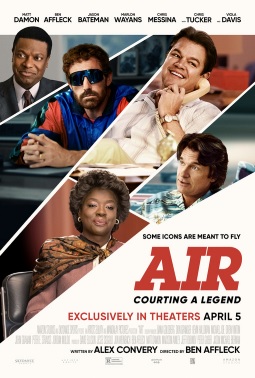
Anyway, I picked today’s music video of the day because I watched Airlast night and I was really impressed by Jason Bateman’s monologue about how few people actually listen to Born in the USA‘s rather dark lyrics. This video was directed by John Sayles, another person who has made a career out of claiming to be the voice of the working class.
Welcome to Retro Television Reviews, a new feature where we review some of our favorite and least favorite shows of the past! On Fridays, I will be reviewing The Master, which ran on NBC from January to August of 1984. Almost all nine of the show’s episodes can be found on Tubi!
My original plan was to follow-up Half Nelson by reviewing Freddy’s Nightmares. Unfortunately, Freddy’s Nightmares has been removed from Tubi and it’s not currently streaming anywhere else. Hopefully, some other site will soon feature it or it will eventually return to Tubi and I’ll be able to review the show in the future.
While I was looking for another show to review, I came across The Master. The Master ran for 13 episodes in 1984. It featured Lee Van Cleef as John Peter McAllister, a ninja traveling across America and searching for his daughter. Helping out McAllister is Max Keller, a young drifter who owns a groovy van and who is played by Timothy Van Patten. (Van Patten, who has since become a much in-demand director, is probably best known for playing Stegman in Class of 1984.) Since The Master had a short run and everyone loves ninjas, I decided to add it to our retro television schedule!
Episode 1.1 “Max”
(Dir by Robert Clouse, originally aired on January 20th, 1984)
“My name’s Max Keller and this is how I usually leave a bar.”
So opens the first episode of The Master. The voice over is courtesy Max Keller (Timothy Van Patten), a young drifter who drives across America in a van with a pet hamster named Henry as his main companion. And the way that Max usually leaves a bar is through the front window. In this case, Max is tossed through a window by a bunch of bikers. Max responds by sabotaging all of their bikes so, when they try to chase after him as he drives off in his van, all of the bikers are thrown from their bike and onto the hard pavement of the road. I would think that this would kill most of the bikers but Max doesn’t seem to be too concerned about that. Instead, he just has a good laugh as he drives away. Oh, Max!
Meanwhile, in Japan, John Peter McAllister (Lee Van Cleef), “the man who would change my life,” (to quote Max’s voiceover) is preparing to return to America for the first time in years. McAllister moved to Japan after World War II and is the only American to have been trained in the ninja arts. (Why the ninjas would be so eager to train an American after the way World War II ended is not explained.) McAllister has just found out that he has a daughter who he has never met. (How did he find out? Again, it’s not explained.) He wants to return home so that he can find her. However, Osaka (Sho Kosugi), a former student of McAllister’s, is determined to kill him for breaking the ninja code. McAllister manages to escape Japan with only a slight wound courtesy of a throwing star. Osaka decides to follow him.
Back in America, a young woman named Holly Trumbull (a very young Demi Moore) runs out into the middle of a country highway and is nearly run over by Max. Max stops his van just in time and offers Holly a ride. It turns out that Holly is being pursued by the evil Sheriff Kyle (Bill McKinney). She explains that Sheriff Kyle tried to rape her, which is information that Max just kind of shrugs off. He manages to outrun the Sheriff and takes Holly back to the airport that is managed by her father, Mr. Trumbull (Claude Akins).
Max apparently (I say apparently because the episode’s editing is so ragged that it’s often difficult to tell how much time has passed from one scene to the next) spends a few days working at the airport and trying to date Holly. When he attempts to give Holly a kiss, she backs away from him and explains that she’s still not comfortable with being kissed after nearly being raped the town’s sheriff. “I’m sorry,” she says. Max, being a bit of a jerk, gets annoyed and says, “That makes three of us. Henry was just starting to like you.” After saying that he’s going to go somewhere to see if “my luck improves,” he goes to the local bar to unwind.
Also at the bar is John Peter McAllister! McAllister knows that his daughter came through Mr. Trumbull’s airport and he wants to show her picture to the people in the bar. For some reason, the bartender doesn’t want him to do that. When Sheriff Kyle, who is also in the bar, discovers that McAllister is carrying a samurai sword in his suitcase, the sheriff tries to arrest him. When a bar fight breaks out, Max fights alongside McAllister and they even manage to steal the sword back from the sheriff. Bonded by combat, Max and McAllister become fast friends. Before you know it, Max is agreeing to drive McAllister across the country as long as McAllister trains Max how to be a ninja.
But first, an evil developer named Mr. Christensen (Clu Gulager) is determined to run the Turnbulls off their land. After Christensen is not moved by an impassioned speech by Max and instead tries to blow up the airport, it’s time for Max and McAllister to invade Christensen’s office and fight a bunch of guards. Osaka also shows up at the office so we get a lengthy fight scene between Sho Kosugi and Lee Van Cleef’s stunt double. (McAllister dons his head-to-do ninja costume before doing any fighting, so we don’t actually see his face while he’s doing in any of his amazing ninja moves.) While Osaka and McAllister are fighting, Max defeats Christensen by throwing a ninja star at him and hitting him in the chest. I would think that would be murder but who knows. Maybe the blade narrowly missed Christensen’s heart and he was just unconscious. Or maybe Max’s just a sociopath.
Somehow, this leads to the Turnbulls getting to keep the airport. McAllister and Max drive off together, in search of America.
What a messy episode! Obviously, this episode had to get a lot done in just 48 minutes. It had to introduce Max and McAllister, it had to explain why they were traveling together, and it also had to give them an adventure. I guess I shouldn’t feel surprised that the episode felt a bit rushed but still, there were so many unanswered questions. For instance, why is Max driving across the country in a van? How did McAllister find out that he had a daughter? Why didn’t he know that he had a daughter before hand? Did McAllister’s daughter actually come through the town or not? How did Osaka track down McAllister? Where did Max learn to fight before he met McAllister? Why is McAllister so quick to agree to take Max under his wing? Why is Max so quick to drive a strange old man across the country?
As for the cast, Lee Van Cleef appears to be a bit frail in the role of McAllister. (He would died 5 years after The Master went off the air.) Timothy Van Patten comes across as being bit manic as Max. Personally, I would be worried about getting into a van with Max because he doesn’t really seem to have much impulse control. As for the guest cast, Demi Moore gives a strong performance as Holly but the character vanishes from the episode after finally giving Max a kiss. Claude Akins and Clu Gulager only get a few minutes of screentime and are both stuck with stock roles. Akin is the honest working man while Gulager is the corrupt businessman. Billl McKinny is properly hissable as the bully of a sheriff. And Sho Kosugi looks annoyed with the whole thing.
The first episode was not that promising but who knows! Maybe the show will improve as it goes along. We’ll find out next week!
Air opens with a montage of the 80s. Ronald Reagan is President. MTV is actually playing music. Wall Street is full of millionaires. Sylvester Stallone is singing with Dolly Parton for some reason. Because the specific year is 1984, people are nervously giving George Orwell’s book the side-eye. Everyone wants an expensive car. Everyone wants a big house. Everyone wants the world to know how rich and successful and special they are.
What no one wants is a pair of Nike basketball shoes. All of the major players are wearing Adidas and Converse while Nike is viewed as being primarily a company that makes running shoes. CEO Phil Knight (played by Ben Affleck) is considering closing down the basketball shoe division. Sonny Vaccaro (Matt Damon), however, has a plan that he thinks will save the division. Instead of recruiting three or four low-tier players to wear and endorse Nike shoes, Sonny wants to spend the entire division’s budget on just one player. Sonny is convinced that a young Michael Jordan is destined to become one of the best players in the history of basketball and he wants to make a shoe that will be specifically designed for Jordan.
The problem is that Michael Jordan doesn’t want to have anything to do with Nike because Nike is not viewed as being a cool brand. Jordan wants to sign with Adidas, though he’s considering other offers as well. He also wants a new Mercedes. Even though everyone tells Sonny that he’s wasting his time and that he’ll be responsible for a lot of people losing their jobs if he fails, Sonny travels to North Carolina to make his pitch personally to Jordan’s mother (Viola Davis).
For it’s first 50 minutes or so, Air feels like a typical guy film, albeit a well-directed and well-acted one. Almost all of the characters are former jocks and the dialogue is full of the type of good-natured insults that one would expect to hear while listening to a bunch of longtime friends hanging out together. For all the pressure that Sonny is under, the underlying message seems to be one of wish fulfilment. “Isn’t it great,” the film seems to be saying, “that these guys get to hang out and talk about sports all day?” When Sonny runs afoul Michael Jordan’s agent, David Falk (Chris Messina), one is reminded of the stories of temperamental film executives who spent all day yelling at each other on the telephone. The efforts to sign Jordan feel a lot like the effort to get a major star to agree to do a movie and it’s easy to see what attracted Damon and Affleck to the material. Even though the majority of the film takes place in the Nike corporate offices, it deals with a culture that Damon and Affleck undoubtedly know well.
But then Jason Bateman delivers a great monologue and the entire film starts to change. Despite his reluctance to sign with Nike, Michael Jordan and his family have agreed to visit the corporate headquarters. Sonny has a weekend to oversee the creation of the shoe that will hopefully convince Jordan to sign. When Sonny shows up for work, he’s excited. But then he has a conversation with Rob Strasser (Jason Bateman), the head of marketing. Strasser talks about his divorce and how he only sees his daughter on the weekends. Every weekend, Rob brings his daughter the latest free Nike stuff. His daughter now his 60 pairs of Nike shoes. Rob admits that, even if he loses his job, he’ll probably still continue to buy Nike shoes because that’s now what his daughter expects whenever she sees him. Rob compares Sonny’s plan to the Bruce Springsteen song Born in the USA, in that the tune sounds hopeful but the lyrics are much darker. If the plan succeeds, Nike will make a lot of money. If it fails, Rob and everyone in the basketball division will be out of a job and that’s going to effect every aspect of their lives. Rob points out that Sonny made his decision to pursue only Michael Jordan without thinking about what could happen to everyone else. Sonny says that success requires risk. Rob replies that Sonny’s words are spoken, “like a man who doesn’t have a daughter.”
It’s an honest moment and it made all the more powerful by Bateman’s calm but weary delivery of the lines. It’s the moment when the film’s stakes finally start to feel real, even though everyone knows how the story eventually turned out. As well, it’s in this moment that the film acknowledges that the Air Jordan legacy is a complicated one. Rob talks about how the shoes are manufactured in overseas sweatshops. Later, when discussing whether or not Michael Jordan should get a percentage of the sales, Jordan’s mother acknowledges that the shoes aren’t going to be cheap to purchase. They’re going to be a status symbol, just as surely as the Mercedes that Jordan expects for signing with the company. Air becomes much like that Springsteen song. On the surface, it’s a likable film about a major cultural moment, full of dialogue that is quippy and sharply delivered without ever falling into the pompous self-importance of one of Aaron Sorkin’s corporate daydreams. But, under the surface, it’s a film about how one cultural moment changed things forever, in some ways for the better and in some ways for the worse.
It’s an intelligent film, one the creates a specific moment in time without ever falling victim to cheap nostalgia. Matt Damon gets a brilliant monologue of his own, in which he discusses how America’s celebrity culture will always attempt to tear down anyone that it has previously built up. Ben Affleck plays Nike’s CEO as being an enigmatic grump, alternatively supportive and annoyed with whole thing. As for Michael Jordan, he is mostly present in only archival footage. An actor named Damian Delano Young plays him when he and his parents visit Nike’s corporate headquarters but, significantly, his face is rarely show and we only hear him speak once. In one of the film’s best moments, he shrugs his shoulders in boredom while watching a recruitment film that Nike has produced to entice him and, because it’s the first reaction he’s shown during the entire visit, the audience immediately understands the panic of every executive in the room.
Air is a surprisingly good film. It’s currently streaming on Prime.
4 Shots From 4 Films is just what it says it is, 4 shots from 4 of our favorite films. As opposed to the reviews and recaps that we usually post, 4 Shots From 4 Films lets the visuals do the talking!
Today is the 93th anniversary of the birth of Jesus Franco in Madrid, Spain! One of the most prolific filmmakers of all time, Franco made movies that …. well, they’re not easy to describe. Jess Franco was responsible for some of the most visually striking and narratively incoherent films ever made. He made films that you either loved or you hated but there was no mistaking his work for being the work of someone else.
Today, in honor of his birthday, here are….
4 Shots From 4 Jess Franco Films
The Girl From Rio (1969, dir by Jess Franco)
99 Women (1969, dir by Jess Franco)
Nightmares Come At Night (1970, dir by Jess Franco)
As some of our regular readers undoubtedly know, I am involved in a few weekly live tweets on twitter. I host #FridayNightFlix every Friday, I co-host #ScarySocial on Saturday, and I am one of the five hosts of #MondayActionMovie! Every week, we get together. We watch a movie. We tweet our way through it.
Tonight, at 10 pm et, #FridayNightFlix has got 2011’s Goon!
It’s a hockey classic!
If you want to join us this Friday, just hop onto twitter, start the movie at 10 pm et, and use the #FridayNightFlix hashtag! It’s a friendly group and welcoming of newcomers so don’t be shy.
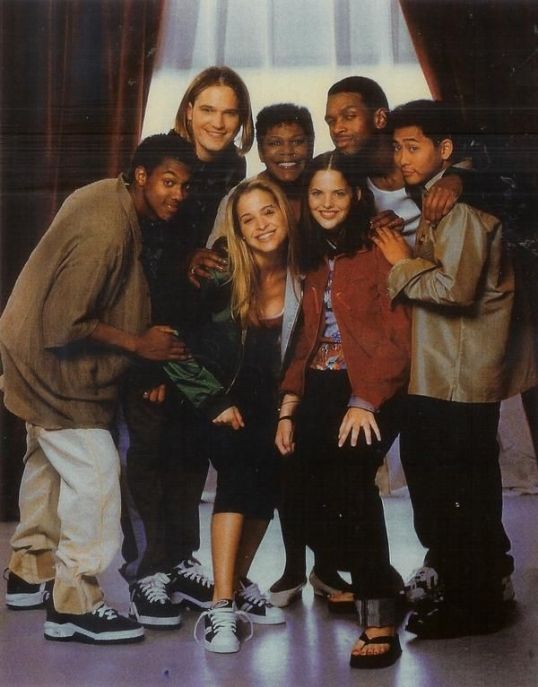
Welcome to Retro Television Reviews, a feature where we review some of our favorite and least favorite shows of the past! On Thursdays, I will be reviewing City Guys, which ran on NBC from 1997 to 2001. The entire show is currently streaming on YouTube!
This week, Cassidy develops a crush on Chris while Jamal deals with a gambling problem! Didn’t we already do all of this?
Episode 4.22 “Dating Games”
(Dir by Frank Bonner, originally aired on December 9th, 2000)
It’s time for the Valentine’s Day dance! Why did the Valentine’s Day episode air in December?
Cassidy is upset because she doesn’t have a boyfriend. Dawn asks Cassidy why she doesn’t just hook up with Chris since they do things together all the time and Chris is totally in love with her. In fact …. hey, remember last week when everyone got drunk and Cassidy announced on national television that she liked Chris? I guess Cassidy doesn’t because she tells Dawn that she and Chris are just good friends. “I need a boyfriend!” Cassidy announces. Dawn tells Cassidy that she’s too much into image and what other people will think. Cassidy doesn’t hear her because she’s too busy checking out Jordan, the hottest guy at the school. Dawn says that Jordan only dates girls who are on the rebound so Cassidy decides that she needs to pretend to date someone and fake break up with them so that she can go out with the guy she really likes.
Paging Chris!
After pretending to date Chris and then staging their breakup, Cassidy hooks up with Jordan and Chris hooks up with a girl named Linda. However, Cassidy realizes that she actually likes Chris more than Jordan so she breaks up with Jordan. At the dance, Dawn tells Chris that Cassidy likes him so Chris heads over to Cassidy’s penthouse and finally — FINALLY! — the two of them declare their love for each other. Awwwwww!
Despite a silly B-plot involving Ms. Noble teaching a meditation class and an A-plot that involved everyone being kind of stupid, this was actually a pretty good episode by City Guys standards. Maybe I’m just a sucker for romance. Chris and Cassidy are a cute couple.
Episode 4.23 “Wager Money Go”
(Dir by Frank Bonner, originally aired on December 9th, 2000)
“Yo, Jamal,” Al says, “this gambling is making you whack!”
And indeed it is! Jamal has developed a gambling problem. He’s spending all of his time at a “backroom gambling joint,” where he plays craps while a local gangster watches. Jamal swears to everyone that he has a system and he can’t lose. However, he spends almost the entire episode losing. It’s amazing that Jamal got addicted that quickly without actually being any good at the thing to which he got addicted. After his friends get tired of him borrowing money from them, he steals it from the register at work. Unfortunately, L-Train has just started working at the diner and he gets blamed for the missing money. L-Train is out of a job and Jamal loses all of his friends. Fortunately, Jamal comes clean, learns an important lesson, and that’s that.
While this is going on, Cassidy and Dawn make a documentary about Ms. Noble. It turns out that Ms. Noble is kind of boring so Dawn and Cassidy try to create a crisis so they can get Ms. Noble doing something exciting on film. There is a funny moment in which Ms. Noble refers to her husband as being “Bobby” before quickly correcting herself as saying, “I mean, Billy.” I’m going to guess this was unscripted. By the time this episode was shot, not even the cast could be bothered to remember the name of Ms. Noble’s husband. Otherwise, this was yet another B-plot that revolved around how creepily obsesses all of the students were with Ms. Noble.
This was another one of those episodes where a well-established character, Jamail in this case, was required to start acting in a way that was totally out-of-character just so an important lesson could be learned. It wasn’t terrible but it wasn’t particularly memorable either. Do gambling joints, even illegal ones, regularly allow high school students in to play craps? That would seem like more trouble than its worth.
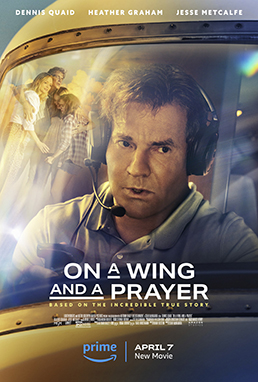
Having just attended the funeral of his brother, Doug White (Dennis Quaid) and his family — wife Terri (Heather Graham) and daughters Bailey (Abigail Rhine) and Maggie (Jessi Case) — are flying back to their home in Louisiana. Unfortunately, shortly after takeoff, their pilot suffers a heart attack and dies. Now Doug, who’s had only one flight lesson in his entire life, has to not only fly the plane but also land safely.
Doug has people on the ground, trying to talk him through the landing even though they don’t know what is actually happening in the cockpit. Hard-drinking Dan Favio (Rocky Myers) calls his friend, Kari Sorenson (Jesse Metcalfe). Kari has never gotten over the death of his family in a similar plane crash so, for him, helping Doug land is about more than just saving Doug and his family. It’s also about achieving his own personal redemption and hopefully finding the strength to forgive himself.
While this is going on, two kids — Donna (Raina Grey) and Buggy (Trayce Malachi) — follow the flight online and then head down to the airport so that they can watch it try to land. To be honest, I’m really not sure why either one of them is in the movie. When Donna first showed up, talking about how she wanted to be a pilot because “Mr. Jones” told her that girls can’t fly planes, I found myself dreading the inevitable moment when the kids would take it upon themselves to help Doug land the plane. I dreaded Donna calling the cockpit and Doug going, “Wait a minute …. you’re just a kid!” Fortunately, that moment didn’t happen but I was still left wondering why Donna and Buggy were in the film to begin with.
It feels almost churlish to be overly critical of a film like On a Wing and a Prayer because it is based on a true story. Doug White really did have to land an airplane after the pilot died mid-flight and he really was instructed on what to do by a group of air traffic controllers and Kari Sorenson. It’s a good story and the film ends with some undeniably touching shots of the real people involved in the landing. That said, this is ultimately a film that many filmgoers will want to like more than they actually do. Thanks to some dodgy special effects, the viewer never forgets that Dennis Quaid and his family aren’t really tapped up in the sky. Instead, one is always aware that they’re just watching a movie and a rather cheap-looking one at that. As well, the script is full of awkward dialogue and heavy-handed moments. As soon as I saw that one of the daughters wouldn’t stop looking at her phone, I knew that she would be the one who would be forced to grow up in a hurry. As soon as the other daughter ate something with nuts in it, I knew that there was going to be a desperate search for an epi-pen.
On the plus side, Dennis Quaid was as likable as ever and Heather Graham managed to wring some genuine feeling out of even the most sentimental of dialogue. On A Wing and a Prayer was directed by Sean McNamara, who also directed one of my favorite films of 2011, Soul Surfer. (Later this year, McNamara and Quaid have another project that is scheduled to be released, a biopic of President Ronald Reagan.) On A Wing and A Prayer doesn’t really work as a film but, as a story, it at least reminds us of what people are capable of doing when they all work together.
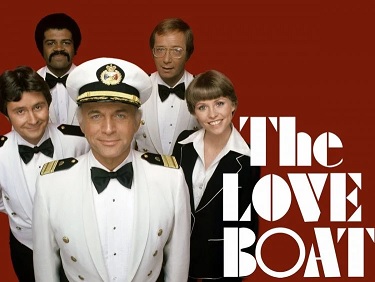
Welcome to Retro Television Reviews, a feature where we review some of our favorite and least favorite shows of the past! On Wednesdays, I will be reviewing the original Love Boat, which aired on ABC from 1977 to 1986! The series can be streamed on Paramount Plus!
Welcome aboard! Get ready for tonal whiplash on this week’s episode of The Love Boat!
Episode 2.13 “El Kid/The Last Hundred Bucks/Isosceles Triangle”
(Dir by Allen Baron, originally aired on December 9th, 1978)
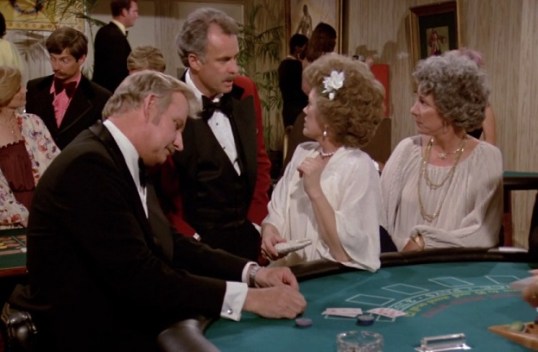
Wes (David Madden) and Renee Larson (Dena Dietrich) are happy to be setting sail with their friend and business partner, April (Rue McClanahan). They’re even more excited when the widowed April meets Van Milner (Dabney Coleman), a recently divorced businessman. Not only is April falling in love with Van but it also appears that Van might even be willing to join the board of April’s hospital and invest some of his money into fixing the place up. Except, of course, Van lost his job over a year ago and he really doesn’t have that much money left. April is crestfallen to discover that Van is not the wealthy man that she believed him to be. Was he just romancing her for her money? When Van wins a few thousand dollars at the craps table, he donates the money to the hospital and April realizes that he was being honest about his feelings towards her.
This was a pretty predictable story and April was way too quick to forgive Van for his dishonesty but it was interesting to see an actor like Dabney Coleman, someone who brought a naturally cynical edge to any character that he played, on a show like The Love Boat. As played by Coleman, Van seemed to be suffering from very real inner pain. For once, the emotional drama on The Love Boat felt, if not quite real, then at least credible.
Speaking of pain, that’s what Larry (Robert Urich) and Cybill Hartman (Heather Menzies) had waiting for them when they took the Love Boat to Mexico so they could adopt a baby. Upon arriving at the local orphanage, they were told that the mother of their baby had changed her mind and would not be giving up her baby after all. Instead, Larry and Cybill left with 12 year-old Pepito (Gabriel Melgar), a little brat who steals Larry’s watch and sells it on the boat. When Larry gets upset, Pepito grabs an inflatable lifeboat and prepares to jump overboard. Fortunately, Larry and Cybill talk him out of it and he agrees to be their son and to stop stealing stuff. This was an annoying story, largely because Pepito was so whiny. It was hard not to feel that Larry and Cybill deserved better than having to raise Pepito.
Finally, Julie’s friend, Karen Maynard (Connie Stevens), boards the boat and both Captain Stubing and Doc Bricker spend the entire voyage pursuing her because it’s not like the Captain and the ship’s doctor would actually be expected do their job while the ship is floating in the middle of the ocean. Gopher, Ike, and Julie take bets on who Karen will choose but, in the end, Karen chooses neither because both Doc and Stubing decide to respect the other’s feelings and stop pursuing Karen. This whole storyline was silly because there was really no doubt about who Karen would have picked. Seriously, anyone who is a passenger on a cruise is automatically going to fall for the captain because the captain is the most powerful person on the boat. But, on the plus side, the storyline showed off the chemistry between all of the show’s regulars. It was likable, even if it never quite felt plausible.
This was an episode about which I had mixed feelings. The three storylines were so tonally dissimilar that they didn’t really seem that they all should have been happening on the same cruise. Plus, Pepito was the most obnoxious orphan since the kids on One World. I’m glad things worked out for Dabney Coleman, though.