Bonus Horror On The Lens: I Was A Teenage Frankenstein (dir by Herbert L. Strock)


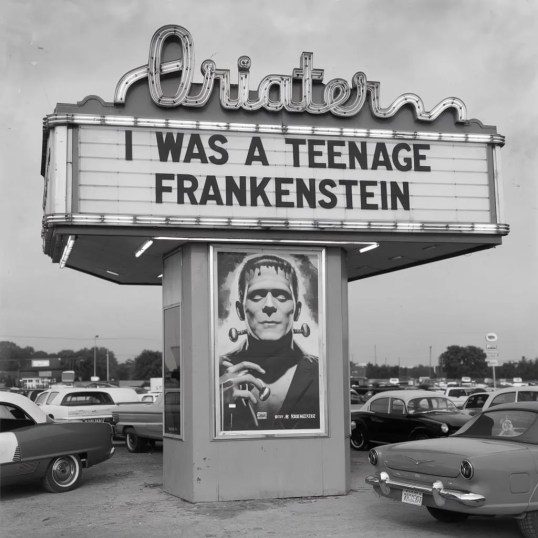
From 1957, it’s I Was A Teenage Frankenstein!

This film was produced as a direct result of the box office success of I Was A Teenage Werewolf.  Just as in Teenage Werewolf, Whit Bissell plays a mad scientist who makes the mistake of trying to play God.  (He also makes the mistake of keeping an alligator in his lab but that’s another story.)  The end result …. Teenage Frankenstein!

The makeup on the Teenage Frankenstein is probably the best thing about this film.  If nothing else, this film features a monster who actually looks like he was stitched together in a lab.

Enjoy and please be sure to read my full review!

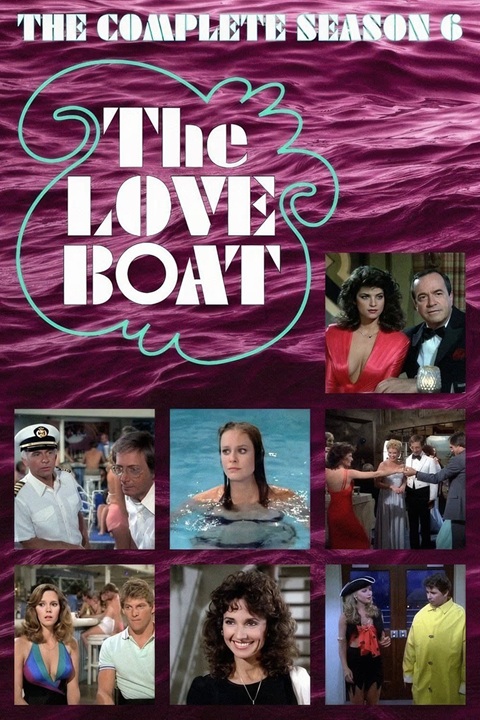
Retro Television Review: The Love Boat 6.24 “So Help Me Hannah/The Maid Cleans Up/CPR IOU”


Welcome to Retro Television Reviews, a feature where we review some of our favorite and least favorite shows of the past!  On Wednesdays, I will be reviewing the original Love Boat, which aired on ABC from 1977 to 1986!  The series can be streamed on Paramount Plus!

Love …. exciting and new!

Episode 6.24 “So Help Me Hannah/The Maid Cleans Up/C.P.R, I.O.U.”

(Dir by Kim Friedman, originally aired on March 12th, 1983)

This episode features Gopher bringing a CPR dummy on board.  No one is that interested in learning how to perform CPR, at least not until one of the passengers, Dwaine Fenley (Steven Keats), has a heart attack.  Fortunately, because of his CPR training, Gopher is able to save Dwaine’s life.  Not only does this lead to Dwaine forging a stronger relationship with his father (Milton Berle) but it also leads to Gopher getting promoted to Head Purser.

(Erin doesn’t like to brag so I’ll brag for her and say that she is not only CPR-certified but she also saved someone’s life a few years ago.  CRP is a good thing to learn!)

While Gopher is trying to get everyone to learn CPR, there are other things happening on the boat and, to be honest, they’re all kind of annoying.  For instance, Hannah (Mary Martin) boards the boat and she’s immediately giving everyone advice and singing Cole Porter tunes.  I kind of knew that this story was going to be annoying from the minute Hannah first boarded the ship and the camera zoomed in for a close-up, which was usually a sign that a guest star was going to spend the entire cruise overacting.  That’s the case here, with Mary Martin delivering every line and playing every emotion as if she’s on Broadway as opposed to a television soundstage.  Hannah meets an ex-boyfriend named Jarvis (Max Showalter) and they sing It’s De-Lovely while standing against the ship’s railing and, for me, it was De-Cringey.  Maybe if I was of Mary Martin’s generation, it would have been less cringey.  But I have to admit that I listen to most of those old songs and I think to myself, “De-lovely is not a word.”  Hannah encourages Jarvis to allow his son (Timothy Patrick Murphy) to play piano instead of becoming a real estate agent.

Finally, a maid (Judy Landers) boards the boat because she knows that her employer (Caren Kaye) is cheating on her boyfriend (Ben Murphy).  It’s actually a bit of a complex storyline, at least by the typical standards of The Love Boat.  Personally, I like Judy Landers and Ben Murphy was appropriately rugged and handsome.  Unfortunately, Landers and Murphy didn’t have much chemistry.

A mixed review for this episode, I’d say.  I appreciated the CPR subplot because that was The Love Boat at its most well-intentioned.  The whole thing with Mary Martin singing old songs was cringe city.  And the maid subplot was just kind of boring.  This was not a great cruise but it wasn’t a terrible one either.  At least, after six seasons, Gopher finally got his promotion.


Horror Scenes That I Love: “Dentist!” from Little Shop of Horrors


Since we’ve been talking a lot about the original Little Shop of Horrors today, it’s only appropriate to share a scene from the remake for today’s scene of the day.

From 1986’s Little Shop of Horrors, here is Steve Martin performing Dentist!  Because there’s nothing scarier than going to the dentist, right?

Horror Song of the Day: Buio Omega by Goblin


Today’s horror song of the day comes from the 1979 film, Beyond The Darkness.

This film’s soundtrack, courtesy of Goblin, was so acclaimed that it later turned up in several other Italian horror film, usually without anyone bothering to clear it with Goblin ahead of time.

4 Shots From Horror Films: 2010s Part One


This October, I’m going to be doing something a little bit different with my contribution to 4 Shots From 4 Films.  I’m going to be taking a little chronological tour of the history of horror cinema, moving from decade to decade.

Today, we begin the 2010s!

4 Shots From 4 Horror Films

The Wolfman (2010, dir by Joe Johnston)

The Wolfman (2010, dir by Joe Johnston)

Insidious (2010, dir by James Wan)

Insidious (2010, dir by James Wan)

Let Me In (2011, dir by Matt Reeves)

Let Me In (2011, dir by Matt Reeves)

The Cabin In The Woods (2012, dir by Drew Goddard)

The Cabin In The Woods (2012, dir by Drew Goddard)

October True Crime: My Father’s Shadow: The Sam Sheppard Story (dir by Peter Levin)


On July 3rd, 1954, Marilyn Sheppard was murdered in her bedroom.

The wife of a prominent neurosurgeon, Marilyn Sheppard was bludgeoned to death in her own bedroom.  Her husband, Sam Sheppard, claimed that he had fallen asleep on a downstairs couch and was woken up by the sound of his wife screaming.  Sheppard said that, when he ran upstairs to the bedroom, he saw a bushy-haired man in the shadows.  The man hit Sheppard, knocking him out.  When Sheppard came to, he saw the man fleeing the house and chased after him.  The two fought outside and again, Sheppard was knocked out.

The police did not believe Sam Sheppard’s story and, after days of headlines that flat out accused him of being the murderer, he was arrested and charged with murdering his pregnant wife.  The press had a field day with the story and the trial was frequently described as being a circus.  Sheppard’s case was damaged by the revelation that he had cheated on his wife multiple times.  Contemporary accounts of the trial portrayed Sheppard as being cocky and arrogant.  As the jury was not sequestered, they saw every tabloid headline about Sheppard.  After deliberating for four days, the jury found Dr. Sam Sheppard guilty of murdering his wife.  He was sentenced to prison.

Sheppard would stay in prison until 1966.  During that time, his mother committed suicide, his father died of an ulcer, and his former father-in-law also chose to end his own life.  Sheppard’s original attorney died in 1961 and his appeals were taken over by a young lawyer named F. Lee Bailey.  In 1966, Bailey argued before the U.S. Supreme Court that Sheppard was denied due process due to the jury not being sequestered.  The Supreme Court agreed and granted Sheppard a new trial.  This time, with the flamboyant Bailey defending him, Sheppard did not testify and the defense focused on the lack of any real evidence that would suggest Sheppard had lied about the Bushy-haired Man.  Sheppard was acquitted.

Today, if Sam Sheppard is remembered, it’s for inspiring The Fugitive, a show about a doctor wrongly accused of murder.  (The show aired while Sheppard was still in prison.)  The majority of online posts and articles that I’ve read about Sam Sheppard have always focused on the retrial and usually end with Sheppard leaving prison.  It’s rare that Sheppard’s life after prison is discussed,  That’s probably because it’s a very sad story.

Sheppard may have been acquitted but he had also just spent 12 years in prison and he came out a changed man.  Sheppard tried to return to practicing medicine but his surgical skills had deteriorated to the extent that two of his patient died after he nicked an artery.  Facing multiple wrong death suits, he resigned from the only hospital that had been willing to give him a job.  He became a professional wrestler and was known as “Killer” Sam Sheppard at some of his matches.  He was also an alcoholic.  Less than four years after getting out of prison, he was dead at the age of 46.

1998’s My Father’s Shadow: The Sam Sheppard Story features Peter Strauss as Dr. Sheppard and Henry Czerny as his namesake son.  The film alternates between flashbacks to Dr. Sheppard’s life and scenes set in the 90s that focus on his son’s attempts to definitively clear his father’s name.  The film suggests that the murder was actually committed by Richard Eberling (John Colicos), who worked as a handyman and a window washer at the Sheppard home and who, when he was arrested for burglary several years after the murder, was discovered to have some of Marilyn Sheppard’s jewelry in his possession.  In the 80s, Eberling was convicted of murdering another one of his clients.  Eberling himself died in prison, the same year that this movie aired.

It’s a big story and My Father’s Shadow tries to do a lot in just 90 minutes.  Sometimes, it tries to do too much.  The flashbacks are occasionally a bit difficult to keep track of.  Sam Sheppard’s son goes from being a military school brat to a long-haired hippy so suddenly that, from a narrative point of view, it’s a bit distracting.  Overall, though, this is an effective look at an interesting story and it features two excellent performances from Strauss and Czerny.  It may not be the definitive telling of Sam Sheppard’s story but it’s a good place to start.

20 Horror Films For Halloween (10/29/25)


Here’s 20 suggestions, some of which are obvious and some of which are not.

The Essentials

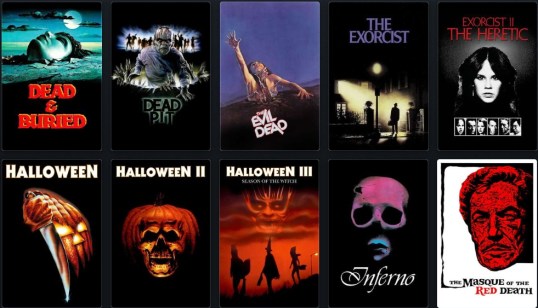
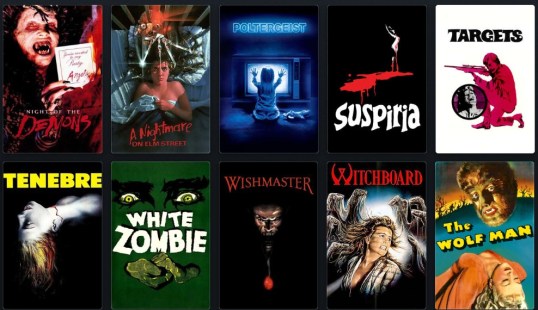
What would Halloween be without watching Halloween (1978)?  And, just to make clear, I’m talking about the John Carpenter Halloween and not any of that David Gordon Green crap.  John Carpenter’s Halloween continues to be one of the most effective horror films ever made and it’s also the rare example of a slasher film in which the victims are just as memorable as the killer.  I love Donald Pleasence’s performance as Dr. Loomis.  Halloween can be viewed on Shudder.

Halloween II (1981) picks up right where the first Halloween ended.  Jamie Lee Curtis doesn’t really do much in this version, other than spend her time limping through the hallways of Haddonfield’s nearly deserted hospital.  However, that just means that we get to spend more time with Dr. Loomis!  Halloween II is nowhere near as effective as the first film but it still introduced some really interesting ideas, like Samhain and Laurie being Michael’s sister.  David Gordon Green decided all of that unnecessary.  I disagree.  Halloween II can be viewed on Peacock.

Halloween III: Season of the Witch (1982) does not feature Michael Myers or Laurie Strode or even Dr. Loomis.  However, it does feature the Silver Shamrock theme song, Tom Atkins yelling like a badass, and Don O’Herlihy explaining the true meaning of Halloween.  “….and Happy Halloween.”  Halloween III can be viewed on Peacock.

The Exorcist (1973), William Friedkin’s masterpiece and the first horror film to ever be nominated for Best Picture, is one of the few horror film to remain frightening even after repeat viewings.  I will add that you don’t have to be Catholic to get The Exorcist but it definitely helps.  The Exorcist can be viewed on HBOMax. 

Suspiria (1977) remains Dario Argento’s best film, a dizzying masterpiece of horrific pop art that mixes blood, ballet, witches, music, and names that start with S.  From the moment that Jessica Harper (giving a great performance) steps into the rainy night to the shocking double murder at the red apartment building to the mind-bending climax, Suspiria is a brilliant mix of suspense and horror.  Do not see the remake.  (What is the deal with pretentious schmucks remaking brilliant horror films?)  The original is all you need.  It’s on Tubi.

Inferno (1980) is one of Argento’s more unfairly overlooked films.  A loose sequel to Suspiria, Inferno is a masterpiece of both horror and paranoia.  Irene Miracle’s opening swim is one of Argento’s most haunting set pieces.  The killer kitties are adorable.  The ending features effects work from none other than Mario Bava.  Sadly, the making of Inferno was not a happy experience for Argento and it temporarily soured him on working in America.  This brilliant film is on Tubi.

After his bad experience with Inferno, Argento returned to his giallo roots with Tenebrae (1982).  A series of murders in Rome are connected to an American writer.  Argento reportedly did not get along with star Anthony Franciosa but he still got a good performance out of him.  The wonderfully quirky supporting cast includes John Saxon, Daria Nicolodi, Christian Borromeo, John Steiner, Lara Wendel, Ania Pieroni, and Giuliano Gemma.  This film features several frightening and suspenseful set pieces.  The relentless dog still freaks me out.  Tenebrae can be viewed on Tubi.

A Nightmare on Elm Street (1984) — again, the original and not the remake — holds up surprisingly well.  Whenever I watch it, I’m shocked to be reminded of just how scary Freddy Krueger actually was in his first film appearance.  This Wes Craven shocker is available on HBOMax.

Poltergeist (1982) — the original, not the remake — also holds up well.  JoBeth Williams finding the strength after being thrown around her room to limp down that ever expanding hallway to save her children continues to be both horrifying and inspiring.  Craig T. Nelson’s over-the-top delivery of “YOU LEFT THE BODIES!” continues to make me smile.  Poltergeist can be viewed on HBOMax.

It’s not Halloween without Bruce Campbell and Evil Dead (1981) — the original, though the remake isn’t bad — is available on Tubi.  Though it lacks the humor of the sequels, the first Evil Dead holds up very well and one can definitely see why not only Bruce Campbell but also Sam Raimi went on to have active and successful career afterwards.

In my previous entry, I listed several Vincent Price/Roger Corman collaborations.  Somehow, I failed to include The Masque of the Red Death (1964), which is the best of them all.  Vincent Price is wonderfully evil.  Roger Corman’s direction is appropriately intense.  Nicholas Roeg’s cinematography is beautifully ominous.  It can be viewed on Tubi.

The Wolf Man (1941) — the original, even though I like the remake — is one of my favorite Universal horror films, even if it does leave me wondering how Lon Chaney, Jr. could possibly be the son of Claude Rain.  In future films, Larry Talbot would become a bit too whiny for his own good.  In this one, your heart breaks for him and his father.  The Wolf Man can be viewed on Peacock.

White Zombie (1932) is considered to be first feature-length zombie film.  It’s a bit creaky but it does feature one of Bela Lugosi’s best performances.  One should see it for its historical significance, if nothing else.  It can be viewed on on Tubi!

Odds and Ends

One can debate whether or not Targets (1968) should be considered a horror film or a thriller but it features what is perhaps Boris Karloff’s best performance, playing an aging horror star who fears that his old movies can’t compete with reality.  For once, Karloff is the hero, bravely confronting a madman who starts shooting at the people attending a showing of one of Karloff’s old films.  Targets can be viewed on Pluto TV.

The Dead Pit (1989) is a personal favorite of mine.  An amnesiac (energetically played by Cheryl Lawson) finds herself in an insane asylum where she spends a lot of time running around in her underwear while a doctor performs experiments and the dead rise.  Lawson’s committed performance and director Bett Leonard’s atmospheric direction elevate the entire film.  This is 80s, low-budget horror at its best and it’s on Tubi.

Night of the Demons (1988) asks the question, “Is it really a good idea to have a party in a deserted house?”  Night of the Demons is enjoyable in its shameless and demented way.  Linnea Quigley and Angela Kinkade throw themselves into the role of the two girls throwing the party.  The film is energetic, surprising, witty, and occasionally even scary.  It can be viewed on Tubi.

From the same director as Night of the Demons, Witchboard (1986) is the ultimate film about why one shouldn’t mess with a Ouija board.  I relate to Witchboard because it’s about a redhead who never curses.  Beyond that, though, this is a good horror film that features Stephen Nichols getting upset when everyone fails to take his Ouija board seriously.  This film actually has its share of very real jump scares.  It can be viewed on Tubi.

Wishmaster (1997) is well-remembered for Andrew Divoff’s creepy intensity as the Djinn but the cast is actually a who’s who of horror royalty.  Robert Englund, Tony Todd, George “Buck” Flower, Kane Hodder, Reggie Bannister, Joe Pilato, they all made appearances.  I like the fact that no one ever chooses their words carefully when speaking to Wishmaster.  The film is on Tubi.

Dead and Buried (1981) features strange things happening in a coastal town.  This film feels like a particularly gruesome episode of The Twilight Zone and features a strong performance from Jack Albertson as the coroner with a secret.  It’s on Tubi.

Exorcist II: The Heretic (1977) has a terrible reputation that is largely deserved but I have to admit that I find it to be strangely fascinating.  It’s such a misfire that you really can’t look away and it takes an all-star cameo approach to its story that feels so wrong that it leaves you wondering whether John Boorman was intentionally going for a parody or not.  Richard Burton doesn’t waste any time with being subtle.  See if you can figure out what’s going on during the flashback scenes.  It’s on Tubi and I dare you to watch it.

Click here for the weekend’s list!


Horror On The Lens: Little Shop of Horrors (dir by Roger Corman)


Whenever it’s time to share this film for Horrorthon, I have a little story that I like to tell:

Enter singing.

Little Shop.…Little Shop of Horrors.…Little Shop.…Little Shop of Terrors….

When I was 19 years old, I was in a community theater production of the musical Little Shop of Horrors.  Though I think I would have made the perfect Audrey, everybody always snickered whenever I sang so I ended up as a part of “the ensemble.”  Being in the ensemble basically meant that I spent a lot of time dancing and showing off lots of cleavage.  And you know what?  The girl who did play Audrey was screechy, off-key, and annoying and after every show, all the old people in the audience always came back stage and ignored her and went straight over to me.  So there.

Anyway, during rehearsals, our director thought it would be so funny if we all watched the original film.  Now, I’m sorry to say, much like just about everyone else in the cast, this was my first exposure to the original and I even had to be told that the masochistic dentist patient was being played by Jack Nicholson.  However, I’m also very proud to say that — out of that entire cast — I’m the only one who understood that the zero-budget film I was watching was actually better than the big spectacle we were attempting to perform on stage.  Certainly, I understood the film better than that screechy little thing that was playing Audrey.

The first Little Shop of Horrors certainly isn’t scary and there’s nobody singing about somewhere that’s green (I always tear up when I hear that song, by the way).  However, it is a very, very funny film with the just the right amount of a dark streak to make it perfect Halloween viewing.

So, if you have 72 minutes to kill, check out the original and the best Little Shop of Horrors….


October Positivity: Revelation Road 3: The Black Rider (dir by Gabriel Sabloff)


Eric Roberts is not in Revelation Road 3.

I was hoping that he might be, even though his name didn’t appear in the credits.  Quite a few cast members from the first two films return for the third film.  David A.R. White is back as Josh McManus, the former super soldier who now drives his souped-car through the wastelands of America.  Bruce Marchiano is back, credited as the Stranger though we all  know he’s actually Jesus.  (Since Marchiano  appeared in all three films, I can only assume the Revelation Road films all take place in the same cinematic universe as The Encounter films and Sarah’s Choice.)  Brian Bosworth shows up briefly.

But there is no Eric Roberts.  Not even Eliza Roberts appears in this film!  It’s a shame and they are both missed.

However, Kevin Sorbo does show up.

Kevin Sorbo plays Honcho, a bandit leader who lives in the wastelands and who is worshipped by those who follow him.  Honcho occasionally speaks with an Australian accent.  Occasionally, the accent slips or disappears all together.  At first, I thought this was a case of bad editing, bad dubbing, or maybe Sorbo not really being that into the character.  However, there’s actually a rather clever moment in which Honcho tells Josh that he’s not actually from Australia.  He just speaks with the accent because it impresses his followers.  Without the accent, he’s just some guy who used to work at a gas station.  With the accent, he’s a warlord.

It’s a moment that made me laugh, largely because it’s true.  People love and fear accents.  If you’ve got a posh British accent, most Americans will assume that you’re planning a heist of some sort and that Sylvester Stallone or Harrison Ford is somewhere nearby, trying to stop you.  If you’ve got an Australian accent, the assumption amongst Americans is that you can survive harsh conditions, handle your alcohol, and jump out of a plane without a second thought.

However, Sorbo’s fake Australian accent also pays a sort of homage to the Mad Max films.  The Revelation Road trilogy was obviously envisioned as being a faith-based version of the Mad Max films, with David A.R. White cheerfully stepping into the somber shoes of Mel Gibson and Tom Hardy.  Using Mad Max as a model for a faith-based apocalypse film actually isn’t that bad of an idea.  Indeed, Gibson’s style of beatific madness opens up the original Mad Max trilogy to a similar interpretation.  Unfortunately, Revelation Road 3 is at time a bit too faithful to the Mad Max films, to the extent that it struggles to establish an identity outside of the films that inspired it.  That’s one reason why Kevin Sorbo’s character stands out.  He’s a character who genuinely surprises us.

As for the plot of Revelation Road 3, it finds Josh being sent on a mission to find The Shepherd (Robert Gossett), a mysterious figure who is gathering together a religious flock in the desert despite the fact that the new world government has outlawed things like religion and individual freedom.  While Josh’s wounded companion waits in a town ruled over by Mayor Drake (James Denton), Josh searches the desert and occasionally sees a mysterious rider on a horse.  The film mixes action and theology and the results are definitely mixed, with a few well-done chase scenes mixed with a lot of scenes of people talking.  That said, at its best, The Black Rider achieves a sort of desolate grandeur.

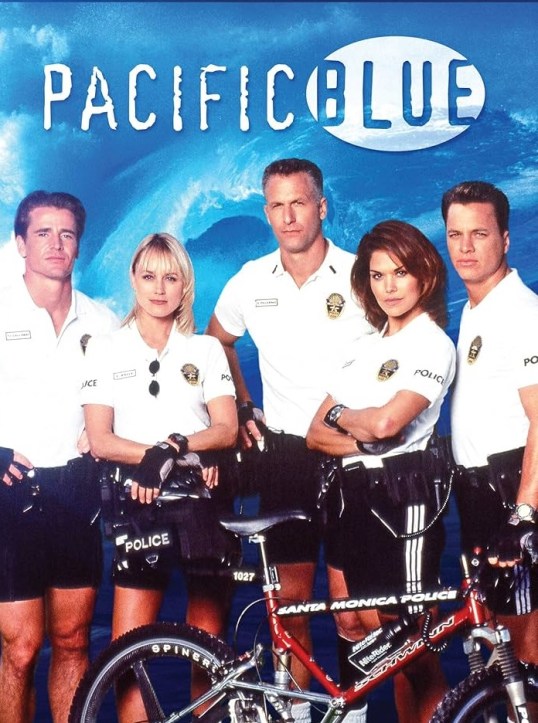
Late Night Retro Television Review: Pacific Blue 3.4 “Blood For Blood”


Welcome to Late Night Retro Television Reviews, a feature where we review some of our favorite and least favorite shows of the past! On Tuesdays, I will be reviewing Pacific Blue, a cop show that aired from 1996 to 2000 on the USA Network!  It’s currently streaming everywhere, though I’m watching it on Tubi.

This week, the bike patrol is busy!

Episode 3.4 “Blood For Blood”

(Dir by Gary Winter, originally aired on August 24th, 1997)

Last week, Pacific Blue attempted to deal with Rave Culture.

This week, it’s Hip Hop Culture!

Rapper Gangster 47 (Ross Leon) is gunned down while leaving a concert.  Gangster 47’s daughter (Meagan Good) is convinced that the hit was ordered by Gangster 47’s rival, Trigger Dog (Ten’l Brunson).  Now, I will just admit right now that I’m having a hard time writing this review because I can’t type out the name Trigger Dog without laughing.  Even though everyone says that Trigger Dog’s feud with Gangster 47 was all for show, Gangster 47’s daughter is determined to shoot Trigger Dog.

Fortunately, noted gangsta rap fan Chris Kelly is on the case.  Seriously, Chris is portrayed as being a fan of Gangster 47.  Over the course of the previous 38 episodes, we have seen absolutely nothing about the very white and the very uptight Chris that would lead us to believe that Chris would be a fan of anything other than military marches but this episode opens with her rolling her eyes when TC says that rap isn’t real music.  Chris tells TC that he needs to realize there’s more to music than the Bee Gees.  Ouch!  You tell him, Chris.  And seriously, take that, Bee Gees!  How Deep Is You Love now, huh!?

Chris and TC have been assigned to protect Gangster 47.  Why exactly the bike patrol is protecting a celebrity who has been getting death threats — as opposed to real cops and real bodyguards — is never really addressed.  Gangster 47’s daughter hates cops.  When Gangster 47 is gunned down in a drive-by, it seems like his daughter has a point. Gangster 47 isn’t killed but he is in the hospital.

The show’s producers obviously figured out that it would be a little bit awkward for the show’s almost entirely white cast to be dealing with a case involving two gangsta rappers so we meet a supercool black detective named — I’m not making this up — Wishbone (Derek Morgan).  Wishbone mainly exists to clasp hands with TC and to back-up Chris, as if the show is saying, “See?  These two aren’t as dorky as they seem.  Wishbone likes them!”  With Wishbone’s help, they come to realize that Gangster 47 was shot by a white man and Trigger Dog is innocent.

The white man is a serial killer named Strob (Todd Cattrell) who is apparently trying to bring about the Biblical apocalypse by murdering celebrities or something.  TC spots him on the beach but, in order to chase after him, he has to get on his bike and this leads to urgent close-up of TC dialing the combination of his bike lock.  Hey, TC, if you had a car, you would have already arrested Streob by now!

While this is going on, Victor’s girlfriend, Linda (Vaitiare Hirshon) has witnessed a murder and, if she testifies, she may have to go into the witness protecting program!  That’s a big deal but, of course, Palermo acts as if it’s nothing because Palermo never seems to get that people actually have lives outside of whatever he needs at any given moment.  Victor doesn’t want to lose Linda.  Conveniently, the murderer pulls a gun on Victor, which gives Victor the perfect excuse to gun him down.  Palermo’s like, “Did he shoot first?” and Victor says, “Sure.”  Victor then asks Linda to marry him.

Personally, I just find it interesting that, with all the crime happening in Santa Wherever This Show Takes Place, it just takes five people on bicycles to catch all the bad guys.  I mean, if that works in Santa Monica, maybe it’ll also work in New York after Mamdani is elected.  Let’s hope so!