A Movie A Day #212: Fuzz (1972, directed by Richard A. Colla)


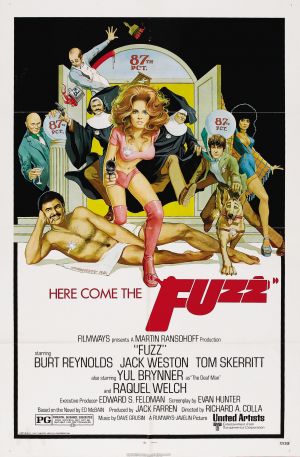
Detective Eileen McHenry (Raquel Welch) has just been given her new assignment and she is about to find out that there is never a dull day in the 87th Precinct.  How could there be when the precinct’s top detectives are played by Burt Reynolds, Tom Skerritt, and Jack Weston?  Or when Boston’s top criminal mastermind is played by Yul Brynner?  There is always something happening in the 8th Precinct.  Someone is stealing stuff from the precinct house.  Someone else is attacking the city’s homeless.  Even worse, Brynner is assassinating public officials and will not stop until he is paid a hefty ransom!

Based on the famous 87th Precinct novels that Evan Hunter wrote under the name Ed McBain, Fuzz has more in common with Robert Altman’s MASH than The French Connection.  (Skerritt and Bert Remsen, who plays a policeman in Fuzz, were both members of Altman’s stock company.)  Much like Altman’s best-regarded films, Fuzz is an ensemble piece, one that mixes comedy with tragedy and which features several different storylines playing out at once.  Scenes of homeless men being set on fire are mixed with scenes of Reynolds and Weston going undercover as nuns.  (Of course, Burt does not shave his mustache.)  Since it was written by Hunter, the film’s script comes close to duplicating the feel of the 87th Precinct novels.  Unfortunately, Richard A. Colla was a television director and Fuzz feels more like an extended episode of Police Story or Hill Street Blues than a movie.  Unlike Altman’s best films, Fuzz‘s constantly shifting tone and the mix of comedy and drama often feels awkward.  Fortunately, Fuzz does feature good performances from Reynolds, Westin, Skerritt, and Brynner, along with a great 70s score from Dave Grusin.  Raquel Welch is never believable as cop but she’s Raquel Welch so who cares?
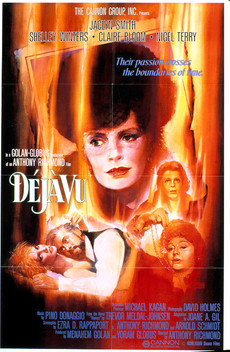
A Movie A Day #211: Deja Vu (1985, directed by Anthony B. Richmond)


Damn, son.  I’ve seen some bad movies before but Deja Vu is something else altogether.
Around the mid-80s, Menahem Golan and Yoram Globus decided to prove that Cannon Films was capable of doing more than making movies about Chuck Norris refighting the war in Vietnam.  Golan and Globus had already made money, now they wanted respect.  Teaming up with respected directors (Robert Altman directed an adaptation of Sam Shepard’s Fool For Love for them) and casting actors who had slightly more range than Chuck Norris or Reb Brown, Cannon tried to go the prestige route.  Some of the Cannon’s quality movies actually were good movies.  The same year that Deja Vu came out, Cannon’s Runaway Train scored several Oscar nominations.  However, Deja Vu is a far more representative example of a Cannon prestige film.  It may have had higher production values than Missing in Action but it was still a Golan/Globus production through and through.

Nigel Terry (best known for playing King Arthur in John Boorman’s Excalibur) plays Michael, a screenwriter who views a documentary about a famous and tragic ballerina and is shocked to discover that she looks just like his actress fiancée.  (Both roles are played by Jaclyn Smith.)  Michael is even more shocked when it turns out that he looks exactly like the ballerina’s husband.  Convinced that his girlfriend is the reincarnation of the ballerina, Michael researches her life and murder.  Meanwhile, his fiancée starts to act strangely.

Deja Vu starts out a merely mediocre, slowly paced and miscast.  (There is no chemistry whatsoever between Nigel Terry and Jaclyn Smith.)  But then Shelley Winters shows up, playing a Russian psychic named Olga Nabokova. As soon as Winters started to deliver her lines in one of the least convincing Russian accents that I have ever heard, Deja Vu made the leap from being merely bad to being a cinematic trainwreck.  While Terry and Smith sleepwalk through their roles, Winters and, later, Claire Bloom (cast as the ballerina’s mother) chew up every piece of scenery that they can get their hands on.  Though the plot may be so predictable that it will cause viewers to have deja vu of their own, it must be said that, eventually, Deja Vu becomes so bad and misjudged that it is impossible to look away.  Golan and Globus may have had Oscars in their eyes when they decided to produce this prestige pic but instead, they won the laughter of anyone who comes across it on TV.


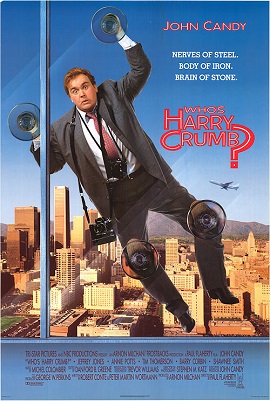
A Movie A Day #210: Who’s Harry Crumb? (1989, directed by Pat Flaherty)


Who’s Harry Crumb?

He is a private detective, the latest in a long line of gumshoes.  While Harry’s father and his grandfather may have been great detectives, Harry is about as incompetent as can be.  He is a self-styled master of disguise but not much else.  He is employed at Crumb & Crumb Detective Agency, solely because of his family background.  When the head of the agency, Eliot Draisen (Jeffrey Jones), engineers the kidnapping of a millionaire’s daughter, he gives the case to Harry because he knows Harry will never be able to solve it.

Who’s Harry Crumb?

He is John Candy, the much beloved and much missed comedic actor from Canada.  As anyone who has ever seen an old episode of SCTV knows, John Candy could be one of the funniest men alive but Hollywood rarely knew what to do with him.  Other than the movies that he made with John Hughes, Candy was always stuck in either supporting roles or in bad comedies.  In Art Linson’s A Pound of Flesh, veteran film producer Linson writes that, because of Candy’s size, some Paramount executives wanted to cast him as Al Capone in The Untouchables.  That is something that I would have enjoyed seeing.  Instead, some actor named Robert De Niro got that role and Candy ended up making movies like Who’s Harry Crumb?

Who’s Harry Crumb? tries to be a mix of comedy and mystery but, due to a weak script and uncertain direction, it does not really succeed as either.  John Candy delivers a few laughs because he was a naturally funny actor but, as a character, Harry Crumb is not that interesting.  Instead, the film is stolen by Annie Potts, playing a duplicitous femme fatale.  Potts and Candy previously came close to working together in the original Ghostbusters.  (Candy pulled out of the role of Louis Tully so that he could play Tom Hanks’s brother in Splash.  He was replaced by his SCTV co-star, Rick Moranis.)  The rest of the cast seems bored and uninterested in what they are doing.  Even Jeffrey Jones, usually so reliable in smarmy bad guy roles, seems bored.

John Candy died just 5 years after the release of Who’s Harry Crumb?, leaving behind two intriguing dream projects, one a biopic of Fatty Arbuckle and another an adaptation of A Confederacy of Dunces.  Sadly, Hollywood never really figured out what to do with this talented comedian.


A Movie A Day #209: Assassination (1987, directed by Peter R. Hunt)


Charles Bronson, man.

Long before Clint Eastwood starred in In The Line of Fire, Charles Bronson played an over the hill secret service agent in Assassination.  Having just returned to active service after a six month leave of absence, Jay Killian (Charles Bronson), thinks that he is going to be assigned back to the presidential detail.  Instead, he is given the job that no one wants.  Jay is assigned to protect the first lady, Lara Craig (Jill Ireland, Bronson’s real-life wife).

Lara is a handful.  Every one tells Killian that she is “even worse than Nancy.”  (This running joke probably played better in 1987.  If Assassination had been released ten years later, Lara would have been described as being “even worse than Hillary.”)  Lara does not like being told what she can and cannot do. When she refuses to follow Killian’s orders not to ride in a convertible, she ends up getting a black eye when a motorcycle crashes and Killian instinctively throws her to the floor.  Lara may not like Killian but when, she is targeted by a notorious terrorist (Erik Stern), she will have to learn to trust him.  Her life depends on it, especially when it becomes clear that the order to have her killed is coming from inside the White House.  It turns out that the President has been impotent for years.  That may not have troubled Lara before but now Killian is showing her that a real man looks like Charles Bronson.  A divorced president will never be reelected.  A widowed president, on the other hand…

Assassination was one of the last films that Bronson made for Cannon.  It’s never as wild as Murphy’s Law, Kinjite, or many of Bronson’s other Cannon films but it is always interesting to watch Bronson acting opposite of Ireland.  Bronson famously did not get along with many people but he loved Ireland and that was something that always came through in the 15 movies that they made together.  Whenever Bronson and Ireland acted opposite each other, Bronson actually seemed to be enjoying himself.  And while it may be subdued when compared to his other Cannon films, Assassination provides just enough scenes of Bronson being Bronson.

Who other than Bronson could tell his much younger girlfriend that, because of her, he might “die of terminal orgasm?”

Who other than Bronson could drive around a motorcycle with machine gun turrets and execute a jump that would put his old co-star Steve McQueen to shame?

Who other than Bronson could use a bazooka to kill one man and then smile about it?

Charles Bronson, man.  No offense to Bruce Willis, who will be trying to step into Bronson’s gigantic shoes with the upcoming Death Wish remake, but nobody did it better than Bronson.


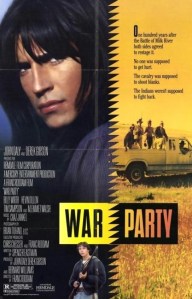
A Movie A Day #208: War Party (1988, directed by Franc Roddam)


On the hundredth year anniversary of a battle between the U.S. Calvary and the Blackfeet Indians, the residents of small Montana town decide to reenact the battle and hopefully bring in some tourist dollars.  The white mayor (Bill McKinny) and the sheriff (Jerry Hardin) both think that it is a great idea.  Even the local Indian leader, Ben Cowkiller (Dennis Banks, in real-life a founder and leader of the American Indian Movement), thinks that it will be a worthwhile for the Indians to participate.  The Calvary’s guns will be full of blanks.  The Indians will play dead.  However, as the result of a bar brawl the previous night, one of the local rednecks, Calvin Morrisey (Kevyn Major Howard), shows up with a gun full of bullets.  After he shoots one of the Indians, Calvin ends up with a tomahawk buried in his head.  Three Indian teenagers, Warren (Tim Sampson), Skitty (Kevin Dillon), and Sonny (Billy Wirth), flee into the wilderness.  Thirsty for revenge, a white posse heads off in pursuit.

War Party is an underrated and surprisingly violent movie.   Franc Roddam brings the same sensitivity to his portrayal of alienated Indians that he brought to portraying alienated Mods in Quadrophenia.  Though, at first, Kevin Dillon seems miscast as an Indian, he, Wirth, and Sampson all give good performances, as does Dennis Banks.  The movie is often stolen by M. Emmett Walsh and Rodney A. Grant, playing renowned trackers who are brought in to help the posse chase down the three youths.  That Grant’s character is a member of the Crow adds a whole extra layer of meaning to his role. Even though the setup often feels contrived and heavy-handed and anyone watching should be able to easily guess how the movie is going to end, War Party still packs a punch.

A Movie A Day #207: Every Breath (1994, directed by Steve Bing)


Jimmy (Judd Nelson) is an actor, best known for yelling in a toothpaste commercial.  However, Jimmy is a serious actor and his perfectionist attitude makes it difficult for him to even find work in commercials.  When a wealthy but impotent arms dealer named Richard (Patrick Bachau) offers to pay to watch Jimmy have sex with Richard’s wife, Lauren (Joanna Pacula), Jimmy agrees.  When Jimmy meets Lauren at a party, he introduces himself.  She walks away.  He introduces himself again.  She slaps him.  He follows her to a lesbian bar and ends up getting beaten up outside.  After all of that, he finally gets invited to accompany Lauren back to her mansion.  Suddenly, Richard emerges from the shadows, holding a gun.  He fires at Jimmy.  Jimmy screams but then discovers that the gun was full of blanks.  He has been the victim of an elaborate game, one that Richard and Lauren play every night with a constantly changing cast of victims.

At first, Jimmy is upset and humiliated.  He returns home to his clueless girlfriend (Camille Cooper) and tries to sleep it off.  But he can’t stop thinking about Lauren.  The next day, he returns to Richard and Lauren’s mansion and soon finds himself being dragged back into their games.  What Jimmy does not know is that Richard doesn’t just enjoy humiliating people.  He also likes to kill them.

Every Breath was the first and only movie to be directed by Hollywood real estate mogul, film producer, and political donor Steve Bing.  There are enough weird camera angles, dream sequences, and monologues about love and morality that it is obvious that Bing was going for something more artistic than the typical Judd Nelson direct-to-video production.  For a first time director, Bing’s direction is slick but not slick enough to make up for large plot holes and a lot of half-baked philosophical dialogue.  For all of its pretensions towards being something more, Every Breath is a typical 90s neo-noir with little to distinguish it from something like In The Cold of the Night or Body Chemistry.  As Lauren, Joanna Pacula is sultry and sexy while Patrick Bachau does a good job playing a junior grade Marquis de Sade.  As for Judd, he’s Judd Nelson, which means scenes like this:

Whenever I watch a Judd Nelson movie, I wonder what Burt Reynolds, Judd’s co-star from Shattered If Your Kid’s On Drugs, would think.

On the one hand, Every Breath is a pretentious movie about three unlikable people.

On the other hand, Joanna Pacula.


A Movie A Day #206: Conflict of Interest (1993, directed by Gary Davis)


Conflict of Interest is a by-the-numbers direct-to-video movie about a tough cop named Mickey who is obsessed with taking down a drug dealer and club owner named Gideon.  Mickey is a widower.  Years ago, his wife was gunned down in front of him and his son.  His son is now a teenager with a motorcycle and a mullet.  Gideon hires Mickey’s son to work at one of his clubs and then frames him for murder.  Even though his superiors order him to back off, Mickey is determined to clear his son’s name.

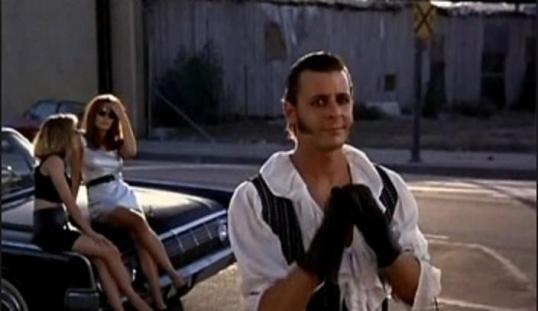
Why should you watch Conflict of Interest?  How about this:

That’s Judd Nelson, going heavy on the sideburns and eyeliner in the role of Gideon.  I am not sure if this movie was filmed before or after the famous “puffy shirt” episode of Seinfeld.

Judd chews up and spits out every piece of scenery that he can get his hands on.  Matching Judd step-for-step is Alyssa Milano, who plays Eve.  She falls in love with Mickey’s son, even though she is already a member of Gideon’s harem.

Mickey is played by Christopher McDonald, who gets a rare lead role in Conflict of Interest.  McDonald may not be a household name but he is one of the great Hey, It’s That Guy actors.  Usually, he plays smarmy businessmen and game show hosts.  He’s a surprisingly good action hero in Conflict of Interest, though his mustache cannot begin to compete with Judd’s sideburns.

About as dumb as dumb can be, Conflict of Interest is enjoyably ridiculous.  Conflict of Interest may have been made in 1993 but it is an 80s film all the way through, the type of movie where almost every chase ends with someone’s car exploding.  Even Gideon’s nightclubs are “heavy metal clubs,” which are populated by people who would not have been out of place in Heavy Metal Parking Lot.

And then there’s the Judd power stare:

As we saw in Shattered If Your Kid’s On Drugs, the Judd power stare has the Burt Reynolds seal of approval:

A Movie A Day #205: Mike Tyson: Undisputed Truth (2013, directed by Spike Lee)


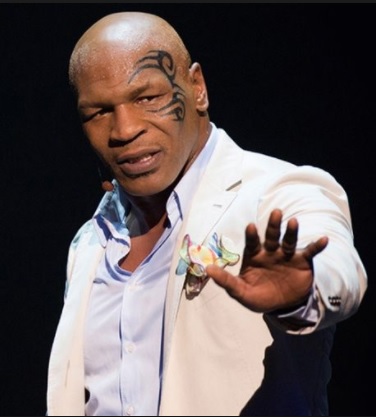
Somewhere in New York, former heavyweight champion Mike Tyson stands on a stage, wearing a white suit and talking about his life.
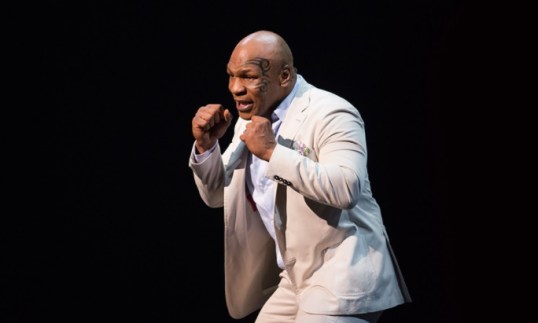
Or, I should say, he talks about parts of his life.  Mike Tyson’s one-man show, which shared the name of his then-just published autobiography, was both insightful and frustrating.  Tyson spends a good deal of time on some topics while skipping over others entirely.  When Tyson talks about his difficult childhood and the experience of literally being adopted by the legendary Cus D’Amato, it provides a rare glimpse into the background of the man who, at his peak, was one of the most fearsome champions in the history of boxing.  When Tyson talks about his fights, especially his battles with Mitch Green, he is as engaging and charismatic as I have ever seen him.  In fact, there are times when Tyson came across as being so likable that I had to remind myself that Tyson is also a convicted rapist who, after returning to the ring, won a series of fights against weak opponents and then bit off Evander Holyfield’s ear.  I was disappointed that Tyson did not devote any time to discussing his fight with Peter McNeeley.  If Tyson has devoted two seconds to every second of the McNeeley fight, that still would have just taken up 3 minutes of screentime.  That’s less time than Iron Mike spent talking about Brad Pitt fucking Robin Givens or doing his Don King impersonation.

I had mixed feelings about Mike Tyson: Undisputed Truth, largely because I have mixed feelings about Mike Tyson himself.  When it comes to ranking the heavyweight champions, Mike Tyson is definitely a contender for the top spot.  That Tyson was a great boxer cannot be denied and when he throws a few punches during Undisputed Truth, he still looks he could get in the ring and win.  (At least he does until he has to stop to catch his breath.)  Tyson may not be the most articulate speaker but occasionally, he shows some hints that he is smarter than he is given credit for.  He also tells some truly terrible jokes.  Tyson was a great boxer but as a stand-up comedian, he leaves something to be desired.  At the same time, Tyson is open about his emotional and mental difficulties and his history of violence.  Every time I started to like Tyson too much, he would say something that would snap me back to reality.  No sooner had he won my sympathy by talking about how much the death of Cus D’Amato affected him than Tyson lost it by verbally attacking the woman that he was convicted of raping.   By the end of his one man show, Tyson represents both everything good and everything bad about boxing.  Boxing saved Tyson from the streets but it also thrust him into a world that he was not emotionally mature enough to handle.  Tyson was barely 20 years old when he became champion and, with Cus D’Amato having died a year before, Tyson no longer had anyone looking out for his interests and protecting him from those who wanted to take advantage of him.  Toss Don King into the mix and both Tyson’s rise and eventual fall feel predestined.

Undisputed Truth ends with Tyson declaring that he has finally found peace.  I hope he has.

A Movie A Day #204: Tank (1984, directed by Marvin Chomsky)


If you had just moved to a small town in Georgia and your teenage son was framed for marijuana possession and sentenced to years of hard labor, what would you do?
Would you hire a good lawyer and file appeal after appeal?

Would you go to the media and let them know that the corrupt sheriff and his evil deputy are running a prostitution ring and the only reason your son is in prison is because you dared to call them out on their corruption?

Or would you get in a World War II-era Sherman tank and drive it across Georgia, becoming a folk hero in the process?

If you are Sgt. Zack Carey (James Garner), you take the third option.  Sgt. Carey is only a few months from retirement but he is willing to throw that all away to break his son (C. Thomas Howell) out of prison and expose the truth about Sheriff Buelton (G.D. Spradlin) and Deputy Euclid Baker (James Cromwell, playing a redneck).  Helping Sgt. Carey out are a prostitute (Jenilee Harrison), Carey’s wife (Shirley Jones), and the citizens of Georgia, who lines the road to cheer the tank as it heads for the Georgia/Kentucky border.  It’s just like the O.J. Bronco chase, with James Garner in the role of A.C. Cowlings.

The main thing that Tank has going for it is that tank.  Who has not fantasized about driving across the country in a tank and blowing up police cars along the way?  James Garner is cool, too, even if he is playing a role that would be better suited for someone like Burt Reynolds.  Tank really is Smoky and the Bandit with a tank in the place of that trans am.  Personally, I would rather have the trans am but Tank is still entertaining.  Dumb but entertaining.

One final note, a piece of political trivia: According to the end credits, the governor of Georgia was played by Wallace Willkinson.  At first, I assumed this was the same Wallace Wilkinson who later served as governor of Kentucky.  It’ not.  It turns out that two men shared the same name.  It’s just a coincidence that one played a governor while the other actually became a governor.

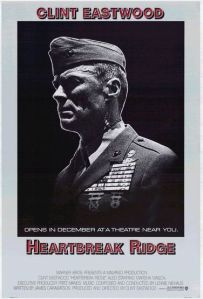
A Movie A Day #203: Heartbreak Ridge (1986, directed by Clint Eastwood)


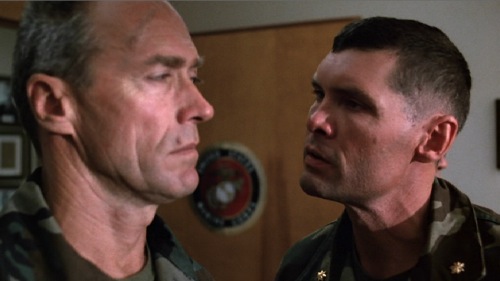
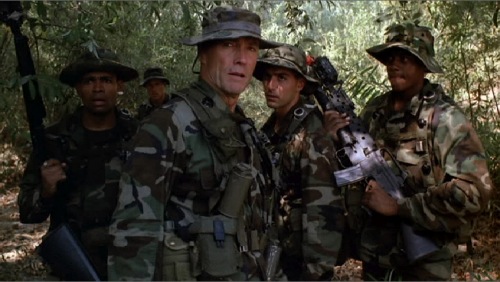
The year is 1983 and things are looking bad for the Second Marine Division of the U.S. Marine Corps.  The officers are almost all college graduates like Major Powers (Everett McGill) and Lt. Ring (Boyd Gaines), men who have never served in combat but who are convinced that they know what it means to be a Marine in the 80s.  Convinced that they will never have to actually fight in a war, the latest batch of recruits is growing soft and weak.  All of the slackers have been put in the Recon Platoon, where they are so undisciplined that they think that wannabe rock star Cpl. Jones (Mario Van Peebles) is a good Marine.  MARIO VAN PEEBLES!
They haven’t met Sgt. Highway yet.

Gunnery Sgt. Thomas Highway (Clint Eastwood) has seen combat, in both Korea and Vietnam.  He drinks too much.  He fights too much.  He has chased away his wife (Marsha Mason), despite his attempts to understand her by reading Cosmo and Ladies Home Journal.  Major Powers may think that Highway is a relic but Highway knows better than to worry about what a college boy thinks.  The Recon Platoon may think that they can defy him but that haven’t seen Highway throw a punch yet.  Everyone may think it’s a waste of time to learn how to fight but little do they know that America is about to invade Grenada.

Heartbreak Ridge is all about Clint Eastwood.  Without Clint Eastwood, it would just be another basic training film.  With Clint Eastwood, it is a minor masterpiece and a tribute to America’s fighting spirit.  In 1986, no one was better at glaring at a young punk or glowering at a clueless superior officer than Clint Eastwood.  Even the running joke of Highway reading women’s magazines works because it is impossible not to laugh at Clint Eastwood intently studying an issue of Cosmo.   Clint may have been 56 when he directed and starred in Heartbreak Ridge but he was still believable beating up men who were less than half his age.  (Mario Van Peebles thinks he’s going to be able to stand up to Clint Eastwood?  Get outta here!)  There is never any question that Highway is going to able to whip everyone into shape.  The only question is how many terse one-liners are going to be delivered in the process.   By the time Highway and his platoon reach Grenada, everyone is ready to watch Clint put the communists in their place and Clint does not disappoint.

Reportedly, the U.S. Marine Corps. initially supported Heartbreak Ridge but, in case of life imitating art, disowned the finished picture, feeling that the film’s portrayal of The Corps was inaccurate and the sergeant’s “training” methods were too old-fashioned to actually be effective.

Thomas Highway would disagree.

One final note: Bo Svenson has a small role as the man trying to steal Marsha Mason away from Clint.  If you have ever wanted to see Dirty Harry and Buford Pusser fight over the Goodbye Girl, here’s your chance.