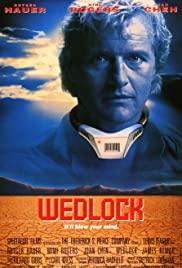
Wedlock (1991, directed by Lewis Teague)


This HBO film opens with a shot of an urban skyline and a title card that reads “somewhere in the future.”  However, the city looks like a present-day city and the cars don’t fly and all of the clothing is 90s fashionable and the people in the movie use pay phones.  Since Wedlock was made in 1991, I guess the movie takes place in … 1992?  Maybe 1993.

Frank (Rutger Hauer), Noelle (John Chen), and Sam (James Remar) are professional thieves who have just managed to make a big score.  They’ve stolen several million dollars worth of diamonds.  Unfortunately, Sam tripped an alarm during the theft so Frank had to make off with the diamonds.  After he hides them, Frank goes to the rendezvous point to meet up with Sam and Noelle.  His partners betray him, shooting Frank and, after discovering that he doesn’t have the diamonds him, leaving him for dead.

However, Frank survives.  He ends up getting sent to Camp Holliday, a prison run by Warden Holliday (Stephen Tobolowsky, who you’ll recognize as Ned Ryerson from Groundhog Day). The Warden explains that his prison is more progressive than most.  Not only is the prison co-ed but prisoners are allowed more freedom to move around.  The only catch is that all the prisoners wear an explosive dog collar.  Each prisoner has a randomly selected mate, someone to whom they are wedlocked, if you will.  Move more than 100 yards away from your partner and boom!  Both collars go off and two prisoners end up losing their heads.

The Warden wants to know where the diamonds are hidden so he sets about torturing Frank (who has been given the prison name of Magneta) but he soon discovers that it won’t be easy to break Frank Warren.  Even after Frank gets locked in a sensory deprivation tank, he just laughs and says the diamonds are with Santa at the North Pole.  Another prisoner, Ivory (Mimi Rogers) approaches Frank and says that she’s figured out that she’s his partner.  She wants to escape and she needs Frank to come with her.  But can Frank trust her and, if she’s wrong, won’t both of their heads explode?  Then again, who in the near future of the 1990s would turn down a chance to run off with Mimi Rogers?  Meanwhile, Frank’s partners are waiting for him to escape from the prison so that they can follow him to wherever the diamonds are located.

Though the plot may be ludicrous, Wedlock works because it has a good cast (even Danny Trejo has a small role) and it was directed by Lewis Teague, who started his directorial career under Roger Corman and who has always understood how to put together a good B-movie.  The prison scenes are more interesting than the scenes that take place in the outside world but the exploding head effects are cool and Rutger Hauer, James Remar, and Mimi Rogers are always enjoyable to watch no matter what they’re doing.
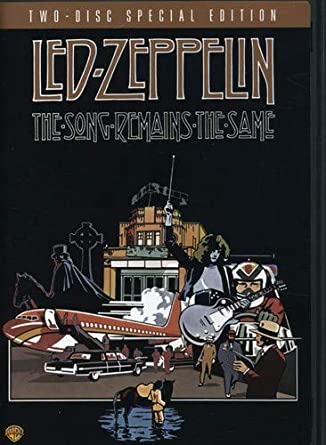
The Song Remains The Same (1976, directed by Peter Clifton and Joe Massot)


The Song Remains The Same is a concert film that features one of the world’s greatest bands giving one of their worst performances.

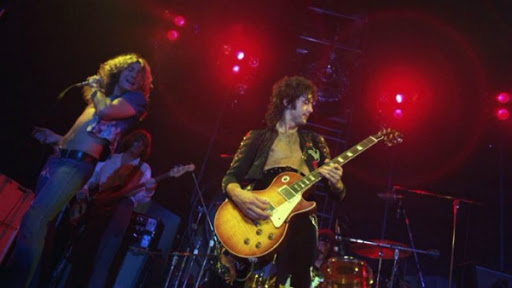
Shot over three nights in Madison Square Garden in 1973 (with additional footage later being filmed on a sound stage designed to look like Madison Square Garden), the film features Led Zeppelin sounding tired and bored.  Robert Plant asks, “Does anyone remember laughter?” during Stairway to Heaven while the legendary Jimmy Page has a look on his face like he already knows that, at some point in the future, he’s going to end up playing back-up to Sean Combs on Saturday Night Live.  Even John Bonham’s drum solo seems self-indulgent and uninspired.  Meanwhile, John Paul Jones’s clothing changes from shot-to-shot, a reminder that Jones was the only member of the band not to wear the same thing during all three nights of shooting.  The film looks bland and the soundtrack doesn’t capture the Zeppelin sound.  Instead, it sounds muddy, to the extent that those not already familiar with Led Zeppelin will wonder what the big deal is.

The good news is that you can dislike The Song The Remains The Same and still be a Led Zeppelin fan.  The band reportedly hated the film, feeling that it captured them at their worst.  Robert Plant, who unsuccessfully tried to get the infamous “Does anyone remember laughter?” line removed from the film, called the film “bollocks” while John Paul Jones called it a “massive compromise.”  In 1976, when the film was first released, Jimmy Page told New Musical Express, “The Song Remains The Same is not a great film, but there’s no point in making excuses. It’s just a reasonably honest statement of where we were at that particular time.”

The film also features fantasy sequences, in which the members of the band and their managers get a chance to show what’s going on in their minds and how they viewed themselves in 1973.  The band’s managers appears as gangsters and start the film off by gunning everyone down.  Robert Plant is a knight, in a sequence that inadvertently brings to mind the travels of Brave Sir Robin in Monty Python and the Holy Grail.  Jimmy Page is a hermit who reads tarot cards.  John Paul Jones is chased on horseback.  The only member of the band whose image is helped by his fantasy sequence is John Bonham, who comes across as a likable, down-to-Earth bloke who likes retiring to his farm and driving fast cars.  Knowing that Bonham would die just seven years later makes his fantasy sequence especially poignant to watch.  His son, Jason Bonham, appears, drumming on a child-sized drum kit.  Years later, of course, Bonham would play drums during several Led Zeppelin reunions.

For years, The Song Remains The Same was the only official video footage of Led Zeppelin performing and, flaws and all, that does give it some importance.  The Song Remains The Same is also said to have been one of the major inspirations for This Is Spinal Tap so everything worked out in the end.

Music Video of the Day: It’s My Job by Jimmy Buffett (1981, directed by ????)


For this Labor Day, I wanted to share a music video about working so I decided to see if Jimmy Buffett had ever done an official video for It’s My Job.

It turns out that he didn’t.

However, he did perform the song on a 1981 episode of Fridays.

Fridays was a rip-off of Saturday Night Live that, today, is best remembered for featuring several people who were later involved with Seinfeld.  Michael Richards and Larry David were both cast members of Fridays.  (Michael Richards even got into a staged brawl with Andy Kaufman during one episode.  It was recreated for Man on the Moon, with Norm McDonald playing the role of Richards.)  Fridays was not well-received by critics but it aired during one of Saturday Night Live‘s creative dry spells so, for a while, it appeared that Fridays might actually replace SNL as America’s premiere sketch comedy program.  It didn’t happen, of course.  Fridays was cancelled after just three seasons.  Mad TV, on the other hand, never threatened to overtake SNL and it still managed to last for 14 seasons.

Because Fridays imitated every aspect of SNL, they had a weekly musical guest.  When Jimmy Buffett appeared on the show, he performed It’s My Job.

Enjoy and Happy Labor Day!

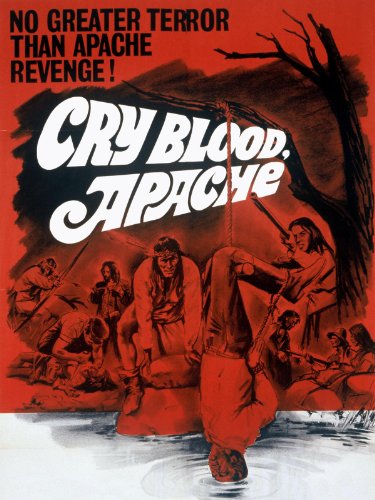
Cry Blood, Apache (1970, directed by Jack Starrett)


A group of old west outlaws stumble across an Apache camp.  Though everyone’s friendly at first, the outlaws discover that the Apaches have gold so they kill all of the Apaches except for one, Jemme (Maria Gahua).  They drag Jemme off with them, intent on having their way with her after forcing her to lead them to more gold.  Only one member of the gang, Pitcallin (Jody McCrea), is willing to protect Jemme and treat her with kindness.  (In fact, Pitcallin is such a nice and decent person that it doesn’t make any sense for him to be riding with the outlaws in the first place.)  Meanwhile, Jemme’s brother (Marcus Rudnick) discovers the camp and, upon discovering his family dead, cries and screams for several minutes.  Then he sets off for revenge against the gang.

The best thing about Cry Blood, Apache is that it opens with Joel McCrea, father of Jody, playing the elderly Pitcallin and riding his horse to the where the old Apache camp used to be.  While the old Pitcallin is looking around, he hears the voices of the former members of the gang and then the rest of the film is told in flashback.  This makes it seem like Cry Blood, Apache is going to be about an old outlaw coming to terms with the terrible things that happened in the past.  Unfortunately, Joel McCrea’s only in the movie for about two minutes and since the movie sat on the shelf for three years before it was finally released, it’s probable that his scenes were shot long after the rest of the movie.  Along with starring in the film, Jody McCrea also produced it and Joel probably only agreed to lend some star power to the movie as a favor to his son.  But teasing western fans with Joel McCrea, just to then bring out Jody McCrea is just plain unfair.

Other than the opening scenes with Joel McCrea, the rest of this film is so poorly put together that it’s a struggle to sit through.  Cry Blood, Apache is edited in such a haphazard manner that it’s nearly impossible to follow the plot.  While the gang searches for more gold, Jemme’s brother searches for the gang but the film never makes it clear how close the brother is to finding the gang so there’s zero suspense generated.  Jody McCrea was too naturally amiable to play a believable outlaw.  There was nothing tough about him.  Meanwhile, both Marcus Rudnick and Maria Gahua overact to such an extent that scenes that should be emotionally wrenching become unintentionally humorous instead.

Cry Blood, Apache was directed by Jack Starrett, who went on to direct far better movies than this one.  He also appears in the film as a member of the gang, the bible-quoting Deacon.  Even though he’s got long hair and is considerably younger in his film, most viewers will hear his voice and immediately recognize him as Galt, the sadistic cop from First Blood.

Music Video of the Day: Confusion by New Order (1983, directed by Charles Sturridge)


This song, produced by New York DJ Arthur Baker, was the first song that New Order ever recorded in New York.  It was released as the follow-up to their breakthrough hit, Blue Monday.

The video was shot in New York City, primarily at a club called Funhouse.  Director Charles Sturridge was a former actor who went on to work as a television and occasionally a film director.  His best-known work is probably the original BBC adaptation of Brideshead Revisited.

Enjoy!

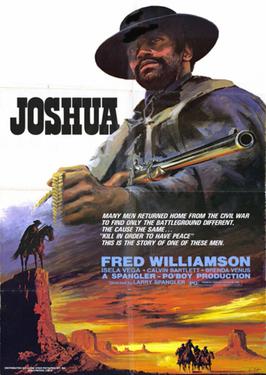
Joshua (1976, directed by Larry Spangler)


One day, as the American Civil War is drawing to a close, a group of outlaws besiege a homesteader’s cabin.  While they allow the homestead to survive, they kill his maid, Martha (Kathyrn Jackson) and they kidnap his mail order bride (Brenda Venus).  The very next day, Martha’s son, Joshua (Fred Williamson), arrives home from serving in the Union Army.  As soon as Joshua find out what has happened, he grabs his late father’s rifle, jumps on his horse, and set off for revenge.  When the sheriff warns him that the gang is violent, bloodthirsty, and large, Joshua replies, “I just finished fighting a war, Sheriff.  I’ve killed twice that.”

Joshua finds Fred Williamson doing what he does best.  Dressed in all black and not showing a hint of emotion, Williamson dominates the screen as he rides across the countryside and finds creative ways to kill the members of the gang.  Along the way, he also meets and has a brief fling with Maria (Isela Vega), a female gunslinger.  Even though Joshua proves time and again that he can handle himself while fighting several men at once, he chooses to take the members of the gang out one-by-one.  He savors getting his revenge, as only Fred Williamson could.  (Also, if Joshua took out the entire gang at one time, it would be a really short movie.)

Williamson wrote the script for Joshua and produced it through his own production company.  That probably explains why no one else in the film really has a chance against Joshua.  There’s really nothing, from firing a gun to battling a rattlesnake to tracking a group of cold-blooded killers, that Joshua doesn’t do well.   Not a lot happens in Joshua but Williamson does a good job of playing the taciturn title character and he nails the scene where he tells a naive cowboy that killing is not something to take likely.  As always, Fred Williamson is the epitome of cool.  Unfortunately, the film drags whenever Williamson isn’t on screen and the members of the gang are pretty much indistinguishable from each other.  People looking for a serious or realistic western will be disappointed but if you just want to watch Fred Williamson be Fred Williamson for 90 minutes, Joshua fits the bill.

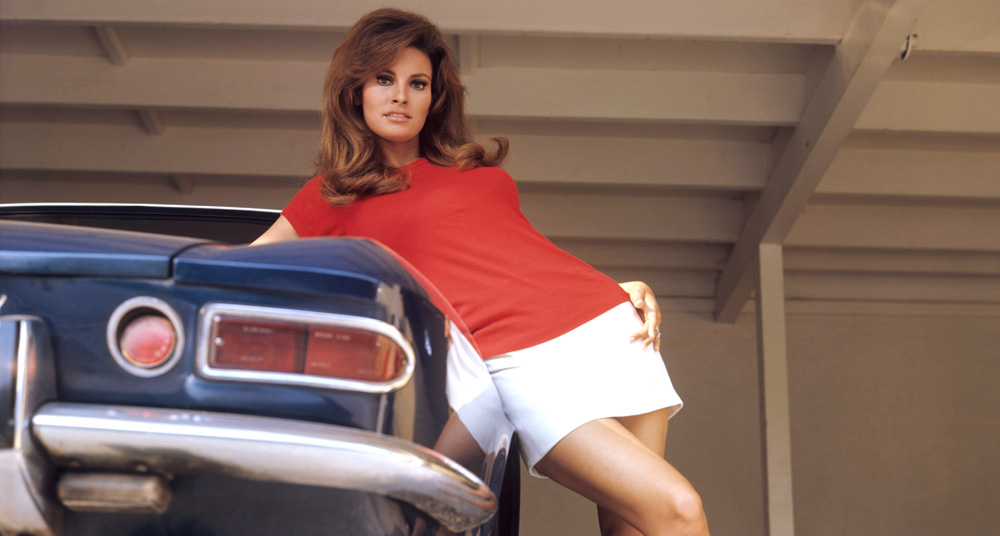
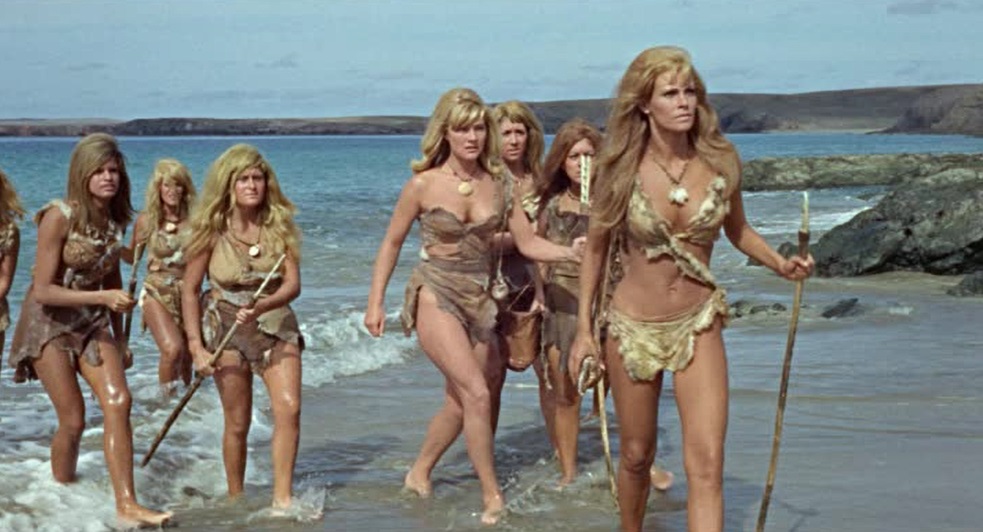
4 Shots From 4 Films: Special Raquel Welch Edition!


4 Shots From 4 Films is just what it says it is, 4 shots from 4 of our favorite films. As opposed to the reviews and recaps that we usually post, 4 Shots From 4 Films lets the visuals do the talking!

Today, we wish a happy birthday to the one and only Raquel Welch!

4 Shots From 4 Films

One Million B.C. (1967, directed by Don Chaffey)

Fathom (1967, directed by Leslie H. Martinson)

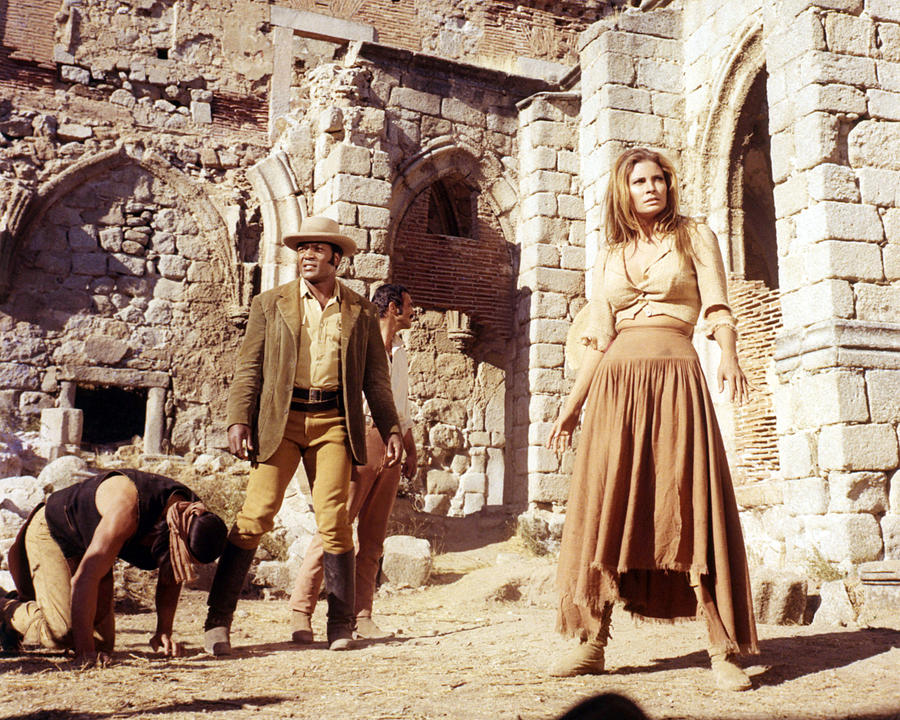
100 Rifles (1969, directed by Tom Gries)

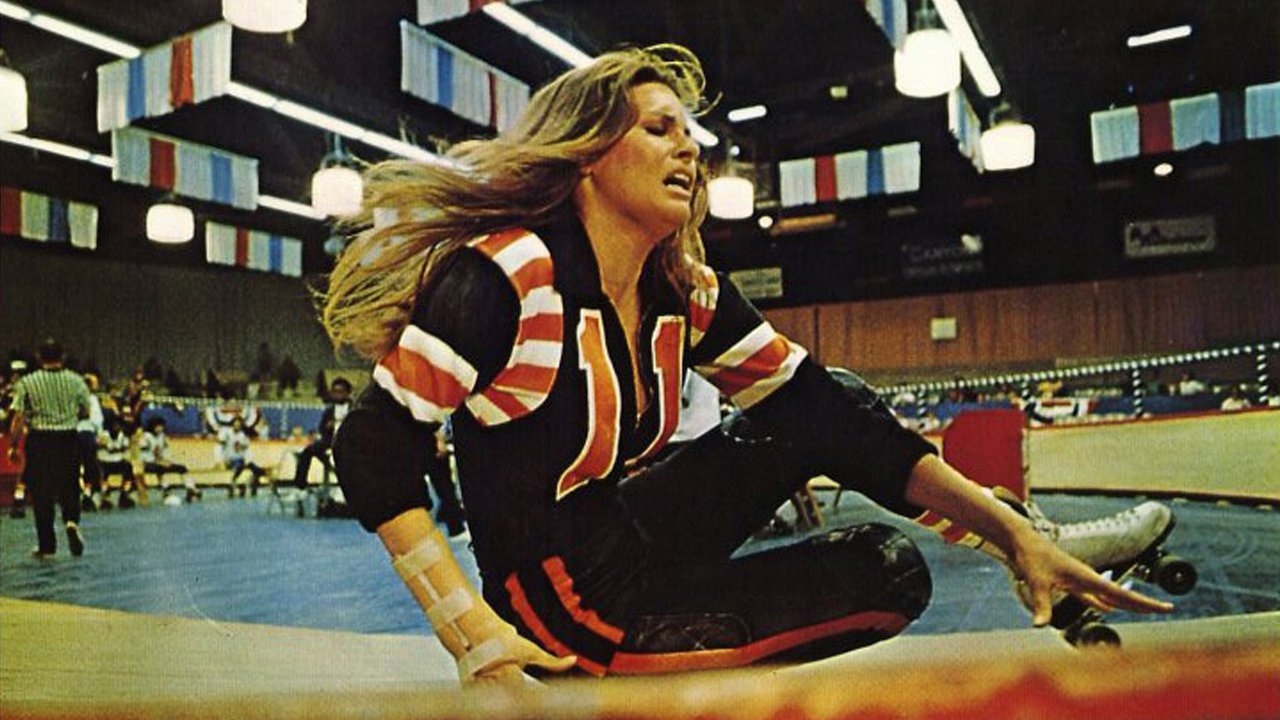
Kansas City Bomber (1972, directed by Jerrold Freedman)

Music Video of the Day: No Sleep till Brooklyn by Beastie Boys (1987, directed by Adam Dubin and Ric Menello)


This song was supposedly written on a train ride from Philadelphia to New York City.  Having played a killer show in Philly, the band was riding the train back home when they noticed some members of the crew were starting to fall asleep.  To keep everyone awake, the Beastie Boys started to chant, “No sleep till Brooklyn!”

(The name of the song is also a play on the title of Motörhead’s No Sleep ’til Hammersmith.)

The song is one of the band’s signature tunes and the video features the Beastie Boys when they were young, rebellious, and didn’t care who they pissed off.  The video parodied that type of glam rock (think Poison, for example) that was popular in 1987.

The video was directed by Adam Dubin and Ric Menello, who previously directed the video for (You Gotta) Fight For Your Right (To Party).  Menello also plays the club owner who rejects the band at the start of the video.

Enjoy!


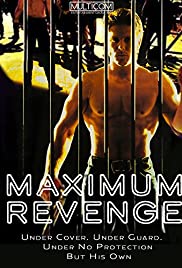
Cinemax Friday: Maximum Revenge (1997, directed by Fred Olen Ray)


When a new maximum security prison is finally ready to be opened and filled with dangerous criminals, Warden Glover (Arthur Roberts) gives a tour to reporter Tracy Quinn (Landon Hall).  Unfortunately, the tour is interrupted when a group of terrorists led by Murdock (John Lazar, who is best-known for playing the homicidal record producers in Beyond The Valley Of The Dolls) infiltrate the prison and take over.  Their plan is to set off a nuclear bomb in Los Angeles and trick the United States into a retaliatory strike against the Middle East.

Fortunately, the Warden is able to free the five prisoners who had already been transferred to the prison before it was taken over by terrorists.  It’s now up to the prisoners to defeat the terrorists and defuse the bomb.  They’ve only got an hour to prevent a war!  Fortunately, the prisoners are being led by former CIA agent, Mace Richter (Paul Michael Robinson).  Mace is only in prison because he was framed after a hostage rescue went wrong.  (It turned out that the hostage was in on the plot so Mace killed him.)  Amazingly, the terrorists from that operation are the same terrorists who have now taken over the prison.  What a coincidence!

Maximum Revenge is a Fred Olen Ray movie so you know what you’re getting.  The film rips off Die Hard by having Mace and the crew take out the terrorists one-by-one.  Despite the fact that they’ve only got an hour to stop a nuclear bomb from going off, Mace and Tracy still drop everything so that they can have sex in one of the prison offices.  It seems like that could have waited until after World War III had been prevented but then again, it’s a Fred Olen Ray film.  No matter what else can be said about Fred Olen Ray, he knows what his target audience is watching for.

Paul Michael Robinson is not an extremely compelling action star and the fight scenes are pretty rudimentary.  The prison is obviously an office building and the frequent inserts of the bomb very slowly counting down from 60:00 are good for a laugh or two.  (Most bomb timers count down in seconds but I guess this one was meant to count down in minutes.  At one point, though, the timer reads 16:86.)  Even though the prison doesn’t appear to be that big and the terrorists aren’t that impressive, the timer is still somehow allowed to get all the way down to 00:01 before anyone does anything about it.  That tells you all you need to know.  The best thing about the movie are the end credits, which are filled with joke names.  My favorite was the electrician named Sparks McGee.

Music Video of the Day: One Step Beyond by Madness (1979, directed by Dave Robinson)


“We used to play the Hawaii 5-0 theme as a novelty cover version to start our shows. When we got bored we did this track instead, but the original recording was only 45 seconds long. We didn’t even think it would get on the album. Our record company boss heard it and got our producers to loop it. We still start every gig with it. We’ve tried other songs but that’s the one we always come back to. Cathal’s introduction is a clarion call.”

— Graham “Suggs” McPherson on One Step Beyond

One Step Beyond is actually a cover.  The original version was done by Jamaican SKa singer Prince Buster.  For Madness’s version, a spoken intro was provided by Chas Smash, who was not an official member of the band at the time but who would join a few weeks after the release of One Step Beyond.

The live performance that’s featured in this video was filmed at The Hope and Anchor, a pub in North London.

Enjoy!