Lifetime Movie Review: The Wrong Life Coach (dir by David DeCoteau)


In 2024’s The Wrong Life Coach, Morgan Bradley stars as Jordan Roberts, whose popularity as a high school cheerleader did little to prepare her for the pressures of adult life.  Her career is going nowhere.  Her boss (Vivica A. Fox) does not respect her.  Her boyfriend (Hector David, Jr.) is bored with her and their vanilla sex life.  Her mother (Tracy Nelson) is living with her and trying to control her life.  Jordan needs someone to help her get her life together.  She needs a life coach!

(Personally, I’ve never gotten the whole life coach thing but whatever.  Apparently, it works for some people.)

A chance meeting with Liz Kimble (Allison McAtee) changes Jordan’s life.  Though Jordan doesn’t really remember her, she and Liz went to high school together.  And it turns out that Liz is now a life coach!  Soon, Liz is encouraging Jordan to take sexy pictures, demand more from her career, and to stand up to her domineering mother!

At first, it all seems perfect.  Except …. Liz is not a certified life coach!  She’s just repeating a bunch of stuff that she heard from her own life coach, Rhonda (Meredith Thomas).  It may sound like the start of a hilarious comedy but it turns out that Liz is a little bit crazy.  Liz has never gotten over losing her spot on the cheerleading squad to Jordan and now, she’s determined to get revenge,

In quick order, Jordan loses her job, her relationship with her mother, and nearly her boyfriend as well!  Plus, her best friend has gone missing!  After Jordan tells Liz to get lost, Liz begins to obsessively stalk Jordan.  What Jordan doesn’t know is that Liz has placed hidden cameras all over her house and she’s even hacked into Jordan’s email.  Jordan thinks that she’s had a good job interview with Mr. Gordon. (Hey, it’s Eric Roberts!)  But remember those lingerie-clad photos that Liz encouraged Jordan to send to her boyfriend?  Well, those pictures end up getting sent to Mr. Gordon as well.

“I couldn’t hire you if I wanted to,” Mr. Gordon says.  When even Eric Roberts refuses to work with you, you know you’ve asked the wrong person for advice!

“Girl, you listened the wrong life coach.”

She sure did!

I love the Lifetime “Wrong” films.  The Wrong Life Coach is a tremendous amount of fun, from Allison McAtee’s over-the-top performance as Liz to the side-eye that Vivica A. Fox gives Jordan every time she makes a mistake.  As always, with the “Wrong” films, director David DeCoteau fully embraces the melodrama and creates a film that’s so ludicrous that you can’t help but love it.  Any director could make a film about a crazy life coach.  But only David DeCoteau has the courage to have that life coach make her diabolical plans while wearing her old high school cheerleader uniform.

Watching this film reminded me of how much I love Lifetime and its demented films.  I look forward to reviewing a lot more of them in 2025!

Hopefully, more than a few of them will feature Eric Roberts!

Previous Eric Roberts Films That We Have Reviewed:

  1. Star 80 (1983)
  2. Blood Red (1989)
  3. The Ambulance (1990)
  4. The Lost Capone (1990)
  5. Love, Cheat, & Steal (1993)
  6. Love Is A Gun (1994)
  7. Sensation (1994)
  8. Dark Angel (1996)
  9. Doctor Who (1996)
  10. Most Wanted (1997)
  11. Wolves of Wall Street (2002)
  12. Mr. Brightside (2004)
  13. Six: The Mark Unleased (2004)
  14. Hey You (2006)
  15. In The Blink of an Eye (2009)
  16. Enemies Among Us (2010)
  17. The Expendables (2010) 
  18. Sharktopus (2010)
  19. The Dead Want Women (2012)
  20. Deadline (2012)
  21. The Mark (2012)
  22. Miss Atomic Bomb (2012)
  23. Lovelace (2013)
  24. The Mark: Redemption (2013)
  25. Self-Storage (2013)
  26. This Is Our Time (2013)
  27. Inherent Vice (2014)
  28. Road to the Open (2014)
  29. Rumors of War (2014)
  30. Amityville Death House (2015)
  31. A Fatal Obsession (2015)
  32. Stalked By My Doctor (2015)
  33. Enemy Within (2016)
  34. Joker’s Poltergeist (2016)
  35. Prayer Never Fails (2016)
  36. Stalked By My Doctor: The Return (2016)
  37. The Wrong Roommate (2016)
  38. Dark Image (2017)
  39. Black Wake (2018)
  40. Stalked By My Doctor: Patient’s Revenge (2018)
  41. Clinton Island (2019)
  42. Monster Island (2019)
  43. The Savant (2019)
  44. Seven Deadly Sins (2019)
  45. Stalked By My Doctor: A Sleepwalker’s Nightmare (2019)
  46. The Wrong Mommy (2019)
  47. Exodus of a Prodigal Son (2020)
  48. Free Lunch Express (2020)
  49. Her Deadly Groom (2020)
  50. Top Gunner (2020)
  51. Deadly Nightshade (2021)
  52. Just What The Doctor Ordered (2021)
  53. Killer Advice (2021)
  54. The Poltergeist Diaries (2021)
  55. The Rebels of PT-218 (2021)
  56. A Town Called Parable (2021)
  57. Bleach (2022)
  58. My Dinner With Eric (2022)
  59. Aftermath (2024)

What did Director Sergio Leone think about working with Charles Bronson?


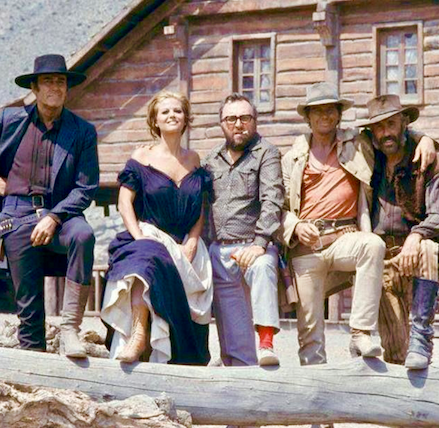
On what would have been his 96th birthday, I want to take a moment and thank the great director Sergio Leone for sticking with my movie hero Charles Bronson throughout the 60’s. Leone had wanted to work with Bronson on FISTFUL OF DOLLARS, FOR A FEW DOLLARS MORE, and THE GOOD THE BAD AND THE UGLY. Each time, Bronson turned him down for one reason or another. Finally, Bronson took him up on his offer to be one of the stars of ONCE UPON A TIME IN THE WEST, a cast that included Henry Fonda, Claudia Cardinale, and Jason Robards. Sergio Leone proceeded to make one of the great westerns and turn Charles Bronson into an international superstar. Reportedly, the director would go on to say after filming the movie that Bronson was the “greatest actor I ever worked with.” That’s indeed very high praise from a master filmmaker, and a testament to Charles Bronson’s talent.

And it’s even cooler that Sergio Leone and my son share the same birthday. I was today years old when I realized that awesome piece of information!

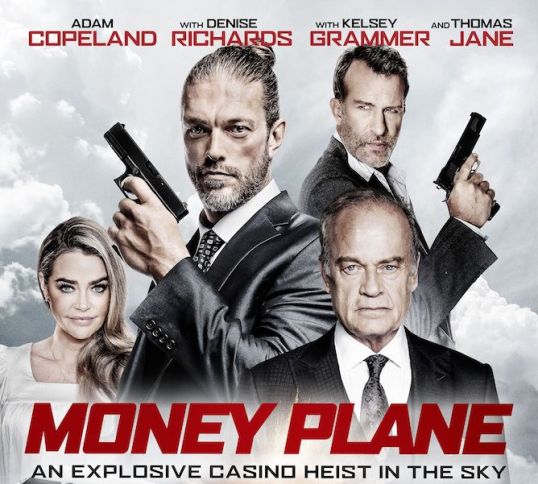
Live Tweet Alert: Join #FridayNightFlix For Money Plane!


As some of our regular readers undoubtedly know, I am involved in a few weekly live tweets on Twitter and Mastodon.  I host #FridayNightFlix every Friday, I co-host #ScarySocial on Saturday, and I am one of the five hosts of #MondayActionMovie!  Every week, we get together.  We watch a movie.  We tweet our way through it.

Tonight, at 10 pm et, #FridayNightFlix presents the greatest film ever, Money Plane!

If you want to join us this Friday, just hop onto twitter, start the movie at 10 pm et, and use the #FridayNightFlix hashtag!  It’s a friendly group and welcoming of newcomers so don’t be shy.

Money Plane is available on Prime!  See you there!

Scenes That I Love: The Final Moments of Sergio Leone’s Once Upon A Time In America


(SPOILERS BELOW)

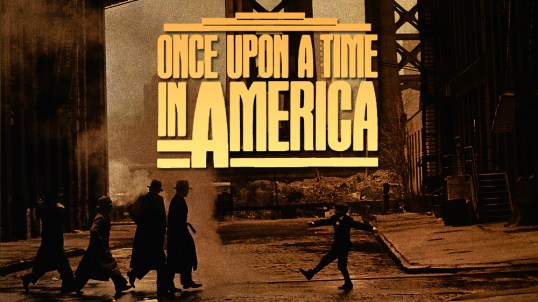
The final moments of Sergio Leone’s epic 1984 gangster film, Once Upon A Time in America, are filed with questions and mysteries.

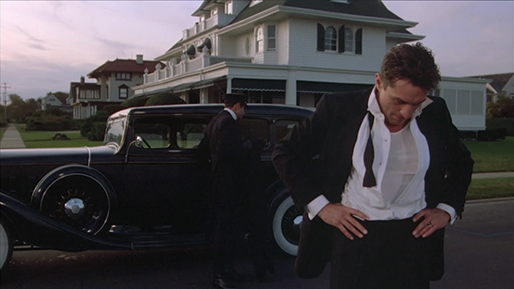
Who did Noodles (played by Robert De Niro) see standing outside of Max’s mansion?  When the garbage truck pulled up, did the mysterious man get in the truck or was he thrown in by some unseen force?

Why, in 1968, did Noodles see a car from the 1920s, one that was full of people who appeared to be celebrating the end of prohibition?  Was the car really there or was it an element of Noodles’s past as a gangster suddenly popping into his mind?

Once Upon A Time In America was Sergio Leone’s final film.  It’s one that he spent decades trying to get made and, once it was finally produced, it was butchered and re-edited by a studio hacks who demanded that the film tell its story in a linear style.  Leone was reportedly heart-broken by how his film was treated.  Some have speculated that his disappointment may have even contributed to the heart attack that eventually killed him.  It was only after Leone passed that his version of Once Upon A Time In America became widely available in the U.S.  This enigmatic epic continues to spark debate.  One thing that can’t be denied is that it’s a brilliant film.

As today is Leone’s birthday, it only seems appropriate to share a scene that I love, the final moments of Once Upon A Time In America.

The Substance Wins In Columbus


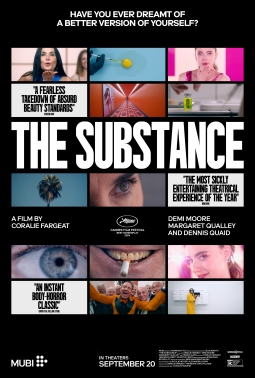
The Columbus Film Critics Association has named The Substance the best film of 2024!

Best Film
Anora
The Brutalist
Challengers
Civil War
Conclave
Dune: Part Two
Love Lies Bleeding
Nickel Boys
Nosferatu
Sing Sing
The Substance

Best Director
Brady Corbet – The Brutalist
Robert Eggers – Nosferatu
Coralie Fargeat – The Substance
RaMell Ross – Nickel Boys
Denis Villeneuve – Dune: Part Two

Best Lead Performance
Adrien Brody – The Brutalist
Timothée Chalamet – A Complete Unknown
Lily-Rose Depp – Nosferatu
Colman Domingo – Sing Sing
Cynthia Erivo – Wicked: Part I
Ralph Fiennes – Conclave
Marianne Jean-Baptiste – Hard Truths
Mikey Madison – Anora
Demi Moore – The Substance
Sebastian Stan – A Different Man

Best Supporting Performance
Yura Borisov – Anora
Kieran Culkin – A Real Pain
Danielle Deadwyler – The Piano Lesson
Aunjanue Ellis-Taylor – Nickel Boys
Ariana Grande-Butera – Wicked: Part I
Felicity Jones – The Brutalist
Clarence Maclin – Sing Sing
Edward Norton – A Complete Unknown
Guy Pearce – The Brutalist
Margaret Qualley – The Substance
Zoe Saldana – Emilia Pérez
Bill Skarsgård – Nosferatu
Stanley Tucci – Conclave
Denzel Washington – Gladiator II

Best Ensemble
Anora
Challengers
Conclave
Dune: Part Two
The Piano Lesson
Sing Sing
Wicked: Part I

Actor of the Year (for an exemplary body of work)
Timothée Chalamet – A Complete Unknown and Dune: Part Two
Nicholas Hoult – The Garfield Movie, Juror #2, Nosferatu, and The Order
Cailee Spaeny – Alien: Romulus and Civil War
Sebastian Stan – The Apprentice and A Different Man
Zendaya – Challengers and Dune: Part Two

Breakthrough Film Artist
Brady Corbet – The Brutalist – (for directing and screenwriting)
Coralie Fargeat – The Substance – (for directing, film editing, and screenwriting)
Clarence Maclin – Sing Sing – (for acting)
Mikey Madison – Anora – (for acting)
Dev Patel – Monkey Man – (for acting, directing, producing, and screenwriting)

Best Cinematography
Jarin Blaschke – Nosferatu
Lol Crawley – The Brutalist
Greig Fraser – Dune: Part Two
Jomo Fray – Nickel Boys
Benjamin Kracun – The Substance

Best Film Editing
Sean Baker – Anora
Marco Costa – Challengers
Jerome Eltabet, Coralie Fargeat, and Valentin Féron – The Substance
Nick Emerson – Conclave
Dávid Jancsó – The Brutalist
Nicholas Monsour – Nickel Boys

Best Adapted Screenplay
Robert Eggers – Nosferatu
RaMell Ross & Joslyn Barnes – Nickel Boys
Chris Sanders – The Wild Robot
Peter Straughan – Conclave
Denis Villeneuve and Jon Spaihts – Dune: Part Two

Best Original Screenplay
Sean Baker – Anora
Brady Corbet and Mona Fastvold – The Brutalist
Jesse Eisenberg – A Real Pain
Coralie Fargeat – The Substance
Justin Kuritzkes – Challengers

Best Score
Volker Bertelmann – Conclave
Daniel Blumberg – The Brutalist
Kris Bowers – The Wild Robot
Robin Carolan – Nosferatu
Trent Reznor and Atticus Ross – Challengers
Hans Zimmer – Dune: Part Two

Best Documentary
Daughters
No Other Land
Sugarcane
The Remarkable Life of Ibelin
Will & Harper

Best Foreign Language Film
All We Imagine as Light
Emilia Pérez
Evil Does Not Exist
Kneecap
The Seed of the Sacred Fig

Best Animated Film
Flow
Inside Out 2
Memoir of a Snail
Wallace & Gromit: Vengeance Most Fowl
The Wild Robot

Frank Gabrenya Award for Best Comedy
Babes
Hit Man
My Old Ass
A Real Pain
Saturday Night
Thelma

Best Overlooked Film
Didi
His Three Daughters
Hundreds of Beavers
The Last Stop in Yuma County
Snack Shack
Thelma

4 Shots From 4 Films: Special Sergio Leone Edition


Sergio Leone (1929 — 1989)

4 Or More Shots From 4 Or More Films is just what it says it is, 4 shots from 4 of our favorite films. As opposed to the reviews and recaps that we usually post, 4 Shots From 4 Films lets the visuals do the talking!

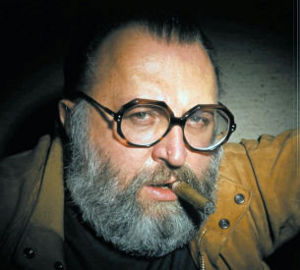
96 years ago today, Sergio Leone was born in Rome, Italy.  The son of actor/screenwriter Vincenzo Leone and silent actress Edvige Valcarenghi, Sergio was born into the Italian film industry.  He began his career in the post-war rebuilding period, working as an assistant to Vittorio De Sica and, as an assistant director, for American films that were shot in Italy.  (Albeit uncredited, he worked on two Oscar-nominated Biblical epics, Quo Vadis and Ben-Hur.)

After making his directorial debut with The Colossus of Rhodes, Leone went on to direct the films that would change the face of international cinema.  Though he was hardly the first director of Spaghetti westerns, he was was the first to achieve far-reaching acclaim.  With the Dollars Trilogy, he made Clint Eastwood a star and Eastwood has often said that the majority of what he knows about directing, he learned from working with Leone and later Don Siegel.  Leone went on to direct the brilliant Once Upon A Time In The West and Once Upon A Time in America, two epic visions of American history that, sadly, were not initially treated well by their distributors.

Though Leone is only credited with directing eight films, his influence cannot be underestimated.  As both a visual artist and a cultural and political commentator, his films continue to influence directors to this day.

For that reason, it’s time for….

4 Shots From 4 Sergio Leone Films

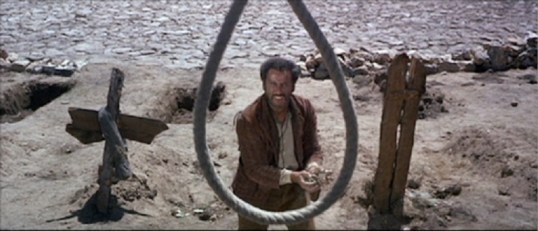
The Good, The Bad, and the Ugly (1966, dir by Sergio Leone, DP: Tonino Delli Colli)

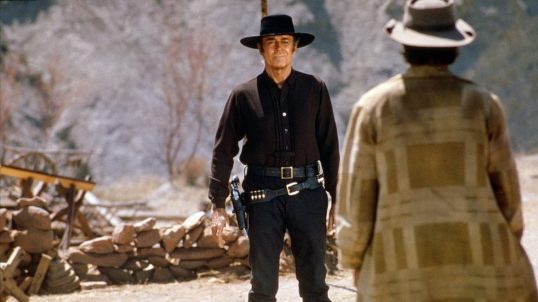
Once Upon A Time In The West (1968, dir by Sergio Leone, DP: Tonino Delli Colli)

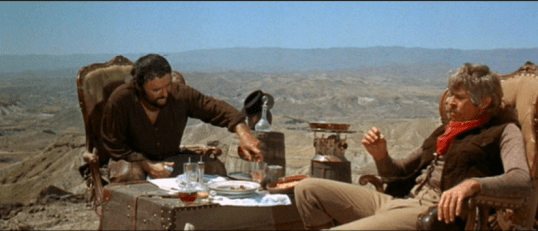
Duck, You Sucker (1971, dir by Sergio Leone, DP: Giuseppe Ruzzolini)

Once Upon A Time In America (1984, dir by Sergio Leone, DP: Tonino Delli Colli)

Film Review: Heaven’s Gate (dir by Michael Cimino)


First released in 1981 and then re-released in several different versions since then, Heaven’s Gate begins at Harvard University.

The year is 1870 and the graduates of Harvard have got their entire future ahead of them.  At the graduation ceremony, Joseph Cotten gives a speech about how, as men of cultivation, they have an obligation to help the uncultivated.  Student orator Billy Irvine (John Hurt) then gives a speech  in which he jokingly says the exact opposite.  Amongst the graduates, Billy’s friend, Jim Averill (Kris Kristofferson), laughs at Billy’s speech.  It’s a bit of a strange scene, if just because all of the graduates appear to be teenagers except for Hurt and Kristofferson, who are both clearly in their 30s.  The graduates of Harvard sing to their girlfriends and dance under a tree and, for a fleeting moment, all seems to be right with the world.

Twenty years later, all seems to be wrong with the world.  Averill is now the rugged and world-weary marshal of Johnson Country, Wyoming.  Cattle barons are trying to force immigrant settlers to give up their land.  Gunmen, like Nate Champion (Christopher Walken) and Nick Ray (Mickey Rourke), are accepting contracts to execute immigrants who are suspected of stealing cattle.  When Averill stands up for the people of Johnson Country, the head of the Wyoming Stock Grower Association, Frank Canton (Sam Waterston), hires a group of mercenaries to ride into Johnson County and execute 125 settlers.  Billy Irvine, who now is dissolute alcoholic who works with Canton, warns his old friend Averill.  Averill, who has fallen in love with Ella (Isabelle Huppert), the local madam, announces that he will defend the immigrants.  Nate, who is also in love with Ella, considers changing sides.

Heaven’s Gate is loosely based on an actual event.  I actually have three distant ancestors who traveled to Wyoming to take part in the Johnson County War.  All three of them survived, though one of them was shot and killed in an unrelated manner shortly after returning to Ft. Smith, Arkansas.  That said, director Michael Cimino is clearly not that interested in the historical reality of the Johnson County War or the issues that it raised.  Just as he did with Vietnam in The Deer Hunter, Cimino uses the Johnson County War as a way to signify a loss of national innocence.  Averill and Irvine start the film as hopeful “young” men with the future ahead of them.  By the end of the film, one is dead and the other is living on a yacht and dealing with what appears to be crippling ennui.

Heaven’s Gate is a bit of an infamous film.  Though the film was pretty much a standard western, Cimino still went far over-budget and turned in a first cut that was over six hours long.  A four hour version was briefly released in 1980 but withdrawn after a week, due to terrible reviews and audience indifference.  A studio-edited version that ran for two hours and 35 minutes got the widest release in 1981.  Since then, there have been several other versions released.  Cimino’s director’s cut, which was released as a part of the Criterion Collection in 2012, runs for 212-minutes and is considered to now be the “official” version of Heaven’s Gate.

For years, Heaven’s Gate had a terrible reputation.  It’s failure at the box office was blamed for bankrupting United Artists.  After the excesses of the Heaven’s Gate production, studios were far more reluctant to just give a director a bunch of money and let him run off to make his movie.  (They should have learned their lesson with Dennis Hopper and The Last Movie.)  Described by studio execs as being self-indulgent and even mentally unstable, Michael Cimino’s career never recovered and the director of The Deer Hunter went from being an Oscar-winner to being an industry pariah.  (Some who disliked The Deer Hunter’s perceived jingoistic subtext claimed that Heaven’s Gate proved The Deer Hunter was just an overrated fluke.)  However, the reputation of Heaven’s Gate has improved, especially with the release of Cimino’s director’s cut.  Many critics have praised Heaven’s Gate for its epic portrayal of the west and, ironically given the controversy over The Deer Hunter, its political subtext.  It’s anti-immigrant villains made the film popular amongst the Resistance-leaning film historians during the first Trump term.

So, is Heaven’s Gate a masterpiece or a disaster?  To be honest, it’s somewhere in between.  Whereas it was once over-criticized, it’s now over-praised.  Visually, it’s a beautiful film but those who complained that the film was too slow had a point.  As with The Deer Hunter, Cimino takes the time to introduce us to and immerse us in a tight-knit immigrant community.  Personally, I like the much-criticized scenes of the fiddler on skates and Averill and Ella dancing in the roller rink.  Overall though, as opposed to The Deer Hunter, the members of the film’s victimized community still feel less like individual characters and more like symbols.  As for the political subtext, I think that any subtext of that sort is accidental.  (I feel the same way about The Deer Hunter, which I like quite a bit more than Heaven’s Gate.)  Cimino is more interested in the loss of innocence than whether or not the Johnson County War can be fit into some sort of nonsense Marxist framework.

The main problem with the film is that there is no center to keep everything grounded.  Kris Kristofferson had a definite screen presence but, as an actor who was incapable of showing a great deal of emotion, he lacks the gravitas necessary to keep from being swallowed up by Cimino’s epic pretensions.  Isabelle Huppert, an otherwise great actress, also feels lost in the role of Ella and Sam Waterston is not necessarily the most-intimidating villain to ever show up in a western.  Christopher Walken, as the enigmatic and intriguing Nate Champion, gives the best performance in the film but his character still feels largely wasted.

There are some brilliant visual moments to be found in Heaven’s Gate.  I even like the Harvard prologue and the ending on the boat, both of which are not technically necessary to the narrative but still add an extra-dimension to both Averill and Irvine.  But, in the end, Heaven’s Gate is big when it should have been small and epic when its should have been intimate.  It’s a misfire but not a disaster.  Even great directors occasionally have a film that just doesn’t work.  Speilberg had his 1941.  Scorsese has had a handful.  Coppola’s career has been a mess but no one can take his successes away from him.  Michael Cimino, who passed away in 2016, deserved another chance.

THE SHAWSHANK REDEMPTION (1994) – In honor of our son’s birthday, I review his favorite movie!


I sent our son a text the other day and asked him if he had an answer for the question “What’s your favorite movie?” I thought I knew the answer but it turns out I was only half right. I expected his answer to be THE HATEFUL EIGHT. Rather, the answer I received back was “The Hateful Eight or Shawshank Redemption!” Since I recently wrote about the time that he and I attended THE HATEFUL EIGHT roadshow in Dallas, I decided I would write about THE SHAWSHANK REDEMPTION this time around. It doesn’t hurt that it’s one of my favorite movies as well. It also doesn’t hurt that it’s the very top rated film on the Internet Movie Database.

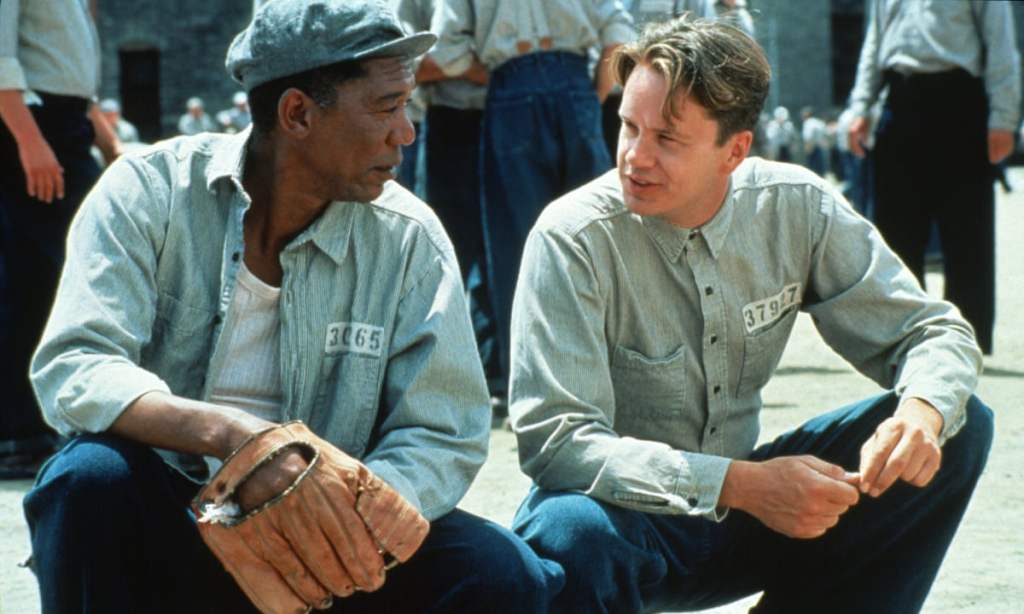
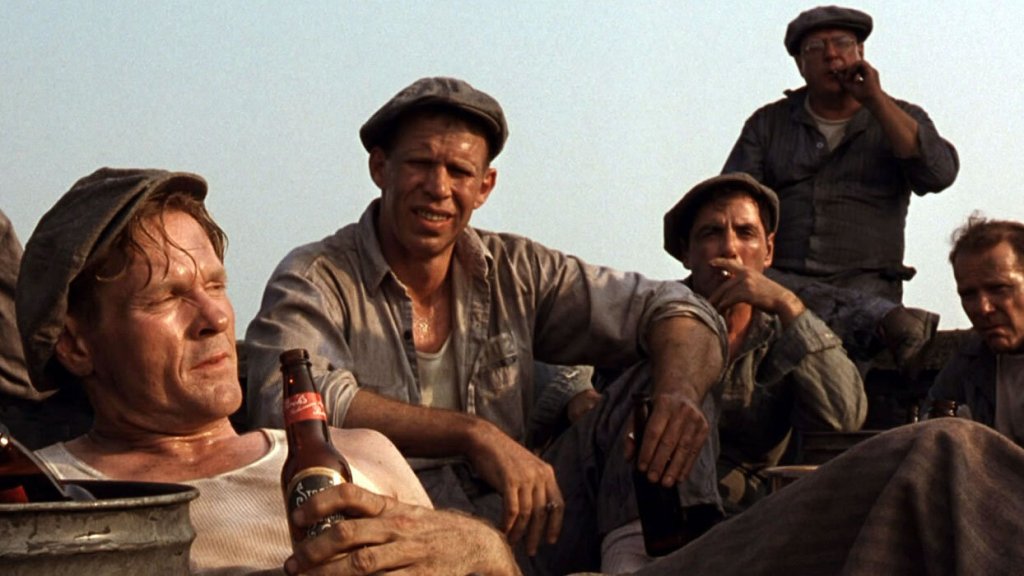
Based on Stephen King’s “Rita Hayworth and Shawshank Redemption,” the story is well known… hot shot banker Andy Dufresne (Tim Robbins) is convicted of the murder of his wife and her lover, and gets sentenced to life at the Shawshank prison. Once on the inside, we meet a variety of characters that you expect in a prison movie. We meet Warden Norton (Bob Gunton), the hypocrite who speaks of the Bible while hiding a corrupt, evil spirit. We meet Captain Hadley (Clancy Brown), the brutal chief prison guard, who rules over the inmates with intimidation and a real willingness to inflict violence and pain on anyone who shows the least bit of independence. We meet Red (Morgan Freeman), the long-time inmate who has the ability and connections to get you anything you need. We meet other inmates like Heywood (William Sadler), the inmate who seems like a jerk when you first meet him but turns out to be a pretty good fella; Tommy (Gil Bellows), the young guy who comes into prison and may know something that proves Andy’s innocence; Brooks (James Whitmore), the old man who gets released after almost a lifetime in prison, and doesn’t know how to adjust to life on the outside; and Bogs (Mark Rolston), the sadistic prisoner who wants to force himself on Andy, and is willing to kill to get what he wants. Life isn’t easy at all in Shawshank, but Andy’s intelligence and ability to prove himself useful to Warden Norton and Captain Hadley allows him to finds ways to make life more bearable for him and his friends. After nineteen years in prison, even though he maintains his innocence, it appears that Andy is content to live out his remaining years in prison. Or is he??

I’ll never forget the first time I saw the movie THE SHAWSHANK REDEMPTION. I didn’t see it until a year or two after its initial release in 1994. I was one of those guys who figured a movie that praised by the critics was probably not something that I would like that much. Plus, at the time, the title of the movie just seemed kind of weird. But I kept hearing about how great it was, so I finally decided to give it a viewing. I agree with my son, I think THE SHAWSHANK REDEMPTION is one of the most emotionally uplifting movies ever made. Why is that you might ask? My answer would be because there’s something profoundly satisfying about people who persevere through the worst times imaginable and continue to find hope where most of us would be hopeless. Prison life is shown as horrific. One prisoner is literally beaten to death by Captain Hadley on his first night in prison for crying. Andy fights off the sadistic Bogs as much as he can, but he is unable to completely fight off his advances. But no matter what he goes through, Andy Dufresne is able keep moving forward, and he does not allow the prison life to completely crush his spirit. He keeps finding ways to persevere. Andy’s actions and endurance turn simple acts like listening to Mozart or having a beer into overwhelming emotional highs for us as the audience. The film also maintains a realistic sense of humor, which might seem difficult under the circumstances. This sense of humor is found in such mundane tasks as creating a prison library, providing tax prep services for the guards, or attending multiple parole hearings over the years. These comedic moments are earned by the way the movie takes it’s time letting us really get to the know the characters and then laugh with them as the individual moments occur. And the friendship between Andy and Red is something that deeply resonates with me. I think we all would like to have that kind of friendship. These kinds of friendships aren’t built overnight, and often they require a level of shared experience that is almost impossible to find. But they find it behind Shawshank’s prison walls, and it connects them for life. In my opinion, the friendship between these two characters leads to one of the most emotionally satisfying endings to any film, ever.

Director Frank Darabont was able to obtain some of career-defining performances from his cast. As good as Tim Robbins is as an actor, in my opinion, he has never been better than he was as Andy Dufresne. And I say this knowing full well he won an Oscar for MYSTIC RIVER. He maintains his dignity against all odds and only appears to break down a time or two. Morgan Freeman is great as always as Red, but his character is so important because we see him go from a hopeless skeptic, to a man who truly has hope thanks to his friendship with Andy. Freeman seems to handle this transition effortlessly. I’m going to give a shoutout to James Whitmore as well. With a career going all the way back to the 1940’s, his performance as Brooks Hatlen is one of the more touching and heartbreaking performances of the film. I haven’t seen all of his work, but I have never seen him better than he was in THE SHAWSHANK REDEMPTION. Each additional cast member, from Bob Gunton, Clancy Brown and Mark Rolston, to Willam Sadler and Gil Bellows all have powerful moments that add to the overall effect of the film.

Looking back now, it’s hard to believe that THE SHAWSHANK REDEMPTION did not win the Academy Award for best film. It lost to FORREST GUMP when the awards were handed out in 1995. It’s even harder to believe that the film did not win a single Academy Award even though it received seven nominations. But at the end of the day, that doesn’t really matter to me. I just know that it’s a great film, and it reaches emotional heights that very few movies, if any, have ever reached before. That’s a pretty damn good legacy.

Concert Film Review: Rockshow (dir by Jack Priestly)


I recently went on YouTube and I did a search for “concert films.”  The first video that came up was an upload of the 1980 film Rockshow.

Filmed during a 1976 world tour, Rockshow features Paul McCartney and Wings, the band that he formed after the break-up of the Beatles.  McCartney and his band play a total of 30 songs in front of an enthusiastic audience.  The crowd goes crazy for the Beatles songs, including Lady Madonna, The Long and Winding Road, Blackbird, and Yesterday.  That’s to be expected.  But they’re also pretty enthusiastic for the songs that McCartney wrote after the Beatles, quite a few of which I recognized.  (Silly Love Songs, Band on the Run, the beautiful Maybe I’m Amazed, and that annoying Listen To What The Man Said were all familiar to me.)  For all that I’ve read about people being disappointed by Paul McCartney’s post-Beatles career in the 70s, you wouldn’t know it from watching the audience in this film.  The highlight, for me, was undoubtedly the energetic performance of Live and Let Die, which featured a very basic but still effective light show.

It’s rare that you ever read anything positive about Paul McCartney’s work with Wings and, watching the film, it was pretty obvious that the band mostly just existed to showcase Paul.  The other members of the band seemed to understand that the crowd wasn’t there to see anyone but Paul McCartney and one gets the impression that they were okay with that.  That said, I actually liked quite a bit of their music.  Even if they weren’t as lyrically complex and creative as Paul’s work with the Beatles, the songs were still enjoyable to listen to and most of them got stuck in my head, for better or worse.  There’s a tendency, amongst music snobs, to be dismissive of Paul’s post-Beatles work because he is often viewed as being the most “corporate” of the Beatles.  In the popular imagination, John Lennon was the sarcastic peace activist.  George Harrison was the spiritual seeker.  Ringo Starr was the down-to-Earth comedian.  And Paul is often portrayed as being the one who was the most concerned with scoring the most hits, selling the most albums, and making the most money.  Well, so be it.  That’s usually the point of having a band, after all.  Very few people devote their life to the hope of being obscure and poor.  Johnny Rotten moved into a mansion the first chance he got.

As for Rockshow, it’s an interesting time capsule.  The main thing that stuck out to me was how straight-forward and simple the concert was.  There were a few laser effects, a few lighting effects, and a screen that occasionally flashed images of comic book characters but, as far as extra flourishes were concerned, that was pretty much it.  There weren’t any dancers doing carefully choreographed routines.  There weren’t any explosions or fancy costume changes.  Paul and the band played their songs and the audience obviously felt that they got their money’s worth.  Paul comes across as being cheerful and enthusiastic about performing and the band seems to have a good time as well. “Hey Paul,” someone in the audience yells and Paul pauses to wave back and it’s a moment of human connection that is missing from so many concert films.

Rockshow runs a little long.  30 songs can be a bit much.  But, overall, it’s a good concert film and an enjoyable time capsule.  Do you want to experience 1976?  Step into the YouTube time machine.