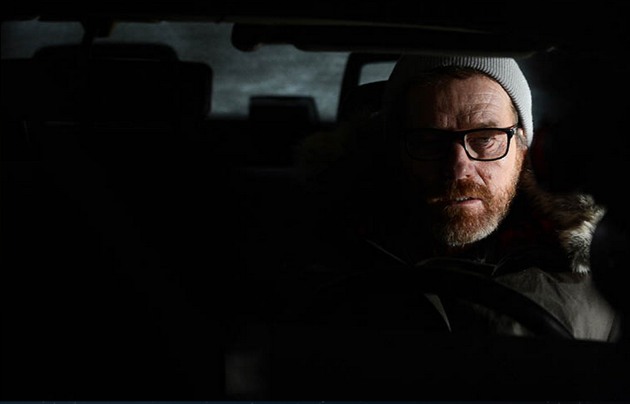
Trash TV Guru : “Breaking Bad” Series Finale


breaking-bad-season-5-episode-16-b

The promotional blurbs on A&E’s cover packaging for the various box set and stand-alone DVD releases of Patrick McGoohan’s classic series The Prisoner refer to it as “television’s first masterpiece,” but let’s be brutally honest here — for a good long time there it probably stood as television’s only “masterpiece.”

Which isn’t to say that there haven’t been some good shows over the years, but start-to-finish, wire-to-wire masterpieces have been pretty tough to come by. I won’t speculate here as to why that’s been with any kind of probing analysis, apart from making the obvious observation that American TV, in particular, has been geared to appeal to the so-called “lowest common denominator” for so long now that frankly most people don’t even expect for there to be anything good on the tube when they turn it on, even with 200-300 channels to choose from. We all just sorta watch it anyway.

I’ll be the first to admit that my two favorite shows of all time — Doctor Who and Twin Peaks — hardly fit the definition of “masterpiece” even though I love ’em dearly. Hell, one of the best things about Who — and I’m referring to old-school Who  here, not the current abomination running around cloaked in its title, which hasn’t held much of any appeal to me since the end of its first return season with Christopher Eccleston in the lead role — is that it’s so damn imaginative and clever and stupid in a fun way and addictively, insanely watchable and re-watchable in spite of its glaring production value weaknesses, often hammy acting, and atrocious dialogue that those so-called “deficiencies” actually become part of its charm. And I’m willing to be that “charm” is one of the things that has engendered such a strong following for various other “fan-driven” series, such as  Joss Whedon’s  Buffy The Vampire Slayer and Angel, both of which have rabid cult followings, to be sure, but neither of which, I think,  even the most zealous Whedon fan (and there’s plenty of competition for that title) would admit, at least in their more honest moments, was anything like a “masterpiece.”

Charm is not something that Breaking Bad ever had much of, though, is it? From the outset, we knew we were being asked to become involved in the life story of a guy who was dying, and furthermore was broke and dying. It’s been a pretty “heavy” show from day one, hasn’t it?

Which isn’t to say that it didn’t have lighter moments interspersed here and there throughout, because of course it did, and in early days it even looked like Dean Norris’ Hank character was never going to amount to much more than bog-standard, albeit well-written, comic relief. But as things progressed, even he became a more multi-dimensional character, and as Bryan Cranston’s Walter White sold out more and more of his soul to purportedly “provide for” his family, a show that started out heavy only became heavier.

And yet — lack of charm and a general “bummer” tone don’t preclude a show from being great, do they? And I would contend that Breaking Bad will be remembered as being more than just great, it will be remembered as — here’s that term again — a masterpiece (the third by my count anyway, in TV history — anyone care to guess what I think the second was? The only hint I’ll give is that it was a relatively recent show).

It was difficult, at times, to be sure. Watching the lives of all these people go to hell in a handbasket even became something of a chore during this final season, particularly the season’s second half following its over-12-month hiatus. Walt was a real bastard, wasn’t he? And that could be downright excruciating to witness. But here’s the thing:

You just never knew what the hell was going to happen next. Series creator Vince Gilligan and his coterie of writers always had another rabbit in their hat, another brightly- colored handkerchief tied to that long string of them coming out of their sleeve. The show never once lost its power to surprise.

Until tonight’s series finale, “Felina,” written and directed by Gilligan himself, which pretty much saw all loose ends tied up more or less exactly as you thought they would be.

I’m sure there might be some hand-wringing among fans that long-suffering characters like Anna Gunn’s Skyler and Aaron Paul’s Jesse weren’t given necessarily “that much to do” in this wrap-up episode — hell, RJ Mitte’s hapless Walter Jr./Flynn didn’t even have a single line of dialogue! Meanwhile, a couple characters we hadn’t seen much of since the second season, Gretchen and Elliot Schwartz, played a pivotal part in Gilligan’s last script.

And yet — everything ended on just the right note for all these people, whether they were given too much to do, too little, or just enough. Events played out more or less in exactly the fashion we expected them, maybe even needed them, to.

And that, finally, may prove to be Breaking Bad’s greatest trick of all : a series that thrived on the element of surprise gave us an entirely predictable conclusion that nonetheless felt exactly right.

Walter White is dead and gone now, and Heisenberg with him. His hat’s off. And so is mine. This series hit it out of the park from the word “go” to the word “stop.” As a slow-burn tale of human tragedy — hell ,of loss of humanity altogether — it stands unequaled. A “happy ending” or “loose, interpretive ending” would have been a huge cop-out. There’s only one way things could have gone here — only one way they were ever going to go.

That’s how they went. And that’s just perfect.

Film Review: Rush (dir by Ron Howard)


rush-poster-2013

Rush, the latest film from Ron Howard, is the type of film that I usually hate.

It’s big, bombastic, and so extremely mainstream that it actually features Chris Hemsworth uttering the line, “This is what I was born to do,” without a hint of irony.  This is a film about rich boys playing with expensive toys and the movie’s portrayal of women manages to make Aaron Sorkin look enlightened by comparison.  Finally, the film is about a sport that I previously knew nothing about and, after having spent two hours watching this film, I still know very little  about.

And yet, I didn’t hate Rush.  In fact, I really enjoyed it and I think the reason why comes down to one thing.

I have a weakness for hot guys who drive fast cars.

Rush tells the true story about the rivalry between two Formula One racers, the flamboyant Englishman James Hunt (Chris Hemsworth) and the extroverted German Niki Lauda (Daniel Bruhl).  The film follows them from their first meeting in 1970 until they both find themselves competing for the Formula One championship in 1976.  Along the way, we watch how both of them deal with the temptations that went along with being a rich celebrity in the 1970s.  (Lauda resists the majority of them.  Hunt does not.)  Along the way, one of them struggles to recover after a horrifying accident and both of them try to maintain a balance between their personal lives and the fact that each race they run could potentially be their last.  (In one of the film’s best scenes, Niki explains that he’s prepared to accept a 20% chance of dying during a race but not a point more.)

Plotwise, Rush is pretty much a standard sports film, full of men talking about the importance of being men while women stare up at them with adoration.  Inspirational speeches are delivered and everything comes down to one final race.  If, like me, you’re not into Formula 1 racing, the film can occasionally be difficult to follow.  During one extended montage of cars racing across the world and occasionally crashing, I found myself seriously wondering how many races could possibly be run in a Formula One season.  As the film reached its conclusion, James and Niki started talking about which racers have the most points.  Their conversation would have undoubtedly been easy to follow for someone who was into Formula One but for me, it took a few minutes to figure out what they were going on about.

However, none of that matters.

Rush works.

There’s a lot of reasons why Rush works.  The film’s glossy recreation of the 1970s (in all of its frequently tacky glory) is enjoyable to watch and Hans Zimmer’s score is properly loud and majestic.  Both Hemsworth and Bruhl give good performances, with Hemsworth coming across as properly flamboyant and Bruhl bringing some much-needed humor to a character who, in the hands of a lesser actor, could have been insufferable.  Both Olivia Wilde and Alexandra Maria Lara do good work bringing seriously underwritten characters to life.

However, the film’s ultimate success belongs to director Ron Howard.

Ever since Frost/Nixon prevented The Dark Knight from getting a best picture nomination in 2009, there has been a certain loud element of the online film  community that has used Ron Howard as a go-to example of a safe and thoroughly commercial director.  He is often dismissed as being the epitome of a mainstream, conventional filmmaker.

However, as mainstream as Howard’s sensibility may be, Rush proves that he still knows how to craft an exciting scene.  I may have occasionally had trouble keeping track of who was and wasn’t in each car but that didn’t make the races any less thrilling or the accidents any less horrifying.  During the film’s best sequences, you feel the thrill of being in control of the uncontrollable and you understand why Niki and James are willing to risk death just so they can experience being alive.

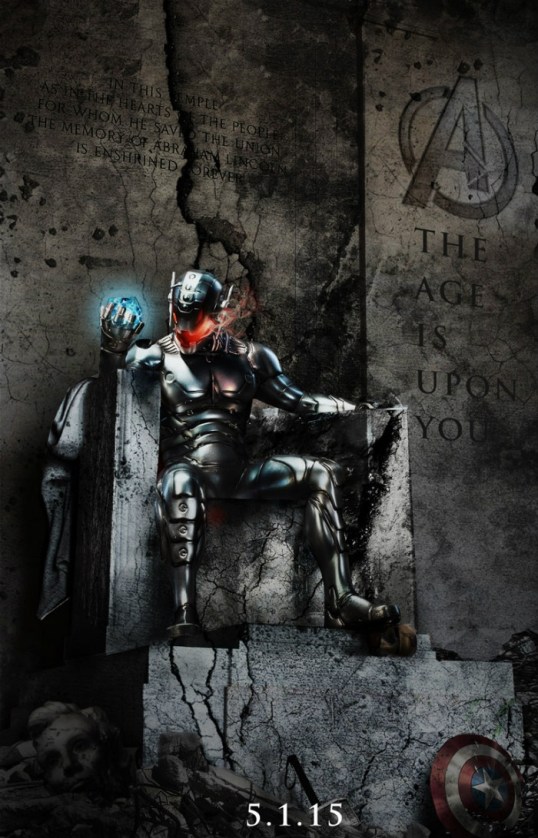
Trailer: The Avengers: Age of Ultron (SDCC 2013 Reveal)


AgeofUltron

This past summer those who attended the Marvel panel over at San Diego Comic-Con 2013 were treated to Joss Whedon’s reveal for The Avengers sequel.

From the mid-credits scene at the end of The Avengers many thought that the villain for the sequel will be the cosmic baddie Thanos. I guess Whedon and Feige decided that it was best to keep Whedon in their pockets for now and went in a different direction. The sequel to The Avengers will have one of the superhero team’s toughest and most persistent archenemies: The self-aware and truly pissed off android known as Ultron.

The Avengers: Age of Ultron will not be following the events from this past year’s Age of Ultron crossever series in the comics. It instead will just use the title and create a brand-new story behind the origins (this time around it won’t be Hank Pym aka Ant-Man who creates Ultron, but someone else) of the Avengers main enemy and it’s plans for the team and Earth.

This change in Ultron’s creator didn’t sit well with some of the purists who want everything in the Marvel Universe to be adapted exactly how it was originally written. Fortunately, I’m not one of them and I actually think this change further solidifies the Marvel Cinematic Universe as it’s own alternate universe that comprises the near-infinite realities of the Marvel Multiverse. Where the universe with make’s up the original comic books have been given the Earth-616 label the Marvel Cinematic Universe has now been given it’s own of Earth-199999.

It’s going to be interesting to see what Whedon and company will come up with to make Ultron a villain worthy to get the team back together again. It helps that they’ve chosen James Spader to voice the bugshit-crazy and angry Ultron.

The Avengers: Age of Ultron will premiere in our universe on May 1, 2015.

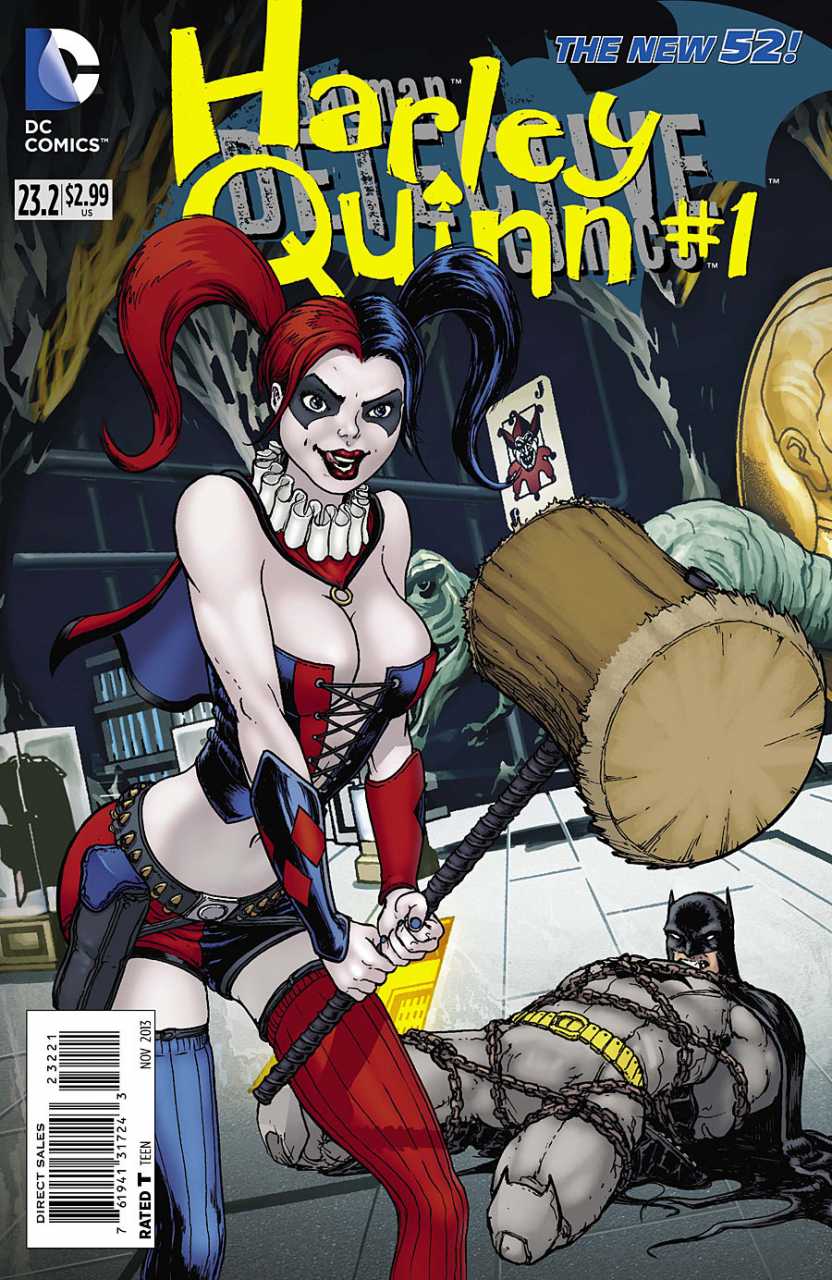
“Oh, The Villainy!” TTSL Style, Take Three : “Harley Quinn” #1


3300992-detective

So, I’ve saved the worst for last.

Oh, sure, there are plenty more DC “Villains Month” books that we could talk about, but I counted up earlier today and between this site and Geeky Universe I’ve reviewed an even 10 of these things, and that’s enough for me. After this, I’m out.

Anyhoo, in recent weeks, in case you haven’t been following the comics industry scuttlebutt, DC has come under fire for having an open submission contest for new artists. What’s so wrong with that, you ask? Why, nothing — it’s great to find new “talent” to replace the already poorly-compensated average comic book penciller, I suppose. You don’t like drawing Justice League for 80 bucks a page, no health insurance or pension, and little to no royalties per copy sold? Fine. We’ll find some new kid to take your job who’ll work for 60 bucks a page and won’t complain. It’s the American way, right?

So what’s this got to do with Harley Quinn #1, or Detective Comics #23.2, as the official record-keepers would have it? Well, the “sample page” DC wanted their next generation of potential suck — err, freelance non-contract employees to submit was a scene depicting super-villain Harley Quinn, best known as the Joker’s on-again/off-again girlfriend, sitting naked in a bathtub and slicing her wrists open. Sex n’ suicide — again, the American way, right?

As insanely offensive at worst, tone deaf at best as the theme for this “new talent contest” was, however, it ain’t squat compared to what Harley does in this book. This whole “villains month” fiasco has already given us a mass shooting in a hospital in the pages of Desaad #1 and a workplace mass-murder/ suicide in the pages of Solomon Grundy #1, both of which would lead one to suspect that none of the suits at DC have been following the news for the past, I dunno, decade or so, but here, writer Matt Kindt (who was also responsible for the aforementioned Solomon Grundy, and who’s capable of soooooo much better,  as his work on Dark Horse’s Mind Mgmt. series shows) has the psychotic villainess, in between flashback sequences to her pre-evil nutcase days as a psychiatrist at Gotham City’s infamous Arkham Asylum, engineer a senseless mass slaughter of innocent poor children by giving away booby-tapped video game systems at a local orphanage.  When she flicks a switch, the Nintendos or Segas or X-Boxes or whatever all go “boom!” and the kids all get killed.

And after that, she’s recruited by Deadshot to rejoin the Suicide Squad, a team of hard-luck “anti-heroes” who work for the government. You know, the very same government that should be locking her ass away in prison for life for just having killied hundreds of children for no reason whatsoever.

Artist Neil Googe does a decent enough job illustrating this senseless and thoroughly tasteless tale of depravity, but that’s just trying to stitch a silk purse out of a sow’s ear when your subject matter is this out-and-out vile. I don’t blame him for the overall tone of the book, but shit, I honestly wouldn’t care how badly I needed to eat, I’d have refused this assignment if I were in his shoes.

But hey, who knows, right? DC’s playing pretty fast and loose with continuity these days, maybe we’ll find out this whole sorry spectacle was just a delirious fever-dream that naked Harley was having while she killed herself in her tub.

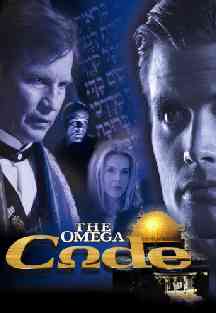
What Lisa Marie Watched Last Night #91: The Omega Code (dir by Robert Marcarelli)


Early this morning, after waking up and walking into a wall, I watched The Omega Code, an evangelically-themed film from 1999.

Why Was I Watching It?

Earlier this year, my friend Evelyn and I watched a film called Megiddo: The Omega Code 2.  We were both oddly amused by Megiddo so, when I saw that the first Omega Code film was going to be on one of the religious stations, I set the DVR to record it and made plans to watch it at some point in the future.

Last night, I happened to wake up around 3 in the morning.  I got out of bed, I took a few steps forward, and I walked straight into a wall.  After that, I turned on the lights and I was relieved to discover that my nose had protected the rest of my face from the wall.

So there I was at 3 in the morning with my red nose and my bruised pride and, despite my best efforts, I couldn’t get back to sleep.  What’s a girl to do, right?  So, I decided that since I was awake anyway, I would go ahead and watch The Omega Code.

What Was It About?

The world is ending.  People are starving.  Nations are going to war.  Fortunately, the President of the European Union, Stone Alexander (Michael York) has a plan to save us all.  Unfortunately, Stone Alexander also happens to be the Antichrist.

In order to get all of humanity to accept his plan, Stone recruits the world’s most famous motivational speaker (Casper Van Dien).  However, Van Dien find out about the Omega Code, a secret code that uses the bible to predict the future.  And, as Van Dien discovers, the future looks positively apocalyptic….

What Worked?

When I reviewed Megiddo: Omega Code 2, I mentioned that if you’ve got a naturally villainous name like Stone Alexander, you might as well be evil.  The same remains true of The Omega Code.  Stone Alexander is so evil and Michael York is obviously having so much fun playing him that the fun is almost contagious.

Michael Ironside plays Dominic, Stone Alexander’s henchman.  In a rather offensive moment, Alexander reveals that Dominic is both gay and a former priest and the implication (which was probably popular with the film’s target audience) is that Dominic’s villainy is the direct result of both his Catholicism and his sexuality.  But, regardless, Ironside gives a memorably menacing performance.

It’s interesting how the villains in religious films are often more compelling than the heroes…

What Did Not Work?

Though I didn’t realize it at the time, I was spoiled by getting the chance to see the 2nd Omega Code before I saw the first one.  Omega Code 2 was the epitome of a so-bad-that-it’s-good type of film but the first Omega Code was just bad.  Not even the combined villainy of Michaels York and Ironside could make The Omega Code entertaining.

(Add to that, Megiddo: Omega Code 2 featured cameos from both Franco Nero and Udo Kier, while The Omega Code featured … well, no one.)

No review of The Omega Code would be complete without mentioning that, in the lead role, Casper Van Dien gives perhaps one of the worst performances ever captured on film.  It’s oddly fascinating to watch and try to figure out how anybody could give such an incompetent performance.

As I watched the film, one question kept nagging at me.   The Omega Code makes the argument that biblical prophecy should be taken literally.  Therefore, if the bible is itself a literal document that tells you everything that you need to know  than why hide a secret code between the lines?  And, if you’re going to go through all the trouble to come up with a secret code, why use that code to then hide cryptic phrases that could literally be translated to mean anything?  It just seems a bit overly complicated.

(That, incidentally, is the same reason why I don’t have much use for anything that Dan Brown has ever written.)

“Oh my God!  Just like me!” Moments

None.  Seriously, there was not a single moment in this film to which I could relate.  Some of that may be because this film was obviously made to appeal to an evangelical audience, as opposed to a free-thinking fallen Catholic like me.

Then again, it could also be that The Omega Code just wasn’t a very good movie.

Lessons Learned

I really didn’t learn anything.  Sorry, not sorry.

omegacode

“Oh, The Villainy!” TTSL Style, Take Two : “Two Face” #1


anigif_enhanced-buzz-29602-1370114330-2


Not sure what to really say about Two Face #1, or as it’s known to the more officious Batman And Robin #23.1 (even though, say it with me, “Robin’s dead again these days”), apart from the fact that it probably has the neatest of the 3-D holographic covers that have adorned any of DC’s “Villains Month” books. And since that’s the only selling point this comic  seems to have going for it, maybe I should just leave it at that and call it a day, right?

Nah. The folks behind this travesty don’t deserve to get off that easy.

And by “folks,” I should say that I mean specifically writer Peter J. Tomasi. The art by Guillem March on this one is actually pretty good — even really good for the first few pages, before settling into a “competent enough to get the job done” kind of groove. The story, though, is a complete and utter waste of time.

Figuring everybody already knows the origin  of former Gotham City D.A. turned criminal boss/mastermind Two Face, Tomasi opts to skip the detailed backstory and just waste time for twenty pages. We see Two Face flip his infamous scarred coin a lot, threaten fellow baddie Scarecrow, settle a few old scores from his days on the right side of the law, and reminisce about some past events, and that’s it. At the end he flicks his coin once again to see whether or not he’ll raise hell now that Batman’s supposedly out of the picture (“dead,” it would seem, along with the rest of the Justice League, in the limp and predictable-to-a-fault Forever Evil mega-crossover mini-series) or chill out and watch his fellow crazies do the job for him. We don’t get to see the result of the toss, and it doesn’t really matter because, well — the rest of the book didn’t, either. Tomasi has taken a page from Seinfeld, it would seem, and given us a comic where more or less nothing actually happens.

I dunno, I’ve felt generally ripped off, snookered, and otherwise suckered by more or less every one of these “Villains Month” issues, but this one might take the cake in terms of being the most overtly pointless of the entire rancid bunch. Which is kind of shame when you stop and think about it because Two Face, as a character, is (or at least was, prior to this whole “New 52” thing) at least a somewhat interesting and compelling figure, and he probably still could be. But he’s not here. Shit, Tomasi doesn’t even put in enough effort to make him actively dull in this book, he’s just sorta — there.

But your four bucks won’t be if you’re foolish enough (as I was) to buy this rag.

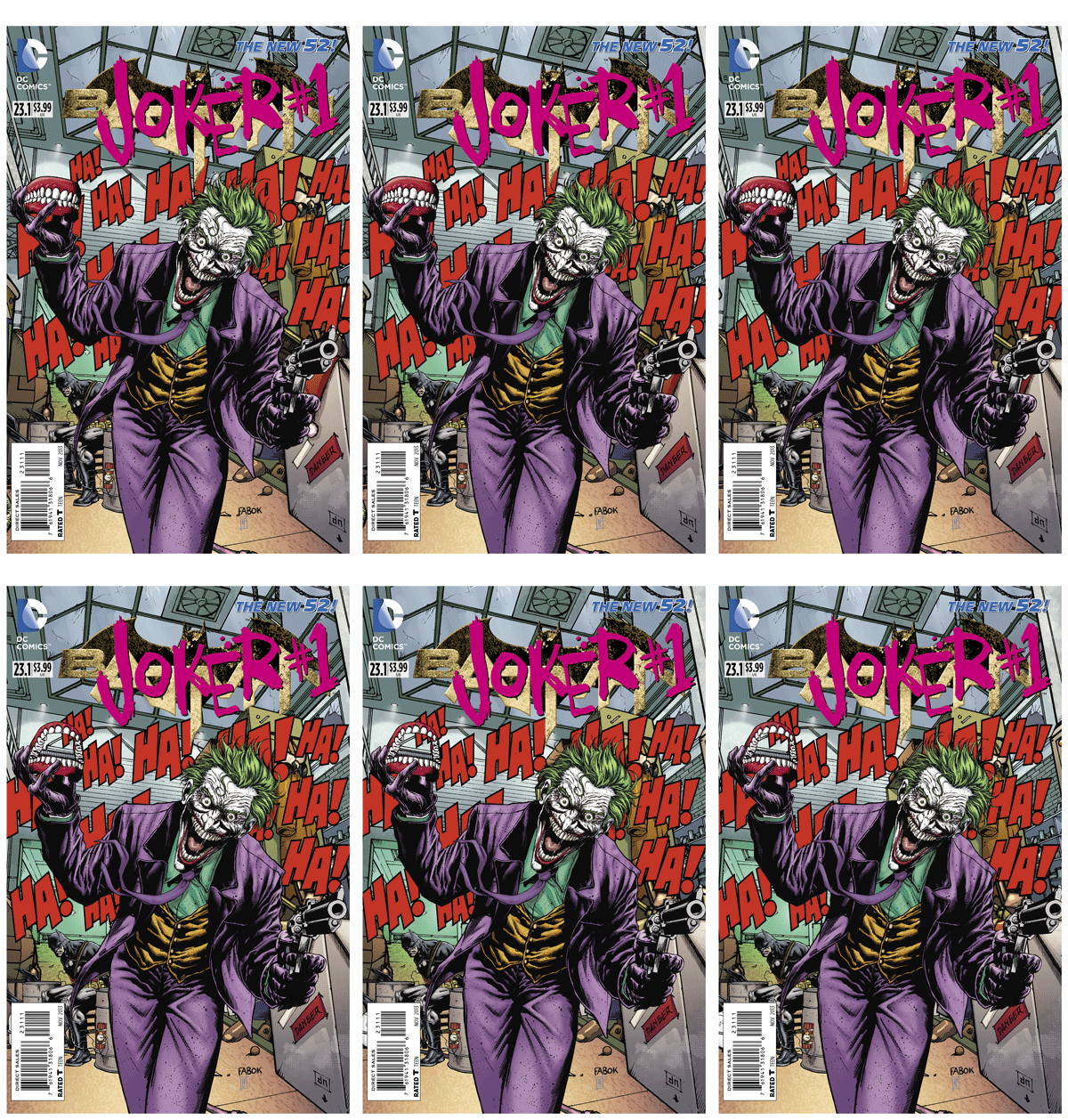
“Oh, The Villainy!” TTSL Style, Take One : “Joker” #1


034.DCC_.JokerFC.1.0

Okay, first things first — for those of you (assuming there are any) who have been wondering wondering just where the hell I’ve been hiding the last couple of months, rest assured, I’ve been writing as much as ever — maybe even moreso. Just not about movies. And just not here. Which may come as a relief, I’ll bet, to some. But for those among you who just have  to have an explanation —

I’m currently in the midst of two comics-related series over at http://www.geekyuniverse.com, which I’ve been — ahem! — “re-presenting” over on my own “main” site — http://trashfilmguru.wordpress.com — as well. One, entitled “Just Pay Ditko!” is an exploration of the questionable (at best) ethics of the current comic reprint craze that’s seeing the works of some of the industry’s greatest talents packaged in high-quality, expensive hardcovers — with no compensation being directed toward the artists and writers whose work is contained in these hefty tomes. As you might gather from the title,  I’m paying special attention to this unfolding dilemma as it relates to Spider-Man and Doctor Strange’s real creator, visionary artist Steve Ditko, but the scope of the articles has expanded somewhat to include other creators, as well as other creator’s-rights-related issues. I can’t imagine the average Through The Shattered Lens reader would find all this terribly interesting, but for those of you who want a glimpse into comics’ sorry ethical and legal practices, you may want to hop on over to GU and take a look — right now I’m up to part 12 in the series and will probably be looking to wrap it up somewhere around part 15  or 16 in the next few weeks.

The other ongoing “concern” I’m immersed in, however, might be of at least slightly more concern to you good folks here, though, and that is my continuing evisceration of DC’s uniformly sorry and uninspired/uninspiring “Villains Month” books. For those (blissfully, I might add) not in the know about this, throughout the month of September the House That Superman (or, more accurately, Siegel and Shuster) Built is turning all their regular monthly titles over to the bad guys, and throwing flashy 3-D holographic covers on each of the issues (at an extra buck a pop) , to boot. Quite clearly this is nothing but a cheap publicity stunt to gin up sales in the short term, but then so is everything that DC and Marvel does these days. As you’d expect, this being the current “New 52” take on these characters, the results are pretty dire. But given that I’ve droned on about these books for a few weeks already over at GU and that’s I’m an equal-opportunity kind of guy who wishes to spread the miser— err, wealth — around a bit, I thought I’d save my last few entries in this series for the readers here at TTSL and give you all a little taste of what you’ve been missing if you’ve wisely chosen to ignore these comics.

And so, without any further ado, let’s take a look at Joker #1 — or, as it’s officially numbered, Batman #23.1 — shall we?

In short, despite having better art, courtesy of Andy Clarke, than most of those other “Villains Month” quick-cash-grabs, this book still pretty well sucks, and that’s entirely down to the lame script by Andy Kubert, who’s turning out to be nowhere near the writer-artist his legendary father, Joe, was.

Kubert starts off with some possible flashbacks to the Joker’s origins — never a good idea for anyone to tackle unless their name is Alan Moore — then segues into, I guess, the present day, wherein the Clown Prince Of Crime decides to expand his inner circle by liberating a gorilla from the Gotham City Zoo, naming the hapless creature Jackanapes, and raising it as his own, well, child, I guess.

Oh, sure, it’ll all end in tears, but the limp nods Kubert makes toward Grant Morrison-era Doom Patrol-style surrealism are so ham-fisted and ill-considered that it makes for a downright excruciating read even if Clarke’s pencils and inks are generally pretty pleasing to the eye. For a “special” issue, the whole thing has the feel of a good, old-fashioned “inventory” story that’s been sitting on the shelf, unpublished (for good reason) for a couple of years. It’s all over as quickly as it is predictably, which is probably its’  one saving grace (at least only five minutes of your life will be wasted on it), but at the end of the day all you really are for your $3.99 investment is, well, a little bit more broke.  You already knew the Joker was crazy, you already knew that he has a habit of making irrational decisions, and you already knew he was capable of acting utterly without conscience. Giving him a pet ape doesn’t change any of that, nor does it do much to “shed new light” on his character, motivations, you name it.

I think it’s safe to assume that you get the picture here, but just in case you don’t, I’ll make it real easy — avoid at all costs.

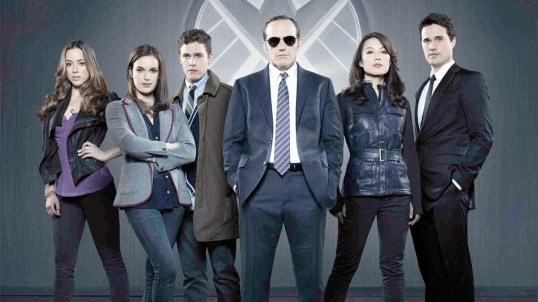
Review: Marvel’s Agents of S.H.I.E.L.D. 1.1 “Pilot” (dir by Joss Whedon)


SHIELD-cast

It would not be an exaggeration to say that Marvel’s Agents of SHIELD has been the most eagerly anticipated new series of the 2013 television season.

Ever since the show was first announced, fans of both Joss Whedon and the Marvel cinematic universe have been waiting to see whether the show would live up to its impressive pedigree.  Every casting announcement has been analyzed and every clip on Youtube has been viewed and debated.

Questions were asked: how would Phil Coulson (played by the wonderful Clark Gregg) manage to be the main character in this series when his death was a major plot point in The Avengers?  Who was the man who was seen jumping out of a burning building and landing without a scratch on his body?  Would Marvel’s Agents Of SHIELD be a prequel or a sequel to The Avengers?  Would the TV show even acknowledge the films from which it spawned?  Would Samuel L. Jackson show up to utter a few badass quips on network television?

But the most important question of all was this: Would Marvel’s Agents of SHIELD live up to all the hype or would it be another case of a show being smothered by the weight of high expectations?

Having just watched the first episode of Marvel’s Agents of SHIELD, I can now answer some of those questions.

How is Phil Coulson still alive?  Well, it turns out that he never died in the first place.  As he explains to newly recruited S.H.I.E.L.D. agent Grant Ward (Brett Dalton), he nearly died when he was attacked by Loki but ultimately, he survived.  Nick Fury told the Avengers that Coulson had died because he understood that Coulson’s “death” would cause the heroes to bond together.

After the end of The Avengers (or, as the show puts it, “the Battle of New York,”), Coulson spent a while recuperating on a beach and “reading Travis McGee novels.”  Now Coulson’s back and he’s in charge of the highly secretive Level 7.  (The Avengers, we’re told, are only Level 6.)  Level 7 investigates “special and strange” cases involving super powered individuals.

Who was the man that we saw jumping out of the burning building?  A lot of people online assumed that he was Luke Cage but instead, he turned out to be Mike Peterson (J. August Richards).  Mike is the show’s first “case,” a decent man who has recently lost his job and is struggling to deal with suddenly being super powered.  In a neat twist, the more powerful Mike becomes, the more easy it is for him to rationalize being destructive.

Coulson and Level 7 track Mike down with the help of Skye (Chloe Bennet), a forcefully recruited hacker and anti-government activist.  At the end of the episode, once Mike has been subdued through a combination of Coulson’s humanity and a tranquilizer dart fired by Grant, Skye is recruited into Level 7.

How direct a sequel is this show to the Marvel films?  It’s such a direct sequel that it would probably be unintelligible to anyone who hasn’t seen the films.  Not only is Mike’s origins story indirectly related to Capt. America’s (both of them owe their powers to a form of the super soldier formula) but the entire series takes place in a world that has been massively changed by the events of The Avengers.  Agents of SHIELD takes place in a world that now knows that there are super powered beings walking among us.

The show is also full of little comments and throw-away references to the characters and events of the films.  Those references are a nice gift to those who have seen all of the films that have seen all of the films that led up to Agents of SHIELD.  At the same time,  I have to admit that pretty much all of my knowledge of the Marvel universe comes from watching the films in the Avengers and X-Men franchises.  My boyfriend, however, grew up reading Marvel comics.  He assures me that, for every film reference that I picked up on, there were dozens of other references that would only be significant to those who have read the comic books.  If nothing else, this shows that Whedon and the show’s other writers respect their audience.  As a result, Agents of SHIELD invites its viewers to join the exclusive club of people who understand the importance of tweeting, “COULSON LIVES!”

No, Samuel L. Jackson does not show up but Cobie Smulders reprises her role from The Avengers, interviewing Grant and introducing him to Agent Coulson.  However, guest star power isn’t necessary because Clark Gregg is such a compelling and likable actor that he perfectly anchors the show.  Gregg brings a much-needed everyman quality to the role of Agent Coulson and, as such, he serves as the perfect guide through the world of super powered flamboyance.

Finally, did the pilot of Agents of SHIELD live up to all the anticipation?

In a word — yes.

Now, I should admit that I am a long-time fan of Joss Whedon’s and a good deal of my positive response to Agents of SHIELD has to do with the fact that it’s clearly a Whedon show.  Not only is the show populated by characters that’ll be familiar to any Whedonite but the self-aware and relentlessly quippy dialogue suggests that, on some level, they are all aware that they are characters on a television show along with being agents of S.H.I.E.L.D.  Along with Clark Gregg, the cast superstar so far is Chloe Bennet, who has a way with a one-liner and, on the basis of the pilot, an appealing chemistry with Brett Dalton.  Personally, I’m hoping that we’ll learn more about the appealingly eccentric Agents Fitz and Simmons (played by Ian De Caestecker and Elizabeth Henstridge).  I’m also hoping that J. August Richards will return in a future episode.  He generated a lot of empathy for the character of Mike and, as the result, prevented Agents of SHIELD from turning into an elaborate inside joke that would appeal only to us Whedonites.

Pilots are strange things.  Not only does a pilot have to introduce all the characters and justify the show’s existence, it also has to find the time to tell a fairly compelling story that will hopefully inspire people to tune in the following week.  Agents of SHIELD succeeded in doing all of that and I look forward to seeing in which direction the show ultimately heads.

Hottie of the Day: Hayley Atwell


HAYLEY ATWELL

Hayley Atwell

With the release of Iron Man 3 to video we get a new look at one of Marvel Studios’ popular character in Agent Peggy Carter. She’s played by the very lovely Hayley Atwell.

Ms. Atwell is an English actress who burst into the scene taking on the role of Agent Peggy Carter for 2011’s Captain America: The First Avenger. She totally owned the role and fans, both old and new, have been wanting more of her ever since. While it was her role in Captain America that finally got the rest of the world to notice her she was already a known commodity in both English and American television.

Her work ranged from shows and tv films such as The Duchess, Pillars of the Earth, Mansfield Park and The Prisoner. Yet, it always be her role as Agent Carter that fans will remember her most for now.

Her popularity doesn’t just stem from the fact that she’s drop-dead gorgeous in the old-school, 40’s glam sort of way, but also for the fact that she exudes a sense of confidence and toughness in the roles she plays without having to sacrifice her femininity and sensuality. She looks like she belongs both in the here and now and still just at home as a leading lady in a 40’s noir film.

Here’s to hoping that plans for Marvel Studios to give Ms. Atwell her own tv series based on her Peggy Cater role comes to fruition as that means we’ll be seeing more of her.

HayleyAtwell1HayleyAtwell2HayleyAtwell3HayleyAtwell4HayleyAtwell5HayleyAtwell6HayleyAtwell7HayleyAtwell8

PAST HOTTIES