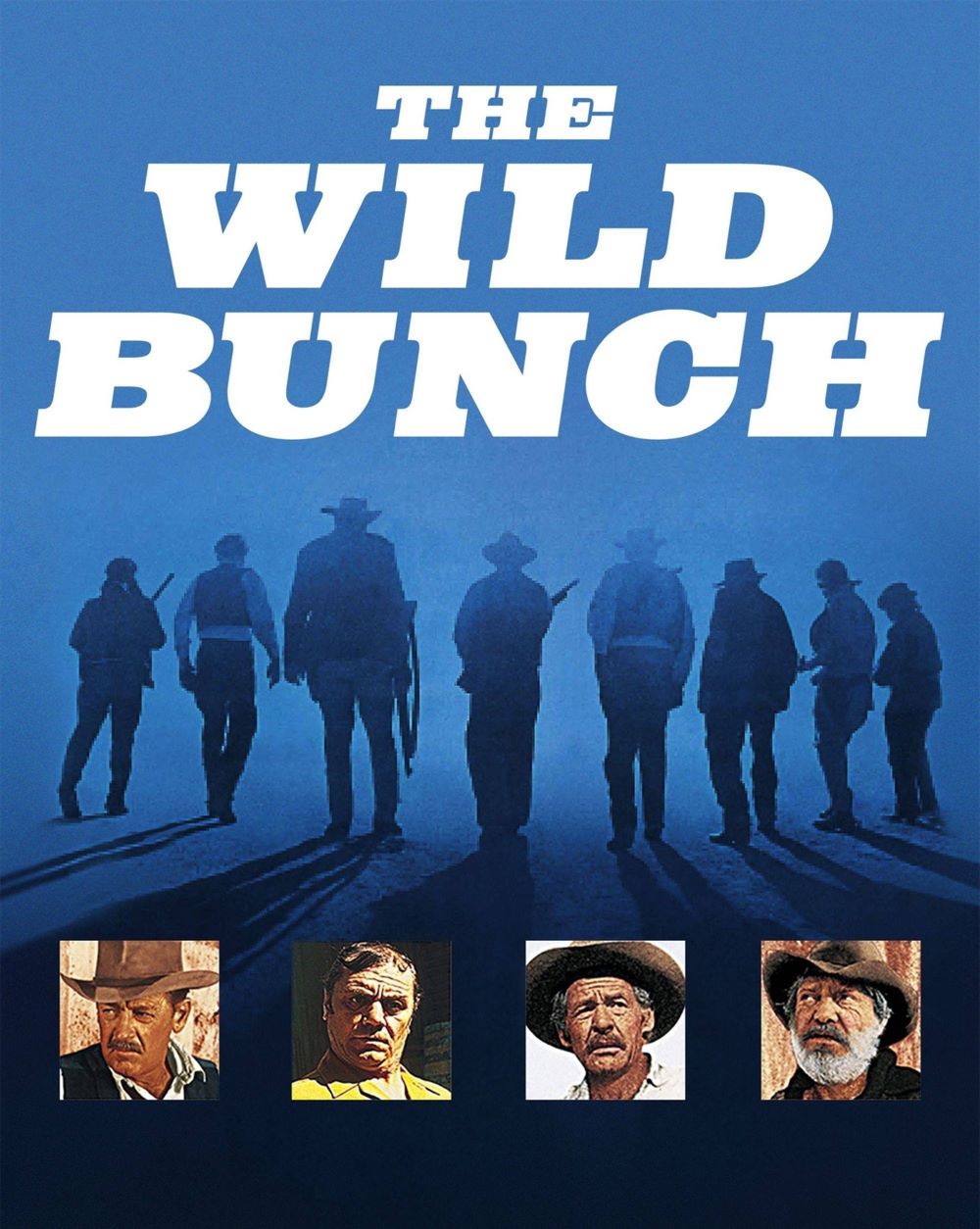
Review: The Wild Bunch (dir. by Sam Peckinpah)


“We’ve got to start thinking beyond our guns. Those days are closin’ fast.” — Pike Bishop

Sam Peckinpah’s The Wild Bunch stands out as a landmark in the Western genre, famous for its daringly harsh depiction of both violence and the fading mythos of the American West. Rather than following the traditions of earlier Westerns, the film presents a gritty portrait of aging outlaws on the edge of extinction, wrestling with a society that has evolved past them. It’s a movie that’s difficult to shake, both for its unapologetic style and the unresolved feelings it leaves long after the final shots ring out.

At its core, the story centers on Pike Bishop and his band—a crew of seasoned criminals aiming for one last grand heist as modernity encroaches on their world. Hoping to pull off a train robbery, they end up entangled in deeper complications after being betrayed and soon are thrust into the turbulence of the Mexican Revolution. Peckinpah builds a narrative where clear-cut morality falls away. The criminals and those pursuing them, supposed bringers of justice, are equally compromised and dangerous. This balancing act challenges the audience to reassess their sympathies, since the characters rarely line up as traditional heroes or villains.

The film’s notoriety is inseparable from its treatment of violence. In an era when Westerns often depicted gunfights as almost bloodless, The Wild Bunch arrived blazing with slow-motion fatalities, realistic wounds, and chaos that feels nearly documentary. Peckinpah didn’t intend to sugarcoat death; the film’s fight scenes are designed to unsettle rather than thrill, making viewers register the true cost of violence on screen. The movie’s most infamous sequences, particularly the opening and closing shootouts, still provoke debate over whether their artistry justifies their brutality. Peckinpah reportedly wanted to expose the real consequences of violence, not celebrate them, and the resulting imagery remains both striking and disturbing decades later.

Beyond its bloodshed, the film is packed with melancholy, exploring the futility and obsolescence of its central figures. The Wild Bunch themselves—Pike, Dutch, Lyle, Angel, and others—all feel the weight of their era’s end. They are not just outdated in terms of time; their entire way of life has been mechanized and modernized beyond their grasp. The film depicts this through powerful imagery, from horses being supplanted by cars and trucks to rifles giving way to machine guns. This mechanization highlights that Pike and his men live in a world that has moved on, leaving them behind. Their code of honor and rough camaraderie are relics in a brutal, mechanized landscape that favors efficiency and merciless violence. The emergence of rapid-fire weaponry and vehicles is more than a backdrop; it symbolizes their growing irrelevance and the passing of a wild, untamed frontier.

Technically speaking, The Wild Bunch is as impressive as it is influential. The cinematography captures wide Mexican landscapes with dust and sunlight, conveying both beauty and bleakness. The editing—particularly in the action scenes—was ahead of its time, with its expressive use of multiple camera angles and slow-motion adding an almost ballet-like rhythm to chaotic violence. The music, a mix of Jerry Fielding’s score and traditional Mexican songs, deepens the film’s sense of place and loss. All of this technical prowess merges in set pieces that are still studied by action directors today.

One of the film’s most enduring legacies is its profound influence on a slew of filmmakers in the years following its release. Directors like Martin Scorsese, Quentin Tarantino, and John Woo have all cited The Wild Bunch as a key inspiration, particularly in how it reshaped the depiction of violence and complex characters onscreen. Peckinpah’s innovative use of slow motion during action scenes transformed gunfights into sequences that feel almost balletic, bringing an eerie beauty to brutality. This technique became a hallmark of John Woo’s work, where slow-motion shootouts are choreographed with a dance-like precision, making the violence stylized yet emotionally impactful. Meanwhile, Scorsese and Tarantino embraced the moral ambiguity and character complexity Peckinpah championed, pushing their own stories beyond clear-cut good and evil. Through these directors and many others, The Wild Bunch continues to resonate and shape modern cinema.

The performances in The Wild Bunch are integral to its powerful impact, with its ensemble cast bringing layered humanity to otherwise rough, sometimes brutal characters. William Holden leads as Pike Bishop with a mix of weary charisma and existential urgency, embodying a man caught between the fading wild past and a ruthless present. Holden’s Pike is not just a leader of outlaws, but a man wrestling with his own moral contradictions—as loyal and protective as he is capable of cold violence. This complexity allows the character to stay compelling rather than becoming a cliché tough guy.

Ernest Borgnine as Dutch Engstrom offers a grizzled, weary presence, conveying the toll that years of violence have taken on his spirit, while Warren Oates imbues Lyle Gorch with a volatile and rebellious energy that adds tension within the gang. His brother, Tector Gorch, played by Ben Johnson, brings a contrasting steadiness, portraying a man caught between loyalty and survival. Robert Ryan’s portrayal of Deke Thornton, the relentless bounty hunter, stands out as a tragic figure torn between his past friendship with Pike and his duty. This character conflict gives the story a deeper emotional layer and adds weight to the relentless pursuit central to the plot.

Supporting performances by Edmond O’Brien as Freddie Sykes and Jaime Sánchez as Angel enrich the group dynamic, each adding distinct personality traits that feel authentic and lived-in. The chemistry between the cast helps ground the film’s heavy themes in real human experience, making the characters’ struggles with obsolescence and loyalty resonate beyond the screen.

However, despite the strong male performances, the film’s treatment of female characters is notably sparse and limiting. Women in the film often fall into marginal roles, lacking development or agency, which reflects the gender dynamics of many Westerns from the era but feels particularly dated today.

For viewers seeking straightforward heroism or moral clarity, The Wild Bunch can be a challenging experience. Its bleak, nihilistic worldview and refusal to deliver easy answers may leave some feeling drained. The story culminates in a violent, unresolved climax with no tidy resolution, emphasizing loss and the end of an era. But it is precisely this rawness and technical mastery that keep the film compelling and worthy of close viewing.

The Wild Bunch demands you shed simple notions of good versus evil and prepare for a rough, often brutal ride. It’s a story about men fighting not just other men but inevitability—caught between their own fading values and the relentless march of modernization and change. Peckinpah doesn’t offer comfort; instead, he forces the viewer to reckon with violence’s cost and the price of nostalgia. Even with all its grit and flaws, the film’s artistry and influence remain undeniable, securing its status as a masterwork that redefined Westerns and action cinema alike. It’s a wild ride that continues to inspire and provoke long after the credits roll.

Horror on TV: The Night America Trembled (dir by Tom Donovan)


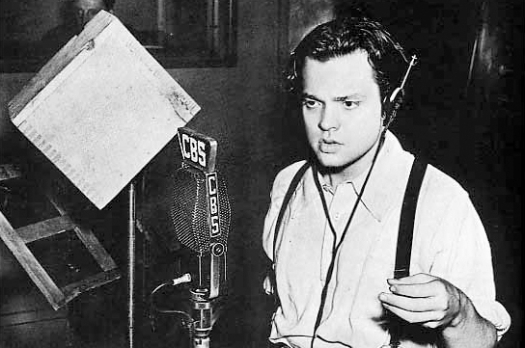
Filmed in 1957 for a television program called Westinghouse Studio One, The Night America Trembled is a dramatization of the night that Orson Welles terrified America with his radio adaptation of War of The Worlds.  

For legal reasons, Orson Welles is not portrayed nor is his name mentioned.  Instead, the focus is mostly on the people listening to the broadcast and getting the wrong idea.  That may sound like a comedy but The Night America Trembled takes itself fairly seriously.  Even pompous old Edward R. Murrow shows up to narrate the film, in between taking drags off a cigarette.

Clocking in at a brisk 60 minutes, The Night America Trembled is an interesting recreation of that October 30th.  Among the people panicking: a group of people in a bar who, before hearing the broadcast, were debating whether or not Hitler was as crazy as people said he was, a babysitter who goes absolutely crazy with fear, and a group of poker-playing college students.  If, like me, you’re a frequent viewer of TCM, you may recognize some of the faces in the large cast: Ed Asner, James Coburn, John Astin, Warren Oates, and Warren Beatty all make early appearances.

It’s an interesting little historical document and you can watch it below!

The Unnominated #18: Two-Lane Blacktop (dir by Monte Hellman)


Though the Academy of Motion Picture Arts and Sciences claim that the Oscars honor the best of the year, we all know that there are always worthy films and performances that end up getting overlooked.  Sometimes, it’s because the competition too fierce.  Sometimes, it’s because the film itself was too controversial.  Often, it’s just a case of a film’s quality not being fully recognized until years after its initial released.  This series of reviews takes a look at the films and performances that should have been nominated but were, for whatever reason, overlooked.  These are the Unnominated.

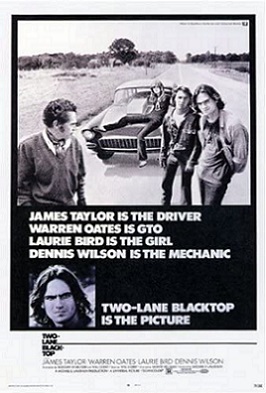
The 1971 road film, Two-Lane Blacktop, is a movie about four people whose real names are never revealed.  Indeed, their names are never as important as what they’re driving.

Named after his car, GTO (Warren Oates) is a talkative man who likes to brag on himself and who picks up hitchhikers so he can talk to them.  We don’t learn much about GTO’s background.  For someone who talks as much as he does, GTO doesn’t reveal much about who he is when he’s not driving.  It’s easy to imagine him as a salesman, traveling across the country and desperately trying to make his quota before the sun goes down.  With the way that he picks up hitchhikers and his need to convince everyone of his own skill and prowess behind the wheel, it’s easy to imagine that he’s probably recently divorced and still dealing with suddenly being on his own.  He seems to have something to prove, not only to everyone around him but especially to himself.  One gets the feeling that the life he had suddenly collapsed and he took to the road to escape it all but he still hasn’t reached the point where he can handle truly being alone.  For all of his talk, it doesn’t take long to notice that GTO isn’t quite as worldly as he claims he is.

A chance meeting leads to GTO getting into a cross-country race with The Driver (James Taylor) and the Mechanic (Dennis Wilson), two young men who are driving a 1955 Chevy and who make their money by engaging in street races.  (They’re also quick to steal a license plate when no one’s looking.)  The Driver and the Mechanic don’t talk a lot and, when they do, it’s in terse and somewhat awkward sentences.  (Both Taylor and Wilson were musicians who made their acting debut with this film.  Their natural stiffness and lack of emotion works well for their characters.)  The Driver and the Mechanic seem to communicate solely through driving.  They pick up The Girl (Laurie Bird) and both the Driver and the Mechanic seem to have feelings for her but it’s pretty obvious that their true love will always be for their car.

Two-Lane Blacktop is a road movie, a movie that really doesn’t have much of a plot (the cross-country race soon ceases to be a real race) but which does have some beautiful footage of America in 1971 and an outstanding performance from the great character actor, Warren Oates.  Easy Rider was advertised as being a film about a man who looked for America and couldn’t find it.  That’s actually a better description of Two-Lane Blacktop, a film about three uniquely American men who have embraced the car culture that is at the center of life in America but who are still, more or less, lost in their home country.  Oates, always talking and refusing to give up or even acknowledge the fact that he doesn’t really know much about how cars work, represents the so-called silent majority.  Wilson and Taylor are the next generation, their long-hair branding them as outsiders while their skill with a car and their desire win represents what we’re told is the best of the American competitive spirit.  What makes the film unsettling is the feeling that all three of them are using their cars as a way to avoid dealing with the reality of their lives.

Two-Lane Blacktop may sound a bit pretentious and it is.  The metaphors get a bit heavy-handed.  That said, as directed by Monte Hellman, it’s both a gorgeous travelogue and a valuable time capsule, a document of life in the late 60s and early 70s.  Hellman directed the film on the road.  When we see the Mechanic stealing a license plate so no one down south will know that he and the Driver are actually from California, it’s a powerful scene because it was actually filmed on location, in the South.  This isn’t a film that was shot on a backlot.  This is a film that was shot across America and it captures the country at a time when, much like today, no one was really sure what the future held for its politics or its culture.  It may be a film about three men who are obsessed with cars but it’s also a portrait of a country in an almost directionless state of turmoil.

Two-Lane Blacktop was promoted as being the next Easy Rider but it turned out to be a notorious box office failure.  James Taylor and Dennis Wilson never did another movie.  Warren Oates continued as a busy character actor while Laurie Bird died of an intentional drug overdose in 1979.  Director Monte Hellman’s directorial career continued but his days of being courted by the major studios were over.  However, as the years passed, audiences started to discover Two-Lane Blacktop and now, it’s considered to be a cult classic.

Given its failure at the box office, Two-Lane Blacktop was ignored by the Academy.  The Oscar for Best Picture went to another film that featured a memorable car chase, The French Connection.  While Two-Lane Blacktop may not have deserved to win Best Picture (not over nominees like The French Connection, The Last Picture Show, Fiddler on the Roof, and A Clockwork Orange), it certainly is far more memorable movie than the fifth film nominated that year, Nicholas and Alexandra.  If nothing else, Warren Oates deserved a nomination for his supporting performance.  The Academy may not have embraced Two-Lane Blacktop but, fortunately, film lovers eventually would.

Previous Entries In The Unnominated:

  1. Auto Focus 
  2. Star 80
  3. Monty Python and The Holy Grail
  4. Johnny Got His Gun
  5. Saint Jack
  6. Office Space
  7. Play Misty For Me
  8. The Long Riders
  9. Mean Streets
  10. The Long Goodbye
  11. The General
  12. Tombstone
  13. Heat
  14. Kansas City Bomber
  15. Touch of Evil
  16. The Mortal Storm
  17. Honky Tonk Man

Brad reviews MY OLD MAN (1979) – starring Warren Oates and Kristy McNichol! 


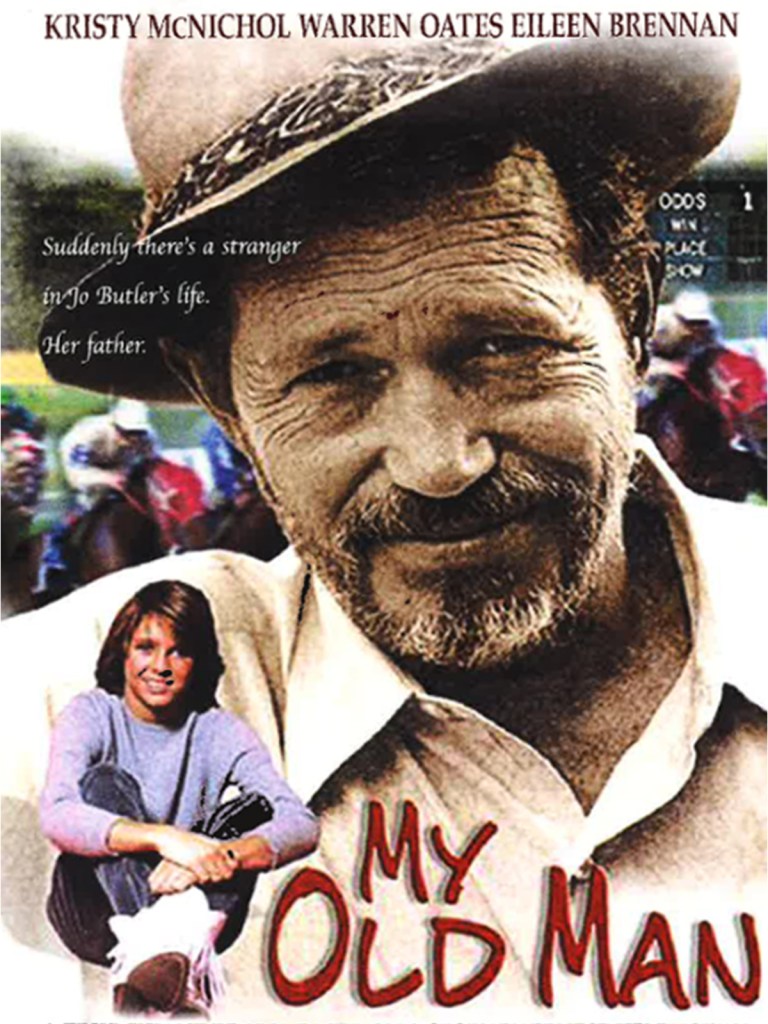
In my continuing celebration of Warren Oates’ birthday, I decided to check out his 1979 TV movie MY OLD MAN, with Kristy McNichol. Based on a 1923 short story from Ernest Hemingway, Oates stars as Frank Butler, an alcoholic horse trainer and compulsive gambler, who goes to see his 16-year-old daughter, Jo (Kristy McNichol) after the death of her mother. In an effort to have some sort of relationship with Jo, Frank asks her to spend the summer with him, where he introduces her to his world of horse racing, as well as his old flame Marie (Eileen Brennan). Things get off to a rocky start, but with time the two start to develop a loving and meaningful relationship. Frank’s notorious bad luck even changes for the better for a while, and he’s able to buy Jo her own racehorse. Unfortunately, just as things are starting to go well, Frank suffers a life threatening injury in the horse stables, and Jo is faced with the possibility of having to take on life without her mother or her father… 

For a 1979 TV movie, I enjoyed MY OLD MAN. I like Warren Oates as the grizzled father who wants a relationship with his daughter but who also has no idea of how to go about it. He’s cranky and not happy to have someone else to answer to, but he also shows just enough vulnerability that we believe that he has a chance to be a caring dad. Kristy McNichol also does a good job as the 16 year old daughter who wants to get to know a dad that she’s only been told about thus far in her life, with most of those things not being very good. For this movie to work, their relationship has to work. I think both Oates and McNichol effectively express their characters’ desires to connect with each other simply because they’re father and daughter and that means something. As the father of a daughter myself, I know firsthand that our bond is truly special and one of the most important things in my life. And I’ll do anything to keep it that way. 

Aside from the central relationship between Frank and his daughter Jo, I also like the relationship between Frank and his old flame, the waitress Marie (Eileen Brennan). Brennan is very good in the role and effectively conveys her character’s strong love for Frank. Frank needs her and even tells his daughter at one point, “No matter what was going on with me, she never lost her respect for me, and she never stopped caring about me. To me, that shows a lot of class.” From my perspective, I know that all of us guys need someone like Marie in our lives. I’m extremely blessed to have my own “Marie,” even if she does go by a different name. I do want to mention one more relationship in the film that’s interesting, and that’s between Frank and his former jockey George, played by a young Michael Jeter. The two have a bad past that rears its head over the course of the film, and Jeter acquits himself quite well acting against the seasoned veteran. 

Overall, I enjoyed MY OLD MAN as it worked its way through its themes of family reconciliation and personal redemption. The last 20-30 minutes wasn’t quite as effective for me when the TV movie melodrama really kicked in. It still had some good moments, but it felt a little more forced once the focus shifted away from the relationships being developed by the central characters. With that said, I watched this movie in celebration of Warren Oates, and he’s just as great as I had hoped. He’s more than enough reason to watch the film even if it’s not perfect. 

Scene That I Love: Waren Oates Is Sgt. Hulka


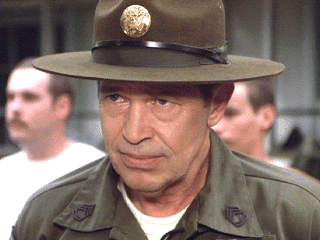
I didn’t have time to write a film review today but there’s no way I could late July 5th pass without honoring my favorite actor, Warren Oates.  Oates played a lot of great roles over the course of his career but my favorite was his performance as Sgt. Hulka in 1981’s Stripes.

Here’s Warren Oates, as Sgt. Hulka, asking all the new recruits why they joined the Army.  To those who would say that this isn’t a realistic portrayal of basic training, all I can say is “Lighten up, Francis.”

Brad reviews COCKFIGHTER (1974), starring Warren Oates!


I read about the movie COCKFIGHTER many years ago, and I remember the review being very positive. I had never watched the film before, but with today being Warren Oates’ birthday and it being available on Amazon Prime, I decided I’d finally watch it. 

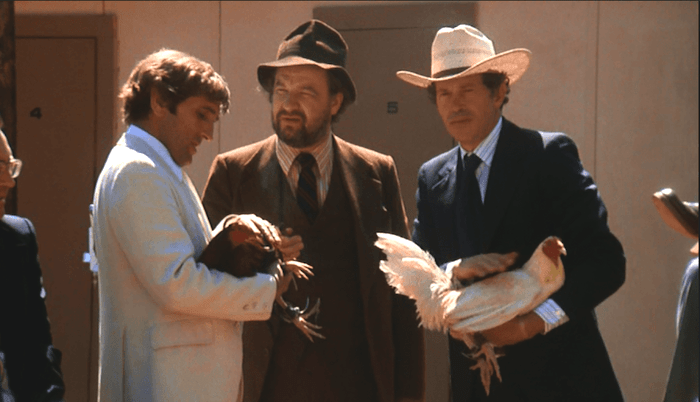
Directed by Monte Hellman and based on Charles Willeford’s 1962 novel, COCKFIGHTER introduces us to Frank Mansfield (Warren Oates), a man completely obsessed with the southern “sport” of cockfighting. As we meet him, he’s in the process of losing a bet and a cockfight with Jack Burke (Harry Dean Stanton). The loss isn’t just a setback, it costs him all of his cash, his truck, his trailer, and his current girlfriend Dody White (Laurie Bird). We also notice in these early scenes that Frank only communicates through sign language and writing notes. It seems that he’s been living under a self-imposed vow of silence. Two years earlier, on the eve of the big, season-ending cockfighting grand finale, Frank’s big-mouthed braggadocio caused him to lose his prized cock, and the prestigious “Cockfighter of the Year” medal in a meaningless hotel bet, also against Jack Burke. Frank vows not to speak again until he wins that medal. Coming up with cash in the only way he can by selling his family’s home, Frank buys a new cock named White Lightning from Ed Middleton, played here by the film’s writer Charles Willeford. Armed with new fowl and a new, capital rich partner named Omar Baradansky (Richard B. Shull), Frank will not let anything stop him, including the love of his life Mary Elizabeth (Patricia Pearcy) or an axe wielding competitor (Ed Begley, Jr.), from being named “Cockfighter of the Year” and finally regaining his voice and the respect he desires!

COCKFIGHTER definitely has some things going for it. First and foremost, Warren Oates is so good in the lead role as the obsessed man who puts success in cockfighting above anything else in his life, including every other person. He literally sells the family home out from under his alcoholic brother Randall (Troy Donahue) in order to fund his next cock purchase after he’s gone bust. This sets up quite the sight gag for such a gritty and realistic film as a large truck and trailer drives away the family home taking up the entire state highway. When his long time fiancé asks him to give up cockfighting, he just gets up, leaves her shirtless and heads back out on the circuit. He writes her a letter from the road and tells her he loves her, but he also makes it clear that life without cockfighting is a life that he’s unwilling to live. Oates’ Frank Mansfield is not the kind of person you’d ever want to depend on in life, but he’s also an uncompromising individual who is determined to live life wholly on his own terms, accepting of the successes and failures that come with it. I watched the film because it features Warren Oates, and after having done so, I can say that his performance is truly special. 

COCKFIGHTER is one of those movies that makes us feel like we’re watching real people, and that’s kind of fascinating even if they reside in a world that we don’t really want to live in. The primary credit for that has to go to director Monte Hellman and Oscar winning cinematographer Nestor Almendros (DAYS OF HEAVEN). The restraint that is shown in the storytelling, as well as the sweaty, ramshackle authenticity of the Georgia locations, brings the story to life. The supporting cast also does its part to create the world of COCKFIGHTER. Harry Dean Stanton as Jack Burke, Frank’s primary rival in the cockfighting game, is excellent as you might expect, and he seems a lot like a regular guy. I really like Richard B. Schull, who plays Frank’s outgoing and talkative partner Omar. His friendly and gregarious personality seems a little untrustworthy at first, but he turns out to be the most likable person in the film. And finally, I want to shoutout Charles Willeford. Not only did he write the source novel and screenplay for COCKFIGHTER, he also gives a solid performance as Ed Middleton, an old-timer in the game who treats Frank with honesty and decency when he’s hit rock bottom. 

With all the positive things I’ve said above, I have to address the graphic depiction of cockfighting in COCKFIGHTER. This was the 70’s, and the scenes shown here are real and were very difficult for me to watch. It’s not fun to see animals fight and kill each other, and this is coming from a person who loves fried chicken and is not particularly an animal lover. The scenes are presented as matter of fact and in service of the story, but that still doesn’t make them easy to watch. Director Monte Hellman has gone on record to express his personal disgust at even filming these scenes. While a movie made in the 1970’s probably couldn’t have been made without these sequences, I just wanted to make it clear that this film is probably unwatchable for a lot of people.

Overall, COCKFIGHTER is a relic of the 1970’s. It’s a gritty and realistic film, featuring a great central performance from Warren Oates. It’s also an ethically troubling film that features real animal on animal violence. Based on that I don’t necessarily recommend the film. Rather, I just want to share my own thoughts, and you can determine if you want to watch it or not. That’s what I’ve tried to do above. 

The Border (1982, directed by Tony Richardson)


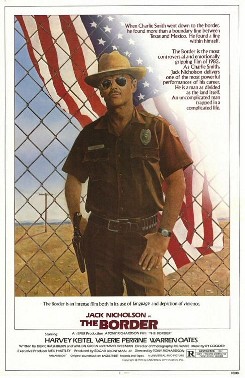
Charlie Smith (Jack Nicholson) gets a job with the Texas border patrol and goes from scrounging in a California trailer park to living the high life in a duplex in El Paso.  His wife (Valerie Perrine) is looking forward to spending all the money that he’ll be making as a border agent.  But then Charlie discovers that his bigoted superior (Warren Oates!) and his partner (Harvey Keitel) are running a human smuggling ring.  When the baby of a young Mexican woman (Elpidia Carrillo) is kidnapped and sold to an illegal adoption ring, Charlie is finally forced to take a stand.

The Border seems to be one of Jack Nicholson’s forgotten films and it really can’t compete with some of the other movies that Nicholson was making around the same time.  Compared to films like The Shining, Terms of Endearment, and The Postman Always Rings Twice, The Border really does feel and look like a poorly paced made-for-TV movie.  British director Tony Richardson doesn’t really seem to know what type of movie he wanted The Border to be or what he wanted to say about immigration.  This is the type neo-Western that Sam Peckinpah could have worked wonders with but Tony Richardson just doesn’t seem to have any feel for the material.

Still, Jack Nicholson is pretty good here, playing the type of weary character that he specialized in during the pre-Batman portion of his career.  I especially liked the scenes that he shared with Valerie Perrine, who gave a good performance as someone who viewed buying a waterbed as being the height of luxury.  Harvey Keitel’s performance sometimes felt too familiar.  He’s played a lot of similar villains but he and Nicholson act well together.

And finally, Warren Oates in this movie, bringing his rough-hewn authenticity to his role.  This was the last of Oates’s films to be released before his premature death.  Blue Thunder and Tough Enough were both released posthumously.  Warren Oates is an actor who was only 52 when he died.  Whenever I see him onscreen, I think of all the great performances he would have given if he had only made it through the 90s.

The TSL Grindhouse: Dixie Dynamite (dir by Lee Frost)


Welcome to Georgia!

Yes, the 1976 film Dixie Dynamite is supposedly set in Georgia but it’s hard not to notice that all of the hills and mountains in the background look like they’re from California.  The story features two sisters, Dixie (Jane Anne Johnston) and Patsy (Kathy McHaley), who go into the moonshine business after their father drives his car off a cliff.  Their father was the best moonshiner in the business and they aim to carry on his legacy, despite the efforts of Sheriff Marsh (Christopher George) and banker Charlie White (R.G. Armstrong).  Blowing up their stills and threatening to auction off their land isn’t going to stop these two from doing whatever it is exactly that they’re doing in this film.  Eventually, the sisters steal a bunch of dynamite and start blowing stuff up.  Normally, I’d say “Woo hoo!” but this film even makes random explosions seem as boring as the 4th of July in Canada.

Warren Oates plays Mack, a motocross champion who occasionally helps the daughter’s out.  At least, I think he’s helping them.  To be honest, it’s not always easy to tell what Mack’s purpose actually is in this story.  He tends to show up randomly, usually after all the action has ended.  He’s kind of a useless friend, to be honest.  Warren Oates brings his rough-hewn charm to the roll and you’re usually glad to see him, if just because the actresses playing the sisters are genuinely lousy, but you’re never quite sure what he’s doing there.  Watching the film, one gets the feeling that Oates just dropped by the set whenever he felt like it and filmed a scene or two.

It’s really not that crazy of a possibility.  Actor Steve McQueen makes a cameo appearance in this film, riding a motorcycle and challenging Oates.  McQueen didn’t make many films in the 70s.  Let’s consider some of the films that he turned down: The Great Gatsby, Jaws, Apocalypse Now, The Driver, The French Connection, Sorcerer, and Hard Times.  None of those films appealed to McQueen but he was still willing to show up for a day’s worth of shooting on Dixie Dynamite.  Of course, McQueen does go uncredited.

This is an odd film, full of slow spots that not even actors like Warren Oates, Christopher George, and R.G. Armstrong can make up for.  Director Lee Frost was best-known for his softcore exploitation films and Dixie Dynamite is full of odd transitions and jump cuts, leading me to suspect that the film was originally meant to be a lot more like a typical Frost film before it was decided to go in a PG-direction as well.

Perhaps the oddest part of the film is that the daughter’s final scheme to get revenge on the sheriff and the banker involves stealing two dead bodies from the local morgue.  The bodies are made up and dressed to look like Dixie and Patsy so that the sisters can fake their own death.  I can understand that and even give them credit for hatching a clever plan.  But I still find it weird that the film never really explains how the bodies were stolen or why they were in the morgue in the first place.  What are the chances that Patsy and Dixie would head down to the morgue and find two look-alikes?

The film features dynamite, Warren Oates, and corpse-stealing  but it’s still incredibly dull.  That’s just weird.

Monday Live Tweet Alert: Join Us For Dixie Dynamite!


As some of our regular readers undoubtedly know, I am involved in hosting a few weekly live tweets on twitter and occasionally Mastodon.  I host #FridayNightFlix every Friday, I co-host #ScarySocial on Saturday, and I am one of the five hosts of Mastodon’s #MondayActionMovie!  Every week, we get together.  We watch a movie.  We snark our way through it.

Tonight, for #MondayActionMovie, the film will be 1976’s Dixie Dynamite, starring Warren Oates and Christopher George! I picked it so you know it’ll be good.

It should make for a night of fun viewing and I invite all of you to join in.  If you want to join the live tweets, just hop onto Mastodon, find the movie on YouTube, hit play at 8 pm et, and use the #MondayActionMovie hashtag!  The live tweet community is a friendly group and welcoming of newcomers so don’t be shy.   

See you soon for some moonshine excitement!

Stripes (1981, directed by Ivan Reitman)


Bill Murray and Harold Ramis join the army.

Wait, that can’t be right, can it?  Bill Murray and Harold Ramis were cinematic anarchists.  Early in his career, Bill Murray was the ultimate smart aleck slacker who did not have any respect for authority.  Harold Ramis was hardly a slacker but he came across as someone more likely to be marching on the Pentagon than guarding it.  Stripes is one of the ultimate examples of a comedy where the laughs come from things  that don’t seem to go together suddenly going together.

John Winger (Murray) at least has a reason to join the army.  He has a dead end job.  He has just broken up with his girlfriend.  The country appears to be at peace so why not spend four years in the Army?  It’s harder to understand why John’s friend, Russell (Ramis), also decides to enlist, other than to hang out with John.  Along with Ox (John Candy), Cruiser (John Diehl), Psycho (Conrad Dunn), and Elm0 (Judge Reinhold), they enlist and go through basic training under the watchful eye of Sgt. Hulka (Warren Oates).  John and Russell go from treating everything like a joke to invading East Germany in a tank that’s disguised as an RV.  They also meet the two sexiest and friendliest MPs in the service, Stella (P.J. Soles) and Louise (Sean Young).  Russell goes from being an proto-hippie who teaches ESL to asking John if he thinks he would make a good officer.  John goes from not taking anything seriously to picking up a machine gun and rescuing his fellow soldiers.

It’s a comedy that shouldn’t work but it does.  It’s actually one of my favorite comedies, full of memorable lines (“Lighten up, Frances.”), and stupidly funny situations.  The cast is full of future comedy legends and P.J. Soles shows that she deserved to be a bigger star.  This was early in Bill Murray’s film career and he was still largely getting by on his SNL persona but, in his confrontations with Hulka, Murray got a chance to show that he could handle drama.  With all the comedic talent in the film, it’s Warren Oates who gets the biggest laughs because he largely plays his role straight.  Sgt. Hulka is a drill sergeant who cares about his men and who knows how to inspire and teach  but that doesn’t mean he’s happy about having to deal with a collection of misfits.  (Watch his face when Cruiser says he enlisted so he wouldn’t get drafted.)

The movie does get strange when the action goes from the U.S. to Germany.  What starts out as Animal-House-In-The-Army instead becomes an almost straight action movie and the movie itself sometimes feels like a recruiting video.  Join the Army and maybe you’ll get to steal an RV with PJ Soles.  That would have been enough to get me to enlist back in the day.  But the combination of Murray, Ramis, and Oates makes Stripes a comedy that can be watched over and over again.