Retro Television Review: Miami Vice 5.2 “Redemption In Blood”


Welcome to Retro Television Reviews, a feature where we review some of our favorite and least favorite shows of the past!  On Mondays, I will be reviewing Miami Vice, which ran on NBC from 1984 to 1989.  The entire show can be purchased on Prime!

This week, Sonny Burnett continues his reign of terror!

Episode 5.2 “Redemption in Blood”

(DIr by Paul Krasny, originally aired on November 11th, 1988)

When last we checked in with Miami Vice, Sonny thought he was a drug lord named Sonny Burnett and he was firing his gun at Tubbs, who he had just recognized as a cop.  This episode reveals that Sonny didn’t shoot Tubbs.  Instead, he aimed at a wall, firing while Tubbs made his escape.

Working with the psychotic Cliff King (Matt Frewer), Sonny takes over his late boss’s drug empire and continue to fight a war against El Gato (Jon Polito).  El Gato is meant to be a “flamboyant” drug dealer, which is a polite way of saying that Polito overacts through the entire episode.

The show hedges its bets by having Cliff commit all of the murders while Sonny rises to power.  In fact, when Sonny catches Cliff torturing two of El Gato’s men, Sonny orders Cliff to stop and then offers them jobs in the Burnett operation.  Amazingly, over the course of the entire three-episode Burnett arc, Sonny manages to get through the whole thing only killing people in self-defense.  Even the cop that he killed at the end of the previous season was a dirty cop who had been sent to kill him.  I get that the show couldn’t take Sonny totally over to the dark side but it’s still hard to believe that Burnett took over the Miami underworld without getting his hands a bit more dirty than he did.

A car bomb (courtesy of El Gato) knocks Sonny unconscious and, when he wakes up, he suddenly starts to remember who he actually is.  Finally realizing that his name is Crockett, Sonny turns himself into the Vice Squad and is promptly arrested while Kate Bush sings, “Don’t give up.”  Sonny tells Castillo, Switek, and Tubbs that he’s ready to acccept the consequences of whatever he did during his previous bout of amnesia.  But then Sonny escapes custody and sets up both Cliff and El Gato for a great fall so I guess he wasn’t totally ready to turn himself in and head off to prison.

Tubbs, who now trusts Sonny, helps him take out Cliff King and the Burnett organization.  Sonny shoots Cliff to save Tubbs.  With Tubbs dangling off of a walkway, Sonny pulls him back up to safety.  Sonny then goes back to his mansion where he and his girlfriend (Debra Feuer) are taking hostage by a gun-wielding El Gato.  “Where is the safe?” El Gato demands.  Sonny tricks El Gato into thinking the safe is in the room where he keeps his pet panther.  (Apparently, all drug lords were given either a tiger, a panther, a cheetah, or a leopard.)  El Gato gets mauled to death as the episode ends.

This episode suggests that Sonny is going to be let off the hook because he finally remembered he was.  I don’t really think that it would really work like that.  Sonny has multiple warrants out and he also killed a cop, albeit a corrupt one.  If Sonny isn’t on trial in next week’s episode, I’m going to be a little annoyed.

This episode ended the Burnett trilogy about as well as it could be ended.  The idea that all Sonny needed was to survive a second near-fatal explosion made me smile.  What if El Gato hadn’t tried to blow him up?  I guess it’s a good thing that he did!  While Polito went overboard, Matt Frewer gave a very good performance as the villainous Cliff King.  It’s a bit of a shame that he died so dramatically because Cliff would have made a good recurring villain.

This episode was definitely better than anything from season 4.  It’ll be interesting to see how the rest of season 5 plays out.
Retro Television Review: Miami Vice 5.1 “Hostile Takeover”


Welcome to Retro Television Reviews, a feature where we review some of our favorite and least favorite shows of the past!  On Mondays, I will be reviewing Miami Vice, which ran on NBC from 1984 to 1989.  The entire show can be purchased on Prime!

This week, we start the fifth and final season of Miami Vice.

Episode 5.1 “Hostile Takeover”

(Dir by Don Johnson, originally aired on November 4th, 1988)

The fifth and final season of Miami Vice gets off to a good start with this episode.  After opening with some appropriately glitzy scenes of the drug-fueled Miami nightlife, the episode then shows us that Sonny Crockett is still convinced that he’s Sonny Burnett.  He has now returned to Miami and, along with Cliff King (Matt Frewer), he is one of the key advisors to drug lord Oscar Carrera (Joe Santos).

Carrera is at war with El Gato (Jon Polito), the brother of Sonny Burnett’s former employer, Miguel Manolo.  El Gato, who wears gold lamé, cries over the body of one of his henchmen, and flinches when forced to deal with direct sunlight, is a flamboyant figure.  In fact, he’s so flamboyant that it’s initially easy to overlook how determined he is to get revenge for the death of his brother.  That means taking down the Carreras family and Sonny Burnett as well.

The Vice Squad knows that Sonny is moving up in the drug underworld but Castillo is firm when asked what they should do about it.  Sonny has an active warrant out for murdering a corrupt cop.  “Sonny’s not Sonny anymore,” Tubbs says at one point and Castillo seems to agree.

Tubbs goes undercover, making contact with the Carreras cartel.  When Sonny meets Tubbs, Tubbs introduces himself as “Ricardo Cooper” and starts speaking in his terribly unconvincing Jamaican accent and that was when I said, “Miami Vice is back!”  Sonny doesn’t trust Cooper from the start.  “Maybe you’re a cop,” Sonny says.  “Not I, mon,” Tubbs replies.

People are dying and, while Sonny doesn’t have a problem with that, the show is also careful to show that Sonny only shoots in self-defense.  (It appears the most of the cold-blooded murders are farmed out to Cliff King.)  When Oscar Carreras dies, it’s because his poofy-haired son (Anthony Crivello) accidentally shot him when Oscar discovered him with his stepmother.  When the son dies, it’s because he was about to shoot Sonny after he caught Sonny with …. his stepmother, again.  The Carreras family is so dysfunctional that it shouldn’t come as a surprise that Sonny steps up to take it over.

After promising Castillo that he’ll take out Sonny if necessary, Tubbs meets up with Sonny at beach-side tower.  Tubbs looks at Sonny and suddenly says, “Sonny, it’s me, Rico.”  Sonny stare at Tubbs.  “Do you remember me?” Tubbs asks.

“Sure,” Sonny suddenly says, “You’re Tubbs.”

Three gunshots ring out as the episode ends.

OH MY GOD, DID SONNY KILLS TUBBS!?

We’ll find out next week.  For now, I’ll say that — after a disappointing fourth season — this was exactly how Miami Vice needed to start things off for Season 5.  Seriously, if you’re going to have Sonny get hit with amnesia, you might as well just go for it and take things to their logical extreme.

Next week …. is Tubbs dead?  I hope not, mon.


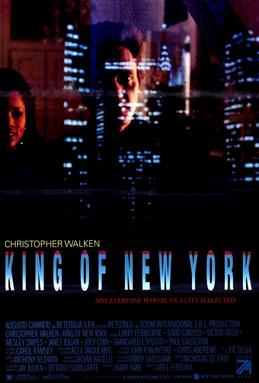
King of New York (1990, directed by Abel Ferrara)


Drug kingpin Frank White (Christopher Walken) has been released from prison and is again on the streets of New York City.  Frank might say that he’s gone straight but, as soon as he’s free, he’s  partying with his old crew (including Laurene Fishburne, Steve Buscemi, Giancarlo Esposito, and others).   While Frank’s agent (Paul Calderon) goes to all of the other city’s gangsters and explains that they can either get out of Frank’s way or die, three detectives (Victor Argo, David Caruso, and Wesley Snipes) make plans to take Frank out by any means necessary.  Meanwhile, Frank is donating money to politicians, building hospitals, and presenting himself as New York’s savior.

King of New York is the epitome of a cult film.  Directed by Abel Ferrara, the dark and violent King of New York was originally dismissed by critics and struggled to find an audience during its initial theatrical run.  (It was lumped in with and overshadowed by other 1990 gangster films like Goodfellas and Godfather Part III.)  But it was later rediscovered on both cable and home video and now it’s rightly considered to be a stone cold crime classic.  Walken gives one of his best performances as Frank White and that’s not a surprise.  The film was clearly made to give Walken a chance to show off what he could do with a lead role and Walken captures Frank’s charisma and humor without forgetting that he’s essentially a sociopath.  Walken gives a performance that feels like James Cagney updated for the end of the 80s.  What’s even more impressive is that all of the supporting characters are just as memorable as Walken’s Frank White.  From Laurence Fishburne’s flamboyant killer to David Caruso’s hotheaded cop to Paul Calderon’s slippery agent to Janet Julian’s morally compromised attorney, everyone gives a strong performance.  (I’m usually not a Caruso fan but he’s legitimately great here.)  They come together to bring the film’s world to life.  Everyone has their own reason for obsessing on Frank White and his return to power.  I’ve always especially appreciated Victor Argo as the weary, veteran detective who finds himself trapped by Caruso and Wesley Snipes’s impulsive plan to take down Frank White.  Frank White and the cops go to war and it’s sometimes hard to know whose side to be on.

Director Abel Ferrara has had a long and storied career, directing films about morally ambiguous people who are often pushed to extremes.  Personally, I think King of New York is his best film, a portrait of not just a criminal but also of a city that combines the best and the worst of human nature.  The action is exciting, the cast is superb, and Frank’s justifications for his behavior sometimes make a surprising amount of sense.  Thought there’s occasionally been speculation that it could happen, there’s never been a sequel to King of New York and it doesn’t need one.  King of New York is a film that tell you all that you need to know about Frank White and the city that he calls home.


Film Review: Quick Change (dir by Bill Murray and Howard Franklin)


“Leave the Bronx …. it is time to leave the Bronx….”

Escape from New York….

“Someday, a real rain will come and watch all this scum off of the streets….”

“Kill, Berkowitz!” the Dog with John Turturro’s voice commands, “Kill!  KILL!”

And then there’s 1990’s Quick Change:

Of the many films that have been made about people desperately trying to get the Hell out of New York City, Quick Change is one of the funniest.  The appropriately-named Grimm (Bill Murray) works in the city planning office and has had all that he can take of New York’s crime and rudeness.  His solution is to dress up like a clown and rob a bank.  His girlfriend Phyllis (Geena Davis) and best friend Loomis (Randy Quaid) are already inside the bank, disguised as customers.  When Grimm, who claims to be a “crying on the inside” type of clown, takes everyone in the bank hostage and forces them into the vault, Phyllis and Loomis grab as much of the money as they can.  Talking on the phone to police chief Rotzinger (Jason Robards), Grimm makes a series of pointless demands.  Each demand that is met leads to Grimm releasing a group of hostages.  By removing his clown makeup, Grimm is able to join Phyllis and Loomis when they are “released.”  Rotzinger, who has even managed to procure a monster truck, thinks that the robber is still in the bank while Grimm, Phyllis, and Logan head for the airport.

Of course, things don’t go as planned.  What starts out as a energetic and good-natured Dog Day Afternoon parody quickly becomes an increasingly surreal journey through New York.  The streets are in terrible condition.  The signs that would have provided directions to the airport have been taken down by a road construction crew.  (They explain that they’re only taking down the signs today and it will be a few days before they get around to putting them back up.)  One of the few polite people they meet turns out to be a thief who steals four dollars from Grimm’s wallet but fails to notice that he’s got a million dollars taped around his waist.  Stanley Tucci shows up as a mobster.  Tony Shalhoub plays a well-meaning taxi driver who speaks his own indecipherable language.  Grimm keeps running into rude cops who, despite being on the hunt for the bank robbers, are frequently too busy being rude to notice what’s happening in front of them.

Best of all, Grimm, Phyllis, and the increasingly addled Loomis board a bus being driven by the film’s greatest character.  Played by Philip Bosco, the bus driver is a wonderful comedic creation.  “That’s not exact change,” the driver says when Loomis attempts to pay him with a hundred dollar bill.  “Behind the white line,” he says before starting the bus.  When Loomis, who has a habit of running into things and appears to be suffering from a concussion, tries to sit down, the bus driver informs him that he’s not allowed to sit until he receives exact change.  The driver has a schedule to keep and, to his credit, he largely manages to do so.  Bosco plays him with such deadpan determination that it’s hard not to admire his dedication to following every single regulation to his job.  As opposed to Grimm, the driver has learned to deal with living in New York by obsessively making every scheduled stop.

Quick Change struggles sometimes to balance its moments of humor and drama.  Scenes of Loomis running like a cartoon character are mixed with scenes of Phyllis worrying that Grimm might actually be a hardened criminal and struggling with whether or not to tell him that she’s pregnant.  This was Bill Murray’s first and only film as a director and sometimes, he does struggle to maintain a consistent tone.  But, in the end, what’s important is that it’s a funny film.  Bill Murray is one of those actors who can make you laugh just by existing and, as a director, he’s smart enough to give Jason Robards enough room to make Rotzinger into something more than just a standard comedic foil.

Quick Change is a comedic nightmare, one that made me laugh even as it also made me glad that I don’t have to drive in New York.  I get lost just driving around the suburbs of Dallas.  There’s no way I’d ever be able to find my way out of New York.

Film Review: After Hours (dir by Martin Scorsese)


Directed by Martin Scorsese, 1985’s After Hours opens in an office.  This isn’t the type of office that one might expect a Scorsese movie to open with.  It’s not a wild, hedonistic playground like the office in The Wolf of Wall Street.  Nor is it a place where an aging man with connections keeps his eye on the business for his friends back home, like Ace Rothstein’s office in Casino.  Instead, it’s a boring and anonymous office, one that is full of boring and anonymous people.  Scorsese’s camera moves around the office almost frantically, as if it’s as trapped as the people who work there.

Paul Hackett (Griffin Dunne) works in the office, at a job that bores him but presumably pays him enough to live in New York.  Paul is not a typical Scorsese protagonist.  He’s not a fast-talker or a fearsome fighter.  He’s not an artist consumed by his own passion or an amoral figure eager to tell his own story.  Instead, he’s just a guy who wears a tie to work and who spends his day doing data entry.  He’s a New Yorker but he doesn’t seem to really know the city.  (He certainly doesn’t know how much it costs to ride the subway.)  He stays in his protected world, even though it doesn’t seem satisfy him.  Paul Hackett is not Travis Bickle.  Instead, Paul is one of the guys who would get into Travis’s cab and, after spending the drive listening to Travis talk about how a storm needs to wash away all of New York’s sin, swear that he will never again take another taxi in New York.

One day, after work, Paul has a chance meeting with a seemingly shy woman named Marcy (Rosanna Arquette).  Marcy lives in SoHo, with an artist named Kiki (Linda Fiorentino) who sells plaster-of-Paris paperweights that are made to look like bagels.  Marcy gives Paul her number and eventually, Paul ends up traveling to SoHo.  He takes a taxi and, while the driver is not Travis Bickle, he’s still not amused when Paul’s last twenty dollar bill blows out the window of the cab.

Paul’s trip to SoHo doesn’t goes as he planned.  Kiki is not impressed with him.  Marcy tells him disturbing stories that may or may not be true while a search through the apartment (not cool, Paul!) leads Paul to suspect that Marcy might have disfiguring burn scars.  Paul decides to end the date but he then discovers that he doesn’t have enough change on him to take the subway home.  As Paul attempts to escape SoHo, he meets a collection of strange people and finds himself being hunted by a mob that is convinced that he’s a burglar.  Teri Garr plays a sinister waitress with a beehive hairdo and an apartment that is full of mousetraps.  Catherine O’Hara chases Paul in an ice cream truck.  Cheech and Chong play two burglars who randomly show up through the film.  John Heard plays a bartender who appears to be helpful but who also has his own connection to Marcy.  Even Martin Scorsese appears, holding a spotlight while a bunch of punks attempt to forcibly give Paul a mohawk.  The more that Paul attempts to escape SoHo, the more trapped he becomes.

Martin Scorsese directed After Hours at a time when he was still struggling to get his adaptation of The Last Temptation of Christ into production.  If Paul feels trapped by SoHo, Scorsese felt trapped by Hollywood.  After Hours is one of the most nightmarish comedies ever made. It’s easy to laugh at Paul desperately hiding in the shadows from Catherine O’Hara driving an ice cream truck but, at the same time, it’s impossible not to relate to Paul’s horror as he continually finds himself returning again and again to the same ominous locations.  In many scenes, he resembles a man being hunted by torch-wielding villagers in an old Universal horror film, running through the shadows while villager after villager takes to the streets.  Paul’s a stranger in a strange part of the city and he has absolutely no way to get home.  I think everyone’s had that dream at least once.

Paul is not written to be a particularly deep character.  He’s just a somewhat shallow office drone who wanted to get laid and now just wants to go home.  Fortunately, he’s played by Griffin Dunne, who is likable enough that the viewer is willing to stick with Paul even after Paul makes some very questionable decisions and does a few things that make him a bit less than sympathetic.  Dunne and John Heard keep the film grounded in reality, which allows Rosanne Arquette, Linda Fiorentino, Catherine O’Hara, and especially Teri Garr to totally play up the bizarre quirks of their character.  Teri Garr especially does a good job in this film, revealing a rather frightening side of the type of quirky eccentric that she usually played.

Scorsese’s sense of humor has been evident in almost all of his films but he still doesn’t get enough credit for his ability to direct comedy.  (One need only compare After Hours to one of Brian De Palma’s “comedies” to see just how adroitly Scorsese mixes laughs and horror.)  After Hours is one of Scorsese’s more underrated films and it’s one that everyone should see.  After Hours is a comedy of anxiety.  I laughed while I watched it, even while my heart was racing.

Film Review: The Don Is Dead (dir by Richard Fleischer)


“The Don is Dead!” shouts the title of this 1973 film and it’s not lying.

After the powerful and respect leader of the Regalbuto crime family dies, the Mafia’s governing body meets in Las Vegas to debate who should be allowed to take over the family’s operations.  Frank Regalbuto (a smoldering Robert Forster) wants to take over the family but it’s agreed that he’s still too young and hot-headed.  Instead, control of the family is given Don Angelo DiMorra (Anthony Quinn), an old school Mafia chieftain who everyone agrees is a man of respect.  Don DiMorra will serve as a mentor to Frank while Frank’s main enforcers, The Fargo Brothers, will be allowed to operate independently with the understanding that they will still respond if the mob needs them to do a job.  Tony Fargo (Forrest) wants to get out of the rackets all together while his older brother, Vince (Al Lettieri), remains loyal to the old ways of doing things.

Frank is not happy with the arrangement but he has other things to worry about.  He knows that there’s a traitor in his family.  While he and the Fargo brothers work to uncover the man’s identity so that they can take their revenge, Don Angelo falls in love with a Vegas showgirl named Ruby Dunne (Angel Tompkins).  However, Ruby is engaged to marry Frank and, when Frank returns from taking care of the traitor, he is tipped off as to what has been happening in his absence.  Frank goes crazy, nearly beating Ruby to death.  Don Angelo declares war on Frank and the Fargo brothers are forced to decide which side they’ll serve.

In the 1970s, almost every crime film was either a rip-off of The French Connection or The Godfather.  The Don Is Dead is unique in that it attempts to rip off both of them at the same time.  The film opens French Connection-style with a couple of hoods trying to double-cross Frank during a drug deal, leading to shoot-out.  (Keep an eye out for Sid Haig as one of Frank’s men.)   The film is full of scenes that are meant to duplicate the gritty feel of The French Connection though, needless to say, none of them are directed with the cinema verité intensity that William Friedkin brought to that classic film.  Meanwhile, Anthony Quinn plays a character who is very much reminiscent of Don Vito Corleone, even pausing at one point to tell Frank that “drugs are a dirty business.”  The Godfather‘s Abe Vigoda and Al Lettieri show up in supporting roles and Robert Forster gives a performance that owes more than a little to James Caan’s Oscar-nominated turn as Sonny Corleone.  (Interestingly enough, both Quinn and Forster were among the many actors considered for roles in The Godfather.)

Unfortunately, the film itself is slowly-paced and never really draws us into the plot.  Director Richard Fleischer, who directed a lot of films without ever developing a signature style, brings none of the intensity that William Friedkin brough to The French Connection nor can he duplicate Francis Ford Coppola’s operatic grandeur.  The Don is Dead plays out like a particularly violent made-for-TV movie.  There’s a lot of talented people in the cast but they’re defeated by thinly drawn characters.  Robert Evans often said that Coppola was hired to direct The Godfather because, as an Italian-American, he would bring an authenticity to the material that a non-Italian director would not be able to do.  The Don Is Dead would seem to indicate that Evans knew what he was talking about.

The Unnominated: Mean Streets (dir by Martin Scorsese)


Though the Academy of Motion Picture Arts and Sciences claim that the Oscars honor the best of the year, we all know that there are always worthy films and performances that end up getting overlooked.  Sometimes, it’s because the competition too fierce.  Sometimes, it’s because the film itself was too controversial.  Often, it’s just a case of a film’s quality not being fully recognized until years after its initial released.  This series of reviews takes a look at the films and performances that should have been nominated but were, for whatever reason, overlooked.  These are the Unnominated.

“Honorable men go with honorable men.” — Giovanni Cappa

1973’s Mean Streets is a story about Little Italy.  The neighborhood may only be a small part of the sprawling metropolis of New York but, as portrayed in this film, it’s a unique society of its very own, with its own laws and traditions.  It’s a place where the old ways uneasily mix with the new world.  The neighborhood is governed by old-fashioned mafiosos like Giovanni Cappa (Cesare Danova), who provide “protection” in return for payment.  The streets are full of men who are all looking to prove themselves, often in the most pointlessly violent way possible.  When a drunk (David Carradine) is shot in the back by a teenage assassin (Robert Carradine), no one bothers to call the police or even questions why the shooting happened.  Instead, they discuss how impressed they were with the drunk’s refusal to quickly go down.  When a soldier (Harry Northup) is given a party to welcome him home from Vietnam, no one is particularly shocked when the solider turns violent.  Violence is a part of everyday life.

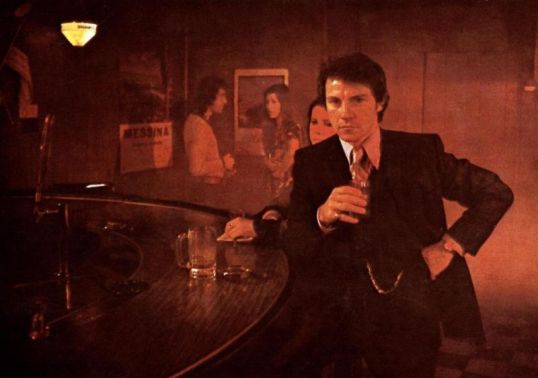
Charlie Cappa (Harvey Keitel) is Giovanni’s nephew, a 27 year-old man who still lives at home with his mother and who still feels guilty for having “impure” thoughts.  Charlie prays in church and then goes to work as a collector for Giovanni.  Giovanni is grooming Charlie to take over a restaurant, not because Charlie is particularly talented at business but just because Charlie is family.  Giovanni warns Charlie not to get involved with Teresa (Amy Robinson) because Teresa has epilepsy and is viewed as being cursed.  And Giovanni particularly warns Charlie not to hang out with Teresa’s cousin, Johnny Boy (Robert De Niro).  Johnny Boy may be charismatic but everyone in the neighborhood knows that he’s out-of-control.  His idea of a good time is to blow up mailboxes and shoot out street lamps.  Charlie, who is so obsessed with sin and absolution that he regularly holds his hand over an open flame to experience the Hellfire that awaits the unrepentant sinner, finds himself falling in love with Teresa (though it’s debatable whether Charlie truly understands what love is) and trying to save Johnny Boy.

Charlie has other friends as well.  Tony (David Proval) runs the bar where everyone likes to hang out and he seems to be the most stable of the characters in Mean Streets.  He’s at peace with both the neighborhood and his place in it.  Meanwhile, Michael (Robert Romanus) is a loan shark who no one seems to have much respect for, though they’re still willing to spend the afternoon watching a Kung Fu movie with him.  Michael knows that his career is dependent on intimidation.  He can’t let anyone get away with not paying back their money, even if they are a friend.  Johnny Boy owes Michael a lot of money and he hasn’t paid back a single dollar.  Johnny Boy always has an excuse for why he can’t pay back Michael but it’s obvious that he just doesn’t want to.  Charlie realizes that it’s not safe for Johnny Boy in Little Italy but where else can he go?  Brooklyn?

Mean Streets follows Charlie and his friends as they go about their daily lives, laughing, arguing, and often fighting.  All of the characters in Mean Streets enjoy a good brawl, despite the fact that none of them are as tough as their heroes.  A chaotic fight in a pool hall starts after someone takes offense to the word “mook,” despite the fact that no one can precisely define what a mook is.  The fights goes on for several minutes before the police show up to end it and accept a bribe.  After the cops leave, the fight starts up again.  What’s interesting is that the people fighting don’t really seem to be that angry with each other.  Fighting is simply a part of everyday life.  Everyone is aggressive.  To not fight is to be seen as being weak and no one is willing to risk that.

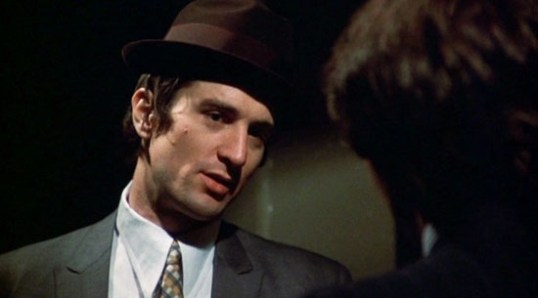
Mean Streets was Martin Scorsese’s third film (fourth, if you count the scenes he shot before being fired from The Honeymoon Killers) but it’s the first of his movies to feel like a real Scorsese film.  Scorsese’s first film, Who’s That Knocking On My Door?, has its moments and feels like a dry run for Mean Streets but it’s still obviously an expanded student film.  Boxcar Bertha was a film that Scorsese made for Roger Corman and it’s a film that could have just as easily been directed by Jonathan Demme or any of the other young directors who got their start with Corman.  But Mean Streets is clearly a Scorsese film, both thematically and cinematically.  Scorsese’s camera moves from scene to scene with an urgent confidence and the scene where Charlie first enters Tony’s bar immediately brings to mind the classic tracking shots from Goodfellas, Taxi Driver, and Casino.  One gets the feeling that Pete The Killer is lurking somewhere in the background.  The scenes between Keitel and De Niro are riveting.  Charlie attempts to keep his friend from further antagonizing Michael while Johnny Boy tells stories that are so long and complicated that he himself can’t keep up with all the details.  Charlie hold everything back while Johnny Boy always seems to be on the verge of exploding.  De Niro’s performance as Johnny Boy is one that has been duplicated but never quite matched by countless actors since then.  He’s the original self-destructive fool, funny, charismatic, and ultimately terrifying with his self-destructive energy.

Mean Streets was Scorsese’s first box office success and it was also the film that first brought him widespread critical acclaim.  However, in a year when the totally forgotten A Touch of Class was nominated for Best Picture, Mean Streets did not receive a single Oscar nomination, not even for De Niro’s performance.  Fortunately, by the time Mean Streets was released, De Niro had already started work on another film about the Mafia and Little Italy, The Godfather Part II.

Previous entries in The Unnominated:

  1. Auto Focus 
  2. Star 80
  3. Monty Python and The Holy Grail
  4. Johnny Got His Gun
  5. Saint Jack
  6. Office Space
  7. Play Misty For Me
  8. The Long Riders

McBain (1991, directed by James Glickenhaus)


In the year 1973, Bobby McBain (Christopher Walken) was an American POW, fighting for his life in a North Vietnamese prison camp that was run by a general so evil that he wore a necklace of human ears.  Luckily, on the last day of the war, McBain was rescued by Roberto Santos (Chick Vennerra).  When Bobby asked how he could ever repay Santos, Santos gave him half of a hundred dollar bill and told him that someday, Santos would give him the other half.  McBain swears that he will be ready when the day comes to get the other half.  I guess he’s like Caine in Kung Fu, waiting for the chance to snatch the pebble from his master’s hand.

15 years later, McBain is a welder in New York.  One day, while sitting in a bar, he watches as Santos is executed on live television after a failed attempt to overthrow the dictator of Colombia.  Shortly afterwards, McBain is approached by Santos’s sister (Maria Conchita Alonzo), who asks McBain to help her finish Santos’s revolution.  McBain tells her a long story about attending Woodstock and then reunites with his Vietnam War buddies, Frank (Michael Ironside!), Eastland (Steve James), Dr. Dalton (Jay Patterson), and Gil (Thomas G. Waites).  After killing a bunch of drug dealers, stealing their money, and harassing Luis Guzman, the gang heads for Colombia.

I wonder how many people have watched this movie over the years with the expectation that it would be a live action version of the famous Rainier Wolfcastle film that was featured in several episodes of The Simpsons.  Unfortunately, this movie has nothing to do with the Simpsons version of McBain.  (Sorry, no “Bye, book.”)  Instead, it’s just another strange and overlong action film from director James Glickenhaus.  The film mixes scene of total carnage with dialogue that often seems to be going off on a totally unrelated tangent, like McBain’s musings about what Woodstock ultimately stood for.  Walken doesn’t seem to be acting as much as he’s parodying his own eccentric image.  Walken takes all of his usual quirks and trademark vocal tics and turns them up to 11 for this movie.

Even though the movie is twenty minutes too long, it still feels like scenes are missing.  Alonzo leaves Colombia on a mule and then is suddenly in New York.  (The mule is nowhere to be seen.)  We don’t actually see Walken recruiting the majority of his team.  Instead, they just show up in his house.  Once the action moves to Colombia, it turns out that overthrowing the government is much simpler than it looks.  While the rebels lay down their lives while attacking the palace, McBain and his crew pretty much stroll through the movie without receiving even a scratch.  Maybe welders should be put in charge of all of America’s foreign policy adventures.  It couldn’t hurt.

With its hole-filled plot and confusingly edited combat scenes, McBain isn’t great but 80s action enthusiasts should enjoy seeing Michael Ironside and Steve James doing their thing.  Others will want to see it just for Christopher Walken’s characteristically odd performance.  He may not be Rainier Wolfcastle but, for this movie, Christopher Walken is McBain.

A Movie A Day #255: Her Alibi (1989, directed by Bruce Beresford)


Tom Selleck is Phil Blackwood, a best-selling mystery author who is suffering from writer’s block.  Paulina Porizkova in Nina, a beautiful Romanian who has been accused of murder.  When Phil sees Nina being arraigned in court, it is love at first sight.  He provides her with a false alibi and invites her to stay with him while he writes a book based on her case.  At first, Phil thinks that she is innocent but he soon has his doubts, especially after Nina shows off her skills as a knife thrower.
1989 was a strange year for Australian director Bruce Beresford.  On the one hand, he directed Driving Miss Daisy, which went on to win the Oscar for the best picture.  On the other hand, he also directed Her Alibi, a disjointed comedy that feels like an extended episode of Magnum P.I.  (Even Sellecks’ narration feels like a throwback to his star-making role.  But if Phil is a best-selling writer, why does his narration sound so clunky and clichéd?)  Her Alibi is a predictable film, not really bad but just very bland.  It tries to duplicate the style of a classic screwball comedy but it lacks the bite necessary to make much of an impression.  On the plus side, the great William Daniels was given a few good lines as Phil’s caustic agent and Paulina Porizkova was absolutely beautiful.  The scene where Nina gives Phil a haircut almost makes the movie worth it.

One final note: When watching Her Alibi, be sure to pay attention to the scene where Phil holds up his latest novel.  The book is so thin that it looks like it is only 20 pages long, at the most.

Shattered Politics #39: Taxi Driver (dir by Martin Scorsese)


Taxi_Driver_poster

We’ve never had a President named Charles.  We’ve had several Presidents named John and a quite a few named James.  We’ve even had three named George.  But we’ve never had a Charles.  We’ve come close.  Charles Evans Hughes nearly beat evil old Woodrow Wilson in 1916.  Charles Cotesworth Pinckney was nominated two times in a row by the Federalists but lost to Thomas Jefferson and James Madison respectively.  We’ve had three Vice Presidents names Charles — Fairbanks, Dawes, and Curtis — but never a President.

And, if we ever do elect a President named Charles, he’s probably go by either Charlie or Chuck.  The United States has always liked to think of itself as being a country that has no official royal family and, as a name, Charles probably sounds far to aristocratic for most voters.

That’s why I’m sure that, once U.S. Sen. Charles Palatine won the Democratic presidential nomination back in 1976, he probably insisted that people start calling him Chuck.  Of course, Sen. Palatine probably had no idea how lucky he was to win that nomination.  If not for a few secret service agents, Sen. Palatine could very well have fallen victim to a psychotic taxi driver named Travis Bickle.

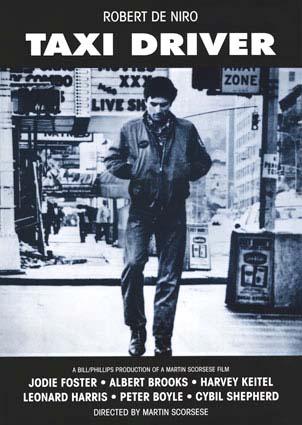
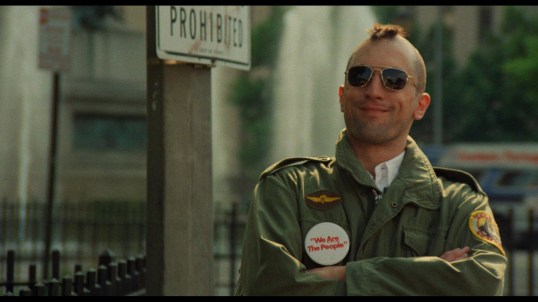
Sen. Palatine’s presidential campaign is a major subplot of Martin Scorsese’s 1976 masterpiece of paranoia, Taxi Driver.  As played by an actor named Leonard Harris, Sen. Palatine appears to be the epitome of a politician.  He may smile at the right moment but his eyes are always shifty.  Even his campaign slogan (“We Are The people!”) is vapid in an all too plausible way.  (How different is “We Are the People” from “We Are The People We’ve Been Waiting For?”)  For the most part, Palatine remains a remote figure, giving speeches and appearing in television commercials.  The only time that we get to know Palatine as a person is when he gets in a taxi being driven by Travis Bickle (Robert De Niro).

Travis recognizes him immediately and tells him that he tells everyone who gets in the cab that “they gotta vote for you.”  Palatine smirks a little as he asks Travis what he thinks the most important issue of the election is.  Travis goes on a bit about how someone needs to destroy all of the scum and filthy lowlifes who seem to populate Travis’s section of New York.  As Travis rambles, Palatine’s smile disappears and it becomes obvious that he’s realized that he is essentially being driven by a psycho.  Oh shit, Palatine is probably thinking, this guy is telling people that they gotta vote for me?  However, Palatine quickly regains his composure and assures Travis that the wisest people that he’s ever met have been taxi drivers.

Of course, what Palatine doesn’t realize is that Travis only knows about the campaign because he happens to be obsessed with a Palatine campaign worker named Betsy (Cybill Shepherd).  And Betsy even goes out with Travis a few times.  But then Travis, who spends the majority of the film showing how little skill he has when it comes to understanding and relating to other people, takes Betsy to an adult film.

With Betsy refusing to take his calls, Travis’s attention shifts to Iris (Jodie Foster), a teenage prostitute.  Obviously seeing himself as being a knight in shining armor, Travis tells Iris that she has to go back home to her parents.  As Travis talks, it becomes apparent that he’s simply repeating talking points that he’s heard on TV.  (If Taxi Driver was made today, Travis would be one of those people constantly sharing “inspirational” Facebook posts.)  Iris laughs at Travis and goes back to her pimp, Sport (Harvey Keitel).

And, of course, Travis goes even crazier than before.

38 years after it was first released, Taxi Driver remains a disturbing and powerful film.  However, what makes it effective is that, in many ways, it’s perhaps the darkest comedy ever made.  Throughout the entire film, Travis essentially tells everyone that he meets that he’s disturbed and potentially dangerous and, throughout the entire film, everyone seems to be determined to ignore all of the signs.

Critics always talks about the scene where Travis points a gun at his mirror and asks, “You talkin’ to me?”  And that’s a great scene.  It deserves to be famous, just as De Niro deserves all of the praise that he’s gotten for his iconic performance in Taxi Driver.

However, for me, there are two other scenes that are just as brilliant.  The first is where Travis attempts to get some advice from an older cabbie named Wizard (Peter Boyle).  Travis says he’s been having a lot bad thoughts.  Wizard shrugs and says that everyone has those.  What makes this scene particularly memorable are the lengths that Wizard goes to in order to avoid acknowledging that Travis is obviously disturbed.

And then, there’s the scene where Travis buys a gun from Easy Andy (Steven Prince).  Andy is such a salesman and is so nonchalant about all of his weaponry that, for a few brief minutes, Steven Prince actually manages to steal the spotlight from Robert De Niro.

Whenever one thinks about Taxi Driver, one automatically pictures Robert De Niro.  That’s why it’s all the more interesting that De Niro was not the first choice for Travis.  When Taxi Driver was in pre-production and a pre-Jaws Steven Spielberg (of all people) was thinking about directing it, Jeff Bridges as briefly attached to the role.  And while it’s always tempting to think about what a Spielberg/Bridges version of Taxi Driver would look like, I think we’re all right to be happy that the actual film was directed by Scorsese and starred De Niro.  They truly made Taxi Driver into one of the most memorable films ever made.

taxi-driver-mohawk