Bird (1988, directed by Clint Eastwood)


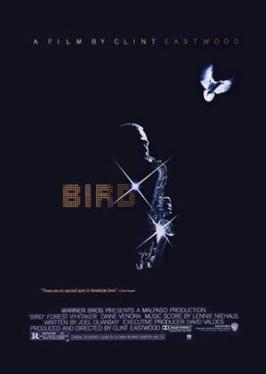
Forest Whitaker stars as the legendary saxophonist Charlie “Bird” Parker.  The film, which is structured around flashbacks and time jumps and features some of the most beautifully-done transitions that I’ve ever seen, follows Parker as he plays his saxophone, challenges the jazz purists who his own individual style, and looks for work in both America and France.  Along the way, we watch as he befriends and learns from Dizzy Gillespie (Samuel Wright), mentors a young trumpet player named Red Rodney (Michael Zelniker), and has a complex relationship with a white jazz lover named Chan Parker (Diane Venora).  Throughout his life, Charlie Parker struggles with his addiction to heroin and alcohol, occasionally getting clean to just then fall back into his habit.  To its credit, the film avoids most of the biopic cliches when it comes to portraying Parker’s addiction.  Parker accepts that he’s an addict, just as he accepts that he has a talent that is destined to revolutionize American music.

Director Clint Eastwood has always been a fan of jazz and he actually saw Charlie Parker perform when he was a young man.  His love of jazz had been present in almost every modern-era film that he has directed, staring with Play Misty For Me’s lengthy trip to the Monterey Jazz Festival.  Bird was a passion project for Eastwood, the first film that Eastwood directed without also appearing in.  (Eastwood doesn’t star in his second directorial effort, Breezy, but he does have a brief and silent cameo as a man standing on pier.)  Eastwood takes a nonlinear approach to telling the story, eschewing the traditional bopic format and instead putting the focus on Parker’s music.  Eastwood was able to get several never bef0re-released recordings of Parker performing and, when Whitaker is blowing into his saxophone in the film, we’re actually hearing Parker.  Eastwood’s direction captures the smoky atmosphere of the jazz clubs where Parker and Gillespie made their name while the nonlinear style reflects the feeling of just letting a song take you to wherever it’s going.  This is a movie about jazz that plays out like a jazz improvisation.

Forest Whitaker gives an amiable and charismatic performance as Charlie Parker, playing him as someone who has found both an escape and peace in his music, even as he physically struggles with the ravages of his drug addiction.  Whitaker won the Best Actor at Cannes for his performance in Bird.  Eastwood received the Golden Globe for Best Director.  Bird feels like it was labor of love for both of them.  Bird may not have set the box office on fire when it was originally released but it remains one of the best jazz films.

The Eric Roberts Collection: Night Night (dir by Niki Koss)


April Davis (Brenna D’Amico) has just inherited a small fortune and she’s got a wonderful boyfriend named Robert.  Plus, she lives in Texas!  Her life is going wonderfully!  But then, a terrible car accident leaves her in a five-month coma.  When she finally awakens, she discovers that the people in the other car — a mother and her children — were killed in the accident.  Because she had a few drinks before she got behind the wheel and she was texting with her boyfriend while driving, she is now being investigated for vehicular manslaughter.

April is taken home by Robert (Nick Marini) but it turns out that things have changed.  As Robert explains it, April was in a coma for five months so he had to handle things until she woke up.  As a result, he now has a key to the house.  He bought her a new phone to replace the one that was taken by the police.  He bought her a new monitor for her computer.  Robert’s been on top of everything!  What a great guy …. except, there seems to be something different about Robert as well.  He’s angrier than April remembered and he’s controlling.  He says it’s for April’s own good but who knows for sure?  April starts to have strange dreams and nightmares and soon, she’s wondering what’s real and what isn’t.

Released in 2021 and filmed in the lovely town of Corsicana, Texas, Night Night is an effectively dream-like thriller, one that features a good lead performance from Brenna D’Amico and a plot that’s full of twists and turns.  Despite the low budget, director Niki Koss does a good job of creating a properly ominous atmosphere.  This film really took me by surprise.  I was mostly watching because Eric Roberts was in it but the film’s story drew me in pretty quickly.

As for Eric Roberts, this is one of his one-scene wonders.  He plays Dr. Nelson and gives April an update on her condition after she awakens.  The late Tony Todd also makes an appearance in this film, playing April’s attorney.  Neither role is big but the film itself works so well that it doesn’t matter that neither Roberts nor Todd play particularly prominent roles.  This was a good, independent thriller.  Give it a chance.

Previous Eric Roberts Films That We Have Reviewed:

  1. Star 80 (1983)
  2. Runaway Train (1985)
  3. Blood Red (1989)
  4. The Ambulance (1990)
  5. The Lost Capone (1990)
  6. Love, Cheat, & Steal (1993)
  7. Voyage (1993)
  8. Love Is A Gun (1994)
  9. Sensation (1994)
  10. Dark Angel (1996)
  11. Doctor Who (1996)
  12. Most Wanted (1997)
  13. Mercy Streets (2000)
  14. Wolves of Wall Street (2002)
  15. Mr. Brightside (2004)
  16. Six: The Mark Unleased (2004)
  17. Hey You (2006)
  18. Amazing Racer (2009)
  19. In The Blink of an Eye (2009)
  20. Bed & Breakfast (2010)
  21. Enemies Among Us (2010)
  22. The Expendables (2010) 
  23. Sharktopus (2010)
  24. Beyond The Trophy (2012)
  25. The Dead Want Women (2012)
  26. Deadline (2012)
  27. The Mark (2012)
  28. Miss Atomic Bomb (2012)
  29. Bonnie And Clyde: Justified (2013)
  30. Lovelace (2013)
  31. The Mark: Redemption (2013)
  32. Self-Storage (2013)
  33. A Talking Cat!?! (2013)
  34. This Is Our Time (2013)
  35. Inherent Vice (2014)
  36. Road to the Open (2014)
  37. Rumors of War (2014)
  38. Amityville Death House (2015)
  39. A Fatal Obsession (2015)
  40. Stalked By My Doctor (2015)
  41. Enemy Within (2016)
  42. Joker’s Poltergeist (2016)
  43. Prayer Never Fails (2016)
  44. Stalked By My Doctor: The Return (2016)
  45. The Wrong Roommate (2016)
  46. Dark Image (2017)
  47. Black Wake (2018)
  48. Frank and Ava (2018)
  49. Stalked By My Doctor: Patient’s Revenge (2018)
  50. Clinton Island (2019)
  51. Monster Island (2019)
  52. The Reliant (2019)
  53. The Savant (2019)
  54. Seven Deadly Sins (2019)
  55. Stalked By My Doctor: A Sleepwalker’s Nightmare (2019)
  56. The Wrong Mommy (2019)
  57. Exodus of a Prodigal Son (2020)
  58. Free Lunch Express (2020)
  59. Her Deadly Groom (2020)
  60. Top Gunner (2020)
  61. Deadly Nightshade (2021)
  62. The Elevator (2021)
  63. Just What The Doctor Ordered (2021)
  64. Killer Advice (2021)
  65. The Poltergeist Diaries (2021)
  66. The Rebels of PT-218 (2021)
  67. A Town Called Parable (2021)
  68. Bleach (2022)
  69. My Dinner With Eric (2022)
  70. Aftermath (2024)
  71. Devil’s Knight (2024)
  72. The Wrong Life Coach (2024)
  73. When It Rains In L.A. (2025)

Retro Television Review: Homicide: Life On The Street 3.3 “Extreme Unction”


Welcome to Retro Television Reviews, a feature where we review some of our favorite and least favorite shows of the past!  On Sundays, I will be reviewing Homicide: Life On The Street, which aired from 1993 to 1999, on NBC!  It  can be viewed on Peacock.

This week, the White Glove Killer is discovered.

Episode 3.3 “Extreme Unction”

(Dir by Keith Gordon, originally aired on October 28th, 1994)

For all the hours that Pembleton and the other detectives put in and for all the motives that were considered and the suspects were interviewed, the murderer of Katherine Goodrich and two other women is captured not through deductive brilliance but because she herself enters the police station.

When Pamela Wilgis (Lucinda Jenney) first enters the station, she claims to have just witnessed two men dumping the third victim.  Pembleton is dismissive of her until she mentions the white gloves, a detail that has not been released to the public.  While Pembleton talks to her, the other detectives check out Pamela’s apartment and discover 12 sets of white cotton gloves hanging in her bathroom.  Pamela is the murderer.

When Pembleton asks Pamela about the gloves, Pamela suddenly starts speaking in an Irish accent.  Later, she starts speaking like an angry and rebellious child.  Later still, she reverts to being a wide-eyed innocent who says she had no idea how she ended up in the interrogation room.  Pembleton is convinced that she’s faking her alternate personalities but, despite his best efforts, he can never get her to actually confess that she committed the murders.

From the start, Homicide has emphasizes the role of luck in solving murders.  The majority of the show’s murders are solved precisely because someone thought they could outsmart the police or because they made a very obvious error.  For all of Pembleton’s strengths in the Box, his interrogation technique works best when he’s dealing with someone who doesn’t understand how the system works.  Pamela, on the other hand, obviously understands what he’s trying to do.  She knows the system and she knows how to game it.  Pamela does eventually confess but not Pembleton.  Instead, she does an interview with the obnoxious reported played by Tony Todd, blaming her crimes on the abuse she suffered as a child and her dissociative disorder.  Pembleton’s pride is hurt but he also finds himself struggling with his faith.  How can Pamela, after killing three saintly women, now avoid paying for her crimes?  Even with the thrilling interrogation scene between Pembleton and Pamela and the excellent performances of Andre Braugher and Lucinda Jenney, it’s all feels a bit anticlimactic.  But it also feels appropriate for the world in which Homicide takes place.

This episode also wrapped up a few other plotlines.  Munch, Bayliss, and Lewis finally own their bar.  Good for them.  I’m not really a bar person or a drinker but I probably would have enjoyed visiting the Waterfront whenever Munch was working the bar.  Even more importantly, Felton returned to his mentally unstable wife.  And again, that’s a good thing if just because I was getting sick of listening to Felton whine about his marriage.  So was Kay.

This episode was effective enough.  The scenes between Andre Braugher and Lucinda Jenney alone made the episode memorable.  At the same time, as I watched, it occurred to me that, if this episode had aired during the first season, the White Glove Murders probably never would have been solved.  If Adena Watson had died during the third season, one can be sure Bayliss would have gotten a confession out Risley Tucker.

Next week, we find out why Detective Crosetti has yet to return from Atlantic City.

Trailer: Final Destination Bloodlines Teaser


Looks like Death is up to its shenanigans once again with Final Destination Bloodlines. Just when we thought it was safe to go about our lives without having to worry about Death’s penchant for complex Rube Goldbergesque plans to kill some people it looks like we spoke too soon.

On May 16, 2025, Death runs in the family and wearing a nose ring may not be the best thing when Death’s around. Here we have the first teaser trailer for Final Destination Bloodlines.

Retro Television Review: Homicide: Life on the Street 3.2 “Fits Like A Glove”


Welcome to Retro Television Reviews, a feature where we review some of our favorite and least favorite shows of the past!  On Sundays, I will be reviewing Homicide: Life On The Street, which aired from 1993 to 1999, on NBC!  It  can be viewed on Peacock.

This week, the investigation into the Catherine Goodrich murder continues.

Episode 3.2 “Fits Like A Glove”

(Dir by Ted Demme, originally aired on October 21st, 1994)

Last week’s episode ended with Bayliss and Pembleton discovering that a supply shed had been broken into near the Goodrich scene.  This episode opens with Bayliss and Pembleton talking to the groundskeeper, who explains that he came across the shed earlier.  He reported that the shed had been broken into to the primary on the case, Detective Gaffney.  Gaffney never bothered to follow-up and the shed has since been cleaned up.

That’s it for Gaffney!  Lt. Russert calls him into the office and tells him he’s no longer heading up the investigation.  She tells him to take a few days off and then to transfer to another department.  She promises him a “fair recommendation.”  Gaffney replies that Russert only get her job because of her sex.  He goes as far as to compare her to a statue of a woman on a boat, except she’s not a mermaid.  “You’ve got legs,” he says.  It’s an odd bit of dialogue and I kind of wish that Gaffney had delivered it Al Pacino style.  “You’ve …. GOT …. LEGGGGGS!”

Pembleton is now the primary and not a moment too soon because another murdered woman has been found, again left in a dumpster outside a Catholic church and only wearing long white gloves.  Pembleton theorizes that the killer hates Catholics.  (So …. Matin Luther, maybe?)  Pembleton continues the investigation but clues are hard to come by and smarmy reporter Matt Rhoades (Tony Todd) keeps threatening to reveal that the killer puts gloves on the victims.  At one point, a murder memorabilia collector (Hugh Hodgin) shows up and claims that the murders are connected to a nationwide crime spree.  The collector turns out to be a flake, exactly the type of person who Russert believes would be driven to give false evidence if the news about the gloves got out.

Meanwhile, Kay finds herself being used as a messenger service by both Beau and his estranged wife.  Beau’s wife, Beth (Mary B. Ward), wants to surprise Beau with a romantic dinner so she asks Kay to tell Beau that Beth wants him to come by and see the kids.  Beau tells Kay to tell Beth that their son needs to tighten the laces on his baseball glove.  (Poor Kay!) Beau goes to the house to see the kids, just to discover that Beth lied and sent them away so she could make Beau dinner.  Beau gets mad and leaves.  Mary feeds Beau’s dinner to the dog.

Bayliss, Munch, and Lewis put in for a liquor license for the bar.  Lewis interrogates Munch as to whether or not he was ever arrested in the 60s but — surprise! — Bayliss is the one with the criminal record, an arrest and conviction for misdemeanor gambling while Bayliss was in college.  Bayliss, you never cease to surprise me!

This episode was a bit frustrating because Pembleton doesn’t seem to be any closer to solving the murders.  As well, Felton’s domestic drama would be a bit more compelling if Felton himself was a more likable character.  But, I still liked this episode.  The season 3 ensemble is amazing and just the pleasure of watching actors like Andre Braugher, Melissa Leo, Yaphet Kotto, Ned Beatty, Clark Johnson, Kyle Secor, and yes, even Daniel Baldwin all on the same show is more than enough of a reason to watch.  Everyone was at the top of their game in this episode.

Will Pembleton catch the killer next week?  I have faith and, judging by the way Pembleton crossed himself when looking at the second victim, so does he.

Retro Television Review: Homicide: Life On The Street 3.1 “Nearer My God To Thee”


Welcome to Retro Television Reviews, a feature where we review some of our favorite and least favorite shows of the past!  On Sundays, I will be reviewing Homicide: Life On The Street, which aired from 1993 to 1999, on NBC!  It  can be viewed on Peacock.

This week, we begin the third season!

Episode 3.1 “Nearer My God To Thee”

(Dir by Tim Hunter, originally aired on October 14th, 1994)

The third season of Homicide opens with a disgusted Stan Bolander watching a relatively tame soap opera in the breakroom.  He’s offended by the fact that two of the show’s characters are shown in bed.  To Bolander, that’s the equivalent of pornography on network television.  Lewis points out that television execs force showrunners to add sex in order to bring in ratings.  Munch mentions that it’s strange that television is allowed to show sex but not nudity.  Munch then goes on to predict that there will soon be hundreds of channels, a channel for every interest.  There will be channels about animals and religion and politics and soon, anything you want to see will be at your finger tips and it will lead to people becoming dull and lazy.  John Munch, super prophet!

Hmmm …. do you think maybe Tom Fontana, who wrote this script and was one of Homicide’s executive producers, was maybe venting some of his own frustration over the demands that NBC was making in return for giving a third season to the critically acclaimed but low-rated Homicide?  Because the third season premiere of Homicide is a bit different from the previous two seasons.  For one thing, Jon Polito is no longer in the cast.  (Lewis mentions that Crosetti is on vacation in Atlantic City.)  Isabelle Hofman, who is certainly more attractive than anyone who has previously appeared on the show, has joined the cast as Lt. Megan Russert, the second shift commander.  And this episode features its share of nudity and sex.

At the same time, it’s still an excellent episode of Homicide.  Isabelle Hofman gives a tough and no-nonsense performance as Russert and, by the end of the episode, she seems as if she belongs in the ensemble as much as her less glamorous castmates.  And this episode has its share of sex and nudity but it’s all essential to the plot.  This episode lets us know that, for now, Homicide is a show that can adjust without losing its integrity.

The episode’s case is a red ball (which is a term used to indicate it’s a case that’s going to get media attention).  Katharine Goodrich, the 30 year-old founder of a shelter for battered women, has been found dead in a dumpster, nude except for a pair of long white cotton gloves, the type of gloves that you might expect to see at a royal procession but not at a crime scene.  Russert’s shift has picked up the case and, to everyone’s horror, the incompetent and racist Roger Gaffney (Walt MacPherson) is the primary detective.  The brass ask Giardello to keep an eye on Russert because they feel she’s too inexperienced to handle the investigation.  Giardello (and let’s take a moment to acknowledge just how wonderful Yaphet Kotto was in this role) calls in his own detectives to help out the second shift.  As you might have guessed, the two shifts do not have much respect for each other.  It’s chaos, especially when Gaffney and Pembleton nearly come to blows over Gaffney’s racism,  Russert defuses the situation and the scene, to be honest, is a bit overwritten.  From the first minute she appeared in the episode, Hofman has been credible as a detective and a lieutenant so writing one heavy-handed scene just so she can further prove herself feels almost an insult to the strength of her performance.  Hofman (and Russert) has already proven herself without having to dare Pembleton to shoot Gaffney and throw his life away.

That said, this was a strong episode.  Goodrich was a devout Catholic and Pembleton and Bayliss discuss their own views on religion.  Bayliss has tried out all the Protestant denominations (even the — *snort* — Unitarians) and is a bit of a cynic.  Pembleton was educated by Jesuits and says at one point that, “There are two types of Catholics.  Devout and fallen.  I fell.”  It’s a scene that could have been awkward but Andre Braugher and Kyle Secor pull it off wonderfully.  Secor, especially, has really come into his own.  Bayliss is no longer the awkward and earnest rookie from the first season.  In fact, Bayliss has so come into his own that he agrees to invest in a bar with Lewis and Munch.  They’re burying the Waterfront!

(Before Bayliss offers to invest, there’s a humorous scene where Much and Lewis try to convince Bolander to not only invest but to also be the bar’s mascot.  “A big man deserves a big meal,” Munch says.  Bolander — who I’m happy to say is far less whiny in this episode than he was during the previous two seasons — is not interested.  It’s kind of funny how Munch basically hero worships a guy who really seems like he wants nothing to do with him outside of work.)

Kay spends the episode taking calls from Felton’s wife, Beth (Mary B. Ward).  Beth recently kicked Felton out of the house because she thought Felton was cheating on her.  Felton admits to Kay that he is cheating on her.  When Kay isn’t running interference for her partner, she’s defending Russert when the other detectives insinuate that Russert must be slept her way to the top.  Kay lists all of Russert’s qualifications and commendations.  Yay, Kay!  You tell them!  Later, Russert sees Kay looking exhausted and snaps at her to get to work.  “Bitch,” Kay mutters.  Ouch!  Still, I laughed.

Felton breaks into his house to retrieve a suit, just to be confronted by Beth.  An obviously unstable Beth proceeds to take a pair of scissors to Felton’s jacket before then stripping down to her underwear, getting in bed, and asking Felton to leave so she can get some sleep.  (I’m going to guess that rather disturbing and deliberately anti-erotic scene was Fontana’s subversive answer to the NBC execs who asked him to sex up the show a little.)  Later, Russert finally goes home to get some rest and check in on her daughter.  Felton shows up at her front door and, after he tells her the one of his leads on the Goodrich murder went dry, she responds by passionately kissing him.  Now, we know where Felton has been going whenever Beth kicks him out.

As for the Goodrich murder, it turns out that, despite what everyone assumed, she was not raped.  After a nun tells Pembleton and Bayliss that Katherine never wore gloves, Pembleton deduces the gloves were put on her body after she was killed.  Gaffney insists that Katherine’s murderer was probably the boyfriend of one of the women at the shelter but Pembleton disagrees.  (This leads to the fight that I mentioned earlier.)  While Russert wants to keep the gloves out of the news, a smarmy reporter (Tony Todd) threatens to reveal their existence unless she agrees to come to him first with any developments.  As the episode ends, Pembleton and Bayliss are canvassing the crime scene and it’s hard not to notice that they are now the ones wearing white gloves, rubber in this case.  Bayliss says its pointless to keep canvassing the crime scene.  But then he and Pembleton spot a storage shed with a busted lock.  As they open the door, the end credits begin.

To be continued!

What a great way start to season 3.  Yes, I realize that this case is pretty much the exact opposite of the gritty, pointless murders that the first two seasons focused on but still, I am now very much wondering who killed Katherine Goodrich and why they put the gloves on her hands.  I hope this won’t be another unsolvable Adena Watson case.  Fortunately, I have total faith in Frank Pembleton.

I can’t wait to see what happens next week!


Lisa Marie Reviews An Oscar Winner: Platoon (dir by Oliver Stone)


One of my favorite scenes from TV’s King of the Hill occurs in an episode in which Hank and Peggy are celebrating their wedding anniversary.  They’ve sent Bobby and Luanne away for the weekend.  They have the house to themselves but, after their anniversary party, Peggy is feeling depressed.  She tells Hank that, for the first time ever, she feels old and she regrets all the dreams that she had that have yet to come true, like inventing and selling her own barbecue sauce.

Trying to cheer her up, Hank says, “C’mon, Peg.  We got the house to ourselves for weekend …. and I rented an R-rated movie!”

Peggy looks up, briefly hopeful that Hank did something romantic.  “What movie?” she asks.

Hank hesitates, glances down at the floor, and says, “Uhmm …. Platoon.”

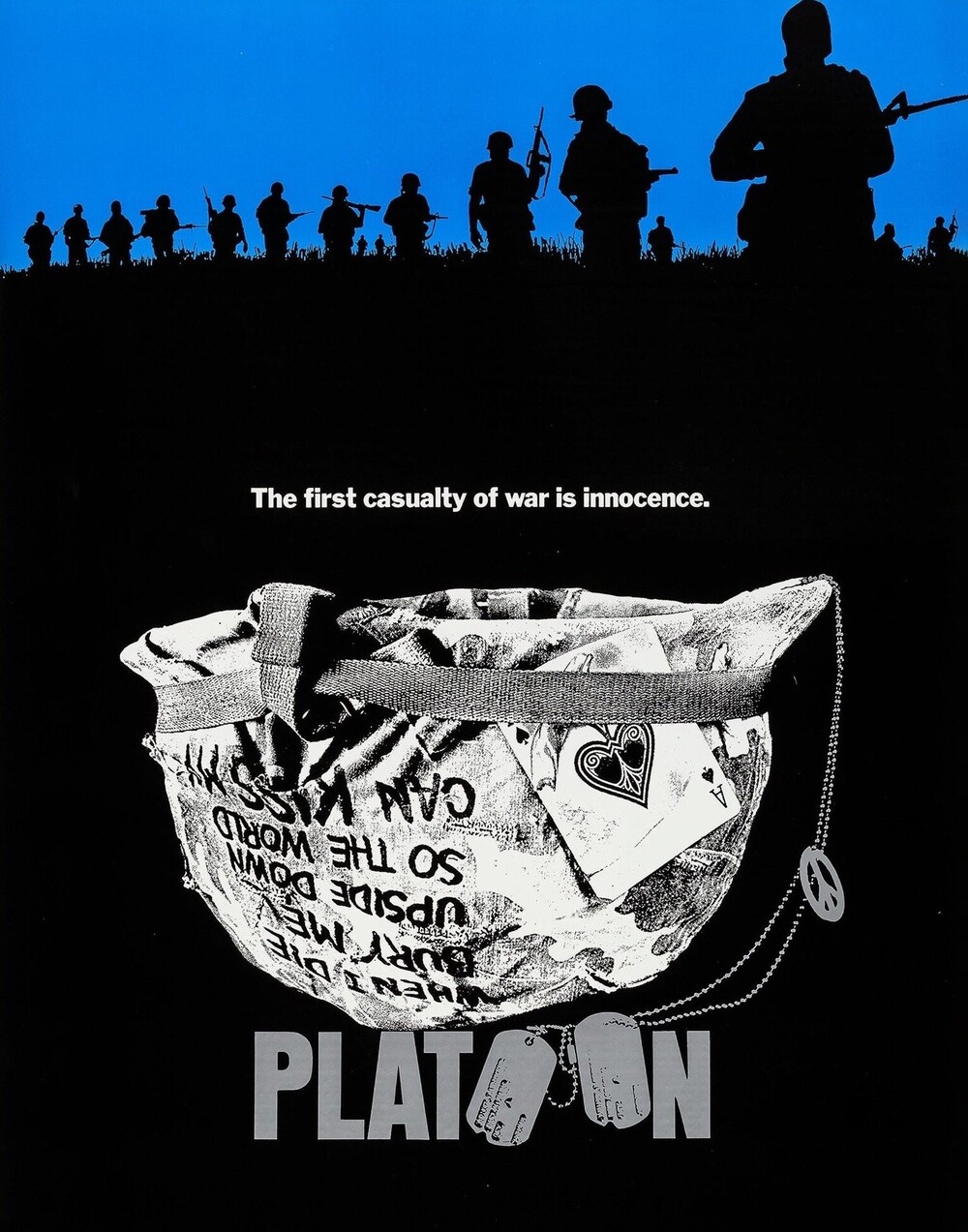
It’s funny because it’s true.  Just about every man that I know loves Platoon.  First released in 1986 and reportedly based on Oliver Stone’s own experiences as an infantryman in Vietnam, Platoon is often cited as being one of the greatest war films ever made.  Oddly enough, the film has an anti-war and anti-military message but, in my experience, those who love it talk more about the battle scenes than any message that Stone may have been trying to impart about the futility of war.  Pauline Kael once wrote that Oliver Stone had left-wing politics but a right-wing sensibility and I think you can definitely see that in Platoon.  Despite all of the characters talking about how pointless the war is and how much they resent being forced to risk their lives for no apparent purpose, the film’s energy comes from the scenes of Chris Taylor (Charlie Sheen) stalking through the jungle and, towards the end, losing his mind and giving himself completely over to the adrenaline that comes from being trapped in the middle of a battle.  Throughout the film, we hear Taylor’s rather pedantic thoughts on the military and his fellow soldiers but it’s hard not to notice that his actions and his dialogue are usually far less eloquent.  Taylor may be a rich intellectual (and wow, is Charlie Sheen ever unconvincing when it comes to portraying that part of Taylor’s personality) but when he’s in the jungle, he’s just fighting for survival.

The film’s plot centers around the conflict between two sergeants, the peace-loving Elias (Willem DaFoe) and the war-loving Barnes (Tom Berenger).  Taylor has to decide which one of the two to follow.  The pot-smoking Elias loves his men and goes out of his way to protect them.  The beer-drinking Barnes has a much harsher view of the world but, at the same time, he’s the type of scarred warrior who seems immortal.  One gets the feeling that he’ll never be defeated.  The rest of the platoon is full of familiar faces, with everyone from John C. McGinley to Francesco Quinn to Tony Todd to Forest Whitaker to Johnny Depp to a baby-faced Kevin Dillon showing up.  (Dillon is especially frightening as a psycho who has, for some reason, been nicknamed Bunny.)  The majority of the platoon is dead by the end of the film.  Even with the leadership of Elias and Barnes, the soldiers are stuck in a winless situation.  As Taylor points out, the Americans aren’t just fighting the enemy.  They’re also fighting each other.

Platoon is certainly not my favorite of the film nominated in 1986.  I would have gone with A Room With A View.  (Blue Velvet, which is as influential a film as Platoon, was not even nominated.)  That said, I can’t deny the power of Platoon‘s combat scenes.  Though Stone’s script is didactic and Taylor’s narration is awkwardly deployed throughout the film, Stone’s direction definitely captures the fear and dread of being in a strange place with no idea of whether or not you’re going to survive.  Stone is critical of the military (at one point, an officer calls an air strike on his own men) but seems to love the soldiers, even the ones who have pushed over to the dark side.

Platoon was not the first Best Picture nominee to be made about the Vietnam War.  The Deer Hunter, Coming Home, and Apocalypse Now were all released first.  But both The Deer Hunter and Apocalypse Now are surreal epics that seem to take place in a dream world.  Coming Home, which has a script that somehow manages to be even more didactic than Platoon‘s, focuses on the war back home.  Platoon is far more gritty and personal film.  Watching Platoon, you can smell the gunpowder and the napalm and feel the humidity of the jungle.  I can understand why it won, even if I prefer to watch Helena Bonham Carter and Julian Sands fall in love.

October True Crime: Chicago Massacre: Richard Speck (dir by Michael Feifer)


Richard Speck was the worst of the worst.

A petty criminal-turned-drifter, Richard Speck fled Texas to avoid being sentenced to prison for his part in a grocery store robbery.  He eventually ended up in Chicago, where he lived with his sister and her husband and found occasional work as a seaman.  When he couldn’t get work on a boat, the alcoholic Speck supported himself by mugging and burglarizing.  It’s not known when he committed his first murder, though it is suspected that it occurred back in Texas.  It is known that, in July of 1966, Speck’s sister and brother-in-law finally got sick of dealing with him as a houseguest and Speck ended staying in a series of rooming houses and homeless shelters.  On July 13th, the 24 year-old Speck mugged and raped at 53 year-old woman before then breaking into a townhouse that was occupied by nine student nurses.  Over the course of the night, he raped and murdered eight of nurses.  The only survivor hid underneath a bed until Speck left.  She later told police that Speck spoke with a soft Southern accent, had an acne-scarred face, and a tattoo that read Born to Raise Hell.

It was the tattoo that led to his capture.  Two days after the murders, with the city of Chicago in an uproar and the police launching a city-wide manhunt to catch the killer, Richard Speck attempted to kill himself by slitting his wrists.  He was taken to Cook County Hospital, where Dr. LeRoy Smith saw Speck’s tattoo and called the police.

Though protesting his innocence, Speck was convicted of the murders and sentenced to die.  He was spared the death sentence when the Supreme Court briefly outlawed capital punishment.  From prison, Speck eventually admitted that he had killed the nurses but he claimed that he was so drunk and high that he had no idea what he was doing.  After Speck died of heart failure in 1991, a videotape would emerge of a cocky Speck telling his fellow prisoners that he knew exactly what he was doing and he never felt a bit of guilt.  “Just wasn’t their night,” was Speck’s explanation for why the murders happened.  Speck also said that if the public knew how much fun he was having in prison, they would have released him for sure.  Richard Speck is the type of evil specter who seems to exist to specifically challenge those of us who are opposed to the death penalty.  If anyone has ever deserved to be executed in the most painful way possible, it was Richard Speck.

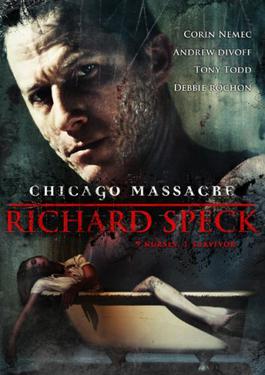
The 2007 film Chicago Massacre stars Corin Nemec as Richard Speck and the film’s makeup department deserves a lot of credit for transforming the handsome and normally quite personable Corin Nemec into the horribly poc-marked Richard Speck.  Sometimes, monsters truly do look like monsters and that was definitely the case of Speck.  Nemec plays Speck as being a natural-born deviant, a soulless sociopath who has no control over his impulses and who never seems to understand why the world is so disgusted by his crimes.  It’s a truly frightening performance.

The rest of the film is a flawed and heavily fictionalized account of Speck’s crimes, imagining that Speck was actually a casual acquaintance of one of the nurses that he killed and suggesting that she was the main reason why he broke into the townhouse to begin with.  The history nerd of me cringed when a police chief (Tony Todd) announced that his lead detective (Andrew Divoff) only had two days to solve the murders because the Democratic Convention was coming up.  (Speck committed the murders in 1966, two years before the Democrats came to Chicago for their ill-fated convention.)  Todd’s police chief says that he’ll be forced to sweep the murders under the rug if they’re not solved quickly but I’m not really sure how that would happen, given the enormity of the crime and the panic that reportedly swept through Chicago as a result.  As much as I hate to single out any one performer for criticism (because I usually assume that a bad performance has more to do with the director and the editor than the actor), Joanne Chew, cast in the role of the sole survivor of Speck’s rampage, delivers her dialogue so awkwardly that it sabotages what should have been some of the strongest moments of the film.  (Then again, even the best actress would perhaps be challenged by a line like, “I will look the devil in the eye.”)

Filled with flashbacks to both the murder of the nurses and Speck’s life as Texas criminal, Chicago Massacre is an undeniably icky film but given that it’s about Richard Speck, it really should be.  When it comes to a criminal like Richard Speck, it’s always tempting to try to look at his life for clues as how to prevent a future Richard Speck from committing a similar crime.  But, with Speck, there’s little to be learned beyond the fact that he did what he did because he had no conscience or sense of guilt to mitigate his impulses.  Speck had a terrible childhood but many people have had terrible childhoods without turning into mass murderers.  Speck was mentally unwell but many people deal with their mental health without turning into mass murderers.  In the end, he was a monster.  Thankfully, he was also enough of a dumbass to get a tattoo that made it impossible for him to hide from his crimes.

Vampire in Vegas (2009, directed by Jim Wynorski)


In this thoroughly jumbled film, Tony Todd plays Sylvain.  Sylvain is a centuries-old vampire who now lives in a mansion in Las Vegas.  He wants to run for governor of Nevada and then he hopes to become President of the United States.  Before he can campaign, Sylvain has to find a way to spend time in the daylight without bursting into flames.  He recruits Dr. VanHelm (Delia Sheppard) to conducts experiments and develop an anti-sun serum.  When Dr. VanHelm tests a prototype of the serum on three female vampires who have been tied to stakes in the desert, the experiment is observed by a camping couple who call the police.

At the same time, Jason (Edward Spivak) is engaged to marry Rachel (Sonya Joy Sims), so his friends decide to have one last hurrah by dragging him to Vegas and throwing a party with strippers.  Unfortunately, the strippers are all vampires who work for Sylvain.  Jason and his friends become Dr. VanHelm’s latest serum guinea pigs.  When Rachel and her friend Nikki (Brandin Rackley) decide to surprise Jason in Vegas, they are also drawn into Sylvain’s web of conspiracy when it turns out that Nikki is hoping to become the newest of Sylvain’s vampiric servants.

From the minute the film opens with a lengthy exposition dump and footage of Sylvain throughout the years, Vampire in Vegas is obviously a Jim Wynorski film.  With this film, Wynorski not only recreates the nonsensical vampire politics of the Twilight movies but he combines it with the bromantic decadence of The Hangover movies.  It’s not a successful mix.  Sylvain is determined to walk in the sunlight and to run for governor of Nevada but the movie never explains why.  With his mansion and his legion of loyal followers, Sylvain has done very well as a vampire who can only come out at night.  Why would he want to potentially lose everything that he has, just so he can run for governor and eventually president?  Why would Sylvain trade everything that he has now for a job that would mostly involve renaming highways and signing whatever bills end up on his desk?  And how does Sylvain think that he’ll be able to run for governor without someone investigating his past and discovering that he’s a vampire?

That’s a lot of questions and Jim Wynorski makes no attempt to answer them.  Instead, the movie focuses on the strippers stripping and Sylvain waiting for his chance to brave the sun.  It’s a Wynorski film so no shock there.  Tony Todd plays the role with dignity, the rest of the cast is negligible in this Vegas bet that didn’t pay off.