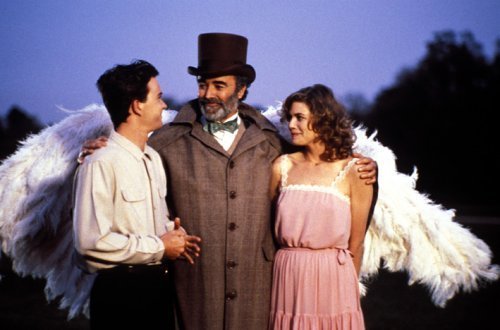
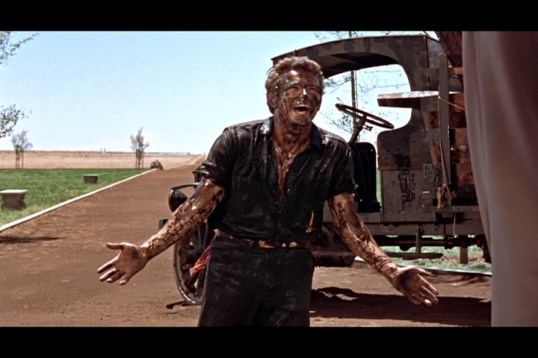
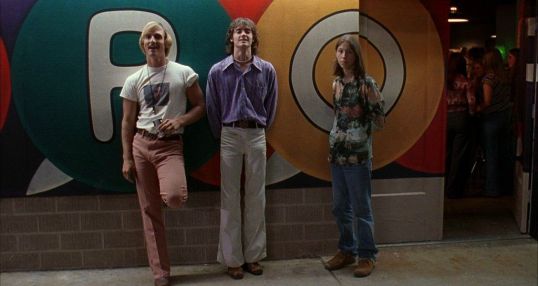
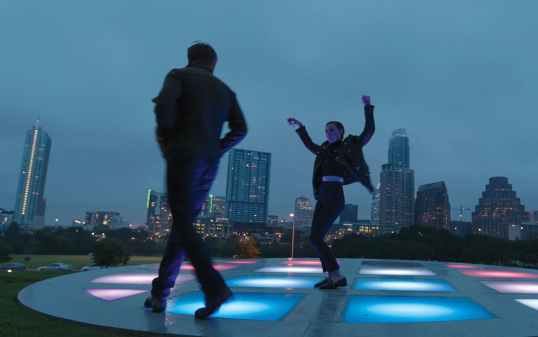
4 Or More Shots From 4 Or More Films is just what it says it is, 4 shots from 4 of our favorite films. As opposed to the reviews and recaps that we usually post, 4 Shots From 4 Films lets the visuals do the talking!
4 Shots From 4 Heavenly Films
4 Or More Shots From 4 Or More Films is just what it says it is, 4 shots from 4 of our favorite films. As opposed to the reviews and recaps that we usually post, 4 Shots From 4 Films lets the visuals do the talking!
4 Shots From 4 Heavenly Films
4 Or More Shots From 4 Or More Films is just what it says it is, 4 shots from 4 of our favorite films. As opposed to the reviews and recaps that we usually post, 4 Shots From 4 Films lets the visuals do the talking!
4 Shots From 4 Texas Films
4 Shots From 4 Films is just what it says it is, 4 shots from 4 of our favorite films. As opposed to the reviews and recaps that we usually post, 4 Shots From 4 Films lets the visuals do the talking!
Today, we pay tribute to the cinematic year of 2005. It’s time for….
4 Shots From 4 2005 Films
4 Or More Shots From 4 Or More Films is just what it says it is, 4 shots from 4 of our favorite films. As opposed to the reviews and recaps that we usually post, 4 Shots From 4 Films lets the visuals do the talking!
As a photographer, I love movie that feature shots of beautiful landscape. Here are four of my favorites!
4 Shots Of 4 Beautiful Landscapes
4 (or more) Shots From 4 (or more) Films is just what it says it is, 4 (or more) shots from 4 (or more) of our favorite films. As opposed to the reviews and recaps that we usually post, 4 (or more) Shots From 4 (or more) Films lets the visuals do the talking.
With the official Cannes lineup being announced, it only seems right to highlight a few films that have previously won the Palme d’Or. It’s time for….
4 Shots From 4 Films That Won At Cannes
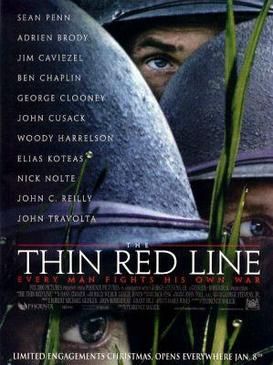
Based on a novel by James Jones (and technically, a sequel of sorts to From Here To Eternity), 1998’s The Thin Red Line is one of those Best Picture nominees that people seem to either love or hate.
Those who love it point out that the film is visually stunning and that director Terrence Malick takes a unique approach to portraying both the Battle of Guadalcanal and war in general. Whereas Steven Spielberg’s Saving Private Ryan told a rather traditional story about the tragedy of war (albeit with much more blood than previous World War II films), The Thin Red Line used the war as a way to consider the innocence of nature and the corrupting influence of mankind. “It’s all about property,” one shell-shocked soldier shouts in the middle of a battle and later, as soldiers die in the tall green grass of the film’s island setting, a baby bird hatches out of an egg. Malick’s film may have been an adaptation of James Jones’s novel but its concerns were all pure Malick, right down to the philosophical voice-overs that were heard throughout the film.
Those who dislike the film point out that it moves at a very deliberate pace and that we don’t really learn much about the characters that the film follows. In fact, with everyone wearing helmets and running through the overgrown grass, it’s often difficult to tell who is who. (One gets the feeling that deliberate on Malick’s point.) They complain that the story is difficult to follow. They point out that the parade of star cameos can be distracting. And they also complain that infantrymen who are constantly having to look out for enemy snipers would not necessarily be having an inner debate about the spirituality of nature.
I will agree that the cameos can be distracting. John Cusack, for example, pops up out of nowhere, plays a major role for a few minutes, and then vanishes from the film. The sight of John Travolta playing an admiral is also a bit distracting, if just because Travolta’s mustache makes him look a bit goofy. George Clooney appears towards the end of the film and delivers a somewhat patronizing lecture to the men under his command. Though his role was apparently meant to be much larger, Adrien Brody ends up two lines of dialogue and eleven minutes of screentime in the film’s final cut.
That said, The Thin Red Line works for me. The film is not meant to be a traditional war film and it’s not necessarily meant to be a realistic recreation of the Battle of Guadalcanal. Instead, it’s a film that plays out like a dream and, when viewed a dream, the philosophical voice overs and the scenes of eerie beauty all make sense. Like the majority of Malick’s films, The Thin Red Line is ultimately a visual poem. The plot is far less important than how the film is put together. It’s a film that immerses you in its world. Even the seeming randomness of the film’s battles and deaths fits together in a definite patten. It’s a Malick film. It’s not for everyone but those who are attuned to Malick’s wavelength will appreciate it even if they don’t understand it.
And while Malick does definitely put an emphasis on the visuals, he still gets some good performances out of his cast. Nick Nolte is chilling as the frustrated officer who has no hesitation about ordering his men to go on a suicide mission. Elias Koteas is genuinely moving as the captain whose military career is ultimately sabotaged by his kind nature. Sean Penn is surprisingly convincing as a cynical sergeant while Jim Caviezel (playing the closest thing the film has to a main character) gets a head start on humanizing messianic characters by playing the most philosophical of the soldiers. Ben Chaplin spends most of his time worrying about his wife back home and his fantasies give us a glimpse of what’s going on in America while its soldiers fight and die overseas.
The Thin Red Line was the first of Terrence Malick’s films to be nominated for Best Picture and it was one of three World War II films to be nominated that year. However, it lost to Shakespeare In Love.
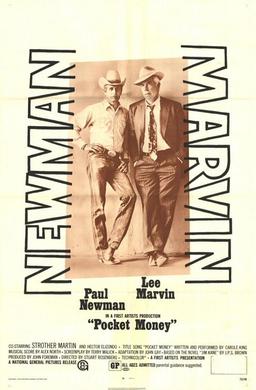
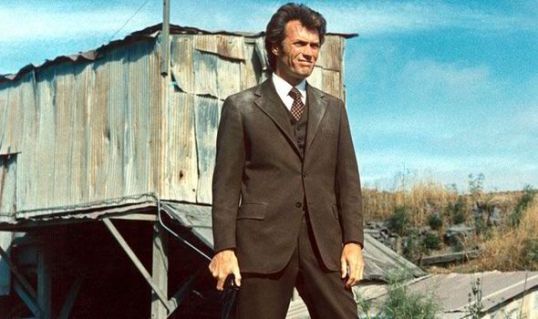
Paul Newman as San Francisco Police Detective Harry “Dirty Harry” Callahan?
Today, it sounds unthinkable that the outspokenly liberal Newman could ever have been a contender for the role of Harry Callahan, a police detective who is quick with a quip but even quicker on the trigger. As everyone knows, Clint Eastwood played Harry and, as a result, he finally became as big of a star in the United States as he already was in Europe. Today, it’s impossible to imagine anyone other than Clint Eastwood torturing the Scorpio Killer for information and then announcing himself to be “all torn up about his rights.” Just try to imagine Paul Newman snarling as reflexively as Clint Eastwood did upon hearing that the whiny guy in the liberal office taught constitutional law at Berkeley. Try to imagine Paul Newman calling someone “a punk” or bragging about the power of his gun. It can’t be done.
And yet, as hard as it is to believe, Clint Eastwood was not the first choice for Harry Callahan. In fact, Eastwood apparently wasn’t even on Warner Bros.’s list of contenders when they initially bought the rights for the script that would eventually become Dirty Harry.
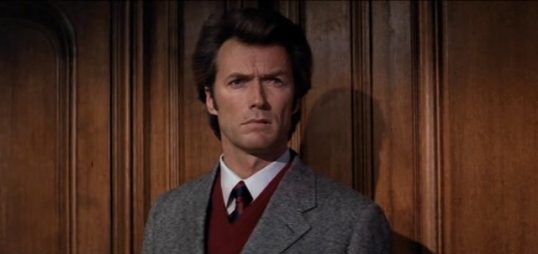
Written by Harry Julian Fink and Rita M. Fink, that script was originally called Dead Right and it took place in New York. In the original script, Harry Callahan was world-weary, veteran New York cop, in his 50s and just a few months away from retirement. In the original script, Harry pursued a serial killer named Travis. When Warner Bros. bought the script in 1969, they viewed it as being a potential vehicle for Frank Sinatra with Irvin Kershner directing. (Kershner is probably best remembered for later directing The Empire Strikes Back.) As was his habit, Sinatra immediately demanded rewriters. John Milius wrote three drafts, each one expanding on the idea of Callahan as a rebel against the system. Terrence Malick (yes, that Terrence Malick) was also brought it and came up with a storyline in which the serial killer would specifically be targeting mobsters and other people who had escaped justice. Somewhere, amongst all the rewrites, the action moved from New York to Seattle.
After all that effort, why didn’t Frank Sinatra play Harry Callahan? Reportedly, he broke his hand and, as a result, he was told that he wouldn’t be able to hold a microphone or a gun or anything else while it was healing. Since you really can’t have Harry Callahan without a gun, Sinatra left the project and Irvin Kershner went with him.
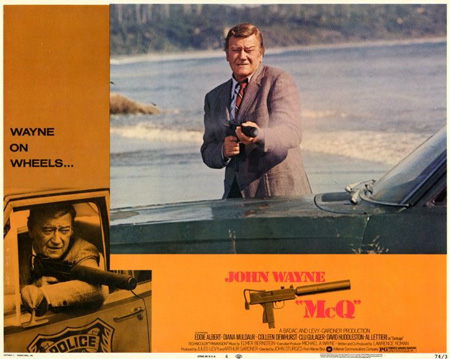
While trying (unsuccessfully) to recruit Sidney Pollack as their new director, Warner Bros. searched for a new leading man. Reportedly, the script ended up on John Wayne’s desk. Wayne later said that he turned down the role because he felt the violence was gratuitous. Other sources indicate that John Wayne actually was interested in the role but that the studio didn’t consider him to be contemporary enough. (After the success of Dirty Harry, Wayne would play a similar cop character in McQ and would provide a hint of what Dirty Harry starring John Wayne would have been like.) Burt Lancaster turned down the role because he didn’t like the script’s politics. Lee Marvin and Robert Mitchum both turned down the role because they refused to play cops. George C. Scott reportedly refused the role because of the violence. Marlon Brando was considered but, probably wisely, was never approached.
Having been turned down by all of the older tough guys, Warner Bros. went with the younger tough guys. Steve McQueen turned down the role because he had already played a cop in Bullitt and he felt the critics would accuse him of repeating himself. (He was probably right.) Paul Newman refused the role on political grounds but, as he often tended to do whenever he turned down a role, he also recommended another actor for the part. That actor was Clint Eastwood who was an old friend of Newman’s and who, obviously, had no problems with the film’s politics.
(Let’s take a moment to give some respect to Paul Newman, who was reportedly one of the nicest guys in Hollywood.)
Once Eastwood was on board, his requested that his friend and frequent collaborator, director Don Siegel, be hired to direct the film. The script was again rewritten, moving the action to San Francisco and making Harry into a far less talkative character. The serial killer known as Travis became the serial killer known as Scorpio. The idea of the killer targeting criminals was abandoned at Siegel’s insistence, though Eastwood liked the idea enough to use it for Dirty Harry’s first sequel, Magnum Force.
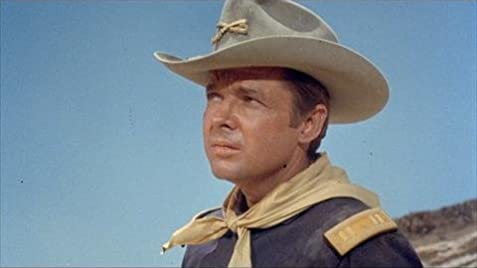
Originally, James Caan was approached for the role of Scorpio but Caan turned it down (which, of course, left him free to play Sonny in The Godfather). Perhaps most intriguingly, Audie Murphy was offered the role. Murphy was one of the most decorated combat soldiers of World War II. He had gone from the Army to appearing in movies. By the time Dirty Harry went into production, Murphy was largely appearing in B-westerns and was as known for his temper as his films. (He was acquitted of attempted murder shortly before filming began on Dirty Harry. Murphy said that his anger issues were largely due to the trauma of World War II and he was one of the first prominent people to openly speak about what has since become known as PTSD.) Murphy undoubtedly would have been an intimidating Scorpio but he died in a plane crash before he could accept or refuse the role.
Instead, the role went to Andrew Robinson, who an unknown at the time. He was also, in real life, a pacifist who had difficulty not flinching whenever he had to fire a rifle in the film. That said, Robinson gave a brilliantly unhinged performance as Scorpio and reportedly had to get an unlisted telephone number because of all the angry and threatening phone calls that he received after the movie was released.
Now, I have to admit that I personally find the idea of Frank Sinatra/James Caan or, for that matter, a John Wayne/Audie Murphy police procedural to be kind of intriguing. And goodness know, I would certainly like a chance to see Marlon Brando doing the “do you feel lucky, punk?” speech. In the end, though, I think things turned out for the best.
4 Shots From 4 Films is just what it says it is, 4 shots from 4 of our favorite films. As opposed to the reviews and recaps that we usually post, 4 Shots From 4 Films lets the visuals do the talking.
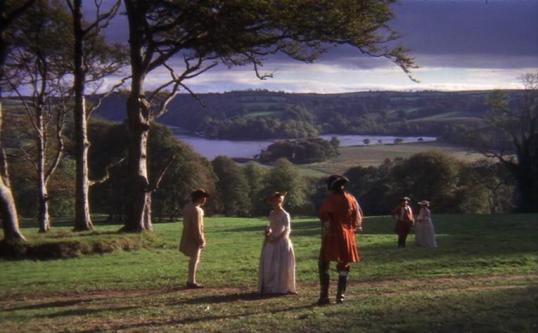
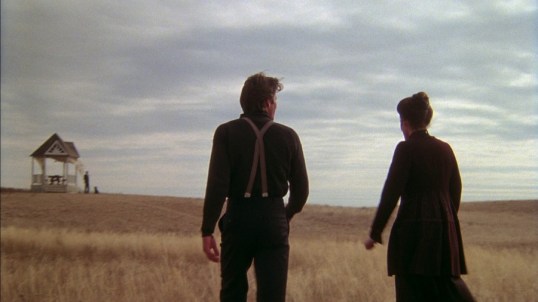
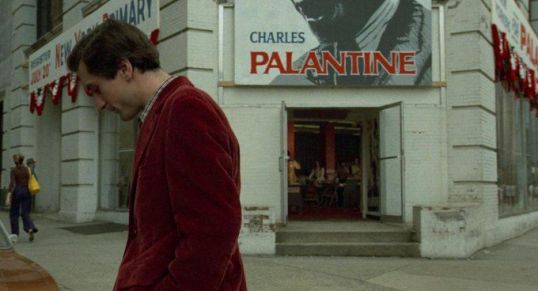
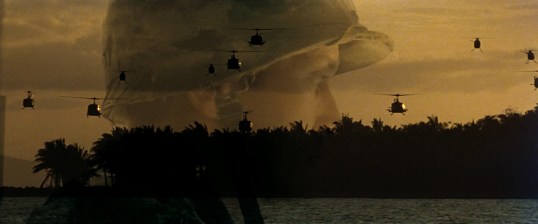
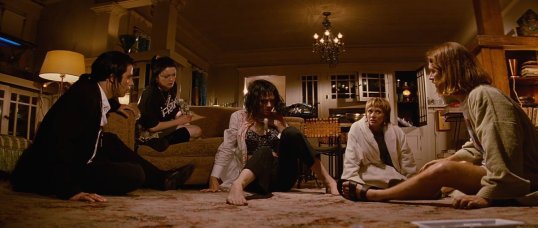
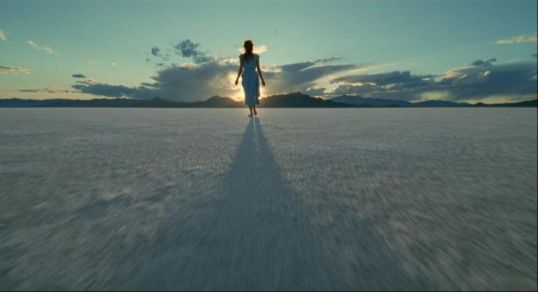
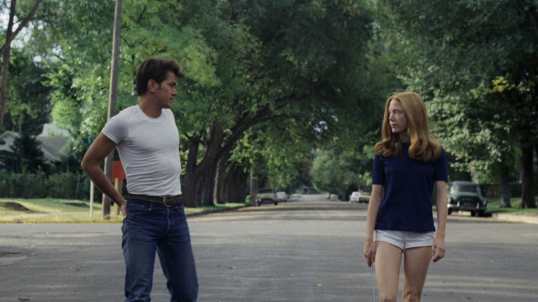
Today, we wish a happy birthday to one of cinema’s greatest visual stylists, the one and only Terrence Malick!
4 Shots From 4 Terrence Malick Films
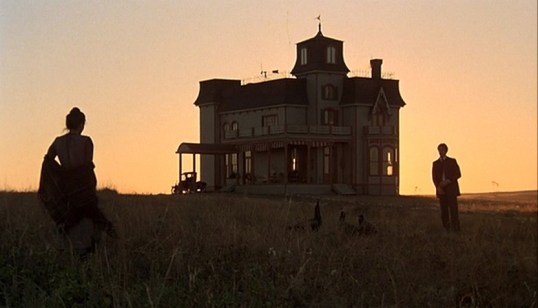
Today’s song of the day comes to us from the soundtrack of Terrence Malick’s 1978 film, Days of Heaven. Composed by Ennio Morricone, this is The Return:
Previous Entries In Our Tribute To Morricone:
With the help of the festivals, the Oscar picture became a bit clearer this month. Perhaps the biggest news is that the initial response to Harriet, which many people expected to be this year’s front runner, was decidedly lukewarm. The other big news? The Irishman, according to those who have seen it, may be Scorsese’s best yet.
Below, you’ll find my Oscar predictions for September. If you want to see how my thinking has evolved over the course of this year, be sure to check out my predictions for January, February, March, April, May, June, July, and August!
Now, admittedly, there’s still an element of wishful thinking in some of the predictions below. For instance, it would be an interesting narrative development if Adam Sandler and Eddie Murphy were both nominated for best actor. That doesn’t mean that it’s going to happen but both of them have received a lot of early acclaim for their yet-to-be released films this year. They’re contenders, even if their reputations may make them long shots. What’s the point of making predictions if you can’t have a little fun?
Joker is going to get big Oscar punch. I do think it’s going to probably be a bit too controversial to pick up a Best Picture nomination but I’m still going to go ahead and put down Joaquin Phoenix as a best actor nominee.
Bombshell is the new title of Jay Roach’s Fox News film. To me, it doesn’t sound like it’s going to be that good and, quite frankly, Jay Roach’s films usually prove that just being obsessed with politics doesn’t necessarily mean that you have anything interesting to say about the topic. That said, if Vice (a film that even leftist film critics criticized as being heavy handed and cartoonish) could pick up a best picture nomination last year, then I’m going to assume Bombshell could do the same. With both the presidential election and possible impeachment trial looming, it’s reasonable assume that certain Academy members will be even more obsessed with politics than usual.
Meryl Streep for The Laundromat? Why not? They’ll nominate Meryl for anything, regardless of how bad the movie is.
Here are the predictions for this month!
Best Picture
1917
Bombshell
The Farewell
A Hidden Life
The Irishman
JoJo Rabbit
Marriage Story
Once Upon A Time In Hollywood
Parasite
Waves
Best Director
Bong Joon-ho for Parasite
Terrence Malick for A Hidden Life
Martin Scorsese for The Irishman
Quentin Tarantino for Once Upon A Time In Hollywood
Taika Waititi for JoJo Rabbit
Best Actor
Antonio Banderas in Pain & Glory
Leonardo DiCaprio in Once Upon A Time In Hollywood
Eddie Murphy in Dolemite Is My Name
Joaquin Phoenix in Joker
Adam Sandler in Uncut Gems
Best Actress
Cynthia Erivo in Harriet
Scarlett Johansson in Marriage Story
Charlize Theron in Bombshell
Alfre Woodard in Clemency
Renee Zellweger in Judy
Best Supporting Actor
Sterling K. Brown in Waves
Jamie Foxx in Just Mercy
Anthony Hopkins in The Two Popes
Al Pacino in The Irishman
Brad Pitt in Once Upon A Time In Hollywood
Best Supporting Actress
Annette Bening in The Report
Scarlett Johansson in JoJo Rabbit
Jennifer Lopez in Hustlers
Zhao Shuzhen in The Farewell
Meryl Streep in The Laundromat