4 Shots From 4 Films: Special Sydney Pollack Edition


4 Or More Shots From 4 Or More Films is just what it says it is, 4 shots from 4 of our favorite films. As opposed to the reviews and recaps that we usually post, 4 Shots From 4 Films lets the visuals do the talking!

87 years ago today, Sydney Pollack was born in Indiana.  Though Pollack got his start as an actor, he soon moved into directing and was one of the key television directors of the 1960s.  He eventually branched out into film, making a name for himself as a director of intelligent and sensitive comedies and dramas.  Though he only directed 21 films over the course of his career, his films received a total of 48 Oscar nominations and 11 wins.  1982’s Tootsie and 1985’s Out of Africa were both nominated for Best Picture.  Out of Africa won.

Pollack also returned to acting in the 90s, making a name for himself as a skilled character actor.  I’ll always remember him from Eyes Wide Shut, interrogating Tom Cruise while playing pool.

When he passed away in 2008, Pollack was remembered as one of the best directors of Hollywood’s second golden age.

In honor of Sydney Pollack, here are….

4 Shots From 4 Sydney Pollack Films

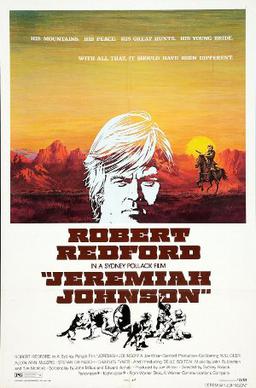
Jeremiah Johnson (1972, dir by Sydney Pollack, DP: Duke Callaghan)

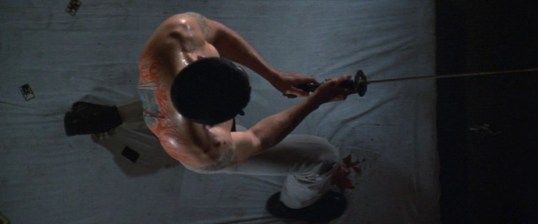
The Yakuza (1974, dir by Sydney Pollack, DP: Duke Callaghan and Kozo Okazaki)

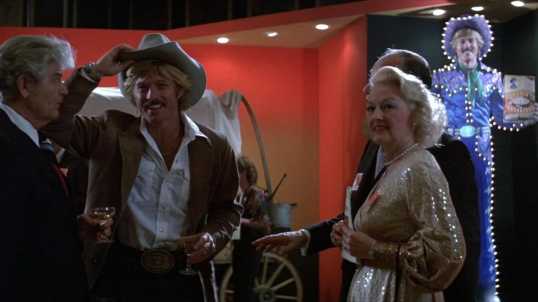
The Electric Horseman (1979, dir by Sydney Pollack, DP: Owen Roizman)

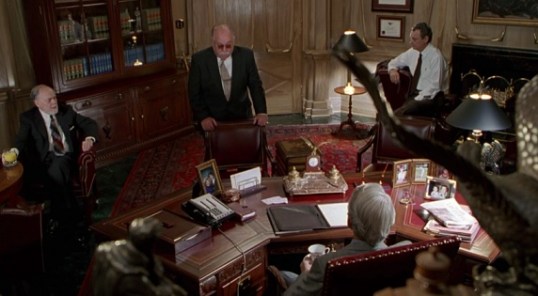
The Firm (1993, dir by Sydney Pollack, DP: John Seale)

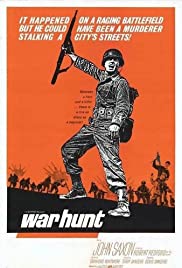
War Hunt (1962, directed by Denis Sanders)


In the last days of the Korean War, Pvt. Roy Loomis (Robert Redford) is assigned to an infantry unit that’s serving on the front lines.  Loomis is an idealist who believes in always doing the right thing and who believes that he’s truly fighting for the American way of life in Korea.  The company’s commander (Charles Aidman) is more cynical.  As he explains it, the job of the soldiers is not to win the war.  Their job is to stall the advance of the enemy long enough to let the politicians and the diplomats get what they want out of a peace settlement.  The soldiers are merely there to be sacrificed.

Loomis soon finds himself in conflict with Pvt. Endore (John Saxon).  Endore spends his night sneaking around behind enemy lines, killing soldiers, and gathering intelligence.  No one goes with Endore on these missions and Endore makes it clear that he doesn’t want to have anything to do with the other solders in the unit.  Because Endore usually returns with valuable intelligence, he’s allowed to do what he wants but it becomes clear that gathering intelligence is not what motivates Endore.  Endore loves war and killing.  In the United States, he would probably be on death row.  In Korea, at the height of the war, he’s a valuable asset.

Charlie (Tommy Matsuda) is an orphan boy who has been adopted as the company’s mascot.  Both Loomis and Endore have a bond with Charlie.  Loomis wants Charlie to go to an orphanage after the war so that he can hopefully be adopted and maybe brought over the United States.  Endore, however, plans to stay in Korea even after the war ends and he wants to keep Charlie with him.  He wants to turn Charlie into as efficient a killing machine as he is.

This low-budget but effective anti-war film may be best known for featuring Robert Redford in his first starring role but the film is stolen by John Saxon, who is frighteningly intense as Endore.  Endore is so in love with war that he continues to fight it even after the Armistice is declared.  Saxon plays him like a cool and calculating predator, a natural born killer.  He’s an introvert who rarely speaks to the other members of the company.  Even though he helps them by killing the enemy before the enemy can kill them, it’s clear that Endore doesn’t really care about the other members of the unit.  He just cares about killing.  He’s close to Charlie because Charlie is too young to realize just how dangerous Endore actually is.

Along with Saxon and Redford, War Hunt also features early performances from Tom Skerritt, Sydney Pollack, and Francis Ford Coppola.  (Coppola, who goes uncredited, plays an ambulance driver.)  Pollack and Redford met while they were both acting in this film and Pollack would go on to direct Redford in several more films.  One of those films, The Electric Horseman, would reunite Redford and Saxon.  Again, they would play adversaries.

Last night, when I heard John Saxon had died, I tried to pick his best performance.  I know that most people know him from his horror work and his role in Enter the Dragon.  Those are all good performances but, for me, Saxon was at his absolute best in War Hunt.


Jeremiah Johnson (1972, directed by Sydney Pollack)


In the 1840s, Jeremiah Johnson (Robert Redford) is a veteran of the Mexican War who wants to get away from civilization.  He sets up an isolated life for himself in the Rocky Mountains and looks to support himself by working as a trapper.  At first, he struggles but eventually he gets some much-needed help from a veteran trapped named Chris Lapp (Will Geer).  Along the way, Johnson discovers that life in the mountains can be harsh and violent.  He adopts a mute boy named Caleb, whose family has been killed by Blackfoot warriors.  Later, the chief of the local Flathead tribe “gives” Jeremiah his daughter.  Despite the language barrier between him and his new wife, Jeremiah is soon the head of a happy family.

One day, when the U.S. Calvary shows up and requests that Jeremiah guide them through the mountains so that they can rescue some starving missionaries, Jeremiah reluctantly leaves behind his family and helps them.  However, Lt. Mulvey (Jack Colvin) insists that Jeremiah lead them through a sacred Crow burial ground.  The Crow retaliate by killing Jeremiah’s family.  Driven mad by grief, Jeremiah sets out to kill every Crow that he can find.

Jeremiah Johnson is really two movies in one.  The story starts out with Jeremiah as a proto-hippie who wants to get away from the hypocrisy and violence of modern society.  Jeremiah takes care of the land, makes friends with other outcasts, and makes a good life for himself.  After Jeremiah’s family is killed, the movie turns into a Death Wish-style revenge thriller, with Jeremiah losing himself in his rage and killing almost everyone that he sees.  Redford is surprisingly convincing as the insane, murderous Jeremiah and the sudden outbursts of violence provide a strong contrast to the relatively peaceful first half of the film.

Jeremiah is a like a lot of the early American settlers.  He wants to get away from the world and start an entirely new life for himself.  He’s seen what the civilization has to offer and he would rather just build a cabin in the mountains and pretend that the rest of the world doesn’t exist.  If Jeremiah had been born earlier, he probably could have pulled it off.  But, by the time Jeremiah tries to go off the grid, it’s already too late.  Society is growing too fast for him to escape from it.  Jeremiah discovers that it’s impossible to truly cut yourself off from humanity. In the end, he’s much like the Crow Indians that he’s declared war upon.  His way of life is ending, whether he’s ready for it or not.  When he and the Crow chief greet each other with a raised open hand (meaning that they come in peace), they are both acknowledging that they are bonded as men whose time is coming to an end.

Jeremiah Johnson was the second of Robert Redford’s many collaborations with director Sydney Pollack and it’s one of their best.  This may be an epic film but it never loses its humanity and, for once, Redford plays someone who isn’t a cut-and-dried hero.  Jeremiah Johnson has recently been rediscovered because of a popular meme of a bearded Redford looking at the camera and nodding but people should know that it’s also a damn fine film on its own.


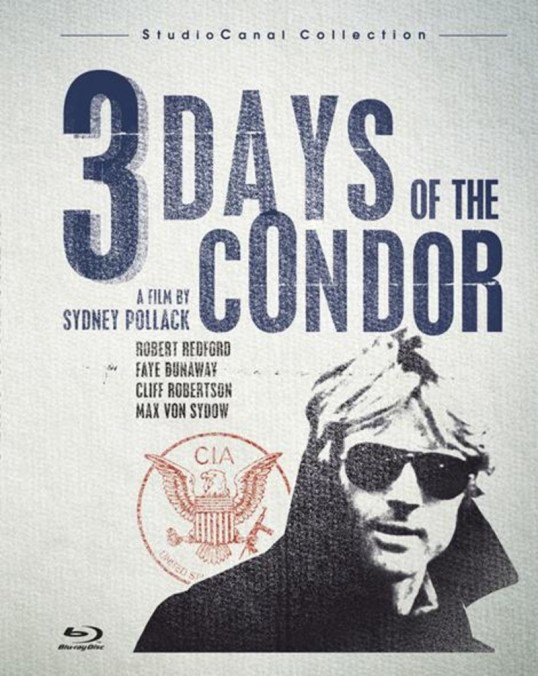
44 Days of Paranoia #8: Three Days of the Condor (dir by Sydney Pollack)


3DaysofTheCondor

When I first decided that I wanted to do the 44 Days of Paranoia, I went on Facebook and I asked my movie-loving friends to name some of their favorite conspiracy-themed films.  As the replies came flooding in, one thing that I quickly noticed was that a lot of them were naming films that had been made in the 1970s.

Usually, when I think about the 70s, I tend to assume that everyone in Texas was smoking weed in a high school parking lot, everyone in New York was snorting cocaine in Studio 54, and everyone in America was dancing nonstop.  And, to be honest, that doesn’t sound too bad to me.  If the 70s were just ten years straight of Dazed and Confused and Saturday Night Fever, then I would be the first one to hook up with anyone who could build a time machine.

However, the 70s were apparently also a very paranoid time.  When one looks over the most acclaimed and best-remembered films of the 70s, one is struck by the feeling that nobody trusted anyone and all official institutions were suspect.

Case in point: 1975’s Three Days of the Condor.

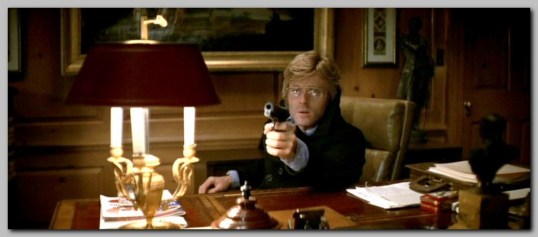
Robert Redford plays Joe Turner, a mild-mannered guy who works for the American Literary Historical Society in New York City.  The Society, however, is a CIA front and Turner’s job is to read cheap spy novels and analyze them to see if any real intelligence leaks might be found between the lines.  As the film opens, Turner arrives late for work.  He jokes with the chain-smoking secretary, shares a few curt words with his superior Martin, and flirts with fellow researcher Janice.  Then, Joe goes to lunch and, while he’s gone, Max Von Sydow shows up with a bunch of killers and guns down everyone else at the safe house.

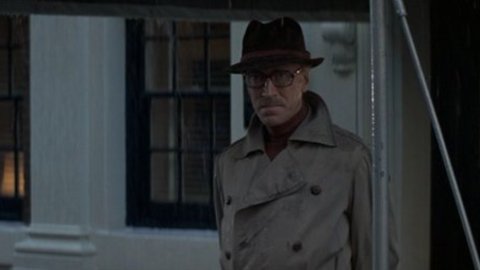
Max Von Sydow's courtly killer

Max Von Sydow’s courtly killer

The scene in which Von Sydow calmly kills all of Joe’s co-workers is one of the most disturbing that I’ve ever seen.  As directed by Sydney Pollack, the film’s violence comes in short, brutal bursts that are all the more nightmarish for lacking any of the flashy choreography that we, as viewers, have been conditioned to expect whenever we’re confronted by violent death on-screen.  Pollack also makes good use of Von Sydow’s kindly eyes and courtly manner, letting us know that, for him, murder is just a job.  Even though we’ve only spent a few minutes with Joe’s co-workers, we’ve still grown to like them and that makes Von Sydow’s matter-of-fact attitude all the more disturbing.

(It’s been a few days since I saw the film and I have to admit that I’m still haunted by the close-up of the burning cigarette still held in the dead secretary’s hand or the way that Martin’s toupee falls off his head after he’s shot.  Small as these details may seem, they stick in the mind and create a sickening feeling of life interrupted.)

When Joe returns from lunch, he finds all of his co-workers dead.  Fleeing the safe house, Joe calls the New York regional director of the CIA, Higgins (Cliff Robertson).  Higgins arranges for Joe to meet up with another agent and to be taken to safety.  However, when Joe arrives for the meeting, the other agent attempts to kill him.

Realizing now that the CIA specifically hit its own safe house and is now looking to kill him, Joe ends up kidnapping Kathy Hale (Faye Dunaway), a neurotic photographer, and forcing her to hide him while he desperately tries to figure out why he’s been targeted.

Thanks largely to Sydney Pollack’s thoughtful direction, Three Days of the Condor is an excellent, exciting, and thought-provoking thriller and, despite having been released close to 40 years ago, it features one major plot that’s probably even more relevant today than when the film was first released.  Redford and Dunaway both give excellent performances but the film really belongs to Max Von Sydow’s menacing and charming assassin.  Most of today’s “action” filmmakers could learn a lot from watching Three Days of the Condor.

end_office

Lisa’s Thoughts On 10 Best Picture Nominees That She’s Recently Seen: The Alamo, Becket, Elmer Gantry, Gaslight, Gladiator, Kramer Vs. Kramer,Marty, Of Mice and Men, Out of Africa, and Wilson


Since it’s Oscar weekend, I’ve been watching past and present Best Picture nominees like crazy.  Here are my thoughts on ten of them.
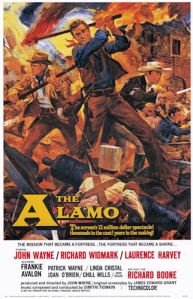
The Alamo (1960, directed by John Wayne, lost to The Apartment) — I’m a Texan which means that I’m legally required to watch both this film and the 2004 remake whenever they show up on television.  Both films are way too long and feature way too many characters speaking speeches as opposed to dialogue but, if I had to choose, I would have to go with the 1960 version of the story.  The original Alamo might be heavy-handed, poorly paced, and awkwardly acted but at least it’s sincere in its convictions.  I always cry when Richard Widmark dies.

Becket (1964, directed by Peter Glenville, lost to My Fair Lady) — This one is a personal favorite of mine.  The film is about the friendship and the eventual rivalry of King Henry II (Peter O’Toole) and Thomas Becket (Richard Burton).  Becket and Henry II start out the film drinking and whoring but eventually, Henry makes Becket Archbishop of Canterbury.  Becket, however, rediscovers his conscience and soon, Henry is famously asking, “Who will rid me of this troublesome priest?”  Becket is an exciting historical drama and Peter O’Toole is at his absolute best as the flamboyantly decadent Henry.
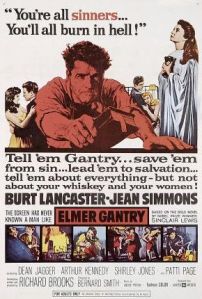
Elmer Gantry (1960, directed by Richard Brooks, lost to The Apartment) — Burt Lancaster plays Elmer Gantry, a traveling salesman and con artist who ends up falling in love with a saintly evangelist (played by Jean Simmons).  Gantry soon starts preaching himself and soon has an army of loyal followers.  However, Gantry’s new career is threatened when an ex-girlfriend-turned-prostitute (Shirley Jones) pops up and starts telling people how Gantry “rammed the fear of God into” her.  With its unapologetically corrupt lead character and its looks at how commerce and religion are often intertwined, Elmer Gantry makes a perfect companion piece to Paul Thomas Anderson’s There Will Be Blood.  Lancaster won an Oscar for his powerful and intense performance in the title role.
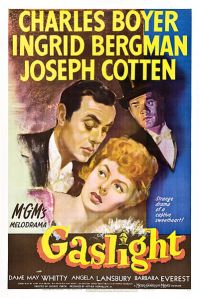
Gaslight (1944, directed by George Cukor, lost to Going My Way) — Evil Charles Boyer marries Ingrid Bergman and then attempts to drive her crazy.  Luckily, Inspector Joseph Cotten is on the case.  Gaslight is, in many ways, an old-fashioned melodrama but it’s still a lot of fun to watch.  Boyer is a suave devil and Joseph Cotten (one of my favorite of the old film actors) is a dashing hero.
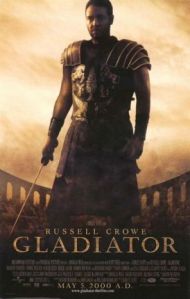
Gladiator (2ooo, directed by Ridley Scott, won best picture) — One thing that I’ve recently discovered is that men love Gladiator.  Seriously, they obsess over this film and hold Russell Crowe’s surly gladiator up as some sort of mystical ideal and if you dare to say a word against it in their presence, be ready for big and long argument.  So, I won’t criticize Gladiator too much other than to say that the film has always struck me as being kinda overlong, that the CGI is occasionally cartoonish, and that, despite his fearsome reputation, Russell Crowe is a lot more interesting as an actor when he plays a thinker as opposed to a fighter.  Joaquin Phoenix, playing the Emperor Commodus, is a lot of fun to watch.
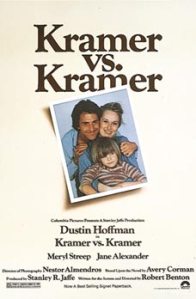
Kramer Vs. Kramer (1979, directed by Robert Benton, won best picture) — Dustin Hoffman plays a workaholic New York advertising executive who, after his wife Meryl Streep leaves him, ends up as a single father.  Kramer Vs. Kramer won best picture in 1979 but I have to admit that I didn’t care much for it.  Then again, I don’t think that I was the intended audience.  Instead, Kramer vs. Kramer appears to have been made to appeal to men frustrated with women wanting to have a life outside of being a domestic servant.  The film is well-acted though Hoffman’s character becomes insufferably smug once he gets comfortable with being a single father.
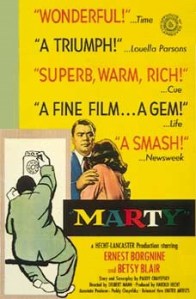
Marty (1955, directd by Delbert Mann, won best picture) — Lonely butcher Marty (Ernest Borgnine) romantically pursues a shy school teacher named Clara (Betsy Blair).  However, Marty’s friends and his family don’t like Clara and Marty soon finds himself having to choose between them.  Marty is a bit of an anomaly when it comes to best picture winners.  It’s not an epic, it doesn’t claim to solve any of the world’s problems, and it’s based on a tv show.  However, it’s also a sincerely sweet and heartfelt  film and also features excellent performances from Borgnine and Blair.
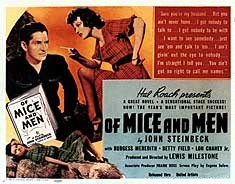
Of Mice and Men (1939, directed by Lewis Milestone, lost to Gone With The Wind) — “Tell me about the rabbits, George.”  Yes, it’s that film.  Smart and little George (Burgess Meredith) and big but simple Lenny (Lon Chaney, Jr.) are migrant farm workers who get a job working at ranch where Lenny ends up accidentally killing the rancher’s daughter-in-law.  Despite the fact that we all now tend to naturally smirk when we hear anyone say “Tell me about the rabbits, George,” Of Mice and Men remains an effective tear-jerker and both Meredith and Chaney give strong performances.
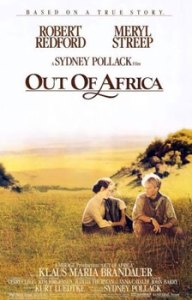
Out of Africa (1985, directed by Sydney Pollack, won best picture) — I recently sat down to watch this film because 1) my aunts love this film and get excited whenever they see that it’s going to be on TV and 2) Out of Africa was named the best film of the year I was born.  So, I sat down and watched it and then three or five hours later, I realized that the film was nearly over.  Anyway, the film is about a Danish baroness (Meryl Streep) who moves to a plantation in Africa and ends up having an affair with a British big game hunter.  The hunter is played by Robert Redford, who refuses to even try to sound British. (USA! USA! USA!)  Anyway, the film is pretty in that generic way that most best picture winners are but the film ultimately suffers because its difficult to care about any of the characters.  Streep acts the Hell out of her Danish accent but she and Redford (who seems to be bored with her) have absolutely no chemistry. I saw one review online that dismissed Out of Africa as a “big budget Lifetime movie” but Lifetime movies are a lot more fun.
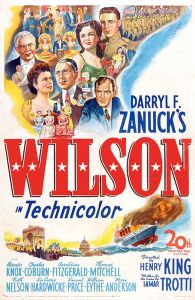
Wilson (1944, directed by Henry King, lost to Going My Way) — Wilson is a two-and-a-half biopic about Woodrow Wilson and his presidential administration.  Wilson is well-played by Alexander Knox, who later showed up in countless exploitation films.  Wilson shows up on cable occasionally and every time I’ve seen it, I’ve had mixed feelings about it.  The critical part of me tends to be dismissive of this film because it’s way too long, extremely stagey, and it glosses over the fact that Wilson was a virulent racist who idolized the Ku Klux Klan.  However, as a secret history nerd, I can’t help but enjoy seeing a film where Vincent Price plays the Secretary of the Treasury.