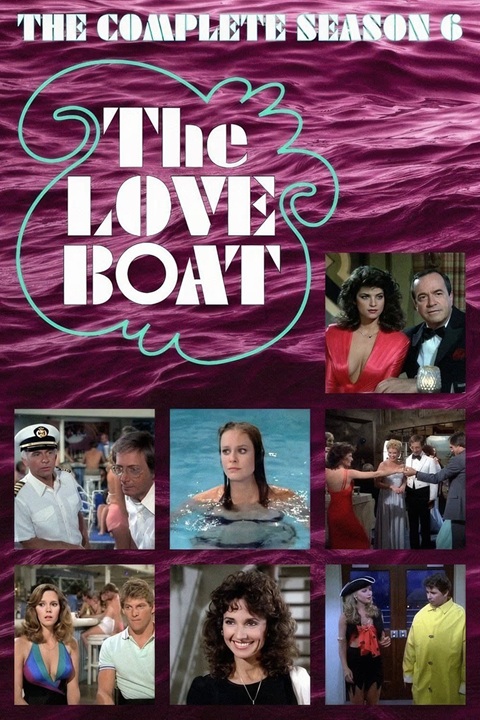
Retro Television Review: The Love Boat 6.24 “So Help Me Hannah/The Maid Cleans Up/CPR IOU”


Welcome to Retro Television Reviews, a feature where we review some of our favorite and least favorite shows of the past!  On Wednesdays, I will be reviewing the original Love Boat, which aired on ABC from 1977 to 1986!  The series can be streamed on Paramount Plus!

Love …. exciting and new!

Episode 6.24 “So Help Me Hannah/The Maid Cleans Up/C.P.R, I.O.U.”

(Dir by Kim Friedman, originally aired on March 12th, 1983)

This episode features Gopher bringing a CPR dummy on board.  No one is that interested in learning how to perform CPR, at least not until one of the passengers, Dwaine Fenley (Steven Keats), has a heart attack.  Fortunately, because of his CPR training, Gopher is able to save Dwaine’s life.  Not only does this lead to Dwaine forging a stronger relationship with his father (Milton Berle) but it also leads to Gopher getting promoted to Head Purser.

(Erin doesn’t like to brag so I’ll brag for her and say that she is not only CPR-certified but she also saved someone’s life a few years ago.  CRP is a good thing to learn!)

While Gopher is trying to get everyone to learn CPR, there are other things happening on the boat and, to be honest, they’re all kind of annoying.  For instance, Hannah (Mary Martin) boards the boat and she’s immediately giving everyone advice and singing Cole Porter tunes.  I kind of knew that this story was going to be annoying from the minute Hannah first boarded the ship and the camera zoomed in for a close-up, which was usually a sign that a guest star was going to spend the entire cruise overacting.  That’s the case here, with Mary Martin delivering every line and playing every emotion as if she’s on Broadway as opposed to a television soundstage.  Hannah meets an ex-boyfriend named Jarvis (Max Showalter) and they sing It’s De-Lovely while standing against the ship’s railing and, for me, it was De-Cringey.  Maybe if I was of Mary Martin’s generation, it would have been less cringey.  But I have to admit that I listen to most of those old songs and I think to myself, “De-lovely is not a word.”  Hannah encourages Jarvis to allow his son (Timothy Patrick Murphy) to play piano instead of becoming a real estate agent.

Finally, a maid (Judy Landers) boards the boat because she knows that her employer (Caren Kaye) is cheating on her boyfriend (Ben Murphy).  It’s actually a bit of a complex storyline, at least by the typical standards of The Love Boat.  Personally, I like Judy Landers and Ben Murphy was appropriately rugged and handsome.  Unfortunately, Landers and Murphy didn’t have much chemistry.

A mixed review for this episode, I’d say.  I appreciated the CPR subplot because that was The Love Boat at its most well-intentioned.  The whole thing with Mary Martin singing old songs was cringe city.  And the maid subplot was just kind of boring.  This was not a great cruise but it wasn’t a terrible one either.  At least, after six seasons, Gopher finally got his promotion.


Retro Television Review: Miami Vice 4.1 “Contempt of Court”


Welcome to Retro Television Reviews, a feature where we review some of our favorite and least favorite shows of the past!  On Mondays, I will be reviewing Miami Vice, which ran on NBC from 1984 to 1989.  The entire show can be purchased on Prime!

This week, the fourth season begins with a whimper.

Episode 4.1 “Contempt of Court”

(Dir by Jan Eliasberg, originally aired on September 25th, 1987)

It’s time for season 4!  Crockett has longer hair!  Tubbs has a beard!  Otherwise, they’re still somehow doing the undercover thing, despite making no effort to maintain their undercover identities.  This episode finds them both in court and, later on, pulling their guns on a mob boss in broad daylight.  How exactly there is anybody in Miami who does not know that Burnett and Cooper are actually Crockett and Tubbs, I do not know.

This was kind of a boring episode, which does not bode well for the rest of the fourth season.  Mob boss Frank Mosca (Stanley Tucci) is on trial but, because the case hinges on information supplied by an informant, Crockett is faced with making the decision about whether or not to name Jack Rivers (Steven Keats) as the informer.  For Jack’s own safety, Crockett refuses but Mosca figures it out anyway.  Jack is stabbed to death while a helpless Crockett watches.  (Crockett’s in jail on a contempt of court charge.)  Later, Jack’s teenage son, Terry (Richard Panebianco), tells Crockett, “I had no idea you were a cop.”  Really?  What a stupid kid.

Anyway, after Mosca frames a juror for taking bribes and a mistrial is declared, Terry pulls a gun on Mosca as he and his men are walking out of the courthouse.  For once, Crockett and Tubbs are able to convince someone not to open fire.  I think this is the first time, in Miami Vice history, that Crockett and Tubbs have managed to prevent an assassination.  Still, Terry does fire his gun in the air.  Mosca smirks and leaves.  What’s weird is that no one else reacts to Terry shooting he gun.  I mean, he’s on the steps of the courthouse.  Why are there no guards rushing out?  Why are Crockett and Tubbs the only cops around?  Seriously, it makes absolutely no sense.

This episode had some worthy guest stars.  Stanley Tucci appeared to be having fun as the cartoonishly evil Mosca.  Meg Foster played the district attorney.  Philip Baker Hall was the judged who ordered Crockett to name the informant.  That said, the episode itself got bogged down in all of the legal wrangling going on inside the courtroom.  For the past three seasons, Miami Vice is a downbeat cop show, not a show about lawyers objecting and debating the point of law.  The fourth season premiere felt off.

I’ve read bad things about this upcoming season and this episode did little to generate any feeling of optimism or hope.  Both Don Johnson and Philip Michael Thomas looked bored and even Edward James Olmos’s Castillo is starting to get a little …. I guess annoying would be the world.  Seriously, make eye contact with someone!

Well, we’ve got a long season ahead of us.  Let’s hope for the best.

SILENT RAGE – Revisiting the Chuck Norris film from my youth.


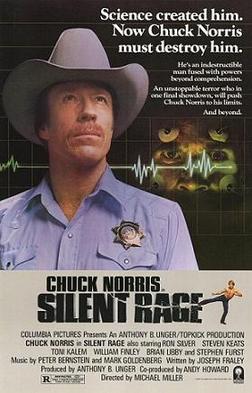
SILENT RAGE is one of those movies that I watched quite a bit as a kid, and I thought it was pretty scary. Fox-16 out of Little Rock played it quite often. We didn’t have cable in Toad Suck so I’d watch whatever movies that were playing, especially if they had action. I’d say my initial interest and appreciation for Chuck Norris began with this film, and I still watch Chuck quite a bit to this day. With that said, I’m not sure I’ve watched SILENT RAGE again since I was a teenager. If I’m going to watch Chuck, I’ll generally watch CODE OF SILENCE, LONE WOLF MCQUADE, MISSING IN ACTION, INVASION USA, THE DELTA FORCE, or even FIREWALKER or HERO AND THE TERROR. But this week, I was browsing through Tubi and saw my childhood friend SILENT RAGE and decided to give it another spin.

SILENT RAGE opens in a wild household. John Kirby (Brian Libby) is awakened from his sleep by a kid wearing a Stormtrooper mask and shooting him with a laser gun. The kid tells Kirby he’s got a phone call. Kirby is clearly not doing well. He’s making strange sounds and his body movements are as funky as hell. Add to this situation, wild kids running around the house and a woman, who I’m guessing is their mom, screaming at them. To say this woman’s voice is annoying as she screams at the kids would possibly be my understatement of 2024. When Kirby answers the phone he tells the unseen doctor on the other end of the line, “I’m losin’ it, Doc! I’m not gonna make it” and he hangs up. I have to admit I’m understanding of Kirby at this point. I’ve only witnessed the activities of that house for a couple of minutes and I’m losin’ it! So in what seems like a reasonable move at the time, Kirby goes outside to the woodpile, grabs an axe, and then walks back into the house and confronts the loud lady. She immediately begins screaming in fear and runs upstairs and locks herself into the bedroom. Her fear scream is probably twice as annoying as her “screaming at kids” voice. Prior to Kirby chopping down the door with his axe, she’s able to scream out the window to a passing mailman for help. Soon after this message to the mailman, Kirby puts the lady, and the audience, out of our collective misery. 

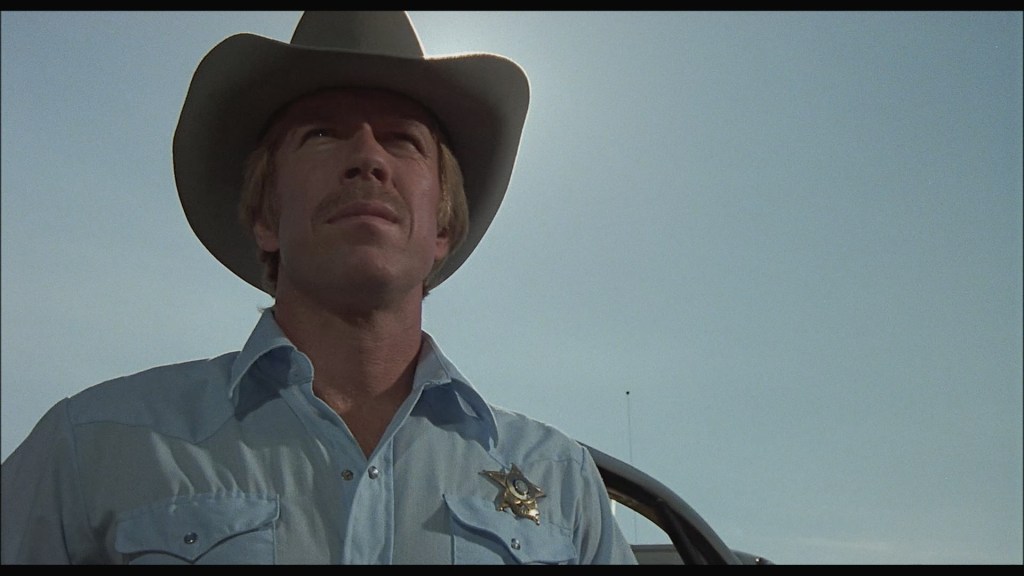
In what is possibly the fastest response time in law enforcement history, a blazer immediately pulls up front and sheriff Dan Stevens (Chuck Norris) emerges from the passenger side. From this point forward, I will disregard his character name and refer to him as Chuck Norris. Every other person will be referred to as their characters’ names. I thought Norris was cool in SILENT RAGE when I was a kid, and I must admit I still think he’s pretty awesome as he calmly walks into the house where John Kirby has just committed multiple murders. After a few minutes, Kirby attacks Norris. The two men scuffle, but Kirby is able to break free and jump out the upstairs window onto the ground and run into the woods. Norris follows and is immediately almost shot by his deputy, Charlie (Stephen Furst). Quick tangent – it may seem strange at first to think of Stephen Furst (Kent Dorfman from ANIMAL HOUSE) as Norris’ deputy, and after watching the film again, I’ll go ahead and agree that it is a strange choice. He basically plays a goofy guy who has no business in law enforcement and that is made abundantly clear throughout the film. Back to the woods we go where Norris, after barely escaping being shot in the head by Charlie, engages in an additional fight with Kirby. He’s able to subdue the murderer and handcuff him. Now in the back of the cop car, Kirby breaks out of his handcuffs, kicks open the door and begins attacking various men with guns. It’s at this point that he’s shot about 14 times. He should be dead at this point, but I do understand for the sake of running time, that there will be additional plot developments. 

These additional plot developments arrive in the form of doctors operating on John Kirby to try to save his life. Fortunately, nature takes its course and Kirby dies, or so we think. It seems that Dr. Phillip Spires (Steven Keats) has a god complex and administers an experimental serum that brings Kirby back to life. Not only that, at the dosage he’s being given, it turns him into an indestructible killing machine. Dr. Tom Halman (Ron Silver) is the voice of reason who tries to convince Dr. Spires to let him die, but to no avail. Dr. Spires is doing this for science and mankind and secretly keeps Kirby alive with Doctor Paul Vaughn (William Finley). The two men think they can control him, but of course they’re wrong. Alive, and now superhuman, Kirby escapes to wreak havoc. And only one man can stop the indestructible, superhuman killing machine, and that man’s name is Chuck Norris.

Just a few additional thoughts before I close. First, Toni Kalem plays Chuck’s love interest, Alison, in the film. His relationship with her does slightly take away from his cool factor as they make love at one point to the cheesiest, corniest 80’s song called “A Time for Love.” She also has an extremely annoying scream voice herself when Kirby comes after her at the end. Second, the cool factor is almost completely restored when Chuck takes on a bar full of drunken, violent bikers and single-handedly destroys them. I think it’s nice of the 22 bikers to come at Chuck one at a time. It would have been a lot harder for him to take on 22 people diving on him at the same time. Third, I stated earlier that the power-crazed Dr. Phillip Spires was played by actor Steven Keats. For those who follow the film career of Charles Bronson like I do, you will immediately recognize Keats as the same actor who played Paul Kersey’s son-in-law in DEATH WISH. In SILENT RAGE he’s a narcissistic jerk, in DEATH WISH he’s a whiny wuss. That’s a solid 1-2 fist-punch of un-likability, Steven!!

I did enjoy the nostalgia factor of re-watching SILENT RAGE after many years. And Chuck Norris getting out of that blazer to go after John Kirby at the beginning of the film was still cool. There were a few things already mentioned above that bothered me more now than they did when I was a kid, but at the end of the day, Chuck Norris is still Chuck Norris. And I will always enjoy Chuck Norris! 

DEATH WISH – It’s a wonderful life…at least it has been for me!


Over the next 5 days, I will discuss Charles Bronson’s DEATH WISH series in chronological order. This series has brought me countless hours of entertainment over the last 40 years, so enjoy and let me know your thoughts!

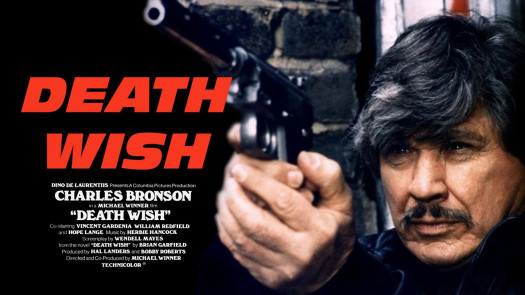
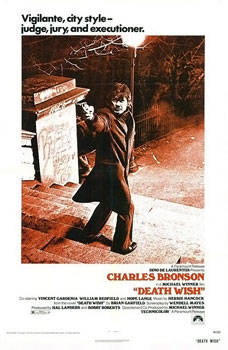
“Don’t ever make a death wish, because a death wish always comes true!” – I’ve always thought this was kind of a corny saying on the original DEATH WISH trailer, but as one of the world’s biggest Charles Bronson fans, I still hold the original DEATH WISH (1974) in extremely high regard. This is the 70’s revenge classic that made Bronson a box office superstar in his home country, while simultaneously influencing the way vengeance was depicted on screen for decades to come. DEATH WISH is one of the most underrated and influential films from a decade that was full of great films.  

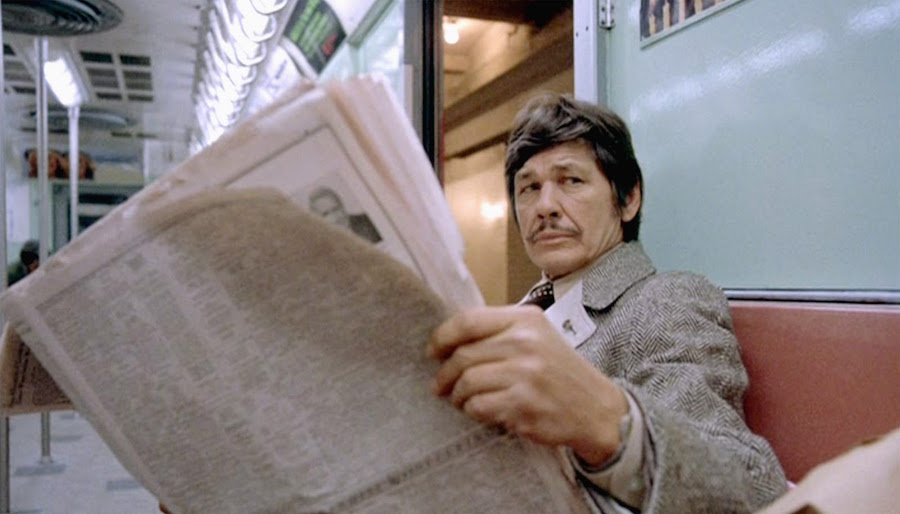
If you’re reading this review, I’d be about 99% positive that you know the basic story of the film. Charles Bronson plays Paul Kersey, a conscientious objector whose wife is killed and whose daughter is raped by a group of criminal thugs in New York City. When the police are incapable of providing justice, Kersey turns into a sidewalk vigilante and stalks the streets and subways of New York, luring thugs to mug him so he can shoot them with his 32-caliber Colt Police Positive pistol. Vincent Gardenia plays detective Frank Ochoa, who’s put in charge of finding the vigilante and putting an end to his one-man mission of justice.  

It’s been 50 years since DEATH WISH was released into theaters and it’s hard to fathom just how controversial the film was in its time, especially since I wasn’t even 1 year old when it was released. The graphic rape scene that kicks off the events of the film, combined with the vigilante subject matter, turned off so many big stars, including Jack Lemmon, Henry Fonda and George C. Scott. This opened up the door for Charles Bronson who didn’t have any such misgivings. They just didn’t understand what a nerve the film would touch with the filmgoing public, who were tired of their cities being overrun by violent criminals. The movie became an audience participation movie unlike any others of the time with cheering in the seats every time Kersey offed another criminal. The controversial film became one of the top box office hits of the year and the biggest of Bronson’s career. 

DEATH WISH was the fourth of six films directed by Michael Winner and starring Charles Bronson. In typical Winner fashion, the film has some strange touches, but the director is extremely effective in building the motivation for vigilante justice that was required for the film to thrive. He handles the action sequences well, and his cast is outstanding. Bronson & Gardenia are perfect in the lead roles, and the lovely Hope Lange has the brief, infamous role as Kersey’s brutalized wife. Stuart Margolin is especially memorable as the Arizona businessman who gives Kersey his gun. There are also a number of actors in small roles who were not well known when the movie was made who would go on to successful film careers. The biggest is Jeff Goldblum who has the most memorable role of the three muggers who attack Kersey’s wife and daughter at the beginning of the film. It’s a brief, but no holds barred performance for sure. Oscar winning actress Olympia Dukakis has a small role as a cop who expresses her frustration about the amount of leg work expected of her by Detective Ochoa. And finally, Christopher Guest has one scene as a young cop who finds the wounded vigilante and recovers his gun.  

On a personal note, this film holds a special place in my heart as the first Charles Bronson film I ever saw. It was probably in 1984 or ‘85, and I stayed up with my dad to watch the late movie on our local TV station. The movie happened to be DEATH WISH. As bad things were happening to Kersey’s family at the beginning of the film, my dad told me not to worry, that “Charles would get them.” That intrigued me and let me know that Bronson had a reputation that preceded him. From that point forward, I wanted to rent a Charles Bronson film every time we went to the video store. And the rest, as they say, is history!

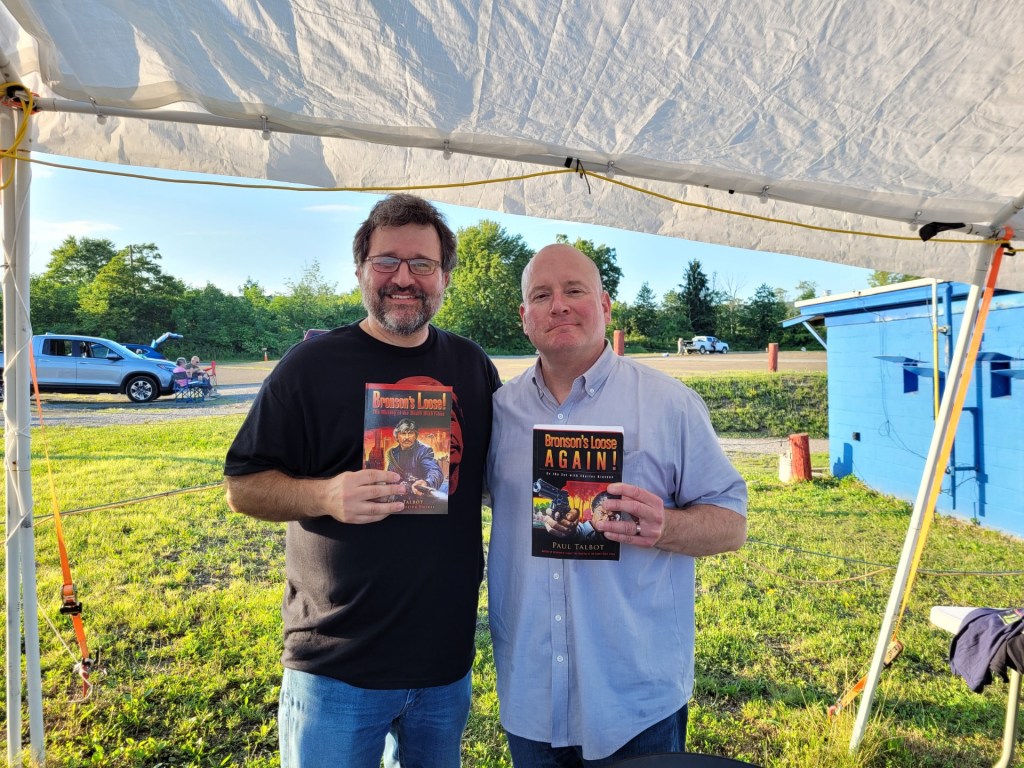
BONUS: The definitive book about the DEATH WISH film series was written by my friend, author and film historian Paul Talbot. The name of the book is BRONSON’S LOOSE: THE MAKING OF THE DEATH WISH FILMS. If you have any interest in Charles Bronson, the DEATH WISH series or Cannon Films, I can’t recommend Paul’s books more highly.

Horror Film Review: Silent Rage (dir by Michael Miller)


The 1982 film, Silent Rage, takes place in a small town in Texas.

John Kirby (Brian Libby) is the town troublemaker, an obviously mentally disturbed man with a violent and unpredictable temper.  As the film starts, Kirby is murdering the members of the latest family to offer him a home.  John is strong, fierce, and determined to create chaos.  However, he’s about to face someone who is just as strong and determined.  Sheriff Dan Stevens is a tough, tight-lipped western lawman who happens to be an expert in kung fu.  Dan is such a badass that he’s played by Chuck Norris!

Dan is able to eventually slap the cuffs on Kirby but Kirby is so strong that he manages to break free from them and grab a shotgun.  The other policemen are forced to gun him down.  Barely clinging to life, Kirby is rushed to a secret institute where three scientists — Tom Halman (Ron Silver), Philip Spires (Steven Keats), and Paul Vaughn (William Finley) — are working on a process that they think will help cells to repair themselves.  Philip and Paul think that Kirby will be the perfect test subject.  Tom, whose sister (Toni Kalem) is dating Dan — mentions that it might not be a good idea because Kirby was a psychotic murderer and stuff.  Philip decides to experiment on Kirby, regardless.

While the scientists are breaking the laws of God, Dan and his comic relief deputy (played, in a charming performance, by Stephen Furst) are dealing with local problems, like the bikers who hang out at a nearby roadhouse.  (Apparently, it’s not a Chuck Norris film without a fight in a roadhouse.)  However, Dan soon has more than just bikers to deal with.  The experiments have succeeded.  John Kirby has come back to life.  He can’t speak and it’s debatable whether he even knows who he is.  But he is now virtually immortal and super-strong and soon, he’s killing scientists and going on a rural rampage.  Can even Chuck Norris stop him!?

That question is not just hyperbole.  One reason why Silent Rage works as well as it does is because Chuck Norris has been established as America’s premiere fighting badass.  There is an entire internet culture that has been built around the idea of Chuck Norris being the man who cannot be defeated.  The world, we’re told, lives in fear and awe of a Chuck Norris roundhouse kick.  And yet, when Sheriff Dan faces the resurrected Kirby, he finds himself fighting an opponent who is not intimidated or easily knocked down.  The film establishes early on that Kirby will kill anyone, even the most likable characters in the film.  Watching Dan fight Kirby, the stakes feel real and you don’t know who is going to win.  Both Chuck Norris and Brian Libby deserve a lot of credit for their fight scene at the end of the movie.

Silent Rage is often described as being a slasher film because Brian does spend a lot of time stalking people and killing them in different ways.  Personally, I would not call it a slasher film.  Because it hinged on scientists who overlooked the obvious dangers to achieve their goals, I would refer to this as being a sci-fi horror film, with John Kirby becoming the human equivalent of the Xenomorph from Alien.  There’s nothing scarier than a monster who can challenge Chuck Norris.

The Gumball Rally (1976, directed by Chuck Bail)


When he gets bored in a business meeting, Michael Bannon (Michael Sarrazin) calls his old friend, Prof. Samuel Graves (Nicholas Pryor) and says only one word: “Gumball.”  Inspired by that one word, dozens of racers assemble in New York, all planning on taking part in the Gumball Rally.

What is the Gumball Rally?  It’s a highly illegal race in which teams of two compete to see which team can drive from New York to the other side of the country in the least amount of time.  Bannon and Graves currently hold the record for completing the Gumball Rally in the quickest amount of time and all of the racers are determined to try to claim that record for their own.  Meanwhile, one cop named Roscoe (Norman Burton) is determined to break this race up.  Has there ever been a good cop named Roscoe?  Rosco P. Coltrane probably had more of a chance of stopping them Duke Boys than Roscoe does stopping the Gumball Rally.

If The Gumball Rally sounds familiar, it’s because it’s basically a less star-filled version of The Cannonball Run.  Instead of Burt Reynolds and Dom DeLuise, The Gumball Rally has Michael Sarrazin, Nicholas Pryor, Tim McIntire, and Norman Burton.  Instead of Jackie Chan making his American debut, The Gumball Rally has early performances from Raul Julia and Gary Busey.  Instead of Dean Martin and Sammy Davis, Jr., The Gumball Rally has Steven Keats and Wally Taylor.  You get the idea.  However, the lack of big stars in the cast works to The Gumball Rally‘s advantage.  Whereas you watch The Cannonball Run with the knowledge that there’s no way Burt Reynolds isn’t going to at least come in second, it seems like anyone of the eccentric teams in The Gumball Rally could win the race.

Make no mistake about it, The Gumball Rally is a car chase film, one that was released at the height of that underrated genre’s popularity.  The actors are all likable and almost all of the characters get at least one funny, personality-defining moment but the real stars of The Gumball Rally are the cars and the stunts. That’s not surprising as this film was directed by legendary stuntman Chuck Bail.  This film is full of spectacular crashes and near misses.  (The race’s lone motorcyclist is especially accident-prone.)  Again, the lack of stars in the cast (and the fact that the cast reportedly did most of their own driving) bring an added element of suspense to the stunts.  You watch The Cannonball Run and Smoky and the Bandit secure in the knowledge that Burt Reynolds is never going to crash his vehicle because he’s Burt Ryenolds.  You don’t have that same automatic security when the car is being driven by Michael Sarrazine or Tim McIntire.

It may not be as well known as some of the films that it inspired but, if you like a good car chase (or a good car crash) film, The Gumball Rally is for you.

Bang, You’re Dead!: Charles Bronson in DEATH WISH (Paramount 1974)


gary loggins's avatarcracked rear viewer

Most people think of DEATH WISH as just another 70’s revenge/exploitation flick, right? Nope. Far from it. Sure, there’s loads of graphic violence, but this gem of a movie contains just as much political commentary as ALL THE PRESIDENT’S MEN, with an added dose of black comedy to boot. The film had its finger firmly placed on the pulse of 1970’s America, with all its fear and paranoia about rampant urban crime, and is among the decade’s best.

Director Michael Winner and star Charles Bronson had made three films together up to that time: the revisionist Western CHATO’S LAND, the actioner THE MECHANIC , and the cops-vs-Mafia drama THE STONE KILLER . All were hits with the drive-in crowd, and helped Bronson go from supporting player to major star. Strangely enough, Bronson wasn’t the first actor considered for the part of Paul Kersey. Jack Lemmon was original choice, and that…

View original post 826 more words

Bronson’s Revenge: Death Wish (1974, directed by Michael Winner)


To quote “Dirty” Harry Callahan, “I’m all broken up about his rights.”

In 1972, a novel by Brian Garfield was published.  The novel was about a meek New York City accountant named Paul Benjamin.  After Paul’s wife is murdered and his daughter is raped, Paul suffers a nervous breakdown.  A self-described bleeding heart liberal, Paul starts to stalk the streets at night while carrying a gun.  He is hunting muggers.  At first, he just kills the muggers who approach him but soon, he starts to deliberately set traps.  Sinking into insanity, Paul becomes just as dangerous as the men he is hunting.  Garfield later said that the book was inspired by two real-life incidents, one in which his wife’s purse was stolen and another in which his car was vandalized.  Garfield said that his initial response was one of primitive anger.  He wondered what would happen if a man had these rageful thoughts and could not escape them.

The title of that novel was Death Wish.  Though it was never a best seller, it received respectful reviews and Garfield subsequently sold the film rights.  At first, Sidney Lumet was attached to direct and, keeping with Garfield’s portrayal of Paul Benjamin, Jack Lemmon was cast as the unlikely vigilante.

Lumet, ultimately, left the project so that he could concentrate on another film about crime in New York City, Serpico.  When Lumet left, Jack Lemmon also dropped out of the film.  Lumet was replaced by Michael Winner, a director who may not have been as thoughtful as Lumet but who had a solid box office record and a reputation for making tough and gritty action films.

Winner immediately realized that audiences would not be interested in seeing an anti-vigilante film.  Instead of casting an actor with an intellectual image, like Jack Lemmon, Winner instead offered the lead role (now named Paul Kersey and no longer an accountant but an architect) to Charles Bronson.  When Winner told Bronson that the script was about a man who shot muggers, Bronson replied, “I’d like to do that.”

“The script?” Winner asked.

“No, shoot muggers.”

At the time that he was cast, Charles Bronson was 52 years old.  He was the biggest star in the world, except for in America where he was still viewed as being a B-talent at best.  Bronson was known for playing tough, violent men who were not afraid to use violence to accomplish their goals.  (Ironically, in real life, Bronson was as much of an ardent liberal as Paul Kersey was meant to be at the beginning of the movie.)  Among those complaining that Charles Bronson was all wrong for Paul Kersey was Brian Garfield.  However, Bronson accepted the role and the huge box office success of Death Wish finally made him a star in America.

To an extent, Brian Garfield was right.  Charles Bronson was a better actor than he is often given credit for but, in the early scenes of Death Wish, he does seem miscast.  When Paul is first seen frolicking with his wife (Hope Lange) in Hawaii, Bronson seems stiff and awkward.  In New York City, when Paul tells his right-wing colleague (William Redfield) that “my heart does bleed for the less fortunate,” it doesn’t sound natural.  But once Paul finds out that his wife has been murdered and his daughter, Carol (Kathleen Tolan), has been raped, Paul gets mad and Bronson finally seems comfortable in the role.

In both the book and the original screenplay, both the murder and the rape happened off-screen.  Never a subtle director, Winner instead opted to show them in a brutal and ugly scene designed to get the audience as eager to shoot muggers as Bronson was.  Today, the power of the scene is diluted by the presence of Jeff Goldblum, making his screen debut as a very unlikely street thug.  Everyone has to start somewhere and Goldblum got his start kicking Hope Lange while wearing a hat that made him look like he belonged in an Archie comic.

With his wife dead and his daughter traumatized, Paul discovers that no one can help him get justice.  The police have no leads.  His son-in-law (Steven Keats) is a weak and emotional mess.  (As an actor, some of Bronson’s best moments are when Paul makes no effort to hide how much he loathes his son-in-law.)  When a mugger approaches Paul shortly after his wife’s funeral, Paul shocks himself by punching the mugger in the face.

When Paul is sent down to Arizona on business, he meets Ames Jainchill (Stuart Margolin), a land developer who calls New York a “toilet” and who takes Paul to see a wild west show.  Later at a gun club, Paul explains that he was a conscientious objects during the Korean War but he knows how to shoot.  His father was a hunter and Paul grew up around guns.  When Paul returns to New York, Ames gives him a present, a revolver.  Paul is soon using that revolver to bring old west justice to the streets of New York City.

As muggers start to show up dead, the NYPD is outraged that a vigilante is stalking the street.  Detective Frank Ochoa (Vincent Gardenia) is assigned to bring the vigilante in.  But the citizens of New York love the vigilante.  Witnesses refuse to give an accurate description of Paul.  When Paul is wounded, a young patrolman (Christopher Guest, making almost as unlikely a film debut as Jeff Goldblum) conspires to keep Paul’s revolver from being turned over as evidence.

The critics hated Death Wish, with many of them calling it an “immoral” film.  Brian Garfield was so disgusted by how Winner changed his story that he wrote a follow-up novel in which Paul is confronted by an even more dangerous vigilante who claims to have been inspired by him.  Audiences, however, loved it.  Death Wish was one of the top films at the box office and it spawned a whole host of other vigilante films.

Death Wish is a crude movie, without any hint of subtlety and nuance.  It is also brutally effective, as anyone who has ever felt as if they were the victim of a crime can attest.  In a complicated and often unfair world, Kersey’s approach may not be realistic or ideal but it is emotionally cathartic.  Watching Death Wish, it is easy to see why critics hated it and why audiences loved it.

It is also to see why the movie made Bronson a star.  Miscast in the role or not, Bronson exudes a quiet authority and determination that suggests that if anyone could single-handedly clean-up New York City, it’s him.  An underrated actor, Bronson’s best moment comes after he punches his first mugger and he triumphantly reenters his apartment.  After he commits his first killing, Bronson gets another good scene where he is so keyed up that he collapses to the floor and then staggers into the bathroom and throws up.  Garfield may have complained that the Death Wish made his madman into a hero but Bronson’s best moments are the ones the suggest Paul has gone mad.  The real difference between the book and the movie is that the movie portrays madness as a necessary survival skill.

This Friday, a new version of Death Wish will be playing in theaters.  Directed by Eli Roth, this version starts Bruce Willis as Dr. Paul Kersey.  Will the new Death Wish be as effective as the original?  Judging from the trailer, I doubt it.  Bruce Willis or Charles Bronson?  I’ll pick Bronson every time.

Tomorrow, Bronson returns in Death Wish II!
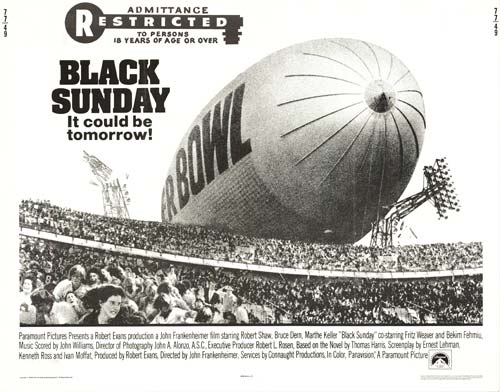
Super Bowl Alternative: The “Other” BLACK SUNDAY (Paramount 1977)


gary loggins's avatarcracked rear viewer

blimp1

My New England Patriots aren’t in this year’s big game, and I can’t stand that big-headed Peyton Manning, so my interest in tonight’s Super Bowl is minimal. And the halftime show does nothing for me: Coldplay is probably one of my least favorite bands (Beyoncé’s OK, though). So if like me, you’re not planning on spending much time watching Roger Goodell’s season-ending spectacular (can’t stand Goodell, either) may I suggest an alternative, namely John Frankenheimer’s thriller BLACK SUNDAY.

blimp2

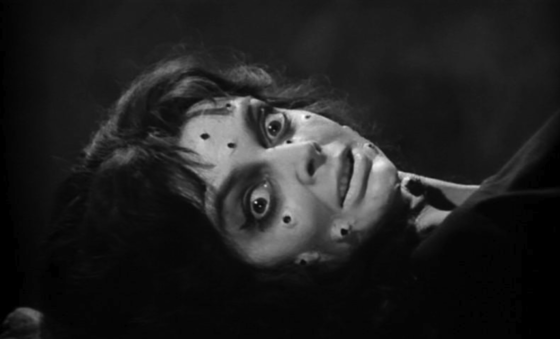
No, it’s not the 1960 Barbara Steele/Mario Bava horror classic, this BLACK SUNDAY is a rousing political thriller about terrorist organization Black September plotting a strike against America at the biggest game of them all, the Super Bowl. Beautiful but deadly terrorist Dahlia (Marthe Keller) has recruited the bitter, unstable blimp pilot Michael Lander (Bruce Dern at his 70’s psycho best) to turn the blimp into the ultimate suicide bomb, with plastique explosives setting…

View original post 224 more words