Review: Lethal Weapon 2 (dir. by Richard Donner)


“We’re back, we’re bad. You’re black, I’m mad. Let’s go!” — Martin Riggs

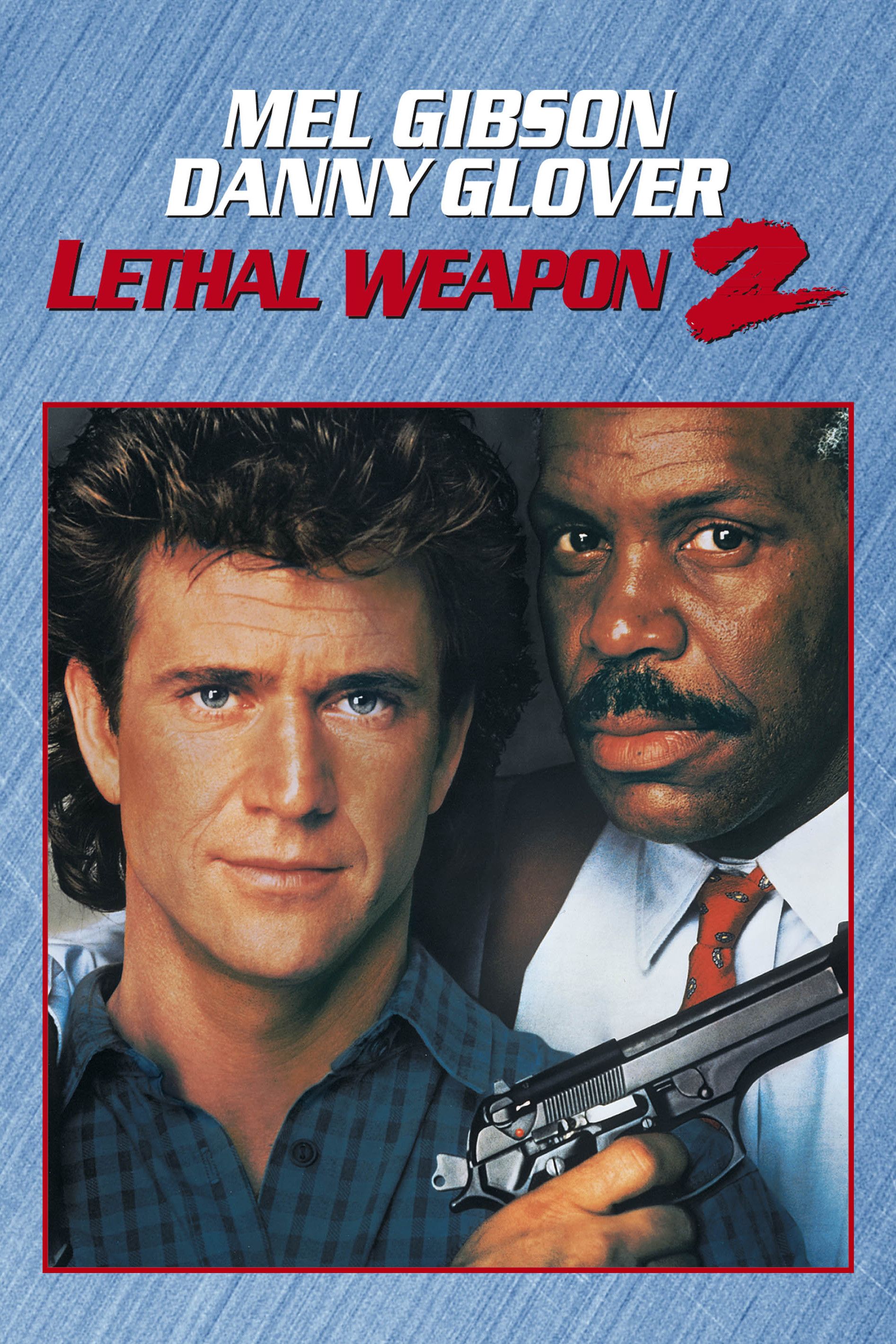
Lethal Weapon 2 is the kind of sequel that doesn’t really try to reinvent what worked the first time so much as crank the volume on everything: the action is bigger, the jokes come faster, and the chaos feels almost constant. Depending on what you loved about Lethal Weapon, that approach delivers more of the high-energy partnership in a flashier package. It’s a confident, very entertaining 80s action movie that knows it’s a sequel and leans into the spectacle that status allows.

Plot-wise, Lethal Weapon 2 wastes no time reminding you what this world feels like. It drops Riggs and Murtaugh into a wild car chase almost immediately, and from there the story locks onto a case involving South African diplomats hiding behind apartheid-era “diplomatic immunity” while running a massive drug and money-laundering operation. It’s a cleaner, more high-concept hook than the original’s murkier web of Vietnam vets and heroin smuggling, and the script makes the villains broad on purpose, almost cartoonishly arrogant, to give the audience someone very easy to hate. The trade-off is that the plot feels a bit more mechanical this time; you always know who the bad guys are and what the destination is, so the film’s real energy comes from the detours, jokes, and set-pieces rather than any mystery.

One of the big shifts from Lethal Weapon to Lethal Weapon 2 is tone. The first film balanced brutal violence and dark humor with a surprisingly heavy focus on Riggs’ suicidal grief and Murtaugh’s fear of getting too old for the job. The sequel keeps those elements in the background but leans harder into banter, slapstick timing, and outrageous gags like the now-famous exploding toilet sequence, with Richard Donner’s direction pushing the script toward action comedy. It’s still R-rated and not shy about blood or cruelty, but the emotional intensity is dialed down compared to the original’s raw edges.

Mel Gibson and Danny Glover remain the anchor, and their chemistry is as sharp as ever. Gibson’s Riggs is still reckless and unhinged, but there’s a looser, more playful side to him this time; he’s less haunted and more of a live-wire prankster until the story gives him something personal to latch onto. Glover’s Murtaugh continues to be the grounded center, constantly exasperated and always half a step away from just walking off the job, and the film has a lot of fun putting his straight-man persona through increasingly humiliating situations while still letting him be competent when it counts. Compared to the first film, where their partnership slowly thawed from suspicion to genuine trust, Lethal Weapon 2 starts from “these guys are already a team” and builds its best moments from how comfortably they now bounce off each other.

The biggest new ingredient is Joe Pesci as Leo Getz, a federal witness turned tagalong who basically functions as the franchise’s third stooge. Pesci leans into the motor-mouthed, paranoid, endlessly complaining energy that would become his signature, and his presence tips some scenes from gritty cop story into broad comedy. He undercuts tension at times, but he also gives the movie a different rhythm, especially in the quieter in-between beats where the first film might have lingered more on Riggs’ inner damage.

In terms of action, Donner clearly has more money and confidence to play with, and it shows. The chases are bigger, the shootouts are staged with a slicker sense of geography, and there’s a steady escalation in scale that makes the film feel like a genuine summer sequel rather than just another mid-budget cop movie. The original had a grimy, street-level intensity, with brutal fistfights and sudden bursts of violence; Lethal Weapon 2 is more interested in creative set-pieces, crowd-pleasing payoffs, and moments designed to make an audience cheer. It’s less intimate, but it is rarely dull.

Where the film lands in a more complicated space is its attempt to keep some emotional stakes alive while also going bigger and funnier. Riggs’ grief over the loss of his wife is still part of his character, and the story finds ways to poke at that wound again, including a new relationship that lets him imagine some kind of future beyond the constant death wish. Those beats are there to echo what worked so well in the first movie, but they have less room to breathe, often getting squeezed between an action scene and a joke instead of shaping the entire film’s tone. You can feel the push and pull between wanting to keep the darker emotional spine and delivering the kind of lighter, more easily marketable sequel a studio would understandably chase.

The villains themselves are effective in that pulpy 80s way: not nuanced, but very punchable. Arjen Rudd, with his smug talk of “diplomatic immunity,” is a villain designed to make audiences grind their teeth, and his main henchman adds a physically intimidating, quietly sadistic presence to the mix. Compared to the original’s more grounded ex-military antagonists, these guys feel one step closer to Bond territory, and that shift mirrors the film’s overall move toward heightened, almost comic-book stakes. What the sequel loses in plausibility, it gains in revenge-fantasy satisfaction.

When stacked directly against Lethal Weapon, the second film feels like a classic case of “if you liked hanging out with these characters once, here’s more time with them.” The original is tighter, more emotionally focused, and arguably more distinctive, with a stronger sense of danger and genuine unpredictability around Riggs’ mental state. Lethal Weapon 2 smooths some of those jagged edges and replaces them with quips, bigger set-pieces, and a more overtly crowd-pleasing structure, which makes it an easier, more consistently fun watch but also a slightly less resonant one. It is still a good film, but in many ways it is also the moment where the franchise shifts from a character-driven cop thriller with action to a full-on action-comedy machine.

As a fair, middle-of-the-road assessment, Lethal Weapon 2 works very well on its own terms and delivers exactly what most people want out of a late-80s buddy-cop sequel. The chemistry is intact, the action is energetic, and the film moves with the kind of confident pace that never really lets you get bored. At the same time, the tonal tilt toward broader humor and more cartoonish villains means it doesn’t quite have the same staying power or emotional punch as Lethal Weapon, especially if what hooked you the first time was how wounded and volatile it all felt. For fans of the original, it’s an enjoyable continuation—a louder, flashier second round that may not hit as hard, but still knows how to entertain.

Review: Lethal Weapon (dir. by Richard Donner)


“I’m too old for this shit.” — Roger Murtaugh

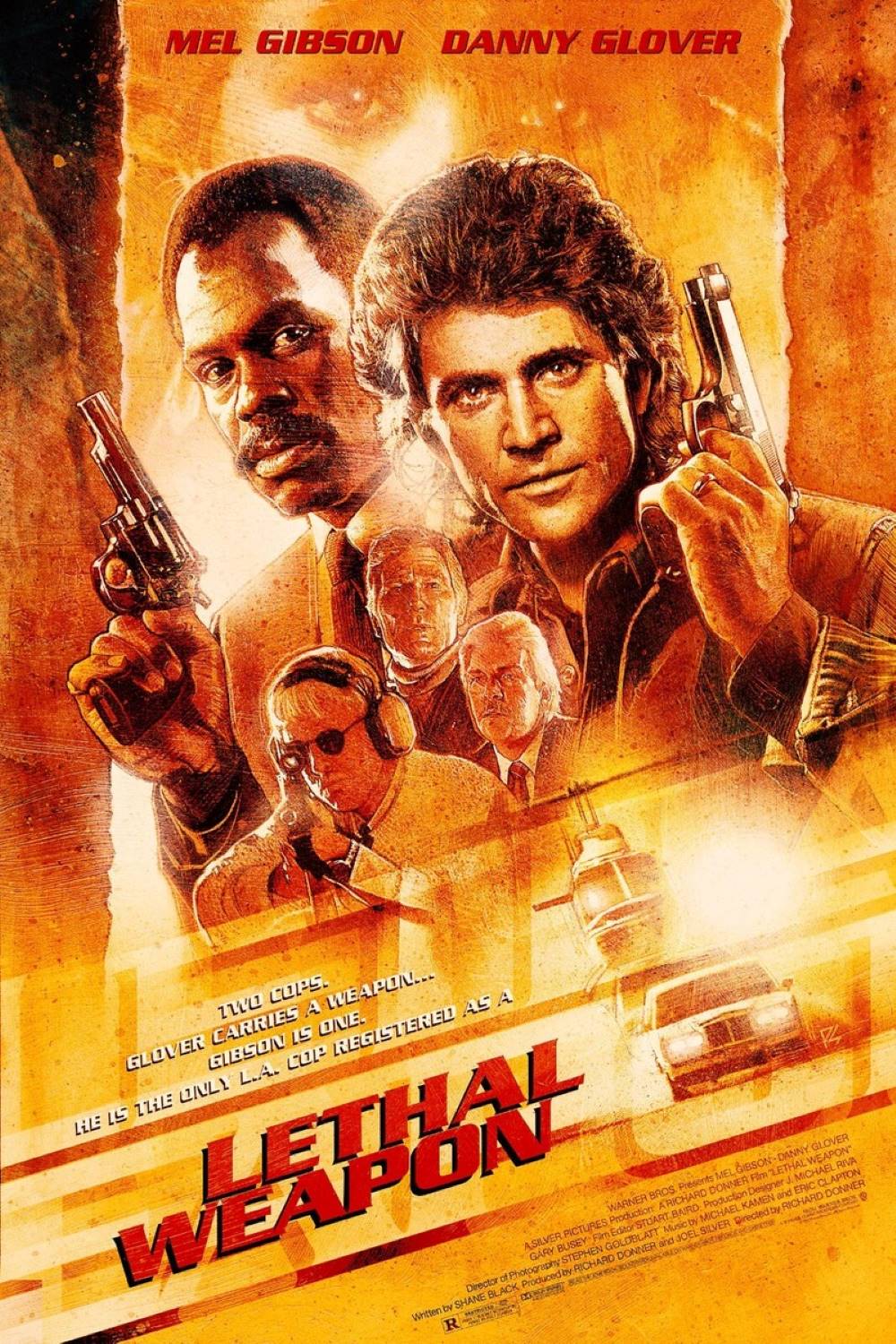
Lethal Weapon is one of those action movies that looks like pure genre formula on paper but somehow plays like lightning in a bottle on screen. From the opening moments, it feels like a film that knows exactly what kind of ride it wants to deliver and leans into that mission with confidence, attitude, and just enough heart to make the bullets and explosions actually matter.

The premise itself is as straightforward as they come, and that simplicity is part of the charm. Martin Riggs is the textbook “cop on the edge,” a former special forces sniper whose life has completely fallen apart after the death of his wife. He’s volatile, depressed, and teetering on the edge of suicidal, which gives everything he does an extra layer of danger. On the other side of the pairing is Roger Murtaugh, a seasoned detective staring down his 50th birthday, trying to balance a long career in homicide with the quiet, constant pull of his family at home. When these two are thrown together and assigned to a case involving drugs, dead bodies, and shady ex-military criminals, the story plays out across familiar beats: suspicious deaths, escalating confrontations, close calls, and a trail that leads them deeper into a dangerous operation. The crime plot is pulpy and direct rather than twisty, but the film uses it as a sturdy framework rather than the main point of interest, keeping the investigation moving while the characters come into focus. Much of that sharp setup and snappy progression comes from Shane Black’s script, which crackles with knowing genre savvy, pitch-perfect banter, and a keen eye for how personal pain fuels action-hero antics.

What really makes Lethal Weapon feel alive is how much time it spends letting Riggs and Murtaugh exist as people before they fully morph into the “classic duo” that pop culture remembers. The film doesn’t rush past the small stuff. Riggs is introduced living in a rundown trailer on the beach with his scruffy dog for company, drinking and stumbling through life with the casual recklessness of someone who genuinely doesn’t care if he sees tomorrow. Those early moments of him alone, flirting with self-destruction, give his later heroics a sense of tragic context: he’s not just fearless, he’s half-convinced he has nothing left to lose. Murtaugh’s introduction is a complete contrast: a crowded home, kids, a loving wife, and the kind of loud, chaotic domestic life that’s full of relatable irritation and warmth. Seeing him grumble through birthday milestones or awkwardly handle family situations does more for his character than any speech about his years on the force could. These slices of everyday life build a strong emotional foundation so that when the bullets start flying, there’s something at stake beyond catching bad guys. Black’s writing shines here, weaving those intimate details into the thriller beats without ever feeling forced or preachy.

The chemistry between Mel Gibson and Danny Glover is the film’s true secret weapon. Gibson plays Riggs as an unpredictable live wire, able to flip from goofy physical comedy to chilling seriousness in an instant. He sells the idea that this is a man barely keeping it together, yet still razor-sharp when it comes to the job. There’s a constant sense that his jokes and antics are a flimsy barrier over something very raw. Glover, by contrast, keeps Murtaugh grounded and human; his performance is packed with little sighs, muttered reactions, and weary facial expressions that speak volumes. He comes across as a guy who has seen too much, loves his family, and genuinely wants to do the right thing, but is exhausted by how hard that is in practice. Their initial friction hits the expected “mismatched partners” beats: Murtaugh thinks Riggs is unstable and dangerous, while Riggs treats Murtaugh like a fussy old man who doesn’t get it. Yet as they move through stakeouts, interrogations, and gunfights, their banter evolves from pure irritation into an easy rhythm filled with barbs, mutual respect, and eventually real affection. Shane Black’s dialogue is the glue for all of it—witty, profane, and laced with just enough vulnerability to make the laughs land harder and the tension feel real.

Richard Donner’s direction is a huge part of why all of this clicks as well as it does. He has a knack for blending big, commercial genre instincts with an eye for character detail, and Lethal Weapon is a textbook example of that balance. He stages action scenes with clear geography and rhythm, so even when things get loud and chaotic, you always know where you are and what everyone is trying to do. At the same time, he’s just as interested in the quiet beats: a pause on Riggs’ face after a joke lands flat, Murtaugh’s body language when he walks into his noisy home after a brutal day, the way a conversation in a car can shift from banter to confession in a couple of lines. Donner keeps the film moving at a brisk pace, but he knows when to let a shot linger or a silence hang long enough to tell you what the characters can’t quite say out loud. His tonal control—jumping from dark to funny to tense without completely losing the thread—is a big reason the movie doesn’t collapse under its own genre juggling, and it pairs beautifully with Black’s script that sets up those shifts so precisely.

Tonally, Lethal Weapon walks a tricky line, and that’s a big part of its identity. On one hand, this is a story with genuinely dark undercurrents. Riggs’ suicidal impulses are not a throwaway character quirk; the film gives time to scenes where he nearly acts on them and struggles in a very raw way with his grief and loneliness. The case they’re working breaks open into territory involving drugs, exploitation, and violence that’s sometimes nasty rather than cleanly heroic. On the other hand, the film is full of humor, ranging from quick one-liners to broad physical bits. The Murtaugh household provides a lot of that levity: awkward conversations with his kids, Riggs stumbling through family dynamics, and the contrast between domestic calm and the chaos of the streets. The movie often jumps from heavy emotional beats to comedic ones and back again, and while the transitions can be abrupt, that mixture is part of what keeps it from feeling like just another grim cop story. The laughter doesn’t erase the darker material, but it does give the movie a sense of momentum and charm that keeps it entertaining instead of oppressive. Black’s screenplay nails this push-pull, using humor as both release valve and revelation.

As an action film, Lethal Weapon delivers a steady run of sequences that are energetic, clear, and tactile. The action is built around physical stunts, dangerous-looking falls, and gunfights that feel chaotic without becoming incoherent. One memorable sequence has Riggs dealing with a jumper on a rooftop in a way that instantly tells you everything about his mentality and willingness to risk himself. Another set piece in a more open, exposed environment lets the film escalate tension step by step before violence finally erupts. Through it all, Donner keeps a strong sense of spatial clarity; you can track where the characters are, what they’re trying to do, and how each decision raises the stakes. The fights feel scrappy and painful rather than overly slick, and that slightly rough quality actually works in the movie’s favor, making each impact land harder. Riggs, especially, moves like a human weapon, hurling himself into situations with a recklessness that ties directly into his psychological state, all fueled by Black’s clever plotting that makes those risks feel personal.

Underneath the gunfire and explosions, there’s a surprisingly sturdy emotional core tying everything together. Riggs’ grief isn’t just window dressing; it’s the lens through which his every decision makes sense. The movie doesn’t lecture you about what he’s feeling, but it shows it—through quiet moments alone, through the anger that erupts at all the wrong times, and through the way he throws his body into danger almost as if daring the world to take him out. Murtaugh’s arc is more subtle but still strongly drawn. He’s at an age where he has to confront the reality that he can’t keep pace with younger, more reckless colleagues forever, and yet his sense of duty keeps pulling him into situations where his family might lose him. Throughout their investigation, Murtaugh’s protective instincts—toward his loved ones, toward Riggs, and toward innocent people caught in the crossfire—become as important as his skills as a detective.

The relationship that develops between Riggs and Murtaugh is the heart of the film and the main reason it sticks in the memory. At first, Murtaugh just wants to survive partnering with a man he genuinely believes might be unhinged, while Riggs seems to treat their pairing as just another chaotic twist in a life already off the rails. As they trade confessions, back each other up in tight spots, and slowly understand what the other is carrying, their bond shifts into something like brotherhood. Murtaugh becomes a kind of anchor for Riggs, offering not just backup in a fight but also a place at the table, both literally and figuratively. Riggs, in turn, forces Murtaugh out of his comfort zone, reminding him that he still has plenty of courage and fire left in him. The film doesn’t turn their connection into a sentimental soapbox, but it lets small moments—a shared laugh after a narrow escape, a quiet conversation after the chaos—do the emotional lifting, with Black’s words giving those scenes their understated power.

If there’s a clear weak spot, it’s that the villains are fairly thinly drawn, operating more as looming threats than fully realized characters. They are dangerous and organized, capable of serious brutality and clearly involved in serious criminal operations, but the movie doesn’t spend much time exploring their motivations or inner lives. They’re the kind of antagonists designed to be obstacles: formidable enough to make the heroes’ victories feel earned, but not so complex that they distract from the central duo. For a character-driven action film, that trade-off mostly works. When Lethal Weapon is firing on all cylinders, the tension doesn’t come from wondering what the bad guys will do next so much as from seeing how Riggs and Murtaugh will handle whatever gets thrown at them and what that reveals about who they are.

Structurally, the film keeps a tight pace, always nudging the story forward even when it pauses for character beats. Expository scenes rarely feel like dry info dumps; they’re often laced with jokes, personal jabs, or subtle shifts in how the two leads relate to each other. The downtime moments—a quiet drink, a shared meal, a conversation in a car between partners who would rather pretend they’re fine—are as important as the louder ones. By the time the case ramps up to its most intense passages, there’s been enough time with these characters to care less about the mechanics of the plot and more about whether these two damaged, stubborn men can come out the other side with something to hold onto.

What ultimately makes Lethal Weapon work so well is that it doesn’t settle for being just a checklist of genre requirements. Yes, it has gunfights, dark humor, car chases, and tough-guy posturing. But wrapped around all of that is a story about grief, aging, loyalty, and how unlikely partnerships can change the trajectory of a person’s life. Donner’s steady hand behind the camera, Shane Black’s razor-sharp script, and the powerhouse performances turn what could have been a forgettable cop thriller into something much more memorable. For anyone who enjoys action movies that care as much about the people pulling the triggers as the bullets they fire, Lethal Weapon stands out as a defining entry in the buddy-cop mold, powered by the messy, heartfelt dynamic at its center and the sure-footed craftsmanship that brings it all together.

Review: Predator 2 (dir. by Stephen Hopkins)


Predator 2

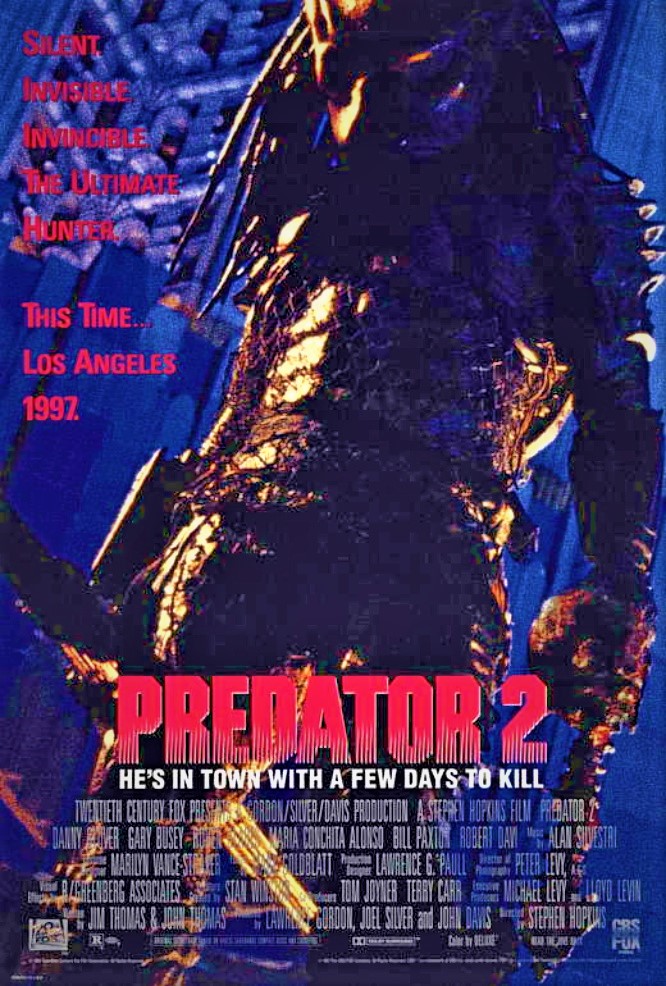
Like any successful genre film, Predator would remain in the consciousness of filmgoers during the late 80’s. The film was that popular and successful. This also meant that the studio who produced and released the film were more than happy to try and replicate what made them a lot of money.  So, a sequel was quickly greenlit within the halls of 20th Century Fox.

Yet, despite the success the first film was able to garner despite some major production problems, this time around luck wasn’t with Predator 2. The follow-up film would have different production issues than the first but they would affect the film in the long run.

First off, John McTiernan wouldn’t be on-board to direct the sequel. His back-to-back successes with Predator and Die Hard has suddenly made him a coveted action director. His schedule would keep him from directing Predator 2 as his slate was already full with The Hunt for Red October being his next film. In comes Stephen Hopkins to helm the sequel.

Yet, the biggest blow to the production would be not being able to get Arnold Schwarzenegger to return in the role of Dutch, the sole survivor of the elite rescue team from the first film. As with most stars and sequels, this time it would be over a salary dispute that would keep Arnold from returning so in comes Danny Glover to take on the sequel’s lead role.

Now, Danny Glover has more than pulled his own action film weight with two Lethal Weapon films already under his belt, but in terms of on-screen charisma he would be a major downgrade from the presence Schwarzenegger provided the first film. But Glover was more than game to take on the role of Lt. Harrigan of the LAPD as the setting for the sequel moves from the steaming jungle canopy of Central America to the blistering asphalt and concrete jungle of gang-ridden Los Angeles.

This change in location made for an interesting take as it helped establish some world building that showed these Predators have visited Earth many times in the past and not just in the faraway jungles but more towards areas and places rife with conflict. We learn that it hunts those who have survived the conflicts of the area they’re in. Only the strongest for these extraplanetary hunters.

Unlike, the original film, Predator 2 fails in not having a cast of characters that the audience could empathize and root for. This follow-up is mostly about action and even more gore than the first. Even the opening sequence tries to one-up the jungle shooting scene from the first film, yet instead of shock and awe the sequence just seems loud and busy,

Predator 2 suffers from a lot of that as the film feels more than just a tad bit bloated. The Thomas brothers (Jim and John) who wrote the original film return for the sequel but were unable to capture lightning in a bottle a second time around. Where the first film was very minimalist in it’s narrative and plot, the sequel goes for the throw everything in but the kitchen sink approach. We have warring drug gangs, inept police leadership, secretive government agencies with their own agendas.

What does work with Predator 2 and has made it into a cult classic as years passed was the very worldbuilding I mentioned earlier. We learn a bit more of this predator-hunter. While some comes as exposition from Gary Busey’s special agent role Peter Keyes, the rest comes from just seeing the new look of this particular Predator courtesy of special effects master Stan Winston.

The biggest joy for fans of the films comes in an all-too-brief scene showcasing the trophy case of the Predator inside it’s spacecraft. Within this trophy case are the skulls of the prey it’s hunted and killed. One skull in particular would ignite the imagination of scifi action fans worldwide. It’s a skull of a xenomorph from the Alien franchise. It made fans wonder if the two films were part of a larger tapestry. Both properties were owned by 20th Century Fox, so there was a chance and hope that the two meanest and baddest alien creatures on film would crossover together.

It would be many, many years before such a team-up would happen. Even when it finally did fans of the franchises would be let down with what they get after waiting for over a decade.

Predator 2 could be seen as trying to make lightning hit the same patch twice or it could be seen as a quick cash grab by a studio seeing a potential franchise. Both are true and without its two biggest stars, Arnold Schwarzenegger and John McTiernan, returning to reprise their roles for the sequel the film was already behind the eight-ball before filming began.

While the follow-up had some interesting new ideas that helped round out the Predator as one of film’s greatest onscreen villains, it also failed to capitalize on those ideas in a creative way. There’s some good in Predator 2, but way too much baggage and too much bad to have it live up to the success and popularity of the original.

Review: Predator (dir. John McTiernan)


Predator 1987

It would be accurate for one to say that Arnold Schwarzenegger was king of the 80’s action flicks. He first burst onto the scene in the titular role in Conan the Barbarian then it’s follow-up sequel. Yet, it would be his role in James Cameron’s The Terminator in 1985 that would make him a household name.

He began to crank out action films after action film every year to varying degrees of success and quality between 1984 and 1987. It would be in the summer of 1987 that he would add a third iconic action film role to stint as Conan the Barbarian and the relentless cybernetic killer, the Terminator.

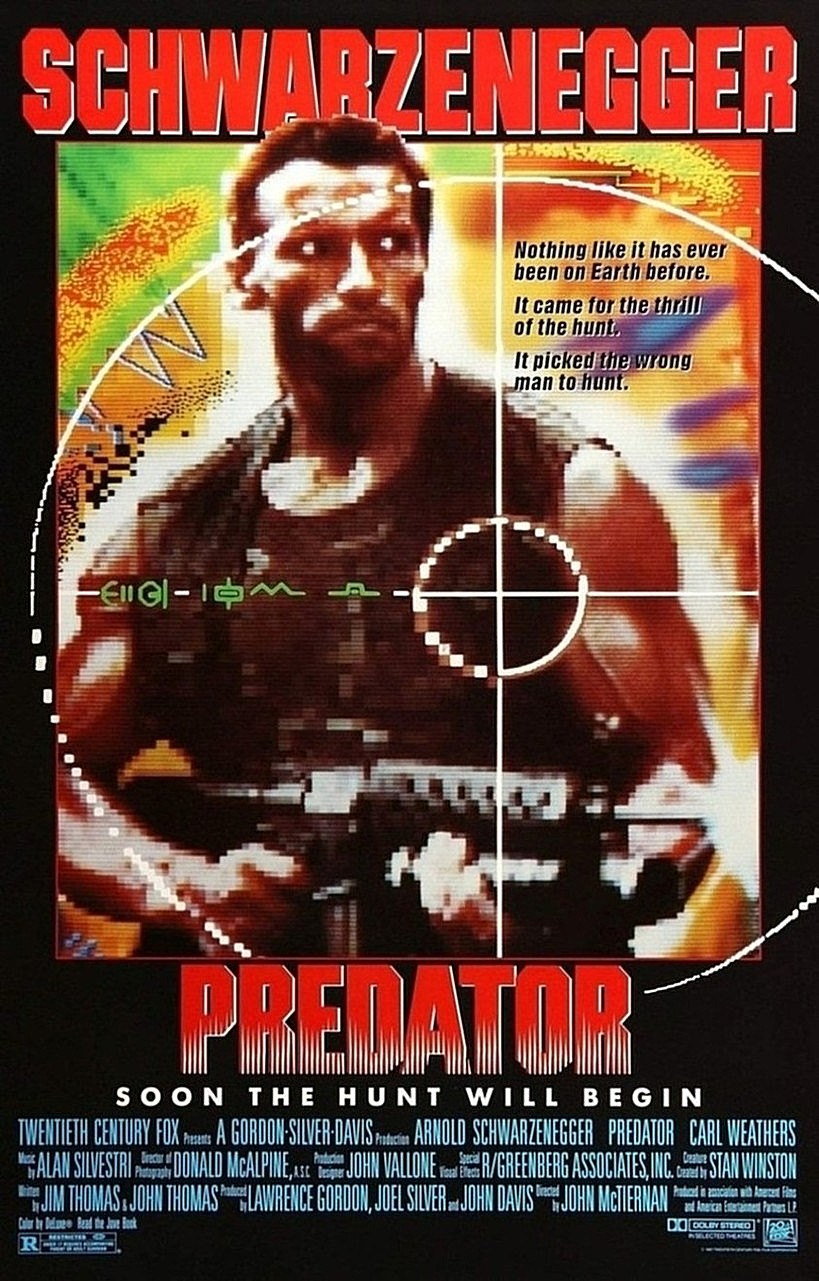
Maj. Dutch Schaefer in John McTiernan’s action scifi Predator cemented Arnold Schwarzenegger as the most bankable movie star of the 1980’s. The film itself has become a go-to classic whenever film fans of all stripes discuss what were some of the best films of the era. Yes, I do categorize Predator as one of the best to come out of the 1980’s. It does more than hold it’s own when stacked up against Oscar winners, festival darlings and indie cult-favorites.

It’s a film that takes the premise that “man is the most dangerous game” to new levels by adding in a scifi element to the story. That scifi element being an extraterrestrial hunter who comes to Earth every so often to hunt. It’s chosen prey tends to be killers, fighters and soldiers at the top of their craft and usually during times of extreme conflict.

The film, as written by the two brothers John and Jim Thomas, actually works like a slasher horror film in the beginning as Dutch and his team of elite commandos trek through the Central American jungle on a rescue mission. A mission that lands the team in finding the grisly remains of another American special forces team. Questions come up as to whether their CIA liaison (played by Carl Weathers of Rocky and Rocky II fame) knows more about the true nature of their supposed rescue mission than he’s willing to let on.

It’s once the team, still being stalked through the jungle by an unseen predator, finally find the people they’re suppose to rescue that all hell breaks loose in more ways than one. The action is loud, messy and exquisitely choreographed and filmed. Unlike some of the action films of the last ten years, Predator succeeds with it’s action scenes for having a director who uses very long takes and little to no hand-held to keep the action geography easy to follow and the action choreography unencumbered by too many edits and cuts.

Even once the team realizes that they were now being hunted and that whoever, or whatever is hunting them, the film still continues to stay on a creative track. When I mentioned that the film plays out like slasher film, it does in way in that the titular character behaves and moves like slasher killers. It seems to be everywhere and nowhere. The very victims it’s hunting only see it when it’s too late and death’s upon them.

The film’s dialogue has been quoted by so many fans that memes have been created around them. Yet, this doesn’t mean that the film is hilarious. What it does have was that masculine, brother’s-in-arms banter and quips that’s become a sort of signature for screenwriter and director Shane Black who was hired to do some uncredited rewrites on the Thomas Brother’s original script. Black would also end up playing one of the commandos in the film.

Outside of Arnold himself, Predator would be best-known for the effects work by the late and great Stan Winston, who would come in to help redesign the title character (with some help from his buddy James Cameron) and the rest as they would say was film history. It would be difficult to go anywhere around the world, show the Predator to some random person and they not know what it is.

Predator was one of those films that people, at first, thought was just a mindless, popcorn flick. The type of cinema that was to be seen then forgotten for better fare. Yet, in the end, Predator ended up becoming not just a classic of its genre, but a perfect example of a film that transcends it’s genre roots to become just a great film, in general.

Review: V for Vendetta (dir. by James McTeigue)


“Remember, remember the fifth of November, the gunpowder treason and plot. I know of no reason why the gunpowder treason should ever be forgot.”

Alan Moore’s decision to want his name off the final credits for the film adaptation of V for Vendetta now makes sense. Moore has had a hate/hate relationship with Hollywood and the film industry in general. They’ve taken two of his other works in The League of Extraordinary Gentlemen and From Hell. and bollocks’d them up (to borrow a term used quite a bit in V for Vendetta). Outside of Watchmen, Alan Moore sees V for Vendetta as one of his more personal works and after reading the screenplay adaptation of the graphic novel by The Wachowski Brothers his decision afterwards was to demand his name be removed from the film if it was ever made. Part of this was his hatred of the film industry for their past mistakes and another being his wish for a perfect adaptation or none at all. Well, V for Vendettaby James McTeigue and The Wachowski Brothers is not a perfect film adaptation. What it turns out to be is a film that stays true to the spirit of Moore’s graphic novel and given a modern, up-to-the-current news retelling of the world’s state of affairs.

V for Vendetta starts off with abit of a prologue to explain the relevance of the Guy Fawkes mask worn by V throughout the film and the significance of the date of the 5th of November. I think this change in the story from the source material may be for the benefit of audiences who didn’t grow up in the UK and have no idea of who Guy Fawkes was and what his Gunpowder Plot was all about. The sequence is short but informative. From then on we move on to the start of the main story and here the film adheres close enough to the source material with a few changes to the Evey character (played by Natalie Portman) but not enough to ruin the character. Caught after curfew and accosted by the ruling government’s secret police called Fingermen, Evey soon encounters V who saves her not just from imprisonment but rape from these so-called Fingermen.

Right from the start the one thing McTeigue and The Wachowski Brothers got dead-on was casting Hugo Weaving as the title character. Voice silky, velvety and sonorous, Weaving infuses V with an otherworldly, theatrical personality. Whether V was speaking phrases from Shakespeare, philosophers or pop culture icons, the voice gave a character who doesn’t show his face from behind the enternally-smiling Guy Fawkes mask real life. I’d forgiven the makers of this films for some of the changes they made to the story and some of the characters for keeping V as close to how Moore wrote him. Once V and Evey are thrown in together by the happenstance of that nightly encounter their fates became intertwined. Portman plays the reluctant witness to V’s acts of terrorism, murders and destruction in the beginning, but a poignant and emotionally powerful sequence to start the second half of the film soon brings Evey’s character not much towards V’s way of doing things, but to understanding just why he’s doing them. This sequence became the emotional punch of the whole film and is literally lifted word for word from the graphic novel. This is the sequence in the film which should resonate the loudest for most people whether they buy into the rest of the film or not.

The rest of the cast seemed like a who’s who of the British acting community. From Stephen Rea’s stubborn and dogged Chief Inspector Finch whose quest to find V leads him to finding clues about his government’s past actions that he’d rather not have found. Then there’s Stephen Fry’s flamboyant TV show host who becomes Evey’s only other ally whose secret longings have been forbidden by the government, but who’s awakened by V’s actions to go through with his own form of rebellion. Then there’s John Hurt as High Chancellor Adam Sutler who’s seen chewing up the scenery with his Hitler-like performance through Big Brother video conferences (an ironic bit of casting since John Hurt also played Winston Smith in the film adaptation of the Orwell classic 1984). I really couldn’t find any of the supporting players as having done a bad job in their performances. Even Hurt’s Sutler might have seemed over-the-top to some but his performance just showed how much of a hatemonger Sutler and, in the end, his Norsefire party really were in order to stay in power.

The story itself, as I mentioned earlier, had had some changes made to it. Some of these changes angered Moore and probably continues to anger his more die-hard fans. I count myself as one of these die-hards, but I know how film adaptations of classic literary works must and need to trim some of the fat from the main body and theme of the story to fully translate onto the silver screen. The Wachowski Brother’s screenplay did just that. They trimmed some of the side stories and tertiary characters from the story and concentrated on V, Evey and Inspector Finch’s pursuit of both the truth of V and his own journey in finding that truth. This adaptation wa much closer to how Peter Jackson adapted The Lord of the Rings. As a fan of Moore I understood why he was unhappy with the changes, but then Moore was and still is an avowed perfectionist and only a perfect adaptation would do.

Critics on both sides of the aisle have called V for Vendetta revolutionary, subversive, daring to irresponsible and propagandist. All because the film dares to ask serious questions about the nature and role of violence as a form of dissent. But the granddaddy question the film brings up that has people talking is the question: terrorist or freedom fighter? Is V one or the other or is he both? Make no mistake about it, V for all intents and purposes is a terrorist if one was to use the definition of what a terrorist is. The makers of this film goes to great lenghts to describe throughout the film just how Sutler and his Norsefire (with its iconic Nazi-like imagery and extreme fundamentalist Christian idealogy) party rose to power in the UK. Partly due to what seemed like the failed US foreign policy and its subsequent and destructive decline as a superpower and the worldwide panic and fear it caused as a result. V for Vendetta also ask just who was to blame for allowing such individuals to rule over them. V has his reasons for killing these powers-that-be, but he also points out that people really should just look in the mirror if they need to know who really was to blame. For it was the population — whose desire to remain safe and have a semblance of peace — gave up more and more of their basic liberties and rights for a return to order. If one was to look at the past 100 years they would see that it’s happened before. There was the regime of Pol Pot in Cambodia, Milosevic’s Greater Serbia, and the king of the hill of them all being Adolf Hitler and his Nazi Inner Circle.

Another thing about V for Vendetta that will surely talked about alot will be the images used in the film. Not just images and symbols looking so much like Nazi icons, but images from the events of the past decade which have become symbols of oppression and censorship. The film shows people bound and hooded like prisoners from Abu Ghraib. The reason of the war on terror used time and time again by Sutler to justify why England and its people need him and his group to protect them by any means necessary. V for Vendetta seems like a timely film for our current times. Even with the conclusion of the film finally accomplishing what Guy Fawkes failed to do that night of November 5th some 400 plus years ago, V for Vendetta doesn’t give all the answers to all the questions it raises. I’m sure this would be something that’ll frustrate them some audiences. So much of people who go to watch thought-provoking films want their questions answered as clearly as possible and all of them. V for Vendetta doesn’t answer them but gives the audience enough information to try and work it out themselves.

In final analysis, V for Vendetta accomplishes in bringing the main themes of Alan Moore’s graphic novel to life and even does it well despite some of the changes made. It is a film that is sure to polarize the extreme left and right of the political pundits and commentators. But as a piece of thought-provoking and even as a politically subversive film, V for Vendetta does it job well. It is not a perfect film by any respect, but the story and message it tries to convey in addition to its value as a piece of entertainment mor than makes up for its flaws. Alan Moore and his followers might not love and approve of this film, but it doesn’t mean the film in and of itself wasn’t a good one. Sometimes calls for literal adaptations of beloved works or no adaptation at all also becomes a form of creative oppression and censorship.

Trailer: Sherlock Holmes: A Game of Shadows (Official)


In 2009, we saw the first film in what Warner Bros. hoped would be the start of a new film franchise in Guy Ritchie’s Sherlock Holmes starring Robert Down, Jr. in the titular role with Jude Law playing his intrepid assistant, Dr. Watson. The film did quite well in the box-office that a sequel was greenlit right away and here we are just five months from the premiere of the follow-up film, Sherlock Holmes: A Game of Shadows.

The first film introduced the character of Sherlock Holmes to the public who really didn’t know much of the iconic character. That film also introduced the one person who would become Holmes equal in intellect and deductive reasoning but without the moral center: Dr. James Moriarty. This arch-foil for Holmes is to be the main antagonist for the sequel and whoever decided to cast Jared Harris in the role of the good Dr. Moriarty should get a raise. Harris has always been one of those character actors who disappears into his roles in every film he has done but never seem to get any glory. Hopefully, once people have seen him in A Game of Shadows, this will change and he joins the likes of Mark Strong, Anthony Hopkins and others who toiled in relative obscurity until finally hitting it big as a charming villain in a major film.

New to the sequel will be Noomi Rapace just fresh off of her stand-out role as Lisbeth Salander in the film adaptation trilogy of Stieg Larsson’s Millenium Trilogy. Also, joining the returning cast is Stephen Fry as Sherlock’s brother Mycroft Holmes. The film, as shown in the trailer, looks to ramp up the action and bring Holmes and Watson on a whirlwind tour of Europe.

Sherlock Holmes: A Game of Shadows is set for a December 16, 2011 release date.

Quickie Review: Ninja Assassin (dir. by James McTeigue)


There comes around a few films every year which I end up enjoying despite how awful it is to most everyone. I’m a major fan and follower of all things grindhouse and for some grindhouse means it was made during the late 60’s and through most of thru the 70’s. I always thought of grindhouse as a state of mind. I mean I like to believe that’s why Robert Rodriguez and Quentin Tarantino make the films that they make (all of them grindhouse films at heart if not execution). So, it happens that in 2009 there was one film which was panned universally by critics and mainstream audiences everywhere. It was the second film by Wachowski Brothers protege James McTeigue. He was the same director who made the impressive V for Vendetta film adaptation (I still believe to this day that the Wachowski Brothers had a hand in directing that adaptation).

When word came down that he was going to do a modern ninja film which included Sho Kosugi (he practically was the star of most, if not all, of the best-known ninja grindhouse flicks of the 70’s and 80’s) there was no doubt that this film would rock. The heightened anticipation for this martial arts extravaganza would turn out to be more a whimper than a bang. James McTeigue’s Ninja Assassin became one of 2009’s worst films of the year and part of me don’t agree with how most people viewed it.

The story for this film was quite simple. Former ninja assassin tries hiding from his former ninja clan and it’s badass ninja leader (played by badass ninja-man himself, Sho Kosugi). The part of this former ninja was played by Korean singing pop sensation who went by the name Rain. He got the lead part for this film due to the Wachowski Brothers and uber-action producer Joel Silver having been impressed seeing his work on the Wachowski Brothers’ very-maligned and misunderstood live-action take on the classic Japanese anime series, Speed Racer. The brothers and Silver saw a start on the rise in their midst and decided to make a film around Rain. The fact that the film ended up being Ninja Assassin must’ve been one reason why we haven’t heard of him in the US since.

Still, Rain did a good enough job as the blank-faced, albeit master of the ninja arts, Raizo. He was chosen because he looked the part, moved like the part and probably powers that be thought him being shirtless half the time would bring in the huge J-pop and K-pop demographic. Again, the producers might have been reaching a bit much when they were developing Ninja Assassin.

The rest of the film is Raizo being chased by his former clan, having flashbacks of his time as a child being trained by the Ozuna ninja clan to become their top assassin, then back to the present trying to kill as many ninja as possible, while avoiding getting killed himself. Believe me when I say that the blood and body parts rain down like dismembered bodies were on sale at Wal-Mart and everything was tagged “Entire Stock Must Go!”.

Ninja Assassin will live and die through it’s action sequences and despite the heavy use of CGI-blood the action in this film were pretty good. There’s the usual slo-mo tricks the Wachowski Brothers have become well-known for and it seems like their protege have learned from them well. I actually thought that the ultra-violent and very gory action scenes is why this film reminded me of past martial arts grindhouse flicks. Those were also very bloody and violent. It was as if the filmmakers of those film were telling McTeigue that the more blood and violence the merrier.

I would mention that the film had some good performances from the non-ninja roles played by Naomie Harris and Ben Miles, but I’d be lying. Their work here was passable and just needed to fill the slow and dialogue-heavy gaps in-between ninja butchering. These non-ninja butchering scenes actually slowed the film down. I do believe that if they were replaced with more ninja butchering hapless Interpol security agents and vice versa then Ninja Assassin would’ve turned out a hundred times better. Sometimes mindless gory violence is better than wince-inducing dialogue and exposition.

From the sound of this review one would think that I didn’t like Ninja Assassin. Part of me doesn’t like this film, but the part of my brain which understands the nature of grindhouse flicks loved this film because of the very awful things people say about it. This is a film which was so bad that it passed the point of awfulness and became entertaining in its very own way. I mean this film definitely felt like a Sho Kosugi ninja flick but of the digital age. I always believed that no matter the era and no matter how advanced film techniques get there will always be filmmakers out there who go about in a serious manner to create a good film, but despite their best intentions and plans the overall execution and final product don’t live up to their expectations. In a way, that’s what most grindhouse films tend to be in the end. Films made with the best in mind but got lost in its very own grandiose plans to come out batshit nuts on the other side.

PS: Those wondering how ninja having no guns can take on militayr-trained agents in tactical armor wielding the latest in assault rifles. Well, who needs a Heckler&Koch G36 assault rifle when one can throw shuriken as fast as an assault rifle. In the end, Ninja vs. SWAT makes for a badass, mindless climactic battle scene.