Review: Captain America: Civil War (dir. by Anthony & Joe Russo)


Captain America Civil War

Captain America: The Winter Soldier wasn’t just a surprise hit for Marvel Studios and parent company Disney in 2014, it also showed the general public that there was more to Captain America than just a flag-waving symbol of America’s past glory. Captain America was a character that wasn’t the hip, wisecracking Tony Stark. He wasn’t the tortured soul in a monster’s body like Bruce Banner as the Hulk. He didn’t have the Shakespearean gravitas that was always lurking behind Thor and his complicated Asgardian family. No, Captain America was considered too straight-laced, blonde and blue-eyed goody two-shoes.

Captain America: The First Avenger focused on those very qualities. Steve Rogers was just a skinny, asthmatic young man from Brooklyn who wanted to do his part during World War II. It would be thanks to an experimental super-soldier serum that Steve Rogers’ body finally matched the inherent goodness and will to defend the little guy. For some, this initial introduction to Captain America was too hokey, but was entertaining enough. His next appearance in 2012’s game-changing superhero team-up The Avengers saw him be part tactician for a burgeoning superhero team and part comedy relief.

It would be with The Winter Soldier that the rest of the general public finally got to what comic book fans have known for years. This is a badass man, out of his time but always fighting the good fight and staying true to his convictions and principles. What was seen as hokey idealism became something of a beacon of selflessness and the moral center in a modern world that was steeped in shades of grey. It helped that writing team of Stephen McFeely and Christopher Markus (who wrote The First Avenger) finally found a pair of directors in the Russo Brothers (Anthony and Joe) who understood just what made Captain America relevant in this day and age of cynical anti-heroes.

It’s no surprise that the Russo Brothers were tasked with continuing the work they began in the Winter Soldier with McFeely and Markus with the film that would complete the Captain America trilogy in the Marvel Cinematic Universe. It would be quite a task in getting Captain America: Civil War off the ground and moving forward under all the weight of nearly every MCU superhero (minus Thor, Hulk and Nick Fury) in attendance and the introduction of two new ones to the universe.

Did the Anthony and Joe Russo pull off this massive undertaking? Or did they stumble to not just the huge cast and many storyline threads the way Joss Whedon did with the ambitious, but flawed The Avengers: Age of Ultron?

I’m happy to say that the Russo Brothers did better than succeed but may have just made the best film in the Marvel Cinematic Universe and proved that Marvel Studios head honcho Kevin Feige was correct in placing the brothers as the new captain of the massive thing called the Marvel Cinematic Universe as it enters Phase 3.

Captain America: Civil War is set just a year after the events of Age of Ultron where the Avengers barely defeated Tony Stark’s mad A.I. Ultron and it’s decision to wipe humanity from the planet. While the team did save the world from global extinction they also didn’t save everyone. there were still hundreds, if not, thousands of Sokovians who died during the battle. The same could be said for all the battles since the alien invasion over New York. The Avengers, led by Captain America, have saved the world from invading aliens, world-dominating terrorist group and killer A.I robots. Yet, the collateral damage caused by these battles have begun to weigh not just on some of the Avengers, but has made the governments of the world see the team as a sort of super-powered private military group who don’t obey international laws and borders. Yes, they’ve saved humanity many times from destruction, but at what cost.

It’s during a battle early in the film as Captain America and his team stop the theft of a biological weapon in the city of Lagos, Nigeria that collateral damage and deaths rear it’s head once more as Wanda Maximoff (aka the Scarlet Witch) accidentally allows a suicide bomb vest explode too close to a nearby high-rise causing the deaths of several aide workers from Wakanda.

It’s from this event that the world finally have reached a tipping point and want to put the team under U.N. control with Tony Stark agreeing to the plan to help assuage his guilt over the deaths caused by him creating Ultron. Some of the team understands that government oversight that the Sokovian Accords puts on the team is the right thing to do. While others, especially Captain America, think it’s best to leave the team to continue to be their own masters instead of beholden to a bureaucracy whose agenda may not be conducive to saving lives.

It’s a subject matter that was explored in some fashion in an earlier superhero mash-up but one that failed to stick the landing. Yet, even this battle of differing ideologies between Captain America and Iron Man only becomes part of the foundation to the true narrative for Civil War. It’s the friendship between Captain America and Bucky aka the Winter Soldier and how the former must try to prove the latter innocent of another terrorist attack the world thinks he’s responsible for. Those Avengers who signed the Accords must now bring in Bucky dead or alive while Captain America with the help of those who didn’t sign try to prove his innocence and find the true architect of the terrorist bombing.

Captain America: Civil War succeeds where the earlier superhero film failed because of the groundwork laid down by the 12 previous films released to make up the current Marvel Cinematic Universe. From Iron Man all the way up to Age of Ultron, these twelve films flesh out the backstory and characters that make up these heroes. We’ve gotten to know what motivates them to risk their lives for the greater good, but we also see glimpses of the inter-personal conflicts that looks to tear the team apart from within.

There’s not enough that could be said about the masterful work done by the Russo Brothers in juggling the personalities of twelve superheroes (two getting their initial introduction to the MCU) and giving them enough to do in the film to make them relevant to the proceedings instead of just becoming glorified cameos. The actors playing these characters have had many films to own the roles and each and everyone hits it out of the park. The stand out from the veterans in the ensemble cast still remains Chris Evans and Robert Downey, Jr as Captain America and Iron Man, respectively. Yet, it would be the arrival of the two new heroes into the mix with Chadwick Boseman as the newly-crowned king of the technologically-advanced nation of Wakanda, T’Challa and Tom Holland as the teenage chatterbox and dumpster diving tech genius Peter Parker aka Spider-Man.

Boseman as the Black Panther adds a certain level of gravitas and regal fury to the proceedings which balances the edge between serious to comedic. His Black Panther has his own agenda in getting involved in this intra-familial squabble. He has his own agenda and if it means siding with Iron Man against Captain and his team then he would do so if it succeeds in helping him finish his mission. It helps that he looks damn cool in what has to be the best superhero costume thought up by the designers in Marvel Studios.

It would be Tom Holland as the young Peter Parker and Spider-Man who steals the show whenever he’s on-screen. This is the Peter Parker and Spider-Man that comic book fans have been waiting for. While Tobey Maguire and Andrew Garfield succeeded in portraying some of the character’s personality, they could never fully capture what made Spider-Man such a favorite amongst comic book readers. This Spider-Man is geeky and not at all hip and cool, but with a sense of right and wrong that comes having great power means shouldering the responsibility to use it for good.

Captain America: Civil War, with its exploration of many profound ideas and themes, is still a superhero film and a tentpole blockbuster at that and audiences still want to see the action up on the big screen. Boy, does this film have action and enough of them to spare. The action scenes range from the grounded hand-to-hand fighting the Russo Brothers used to great effect in The Winter Soldier (this time around with the help from Chad Stahelski and David Leitch, directors of John Wick to provide 2nd Unit Directing help) up to the superhero battle that raises the bar on such things set at an evacuated airport in Leipzig, Germany.

This 6-on-6 tête-à-tête between friends and colleagues takes the climactic battles in both Avengers films and does them better. With each hero using their abilities to great effect in conjunction with their allies and against those they are fighting. There was never a time during this near on 20-minute action scene did it ever get confusing. Many filmmakers doing superhero (or just plain old action films) could learn a thing or two from how the Russo Brothers and 2nd Unit directors Spiros Razatos, Stahelski and Leitch choreographed and filmed all the action sequences in Civil War. It was near-perfect with only wishful thinking that Gareth Evans from The Raid films could’ve been asked to help out to make things perfect.

As huge and bombastic the film gets with this airport fight, it would be the final throw down between Captain America and Iron Man at the end of the film that we get the emotional heft the film needs to keep itself from becoming just another loud and explosive superhero film. This fight becomes personal and shows how fights between close friends become the most brutal and heartbreaking. Neither combatants are wrong about their stances in the fight, but they’re also wrong in not being able to think things through. These two alpha males who have a  friendship full of respect but also combativeness throughout the years of the MCU that finally explodes into all-out war when a tragic secret from both Tony Stark’s and Bucky’s past come to light.

It’s a fight that has no winners and for a superhero film that is a major change from the usual narrative (especially within the MCU storytelling playbook). The film ends with the very team created to save the world from all threats even more unsure of their place in the ever-changing and ever-judging world. It’s a bold move by Marvel Studios to start their Phase 3 that would culminate in the battle to end all battles with the two Avengers: Infinity War films (soon to be retitled) which happen to be under the master-class guiding hands of the Russo Brothers in the directors’ chair and the writing duo Stephen McFeely and Christopher Markus.

In the end, Captain America: Civil War manages to capture not just what made comic books and films adapted from them fun and exhilarating, but also able to tackle some serious ideas and themes both existential and personal. It just goes to show that one doesn’t need to sacrifice one to have the other. One can have serious and dark but also be fun. It’s a balance that’s difficult to do, but when the people involved in creating such a story stick the landing then we a classic in the making. It bodes well for the rest of the films in Phase 3 to have such a great beginning, but also raises the bar for the other filmmakers following in the wake of what Anthony and Joe Russo have concocted. Let’s  hope they are all up to the task.
Film Review: The Bronze (dir by Bryan Buckley)


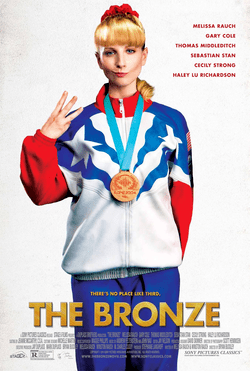
The Bronze has been getting terrible reviews since it first premiered at Sundance last year.  Telling the story of an Olympic bronze medalist who has grown up to be bitter and angry, The Bronze has been unfavorably compared to Bad Santa, Bad Words, Bad Teacher and … well, bad anything.  (You know you’re in trouble when your film gets compared to Bad Teacher because most critics have an irrational hatred for that film.  I actually enjoyed it.)  The Bronze was originally scheduled to be released last July and then it was pushed back and then, for a little while, it vanished all together as it was traded between different distributors.  Finally, last Friday, Sony Pictures Classics released The Bronze with all the fanfare of a community theater announcing their annual production of Forever Plaid.

Well, after hearing how terrible it was, there was no way that my BFF Evelyn and I could resist the temptation to experience it for ourselves.  (We both enjoy watching and commenting during bad movies.  That’s what led to us watching that Tyler Perry movie about the adulterous matckmaker .)  We caught a 10:15 showing last night at the AMC Valley View and the theater was almost totally deserted.  (Admittedly, not many people are brave enough to go to Valley View Mall past 9:00 but Evelyn and I fear nothing.)  We were expecting to see a thoroughly mediocre film but you know what?

We were both kind of surprised to discover that The Bronze was not the terrible film that we had been led to expect.

Melissa Rauch (who co-wrote the script) plays Hope Ann Gregory, a former Olympic gymnast who won the Bronze medal at the Summer Olympics.  She won the medal despite competing on an injured ankle.  Unfortunately, her injury ended her competitive career but it also briefly made her a national celebrity.  12 years later, most of the country may have forgotten Hope but the people of hometown of Amherst, Ohio still love her.

When we first meet Hope, she’s masturbating while watching footage of herself competing at the Olympics.  She then proceeds to steal money from her father’s mail route so she’ll have enough money to buy weed.  Hope is rude to almost everyone and yet, no one in the town seems to notice.  Or maybe they are so happy to be in the presence of a minor celebrity that they just don’t care how terribly she treats them.  The movie is actually somewhat vague on this point but still, the contrast between Hope’s reality and the opinion that others have of her is one of the best things about the film.  Intentionally or not, it perfectly satirizes that way that we idealize our celebrities.

When Hope’s former coach commits suicide, her final request is that Hope agree to train an up-and-coming gymnast, Maggie (Haley Lu Richardson).  At first, the jealous Hope tries to sabotage Maggie but eventually, Hope starts to take her job as coach seriously.  (When Maggie first shows up, she seems to be a one-note, excessively perky character but eventually, she reveals some needed, if not exactly surprising, complexity.)  Hope also develops an unexpected relationship with Maggie’s assistant coach, Twitchy (Thomas Middleditch).  (Twitchy is called Twitchy because he blinks a lot.)

The Bronze is not a great film.  Instead, it’s an extremely uneven film, one that often seems to be trying too hard.  It never manages to find the right balance between its raunchy comedy and the occasional and surprisingly subtle moments when it suddenly becomes a character study.

And yet, at the same time, it’s not as terrible as you’ve heard.  There are moments that work surprisingly well.  Some of them are moments like an enjoyably over-the-top sex scene between two gymnasts.  But then there are moments like the scene where Hope talks about the first time she learned that, as a result of the injury she sustained while winning her Bronze, she would never be able to compete again.  There are scenes like the one where Hope proves herself to be surprisingly loyal to the citizens of Amherst or where her long-suffering father (Gary Cole) confronts her about her behavior.  Though these moments may be few and far between, they still work surprisingly well.  It’s during these moments that The Bronze drops the protective mask of outrageousness and reveals some unexpected depth.  It helps that, along with writing the script, Melissa Rauch totally commits herself to the role.  At her best, she’s like a force of stoned nature.

Is The Bronze really worth seeing on the big screen?  Probably not.  It’s too uneven to really be successful.  But when it shows up on Netflix, I predict that a lot of people are going to be surprised to discover that The Bronze isn’t as terrible as they’ve been told.

The_Bronze_poster

The Final Captain America: Civil War Swings By


Captain America Civil War

We are just two weeks away from the release of Batman v. Superman: Dawn of Justice and just a week from the premiere of Netflix’s Daredevil Season 2. What better way to remind people that there is another hero vs hero film coming out to start off the summer than with the final full trailer for Captain America: Civil War.

One things which distinguishes this latest and final trailer happens right at the very end. One could almost say that this was the trailer’s post-credit sequence.

Captain America: Civil War swings into action on May 6, 2016.

Captain America: Civil War Super Bowl TV Spot “Rivals”


Captain America - Civil War

It’s that time of the year when the country (to some extent the world) witness a sporting event that’s become almost ritualistic in how it gathers it’s audience. I’m talking about the yearly Super Bowl pitting the NFC champions against the AFC champs. Even if one wasn’t a huge fan of football, the Super Bowl has become such an event day not just for the game, but the half-time show. Then there are the commercials which has become just as anticipated as the game itself.

It’s this day that we get major studios plying their upcoming films for the summer blockbuster season and Disney is not a studio to let this day pass without showing something new regarding one of their biggest films this summer.

The first Captain America: Civil War trailer a couple months ago got everyone anticipating the film. Now we have the Super Bowl TV spot to fan the flame of hype for the film that dared to go up against Batman v. Superman: Dawn of Justice when they both had the same release date: May 6, 2016. The latter film blinked and opted to dominate the film landscape a couple months earlier.

This tv spot emphasizes the fractured nature of Avengers that lends to the film’s title of civil war.

So, which team are you on? Are you on Team Captain America? Or are you more the Team Iron Man?

I guess, we’ll find out this May 6, 2016.

Captain America: Civil War Is Coming


Captain America - Civil War

“A Titan against a Titan!”

Captain America: Civil War is the opening shot of Marvel’s Phase 3 for their cinematic universe. The huge success of Captain America: The Winter Soldier, both in the box-office and among critics, even convinced Marvel Studios and Disney to pit this upcoming sequel against DC’s own Batman v. Superman: Dawn of Justice. One of the two had to blink and move their release date and it ended up being DC.

In what many have called Avengers 2.5 due to the amount of Marvel superheroes involved in the story, Captain America: Civil War will look to explore the consequences of the collateral damage incurred by Captain America and his teammates in the Avengers whenever they fight it out in public. The destruction of Midtown Manhattan during the Battle of New York was the start. The wreckage of three advanced SHIELD Helicarriers in the Potomac was another. Yet, it looks like the destruction of the capital city of Sokovia during the team’s fight against Ultron may have been the straw that broke the global governments’ back.

So, will Tony Stark and his team of Pro-Registration win out over the out-gunned Team Captain America who do not want to be beholden to the agendas of any world government?

We shall find out when Captain America: Civil War drops on everyone on May 6, 2016.

A Few Thoughts On The Martian…


The_Martian_film_poster

I’m a few weeks late in reviewing The Martian, largely because I was on vacation when it was first released.  When I finally did see The Martian, it was at the wonderful UEC theater in beautiful Russellville, Arkansas.  As opposed to my experience when I saw The Green Inferno, the theater was packed and, throughout the entire movie, it was obvious that the audience absolutely loved what they were seeing on screen.  They laughed, they applauded, and it was obvious they had a great time with the movie.

And why not?  After the commercial failures of both The Counselor and Exodus, it’s obvious that director Ridley Scott was not going to take any chances with The Martian.  There’s not a single scene that is not specifically calculated to keep the viewer as complacently satisfied as possible.  Telling the story of how botanist Mark Whatney (Matt Damon) gets stranded on Mars and must figure out a way to survive until he can be rescued, The Martian is such a positive film that its total lack of cynicism almost gets overwhelming.  The end result is a film that is a 100 times better than Exodus but never as interesting or challenging as The Counselor.

In fact, as I watched The Martian, I kept thinking about another film about a man stranded out in the middle of nowhere, Into The Wild.  The main character in Into The Wild spent his isolation contemplating the meaning of life and finally reaching some sort of spiritual peace before starving to death.  Mark Whatney, on the other hand, spends his isolation recording a snarky video diary and listening to classic disco songs.

And, before anyone gets offended or accuses me of being a film snob, allow me to say that I enjoyed The Martian.  I thought it was an entertaining movie and I especially loved the soundtrack.  But, at the same time, one can enjoy The Martian and still acknowledge that there’s not much going on underneath the crowd-pleasing surface.

Looking back on the film, I find it remarkable just how little we learn about Mark Whatney.  We hear at one point that he has a family but we really don’t learn anything about his life on Earth.  In a way, he’s a bit like Robert Redford in All Is Lost.  Except, of course, Mark Whatney talks.  He talks a lot.  Fortunately, Mark is played by Matt Damon, who is a great talker.  If I think that The Martian is entertaining but also a bit overrated (and I do), I also think that Matt Damon deserves every bit of praise that he’s received for his performance.

Interestingly enough, The Martian not only features Matt Damon’s best performance but it also features Jessica Chastain’s worst.  Chastain plays Commander Lewis, who is in charge of the Mars expedition and who take it upon herself to bring Mark Whatney home.  And really, this should have been a great role for Jessica Chastain but, for the first time that I can remember, she gives a performance that just isn’t that interesting.

Then again, there’s really only one interesting character in the entire film and that’s Mark Whatney  (though I would have liked to learn more about the astronomer played by Donald Glover, who gives an appealingly eccentric performance).  This is Matt Damon’s film and it’s best moments are the ones where Mark deals with life on Mars.  In fact, there’s a part of me that almost wishes the majority of the NASA scenes had been left on the editing room floor and almost the entire movie had just been Matt Damon on Mars.

In the end, I did enjoy The Martian.  It’s a good film that some people are insisting was great.  (Of course, a lot of that is because it’s trendy to be into science.  Fortunately, Mark Whatney isn’t as much of a pompous blowhard as Neil DeGrasse Tyson, nor is he as creepy as Bill Nye.)  Some people are even suggesting that The Martian is the new Oscar front runner and maybe it is.  (After all, it’s not like there was much going on below the surface of Birdman either.)

But for me, in the years to come, the main thing I’ll remember about The Martian is the totally kickass soundtrack…


The Martian Arrives With An All-Star Cast


TheMartian

Ridley Scott, master filmmaker with a talent for visual storytelling, has had an uneven string of films the last decade or so. His last couple of films have either been underwhelming or divisive. One thing that hasn’t failed him has been the look of his films which continue to be great.

His last film, Exodus: Gods and Kings, wasn’t what one would call a great film. One could even say it wasn’t even a decent one. Hopefully, his latest will break his prolonged streak of misses and get him back on the hit column. This film is the adaptation of the Andy Weir best-selling novel, The Martian.

Ridley Scott has Drew Goddard’s screenplay adaptation to work with not to mention a star-studded cast led by Matt Damon and Jessica Chastain (the inclusion of the latter already makes this a must-see for one of the site’s writers). From the first released trailer we seem to be getting a film that brings back memories of Apollo 13 and Cast Away.

The Martian is set for a November 25, 2015 release date.

For Your Consideration #8: Captain America: The Winter Solider (dir by Joe and Anthony Russo)


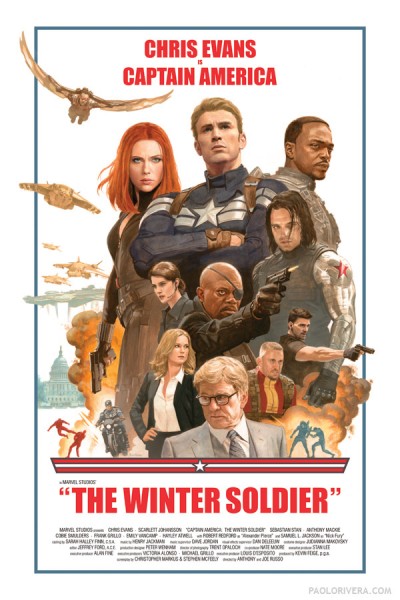
captain-america-winter-soldier-retro-poster-400x600

I would estimate that, when it comes to the movies, Ryan the Trash Film Guru and I agree with each other perhaps 95% of the time.  What’s interesting is that the 5% of the time that we have disagreed, it’s always been the result of an entry in the Marvel Cinematic Universe.  As Ryan has documented many times on this site, he’s not a fan of the MCU.  (The title of his review of the second Thor film is probably one of the best that’s ever appeared on this site.)  As for me, I’m the exact opposite.  In fact, I am such a fan of the MCU that I am about to suggest that Captain America: The Winter Soldier — along with being one of the best action films of the year — deserves serious Oscar consideration.

(Ryan’s opposite take on the film can be read here.)

Now, unlike some of the films that I’ve suggested deserve your consideration, Captain America: The Winter Soldier, along with receiving critical acclaim, was also a major commercial success.  What made The Winter Soldier unique was that it deserved both the acclaim and the money.  There was a lot that I liked about The Winter Soldier.  In the role of Captain America, Chris Evans was both likable and, most importantly, believable as a hero out of time.  And while I would have never guessed that her character was supposed to be Russian, Scarlett Johansson continued her streak of kicking serious ass in the role of the Black Widow.  Samuel L. Jackson brought his customary style to the role of Nick Fury and Sebastian Stan was properly intimidating as the Winter Soldier.  The action scenes were exciting, the dialogue was sharp and witty, and the film worked both as a stand alone film and as a part of the overall Marvel universe.

But, for me, what truly elevated Captain America: The Winter Soldier was the film’s subtext.  (In that way, I would compare it to another surprisingly intelligent genre film, The Purge: Anarchy.)  For those who may have forgotten, the villains of the Winter Soldier are all members and pawns of Hydra, a secret organization that has so infiltrated the American establishment that it has literally become something of a shadow government.  Hydra has also infiltrated SHIELD and plans to use their intelligence capabilities to not only preemptively identify possible threats but to eliminate them as well.  In fact, by taking control of the SHIELD helicarriers, Hydra can anonymously deliver death and destruction from above.

Does that sound familiar to anyone?

What truly makes this subtext come alive is that fact that the main villain — Hydra’s double agent in SHIELD — is played by none other than Robert Redford.  Any student of American film knows what Robert Redford represents.  Early in his career, Redford was the idealistic, ambitious, and frequently laconic protagonist, the perfect symbol of American exceptionalism.  In the 1970s, Redford was the audience surrogate in classic paranoia films like Three Days of the Condor and All The President’s Men.  Lately, as the man behind the Sundance Film Festival and a frequent director, Robert Redford has been the epitome of bourgeois, establishment liberalism.

Hence, when we hear Redford say, “Hail Hydra,” it’s more than just a catch phrase.  It’s also the film’s way of saying that we’re all fucked.  If even Robert Redford can be a villain, the film seems to be saying, then how foolish do we have to be to fully trust anyone or anything?  If Robert Redford can order people killed and then justify it by claiming that he was acting for a greater good then why are we so shocked when governments do the exact same thing?

We live in paranoid times.  In the future, historians will recognize that few films captured that paranoia as perfectly as Captain America: The Winter Soldier.

captainamerica

Trash Film Guru Vs. The Summer (?) Blockbusters : “Captain America : The Winter Soldier”


Capt2-Payoff-1-Sht-v8-Lg-c563d

I’m firmly of the belief that nobody my age has any business whatsoever using the phrase “WTF,” but nevertheless — WTF? Captain America : The Winter Soldier has been playing for two weeks now, there are, what, either or ten people who write regularly (or semi-regularly) for this website, pretty much all of ’em are bigger fans of Marvel’s cinematic product than I am — and I’m the first person to review this flick here, even though more or less  the entire country saw the thing before I did yesterday? Well, okay, but somebody had better get busy on writing a rebuttal to this, because what I’ve got to say is going to piss a lot of people off.

It’s not that DisMar’s latest blockbuster is “bad,” per se — it’s just that it’s exactly what you expect it to be, that’s all these things ever are, and sorry, but it’s not “the greatest super-hero flick ever made.” And that statement, in and of itself, is going to be enough to upset the die-hards out there because, to them, every Marvel movie is “the greatest super-hero flick ever made” — until the next one. Which is probably just as well because these things are entirely disposable and don’t hold up particularly well to multiple viewings. Be honest — once the initial “high” wore off, was The Avengers really all that great? Or Iron Man 3? Or Thor : The Dark World?

Of course they weren’t. Which doesn’t mean they weren’t fun, or that they didn’t hit all the right bullet points on whatever unofficial geek check-list you keep. It’s just that they do their job, get it over with, and move on — as you do, dear reader. Think about it : after watching your average Marvel movie (and if there’s one thing all of these films are, it’s aggressively average), you’re not necessarily pumped to see it again so much as you are pumped for the next one. And that’s kinda the point, isn’t it? The Marvel cinematic “universe” is a self-perpetuating organism at this point, whose primary function is to whet your appetite for the supposed “greatness” to come rather than give you time to reflect on the mediocrity of what’s already been/is going on. The hype surrounding the product is woven into the fabric of the product itself — in fact, it’s the largest part of it.

_1395260042

Don’t get me wrong — I had a reasonably fun time kicking back and watching Captain America : The Winter Soldier. Chris Evans does a reasonably good job portraying Cap/Steve Rogers as a guy who’s fundamentally decent, but not so holier than thou that you want to knock his teeth in. Robert Redford’s choice to play the treacherous Alexander Pierce as a believably nonchalant master manipulator is solid, and everything about him oozes “old movie vet” professionalism. Sebastian Stan cuts a strikingly mysterious pose as the (sub-) titular Winter Soldier. Anthony Mackie is likable in the extreme as sidekick Sam Wilson/The Falcon. And it’s cool to see Toby Jones “back” — after a fashion, at any rate — as Arnim Zola, this time in an iteration somewhat closer to how Jack Kirby originally envisioned him. The main thrust of the story is pretty engaging, too, revolving as it does around a massive web of Hydra “fifth columnists” within S.H.I.E.L.D. itself. It’s reasonably — though far from overwhelmingly — interesting, and keeps you guessing just enough.

But there are some pretty glaring flaws here, as well. Samuel L. Jackson seems tired and played-out as Nick Fury, and while it doesn’t help that his entire “character arc” in this film is lifted note-for-note from that of Jim Gordon in The Dark Knight, the fact of the matter is that Sam doesn’t seem to be putting any more effort into this gig than he does in his credit card commercials. Scarlett Johansson remains horribly miscast as Natasha Romanov/The Black Widow, and while that’s not such a huge problem in movies where she’s peripheral (at best) to the action, it stands out like a sore thumb here, where she’s called upon to be much more central to the proceedings. And for a supposed future love interest, Emily VanCamp is entirely forgettable in her brief time on screen.

Still, those are minor quibbles compared to the main problem here, which is how hopelessly generic, and indeed formulaic, this whole thing feels from start to finish. Joe Johnston’s Captain America : The First Avenger remains my personal favorite Marvel Studios film, but as with Kenneth Branagh and the Thor franchise, DisMar has opted here to show a veteran director with his own ideas and authorial stamp the door when it came time for a sequel and bring in “talent” from the world of television (in this case brothers Joe and Anthony Russo) to hammer things into the dry, predictable “house style” best exemplified by Joss Whedon’s Avengers and Jon Favreau’s first two Iron Man flicks. The end result is a multi-million-dollar, CGI-heavy, clinically-paced, personality-free zone.

captain-america-winter-soldier-retro-poster-400x600

About a half hour into things here, you start to get the distinct feeling that you’ve seen all this before, and there’s good reason for that — you have. The action sequences are progressively bigger, louder, and more destructive, but not much else. They don’t become progressively more thrilling or suspenseful, and while the stakes are nominally raised every time, their execution remains largely the same. You could probably run ’em all in reverse order with no real difference to the story.  And while there does, in fact, seem to be a kind of major shake-up Marvel’s “universe” at the end of this film, the fact that the Agents Of S.H.I.E.L.D. TV series remains a going concern week in and week out is all you need to know to figure out that any “ramifications” from this story are apparently very short-lived indeed. In other words, Marvel’s doing on celluloid what they’ve always done in print — providing, in the words of Stan Lee (who it pains me to even quote, but in this case I must) “the illusion of change” — but no actual change at all.

blurppy-poster-posse-captain-america-3

In the end, in the eyes of this armchair critic at any rate, that’s what Marvel’s movies are all about at this point  : the status quo. If you’re happy with that, then you’ll enjoy the heck out of Captain America : The Winter Soldier. But if you’d like to actually see something that takes a few risks, dares to break the mold a bit, and maybe even matters — well, you’ll have to look elsewhere. That’s not the point here. The point here is to get you all hot and bothered for Captain America 3, or The Avengers 2 — or whatever the hell else is in the pipeline — before this one’s even over. Viewed from that angle — the one that shows the goal of every Marvel movie is nothing more than ensuring that there will be a next Marvel movie — then yeah, this one’s gotta be viewed as an unqualified success. So what?

Captain America: The Winter Soldier (4 Minute Extended Clip & Trailer)


d001

It’s just less than a month away from one of 2014’s most-anticipated films. It’s the sequel to Captain America: The First Avenger and Marvel Studios has been kind enough to treat it’s fans to a 4-minute clip/trailer of the film.

This clip from Captain America: The Winter Soldier comes early in the film and helps in setting the tone of the film. This is not the gung-ho and patriotic first film. This follow-up shows the after-effects of the events from The Avengers and how it’s created a sense of paranoia and conspiracy surrounding the very group Captain America has now become a part of.

Where the first film had the nostalgic feel similar to Joe Johnston’s The Rocketeer, this sequel looks to tap the 70’s conspiracy and 80’s technothriller genres. It’s anyone’s guess whether the Russo Brothers succeeded, but just going by this extended scene and the previous teasers and trailers they may have just done that.

Captain America: The Winter Soldier arrives in North America on April 4, 2014.