Horror Review: Bone Tomahawk (dir. by S. Craig Zahler)


“What is sacred to a bunch of goddamned savages ain’t no concern of the civilized man! We got permission!” — Buddy

Bone Tomahawk (2015) begins in quiet dread. A still horizon, the whisper of wind across rock, a hint of bone under the dust—the American frontier looms like an unfinished thought. This silence sets the tone for S. Craig Zahler’s remarkable debut, a film that wears the form of a Western only to strip it down to nerve and marrow. It’s a story of decency under siege, of men pushing past the last borders of civilization and discovering that what lies beyond is not the unknown, but the origin of everything they thought they’d overcome.

At first glance, the premise seems familiar. When several townspeople vanish from the small settlement of Bright Hope, Sheriff Franklin Hunt (Kurt Russell) leads a rescue expedition into the desert. Riding with him are three others: the injured but determined Arthur O’Dwyer (Patrick Wilson), whose wife has been taken; his tender-hearted deputy, Chicory (Richard Jenkins), whose chatter and old-fashioned kindness soften the film’s bleak austerity; and the self-assured gunman John Brooder (Matthew Fox), a man equal parts gallant and cruel. Together, they represent the moral cross-section of a civilization still trying to define itself—duty, love, loyalty, arrogance.

Their journey outward becomes one of inward descent. Zahler’s script unfolds at a deliberate pace, steeped in stillness and exhaustion. The first half moves like ritual—meandering conversations, humor worn thin by weariness, the small comforts of campfire fellowship flickering against the vast emptiness around them. It’s here that Bone Tomahawk begins its slow transformation. What starts as a rescue Western gradually becomes something deeper and older. By stripping away the romance of exploration, Zahler reveals the frontier not as a space of discovery, but as a place of reckoning—a mirror of the instincts civilization pretends to have tamed.

The film’s most haunting element is its portrayal of the so-called “troglodytes,” the mysterious group believed to be responsible for the kidnappings. They are less a tribe than an incarnation of the wilderness itself—nameless, wordless, and utterly beyond cultural translation. Covered in ash, communicating through the eerie hum of bone instruments embedded in their throats, they seem less human than ancestral, as though the land itself had dragged them upward from its own depths. Zahler refuses to frame them anthropologically or politically; instead, they represent the primal truth the American frontier sought to bury under its myths of order and progress.

Western films, for more than a century, have mythologized the wilderness as an external force—something to conquer. But the “troglodytes” in Bone Tomahawk feel like the soil’s memory of what came before conquest: the savage necessity that built the very myths used to conceal it. They are the frontier’s unspoken ancestry—what remains after all the churches, taverns, and codes of decency are stripped away. Civilization needs them to remain hidden in the canyons, out of sight and unspoken, because their existence contradicts everything the polite narrative of the Old West stands for. They are what progress denies but cannot erase.

Zahler’s restraint strengthens this allegory. He shoots the desert not as backdrop but as evidence—a geographical wound extending beyond the horizon. The wilderness looks stunning but predatory, its stillness full of threat. Even when the posse’s odyssey is free of immediate danger, there’s the growing sense of being consumed: by the sun, by exhaustion, by the quiet knowledge that the world they’re riding into has no use for their notions of law and virtue. Civilization, here, is a pocket of light surrounded by something much older and hungrier.

That hunger, the need to conquer and consume, connects Bone Tomahawk to its spiritual predecessor, Antonia Bird’s Ravenous (1999). Bird’s film transformed the Donner Party’s historical ghosts into an allegory of Manifest Destiny, equating cannibalism with American expansion—the act of devouring land, life, and self under the guise of progress. Zahler continues that lineage with deliberate starkness. For him, violence in the frontier isn’t just literal; it’s foundational, the unacknowledged currency of civilization. Where Ravenous expressed its critique with mordant humor, Bone Tomahawk speaks in solemn tones, observing how every civilized act—the enforcement of law, the defense of home—rests upon the refusal to see what was consumed to create it.

The “troglodytes” embody that refusal incarnate. They are not villains in the traditional sense; Zahler grants them no ideology or explanation, only the primal fact of their survival. In doing so, he flips the Western’s moral equation: the barbarians at the edge of civilization are not invaders, but reminders of its origins. They are ghosts of the violence that founded the frontier, the unspoken proof that the West was never as far from savagery as it claimed. To look upon them is to glimpse the beginning—the raw, lawless reality America buried beneath the idea of itself.

Kurt Russell, magnificent in his restraint, anchors this tension. His Sheriff Hunt evokes a fading kind of decency: measured, fair, and unwavering even in futility. Russell plays him not as a Western hero but as a man committed to honor in a world that no longer rewards it. His calm authority softens only around those he loves and hardens in the face of what he doesn’t understand. In that measured decency lies the film’s aching question: what happens when morality meets something that does not recognize it?

Patrick Wilson’s O’Dwyer embodies faith’s physical agony—a man driven by devotion, limping through a landscape that punishes his determination. Richard Jenkins provides heart and subtle tragedy; his rambling, almost comical musings on aging and loneliness become the story’s moral texture, the sound of humanity scraping against extinction. And Matthew Fox, in his most precise performance, gives voice to the arrogance of the civilized killer—a man who fashions violence as virtue, believing his elegance excuses his cruelty.

Together, the four men form a living cross-section of the West’s moral mythos. Their journey exposes how fragile those ideals become once separated from the safety of town limits. They embody the dream of order confronting the truth of chaos—and the cost of looking too long into the void beyond it.

Zahler’s filmmaking is remarkably self-assured for a debut, and what stands out most is his willingness to trust stillness. There is no manipulated rhythm, no swelling score to guide emotion. The soundscape is shaped by wind, hoofbeats, crackling fires, and quiet voices rattled by exhaustion. The silence itself becomes a spiritual presence, pressing down on the travelers until conversation feels like resistance. Each scene builds tension not through action, but through waiting—the dread of what remains unseen, what civilization has pretended not to hear.

The violence, when it erupts, is unforgettable. Zahler does not linger voyeuristically, yet the weight of what happens lands with moral precision. The horror feels earned—an eruption of the primal into the civilized. Its purpose is not to shock, but to remind: the line between the men of Bright Hope and the people they fear is thinner than they want to believe. The frontier, as Zahler presents it, is not an untouched wilderness but the graveyard of an ongoing denial—the myth of progress stacked atop the bones of the devoured.

In that way, Bone Tomahawk moves beyond the idea of genre blending. It is not merely a “horror Western,” but a meditation on how those two sensibilities spring from the same source. Both depend on the confrontation between safety and the unknown, belief and disbelief. Both are rituals of fear, structured to reassure yet always at risk of unveiling the truth. Zahler’s greatest achievement is the way he strips away that reassurance. By the film’s final stretch, the promises of civilization—hope, faith, righteousness—have been exposed as fragile constructions built atop an ancient void.

And yet, through all its darkness, Zahler allows a flicker of grace. The film’s humanity endures in small gestures: a conversation interrupted by laughter, a hand extended in kindness, the stubborn persistence of dignity in impossible circumstances. Bone Tomahawk never preaches or offers catharsis, but it does something harder—it bears witness. It shows men maintaining decency not because it protects them, but because it defines them. In that endurance lies the film’s quiet heartbeat.

Like Ravenous before it, Bone Tomahawk reimagines cannibalism and frontier brutality not as aberrations, but as mirrors reflecting a truth about the American project: that every step westward demanded erasure, and that what was erased refuses to stay buried. The “troglodytes” linger not only in the canyons but within the culture that feared them—proof that civilization’s polish has always covered the rough, enduring shape of appetite.

By the end, what remains is not revelation or redemption, but silence—the kind that comes after myth collapses. Zahler’s film leaves its characters and viewers alike to confront the space where civilization ends and something older begins. The desert remains untouched, vast and timeless, holding the secret at the center of all Western stories: that progress has always been haunted by the primitive, that the world we built never left the wilderness—it merely disguised it.

Measured, brutal, and strangely tender, Bone Tomahawk stands as both a reclamation and an undoing of the Western myth. It listens to the echoes of the Old West and answers them not with triumph, but with reckoning. In its dust and silence lies a truth older than law or legend: civilization may light its fires, but there will always be something in the dark watching, waiting—the part of us it never truly left behind.

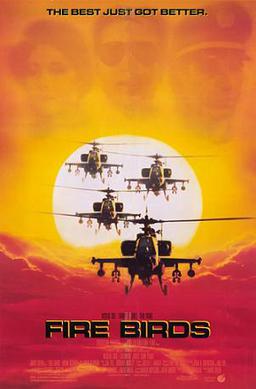
Fire Birds (1990, directed by David Green)


The South American drug cartels have been getting too aggressive so the American government decides to take them out with Apache helicopters.  Missions leaders Tommy Lee Jones and Dale Dye know that these helicopters are the ultimate weapons of death and that things could go terribly wrong if they recruit the wrong pilots.

So, of course, they get Nicholas Cage and Sean Young to fly them.

Fire Birds was an attempt to redo Top Gun with helicopters.  It does actually improve on Top Gun in that it gives the pilots an actual villain to fight.  The drug cartels and the German mercenary (Bert Rhine) that they hire are good B-movie villains and an improvement on the faceless and apparently nationless bad guys who showed up at the end of Top Gun.  What Fire Birds cannot improve on are the flying sequences because fighter planes are just more exciting than to watch than helicopters.

The best thing about the movie is that it brought Nicolas Cage and Tommy Lee Jones together and their acting styles mesh far better than I think anyone would expect.  Sean Young is about as believable as a helicopter pilot as you would expect her to be, which is to say not at all.  There’s a reason why Young’s best performance was as a robot.

“I.  Am.  The.  Greatest!” Nicolas Cage says in the movie and he sounds convinced.  Fire Birds makes the case that Cage is the greatest when it comes to making something bad watchable.  This movie would be thoroughly forgettable if not for his presence and the same can be said about a lot of other movies as well.  But, Tommy Lee Jones can lay claim to the “Greatest” title as well.   Five years after Fire Birds, Tommy Lee Jones would tell Jim Carrey, “I cannot sanction your buffoonery,” and the passage of time has shown that Jones knew what he was talking about.  Nicolas Cage and Tommy Lee Jones should make more movies together.

The Eric Roberts Collection: DC Down (dir by Geoff Meed)


In 2023’s DC Down, Washington D.C. is hit by an earthquake!

It’s a 6.3 on the Richter scale, which means the aftershocks are going to be even worse.  The Washington Monument now has a big crack on it.  The Potomac is threatening to flood the city.  And even worse, both the President (Sean Young) and the Vice President are trapped underneath a bunch of White House rubble.  (Fortunately, the main White House is still standing and actually looks remarkably sturdy.  The President and the Vice President were touring a new wing of the White House that was under construction.)

General Harris (Terry Woodbury) is determined to head up efforts to dig up the chief executive and hopefully find either her or the Vice President alive.  However, Speaker of the House Terry Wilder (Eric Roberts) has other ideas.  First, Wilder invokes the 25th Amendment and takes over as temporary President.  Then he suggests that a militia group be brought in to search through the rubble and rescue the president.  General Harris thinks that’s an odd idea but, in the end, he goes with it.  Needless to say, Wilder does not have the president’s best interests at heart.  For him, this earthquake is the perfect opportunity to take over.  He orders the head of the militia to kill the president when she is found.  Can Wilder be stopped?

(For that matter, do we want to stop Wilder?  Eric Roberts seems like he would be a much more entertaining president that Sean Young.)

D.C. Down is another Asylum mockbuster, the type that I used to love to watch on the SyFy network.  It’s cheap and it’s ridiculous and it’s self-aware enough to be entertaining despite all of that.  You have to appreciate any film that can not only work in an earthquake and a flood but also a political coup.  Add to that, Eric Roberts actually gets a few more scenes than usual in this film.  I have to admit that I laughed out loud when he first appeared, casually walking up to the ruins of the White House extension as if it was just another day in the nation’s capitol.  But, again, that’s a part of the charm of DIY, almost-punk rock charm of the Asylum and their mockbusters.  They defy the conventional definitions of good and bad and they create a unique cinematic world all their own, in this case a world where both Sean Young and Eric Roberts can be President over the course of a day.  Good for the Asylum!  I hope they never stop making movies.

Previous Eric Roberts Films That We Have Reviewed:

  1. Star 80 (1983)
  2. Runaway Train (1985)
  3. Blood Red (1989)
  4. The Ambulance (1990)
  5. The Lost Capone (1990)
  6. Love, Cheat, & Steal (1993)
  7. Voyage (1993)
  8. Love Is A Gun (1994)
  9. Sensation (1994)
  10. Dark Angel (1996)
  11. Doctor Who (1996)
  12. Most Wanted (1997)
  13. Mercy Streets (2000)
  14. Raptor (2001)
  15. Wolves of Wall Street (2002)
  16. Mr. Brightside (2004)
  17. Six: The Mark Unleased (2004)
  18. Hey You (2006)
  19. Amazing Racer (2009)
  20. In The Blink of an Eye (2009)
  21. Bed & Breakfast (2010)
  22. Enemies Among Us (2010)
  23. The Expendables (2010) 
  24. Sharktopus (2010)
  25. Beyond The Trophy (2012)
  26. The Dead Want Women (2012)
  27. Deadline (2012)
  28. The Mark (2012)
  29. Miss Atomic Bomb (2012)
  30. Bonnie And Clyde: Justified (2013)
  31. Lovelace (2013)
  32. The Mark: Redemption (2013)
  33. Self-Storage (2013)
  34. A Talking Cat!?! (2013)
  35. This Is Our Time (2013)
  36. Inherent Vice (2014)
  37. Road to the Open (2014)
  38. Rumors of War (2014)
  39. Amityville Death House (2015)
  40. A Fatal Obsession (2015)
  41. Las Vegas Story (2015)
  42. Stalked By My Doctor (2015)
  43. Enemy Within (2016)
  44. Joker’s Poltergeist (2016)
  45. Prayer Never Fails (2016)
  46. Stalked By My Doctor: The Return (2016)
  47. The Wrong Roommate (2016)
  48. Dark Image (2017)
  49. Black Wake (2018)
  50. Frank and Ava (2018)
  51. Stalked By My Doctor: Patient’s Revenge (2018)
  52. Clinton Island (2019)
  53. Monster Island (2019)
  54. The Reliant (2019)
  55. The Savant (2019)
  56. Seven Deadly Sins (2019)
  57. Stalked By My Doctor: A Sleepwalker’s Nightmare (2019)
  58. The Wrong Mommy (2019)
  59. Exodus of a Prodigal Son (2020)
  60. Free Lunch Express (2020)
  61. Her Deadly Groom (2020)
  62. Top Gunner (2020)
  63. Deadly Nightshade (2021)
  64. The Elevator (2021)
  65. Just What The Doctor Ordered (2021)
  66. Killer Advice (2021)
  67. Night Night (2021)
  68. The Poltergeist Diaries (2021)
  69. The Rebels of PT-218 (2021)
  70. A Town Called Parable (2021)
  71. Bleach (2022)
  72. My Dinner With Eric (2022)
  73. Aftermath (2024)
  74. Devil’s Knight (2024)
  75. The Wrong Life Coach (2024)
  76. When It Rains In L.A. (2025

Stripes (1981, directed by Ivan Reitman)


Bill Murray and Harold Ramis join the army.

Wait, that can’t be right, can it?  Bill Murray and Harold Ramis were cinematic anarchists.  Early in his career, Bill Murray was the ultimate smart aleck slacker who did not have any respect for authority.  Harold Ramis was hardly a slacker but he came across as someone more likely to be marching on the Pentagon than guarding it.  Stripes is one of the ultimate examples of a comedy where the laughs come from things  that don’t seem to go together suddenly going together.

John Winger (Murray) at least has a reason to join the army.  He has a dead end job.  He has just broken up with his girlfriend.  The country appears to be at peace so why not spend four years in the Army?  It’s harder to understand why John’s friend, Russell (Ramis), also decides to enlist, other than to hang out with John.  Along with Ox (John Candy), Cruiser (John Diehl), Psycho (Conrad Dunn), and Elm0 (Judge Reinhold), they enlist and go through basic training under the watchful eye of Sgt. Hulka (Warren Oates).  John and Russell go from treating everything like a joke to invading East Germany in a tank that’s disguised as an RV.  They also meet the two sexiest and friendliest MPs in the service, Stella (P.J. Soles) and Louise (Sean Young).  Russell goes from being an proto-hippie who teaches ESL to asking John if he thinks he would make a good officer.  John goes from not taking anything seriously to picking up a machine gun and rescuing his fellow soldiers.

It’s a comedy that shouldn’t work but it does.  It’s actually one of my favorite comedies, full of memorable lines (“Lighten up, Frances.”), and stupidly funny situations.  The cast is full of future comedy legends and P.J. Soles shows that she deserved to be a bigger star.  This was early in Bill Murray’s film career and he was still largely getting by on his SNL persona but, in his confrontations with Hulka, Murray got a chance to show that he could handle drama.  With all the comedic talent in the film, it’s Warren Oates who gets the biggest laughs because he largely plays his role straight.  Sgt. Hulka is a drill sergeant who cares about his men and who knows how to inspire and teach  but that doesn’t mean he’s happy about having to deal with a collection of misfits.  (Watch his face when Cruiser says he enlisted so he wouldn’t get drafted.)

The movie does get strange when the action goes from the U.S. to Germany.  What starts out as Animal-House-In-The-Army instead becomes an almost straight action movie and the movie itself sometimes feels like a recruiting video.  Join the Army and maybe you’ll get to steal an RV with PJ Soles.  That would have been enough to get me to enlist back in the day.  But the combination of Murray, Ramis, and Oates makes Stripes a comedy that can be watched over and over again.

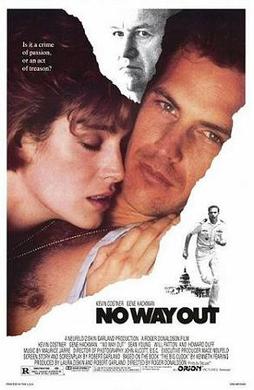
14 Days of Paranoia #7: No Way Out (dir by Roger Donaldson)


Trust no one in Washington would seem to be the message of this 1987 thriller.

Kevin Costner plays Lt. Commander Tom Farrell, a Naval Intelligence officer who is hailed as a hero after saving a shipmate who falls overboard.  In Washington, Tom is recruited by a friend from college, Scott Pritchard (Will Patton), to work for Secretary of Defense Brice (Gene Hackman).  Brice doesn’t trust the head of the CIA (played by future senator, Fred Dalton Thompson) and he wants Tom to serve as his mole within the service.  What Brice doesn’t know is that Tom is sleeping with Brice’s mistress, Susan Atwell (Sean Young).

Still, Brice does suspect that the woman with whom he is cheating is also cheating on him.  When he confronts her about it, their argument leads to him accidentally pushing Susan over an upstairs railing.  Pritchard, who is implied to be in love with Brice, takes charge of the cover-up and decides to push the story that Susan was killed by a possibly mythical Russian agent who is known only by the name “Yuri.”

Tom assists with the investigation of her death, both because he wants to know who killed Susan and also because he knows that there’s evidence in Susan’s apartment that could be manipulated to make him look guilty of the crime.  For instance, Susan took a picture of Tom shortly before her death.  The picture failed to develop but, through the use of what was undoubtedly cutting edge technology in 1987, Naval Intelligence is slowly unscrambling the picture.  For Tom, it’s a race against time to find the actual killer before the picture develops and he’s accused of both killing Susan and being Yuri.

Everyone has an agenda in No Way Out, from the ambitious Brice to the fanatical Scott Pritchard to the head of the CIA, who wants Brice to approve funding for a costly submarine.  Even the film’s nominal hero has an agenda, which has less to do with finding justice for Susan and everything to do with protecting himself and his future.  In fact, as is revealed in the film’s enjoyable if slightly implausible twist ending, some people in Washington have multiple agendas.  The film portrays Washington as being a place where, behind the stately facade, everyone is a liar and everyone is ultimately a pawn in someone else’s game.  If you have the right connections, you can even get away with murder.  Loyalty is rewarded until you’re no longer needed.

It’s an enjoyably twisty thriller, one that makes good use of the contrast between Kevin Costner’s All-American good looks and his somewhat shady screen presence.  The film introduces Costner as being a character who, at first glance, seems almost too good to be true and then spend the majority of its running time suggesting that is indeed the case.  Gene Hackman is well-cast as the weaselly cabinet secretary, as is Sean Young as the woman who links them all together.  In the end, though, the film is stolen by Will Patton, who plays Scott Pritchard as being someone who has unknowingly given his loyalty to a man who is incapable of returning it.  As played by Patton, Scott is an outsider who desperately wants to be an insider and who is willing to do just about anything to accomplish that goal.  He’s a version of Iago who never turned against Othello but instead devoted all of his devious tricks to trying to cover up the murder of Desdemona.

Even with an over-the-top final twist, No Way Out holds up well as a portrait of how the lust for power both drives and corrupts our political system.

14 Days of Paranoia:

  1. Fast Money (1996)
  2. Deep Throat II (1974)
  3. The Passover Plot (1976)
  4. The Believers (1987)
  5. Payback (1999)
  6. Lockdown 2025 (2021)

Late Night Retro Television Reviews: Gun 1.4 “All The President’s Women”


Welcome to Late Night Retro Television Reviews, a feature where we review some of our favorite and least favorite shows of the past!  On Tuesdays, I will be reviewing Gun, an anthology series that ran on ABC for six week in 1997.  The entire show is currently streaming on Tubi!

This week, Robert Altman!  This will be good …. right?

Episode 1.4 “All The President’s Women”

(Dir by Robert Altman, originally aired on May 10th, 1997)

When it comes to the fourth episode of Gun, I have to admit that my expectation were high because this episode was the only one in the series to be directed by Gun’s producer, Robert Altman.  The story, about the womanizing president of a golf club, sound like it would be right up Altman’s alley and allow him to engage in the social satire for which he was best-known.

Unfortunately, the episode itself just isn’t that good.  In fact, it’s the worst episode of Gun that I’ve seen so far.  Watching the show, it’s easy to see that Altman directed it.  There’s several very Altman-like moments.  The show’s plot and its characters all tend to mirror Altman’s trademark obsessions.  That said, for all of Altman’s strengths as a filmmaker and a satirist, he was also a bit self-indulgent and this episode is basically 50 minutes of Altman patting himself on the back and bragging about how clever he is.

The film takes place at a golf club in Texas.  After the club’s president is bitten by a rattlesnake and then accidentally shoots himself in the foot while trying to kill the snake, Bill Johnson (Randy Quaid) is elected as his replacement.  Bill is friendly but shallow, a businessman who is all about prestige and showing off his wealth.  While his wife (Daryl Hannah) spends her time researching real-life presidents, Bill is having an affair with the former’s president’s widow (Jennifer Tilly) while also flirting with his new secretary (Dina Spybey).  Meanwhile, another former lover (Sean Young) is now his attorney while Sally Kellerman plays Jennifer Tilly’s mother and continually warns Bill to stay away from her daughter.

Bill is shocked to discover that someone is sending packages to the women in his life.  Jennifer Tilly receives the gun that was used to shoot the rattlesnake.  Darryl Hannah receives the magazine.  Sean Young receives the bullets.  If you can’t already guess that this is going to end up with Bill in his underwear on the 18th hole, being menaced by a woman carrying a gun, I don’t know what to tell you.

This episode just falls flat and it’s largely the fault of the cast.  Randy Quaid, at the very least, has a Texas accent but he’s not a convincing lothario.  The women all butcher their accents, with the majority of them sounding more like they’re from Georgia than Texas.  Most the cast goes overboard with their quirkiness while Altman directs in a meandering fashion that robs the episode of whatever satirical impact that it might have had.  It’s just a boring episode, regardless on the nails-on-a-chalkboard accents and all the overacting.  Watching this episode, I was reminded of why I usually can’t stand anthology shows.  They just seem to bring out the worst in everyone.

Next week, Kirsten Dunst guest stars.  Did Gun bring out the worst in her?  We’ll find out!

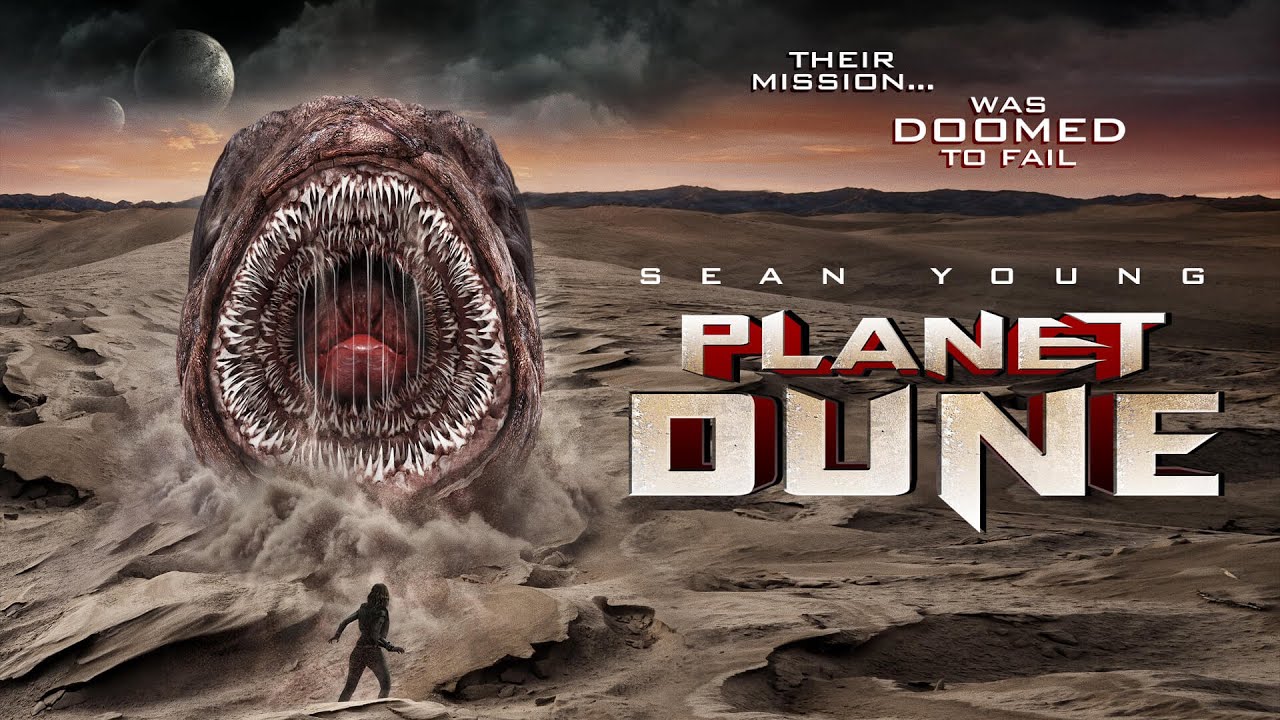
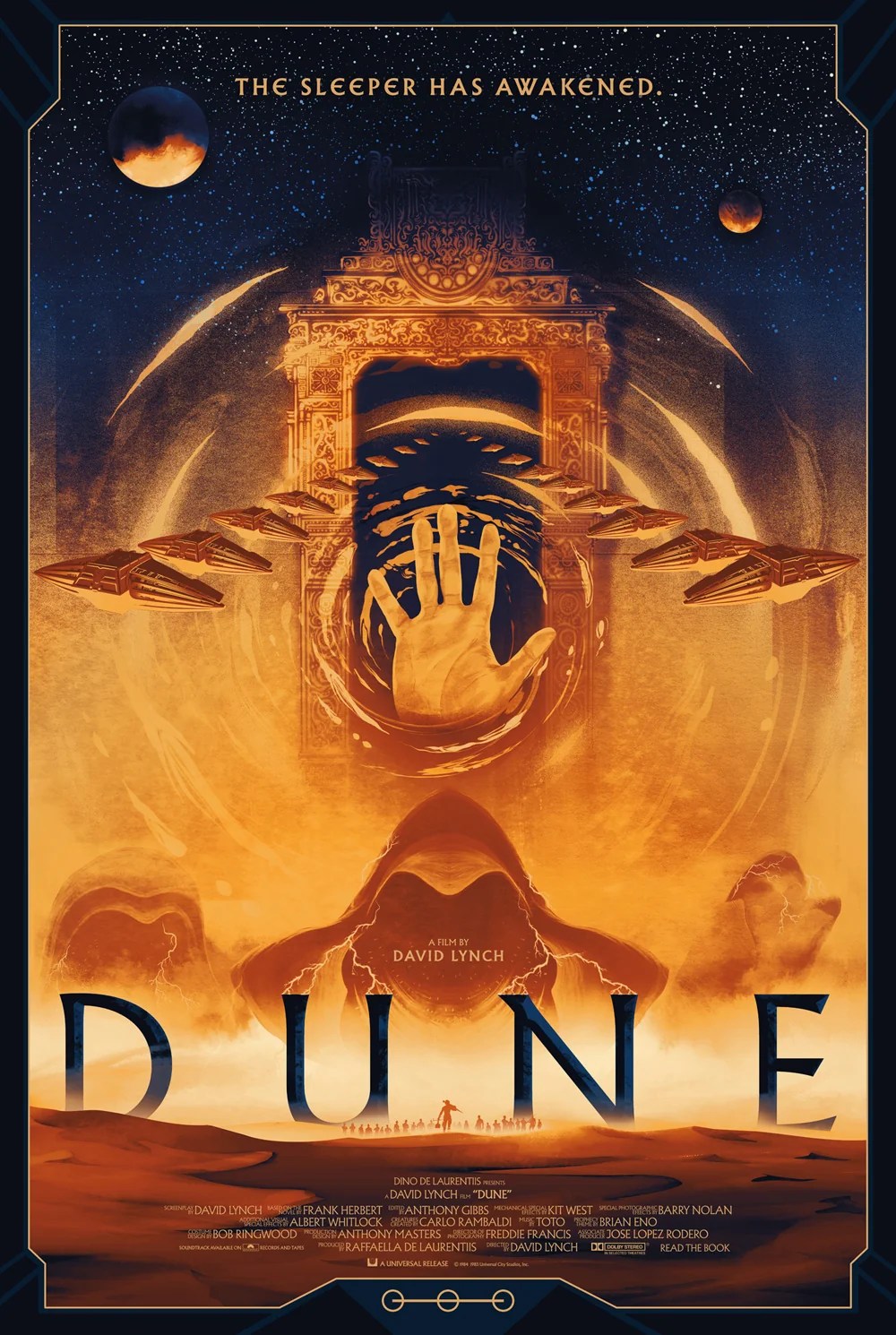
Horror Film Review: Planet Dune (dir by Glenn Campbell and Tammy Klein)


Welcome to Planet Dune!

Now, don’t let the name of this 2021 film from the Asylum fool you.  Yes, the planet may be a desert.  And yes, there may be sandworms that burrow under the sand and which attack anyone foolish enough to be caught outside.  And yes, the planet is specifically referred to as being “Dune.”  Well, actually, it’s called Planet Dune but still….

That said, Planet Dune should not be mistaken for any film based on the novels of Frank Herbert.  There’s no spice.  There’s no Fremen.  There’s not intergalactic intrigue or environmental subtext.  There’s none of that nonsense with the Bene Geserits or whatever it is they were called.  There’s no Maud’Dib.  There’s no promised one.  Instead, there’s just a bunch of killer worms.  And really, that’s not so bad.  I mean, the worms are the main reason why people watch Dune, in the first place.  Planet Dune simply removed all of the extra stuff and concentrated on the worms.  Good for the Asylum!  Give the people what they want!

Planet Dune takes place in the far future.  America and Russia are rivals when it comes to conquering space.  After American Lt. Astrid (Emily Killian) defies orders and saves the life of a stranded cosmonaut, she’s put on probation and forced to command a “tug” ship.  She and her new crew are sent to Planet  Dune to rescue a previous expedition to the planet.  At first, Astrid doesn’t get along with her new crew.  They’re especially not happy when Astrid accidentally flies the tug straight into an asteroid field.  Things don’t get any better when, upon arriving on the planet, the crew is promptly attacked by the worms.  Can everyone make it back to the Tug and fly off to safety?  Will Astrid be able to resist her own addiction to — I’m not making this up — her family’s specially-brewed moonshine?  Who will make it back to the ship and what will be left of them?  It would help, of course, if Astrid could get some help but, when she requests backup, she is informed that people on probation are not sent any help, regardless of how bad the situation is.  In the future, the punishment for saving a man’s life is to be sent to a planet inhabited by killer worms.  That’s harsh!

As far as Asylum mockbusters are concerned, Planet Dune isn’t bad.  It’s actually about a hundred times better than anyone would have any reason to expect.  The film makes good use of its low-budget and the special effects are actually a bit charming in their cheapness.  It’s a bit like a live-action comic book and it’s a good deal less portentous than the official Dune movies.  It’s a fun, fast-paced movie about killer sandworms.  Really, what more could you want from a visit to Planet Dune? 

Well, how about a cameo appearance from Sean Young?  Young, of course, appeared in David Lynch’s adaptation of Dune.  In Planet Dune, she plays Astrid’s boss and gets to yell at her for defying the rules.  It’s a nice little inside joke.

Fatal Instinct (1993, directed by Carl Reiner)


Ned Ravine (Armand Assante) is a cop who is also a lawyer.  His shtick is to make an arrest and then defend that person in court.  He’s married to Lana (Kate Nelligan), who is having an affair with a mechanic named Frank (Christopher McDonald).  Lana has taken out a life insurance policy on Ned, one that has a triple indemnity clause.  If he’s shot on a northbound train and then falls off and drowns in a nearby stream, Lana and Frank will make a lot of money.  However, Lana and Frank are not the only people who want to kill Ned Ravine.  One of Ned’s former clients, Max Shady (James Remar), has just been released from prison and is seeking revenge.  The main reason why Ned hasn’t figured out that everyone is trying to kill him is because he’s been distracted by the seductive Lola (Sean Young), a client who asked him to look over some legal papers and who has an improbable connection to Lana.

As you might guess by the plot and Carl Reiner’s directorial credit, Fatal Instinct is a spoof of detective movies, with the majority of the jokes being inspired by Basic Instinct, the remake of Cape Fear, Double Indemnity, and Body Heat.  How much you laugh will depend on how well you know those films.  There’s a scene in Ned’s office where Ned notices that Lola isn’t wearing panties.  He helpfully produces a pair from inside his desk and hand them to her.  In 1994, that scene was funny because Basic Instinct and whether or not Sharon Stone was aware of how her famous interrogation scene was being filmed were still a huge part of the pop cultural conversation.  Today, it might just seem weird.

Carl Reiner has always been an uneven filmmaker and that trend continues in Fatal Instinct, where he tries to do to erotic thrillers what Mel Brooks did to westerns and Airplane! did to disaster films.  Unfortunately, Reiner often gets bogged down by the film’s plot, which should really be the last thing anyone should be worried about when it comes to a spoof like this.  Some of the jokes are funny and some of them aren’t but, because Reiner doesn’t duplicate the joke-every-minute style of a film like Airplane!, there’s a lot more time to think about the jokes that fall flat.

Fatal Instinct does have a good cast, featuring a lot of actors who probably should have become bigger stars than they did.  I especially liked Kate Nelligan’s and Christopher McDonald’s performances as the two triple indemnity conspirators.  Sherilyn Fenn plays Ned’s loyal secretary and seeing her give such a fresh and likable performance in this otherwise uneven film makes me regret even more that, outside of Twin Peaks, she never really got the roles that she deserved.

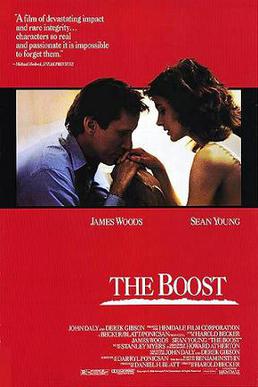
Embracing The Melodrama Part III #8: The Boost (dir by Harold Becker)


Seven days ago, we started embracing the melodrama with my review of No Down Payment, a look at lies and betrayal in suburbia.  Today, we conclude things with 1988’s The Boost, a look at lies, betrayal, and cocaine in California, with the emphasis on cocaine.

From the first minute we meet Lenny Brown (James Woods, at his nerviest best), we assume that he has to be high on something.  He’s a real estate broker and he’s one of those guys who always looks a little bit sleazy no matter how hard he tries otherwise.  His smile is just a little too quick.  He laughs a little bit too eagerly at his own jokes.  He talks constantly, an endless patter of self-serving compliments, nervous jokes, and self-affirming platitudes.  He’s a bundle of nerves but he’s also a brilliant salesman.  We may assume that he’s on coke when we first see him but actually, he doesn’t touch the stuff.  He barely drinks.

Of course, that changes when he’s hired by Max Sherman (Steven Hill).  Max is a philosophical businessman, the type who makes sure that everyone who works for him gets a nice house, a nice car, and several lectures about what’s important in life.  When Max first shows up, it’s tempting to dismiss him as just a self-important businessman but he actually turns out to be a nice guy.  He gives Lenny a ton of good advice.  Unfortunately, Lenny ignores almost all of it.

At first, life is good for Lenny and his wife, Linda (Sean Young).  Lenny is making tons of money, selling houses that can used as a tax shelter or something like that.  (I never understand how any of that stuff works.)  Lenny is making all sorts of new friends, like Joel Miller (John Kapelos) and his wife, Rochelle (Kelle Kerr).  Joel owns four car washes and he’s made a fortune off of them.  All of that money means that he can throw extravagant parties and take nice trips.  It also means that Joel has a never-ending supply of cocaine.  At first, Lenny turns down Joel’s offer of cocaine but eventually he gives in.  At the time, he says that he just needs a little boost.  Soon both Lenny and Linda are addicts.

Of course, nothing goes on forever.  The tax laws change and Max suddenly finds himself out-of-business.  Lenny and Linda lose their house.  They lose their expensive car.  They even lose their private plane.  They end up staying in a tiny apartment.  Lenny says that he can still sell anything and that they’ll be back on top in just a few months.  Of course, even while Lenny is saying this, his main concern is getting more cocaine…

Though dated, The Boost is an effective anti-drug film.  The scene where Lenny overdoses is absolutely harrowing.  Wisely, the film doesn’t deny the fact that cocaine is a lot of fun before you end up losing all of your money and having to move into a cheap apartment with shag carpeting.  It’s a bit like a coke-fueled Days of Wine and Roses, right down to an ending that finds one partner clean and one partner still in the throes of addiction.  James Woods gives a great performance as the self-destructive Lenny, as does Sean Young as his wife and partner in addiction.  And then there’s Steven Hill, providing the voice of gruff wisdom as Max Sherman.  When Max says that he feels that he’s been betrayed, Hill makes you feel as if the entire world has ended.

Speaking of endings, that’s it for this latest installment of Embracing the Melodrama.  I hope you enjoyed this mini-series of reviews and that you will always be willing to embrace the … well, you know.


Horror Trailer: Bone Tomahawk


Bone Tomahawk

We never have enough horror set in the Old West. It’s a setting that should be rife with infinite possibilities for some very scary storytelling.

When we do get Old West horror they tend to be direct-to-video and low-budget affairs. Now don’t get me wrong low-budget horror sometimes are some of the most effective. The closer it gets to it’s grindhouse roots the better. Then again some do end up being a pile of turds that end up getting relegated in the dollar bin at supermarkets.

My hope is that the latest Old West horror starring Kurt Russell will be the former and not the latter.

Bone Tomahawk made it’s premiere at this year’s Fantastic Fest and from all intents and purpose had a very positive reception to it’s genre mash-up of cowboys vs cannibals. Now what better way to follow-up The Green Inferno but with another cannibal fare set in the dusty plains and canyons of the Old West.