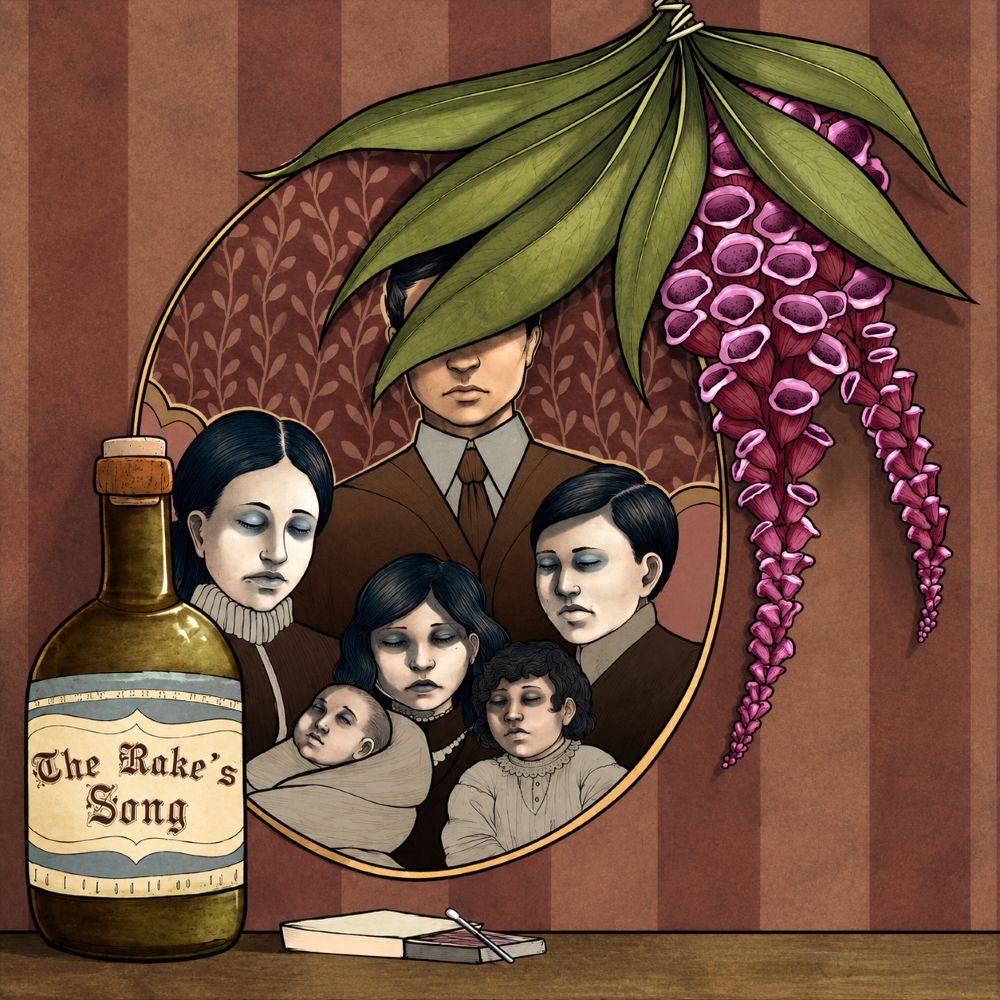
“The Rake’s Song” is one of those Decemberists tracks that lures you in with a tune that sounds almost cheerfully old-fashioned, then casually reveals that you have been listening to a confession from an absolute monster. The arrangement has that familiar Decemberists blend of indie-folk and story-song theatricality: a bouncy, rustic pulse, memorable vocal phrasing, and a melody that feels made for a communal singalong. On the surface, it has the energy of a rowdy little folk number you might hear in a pub or at a campfire.
That folk-horror quality fits especially well because “The Rake’s Song” comes from The Decemberists’ 2009 concept album The Hazards of Love, whose songs collectively tell one continuous, start-to-finish narrative. The album follows the romance between Margaret and William, the supernatural influence of the forest-dwelling Queen, and the violent figures who threaten them along the way. Within that larger story, the Rake is not just a random murderous narrator; he is a dark obstacle in the tale, and his song gives the album one of its most unsettling detours.
But Colin Meloy uses that inviting sound as camouflage. The narrator matter-of-factly explains how he murdered his own children after their mother dies, treating each death less like a tragedy than another inconvenient task to be handled. That emotional disconnect is what makes the song genuinely chilling. There is no dramatic musical shift that announces, “Now this is the horrifying part.” The story just keeps moving, jaunty and almost playful, while the details get progressively more grim.
That contrast makes “The Rake’s Song” feel like a horror folktale that has somehow survived for generations because people kept singing it. It would not feel out of place as a warning whispered around a campfire about the cruel old man who lived beyond the tree line, or as a cautionary tale passed between children in some isolated backwoods cabin: beware the charming song, beware the smiling storyteller, and definitely beware the man who says his family is gone. Its folksiness gives the violence a strange sense of age and inevitability, as if this is not merely one man’s atrocity but an old evil wearing the shape of a traditional ballad.
The Decemberists have always been good at turning literary, historical, and gothic material into catchy songs, and “The Rake’s Song” may be one of their sharpest examples of that trick. It is funny in the bleakest possible way, but the humor never fully softens the horror; if anything, it makes the narrator’s cruelty worse. You can enjoy the hook, tap along to the rhythm, and then suddenly realize you are humming a song about something monstrously cruel—which is exactly why it sticks with you.
The Rake’s Song
I had entered into a marriage
In the summer of my twenty-first year
And the bells rang for our wedding
Only now do I remember it clear
Alright, alright, alright
No more a rake and no more a bachelor
I was wedded and it whetted my thirst
Until her womb start spilling out babies
Only then did I reckon my curse
Alright, alright, alright
Alright, alright, alright
First came Isaiah with his crinkled little fingers
Then came Charlotte and that wretched girl Dawn
Ugly Myfanwy died on delivery
Mercifully taking her mother along
Alright, alright, alright
What can one do when one is widower
Shamefully saddled with three little pests
All that I wanted was the freedom of a new life
So my burden I began to divest
Alright, alright, alright
Alright, alright, alright
Charlotte I buried after feeding her foxglove
Dawn was easy, she was drowned in the bath
Isaiah fought but was easily bested
Burned his body for incurring my wrath
Alright, alright, alright
And that’s how I came your humble narrator
To be living so easy and free
Expect you think that I should be haunted
But it never really bothers me
Alright, alright, alright
Alright, alright, alright

