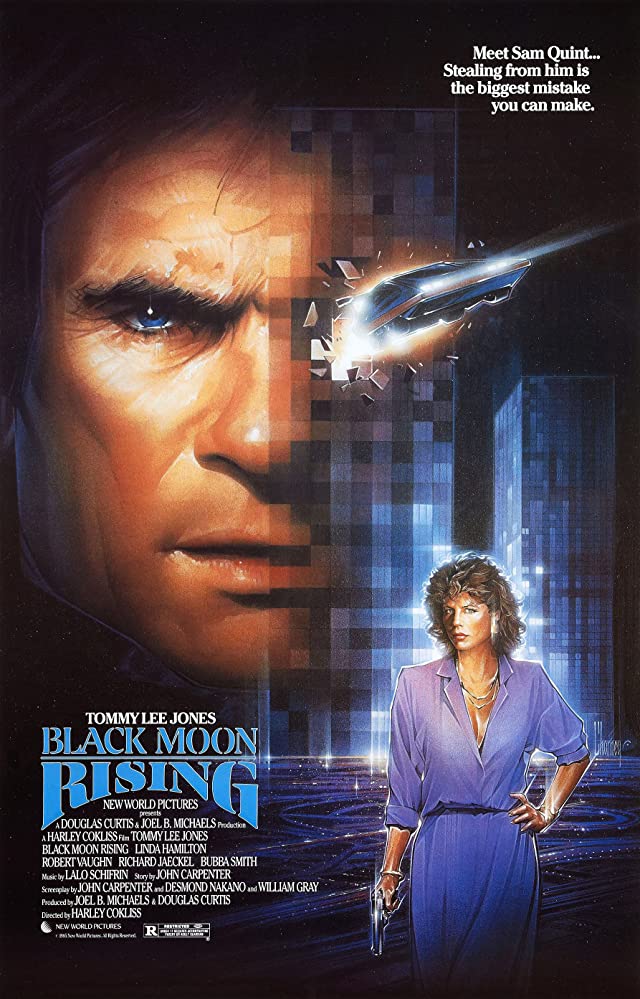
Black Moon Rising (1986, directed by Harley Cokeliss)


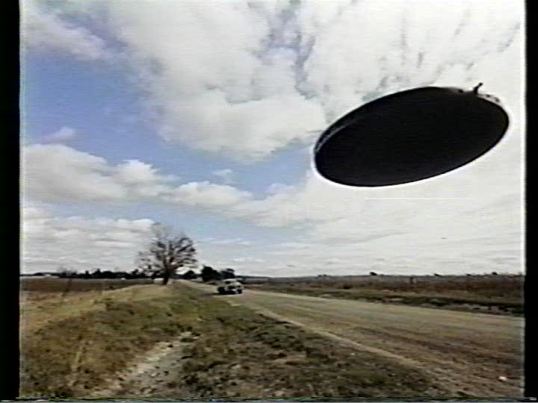
The FBI needs someone to steal a computer disk that can bring down a corrupt Las Vegas corporation so they hire reformed thief Sam Quint (Tommy Lee Jones).  Quint manages to steal the disk but he finds himself being pursued by Ringer (Lee Ving), an old acquaintance who now works for the corporation.  In order to keep the disk from falling into Ringer’s hands, Quint hides it in the back bumper of an experimental racing car called the Black Moon.  The Black Moon, which runs on water and can fly when it reaches its top speed, is being taken to Los Angeles by Earl Windom (Richard Jaeckel) so Quint assumes that he’ll just follow Window to L.A. and then retrieve the disk when no one is watching.

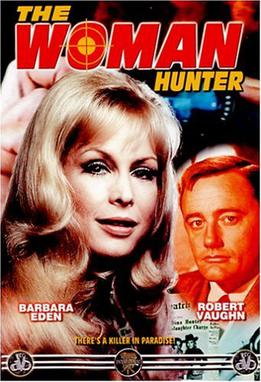
However, as soon as the Black Moon arrives in Los Angeles, it’s stolen by Nina (Linda Hamilton).  Nina works for Ed Ryland (Robert Vaughn), an outwardly respectable businessman who secretly runs a syndicate of car thieves.  Now, Quint and Nina (who conventiently falls in love with Quint) have to steal the car back from Ryland while staying one step ahead of both Ringer and the FBI.

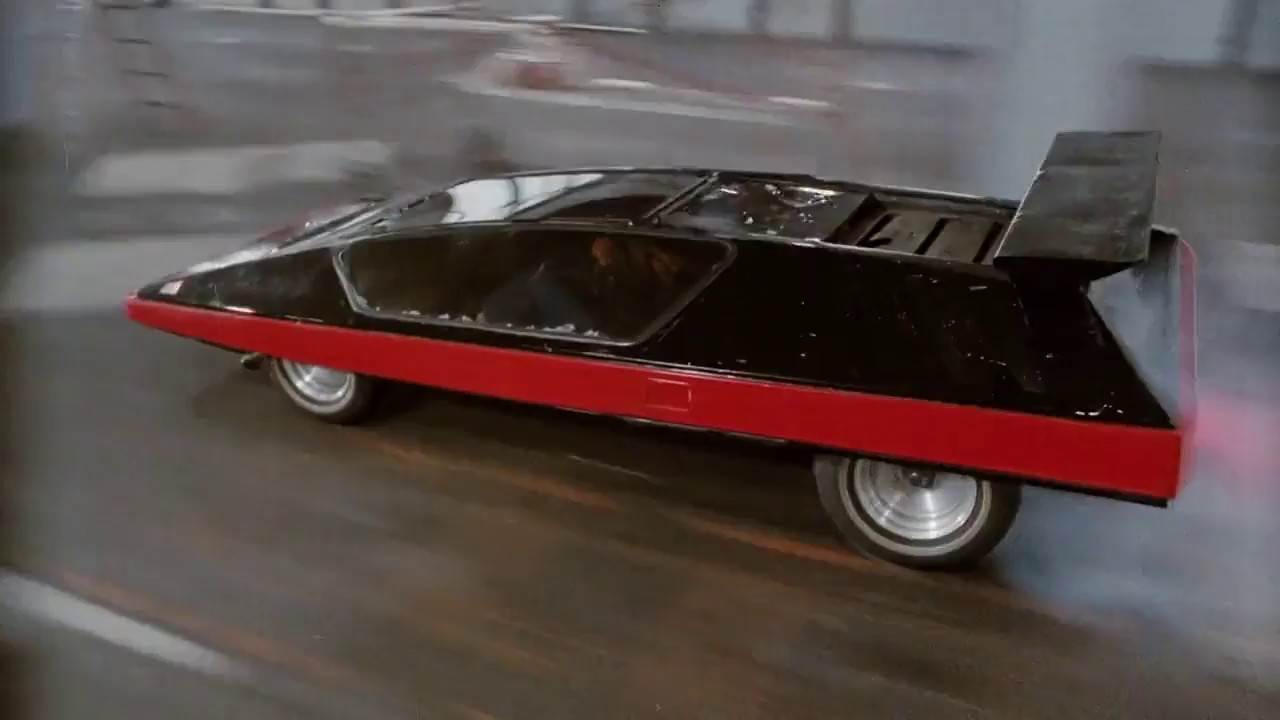
Black Moon Rising is not a movie that you watch for the plot or for the non-existent romantic chemistry between Tommy Lee Jones and Linda Hamilton.  You don’t even watch it for the white collar villainy of Robert Vaughn, who basically just recycles his performance from Superman III.  This is a movie that you watch for the car!  The Black Moon is definitely an impressive vehicle.  Who wouldn’t want to steal one of these?

In a car chase movie like Black Moon Rising, the most important thing is that the car must be cool.  The Black Moon looks like something Mad Max would drive and it can actually fly so, by definition, it’s pretty cool.  Unfortunately, Black Moon Rising doesn’t spend as much time with the car as it should.  The movie gets bogged down with the scenes of Quint and Nina falling in love and Quint having to deal with his FBI handler (played by Bubba Smith).  This is a film that would have benefited from being directed by someone like Hal Needham, who understood that people don’t come to car chase movies for the plot.  They come to car chase movies because they want to see people driving fast and cars crashing in spectacular ways.  Still, even though the car isn’t onscreen as much as it should be, the car is still cool enough to make Black Moon Rising watchable.

One final note: the screenplay is credited to John Carpenter.  Though the imdb claims that this was the first script that Carpenter ever sold and that the film spent ten years in development, Carpenter says that he wrote the script around the same time that he made Escape from New York.  He also says that he’s never actually seen the completed film.


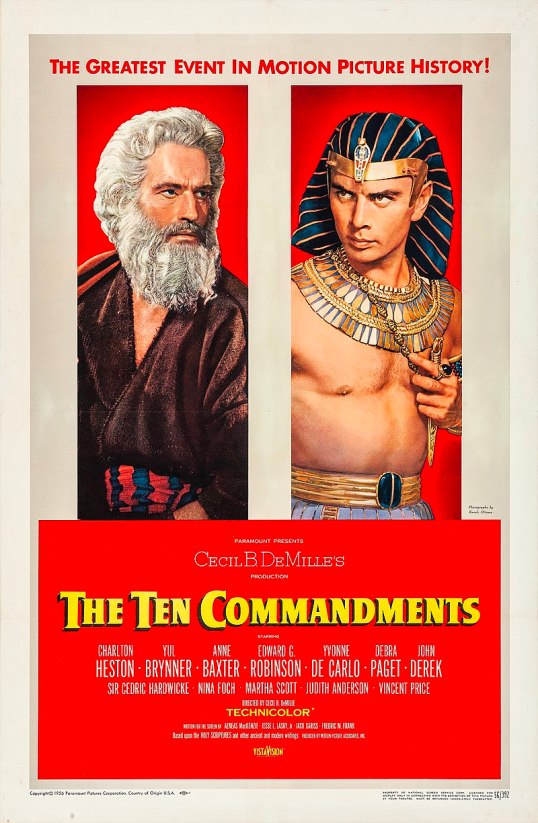
Film Review: The Ten Commandments (dir by Cecil B. DeMille)


Though you may not know it if you’ve only seen the film during one of its annual showings on television, the 1956 religious epic, The Ten Commandments, originally opened with director Cecil B. DeMille standing on a stage.  Speaking directly to the audience, DeMille explains that, though the film they’re about to see me take some dramatic license with the story of Moses, it still based on not just the Bible but also the accounts of Philo, Josephus and Eusebius.  He also tells us that The Ten Commandments is more than just an adaptation of the Book of Exodus.  Instead, it’s a film about every man’s desire to be free.

Demille concludes with: “The story will take 3 hours and 29 minutes to unfold.  There will be an intermission. Thank you for your attention.”

To be honest, it’s kind of a sweet moment.  Cecil B. DeMille is a name that is so associated with (occasionally overblown) epic filmmaking that it’s easy to forget that DeMille was one of the most important names in the artistic development of American cinema.  He was there from the beginning and, unlike a lot of other filmmakers, he was equally successful in both the silent and the sound era.  Say what you will about his films, DeMille was a showman and he handles the introduction like a pro.  At the same time, there’s a real sincerity to DeMille’s tone.  After you listen to him, you’d almost feel guilty if you didn’t sit through all 3 hours and 29 minutes of his film.

That sincerity extends throughout the entire film.  Yes, The Ten Commandments is a big, long epic and some members of its all-star cast are more convincing in their roles than others.  And yes, the film can seem a bit campy to modern viewers.  (In fact, it wouldn’t surprise me if it seemed a bit campy to viewers in 1956 as well.)  Yes, The Ten Commandments does feature Anne Baxter saying, “Oh Moses!  You sweet adorable fool!”  But it doesn’t matter.  Even the most ludicrous of dialogue just seem right.  The film is just so sincere that it’s difficult not to enjoy it.

In the Book of Exodus, Moses is described as having a speech impediment and even tries to use it as an excuse to get out of going to Egypt.  That’s actually one of the reasons why Moses brought Aaron with him to Egypt, so that Aaron could speak for him.  In the movie, Moses is played by Charlton Heston, who comes across as if he’s never felt a moment of insecurity over the course of his entire life.  But no matter.  Heston may not by the Moses of Exodus but he’s the perfect Moses for the DeMille version.  When Heston says that Egypt will be visited by plagues until his adopted brother Ramses (Yul Brynner) agrees to allow the Jews to leave Egypt, you believe every word.  (Aaron, incidentally, is played by the legendary John Carradine.  He doesn’t get too much other than respectfully stand a few feet behind Charlton Heston but still: John Carradine!)

And really, anyone who dismisses The Ten Commandments out-of-hand should go back and, at the very least, watch the scene where the Angel of Death descends upon Egypt.  The scene where Moses and his family shelter in place while the screams of distraught mothers echo throughout the city is chilling.  Ramses may spend most of the film as a petulant villain but you almost feel sorry for him when you see him mourning over his dead son.  When he sets off after Moses, it’s not just because he’s doing what villains do.  He’s seeking vengeance for the loss of his first born.  For that brief moment, Ramses goes form being a melodramatic bad guy to being someone with whom the viewer can empathize.  Brynner, with his burning intensity, gives a great performance as Ramses.

As I said before, this film has what, in 1956, would have been considered an all-star cast.  Watching the names as they show up during the opening credits — Cedrick Hardwicke!  Yvonne DeCarlo!  Woody Strode!  Debra Paget! — is like stepping into a TCM fever dream.  Some of the performers give better performance than others.  And yet, even the worst performer feels as if they just naturally belong in the world that DeMille has created.  John Derek may seem rather smarmy as Joshua but his callowness provides a good contrast to the upright sincerity of Heston’s performance as Moses.  Edward G. Robinson’s cries of, “Where is your God now!?” may have provided endless fodder for impersonators but just try to imagine the film without him.  Even Vincent Price is in this thing!  He doesn’t have his famous mustache but, as soon as you hear his voice and see that famous glare, you know that it’s him.

Of course, when you’re growing up and The Ten Commandments is on TV every year, you mostly just want to see the scene where Moses parts the Red Sea.  The Ten Commandments was nominated for seven Oscars but it only won one, for its special effects.  (The prize for Best Picture went to another epic, Around The World In 80 Days.)  Today, the film’s special effects may no longer amaze viewers but there’s still something rather charming about the Red Sea parting and then crashing in on the Egyptian army.  The scene where the Earth opens up and swallows those who worshiped the Golden Calf remains impressive, if just because all of the extras really look terrified that they might die.  And while the Pillar of Fire may look a bit cartoonish to modern eyes, that’s a huge part of the film’s appeal.

The Ten Commandments is a big, long, sometimes silly, sometimes effective, and always entertaining epic.  It’s a grand spectacle and one that I usually watch every year when it shows up on television.  I missed this year’s showing but, fortunately, I own it on DVD.  It’s a sincere epic and a difficult one not to like.


A Movie A Day #356: The Delta Force (1986, directed by Menahem Golan)


Last year, at this time, I set a goal for myself.

I decided that, in 2017, I would review a movie a day and I nearly succeeded. I didn’t review a movie on the day Chris Cornell died.  I missed a few days in March due to a sinus infection.  Including the review that I’m posting below, I reviewed 356 movies in 2017.  According to the year-end stats, my most popular reviews were for Heavy Metal Parking Lot, Slaughter, Body Chemistry 3, Body Chemistry 4, and Beatlemania.

Since tomorrow will be the start of a new year, this is going to be the end of my A Movie A Day experiment.  In 2018, I’ll still be watching movies and posting reviews on this site but this is my final daily review.  For my final Movie A Day, I picked the greatest movie of all time, The Delta Force!

Produced by Cannon Films, The Delta Force starts in 1980, with a helicopter exploding in the desert.  America’s elite special missions force has been sent to Iran to rescue the men and women being held hostage in the embassy.  The mission is a disaster with the members of Delta Force barely escaping with their lives.  Captain Chuck Norris tells his commanding officer, Col. Lee Marvin, that he’s finished with letting cowardly politicians control their missions.  Chuck heads to Montana while Lee spends the next few years hitting on the bartender at his local watering hole.

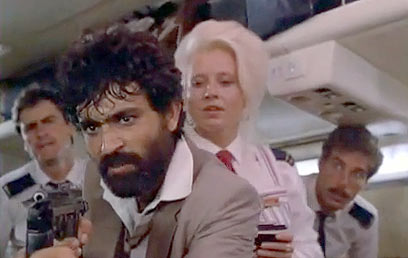
In 1985, terrorists led by Robert Forster hijack an airplane and divert it to Beirut.  Among those being held hostage: Martin Balsam, Shelley Winters, Lainie Kazan, Susan Strasberg, Kim Delaney, and Bo Svenson.  The great George Kennedy plays a priest named O’Malley who, when the Jewish passengers are moved to a separate location, declares himself to be Jewish and demands to be taken too.  Jerry Lazarus is a hostage who spends the movie holding a Cabbage Patch doll that his daughter gave him for luck.  Former rat packer Joey Bishop plays a passenger who says, “Beirut was beautiful then.  Beautiful.”  Fassbinder favorite Hanna Schygulla is the stewardess who refuses to help the terrorists because, “I am German!”

In America, General Robert Vaughn activates The Delta Force to rescue the hostages and take out the terrorists.  As Lee Marvin prepares everyone (including Cannon favorite, Steve James and, in a nonspeaking role, Liam Neeson) to leave, the big question is whether Chuck Norris will come out of retirement for the mission.  Of course, he does.  Even better, he brings his motorcycle with him.

Anyone who has ever seen The Delta Force remembers Chuck’s motorcycle.  Not only did it look incredibly cool but it was also mounted with machine guns and it could fire missiles at cowardly terrorists.  It didn’t matter whether you agreed with the film’s politics were or whether you even liked the movie, everyone who watched The Delta Force wanted Chuck’s motorcycle.  As the old saying goes, “You may be cool but you’ll never be Chuck Norris firing a missile from a motorcycle cool.”

The Delta Force is really three different films.  One film, shot in the style of a disaster film, is about the hostages on the plane and their evil captors.  The second film is Lee Marvin (in his final movie role) preparing his men to storm the airplane.  The third movie is Chuck Norris chasing Robert Forster on his motorcycle.  Put those three movies together and you have the ultimate Cannon movie.  The Delta Force was even directed by Cannon’s head honcho, Menahem Golan.  (Years earlier, Golan also directed Operation Thunderbolt, an Israeli film about the raid on Entebbe, which features more than a few similarities to The Delta Force.  Golan received his first and only Oscar nomination when Operation Thunderbolt was nominated for Best Foreign Language Film.)

The Delta Force is also the ultimate 80s movie.  It opens with the Carter administration fucking everything up and it ends with the Reagan administration giving Lee Marvin and Chuck Norris the greenlight to blow up some terrorists.  There is not much nuance to be found in The Delta Force but it still feels good to watch Chuck beat the bad guys.  Top that off with a shameless score from Alan Silvestri and you have one of the greatest action movies of all time.

At the end of The Delta Force, as cans of Budweiser are being passed out to rescued hostages, an extra is clearly heard to shout, “Beer!  America!”  Then everyone sings America The Beautiful.

That says it all.

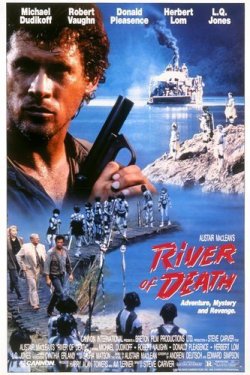
A Movie A Day #307: River of Death (1989, directed by Steve Carver)


In the Amazon, natives are dying of a mysterious disease.  Could it have anything to do with a German war criminal named Wolfgang (played by Robert Vaughn) who is living in a cave that is decorated with a Nazi flag?  A scientist (Victor Melleney) and his daughter, Anna (Sarah Maur Thorp), are determined to find out.  They hire a tough explorer, John Hamilton (Michael Dudikoff), to lead them up the river but John does not do a very good job because the scientist ends up dead and Anna ends up kidnapped.
Everyone tells John to forget about Anna.  Colonel Diaz (Herbert Lom) says that she is dead.  John’s best friend, an arms dealer named Eddie (L.Q. Jones), says that she’s dead.  John refuses to accept that and he organizes an expedition to help track them down.  A strange man (Donald Pleasence) and his assistant (Cynthia Erland) approach John and offer to help.  What John does not know is that the man is actually Heinrich Spaatz, yet another Nazi war criminal.

River of Death is a ridiculous movie but it is entertaining in a way that only a late 80s Michael Dudikoff movie can be.  Though River of Death was a Cannon film, it was produced by the legendary Harry Alan Towers, which is probably why the production standards are higher than the average Menahem Golan quickie.  Dudikoff does a passable imitation of Indiana Jones (and he even gets to do some Apocalypse Now-style narrating) but the real reason to watch the film is to watch veteran actors like Robert Vaughn, Donald Pleasence, Herbert Lom, and L.Q. Jones ham it up.  Vaughn doesn’t even attempt to sound German while Pleasence gives a performance that is strange even by his own considerable standards.

One final note: River of Death was the second-to-last film directed by Steve Carver, who also did Capone, and Big Bad Mama, along with helping to make Chuck Norris a star by directing Lone Wolf McQuade and An Eye For An Eye.

A Movie A Day #127: Brass Target (1978, directed by John Hough)


Everything’s a conspiracy!

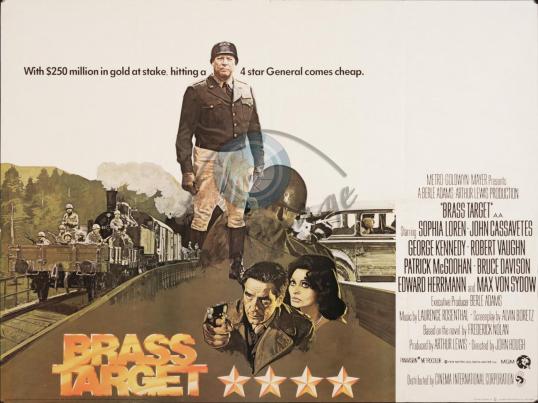
At least, that is the claim made by Brass Target, a twisty and unnecessarily complicated thriller that argues that General George S. Patton (played here by George Kennedy, who is even more blustery than usual in the role) did not, as widely believed, die as the result of a car accident but was actually killed by an assassin using rubber bullets.  Why was Patton targeted for assassination?  Was he targeted by Nazis angered by Germany’s defeat or maybe Russians who knew that Patton had argued in favor of invading the Soviet Union towards the end of the war?  Would you believe it was all because Patton was investigating the theft of Nazi gold and his subordinates, the flamboyantly gay Colonel Donald Rogers (Robert Vaughn) and Rogers’s always worried lover, Colonel Walter Gilchrist (Edward Herrmann), were fearful that he was getting too close to discovering the truth?

John Cassevetes, who hopefully used part of his paycheck to fund either The Killing of a Chinese Bookie, Opening Night, or Gloria, plays Joe De Lucca, the burned out OSS colonel who is assigned to track down the Nazi gold but who really just wants to go back home to New York.  Patrick McGoohan, sporting an accent that is supposed to be American, plays De Lucca’s former friend and colleague, Colonel Mike McCauley, who now lives in a German castle.  Max von Sydow is the assassin, who also has a day job as the chairman of a refugee relocation committee.  Sophia Loren plays Mara, a Polish war refugee who, by pure coincidence, has slept with not just De Lucca but almost everyone involved with the conspiracy.  Bruce Davison is the young colonel who acts as Du Lucca’s supervisor.  Even Charles “Lucky” Luciano (played by the very British Lee Montague) is featured as a minor part of the conspiracy.

That is an impressive cast for a less than impressive movie.  Brass Target never provides a convincing reason as to why the conspirators would decide that killing Patton was their only option and, once the conspiracy gets underway and the movie starts to follow around Von Sydow for some Day of the Jackal/Black Sunday-style preparation scenes, the search for the Nazi gold is forgotten.  For some reason, though, I have a soft spot for this frequently ridiculous movie.  There are enough weird moments and details, like Vaughn’s twitchy performance, McGoohan’s accent, the way Kennedy blusters about the Russians being rude to him, and glamorous Sophia Loren’s miscasting, that Brass Target is always watchable even if it is never exactly good.

RIP Robert Vaughn: Another Magnificent Actor Gone


gary loggins's avatarcracked rear viewer

vaughn1

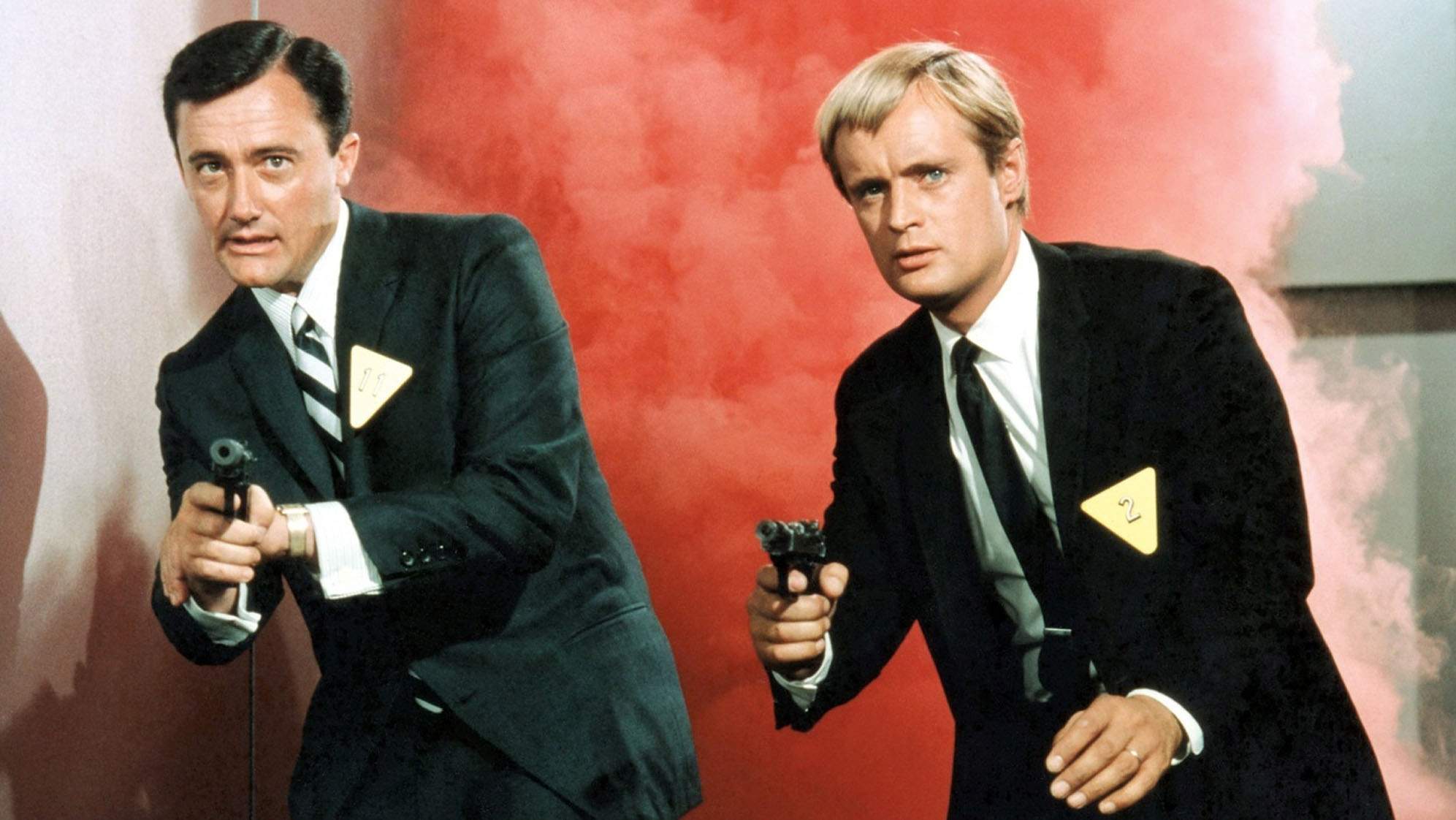
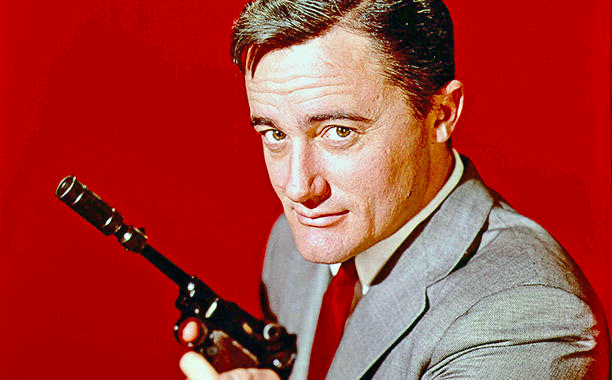
The Grim Reaper continues his onslaught on 2016, taking another classic star with him to Valhalla. Robert Vaughn, last survivor of THE MAGNIFICENT SEVEN and ultra-suave star of TV’s THE MAN FROM U.N.C.L.E, has died at age 83, closing the books on a magnificent career in film, television, and the stage.

vaughn-2

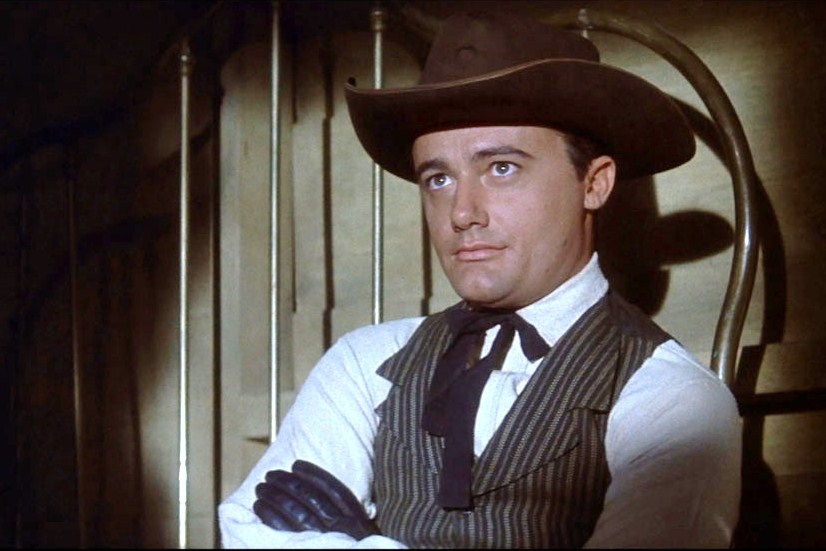
Born to acting parents on November 22, 1932, Vaughn acted in small roles before landing the lead in Roger Corman’s unintentionally funny TEENAGE CAVEMAN. A year later, he was Oscar nominated for his performance as accused murderer Chester Gwynn in THE YOUNG PHILIDELPHIANS… what a difference a year makes! His role as Lee, the gunman who loses his nerve in THE MAGNIFICENT SEVEN, is a standout among that all-star cast. Vaughn continued to act in both movies and TV parts before landing the part that made him a pop-culture superstar.

vaughn3

THE MAN FROM U.N.C.L.E (United Network Command for Law and Enforcement) debuted September 22, 1964…

View original post 423 more words

It’s the original THE MAGNIFICENT SEVEN- or is it? (United Artists 1960)


gary loggins's avatarcracked rear viewer

mag1

There’s a large hue and cry about the upcoming remake of THE MAGNIFICENT SEVEN (and remakes in general) among classic film fans. “How dare they”, it kind of goes, “Why, that’s blasphemy!”. The truth is, Hollywood’s been cannibalizing itself since almost the beginning, and remakes have long been a staple of filmmakers. THE MAGNIFICENT SEVEN is a remake of Akira Kurasawa’s Japanese film SEVEN SAMAURI, moved to the American west by producer/director John Sturges . And while quite frankly most remakes can’t hold a candle to the originals, this 1960 action epic can stand on it’s own as one of the great Western adventures.

mag2

Sturges assembled a macho cast to tell the tale of bandits terrorizing a small Mexican village, and the seven hired guns who take on the job of defending them. Top billed is Yul Brynner as Chris, the black clad gunslinger who puts together the crew. First among them is 

View original post 641 more words

The Elements of Style: Steve McQueen in BULLITT (Warner Brothers 1968)


gary loggins's avatarcracked rear viewer

bullitt1

Steve McQueen was the personification of 60’s screen cool in BULLITT, a stylish action film directed by Peter Yates. It’s the first of producer Philip D’Antoni’s cop trilogy, both of which (THE FRENCH CONNECTION and THE SEVEN-UPS) I’ve previously covered. Unlike those two films, the grittiness of New York City is replaced by the California charm of San Francisco, and the City by the Bay almost becomes a character itself, especially in the groundbreaking ten minute car chase between McQueen’s Mustang and the bad guy’s Dodge Charger.

bullitt2

Style permeates the film from the get-go, with the snappy opening credits montage by Pablo Ferro. Then we get right into the story, as San Francisco detective Frank Bullitt is assigned to guard mob witness John Ross, scheduled to testify before a Senate Subcommitte on crime. Hot shot politician Walt Chalmers wants Bullitt because of his reputation and PR value with the papers. Things go awry when Ross…

View original post 579 more words

“DAMN YOU, KENNEDY!”: Assignment — Kill Castro (1980, directed by Chuck Workman)


7d9oDL3Y5kupCGgUsR6Jh5ZU1KfOne of my earliest memories of staying up late and watching cheesy movies on local television was the sight of Robert Vaughn standing on a beach and cursing, “Damn you, Kennedy!”  An echo effect kicked in, making the line: “Damn you, Kennedy Kennedy Kennedy Kennedy Kennedy!”

The name of the movie was Assignment — Kill Castro and sometimes it seemed like it came on every other night.  The movie started with a title crawl that was so lengthy and so set the tone for the entire film that I feel it is worth quoting in its entirety:

From 1961, the year of the Bag of Pigs to today, the Government of the United States has been embroiled in a series of events which have continually led our nation to crisis after crisis and to the brink of war.

ASSIGNMENT — KILL CASTRO, a true story is one of the most confusing and frustrating historical events that might have led to a world power showdown.  It happened yesterday!  It happened today!  It can happen again!

Names of persons and places have been changed to protect the individuals who were called upon to aid their country and in doing so placed their lives in jeopardy.

“I WILL GIVE ALL FOR THE LOVE OF MY COUNTRY … RIGHT OR WRONG! — G.W. Bell, Chief of Carribean (sic) Operations, Central Intelligence Agency”

This motion picture is dedicated to all people who desire to live in a free democratic society.

Robert Vaughn plays Hud, a former CIA agent who was involved in the original Bay of Pigs invasion.  When the mysterious Mr. Bell (Raymond St. Jacques) and a gangster named Rossellini (Michael V. Gazzo) agree to finance an operation to kill Fidel Castro, Hud recruits a Key West bar owner named Tony (Stuart Whitman) to take him to Cuba.  However, Mr. Bell and Rossellini are just using Hud to secretly smuggle heroin into Florida and, much like John F. Kennedy in 1961, they are planning on abandoning him on the beaches of Cuba.

The main problem with Assignment — Kill Castro is that we already know that Hud is not going to succeed in his mission because Fidel Castro is still alive and probably still bragging about how he sent Tony Montana to Miami.  The other problem is that the movie does not make any damn sense.  That title crawl was not kidding when it said the story was confusing and frustrating.  Everyone is so busy double-crossing everyone else that it is hard to keep track.  There has to be a simpler way to get heroin into Florida.  Surprisingly, this incoherent movie was written and directed by the legendary editor, Chuck Workman, the same Chuck Workman who puts together those montages for the Oscars.

Kill Castro does have a good cast, though none of them are at their best.  Along with Whitman, Vaughn, St. Jacques, and Gazzo, the cast includes Woody Strode, Albert Salmi, and Sybil Danning (whose last name is misspelled Daning in the end credits).  Fidel Castro plays himself and the film’s ending is provided by cannibal turtles.

Assignment — Kill Castro was just one of the many titles that this movie was released under.

51-brX2eGmL._SY445_

It was also known as Cuba Crossing,

STUART-WHITMAN-CUBA-CROSSING-MOVIE-ADVERT-FULL-PAGE

Key West Crossing, The Mercenaries, and my personal favorite, Sweet Dirty Tony.

55706564

Spies Like Us: THE VENETIAN AFFAIR (MGM 1967)


gary loggins's avatarcracked rear viewer

vene1

Robert Vaughn played superspy Napoleon Solo on TV’s THE MAN FROM U.N.C.L.E. from 1964 to 1968. The series was inspired by the James Bond craze, filled with outlandish gadgets and evil supervillains. Vaughn’s popularity led to a starring role in THE VENETIAN AFFAIR, a Cold War spy thriller with a much more adult theme. Here, he plays Bill Fenner, ex-CIA agent, now a hard-drinking reporter who gets caught up in international intrigue.

vene2

Fenner is sent to Venice after a U.S. diplomat supposedly sets off a bomb at an international nuclear disarmament conference. He soon learns the assignment was arranged by his former CIA boss, “Rosey” Rosenfeld (Edward Asner). Rosey wants to use Fenner to smoke out old flame Sandra Fane (Elke Sommer), a Communist agent with a mysterious link to the bombing. Fenner’s odyssey takes him through double-and-triple crosses in the world of international espionage he once left behind.

vene3

Boris Karloff is on hand in…

View original post 265 more words