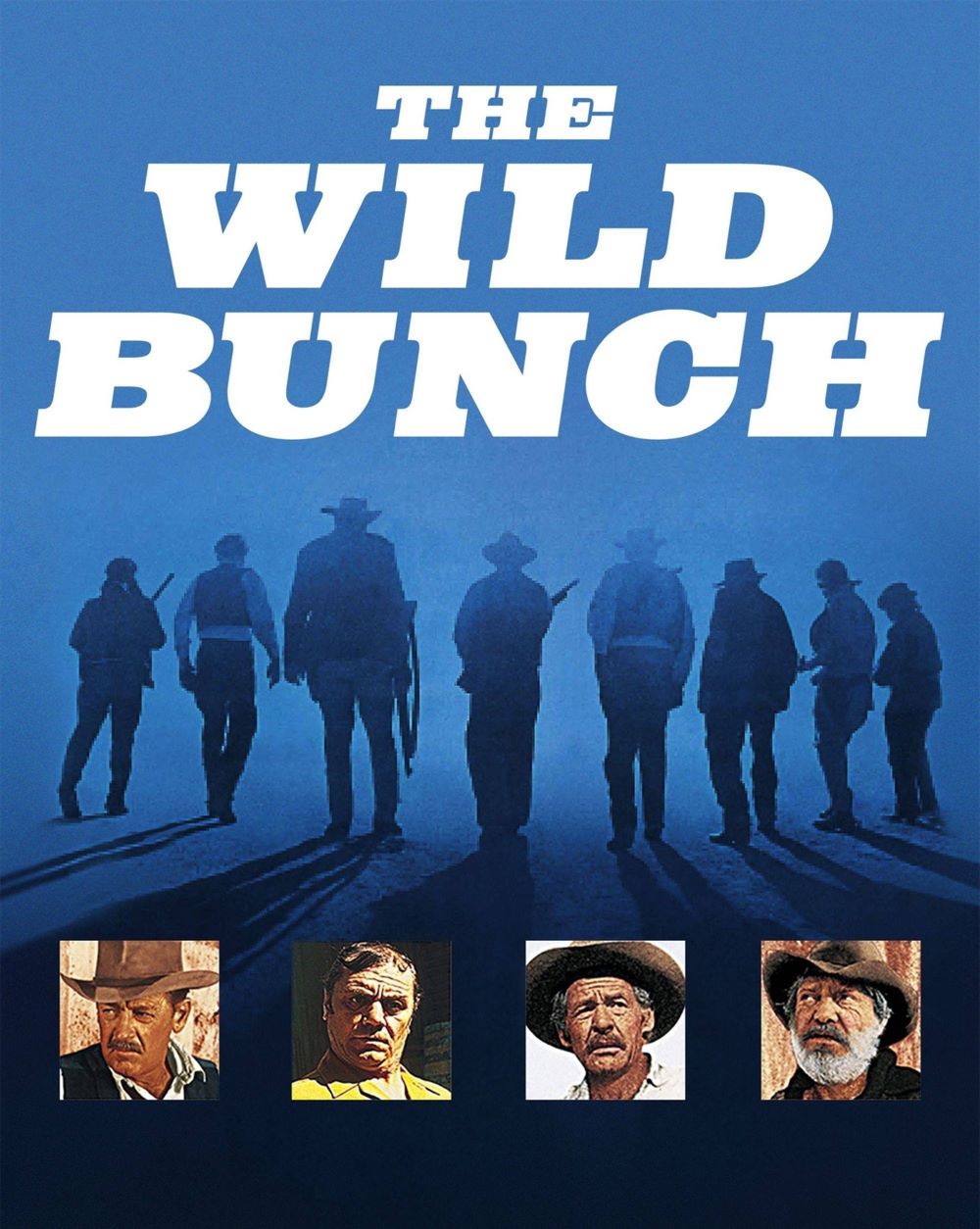
Review: The Wild Bunch (dir. by Sam Peckinpah)


“We’ve got to start thinking beyond our guns. Those days are closin’ fast.” — Pike Bishop

Sam Peckinpah’s The Wild Bunch stands out as a landmark in the Western genre, famous for its daringly harsh depiction of both violence and the fading mythos of the American West. Rather than following the traditions of earlier Westerns, the film presents a gritty portrait of aging outlaws on the edge of extinction, wrestling with a society that has evolved past them. It’s a movie that’s difficult to shake, both for its unapologetic style and the unresolved feelings it leaves long after the final shots ring out.

At its core, the story centers on Pike Bishop and his band—a crew of seasoned criminals aiming for one last grand heist as modernity encroaches on their world. Hoping to pull off a train robbery, they end up entangled in deeper complications after being betrayed and soon are thrust into the turbulence of the Mexican Revolution. Peckinpah builds a narrative where clear-cut morality falls away. The criminals and those pursuing them, supposed bringers of justice, are equally compromised and dangerous. This balancing act challenges the audience to reassess their sympathies, since the characters rarely line up as traditional heroes or villains.

The film’s notoriety is inseparable from its treatment of violence. In an era when Westerns often depicted gunfights as almost bloodless, The Wild Bunch arrived blazing with slow-motion fatalities, realistic wounds, and chaos that feels nearly documentary. Peckinpah didn’t intend to sugarcoat death; the film’s fight scenes are designed to unsettle rather than thrill, making viewers register the true cost of violence on screen. The movie’s most infamous sequences, particularly the opening and closing shootouts, still provoke debate over whether their artistry justifies their brutality. Peckinpah reportedly wanted to expose the real consequences of violence, not celebrate them, and the resulting imagery remains both striking and disturbing decades later.

Beyond its bloodshed, the film is packed with melancholy, exploring the futility and obsolescence of its central figures. The Wild Bunch themselves—Pike, Dutch, Lyle, Angel, and others—all feel the weight of their era’s end. They are not just outdated in terms of time; their entire way of life has been mechanized and modernized beyond their grasp. The film depicts this through powerful imagery, from horses being supplanted by cars and trucks to rifles giving way to machine guns. This mechanization highlights that Pike and his men live in a world that has moved on, leaving them behind. Their code of honor and rough camaraderie are relics in a brutal, mechanized landscape that favors efficiency and merciless violence. The emergence of rapid-fire weaponry and vehicles is more than a backdrop; it symbolizes their growing irrelevance and the passing of a wild, untamed frontier.

Technically speaking, The Wild Bunch is as impressive as it is influential. The cinematography captures wide Mexican landscapes with dust and sunlight, conveying both beauty and bleakness. The editing—particularly in the action scenes—was ahead of its time, with its expressive use of multiple camera angles and slow-motion adding an almost ballet-like rhythm to chaotic violence. The music, a mix of Jerry Fielding’s score and traditional Mexican songs, deepens the film’s sense of place and loss. All of this technical prowess merges in set pieces that are still studied by action directors today.

One of the film’s most enduring legacies is its profound influence on a slew of filmmakers in the years following its release. Directors like Martin Scorsese, Quentin Tarantino, and John Woo have all cited The Wild Bunch as a key inspiration, particularly in how it reshaped the depiction of violence and complex characters onscreen. Peckinpah’s innovative use of slow motion during action scenes transformed gunfights into sequences that feel almost balletic, bringing an eerie beauty to brutality. This technique became a hallmark of John Woo’s work, where slow-motion shootouts are choreographed with a dance-like precision, making the violence stylized yet emotionally impactful. Meanwhile, Scorsese and Tarantino embraced the moral ambiguity and character complexity Peckinpah championed, pushing their own stories beyond clear-cut good and evil. Through these directors and many others, The Wild Bunch continues to resonate and shape modern cinema.

The performances in The Wild Bunch are integral to its powerful impact, with its ensemble cast bringing layered humanity to otherwise rough, sometimes brutal characters. William Holden leads as Pike Bishop with a mix of weary charisma and existential urgency, embodying a man caught between the fading wild past and a ruthless present. Holden’s Pike is not just a leader of outlaws, but a man wrestling with his own moral contradictions—as loyal and protective as he is capable of cold violence. This complexity allows the character to stay compelling rather than becoming a cliché tough guy.

Ernest Borgnine as Dutch Engstrom offers a grizzled, weary presence, conveying the toll that years of violence have taken on his spirit, while Warren Oates imbues Lyle Gorch with a volatile and rebellious energy that adds tension within the gang. His brother, Tector Gorch, played by Ben Johnson, brings a contrasting steadiness, portraying a man caught between loyalty and survival. Robert Ryan’s portrayal of Deke Thornton, the relentless bounty hunter, stands out as a tragic figure torn between his past friendship with Pike and his duty. This character conflict gives the story a deeper emotional layer and adds weight to the relentless pursuit central to the plot.

Supporting performances by Edmond O’Brien as Freddie Sykes and Jaime Sánchez as Angel enrich the group dynamic, each adding distinct personality traits that feel authentic and lived-in. The chemistry between the cast helps ground the film’s heavy themes in real human experience, making the characters’ struggles with obsolescence and loyalty resonate beyond the screen.

However, despite the strong male performances, the film’s treatment of female characters is notably sparse and limiting. Women in the film often fall into marginal roles, lacking development or agency, which reflects the gender dynamics of many Westerns from the era but feels particularly dated today.

For viewers seeking straightforward heroism or moral clarity, The Wild Bunch can be a challenging experience. Its bleak, nihilistic worldview and refusal to deliver easy answers may leave some feeling drained. The story culminates in a violent, unresolved climax with no tidy resolution, emphasizing loss and the end of an era. But it is precisely this rawness and technical mastery that keep the film compelling and worthy of close viewing.

The Wild Bunch demands you shed simple notions of good versus evil and prepare for a rough, often brutal ride. It’s a story about men fighting not just other men but inevitability—caught between their own fading values and the relentless march of modernization and change. Peckinpah doesn’t offer comfort; instead, he forces the viewer to reckon with violence’s cost and the price of nostalgia. Even with all its grit and flaws, the film’s artistry and influence remain undeniable, securing its status as a masterwork that redefined Westerns and action cinema alike. It’s a wild ride that continues to inspire and provoke long after the credits roll.

Quick Review: The Longest Day (dir. by Ken Annakin, Andrew Marton, and Bernhard Wicki)


Hey hey!! Before you read this, know that this isn’t the only review for The Longest Day. Lisa Marie also wrote about it. Read that first, and then double back here if you like.

With June 6th being the 81st Anniversary of D-Day, I decided to write about 1962’s The Longest Day, a film often discussed in my family, but surprisingly, I don’t recall ever fully watching it until today. I’ll try to get a hold of a hard copy of this in the future. The film is currently available to watch (with ads) on YouTube. This was a film my Aunt adored, as she liked seeing the Military come to the rescue in any situation (which happened often in most classic sci-fi films). This, They Died With Their Boots On, and All Quiet on the Western Front were films she raved about.

According to the National WWII Museum, “The Allies suffered over 10,300 total casualties (killed, wounded, or missing), of which approximately 2,400 were on Omaha Beach.” it was also an incredible offensive achievement, with nations gathering together to take the fight to a common enemy. 

I don’t have a whole lot to say about this. As this is a film based on actual events (which takes some movie related liberties), I can’t complain or state I loved the “story”. As my boss at my Dayjob sometimes says, “It is what it is.” In terms of presentation, however, I highly recommend it. The film never really falters, nor does it give you too much time to relax. There’s a quiet tension with all of the characters you meet (all of the Allied ones, anyway), wondering if they may make it through by the end. If nothing else, watching it reminds one of the sacrifices made and the courage of anyone deciding to run head first into battle like that. 

The film is epic in scope, with a runtime of 3 hours and an all star cast that includes Robert Mitchum (Cape Fear), Eddie Albert (Dreamscape), John Wayne (The Quiet Man), Henry Fonda (Once Upon a Time in the West) Curt Jurgens (The Spy Who Loved Me), Red Buttons and Roddy McDowall (who would later work together in The Poseidon Adventure), Richard Beymer (West Side Story), Frank Findlay (Lifeforce), Gert Frobe and Sean Connery (both two years shy of working together in Goldfinger), Richard Burton (Cleopatra) and Robert Ryan (The Wild Bunch) among others.

Much like 1970’s Tora!Tora!Tora! (which my Dad often talked about), there were multiple directors for The Longest Day. Bernhard Wiki captured the German scenes, Andrew Marton handled the American ones, and Ken Annakin handled both the English and French sequences. This is all brought together in a seamless and pretty amazing tapestry. Unlike Steven Spielberg’s Saving Private Ryan, The Longest Day only covers the time leading up to and through the Omaha Beach assault, using the bulk of the film’s 3rd hour for the event. The entire film makes wonderful use of the time with all the alternate views, and by the time the first combat starts near the start of the 2nd hour, it continues to flow from interaction to interaction. There are also some wonderful arial shots over the battles, including an classic one shot that’s pretty marvelous given the time period.

The film takes place just before the invasion. American troops are already in the water on boats. Others are ready to parachute in. The French are ready to fight, waiting for the right phrase to hit the radio to put them into action. all are waiting to hear from the Britians on when the Allied Assault should begin. The weather isn’t optimal, but with the operation already delayed once before, President Eisenhower (Henry Grace) decides the 6th is the drop date. The Germans assume nothing will happen assaults are supposedly not done in harsh weather, but this proves to be quite the mistake.

It was wonderful to see everything come together. From the French sabotaging communications, to the strange comedy of soldier toting bagpipes to lead the Scottish into battle, or the Nuns who walked right through battle to save lives, it’s quite a sight to behold. 

Film Review: The Naked Spur (dir by Anthony Mann)


First released in 1953, The Naked Spur is one of the most cynical and downbeat movies that I’ve ever seen.

It’s also one of the most visually beautiful.  Filmed in the Rockies and presented in glorious Technicolor, The Naked Spur is a western that is full of amazing scenery, from green forests to snow-capped mountains to a river that, under different circumstances, would probably be a wonderful place to just sit down and think for a spell.  Director Anthony Mann crafts an image of the American frontier that makes it easy to understand why anyone would want to explore it and build a new life there.  Mann contrasts the beauty of nature with the ugliness of the people who trample across it.

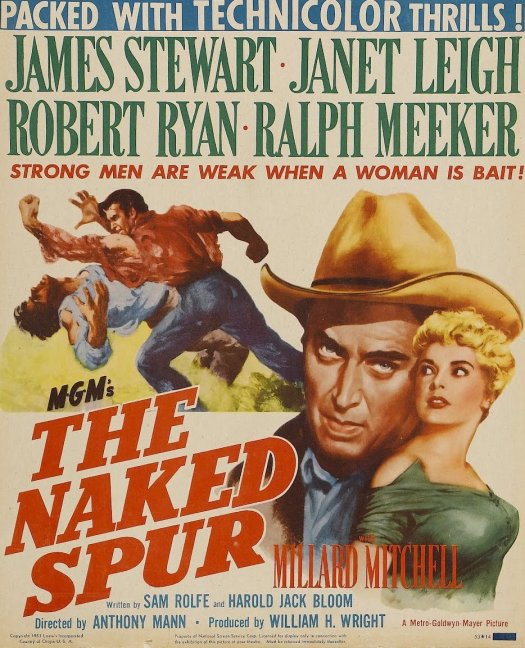
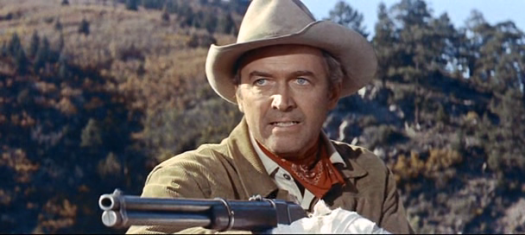
Jesse Tate (Millard Mitchell) is a grizzled and somewhat sickly prospector who runs into a stranger named Howard Kemp (James Stewart).  Kemp is, at first, antagonistic and paranoid but soon, he offers to pay Tate $20 if Tate will help him track down an outlaw named Ben Vandergroat.  Vandergroat, wanted for the murder of a U.S. marshal, is believed to be hiding in the mountains.  In need of the money, Jesse agrees.  Soon, he and Kemp are joined by another wanderer, a recently discharged soldier named Roy Anderson (Ralph Meeker).  From the minute that Roy shows up, it’s obvious that he’s not being totally honest about why he’s wandering around the Rockies.

As for Ben Vandergroat (Robert Ryan), he is indeed hiding in the mountains.  He’s accompanied by Lina Patrch (Janet Leigh), a naive young woman whose late father was one of Ben’s partners-in-crime.  Lina looks up to Ben as a father figure and refuses to believe that he could possibly be guilty of any of the things that he’s been accused of doing.  Ben, meanwhile, manipulates Lina into doing his bidding.

After being captured by Kemp, Jesse, and Roy, Ben proves himself to be far more clever than he initially seems.  After revealing that Kemp isn’t who Jesse assumed him to be, Ben works to try to turn the three men against each other.  There’s a reward on Ben’s head and, after Kemp reluctantly agrees to share the money with Jesse and Roy, Ben mentions that there will be a lot more money if its split two ways instead of three.  Soon, Ben has the three men distrusting each other even more than they already did.  However, Lina finds herself falling in love with Kemp.

The Naked Spur is a great film.  Featuring only five-speaking parts, it plays out like a particularly intense play and every single member of the cast does a great job of bringing the film’s characters to life.  Robert Ryan is coolly manipulative as the cocky Ben while Ralph Meeker is crudely menacing as the untrustworthy Roy Anderson.  Millard Mitchell is, at times, heart-breaking as the sickly prospector.  Janet Leigh reveals the strength underneath Lina’s naive persona.  Of course, the film is stolen by James Stewart, who is convincingly bitter and ultimately rather poignant as Howard Kemp.  Kemp feels like a continuation of the character that Stewart played in Broken Arrow He’s seen the worst that humanity has to offer.  Even in the beautiful Rockies, Stewart’s character cannot escape the ugliness that he’s witnessed firsthand.  Stewart’s performance as that haunted and angry Howard Kemp is one of his best.

The Naked Spur is an intelligent and well-acted western and one of eight movies that Stewart made with director Anthony Mann.  It’s psychological complexity, beautiful scenery, compelling script, and brilliant cast make it a true classic.

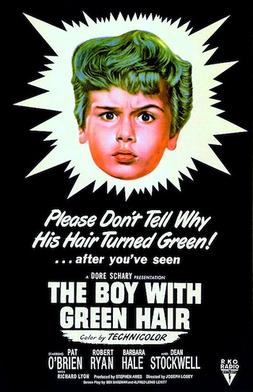
Film Review: The Boy With Green Hair (dir by Joseph Losey)


Who is Peter Fry (played by a 12 year-old Dean Stockwell), the young boy at the center of the 1948 film, The Boy With Green Hair?

When we first meet him, Peter is a nearly mute child who has had all of his hair shaved off and who refuses to talk about either one of his parents.  He’s mysteriously shown up in a small town and it’s only after a kindly psychologist (played by Robert Ryan) speaks with him that we discover that Peter is an orphan.  Both of his parents are dead, victims of the Second World War.  Fortunately, a retired actor named Gramps (Pat O’Brien) is willing to adopt Peter and raise him as his own.  Gramps has all sorts of stories about the times that he performed in Europe.  The film hints that Gramps might be a damn liar but he’s well-meaning, nonetheless.

Peter starts to attend school and slowly, but surely, he comes out of his shell.  Soon, he appears to be just another carefree child and his hair even grows back.  But then, one day, he sees a poster featuring other war orphans, children like him who have lost their families to war.  When Peter overhears adults talking about how the world may go to war again and how there are now even bigger and more destructive bombs that can be dropped on America’s enemies, Peter start to get upset.  What’s the point of going to school and preparing for the future if there’s not going to be any future?

One night, Peter goes to sleep.  When he wakes up in the morning, he discovers that his hair has turned green!

Why has Peter’s hair turned green?  It’s hard to say but the town is remarkably unsympathetic.  It’s perhaps understandable that Peter’s classmates would make fun of him because they’re children and children are the worst about not being able to handle change.  But not even the adults seem to be able to handle Peter having green hair!  They want to shave his head again!

With even kindly old Gramps prepared to take away Peter’s green hair, Peter flees into the woods.  There’s where he runs into the spirits of all the children who have either died or been orphaned by war.  They have a message for Peter….

The Boy With Green Hair is both an antiwar parable and a plea for tolerance.  There’s not a subtle moment to be found in the entire film but, considering that it was made at a time when the world was still in ruins and people were still getting used to living in the shadow of the atomic bomb, it’s perhaps understandable that the film would be a bit heavy-handed.  It was, after all, made during a heavy-handed time.  That said, the film actually works better as a parable about racism than as a pacifist statement.  It’s kind of hard to see how Peter having green hair could convince people to pursue world peace but the way that Peter is ostracized for being different from everyone else is something to which many viewers could undoubtedly relate.

There’s some weird padding in the film.  For instance, there’s a weird musical number involving Gramps that comes out of nowhere.  Still, one can see why the film made an impression on some viewers.  Dean Stockwell gives a sympathetic and, most importantly, naturalistic performance as Peter and the film’s message is a sincere one.  One could easily imagine and also easily dread the prospect of this film being remade with Peter’s hair turning green over climate change.  I’m a little surprised that hasn’t happened yet, especially considering the amount of coverage that was once given to Greta Thunberg, whose pronouncements and fame have made her a somewhat angrier version of the boy with green hair.  Hopefully, a remake won’t ever happen, as the original film works just fine as it is.  Not everything has to be remade.

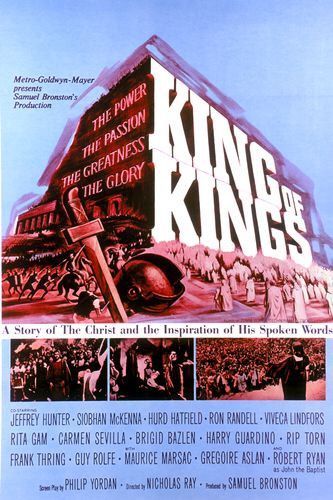
Film Review: King of Kings (dir by Nicholas Ray)


The 1961 film, King of Kings, was the final biblical film that I watched on Easter.  Like The Greatest Story Ever Told, it tells the story of Jesus from the Nativity to the Ascension.  Like The Greatest Story Ever Told, it’s an epic film that was directed by a renowned director.  (In this case, Nicholas Ray.)  Like The Greatest Story Ever Told, King of Kings also has a huge cast and there’s a few familiar faces to be seen, though it doesn’t really take the all-star approach that George Stevens did with his telling of the story.

Probably the biggest star in King of Kings was Jeffrey Hunter, who played Jesus.  Hunter was in his 30s at the time but he still looked young enough that the film was nicknamed I Was A Teenage Jesus.  (Some of that also probably had to do with the fact that Nicholas Ray was best known for directing Rebel Without A Cause.)  But then again, for a man who had so many followers, Jesus was young.  He hadn’t even reached his 40th birthday before he was crucified.  As well, his followers were also young while his many opponents were representatives of the establishment and the old way of doing things.  It makes perfect sense that Jesus should be played by a young man and Hunter gives a good performance.  As opposed to so many of the other actors who have played Jesus in the movies, Jeffrey Hunter is credible as someone who could convince fishermen to throw down their nets and follow him.  He’s passionate without being fanatical and serious without being grim.  He’s a leader even before he performs his first miracle.

King of Kings is one of the better films that I’ve seen about the life of Jesus.  While remaining respectful of its subject, it also feels alive in the way that so many other biblical films don’t.  Perhaps not surprisingly, Nicholas Ray focuses on the idea of Jesus as a rebel against the establishment.  Ray emphasizes the casual cruelty of the Romans and their collaborators.  When John the Baptist (Robert Ryan) is arrested by Herod (Frank Thring), it’s not just so the filmmakers can have an excuse to work Salome (Brigid Bazlen) in the film.  It’s also to show what will happen to anyone who dares to challenge the establishment.  When Jesus visits John the Baptist in his cell, it’s a summit between two rebels who know that they’re both destined to die for the greater good.  When Pilate (Hurd Hatfield) makes his appearance, he’s smug and rather complacent in his power.  He’s not the quasi-sympathetic figure who appears in so many other biblical films.  Instead, he’s the epitome of establishment arrogance.

As a director, Nicholas Ray keeps things simple.  This isn’t Ben-Hur or The Ten Commandments.  The emphasis is not on grandeur.  Instead, the film is about common people trying to improve the world in which they’re living, while also preparing for the next.  Jeffrey Hunter gives an excellent performance as Jesus and, all in all, this is one of the better and more relatable biblical films out there.

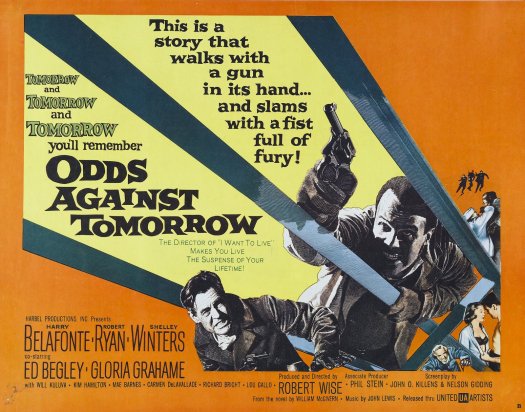
Blues On The Downbeat: ODDS AGAINST TOMORROW (United Artists 1959)


gary loggins's avatarcracked rear viewer


Desperate men commit desperate acts, and the three protagonists of ODDS AGAINST TOMORROW are desperate indeed in this late entry in the film noir cycle. This is a powerful film that adds social commentary to the usual crime and it’s consequences plot by tainting one of the protagonists with the brush of racism. Robert Wise, who sharpened his skills in the RKO editing room, directs the film in a neo-realistic style, leaving the studio confines for the most part behind, and the result is a starkly lit film where the shadows of noir only dominate at night.

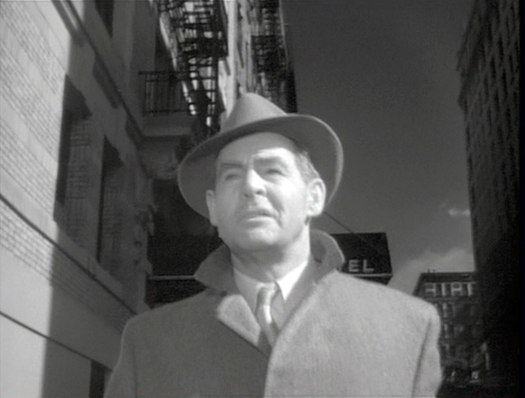
But more on Wise later… first, let’s meet our three anti-heroes. We see Earle Slater (Robert Ryan ) walking down a New York street bathed in an eerie white glow (Wise used infra-red film to achieve the effect). Slater’s a fish out of water, a transplanted Southerner drifted North, a loser and loose cannon…

View original post 665 more words

A Movie A Day #354: Lolly-Madonna XXX (1973, directed by Richard C. Sarafian)


In the backwoods of Hicksville, USA, two families are feuding.  Laban Feather (Rod Steiger, bellowing even more than usual) and Pap Gutshall (Robert Ryan) were once friends but now they are committed rivals.  They claim that the fight started when Pap bought land that once belonged to Laban but it actually goes back farther than that.  Laban and Pap both have a handful of children, all of whom have names like Thrush and Zeb and Ludie and who are all as obsessed with the feud as their parents.  When the Gutshall boys decide to pull a prank on the Feather boys, it leads to the Feathers kidnapping the innocent Roonie (Season Hubley) from a bus stop.  They believe that Roonie is Lolly Madonna, the fictional fiancée of Ludie Gutshall (Kiel Martin).  Zack Feather (Jeff Bridges), who comes the closest of any Feather to actually having common sense, is ordered to watch her while the two families prepare for all-out war.  Zack and Roonie fall in love, though they do not know that another Feather brother has also fallen in love with Gutshall daughter.  It all leads to death, destruction, and freeze frames.
Lolly-Madonna XXX is a strange film.  It starts out as a typical hicksploitation flick before briefly becoming a backwoods Romeo and Juliet and finally ending up as a heavy-handed metaphor for both the Vietnam War and the social upheaval at home.  Along with all the backwoods drama, there is a fantasy sequence where Hawk Feather (Ed Lauter) briefly imagines himself as an Elvis-style performer.  (Hawk also dresses up in Roonie’s underwear.)  Probably the most interesting thing about Lolly-Madonna XXX is the collection of actors who show up playing Feathers and Gutshalls.  Along with Steiger, Ryan, Martin, Bridges, and Lauter, everyone from Randy Quaid to Paul Koslo to Scott Wilson to Gary Busey has a role to play in the feud.  Lolly-Madonna XXX is too uneven and disjointed to really be considered a good movie but I can say that I have never seen anything else like it.

One final note: Lolly-Madonna XXX was directed by Richard Sarafian, who is best known for another early 70s cult classic, Vanishing Point.

A Movie A Day #238: Lawman (1971, directed by Michael Winner)


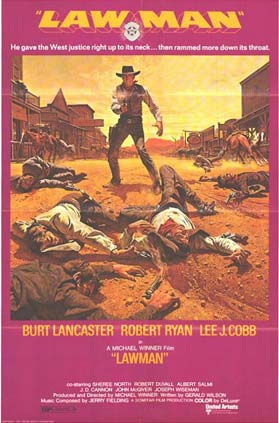
In the 1880s, Jared Maddox (Burt Lancaster) is the marshal of the town of Bannock.  After a night of drinking and carousing leads to the accidental shooting of an old man, warrants are issued for the arrest of six ranch hands.  Maddox is determined to execute the arrest warrants but the problem is that the six men live in Sabbath, another town.  They all work for a wealthy rancher (Lee J. Cobb) and the marshal of Sabbath, Cotton Ryan (Robert Ryan), does not see the point in causing trouble when all of the men are likely to be acquitted anyway.  Maddox doesn’t care.  The law is the law and he does not intend to leave Sabbath until he has the six men.
Lawman starts out like a standard western, with a stranger riding into town, but then it quickly turns the western traditions on their head by portraying Marshal Maddox as being a rigid fanatic and the wealthy rancher as a morally conflicted man who does not want to resort to violence and who continually tries and fails to convince Maddox to leave.  In the tradition of Sergio Leone and Sam Peckinpah, there are no real heroes to be found in Lawman and, even when Maddox starts to reconsider his strict adherence to the law and refusal to compromise, it is too late to prevent the movie from ending in a bloody massacre.  Since Lawman was made in 1971, I initially assumed it was meant to be an allegory about the Vietnam War but then I saw that it was directed by Michael Winner, a director who specialized in tricking audiences into believing that his violent movie were deeper than they actually were.

Even if Lawman never reaches the heights of a revisionist western classic like Pat Garrett and Billy the Kid, it is still pretty good, with old pros Lancaster, Ryan, Cobb, and Albert Salmi all giving excellent performances.  The cast is full of familiar faces, with everyone from Robert Duvall to Richard Jordan to Ralph Waite to Joseph Wiseman to John Beck showing up in small roles.  In America, Winner is best remembered for his frequent collaborations with Charles Bronson.  Chuck is not in Lawman, though it seems like he should have been and Lee J. Cobb’s rancher is named Vincent Bronson.  Winner would not make his first film with Charles Bronson until a year later, when he directed him in Chato’s Land.

Rocky Mountain High: THE NAKED SPUR (MGM 1953)


gary loggins's avatarcracked rear viewer

(By sheer coincidence, this post coincides with the birthday of character actor Millard Mitchell (1903-1953), who plays Tate in the film. Happy birthday, Millard! This one’s for you!)  

James Stewart and Anthony Mann  moved from Universal-International to MGM, and from black & white to Technicolor, for THE NAKED SPUR, the third of their quintet of Westerns together. The ensemble cast of five superb actors all get a chance to shine, collectively and individually, creating fully fleshed out characters against the natural beauty of the Colorado backdrop.

Bitter Howard Kemp, whose wife sold their ranch and ran off while he was serving in the war, is hunting down killer Ben Vandergroat for the $5,000 bounty in hopes of rebuilding his life. Along the trail he meets old prospector Jesse Tate and recently discharged (dishonorably) Lt. Roy Anderson. The trio manages to capture Vandergroat, but he’s not alone… he’s accompanied by pretty wildcat Lina…

View original post 484 more words

Lisa Reviews An Oscar Nominee: The Longest Day (dir by Ken Annakin, Andrew Marton, Bernhard Wicki, Gerd Oswald, and Darryl F. Zanuck)


As my sister has already pointed out, today is the 73rd anniversary of D-Day.  With that in mind, and as a part of my ongoing mission to see and review every single film ever nominated for best picture, I decided to watch the 1962 film, The Longest Day!

The Longest Day is a pain-staking and meticulous recreation of invasion of Normandy, much of it filmed on location.  It was reportedly something of a dream project for the head of the 20th Century Fox, Darryl F. Zanuck.  Zanuck set out to make both the ultimate tribute to the Allied forces and the greatest war movie ever.  Based on a best seller, The Longest Day has five credited screenwriters and three credited directors.  (Ken Annakin was credited with “British and French exteriors,” Andrew Marton did “American exteriors,” and the German scenes were credited to Bernhard Wicki.  Oddly, Gerd Oswald was not credited for his work on the parachuting scenes, even though those were some of the strongest scenes in the film.)  Even though he was not credited as either a screenwriter or a director, it is generally agreed that the film ultimately reflected the vision of Darryl F. Zanuck.  Zanuck not only rewrote the script but he also directed a few scenes as well.  The film had a budget of 7.75 million dollars, which was a huge amount in 1962.  (Until Steven Spielberg’s Schindler’s List, The Longest Day was the most expensive black-and-white film ever made.)  Not only did the film tell an epic story, but it also had an epic length.  Clocking in at 3 hours, The Longest Day was also one of the longest movies to ever be nominated for best picture.

The Longest Day also had an epic cast.  Zanuck assembled an all-star cast for his recreation of D-Day.  If you’re like me and you love watching old movies on TCM, you’ll see a lot of familiar faces go rushing by during the course of The Longest Day.  American generals were played by actors like Robert Mitchum, Robert Ryan, Henry Fonda, and John Wayne.  Peter Lawford, then the brother-in-law of the President of the United States, had a memorable role as the Scottish Lord Lovat, who marched through D-Day to the sounds of bagpipes.  When the Allied troops storm the beach, everyone from Roddy McDowall to Sal Mineo to Robert Wagner to singer Paul Anka can be seen dodging bullets.  Sean Connery pops up, speaking in his Scottish accent and providing comic relief.  When a group of paratroopers parachute into an occupied village, comedian Red Buttons ends up hanging from the steeple of a church.  When Richard Beymer (who is currently playing Ben Horne on Twin Peaks) gets separated from his squad, he stumbles across Richard Burton.  Among those representing the French are Arletty and Christian Marquand.  (Ironically, after World War II, Arletty was convicted of collaborating with the Germans and spent 18 months under house arrest.  Her crime was having a romantic relationship with a German soldier.  It is said that, in response to the charges, Arletty said, “My heart is French but my ass is international.”)  Meanwhile, among the Germans, one can find three future Bond villains: Gert Frobe, Curt Jurgens, and Walter Gotell.

It’s a big film and, to be honest, it’s too big.  It’s hard to keep track of everyone and, even though the battle scenes are probably about an intense as one could get away with in 1962 (though it’s nowhere near as effective as the famous opening of Saving Private Ryan, I still felt bad when Jeffrey Hunter and Eddie Albert were gunned down), their effectiveness is compromised by the film’s all-star approach.  Often times, the action threatens to come to a halt so that everyone can get their close-up.  Unfortunately, most of those famous faces don’t really get much of a chance to make an impression.  Even as the battle rages, you keep getting distracted by questions like, “Was that guy famous or was he just an extra?”

Among the big stars, most of them play to their personas.  John Wayne, for instance, may have been cast as General Benjamin Vandervoort but there’s never any doubt that he’s playing John Wayne.  When he tells his troops to “send them to Hell,” it’s not Vandervoort giving orders.  It’s John Wayne representing America.  Henry Fonda may be identified as being General Theodore Roosevelt II but, ultimately, you react to him because he’s Henry Fonda, a symbol of middle-American decency.  Neither Wayne nor Fonda gives a bad performance but you never forget that you’re watching Fonda and Wayne.

Throughout this huge film, there are bits and pieces that work so well that you wish the film had just concentrated on them as opposed to trying to tell every single story that occurred during D-Day.  I liked Robert Mitchum as a tough but caring general who, in the midst of battle, gives a speech that inspires his troops to keep fighting.  The scenes of Peter Lawford marching with a bagpiper at his side were nicely surreal.  Finally, there’s Richard Beymer, wandering around the French countryside and going through the entire day without firing his gun once.  Beymer gets the best line of the film when he says, “I wonder if we won.”  It’s such a modest line but it’s probably the most powerful line in the film.  I wish The Longest Day had more scenes like that.

The Longest Day was nominated for best picture of 1962 but it lost to an even longer film, Lawrence of Arabia.