The Human Duplicators (1965, directed by Hugo Grimaldi)


Who’s an android and who’s not!?

It’s hard to keep track in The Human Duplicators.  Dr. Kolos (Richard Kiel) is an alien who is sent down to Earth.  He thinks that he’s not an android but how can he be sure?  He goes to the laboratory of Dr. Vaughan Dornheimer (George Macready) and tells Donheimer that they will be working together to create androids that are perfect duplicates for humans and that Kolos will be the “master.”  But then an android is built of Dornheimer himself and android Dornhiemer declares that he is the master.  Kolos is distracted because he’s fallen in love with Dornhiemer’s daughter, a blind pianist named Lisa (Dolores Faith).

Glenn Martin (George Nader) of the National Intelligence Agency is assigned to figure out what is happening at the Dornhiemer mansion and, wouldn’t you know it, there’s already an android version of Glenn.  Glenn’s girlfriend is played the brassy Barbara Nichols, a comedic actress who was briefly groomed to be the next Marilyn Monroe and who comes on like the star of a burlesque show.  Glenn’s boss is Austin Wells and he’s played by Hugh Beaumont, which makes this film feel like a weird episode of Leave It To Beaver where Wally has to save the world.  I don’t think the bad guys ever duplicate Hugh Beaumont and that’s good because real trouble could be created by an evil version of Ward Cleaver.

The presence of Richard Kiel and Hugh Beaumont is really the only thing that The Human Duplicators have going for it.  There are plenty of fights between Glenn and the androids but it turns out that the androids are easy to beat into oblivion so there’s not much suspense or excitement to be found.  At times, it feels as if it’s trying to be an episode of The Avengers just without the wit of Patrick Macnee or the charm of Diana Rigg.  The Human Duplicators seems to take itself very seriously and I’m not sure why.

After The Human Duplicators, Richard Kiel later went on to play Jaws in The Spy Who Loved Me and Moonraker.  Hugh Beaumont retired from the movies.
Horror Film Review: Eegah! (dir by Arch Hall, Sr.)


First released in 1962, Eegah! has a reputation for being one of the worst films ever made.

Usually, whenever I come across a film with that type of reputation, my natural instinct is to be a contrarian and to argue that the film is not so much bad as its just misunderstood.  I can’t really do that with Eegah!  Eegah! is a legitimately bad movie, though I don’t know if I’d call it one of the worst.  It’s a low budget vanity project and, quite frankly, I think snarkiness is better directed at big budget vanity projects.  Eegah! is bad but it’s also bad enough to be entertaining in a train wreck sort of way and there’s something to be said for that.

While driving at night, 30 year-old teenager Roxy Miller (Marilyn Miller) runs over Eegah (Richard Kiel), a giant caveman who has somehow gone unnoticed up until that moment.  Eegah runs off into the desert.  Roxy tells her boyfriend, Tom (Arch Hall, Jr.) and Tom’s father, Robert (Arch Hall, Sr., who also directed) about her encounter.  While Tom plays his guitar and sings a sappy ballad, Robert goes into the desert in search of Eegah.  When Robert doesn’t return, Tom and Roxy grab a dune buddy and head into the desert.

Roxy finds Eegah and Robert first.  Eegah grabs Roxy and takes her to a nearby cave, where Robert is waiting for them.  Eegah can’t speak and does most of his communication by swinging around a club and being a bit too handsy.  (There’s one painting on the wall of his cave but it’s not very good.)  Eegah, despite his fearsome appearance, seems to actually be pretty amiable.  But then he falls in love with Roxy and becomes rather possessive.  When Roxy gives Robert a shave, the bearded Eegah demands a shave as well.  He’s fairly handsome without the beard but still, it’s hard not to get grossed out by the way he tries to lick up the thick shaving cream that’s covering his face.

Eventually, Tom rescues Roxy and Robert and not a minute too soon!  There’s a party in town and Tom and his band are scheduled to play!  Eegah, upset that Roxy has left him, picks up his club, puts on his best animal skin, and heads into town on a rampage!

Eegah (and, yes, I’m dropping the exclamation point) was produced and directed by Arch Hall, Sr.  (He receives a story credit as well.)  It was actually one of many movies that Hall Sr. made, all in an effort to make his son into a film star.  In Eegah, Arch Hall, Jr. performs two songs and dances with Roxy.  The film positions him as a teen idol but Hall, Jr. doesn’t seem to be particularly comfortable with the role.  Of course, it doesn’t help that he’s working with an absolutely terrible script.

I do, however, appreciate the performance of Richard Kiel as Eegah.  Kiel does the best that anyone could with the role, playing him as being  giant who simply doesn’t understand that you can’t walk around with the a club in public without someone calling the police.  Poor Eegah!  He doesn’t even know what the police are.

Eegah! (yeah, I’ll return it’s exclamation point for the next-to-last paragraph) is a film that is so ineptly done and poorly written that it becomes rather fascinating to watch.  It’s boring only if you’re the type who can’t appreciate terrible dialogue, terrible camera placement, and the type of acting that can only be found in a film that was directed, produced, and essentially written by one guy trying to make his reluctant son into a star.

Arch Hall, Jr. was far less interested in being a star and instead became a pilot and pursued his love of flying.  As for Richard Kiel, he went on to play Jaws, one the greatest of the James Bond henchmen.

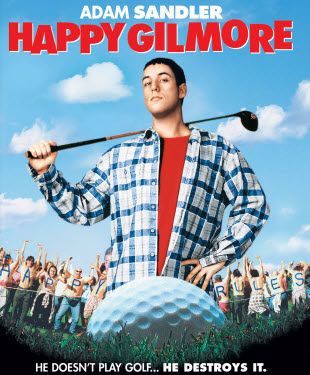
Guilty Pleasure No. 53: Happy Gilmore (dir by Dennis Dugan)


Poor Shooter McGavin!  As played by the great Christopher McDonald, Shooter McGavin is the often unacknowledged hero of the 1996 comedy classic, Happy Gilmore.

I know, I know.  Most people will tell you that Shooter is actually the bad guy.  He’s the snooty pro golfer who tries to keep aspiring hockey player-turned-golfer Happy Gilmore (Adam Sandler) from competing on the PGA tour.  And it is true that he does allow himself to get consumed with jealousy over Happy’s popularity.  And he does definitely cross the line when he buys and holds hostage the house where Happy’s grandmother has spent almost her entire life.  (“She’s so old!  Look at her!  She’d old!” Happy exclaims at one point.)  But try to look at it from Shooter’s point of view.

Shooter has spent years playing golf.  He’s practiced.  He’s paid his dues.  He’s done what he had to do to earn his spot as America’s best golfer.  And now, he finally has a chance to win his first championship.  And what happens?  A very loud hockey player shows up from out-of-nowhere and totally changes the sport.  What really has to be galling is that Happy’s not even a good player.  He can’t putt.  He has no strategy.  His only skill is the distance that he can hit the ball.  And yet, despite all that, Happy becomes a media superstar.  The only people willing to stand up to Happy and defend the honor of the game are Bob Barker and …. Shooter McGavin.

Really, Shooter doesn’t really start to go after Happy until Happy’s fans starts to purposefully antagonize him.  Remember Happy’s ex-boss showing up to heckle Shooter even though he still had that nail in his head?  Seriously that’s not right.  I mean, who shows up to support the dude who put a nail in your head?  Shooter McGavin had every reason to be concerned about that.

Despite the fact that Shooter was treated rather unfairly, Happy Gilmore is definitely a favorite of mine.  I pretty much love the entire film, from Carl Weathers’s enjoyably demented performance as Happy’s mentor to the famous scene of Bob Barker beating Happy to a pulp.  For those who only know Adam Sandler from his later, lazier comedies, Happy Gilmore will be a bit of a revelation because Sandler and the entire cast actually seem to be making an effort to make a good and funny comedy.  The staid world of golf turns out to be the perfect foil for Sandler’s manchild antics.  And for those who prefer Sandler when he’s playing serious roles, he actually does a pretty good job in Happy Gilmore’s few sincere moments.  His scenes with his grandmother are actually rather sweet.

Happy Gilmore remains Sandler’s best comedy and it’s a personal favorite of mine.  Every time I watch it, I laugh and that’s a good thing.  I also like to think that Shooter and Happy eventually set aside their differences and got their own talk show on ESPN.  They deserved it.

Previous Guilty Pleasures

  1. Half-Baked
  2. Save The Last Dance
  3. Every Rose Has Its Thorns
  4. The Jeremy Kyle Show
  5. Invasion USA
  6. The Golden Child
  7. Final Destination 2
  8. Paparazzi
  9. The Principal
  10. The Substitute
  11. Terror In The Family
  12. Pandorum
  13. Lambada
  14. Fear
  15. Cocktail
  16. Keep Off The Grass
  17. Girls, Girls, Girls
  18. Class
  19. Tart
  20. King Kong vs. Godzilla
  21. Hawk the Slayer
  22. Battle Beyond the Stars
  23. Meridian
  24. Walk of Shame
  25. From Justin To Kelly
  26. Project Greenlight
  27. Sex Decoy: Love Stings
  28. Swimfan
  29. On the Line
  30. Wolfen
  31. Hail Caesar!
  32. It’s So Cold In The D
  33. In the Mix
  34. Healed By Grace
  35. Valley of the Dolls
  36. The Legend of Billie Jean
  37. Death Wish
  38. Shipping Wars
  39. Ghost Whisperer
  40. Parking Wars
  41. The Dead Are After Me
  42. Harper’s Island
  43. The Resurrection of Gavin Stone
  44. Paranormal State
  45. Utopia
  46. Bar Rescue
  47. The Powers of Matthew Star
  48. Spiker
  49. Heavenly Bodies
  50. Maid in Manhattan
  51. Rage and Honor
  52. Saved By The Bell 3. 21 “No Hope With Dope”

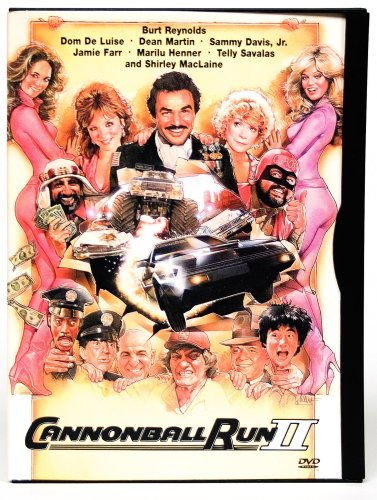
Cannonball Run II (1984, directed by Hal Needham)


In 1981, director Hal Needham and star Burt Reynolds had a surprise hit with The Cannonball Run.  Critics hated the film about a race from one end of America to the other but audiences flocked to watch Burt and a group of familiar faces ham it up while cars crashed all around them.  The original Cannonball Run is a goofy and gloriously stupid movie and it can still be fun to watch.  The sequel, on the other hand…

When the sequel begins, the Cannonball Run has been discontinued.  The film never explains why the race is no longer being run but then again, there’s a lot that the sequel doesn’t explain.  King Abdul ben Falafel (Ricardo Montalban, following up The Wrath of Khan with this) wants his son, The Sheik (Jamie Farr, returning from the first film) to win the Cannonball so he puts up a million dollars and announces that the race is back on.  Problem solved.

With the notable exceptions of Farrah Fawcett, Roger Moore, and Adrienne Barbeau, almost everyone from the first film returns to take another shot at the race.  Burt Reynolds and Dom DeLuise are back.  Jack Elam returns as the crazy doctor, though he’s riding with the Sheik this time.  Jackie Chan returns, riding with Richard “Jaws” Kiel.  Dean Martin and Sammy Davis, Jr. return, playing barely disguised versions of themselves.  They’re joined by the surviving members of the Rat Pack.  Yes, Frank Sinatra is in this thing.  He plays himself and, from the way his scenes are shot, it’s obvious they were all filmed in a day and all the shots of people reacting to his presence were shot on another day.  Shirley MacClaine also shows up, fresh from having won an Oscar.  She plays a fake nun who rides with Burt and Dom.  Burt, of course, had a previous chance to co-star with Shirley but he turned down Terms of Endearment so he could star in Stroker AceCannonball Run II finally gave the two a chance to act opposite each other, though no one would be winning any Oscars for appearing in this film.

Say what you will about Hal Needham as a director, he was obviously someone who cultivated a lot of friendships in Hollywood because this film is jam-packed with people who I guess didn’t have anything better to do that weekend.  Telly Savalas, Michael V. Gazzo, Henry Silva, Abe Vigoda, and Henry Silva all play gangsters.  Jim Nabors plays Homer Lyle, a country-fried soldier who is still only a private despite being in his 50s.  Catherine Bach and Susan Anton replace Adrienne Barbeau and Tara Buckman as the two racers who break traffic laws and hearts with impunity.  Tim Conway, Don Knotts, Foster Brooks, Sid Caesar, Arte Johnson, Mel Tillis, Doug McClure, George “Goober” Lindsey, and more; Needham found room for all of them in this movie.  He even found roles for Tony Danza and an orangutan.  (Marilu Henner is also in the movie so I guess Needham was watching both Taxi and Every Which Way But Loose while casting the film.)  Needham also came up with a role for Charles Nelson Reilly, who is cast as a mafia don in Cannonball Run II.  His name is also Don so everyone refers to him as being “Don Don.”  That’s just a typical example of the humor that runs throughout Cannonball Run II.  If you thought the humor of It’s A Mad, Mad, Mad, Mad World was too subtle and cerebral, Cannonball Run II might be right up your alley.

The main problem with Cannonball Run II is that there’s not much time spent on the race, which is strange because that’s the main reason why anyone would want to watch this movie.  The race itself doesn’t start until 45 minutes into this 108 minute film and all the racers are quickly distracted by a subplot about the Mafia trying to kidnap the Sheik.  Everyone stops racing so that Dean Martin and Sammy Davis, Jr. can disguise themselves as belly dancers to help rescue the Sheik.  By the time that’s all been taken care of, there’s only 10 minutes left for everyone to race across the country.  After a montage of driving scenes and a cartoon of an arrow stretching across the nation (the cartoon was animated by Ralph Bakshi!), we discover who won the Cannonball and then it’s time for a montage of Burt and Dom blowing their lines and giggling.  Needham always ended his films with a montage of everyone screwing up a take and it’s probably one of his most lasting cinematic contributions.  Every blooper reel that’s ever been included as a DVD or Blu-ray extra owes a debt of gratitude to Hal Needham.  Watching people blow their lines can be fun if you’ve just watched a fun movie but watching Burt and Dom amuse themselves after sitting through Cannonball Run II is just adding insult to injury.  It feels less like they’re laughing at themselves and more like they’re laughing at you for being stupid enough to sit through a movie featuring Tony Danza and an orangutan.

The dumb charm of the first Cannonball Run is nowhere to be found in this sequel and, though the film made a profit, the box office numbers were still considered to be a disappointment when compared to the other films that Reynolds and Needham collaborated on.  Along with Stroker Ace, this is considered to be one of the films that ended Reynolds’s reign as a top box office attraction.  Cannonball Run II was also the final feature film to feature Dean Martin and Frank Sinatra.  This could be considered the final Rat Pack film, though I wouldn’t say that too loudly.

Cannonball Run II is a disappointment on so many levels.  It’s hard to believe that the same director who did Smokey and the Bandit and Hooper could be responsible for the anemic stunts and chases found in this movie.  The cast may have had a good time but the audience is left bored.  Stick with the first Cannonball Run.


Horror on TV: The Twilight Zone 3.24 “To Serve Man” (dir by Richard L. Bare)


“It’s a cookbook!”

During the month of October, we like to share classic episodes of horror-themed television.  That was easier to do when we first started doing our annual October horrorthon here at the Shattered Lens because every single episode of the original, black-and-white Twilight Zone was available on YouTube.  Sadly, that’s no longer the case.  In fact, there is exactly one episode of the original Twilight Zone on YouTube.

Fortunately, that episode is a classic.  In 1962’s To Serve Man, an alien (Richard Kiel) comes to Earth and invites people to return to his home planet with him.  He leaves behind a book.  When everyone learns that the title of the book is To Serve Man, they excitedly decide that the book must be an instruction manual on how to help mankind.  The truth, as we learn in the episode’s classic finale, is something a little bit different.

Here’s the episode!  Watch it before YouTube yanks it down.

(This episode originally aired on October 2nd, 1962.  It was directed by Richard L. Bare from a script by Rod Serling.  It was based on a short story by Damon Knight.)

Enjoy!

Horror On TV: Kolchak: The Night Stalker 1.9 “The Spanish Moss Murders” (dir by Gordon Hessler)


Tonight, on Kolchak….

People are turning up dead.  Well, what else is new?  That’s pretty much been the plot of every Kolchak episode so far.  However, this time, they’re turning up dead while covered with Spanish moss!

Oh my God, could it be the Cajuns?

Well, as a matter of fact, it is.  As Kolchak discovers when he investigates, all of the dead people were somehow connected to a comatose Cajun….

Richard Kiel, who played the monster in the previous episode of Kolchak, returns here to play yet another monster.

The episode originally aired on December 6th, 1974!

http://www.youtube.com/watch?v=WcvJMqWRsVs

Horror on TV: Kolchak: The Night Stalker 1.8 “Bad Medicine” (dir by Alexander Grasshoff)


On tonight’s episode of Kolchak: The Night Stalker, wealthy women are dying in Chicago and Carl Kolchak is on the case!  It turns out that it’s all connected to priceless jewels and a legendary monster known as the Diabelro, a creature has been cursed to roam the Earth and search for gems.

The Diabelro is played by Richard Kiel, who might be best known for playing Jaws in The Spy Who Loved Me and Moonraker.

This episode originally aired on November 29th, 1974.

Enjoy!

http://www.youtube.com/watch?v=97o7cuBNTAs

Horror on TV: The Twilight Zone 3.24 “To Serve Man” (dir by Richard L. Bare)


“It’s a cookbook!”

During the month of October, we like to share classic episodes of horror-themed television.  That was easier to do when we first started doing our annual October horrorthon here at the Shattered Lens because every single episode of the original, black-and-white Twilight Zone was available on YouTube.  Sadly, that’s no longer the case.  In fact, there is exactly one episode of the original Twilight Zone on YouTube.

Fortunately, that episode is a classic.  In 1962’s To Serve Man, an alien (Richard Kiel) comes to Earth and invites people to return to his home planet with him.  He leaves behind a book.  When everyone learns that the title of the book is To Serve Man, they excitedly decide that the book must be an instruction manual on how to help mankind.  The truth, as we learn in the episode’s classic finale, is something a little bit different.

Here’s the episode!  Watch it before YouTube yanks it down.

(This episode originally aired on October 2nd, 1962.  It was directed by Richard L. Bare from a script by Rod Serling.  It was based on a short story by Damon Knight.)

Enjoy!


Horror on TV: Thriller 1.23 “Well of Doom” (dir by John Brahm)


For tonight’s televised horror, here’s another episode the Boris Karoloff-hosted anthology series, Thriller!

This episode, Well of Doom, shows what happens when two demons kidnap two men on their way to a bachelor party and force them to slog across the moors, to a mysterious castle.  This episode is full of atmosphere and it also features great work from Henry Daniell and Richard Kiel as the two demons.

Enjoy!

http://www.youtube.com/watch?v=Thxj6DIPS7Y

Horror on TV: The Twilight Zone 3.24 “To Serve Man”


On this day, 58 years ago, one of the most influential shows in the history of television, The Twilight Zone, premiered on CBS.  Created by Rod Serling, this anthology show not only featured some of the best actors and writers in the business but it also used tales of the unexpected to address some of the most pressing issues of the day.  (Many, if not all, of those issues remain relevant today.)  The Twilight Zone inspired a countless number of future filmmakers and writers and it remains popular today.  The annual New Year’s Eve and 4th of July marathons on SyFy continue to delight viewers both new and old.

When we first started doing our annual October horrorthon here at the Shattered Lens, every single episode of the original, black-and-white Twilight Zone was available on YouTube.  Sadly, that’s no longer the case.  As I sit here writing this, while several episodes from the show’s later (and largely unsuccessful) revivals have been uploaded,  there is exactly one episode of the original Twilight Zone on YouTube.

Fortunately, that episode is a classic.  In 1962’s To Serve Man, an alien (Richard Kiel) comes to Earth and invites people to return to his home planet with him.  He leaves behind a book.  When everyone learns that the title of the book is To Serve Man, they excitedly decide that the book must be an instruction manual on how to help mankind.  The truth, as we learn in the episode’s classic finale, is something a little bit different.

Here’s the episode!  Watch it before YouTube yanks it down.

Enjoy!