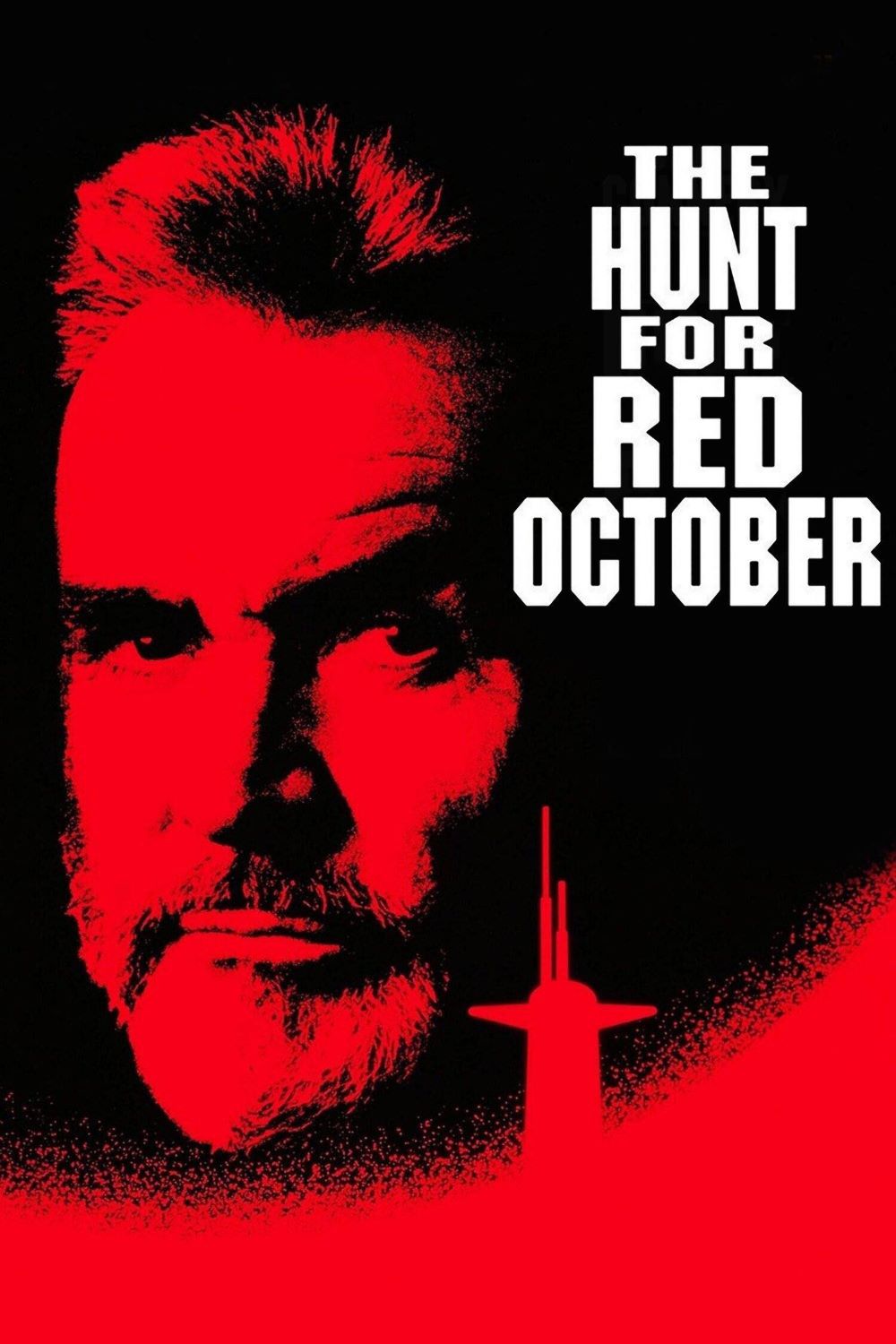
Review: The Hunt for Red October (dir. by John McTiernan)


“I’m a politician. Which means that I am a cheat and a liar, and when I’m not kissing babies, I’m stealing their lollipops.” — Dr. Jeffrey Pelt, National Security Advisor

The Hunt for Red October glides into the tail end of Cold War cinema like a stealthy sub cutting through midnight swells, packing a smart mix of spy intrigue and nail-biting underwater showdowns that keep you locked in from the opening credits. Directed by John McTiernan, fresh from helming Die Hard, this 1990 adaptation of Tom Clancy’s doorstopper novel smartly distills pages of naval geekery into a taut, propulsive thriller where Soviet skipper Marko Ramius—Sean Connery in full brooding mode—pilots the formidable Red October, a behemoth sub with a hush-mode propulsion system that ghosts past detection like a shadow in fog.

McTiernan shines in wrangling the script from Clancy’s tech-heavy tome, slicing through the babble to propel the story with crisp momentum and unrelenting suspense, turning potential info-dumps into pulse-quickening beats that hook casual viewers and sub nerds alike. The premise grabs fast: Ramius’s bold maneuvers ignite a transatlantic frenzy, with U.S. and Soviet forces locked in a paranoid standoff over what looks like an imminent crisis. That ’80s-era distrust simmers perfectly here, crammed into a runtime that pulses with fresh urgency decades later, amplified by those dim-lit sub corridors in steely teal tones that squeeze the air right out of the room.

Alec Baldwin embodies Jack Ryan as the reluctant brainiac from CIA desks, sweaty and green around the gills yet armed with instincts that cut through official noise like a periscope through chop. Pulled from family downtime—teddy bear in tow—he injects everyday stakes into the global chessboard, proving heroes don’t need camo or cockiness, just smarts and stubbornness. Connery’s Ramius dominates as a haunted vet with a personal chip on his shoulder, steering a tight-knit officer corps including Sam Neill’s devoted second-in-command, their quiet bonds hinting at deeper loyalties amid the red menace.

Standouts fill the roster seamlessly: James Earl Jones lends gravitas as the steady Admiral Greer backing Ryan’s wild cards; Scott Glenn commands the American hunter sub with laconic steel; Jeffrey Jones brings quirky spark to the sonar savant whose audio tricks flip the script on silence. The dialogue crackles with shorthand lingo and understated jabs, forging a crew dynamic that’s as pressurized as the hull plates, pulling you into hushed command post vibes without a whiff of cheesiness.

​​

McTiernan elevates the genre by leaning on wits over blasts—thrilling pursuits deliver without dominating, letting mind games and split-second calls drive the dread, all while streamlining Clancy’s minutiae into seamless propulsion. Gadgetry gleams without overwhelming: the sub’s whisper-quiet tech sparks clever cat-and-mouse in hazard-filled depths, ramping uncertainty to fever pitch. Pacing builds masterfully from war-room skepticism—Ryan battling brass skepticism—to heart-in-throat ocean dashes, every frame taut as a bowstring. Practical models and effects ground the peril in gritty tangibility, no digital gloss, evoking Ice Station Zebra‘s frosty traps but streamlined into a relentless machine that dodges the older film’s drag. It’s a clinic in balancing spectacle and smarts, where tension coils from isolation’s cruel math: one ping too many, and it’s lights out.

On the eyes and ears front, the movie plunges into submersed nightmare fuel—consoles pulsing crimson in battle stations, scopes piercing mist-shrouded waves, silo bays looming like sleeping leviathans. McTiernan tempers his action flair for thinker-thrills; Basil Poledouris’s great orchestral score surges with iconic power through the chases—those brooding horns, choral swells, and rhythmic pulses echoing engine throbs have etched into legend, pounding your chest like incoming cavitation and elevating every dive. Audio wizardry seals the immersion: hull groans, ping echoes, bubble roars craft a metallic tomb where errors echo eternally. Flaws peek through—early scenes drag with setup chatter, foes skew broad-stroked—but the core hunt erases them, surging to a sharp, satisfying close that nods to Ryan’s budding legend without overplaying the hand.

’90s tentpole lovers and thaw-era history fans find a benchmark here, as the film plays the long con of trust amid torpedoes, fusing bombast with nuance that reboots chase in vain. It bottles superpower jitters spot-on—frantic commands clashing with strike debates—yet softens adversaries via Connery’s world-weary depth and Neill’s subtle conviction. Endless rewatches uncover gems: crew hints dropped early, sonar hacks foreshadowing real tech leaps. Baldwin’s grounded Ryan—chopper-barfing, suit-clashing, chaos-navigating—earns triumphs the hard way, contrasting Das Boot‘s bleak grind with upbeat ingenuity that feels won, not waved. Poledouris’s motifs linger post-credits, a symphonic anchor boosting replay pulls.

Endurance stems from mastering sub-horror’s essence: solitude sharpening choices, where flubs invite apocalypse. Ramius embodies defector realism—war-weary idealist mirroring history’s turncoats—while Clancy’s specs (sub classes, velocities) anchor without anchoring down. McTiernan sidesteps flags; zero flag-waving, pure operator craft in dodges and climactic finesse that blends brains with boom. Quirks delight—the premier’s bluster, aides’ cool calculus—padding a 134-minute gem that exhales you surfacing, amped. Expands on score’s role too: “Hymn to Red October” choral rise mirrors Ramius’s quiet rebellion, threading emotional undercurrents through mechanical mayhem, a Poledouris hallmark outlasting the film.

Bottom line, The Hunt for Red October captivates via cerebral kick—shadow games in fluid physics, intellect over muscle, audacious plays punking empire folly. Sparks post-view chin-strokes on allegiances and risks. Connery’s gravelly “One ping only, Vasily” endures as gold; storm-watch it, trade sofa for sonar station—raw thrill spiked with savvy. Sub saga staple? This silent stalker nails every target.

October True Crime: Manhunt: The Search For The Night Stalker (dir by Bruce Seth Green)


Richard Ramirez was a loser.

That may seem like an obvious statement but I think it’s important to sometimes reiterate these things.  That’s especially true with someone like Richard Ramirez.  Ramirez murdered at least 15 people in California in 1984 and 1985 and, to this day, no one is sure why.  The press gave Ramirez a cool nickname, christening him “The Night Stalker.”  When he was captured, the press covered his claims of being a Satanist.  Because he was a dark-haired bad boy with intense eyes, a large number of true crime groupies attended his trial and later claimed to be in love with him.  (That will always be strange to me as Ramirez was also described as having rotten teeth and rancid breath.  That would be a definite turn-off for me.  Well, that and all of the raping and murdering.)  Even when he was sent to Death Row, Ramirez’s admirers continued to send him money and gifts in the mail.  For a select group of people, he was an icon.

That’s why I think it’s important to make a few things clear about Richard Ramirez.

He was a drug addict who reportedly struggled with impotence.

He was barely literate.

He specifically targeted women and the elderly because he knew he could overpower them.

He was captured because he was too much of a dumbass to realize that his picture was in every newspaper.  He ended up getting his ass kicked by several angry citizens and he probably would have been killed by them if the police hadn’t shown up.

He was a Satanist, which is one of most boring things that you can be.

He said “See you in Disneyland,” after he was sentenced to death.  He could have just gone to Disneyland on his own without killing people beforehand.

He had terrible personal hygiene.  The long dark hair?  There’s no way it wasn’t full of lice.

When he died, no one claimed his body so the prison just set him on fire and today, they probably use his ashes to help soak up spills.

In short, the dude was a loser and certainly not worthy of being played by Lou Diamond Phillips.

1989’s Manhunt: The Search For The Night Stalker deals with the search for the Night Stalker while not making the mistake of glamorizing him.  We see Ramirez’s crimes but the film doesn’t waste much time trying to figure out what makes Ramirez tick.  Instead, Ramirez remains a shadow of evil, descending on Los Angeles and reminding us all the lock our doors.  The emphasis is instead on the two detectives (Richard Jordan and A Martinez) who are investigating the crimes and the journalists who often sensationalized the murders but who also played an important role in getting the uncaptured Ramirez’s face in front of everyone in California.  The film itself delves into all of the true crime made-for-TV movie cliches but Jordan and Martinez both give good performances, the film does a good job of capturing the paranoia of a city under siege, and, most importantly, the film reminds us that Richard Ramirez was, above all else, a total and complete loser.

Heaven Is A Playground (1991, directed by Randall Fried)


In the projects of Chicago, Byron Harper (Michael Warren) runs a nonprofit basketball farming system and helps black kids, many of whom would have no other prospects other than a live of poverty or crime, to find a home in college basketball programs.  Byron is passionate about what he does but he’s also a stern taskmaster and not quick to forgive.  When one of his best players, Casey (Nigel Miguel), developed a drinking problem, Byron kicked him off his team.  Byron’s main concern is his stepson, Truth (Victor Love).  Truth is a great basketball player but also has an addiction to cocaine and an attitude problem.

For reasons that are never made clear, white lawyer Zack Telander (D.B. Sweeney) shows up on the court and says he wants to play one-on-one with Byron.  Everyone assumes that Zack is a drug dealer and they tell him to get lost.  But when one of the players is shot, Zack is the only person at the court who has a car.  Zack rushes the player to the hospital and he wins Byron’s trust.  Byron needs Zack to look over a professional contract that is being offered to Truth by sleazy sports agent David Racine (Richard Jordan).

For reasons that are again never made clear, Byron tells Zack to coach some of the more troubled players on the court, including Casey.  At first, Zack isn’t much of a coach but eventually, he gets the players to trust him and start playing like a team.  He also tries to get burned-out Matthew Lockhart (Bo Kimble) to start playing the game again.

Heaven Is A Playground is a mess of a movie that doesn’t really seem to be sure what it wants to say about basketball, the projects, or race relations.  The main problem is that a lot of the decisions made by Byron and Zack don’t make any sort of logical sense.  Moments of broad comedy are mixed with moments of high drama and it makes for an unconvincing and overly melodramatic sports movie.

Heaven Is A Playground had a long pre-production phase.  At one point, a young Michael Jordan agreed to play the role of Matthew Lockhart.  By the time the film actually went into production, Jordan was a superstar and had neither the time (nor, probably, the desire) to co-star in a low-budget sports movie.  After the movie flopped, director Randall Fried sued Jordan for breach-of-contract, claiming that he caused the film’s box office failure by refusing to appear in it and, as a result, Fried’s directorial career stalled.  In the suit, Fried claimed that he was on the verge of being “the next Steven Spielberg” until Jordan refused to do his film.  The jury found Jordan not liable and awarded him $50,000.

(Trying to sue Michael Jordan was a terrible idea in 1998 and it’s probably still a terrible idea today.  People love Jordan!)

Personally, I have to say that Mike made the right decision.

The Secret of My Success (1987, directed by Herbert Ross)


ȋ‚˜é

Brantley Foster (Michael J. Fox) heads to New York City with his business degree from the University of Kansas and the promise of an entry-level job as a financier.  He arrives to discover that the company that hired him no longer exists and that Brantley is out of a job.  New York is a harsh town for someone who is down on his luck and all of out of money.  Brantley eventually gets a job working in the mail room of a company owned by his wealthy uncle (Richard Jordan).  His uncle doesn’t even know who he is but soon, Brantley becomes just as rich and successful as he always dreamed.

What’s the secret of Brantley’s success?

Screwing his Aunt Vera (played by Margaret Whitton).

What’s the other other secret of his success?

Pretending to be named Carlton Whitfield and claiming that he’s a new executive at the corporation.

I remember when Kramer did the same thing on Seinfeld.  It didn’t work out for Kramer.  He got fired after turning in his first report.

“This is gibberish,” his boss said, “It’s almost as if you have no business training at all.  I’m afraid we have to let you go.”

“I don’t actually work here,” Kramer replied.

“That’s what makes this so hard.”

Seinfeld, never topped.

Back to The Secret of My Success, this is the most 80s film ever made, complete with montages of Brantley exploring New York and a saxophone playing on the soundtrack.  Brantley’s all about TCB, taking care of business.  He screws his aunt but falls in love with Christy Wills (Helen Slater).  Brantley doesn’t learn anything but he gets the best office and becomes a success without actually doing any real work.  It’s the ultimate fantasy and, like many fantasies, The Secret of My Success is superficially appealing.  Michael J. Fox is likable as Brantley.  Margaret Whitton is outrageously sexy as Vera.  Helen Slater is pretty and boring, traits that made her the ideal “good” girlfriend for Brantley’s story.

The Secret of My Success is your ticket to the 80s.

#MondayMuggers present THE MEAN SEASON (1985) starring birthday boy, Kurt Russell!


Every Monday night at 9:00 Central Time, my wife Sierra and I host a “Live Movie Tweet” event on X using the hashtag #MondayMuggers. We rotate movie picks each week, and our tastes are quite different. Tonight, Monday March 17th, we celebrate Kurt Russell’s 74th birthday by watching THE MEAN SEASON (1985) co-starring Mariel Hemingway, Richard Jordan, Richard Masur, Richard Bradford, Joe Pantoliano, and Andy Garcia. 

Kurt Russell plays Malcolm Anderson, a reporter for a Miami newspaper. He’s had enough of reporting the local murders, so he promises his school teacher girlfriend (Mariel Hemingway) that they’ll move away soon. Before Malcolm can hand in his notice, the murderer (Richard Jordan) from his latest article phones him. The murderer tells Malcolm that he’s going to kill again. The phone calls and murders continue, and soon Malcolm finds that he’s not just reporting the story, he is the story.

We thought it would be fun to join The Shattered Lens and make Kurt Russell our centerpiece for the day. There’s absolutely nothing more enjoyable to me than watching movies with friends. And If you enjoy Russell, Miami, and serial killer thrillers, you should like this one. So, join us tonight for #MondayMuggers and watch THE MEAN SEASON! It’s on Amazon Prime.

The trailer for the THE MEAN SEASON is included below:

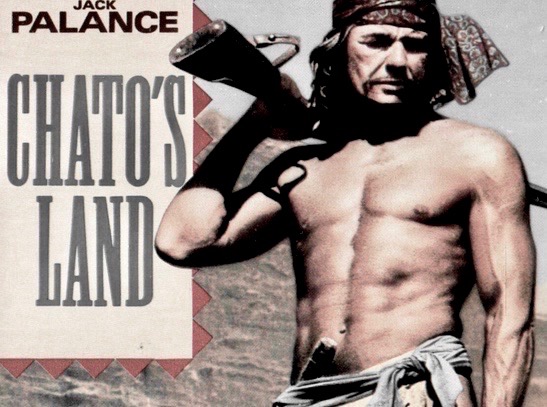
CHATO’S LAND (1972) – Jack Palance leads a posse after Charles Bronson!


One of the most enjoyable things about being a dad is introducing your favorite things to your kids. I taught my son Hank the sports of basketball, baseball, and golf, and even now there’s nothing we enjoy doing more together than playing a round of golf. Of course, as one of the world’s biggest Charles Bronson fans, I’ve introduced him to many films starring my cinematic hero. It seems that two movies have stood the test of time and have gone on to become two of his favorite movies. The fact that THE DIRTY DOZEN (1967) is one of his favorites isn’t a big surprise as he’s always enjoyed playing video games set during World War II. The other, CHATO’S LAND (1972), was more of a surprise. A few years ago, when Hank was home from college, I asked him if there was a movie he wanted to watch. It could have been any movie in the world, and I was honestly a little surprised when he said he’d been wanting to watch CHATO’S LAND again. Needless to say, this dad was very proud. 

Charles Bronson is Pardon Chato, a half breed Apache who’s minding his own business and having a drink in the saloon, when a small-town sheriff decides to give him hell just for being a “breed.” Forced to kill the racist POS in self-defense, Chato heads out of town a day ahead of the posse led by the former confederate Captain Quincey Whitmore (Jack Palance). Whitmore may be leading the posse, but the Hooker Brothers (played by Simon Oakland, Ralph Waite, and Richard Jordan) are just as bigoted as the sheriff who was killed, and they set about bullying their neighbors into joining their hunt for Chato. A couple of the guys who go along because it’s “expected of them” are Joshua Everette (James Whitmore) and Gavin Malechie (Roddy McMillan). When the posse comes across Chato’s home and woman, some of the members decide the wise thing to do is rape her and tie her up as bait. This is clearly not going to work out well for the posse, even those who tried to stop the rape. Using his sneaky Indian skills and the help of a fellow Indian, Chato is able to create a diversion and rescue his woman, but his friend is killed in the process. With his friend murdered and his woman brutalized and raped, Chato is no longer willing to just run away. From this point forward, the hunters will become the hunted as he leads them all further into CHATO’S LAND. 

There are several things that I find interesting about CHATO’S LAND. This is the first of six films that director Michael Winner and Charles Bronson would make together. They would all be financially successful films with THE MECHANIC (1972) and the original DEATH WISH (1974) standing out as true 70’s classics. Charles Bronson’s last number one box office hit would be DEATH WISH 3 (1985), which would also be his final film with Winner. It should also be noted that the character of Chato would be an early precursor of the kind of character Bronson would go on to embody almost exclusively throughout the rest of his career, that of the quiet but deadly man of action. Chato only says 13 lines in the entire movie and most of those are in a Native American dialect. Chato doesn’t have that much actual screen time either, but his presence dominates every scene. He’s like the angel of death hanging over the entire proceedings waiting to strike, and Winner continues to build on this tension as the film moves towards its inevitable conclusion. It’s an incredible, physical performance that can only be delivered by an actor like Bronson. Finally, the film has an outstanding cast, a cast that Winner himself would call “as good a cast as I ever assembled.” In addition to Bronson, Jack Palance is excellent as the confederate captain who’s never gotten over losing the war, and who now finds himself losing the battle to control the men in the posse. James Whitmore and Roddy McMillan are solid as a couple of decent men who went along because they felt it was their duty to their neighbors, who now find themselves caught up in a bad situation with even worse men. And finally, Simon Oakland, Ralph Waite & Richard Jordan are the kind of men you love to hate as the ignorant and bigoted Hooker brothers. It doesn’t hurt your feelings at all to see those guys get what’s coming to them.

Overall, CHATO’S LAND is a very good western, dominated by Bronson’s presence in the same way that JAWS (1975) is dominated by a giant killer shark. It was also a hugely profitable film upon its initial release, guaranteeing that Bronson would continue to get starring roles in films backed by American studios. Bronson liked to work with the same directors once he felt comfortable with them, and his collaboration with Winner would prove to be extremely fruitful and help turn him into one of the biggest box office stars in America. Thanks, Michael! 

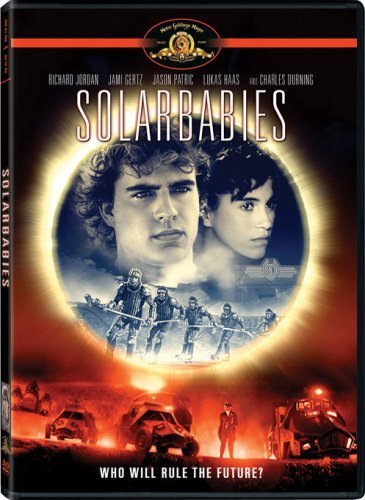
Guilty Pleasure No. 54: Solarbabies (dir by Alan Johnson)


Solarbabies is a film that has a reputation.  And it’s not a good one.

First released in 1986, Solarbabies is one of those post-Mad Max films that takes place in a post-apocalyptic desert society.  There are no more trees.  There is no more rain.  Order is kept by force.  The people are oppressed.  Outsiders live in desert towns that have names like “Tiretown.”  Children are forced to grow up in a combination of a prison and an orphanage.  The orphanage’s Warden (played by Charles Durning) mourns for the way the world used to be, before it became a sun-drenched nightmare without plants or water.  The fearsome Grock (Richard Jordan) makes sure that all of society’s rules are followed and the viewer knows he’s a bad guy because he wears a leather trench coat even when it’s over a 100 degrees outside.  (Grock never sweats.  If only the same could be said of the Warden.)  The evil Professor Shandray (Sarah Douglas) experiments on living subjects.  It’s a grim, grim world.

However, hope arrives in the form of a glowing orb!  A ten year-old deaf boy named Daniel (Lukas Haas) finds the orb and, after regaining his ability to hear, he names it Bodhi.  When Darstar (Adrian Pasdar) realizes that he can use Bodhi to protect the people of Tiretown, he steals the orb and runs off with it.  Determined to retrieve Bodhi, Daniel chases after him

How will Daniel survive in the desert?  Well, luckily, he’s not alone!  Daniel was a member of the orphanage’s roller hockey team, the Solarbabies.  Terra (Jami Gertz), Jason (Jason Patric), Metron (James LeGros), Rabbit (Claude Brooks), and Tug (Peter DeLuise) strap on their skates and roll out into the desert.  Pursuing them is Grock and his stormtroopers.

Meanwhile, somewhere in the desert, an old man named Greentree (Frank Converse) hopes to help the world recover.  Greentree looks like a thin version of Santa Claus and he hopes to bring rain and trees back to the Earth.  Yes, his name is Greentree.  There’s not really much room for subtlety in the world of Solarbabies.

Now, as I said at the beginning of this review, Solarbabies has a reputation.  Today, it’s probably best known for being the film that nearly bankrupted Mel Brooks.  Yes, that Mel Brooks.  When Brooks originally signed on to produce Solarbabies, it was envisioned as being a low-budget sci-fi film that would not have any spectacular special effects.  However, Brooks became convinced that Solarbabies had the potential to be a Star Wars-level hit so he increased the budget.  He also brought in Alan Johnson to direct the film, despite the fact that Johnson was a choreographer who had only directed one other film and had no experience with science fiction.  (Johnson’s previous film had been a remake of To Be Or Not To Be, which starred Brooks and featured Solarbabies’s Charles Durning in a supporting role).  At Brooks’s insistence, the film was shot in Spain to save money.  Unfortunately, no sooner had Johnson and the film’s cast arrived than Spain was hit by a series of unexpected storms that caused production to shut down.  Even when the rain stopped, disagreements between Johnson and the cast delayed the film even further.  The footage that was shot satisfied no one, leading to expensive reshoots.  In the end, Mel Brooks invested close to $20 million dollars in the film, even taking a second mortgage out on his house.  When the film was finally released, it was a critical and box office disaster, though Brooks later said that he did eventually break even after Solarbabies was released on DVD.

So, yes, Solarbabies has a bad reputation and it could be argued that it deserves it.  Tonally, the film’s a mess.  For a film that appears to have been made for a “family” audience, parts of the film are surprisingly violent  Scenes of the Solarbabies playing LaCrosse and cheerfully crossing the desert are mixed with some surprisingly graphic scenes of Grock and Shandray torturing prisoners.  Bodhi is a cute and glowing orb who gives Daniel back his hearing and then later brutally kills a lot of bad guys.  Jason Patric, Jami Gertz, and Charles Durning all seem to be trying to take the film seriously while Richard Jordan and Sarah Douglas give performances that feel more appropriate for a Hammer horror film.  Solarbabies is a bizarre mix of sincerity, sadism, and camp.  Nothing about it makes much sense.

And yet….

Listen, I can’t help it.  When I watched it last week, I enjoyed Solarbabies.  For all of its many and obvious flaws, it’s a hard film not to like.  It’s just so thoroughly ludicrous and messy that watching it becomes a rather fascinating viewing experience.  It’s hard not to, at the very least, be entertained by the sight of the cast roller skating through the desert.  A LaCrosse team battling futuristic Nazis for possession of a glowing orb that can cause rain to fall from a cloudless sky?  As far as I’m concerned, it’s impossible not to enjoy that on some level.

Of course, I seem to be in the minority as far as that’s concerned.  Alan Johnson never directed another movie after Solarbabies, though he did direct some of those really cool GAP commercials that aired in the early aughts.  You know the ones that featured people enthusiastically dancing in khakis?  That was him!  Those commercials are kind of a guilty pleasure themselves.  (Of course, because Mel Brooks nearly didn’t lose his house producing them, they’re not quite as infamous as Solarbabies.)  But still, Johnson stared his directorial career by directing Charles Durning to an Oscar nomination in To Be Or Not To Be and he ended it by directing Durning in a box office flop.  Well, no matter!  I enjoyed Solarbabies and I don’t care who knows it.

Previous Guilty Pleasures

  1. Half-Baked
  2. Save The Last Dance
  3. Every Rose Has Its Thorns
  4. The Jeremy Kyle Show
  5. Invasion USA
  6. The Golden Child
  7. Final Destination 2
  8. Paparazzi
  9. The Principal
  10. The Substitute
  11. Terror In The Family
  12. Pandorum
  13. Lambada
  14. Fear
  15. Cocktail
  16. Keep Off The Grass
  17. Girls, Girls, Girls
  18. Class
  19. Tart
  20. King Kong vs. Godzilla
  21. Hawk the Slayer
  22. Battle Beyond the Stars
  23. Meridian
  24. Walk of Shame
  25. From Justin To Kelly
  26. Project Greenlight
  27. Sex Decoy: Love Stings
  28. Swimfan
  29. On the Line
  30. Wolfen
  31. Hail Caesar!
  32. It’s So Cold In The D
  33. In the Mix
  34. Healed By Grace
  35. Valley of the Dolls
  36. The Legend of Billie Jean
  37. Death Wish
  38. Shipping Wars
  39. Ghost Whisperer
  40. Parking Wars
  41. The Dead Are After Me
  42. Harper’s Island
  43. The Resurrection of Gavin Stone
  44. Paranormal State
  45. Utopia
  46. Bar Rescue
  47. The Powers of Matthew Star
  48. Spiker
  49. Heavenly Bodies
  50. Maid in Manhattan
  51. Rage and Honor
  52. Saved By The Bell 3. 21 “No Hope With Dope”
  53. Happy Gilmore

Valdez is Coming (1971, directed by Edwin Sherin)


Based on a western short story from the great Elmore Leonard, Valdez is Coming takes place in a small town on the border between the U.S. and Mexico.  Wealthy Frank Tanner (Jon Cypher, who later played Chief Fletcher Daniels on Hill Street Blues) claims that he’s spotted the man who murdered a friend of his.  Tanner and his gunmen have the man and his wife pinned down in a cabin.  The man is African-American while his wife is Native American and Tanner’s use of racial slurs quickly confirms that there’s more to his animosity towards the couple than just a desire to see justice done for his dead friend.

Because the sheriff is out of town, Mexican constable Bob Valdez (Burt Lancaster) is summoned to the scene of the stand-off.  Saying that he needs to see proof that the man is who Tanner claims he is, Valdez goes down to the cabin and manages to calm the man and his wife down.  However, one of Tanner’s gunmen, R.L. Davis (Richard Jordan), opens fire on the cabin while Valdez is talking.  Thinking that he’s been betrayed, the man opens fire on Valdez and Valdez is forced to kill the man in self-defense.

Feeling guilty about the man’s death (and also suspecting that the man was innocent of the crimes for which Tanner accused him), Valdez starts a collection for the dead man’s widow.  When he asks Tanner to donate $100, Tanner responds by having Valdez tied to a wooden cross (symbolism alert!) and sent into the desert.  Valdez nearly dies before he’s set free by a conscience-stricken Davis.

Still determined to get justice for the man that he killed, Valdez sets out after Tanner and his men.  Valdez kidnaps Tanner’s young bride, Gay Erin (Susan Clark), and lets Tanner know that he can either pay the $100 or he can die like a coward.

An American attempt to capture the feel of a Spaghetti western, Valdez is Coming has an interesting plot.  I liked the fact that, even after nearly being crucified, Valdez was still more concerned with making Tanner pay his fair share and getting justice for the people Tanner had hurt than with getting any sort of personal revenge.  The supporting characters also have more depth than is typical for a film like this.  Gay Erin is not as innocent as she first appears to be and R.L. Davis may work for Tanner but he’s still has enough personal integrity not to leave Valdez to die in the desert.

Unfortunately, the movie itself is slow and ponderous.  A big problem is that Burt Lancaster is miscast as Bob Valdez.  Valdez is a Mexican constable who has served in the U.S. Calvary.  Because he’s Mexican, the man in the shed is willing to briefly trust him.  Tanner continually underestimates and refuses to negotiate with Valdez because Valdez is a quiet and reserved Mexican.  Almost everything that happens in the film is in some way connected to Tanner’s refusal to negotiate with Valdez because Vadez is a Mexican.  Burt Lancaster is in absolutely no way Mexican and the unfortunate decision to have him wear brownface makeup only serves as a reminder of how miscast he is in the lead role.  The movie also concludes with the type of ambiguous ending that was very popular in the 70s but which is frustrating to watch today.  After 90 minutes of Valdez demanding that Tanner either die like a coward or pay $100, it’s frustrating that the film leaves it as an open question as to what eventually happened.

Valdez is Coming had the potential to be a western classic but it was done in by miscasting and questionable directing.  It’ll best be appreciated by western completists.

Film Review: The Mean Season (dir by Phillip Borsos)


From the very first few scenes of the 1985 film, The Mean Season, one thing is abundantly clear.  People are dying in Florida.

In itself, that’s probably not a shock.  Death is a part of life, after all.  Add to that, the majority of The Mean Season takes place in Miami, the seventh most populous area of the United States.  It makes sense that the more people you have living in one area, the more people are also going to end up dead.  That’s just the way things work.

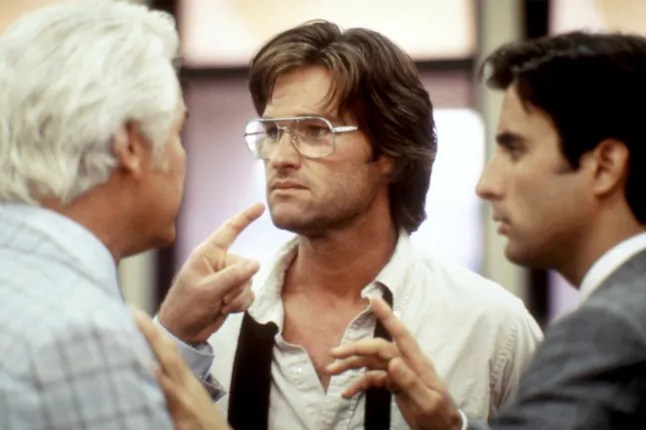
Still, Malcolm Anderson is getting tired of all the death.  Played by a youngish and sexy Kurt Russell, Malcolm’s a journalist.  He covers the crime beat for the Miami Herald.  He spends all day reporting on death and violence and he’s finally reached the point where he’s burned out.  He and his girlfriend, a teacher named Christine (Mariel Hemingway), are even planning on moving to Colorado.  Malcolm says that he could be very happy working at a small town newspaper.  His editor (Richard Masur) doesn’t believe him and, quite frankly, neither do we.  Malcolm may say that he wants peace and quiet but it’s hard not to feel as if he’s fooling himself.

One day, Malcolm gets a phone call.  The voice on the other line (which belongs to character actor Richard Jordan) is deceptively calm.  The caller explains that he’s a fan of Malcolm’s work.  The caller also claims to be responsible for a series of murders that have recently taken place.  At first, Malcolm is skeptical.  After all, he gets calls from crazy people all the time.  That’s one reason why he wants to leave Miami, after all.  But then the caller starts to give Malcolm details about the crimes, details that haven’t been released to general public…

The killings continue and, after every murder, the caller contacts Malcolm.  Soon, Malcolm is appearing on the national news, giving carefully calculated interviews about what it’s like to be a celebrity.  Malcolm is soon on the front page of all the papers.  Malcolm’s happy.  His editor is happy.  But you know who isn’t happy?  The killer.  He didn’t go to all the trouble to kill those people just so Malcolm could get famous off of his hard work!  Soon, the killer is no longer content to just call Malcolm.  Now, he wants to meet face-to-face and maybe even get to know Christine as well…

The Mean Season is one of those movies that starts out well but then falls apart towards the end.  It’s not a spoiler to tell you that the killer eventually ends up kidnapping Christine.  You probably figured out that was going to happen as soon as I told you that Malcolm had a girlfriend.  (It doesn’t help that Christine is such an underwritten character that it feels like the only reason she was put in the film was so she could be used for one gratuitous nude scene and then get kidnapped.)   Once the killer kidnaps her, he goes from being a genuinely intriguing menace to just being a typical and overly verbose movie psycho.

That’s a shame because the first half of The Mean Season is really quite good.  The film makes excellent use of its locations, capturing the humid atmosphere of Florida in the summer.  As the killer, Richard Jordan alternates between being coldly calculating and surprisingly vulnerable without missing a beat.  (Interestingly, he appears to be personally hurt when he realizes that Malcolm doesn’t consider him to be a friend.)  Not surprisingly, Kurt Russell is likable as the conflicted Malcolm but his best moments are the ones where he suggests that Malcolm has become so addicted to fame that he’s almost hoping that the killer strikes again.  As the two homicide detectives who are assigned to keep an eye on Malcolm, both Richard Bradford and Andy Garcia are perfectly cast.  A scene where Bradford tries to comfort a child who accidentally gets in the middle of the search for the killer is the best in the film.  “We’re just looking for the bad guys,” he tell the traumatized child.  It’s small moments like this that elevates The Mean Season above the typical mid-80s serial killer film.

Seen today, The Mean Season — with its emphasis on newspapers — feels like a historical artifact.  If the film were made today, Russell would definitely work for either a 24-hour cable news channel or an online news site.  It actually would be interesting to see this story updated and retold for the age of clickbait.  Somebody needs to get on that and, while they’re at it, come up with the type of ending that an otherwise intriguing story like this deserves.

A Movie A Day #238: Lawman (1971, directed by Michael Winner)


In the 1880s, Jared Maddox (Burt Lancaster) is the marshal of the town of Bannock.  After a night of drinking and carousing leads to the accidental shooting of an old man, warrants are issued for the arrest of six ranch hands.  Maddox is determined to execute the arrest warrants but the problem is that the six men live in Sabbath, another town.  They all work for a wealthy rancher (Lee J. Cobb) and the marshal of Sabbath, Cotton Ryan (Robert Ryan), does not see the point in causing trouble when all of the men are likely to be acquitted anyway.  Maddox doesn’t care.  The law is the law and he does not intend to leave Sabbath until he has the six men.

Lawman starts out like a standard western, with a stranger riding into town, but then it quickly turns the western traditions on their head by portraying Marshal Maddox as being a rigid fanatic and the wealthy rancher as a morally conflicted man who does not want to resort to violence and who continually tries and fails to convince Maddox to leave.  In the tradition of Sergio Leone and Sam Peckinpah, there are no real heroes to be found in Lawman and, even when Maddox starts to reconsider his strict adherence to the law and refusal to compromise, it is too late to prevent the movie from ending in a bloody massacre.  Since Lawman was made in 1971, I initially assumed it was meant to be an allegory about the Vietnam War but then I saw that it was directed by Michael Winner, a director who specialized in tricking audiences into believing that his violent movie were deeper than they actually were.

Even if Lawman never reaches the heights of a revisionist western classic like Pat Garrett and Billy the Kid, it is still pretty good, with old pros Lancaster, Ryan, Cobb, and Albert Salmi all giving excellent performances.  The cast is full of familiar faces, with everyone from Robert Duvall to Richard Jordan to Ralph Waite to Joseph Wiseman to John Beck showing up in small roles.  In America, Winner is best remembered for his frequent collaborations with Charles Bronson.  Chuck is not in Lawman, though it seems like he should have been and Lee J. Cobb’s rancher is named Vincent Bronson.  Winner would not make his first film with Charles Bronson until a year later, when he directed him in Chato’s Land.