Shattered Politics #60: Absolute Power (dir by Clint Eastwood)


Absolute_power

The main reason that I enjoyed the 1997 Clint Eastwood film Absolute Power was because it features a murderer who also happens to be the President.  As someone who dislike the idea of any one person having absolute power, I always get annoyed by the attitude that authority is something that has to be automatically respected.  Instead, I’ve always felt that all authority should be distrusted and continually questioned.

Just take President Alan Richmond (Gene Hackman) for example.  At the start of Absolute Power, he’s a popular President.  He’s quick with a smile.  He’s quick with a memorable line.  I imagine that excerpts from his State of the Union speech would probably be very popular on YouTube.  However, at the start of the film, elderly burglar Luther Whitney (Clint Eastwood) witnesses President Richmond getting violent with Jan Levinson-Gould.  When Jan resists him, two Secret Service agents (Scott Glenn and Dennis Haysbert) run into the room and shoot her.

Okay, technically, the victim was not really The Office‘s Jan Levinson-Gould.  (They both just happen to be played by Melora Hardin.)  Instead, her name was Christy Sullivan and she was also the wife of one of Richmond’s top financial supporters, Walter Sullivan (E.G. Marshall).  After the murder, President Richmond and his chief-of-staff, Gloria Russell (Judy Davis), attempt to frame Luther for the crime.

Absolute Power is pretty much your typical Clint Eastwood action picture.  In the role of Luther, Eastwood snarls his way through the film and never dispatches a bad guy without providing a ruthless quip.  (When one bad guy begs for mercy, Luther replies that he’s “fresh out.”)  Luther has an estranged daughter, a lawyer named Kate (Laura Linney) and, despite the fact that she’s helping the homicide detective (Ed Harris) who is trying to capture him, Luther still pops up to look out for her.  In the end, Luther’s not only try to prove that the President is a murderer but he’s trying to be a better father as well!  Awwwwwww!

Again, it’s all pretty predictable but the film is worth seeing just for the chance to witness Gene Hackman play one of the most evil Presidents ever.  As far as soulless chief executives are concerned, Alan Richmond makes Woodrow Wilson look like a humanitarian!  And Hackman does a good job embodying the affable type of evil that could conceivably translate into an electoral landslide.

Absolute Power may not be a great film but it’s a good one to watch whenever you need an excuse to be cynical about the absolute power of the government.

http://www.youtube.com/watch?v=5OzynRDuUf4

Shattered Politics #52: Blaze (dir by Ron Shelton)


Blaze_imp

Oh those crazy Southern politicians!

As I’ve mentioned in a few other reviews, filmmakers have always loved to make movies about the crazy demagogues that we have historically tended to elect down here in the South.  Sometimes, those movies are serious and thought-provoking, like All The King’s Men.  And sometimes, like in Hold That Co-Ed, a film will attempt to play up the inherent humor in rabble rousing.  And then you’ve got films like Ada and Hurry Sundown, which are so melodramatic that those of us down South just have to shake our heads in amazement that people up North actually believe this stuff.

The 1989 film Blaze (which is currently making the rounds on cable) is a part of this cinematic tradition of films about flamboyant Southern politicians.  It’s part comedy and part melodrama and, perhaps not surprisingly, it takes place in 1950s Louisiana.

(Why isn’t that surprising? Listen, my family used to live in Louisiana.  I still visit Louisiana on a fairly regularly basis.  Louisiana is crazy.  That’s one reason why I love it.)

Blaze is based on the true story of Gov. Earl K. Long (played here by Paul Newman).  The younger brother of former Governor Huey P. Long (who himself served as the basis for the character of Willie Stark in All The King’s Men), Earl served as governor for three non-consecutive terms.  He was a flamboyant populist, in the style of his older brother, the type who campaigned as one of the “common” people and who was either extremely corrupt or extremely progressive, depending on which historian you happen to be reading.

In Blaze, Earl is nearing the end of his third term.  Because the state’s constitution does not allow a governor to succeed himself, Earl is currently campaigning for lieutenant governor, with the plan being that one of Earl’s allies will be elected governor and will then resign so that Earl can succeed him.  While this is traditionally the sort of thing that voters in Louisiana would love, Earl is struggling because some voters are angry over his support for the civil rights movement.

Earl is also struggling because he’s just met Blaze Starr (Lolita Davidovich), a much younger stripper from West Virginia.  For Earl, it’s love at first sight and soon, Blaze feels the same way.  Soon, she and Earl are going across the state together.  However, after Earl’s opponents arrange for him to be sent to a mental asylum, Blaze is forced to consider that she might be too big of a political liability to remain with the man she loves.

If that all sounds incredibly romanticized — well, it is.  After I watched Blaze, I did a little bit research on Earl and Blaze.  To say the film is fictionalized would be an understatement.  (Though, interestingly enough, Earl actually was sent to a mental asylum while serving as governor.)  But is that really a surprise?  Would audiences rather watch a movie about a corrupt, old racist who regularly cheated on his wife or would they rather watch a romanticized love story with hissable villains and moments of crowd-pleasing comedy?

As for the film itself, it’s okay.  It moves a bit too slowly for its own good and it’s never quite as enthralling as you might hope it would be, but both Paul Newman and Lolita Davidovich are well-cast and have a likable chemistry.  I related to the film’s version of Blaze Starr, mostly because we’re both redheads with big boobs who have a natural distrust of authority figures.  If you’re into Southern politics and you’re not obsessed with historical accuracy, you might enjoy Blaze.

http://www.youtube.com/watch?v=dyK-cD5ffPo


6 Reviews of 6 More Films That Were Released in 2013: The Company You Keep, Dracula 3D, Getaway, Identity Thief, Pawn, Welcome to the Punch


In part of my continuing effort to get caught up on my 2013 film reviews, here are 6 more reviews of 6 more films.

The Company You Keep (dir by Robert Redford)

Shia LeBeouf is a journalist who discovers that attorney Bill Grant (Robert Redford) is actually a former 60s radical who is still wanted by the FBI for taking part in a bank robbery in which a security guard was killed.  In one of those coincidences that can be filed directly under “Because it was convenient for the plot,” LeBeouf’s girlfriend (Anna Kendrick) works for the FBI.  Anyway, all of this leads to Grant going on the run and meeting up with a lot of his former radical colleagues (all of whom are played by familiar character actors like Susan Sarandon, Nick Nolte, Richard Jenkins, and Julie Christie).  Ben pursues him and discovers that Grant could very well be innocent and … oh, who cares?  The Company You Keep is a big smug mess of a film.   It’s full of talented actors — like Stanley Tucci, Brendan Gleeson, and Brit Marling (who, talented as she may be, is actually kinda terrible in this film) — but so what?  I lost interest in the film after the first 20 minutes, which was a problem since I still had 101 more minutes left to go.

Has there ever been a movie that’s actually been improved by the presence of Shia LeBeouf?

Dracula 3D (dir by Dario Argento)

Dario Argento’s version of the classic Dracula tale got terrible reviews when it was briefly released here in the States but I happen to think that it was rather underrated.  No, the film can not compares to classic Argento films like Deep Red, Suspiria, and Tenebre.  However, the film itself is so shamelessly excessive that it’s impossible not to enjoy on some level.  The film’s moody sets harken back to the classic gothic villages of the old Hammer films, Thomas Kretschman turns Dracula into the type of decadent European aristocrat who you would expect to find doing cocaine in 1970s New York, and Rutger Hauer is wonderfully over-the-top as Van Helsing.  Yes, Dracula does turn into a giant preying mantis at one point but if you can’t enjoy that then you’re obviously taking life (and movies) too seriously.

Getaway (dir by Courtney Solomon)

I saw Getaway during my summer vacation and the main thing I remember about the experience is that I saw it in Charleston, West Virginia.  Have I mentioned how in love I am with Charleston?  Seriously, I love that city!

As for the movie, it was 90 minutes of nonstop car chases and crashes and yet it somehow still managed to be one of the dullest films that I’ve ever seen.  Ethan Hawke’s wife is kidnapped by Jon Voight and Hawke is forced to steal a car and drive around the city, doing random things.  Along the way, he picks up a sidekick played by Selena Gomez.  Hawke and Voight are two of my favorite actors and, on the basis of Spring Breakers, I think that Gomez is a lot more talented than she’s given credit for.  But all of that talent didn’t stop Getaway from being forgettable.  It’s often asked how much action is too much action and it appears that Getaway was specifically made to answer that question.

Identity Thief (dir by Seth Gordon)

My best friend Evelyn and I attempted to watch this “comedy” on Saturday night and we could only get through the first hour before we turned it off.  Jason Bateman’s a great actor but, between Identity Thief and Disconnect, this just wasn’t his year.  In this film, Bateman is a guy named Sandy (Are you laughing yet?  Because the movie really thinks this is hilarious) whose identity is stolen by Melissa McCarthy.  In order to restore both his credit and his good name, Bateman goes down to Florida and attempts to convince McCarthy to return to Colorado with him.  The film’s “humor” comes from the fact that McCarthy is sociopath while Bateman is … not.

It’s just as funny as it sounds.

Pawn (dir by David Armstrong)

An all-night diner is robbed by three thieves led by Michael Chiklis and, perhaps not surprisingly, things do not go as expected.  It turns out that not only does Chilklis have a secret agenda of his own but so does nearly everyone else in the diner.  Pawn is a gritty little action thriller that’s full of twists and turns.  Chiklis gives a great performance and Ray Liotta has a surprisingly effective cameo.

Welcome to the Punch (dir by Eran Creevy)

In this British crime drama, gangster Jacob (Mark Strong) comes out of hiding and returns to London in order to get his son out of prison.  Waiting for Jacob is an obsessive police detective (James McAvoy) who is determined to finally capture Jacob.

In many ways, Welcome To The Punch reminded me a lot of Trance and n0t just because both films feature James McAvoy playing a morally ambiguous hero.  Like Trance, Welcome to the Punch is something of a shallow film but Eran Creevy’s direction is so stylish and Mark Strong and James McAvoy both give such effective performances that you find yourself entertained even if the film itself leaves you feeling somewhat detached.

44 Days of Paranoia #12: Burn After Reading (dir by Joel and Ethan Coen)


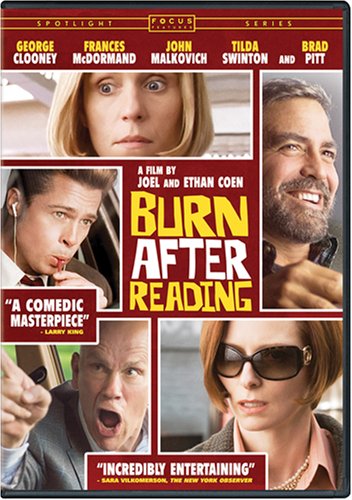
For today’s entry in the Days of Paranoia, let’s take a look at Joel and Ethan Coen’s wonderfully satiric look at espionage, greed, lust, and stupidity, 2008’s Burn After Reading.

Like most Coen Brothers films, Burn After Reading tells the dark story of a group of obsessives who all think that they’re far more clever than they actually are.  Osborne Cox (John Malkovich) is a CIA analyst who, because of his alcoholism and generally sour personality, is demoted.  Cox angrily quits his job and then starts working on his memoirs.  Meanwhile, Cox’s wife Katie (played by Tilda Swinton) is having an affair with the handsome but idiotic Mark (George Clooney).  On the advice of her divorce lawyer, Katie secretly downloads copies of all of Osborne’s records, including his memoirs.  Katie gives the disc to her lawyer’s secretary.  The secretary then proceeds to accidentally leave the disc at Hardbodies Gym.

This is where things, in typical Coen Brothers fashion, start to get complicated.  Two trainers at the gym — Linda (Frances McDormand) and her fitness obsessed friend Chad (a hilarious Brad Pitt) — find the disc and mistake Osborne’s very mundane files for national security secrets.  Linda, who is obsessed with raising enough money to get a boob job, convinces Chad that they should blackmail Osborne and demand that he pay them before they return his disc.  Osborne, who has no idea that Katie copied his records, refuses to pay so Linda takes the disc to the Russians.  This leads to a series of misunderstandings that eventually lead to several murders, all of which have to be covered up by the CIA, despite the fact that both the director of the CIA and his assistant agree that there’s no way to understand how any of this happened and that, in the end, neither one of them has learned anything from the experience.

Perhaps because it was released between the Oscar-winning No Country For Old Men and the Oscar-nominated A Serious Man, many critics tend to dismiss Burn After Reading as just being an enjoyable lark and nothing more.  While it’s true that there’s not a lot going on underneath the surface of Burn After Reading, the surface itself is so fun, vivid, and vibrant that it seems rather petty to complain.  Burn After Reading finds the Coen Brothers at their most playful and snarky.

The Coen Brothers have made films in several different genres and styles but all of their work has one thing in common.  The Coens tell stories about obsessive characters who aren’t anywhere close to being as smart as they think they are.  When critics complain that the Coens tend to view their characters with a rather condescending attitude, they’re usually talking about films like Burn After Reading.  Fortunately, in the case of Burn After Reading, the Coens assembled one of their strongest casts.  From the insanely focused Frances McDormand to the perpetually smiling Brad Pitt to cynical John Malkovich, everyone does such a great job that you can overlook the fact that they’re all essentially playing idiots.  Perhaps the film’s best performance comes from George Clooney who, in the role of Harry, proves himself to be a very good sport by satirizing both his own reputation as a womanizer and his career as an old school movie star.  In one of the film’s best moments, Harry, gun drawn, dramatically leaps and then rolls into an empty bedroom.  Like almost all of the characters in Burn After Reading, Harry is just a big kid playing action hero and Clooney’s performance here is perfect.

As for Burn After Reading, it may not be perfect but it’s certainly a lot of fun.

51CW76jX8fL

Other entries in the 44 Days Of Paranoia:

  1. Clonus
  2. Executive Action
  3. Winter Kills
  4. Interview With The Assassin
  5. The Trial of Lee Harvey Oswald
  6. JFK
  7. Beyond The Doors
  8. Three Days of the Condor
  9. They Saved Hitler’s Brain
  10. The Intruder
  11. Police, Adjective

Film Review: Killing Them Softly (dir. by Andrew Dominik)


Killing Them Softly is perhaps the most unpleasant film of 2012.

Taking place in 2008, Killing Them Softly tells the story of how a poker game got robbed in New Orleans and how that robbery led to a lot of people getting killed.  The poker game is run by Markie (Ray Liotta), a likable and well-meaning gangster who made a big mistake in the past.  A few years  previously, Markie arranged for one of his poker games to get robbed.  Though everyone knew that Markie was guilty, nobody could prove it and Markie continued to claim his innocence even while being tortured by a legendary hitman named Dillon (Sam Shepard).  So, years later, three small-time crooks figure that if they rob another one of Markie’s games, the Mafia will automatically blame Markie and hold him responsible.

Unfortunately, one of the crooks (played by Ben Mendelsohn, who was so good in Animal Kingdom) is also a heroin addict and something of an idiot.  He talks to the wrong people and soon the Mafia knows who was actually responsible.  Since Dillon is in the hospital, his protegé Jackie (Brad Pitt) is sent down to New Orleans to take care of the situation.  As Jackie explains to the mob’s representative (played by Richard Jenkins who gives a very Richard Jenkinsy performance here), not only do the three criminals have to die but Markie has to die as well.  It’s all strictly business.

Speaking of business, this entire story plays out against the backdrop of the 2008 elections.  For some reason, all of these sleazy criminals seem to be obsessed with watching CNN.  As a result, nearly every scene features either George W. Bush or Barack Obama speaking in the background.  At one point, Jackie says, “This is America,” just in case you couldn’t figure out that the film’s plot is supposed to be allegorical.

Killing Them Softly is an odd film, a well-made film that never quite convinces us that its story needs to be told.  Brad Pitt is miscast as Jackie and James Gandolfini has a truly annoying cameo as an alcoholic killer but otherwise, the film is perfectly cast.  Mendelsohn and Scoot McNairy are believable as two of the stupidest criminals to ever appear on-screen and Ray Liotta is likable and sympathetic as the tragic Markie.  Director Andrew Dominik makes good use of the New Orleans locations and the film has a few genuinely suspenseful moments.  That said, the film’s graphic and brutal violence quickly goes from being shocking to just being tedious.

If for no other reason, I did appreciate the fact that Killing Them Softly was brave enough to lump Barack Obama in with every other politician whose words are used to punctuate the film’s action.  Here in America, filmmakers tend to be very hypocritical when it comes to criticizing the government, going to almost ridiculous lengths to excuse Obama for following the same policies that they previously spent eight years attacking George W. Bush for instituting.  Instead of attempting to promote any partisan position, Killing Them Softly argues that the business of America will remains the same regardless of who is in charge.  Normally, that would seem to be a pretty obvious point but, in today’s cult-like political climate, it’s practically revolutionary.

Critics have been mixed on Killing Them Softly but, judging on both the film’s anemic box office and a lot of the comments that have been left online, audiences seem to absolutely loathe this film.  This isn’t particularly surprising because Killing Them Softly, with its constant emphasis on everything that’s ugly and dirty about life, seems to be a film that was specifically made to annoy audiences.  Even the film’s strengths ultimately serve to alienate the viewer.  I suspect that was Andrew Dominik’s ultimate goal and, on that count, he definitely succeeded.

Ultimately, I guess that’s why I ended up developing a strange sort of respect for Killing Them Softly, even though I found it impossible to enjoy the film itself and I would rather visit my gynecologist than ever have to sit through it again.  This is a film that stays true to itself, even at the risk of becoming unwatchable as a result.

**Spoilers** Review of The Cabin In The Woods


Originally I wasn’t going watch this because of pathological hatred of Zucking Fombies. Fortunately, Arleigh told me that it was more than those wretched Zucking Fombies. The Cabin In The Woods is sheer brilliance because Whedon and Goddard turned the tired and cliched horror formula on its ear. Their collaboration freed us from the oppression of torture porn and loathsome gore for the sake of gory credo.

**Spoilers begin here**

In this film world, every horror film nightmare creature from the shambling zombies to snarling werewolf to a Cenobite analogue to Lovecraftian elder gods exist.  As a fan of Whedon’s Buffy The Vampire Slayer series, I couldn’t help but see similarities between the TCITW’s world and the world of the Slayer.  So the description, “It’s like an episode of Buffy with gore, cussing, and naughty bits, but no Buffy Summers” is pretty accurate. The presence of Amy Acker (Winifred “Fred” Burkle) from Angel fame cemented this opinion. The film cast could easily be stand-ins for the Scoobies with Marty playing Xander Harris, David as Riley, Dana as Willow, etc. The mysterious shadow organization could easily be division of Wolfram & Hart and the slumbering elder gods could replace the Senior Partners as well as Buffy’s Big Bad. I found it interesting and clever that the token victims served as the required sacrifice to appease slumbering boogie men because it explained why the fool, the virgin, the scholar, the jock, and the party girl are always the victims of horror movies. I also loved that the grumpy old man that cryptically warns the kids also served a purpose.

The film is also reminiscent of Mike Mignola’s Hellboy universe in the sense that the evil and violence had a higher purpose.  The nightmare creatures could easily be Ogrdu Hem carrying out the will of their parents, the Ogdru Jahad. The secret organization had the dual role of the BPRD and Rasputin.  They were like the BPRD in the sense they prevented the end of the world and captured/contained/employed the things that go bump in the night. They were like Rasputin because they reverenced the elder beings and paid them annual tribute.

Found the following things interesting:

  1. The plot to keep the elder gods happy was a global one (other nations like Japan were involved).
  2. The wide range of monsters that the organization captured (made me wonder how they were able to capture the most lethal ones like the Cenobite wannabe, werewolf, soul stealing ghost, etc).
  3. The causal office vibe the organization had despite their morbid mission.
  4. The elder gods represented the audience/horror audience (an interesting point brought to my attention by a friend)

Quickie Review: The Cabin in The Woods (dir. by Drew Goddard)


“If you hear a strange sound outside… have sex.”

If there was one thing the meltdown and subsequent bankruptcy of MGM ended doing it was shelving the Drew Goddard and Joss Whedon horror film The Cabin in The Woods for almost three years. The film was directed by Goddard who also helped co-write the screenplay with Joss Whedon and what we get is one of the smartest and most innovative horror films to come in over a decade. For fans of the tv shows Buffy: The Vampire Slayer and Angel (not to mention Dollhouse) this horror film just reinforces the notion that Joss Whedon knows how to write smart dialogue and premises without ever getting too self-referential and deconstructionist (I’m looking at you Kevin Williamson) or too smart-talky (a stank-eye at you Aaron Sorkin).

There’s really no way to properly review The Cabin in The Woods without spoiling the films many different surprises and twists and turns. I will say that the film does a peculiar opening that focuses not on the five college students headed to the cabin in the woods of the film’s title, but on two men (Richard  Jenkins and Bradley Whitford) in your typical office attire doing the walk and talk about family home life and the like. We see that they’re technicians in an unnamed industrial facility that wouldn’t look out of place in one of the many governmental facilities we often see in film. The film will return to these two men and their facilities and other people working within often in addition to telling the story of the five college students and the growing danger they find themselves in as night falls in the woods.

To say anymore would definitely be a spoiler.

I will continue on and say that for a horror film written to self-reference other horror film conventions and tropes what Goddard and Whedon have ultimately done was celebrate the genre itself and how much of an impact it has had in society. Unlike films like the Scream franchise, The Cabin in the Woods doesn’t knowingly wink at the audience about how cool it is for pointing out all the horror cliches and stereotypes we’ve come to expect in the horror genre. Instead the film actually treats its audience to be smart enough to see the homage to past horror films both good and bad without ever drawing attention to the fact that they’re pointed out.

Another thing which makes this film so fun to watch is how much every character in the film comes across as fully realized individuals. Even the college students who we first think of as your typical horror film stereotypes (the jock, the slut, the virgin, the brain and the stoner) end up being more than we’re led to believe. All of this actually occurs right in the beginning and this helps the audience join in on the fun that both Goddard and Whedon are having in turning the horror genre on its head right up to it’s surprising conclusion. It helps that the cast did quite a great job realizing their characters. As the film progresses we even begin to get a sense that who the villains in the film may or may not be who we think.

There’s a sense of fun and the darkly comic to the film as well. Every one-liner and comedic beats we get throughout the film doesn’t have a sense of the cynical to them. It comes across through dialogue and actions by both groups in the film in such a natural way that they never make those saying the lines break the fourth wall. Most films that try to deconstruct genre films tend to get too cutesy with the breaking the fourth wall gimmick that the audience can’t help but be pulled out of the suspension of disbelief they’ve put themselves in. This has a way of making such genre films less fun and celebratory and more of making fun of the people who enjoy such things.

The Cabin in The Woods manages that rare accomplishment of being a horror film that retains not just the horrific aspect of the genre but also add such a darkly comic sense to the whole proceeding with such a deft touch from Goddard and Whedon that we don’t know whether to call it straight horror or a horror-comedy. Some might even see the film as an entertaining treatise on the nature of the horror film genre of the last quarter-century. Both Goddard and Whedon have already called this film as their answer to the current trend of the “torture porn” that was popularized with the help of such recent horror franchises like Hostel, Saw and those made by Rob Zombie. Where those films celebrated the concept of inflicting pain not just on the characters on the screen but those who watch them with The Cabin in The Woods we finally get a reminder why we love the horror films of the past. It’s through the sense of that adrenaline rush that a tension build-up leading to a horror money shot but without becoming overly gratuitious and reveling in the pain of the horror.

Some have said that The Cabin in The Woods is the best horror film of 2012. I won’t even argue with that statement since it is true. I will put it out there that Cabin in The Woods might just be one of the best films of 2012. The film is just that fun, smart and, overall, just plain awesome.

[I usually attach a trailer to reviews but this time doing it could spoil some of the surprises in the film]

Review: Let Me In (dir. by Matt Reeves)


In 2008 a little film from Sweden swept through the film festivals and earned a rightful and well-deserved place in many film critics and film circles “best of 2008” and “top ten” lists. This was Swedish filmmaker’s film adaptation of the John Ajvide Lindqvist vampire novel, Let The Right One In. It was a vampire film that appealed not just to horror genre fans hungry for a vampire film that was the polar opposite of the current “Twilight” vampire craze. Horror fans wanted something that wasn’t watered down and emasculated to better appeal to the tween girl set. So, Alfredson’s vampire film was embraced by these horror fans and when news came that the rights to the novel was licensed by British-studio Hammer Film and an American-remake was set for production the reaction was decisively negative.

Fans of the original Swedish film were quite protective of the film and saw any plans to remake it for the North American audience as a cynical cash-grab. Their argument was that the original film was such a great one that there should be no need to remake it. Why fix something that wasn’t broken was another point made. It didn’t help the side of those supporting the remake that Matt Reeves was chosen to direct the remake. Reeves was better known as J. J. Abrams friend (some would say Reeves owes his success to Abrams and that he was coattailing the successful producer-director) and the director of the POV monster film, Cloverfield.

As strident fans of the original continued to vent and complain about the remake already failing (despite not an inch of film being shot) the producers were gradually filling the roles in the remake with some very interesting names. Fresh off her break-out performance in Kick-Ass was Chloe Grace Moretz taking on the role of Abby (the vampire child in the original was named Eli) with Kodi-Smit McPhee (The Road) taking on the role of the young boy Owen who befriends her. One name after the other filled out the cast with some very good veteran actors from Elias Koteas to Richard Jenkins (taking on the role of Abby’s Renfield).

Matt Reeeves’ version of Lindqvist novel from Alfredson comes from using the novel itself as the base for the screenplay Reeves himself wrote for the remake. While Let Me In shares many similarities in characters and situations from the original Swedish film, Reeves film does use more of the themes and details from the novel than Alfredson did for his adaptation. Let Me In definitely has enough about it which will distinguish itself from its Swedish counterpart and stand on its own.

The film switches locales from a suburb of in Sweden to a snowy Los Alamos, New Mexico (yes, it does snow in New Mexico). We learn quickly that Owen has become quite the loner due to the constant bullying by classmates. He spends time alone in the plaza area of the apartment complex he lives in with his mother (played by Carla Buono who we never fully see). He fantasizes of getting back at those who have and still bullying him even to the point that he buys a small pocketknife and practices his retribution on one of the trees in the plaza. It’s during one of his nighttime practices with the pocketknife that he first encounters Abby. There’s a certain wariness during their encounter with Abby proclaiming that Owen will not become a friend. But in time the two do become friends with Abby becoming quite protective of Owen once learning about the bullying he has to endure on a daily basis.

The change in Abby’s relationship with Owen doesn’t sit well with Abby’s Renfield. He asks Abby never to see Owen again as he goes out to procure Abby more fresh blood (a previous attempt goes awry forcing Abby to go out into the night to hunt). It’s in the scenes between Abby and Jenkins character that we see more of the duo’s relationship mirroring the novel’s. The novel explores the theme of pedophilia and while Reeves adaptation wasn’t quite obvious about it there are clues and small character interactions which hint at this pedophilic relationship which the Swedish original never really touched upon.

It’s in these small character interactions that Reeves’ film begins to differentiate itself from Alfredson’s version. The narrative between the two films still remain the same, but Reeves’ version explores the darker themes in the novel source while Alfredson concentrates more on the growing relationship between the two primary characters. These differences could be seen in how Reeves films Abby’s attacks while hunting her prey to be more animalistic (though at times the CGI seems too apparent when Abby attacks) and Abby’s subtle manipulation of Owen. I say manipulation because Abby seems very intent on trying to befriend and put Owen at ease despite the earlier comment that they will never be friends. Not to mention her Renfield admitting to Abby that he has gotten tired of what he has done to keep Abby safe and that maybe he wants to get caught to just end it all.

The film moves along quite leisurely but with a sense of growing dread not just between Owen and his bullies, but between Abby, her Renfield and those suspecting the duo. Owen gets caught in the lives of these two newcomers and soon gets confronted by Abby’s true nature and his own reaction to this. It’s a reaction that at first shows Owen fearing Abby and wanting to escape the growing bond between the two of them, but seeing how Abby’s been nothing but helpful to Owen he chooses to remain at her side. Abby rewards Owen’s protective nature by saving Owen from a near-deadly encounter with the school bullies at the school swimming pool.

This is the one sequence in Reeves’ film which many fans scrutinized to no end. The original film shot the scene with an almost arthouse eye despite the obvious violence involved. It was a scene where Alfredson filmed it as “less is more” and let the audience’s imagination run wild. Reeves’ does the same but adds his own stylistic touches to the sequence. not too much to make it so different from Alfredson’s version, but enough that it’s not a shot-for-shot copy. Again Reeves’ chose to show Abby’s violent predator aspect in this scene, but still keeps the focus of the scene on Owen as he struggles underwater. It’s only once he is out that we see — just as he does — the aftermath of Abby’s promise to protect Owen.

The question remains whether this American-remake stands up to the original. In terms of storytelling it more than holds it own from the original film and at times actually surpasses Alfredson’s version. This Reeves version journeys through the darkside more than the original film. It definitely strips away much of the arthouse sensibilities of Alfredson’s film which made it such a beauty to watch even if at times the narrative became more than too slow to keep one’s attention. Reeves’ adaptation doesn’t ramp up the pacing of the film, but keeps it moving forward even if at a gradual pace. When violence does occur in the remake it happens quickly and with a sense of brutality that the original film fails to deliver. The remake doesn’t linger on the gore and violence, but does show enough of it to remind everyone in the audience that this is a horror film first and foremost.

If there was one quibble to be made about this remake its that Reeves relies too much on CGI to show Abby at her most dangerous. Each attack made by Abby was shot at a wide-angle and we see every move but with each move done using CGI which gives it too much of an artificial look to it. It’s a testament to Moretz’ performance as she switches from a friendly Abby when interacting with Owen during their time together at night to one of a predator older than anyone in the film doing what was necessary to attain the blood needed to survive. Reeves could definitely have used less CGI and went for a more natural approach using sudden edits to show the ferocious nature of Abby’s attacks.

The film’s cast does a great job with the roles given to them. While it was Moretz’s and McPhee’s performances as Abby and Owen that keeps the audience’s attention and keeps it from wavering it’s the supporting cast around them which provides the glue. Koteas as the detective who begins to suspect Abby as having to do more with the attacks than previously mentioned was very good, but in the end it was Richard Jenkins in the Renfield role who would steal every scene he’s in. His character’s fatalistic acceptance of his role when it came to Abby was palpable. We watch him do horrible things to people and to himself, but we also get a sense that he couldn’t stop on his own if he wanted to. He has been doing the role of blood procurer for Abby for so long that he doesn’t know what else to do. I will say that Jenkin’s with the garbage bag mask when out hunting for victims will be the images that will stick to people’s minds long after they’ve left the theater. Some will even unconsciously check the back seat of their cars at night before getting in.

In the end, this remake of Let The Right One In doesn’t feel, look and sound like the cash-grab that cynical fans of the original have proclaimed it to be. Matt Reeves does a great job in adapting more of the novel in his version and using some of the darker themes in that source to allow his film to stand on its own when compared next to Alfredson’s version. The performances by everyone involved was wonderful and keeps the story’s slow pacing from losing the audience. While this remake doesn’t have the arthouse quality of the original film it does have a certain grittiness to its look which lends quite well in pointing out how brutal the narrative really was not just in physical violence but in how one of the two leads manipulates the situation to benefit it’s survival even if there was some genuine affection between Abby and Owen. In the end, Abby gets everything and continues to exist for another boy’s lifetime.

Fans so vocal of their negative attitudes towards this film will not have their minds changed, but those keeping an open-mind will be rewarded with one of the better horror films of the year. If the original Swedish adaptation never existed I’m quite sure that all the accolades heaped on Tomas Alfredson’s film would be given to Matt Reeves instead. A remake should never be discounted because its one of an original that’s already lauded for its quality. There’s been bad remakes but thankfully Let Me In is not one of them.

Let Me In Red Band Trailer and SDCC Exclusive Posters


In 2008 a Swedish film called Let the Right One In stormed through the film festival circuit and became one of the most critically-acclaimed film of that year. The film was an adaptation the a novel by the same name by Swedish author John Ajvide Lindqvist. It took the vampire genre which has started to gain a sort of resurgence in the past 5 years due to the teen-pop vampire-romance franchise Twilight.

Tomas Alfredson’s film was definitely the anti-Twilight of this resurgence. It was a beautifully-shot and framed film with a dark, poignant story to match the visuals. While arthouse film fans and horror fans with discerning taste praised the film the rest of the general public either ignored it or never even heard about it. This is always the case when it comes to foreign films which tries to make a bridgehead onto the U.S. film market.

The film has since been discovered by the general public through home video sales and through Netflix, but not before an American film studio has bought the rights to produce an American remake for the American market. It fell onto the shoulders of Cloverfield director Matt Reeves to film this remake and try to dampen any advance outrage by the original film’s fans. While there will remain a very vocal group denouncing this “Americanized” remake of Let the Right One In (renamed Let Me In for the remake) I think casting decisions and certain stylistic choices by Reeves has me hoping that this remake will not fail but actually stand on it’s own while still letting the original keep it’s status as one of the best horror films of the past decade.

Above is the newly released Red Band Trailer for the film and below are two posters for the remake which were unveiled over at San Diego Comic-Con 2010. Both posters definitely take on a very stylized look. The second one looks too similar to Park Chan-wook’s poster for Thirst. The first one I like better as it combines the film’s innocence with the darker underlying story really well.