18 Days of Paranoia #8: The French Connection II (dir by John Frankenheimer)


The 1975 film, The French Connection II, opens up three years after the downbeat conclusion of the first French Connection.

Having escaped from the police at the end of the first film, the wealthy and suave Alain Charnier (Fernando Rey) is still smuggling drugs and living his best life.  He goes to parties with wealthy people.  He has lunch dates with important businessman.  Even though the French police are keeping an eye on him, Charnier seems to be virtually untouchable and he knows it.  If Charnier seemed impossibly smug in the first French Connection, he’s even worse in the second one.

Charnier may be enjoying himself in Marseille but what he doesn’t know is that there’s an American tourist in town.  He’s a very loud American, one who insists on trying to speak to everyone in English and is shocked to discover that most of the French natives don’t have the slightest clue as to what he’s talking about.  He’s shocked when he goes into a bar and fails to impress two young French women.  He also doesn’t seem to understand that even French people who speak English are not going to appreciate being called a “frogs.”  He wanders around town in loud shirts and with a fedora sitting rakishly on his balding head.

Yep, it’s Popeye Doyle (Gene Hackman).  The anti-hero from the first French Connection is still on the case and he’s now come all the way to France to help track down Charnier.  The last time we saw Doyle, he had just accidentally killed a cop and was running through a dark warehouse, firing his gun.  In fact, the first film ended with the suggestion that Doyle was such a loose cannon that his career as a narcotics detective was probably over.  Instead, in the sequel, we learn that Popeye is still working in narcotics and he’s still just as much of a loose cannon as he ever was.  If you thought people in New York found Popeye to be obnoxious, just you wait to see how the French react to him!

What Popeye doesn’t know is that his superiors in New York have only sent him to Marsielle so that he can be a target.  They know that Popeye will never be able to blend in.  Charnier will spot him and, hopefully, Charnier will panic and make some sort of mistake that will finally allow the police to capture him.  French detective Henri (Bernard Fresson) goes along with the plan, despite his own moral objections.  Henri can’t stand Popeye but he doesn’t want to see him killed either.

It doesn’t take long for Charnier to notice Popeye.  After Popeye is captured by Charnier’s man, they inject him with heroin until soon, Popeye is an addict.  Before Popeye can finally get his shot at Charnier, he’s going to have to overcome his own drug addiction….

The French Connection II starts out well, with Gene Hackman wandering around Marsielle and acting like a stereotypical ugly American.  Director John Frankenheimer does a good job of keeping the action moving at a steady pace during the first half of the film and there’s a lot of great scenes involving Popeye being followed around town by not just the police but also Charnier’s men.  The first half of the film does a great job of establishing an atmosphere of paranoia, which is not surprising when you consider that Frankenheimer’s other credits included The Manchurian Candidate, Seven Days In May, and Seconds.

Unfortunately, once Popeye is captured and gets hooked on heroin, the action not only comes to a halt but the normally reliable Gene Hackman starts to act up a storm.  When Popeye, while going through withdrawal, starts talking about how he used to play baseball and how he once has a try-out with the New York Yankees, the scene seems to go on forever and Hackman’s performance becomes so histrionic that you basically just end up feeling like you’re watching someone auditioning his heart out for a spot in the Actor’s Studio.  Gene Hackman was one of the world’s great actors and Popeye Doyle was a great role but, in The French Connection II, we’re reminded that even a great actor occasionally needs to have his performance reined in.

Eventually, after Hackman’s had his big Oscar moment, the action kicks back in and the film kind of regains its momentum.  There’s a big action scene towards the end of the film.  (Ironically, it’s the type of big, good guys vs. bad guys shoot out that the first film deliberately avoided.)  The film ends with a literal bang that’s abrupt yet undeniably effective.

As far as sequels go, The French Connection II is good.  It’s not great and, not surprisingly, it doesn’t come anywhere close to matching the power of the first film.  But it still has enough effective scenes to make it worth watching.  You just might want to hit fast forward whenever Popeye starts talking about baseball…..

Other Entries In The 18 Days Of Paranoia:
  1. The Flight That Disappeared
  2. The Humanity Bureau
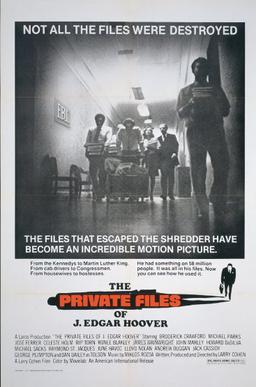
  3. The Private Files of J. Edgar Hoover
  4. The Falcon and the Snowman
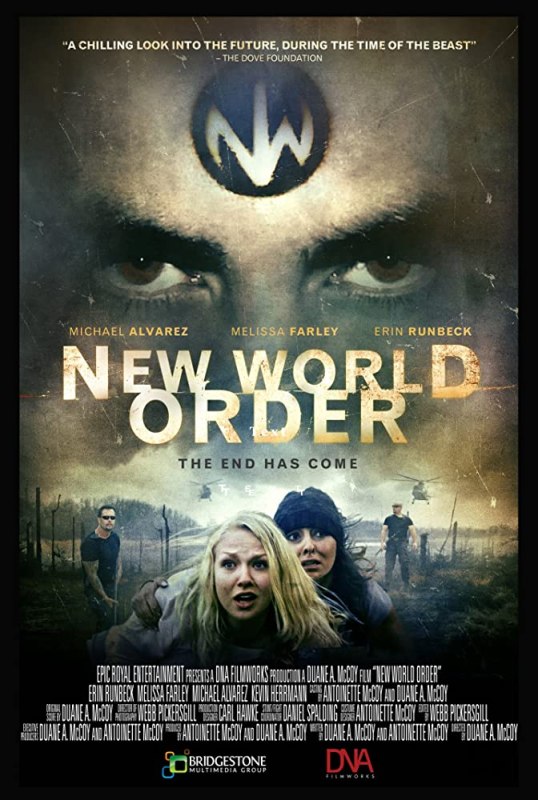
  5. New World Order
  6. Scandal Sheet
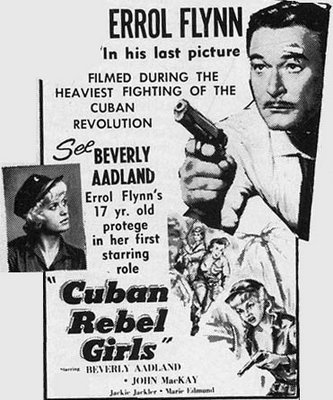
  7. Cuban Rebel Girls

18 Days of Paranoia #7: Cuban Rebel Girls (dir by Barry Mahon)


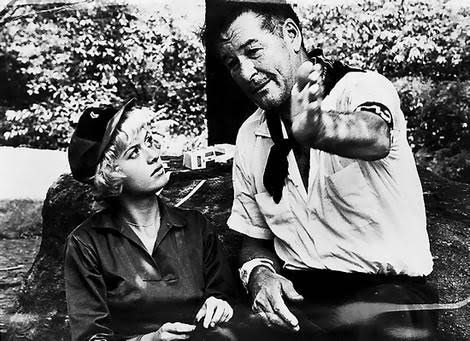
In the 1959 film, Cuban Rebel Girls, Errol Flynn (playing himself) flies down to Cuba.  The time is shortly before the Cuban Revolution.  (From a cinematic point of view, Flynn is in Havana at the same time as Hyman Roth and Michael and Fredo Corleone in The Godfather, Part II.)  Flynn has been hired by the Hearst newspaper syndicate to go down to Cuba and do a report on Fidel Castro.  Flynn narrates the film and tells us that he was very sympathetic to Castro and his cause….

OH MY GOD, ERROL FLYNN WAS A COMMUNIST!

Well, maybe not.  If you actually go back and read contemporary reports about the Cuban Revolution, you’ll see that a lot of Americans had a romanticized view of Fidel Castro and his revolutionaries.  Everyone seemed to agree that the president of Cuba, Batista, was a dictator and he needed to be forced out of power.  Castro, himself, didn’t fully and openly declare himself to be a hardline communist until after he had already taken over Cuba.  In Cuban Rebel Girls, someone mentions that Fidel was “always looking out for the little guy” and that’s the attitude that this film takes.  At the time the film was made, it can legitimately be said that Flynn had no way of knowing that Fidel Castro would eventually reveal himself to be despotic dictator.  (For more infuriating, to me, are the people who have continued to defend the Castros up until this day.)

Fidel Castro, himself, doesn’t actually appear until the very end of Cuban Rebel Girls and, even then, it’s just newsreel footage of him riding a tank through Havana.  (Che Guevara does not show up at all.  He may have been busy shopping for berets, I don’t know.)  That said, the film was actually shot in Cuba and it does feature footage of Errol Flynn meeting actual Cuban rebels.  This was also Errol Flynn’s last film and, for the most part, he looks terrible.  Though the film’s poster may feature a suave-looking Errol Flynn holding a gun, the film actually features a noticeably overweight and often out-of-breath Errol Flynn who really doesn’t do much other than sit around and listen to other people talk.

(That said, Flynn’s voice over narration does have the occasional moment of charm.  When he meets one of the rebel girls of the title and he kisses her hand, he jokes that he was relieved to see that he hadn’t totally lost “the Flynn touch.”  Flynn delivers the line with just enough self-depreciation that it’s charming rather than creepy.)

The majority of the film doesn’t actually involve Flynn.  Instead, it involves two girls from New York — Beverly (Beverly Aadland) and Jacqueline Dominguez (Jackie Jackler) — who want to help out the revolution.  Jacqueline is from Cuba, went to high school with Fidel, and her brother is currently a part of the revolution.  Beverly, meanwhile, is convinced that she’ll find the man that she loves in jungles of Cuba.  Beverly explains that she doesn’t know much about Castro or Batista.  That’s for others to worry about!  Jacqueline assures her that, even in high school, “the big jerk” was always looking out for people.

Anyway, Beverly and Jacqueline raise some money from their friends and then decide to smuggle it into Cuba so that the guerrillas can use it to buy weapons.  What follows is a lot of intrigue and sneaking around as Beverly and Jackie try to avoid Batista’s secret police and help out the guerrillas.  And, of course, when I say “a lot,” what I actually mean is “next to none.”  For two people who don’t really come across as being particularly smart, Jacqueline and Beverly certainly don’t have much trouble sneaking around Cuba.

(That said, there are enough references to Batista’s secret police to justify reviewing the film as a part of the 18 Days of Paranoia.  Take my word for it.  Or watch the movie on YouTube, where it’s available under the name Assault of the Rebel Girls.)

Anyway, this is a weird movie, along with also being a really cheap movie.  Beverly Aadland was apparently Errol Flynn’s protegee.  She also wasn’t a very good actress.  (Jackie Jackler does a little bit better in the acting department, though not by much.)  That said, as a film partially shot in Cuba during the days leading up to the revolution, this is an interesting historical document.  And, for some people, just the fact that it’s a pro-Castro film from Errol Flynn (!) will be enough to justify sitting through it.

(Seriously, a celebrity defending a communist?  That’s like a major news outlet or a bunch of basketball players going out of their way to defend the Chinese government.  It just doesn’t make sense….)

Other Entries In The 18 Days Of Paranoia:
  1. The Flight That Disappeared
  2. The Humanity Bureau
  3. The Private Files of J. Edgar Hoover
  4. The Falcon and the Snowman
  5. New World Order
  6. Scandal Sheet

What Lisa Watched Last Night #209: Revenge For Daddy (dir by Tom Shell)


Last night, I watched the latest Lifetime premiere, Revenge for Daddy!

Why Was I Watching It?

Well, first off, you may not have heard but the entire world is kind of shut down right now so basically, watching TV is about as wild as my Thursday night is going to get….

Then again, I would have watched it even if we weren’t on lockdown.  It’s a new Lifetime movie and you know that I love those!  I especially love Lifetime movies that have words like “Fatal,” “Wrong,” or “Revenge” in the title.  Those are usually the best.

What Was It About?

It’s been a tough year for Lisa (Sarah Butler).  Her father died under mysterious circumstances.  Her boyfriend, Bobby (Charlie Gorilla), got drunk and slept with one her co-workers, Bethany (Eva Hamilton), leaving Lisa suddenly single.  Her mother (Joely Fisher) keeps pressuring her to start dating again.  Finally, just to keep her mom happy, Lisa photoshops herself into a picture with a handsome man on a dating site.  All she wants to do is send it to her mom so her mom will get off her back.  Instead, it leads to the man in the picture, Michael (Clayton James), tracking her down.  Soon, Lisa and Michael are dating for real!

But can Michael be trusted?  It turns out that Michael has a somewhat shady past which includes at least one mysterious death.  Michael says he’s innocent but when one of Lisa’s co-workers shows up dead (and, even worse, when it appears that someone is trying to frame Lisa for the murder), Lisa starts to have her doubts….

What Worked?

This one was fun.  I mean, let’s be honest.  When it comes to most Lifetime melodramas, you’re not exactly looking for a realistic examination of all the world’s troubles.  You’re looking for twists and turns and melodrama, preferably taking place in a nice house where everyone is either handsome or pretty and everyone wears nice clothes.  Revenge For Daddy delivered all of that with the style.

The cast was uniformly good and the film actually did a pretty good job of keeping you guessing as to whether or not Michael was who he said he was.  The film even managed to work in a few moments of intentional humor in the middle of all the drama and the mystery.  All in all, this was one an enjoyable and entertaining Lifetime film.

I really liked the office where Lisa and her friends worked.  It was nicely designed and, even more importantly, it didn’t seem like anyone really had to do much work.  It seems like it would be a fun place from which to collect a paycheck.

What Didn’t Work?

It all worked!  To repeat, this was an enjoyable and entertaining Lifetime film.

“Oh my God!  Just like me!” Moments

The main character was named Lisa!  You don’t get much more like me than that.

Lessons Learned

There were definitely lessons learned but I can’t really share them without spoiling the film’s ending.  So, you’ll have to watch and learn for yourself!

18 Days of Paranoia #6: Scandal Sheet (dir by David Lowell Rich)


“So be it,” journalist Helen Grant dramatically announces as she lifts up her camera and starts snapping pictures of a body in a casket, “I’m …. a ….. WHORE!”

That is just one of the many wonderfully, over-the-top moments that can be found in the 1985 film, Scandal Sheet.  Directed by David Lowell Rich, Scandal Sheet stars Burt Lancaster as Harold Fallen.  If this movie were being made today, Fallen would be in charge of a TMZ-style website.  Since this movie was made in the 80s, Fallen is the publisher and editor of a sleazy tabloid magazine.  He specializes in stories about aliens and ghosts.  When someone brings him in a story about the ghost of Grace Kelly haunting the beaches of Malibu, he announces, “Front page!”  When someone else tells him about a woman who wants to marry a man from outer space but who can’t find anyone to perform the ceremony, Fallen arranges to get the woman a lawyer.

When Fallen isn’t tracking down ghosts and arranging for interplanetary marriages, he’s trying to destroy celebrities.  When the film begins, he’s obsessed with taking down Ben Rowan (Robert Urich).  We’re told that Ben Rowan is one of the world’s top movie star.  (It’s important that we’re told this because there’s nothing about Urich’s bland performance that would lead us to suspect that to be the case.)  Ben’s career is in trouble because he’s got a drinking problem.  He just got out of rehab but no insurance company is willing to insure him.  His wife, Meg North (Lauren Hutton), is demanding that Ben be cast in her latest movie.  Everyone in Hollywood is like, “No way.”

It has the potential to be a big story and Fallen wants to be the first to break it.  But to do so, he’s going to need an inside source.  That’s where Helen Grant (Pamela Reed) comes in.  Helen was Meg’s college roommate and she’s still friends with both her and Ben.  Fallen decides to hire Helen to work for his magazine.  The only problem is that Helen is a serious journalist.  She writes stories about homeless children.  She has no desire to work for a tabloid.

“I’ll pay you more than you’re making right now,” Fallen tells her.

Helen’s not interested.

“I’ll pay you $80,000 a year.”

Helen’s interested.

Against her better judgment, Helen accepts Fallen’s offer.  At first, things seem okay.  She’s a bit annoyed with having to work with a sleazy photographer named Simon (Peter Jurasik, giving a wonderfully reptilian performance) but she’s got a nice house and her son is going to a good school and she gets to use the company credit card and she even gets a housekeeper out of the deal!

Then Fallen tells her that her next assignment is to write about Meg and Ben.  Helen refuses but she soon discovers that Howard Fallen is not an easy person to refuse.  Not when he’s got people watching your every move, along with paying your housekeeper to spy on you.  When her former boss (Max Wright) angrily tells her that no reputable magazine will ever work with her again, Helen is left with only two options: Become a whore or starve.

Scandal Sheet is a lot of fun.  Just the fact that the main bad guy is named Howard Fallen should tell you almost everything you need to know about this movie.  He’s Fallen — as in a fallen angel.  At the end of the movie, he even wears all black with a white tie, which we all know is the typical modern-day costume of demons pretending to be human.  (At one point, Fallen even says that he’s going to make someone an offer that they can’t refuse, giving us all a chance to see what The Godfather would have been like if Burt Lancaster had played Don Vito.)  Lancaster gives a charismatic performance and he’s so effortlessly manipulative that it’s hard not to enjoy watching him, even if he is destroying innocent people.  The rest of the cast is okay.  As I said earlier, Robert Urich was a bit too bland to be a convincing film star but Pamela Reed does a good job of capturing Helen’s struggle to decide whether to side with good or evil and Lauren Hutton tears into the scenery with just the type of ferocity that a film like this requires.  Late in the film, when she spits in Helen’s face, it’s the most dramatic spitting that you’ll probably ever see.

Scandal Sheet is an enjoyably over-the-top, anti-press melodrama.  Watch it with someone who you would be willing to sell out for $80,000 a year.

Other Entries In The 18 Days Of Paranoia:

  1. The Flight That Disappeared
  2. The Humanity Bureau
  3. The Private Files of J. Edgar Hoover
  4. The Falcon and the Snowman
  5. New World Order

18 Days of Paranoia #5: New World Order: The End Has Come (dir by Duane McCoy)


Welcome, everyone, to the end of the world (again).  Today, the world ends in the 2013 film, New World Order: The End Has Come!

Demi (Melissa Farley) sits in a park, reading the Bible.  She’s reading the Book of Revelation or, as she calls it, “the scary one.”  As she gets in her car, she calls her friend, Christen (Erin Runbeck) and assures her not to worry.  “I don’t think we’re there yet.”  Then she puts the car in reverse and promptly runs over Jason (Daniel Spaulding).

Fear not!  Jason’s not injured and his career as an exotic dancer (I’m not kidding, it’s a plot point) is not damaged in the least.  In fact, Jason is so enchanted by Demi and her lack of driving skills that soon, they’re a couple!  And, fortunately, Jason has a single friend named Cedric (Will Roberts) so that means that Cirsten doesn’t have to be a third wheel whenever everyone goes out for the night.

Cristen and Demi may be good friends but we quickly discover that there are differences between the two of them.  Cristen doesn’t drink.  Demi gladly accepts a beer when Jason offers it.  Cristen likes to stay home and look after her younger brother.  Demi is all, “So, we’re going to that party, right?”  One thing that both of them do have in common is that, on Sunday morning, they giggle in church and check their messages instead of listening to the preacher.  I’m sure that won’t come back to haunt them….

Flash-forward by a few years or so and — oh no!  The world has totally changed!  Iran briefly conquered Europe and there was a huge war but, fortunately, a man named Aldo DeLuca, not only brokered peace but also come back to life after being shot in the head.  Some people think that Aldo didn’t really come back to life but instead, that his body was possessed by Satan.  Those people are threats to the New World Order and you can tell who they are because they’re the only people who refuse to get NWO tattooed on either their forehead or their hand….

“Wait a minute!” Demi says, as she thinks about everything that’s happened over the past year, “I’ve read this somewhere!”

That’s right, Demi.  You should have paid more attention to the Book of Revelations.  But you didn’t and now, everyone’s getting the mark except for you, Cristen, and a few others.  And, in order to eliminate people who refuse to get themark, the black-clad soldiers of the New World Order are now gunning people down in the streets while the brainwashed, soulless masses cheer.

The majority of this film is told in flashback, while Demi and Cristen are sitting in a prison area.  They’ve been given one final chance to either get the mark and live or to refuse and die.  Can you guess who sacrifices their soul and who willingly gives up their life?  In order to maitainn some suspense, I will not tell you who.  These are the things that I do for you.

Watching New World Order while on lockdown because of the Coronavirus was an interesting experience.  On the one hand, the film’s low budget is obvious in every frame and the acting is particularly amateurish.  (Just check out the scene where the Supreme Chancellor is greeted by a jubilant crowd of about 20 extras.) On the other hand, any movie about a totalitarian state using a crisis to come to power and destroy individual liberty is going to feel oddly compelling if you watch it while the country is literally shut down by government order.  I actually found myself falling under the film’s spell.  Normally, I’d make fun of the cartoonish NWO tattoos but instead, I found myself thinking, “What if they do decide to mark those of us who have been tested negative for Coronavirus in a different way from those who are sick?  And what if they do say that only people with the mark can enter a grocery store or see a movie?  And what if the mark eventually becomes a way of determining not who is healthy but instead of identifying people who never question the government?  What do we do then?”  I felt kind of silly after I wondered all that but …. well, not really.  I imagine that, right now, a lot of people are probably having reactions to films like this that they wouldn’t normally have.

Anyway, as a Christian scare film, New World Order will probably be best appreciated by scared Christians.  As a portrait of a society where people have sacrificed their freedom for a false sense of security, it feels like it could be dangerously prophetic.

Other Entries In The 18 Days Of Paranoia:

  1. The Flight That Disappeared
  2. The Humanity Bureau
  3. The Private Files of J. Edgar Hoover
  4. The Falcon and the Snowman

18 Days of Paranoia #4: The Falcon and the Snowman (dir by John Schlesinger)


The 1985 film, The Falcon and the Snowman, tells the story of two friends.  They’re both wealthy.  They’re both a little bit lost, with one of them dropping out the seminary and the other becoming a drug dealer who is successful enough to have a lot of money but inept enough to still be treated like a joke by all of other dealers.

Chris Boyce (Timothy Hutton) is the son of a former FBI agent (Pat Hingle).  He has a tense relationship with his father.  It’s obvious that the two have never really been sure how to talk to each other.  While his father is sure of both himself and his country, Chris is far more sensitive and quick to question.  While his father plays golf and attends outdoor barbecues, Chris becomes an expert in the sport of falconry and spends a lot of time obsessing about the state of the the world.  While his father defends Richard Nixon during the Watergate investigation, Chris sees it as evidence that America is a sick and corrupt country.  Because his father doesn’t want Chris sitting around the house all day, he pulls some strings to get Chris a job working at the “Black Vault,” where Chris will basically have the ability to learn about all sorts of classified stuff.

Daulton Lee (Sean Penn) was Chris’s best friend in school.  Daulton’s entire life revolves around cocaine.  He both sells and uses it.  He’s managed to make a lot of money but his addiction has also left him an erratic mess.  Daulton’s father wants to kick him out of the house.  Daulton’s mother continually babies him.  Chris and Daulton may seem like an odd pair of friends but they’re both wealthy, directionless, and have a difficult time relating to their fathers.  It somehow seems inevitable that these two would end up as partners.

Chris Boyce and Daulton Lee, together …. THEY SOLVE CRIMES!

No, actually, they don’t.  Instead, they end up betraying their country.  (Boooo!  Hiss!  This guy’s a commie, traitor to our nation!)  After Chris discovers that the CIA has been interfering in the elections of America’s allies (in this case, Australia), he decides to give information to the Russians.  Since Daulton already has experience smuggling drugs over the southern border, Boyce asks Lee to contact the KGB the next time that he’s in Mexico.  Despite being a neurotic and paranoid mess, Lee manages to do just that.

Of course, as Chris soon comes to discover, betraying your country while working with a greedy drug addict is not as easy as it seems.  While Chris wants to eventually get out of the treason game, marry his girlfriend (Lori Singer), and finish up college, Daulton wants to be James Bond.  The Russians, meanwhile, soon grow tired of having to deal with Lee and start pressuring Chris to deal with them directly….

And it all goes even further downhill from there.

Based on a true story, The Falcon and the Snowman tells the story of how two seemingly very different young men managed to basically ruin their lives.  Boyce’s naive idealism and Lee’s drug-fueled greed briefly makes them a powerful duo but they both quickly discover that betraying your country isn’t as a simple as they assumed.  For one thing, once you’ve done it once, it’s impossible to go back to your normal life.  As played by Hutton and Penn, Chris and Daulton are two very interesting characters.  Boyce is full of righteous indignation and sees himself as being a hero but the film hints that he’s mostly just pissed off at his Dad for never understanding him or caring that much about falconry.  Daulton, meanwhile, is a lunatic but he seems to be aware that he’s a lunatic and that makes his oddly likable.  At times, it seems like even he can’t believe that Chris was stupid enough to depend on him.  The film provides a convincing portrait of two men who, because of several impulsive decisions, find themselves in over their heads with no possibility of escape.

The Falcon and the Snowman is an entertaining and occasionally thought-provoking time capsule of a different age.  If the film took place in 2020, Daulton would be hanging out with the Kardashians and Chris would probably be too busy working for the Warren campaign to spy for America’s enemies.  If only the two of them had been born a few decades later, all of this could have been of avoided.

Previous Entries In The 18 Days of Paranoia:

  1. The Flight That Disappeared
  2. The Humanity Bureau
  3. The Privates Files Of J. Edgar Hoover

18 Days of Paranoia #3: The Private Files of J. Edgar Hoover (dir by Larry Cohen)


The 1977 film, The Private Files of J. Edgar Hoover, opens in 1972.

J. Edgar Hoover, the much-feared and long-serving director of the FBI, has just been found dead at his home and it seems like the entire city of Washington, D.C. is scrambling.  Not only are people jockeying for Hoover’s job but they’re also wondering what might be found in his secret files.  As quickly becomes apparent, Hoover had a file on everyone.  While Presidents lauded him and the press portrayed him as hero, Hoover spent nearly 50 years building up a surveillance state.  Hoover said it was to fight criminals and subversives but mostly, it was just to hold onto his own power.  Even President Nixon is heard, in the Oval Office, ordering his men to get those files.

Hoover may have known everyone’s secrets but, the film suggests, very few people knew his.  The film is narrated by a former FBI agent named Dwight Webb (Rip Torn).  Dwight talks about how he was kicked out of the FBI because it was discovered that he not only smoked but that he was having an adulterous affair with a secretary.  “You know how Hoover was about that sex stuff,” he says, his tone suggesting that there’s more to the story than just Hoover being a bit of a puritan.

We flash back to the 1920s.  We see a young Hoover (James Wainwright) as a part of the infamous Palmer Raids, an early effort by the Justice Department to track down and deport communist subversives.  Though Hoover disagrees with the legality of the Palmer Raids, he still plays his part and that loyalty is enough to eventually get him appointed, at the age of 29, to be the head of the agency that would eventually become the FBI.  Hoover may start out as a relatively idealistic man but it doesn’t take long for the fame and the power to go to his head.

Hoover (now played by Broderick Crawford) serves a number of Presidents, each one worse the one who proceeded him.  Franklin Delano Roosevelt (Howard Da Silva) is an avuncular despot while the Kennedy brothers (William Jordan as John and Michael Parks as Bobby) are two rich brats who think that they can control Hoover but who soon discover that Hoover is far more clever than they realize.  Hoover finds himself a man out-of-place in the 60s and the 70s,  Suddenly, he’s no longer everyone’s hero and people are starting to view the FBI as being not a force for law enforcement but instead an instrument of oppression.

Through it all, Hoover remains an enigma.  He demands a lot of from his agents but he resents them if they’re too successful.  Melvin Purvis (Michael Sacks) might find fame for leading the manhunt that took down Dillinger but he’s driven to suicide by Hoover’s cruel treatment.  Unlike Clint Eastwood’s film about Hoover, The Private Files of J. Edgar Hoover suggests that Hoover was not gay but that instead, that he was so repressed that he was essentially asexual.  When one woman throws herself at him, he accuses her of being a subversive and demands to know how anyone could find him attractive.  He’s closest to his mother and when she dies, he shuts off his emotions.  His own power, for better and worse, becomes the one thing that he loves.  He’s married to the FBI and he often behaves like an abusive spouse.

The Private Files of J. Edgar Hoover is an interesting film.  It’s an attempt to do a huge American epic on a less than epic budget.  At the start of the film, the low budget is undeniably distracting.  The 1920s are essentially represented by a back lot and two old cars.  The scenes of the FBI dealing with gangsters like Dillinger and Creepy Karpis feel awkward and slapdash.  But, as the film’s timeline gets closer to what was then the modern era, the film’s story tightens up and so does Larry Cohen’s direction.  (One get the feeling that Cohen was, perhaps understandably, more interested in the Hoover of the 60s and the 70s than the Hoover of the 20s and 30s.  There’s a sharpness to the second half of the movie that is just missing from the first half.)  Broderick Crawford gives a chilling performance as a man who is determined to hold onto his power, just for the sake of having it.  The scenes were Hoover and Bobby Kennedy snap at each other have a charge that’s missing from the first half of the film.  Michael Parks does a great job portraying RFK as basically being a spoiled jerk while Crawford seems to relish the chance to play up the resentful, bitter old man aspects of Hoover’s personality.  The film ultimately suggests that whether the audience previously admired RFK or whether they previously admired Hoover, they were all essentially duped.

Though the film never quite overcomes the limits of its low budget, it works well as a secret history of the United States.  In 1977, it undoubtedly took guts to make a film that portrayed Roosevelt and Kennedy as being as bad as Nixon and Johnson.  (It would probably even take guts today.  One need only rewatch something like The Butler or Hyde Park on Hudson to see the ludicrous lengths Hollywood will go to idealize presidents like Kennedy and dictators like FDR.)  While this film certainly doesn’t defend J. Edgar Hoover’s excesses, it often suggests that the president he served under were just as bad, if not even worse.  In the end, it becomes a portrait of not only how power corrupts but also why things don’t change, regardless of who is nominally in charge.  In the end the film’s villain is not J. Edgar Hoover.  Instead, the film’s villain is the system that created and then enabled him.  The man may be dead but the system remains.

Previous entries in the 18 Days of Paranoia:

  1. The Flight That Disappeared
  2. The Humanity Bureau


What Lisa Watched Last Night #208: Into The Arms Of Danger (dir by Jeff Hare)


Last night, I watched the latest Lifetime premiere, Into the Arms of Danger!

Why Was I Watching?

The obvious answer is that I was watching it because it was on Lifetime.  However, I was also watching because I absolutely loved the title.  Into the Arms of Danger is just so wonderfully overdramatic that there was no way I could resist it.

What Was It About?

Basically, it’s a Lifetime version of the classic 1980 grindhouse film, Mother’s Day.  Two weird brothers pretend to be EMTs and kidnap young women, forcing them to go home and pretend to be a member of their family.  They do it all to keep their crazy mother (Cathy Moriarty) happy.

In this film, their latest victim is Jenny (AlexAnn Hopkins), who is kidnapped after she wrecks her car and makes the mistake of calling 911.  (The brothers basically intercept 911 calls, which was kind of weird.)  Jenny just wanted to go to college and get away from her overprotective mother, Laura (Laurie Fortier).  Instead, she’s now being held prisoner and is forced to wear an explosive ankle bracelet.  It kind of sucks.

Laura knows that her daughter has been kidnapped but she can’t get the police to take her seriously.  They think that Jenny has either just run away or maybe she’s gotten involved with drugs.  Either way, they’re attitude is, “Don’t bother us with their domestic problems.”  So, it’s up to Laura to figure out what has happened to her daughter and to rescue her from the …. ARMS OF DANGER!

What Worked?

AlexAnn Hopkins and Laurie Fortier were believable as mother and daughter.  You believed that they not only cared about each other but that they also frequently got annoyed with each other.  That’s the secret to realistically portraying a mother/daughter relationship on film.  You have to capture both the love and the annoyance.

Cathy Moriarty gave a good performance as the demented mother.  For film buffs, Moriarty is a bit of a legendary figure.  She made her film debut in Raging Bull and received an Oscar nomination. She was incredible in Raging Bull and still is a great actress.  Unfortunately, shortly after making her debut, Moriarty was in a serious car accident and spent several years recovering.  As a result, when she returned to films, she rarely got the type of huge roles that she undoubtedly deserved.  She’s still one of those actresses who, when you see her name in the credits, you know that she’s going to give a good performance.

In fact, the whole crazy family dynamic was well-done.  They reminded me a bit of the family from The Texas Chainsaw Massacre, just with less blood and cannibalism.

What Did Not Work?

Usually, I can suspend my disbelief when it comes to Lifetime films.  I mean, we don’t watch these films because we’re expecting them to be a 100% realistic.  But the whole thing with the brothers pretending to be EMTs was just a bit too much for me to buy.

“Oh my God!  Just like me!” Moments

More like, “Oh my God!  Just like my mom!” moments.  As soon as Laura jumped in her car and drove all the way out to a party just to keep Jenny from accepting help from a strange boy, I was like, “Oh my God, I know just how Jenny feels!”  Myself, I would always very dramatically roll my eyes and go, “Mom!” whenever stuff like that happened.  Looking back, my mom was usually right, though.

Lessons Learned

If you wreck your car, never call 911.

18 Days of Paranoia #2: The Humanity Bureau (dir by Rob W. King)


Welcome to the future!  It sucks!

The 2017 film, The Humanity Bureau, takes place in a dystopian future where the government is not to be trusted and bureaucracy ruins everyone’s lives.  It’s kind of like the present except that it’s taking place in the future and Nicolas Cage works for the government.  (Of course, for all I know, Nicolas Cage might work for the government in the real world, as well.  I mean, it just kind of makes sense, doesn’t it?)

Anyway, the idea here is that, in the near future, America is out of resources.  Some of its due to climate change and some of its due to a war and apparently, there was a plague as well.  Because things got so bad, people gave up their personal freedom and basically decided to surrender control of their lives to the government.  The government responded by creating The Humanity Bureau.  The Humanity Bureau decides whether or not you’re a worthwhile part of society or if you’re just a drain on what little resources the nation has left.  If you’re not found to be an “efficient” human being, you’re deported to a city called New Eden where everyone assumes that you learn how to become more efficient or, at the very least, how to not be a burden on society.  The truth, of course, is far different.

Noah Kross (Nicolas Cage) is an agent of The Humanity Bureau.  His bosses worry that Noah might have too much real humanity to be an efficient agent.  After all, he drives an old car and he often talks about his childhood memories of going out to the lake and fishing.  Of course, when we first meet Noah, he’s busy gunning down an old alcoholic who refuses to go to New Eden so he seems pretty efficient to us.

When Noah is assigned to investigate a single mother named Rachel (Sarah Lind) and her son, Lukas (Jakob Davies), it becomes obvious that their case is personal to Noah.  Even though he’s supposed to immediately deport them, he allows them to have an extra day of freedom so that Lukas can sing Amazing Grace at a school recital.  (The kids perform in front of a gigantic American flag, just in case you’re missing the symbolism.)  When another agent (Hugh Dillon) shows up and demands to know what the hold up is, Noah, Rachel, and Lukas go on the run.  It turns out that both Noah and Rachel have a secret agenda of their own….

When you hear that a film takes place in a dystopia and that it stars Nicolas Cage, that probably creates a certain set of expectations in your head.  Unfortunately, Cage is oddly subdued for the majority of the film so those looking for a full scale Nic Cage freak-out are probably going to be disappointed.  While the film’s story has the potential to be interesting, the film never really take full advantage of just how weird things could potentially get.  This is one of those films where you know it’s the future because everyone’s in the desert.

That said, the idea of a major crisis leading to people voluntarily giving up their freedom to the state is not a particularly far-fetched one.  As I sit here writing this, a lot of people are using the panic over the coronavirus pandemic to promote their own totalitarian political vision and what’s sad is that a lot of frightened citizens are just scared enough to probably more receptive to all of that authoritarian BS than they would be under normal circumstances.  The Humanity Bureau takes place in a world where enough people have voluntarily surrendered their free will that the government can basically get away with punishing anyone who dares to think differently.  The Humanity Bureau is often an amateurish film but, when it comes to portraying how an authoritarian state could come to power and would that would mean for those who refuse to conform, it gets things exactly right.

Previous entries in the 18 Days Of Paranoia:

  1. The Flight That Disappeared


Spring Breakdown: Age of Summer (dir by Bill Kiely)


Earlier this week, Spring Break get derailed in both the real world and here on the Shattered Lens.  I had like four reviews left to go in my Spring Breakdown series before the whole Coronavirus panic broke out and I missed a few days of posting.

Well, fear not.  I’m never one to give up easily and hey, I’m working at home for the next month!  So, I should have time to watch a lot of movies, including at least four more movies to close out Spring Breakdown!  For instance, this morning, I decided to clean out my DVR by watching the 2018 film, Age of Summer!

Now, I guess I should start things out by admitting that Age of Summer is not really a Spring Break film.  In fact, it takes place during the summer.  However, the entire movie pretty much takes place on the beach and really, that’s just as good as being about Spring Break.  I mean, there’s a scene where a bunch of lifeguards spray beer on each other in slow motion and there’s some oddly gratuitous nudity and there’s whole big subplot about stealing a big marijuana plant.  So, it’s a Spring Break movie in spirit, if not in plot.

Unfortunately, it’s not a particularly good movie.  This is one of those movies that left me wanting to throw stuff at the TV and I probably would have if Jeff hadn’t pointed out that, if I broke the screen, it might be a while until I could get a new one.  The film is about a kid called Minnesota (Percy Hynes White), because that’s where he’s from.  (Fortunately, he wasn’t from Walla Walla.)  Minnesota has moved to California and he wants to become a life guard.  He also wants to get a girlfriend and retrieve his bike, which is stolen from him at the start of the film.  A grown-up Minnesota provides us with voice-over narration, assuring us that we’re watching the most important summer of his life and that, as a result of what happened during that summer, he would always love the ocean.  The problem with the narration is that, far too often, it tells us what we should be seeing.  Instead of visually making us fall in love with the ocean, the most just tells us that we should love the ocean.

Oddly, the main theme of this film seems to be that everyone in California is a jerk.  I’m sure that wasn’t what was originally intended but everyone that Minnesota meets is so obnoxious that you’re just kind of like, “Get that kid to Walla Walla!”  Eventually, Minnesota is sent on a quest to get wisdom from the mysterious Rock God (Peter Stomare) who lives on the beach and who some people say is just a local legend.  I’m not really sure what Minnesota got from his visit to the Rock God but at least Peter Stomare’s in the film.

Anyway, Minnesota does eventually become a lifeguard.  All of the lifeguards spray beer on each other in slow motion.  How are they going to save my life if they’re all drunk?  Where the Hell’s David Hasselhoff?  Someone needs to whip these boys into shape!

So, no, Age of Summer didn’t really work for me.