October True Crime: The Hunt For The BTK Killer (dir by Stephen Kay)


Dennis Rader is pure evil.

I feel confident saying that, though I’ve never met him.  He’s currently eighty years old and in prison, serving several life sentences for a series of murders he committed in the 1970s, the 80s, and the 90s.  Because he committed the murders at a time when Kansas did not have the death penalty, he escaped being executed.  That said, he won’t be eligible for parole until the next century so we can rest assured that Dennis Rader will die in prison.

Dennis Rader was a serial killer who decided to give himself a nickname.  He wrote letter to the local media in Wichita, Kansas and demanded to be known as The BTK Killer — for Bind Them, Torture Them, and Kill Them.  It was a dumbass nickname but it stuck.  Everything about the BTK case is disturbing but one that always gets me is that nearly got away with it.  His last known victim was an elderly woman who he killed in 1991.  By the time the current century rolled around, The BTK Case had gone cold and was being forgotten about.  Rader couldn’t handle that so he started writing the local media and eventually the police again in 2004.  Rader, being a moron, didn’t consider that he was mailing a DNA sample with every letter.  Eventually, he sent the cops as floppy disk of his “writings.”  What he didn’t realize is that the metadata from a deleted Word Document was still stored on the disk.

Dennis Rader was a deacon in his local church.  He was also an dog catcher and compliance officer for Park City, Kansas.  You know the self-important jerks who send you a letter threatening to fine you if you don’t mow your grass?  Dennis Rader was one of those guys.  When Rader was finally arrested, he was described as being a trusted member of his local community but let’s be honest.  Everyone hates their local compliance officers.  Most serial killers are driven by a need to control and dominate.  Perhaps one reason why Rader had stopped killing was because he was able to channel his sadism into his job.

After he was arrested in 2005, he was on television constantly and he was such a continual presence that he even worked his way into a few of my nightmares.  Rader confessed to his crimes in court, giving a monologue in which he dryly discussed each murder.  Later, one of the primetime news shows interviewed Rader in prison and again, Rader discussed each murder in a flat tone and only showed emotion when he talked about the prospect of never leaving prison.  It was disturbing to watch and listen to and sadly, the media made sure that we heard and listened to it a lot.

The Hunt For The BTK Killer was a made-for-television movie about Dennis Rader (played by Gregg Henry) and the detective (Robert Forster) who eventually arrested him.  It aired in 2005, the same year that Rader was captured and eventually sentenced for his crimes.  It’s a movie that was obviously shot very quickly to capitalize on the media attention that the case was receiving.  As is often the case with the movies like this, it was filmed up in Canada.  (Canadian film mainstay Maury Chaykin appears as a true crime writer.)  All that said, it’s still an effective film.  Gregg Henry, under a ton of makeup, plays Dennis Rader as being the type of busybody who gets off on telling people what to do and who believes that being a deacon at his church will absolve him from the murders that he committed.  It’s a good performance and Henry is well-matched with Robert Forster.  Forster’s naturally world-weary vibe made him the ideal choice for playing detectives who have seen the worst that humanity had to offer.  Most importantly, the film shows how fear can change a community.  When BTK is on the loose and sending taunting letters to the newspapers and the local television station, the people of Wichita soon start to suspect their neighbors and what was one a friendly town becomes a place where even Forster is at risk of getting accidentally stabbed by his terrified wife.

Dennis Rader was someone who obviously enjoyed the fear that he generated.  He cried when he went to prison and hopefully, he’s still crying now.

October Positivity: The Moment After 2: The Awakening


2006’s The Moment After 2 picks up where The Moment After ended.

In the days after the Rapture, the Global Alliance has taken over the world.  The government seeks to control everything.  Paper money is becoming a thing of the past and instead, everyone is expected to pay via a chip that’s been implanted in their hand.  Not having a chip means going to prison and probably being executed for being a subversive.  The Global forces, led by the sadistic Commander Fredericks (Monte Rex Perlin), are hunting down dissidents.  People are being reeducated.  It’s the type of world that, in reality, a lot of people want, even if they hide it behind a bunch of class struggle rhetoric.

Former FBI agent Adam Riley (David A.R. White) is on Death Row but he gets a chance for freedom when the prison transport is attacked by a rebel group.  When the other prisoners ask Adam to come with them, Adam takes one look at all the bodies of the people killed during the attack and refuses.  He’s not a follower of Global but he doesn’t want any part of the rebel militia’s demand of “an eye for an eye.”  Instead, Adam wanders through the desert until he finds a community of Christians.  He’s reunited with the Rev. Jacob Krause (Brad Heller), from the first film.  He also meets Carissa (Andrea Logan White), a woman with whom he is in love.  However, she’s married to Richard (Mark Atteberry) and we all know what the Bible says about adultery.  Of course, the world is now a dangerous place and, with Fredericks executing every Christian he finds, maybe Adam will still get his chance.  Adultery may be a sin but moving in on a new widow is not.

Meanwhile, Adam’s former partner and friend, Charles Baker (Kevin Downes), is recruited to track Adam down.  If Charles captures Adam, maybe Charles’s wife Rebecca (Deanne Morre) will be releases from prison.  Or maybe not.  You really can’t trust the Global Alliance.

One thing that I appreciated about this film is that Adam, despite plenty of opportunities to give into temptation, stayed true to the commandment that “Thou Shalt Not Kill.”  A lot of faith-based, apocalypse films tend to use the end times setting as an excuse to turn its characters into quip-ready action heroes, gunning down the forces of the world government and blowing up buildings without a second thought.  This film, though, is smart enough to say, “Hold on, the whole anti-killing thing still applies, regardless of how bad things get.”

As for the rest of the film, it’s well-made and the cast is decent.  That may sound like faint praise but, after you’ve watched enough low-budget faith-based productions, you come to appreciate the ones that at least feature a steady camera, a clean soundtrack, and actors who can at least show a modicum of emotion.  As tempting as it may be to laugh at the heavy-handedness of the Global Alliance, those of us who remember the COVID lockdowns will never forget some of the suggestions that were made for dealing with people who were judged to be noncompliant because they didn’t want to observe curfew or close their businesses.  Much like the first film, The Moment After 2 is a decent thriller, one that works nicely for our paranoid times.

Late Night Retro Television Review: Highway to Heaven 4.18 “We Have Forever: Part Two”


Welcome to Late Night Retro Television Reviews, a feature where we review some of our favorite and least favorite shows of the past!  On Thursdays, I will be reviewing Highway to Heaven, which aired on NBC from 1984 to 1989.  The entire show is currently streaming on Tubi and several other services!

This week’s episode is massively confusing.

Episode 4.18 “We Have Forever: Part Two”

(Dir by Michael Landon, originally aired on February 17th, 1988)

Picking up from last week, an embittered Jonathan is no longer an angel.  Instead, he’s a mortal man who can’t get a job because he doesn’t have any references.  (The idea is that Jonathan can’t explain that he’s spent the last 40 years working for God.  But, over the past four and a half seasons, he’s had numerous jobs where he helped people out.  Couldn’t he have listed some of those people are references?)  However, Jonathan is happy because he’s fallen in love with Jennifer (Leann Hunley), the woman that he saved from drowning last week.

Meanwhile, Mark is actually making an effort to help people by working at the camp for the blind where he and Jonathan worked earlier in the season.  (Actually, why couldn’t Jonathan ask for a job at the camp?  The more I think about it, Jonathan not being able to get a job makes less and less sense.)

Jennifer, however, has a secret of her own.  At the end of the episode, she leaves Jonathan a note, in which she explains that she’s actually Joan, Jonathan’s late wife.  Jonathan was upset because he felt God was keeping him from seeing Joan in Heaven.  Instead, it turns out that Joan — like Jonathan — has been assigned to work on Earth as an angel.  So, the two months that Jonathan spent with Jennifer was actually God giving Jonathan a chance to spend time with Joan but, for some reason, no one told Jonathan that was what was happening so Jonathan got mad and walked out on God.  But then, Jonathan changes his mind after learning that Joan is Jennifer but instead of asking to work with Joan/Jennifer, Jonathan goes back to working with Mark.

Seriously, I’m having a hard time following some of the logic here.

That said, despite all the lapses in logic, this episode still made me cry.  Admittedly, I’ve been feeling under the weather today so maybe that’s why I was so emotionally susceptible to this episode.  Or maybe it’s just the fact that Highway to Heaven is such an overwhelmingly earnest and sincere show that even the episodes that shouldn’t work somehow do.  All I know is that I was sobbing by the end of this episode.

The important thing is that, at the end of the episode, Jonathan and Mark have a new assignment  and drive off.  Wait, I thought Mark had a job.  Way to abandon all those blind children, Mark!

Perhaps it’s best not to think too hard about this episode and just accept it for being the tear jerker that it was.

THE TWILIGHT ZONE (TV Series) – S3, E1: “Two,” starring Charles Bronson and Elizabeth Montgomery!


You know producer Buck Houghton had high hopes for the opening episode of Season 3 of THE TWILIGHT ZONE when it aired on September 15, 1961. It stars up and coming actors of the time, Charles Bronson and Elizabeth Montgomery, who were all over TV screens in the 50’s and early 60’s, with Bronson emerging as a strong character actor in movies as well. The two would be major stars within a few years, but they weren’t quite there yet. 

This episode, titled “Two,” opens with “The Woman” (Elizabeth Montgomery), who is wearing a tattered dark military uniform, wandering into a bombed out, deserted city, and spotting the remains of a restaurant. Tired and hungry, she goes in and digs around until she finds an old can of chicken. As she’s opening the can, “The Man” (Charles Bronson), who’s wearing a tattered, light-colored uniform, walks in on her. Immediately attacking him with a combination of meat cleavers, bottles, pots and pans, The Man tries to hold her off until if becomes clear that he’s going to have to subdue her, which he does with one vicious punch that knocks her out cold. At this point it’s clear that these are the last two remaining survivors of a devastating war, on opposing sides no less, that completely destroyed the world. When The Man wakes The Woman up by dumping a pot of cold water on her face, he gives her back her chicken and tells her that there is no reason to fight anymore, as everyone else is dead. She doesn’t understand what he is saying so he walks off in frustration. The Woman doesn’t trust The Man, but she begrudgingly starts to follow him around to keep an eye on him. Will they kill each other? Will they join forces to survive? Could they even fall in love? Writer-Director Montgomery Pittman answers all of these questions over the course of the episode’s brisk 25 minutes. 

The allegorical “Two” was a bold choice to open the popular TV show’s third season with its minimalist production set in a few sections of a single bombed-out town and featuring only two characters who barely even speak, especially Montgomery, who says two words throughout the entire episode. Not that much really happens either, so it’s the type of episode that lives or dies based on the performances of the lead actors, and Bronson and Montgomery both deliver outstanding work. Bronson, a dependable character actor at this point in his career, is especially good as The Man. His square-jawed stoicism unravels enough to reveal a weary vulnerability and desire for a connection with another person, even when they’re supposed to be mortal enemies. It’s ultimately a romantic part and Bronson kills it. For those who mostly know Bronson from his post DEATH WISH action star roles, parts like this are a revelation. Montgomery, still a few years away from beginning her iconic portrayal of Samantha in BEWITCHED, is quite beautiful even when she’s this grimy. Her performance as The Woman is even more challenging as it’s almost completely a physical performance, and she shines as her character transforms over the course of the episode.

Ultimately, “Two” may resolve its setup a little too quickly to be realistic, but I still enjoyed it immensely. The performances are outstanding and its hopeful denouement left me with a smile on my face. 

Horror On TV: The Cloning of Clifford Swimmer (dir by Lela Swift)


Tonight’s televised horror is The Cloning of Clifford Swimmer.  Peter Haskell stars as Clifford Swimmer, an angry jerk who is unhappy with his marriage.  He’s come up with a plan, though.  He’s going to have himself cloned and then, after leaving his clone with his family, he’ll be free to live his life.  However, Swimmer discovers that things never work that simply when it comes to creating a clone.  This is a clever story with a great twist at the end.

It originally aired on November 1st, 1974 as a part of ABC’s The Wide World of Mystery.  Unfortunately, whoever uploaded this film to YouTube has disabled playback so you’ll have to click on the link to watch it!

On-Stage On The Lens: Hamlet From The Lunt-Fontaine Theater (dir by Bill Colleran and John Gielgud)


That Richard Burton is today best-remembered for his tumultuous marriages to Elizabeth Taylor and for his performances in several less-than-worthy films is unfortunate as Burton was also one of the most highly regarded staged actors of his generation.  In fact, late in his life, Burton often expressed regret that he had ever left the stage for films to begin with.

In 1964, Burton played Hamlet on Broadway, in a production that was directed by John Gielgud.  (Gielgud also provided the voice of the Ghost.)  This is a video-recording of both that production and Burton’s acclaimed performance.  Burton brings an intense and almost divine madness to the role.  Watching, one can see why Burton would have preferred to have been remembered for this instead of for playing Mark Antony.


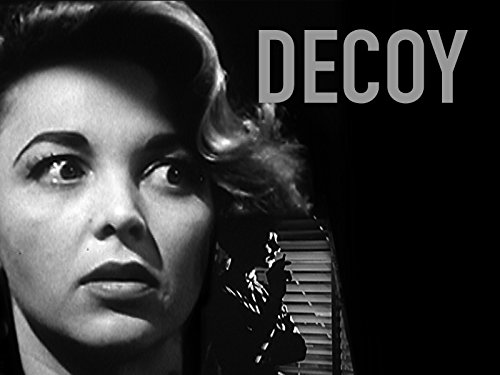
Retro Television Review: Decoy 1.8 “Escape Into Danger”


Welcome to Retro Television Reviews, a feature where we review some of our favorite and least favorite shows of the past!  On Thursdays, I will be reviewing Decoy, which aired in Syndication in 1957 and 1958.  The show can be viewed on Tubi!

This week, Casey pursues her neighbor and nearly dies.

Episode 1.8 “Escape Into Danger”

(Dir by Teddy Sills, originally aired on December 2nd, 1957)

Casey Jones (Beverly Garland) returns home from a night shift, hoping to get some rest so that she can get over a bad cold.  (I’ve had enough bad colds that I’m fairly confident that Garland herself was suffering from a cold when she filmed this episode and it was written into the script.)  She discovers that her neighbor, Mary (Madeline Sherwood), has hit her abusive and drunken husband across the back of his head.  Mary is convinced that she’s killed her husband and is terrified that she’ll go to jail.  When Casey informs her that her husband is just knocked out and that everything is going to be okay, Mary doesn’t believe her because Casey is a cop and a cop will say anything to make an arrest.  While Casey is in her apartment calling for an ambulance, Mary flees the scene.

Mary’s husband does die but he dies of acute alcohol poisoning so Mary’s off the hook.  (Apparently, this episode take place in a world where assault isn’t a crime.)  Despite her cold, Casey takes to the streets and searches for Mary.  Knowing that Mary is masseuse, Casey checks out all the massage parlors.  In a move that kind of makes me wonder if Casey is really that good at her job, she decides that she might as well get a massage as well.

The woman who gives Casey the massage is Katy Olin (Virginia Kaye), who is Mary’s sister and a bitter ex-con who hates all cops.  While Katy massages Casey, Mary hides in the changing room.  When Casey says that she’s looking for Mary, Katy has Mary sneak out of the dressing room and choke Casey into unconsciousness.  Mary steals Casey’s gun and then makes her escape.

A few thoughts:

First off, after years of being spoiled by shows like Law & Order, I have to say that I was initially surprised that Casey didn’t know that Mary had a sister or that the sister was an ex-con.  But then I remembered that this episode was filmed in 1957, back before all of that information was available at just the touch of a key.

That said, what type of police officer is going to get a massage while on duty?  Even if Casey had looked up from the massage table and seen Mary trying to escape the room, what was Casey going to do?  Chase her through the streets of New York while wearing a towel?  Also, Casey often seems to just drop her purse anywhere, despite the fact that her purse contains a loaded gun.

Third, Katy mentions to Mary that there’s no way for her to leave the room without walking right past Casey.  So, how did Mary get into the room in the first place and how come Casey didn’t notice her when she first arrived?

Fourth, once Casey wakes up, she takes Katy down to the police station.  Katy’s interrogated and refuses to answer any questions.  She asks if she’s being charged with anything and, because she’s not, she’s allowed to go.  Is she not an accessory for hiding Mary and then just standing by while Mary attempted to murder a police officer?

Katy decides that the best thing for Mary to do would be to hide out in her old apartment, the one that is next door to the police officer who Mary just tried to strangle.  (Neither Katy nor Mary appear to be that smart.)  Casey, of course, discovers that two of them hiding there.  She and the neighborhood priest (John McLiam) talk Mary into putting down the gun.  They assure her that she did not kill her husband.  Mary finally believes that Casey is telling the truth….

….which is all good and well except Mary ASSUALTED A POLICE OFFICER!  Indeed, one could argue that what Mary did to Casey counts as attempted murder.  So, really, it seems like Mary should be going to jail regardless.  Unfortunately, we never learn about what happened to Mary after she stop pointing the gun as Casey.  If I was Casey, I would prefer a neighbor who hasn’t tried to kill me.

This episode didn’t really make sense but I’m glad that Casey got over her cold by the end of it.

October True Crime: Hostage (dir by Frank Shields)


First released in 1983, Hostage is an Australian film about Christine (Kerry Mack) and Walter Maresch (Ralph Schicha).

Christine is a young woman who escapes from her abusive father by going on the road with a traveling carnival.  She runs the dart-throwing booth.  It’s a simple life but she’s happy with it.  She has friends and she has freedom.  When Walter, an enigmatic German drifter, joins the carnival, there’s an immediate attraction between him and Christine.  Christine sleeps with him a few times but she makes it clear that she’s not looking for anything serious or permanent.  Walter announces that, if Christine doesn’t marry him, he’s going to shoot himself.  Christine rolls her eyes and leaves his trailer, just to hear a gunshot as she walks away.  At the hospital, Walter refuses to get treated until Christine promises to marry him.

Christine does marry Walter, both to keep him from dying and also because she’s pregnant.  Walter survives his gunshot wound and turns out to be the type of husband who alternates between being wildly romantic and being coldly abusive.  Walter wants to have lot of a children.  He’s upset when Christine gives birth to a girl.  “The next one will be a son!” he announces.  Walter also spends a lot of time complaining about how weak the Australians are compared to the Germans.  And, of course, there’s another huge issue with Walter.

HE’S A NAZI!

Walter is a neo-Nazi.  For whatever reason, it takes Christine forever to figure this out.  Walter drags to Christine to Germany and then gets mad when Christine doesn’t stand along with all of his friends while watching The Triumph of the Will.  Christine opens up Walter’s keepsake box and finds a picture of his father wearing a Nazi uniform and also an iron cross.  Walter’s friends are all blonde Aryan types who are constantly talking about how Germany has lost its way.  And yet Christine doesn’t really seem to get that Walter is a Nazi until Walter starts talking about blowing up buildings and robbing banks.

Eventually, back in Australia, Walter and Christine rob a string of banks and the tabloids are soon describing them as being a modern-day Bonnie and Clyde.  Walter is happy but Christine just wants to grab her daughter and escape from him.  That proves to be easier said than done.  Walter’s not just a Neo-Nazi.  He’s also totally insane….

Amazingly enough, this is based on a true story.  Christine wrote about her ordeal and her book was adapted into Hostage, a film that may look like a typical exploitation film but which is actually a rather engrossing drama about a naive girl who finds herself trapped with a monster.  The film is full of moments that stick with you, like when a policeman comes by Christine’s trailer and manages to totally miss her signals that she’s currently being held, at gunpoint, by Walter.  Kerry Mack and Ralph Schicha both give strong performances as Christine and Walter.  Schicha especially deserves a lot of credit for turning Walter into a believable villain as opposed to just a caricature.  One reason why Walter is so dangerous is because he’s such an idiot and Schicha does a great job of showing what happens when stupidity mixes with confidence.  In one of the film’s more over-the-top moments, Walter and his friend Wolfgang drag Christine to Turkey.  At first, Walter and Wolfgang are cocky but the trip becomes a violent and (literally) bloody disaster.

Hostage brings a real nightmare to life.  Sadly, even after she freed herself of Walter, Christine continued to live a difficult life.  She died of hypothermia in 2019.

Horror Song of the Day: Season of the Witch by Donovan


Since we are now halfway through October, it only seems appropriate to share what may be the most famous (and perhaps the most covered) song about witchcraft, Donavon’s Season of the Witch!

This song was originally recorded in 1966 and it’s gone on to become a Halloween mainstay.  One fan of the song was future director Martin Scorsese, who originally planned to borrow the song’s title for one of his own films.  However, George Romero beat Scorsese out the gate with a film called Season of the Witch and Scorsese ended up renaming his film, Mean Streets.

Horror On The Lens: It Conquered The World (dir by Roger Corman)


“Man is a feeling creature, and because of it, the greatest in the universe….”

Hell yeah!  You tell ’em, Peter Graves!

Today’s Horror on the Lens is 1956’s It Conquered The World.  Graves plays a scientist who watches in horror as his small town and all of the people who he loves and works with are taken over by an alien.  Rival scientist Lee Van Cleef thinks that the alien is going to make the world a better place but Graves understands that a world without individual freedom isn’t one that’s worth living in.

This is one of Corman’s most entertaining films, featuring not only Graves and Van Cleef but also the great Beverly Garland.  Like many horror and science fiction films of the 50s, it’s subtext is one of anti-collectivism.  Depending on your politics, you could view the film as either a criticism of communism or McCarthyism.  Watching the film today, with its scenes of the police and the other towns people hunting anyone who fails to conform or follow orders, it’s hard not to see the excesses of the COVID era.

Of course, there’s also a very persuasive argument to be made that maybe we shouldn’t worry too much about subtext and we should just enjoy the film as a 50s B-movie that was directed with the Corman touch.

Regardless of how interpret the film, I defy anyone not to smile at the sight of ultra-serious Peter Graves riding his bicycle from one location to another.

Here, for your viewing pleasure, is It Conquered The World!