Since we are entering the Labor Day weekend, this seems like a good time to share a blast from the past that comes us all the way from 1947.
In The Secretary’s Day, viewers are told and shown what it takes to be a secretary. Do you know how to take dictation? Do you know how to carefully open up letters? Do you know how to be courteous to random people who wander into the office? More importantly, do you know how to make sure that Marge the Stenographer never gets into her head to try to seal your job away from you?
I watched this short film with a bit more interest than usual because I actually have worked as an administrative assistant in the past. Watching the film’s lead character obsess over her desk calendar brought back some memories but I think that just has more to do with the fact that I’m obsessed with calendars than anything else. To me, the main message of this film seemed to be, “A secretary’s day is pretty dull but at least she can bully the stenographer.”
Anyway, here’s a trip back to 1947! The war is over, the Great Depression was now a memory, and Americans, flush with victory, were looking for jobs! Check out The Secretary’s Day!
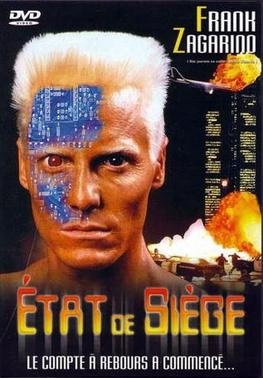
The 1992 film, Project Shadowchaser, takes place in the near future. It’s a time when cyborgs are a common sight and criminals are frozen and sent to a cryogenic prison. At the same time, it’s close enough to the present that the FBI is still America’s main law enforcement agency and the President is still a powerful enough figure that terrorists would want to abduct his daughter. It’s also close enough to the present that terrorists are still learning how to do their job from watching Die Hard.
Romulus (Frank Zagarino) is a cyborg who takes a hospital hostage, all to track down the president’s daughter, Sarah (Meg Foster). The FBI feels that only the hospital’s architect, Mr. Dixon, can figure out the best way for the FBI’s strike force to enter the hospital. Unfortunately, Mr. Dixon broke the law and has been put on deep freeze. When the stoner who runs the cryogenic prison is told to thaw out Mr. Dixon, he screws up and accidentally unfreezes DeSilva (Martin Kove), a former football quarterback.
Knowing a good thing when he sees it, DeSilva pretends to be Dixon but, once he and the strike force enter the building, it become apparent that DeSilva/Dixon has no idea what he’s talking about. All of the members of the strike force are killed when an elevator explodes. Only DeSilva survives and now, whether he wants to or not, he’s going to have to battle the terrorists and save the President’s daughter! It’s a good thing that she’s a football fan.
What a dumb movie this turned out to be! Seriously, you can add all of the sci-fi elements to your Die Hard rip-off that you want to, a Die Hard rip-off is still a Die Hard rip-off and it’s hard to think of any other film (with the possible exception of No Contest) that so slavishly follows the Die Hard formula. There’s nothing particularly surprising to be found in Project Shadowchaser. The minute that Kinderman (Joss Ackland) shows up and declares that he’s taking over the operation from FBI agent Trevanian (Paul Koslo), it’s obvious that he’s going to turn out to be the one behind Romulus’s actions. And from the minute that DeSilva meets Sarah, it’s obvious that they’re destined to fall in love.
I like Martin Kove on Cobra Kai and Kove brings a similar self-awareness to his role as DeSilva. At times, Kove appears to almost be winking at the audience, as if he’s saying, “Hey, I can’t believe I’m in this movie either. What are you going to do?” Unfortunately, Kove often seems to be the only person in the film who is really in on the joke. Needless to say, Project Shadowchaser is no Cobra Kai.
That said, I did appreciate the fact that the film’s entire plot hinged on a government employee accidentally unfreezing the wrong guy. As a portrait of bureaucratic incompetence, Project Shadowchaser works perfectly. I mean, let’s be honest. If there ever was a cryogenic prison, the wrong people would probably be getting unfrozen all the time. No one’s going to keep track of who is in which pod.
Welcome to Retro Television Reviews, a new feature where we review some of our favorite and least favorite shows of the past! On Fridays, I will be reviewing T. and T., a Canadian show which ran in syndication from 1987 to 1990. The show can be found on Tubi!
This week, we meet T.S. Turner’s family!
Episode 1.7 “The Silver Angel”
(Dir by Donald Shebib, originally aired on February 22nd, 1988)
“In this episode,” Mr. T informs us, “Amy and I get mixed up with a modern day Robin Hood and we are forced to recruit some heavyweight help.”
The Silver Angel is a silver-clad trumpet player who has been going to a high-priced grocery store, filling his cart with food, and then running off with the cart and not paying. The police that think that they have finally arrested him. However, the man that they caught is Duffy (Edward Atienza), an elderly crossing guard who doesn’t even seem to know what’s happening to him. Amy is assigned to his case.
T.S., however, has other things to worry about. As he explains to gym owner Decker, his nephew is a member of a rap group known as The Fat Boys and, as you might guess from their name, they’re a bit overweight. Their manager wants The Fat Boys to lose a few pounds before their next tour and who better to oversee their diet than T.S. and his friend Decker? The Fat Boys show up at the gym and it’s time for an exercise montage!
Anyway, it soon becomes apparent that Duffy is not as senile and frail as he appears to be and he actually is the Silver Angel. Amy discovers that Duffy has been taking the stolen food to a homeless shelter.
“It’s still a crime,” T.S. says.
“I know. It looks like I’m going to lose this case!” Amy declares, as if she’s the first attorney to ever defend someone who was guilty. One would think that Amy would understand that the job of a defense attorney is to serve as an advocate for their client and to help them make their way through the legal system. The question of whether or not the guy is actually guilty really isn’t the issue that she should be concerning herself with.
The Fat Boys, overhearing Amy and T.S.’s conversation, decide that they need to help the Silver Angel. “My mind is clear,” one of the Fat Boys says, “so you stay right here!” Did I mention that the Fat Boys rap all of their dialogue? “I went downtown to get this stuff,” another Fat Boy declares as they collect food to give to the homeless, “Come on, brothers, it’s up to us!”
Anyway, Duffy puts on his angel costume once again and shows up at the grocery store. When the store’s manager, Mr. Hanlon (Sam Moses), orders security to catch the Angel, the Fat Boys suddenly show up in angel costumes and it leads to a chase scene throughout the store.
T.S. brings the chase to a close by grabbing Mr. Hanlon, lifting him up and carrying him around the store. T.S. tossed Mr. Hanlon into a display of eggs and declares, “Sorry, brother! Nobody touches an angel!”
How about a thief? Are they allowed to touch a thief?
Anyway, for some reason, Hanlon drops the charges so I guess Duffy gets away with his crimes and Amy maintains her perfect acquittal record.
This was dumb. Grocery store owners don’t owe you a thing and, by stealing all of that food, the only thing Duffy did was probably cost everyone their Christmas bonus. I mean, is there a reason why he couldn’t buy food and then take it to the homeless shelter? Some hero. More like the Silver Jackass, am I right? Let’s move on.
Episode 1.8 “And Baby Makes Nine”
(Dir by Harvey Frost, originally aired on February 29th, 1988)
“In this episode,” Mr. T tells us, “Amy and I find that more than just diapers are dirty when we track down the person responsible for an abandoned baby.”
One of Amy’s clients leaves a baby on the front doorstep on the office, along with a note that says she’ll be back in a few days. As opposed to calling the police or child protective services, Amy gives the baby to T.S. to look after. T.S. takes the baby to the hospital and, after discovering the baby is in perfect health, he takes the baby to Decker’s gym. Amy is not happy when she sees T.S.’s car parked outside the gym. A gym is no place for a child, she declares, not with all the sweaty men around.
“The baby has to learn how to sweat,” Decker replies, “He can’t pant like a dog for all of his life!”
Back at the office, Amy explains that parenting is a little bit more complicated nowadays than it was when T.S. was a child.
“Babies still need to be changed, don’t they?” T.S. replies, “Wow! Look at the great job I did on his diaper!”
Anyway, the baby is actually the son of Henry (Martin Neufeld) and Betty (Joanne Vannicola). Henry made a deal with a corrupt adoption attorney named Mr. Finn (David Calderisi) to sell his son. Not wanting to lose her child, Betty dropped the child off at the law office in the hopes that Amy would know how to stop the adoption. When Henry goes down to the gym to try to grab his son, he is instead grabbed by T.S. Turner. When Turner threatens to sell Henry, Henry asks what he’s talking about.
“We’re talking about baby selling, Henry!” Turner replies, “We’re talking about what type of man would sell his own flesh and blood! What do you think we should do to a father who would sell his own son?”
Turner scares Henry straight and he promises not to sell the baby. Betty forgives him, which is kind of weird.
“It’s people like you,” Amy later hisses at Finn, “who give my profession a bad name.”
And that’s the end of that. This was yet another episode that would have worked better if the story played out of an hour instead of just 30 minutes. As it is, the whole thing felt rather rushed. That said, at least Betty was a more sympathetic client than the Silver Angel jackass.
Next week: T. and T. reminds us that it’s a Canadian show with an episode that is all about hockey!
Welcome to Retro Television Reviews, a feature where we review some of our favorite and least favorite shows of the past! On Thursdays, I will be reviewing South Central, which aired, for 10 episodes, on Fox in 1994. The entire show is currently streaming on YouTube!
Having just spent a year reviewing City Guys, it only seems appropriate to devote a month to looking at South Central. Both City Guys and South Central were sitcoms about growing up in an urban community and being forced to deal with grown-up issues at a very young age. However, in many ways, SouthCentral was the anti-City Guys. Whereas City Guys always ended with an easy solution and some words of wisdom from Ms. Noble, South Central was a frequently bleak show and one in which there were never any easy solutions. Perhaps not surprisingly, as opposed to the five seasons that City Guys received, South Central ran for only 10 episodes.
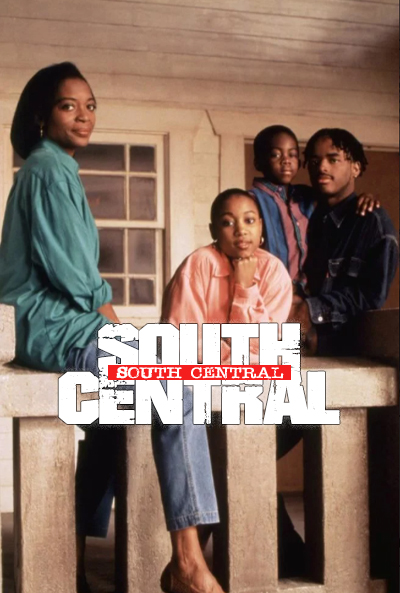
South Central revolves around one black family living in South Central Los Angeles. Joan Moseley (Tina Lifford) is a divorced mother, working hard to support her family and ending almost every day in a state of exhaustion. Andre (Larenz Tate) is Joan’s son, an underachieving high schooler who is continually at risk of flunking out of school and whose attempts to act hard cannot hide the fact that he’s essentially a sensitive soul. Tasha (Tasha Scott) is Joan’s daughter, who is intelligent but resents all of the responsibilities that have been put upon her. Deion Carter (Keith Mbulo) is Joan’s foster child, an autistic three year-old who was abandoned and who Joan brought into the house. Looming large over the family is the memory of Marcus, Joan’s oldest son, who was murdered shortly before the series begins.
Episode 1.1 “Pilot”
(Dir by Stan Lathan, originally aired on April 5th, 1994)
The pilot of South Central opens with a chaotic morning. Deion wakes up Joan by screaming. Tasha begs Joan for the money to buy a new jacket. In a scene that reminds us that, while South Central dealt with timeless issues, the show was definitely made in the 90s, Andre wants to get a beeper. Joan says that there is no way that her son is going to have a beeper and become a target of every gangbanger in the neighborhood. Joan says that only drug dealers carry beepers and she’s not willing to lose Andre the way that she lost Marcus.
What the family doesn’t know is that Joan is even more stressed than usual because she has lost her job. After working for the school district for 13 years, she has been laid off and she has not been able to find another job. (One potential employer is interested until he learns that she never graduated college because she dropped out after her husband left her.) When Joan goes to Ujamaa, the local black-owned co-op, she discovers that she’s been put on a list on people from whom checks can no longer be accepted. She gets into an argument with Lucille, the cashier. If Lucille looks familiar, that’s because she’s played by a young Jennifer Lopez.
Returning home, Joan discovers a message on her answering machine (another reminder that this pilot is from the 90s) from someone who works at a beeper store and who is checking to make sure that Andre gave his correct address. Andre comes home and refuses to surrender his beeper, accusing his mother of treating him like a child. Ray McHenry (Ken Page), a doctor who is obviously in love with Joan and who volunteers to mentor teenagers like Andre, comes by and reveals that, as a doctor, he carries a beeper of his own. A frustrated Joan accidentally calls Andre “Marcus.” Shaken, Joan announces that she doesn’t care what happens to her ungrateful, irresponsible children and then goes next door where she talks to her friend, Sweets (Paula Kelly). At first, Joan is upset when Sweets says that Joan is acting just as irrationally as her children but then Joan breaks down into tears, saying that she wishes that “it could all just stop.” Joan returns home, tells Tasha that she put her coat on layaway and makes peace with Andre. Bobby (Clifton Powell), the head of Ujamaa, calls the house and leaves a message that he thinks he can help Joan with her problem.
“What problem?” Tasha asks.
“We’ll talk about it tomorrow,” Joan says as the episode comes to a close.
As far as pilots go, the first episode of South Central did exactly what it needed to do. It introduced the characters, it told us enough about them to make them individuals while still leaving them room to grow and develop over the next few episodes, and it established everyone’s relationships. That said, the pilot’s dialogue was a bit more jokey and the laugh track was a bit more intrusive than they would be in later episodes, as if the show’s producers really wanted to make sure that everyone understood that, despite all of the serious stuff being discussed, South Central was a comedy.
Episode 1.2 “Money”
(Dir by Stan Lathan, originally aired on April 12th, 1994)
“Money” picks up the morning after the pilot. Joan tells Tasha and Andre that she has lost her job and has been unemployed for a month. Tasha asks if they’re going to have to go on welfare. “No!” both Joan and Andre snap at the same time. Andre announces that he’ll steal money from someone before he goes on welfare. Joan reprimands him and then heads down to Ujamaa in order to see what help Bobby was going to offer when he called the previous night.
Joan is expecting Bobby to offer her a line of credit but instead Bobby offers her a job. Bobby explains that he needs an assistant manager, who will do bookkeeping, community relations, and “bag groceries.” Joan is not happy to hear that, after all her years of experience, she’s being offered a job bagging groceries. She’s even less happy when Bobby tells her that the job only pays $350 a week.
“Embrace the Ujamaa spirit, sister,” Bobby tells her.
“Then I’m going to need more money, brother,” Joan replies.
Considering the fact that her family is struggling and Andre’s friend Rashad (Lamont Bentley) keeps coming by the house and eating all of their food, one might be tempted to think that Joan needs to set her pride aside for a moment. I certainly thought that the first time that I watched this episode. My mom worked a lot of jobs that she hated but she did it because she had a family to support. But, upon rewatching this episode, I found myself sympathizing with Joan. Joan was an administrator, someone who everyone agrees did a good job for 13 years. Now, she’s nearly broke and Bobby is offering her a position as a glorified cashier and he’s offering to pay her considerably less than she made before. Bobby’s offer not only comes across as being charity but Bobby’s reaction, when he hears that Joan wants more money, is to smugly tell her to suffer for the good of the community. The sensible thing would be for Joan to set aside her pride but, at this point, pride is about the only thing that Joan has left.
However, when Joan returns home, she discovers that Andre is mysteriously $500 richer. Andre tells Joan not to worry about where the money came from but Joan says that there’s no way that Andre got the money legally and that she won’t have it in the house. She attempts to flush the money down the toilet. Andre rescues the money and then admits that he got the money from Spoon, a gang member who was close to Marcus.
Joan drags Andre down to Spoon’s apartment building, where she discovers that, while the building may be covered in graffiti, Spoon’s apartment is full of expensive electronic equipment and furniture. Spoon lives with his mother, who explains that her son takes care of her. When Spoon comes out of his bedroom and says, “Marcus was my boy,” Joan snaps, “No, he was my boy!” and throws the money back in Spoon’s face. After telling Spoon’s mother that she should be ashamed of herself, Joan goes down to Ujamaa and accepts Bobby’s job offer.
More so than the pilot, this episode is a good representation of the show that South Central would become. None of the characters are idealized. Both Joan and Andre are stubborn. Tasha is too quick to get upset. Bobby can be condescending. But they’re all trying their best to make it through hard times without selling out their beliefs. The scene with Spoon and his mother was a bit heavy-handed but, at the same time, it also allowed Joan to make clear that she would rather be poor than make money off of the suffering of others in her community. It also revealed that the reason why she is so protective and strict with her children is because she feels that she failed Marcus. In the end, Joan shows that she’ll do what she has to do to feed her children, even if that means bagging groceries.
Next week: A bus ride leads to Andre not only getting mugged but also falling in love.
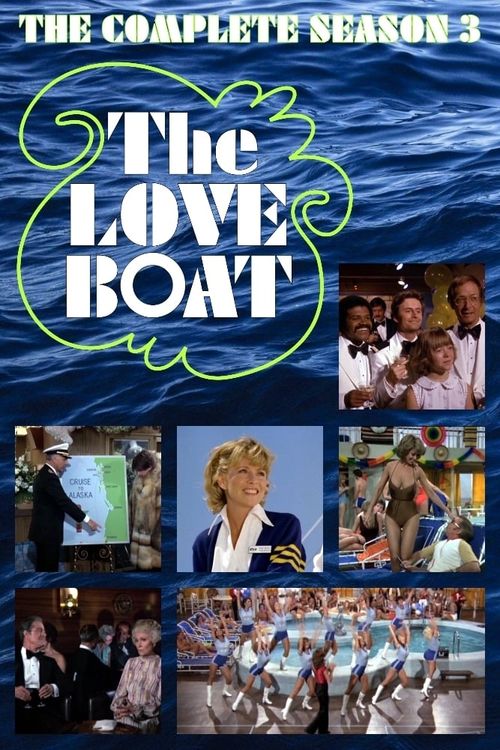
Welcome to Retro Television Reviews, a feature where we review some of our favorite and least favorite shows of the past! On Wednesdays, I will be reviewing the original Love Boat, which aired on ABC from 1977 to 1986! The series can be streamed on Paramount Plus!
This week’s cruise is all about love and dancing!
Episode 3.4 “Going My Way/Dance with Me/Doc, Be Patient”
(Dir by Adam Rafkin and James Sheldon, originally aired on September 29th, 1979)
Oh no! The ship has just left port and Doc Bricker has come down with the flu! He’s so sick that he can barely walk without getting dizzy. Fortunately, there’s another doctor on the boat. Dr. Emily Bradford (Susan Sullivan) takes time away from her own vacation to not only look after Doc but also check in on his other patients. I have to admit that I found myself wondering if the cruise line agreed to pay her for filling in for Doc or if she just did it for free. It seems like, if she misdiagnosed anyone on the boat, it would lead to an even bigger lawsuit than usual.
It turns out that Doc is not a particularly good patient. He hates having his temperature taken. He hates getting shots. He even resists allowing Emily to take a look at his throat. But when he ends up sick and delirious, he’s thankful that Emily’s there. In fact, he’s so thankful that he decides that he’s in love with Emily and he wants her to spend all of her time with him! Emily reveals to Doc that he’s doing what so many past patients have done to him, falling in love with the person who takes care of them. A chagrined Doc says that he’s going to have to write a lot of apologies to his former patients.
Probably one of the stranger aspects of The Love Boat has always been the portrayal of Doc Bricker as some sort of decadent swinger. Bernie Kopell was very likable in the role of Adam Bricker but there was also absolutely nothing about him that would make one think that he was some sort of fun-loving satyr. While the show insisted that Doc was a legendary womanizer, he actually came across as being a mild-mannered, slightly out-of-touch but well-meaning suburbanite who just happened to work on a cruise ship. In this episode, Doc actually got to show some vulnerability and it was nice to see. Certainly, Bernie Kopell seemed to be more comfortable playing Doc as someone who hated needles as opposed to as a doctor who casually kept adult magazines in his waiting room.
While Doc came down with the flu, Suzy Butterfield (Arlene Golonka) is determined to still take her cruise despite having been stood up by her boyfriend. Because she has an extra ticket and because she enjoyed the jokes that he told while driving her to the docks, Suzy impulsively invites her cab driver, Mickey Greenbaum (Buddy Hackett) to join her on the cruise. Mickey, an aspiring writer, agrees and I assume he also loses his job as a taxi driver as a result.
On the boat, Suzy recommends women that Mickey could date and Mickey recommend men that Suzy could date but, of course, they’re destined to end up together. And, of course, they do. Mickey even proposes marriage. Yay! This was a sweet story, even if Buddy Hackett wasn’t the most convincing romantic lead. He was ten years older than Arlene Golonka and they had an older brother/little sister chemistry that didn’t exactly translate to romance. But no matter. I was still glad that things worked out for their characters.
Finally, world famous ballet dancer William Delaney (John Meehan) boards that boat with his much younger partner, Joanna (Starr Danias). Also on the cruise is William’s former partner, Marcy McGuire (Carol Lawrence). Marcy now runs a dance academy in Germany and she wants William to teach at the school. William realizes that he’s getting older and that he’s actually holding Joanna back by not retiring. William accepts Marcy’s offer, which Joanna’s misinterprets are William and Marcy having an affair. Fortunately, Captain Stubing is there to help gently explain the whole situation. Both John Meehan and Starr Danias were real-life dancers (To be honest, they were far better at dancing than delivering dialogue.) and the story is really just an excuse for the two of them to perform, together and separately. Starr Danias’s solo performance of Swan Lake was absolutely wonderful and, for me, the highlight of the cruise.
I enjoyed this episode. The passengers were likable, Doc Bricker finally stopped acting like a walking HR nightmare, and best of all …. there was dancing! This was a very enjoyable cruise.
Welcome to Retro Television Reviews, a feature where we review some of our favorite and least favorite shows of the past! On Tuesdays, I will be reviewing the original Fantasy Island, which ran on ABC from 1977 to 1986. Almost entire show is currently streaming is on Youtube!
Let’s see what’s happening on the Island this week….
Episode 3.12 “The Cheerleaders/Marooned”
(Dir by Earl Bellamy, originally aired on December 8th, 1979)
I’m just going to be honest here. This week’s episode of Fantasy Island is not a good one. Neither one of the fantasies work. In fact, they’re both really, really annoying. Usually, this show does a fairly good job of balancing a fun fantasy with a serious fantasy. This episode, though, both fantasies are meant to be humorous. They’re not. They are both rather shrill.
That said, this episode did feature the return of Roarke and Tattoo bantering before going to meet their guests. When Roarke steps out of his office to meet the plane, he’s surprised to see that Tattoo is hiding in a red fire hydrant costume. When Roarke demands to know what Tattoo is doing, Tattoo explains that he’s training to be a secret agent. Roarke rolls his eyes so violently that I’m surprised he didn’t injure himself. Later, Tattoo attempts to disguises himself as a bale of hay and ends up getting chased by an enraged bull that just happens to be wandering around the Island. Roarke laughs and laughs because there’s nothing that makes him happier than the idea of his assistant suffering a terrible injury. That said, though it was all a bit mean-spirted, it was nice to see the return of the banter.
As for the two fantasies …. God, I don’t even want to talk about them.
The marginally more interesting one featured Vic Tayback as a blue collar guy named Melvyn whose fantasy was to spend some time with his favorite movie star, a total diva named Liz Merrill (Jayne Meadows). When Liz shows up on the Island, it turns out that her fantasy is for everyone to think that she’s lost at sea before she’s eventually found on a tropical island. She’s told that Melvyn has been hired to row the boat taking her to the island. Instead, Melvyn and Liz get lost and really do end up on a deserted island, where Liz eventually drops her arrogant attitude and Melvyn wins her love by barking orders at her. The fact that this was the “better” fantasy should tell you just how bad the other fantasy was.
The other fantasy features Georgia Engel and Patty McCormack as Cathy and Marg, two roommates whose fantasy is to be cheerleaders for their favorite football team, the Titans. Fortunately, the Titans training camp happens to be on Fantasy Island! Marg has a crush on quarterback Roger Mosely (played by Dan Pastorini) but Roger is more interested in Cathy. This leads to the two friends not being friends anymore but then Mr. Roarke tells them that there’s nothing more important than friendship. It’s a nice message but it’s hard to believe either Georgia Engel or Patty McCormack as cheerleaders and Engel and Pastorini had absolutely zero chemistry. The whole thing just felt too silly for its own good.
(I even forced Erin to watch this episode with me so that I could get her perspective as a former cheerleader. She agreed with me. As far as cheerleader stories go, this was no Bring It On.)
Sigh. This week’s episode was not great. Hopefully, next week’s will be better!
Welcome to Retro Television Reviews, a feature where we review some of our favorite and least favorite shows of the past! On Mondays, I will be reviewing Hang Time, which ran on NBC from 1995 to 2000. The entire show is currently streaming on YouTube!
This week, it’s time for the team’s final game ever!
Episode 6.9 “For Love Of the Game”
(Dir by Miguel Higuera, originally aired on November 18th, 2000)
Hey, we’re back at the University of Indiana, where the Tornadoes are still playing in that tournament. How long do these tournaments last? Every season Hang Time had a tournament story arc that went on forever. Do the Torandoes even go to class at this point?
Speaking of going to class, Julie is worried because she still hasn’t been offered a scholarship from the University of Connecticut. For some reason, Julie, Kristy, and Mary Beth insist on referring to the school as being “UConn.” “UConn do it!” Kristy says at one point. I don’t know. Maybe the University of Connecticut is actually known as UConn. I don’t really pay much attention to those little mid-Atlantic states. Does anyone?
Anyway, for some reason, Kristy and Mary Beth decide it would be a good idea to pretend to be recruiters so that they can tell the UConn recruiter that they’re really interested in Julie. They talk to a woman in a UConn jacket and the woman says that her college is not interested in Julie. Kristy and Mary Beth get upset and walk away. What they don’t realize was that the woman was only borrowing the jacket and UConn is totally planning on offering Julie a full scholarship!
For some reason (there’s that term again), Mary Beth decides to call the UConn recruiter and tell her off but, instead of doing it under her name, she calls and claims to be Julie. (Who does this?) Later, Mary Beth and Kristy run into the real UConn recruiter and discover that he’s going to offer Julie a scholarship. So now, Mary Beth and Kristy have to sneak into the man’s hotel room and delete their message before he hears it!
*Sigh*
I’ve mentioned many times before that I can’t stand stories that are dependent on everyone acting like an idiot. And this is one of those stories. I mean, Mary Beth and Kristy pretending to be recruiters is kind of funny but Mary Beth pretending to be Julie and telling off a recruiter is just stupid. Fortunately, though, Julie still gets her scholarship.
While this is going on, the team is freaking out about their next game because they’re currently undefeated and each player is afraid of being the person who screws up the season. Coach K yells at them until they remember that the game should be fun and, after trailing the entire game, the Tornadoes win by one basket. Again.
“That was our last play as a team,” Michael says. Awwwwwww!
This was a silly episode that got on my nerves. Let’s move on.
Episode 6.10 “A Night To Remember”
(Dir by Miguel Higuera, originally aired on December 2nd, 2000)
It’s prom time!
Unfortunately, the school made the mistake of naming Julie, Kristy, and Mary Beth as the heads of the prom committee. Everyone predicts that the three of them will end up fighting, just as they do whenever they try to work together. And that’s exactly what happens. Not only does Kristy lose all the money for the prom but Kristy, Julie, and Mary Beth all show up wearing the same gray dress. Mary Beth claims that she bought the dress first, Kristy claims that she picked her dress out 6 months ago. Mary Beth replies, “It looks the worst on Julie so she should go change!” That made me laugh. This show is always at its best when it allows Mary Beth to just be a force of chaos.
Meanwhile, Silk, Eugene, and Mary Beth have all ended up with terrible dates. Mary Beth accidentally said yes to Merle, who smells like vapor rub. (She was on the phone when he asked and she automatically said yes without hearing his question.) As a favor to Mary Beth, Silk tries to find another girl to go to the prom with Merle but she thinks Silk is asking. Eugene auction himself off for charity and is purchased by a retiree (played by none other than Mrs. Voorhees herself, Betsy Palmer).
Fortunately, the night is saved when a tornado hits Deering. While everyone huddles in the hallway, Kristy, Mary Beth, and Julie do an impromptu performance of I Will Survive. Yay! Seriously, it was a fun scene. Plus, my sisters and I used to sing I Will Survive when we did karaoke.
Overall, this was a cute episode. I enjoyed it and I sang along.
Next week: Hang Time ends as the Tornadoes finally graduate!
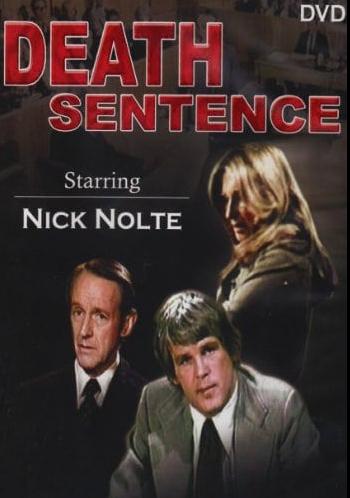
Welcome to Retro Television Reviews, a feature where we review some of our favorite and least favorite shows of the past! On Sundays, I will be reviewing the made-for-television movies that used to be a primetime mainstay. Today’s film is 1974’s Death Sentence! It can be viewed on YouTube!
There’s been a murder!
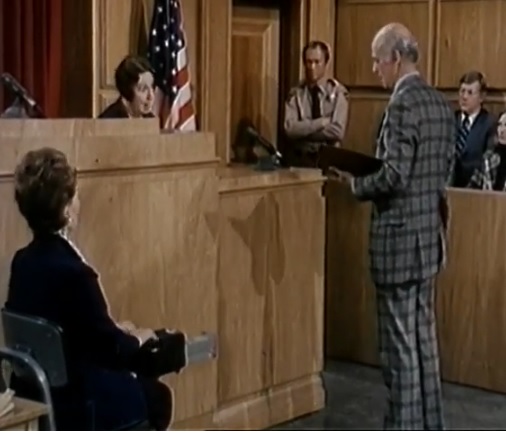
A young woman has been strangled in her own home. The nosy neighbor (Hope Summers) testifies that the woman often argued with her woman and that she heard the woman yelling on the night of the murder. The husband, John Healy (Nick Nolte), is found in a neighborhood bar and, when he’s brought back to his house, his drunken reaction to seeing his dead wife doesn’t do much to keep him from looking totally guilty.
However, the viewer knows that John is innocent because the viewer has already seen that the woman was murdered by Don Davies (Laurence Luckinbill), the man with whom she was having an affair. She demanded that he leave his wife for her and Don, realizing that his cheating was about to revealed, responded by strangling her.
Don’s wife is Susan Davies (Cloris Leachman), who knows that she and Don have been going through a rough patch but who certainly had no idea that Don was cheating on her. Shortly after the murder, Susan is called up for jury duty. She’s placed on the jury and told that she will be an important part of a major trial. As a result, she and the other jurors will be sequestered in a hotel….
And who is the defendant in this trial? John, of course!
As opposed to the other members of the jury, who are ready to convict John even before the first bit of testimony is heard, Susan pays attention to what is said in the courtroom. She listens to Lubell (Alan Oppenheimer), the prosecutor. She listens to Tanner (William Schallert), the defense attorney. She comes to believe that John is innocent but will she be able to hold her own against the rest of the jury? And will she ever figure out that the murder was actually committed by her husband?
It’s an intriguing premise, even if it is a bit far-fetched. I mean, it really is an amazing coincidence that Susan just happened to end up on the jury for a case involving a murder that was actually committed by her husband. However, this is a made-for-television movie and, as soon as “Produced by Aaron Spelling” appears on the screen, most viewers should be savvy enough to know what they’re getting into. Instead, the main problem with the film is that it opens by showing us who the murderer is. Therefore, there’s really zero suspense as to who actually committed the crime. Instead, the viewer spends the entire movie waiting for Susan to catch up. Since the majority of the film takes place in court, it’s a very talky film but there’s no joy to be found in paying close attention to every word said and picking up on the details that will allow you to solve the crime for yourself. This is a case where the film spoils its biggest twist and, despite good performances from Leachman and Luckinbill, it’s a bit dull.
(Nick Nolte, for his part, spends most of the movie silently sitting in the courtroom. He’s not bad and his look of anguish is believable but it’s hardly a starring role, regardless of what the film’s video packaging might otherwise claim.)
In the end, what I’ll mostly remember about Death Sentence were the atrocious fashion choices made by the prosecutor. Seriously, would you trust a man wearing this suit?
Asteroid City opens with black-and-white footage of Bryan Cranston, wearing a suit and speaking in the authoritative tones of someone who has made his living on television. Cranston informs us that we are about to see a televised production of a play by the famed but enigmatic playwright named Conrad Earp (Edward Norton).
The play, which is seen in stylized color, opens with Augie Steeback (Jason Schwartzman) driving his family through the desert. He is taking his son, Woodrow (Jake Ryan), to a Junior Stargazers convention that is being held at Asteroid City, a tiny town that is best-known for being the location of an impact crater. Along for the ride are Augie’s three daughters, who are all pretending to be witches. What Augie hasn’t told his children is that their mother has died, her cremated remains are in a Tupperware container, and that they will be moving in with their wealthy grandfather (Tom Hanks).
There’s not much to the town of Asteroid City. There’s a motel that’s managed by a man (Steve Carell) who sells land deeds out of a refurbished Coke machine. There’s a diner. There’s a group of helpful cowboys, led by the polite and helpful Montana (Rupert Friend). There’s a mechanic (Matt Dillon) who is called into duty when Augie’s car breaks down. The Junior Stargazer convention is the event of the year for Asteroid City. Young geniuses from all around the country have descended on the town and have brought their parents. One of them, Dinah (Grace Edwards), is the daughter of actress, Midge Campbell (Scarlett Johansson). When an alien (played, at one point in the film, by Jeff Goldblum) shows up and steals the town’s meteorite, General Gibson (Jeffrey Wright) declares a quarantine. Some people handle the lockdowns better than others. Augie takes pictures and thinks about his wife. Midge rehearses for her next role, one that is centered around her character dying. The genius children play a memory game that they realize will never end because they’re all geniuses. A teacher (Maya Hawke) tries to teach her students about the Milky Way, just to discover that the kids only want to talk about the alien. One of the fathers (Liev Schreiber) ends up with a useless plot of desert land and the death ray that his son recently invented.
Throughout it all, Bryan Cranston appears in black-and-white footage that gives us a look into what went on behind the scenes during the production of Asteroid City. The director (Adrien Brody) was a lech. The actor playing Augie struggled to understand what the play was about and who his character was meant to be while the actress (Margot Robie) hired to play his wife ended up in another play after her scenes were cut from Asteroid City. Only once does Bryan Cranston’s host appear in the color sections of Asteroid City, just to sheepishly admit that he’s not supposed to be there before ducking off camera.
Even if his name wasn’t in the opening credits, the viewer could probably easily guess that this is a Wes Anderson film. It features all of Anderson’s trademarks, all of the things that viewers will automatically love or hate depending on how they feel about Anderson’s quirky aesthetic. It’s a visually impressive, pop art-flavored, all-star comedy with an undercurrent of profound melancholy, one in which the fanciful strangeness of the alien’s “invasion” is compared and contrasted with the very real-life strangeness of how humans deal with life, loss, death, and uncertainty. Scenes of clever wordplay are mixed with scenes in which we see Augie still very much struggling to come to terms with the death of his wife and the actor Augie very much struggling to understand what is actually going on in his character’s head. As far as recent Anderson films go, Asteroid City is not quite as humanistic as Rushmore or Grand Budapest Hotel but, at the same time, it’s still more accessible than The French Dispatch.
If you’re not a fan of Anderson’s style, this film won’t convert you. That said, I am a fan of Anderson’s style and I absolutely loved Asteroid City. As with so many of Anderson’s films, the main focus is on how we try to deal with the uncertainties of life by trying to maintain an illusion of control over every aspect of our lives. Playwright Conrad Earp writes because that way he can have a world that follows his own rules. The actors follow a script that tells them how to react to everything that happens around them. In the play, the Junior Stargazers fall back on science while Augie’s father-in-law falls back on religion and Augie’s daughter convince themselves that spells will bring back or, at least, protect their mother. Even General Gibson falls back on his belief in the government and the military to deal with the sudden appearance by the alien. The alien is the unknowable and his arrival reminds everyone that life is unpredictable, regardless of how much you try to control your own story. Indeed, while the film takes place in the 50s and is full of comments about the Red Scare and atomic bomb testing, it’s hard not to see Asteroid City as being a commentary on the recent COVID lockdowns and the debate over whether people could ever go back to living the way that they did before the pandemic. Much as with the Coen Brothers’s similarly stylized A Serious Man, the ultimate message seems to be that the only way to deal with the unpredictability of life is to embrace it.
It’s also a very funny film, one that is full of small details that reward repeat viewing. If one focuses on the background characters, it quickly becomes apparent that there are actually several stories unfolding in the film and, much as with life, the viewer just has to be willing to look for them. (I particularly enjoyed the romance between The Teacher and Montana.) Jason Schwartzman is compelling as both Augie and the actor playing Augie and Scarlett Johansson plays both Midge and the actress playing Midge with the perfect amount of cool detachment. To the film’s credit, none of the character’s become caricatures. They remain individuals, regardless of how bizarre the film’s story may sometimes seem. Everyone gets a moment to reveal a little depth, from Jeffrey Wright’s sincere (if misplaced) faith in the lockdown policy to the moment when Tom Hanks’s previously unsympathetic father-in-law reveals that he’s as much in mourning as Augie. The all-star cast also includes Tilda Swinton, Liev Schrieber, Stephen Park, Willem DaFoe, Hong Chau, and Margot Robbie and all of them add to the film’s portrait of quirky but ultimately relatable humanity.
Again, with this film, it undoubtedly helps to already be familiar with and to like Wes Anderson’s way of doing things. If you’re not a fan of his film, this one probably won’t change your mind. That said, for those of us who do enjoy his style, this is Anderson at his best.
I spent most of this week watching horror movies and Big Brother. Sometimes, I couldn’t tell which was which. Here’s some thoughts on what I did watch this week!
The Challenge USA (Sunday and Thursday Night, CBS)
I watched it on Sunday, I didn’t watch it on Thursday. I don’t remember a thing that happened on Sunday, beyond the fact that I was annoyed by the fact that I was being asked to pay attention to someone named Bananas. To be honest, I’m getting kind of bored with reality TV. For instance, once this season of Big Brother is over, I never want to see any of the houseguests again. The idea of following them from show to show is just so cringey to me.
I watched another episode of this old anime series on Saturday morning. I have absolutely no idea what’s going on. A lot of stuff exploded so that was kind of fun.
Dr. Phil (YouTube)
Sunday morning, I watched an episode featuring a mother who was convinced that her daughter was lying about having stomach cancer and stealing money from people online. It turns out the mom was right!
Saturday afternoon, I watched an episode about a 17 year-old girl who was planning on moving out of her home so that she could live with an 18 year-old that she had never personally met. Dr. Phil did not think this was a good idea.
Republican Party Presidential Primary Debate (Fox News)
I watched it but I’m going to keep my opinions to myself. I will say that there were some candidates who seemed to be considerably more impressive than others.
Sally Jessy Raphael (YouTube)
I watched two episodes of this 90s talk show on Saturday. One episode was about teenagers being pressured by their friends and family to lose their virginities. The other was about husband, wives, and secrets. The audience booed everyone.
Saved By The Bell (Sunday Morning, MeTV)
It was student/teacher week! Zack became principal. Kelly taught history! Mr. Belding roamed the hallways! Lisa and Screech took over the athletic department and Slater and the jocks passed their history test just in time to lead Bayside to a 28-21 victory over Valley. This particular episode never made any sense to me.
Stars on Mars (Monday Night, FOX)
To be honest, Marshawn Lynch probably should have been sent back to Earth much sooner than he was. But, then again, everyone else kept leaving voluntarily so it’s not like there were really many opportunities to do so. This is one of those shows that, in the future, I will probably claim to have never heard of.






 Through the Shattered Lens