Guilty Pleasure No. 65: Invaders From Mars (dir by Tobe Hooper)


The 1986 film, Invaders from Mars, opens with a dark and stormy night.

12 year-old David Gardner (Hunter Carson, son of actress Karen Black and filmmaker L.T. Kit Carson), who dreams of growing up to become an astronaut, witnesses something strange happening outside of his bedroom window.  He watches as a spaceship lands on a nearby hill and apparently drills itself into the ground.  The next morning, David convinces his father (Timothy Bottoms) to go out to the hill and see what he can find.  When his father returns, he says that he didn’t see anything strange at the hill.  However, he is now acting strangely, no longer showing emotion.

Soon, everyone in the small town is also acting strangely, from David’s mother (Laraine Newman) to his teacher (Louise Fletcher).  David notices that everyone has a mysterious mark on the back of their neck.  Even more alarmingly, he walks in on his teacher eating a mouse.  Investigating the hill himself, David discovers that his father was lying about nothing being there.  Instead, there’s a cavernous spaceship that is patrolled by aliens!  A creature with a giant brain has taken control of almost everyone in David’s life.  David discovers that the hill right outside of his house is now the headquarters of an intergalactic invasion.  It’s a war of the worlds and David is stuck right in the middle.

Fortunately, David does have a few allies.  The aliens have not managed to take control of everyone.  The school nurse (Karen Black) believes David and helps him explore the spaceship.  The surprisingly nice General Wilson (James Karen) is not only willing to launch a military operation on the advice of a 12 year-old but he also doesn’t have any problem allowing that 12 year-old to take de facto command of his soldiers.  Can David save his community from the Martians?

A remake of the 1953 sci-fi classic, Invaders from Mars was directed by Tobe Hooper, the Texas-born director who was best known for The Texas Chainsaw Massacre and Poltergeist.  At first, the deliberately campy Invaders from Mars might seem like an unexpected film from Hooper but actually, it has quite a bit in common with Hooper’s other credits.  Like The Texas Chainsaw Massacre, it plays out like an increasingly surreal dream, one with an emphasis on isolation.  Like Poltergeist, it’s ultimately a satire of suburban and small town conformity.  (Indeed, one could argue that Invaders From Mars is Poltergeist without the interference of Steven Spielberg.)  If the original Invaders From Mars was about the dangers of communism, the remake is about the danger of losing your childhood imagination and just becoming a mindless drone.

Invaders From Mars is often a deliberately silly film.  Sometimes, it’s definitely a bit too silly for its own good, hence the guilty in guilty pleasure.  That said, whenever I see it, I can’t help but smile at how quickly General Wilson starts taking orders from David.  (James Karen plays the role with such earnestness that General Wilson seems to be less concerned with David’s age but instead just happy that he has someone around who can tell him what he needs to do.)  But it makes sense when you consider that the film is meant to be a child’s fantasy of what would happen if there was an alien invasion.  Who wouldn’t want to be the one telling the adults how to save the planet?  For all the aliens and the mind control, this is a rather innocent film.  Featuring entertaining performances from Hunter Carson, Timothy Bottoms, Karen Black, and the great James Karen, Invaders From Mars is an entertaining daydream of interstellar conquest.

Previous Guilty Pleasures

  1. Half-Baked
  2. Save The Last Dance
  3. Every Rose Has Its Thorns
  4. The Jeremy Kyle Show
  5. Invasion USA
  6. The Golden Child
  7. Final Destination 2
  8. Paparazzi
  9. The Principal
  10. The Substitute
  11. Terror In The Family
  12. Pandorum
  13. Lambada
  14. Fear
  15. Cocktail
  16. Keep Off The Grass
  17. Girls, Girls, Girls
  18. Class
  19. Tart
  20. King Kong vs. Godzilla
  21. Hawk the Slayer
  22. Battle Beyond the Stars
  23. Meridian
  24. Walk of Shame
  25. From Justin To Kelly
  26. Project Greenlight
  27. Sex Decoy: Love Stings
  28. Swimfan
  29. On the Line
  30. Wolfen
  31. Hail Caesar!
  32. It’s So Cold In The D
  33. In the Mix
  34. Healed By Grace
  35. Valley of the Dolls
  36. The Legend of Billie Jean
  37. Death Wish
  38. Shipping Wars
  39. Ghost Whisperer
  40. Parking Wars
  41. The Dead Are After Me
  42. Harper’s Island
  43. The Resurrection of Gavin Stone
  44. Paranormal State
  45. Utopia
  46. Bar Rescue
  47. The Powers of Matthew Star
  48. Spiker
  49. Heavenly Bodies
  50. Maid in Manhattan
  51. Rage and Honor
  52. Saved By The Bell 3. 21 “No Hope With Dope”
  53. Happy Gilmore
  54. Solarbabies
  55. The Dawn of Correction
  56. Once You Understand
  57. The Voyeurs 
  58. Robot Jox
  59. Teen Wolf
  60. The Running Man
  61. Double Dragon
  62. Backtrack
  63. Julie and Jack
  64. Karate Warrior

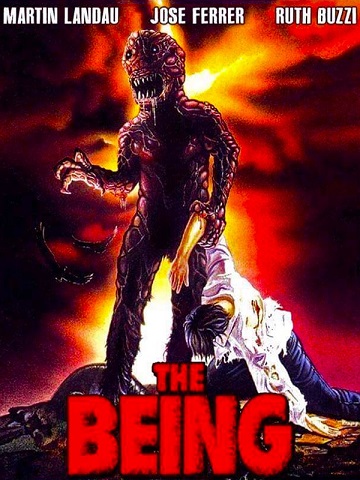
Horror Film Review: The Being (dir by Jackie Kong)


The 1983 film, The Being, takes place in the town of Pottsville, Idaho.

Pottsville is a small town with a quaint downtown, a drive-in that shows violent slasher films, and a group of neighborhood activists who have come together to take a stand against smut.  (Maybe they should start with that drive-in….)  It’s home to a quarry, several potato farms, a trailer park, a diner, a church, and a …. ahem …. nuclear waste dump.

Strange things are happening in town.  The young son of Marge Smith (Dorothy Malone) has vanished and Dorothy has become a familiar sight, wandering around the town in the middle of the night and searching for her child.  One person loses his head while fleeing an unseen assailant.  Two rednecks are killed while smoking weed at the drive-in theater.  People are dying and Detective Mortimer Lutz (Bill Osco) is determined to find out who (or what) is doing the killing.  He’s particularly concerned about the fact that a mysterious green slime is found at all of the crime scenes.

Meanwhile, Mayor Gordon Lane (Jose Ferrer) is more concerned with just covering up the crimes and the history of nuclear waste disposal because he’s got potatoes to harvest and he also hopes to be the first potato farmer in the White House.  (George Washington already beat him to that, though one could point out that Washington never actually lived in the current White House.)  While his wife (Ruth Buzzi) encourages everyone in town to take a stand against smut, Mayor Lane calls in a chemical safety engineer named Garcon Jones (Martin Landau) to investigate.

The Being is a bit of an oddity.  On the one hand, the title character is grotesque and the scenes in which the creature attacks its victims are notably gory.  On the other hand, the film has a strangely off-center sense of humor, starting with Bill Osco’s opening narration, which Osco delivers in the teeth-clenched rat-a-tat style of Rod Serling.  Halfway through the film, the action stops so that Lutz can have a rather bizarre dream in which he sees Garcon fall out of an airplane while the mayor’s wife flies by on a broomstick with blood flowing from her eyes.  This is the type of film in which the notably bloody conclusion is followed by satiric title cards that tell us what happened to each of the survivors.  The Being is a horror film that seems to be cheerfully aware of its budgetary limitations and, as a result, it’s full of moments in which it seems to wink at the audience and say, “Hey, don’t worry so much.  Sit back and have fun.”

For a low-budget, often poorly lit film about a killer mutant, The Being has an impressive cast.  Dorothy Malone, Jose Ferrer, and Martin Landau were all Hollywood veterans and all three of them give admirably straight-faced performances in their smallish roles.  (Ferrer and Malone won Oscars long before appearing in The Being.  Landau won his Oscar a decade after.)  Ferrer, in particular, does a good job of portraying the mayor’s irritation at having to actually deal with the people that he governs.  I also liked the performance of Ruth Buzzi.  Buzzi plays someone who should be very familiar to anyone who has ever lived in a small town, the person who has found a small amount of power and who is determined to never give up.

Low-budget aside, The Being is just odd enough to be watchable.

Horror Film Review: House of Dracula (dir by Erle C. Kenton)


When last we saw Dracula, the Wolf Man, and Frankenstein’s Monster, they were all coming to an untimely end in House of Frankenstein.

Dracula (John Carradine) was caught out in the sun by a group of angry villagers and ended up turning back into a skeleton while desperately trying to climb into his coffin.  The Wolf Man, also known as Larry Talbot (Lon Chaney, Jr.), was shot, presumably with a silver bullet, and finally, the world was free of having to listen to Larry whine about his unfortunate condition.  The Monster (Glenn Strange) was last seen drowning in quicksand.

Despite all of that, all three of them return in 1945’s House of Dracula.  The Monster is at least found in an underground lair, preserved in a state of suspended animation by the quicksand.  Dracula and Larry Talbot, however, just show up with neither looking the worst for wear.  I supposed that Larry could have survived being shot but Dracula’s return is bizarre because he was literally exposed to sunlight.  In the past, reviving Dracula has always required the stake to be removed from his heart.  Did someone remove the sunlight from Dracula’s skeleton?

All three of the cursed beings show up at the castle of Dr. Franz Edelmann (Onslow Stevens).  Working with two nurses, the beautiful and religious Milizia (Martha O’Driscoll) and a compassionate hunchback named Nina (Janes Adams), Edlemann is researching blood transfusions.  He believes that blood transfusions can cure just about anything.  Edelmann is so convinced that he can cure Dracula of his vampirism that he allows Dracula to move his coffin into the castle’s cellar.  Edelmann is also convinced that he use the spores of a special plant to cure Larry of his lyncanthropy.  As usual, Larry Talbot is skeptical and spends the entire movie boring everyone with the details of how much it sucks to be a werewolf.  As for Frankenstein’s Monster, he’s in the castle because Edelmann happend to come across him in an underground chamber.  Quite a coincidence, that.

Unfortunately, all of the blood transfusions in the world can’t stop Dracula from being Dracula and soon, the Lord of the Vampires is trying to turn Milizia into his queen.  Larry is also in love with Milizia, to the extent that he doesn’t realize that Nina is falling in love with him.  Meanwhile, Edelman ends up infecting himself with some of Dracula’s blood and soon, his reflection is no longer showing up in mirrors and he’s feeling the temptation to revive Frankenstein’s Monster.  A violent murder upsets the villagers, who refuse to listen to Inspect Holz (Lionel Atwill) when he begs them to let the police take care of things as opposed to laying siege on the castle with a bunch of torches.  That’s what happens when you allow your house to become the House of Dracula.

House of Dracula is a clear and marked improvement on House of Frankenstein.  While Larry Talbot is just as whiny as ever (and Lon Chaney, Jr.’s sad sack performance is a bit dull) and Frankenstein’s Monster is a bit underused, John Carradine makes for a perfect Dracula, mixing old world charm with cunning cruelty.  Director Erle C. Kenton directs the film as if it were a film noir, filling the castle with ominous shadows and giving us a cast of morally conflicted characters.  Though I think most modern viewers are a bit too jaded to be truly scared by the old horror films, the scene where Edelmann watches as his reflection disappears from the mirror is effectively creepy.  I can only imagine how audiences in 1945 reacted to it.

When first released, House of Dracula was not a hit and, as a result it was one of the final “serious” films to feature the Universal monsters.  (Chaney and Strange would reprise their signature roles in a few comedies while Carradine would play Dracula in several other non-Universal productions.)  Seen today, it seems like the perfect final chapter for the monsters that, for 20 years, defined Universal.

Previous Universal Horror Reviews:

  1. Dracula (1931)
  2. Dracula (Spanish Language Version) (1931)
  3. Frankenstein (1931)
  4. Island of Lost Souls (1932)
  5. The Mummy (1932)
  6. The Invisible Man (1933)
  7. The Bride of Frankenstein (1935)
  8. Dracula’s Daughter (1936)
  9. Son of Frankenstein (1939)
  10. The Wolf Man (1941)
  11. Ghost of Frankenstein (1942)
  12. Frankenstein Meets The Wolf Man (1943)
  13. Son of Dracula (1943)
  14. House of Frankenstein (1944)
  15. Creature From The Black Lagoon (1954)

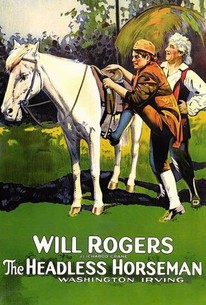
Horror on the Lens: The Headless Horseman (dir by Edward D. Venturini)


Adapted from the classic short story by Washington Irving, 1922’s The Headless Horseman tells the story of Ichabod Crane (Will Rogers), a stern schoolmaster and a student of the occult.  He comes to the town of Sleepy Hollow to serve as the new school teacher and he immediately gets on everyone’s bad side by being a bit tougher on the students than they were expecting.  When it appears that Ichabod is interested in Katrina Von Tassel (Lois Meredith), Katrina’s other suitor, Abraham Von Brunt (Ben Hendricks, Jr.) conspires to make it appear as if Ichabod is working with a coven of witches.

Of course, even if Ichabod survives the witchcraft accusations, there’s still the threat of the Headless Horseman who is said to haunt the isolated roads around Sleepy Hollow….

This was not the first film adaptation of The Legend of Sleepy Hollow.  There were two other silent versions that came out before The Headless Horseman but they are both lost films.  The Headless Horseman is the earliest surviving film version of Irving’s tale.  Historically, it’s interesting as an example of an early horror film.  To be honest, the scene in which Crane imagines what will happen to him if he is found guilty of witchcraft is more effective than the Horseman scenes.  But Will Rogers does do a good job with the role of Ichabod Crane, even if Rogers is hardly the tall and thin Crane who was described in Irving’s story.  Rogers was, of course, best-known for being a humorist and it was claimed that he “never met a man he didn’t like.”  Unfortunately, the same cannot be said of Ichabod Crane.

Enjoy!

October Positivity: The Cross and the Switchblade (dir by Don Murray)


First released in 1970, The Cross and the Switchblade stars Pat Boone as David Wilkerson.

David is a small-town preacher who heads to Brooklyn in the late 50s.  Having read an article about the prevalence of violent gangs in New York City, David is determined to make a difference and bring some peace to the city.  Why exactly he feels that he can do that, as opposed to someone who is actually from New York and who has some actual experience dealing with gangs, is never really explained.  David starts going to drug dens and back alleys and rooftops in the poorest parts of the city.  At first, no one takes him seriously but, because he refuses to give up, he does slowly start to win the neighborhood’s respect.  He’s even given a place to live so that he’ll no longer have to spend his time sleeping in his car.

(Sleeping in his car?  David really didn’t think this out before heading up to New York, did he?)

David becomes obsessed with trying to reach Nicky Cruz (a young Erik Estrada), who is one of the most fearsome member of the Mau Maus gang.  The problem is that Nicky really doesn’t want to be reached.  He’s been betrayed too many times by the system to trust anyone who claims that they want to help.  Nicky is a lot like the character that Michael Wright played in The Principal, basically threatening to cut off any helping hand this offered to him.  When one of Nicky’s girlfriends begs for a fix of heroin, Nicky instead sends her to the local church with orders to “take care of” David.  When she instead accepts David’s offer of help and gets sober, Nicky becomes even angrier….

The Cross and the Switchblade is an early example of the type of “mainstream” religious film that, as of late, has become popular in America.  It may be about religion but it also has a lengthy fight scene and some mild cursing, as if the film wanted to make sure that everyone watching knew that it was a “real movie” as opposed to just being a religious tract.  The film was shot on location in Brooklyn, which does bring an authentically gritty feel to certain parts of the film.

Unfortunately, the film itself is done in by a slow pace and a few odd casting choices.  One would think that a young Pat Boone would be a good choice for a fresh-faced preacher from Middle America but, instead, Boone gives a rather stiff performance as David Wilkerson and certainly shows none of the charisma that would be necessary to get the film’s gangs to even momentarily put down their weapons and listen to a sermon.  If Boone doesn’t show enough emotion, Estrada shows a bit too much.  The film was Estrada’s acting debut but, even at the age of 21, Estrada had already developed the Shatneresque acting style that makes him so entertaining in films like Guns and Chupacabra Vs. The Alamo but less credible in films where he actually has to play characters who go through a change or learn a lesson.

In the end, perhaps the most interesting thing about this film is that it was directed by Don Murray, the actor who was nominated for an Oscar for Bus Stop and who played the doomed senator in Advice and Consent.  Three years after Cross and the Switchblade, Murray would make quite an impression as the evil Governor Breck in Conquest of the Planet of the Apes.  More recently, he played Dougie’s surprisingly sympathetic boss in Twin Peaks: The Return.  Murray is a great, albeit underrated actor.  But, as a director (or at least as the director of this particular film), he struggled to keep the action moving and far too often, he used gimmicks like slow motion and weird camera angles in an attempt to liven up the story.

The Cross and the Switchblade asks the viewer to choose one or the other.  Ultimately, it doesn’t make a compelling case for either.

Late Night Retro Television Reviews: Degrassi Junior High 1.1 “Kiss Me, Steph” and 1.2 “The Big Dance”


Welcome to Late Night Retro Television Reviews, a feature where we review some of our favorite and least favorite shows of the past!  On Sunday, I will be reviewing the Canadian series, Degrassi Junior High, which aired on CBC and PBS from 1987 to 1989!  The series can be streamed on YouTube!

As much as I love Degrassi, I have to admit that I’ve never really sat down and watched the two shows that launched the entire franchise, Degrassi Junior High and Degrassi High.  I figured why not give it a shot now?

Episode 1.1 “Kiss Me, Steph”

(Dir by Kit Hood, originally aired on January 18th, 1987)

Welcome to Toronto!  It’s time for a new school year at Degrassi Junior High!

As I watched the first episode of Degrassi Junior High, the first thing I noticed was just how grainy and depressing everything looked.  As opposed to the bright lighting and vibrant colors of Degrassi: The Next Generation, the world of Degrassi Junior High looked overcast and not always inviting.  The school itself looked old, as if it had been a while since anyone bothered to paint the walls or even sweep the floors.  In short, visually, Degrassi Junior High looked pretty much like a real middle school.  The overcast imagery neatly mirrored the way that most people feel when they’re starting the first day of school, especially if it’s a new school.

It’s the first day of school for Arthur Kobalewscuy (Duncan Waugh) and, being short and way too trusting for his own, it doesn’t take long before the school prankster, Joey Jeremiah (Pat Mastroianni), tricks him into getting locked into the janitor’s closet.  Poor Arthur but, far more importantly …. JOEY!  As any true fan of Degrassi knows, Joey would go on to become one of the most important parts the franchise, both in the original series and a good deal of The Next Generation as well.  In the first episode, he’s far a cry from the likable Joey that we all know.  Instead, he’s just an obnoxious kid who wears a fedora to school.

Arthur is the younger brother of Stephanie Kaye (Nicole Stoffman), who is the most popular girl in the school.  One would think that this would be a good thing for Arthur but Stephanie begins the school day by ordering Arthur not to talk to her because she’s in “grade 8” and he’s only in “grade 7.”  Stephanie and Arthur’s parents are divorced, with Stephanie living with her mother and Arthur living with her father.  Stephanie is determined to have a new image for Grade 8 and, as soon as she steps into the school, she heads to the bathroom and takes off her boring white blouse and blue skirt to reveal the crop top and tight jeans that she’s wearing underneath.  Her best friend, the somewhat dour Voula (Niki Kemey), watches in horror as Stephanie puts on makeup.  (I usually waited until I arrived at school to do my makeup as well.)

When Stephanie hears an announcement that student council elections are coming up, she decides to run for President.  Voula is happy to serve as Stephanie’s campaign manager until Stephanie starts exchanging kisses for votes.  Voula is scandalized that Stephanie isn’t talking about the issues and is running with the slogan, “All The Way With Stephanie Kaye.”  Voula warns Stephanie that none of the girls are going to vote for her but Stephanie explains that she only needs the votes of the boys.  Of course, the main reason why Voula is upset is because Stephanie is giving all the credit for her successful campaign to Joey instead of her.

(Interestingly enough, one of the first episodes of Degrassi: The Next Generation also featured a student council election and a sister trying to ignore her dorky younger brother.)

While Stephanie is winning over the boys, Arthur finally manages to get a new friend named Yick Yu (Siluck Saysanasy).  Yay, everyone needs a friend!

Stephanie wins the election.  The announcement is made while Stephanie is in home room where her teacher is none other than Mr. Raditch (Dan Woods), who would later be the first of many principals on Degrassi: The Next Generation.  Joey jumps up and hugs Stephanie as the announcement is made.  “Mr. Jeremiah!” Mr. Raditch snaps, “Not in my class!  Save that behavior for the polls!”

(Fortunately, Mr. Raditch would warm up to Joey by the time that Joey’s stepson was enrolled in the school.  But that’s not going to happen for a while….)

Having won the election, Stephanie discovers that she’s actually expected to do a lot of stuff, like give a speech to the PTA.  Stephanie begs Voula to write the speech for her but Voula tells Stephanie that she doesn’t want to be her friend anymore.  “You’re on your own, Ms. President!  You and your new image!”

Oh well.  With great power comes great responsibility and all that stuff.  Personally, I think Stephanie should just blow off the speech.  And really, Voula is being a bit too self-righteous here.  I mean, it’s student council.  It means nothing!  The episode ends with Stephanie swearing that she’s going to be the best president that the school has ever had but it shouldn’t be that difficult since it’s not like the president makes school policy or anything.  As Stephanie, once again dressed modestly, leaves the school, she finally acknowledges Arthur as her brother and Arthur offers to write the speech for her.

This was not a bad way to start the franchise and I enjoyed spotting future Degrassi stars like Wheels, Snake, and Spike wandering around the school.  This episode did a good job of capturing the silliness of student council elections and also the way every day of high school and middle school can feel like the biggest drama ever.  Arthur and Yick are likable in their nerdy way.  I related Stephanie.  Voula kind of needs to get over herself but we all had a friend like that in school, didn’t we?

Episode 1.2 “The Big Dance”

(Dir by Kit Hood, originally aired on January 25th, 1987)

It’s time for the fall dance!

Voula, who is still unreasonably angry with Stephanie, suggests that they use the dance as a way to raise money for the foster child that the school is sponsoring.  Everyone thinks this is a great idea and they think Voula should give a speech while handing over the money at the end of the dance.  Unfortunately, Voula’s superprotective father (Paul Brock) refuses to allow Voula to stay out past 9:30.  He also freaks out when he sees that Voula is wearing lipstick and suddenly, it makes more sense why she’s so jealous of Stephanie.

As for Stephanie, she asks Wheels (Neil Hope) to take her to dance and — OH MY GOD, IT’S WHEELS!  Now, as anyone who knows anything about Degrassi can tell you, Wheels eventually became one of the most important characters on the show.  As soon as I saw Joey talking to him, I immediately started to think about the fact that this is the same Wheels who is going eventually lose his parents to a drunk driver, get molested while hitchhiking, develop a drinking problem, and end up going to prison shortly after graduating high school.  In this episode, though, he’s just a pleasant-natured friend of Joey’s.

Voula lies to her father about spending the night with a study group and instead, heads to the dance.  Meanwhile, Stephanie goes to the house of her friend Lucy Fernandez (Anais Granofsky) so she can change into her school dance clothes.  (Fans of Degrassi know that Lucy is destined to end up getting temporarily blinded and crippled as a result of Wheels driving drunk.)  Along with the two creepy twins, Heather and Erica (Maureen and Angela Deiseach), Stephanie ends up having way too much to drink at Lucy’s.

The end result is that Stephanie shows up drunk at the school dance and ends up embarrassing herself in front of Wheels while Voula is caught breaking curfew by her father.  In typical Degrassi fashion, no one gets a happy ending!

I kind of groaned a little when I saw that this was going to be a Voula episode but actually, the episode did a good job of showing why Voula got so angry at Stephanie.  As well, in what would be a Degrassi hallmark, the episode handled the theme of underage drinking with sensitivity as opposed to judgmental melodrama.  Yes, Stephanie has too much to drink and ruined her date but the episode understood that, rather than being the end of the world, this is just a part of growing up.  On Degrassi Junior High, teenagers were allowed to make mistakes.

Finally, during the dance, I spotted Joey dancing with Caitlin (Stacie Mistysyn), who is of course destined to become the great love of Joey’s life.  It was a nice case of (probably inadvertent) foreshadowing.

Next week: Yick thinks Mr. Raditch is a racist!

The Unnominated: Play Misty For Me (dir by Clint Eastwood)


Though the Academy of Motion Picture Arts and Sciences claim that the Oscars honor the best of the year, we all know that there are always worthy films and performances that end up getting overlooked.  Sometimes, it’s because the competition too fierce.  Sometimes, it’s because the film itself was too controversial.  Often, it’s just a case of a film’s quality not being fully recognized until years after its initial released.  This series of reviews takes a look at the films and performances that should have been nominated but were, for whatever reason, overlooked.  These are the Unnominated.

In 1971, Clint Eastwood made his directorial debut with Play Misty For Me.

Eastwood plays Dave Garver, a DJ at a Carmel-By-The-Sea jazz station who has ambitions to some day go national.  Every night, a woman named Evelyn (Jessica Walter) calls Dave and asks him to “Play Misty for me.”  Eventually, Dave meets Evelyn in a bar and he takes her home with him.  After sleeping with her, Dave tells Evelyn that he’s only interested in having a casual relationship.  Evelyn, however, reveals that she has a far different interpretation of casual.  Soon, Evelyn is dropping by Dave’s house unannounced and acting rather clingy, even appearing to attempt suicide when Dave tries to tell her that he’s not interested in having a serious relationship with her.

At first, it’s hard not to feel bad for Evelyn.  Yes, she’s obviously unstable.  Yes, she’s clingy.  Yes, the scene in which she intentionally ruins Dave’s interview for a national job is difficult to watch.  But there’s something so sincere and desperate about her need to have someone in her life that, again, it’s hard not to have sympathy for her.  When she claims that Dave took advantage of her when they first met, she’s got a point.  Dave obviously felt that Evelyn was a one-night stand that he would never have to see again.  Evelyn feels differently.

Things chance when Dave eventually runs into his former girlfriend, Tobie Williams (Donna Mills).  Dave and Tobie tentatively restart their relationship.  When Evelyn finds out, she goes from being clingy to be homicidal.  She goes from trashing Dave’s place to attacking Dave’s housekeeper to attacking Dave and Tobie themselves.

An assured directorial debut, Play Misty For Me shows that Eastwood had a strong directorial sensibility from the start.  (It also shows, during an extended sequence in which Dave and Tobie attend a jazz festival, that Eastwood was always capable of being rather self-indulgent.)  Eastwood uses the film to deconstruct his own confident persona, with Dave going from being a somewhat callous womanizer to ultimately being terrified for his life.  The film is dominated by Jessica Walter’s performance as Evelyn.  Walter is sad and terrifying, often in the same scene.  Though the film doesn’t dig into what happened in Evelyn’s past to drive her to such extremes, Jessica Walter’s performance leaves no doubt that she’s someone who has been hurt by the world and is now so desperate for love and protection that she’ll strike out at anyone who she feels is denying it to her.

As a horror movie that was directed by an actor who, at the time, was still not a favorite of the critics, it’s perhaps not surprising that the Academy ignored Play Misty For Me.  Still, it’s a shame.  If nothing else, Jessica Walter’s performance was far more memorable that Janet Suzman’s nominated turn in the painfully dull Nicholas and Alexandra.  It’s a brave performance and one that more than deserved to be honored.

Previous entries in The Unnominated:

  1. Auto Focus 
  2. Star 80
  3. Monty Python and The Holy Grail
  4. Johnny Got His Gun
  5. Saint Jack
  6. Office Space

Lisa Reviews An Oscar Nominee: Spellbound (dir by Alfred Hitchcock)


The 1945 Best Picture nominee, Spellbound, tells the story of Dr. Constance Petersen (Ingrid Bergman), a psychoanalyst at a mental hospital in my least favorite state, Vermont.

Constance has fallen in love with a man (Gregory Peck) who she believes to be Dr. Anthony Edwardes, the newly appointed director of the hospital.  Dr. Edwardes is youngish and handsome and idealistic and authoritative …. well, he’s Gregory Peck.  However, he also has an intense phobia about seeing any set of parallel lines.  Curious to discover the reason for Edwardes’s phobia, Constance does a little digging on her own and discovers that Dr. Anthony Edwardes is not a doctor at all!  Instead, he’s a guilt-stricken amnesiac who is convinced that he murdered Dr. Edwardes and took his place!

Constance, however, doesn’t believe that the Amnesiac is a murderer.  She thinks that he is suffering from some sort of deep-rooted guilt that had led him to believe that killed the doctor.  She wants a chance to psychoanalyze him and discover the truth about his background.  Unfortunately, the police do think that the Amnesiac is a murderer and their determined to arrest him.

Constance and the Amnesiac go on the run, heading to the home of Constance’s mentor, Dr. Alexander Brulov (Michael Chekhov, the nephew of Anton Chekhov).  With Brulov’s help, Constance analyzes a dream that the Amensiac had, one involving curtains decorated with eyes, the faceless proprietor of a casino, and a man falling off a mountain.  Can Constance and Brulov solve the mystery of the Amnesiac’s identity before the police take him away to prison?

Spellbound was the last of the four Hitchcock best picture nominees and it was also the last film that Hitchcock made for producer David O. Selznick.  Selznick was quite a fan of psychoanalysis and he insisted that Hitchcock not only make a movie about it but that he also use Selznick’s own therapist as a technical advisor on the project.  Hitchcock, for his part, was able to bring in the surrealist Salvador Dali to help design the Amnesiac’s dream sequence but Selznick felt that the 20-minute sequence was too long and too weird and, as a result, it was cut down to two minutes for the final film.  All this considered, it’s not a surprise that, despite the fact that Spellbound was a hit with critics and audiences, Hitchcock himself didn’t care much for it and considered it to be more of a Selznick film than a Hitchcock film.  And it is true that the film’s total faith is psychoanalysis feels more like something one would expect to hear from a trendy producer than from a director like Hitchcock, who was known for both his dark wit and his rather cynical attitude towards anyone in authority.

For a film like Spellbound to truly work, there has to be some doubt about who the Amnesiac is.  For the suspense to work, the audience has to feel that there’s at least a chance, even if it’s only a slight one, that the Amnesiac actually could be a murderer, despite the attempts of Constance and Brulov to prove that he’s not.  And Spellbound is full of scenes that are meant to leave the audience wondering about whether or not the Amnesiac should be trusted.  However, because the Amnesiac is played by Gregory Peck, there’s really no doubt that he’s innocent.  Hitchcock was not particularly happy with Gregory Peck as his leading man.  Peck projected a solid, middle-American integrity.  It made him ideal for heroic and crusading roles but made him totally wrong for any role that required ambiguity.  It’s difficult to believe that the Amnesiac is suffering from a guilt complex because it’s difficult to believe that Gregory Peck has ever done anything for which he should feel guilty.  Cary Grant could have played the Amnesiac.  Post-war Jimmy Stewart could have done an excellent job with the role.  But Peck is just too upstanding and stolid for the role.  In a role that calls from neurosis, Peck is kind of boring.

That said, the rest of the cast is fine, with Ingrid Bergman giving one of her best performance as Constance and Michael Chekhov bringing some needed nuance to a role that could have turned into a cliché.  Leo G. Carroll has a small but pivotal role and he does a good job keeping the audience guessing as to his motivation.  Even at a truncated two minutes, the Dali dream sequence is memorably bizarre and the famous shot of a gun pointed straight at the camera still carries a kick.  This is a lesser Hitchcock film but, that said, it’s still a Hitchcock film and therefore worth viewing.

As I mentioned previously, this was the last of Hitchcock’s films to be nominated for Best Picture.  Ironically, his best films — Rear Window, Vertigo, and Psycho among them — were yet to come. Spellbound was nominated for six Oscars but only won for Miklos Rozsa’s score.  (Ingrid Bergman was nominated for Best Actress that year, not for her role in Spellbound but instead for The Bells of St. Mary’s.)  The big Oscar winner that year was Billy Wilder’s The Lost Weekend.

Horror on TV: The Hitchhiker 4.1 “Perfect Order” (dir by Daniel Vigne)


During the month of October, we like to share classic episodes of horror-themed television.  That was easier to do when we first started doing our annual October Horrorthon here at the Shattered Lens because every single episode of the original, black-and-white Twilight Zone was available on YouTube.  Sadly, that’s no longer the case.

However, there is some good news!  Twilight Zone may be gone but there are other horror shows on YouTube!  For instance, I’ve discovered that there are several episodes of The Hitchhiker on YouTube!  The Hitchhiker was an American/French/Canadian co-production that aired on HBO from 1983 to 1987 and on the USA Network from 1989 to 1991.  It was an anthology show, one in which each story was introduced by a mysterious hitchhiker (played by Page Fletcher).

Let’s get things started with Perfect Order, an episode featuring Virginia Madsen as a model who works with a famous but eccentric photographer named Simon (Steve Inwood).  It turn out that Simon’s eccentricity includes an obsession with death.  Along with featuring good performances from Madsen and the underrated Inwood, this episode both satirizes the world of New York fashion and it features a climax that is full of laser beams.  What more could one want for the beginning of October?

This episode originally aired on February 17th, 1987.

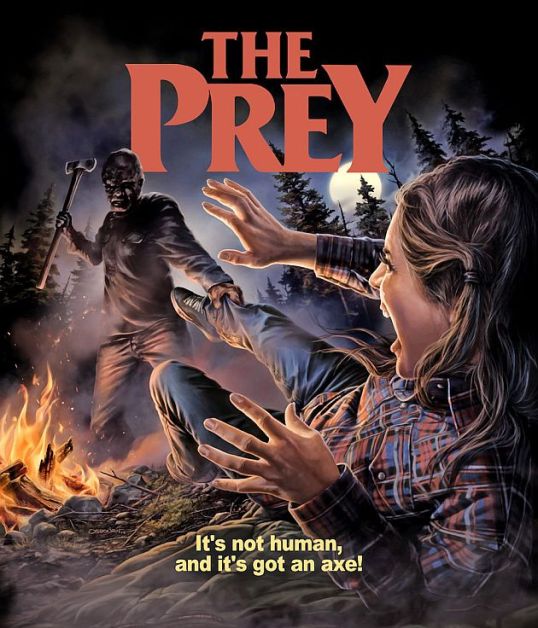
October Hacks: The Prey (dir by Edwin Brown)


The 1983 slasher film, The Prey, opens with a wildfire raging through the Rocky Mountains, destroying a community of people who lived in a cave.  32 years later, the only survivor of the fire (played by Carel Struycken, who would later be memorably cast on Twin Peaks as the “It is happening again” giant), wanders through the forest.  When he spots a middle-aged couple camping and tending to a campfire, the survivor snaps and kills them both.

The next morning, a van drives through the national park.  Inside the van are three young couples, Nancy (Debbie Thureson) and Joel (Steve Bond), Bobbie (Lori Lethin) and Skip (Robert Wald), and Gail (Gayle Gannes) and Greg (Philip Wenckus).  They are looking forward to a nice weekend of camping, sex, and mountain climbing.  The girls are especially happy when they meet the handsome local parker ranger, Mark O’Brien (Jackson Bostwick).  The couples head into wilderness, little realizing that they are being followed and watched by the murderous survivor.

Watching The Prey, I was reminded of why I don’t go camping.  I mean, I like looking at nature.  I like handsome park rangers.  There’s a sweet scene where Mark tells an extremely corny joke to a baby deer and it made me go, “Awwwwww!”  But seriously, I would never want to spend my night sitting around a campfire or sleeping on the ground.  Not only is the wilderness full of bugs but there’s always the danger of getting trapped in a sudden storm or some other natural disaster.  And I have to admit that I’m just not a fan of the way that people act while camping.  My fear is that, if I ever did go camping, I would end up with people shouting, “Go!  Go!  Go!’ at me.  If my camping companions insist on going mountain climbing, am I obligated to accompany them?  If one of them falls off the side of the mountain, that’s really going to ruin my weekend.

As for The Prey as a film, the plot is standard slasher stuff.  Attractive young people end up stranded out in the middle of nowhere and they are picked off, one at a time, by a monster who seems to take issue with anyone trying to have any fun.  That said, The Prey has enough strange moments to make it memorable.  With an 80-minute running time, The Prey is an oddly paced film.  (And yes, oddly paced does often translate to boring.)  The majority of the film is just made up with footage of the three couples walking through the forest and having conversations that were reportedly improvised by the cast.  (Gayle laughs as she talks about a time that she nearly drowned.)  The film is full of skewed camera angles that give the entire proceedings an off-balance feel and occasionally the action cuts away from the main characters to Mark playing a banjo or another park ranger (played by former Charlie Chaplin co-star Jackie Coogan) having a tense conversation with a policeman who calls to ask about the missing middle-aged couple.  The survivor doesn’t really go after the main couples until the film’s final 15 minutes and the pace suddenly quickens as if to mirror the relentless violence of the film’s killer.  The strange pacing and the weird details gives The Prey a dream-like feel and the ending, in which the survivor reveals that he has interests outside of killing, is fascinating in just how unexpectedly bizarre it is.

The Prey was undoubtedly made to take advantage of the popularity of other wilderness slasher films but it’s just weird enough to establish an identity of its own.