Novel Review: The Bonfire of the Vanities by Tom Wolfe


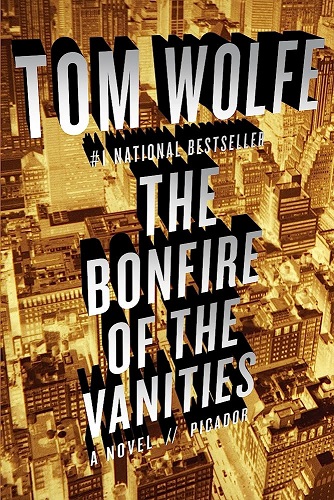
When it comes to The Bonfire of Vanities, after watching the movie and then reading the book about the making of the movie, you might as well order a copy of the original 1987 novel by Tom Wolfe and see where it all started.

At nearly 700 pages, The Bonfire of the Vanities is a big book about New York City in the mid-80s.  It’s a book about economics, racism, municipal politics, high society, and what happens when one very privileged person loses everything that he felt defined him.  As a writer and a satirist, Wolfe’s described the foibles and the mistakes of the book’s large cast of characters with a definite delight.  The reader may end up feeling sorry for stockbroker Sherman McCoy after he is arrested and put on trial for the hit-and-run of a young black teenager but, at no point, does Sherman ever become a truly sympathetic character.  As a character, Sherman never has the self-awareness necessary to truly confront his own mistakes and attitudes.  Reading the original novel, one realizes just how miscast Tom Hanks was when he was cast in the lead role for the film adaptation.  There are many ways to describe the aristocratic, arrogant, and ultimately hapless Sherman McCoy, but he is definitely not Tom Hanks.

Of course, Sherman is not the only character to lack self-awareness.  There’s really not a shred of self-awareness to found amongst any of the characters.  Both Sherman’s mistress and his wife are more concerned with how the trial is going to effect their social lives.  District Attorney Abe Weiss sees the prosecution of McCoy as a way to further his own political career.  Assistant District Attorney Jed Kramer finds himself obsessed with one the jurors.  Sleazy British journalist Peter Fallow amplifies the more sordid aspects of the story and blithely turns Sherman McCoy into the epitome of everything that everyone hates about the wealthy, with the great irony being that Sherman and his social set have patterned their own social style after their idealized view of the British.  The Mayor of New York obsesses over every little slight while a collection of detectives and attorneys do their job with blue collar efficiency and a cast of activists and grifters go out of their way to make headlines and to keep New York on the verge of exploding.  In the end, there’s only one truly heroic character in the novel and that’s Judge Myron Kovitsky, a loud and profane New Yorker who rules his courtroom like a benign tyrant but who is the only character who truly cares about seeing justice done.  In the end, the book suggests that the price of Kovitsky’s honorable stand will be the loss of his career.

(Kovitsky, the most vividly characterized of the many characters in the novel, was also one of the many characters to be changed for the film, becoming Judge Leonard White, the voice-of-God judge played by Morgan Freeman.)

In the end, the main character of the book really is New York City and Wolfe’s mix of love and disdain for the city comes through in every passage, from the detectives casually cursing around the station house to the waiters who efficiently handle the sudden death of a diner in restaurant to the politicians who hate and fear their own constituents.  Reportedly, Wolfe said that the novel was about capturing what New York City was like in the 80s and it’s definitely a novel of that era.  At the same time, when I read it in 2021, the story still felt relevant.  If anything, it was easy for me to picture Sherman McCoy as one of those people who brags about how they would have voted for Obama a third time while, at the same time, protesting the idea of any sort of affordable housing units being built in his neighborhood.  It was easy to imagine Fox and MSNBC and CNN all covering every moment of Sherman McCoy’s trial.  It was easy to imagine Peter Fallow showing up on TMZ and it was just as easy to imagine all of Fallow’s articles being breathlessly shared on social media.  Reading the novel, it was easy to see that the bonfire is still burning.

Book Review: The Devil’s Candy: The Anatomy of a Hollywood Fiasco by Julia Salomon


I was tempted to start this review by saying that, if you’ve seen The Bonfire of The Vanities and you wanted to know how such a film filled with so much talent could have been such a misfire, you need to read Julie Salomon’s The Devil’s Candy.  First published in 1992, the book follows the making of The Bonfire of Vanities, from casting to pre-production to filming to post-production to box office failure.  The Devil’s Candy is considered to be a classic of behind-the-scenes Hollywood reporting.

But you know what?  If you watched The Bonfire of the Vanities recently, you probably did so because you read Salomon’s book.  This is a good example where the making-of book has actually had a longer pop cultural shelf life than the movie itself.  As a movie, The Bonfire of the Vanities is one of those things that you start to forget even while you’re watching it.  But I can guarantee that anyone who has read The Devil’s Candy can remember the moment when Bruce Willis felt that a scene was moving too slowly and he proceeded to usurp Brian De Palma’s role as director.

If you’ve read the book, you undoubtedly remembering everyone feeling that Uma Thurman was the perfect choice for the role of Maria, with the exception of Tom Hanks who felt their chemistry at the audition was off.  For that matter, you probably also remember that Hanks read with Lena Olin and Lolita Davidovich before Melanie Griffith was given the role.

If you’ve read the book, you remember how frustrated Brian De Palma got with having to try to keep both the studios and the neighborhood activists happy.  You remember costume designer Ann Roth’s frustration with extras who didn’t show up properly dressed.  You remember the streetwise New York Judge Burton Roberts auditioning for the role of a character that was based on him, just for the character to then be so massively rewritten that the role ended up going to Morgan Freeman.  You remember Geraldo Rivera showing up to shoot a cameo and acting like a diva.  You remember the studio execs showing up on set and getting in the way.  You remember the struggle to get the perfect shot of an airplane landing.  You remember poor Beth Broderick, dating De Palma and trying to retain some semblance of dignity while doing take-after-take of the film’s most gratuitous scene.  You remember Steven Spielberg showing up and worrying that De Palma’s film is too sharp in its satire….

(Of course, in the end, the main problem with the film version of The Bonfire of the Vanities is that the satire isn’t sharp at all.)

Indeed, the book is full of famous people, few of whom come across particularly well.  Bruce Willis, in particular, is portrayed as being full of himself and Salomon’s comments about him do occasionally feel as if they’ve crossed the line from reporting to some sort of personal animosity.  (That said, it should be noted that Salomon does point out that a lot of Willis’s attitude was the result of suddenly becoming a star and no longer knowing who he could trust.)  Tom Hanks comes across as being genuinely nice but also genuinely in over his head.  The book’s most tragic figure is Brian De Palma, the natural-born rebel who found himself suddenly working for a studio that feared even the least bit of subversion.  De Palma starts the book needing a hit and, regardless of the many mistakes that De Palma makes while directing The Bonfire of the Vanities, it’s hard not to feel bad that the book ended with De Palma not getting that hit.  If De Palma other flops were at least films that stayed true to his vision, De Palma’s most infamous flop was the one in which he allowed the studio too much control.

Reading the book, one gets the feeling that everyone understood that they were making a fatally compromised film from the beginning.  If you’ve ever wondered how a bad film can be made by talented people, this is the book to read.

Icarus File No. 11: The Bonfire of the Vanities (dir by Brian De Palma)


In 2021, I finally saw the infamous film, The Bonfire of the Vanities.

I saw it when it premiered on TCM.  Now, I have to say that there were quite a few TCM fans who were not happy about The Bonfire of the Vanities showing up on TCM, feeling that the film had no place on a station that was supposed to be devoted to classic films.  While it’s true that TCM has shown “bad” films before, they were usually films that, at the very least, had a cult reputation.  And it is also true that TCM has frequently shown films that originally failed with audiences or critics or both.  However, those films had almost all been subsequently rediscovered by new audiences and often reevaluated by new critics.  The Bonfire of the Vanities is not a cult film.  It’s not a film about which one can claim that it’s “so bad that it’s good.”  As for the film being reevaluated, I’ll just say that there is no one more willing than me to embrace a film that was rejected by mainstream critics.  But, as I watched The Bonfire of the Vanities, I saw that everything negative that I had previously read about the film was true.

Released in 1990 and based on a novel by Tom Wolfe, Bonfire of the Vanities stars Tom Hanks as Sherman McCoy, a superficial Wall Street trader who has the perfect penthouse and a painfully thin, status-obsessed wife (Kim Cattrall).  Sherman also has a greedy mistress named Maria (Melanie Griffith).  It’s while driving with Maria that Sherman takes a wrong turn and ends up in the South Bronx.  When Sherman gets out of the car to move a tire that’s in the middle of the street, two black teenagers approach him.  Maria panics and, after Sherman jumps back in the car, she runs over one of the teens.  Maria talks Sherman into not calling the police.  The police, however, figure out that Sherman’s car was the one who ran over the teen.  Sherman is arrested and finds himself being prosecuted by a power-hungry district attorney (F. Murray Abraham).  The trial becomes the center of all of New York City’s racial and economic strife, with Sherman becoming “the great white defendant,” upon whom blame for all of New York’s problems can be placed.  Bruce Willis plays an alcoholic journalist who was British in the novel.  Morgan Freeman plays the judge, who was Jewish in the novel.  As well, in the novel, the judge was very much a New York character, profanely keeping order in the court and spitting at a criminal who spit at him first.  In the movie, the judge delivers a speech ordering everyone to “be decent to each other” like their mothers taught them to be.

Having read Wolfe’s very novel before watching the film, I knew that there was no way that the adaptation would be able to remain a 100% faithful to Wolfe’s lacerating satire.  Because the main character of Wolfe’s book was New York City, he was free to make almost all of the human characters as unlikable as possible.  In the book, Peter Fallow is a perpetually soused opportunist who doesn’t worry about who he hurts with his inflammatory articles.  Sherman McCoy is a haughty and out-of-touch WASP who never loses his elitist attitude.   In the film, Bruce Willis smirks in his wiseguy manner and mocks the other reporters for being so eager to destroy Sherman.  Hanks, meanwhile, attempts to play Sherman as an everyman who just happens to live in a luxury penthouse and spend his days on Wall Street.  Hanks is so miscast and so clueless as how to play a character like this that Sherman actually comes across as if he’s suffering from some sort of brain damage.  He feels less like a stockbroker and more like Forrest Gump without the Southern accent.  There’s a scene, written specifically for the film, in which Fallow and Sherman ride the subway together and it literally feels like a parody of one of those sentimental buddy films where a cynic ends up having to take a road trip with someone who has been left innocent and naïve as result of spending the first half of their life locked in basement or a bomb shelter.  It’s one thing to present Sherman as being wealthy and uncomfortable among those who are poor.  It’s another thing to leave us wondering how he’s ever been able to successfully cross a street in New York City without getting run over by an angry cab driver.

Because the film can’t duplicate Wolfe’s unique prose, it instead resorts to mixing cartoonish comedy and overwrought melodrama.  It doesn’t add up too much.  At one point, Sherman ends a dinner party by firing a rifle in his apartment but, after it happens, the incident is never mentioned again.  I mean, surely someone else in the apartment would have called the cops about someone firing a rifle in the building.  Someone in the press would undoubtedly want to write a story about Sherman McCoy, the center of the city’s trial of the century, firing a rifle in his own apartment.  If the novel ended with Sherman resigned to the fact that his legal problems are never going to end, the film ends with Sherman getting revenge on everyone who has persecuted him and he does so with a smirk that does not at all feel earned.  After two hours of being an idiot, Sherman suddenly outthinks everyone else.  Why?  Because the film needed the happy ending that the book refused to offer up.

Of course, the film’s biggest sin is that it’s just boring.  It’s a dull film, full of good actors who don’t really seem to care about the dialogue that they are reciting.  Director Brian De Palma tries to give the film a certain visual flair, resorting to his usual collection of odd camera angles and split screens, none of which feel at all necessary to the story.  In the end, De Palma is not at all the right director for the material.  Perhaps Sidney Lumet could have done something with it, though he would have still had to deal with the less than impressive script.  De Palma’s over-the-top, set piece-obsessed sensibilities just add to the film’s cartoonish feel.

The film flopped at the box office.  De Palma’s career never recovered.  Tom Hanks’s career as a leading man was momentarily derailed.  Bruce Willis would have to wait a few more years to establish himself as a serious actor.  Even the normally magnanimous Morgan Freeman has openly talked about how much he hated being involved with The Bonfire of the Vanities.  That said, the film lives on because  De Palma allowed journalist Julie Salomon to hang out on the set and the book she wrote about the production, The Devil’s Candy, is a classic of Hollywood non-fiction.  (TCM adapted the book into a podcast, which is how The Bonfire of the Vanities came to be featured on the station.)  Thanks to Salomon’s book, The Bonfire of the Vanities has gone to become the epitome of a certain type of flop, the literary adaptation that is fatally compromised by executives who don’t read.

Previous Icarus Files:

  1. Cloud Atlas
  2. Maximum Overdrive
  3. Glass
  4. Captive State
  5. Mother!
  6. The Man Who Killed Don Quixote
  7. Last Days
  8. Plan 9 From Outer Space
  9. The Last Movie
  10. 88

Scenes That I Love: “Greed is Good” from Wall Street


Today, the Shattered Lens wishes a happy 79th birthday to actor and producer Michael Douglas!

For today’s scene that I love, we have a scene from Oliver Stone’s 1987 film, Wall Street.  In this scene, Michael Douglas plays Gordon Gekko.  Gekko is supposed to be the film’s villain but he’s actually a lot more compelling and, at times, sympathetic than the film’s heroes.  He’s not a judgmental jerk like the union leader played by Martin Sheen.  Nor is he a snitch like his protegee, played by Charlie Sheen.  Instead, Gordon Gekko is honest about who he is.

This is the scene that won Michael Douglas an Oscar.  Watching him in this scene, it’s easy to see why Douglas’s performance supposedly inspired a lot of people to get a job working on Wall Street.  Douglas is so charismatic in this scene that he makes this movie, directed by a future supporter of Bernie Sanders, into one of the best advertisements for capitalism ever filmed.

Retro Television Reviews: The George McKenna Story (dir by Eric Laneuville)


Welcome to Retro Television Reviews, a feature where we review some of our favorite and least favorite shows of the past!  On Sundays, I will be reviewing the made-for-television movies that used to be a primetime mainstay.  Today’s film is 1986’s The George McKenna Story!  It  can be viewed on Netflix, under the title Hard Lessons!

George Washington High School is a school that has defeated many well-meaning principals.  The hallways are full of drugs and gang members.  A good deal of the student body never shows up for class.  Fights are frequent.  The police are a common sight.  The majority of the teachers are men like Ben Proctor (Richard Masur), burned-out and content to hide in the teacher’s lounge.

New Orleans-raised George McKenna (Denzel Washington) is the latest principal and, from the minute that he shows up at the school, he seems a bit more confident than the other principals that the school has had.  He barely flinches when a raw egg hits his suit.  When he hears a fight occurring, he doesn’t hesitate to head down the hall to investigate.  McKenna is determined to make George Washington High into a worthwhile institution and that means inspiring both the students and the teachers.

When it comes to films about dedicated educators trying to reform a troubled school, most films tend to take one of two approaches.  One approach, the well-intentioned but not always realistic liberal approach, features the teacher or the principal who demands respect but who also treats the good students and teachers with equal respect and who turns around the school through the power of benevolence.  The other approach is the one where the principal or teacher grows frustrated and turns into an armed vigilante who forces the students to shut up and learn.  Think of The Principal or The Substitute or Class of 1984.  The first approach is the one that most teachers claim that they try to follow but I imagine that, for most of them, there’s an element in wish-fulfillment to be found in watching the second approach.  In the real world, of course, neither approach is as automatically successful as it is in the movies.

The George McKenna Story was made for television and it’s based on a true story so, not surprisingly, it follows the first approach.  Denzel Washington plays McKenna as someone who could probably handle himself in a fight if he ever got into one but, for the most part, the film portrays McKenna as succeeding by treating his students with more empathy and respect that they’ve gotten from anyone else in their lives.  Though cranky old Ben Proctor thinks that McKenna’s methods are foolish and that he’s asking the teachers to do too much, McKenna starts to turn the school around.  One student, whose father was threatening to make him drop out, ends up getting nearly straight A’s and reciting Shakespeare.  Unfortunately, not everyone can be rescued.  One student is arrested for murder and taken away by the cops but McKenna is still willing to be there for that student.  McKenna doesn’t give up on his students and, unlike that music teacher in The Class of 1984, he doesn’t allow them to fall through a skylight either.

The George McKenna Story is a predictable film.  It’s easy to guess which student will be saved by McKenna’s approach and which student will end up getting stabbed in a gang fight and which student will end up in prison.  That said, the film definitely benefits from Denzel Washington in the lead role.  Washington exudes confidence from the minute that he appears on screen and you’re left with little doubt that if anyone could reform a school simply through good intentions, it would definitely be Denzel Washington.

Lisa Marie’s Week In Television: 9/17/23 — 9/23/23


To be honest, I watched so little this week that I nearly didn’t even bother with a week in television post.  But what I can say?  I’m a completist and, even though I spent most of this week focused on getting things ready for our annual October Horrorthon, I did watch a few things and I figured that I might as well share a few thoughts with you all!

I’m looking forward to next week.  Both Survivor and Hell’s Kitchen are coming back!

Big Brother (24/7, CBS and Paramount Plus)

I wrote about Big Brother here!  I have to admit that I’ve reached the point that I reach every season where I kind of hope this stupid show is canceled and I never have to watch or write about it again.  Seriously, this has been a stupid show from the start, each season is worse than the last, and I just want my freedom!  However, I do like my fellow Big Brother fans.  Interacting with them is the only rewarding thing that I get from this show.

Degrassi: The Next Generation (Tubi)

I watched The Time Stands Still two-parter on Monday afternoon.  Drake got shot in the back by Rick Murray and Joey struggled to find someone to buy his house.  Joey never should have dumped Syd.

The Hitchhiker (YouTube)

I checked out a few more episodes of this series throughout the week, selecting which ones that I want to highlight in October.

Jennifer Slept Here (YouTube)

On Tuesday night, I watched the pilot of this old 80s sitcom about a family that moves into a house that is already occupied by a ghost.  Look for my review in October!

Nightmare Café (YouTube)

On Saturday, I watched the pilot of this 1992 horror anthology series, which ran for 6 episodes.  The show was produced by Wes Craven and Robert Englund was the show’s host.  As you can probably guess, he was totally charming.  I’ll be posting a review of this show in October.

South Central (YouTube)

I wrote about South Central here!  Andre got a gun and Nicole decided that she no longer wanted anything to do with him.  To be honest, I’m on Nicole’s side.

T. and T. (Tubi)

I wrote about T. and T. here!  Mr. T continued to keep Canada safe.

Welcome Back, Kotter (Tubi)

I wrote about Welcome Back Kotter here!

Yes, Prime Minister (Monday Morning, PBS)

This week’s episode dealt with Prime Minister Hacker attempting to use one junior member of his cabinet’s radical anti-smoking campaign as a way to trick the Treasury into supporting Hacker’s planned tax cuts.  Sir Humphrey, of course, was present to explain that the Treasury doesn’t budget for programs but instead, gets as much money as it can and then comes up with programs to justify the taxation.  This episode was not quite as laugh-out-loud funny as the previous two episodes but, as always, I enjoyed the show’s portrayal of the excesses of the bureaucratic state.  I’m in favor of any show that makes fun of taxation.

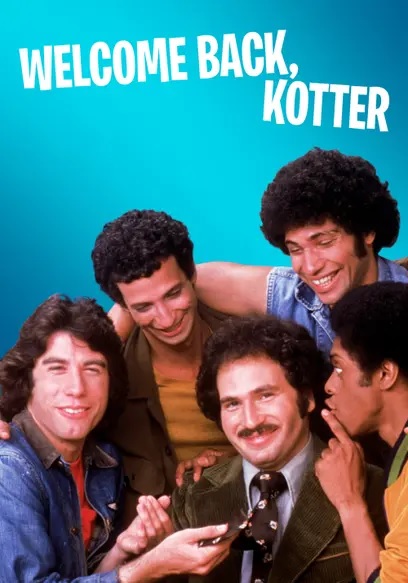
Retro Television Reviews: Welcome Back Kotter 2.9 “Hello, Ms. Chips” and 2.10 “Horshack vs. Carvelli”


Welcome to Retro Television Reviews, a feature where we review some of our favorite and least favorite shows of the past!  On Saturdays, I will be reviewing Welcome Back Kotter, which ran on ABC  from 1975 to 1979.  The entire show is currently streaming on Tubi!

This week, Mr. Kotter gets a student teacher!

Episode 2.9 “Hello, Ms. Chips”

(Dir by Bob LaHendro, originally aired on December 2nd, 1976)

Instead of telling a joke about a relative, Gabe starts the show by coming home from shopping with Julie.  When Julie says that everyone at the store was crazy, Gabe comments that the women were all pushing and shoving and “bumping into me.”

“I’m going back tomorrow!” Gabe declares while Julie gives him a pity laugh.

At Buchanan High School, Woodman introduces Gabe to his new student teacher, Ms. Wright (Valerie Curtin).

“Ms. Wright,” Gabe says, “My mother always said I’d meet you someday.”

“Keep your sick fantasies out of this, Kotter,” Woodman replies.  “Watch her carefully, you remember what happened to the last student teacher …. she still sends me ceramic wallets from the home.”

After Woodman leaves, Gabe gets to know Ms. Wright and discovers that she’s read about the Sweathogs in her textbooks.  Gabe acknowledges that the classroom is famous and adds, “Some of our best teachers have passed through the windows.”

The Sweathogs make their arrival.  Ms. Wright observes the way that Gabe handles getting them to read their essays on what they would do if they were president and then she steps in and tries to teach while looking through her thick lesson plan.  Needless to say, the Sweathogs do not react well to that and Epstein throws a fit when Ms. Wright reads his essay (which is actually a poem) about how he would make the world a better, flower-filled place as President.  Ms. Wright runs, sobbing, from the room.

Gabe tracks Ms. Wright down to the front office, where Ms. Wright is asking Mr. Woodman what it was like when he was a teacher.  Woodman proceeds to sing Nobody Knows The Trouble I’ve Seen.

“Didn’t they have spankings in those days?” Ms. Wright asks.

“Yes,” Woodman replies, “but my students only spanked me once.”

The next day, Ms. Wright tries again.  This time, she tires to imitate Gabe’s approach and awkwardly tells Epstein, “In your mouth with a sandwich,” when he tries to apologize her.  Ms. Wright tells a series of Kotter-style jokes but her cheery delivery is all wrong.  Ms. Wright suddenly announces that Gabe’s technique isn’t right for her and that she’s just going to quit.

“You can’t quit,” Freddie says, “You’re not a lousy teacher, we’re just lousy students!”

Ms. Wright learns a valuable lesson about not teaching from the book and not trying to teach like someone else but just teaching as herself.  Ms. Wright says that she wants to tell the class about President Buchanan.

“That name sounds familiar,” Vinnie says.

This was not a bad episode.  I appreciated that Ms. Wright had to find her own style as opposed to just blindly following Gabe’s style.  Speaking of Gabe’s style, he ends the episode telling Julie about his Uncle Wilford Kotter, who was in love with an elephant.

Episode 2.10 “Horshack vs. Carvelli”

(Dir by Bob LaHendro, originally aired on December 9th, 1976)

At the apartment, Gabe calls his Uncle Herman and tells him that Julie’s going to be home in five minutes and he doesn’t have a joke to tell her.  Gabe asks if anything funny has happened in Herman’s life recently.  Herman tells Gabe about a guy who crossed an elephant and a beaver.  Herman says that he once knew a guy who was so mean that he used to train homing pigeons and then move.  Judging from the expression on Gabe’s face, Herman then proceeds to tell him something really wild.

(Julie, by the way, apparently never comes home and, therefore, does not appear in this episode.)

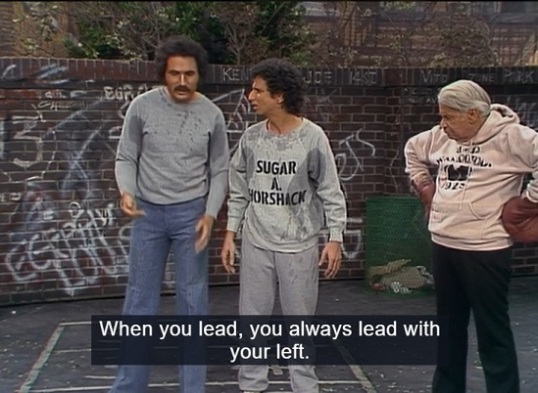
At school, the Silver Gloves Boxing Tournament is approaching and the Sweathogs are debating who will take on New Utrecht High’s most fearsome fighter, Carvelli (Charles Fleischer).  Woodman is especially concerned because he says that, in 20 years, Buchanan has never won the tournament.  When Gabe says that Bonzo Maretti won one year, Woodman replies, “Eating your opponent doesn’t count!”  Woodman wants a Sweathog to bring home a trophy.  Unfortunately, it appears that all of Woodman’s hopes rest on Arnold Horshack who is demanding to be the one to fight Carvelli.  As Horshack puts it, he’s tired of always being the one who is pushed to the side.

It’s time for a training montage, as Gabe and Woodman teach Horshack how to throw a punch.

Unfortunately, it doesn’t go well as Horshack ends up getting knocked down by Mr. Woodman.  “Maybe I should fight Carvelli!” Woodman says.

At the boxing match …. actually, I was expecting this to be one of those episodes where Horshack somehow ended up winning despite the odds but actually, he gets knocked out during the first round.  But all the Sweathogs are proud of him for having the guts to enter the ring so it’s a bit of a personal victory for him.  Plus, Gabe tells him a joke about his Uncle Maxie Kotter.

Yay!  Horshack finally won some self-respect!  Horshack was often the most cartoonish thing about this show and it’s rare that there was ever anything subtle about Ron Palillo’s performance but he deserves some credit for his work on this episode.  He revealed that, beneath the weird façade, Horshack was just as vulnerable and insecure as all the rest of the Sweathogs.  He didn’t win the fight but he won the audience’s heart and good for him!

Next week: Epstein is caught smoking!

A Blast From The Past: A Very Delicate Matter (dir by Claude Kerven)


Today’s blast from the past comes to use from 1982.

In A Very Delicate Matter, teenager Kristin Sorenson (Lori-Nan Engler) spends the summer working at a camp.  After her nominal boyfriend, Greg Pscharapolus (Zach Galligan), fails to call her even once, Kirstin ends up dating her superhot co-worker, Larry (future daytime drama star Grant Aleksander, making his television debut).  Once summer ends, Kristin returns home where Greg apologizes for not calling her.  Kristin takes Greg back and decides not to tell him about Larry.  But then Kristin gets a call from Larry.  Larry tells her that she might want to go by the free clinic and get some penicillin because Larry’s got gonorrhea and there’s a good chance to Kristin now has it as well.  And, since Kristin and Greg previously spent a day making up, Greg might have it too!

The plot description probably makes A Very Delicate Matter sound considerably campier than it is.  For the most part, this is a sensitive and nonjudgmental film, one in which no one is portrayed as being a villain.  (As one doctor points out, even Larry showed more courage than most by immediately calling Kristin and letting her know what was going on.)  While the two leads both give good performances (with Galligan just two years away from starring in Gremlins), the film is stolen by Marta Kober and John Didrichsen, who play the best friends of Kristen and Greg and who have a nice flirtatious chemistry with each other.  Just because your friend has a social disease, the film seems to be saying, don’t give up on love.  Marta Kober is probably best known for Friday the 13th Part 2, which featured its own warning about having unprotected sex at a summer camp.

Retro Television Reviews: T. and T. 1.13 “Sweet Tooth” and 1.14 “Playing With Fire”


Welcome to Retro Television Reviews, a new feature where we review some of our favorite and least favorite shows of the past! On Fridays, I will be reviewing T. and T., a Canadian show which ran in syndication from 1987 to 1990.  The show can be found on Tubi!

This week, the adventures of T.S. Turner continue!

Episode 1.13 “Sweet Tooth”

(Dir by Don McCutcheon, originally aired on March 28th, 1988)

“In this episode,” Mr. T tells us, “a former con man claims to be starting a new chapter in his life, but I keep hearing the same old story.”

At the Toronto courthouse, T.S. and Amy are approached by a prosecutor named Billings (David Ferry).  He’s wearing a plaid suit, which is the show’s way of indicating that he’s not as good an attorney as Amy.  Billings says that he needs to discuss a private matter with T.S.

“Maybe he wants fashion tips,” T.S. growls.

Billings explains to T.S. that a man with whom T.S. served time, a conman named Lee Boone, has been released from prison.  The police think that Boone is trying to set up a new con in T.S.’s neighborhood but Billings thinks that Boone is trying to go straight.  Billings asks T.S. to investigate.  He also asks T.S. to keep their arrangement strictly confidential.

“And I’d appreciate it if you changed that jacket,” T.S. replies, “It gives me an earache.”

That said, T.S. agrees to check out Lee Boone, especially after he hears that Boone is the father of a seven year-old son.

Meanwhile, Lee Boone (Anthony Sherwood) is giving a speech in front of an old church.  He’s asking for donations to turn the church into a community center.  Among those donating money is T.S.’s aunt, Martha (Jackie Richardson).  T.S is stunned to discover that Lee is the man who he knew in prison as “Sweet Tooth.”  After Boone finishes his speech, T.S. confronts him and accuses him of trying to con people out of their money.  Boone argues that he’s changed and he’s just trying to give back to the community.  T.S. doesn’t buy it, later telling Billing that he judges a man not by his words but by his eyes and, “I looked in Sweet Tooth’s eyes and nothing had changed.”

On T.S.’s recommendation, Boone is arrested.  Guess who is assigned to be Boone’s lawyer?  Amy Taler!  Now, considering that Amy is partners with someone who would undoubtedly be called as a witness if the case ever went to trial, this seems like a clear conflict of interest but maybe they do things different up in Canada.  Amy is not only convinced that Boone is innocent but she’s also angry at T.S. for working with prosecutor’s office.

You know who else is angry with T.S.?  Aunt Martha!  Aunt Martha brings Boone’s 7 year-old son down to the gym and orders the kid to ask Turner, “Why did you put my Daddy in jail?”

“I wasn’t trying to hurt him, son,” T.S. says, “I was trying to help him.”

Aunt Martha announces that Lee Boone is back on the street and the entire community is rallying around him and donating their money for the community center.

Stunned, T.S. returns to his office and contemplates the mysteries of life.  When Amy tells him that she believes that everyone deserves a second chance, T.S. says, “And what if you’re wrong?  What if all those people get kicked in the teeth again?”

The next morning, Amy goes down to the church and waits, with Aunt Martha, for Boone to show up and announce his plans for the money that’s he’s raised.  However, Boone never shows up because it turns out that T.S. Turner was right and it really was all an elaborate con!  Instead, having packed all of his money in suitcase, Boone and his son prepare to leave their apartment building and head to another town.

However, T.S. is waiting for them in the stairwell.  When Boone claims that he was just about to head for the church, Turner declares, “With a suitcase full of money?  Come on, brother!  Give me some rap!  Give it up, Sweet Tooth!  Your son deserves better!  If you want a better life for your kid, you need to go to that church and stand by your word.  You just gotta believe your own rap!  EVERYONE ELSE DOES!”

At the church, Aunt Martha tries to keep the crowd calm by singing a gospel song.  Given how I feel about gospel music, you can imagine how relieved I was when a reformed Sweet Tooth finally showed up at the church and everyone stopped singing.  Sweet Tooth goes straight and uses the money to open up the community center.  All it took was T.S. Turner showing up at his apartment building!

As I watched this episode, it occurred to me that Mr. T’s main strength as an actor was his innate earnestness.  As limited as his range may have been, the viewer never doubted for a minute that he believed everything that he said.  This episode worked because it allowed Mr. T. to be himself.

Episode 1.14 “Playing With Fire”

(Dir by Harvey Frost, originally aired on April 11th, 1988)

“In this episode,” Mr. T says, “the heat is on a teenage girl who’s charged with arson.”

Across Canada, someone is setting fires.  After teenager Felicity (Susannah Hoffman) is found playing a flute in front of a fire that’s raging in a park, she’s arrested.  Because Amy is the only defense attorney in Toronto, she’s assigned to the case.  And when Amy is assigned to your case, that means that T.S. Turner is assigned to it as well!

Unfortunately, Felicity isn’t very helpful and gets defensive whenever Amy asks her why she always goes to the park to play her flute, even in the middle of the harsh Canadian winter.  Turner goes down to the park to investigate on his own and he meets Kramer (Alan Fawcett), a real estate developer who wants to build a luxury condo in the middle of the park.  Since this is T. and T., “luxury condo” is all we need to hear to know that Kramer is a bad guy.

Another building in the park burns down and again, for some reason, Felicity is nearby playing her flute.  Felicity is again accused of being the arsonist, which leads to a police interrogation scene where we discover that, as an attorney, Amy’s main legal strategy is to dramatically roll her eyes whenever anyone asks her client a question.  Meanwhile, T.S. heads down to the park and discovers that the building was insured for a million Canadian dollars.

“The only way we’re going to avoid paying,” the claims agent explains, “is if that lady lawyer gets that flutist off.”

“Lady lawyer!?” Turner replies, “You mean Ms. Amy Taler!”

“I hope she pleads as good as she looks,” the agent says.

T.S. nods.  “I’ll pass it on.”

Felicity is dragged down to a mental hospital, where she is committed for a week-long evaluation.  She sits in her room and plays her flute and I have to say that it didn’t take me long to get really sick of Felicity and her stupid flute.  Seriously, every time we see her, she’s playing the flute and getting angry about Amy trying to clear her name.  What an annoying character!

Anyway, Felicity overhears Turner telling Amy that he thinks that Kramer is behind the arsons so Felicity breaks out of the mental hospital, goes down to one of Kramer’s buildings, and starts playing her flute.  When Kramer confronts Felicity, she threatens to burn down the building for real.  This leads to Kramer confessing, just in time for Turner to show up and subdue him.

That’s the end of that.  Felicity’s name is cleared but Felicity is still such an annoying character that it’s difficult to really care.

Next week: Amy’s frequently frazzled administrative assistant gets an episode of her very own!

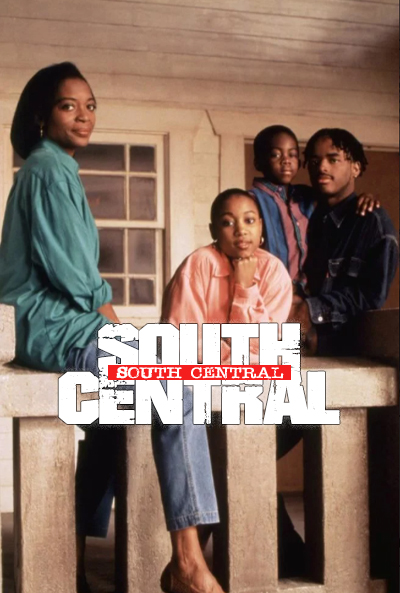
Retro Television Reviews: South Central 1.7 and 1.8 “Gun”


Welcome to Retro Television Reviews, a feature where we review some of our favorite and least favorite shows of the past!  On Thursdays, I will be reviewing South Central, which aired, for 10 episodes, on Fox in 1994.  The entire show is currently streaming on YouTube!

This week, Andre gets a gun!

Episode 1.7 and 1.8 “Gun”

(Dir by Stan Lathan, originally aired on May 24th, 1994)

I’m not a huge fan of the song Amazing Grace.

Okay, allow me to clarify.  I know that it’s an important song.  I know that it’s a song that was at least partially written as a protest against the Atlantic slave trade.  I know that it’s a song that means a lot to many people.  But I have to admit that I cringe whenever someone starts singing it in a movie or on a TV show because it’s always sung in such an overwrought manner and it usually indicates that the program is about to take an extremely heavy-handed term.

I point this out because the first 30 minutes of Gun features Tasha singing Amazing Grace several times around the house, once while a police helicopter hovers over her house.  My first instinct was to cringe but actually, upon watching a second time , I realized that the scene with the helicopter is a powerful moment.  Tasha sings not only in defiance of the police but the helicopter’s spotlight briefly turns her front porch into a stage.  After six episodes of Tasha continually being told to sacrifice, it was nice to see a rare episode in which Tasha actually got a moment of triumph.

The majority of this two-part episode centers on Andre.  Just as Tasha has spent six episodes being expected to constantly sacrifice for the family, Andre has spent six episodes trying to come to terms with the death of his brother Marcus while living up to his mother’s expectations and also trying to pursue a relationship with Nicole.  In order to see Nicole, Andre has been riding the bus and, as we’ve seen, he’s gotten mugged, beaten up, and continually harassed for his troubles.  This episode, Andre takes two things with him on his latest trip to Nicole’s.  One is a pack of condoms, which leads to Nicole telling him that she doesn’t want to see him again unless he can figure out how to articulate how he really feels about her.  The other is his mother’s gun, which he tucks in the waistband of his pants and which he flashes when a guy starts to give him and Rashad trouble.  Rashad is excited about the gun, announcing that he and Andre now have “juice” and treating it almost like a toy.  Andre, who has actually lost a family member to gun violence, is more serious about it, telling Rashad that he would like to use it on the people who killed his brother.  (Of course, while Andre and Rashad stand in the house and handle the gun, Deion stands silently in the background, taking it all in.)

One interesting thing about this episode is that Andre’s mentor, Ray, is nowhere to be seen nor is he mentioned, even when Joan grounds Andre for forgetting to pick up Deion.  Given the fact that Ray was last seen realizing that Joan will probably never love him the way the he loves her, it makes sense that Ray might need a break from the Mosely family but it also means that there’s no one, outside of his family, for Andre to talk to, with the exception of Rashad.  At the Ujamaa Co-op, Bobby attempts to reach out to Andre and Rashad, telling him that he heard they had trouble on the bus and warning them about young men carrying guns.  As well-intentioned as Bobby is, both Andre and Rashad are too young and immature to really understand his message of building up the community as opposed to destroying it.  As opposed to Ray, who sometimes seemed too distant from the realities of life in Andre’s neighborhood, Bobby understands what is happening in the community but his insistence on trying to view everything in idealistic terms makes him ineffectual as an authority figure.

(If anything, Earl Billings’s perpetually annoyed Mayo Bonner, who trusts no one, seems like he might be the wisest of the older men on the show but his bad-tempered comments are mostly just played for laughs.)

Days later, Joan agrees to allow Andre to go to the High Life Party being held at the Co-op.  Andre knows that Nicole will also be at the party and he wants to give her a letter that he’s spent the last few days writing and re-writing.  While Joan and her next-door neighbor Sweets go through Andre’s bedroom and discover not only his condoms but also a first draft of the letter that he wrote for Nicole, Andre meets up with Nicole at the Co-op and ruins everything by once again flashing his gun at a guy who rudely steps in front of Nicole.  Nicole leaves, even though her best friend Candi, who has taken a sudden interest in Rashad, refuses to leave with her.  Andre chases after her and, on the bus, he tells her that only carries the gun for protection.  Nicole says that her parents were right about Andre and refuses to talk to him for the rest of the ride.  After Nicole gets off the bus, Andre tears up the love letter that he was going to give her and realizes that he will probably never see her again.

Yep, just another not-so happy ending on South Central!  That said, it was also a realistic ending and the show deserves a lot of credit for having Nicole react realistically to Andre’s aggressive behavior.  She freaks out when she sees that he has the gun and all of his excuses (and they are just excuses) cannot fix the damage of that one moment.  And Nicole is totally in the right.  What if the guy at the party had a gun?  What if someone on the bus had a gun?  Carrying a gun for protection is one thing and certainly, Andre has had enough bad things happen to him on this show that one can understand why he would feel like he needs some sort of protection.  But, at the Co-op, there was no threat.  Andre showed off the gun just to intimidate someone else.  I would have dumped Andre too.

This was a powerful episode.  In the end, Andre swears that he’s never going to carry another gun and watching it, the viewer hopes that he’s telling the truth but also knows that life is never as simple as one might hope.

Next week: we finish up South Central!