October True Crime: Texas Killing Fields (dir by Ami Canaan Mann)


The so-called Texas Killing Fields are a stretch of land situated off of Interstate-45 and about 26 miles southeast of Houston.  Despite being surrounded by oil refineries and being near one of Texas’s busier interstates, it’s a location where one can easily disappear.  Since 1971, over 30 bodies have been found in the Texas Killing Fields, the majority of them being girls and young women.  Many of them came from the surrounding area but others were last seen far away from Houston.  Kelli Cox, for instance, disappeared from Denton.  Jessica Cain was last seen in a suburb of Fort Worth.  Michelle Garvey disappeared from Connecticut, just for her body to later be discovered in the Texas Killing Fields.

Because of the number of bodies and the length of time, it’s believed that multiple serial killers use the killing fields as a dumping ground for their victims.  Over the years, there’s been many suspects and a few convictions.  Most recently, a trucker named William Reece was convicted of three of the Killing Fields murders.  Another person convicted of committing two of the murders, Michael Self, is now believed to have been innocent and to have only confessed after being tortured by the police.  Unfortunately, Self died in prison while waiting for his appeal to be heard.

The 2011 film, Texas Killing Fields, is very loosely based on the murders and the area’s reputation for being a serial killer dumping ground.  Sam Worthington plays Detective Mike Souder and Jeffrey Dean Morgan plays his partner, Detective Brian Heigh.  (The characters are based on real-life detectives Brian Goetschius and Mike Land.)  Brian is originally from New York and is a devout Catholic who views his work as almost being a holy crusade.  Mike is from Texas and is a bit more cynical.  He’s not happy that Brian insists on helping out Mike’s ex-wife, Detective Pam Stall (Jessica Chastain), whenever a body is found in Pam’s jurisdiction.

The discovery of a dead sex worker leads to Mike and Brian pursuing two pimps (played by Jason Clarke and Jon Eyez).  However, it soon becomes apparent that the pimps aren’t the only murderers stalking the area and using the fields as a dumping ground.  A young mother is attacked in her house and, when interrogated by Mike and Brian, demands to know why they aren’t out on the streets, looking for the men who attacked her.  Later, a mysterious phone call leads Mike, Brian, and Pam out to the killing fields, where they discover another body.

While this is going on, Brian also tries to look after Anne Sliger (Chloe Grace Moretz), a 12 year-old girl who spends her time wandering around town because it’s preferable to spending any time at her home with her mother (Sheryl Lee) or her mother’s creepy boyfriend (Stephen Graham).  When Anne is kidnapped, Brian and Mike head into the Killing Fields to find her.

Directed by Ami Canaan Mann, The Texas Killing Fields is an atmospheric film in which every frame is full of a sense of dread.  Much as David Fincher did with Zodiac, Mann creates a feeling of a world that has been taken over by evil.  Unfortunately, the film itself gets bogged down with a few subplots that don’t really go anywhere.  (Jessica Chastain’s character and her relationship with Mike felt somewhat superfluous.)  As well, the film’s examination of both Mike’s atheism and Brian’s Catholicism felt a bit shallow at best, as if it was added at the last minute to try to give this thriller some theological heft.  The identity of all the killers is pretty obvious from the start.  That said, Ami Canaan Mann gets good performances out of her cast and the action scenes are well-executed.

As a final note, the film was not actually shot in the actual Texas Killing Fields.  Instead, much like the same year’s Killer Joe and 2013’s Dallas Buyers Club, it was filmed in Louisiana and, to be honest, it looks like it was filmed there as well.  There’s little about the film that feels authentically Texan, though it does do a good job of capturing the atmosphere of the bayous.

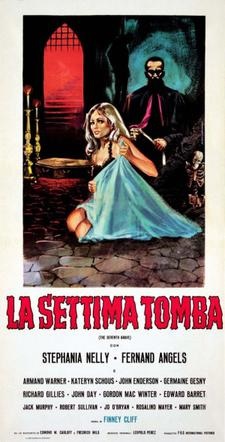
Horror Film Review: The Seventh Grave (dir by Garibaldi Serra Caracciolo)


First released in 1965, The Seventh Grave is an Italian film, featuring an all-Italian cast and dialogue that is recited in Italian.

Despite this, however, the film itself takes place in Scotland and we’re told that all of the characters are all meant to be either Scottish or American.  I imagine this was done with an eye towards eventually releasing the film in the States.  Indeed, many Italian horror films were made to specifically appeal to American and British audiences.  However, as far as I can tell from the information that’s available online, it doesn’t appear that The Seventh Grave ever made it over to the United States.  It was apparently released in the UK and Canada.

As for what the film is about, it follows a group of people as they head to a gothic castle in Scotland.  The castle was owned by Sir Reginald Thorne, who was apparently a scientist of some sort but who died of Leprosy and who, we’re told, was buried in the crypt’s seventh grave.  Sir Reginald’s assistant also suffered from Leprosy and was imprisoned and sent to a Leper colony.  However, as the film begins, we are informed that his assistant managed to escape a month ago and no one is quite sure where he is hiding out.

As for the people heading to the castle, they are all relatives and acquaintances of Sir Reginald’s.  They’ve gone to the castle to hear the reading of his will but they’re informed that one of Sir Reginald’s relatives has yet to arrive and the will cannot be read until she does so.  While they wait for her, someone mentions that the castle is rumored to be the hiding place of a treasure that was found by Sir Francis Drake.  Since just about everyone in the film is super greedy, they all want to get their hands on that treasure.  Since one member of the group is said to be a “powerful psychic,” they decide to hold a séance so that she can commune with Sir Francis Drake’s spirit.  Needless to say, the séance doesn’t go particularly well and soon, people are turning up dead.  Is the murderer a ghost or could be the Leper assistant or could it be one of the visitors to the castle?

(As a sidenote, allow me to just mention that Sir Francis Drake was one of my favorite of the British explorers.  Queen Elizabeth I could have been very happy with him under different circumstances.)

The plot of the Seventh Grave is next to impossible to follow and, like a lot of gothic Italian castle films, it suffers from the fact that there’s really no one to root for.  I mean, just about everyone in the movie is motivated by greed and, even when the murders start, no one really acts that upset about any of them.  That said, the castle is an atmospheric location and the film is only 77 minutes long so at least it doesn’t drag.  For the most part, though, it’s easy to see why The Seventh Grave is largely forgotten today.

Guilty Pleasure No.66: Cloverfield (dir Matt Reeves)


Let’s just be honest, here.  In many ways, 2008’s Cloverfield is a remarkably stupid film.

I mean, don’t get me wrong.  It’s an entertaining film.  It’s a fun film.  It’s a film that I’ve seen a few times and I usually enjoy it whenever I see it.  But it’s still a film about someone who refuses to stop filming, even in the middle of an alien invasion.  It makes sense, of course, that Hud Platt (T.J. Miller) would want to film the going away party that’s being held for his friend Rob (Michael Stahl-David).  But why would Hud keep holding onto that camcorder even after the aliens invade and New York starts to explode all around him?  There are several moments in the film where it’s obvious that the camera is slowing Hud and his friends down.  The easiest thing to do would be to drop the camcorder and run to safety.  I mean, it’s not like the destruction of New York by aliens is going to be lost to history if Hud doesn’t film it.  But instead, Hud not only keeps filming but, for all the shaky cam effects and the heaving breathing of people running for their lives, Hud still somehow manages to capture every important event on camera.

In many ways, the film epitomizes everything that tends to drive people crazy about the found footage genre but Cloverfield is an undeniably fun movie.  I mean, there’s a scene where the head of the Statue of Liberty is literally tossed into the middle of the street.  It’s such an over-the-top moment that it’s impossible not to love it and, to be honest, the fact that Hud manages to hold the camera still enough to perfectly capture the image of Lady Liberty’s head crashing to the ground is kind of cool.  The film follows a group of friends as they try to make their way across New York City to try to rescue Rob’s girlfriend Beth (Odette Yustman) before then evacuating the city and there’s something rather exciting about the sight of this small group of people continually moving in the opposite direction of the crowd around them.  While everyone else  runs away from danger, our heroes move straight into it, even though none of them are exactly action heroes.  They’re nerdy hipsters on a mission and, even though you know from the start that they’re all doomed, it’s hard not to kind of love them.  The film’s final moments carry more an emotional punch than you might normally expect from a found footage alien invasion film.

That said, if the aliens do come and they are literally tearing apart the Statue of Liberty before your very eyes, there’s no shame in putting down the camera and running.  In fact, if there’s any lesson to be learned from Cloverfield, it’s that sometimes, it’s best just to run for it.

Previous Guilty Pleasures

  1. Half-Baked
  2. Save The Last Dance
  3. Every Rose Has Its Thorns
  4. The Jeremy Kyle Show
  5. Invasion USA
  6. The Golden Child
  7. Final Destination 2
  8. Paparazzi
  9. The Principal
  10. The Substitute
  11. Terror In The Family
  12. Pandorum
  13. Lambada
  14. Fear
  15. Cocktail
  16. Keep Off The Grass
  17. Girls, Girls, Girls
  18. Class
  19. Tart
  20. King Kong vs. Godzilla
  21. Hawk the Slayer
  22. Battle Beyond the Stars
  23. Meridian
  24. Walk of Shame
  25. From Justin To Kelly
  26. Project Greenlight
  27. Sex Decoy: Love Stings
  28. Swimfan
  29. On the Line
  30. Wolfen
  31. Hail Caesar!
  32. It’s So Cold In The D
  33. In the Mix
  34. Healed By Grace
  35. Valley of the Dolls
  36. The Legend of Billie Jean
  37. Death Wish
  38. Shipping Wars
  39. Ghost Whisperer
  40. Parking Wars
  41. The Dead Are After Me
  42. Harper’s Island
  43. The Resurrection of Gavin Stone
  44. Paranormal State
  45. Utopia
  46. Bar Rescue
  47. The Powers of Matthew Star
  48. Spiker
  49. Heavenly Bodies
  50. Maid in Manhattan
  51. Rage and Honor
  52. Saved By The Bell 3. 21 “No Hope With Dope”
  53. Happy Gilmore
  54. Solarbabies
  55. The Dawn of Correction
  56. Once You Understand
  57. The Voyeurs 
  58. Robot Jox
  59. Teen Wolf
  60. The Running Man
  61. Double Dragon
  62. Backtrack
  63. Julie and Jack
  64. Karate Warrior
  65. Invaders From Mars

Horror Film Review: Troll (dir by John Carl Buechler)


The 1986 film, Troll, opens with Harry Potter moving into a San Francisco townhouse.

Okay, it’s not that Harry Potter.  Troll was produced long before the first Harry Potter book was even published so it’s fair to assume that it’s just a coincidence that this film — about trolls, magic, and faeries — just happens to feature not just one but two characters named Harry Potter.  Harry Potter, Sr. (Michael Moriarty) is a typical, dorky father figure.  Indeed, he’s such a conventional figure that it’s a bit hard to understand why the always neurotic Michael Moriarty was cast in the role.  Harry’s son is named Harry Potter, Jr. (Noah Hathaway).  Harry, Jr. is a teenager who is shocked by how bratty his little sister, Wendy (Jenny Beck), becomes after the family moves into their new apartment.

Why is Wendy acting like such a brat?  It’s because Wendy has been kidnapped by Torok the Troll (Phil Fondacaro), a grotesque creature who not only abducts Wendy but also steals her appearance so that he can safely move around the world of the humans.  Torok, himself, was once a powerful wizard but, centuries ago, he and an army of faeries tried to destroy all the humans in the world.  Their plan didn’t work and, as punishment, Torok was turned into a troll.

But now, somehow, Torok is free and he’s taking over the apartment building.  One by one, he tracks down each tenant and casts a spell which turns them into a mythological creature, like a gnome or a wood nymph.  All of the apartments turns into lushly overgrown forests.  Among those tenants that get transformed are Sonny Bono and a young Julia Louis-Dreyfus.  I have a feeling that, when Sonny later ran for Congress, he did not include his appearance in Troll in any of his campaign literature.  As for Louis-Dreyfus, she was reportedly angered once when a talk show host (I think it was Jay Leno) showed footage from this film while interviewing her.  It’s not so much that Julia Louis-Dreyfus isn’t a convincing wood nymph as much as it’s the fact that she’s Julie Louis-Dreyfus and it’s just difficult to imagine her appearing in such a stupid role.  This, of course, was her first film and everyone has to start somewhere.

Anyway, realizing that he has to rescue his little sister, Harry Potter, Jr. gets some help from the local witch, Eunice St. Clair (Joan Lockhart).  Eunice gives Harry a magic spear to take with him in his quest.  It’s not really that much of quest, however.  Troll is a low-budget film that was produced by Albert Band so this is not the film to watch if you’re expecting some sort of elaborate fantasy epic.

One positive thing that I will say for Troll is that some of the troll makeup is effective.  The plot maks absolutely zero sense but Director John Carl Buechler specialized in creating memorable monsters on a budget and he manages to do that with Troll.  And, despite all of the people getting turned into monsters, Troll is a largely good-natured film.  It’s not a deliberately cruel or even gory film.  It’s a dumb little horror/fantasy film that features Sonny Bono turning into a plant and Julie Louis-Dreyfus turning into a wood nymph.  It’s dumb but it’s mild and generally inoffensive.

Finally, I should also note that it is in no way connected to Troll 2.  Troll 2, after all, is about goblins.

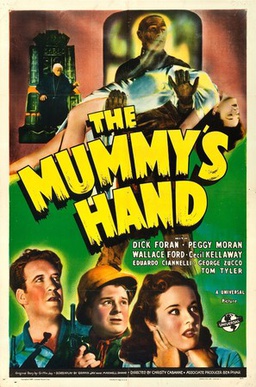
Horror Film Review: The Mummy’s Hand (dir by Christy Cabanne)


In 1940, having brought back The Invisible Man and Frankenstein’s Monster, Universal Pictures decided that it was also a good time to bring back The Mummy!

The Mummy’s Hand takes place in what we’re told is Egypt, though it’s obvious just a Universal backlot.  Two archeologists — Steve Banning (Dick Foran) and Babe Jenson (Wallace Ford) — are penniless and stuck in Egypt.  Babe wants to find a way to return to Brooklyn and his ex-girlfriend.  Steve is a bit more serious about archeology, though it must be said that he’s no Indiana Jones when it comes to discovering relics and taking them to museums.  If Indiana is the type who will risk his life to search a hidden cave in the Amazon Rain Forest, Steve is far more likely to just wander around an Egyptian market until he comes across someone selling an ancient vase.

Which is exactly what happens!  Steve finds someone selling a vase and, after he learns where it came from, he buys the vase.  He takes the vase to Prof. Andoheb (George Zucco), not knowing that Andoheb is an Egyptian high priest who has been sworn to protect the tomb of Princess Ananka.  When Andoheb realizes that the vase could lead to the discovery of the tomb, he lies and claims that it’s a forgery.  He then “accidentally” breaks it in order to keep Steve from showing the vase to anyone else.  Steve, however, is not deterred and a chance meeting with an American magician named Tim Sullivan (Cecil Kellaway) leads to Sullivan agreeing to finance Steve’s expedition to discover where the vase came from.  Sullivan’s daughter, Marta (Peggy Moran), worries that Steve and Babe are just trying to steal her father’s money so she insists on coming on the expedition with Steve.  Also following the expedition is Andoheb, who is himself starting to fall for Marta and who is hoping that he can use a secret serum hidden in the tomb to make both himself and Marta immortal.

Of course, the tomb itself is protected by Kharis (Tom Tyler, under a ton of bandages), a mummy who is immortal due to the serum and who has sworn to protect the tomb from any outsiders.  Kharis moves slowly but efficiently.  He’s a ruthless and silent killer, one whose eyes appears to just be two black holes, the better to reflect his own lack of a soul.

The main problem with The Mummy’s Hand is that it takes forever for the Mummy to actually show up.  This is only a 67-minute film and the Mummy mayhem doesn’t really start until around the 50 minute mark.  As a result, the viewer spends a lot of time watching Steve and Babe wander around Egypt and essentially act like stereotypical American tourists.  Even when the expedition finally gets started, the audience still has to sit through endless scenes of Marta accusing Steve of being some sort of con artist.  This is a movie that will truly leave you saying, “When is the mummy going to show up!?”

That said, The Mummy itself is a frightening creature, especially with his empty eyes.  Mummy’s are naturally frightening, especially when they’re walking towards you and dragging their decaying bandages  behind them.  The Mummy is effective, I just wish he had been featured in more of the movie.

Previous Universal Horror Reviews:

  1. Dracula (1931)
  2. Dracula (Spanish Language Version) (1931)
  3. Frankenstein (1931)
  4. Island of Lost Souls (1932)
  5. The Mummy (1932)
  6. The Invisible Man (1933)
  7. The Bride of Frankenstein (1935)
  8. Dracula’s Daughter (1936)
  9. Son of Frankenstein (1939)
  10. Black Friday (1940)
  11. The Invisible Man Returns (1940)
  12. The Wolf Man (1941)
  13. Ghost of Frankenstein (1942)
  14. Invisible Agent (1942)
  15. Frankenstein Meets The Wolf Man (1943)
  16. Son of Dracula (1943)
  17. House of Frankenstein (1944)
  18. The Invisible Man’s Revenge (1944)
  19. House of Dracula (1945) 
  20. Creature From The Black Lagoon (1954)

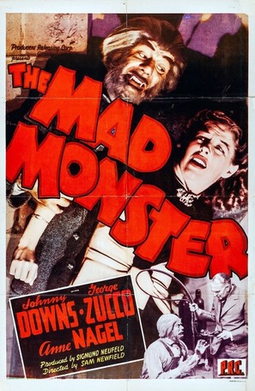
Horror On The Lens: The Mad Monster (dir by Sam Newfield)


In the 1942 film, The Mad Monster, the great George Zucco plays Dr. Cameron.  Dr. Cameron is a mad scientist who has a few issues with his colleagues and who makes the decision to deal with those issues by transforming his simple-minded handyman (Glenn Strange, who played Frankenstein’s Monster in a number of Universal films) into a wolfman.

The Mad Monster is one of the many horror films that were produced by Producers Releasing Corporation, which was one of the most poverty-stricken of the poverty row production companies.  To me, the interesting thing about the film is that Cameron initially wants to use his werewolf formula to help in the war effort.  He wants to help the United States win the war by turning soldiers into wolfmen.  It’s only after his plans are dismissed as being ludicrous that he starts using his wolfman to get revenge.  Unfortunately, the wolfman itself turns more savage and bloodthirsty with each act of revenge so I guess it’s a good thing that it wasn’t deployed on the battlefield because who knows what type of state the soldiers would have been in when they finally came home.

Here is 1942’s The Mad Monster!

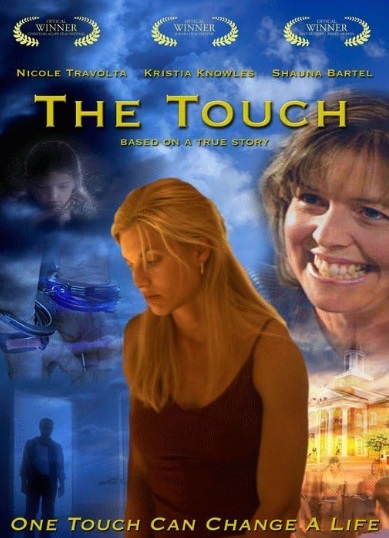
October Positivity: The Touch (dir by Jimmy Huckaby)


The 2005 film, The Touch, opens with Hannah (Kristia Knowles) being booked into jail.  Hannah is being charged with drug possession and assaulting a police officer.  She’s innocent on both charges.  Her boyfriend was the one who left the drugs in her car.  And, though she did hit a police officer, it was an accident.  But it doesn’t matter.  Hannah has been arrested and because she has no one in her life that has either the resources or the compassion to bail her out, she’s going to have to spend a while in jail.  The opening sequence is effective, both because of Kristia Knowles’s emotional performance and because it captures the dehumanizing process of being booked.  For Hannah, this is the worst moment of her life.  For the police officers who are taking her jewelry and barking orders at her, it’s juts another night.

Hannah’s sleaze of a boyfriend does finally bail her out of jail but Hannah wants nothing to do with him.  Instead, she tries to find a legitimate job but she soon discovers that no one is willing to hire someone with a criminal record.  The only way she can get hired is to lie about her past and, even in that case, her employer eventually does a background check on her and is forced to let her go.  When her car breaks down, a greasy mechanic says it’ll cost $900 to fix.  Of course, he suggests, there are other ways she could pay him…. Feeling totally alone and hopeless, Hannah uses the money that she has left to rent a room in a cheap motel.  She takes several pills and downs a bottle of liquor.

Her attempt at suicide doesn’t work but it does land her a spot in the local church shelter.  With the help of the other women at the shelter and Wanda (Shauna Bartel), the director of the program, Hannah starts to take control of her life and deal with the horrible traumas of her past.  However, the shelter is not inexpensive to run and many members of the church feel that the money could be better invested elsewhere, like in refurbishing the main building.  They also feel that women like Hannah are bringing a bad reputation to their congregation.  While Wanda and the Pastor (Bruce Borgan) try to keep the program from being shut down, Hannah fights the temptation to return to her old life.

To my surprise, I actually really liked The Touch.  Yes, it’s a very earnest and low-budget film and there are a few moments where things get a little bit heavy-handed.  But there are so many strong and honest moments that it’s easy to forgive the film’s flaws.  Kristia Knowles and Shauna Bartel both give strong performances and, in the end, the film’s message is a worthy one.  Far too often, society refuses to give a second chance to people who have had legal difficulties and, as a result, too many people come out of prison with no prospects and no support.  As a result people, like Hannah, are often left feeling as if they have no other option than to either give up or to return to the same behavior that got them in trouble in the first place.  Society has gotten so focused on punishment that they’ve overlooked the importance of rehabilitation.  Sometimes, a second chance is the most important thing that you give someone.

Late Night Retro Television Reviews: Degrassi Junior High 1.3 “The Experiment” and 1.4 “The Cover-Up”


Welcome to Late Night Retro Television Reviews, a feature where we review some of our favorite and least favorite shows of the past!  On Sunday, I will be reviewing the Canadian series, Degrassi Junior High, which aired on CBC and PBS from 1987 to 1989!  The series can be streamed on YouTube!

Oh my God, is Mr. Raditch a racist!?  We’ll find out this week.

Episode 1.3 “The Experiment”

(Dir by Clarke Mackey, originally aired on February 1st, 1987)

Joey Jeremiah’s a drug dealer!?

I am stunned!  Seriously, on Degrassi: The Next Generation, Joey was the grown-up who was always giving the teenagers a hard time for being irresponsible.  When his stepson, Craig Manning, got hooked on cocaine, Joey sent off to rehab and didn’t even bother to show up at the airport to say goodbye!  And yet, with this episode, we discover that, in junior high, Joey Jeremiah sold pills.

Now, I should point out that they were just vitamin pills.  Joey told Melanie (Sara Ballingall) and Kathleen (Rebecca Haines) that the pills were actual drugs that would get them high but, as he explained to Wheels, he was just doing that to make some money.  In fact, Joey tells Wheels that he deserves a lot of credit for keeping Melanie and Kathleen off of hard drugs!  That said, Melanie and Kathleen both fool themselves into thinking they’ve gotten high and they ask Joey to get them even more drugs.  In fact, Melanie and Kathleen bring some of their friends with them so that everyone can get high!

Meanwhile, Yick and Arthur have a problem of their own.  Yick thinks that Mr. Raditch is biased against him because Raditch is constantly criticizing Yick for being disorganized.  He even refers to Yick as being “Mr. Yu the Disorganized.”  In order to test whether or not Mr. Raditich is prejudiced against Yick, Arthur takes a paper that Stephanie wrote for Mr. Raditch the previous year and he has Yick turn it in as his own work.  Yick finally gets a good grade!  But just to make sure that Mr. Raditch isn’t prejudiced, Yick turns in a second paper that was originally written by Stephanie.  This time, Mr. Raditch recognizes the paper as having been originally written by Stephanie.

This leads to an absolutely brilliantly played scene, in which Mr. Raditch interrogates Yick and Arthur in front of the class about why they’ve been turning in Stephanie’s work as Yick’s own.  While Yick attempts to explain why he feels that Mr. Raditch is prejudiced against him, Kathleen, Melanie, and their dumb friends keep laughing loudly because they’re convinced that they’re all stoned even though they’re not.  Mr. Raditch, needless to say, is not amused.

Anyway, things work out in the end.  After Stephanie asks Joey if he’s really a drug dealer, Joey confesses the truth.  Unfortunately, for him, his confession is overheard by Melanie and Kathleen and Joey ends up being chased down a hallway by a bunch of angry, wannabe drug addicts.  Meanwhile, in detention, Yick writes a paper about stereotypes and how difficult it is to be called Mr. Yu the Disorganized.  Both Yick and Mr. Raditch realize the errors of their way.  Yick and Arthur leave school to play basketball together, but not before locking Joey in the janitor’s closet.

Episode 1.4 “The Cover-up”

(Dir by Kit Hood, originally aired on February 8th, 1987)

School picture day is coming up and Stephanie is freaking out because, if she wears the frumpy clothes that she wears around the house, everyone will laugh at her.  But if she wears her trampy school clothes, her mom will know the truth about how Stephanie changes whenever she gets to school.  As usual, Voula smirks about it and refuses to give Stephanie any advice, largely because Voula is the absolutely worst.  (Not everyone wants to dress like they shop at the American Girl store, Voula.)  In the end, Stephanie wears her trampy clothes to picture day and good for her!  Seriously, dress however you want.

While this is going on, Caitlin (Stacie Mistysyn) and her friend Susie (Sarah Charlesworth) try to get the mysterious Rick (Craig Driscoll) to smile.  They tell him jokes.  They were pig noses.  Rick, however, has little to smile about because, as Joey discovers, Rick is being beaten by his father.  When Joey asks the school secretary what he should do if he knows someone who is getting beaten, the secretary misunderstands Joey’s comment and calls Child Protective Services on Joey’s parents!  (It  doesn’t help that Joey has a black eye as the result of a skateboarding accident.)  Fortunately, the very Canadian social worker guy figures out that Rick is the one who is being beaten and he arranges for Rick’s father to get some help and for Rick to stay with his older brother.  The next day, at school, Rick smiles!

This was a significant episode because it featured the first Caitlin storyline.  Caitlin, of course, is destined to become one of the most important characters in Degrassi history, with her love story with Joey destined to take over 20 years to play out.  Of course, in this episode, she’s more interested in Rick.  (Rick, for his part, feels like an early version of Sean Cameron, Degrassi: The Next Generation‘s resident troubled bad boy.)

Anyway, these were two good episodes.  It’s kind of interesting to watch as Joey Jeremiah goes from being an annoying prankster to basically the center of just about storyline.

Next week: it’s time for a Canadian swimming competition!

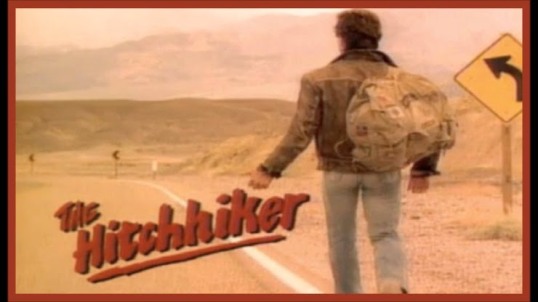
Horror on TV: The Hitchhiker 5.1 “The Martyr” (dir by Phillip Noyce)


Tonight’s episode of The Hitchhiker is a stylish homage to noir, starring Meg Foster as a femme fatale who is not quite as blind as she pretends to be.  This episode was directed by Phillip Noyce, who was also responsible for a film about an actual blind person, Blind Fury.  Interestingly enough, that film also featured Meg Foster, though in a very different role than the one that she plays here.

This episode originally aired on April 22nd, 1989.

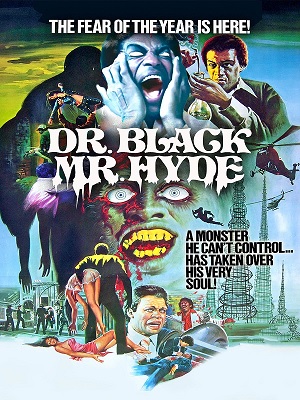
The TSL Horror Grindhouse: Dr. Black, Mr. Hyde (dir by William Crain)


1976’s Dr. Black, My Hyde tells the story of Dr. Henry Pride (Bernie Casey).

Dr. Pride is a respected doctor, the head of a free clinic in the Watts district of Los Angeles.  He has a big house.  He has a fancy car.  With Dr. Billie Worth (Rosalind Cash), he is researching a serum that will help people with cirrhosis to regenerate the tissue of their liver.  Of course, Dr. Pride wasn’t always rich.  In his own words, he and his mother grew up in the guest house of a brothel.  But now that he is rich and successful, some people claim that he’s lost touch with his community.  As a prostitute named Linda (Marie O’Henry) tells him, “You talk white, you think white, you probably drive a white car.”

In a scene that is designed to bring to mind the horrors of the Tuskegee syphilis experiments, Dr. Pride considers the ethics of injecting his serum into his patients without warning them that there might be consequences.  Billie warns him that what he’s thinking about doing would be not only unethical but illegal.  Dr. Pride questions whether ethics matter when dealing with something that could potentially save lives in the future.  After Dr. Pride injects an elderly black woman with the serum, she turns into a white-skinned monster who attempts to strangle a nurse before promptly dying.  Despite this, Dr. Pride continues to develop the serum and eventually, he tries it on himself.

Under the effects of the serum, Dr. Pride becomes a white-skinned madman.  (Bernie Casey wears a white makeup whenever he plays this film’s version of Mr. Hyde.)  Under the influence of the serum, Pride rampages through Watts, killing prostitutes and pimps before transforming back into the Dr. Pride.  The police are investigating the murders but they’re searching for a white man.  Meanwhile, Dr. Pride continues to obsess on trying to work out the kinks of her serum.  He wants Linda to be his latest test subject.

Dr. Black, Mr. Hyde is a blaxploitation take on Dr. Jekyll and Mr. Hyde and, as with many blaxploitation films, the subtext is frequently more interesting than what actually happens on screen.  Dr. Pride, after continually being accused of acting white, takes his serum and soon literally becomes white and sets out to kill the prostitutes and the pimps who remind him of his life before he became a doctor.  And while it’s easy to see this as an example of the serum turning a good man into an evil monster (the classic Jekyll and Hyde formula), it’s also true that, even before his transformation, Dr. Pride views his patients as being potential test subjects.  For all of his talk about helping people, Dr. Pride maintains his distance from the members of his own community.  Is the serum turning Dr. Pride into a monster or is it just revealing who Dr. Pride truly wishes to be?  Given the film was directed by William Crain, who also did Blacula and who, unlike a lot of Blaxploitation directors, actually was black, it’s easy to believe that the subtext was intentional.

Of course, subtext aside, Dr. Black, Mr. Hyde is a cheap-looking and haphazardly edited film.  Much of the acting is amateurish but Bernie Casey gives a strong performance as both the repressed black doctor and his violent, white alter ego.  Cheapness aside, Dr. Black, Mr. Hyde is a frequently intriguing film.