Today, the Shattered Lens wishes a happy birthday to the greatest of all DJs, Tiesto!
Enjoy!
Today, the Shattered Lens wishes a happy birthday to the greatest of all DJs, Tiesto!
Enjoy!
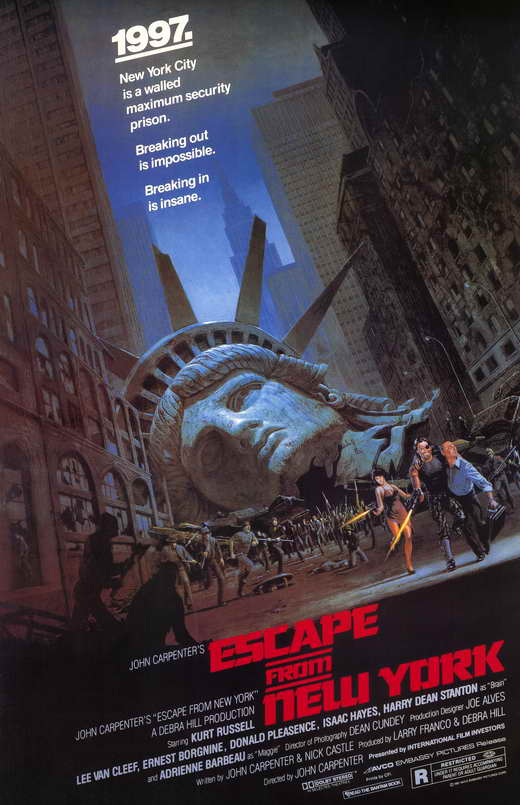
I was a bit shocked to realize that I hadn’t reviewed Escape from New York for this site. Leonard’s reviewed it. Jeff’s reviewed it. I’ve reviewed quite a few Italian films that were inspired by Escape from New York. Last year, I devoted an entire day to how much I love Kurt Russell. I’ve shared John Carpenter’s theme music, more than once. I’ve reacted to Mamdani’s election by telling my friends that it’s time to escape from New York. I’ve lost track of the number of times that I’ve told Leonard that it is “Time to leave the Bronx,” even though he doesn’t live in the Bronx. (What do I know? I live in Texas.) But I’ve never actually reviewed Escape From New York.
I love Escape from New York but I have to say that the film itself can’t live up the brilliant poster art. The first time I watched Escape from New York, I was really disappointed that the Statue of Liberty’s head never appeared in the middle of a street in Manhattan. If the film were made today, one imagines that the filmmakers would be able to do all sorts of things with the Statue of Liberty. But Escape from New York was made in 1981, in the days before rampant CGI. Escape from New York was made at a time when directors had to be somewhat clever and that definitely works to the film’s advantage. The lack of big time special effects meant that Carpenter had to emphasize character and atmosphere. Escape From New York might not feature the Statue of Liberty’s head but it does feature an amazing cast and a host of unforgettable characters. When you manage to get Kurt Russell, Ernest Borgnine, Donald Pleasence, Harry Dean Stanton, Adrienne Barbeau, Lee Van Cleef, and Isaac Hayes all in the same film, there’s no way it isn’t going to be memorable.
We all know the plot. Kurt Russell plays career criminal Snake Plissken. (Everyone thought Snake was dead.) When the President (Donald Pleasence) finds himself trapped on the prison island of Manhattan, Snake is the man who is sent to rescue him. The fate of the world depends on rescuing the President. If the President isn’t rescued, it could lead to nuclear war. Snake doesn’t really care about the fate of the world. He does care about the fate of himself, however. He’s been injected with a poison that will kill him unless he receives the antidote in 24 hours.
(The doctor who gives Snake the poison is named Dr. Cronenberg. Meanwhile, Frank Doubleday appears as a thug named Romero. Lee Van Cleef’s police commissioner is named Hauk, as in Howard Hawks. Tom Atkins plays Captain Rehme, as in producer Bob Rehme. The film may be about the collapse and possible end of the world but John Carpenter’s having fun. And, of course, so are we.)
The President has been captured by the Duke of New York (Isaac Hayes). It doesn’t take Snake long to track down the Duke. But rescuing the President and making it back to safety turns out to be far more difficult and violent than anyone was anticipating. Snake gets some help, from characters like Cabbie (Ernest Borgnine), Brain (Harry Dean Stanton), and Maggie (Adrienne Barbeau). Of course, that help is largely due to everyone’s self-interest. The recurring theme is that no one really cares that much about whether or not the President or even Snake lives or dies. Maggie loves Brain but, otherwise, there’s not much individual loyalty to be found in this film. Instead, everyone just cares about getting the Hell out of New York. In the end, even the President turns out to be a bit of a jerk.
(I do have to say that I absolutely love Donald Pleasence’s performance in Escape from New York. The “You’re the Duke! You’re the Duke! A Number One!” scene? That was Pleasence at his most brilliant.)
It’s a wonderfully acted and directed film, one that is often darkly humorous. (While Kurt Russell delivers his lines with a endearing self-awareness, Carpenter has a lot of fun imagining the type of criminal society that would emerge on an isolated Manhattan.) It’s also a film that understands the power of New York City. Depending on who you ask, New York either represents the worst or the best of America. That’s true today and, watching Escape from New York, it’s easy to guess that was probably true in 1981 as well. There’s a power to the “New York” name and it’s why this film wouldn’t have worked if it had been called Escape From Houston or Escape From Spokane. (One reason why Escape From LA failed was because the cartoonishness of Los Angeles couldn’t compete with the grit of New York.) We all know the saying — “New York, New York: If you can make it there, you can make it anywhere.” This film reminds us that it’s also true that if you can escape from there, you can escape from anywhere. Escape from New York brilliantly captures the way that most of the rest of country view New York but, by limiting the action to Manhattan, it also presents a story that can be enjoyed by people in Brooklyn, the Bronx, Queens, and Staten Island. I imagine the film is especially popular on Staten Island.
Escape From New York is a brilliant work of the pulp imagination. It’s a film that will probably outlive the city.
Legend has it that, when John Carpenter originally offered the role of Dr. Sam Loomis to Donald Pleasence, Pleasence was reluctant to accept it. To Pleasence, Halloween sounded like it would just be another forgettable horror film.
However, when Donald mentioned to his daughter, actress Angela Pleasence, that he had been offered a role in a film by a young director named John Carpenter, Angela immediately told him to accept. She assured him that it would turn out to be a great film. When Donald asked her why she was so sure about this, Angela replied that she had seen Assault on Precinct 13 at the Cannes Film Festival.
1976’s Assault on Precinct 13 was John Carpenter’s second feature film. (The first was Dark Star, which started out as a student film and, even after being extended to feature length, still ended up feeling very much like a student film.) The film takes place in Los Angeles, at an isolated police precinct house that is scheduled to be abandonedd. When the father (Martin Lawson) of a girl (Kim Richards) who was murdered earlier in the day seeks refuge at the precinct, a Che Guevara-influenced street gang launches a relentless late night attack on the building. (Frank Doubleday, who later played Romero in Escape From New York, appears as a member of the gang.) Lt. Ethan Bishop (Austin Stoker) is forced to work with criminal Napoleon Wilson (Darwin Joston) to defeat the gang.
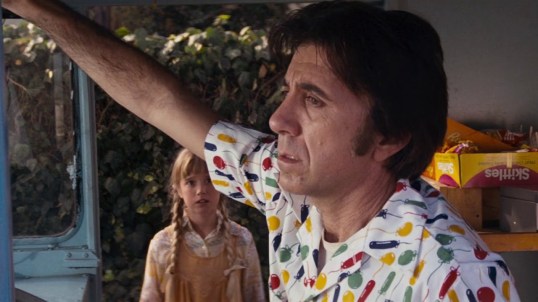
Assault on Precinct 13 (1976, dir by John Carpenter. DP: Douglas Knapp)
John Carpenter later said that Assault of Precinct 13 was his attempt to make a Howard Hawks-style western and, despite taking place in the modern era, it is very much a western. Ethan Bishop is the strong and moral lawman who refuses to allow the untamed land around him to change who he is and what he believes. Napoleon Wilson is the outlaw who finds redemption. In most westerns, the attackers would represent the last gasp of the lawless frontier fighting against encroaching civilization. In the case of Assault on Precinct 13, the opposite is true. The attackers represent the collapse of society and the people in the precinct find themselves fighting not only for their lives but also the ideals of modern civilization. With their relentless drive to attack, the members of the street gang resemble the zombies from George Romero’s Night of the Living Dead. They’re so nihilistic and destructive that even a hardened criminal like Napoleon Wilson knows that they have to be stopped. The film’s ultimate message seems to be that, even if Bishop and Wilson and Leigh (Laurie Zimmer) survive the night, the assault on Precinct 13 will never truly end. In a way, we’re all trapped in that abandoned precinct house.
Wow, that sounds pretty grim! And really, it is a grim film. This, after all, is the film in which little Kim Richards is graphically shot in the chest while trying to buy ice cream. (From the start, Carpenter understood the importance of shocking the audience.) That said, there are unexpected moments of dark humor to be found in the film. (Even Kim Richards’s indignation over being given the wrong flavor ice cream is rather humorous, up until she asks for a replacement and gets shot as a result.) Both Bishop and Wilson make for compelling heroes. As Angela Pleasence realized when she saw the movie at Cannes, John Carpenter was and is a natural-born storyteller. Assault on Precinct 13 is a film that wastes no time in getting started and is relentless in both its suspense and its action.
Assault on Precinct 13 has been overshadowed by Carpenter’s subsequent successes but it’s still one of Carpenter’s best films. Without Assault on Precinct 13, we would never have gotten Donald Pleasence as Dr. Sam Loomis. That alone is reason enough to celebrate the film.
John Carpenter is not only a great director but he’s also a brilliant composer. Today, in honor of Carpenter’s birthday, our song of the day is his haunting Theme From The Fog.
Today’s music video is that latest from Kim Gordon. Whenever I see anything new from Kim Gordon, I’m happy she got away from Thurston Moore.
Enjoy!
Welcome to Late Night Retro Television Reviews, a feature where we review some of our favorite and least favorite shows of the past! On Wednesdays, I will be reviewing 1st and Ten, which aired in syndication from 1984 to 1991. The entire series is streaming on Tubi.

This week, the playoffs continue.
Episode 2.9 “A Family Affair”
(Dir by Burt Brinckerhoff, originally aired on January 13th, 1987)
A playoff game against Denver is approaching. Denver is coached by a former protegee of Denardo’s and Denardo is obsessed with winning. He’s so obsessed that he alienates the players and Coach Grier (Stan Kamber). Grier is tempted to take a job as Houston’s head coach. Denardo says he doesn’t care until Diane reveals that Grier has turned down several other jobs out of loyalty to Denardo.
As for the other assistant coach, T.D. Parker (OJ Simpson) has problems of his own. His youngest son is acting out and the only thing that’s kept him out of juvenile detention is the fact that the cops are all fans of T.D. and the Bulls. T.D. tells his son that he’s not allowed to leave the house. When T.D.’s wife says that she thinks T.D. is being too strict, T.D. tells her to back off. T.D. gets really mad in this episode but none of it is convincing because OJ Simpson was too amiable an actor to really come across as being threatening. That’s something that would prove helpful to OJ in the years to come.
Meanwhile, the players all invest in the stock market. The stock doesn’t do well. The player who recommended the stock is chased out onto the field before the start of the big game against Denver. Ha ha, those players are all broke now. Good luck dealing with life after the game.
This show, I never know what to make of it. Is it a comedy? Is it a drama? Why is it so oddly edited? How many scenes were cut for syndication? Why do storylines start and then just disappear? For that matter, why do characters suddenly vanish? Dr. Death was a huge part of the show during the first half of the second season but I haven’t seen him during the second half. Did he get traded? Did he get injured? Seriously, what’s going on with this show?
I have no idea. Football’s a confusing sport.
Welcome to Retro Television Reviews, a feature where we review some of our favorite and least favorite shows of the past! On Wednesdays, I will be reviewing the original Love Boat, which aired on ABC from 1977 to 1986! The series can be streamed on Paramount Plus!
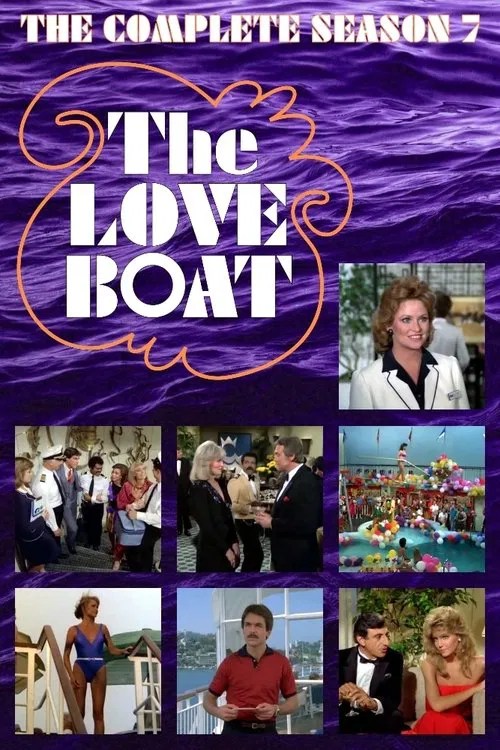
This week, Doc Bricker gets a surprise!
Episode 7.3 “Bricker’s Boy/Lotions of Love/The Hustlers”
(Dir by Jerome Courtland, originally aired on October 8th, 1983)
Doc Bricker has a son!
Well, actually, it’s more a case of David (Timothy Patrick Murphy) claiming to be Doc’s son. It turns out that David’s mother was one of Doc’s ex-girlfriends. By the end of the cruise, Doc has fully accepted David as his son but then David admits that he’s been lying the whole time. Doc is not his father. However, he wishes that Doc was his father. So, Doc — who has got to be the most understanding guy on the planet — adopts him. Vicki has a crush on the loser and Captain Stubing seems to be okay with that, despite the fact that David is a liar who took a cruise without even bothering to buy a ticket. Seriously, I’m kind of worried about Vickie at this point. She’s so bereft of friends her own age that she falls in love with every teenage boy who boards the ship.
While Vicki is busy making a bad decision, gigolo Gary Thomas (Ted McGinley) is traveling with his employer, Arlene (Vera Miles). Gary falls for Fran (Constance Forslund), who is traveling with her sugar daddy, Roy (Chuck Connors). Luckily, Arlene falls for Roy, which frees Gary up to date Fran. Wow, what a sleazy story! I mean, it’s probably as close to real life as this show ever got but still….
Finally, advertising executive Andy O’Neal (Brodie Greer) works on a perfume campaign and ends up falling in love with his client’s flighty daughter (Lydia Cornell). Good for them!
Yeesh. I usually love The Love Boat but this sure was a bland episode! Not even Ted McGinley pretending to be a gigolo could liven this one up. I will say that Bernie Kopell once again proved himself to be far better than the material that he had to work with. But otherwise, this episode was pretty dull.

How coked up was Julie? Obviously nowhere near enough.
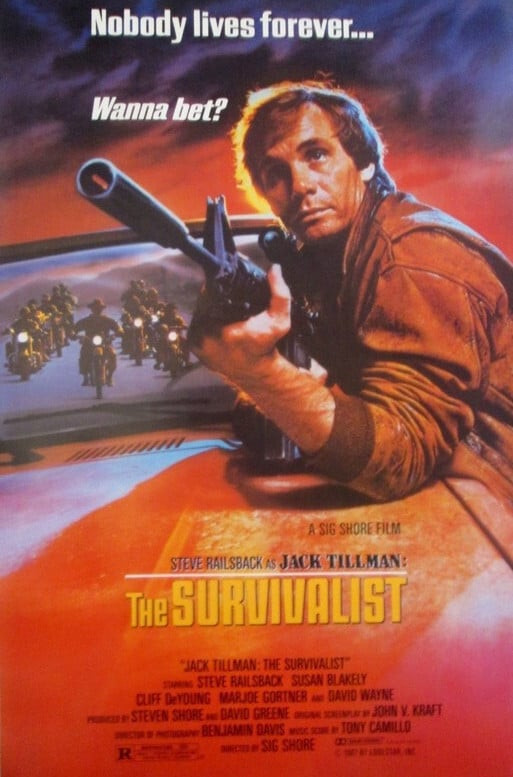
1987’s The Survivalist opens with a mushroom cloud forming over a frozen landscape.
In America, a nervous-looking newscaster announces that someone has set off a nuclear bomb in Siberia. The bomb was apparently a “suitcase bomb” and it was probably set off by a group of terrorists who figured bombing one of the most desolate and sparsely-populated places on Earth would make their point. However, the Russians are convinced that America was behind the bomb. Nuclear war is eminent.
People go into a panic. Civil disorder breaks out. Even a small town in South Texas finds itself in the grip of societal collapse. Fortunately, independent builder Jack Tilman (Steve Railsback) has spent his life preparing for this moment. He has hundreds of guns and explosives and he’s prepared to take his family into the desert while civilization collapses. When a desperate neighbor comes back Jack’s house and asks for a gun, Jack gives him a shotgun and then reacts with shocks when his friend reveals that he’s never fired a gun before. Considering that they live in South Texas, I’m surprised too.
(Seriously, how do they scare off the coyotes?)
Jack leaves his home to get some gasoline for their trip. While he’s out, he’s harassed by the motorcycle riding Lt. Youngman (Marjoe Gortner). Youngman is with the National Guard and, apparently, the National Guard has turned into a motorcycle gang. Youngman is declaring martial law and setting himself up as a warlord. With his perpetual smirk and his feathered hair, Lt. Youngman epitomizes the arrogance of authority. Jack has no use for him. Jack also has no use for anyone who wants to keep him from getting his money out of the bank. Jack has access to a bulldozer, after all.
Unfortunately, while Jack is arguing with Youngman and smashing into the bank, a group of hippies are breaking into his house and killing his family. A half-crazed Jack kidnaps two of his friends — Dr. Vincent Ryan (Cliff DeYoung) and his wife, Linda (Susan Blakely) — and he takes them into the desert with him. When Vincent demands to know why they’ve been kidnapped, Jack says that he’s trying to protect them. Linda gets it. Unfortunately, Vincent doesn’t.
Last night, I was searching for some Marjoe Gortner films to review. I came across The Survivalist on Letterboxed and I also came across some amazingly vitriolic reviews, largely from Leftists who accused the film of being a paranoid right-wing fantasy. I read those reviews and I thought to myself, “It stars Steve Railsback and Marjoe Gortner and it annoys the commies? I have to watch this!” I was able to track the film down on YouTube and I proceeded to spend 90 minutes watching civilization collapse.
Is it a good film? It depends on how you define good. It’s a low-budget, unashamedly trashy film that was clearly meant to appeal to people with a very definite worldview, one that the filmmakers may not have shared. (Most films are made solely to make money and any message that is selected is selected out of the hope that it will be profitable.) The government is corrupt. Most of the citizens have become complacent and aren’t prepared to handle any sort of crisis. When civilization collapses, only men like Jack Tilman and Lt. Youngman will thrive because they’re willing to be ruthless. To try to rationalize the situation, as Dr. Ryan does, is an often fatal mistake. In short, The Survivalist is a very paranoid film. That said, its story and its worldview really isn’t all that different from One Battle After Another.
I enjoyed The Survivalist, precisely because it is such a shameless film. This is the type of movie where the National Guard rides motorcycles and blow up random buildings for fun. It’s the type of film where one gunshot can cause a car to explode. It’s the type of film where actors like Cliff DeYoung and Susan Blakeley attempt to find some sort of deeper meaning in their awkward dialogue while Steve Railsback does his Clint Eastwood impersonation. Best of all, it’s got Marjoe Gortner going totally over-the-top as a smug authority figure. It’s a fun movie, a trashier version of Red Dawn.
What’s not to love?
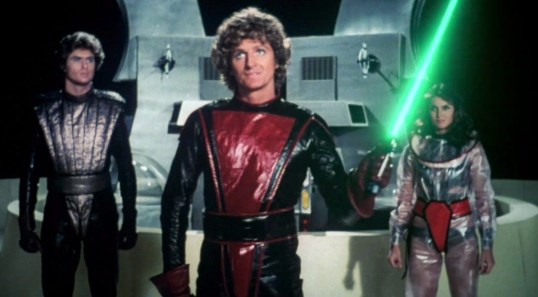
It’s Marjoe Gortner’s birthday!
Marjoe Gortner is a former child evangelist who had a long career as an actor in films, usually playing sinister characters. His most-seen film was probably Earthquake. My favorite Marjoe film is Starcrash. That said, Marjoe’s best performance was probably as himself in the candid documentary, Marjoe. The Oscar-winning film featured a look behind the scenes of the religious revival industry, with Marjoe as an amoral tour guide who discussed how he didn’t believe what he was preaching and who had basically been forced into the business by his parents. Marjoe described how every word he preached was calculated to inspire people to donate more money to his ministry. Marjoe described himself as being “bad but not evil.”
In 1972, Marjoe recorded an album called, after his famous documentary quote, Bad But Not Evil. Today’s song of the day is Marjoe Gortner covering Bob Dylan’s Lo and Behold on that album.
Welcome to Late Night Retro Television Reviews, a feature where we review some of our favorite and least favorite shows of the past! On Tuesdays, I will be reviewing Pacific Blue, a cop show that aired from 1996 to 2000 on the USA Network! It’s currently streaming everywhere, though I’m watching it on Tubi.
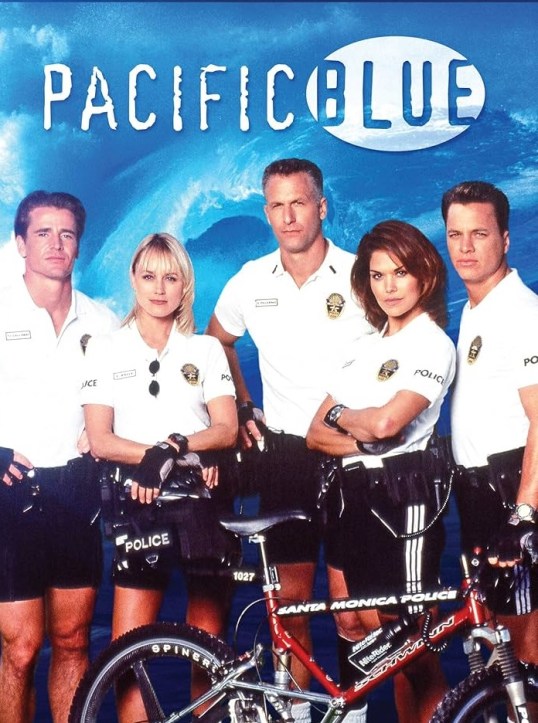
This week, Lt. Palermo has a lot to deal with.
Episode 3.10 “Only In America”
(Dir by Charles Siebert, originally aired on November 9th,1997)
Lt. Palermo has a lot going on in this episode.
When we first see Palermo, he’s playing basketball near the beach. As has been established in the past, Palermo, a middle-aged white guy, is apparently the best basketball player in all of Santa Monica. In this episode, he discovers that he’s now the second best. Jamal Rasheed (Elimu Nelson), who has just moved to town and who spends most of his time sitting in the stands and reading, turns out to be an even better player than Tony Palermo! Palermo is enthusiastic about Jamal until he discovers that Jamal is a former college player who was suspended when it was discovered that he was shaving points to pay for his drug habit. Jamal claims that he’s now clean and that he’s taught himself to read. Palermo isn’t sure that he trusts Jamal …. and if you’re asking how this is any of Palermo’s business, you’re having the same reaction that I had while I watched this episode.
Palermo is also concerned about a young, roller-blading Romanian named Dimitri Radu (Nathan Anderson), who keeps committing crimes and declaring that he has diplomatic immunity. It turns out that Dimitri wants to exchange his diplomatic immunity for political refugee status. Palermo discovers that Dimitri’s father is a big time arms dealer and that his former partners are looking to take out both him and his son. He also learns that the U.S. government is going to give Dimitri’s father citizenship in exchange for him testifying against his partners. Palermo is outraged!
And again, Palermo — you’re a bicycle cop! You wear those stupid shorts every day. Nobody cared about your opinion, dude!
This episode featured some truly horrendous acting on the part of the guest cast. It also featured a shoot-out in which Cory killed one of the arms dealers. Usually, an officer involved shooting would lead to the officer being on desk duty while the shooting is investigated. Instead, Cory hops on her bicycle and continues to look for Dimitri. This was a pretty dumb episode but it’s Pacific Blue so I wasn’t expecting anything different.
Oh, how happy I’ll be when I finish this series.
 Through the Shattered Lens