Late Night Retro Television Review: Highway to Heaven 2.4 “Cindy”


Welcome to Late Night Retro Television Reviews, a feature where we review some of our favorite and least favorite shows of the past!  On Thursdays, I will be reviewing Highway to Heaven, which aired on NBC from 1984 to 1989.  The entire show is currently streaming on Freevee and several other services!

This week, Jonathan and Mark travel to Hollywood …. again.

Episode 2.4 “Cindy”

(Dir by Michael Landon, originally aired on October 23rd, 1985)

Vincent DeGeralimo (Bill Macy) is a fast-talking, good-hearted talent agent who is still trying to sell acts that were out-of-style during Vaudeville.  He wants to get a booking for a lion tamer but Jonathan appears to him and says that Vincent’s main concern should be helping out his daughter.

Cindy DeGeralimo (Hallie Todd) is an aspiring actress who is currently working as a waitress in a diner.  Her evil boss (Alice Ghostley) has three untalented daughters who all want to be actresses as well.  Cindy’s newest coworker, Mark Gordon, just wants to meet a movie star.

Pretending to work in the mailroom of a major Hollywood studio, Jonathan convinces producer Maxim Prince (Kip Gilman) that the best way to find a star for his new picture would be to hold a ball and invite every aspiring actress in town to attend.

Can you see where this is going?  Yep, it’s a remake of Cinderella, except this time Cinderella has a pushy father who keeps trying to change her before she goes to the ball.  Cindy finally gets fed up and says that she wants to be a star but she also doesn’t want to be some sort of Hollywood phony.  Vincent accepts Cindy’s feelings and everything works out in the end.

Usually, I’m pretty lenient when it comes to reviewing this show but this episode just annoyed me.  Even by the standards of Highway to Heaven, it was overly sentimental and heavy-handed.  Bill Macy gave such a frantic performance as Vincent that it was hard to watch him.  As well, Mark was so excited about being in Hollywood that I found myself wondering if he forgot about all the time he spent in Hollywood during the first season.

Indeed, this is not the first episode of Highway to Heaven to feature Jonathan dealing with the entertainment industry and I imagine it won’t be the last.  Considering how much control Michael Landon had over this show, I always get the feeling that the Hollywood episodes were personal for him, especially as they always seemed to deal with parents regretting the fact that they put work ahead of their families.  That said, the portrayal of Hollywood in this episode was so old-fashioned and idealized that I get the feeling that it was Landon’s way of showing what he wished Hollywood was like as opposed to what it actually was.  Landon’s Hollywood is a town where anyone can be a star and anyone can find a happiness.

As for this episode, it was a bit too corny for its own good.  Next week, though, Jonathan battles the Devil for Mark’s soul!  That should be fun.

Film Review: Against Their Will (dir by Denis Malleval)


The 2012 French film, Against Their Will, tells the story of two Alsatian teenagers during the Nazi occupation of France.

Lisette (Louise Herrero) is blonde and praised, by the Nazis, for her Aryan appearance.  She appears to always have a positive attitude no matter what is going on.  Lisette’s father is a collaborationist with the Nazis and Lisette publicly defends the German occupiers while privately disdaining them and the war.  Her fiancé, Henri, has been conscripted into the army and has been sent to the Russian front.  He writes her letters but, because he is now required to write only in German and not in the French that he and Lisette grew up with, Lisette cannot read them.

Alice (Flore Bonaventura) is dark-haired and therefore considered to be inferior to Lisette.  This is despite the fact that Alice is fiercely intelligent and has been trained as a nurse.  Alice’s father is a doctor who has been sent to a prison camp as punishment for treating a wounded British soldier.  Alice is rebellious and, unlike Lisette, she has no compunctions about telling the Nazis exactly how she feels about them.  When she is ordered to salute the Nazi flag, she lifts on arm in a stiff salute while using her other hand to extend her middle finger.

Lisette and Alice are amongst the many teenagers who are taken from their families and sent to a German indoctrination camp, where the strict and cruel Trudl (Julia Thrunau) tries to brainwash them.  Lisette and Alice become unlikely friends as they are sent from the camp to work in a munitions factory and finally to serve in the Lebensborn, which was Germany’s eugenics program.  While Alice works in the maternity ward, Lisette’s Aryan appearance attracts the attention of a cruel SS officer.

Against Their Will starts out strong, showing how even the most intelligent and independent of people can be forced to do things that go against their beliefs, whether as a result of brainwashing or just plain fear.  The scenes in the indoctrination camp and later in the munitions factory show how the Nazi government treated both people in both Germany and the occupied territories as cannon fodder in their war with the Allies.  Even during an air raid, Alice is ordered to continue working and, even though one mistake could lead to an explosion that would kill both them and several of their co-workers, Alice and Lisette are continually told to speed up when it comes to making the shells that will later be dropped on the Allies.

The film loses its way during the final third, largely because French girls — even ones from the German-influenced Alsace region of France — would never have been sent to the Lebensborn, which was meant to be exclusively for the breeding of “pure” Germans.  By suggesting otherwise, the film unintentionally downplays the nationalism and the racism at the heart of the Nazi ideology.  The film’s framing device — in which one of the women tells her story to her granddaughter — also feels a bit awkward and the film also makes a bit too much use of the stereotype of the good German, the one Nazi who is not quite as cruel as the others.

The first half of the film is a strong portrayal of life under an occupation, with both of the lead actresses giving good performances as two women who deal with their circumstances in very different ways.  It’s just a shame that the film’s conclusion doesn’t live up to what came before it.

Retro Television Review: Beane’s of Boston 1.1 “German Week”


Welcome to Retro Television Reviews, a feature where we review some of our favorite and least favorite shows of the past!  On Thursdays, I will be reviewing Beane’s of Boston, which aired on CBS in 1979.  The entire show is currently streaming on YouTube!

This week, we take a look at an attempt to bring a British show to America.

Episode 1.1 “German Week”

(Dir by Jerry Paris, originally aired on May 5th, 1979)

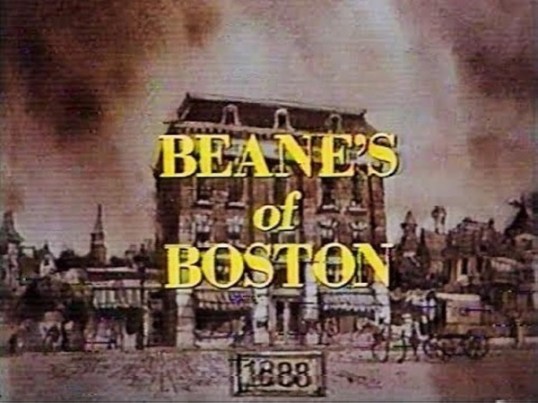
Beane’s of Boston is a venerable department store, a landmark of Boston.  The store is housed in a multi-story building and it is run by the elderly but still horny Frank Beane (Tom Poston).  Frank takes a break from ogling his secretary and sneaking off to the strip club to demand this his nephew, Franklin Beane (George O’Hanlon, Jr.), explain why the 4th floor — which houses the Men and Ladies’ Wear Department — is losing money.

Franklin admits that sales have been off but he has a plan.  What if the store only sold German products for a week?  And what if the employees dressed in lederhosen and did German dances?

The 4th floor employees are not particularly enthused.  The head of Ladies’ Wear, Mrs. Slocum (Charlotte Rae), served as a WAC during World War II and once found herself with a German soldier on top of her after a landmine went off.  Mr. Peacock (John Hillerman), the stuffy floor manager, feels that he looks like an idiot dressed in a German outfit.  Meanwhile, in the Men’s Department, elderly Mr. Granger (Morgan Farley) sleeps while the flamboyant Mr. Humphries (Alan Sues) answers the phone in his most “masculine” voice and Mr. Lucas (Larry Bishop) hits on the just-hired administrative assistant, Ms. Brahms (Lorna Patterson).

German week is a disaster, bringing in a profit of $12.94.  But, fortunately, old Frank Beane is dating a German woman and she loves the idea.  So, no one loses their job….

If this sounds familiar and if you’re reading this in America, you’ve probably seen an episode of the infamously terrible British sitcom Are You Being Served? on PBS.  Beane’s of Boston was an attempt to do an American version of that sitcom and, just as The Office would do decades later, the pilot essentially took a script from the British series and populated it with American actors.

Setting aside the question of whether or not the world needed more than one version of Are You Being Served?, the idea of transporting that very British sitcom to Boston was not, in itself, a terrible one.  Boston is one of our oldest cities and, while it may be best-known today for its robust blue collar culture, there were still enough stuffy Protestants around to make it believable that a store like Beane’s could survive.  That said, the pilot still falls flat, largely because everyone but John Hillerman seems to be miscast and even Mr. Peacock is considerably less amusing once you take away his title of colonel.  While the British original was known for its broad comedy, it appears like a model of subtlety when compared to the performances of Alan Sues as Mr. Humphries and Larry Bishop as Mr. Lucas.  As well, why would any store do a German week in a city that is best-known for its strong Irish community?  Why not do an Irish Week?  It perhaps made sense in Are You Being Served? but, in Beane’s of Boston, it just makes Franklin seem like such an idiot that you almost feel like he deserves to lose his job.

Beane’s of Boston did not have the same success as Are You Being Served?  German Week would be the only episode aired.

Late Night Retro Television Review: Monsters 2.2 “Portrait of the Artist”


Welcome to Late Night Retro Television Reviews, a feature where we review some of our favorite and least favorite shows of the past! On Wednesdays, I will be reviewing Monsters, which aired in syndication from 1988 to 1991. The entire series is streaming on YouTube.

This week, a visit to an art gallery goes terribly wrong.

Episode 2.2 “Portrait of the Artist”

(Dir by Gerald Cotts, originally aired on October 8th, 1989)

Lucille Clay (Lucille Kennedy) visits an isolated art gallery that appears to be sitting in the middle of nowhere.  The studio is full of macabre paintings of women and children who appear to be in some sort of mortal danger.  Watching over the gallery is Hubert (Darren McGavin), who claims to be just an old farmer who was hired to look after things while the actual artist is in Nepal.

Accompanying Lucille is Roger Darcy (Beeson Carroll), a man who walks with a pronounced limp.  Lucille claims that Roger is an art critic but, as soon becomes apparent, that’s a lie.  Roger is actually the father of a missing teenage girl and he is stunned when he sees that one of the paintings looks just like her.  In fact, all of the paintings appear to be of someone who has recently disappeared.  Convinced that the artist is a serial killer, Roger demands to be taken to the artist’s cabin.  What Roger doesn’t know is that the gallery hides an even bigger threat.

This episode ends with a twist.  It’s not a bad twist and it actually took me by surprise.  Unfortunately, the rest of the episode is not as good as the twist ending.  I had high hopes when I saw that this episode was going to take place in a gallery and that it was going to star Darren McGavin.  But, and it pains me to say this, McGavin just isn’t very good in this episode.  McGavin was an actor who always had a tendency to go a little bit over the top.  That wasn’t a problem when he was playing Kolchak or the father in A Christmas Story.  But, in this episode, he’s so blustery that it’s obvious that he’s hiding something from the start and it makes Roger and Lucille seem all the dumber for trusting him.

Indeed, the other big problem with this episode is that Roger and Lucille continually do the stupidest things possible.  None of their actions make sense.  Why, if they believed a serial killer was lurking around the gallery, would they split up?  Why would they be so quick to trust Hubert?  Why, after escaping, would one of them then return without any backup?  Why does neither one of them seem to be particularly upset about the possibility that either Hubert or the artist murdered Roger’s daughter and then used her for his painting?  They both behave so stupidly that it’s hard to really care what happens to them.

This story had some potential but, unfortunately, the execution just didn’t live up to it.

Film Review: Hitler — Dead or Alive (dir by Nick Grinde)


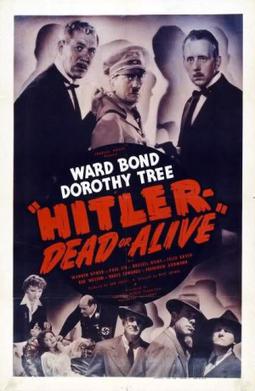
The 1942 film, Hitler — Dead or Alive, opens with two reporters visiting a prominent industrialist named Samuel Thornton (Russell Hicks).  They are curious about a statue of three men that stands outside of Thornton’s mansion.  Thornton proceeds to tell them the story of the three men.

In 1939, shortly after the Nazis invaded Poland and with the United States still pursuing a policy of neutrality, Thornton independently offered a million dollars to anyone who could bring Adolf Hitler to justice, dead or alive.  Accepting the offer were three ex-cons who had just been released from Alcatraz, Steve Maschick (Ward Bond), Hans “The Dutch” Havermann (Warren Hymer), and Joe “The Book” Conway (Paul Fix).  (As you may have guessed “The Book” is the intellectual of the group and yes, he wears glasses.)  After Thornton makes clear to them that they’re going to have to make sure that they either capture or kill the real Hitler and not one of his many doubles, the three men join the Royal Canadian Air Force and, along with ace pilot Johnny Stevens (Bruce Edwards), they head for Germany.

Made for an obviously low-budget, this B-movie is a bit of a curiosity.  It starts out as a comedy, with the three cooks cracking jokes about going straight and a lengthy sequence in which they try to work up the courage to parachute into Germany.  Even after they get caught by the Gestapo and sent to a prison camp, much of the film is played for laughs.  It’s not until they escape from the prison and Johnny sacrifices his life while shooting it out with the Nazis that the film starts to take a more serious turn.  Steve, who starts out the film only caring about the money, comes to realize that there are more important things than just finding a quick payday.

Steve, Hans, and Joe end up at the mansion of Else von Brandt (Dorothy Tree), a secret member of the German resistance who is so trusted by the Nazis that Hitler himself (played by Bobby Watson) will be stopping by for a visit.  By this point, Steve explains that he no longer cares about the money.  As far as he’s concerned, he’s now working for free.  After learning about all of the people who have been killed by Hitler, Steve is determined to stop him, even if it means sacrificing his own life.

There are still moments of humor to the found in the latter half of the film.  When Steve, Hans, and Joe confront Hitler, one of the first things that they do is shave off his mustache.  But the film’s conclusion is ultimately a very serious one and features one particular act of violence that I imagine stunned audiences in 1942.  Having told the story of the three men and their mission to get Hitler, Samuel Thornton ends the film by saying that it doesn’t matter whether Germany is being led by Hitler or Hitler’s double.  What matters is eradicating all of the Nazis from the Earth.  In the end, the message of the film is a simple one.  It’s okay to laugh.  It’s okay to joke.  But, in the end, everyone must do their part.

Hitler — Dead or Alive was made for an obviously low-budget and there are a few scenes, especially in the beginning, where the pace feels a bit off.  Just as with Beast of Berlin, the film’s version of a German prison camp feels like it could have been lifted from a dozen American crime films.  But Ward Bond is a strong hero and he delivers his lines with conviction, especially when he discusses why nothing is more important than stopping Hitler.  He gets good support from both Paul Fix and Warren Hymer.  The film may start out as a comedy but it’s anti-Hitler message comes through loud and clear.  Seriously, how can you not appreciate a film about defeating the Nazis?

Retro Television Review: The Love Boat 4.10 “Boomerang/Captain’s Triangle/Out of This World”


Welcome to Retro Television Reviews, a feature where we review some of our favorite and least favorite shows of the past!  On Wednesdays, I will be reviewing the original Love Boat, which aired on ABC from 1977 to 1986!  The series can be streamed on Paramount Plus!

This week’s cruise is all about adultery and aliens!

Episode 4.10 “Boomerang/Captain’s Triangle/Out Of This World”

(Dir by Richard Kinon, originally aired on December 13th, 1980)

When Donna Dayton (Pamela Sue Martin) boards the boat, Julie immediately notices her wedding ring and asks if Mr. Dayton will be following her.  Donna explains that she’s not married.  She just wears the ring to keep sleazy men from hitting on her.

Julie is shocked.  What if Donna meets someone on the boat!?

Donna says that she has no intention of meeting anyone.

Can you guess what happens next?

Donna meets Scott Hanson (Barry Van Dyke) and it’s love at …. well, not quite first sight.  In fact, Donna is weary of Scott because Scott is on the cruise with his oafish best friend, Lance (Guich Koock, who has a great name if nothing else).  When Lance tries to hit on Donna, Donna shoots him down.  When Scott apologizes to Donna, it leads to them dancing together and then later spending a day in Mexico.  Scott repeatedly says that their relationship cannot continue once the cruise is over.  Even after Scott spends the night in Donna’s cabin (which was kind of a rare occurrence on this show because The Love Boat was usually a surprisingly chaste show), Scott says that he can’t be with Donna.

Finally realizing that she’s still wearing her fake wedding ring, Donna tells Scott, “I’m not married!”

“But I am,” Scott replies.

DAMN!  When did The Love Boat get so dramatic?  When the ship returns to Los Angeles, Donna gives her wedding ring to Julie and announces that the next time she wears a ring, it’ll be because she’s married.

Wow, that was depressing.  Fortunately, the other two stories are a bit less serious.

For instance, Captain Stubing’s friend, Brad (Monte Markham), boards the boat with his wife, Monica (Sue Ane Langdon).  Monica soon starts to hit on Stubing, which leads to Stubing spending all of his time hiding on the bridge.  Doc Bricker, naturally, offers to sleep with Monica.  Fortunately, Stubing figures out that it’s all Brad’s fault and he tells Brad that he needs to spend more time with his wife.  Brad agrees and later learns that Monica just wanted to have an affair because she was insecure about turning 40.  But once Brad starts to pay attention to her again, Monica decides not to cheat on him.  Sorry, Doc!

Finally, in perhaps the silliest Love Boat storyline ever, Martin Fallow (Tom Smothers) is a science fiction fan who is convinced that his local librarian, Elinor Green (Helen Reddy), is an alien from the planet Romulac.  Martin explains to Gopher that Elinor turns into a plant at night and only eats other plants.  Elinor proceeds to eat a flower while Isaac, Gopher, and Martin watch.

Elinor later confesses to Isaac that she is not an alien but she’s been pretending to be one because she knows that Martin is obsessed with science fiction.  Okay, that makes …. well, that actually makes no sense whatsoever.  Elinor thought she could get Martin to love her by pretending to be a plant and …. actually, Martin does fall in love with her so I guess her plan worked.  This was such a weird story.  Fortunately, it was also a lot of fun.  With all the talk of adultery, it was good to have something that was just incredibly silly to serve as a counterbalance.

This was an enjoyable cruise.  Pamela Sue Martin and Barry Van Dyke had so much chemistry as the forbidden lovers that I really did feel bad that they couldn’t be together.  And the alien stuff was dumb but fun.  This was a cruise that truly had something for everyone.

Late Night Retro Television Review: Baywatch Nights 1.20 “Rendezvous”


Welcome to Late Night Retro Television Reviews, a feature where we review some of our favorite and least favorite shows of the past!  On Tuesdays, I will be reviewing Baywatch Nights, a detective show that ran in Syndication from 1995 to 1997.  The entire show is currently streaming on You tube!

This week, Mitch and the Gang screw up another easy case.

Episode 1.20 “Rendezvous”

(Dir by Georg Fenady, originally aired on May 4th, 1996)

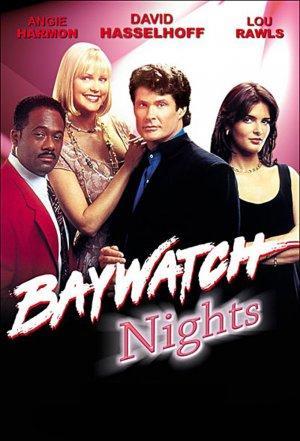
Mitch, Ryan, and Garner are hired to track down Bradley Thurman (John Sanderford), a former top executive who embezzled over twenty million dollars and then, with the help of plastic surgery, went into hiding.  Thurman has come to California to track down his wife and child, both of whom are in the witness protection program.  They are told that, if they help to capture Bradley, they will be entitled to 20% of whatever money is recovered.

“20% of 20,000,000,” Mitch says, dreamily.

“Or 20% of nothing,” Ryan adds, revealing that she at least understands that both this show and presumably Baywatch would be over if Mitch ever became independently wealthy.

Donna and and Griff help out with the case, despite the fact that neither one of them is a detective and they both already have jobs that should presumably keep them busy.  I mean, Donna owns a bar and it seems like that would require a lot of work on her part.  Instead, she’s always either training to become a life guard, pursuing a modeling career, and trying to help Mitch solve a case.  If I was Donna, I would be concerned about the fact that I’m always being told to go flirt with the bad guys.  It seems like a dangerous assignment to give to someone who isn’t actually a detective.  Griff, as a professional photographer, at least has a skill that is regularly used in actual detective work.

Even though this episode’s story felt like a return to the type of plots that Baywatch Nights featured when it first premiered, it was still a rather inconsequential episode.  Bradley Thurman was hardly a clever or even a menacing villain and the fact that he got as close to his wife and his child as he did had less to do with any skill on Thurman’s part and everything to do with Mitch just not being very good at his job.

Actually, why are Mitch, Ryan, and Garner such terrible detectives?  Mitch’s problem is that he never seems to focus on the case at hand.  Instead, he’s always trying to flirt with Ryan or looking out at the ocean to see if anyone’s drowning.  Being a detective requires concentration and that seems to be something that Mitch struggles with.  Garner, meanwhile, is a bit too cocky for someone who, despite appearing in the open credits, hardly ever actually appears on the show.  But still, Ryan seems like she should have everything that it takes to be a good detective but, every show, she makes the same mistakes as Mitch and Garner.  I think Ryan actually is a good detective.  She’s just being dragged down by Mitch’s incompetence.  I think if Ryan went off on her own, she’d have a lot more success.

Next week, Mitch helps an old friend who thinks his wife is an imposter!

Film Review: Hitler — Beast of Berlin (dir by Sam Newfield)


1939’s Hitler — Beast of Berlin opens with a shot of Nazi stormtroopers marching down a Berlin street.  As they pass, every civilian stands and gives them the stiff-armed Nazi salute.  A couple sitting in a park does it.  A woman pushing a baby carriage does it.  A group of children do it.

Despite outward appearances, not everyone in Berlin is a supporter of Hitler or the Nazis.  Hans Memling (Roland Drew) is an intellectual and a veteran of World War I.  He knows that Germany’s economic policies are, in fact, making the country weaker.  He knows that Hitler is determined to provoke a war that Germany cannot win.  Prophetically, Hans speaks of the risk of German citizens being forced to fight in a war that is only being fought on behalf of Hitler’s ego.  He warns that Berlin and Germany will be destroyed if Hitler is not stopped.

Along with a group of other dissidents, Hans prints an underground newspaper, one that presents the truth about what is happening in Germany.  Working with him, among others, is his brother-in-law, Karl (Alan Ladd, in an early role) and a priest named Father Pommer (Frederick Giermann).  Their contact in the Gestapo is Alfred Stahlhelm (played by Hans Heinrich von Twardowski, a German actor who escaped Germany when Hitler came to power).  Stahlhelm is an alcoholic who fears that he will accidentally slip up when he’s drunk.  As he explains it, a member of the Gestapo is expected to drink and visit brothels when he is off-duty.  If he doesn’t, he will be immediately suspected of insubordination.

When the Gestapo does come for Hans’s operation, Hans finds himself separated from his wife (Steffi Duna) and imprisoned.  The only thing that keeps Hans alive is that the camp commandant is an old friend from World War I.  Hans can only watch as his allies are either executed or forced, after torture, to declare their loyalty to Hitler.  When Hans is finally given an opportunity to escape, he must decide whether to flee to Switzerland or to remain in Germany and continue to fight the Nazi regime.

The most interesting thing about this film is that it was made in 1939 and released into theaters a month after Germany invaded Poland.  The film was released at a time when America was still officially neutral and when isolationism was still a popular policy.  It was released at a time when many Americans were still dealing with the trauma of World War I and, as such, felt that Europe should be left alone to deal with its conflicts on its own.  As such, the film struggled with both the enforcers of the Motion Picture Production Code but also with local censors who felt that the film might offend the German communities within their towns.  James G. Stahlman, editor of the Nashville Banner, was moved to write an editorial calling for the film to be banned because it might inspire audiences to want to go to war with Germany.  Despite all that, Hitler — Beast of Berlin did well at the box office, though many theater owners chose to advertise it as being titled either Beast of Berlin or The Goose Steppers.

Seen today, parts of the film seem naive.  Despite the film being fervently and unapologetically anti-Nazi, it is still obviously a film made at a time when the full depravity of the Nazi regime had not yet been revealed.  The scenes in the concentration camp feel as if they could have been lifted from any 1930s prison film and they certainly come nowhere close to depicting what we now know was actually happening.  Indeed, the film barely acknowledges the anti-Semitism that lay at the heart of Nazi ideology.  But the film does do a good job of portraying life in a society where no one can be trusted and where simply saying the wrong word can lead to prison, torture, and even worse.  The film captures the fear and paranoia of living under a dictatorship and certainly, it deserves credit for calling out the Nazis and their leaders by name.  At a time when many people were living in denial about what was happening in Europe, this film took a clear and firm stand.  In 1939, the film may have been called “propaganda” but today, it feels like prophecy.  Everything that Hans predicts in this film would come to pass in reality.  The film was a warning that was heeded too late.

Retro Television Review: Fantasy Island 4.19 “The Proxy Billionaire/The Experiment”


Welcome to Retro Television Reviews, a feature where we review some of our favorite and least favorite shows of the past!  On Tuesdays, I will be reviewing the original Fantasy Island, which ran on ABC from 1977 to 1984.  Almost the entire show is currently streaming on Daily Motion.

This week, things get weird.

Episode 4.19 “The Proxy Billionaire/The Experiment”

(Dir by Richard Benedict, originally aired on March 21st, 1981)

This week’s episode is a bit of an odd one.

The first fantasy is fairly typical for the series.  Playing two roles, Robert Goulet is cast as both a billionaire and as Frank Miller, a Wall Street analyst who wants to be a billionaire.  The real billionaire agrees to allow Frank to live his life for the weekend.  Frank soon discovers that being a billionaire is …. well, actually, it’s pretty cool.  Except, of course, Phyllis Davis and Troy Donahue are plotting to poison him at a luau so that they can steal all of his money.  Fortunately, Mr. Roarke shows up at the luau in time to catch the vial of poison as Davis and Donahue attempt to toss it away.  Frank learns that being a billionaire is fine as long as no one wants to kill you.  Still, he has to return to his normal life at the end of the weekend.  Fortunately, the millionaire’s administrative assistant (Britt Ekland) has fallen in love with Frank and she decides to leave the Island with him.

As I said, this story felt pretty typical of Fantasy Island.  Probably the highlight was Mr. Roarke walking in on Tattoo badgering Frank for financial advice.  Roarke responded by giving Tattoo a strong glare that, if nothing else, reminded the audience that Tattoo and Roarke absolutely despise each other.

The other fantasy was …. well, it was weird.  Dr. Lucas Bergmann (James Broderick) and his daughter,  Lisa (hey!), come to the Island.  Each has a fantasy.  Lisa (played by Laurie Walters) says her fantasy is for Lucas to relax and enjoy himself and to stop obsessing over bringing the dead back to life.  Lucas’s fantasy is to bring the dead back to life.  Roarke sets Lucas and Lisa up in a bungalow that once belonged to another scientist who also wanted to play God.  Roarke warns Lucas that the local Islanders are superstitious and they might not appreciate him tampering in God’s domain.

(If the Islanders are that superstitious, how are they handling living on a magical island that is ruled by a mercurial demigod?)

Soon, the Islanders are beating their drums and Lucas’s mute assistant (Woody Strode) is looking concerned.  Lucas steps outside and discovers that Lisa has apparently drowned in a nearby lake.  Lucas decides that she’ll be the subject of his experiment.  Can he bring her back to life?  Lucas doesn’t find out because the Islanders storm his bungalow and Lucas runs into the jungle, fleeing until he eventually runs into Roarke, Tattoo, and …. LISA!

It turns out that Lisa was only pretending to be dead in order to teach her father a lesson.  And it also turns out that the Islanders were in on it and Woody Strode can speak.

WHAT!?

Seriously, was there not a simpler and perhaps less traumatic way to teach Lucas a lesson?  This seems like an awful lot of trouble to go to.  Lucas does realize that he doesn’t need to raise the dead to be happy so that’s good.  Still, this whole thing just feels weird.

Of course, weird is good when it comes to Fantasy Island.  With Roarke and Tattoo barely on speaking terms, it’s even more important for the fantasies to be memorable.  And I will never forget about the time Mr. Roarke tricked a scientist into believing his only child was dead.  Seriously, I’m stunned Mr. Roarke was never sued.

Next week, we meet Mr. Roarke’s goddaughter!

Late Night Retro Television Review: CHiPs 1.20 “Rainy Day”


Welcome to Late Night Retro Television Reviews, a feature where we review some of our favorite and least favorite shows of the past!  On Mondays, I will be reviewing CHiPs, which ran on NBC from 1977 to 1983.  The entire show is currently streaming on Freevee!

What would CHiPs be like without motorcycles?  We’re about to find out.

Episode 1.20 “Rainy Day”

(Dir by Gordon Hessler, originally aired on March 2nd, 1978)

While riding his motorcycle on the California highway, Baker groans as he feels a drop of water.  He tells Ponch that it’s going to rain and the two of them are going to end up getting stuck in a patrol car.

“It’s only sprinkling!” Ponch replies.

One jump cut later and Ponch and Baker are trapped in the middle of a downpour.  Despite the heavy rain and the fact that they’re getting soaked, they still manage to save a teacher after a car swerves on the slick road and hits her school bus.  (Apparently, in 1978, teachers also had to drive the school buses.)  The teacher is young and attractive so, of course, Ponch tells her that she and her students can drop by the station and see him any time that they want.

As for the rain, it turns out that Baker was right.  After giving them a hard time about their wet uniforms (and not even bothering to acknowledge that those uniforms got wet while Baker and Ponch were saving someone’s life), Getraer assigns them to a patrol car for the day.  It’s a new patrol car so Getraer warns them not to get a scratch on it.  Usually, I can kind of understand why Getraer is a bit weary of Ponch but, in this episode, the guy’s just a jerk about everything.

You can probably already guess what the main problem with this episode is.  The appeal of CHiPs, at least from what I’ve seen so far, is that it features a lot of exciting motorcycle stunts.  Chase scenes involving motorcycles are fun to watch because motorcycles can go extremely fast and they can weave in-and-out of traffic.  The show works best when Ponch and Baker are on their motorcycles.  This episodes put them in a bulky, slow-moving squad car.  Even stuck in the car, Ponch and Baker manage to catch a car thief and they put an end to an illegal gambling casino that’s been hidden inside of an RV.  But it really doesn’t matter because they’re in a squad car.  There’s nothing exciting about a squad car.

And yes, the squad car does get trashed, specifically while Ponch and Baker are chasing a degenerate gambler (Herb Edelman) who was seeking revenge against the RV casino.  Getraer is not happy about the damage to the car, despite the fact that there really wasn’t any way to avoid it and Ponch and Baker managed to prevent a lot of people from getting injured.  Fortunately, Officer Grossman (Paul Linke) accidentally backs into the squad car, leaving it ambiguous as to who is responsible for what damage.  Getraer will just have to get mad at everyone, I guess.

I love the rain so I did appreciate the fact that this episode featured a lot of it.  But otherwise, the whole thing just felt off.  I don’t care how wet it is outside.  Baker and Ponch just do not belong in a car.