28 Years Later: The Bone Temple (dir. by Nia DaCosta) Review


“Every skull is a set of thoughts. These sockets saw and these jaws spoke and swallowed. This is a monument to them. A temple.” — Dr. Ian Kelson

28 Years Later: The Bone Temple crashes into 2026 with the force of a Rage-infected sprint, claiming its spot as one of the year’s top films right out of the gate, flaws and all. Directed by Nia DaCosta, the film continues to showcase her evolving command as a filmmaker, building directly on the promise of her 2025 character study Hedda, where she dissected emotional isolation with surgical precision and atmospheric tension. Where The Marvels in 2023 felt like a worthy attempt hampered by a screenplay that couldn’t decide on a tone—swinging between quippy banter and high-stakes drama while beholden to the cinematic universe’s endless interconnections—The Bone Temple unleashes DaCosta at full throttle, free from franchise baggage to craft a horror epic that’s visually poetic, thematically fearless, and rhythmically assured.​

Yeah, it revels in bleakness that can border on exhausting, and its structure wanders more than it charges forward, but those imperfections only underscore how fiercely original and alive it feels compared to the rote horror sequels we’re usually fed. Decades past the initial outbreak that defined 28 Days Later and 28 Weeks Later, the apocalypse here isn’t a fresh crisis anymore—it’s infrastructure, a grim new normal etched into the landscape. Survivors haven’t rebuilt so much as repurposed the ruins, carving out rituals and monuments that say as much about lingering trauma as they do about adaptation. The Rage virus still turns people into feral killers, ripping through flesh in those signature bursts of speed and savagery, but the infected have evolved in intriguing ways that deepen the world’s mythology without overshadowing the human core. The spotlight swings to human extremes: towering bone architectures raised as memorials, nomadic gangs treating murder like liturgy, and lone figures wrestling with whether dignity even matters when bodies pile up unmarked. This pivot lets the film breathe in ways the earlier entries couldn’t, expanding a zombie-adjacent thriller into something folk-horrific and introspective.

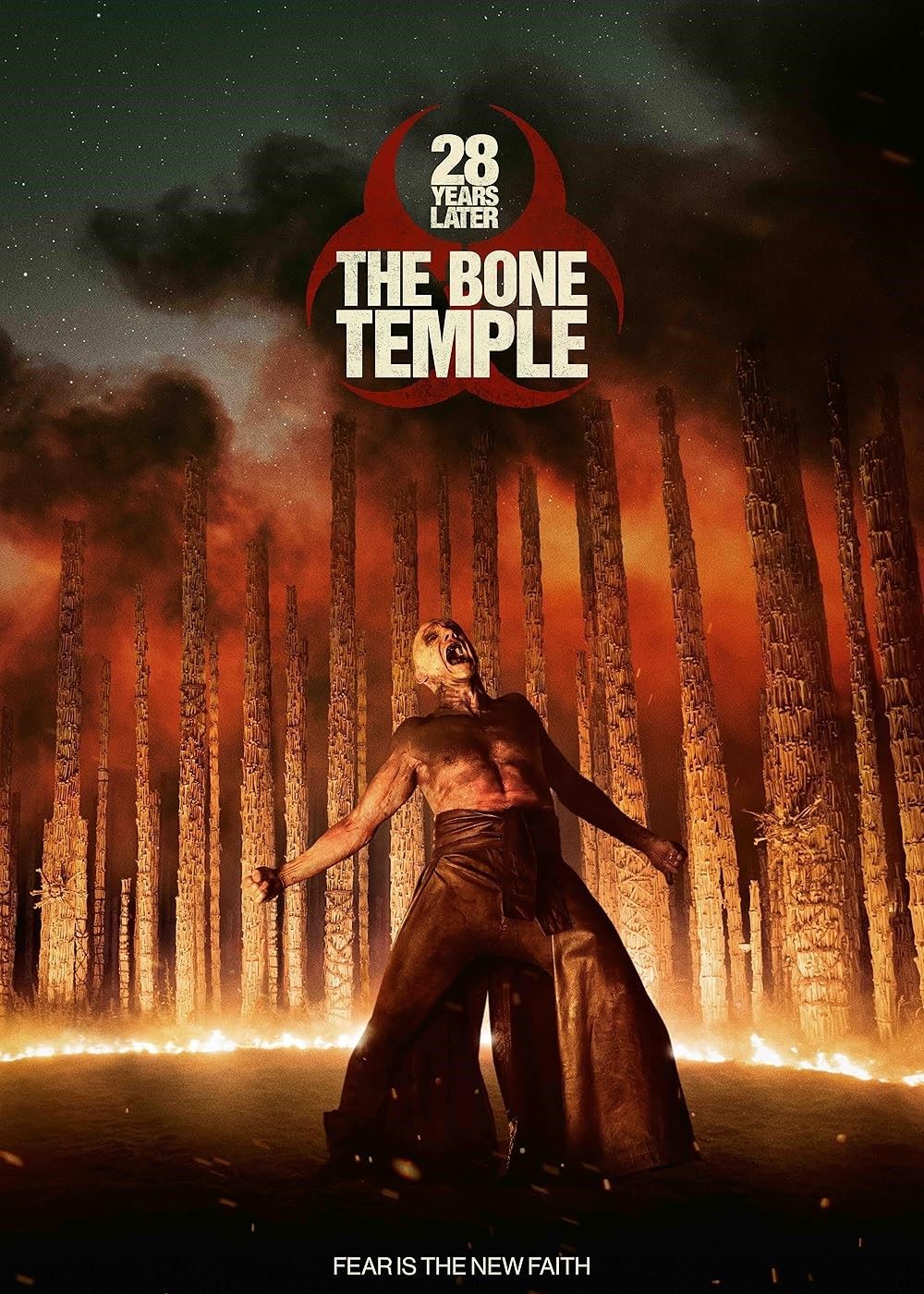
Dr. Ian Kelson embodies that shift, and Ralph Fiennes delivers what might be his meatiest role in years—a reclusive physician-architect whose Bone Temple dominates the story like a character itself, adding a profound level of tragic humanity that stands in stark, poignant contrast to the nihilistic worldview of Sir Lord Jimmy Crystal and his blindly devoted followers. Picture spires of meticulously arranged skulls and femurs, bleached white against misty Scottish skies, lit at night like profane altars: it’s production design that hits you visually first, then sinks in thematically as Kelson’s obsession with cataloging the dead. Fiennes plays him not as a villain or eccentric, but as a man fraying at the edges—tender when easing a dying woman’s passage (Spike’s mother, in a flashback that sets the whole narrative in motion), ruthless in his logic about preserving memory over sentiment. “Every skull is a set of thoughts,” he murmurs in one standout line, sockets staring empty, jaws frozen mid-word—a perfect encapsulation of the film’s meditation on legacy amid oblivion. Those quiet scenes, where Kelson debates ethics with survivors or observes the infected Samson with clinical curiosity shading into something paternal, ground the movie’s wilder swings and prove Fiennes can carry horror on sheer presence alone.​

Spike, our entry point into this madness, carries scars from that childhood brush with the Temple and his mother’s end, propelling him toward Jimmy Crystal’s orbit like fate’s cruel magnet. He’s no square-jawed lead; he’s reactive, watchful, hardening through trials that test his humanity without fully erasing it. That arc collides with Jimmy’s cult—a roving pack of devotees renamed his “seven fingers,” all aping the leader’s bleach-blond hair, loud tracksuits, and flashy trinkets in a uniformity that’s both comic and chilling. Jack O’Connell chews the scenery as Jimmy, a pint-sized prophet whose charisma masks profound damage: twitchy grins, boyish rants blending kids’ TV catchphrases with fire-and-brimstone, devotion to his “Old Nick” devil figure turning every kill into theater. The Savile visual parallels—those garish outfits evoking the real-life abuser’s predatory fame—add a layer of cultural poison, implying charisma survives apocalypse by mutating into something even uglier, with institutions gone but the hunger for idols intact. O’Connell makes Jimmy magnetic and monstrous, a performance that elevates the cult from trope to tragedy.​

If the film’s greatness shines through performances and visuals, its violence tests that shine—deliberately, one suspects. Infected attacks deliver franchise-expected chaos: heads torn free, eyes clawed out, bodies pulped in handheld frenzy. But Jimmy’s rituals amp the sadism—knife duels extended into endurance ordeals, flayings half-glimpsed but fully heard, victims’ pleas dragging until empathy fatigues. It’s grueling, sometimes overlong, risking audience burnout, yet it serves the theme: in a Rage world, human-inflicted torment outlasts viral rage because it feeds on belief. DaCosta pulls punches visually (smart cuts, shadows over gore) but lingers on emotional fallout, making cruelty feel earned rather than exploited— a maturation from The Marvels‘ tonal whiplash into controlled, purposeful discomfort. Counterpoints pierce through: Jimmy Ink’s furtive kindnesses toward Spike, Ian and Samson’s drug-hazy field dances blurring monster and man, fragments of backstory humanizing even Jimmy’s frenzy. These glimmers don’t redeem the world—they make its harshness sting deeper, proving flickers of connection persist as defiant accidents.

Technically, the film flexes non-stop, with DaCosta’s post-Hedda assurance evident in every frame. Anthony Dod Mantle’s cinematography weds gritty digital shakes to sweeping drone shots, turning Highlands into deceptive idylls ruptured by whip-pans and flame flares. Sound design hums with menace—whistling winds masking howls, train rumbles underscoring rituals, screams echoing into silence for maximum unease. Editing mirrors the narrative’s spiral: episodic loops around Spike’s hardening, Ian’s doubt, Jimmy’s collapse, eschewing linear escalation for dream-logic dread that suits a “settled” apocalypse. The Temple centerpiece ritual explodes into metal-thrash worship, cultists moshing amid pyres—a grotesque stadium parody where faith meets fandom in blood-soaked ecstasy. Even the score pulses with restraint, letting ambient horror fill gaps better than bombast ever could.

Tonally, it juggles masterfully: tender Kelson vignettes abut cult carnage, philosophical riffs on atheism versus delusion frame gore-fests, folk-horror monuments clash with infection thriller roots. Themes of faith-as-coping, grief-as-art, ideology’s pitfalls land without preaching—Kelson’s secular duty versus Jimmy’s ecstatic nihilism debates through action, not monologue. The ending circles back to series emotional cores (survival’s cost, hope’s fragility) while forging ahead, teasing Spike’s grim purpose without cheap uplift.

Flaws? The runtime sags in cult stretches, bleakness borders masochistic, sprawl might frustrate plot-chasers. But these are risks of ambition, not laziness—choices that make triumphs (Fiennes’ gravitas, O’Connell’s feral spark, visuals’ poetry) land harder, all under DaCosta’s steady hand that Hedda honed and The Marvels tested. In January 2026, amid safe genre retreads, The Bone Temple towers: a sequel philosophically dense, actor-propelled, unafraid to wound deeply then whisper mercy. It hurts because it sees us clearly—craving structure in chaos, building temples from bones, real or imagined. One of the year’s best, period, for daring to evolve rather than echo.
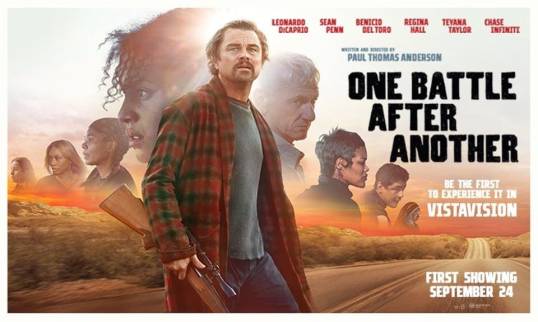
One Battle After Another Wins In Portland


The Portland Critics Association has announced its picks for the best of 2025.  The winners are listed in bold.

Best Picture
Marty Supreme
No Other Choice
One Battle After Another (WINNER)
Sinners (RUNNER-UP)
Sorry, Baby
Train Dreams

Best Director
Paul Thomas Anderson, One Battle After Another (WINNER)
Clint Bentley, Train Dreams
Ryan Coogler, Sinners (RUNNER-UP)
Jafar Panahi, It Was Just An Accident
Park Chan-wook, No Other Choice
Josh Safdie, Marty Supreme

Best Lead Performance
Rose Byrne, If I Had Legs I’d Kick You (WINNER)
Jessie Buckley, Hamnet (WINNER)
Timothée Chalamet, Marty Supreme (WINNER)
Leonardo DiCaprio, One Battle After Another
Joel Edgerton, Train Dreams
Ethan Hawke, Blue Moon
Michael B. Jordan, Sinners (RUNNER-UP)
Josh O’Connor, The Mastermind
Amanda Seyfried, The Testament of Ann Lee
Emma Stone, Bugonia

Best Supporting Performance
Mariam Afshari, It Was Just An Accident
Benicio del Toro, One Battle After Another (RUNNER-UP)
Jacob Elordi, Frankenstein
Ralph Fiennes, 28 Years Later
Delroy Lindo, Sinners (WINNER)
Amy Madigan, Weapons (WINNER)
Paul Mescal, Hamnet
Wunmi Mosaku, Sinners (WINNER)
Sean Penn, One Battle After Another
Stellan Skarsgård, Sentimental Value

Best Ensemble Cast
It Was Just An Accident
Marty Supreme
One Battle After Another (WINNER)
Sinners (RUNNER-UP)
Wake Up Dead Man: A Knives Out Mystery
Weapons

Best Animated Feature
I Am Frankelda
K-Pop Demon Hunters
Lost in Starlight
Predator: Killer of Killers (WINNER)
Stitch Head
Zootopia 2 (RUNNER-UP)

Best Documentary Feature
Direct Action
Megadoc (RUNNER-UP)
Orwell: 2+2=5 (WINNER)
Pavements
The Perfect Neighbor
Sly Lives!

Best Film Not in the English Language
Caught by the Tides
It Was Just An Accident
No Other Choice (WINNER)
The Secret Agent (RUNNER-UP)
Sirāt
Sentimental Value

Best Comedy Feature
Bugonia
Eephus (WINNER)
Friendship (RUNNER-UP)
The Naked Gun
Sorry, Baby
Wake Up Dead Man: A Knives Out Mystery

Best Horror Feature
Frankenstein
Good Boy
The Plague
Sinners (WINNER)
28 Years Later
Weapons (RUNNER-UP)

Best Science Fiction Feature
Bugonia (WINNER)
Companion
Frankenstein
Mickey 17
Predator: Badlands
Superman (RUNNER-UP)

Best Screenplay
It Was Just An Accident
Marty Supreme
No Other Choice
One Battle After Another (RUNNER-UP)
Sinners (WINNER)
Sorry, Baby

Best Cinematography
Frankenstein
Hamnet
Marty Supreme
One Battle After Another (WINNER)
Sinners (RUNNER-UP)
Train Dreams

Best Costume Design
Frankenstein (RUNNER-UP)
Marty Supreme
One Battle After Another
Sinners
Superman
The Testament of Ann Lee (WINNER)

Best Film Editing
Marty Supreme (RUNNER-UP)
One Battle After Another (WINNER)
Sinners
Train Dreams
28 Years Later
Warfare

Best Production Design
Frankenstein
Hamnet
One Battle After Another
The Phoenician Scheme (RUNNER-UP)
Sinners (WINNER)
28 Years Later

Best Original Score
Marty Supreme
The Mastermind
One Battle After Another (RUNNER-UP)
Sinners (WINNER)
Sirāt
Train Dreams

Best Sound Design
F1
One Battle After Another
Sinners (RUNNER-UP)
Superman
28 Years Later
Warfare (WINNER)

Best Stunts or Action Choreography
Mission: Impossible – The Final Reckoning (WINNER)
One Battle After Another
Sinners
Thunderbolts
28 Years Later
Warfare (RUNNER-UP)

Best Visual Effects
The Fantastic Four: First Steps
Frankenstein
Predator: Badlands
Sinners (WINNER)
Superman (RUNNER-UP)
Thunderbolts

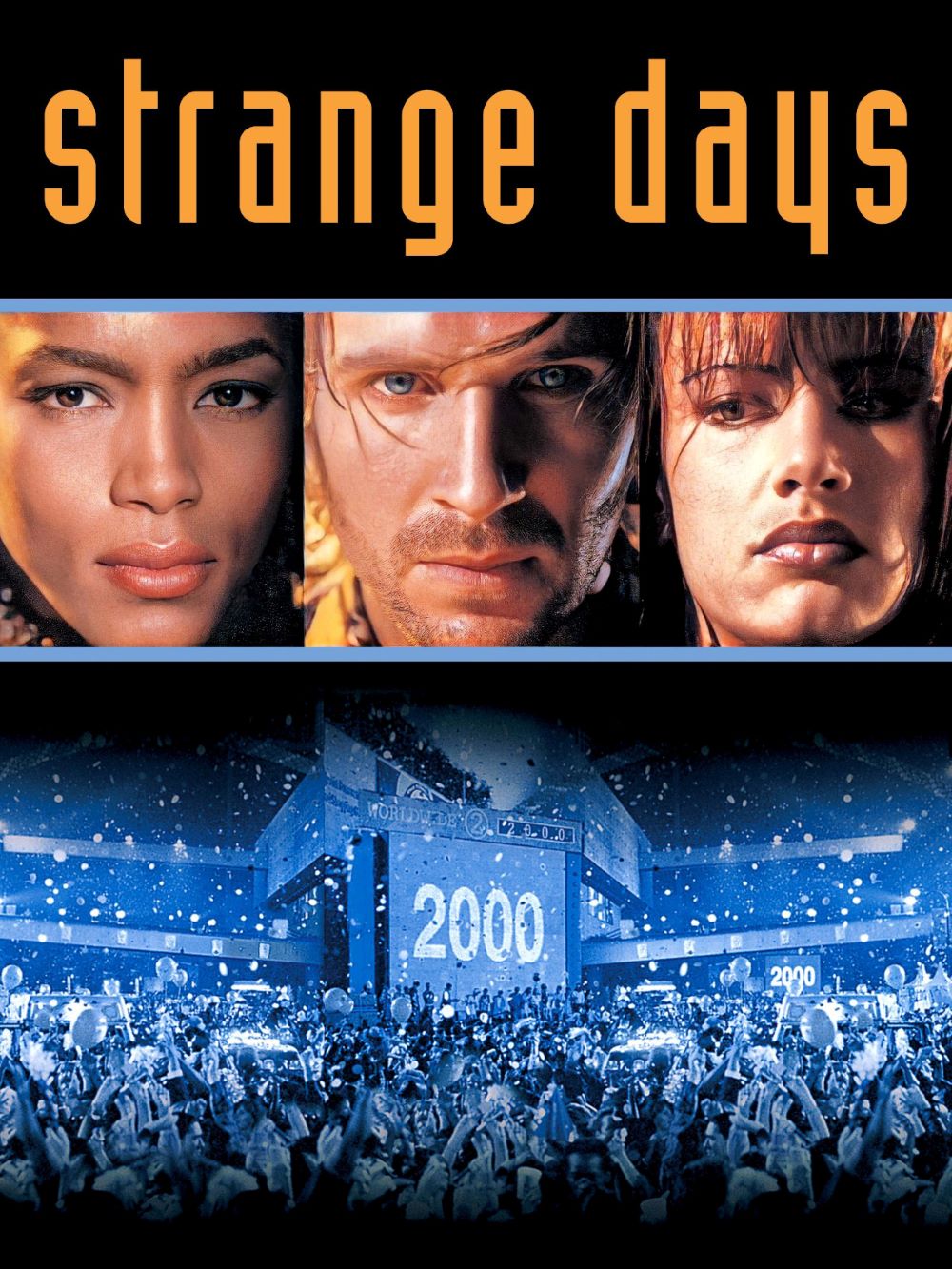
Review: Strange Days (dir. by Kathryn Bigelow)


“Memories are meant to fade, Lenny. They’re designed that way for a reason.” — Lornette “Mace” Mason

Kathryn Bigelow’s Strange Days plunges into a gritty, near-future Los Angeles teetering on the edge of the millennium, where illegal “SQUID” technology lets people hijack others’ sensory experiences, fueling a black-market addiction to raw thrills. Released in 1995 with a screenplay by James Cameron and Jay Cocks, the film stars Ralph Fiennes as Lenny Nero, a shady ex-cop dealing these clips amid escalating racial tensions and urban chaos. At over two hours, it mixes cyberpunk visuals with thriller tension, crafting an immersive world that pulses with sensory overload and moral ambiguity.

The story opens with a heart-pounding sequence—a robber’s point-of-view heist captured in one seamless, breathless shot that drops you right into the adrenaline-fueled action, setting a template for the film’s signature subjective dives into chaos. Lenny navigates this underworld, peddling clips of highs and dangers to escape his own regrets, especially over a past love, singer Faith Justin, brought to life by Juliette Lewis with vulnerable intensity that captures the pull of faded dreams. He pulls in his loyal bodyguard Mace, Angela Bassett delivering a fierce, grounded performance, as a mysterious clip hints at deeper corruption involving cops and power players in the city, drawing them into a web of intrigue that tests loyalties amid the neon haze. Bigelow leans into the tech’s seductive pull, where users feel every rush or rush of emotion, blurring lines between observer and participant in uncomfortably real ways that linger long after the credits roll.

Visually, the film explodes off the screen, with cinematographer Matthew Leonetti’s dynamic camera and Bigelow’s high-octane style painting L.A. as a neon-drenched maze of helicopters, crowds, and holographic distractions that feel alive and oppressive. That kinetic opening blends POV chaos with slick editing that amps the disorientation, making every frame pulse with urgency. The world feels authentically grimy and multicultural, alive with New Year’s Eve energy in clubs and streets, evoking millennial anxiety through thumping sound design and distorted audio bleeds that heighten the sensory assault. Bigelow channels her action roots into visceral set pieces that turn the future into something tangible and tense, rewarding close attention to the details that build immersion, from flickering holograms to rain-slicked streets buzzing with tension.

Fiennes captures Lenny’s sleazy charisma perfectly—a sweaty, chain-smoking hustler whose charm masks desperation, keeping him oddly relatable even as his flaws pile up in moments of quiet vulnerability. Bassett dominates as Mace, a tough wheelwoman with unshakeable integrity, her presence anchoring the frenzy and elevating every exchange with quiet strength that cuts through the chaos like a blade. Lewis adds raw edge to Faith, trapped in a web of influence and ambition, her scenes crackling with desperation and fire. Tom Sizemore brings twitchy noir flavor as Max, Lenny’s private investigator buddy who adds layers of unreliable grit to their partnership, his manic energy bouncing off Fiennes in tense, believable banter. The cast meshes well in the overload, though some peripheral figures lean into cyberpunk stereotypes like street dealers and digital oddities, occasionally stretching the vibe thin without fully fleshing out their roles amid the relentless pace.

At its core, Strange Days digs into tech’s grip on empathy in a numb world, where SQUID clips turn voyeurism into full-body complicity, raising tough questions about detachment, consent, and the thrill of borrowed lives. Lenny’s habit of replaying personal moments underscores the addictive pull of reliving the past, turning memory into a dangerous escape that erodes real connections. Bigelow threads in sharp commentary on racism and authority, drawing from real ’90s unrest, with Mace pushing for truth amid systemic shadows in ways that feel urgent and unflinching, her moral compass a steady force against the moral rot. The infamous rape scene stands out as a gut-wrenching pinnacle of this approach, forcing viewers into the perpetrator’s twisted perspective via SQUID playback, amplifying the victim’s terror and the assailant’s depravity to confront voyeuristic horror and power imbalances head-on without pulling punches or easy outs—its raw intensity is jarring, deliberately so, to expose the ethical rot at the tech’s heart. The female-led perspective highlights abuses thoughtfully, adding layers to the spectacle and giving the film a distinctive edge that balances exploitation with unflinching critique.

That said, the film isn’t without bumps, as the plot weaves a tangled web of alliances and betrayals that can feel convoluted under the sensory barrage, occasionally losing focus amid the noise and demanding sharper clarity to match its ambition. Its 145-minute runtime sags midway with Lenny’s brooding and repetitive demos, testing patience before ramping up to its feverish peaks, where the editing could trim some fat for tighter momentum. The climax aims for catharsis amid riots and revelations but lands unevenly, with a hopeful turn that feels rushed or tidy in spots, underplaying certain social threads post-buildup and diluting their harder-hitting potential just when they build to a roar. Some effects show their age, like glitchy clip transitions that disrupt rather than enhance the immersion at times.

Still, these rough edges can’t overshadow the film’s bold highs. Bigelow’s direction thrives on discomfort, using the SQUID concept to mirror how media desensitizes us, making every clip a window into ethical quicksand. The sound design deserves special mention—bass-heavy tracks and visceral screams that bleed from headsets create a claustrophobic intensity, amplifying the tech’s invasive allure. Action beats, from high-speed chases to brutal confrontations, showcase Bigelow’s knack for kinetic choreography, with Bassett’s physicality in the driver’s seat stealing the show. Lenny’s arc, flawed as it is, lands with pathos, his hustler’s denial cracking under pressure to reveal flickers of redemption tied to loyalty and loss.

Strange Days delivers highs that exhilarate and lows that challenge, mirroring its own addictive clips—a raw, uneven ride pulsing with Bigelow’s bold vision that thrives on discomfort and connection. Mace’s decency offers human spark amid the dystopia, balancing provocation with heart in a way that elevates the whole, her bond with Lenny grounding the spectacle in something real. It’s provocative cyberpunk for those craving immersion with bite, a film that doesn’t just show a future but makes you live it, flaws and all, leaving you wired and wary. Fire it up if you’re ready to jack in and feel the rush—just brace for the crash.

Here Are The 2025 Nominations of the Portland Critics Association


The Portland Critics Association has announced its nominations for the best of 2025.  And here they are:

Best Picture
Marty Supreme
No Other Choice
One Battle After Another
Sinners
Sorry, Baby
Train Dreams

Best Director
Paul Thomas Anderson, One Battle After Another
Clint Bentley, Train Dreams
Ryan Coogler, Sinners
Jafar Panahi, It Was Just An Accident
Park Chan-wook, No Other Choice
Josh Safdie, Marty Supreme

Best Lead Performance
Rose Byrne, If I Had Legs I’d Kick You
Jessie Buckley, Hamnet
Timothée Chalamet, Marty Supreme
Leonardo DiCaprio, One Battle After Another
Joel Edgerton, Train Dreams
Ethan Hawke, Blue Moon
Michael B. Jordan, Sinners
Josh O’Connor, The Mastermind
Amanda Seyfried, The Testament of Ann Lee
Emma Stone, Bugonia

Best Supporting Performance
Mariam Afshari, It Was Just An Accident
Benicio del Toro, One Battle After Another
Jacob Elordi, Frankenstein
Ralph Fiennes, 28 Years Later
Delroy Lindo, Sinners
Amy Madigan, Weapons
Paul Mescal, Hamnet
Wunmi Mosaku, Sinners
Sean Penn, One Battle After Another
Stellan Skarsgård, Sentimental Value

Best Ensemble Cast
It Was Just An Accident
Marty Supreme
One Battle After Another
Sinners
Wake Up Dead Man: A Knives Out Mystery
Weapons

Best Animated Feature
I Am Frankelda
K-Pop Demon Hunters
Lost in Starlight
Predator: Killer of Killers
Stitch Head
Zootopia 2

Best Documentary Feature
Direct Action
Megadoc
Orwell: 2+2=5
Pavements
The Perfect Neighbor
Sly Lives!

Best Film Not in the English Language
Caught by the Tides
It Was Just An Accident
No Other Choice
The Secret Agent
Sirāt
Sentimental Value

Best Comedy Feature
Bugonia
Eephus
Friendship
The Naked Gun
Sorry, Baby
Wake Up Dead Man: A Knives Out Mystery

Best Horror Feature
Frankenstein
Good Boy
The Plague
Sinners
28 Years Later
Weapons

Best Science Fiction Feature
Bugonia
Companion
Frankenstein
Mickey 17
Predator: Badlands
Superman

Best Screenplay
It Was Just An Accident
Marty Supreme
No Other Choice
One Battle After Another
Sinners
Sorry, Baby

Best Cinematography
Frankenstein
Hamnet
Marty Supreme
One Battle After Another
Sinners
Train Dreams

Best Costume Design
Frankenstein
Marty Supreme
One Battle After Another
Sinners
Superman
The Testament of Ann Lee

Best Film Editing
Marty Supreme
One Battle After Another
Sinners
Train Dreams
28 Years Later
Warfare

Best Production Design
Frankenstein
Hamnet
One Battle After Another
The Phoenician Scheme
Sinners
28 Years Later

Best Original Score
Marty Supreme
The Mastermind
One Battle After Another
Sinners
Sirāt
Train Dreams

Best Sound Design
F1
One Battle After Another
Sinners
Superman
28 Years Later
Warfare

Best Stunts or Action Choreography
Mission: Impossible – The Final Reckoning
One Battle After Another
Sinners
Thunderbolts
28 Years Later
Warfare

Best Visual Effects
The Fantastic Four: First Steps
Frankenstein
Predator: Badlands
Sinners
Superman
Thunderbolts

Horror Review: 28 Years Later (dir. by Danny Boyle)


Danny Boyle waited nearly two decades to return to the world he helped redefine with his groundbreaking 2002 film 28 Days Later, which reshaped the zombie subgenre by replacing the traditional, slow-moving undead with fast, feral infected that embody contagion, panic, and societal collapse. While purists continue to debate whether the creatures are technically zombies or infected, Boyle’s vision fundamentally changed how audiences engage with themes of epidemic, survival, and the breakdown of order on screen. The 2007 follow-up, 28 Weeks Later, directed by Juan Carlos Fresnadillo, expanded the Rage virus mythology and landscape but lacked the original’s haunting intimacy and innovation, leaving the franchise in a state of uncertainty until Boyle and writer Alex Garland reunited for 28 Years Later, a film that feels less like a conventional sequel and more like an elegy for a deeply changed world.

The film opens with a short, brutal prologue: young Jimmy Crystal’s family is consumed by the Rage virus while watching Teletubbies, and the boy flees to find safety only to discover his minister father welcoming the infected as a sign of apocalyptic judgment. This early scene deftly establishes the film’s unease, blending visceral horror with spiritual inquiry and foreshadowing a narrative caught between faith, grief, and chaos. Boyle reasserts his command of visceral set pieces while signaling that this film is more concerned with memory and ritual than with relentless terror.

Decades later, the British Isles have been sealed off; NATO forces enforce a quarantine and blockade, isolating the mainland as a toxic exclusion zone. On the tidal island of Lindisfarne, a small community clings to a fragile existence, protected by a causeway that floods at high tide—a detail that metaphorically underscores themes of isolation and dangerous connection. It is here that the emotional core emerges in Jamie and his son Spike, played by Aaron Taylor-Johnson and the remarkable newcomer Alfie Williams. Their spare, heartfelt relationship grounds what otherwise wanders into meditative and often surreal territory.

Alfie Williams emerges as one of the year’s most impressive new talents. His portrayal of Spike avoids the usual survivor archetype; instead, he presents a boy deeply shaped by inherited trauma and cautious curiosity. Boyle’s camera lingers on Williams’ face, capturing silent shifts of fear, wonder, and resilience, making his quiet moments as powerful as the film’s larger set pieces. Williams shines particularly in a sequence where Spike and his mother, portrayed with subtle grace by Jodie Comer, navigate a moss-covered village reclaimed by nature; Williams embodies awe and terror with a single glance. His encounters with the evolved infected—some sedentary and tree-like, others organized into predator packs—are charged with terrifying authenticity and emotional depth. Early reviews label Williams a breakout star, praising his ability to hold the screen alongside veteran actors.

Visually, Boyle and cinematographer Anthony Dod Mantle experiment with a striking mix of techniques, blending the use of iPhone 15 Pro Max cameras and drones with traditional film methods to create a language that oscillates between intimate human moments and sweeping, documentary-style landscapes. The Britain depicted is no longer a lifeless wasteland but an ecologically regrown terrain—lush, eerie, and indifferent. This verdant backdrop reflects the Rage virus’s own evolution. The infected have adapted in ways both terrifying and fascinating: some feed off the earth and fungus, becoming near-plantlike and sedentary, while others form packs ruled by alpha mutants, suggesting emergent social structures even after humanity’s collapse. This biological and ecological evolution amplifies the film’s central theme: survival transcending humanity.

Anchoring the film’s philosophical inquiry is Ralph Fiennes’s performance as Dr. Ian Kelson, a former general practitioner who has exiled himself to live among the infected. Fiennes crafts Kelson with haunting solemnity and layered ambiguity—part caregiver, part fanatic, part recluse—who has created the eponymous “Bone Temple,” a shrine assembled from bones and memories to honor the dead and the changed world they inhabit. The role requires quiet intensity, and Fiennes delivers; his interactions with Spike are charged with both menace and melancholy. Kelson’s reverence for the infected and his willingness to coexist with them challenge traditional survivalist narratives, injecting the film with a solemn meditation on loss, acceptance, and the possibility of new forms of life.

28 Years Later opts for a deliberately slower, more contemplative pace than its predecessors. Boyle and Garland invest their energy in exploring grief, adaptation, and collective memory. The infected become symbolic forces of transformation rather than mere antagonists, while survivors seek meaning through ritual and remembrance as a bulwark against despair. This approach has divided fans: some lament the absence of the unrelenting terror and pace that characterized the earlier films, while others welcome the franchise’s intellectual maturity and thematic depth.

Certain scenes—such as the stranded NATO patrol subplot and glimpses of emerging cult-like human factions—hint at a larger, more complex world but never overshadow the film’s intimate father‑son narrative. Jodie Comer complements Williams with a nuanced portrayal of Spike’s mother, and Taylor‑Johnson brings grounded emotional weight to Jamie, embodying a parent wrestling with how to protect the next generation in a broken world and dealing with his own inner demons.

The interplay between Williams and Fiennes forms the film’s core dynamic, uniting youthful vulnerability with somber reflection. Kelson’s philosophical acceptance of the apocalypse contrasts with Spike’s struggle for identity and belonging, producing compelling, often unsettling exchanges that elevate the narrative’s moral complexity.

Toward the film’s conclusion, a jarring tonal shift occurs with the sudden arrival of a grown-up Jimmy Crystal, whose unsettling presence and cult leadership drastically change the mood. The moment is so discordant that viewers are left questioning whether it is literal or a fevered hallucination—an ambiguity that effectively sets the stage for the sequel.

The upcoming follow-up, 28 Years Later: The Bone Temple, is set for release in January 2026 and will be directed by Nia DaCosta, with Alex Garland returning as screenwriter. This sequel is expected to explore the role of Kelson’s Bone Temple more deeply and develop the cult gathering led by Jack O’Connell’s Jimmy Crystal, expanding on the fractured post-apocalyptic world and the characters introduced in the current film.

Ultimately, 28 Years Later is a film about evolution—of species, storytelling, and filmmaking itself. It balances raw dread with haunting visuals and somber themes, anchored by Alfie Williams’s quietly compelling Spike and Ralph Fiennes’s enigmatic Dr. Ian Kelson. Boyle has not merely revived the franchise; he has transformed it into an unsettling, elegiac meditation on rage, loss, and the fragile hope that survives beyond apocalypse.

Brad’s “Scene of the Day” – Angela Bassett is sick of Ralph Fiennes’ crap in STRANGE DAYS (1995)!


I have a tendency to develop crushes on the beautiful women in cinema. In 1995, I watched STRANGE DAYS in the theater because of Ralph Fiennes, but when I left I was in love with Angela Bassett. Her tough, but vulnerable character of Lornette “Mace” Mason grabbed me right by the heart! In honor of Angela’s 67th birthday, here’s a scene from the STRANGE DAYS. Just be careful, because she’s a crush waiting to happen!

Lisa Marie’s Final 2024 Oscar Predictions


The Oscar nominations are due to be announced tomorrow so I guess I should post my final predictions.  2024 has been a rough year for me and my sisters.  Our Dad was in a car accident in May and, after two months of physical rehab, passed away in August while in home hospice care.  Needless to say, going to the movies was the last thing on my mind for much of 2024.

(I’m very thankful that my fellow contributors who kept the site going during our frequent absences.  Their hard work not only kept TSL alive but it also rekindled my own passion for the Shattered Lens.  I am still very much in mourning but writing for this site and sharing my thoughts with our readers has definitely helped me to regain some semblance of stability.)

So, there’s a lot of Oscar hopefuls that I have not seen.  That’s one reason why I haven’t done a best of 2024 list this year or my usual “If Lisa Marie Had All The Power” posts because there’s still a lot that I need to watch.  (I may publish them at some point in February, by which point everyone will have moved on but it will make me feel happy.)  I’m flying blind here with a lot of the potential nominees.  But I’ve been following the guilds and the critic awards and I feel reasonably confident about the predictions below.

Tomorrow morning, we’ll find out how right or wrong I am.

Best Picture

Anora

The Brutalist

A Complete Unknown

Conclave

Dune Part II

The Brutalist

A Real Pain

September 5

The Substance

Wicked

Best Director

Jacques Audiard for Emilia Perez

Sean Baker for Anora

Edward Berger for Conclave

Brady Corbet for The Brutalist

Coralie Fargeat for The Substance

Best Actress

Pamela Anderson in The Last Showgirl

Cynthia Erivo in Wicked

Karla Sofia Gascon in Emilia Perez

Mikey Madison in Anora

Demi Moore for in Substance

Best Actor

Adrien Brody in The Brutalist

Timothee Chalamet in A Compete Unknown

Domingo Colman in Sing Sing

Daniel Craig in Queer

Ralph Fiennes in Conclave

Best Supporting Actress

Jamie Lee Curtis in The Last Showgirl

Ariana Grande in Wicked

Margaret Qualley in The Substance

Isabella Rossellini in Conclave

Zoe Saldana in Emilia Perez

Best Supporting Actor

Yura Borisov in Anora

Kieran Culkin in A Real Pain

Edward Norton in A Complete Unknown

Guy Pearce in The Brutalist

Jeremy Strong in The Apprentice

Here Are The 2025 SAG Nominations


Due to the catastrophic wildfires currently burning in California, Tte Screen Actors Guild dispensed with their usual big nominations announcement and instead sent out a simple press release their morning.

Here are the SAG’s film nominations.  The SAG is a usually pretty good precursor so the folks who were celebrating the victory of the Brutalist on Sunday night have a bit less to celebrate today.  That said, the 2,0000-person nominating committee appear to have really liked The Last Showgirl.  Let’s keep Pamela Anderson’s Oscar hopes alive!

Outstanding Performance by a Male Actor in a Leading Role
ADRIEN BRODY / László Tóth – “THE BRUTALIST”
TIMOTHÉE CHALAMET / Bob Dylan – “A COMPLETE UNKNOWN”
DANIEL CRAIG / William Lee – “QUEER”
COLMAN DOMINGO / Divine G – “SING SING”
RALPH FIENNES / Lawrence – “CONCLAVE”

Outstanding Performance by a Female Actor in a Leading Role
PAMELA ANDERSON / Shelly – “THE LAST SHOWGIRL”
CYNTHIA ERIVO / Elphaba – “WICKED”
KARLA SOFÍA GASCÓN / Emilia/Manitas – “EMILIA PÉREZ”
MIKEY MADISON / Ani – “ANORA”
DEMI MOORE / Elisabeth – “THE SUBSTANCE”

Outstanding Performance by a Male Actor in a Supporting Role
JONATHAN BAILEY / Fiyero – “WICKED”
YURA BORISOV / Igor – “ANORA”
KIERAN CULKIN / Benji Kaplan – “A REAL PAIN”
EDWARD NORTON / Pete Seeger – “A COMPLETE UNKNOWN”
JEREMY STRONG / Roy Cohn – “THE APPRENTICE”

Outstanding Performance by a Female Actor in a Supporting Role
MONICA BARBARO / Joan Baez – “A COMPLETE UNKNOWN”
JAMIE LEE CURTIS / Annette – “THE LAST SHOWGIRL”
DANIELLE DEADWYLER / Berniece – “THE PIANO LESSON”
ARIANA GRANDE / Galinda/Glinda – “WICKED”
ZOE SALDAÑA / Rita – “EMILIA PÉREZ”

Outstanding Performance by a Cast in a Motion Picture
A COMPLETE UNKNOWN
MONICA BARBARO / Joan Baez
NORBERT LEO BUTZ / Alan Lomax
TIMOTHÉE CHALAMET / Bob Dylan
ELLE FANNING / Sylvie Russo
DAN FOGLER / Albert Grossman
WILL HARRISON / Bobby Neuwirth
ERIKO HATSUNE / Toshi Seeger
BOYD HOLBROOK / Johnny Cash
SCOOT MCNAIRY / Woody Guthrie
BIG BILL MORGANFIELD / Jesse Moffette
EDWARD NORTON / Pete Seeger

ANORA
YURA BORISOV / Igor
MARK EYDELSHTEYN / Ivan
KARREN KARAGULIAN / Toros
MIKEY MADISON / Ani
ALEKSEY SEREBRYAKOV / Nikolai Zakharov
VACHE TOVMASYAN / Garnick

CONCLAVE
SERGIO CASTELLITTO / Tedesco
RALPH FIENNES / Lawrence
JOHN LITHGOW / Tremblay
LUCIAN MSAMATI / Adeyemi
ISABELLA ROSSELLINI / Sister Agnes
STANLEY TUCCI / Bellini

EMILIA PÉREZ
KARLA SOFÍA GASCÓN / Emilia/Manitas
SELENA GOMEZ / Jessi
ADRIANA PAZ / Epifania
ZOE SALDAÑA / Rita

WICKED
JONATHAN BAILEY / Fiyero
MARISSA BODE / Nessarose
PETER DINKLAGE / Dr. Dillamond
CYNTHIA ERIVO / Elphaba
JEFF GOLDBLUM / The Wonderful Wizard of Oz
ARIANA GRANDE / Galinda/Glinda
ETHAN SLATER / Boq
BOWEN YANG / Pfannee
MICHELLE YEOH / Madame Morrible

Outstanding Action Performance by a Stunt Ensemble in a Motion Picture
DEADPOOL & WOLVERINE
DUNE: PART TWO
THE FALL GUY
GLADIATOR II
WICKED

Conclave Wins In North Carolina


The North Carolina Film Critics Association has announced its picks for the best of 2024!

BEST NARRATIVE FILM
Anora
The Brutalist
Challengers
Civil War
Conclave
Dune: Part Two
I Saw the TV Glow
Nickel Boys
Nosferatu
The Substance

BEST DOCUMENTARY FILM
Dahomey
No Other Land
Sugarcane
Super/Man: The Christopher Reeve Story
Will & Harper

BEST ANIMATED FILM
Flow
Inside Out 2
Memoir of a Snail
Transformers One
The Wild Robot

BEST FOREIGN LANGUAGE FILM
All We Imagine As Light
Emilia Pérez
Evil Does Not Exist
I’m Still Here
The Seed of the Sacred Fig

BEST DIRECTOR
Brady Corbet – The Brutalist
Coralie Fargeat – The Substance
Luca Guadagnino – Challengers
RaMell Ross – Nickel Boys
Denis Villeneuve – Dune: Part Two

BEST ACTOR
Adrien Brody – The Brutalist
Timothée Chalamet – A Complete Unknown
Daniel Craig – Queer
Colman Domingo – Sing Sing
Ralph Fiennes – Conclave

BEST ACTRESS
Cynthia Erivo – Wicked
Marianne Jean-Baptiste – Hard Truths
Mikey Madison – Anora
Demi Moore – The Substance
Zendaya – Challengers

BEST SUPPORTING ACTOR
Yura Borisov – Anora
Kieran Culkin – A Real Pain
Chris Hemsworth – Furiosa: A Mad Max Saga
Clarence Maclin – Sing Sing
Denzel Washington – Gladiator II

BEST SUPPORTING ACTRESS
Aunjanue Ellis-Taylor – Nickel Boys
Ariana Grande – Wicked
Felicity Jones – The Brutalist
Katy O’Brian – Love Lies Bleeding
Margaret Qualley – The Substance
Isabella Rossellini – Conclave

BEST VOCAL PERFORMANCE IN ANIMATION OR MIXED MEDIA
Kevin Durand – Kingdom of the Planet of the Apes
Lupita Nyong’o – The Wild Robot
Maya Hawke – Inside Out 2
Pedro Pascal – The Wild Robot
Sarah Snook – Memoir of a Snail

BEST ACTING ENSEMBLE
Conclave

Dune: Part Two
Saturday Night
Sing Sing
Wicked

BEST ORIGINAL SCREENPLAY
A Different Man
Anora
The Brutalist
Challengers
The Substance

BEST ADAPTED SCREENPLAY
Conclave

Dune: Part Two
Nickel Boys
Nosferatu
Sing Sing

BEST CINEMATOGRAPHY
Challengers
Dune: Part Two
Nickel Boys
Nosferatu
The Brutalist

BEST EDITING
Anora
Challengers
Conclave
Dune: Part Two
Nickel Boys

BEST COSTUME DESIGN
Conclave
Dune: Part Two
Furiosa: A Mad Max Saga
Nosferatu
Wicked

BEST HAIR AND MAKEUP
A Different Man
Dune: Part Two
Nosferatu
The Substance
Wicked

BEST PRODUCTION DESIGN
The Brutalist
Dune: Part Two
Furiosa: A Mad Max Saga
Nosferatu
Wicked

BEST SCORE
The Brutalist
Challengers
Conclave
Nosferatu
The Wild Robot

BEST ORIGINAL SONG
“Compress/Repress” – Challengers

“El Mal” – Emilia Pérez
“Harper and Will Go West” – Will & Harper
“Kiss the Sky” – The Wild Robot
“Like a Bird” – Sing Sing

BEST SOUND DESIGN
Challengers
Civil War
Dune: Part Two
Nosferatu
Wicked

BEST SPECIAL EFFECTS
Dune: Part Two

Furiosa: A Mad Max Saga
Kingdom of the Planet of the Apes
Nosferatu
The Substance

BEST STUNT COORDINATION
Dune: Part Two
The Fall Guy
Furiosa: A Mad Max Saga
Gladiator II
Monkey Man

DIRECTORIAL DEBUT
Vera Drew – The People’s Joker
Francis Galluppi – The Last Stop in Yuma County
Zoë Kravitz – Blink Twice
Josh Margolin – Thelma
Sean Wang – Dìdi (弟弟)
Malcolm Washington – The Piano Lesson

BREAKTHROUGH PERFORMANCE
Carlos Diehz – Conclave
Clarence Maclin – Sing Sing
Mikey Madison – Anora
Katy O’Brian – Love Lies Bleeding
Adam Pearson – A Different Man

LIFETIME ACHIEVEMENT: Cinematography
Roger Deakins

Christopher Doyle
Greig Fraser
Emmanuel Lubezki
Hoyte van Hoytema

KEN HANKE MEMORIAL TAR HEEL AWARD
Stephen McKinley Henderson – Civil War
Jeff Nichols (Director) – The Bikeriders
Margaret Qualley – The Substance
Hunter Schafer – Cuckoo
Drew Starkey – Queer

Conclave Wins In Oklahoma


On the 3rd, the Oklahoma Film Critics Circle announced their picks for the best of 2024!

Top 10 Films
1. Conclave
2. Anora
3. The Brutalist
4. Challengers
5. Wicked
6. Sing Sing
7. Dune: Part Two
8. The Substance
9. I Saw the TV Glow
10. Memoir of a Snail

Best Actor
Winner: Ralph Fiennes, Conclave
Runner-Up: Adrien Brody, The Brutalist

Best Actress
Winner: Mikey Madison, Anora
Runner-Up: Demi Moore, The Substance

Best Supporting Actor
Winner: Clarence Maclin, Sing Sing
Runner-Up: Edward Norton, A Complete Unknown

Best Supporting Actress
Winner: Ariana Grande, Wicked
Runner-Up: Isabella Rossellini, Conclave

Best Original Screenplay
Winner: The Brutalist
Runner-Up: Anora

Best Adapted Screenplay
Winner: Conclave
Runner-Up: Sing Sing

Best Director
Winner: Edward Berger, Conclave
Runner-Up: Brady Corbet, The Brutalist

Best Documentary
Winner: Sugarcane
Runner-Up: Will & Harper

Best Animated Feature
Winner: The Wild Robot
Runner-Up: Flow

Best Foreign Language Film
Winner: Emilia Pérez
Runner-Up: The Seed of the Sacred Fig

Best Cinematography
Winner: Nosferatu
Runner-Up: The Brutalist

Best Score
Winner: Challengers
Runner-Up: Conclave

Best Ensemble
Winner: Conclave
Runner-Up: Sing Sing

Best First Feature
Winner: Fancy Dance, dir. Erica Tremblay
Runner-Up: The First Omen, dir. Arkasha Stevenson

Best Body of Work
Winner: Nicholas Hoult (Nosferatu, The Order, Juror #2, Garfield)
Runner-Up: Luca Guadagnino (Challengers, Queer)

Best Stunt Coordination
Winner: The Fall Guy
Runner-Up: Furiosa: A Mad Max Saga

Best Indigenous Film
Winner: Sugarcane
Runner-Up: Fancy Dance

Best Performance By an Animal Actor
Winner: Peggy (a.k.a. Dogpool), Deadpool & Wolverine
Runner-Up: Jean Claude (dog), The Fall Guy