My Top 10 Metal Albums of 2013


It’s that time again. In spite of 2013 being pretty much the worst year of my life, I found it a lot easier to select a top 10 list than in 2012. Odd-numbered years almost always seem to produce a wider selection of good music, and I can confidently state that each of these at least border on excellence. Here goes:

10. Ihsahn – Das Seelenbrechen (track: Regen)

There was never a bad Emperor album. Ihsahn’s solo career hasn’t been quite as consistent. The Adversary was an outstanding start, but I barely noticed angL. After was a blast, Eremita something of a bore. Well, what do you know; the cycle continues, and Das Seelenbrechen is outstanding. Eremita seemed all about rhythmic grooves and eclectic interludes, neither of which painted a grand picture for me to take hold of. Das Seelenbrechen, without reducing any of the progressive rock peculiarities for which Ihsahn is famous, reinvests its tension in song structure and the subtler stuff of atmospheric appeal. At times it delves heavily into the world of drone metal, with Tobias Ørnes Andersen pulling off his best Atsuo impression and Ihsahn showing that his unique vocals are pretty well suited for the genre as they stand. The most impressive track on the album might be “Pulse”, if only for the fact that Ihsahn was able to stray so far from his comfort zone and still pull off an excellent song, but my personal favorite has to be “Regen”.

9. Ash Borer – Bloodlands (track: Oblivion’s Spring)

I missed out on Ash Borer’s acclaimed 2011 debut and the 2012 full-length to follow, but the Bloodlands “EP” (it’s still 35 minutes long) found itself well embedded in my subconscious this year. Like many of my selections, I never really sat down and gave it my undivided attention from start to finish. It was a busy year, and most of my albums were experienced as background music rather than a main event. I was kind of surprised to find just how many times I’d listened to this album throughout the year. It was never really on my radar, but I kept playing it time and time again. A twisted, bleak, highly atmospheric recording, Bloodlands successfully captures a traditional black metal vibe that is neither overly passionate nor distractingly aggressive. It’s a pleasant break from the otherwise welcome trend towards a less sinister, more humanizing approach to the genre.

8. Westering – Joy (track: This Will Quiet Us)

Joy is definitely the weirdest album I’ve heard this year that actually worked. Bryan Thomas’s second release as Westering is a cracked window peering into folk, industrial, and maybe even 80s pop scenes, sensible to melodic appeal yet firmly rooted in black metal tradition. To label it another “shoegaze black metal” album would hardly do it justice; the warbling walls of distortion don’t angelicize the metal, but rather demonize the more direct pop elements, creating a final product basked in darkness yet awkwardly catchy and familiar.

7.Ensemble Pearl – Ensemble Pearl (track: Island Epiphany)

It’s sad that this album has gone almost completely unnoticed in 2013. It’s sad that people regard it as another Boris album, or as “Boris and Sunn O))) Part 2”. Because, while it shares much in common with Altar, the cast is quite different and the end product surprisingly even better than its predecessor. While Atsuo Mizuno and Stephen O’Malley reunite, Takeshi and Wata are out, as well as Greg Anderson. Michio Kurihara steps up to the plate along with a fellow I’ve never head of–Bill Herzog–to complete the lineup. The sound these four have managed to assemble is flawless. Smooth as glass and black as night, Ensemble Pearl is a compelling example of music’s capacity to paint a scene more vivid than sight can ever offer.

6. Paysage d’Hiver – Das Tor (track: Macht des Schicksals)

Like Ash Borer, Paysage d’Hiver provided ideal background music for me throughout the year. With a similar appreciation for late 90s/early 2000s atmospheric black metal aesthetics, Das Tor presents a significantly noisier, more trance-inducing break from current metal trends. I fell in love with this album’s capacity for endless repetition as the backdrop for work, reading, and just about any other activity that requires concentration. This particular style of black metal has always really zoned me in and helped me to focus, and Paysage d’Hiver’s take on it is substantially better than most.

5. Mechina – Empyrean (track: Anathema)

Fear Factory’s 1998 opus, Obsolete, was the last industrial death metal album to really blow me away. A lot of bands go there, but few, at least in my experience, are willing to fully nerd out into uncompromised sci-fi fantasy. There is something about the death metal mentality that inclines most bands to play with their nuts out, and it rarely works in their favor. Mechina don’t fall for that. They have no qualms whatsoever about employing clean vocals, dramatic symphonics, and operatic hymns to serve their end. Empyrean paints a lush vision of a futuristic world of technology and galactic combat on the brink of apocalypse. Really stellar stuff. … ha..ha… hmm…

4. Summoning – Old Mornings Dawn (track: Old Mornings Dawn)

It took Summoning seven years to release a new album. I would not be surprised if they were hard at work on it that whole time. Not quite as perfect as Let Mortal Heroes Sing Your Fame, Old Morning Dawn is nevertheless an instant essential within the Summoning discography, never wavering an inch from the solid sound they forged a decade ago. I can’t think of too many albums I’ve anticipated for this long that didn’t let me down (Falkenbach’s Tiurida in 2011 might be the most recent exception), and for that, coming from one of my favorite bands ever, Old Mornings Dawn easily slides in towards the top of my chart.

3. Cara Neir – Portals to a Better, Dead World (track: Peridot)

I remember when I was first getting into black metal and a friend of mine was doing the same with screamo. They seemed like two incommensurable paths at the time. We’d trade the best of what we found, and I love a lot of screamo because of it, but that was his genre and this was mine. There just wasn’t all that much in common between Carpathian Forest and City of Caterpillar.

Times have changed, and much for the better. I’ve tossed around “screamo” and “black metal” in the same sentence before (Roads to Judah), but this is certainly the most raw realization of the two as one that I have heard so far. Portals to a Better, Dead World is another fine product of a new era of metal artists informed beyond their flagship genre. It might not achieve the fame of Deafheaven’s Sunbather, but the two go hand in hand.

2. Deafheaven- Sunbather (track: Dream House)

And that brings us to the most hyped metal album of 2013. Sunbather turned more heads than Roads to Judah, and certainly more than Liturgy’s Aesthethica or Krallice’s Diotima back in 2011. But while the mainstream world regrettably failed to recognize that year as the grand coalescence of heavy metal’s mid-2000s paradigm shift, on Sunbather we reap its fruits. This album is not the novelty many would like to make of it; it is an affirmation of things already come to pass, and a glorious one at that. Music seems to come in sequences of waves, the reluctant undertow of their predecessors slowly dissipating beneath the growing weight of those rushing to shore. Sunbather basks in a new era of aesthetics and ingenuity first dreamed by the likes of Ulver, pressed into form by Agalloch and Alcest, and finally swept into the mainstream three years ago. Love it while it lasts, and amuse yourself with the die-hards that will rip this to shreds rather than embrace it.

1. Peste Noire – Peste Noire

And then there was one. I proclaimed Peste Noire the best album of 2013 about an hour after it leaked back in June, and nothing since has come even close to shaking that resolve. I’ve been doing a “top 10 album” list now every year since 2002, and Peste Noire is the only band to ever take the #1 spot twice, but never mind that. Ballade cuntre lo Anemi francor has absolutely nothing on what you will experience here. Let’s try “top 10 metal albums ever recorded”. I have never heard anything quite this clever, filthy, intelligent, and depraved in my life. Famine’s “black ‘n’ roll” sound has never been better, and Peste Noire can rightly be regarded as the refinement of all of the finest features of his past four albums rolled out into one.

The album is heavily enhanced by Famine’s new willingness to tell us what it’s all about. Up through the release of L’Ordure à l’état Pur in 2011, it was anyone’s guess what Famine’s peculiar album antics were all about. He was completely inaccessible as an individual, and his lyrics have always been in French. The man behind the music has since emerged full-formed as an internet personality, conducting interviews, approving lyric translations, and responding to forum inquiries in surprisingly fluent English. He’s revealed himself as an extremely culturally and musically informed character with a sardonic sense of humor that seems to abate the more offensive features of his image, and he completely reformed my view on L’Ordure à l’état Pur–an album I’d initially disregarded, but have since grown to love.

I tried to give Peste Noire a fair review over the summer, but I couldn’t quite do it justice. This article does. Skip to 20 minutes in the above video if you care to hear my favorite track on the album: “Niquez Vos Villes”.

Enjoy, and Happy New Year!

Ten Years #31: Turisas


Decade of last.fm scrobbling countdown:
31. Turisas (1,040 plays)
Top track (96 plays): In the Court of Jarisleif, from The Varangian Way (2007)
Featured track: Miklagard Overture, from The Varangian Way

The Varangian Way was one of the last albums I expected to matter when I grabbed the pre-release leak in 2007. Having owned Battle Metal (2004) since its release, I remembered Turisas as a run of the mill band with one really outstanding song–Sahti-Waari–and a bunch of generic try-too-hard epic numbers to their name. It took about one minute in 2007 to realize that this band had achieved one of the most impressive turn-arounds in the history of metal. A captivating concept album packed with outstanding vocals and folk instrumentation, a brilliant symphonic backdrop, and thoroughly convincing lyrics, The Varangian Way was my favorite album of 2007 and remains a top 10 all time contender for me today. Mathias Nygård and company crafted an inspiring musical journey from Viking Age Scandinavia through Russia to the seat of the Byzantine empire with all the gloss of a Hollywood blockbuster. From the symphonic prog suspense of “The Dnieper Rapids” to the drunken folk romp of “In the Court of Jarisleif” to the orchestral majesty of “Miklagard Overture”, Turisas employed a world of musical styles to uniquely capture every stage of the voyage. As a concept album, they delivered the full package to an extent that is perhaps only trumped by Blind Guardian’s Nightfall in Middle-Earth. This was no fluke, either. Their follow-up album, Stand Up and Fight (2011), might have lacked the fulfilling sense of completeness that only a concept album can deliver, but it by and large maintained the level of quality of its predecessor, ensuring that Battle Metal could be remembered as a freshman effort and not the more accurate representation of their matured sound. Their fourth studio album, Turisas2013, is set to release this Wednesday (August 21st). While its awkward title and cover art will require some substantiation, I have really high hopes.

I’ll leave you with the lyrics to “Miklagard Overture”. I especially love how Turisas cultivate the power of names to really drive this anthem home; they employ the fact that Constantinople is known in so many languages as a testament to its glory. I personally visited Istanbul last summer, and I can confidently say that it remains one of the most overwhelming cities on this earth, breathing 2000 years of history not in ruin but in vibrant life. Turisas manage to do it justice in a way few other artists could.

Long have I drifted without a course
A rudderless ship I have sailed
The Nile just keeps flowing without a source
Maybe all the seekers just failed

To Holmgard and beyond
In search of a bond
Far from home I’ve come
But the road has just begun

Breathing history
Veiled in mystery
The sublime
The greatest of our time
Tsargrad!

“Come with us to the south
Write your name on our roll”
I was told;

Konstantinopolis
Sui generis
The saints and emperors
Of bygone centuries
The man-made birds in their trees
Out load their paean rings
Immortality!

In astonishing colours the East meets the West
The hill-banks arise in their green
In wonder I sit on my empty chest
As we glide down the strait in between

To Holmgard and beyond
In search of a bond
Distant church bells toll
For their god they chant and troll

Breathing history
Veiled in mystery
The sublime
The greatest of our time
Tsargrad!

The Norwegian of rank
In the court of The Prince
I was convinced

Konstantinopolis
Ten gates to eternity
Seen all for centuries
Your inconquerable walls
Your temples and your halls
See all, hear all, know all

My sun rose in the North and now sets in the South
The Golden Horn lives up to its name
From tower to tower a chain guards its mouth
Unbreakable, they claim

To Holmgard and beyond
In search of a bond
Adventures lie ahead
Many knots lie unravelled on my thread

Breathing history
Veiled in mystery
The sublime
The greatest of our time
Tsargrad!

Konstantinopolis
Queen of the cities
Your welcoming smile
Made all worthwhile
The sweat and the pain

Bathing in gold
Endless rooftops unfold
The sun sets for a while just to rise again

Great walls
Great halls
Greatest of all, Miklagard

Ten Years #48: Opeth


Decade of last.fm scrobbling countdown:
48. Opeth (640 plays)
Top track (26 plays): The Devil’s Orchard, from Heritage (2011)

When I saw Opeth was coming up next, I got pretty excited about what the top track would be. Would my really oldschool Opeth credentials shine with a song like The Twilight is My Robe or Advent topping the charts, or could nothing hope to match Demon of the Fall? A Heritage track was the last thing I ever expected. It’s easy to forget, in the onslaught of relatively poor reviews, how much I actually enjoyed that album when it came out. Oh, it wasn’t love at first listen, but for me it was a breath of fresh air after years of diminishing faith in Akerfeldt’s song-writing ability. Opeth was one of the first metal bands I ever listened to, and, nostalgia aside, I really do think their first three albums were by far their best. A void, beginning subtly with Still Life and expanding more drastically after Blackwater Park, had grown between my personal tastes and the direction Akerfeldt was steering the band. This coupled with what I perceived as an overinflated ego to completely erode my interest in the band for a long time. Ghost Reveries and Watershed only managed four and three listens respectively before I yawned and moved on.

I am not much of a progressive rock fan, but with Heritage I did start to feel like Akerfeldt was coming back to earth and keeping it real again. I don’t know about his whole “I’m done with metal” mentality; it seems to me like he’s exactly where he needs to be to start composing the sort of metal I can enjoy again. But even if prog rock is all that’s going to appear under the Opeth moniker for a long time to come, his decision to tone things down has successfully resurrected my interest. The Devil’s Orchard is my most played Opeth song because these charts do not begin until 2003; a few years earlier and the statistics would reflect something quite different. But suffice to say I do think this is the best Opeth album since Blackwater Park.

I’ll leave you with a classic Opeth track of the sort that made these guys, for a pre-last.fm period of four years or so, my favorite band in the world:

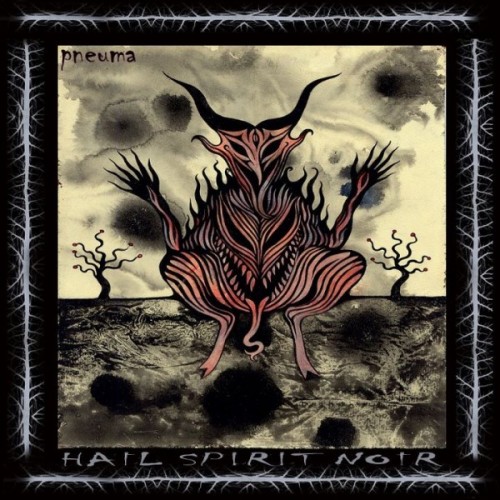
Review: Hail Spirit Noir – Pneuma


Do you know how many albums I’ve reviewed in 2012 so far? One. Comparing that to 2011, when I had pumped out well over 40 by this point in the year, you might say I am a bit behind. It was somewhat inevitable this year, with my video game music project taking up the grand bulk of my free time, but it’s not too late to catch up where I can.

And why not start with the obscure? Hail Spirit Noir is a band from Thessalonika, Greece. The person who introduced me to this album described it as “progressive psychedelic black metal”, which I don’t necessarily agree with but should certainly uh… pique your curiosity.

Mountain of Horror

My apologies for this video. I wanted to include the opening track, and the only copy of it on youtube commits the double idiocy of presenting a fake music video and cutting off the last 30 seconds of the song. While it actually syncs up with the music quite nicely, I have no reason to believe it is anything but a fan project, and it should be duly ignored.

I think there is a general bias among metal fans to label anything black which possesses the slightest traces of the sub-genre. To call Pneuma black metal is a bit of a stretch. The elements of black metal it incorporates are all on the fringe of the genre, and at the end of the day it is far too broad to place any single label on. What you get in “Mountain of Horror” is a combination of that “black and roll” vibe that Peste Noire perfected on Ballade cuntre lo Anemi francor, a heavy dose of 70s prog keyboards, and a progressive black break that falls firmly within the sort of sound Ephel Duath pioneered–more avantgarde than “progressive black” in the sense that recent Enslaved and Ihsahn might call to mind.

Against the Curse, We Dream

And what do you know, another fake music video. Oh well. What you might start to notice as this album progresses is a semblance of stylistic consistency underlining the disorganized madness. Black and roll meets traditional black metal meets psychedelic/70s prog meets avantgarde doodling, mouthful though it may be, is definitely the order of the day.

The Peste Noire vibe is definitely the selling point for me, and in Against the Curse, We Dream it syncs up particularly nicely with the prog synth. The Ephel Duath-esque avantgarde bits leave a lot to be desired, but really, when does avantgarde music ever not leave a lot to be desired? Its presence is at least relatively minimal in the broad range of Pneuma’s sounds. The disorganized nature of the songs is also not particularly problematic, in so far as a standard rock beat sustains to hold the vast majority of it together.

The only thing that kills it a bit for me is the lack of dynamics. From the most break-neck blast beats to the calmest, coolest prog grooves, the album maintains pretty much the exact same level of intensity. It is very much even keel from start to finish. That is more a vice of prog music, which Hail Spirit Noir ultimately choose to place above the metal side of their sound. Much like practically all prog that I have encountered prior to the past ten years, it never opts to overwhelm, feeling relatively dispassionate at the moments where intensity is in highest demand. Consider the staccato break at 5:34 in this video, and how much it could benefit from the level of tension System of a Down applied to similar passages in their early albums. The aggression which follows is somewhat lost to the vibe-killer that the previous passage did not necessarily need to invoke. The avantgarde outro is a disappointing end to a relatively creative song that, enjoyable though it may be, fails to move me to the extent that I feel like it ought to have. This is, of course, to place some unfair stipulations on the band; that the overall atmosphere isn’t what I would have chosen doesn’t mean it fails to capture the vibe Hail Spirit Noir were aiming for.

Haire Pneuma Skoteino

The closing song, Haire Pneuma Skoteino, is by far the most accessible song on the album, and I was pretty surprised by how well I remembered it, having only heard the song one time before, when I first picked up the album half a year ago. I suppose a poppy, catchy outro track is well in keeping with Hail Spirit Noir’s consistent inconsistencies.

At the end of the day, I have mixed feelings about Pneuma. It falls victim to being the first new release I’ve listened to in the better part of a year, and I’m no doubt being a lot more critical than I would have been this time last year, but I just feel like the execution leaves a lot to be desired. On the other hand, it is definitely an impressive and well-informed debut from a band on an obscure label from a country not exactly famous for its metal scene, and the shortcomings I hear suggest I am instinctively holding them to a much higher standard than I would other bands with similar backgrounds. Pneuma isn’t an album I’m likely to revisit, but it has convinced me that this band is a world of potential. I’ll be keeping an eye out for their future releases.

Opeth and Summoning: Music for October (part 7)


October has always been my favorite month. It marks the beginning of a seasonal reclamation of man by the world, in which civilization’s mask of sensibility begins to slip away. Tasteless architectural symbols of control over nature digress to their more appropriate forms, as frail refuge against forces beyond our control or comprehension. It is, to misappropriate Agalloch, “a celebration for the death of man… …and the great cold death of the Earth.”

Last year I posted a six part series on some of my favorite black metal, folk metal, and related genres for the season. I had intended to do something similar this year, but time just did not allow for it. I never got around to coming up with a central concept on which to focus. Perhaps it is no coincidence that the two bands I have listened to the most this month, Opeth and Summoning, both defy all standards of classification.

I would like to showcase both, but I can’t imagine doing so properly without embarking on a project way beyond the scope of my time and desire to write at the moment. So I will keep this short and sweet, featuring only Opeth’s Orchid (1995) and Summoning’s Let Mortal Heroes Sing Your Fame (2001), and perhaps in the process still introduce you to some amazing music you had not heard before.


Opeth – The Apostle in Triumph

Everyone has heard Opeth, right? Their fame is fairly unprecedented among metal bands that are actually worth a damn. Yet, out of touch with what is and is not popular today as I am, I still get the impression that what I think of as Opeth is just as relatively obscure as it had been when I first heard them well over a decade ago.

Opeth as a popular band, in fact, is entirely foreign to me. Their first album to make the US charts, Damnation, came out right around the time I stopped listening to them altogether, and long after my interest had begun to wane. I was introduced to Opeth, like everyone around the turn of the century, via Demon of the Fall. My Arms Your Hearse was one of the most emotionally charged and breathtaking albums I’d ever heard. At the time, if you wanted to hear more, you had to look backwards, to Orchid and Morningrise, both of which were very different beasts. With them, if no one reminded you of the distortion and growled vocals, you might forget, amidst Akerfeldt’s soft, subtle lamentations, that you were listening to metal at all.

It took both a long time to grow on me. It’s not that they were inaccessible, but that peculiar teenage ability to focus in on a single masterpiece with no appreciation whatsoever for its surroundings had hold of me. There I was covering My Arms Your Hearse from start to finish on my new guitar (sure wish I could still do so now), and I’d listened to Morningrise maybe five times. Orchid never broke through the cellophane. I finally turned to them just barely in time to soak them up before history left them in the dust, a last minute love affair I was conscious of at the time. They ended up becoming my two favorite Opeth albums, and still are.

Even though My Arms Your Hearse was, alongside Blind Guardian’s Nightfall in Middle-Earth, easily the most influential album in my life, Orchid and Morningrise are the two I look back on most nostalgically, and their melancholy beauty always reverberates the sensation.


Opeth – The Twilight is My Robe

So maybe Orchid isn’t really Opeth’s best album. Perhaps I am biased beyond reconciliation. But at any rate, my obsession with it certainly isn’t some subconscious desire to show I am an “old school” fan–the sort of accusation I tend to see on those rare occasions that the album is mentioned at all. Whether you find my placement of it at the top of Akerfeldt’s discography unjust or not, I encourage you to give The Apostle in Triumph and The Twilight is My Robe long hard listens. Agalloch being a decidedly winter-oriented band, I have experienced no music which captures the melancholy side of the autumnal season better than this.


Summoning – A New Power is Rising

I obsessed over The Hobbit as a child, the Lord of the Rings as a teen, and The Silmarillion in my earliest adult years. J.R.R. Tolkien pretty well haunted most of the formative years of my life, and I am forever indebted to him. A few months ago I picked up one of his books for the first time in perhaps a decade, committed to reading them all, but time simply did not allow for it. As with all undertakings though, it influenced my taste in music for the time at hand. I spent much of the summer re-exploring Summoning–a band I’d never actually encountered until Oath Bound in 2006. Thus they were readily at hand at the start of October, and since then they’ve comprised over half of everything I have listened to.

I dare say no single author has had more impact on music than Tolkien, and while I will always regard Nightfall in Middle-Earth as the greatest relevant triumph, Summoning’s discography is a close second. The one band I know of which has taken Tolkien as their lyrical and musical muse pretty much exclusively, they have forged an entirely new style of music over the years that captures that feeling I always got reading him to perfection.


Summoning – South Away

Summoning emerged from black metal, but from the very beginning they stood apart. By Let Mortal Heroes Sing Your Fame in 2001, my favorite album of theirs, this connection had dwindled to little more than the vocals and some tremolo guitar. The constant use of keyboards (often set to replicate brass) and the heavily reverberated, slow drumming are what characterize them best, along with frequent spoken vocal loops.

Perhaps they intend to sound fairly sinister, with lyrics focused more often than not on the darker forces of Tolkien’s tales, but the effect for me is nothing of the sort. The drums paint a vast, diverse landscape of mountains, forests, rivers and plains that are entirely neutral–dangerous to be certain, but more enticing than aversive. They beckon you out to explore the unknown, steeped in mystery–a fantasy world which is here Middle-Earth, but could just as soon be your own back yard on an autumn day, when the changes at hand call on you to leave humanity behind and wander off into the amoral wilderness.


Summoning – Runes of Power

I love black metal, horror, and everything of the sort, but I think the word “neutral” best describes what I have been tapping into this Halloween season. No real glorification of evil for its own sake, nor any embrace of bygone cultures and values here. Orchid and Let Mortal Heroes Sing Your Fame both tap into the individual’s relation to the world absent civilization’s presumptions and impositions–to the mystery of nature and the manifold possibilities within it which mundane daily life denies–be the experience melancholy or thrilling.