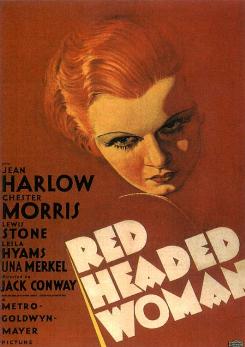
Today would have been Jean Harlow’s 109th birthday so today’s scene that I love comes from one of her best films. In the 1932 film, Red-Headed Woman, Jean Harlow plays Lil. Lil is determined to get ahead in society. In fact, she’ll do just about anything to make it happen. Fortunately, this is a pre-code film, which means that Lil not only gets to stand up for herself and nearly kill a man but she also doesn’t get punished for it. Just a few years later, after the production code went into effect, there was no way that Hollywood would have allowed Lil a happy ending. The culture had changed and people were a lot more judgmental. Thanks a lot, FDR.
In this scene, Lil gets drunk and confronts her married lover (Chester Morris), who also happens to be her boss. Playing Lil’s best friend and usually unsuccessful voice of reason is Una Merkel.
Jean Harlow was only 26 years old when she died but she lives forever as one of the great screen icons. And did you know that she wrote a book? It’s true! Of course, it wasn’t published until nearly three decades after her death but still!
Here’s the scene from Red-Headed Woman, which has both a great title and a great star!
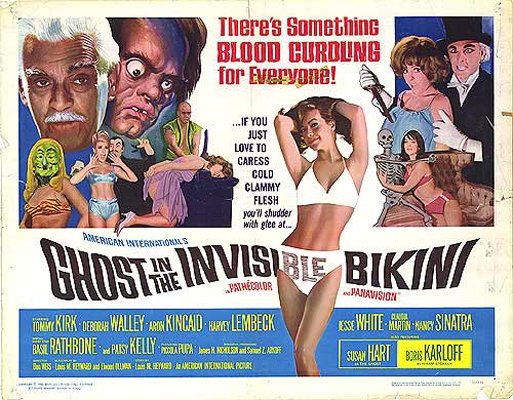
The 1966 film, The Ghost In The Invisible Bikini, asks the question, “What can you do if you want to have a beach party but you don’t have a beach?”
The answer: “Find a pool!”
Seriously, a pool is just as good as a beach and fortunately, Chuck (Tommy Kirk) has a pool where his friends can hang out and listen as Vicki (Nancy Sinatra) sings a song. It’s in a big old mansion and hey, it might be haunted. It used to belong to Hiram Stokeley (Boris Karloff) and he’s dead now so he certainly won’t mind, right?
Well, what if he’s not dead!?
Oh wait, actually, he is dead. But he’s still hanging around. It turns out that he needs to do at least one good deed in order to get into Heaven. (Isn’t starring in Frankenstein enough? I mean, c’mon…..) It also turns that Hiram only has 24 hours to do that good deed or it’s off to Hell for him. Maybe he could figure out a way to help Chuck and his family win his fortune! Hiram enlists the help of his long-dead girlfriend, Cecily (Susan Hart). Cecily, we are told, is wearing an invisible bikini but we just have to take the film’s word on that because it’s invisible and, seeing as how Cecily’s a ghost, it’s always possible that only reason she’s transparent is because she’s a spirit. I mean, seriously, who knows how ghosts work?
Anyway, it’s not going to be easy for Hiram and Cecily to ensure that Chuck inherits that fortune, largely because Chuck and all of his friends are idiots. The other problem is that Reginald Ripper (Basil Rathbone), Hiram’s lawyer, is determined to win that money for himself and, if you have any doubt that he’s a bad dude, just check out his name. GOOD PEOPLE ARE NOT NAMED REGINALD RIPPER! Fortunately, even though Reginald graduated from law school and is played by Basil freaking Rathbone, he’s still an idiot and he comes up with the stupidest plan possible to get Chuck and friends out of the house.
He’s going to make them think that it’s haunted!
(But it is haunted….)
Reginald’s plan is to have his evil associates, J. Sinister Hulk (Jesse White), Chicken Feather (Benny Rubin), and Princess Yolanda (Bobbi Shaw), pretend to be monsters and ghosts in order to scare all of the teens out of the house. He also enlists his daughter, Sinistra (Quinn O’Hara), to help but Sinistra isn’t really bad. She’s just extremely near-sighted and someone thought it would be a good idea to name her Sinistra.
And then the bikers show up! This is one of AIP’s beach party films so, of course, there are bikers. Eric von Zipper (Harvey Lembeck) shows up and pretends to be Marlon Brando in The Wild One. Of course, at the time this film was made, the real Marlon Brando was filming Arthur Penn’s The Chase so I’m going to guess that Harvey Lembeck probably had more fun pretending to be Brando than Brando was having being himself….
Anyway, this is a stupid movie even by the standards of the AIP beach party films. It’s also notably disjointed. That probably has something to do with the fact that Karloff and Susan Hart weren’t actually added to the film until after the movie had already been shot. Apparently, AIP felt that the first cut of the movie was missing something so they said, “Let’s toss in a little Karloff!” Of course, Boris Karloff was such an old charmer that it doesn’t matter that he doesn’t ever really interact with anyone other than Susan Hart over the course of the film. You’re just happy to see him.
So yeah, technically, this is not a good film but, at the same time, you kind of know what you’re getting into when you watch a movie called The Ghost In The Invisible Bikini. The jokes fall flat. The songs are forgettable. But the whole thing is such a product of its time that it’s always watchable from an anthropological perspective. Add to that, you get Boris Karloff and Basil Rathbone, doing what they had to do to pay the bills and somehow surviving with their dignity intact. Good for them.
Now, the first two weeks of March is, traditionally, when most schools give their students a week off for Spring Break. I have a lot of good Spring Break memories and, to be honest, I’ve always kind of resented the fact that Spring Break is something that only schools do. To me, it should be like a national holiday where everything stops for a week and everyone hangs out at the beach for a few days.
Of course, this year’s Spring Break may be a bit of a disappointment, what with everyone freaking out about …. well, everything. That’s a shame but fear not! You may not be able to leave behind your fears long enough to go down to the beach but at least you can still watch movies about the beach, right? So, with that in mind, over the next two weeks, I will be reviewing some films for Spring Break!
It’s time for Spring Breakdown!
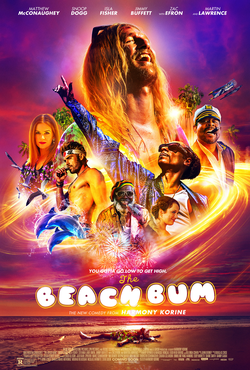
Let’s get things started with the 2019 film, The Beach Bum.
The beach bum of the title is an always stoned, alcoholic poet named Moondog (Matthew McConaughey), who spends his time wandering around the Florida Keys. Moondog has been working on a book for several years and he’s a bit of a local celebrity. Everyone that he meets tends to like him, or at least they do until he ruins their lives. Moondog is irresponsible, immature, and apparently some sort of genius as well. Moondog is also extremely laid back. Even when he finds out that his wife, Minnie (Isla Fisher), cheated on him with his best friend, a singer named Lingerie (Snoop Dogg), Moondog is okay with it. He’s always loved Minnie but he’s never had a problem cheating on her so why shouldn’t she do the same to him?
After Moondog shows up late for his daughter’s wedding and goes out of his way to make a scene, he goes for a drive with Minnie. Of course, since Moondog is drunk off his ass, he ends up crashing the car and killing his wife. In her will, Minnie leaves half of her fortune to their daughter, Heather (Stefania LaVie Owen). She leaves the other half to Moondog, with the stipulation that Moondog will only get the money after he finishes his book.
The rest of the film follows, in an episodic fashion, Moondog as he tries to finish his book and get his money. Along the way, he commits crimes, dabbles with various jobs, and spends time in jail and drug rehab. He meets a host of eccentric and destructive characters, almost all of who are the type of outsiders who seem as if they’re destined to eventually be the subject of a “Florida man” headline. For instance, Flicker (Zac Efron) is a pyromaniac. And Captain Wack (Martin Lawrence) hosts dolphin tours but, unfortunately, cannot tell the difference between a dolphin and a shark.
When The Beach Bum was first released in March of last year, it was eagerly anticipated because it was Harmony Korine’s first film since 2012’s Spring Breakers. Despite the fact that Spring Breakers and The Beach Bum both take place in Florida and feature a lot of beach action, the two films might as well be taking place in separate universes. The Beach Bum is as laid back as Spring Breakers was violent. If Spring Breakers was a film that seemed to be fueled by ecstasy and cocaine, The Beach Bum is a celebration of getting high and enjoying life. If Spring Breakers was all about being young, The Beach Bum is about growing old without giving up your individuality.
In many ways, The Beach Bum is the ultimate Matthew McConaughey film and how you react to the film will depend on how much tolerance you have for Matthew McConaughey at his most McConaugheyest. Indeed, if you like Moondog, it’ll probably be because you like Matthew McConaughey. As a character, Moondog is a jerk. He nearly ruins his daughter’s wedding. He drives drunk and kills his wife. He refuses to take responsibility for being a general fuck-up and, from what little we hear of his work, he appears to be a subpar poet as well. And yet, Matthew McConaughey brings enough of his own natural charm to the role that it’s tempting to forgive Moondog. You can understand why some people in the film are willing to tolerate him, even though he’s basically a pain in the ass to have around.
The Beach Bum is not a film for everyone. I appreciated Matthew McConaughey’s performance and I also appreciated the fact that Harmony Korine didn’t try to remake Spring Breakers. At the same time, the film was a bit too loosely constructed to really hold my interest and a little bit of Moondog goes a long way. I saw this film last year and I’ve really had no desire to rewatch it. That said, the cinematography frequently makes Florida looks like the most beautiful place on Earth and, regardless of what you may think about his poetry, at least Moondog just keeps on L-I-V-I-N, livin’.
Add to that, Moondog’s going to enjoy Spring Break, no doubt about it.
To say that Zack Snyder is a controversial filmmaker would be an understatement. People seem to either love his ultrastylish films or they hate them. Myself, I was not a fan of Man of Steel and I’m still laughing about the “Why did you say Martha!?” scene from Batman v Superman. At the same time, I also think that Zack Snyder is responsible for one of the greatest (and most underrated) films of the past ten years, 2011’s Sucker Punch. Though the film may be under appreciated today, Sucker Punch is one of those films that’s destined to eventually be rediscovered and appreciated by a new generation of film students.
And, after you’ve read the review, check out this scene that I love. From Sucker Punch, it’s Babydoll’s battle with the giant samurai. Like almost all great action movie scenes, it’s both ludicrous and brilliant at the same time.
Of splendour in the grass, of glory in the flower;
We will grieve not, rather find
Strength in what remains behind…
— “Ode: Intimations of Immortality from Recollections of Early Childhood” by William Wordsworth
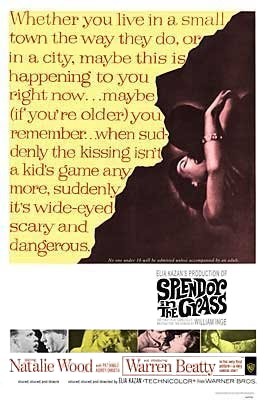
The 1962 film, Splendor in the Grass, takes place in Kansas shortly before the start of the Great Depression. Deanie (Natalie Wood) and Bud (Warren Beatty) are two teenagers in love but, as we learn, youthful love does not always translate into adult happiness.
Bud and Deanie are idealistic and in love but they’re from different social classes. Bud is the son of a boisterous oilman named Ace (Pat Hingle) and Ace acts much like you would expect a millionaire named Ace to behave. Bud’s parents are determined that he attend Yale and that he marry someone else from a wealthy family. They don’t want him to turn out like his older sister, Ginny (Barbara Loden), who drinks, smokes, and is rumored to have recently had an abortion. Meanwhile, Deanie is repeatedly told by her mother that she must always remain a “good girl” and not give in to the temptation to have premarital sex with either Bud or any other boy. If she does, she’ll be forever branded a bad girl and she’ll pretty much end up with a reputation like Ginny’s.
(Interestingly enough, Ace doesn’t have any problem with Bud finding himself a bad girl, nor does he have a problem with taking his son to a speakeasy later in the film. As far as society in concerned, being “good” and following the rules only applies to women.)
Needless to say, things don’t work out well for either Deanie or Bud. Bud is so frustrated that Deanie won’t have sex with him that he dumps her and then has the first of several breakdowns. When Deanie’s attempt to win Bud back by acting more like Ginny fails, she ends up going out with a classmate named Toots Tuttle (Gary Lockwood). Nothing good ever comes from going out on a date with someone named Toots Tuttle. That’s certainly the case here as Deanie and Bud both struggle with the demands of a hypocritical society that expects and encourages Bud to behave in a certain way but which also condemns Deanie for having desires of her own. And, of course, the entire time that Bud and Deanie’s drama is playing out, we’re aware that the clock is ticking and soon the stock market is going to crash and change everyone’s lives forever.
It’s kind of a depressing film, to be honest. I’ve always found it to be rather sad. When we first meet them, Deanie and Bud seem as if they’re perfect for each other but, throughout the entire film, the world seems to be conspiring to keep them apart. By the end of the film, they’ve both found a kind of happiness but we’re painfully aware that it’s not the happiness that either one was expecting while they were still in school. The film suggests that type of happiness might be impossible to attain and a part of growing up is realizing that there is no such thing as perfection. Instead, there’s just making the best of wherever you find yourself.
There’s a scene in this film where Natalie Wood nearly drowns and it always freaks me out, both because of my own fear of drowning and the fact that it foreshadows what would eventually happen to Natalie in 1982. (The fact that Natalie Wood and Robert Wagner’s yacht was called “Splendour” doesn’t help.) Natalie herself was also deeply scared of drowning and just filming the scene undoubtedly took a lot of courage on Natalie’s part. But then again, Natalie Wood’s entire performance is courageous. Natalie Wood gives an emotional and intense performance as Deanie, holding nothing back and it’s impossible not to get emotional while watching her. Making his film debut, Warren Beatty is a bit of a stiff as Bud, though he’s certainly handsome and you can tell why Deanie would have found him attractive. (In high school, you always assume that the boring, handsome guys actually have more depth than they let on.) By the end of the film, you understand that Deanie deserved better than Bud. Then again, Deanie deserved better than just about everything life had to offer her. But Deanie survived and endured and made the best of what she was given because, really, what else could she had done? What other choice did she have?
For her performance in Splendor in the Grass, Natalie Wood received her second Oscar nomination for Best Actress. She lost to Sophia Loren for Two Women and …. well, actually, Loren deserved the award. But so did Wood. 1961 would have been a great year for a tie.
Today is the birthday of Italian actress Ania Pieroni.
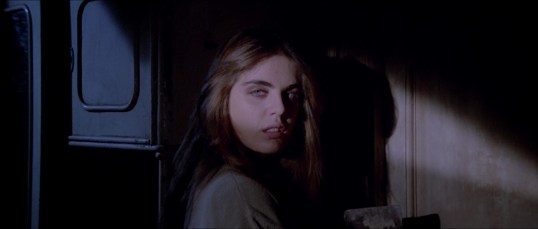
You may not recognize the name but, if you’re a fan of Italian horror, chances are that you’ve seen Ania Pieroni at least once. Even though she only has 11 credits listed on the imdb and apparently made her last film over 30 years ago, Ania Pieroni achieved screen immortality by playing key roles in three of the greatest Italian films ever made.
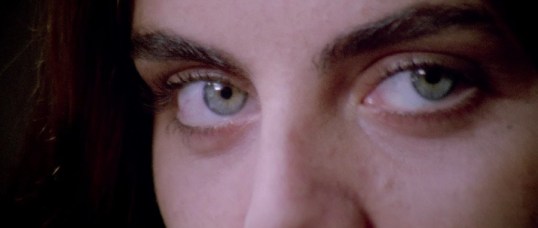
In Dario Argento’s Inferno, she was the first actress to play the mysterious Mother of Tears.
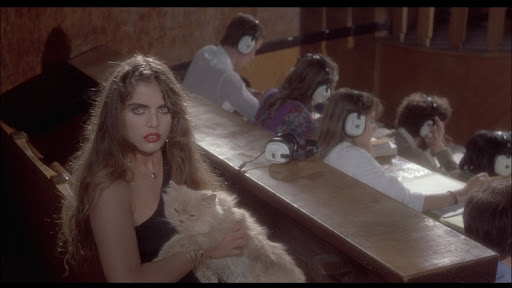
In Lucio Fulci’s The House By The Cemetery, she played the mysterious housekeeper and nanny who, in one of the film’s most memorable scenes, nonchalantly mops up a huge pool of blood before subsequently losing her head in the house’s basement.
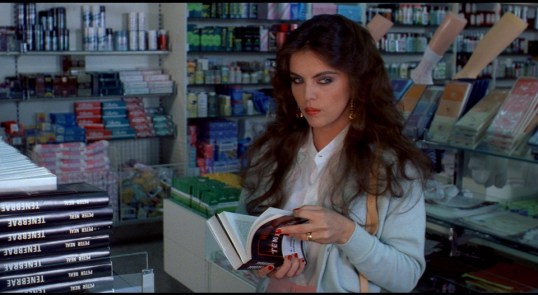
And then, in Argento’s Tenebre, she played the unfortunate shoplifter who pays a steep price for not paying for Peter Neal’s latest novel.
Today, the Shattered Lens wishes a happy birthday to Ania Pieroni with….
4 Shots From 4 Films
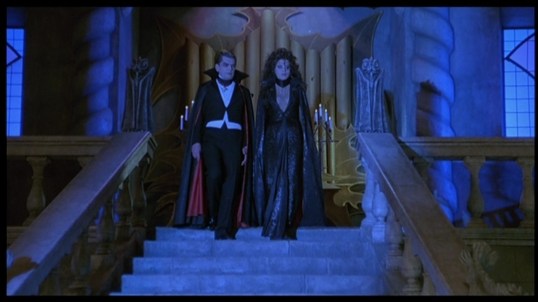
Inferno (1980, dir by Dario Argento)
The House By The Cemetery (1981, dir by Lucio Fulci)
Today is the 117th birthday of the great director, Vincente Minnelli!
While Minnelli actually made films in several different genres, he’s best remembered for his many musicals. It’s been said that Minnelli was one of the directors for whom technicolor was invented and his musicals certainly prove the truth of that statement. Minnelli made films that not only celebrated music and dancing but which left audiences wanting to sing and dance themselves.
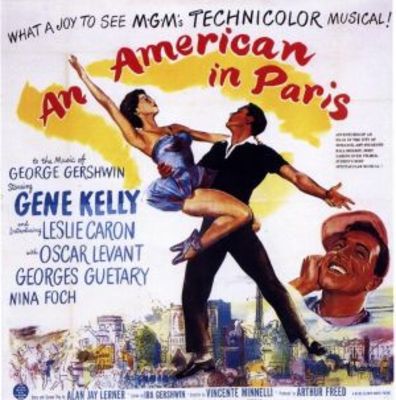
Several of Minnelli’s films were honored by the Academy. Two of his films won the Oscar for Best Picture and today’s scene that we love comes from the first one to do so, 1951’s An American In Paris. In this scene …. well, the why is not important. What’s important is the way the Gene Kelly and Leslie Caron move and the way that Minnelli captures and celebrates every movement.
The 1967 film, Barefoot in the Park, tells the story of two newlyweds.
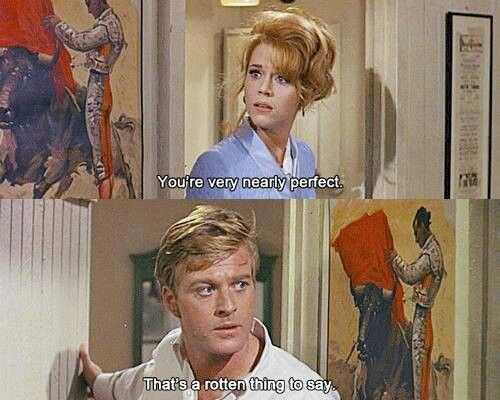
Paul Bratter (Robert Redford) may have a terrible last name (seriously, Bratter?) but he’s an up-and-coming lawyer with a bright future. He’s a little bit uptight and doesn’t seem to have the greatest understanding of human nature but he’s handsome and he’s charming and he means well. Paul has just recently married Corie (Jane Fonda). Corie is a free spirit who cringes at the idea of conformity. Having been raised by a judgmental mother who has always told her that she will never be good enough to make it on her own, Corie has decided to murder Paul and steal all of his money by insisting that they live in a drafty apartment that’s on the fifth floor of an New York apartment building that doesn’t have an elevator. If climbing up the stairs doesn’t kill Paul, the fact that the skylight has hole in it probably will. Helping Corie with her plan is her eccentric neighbor, Victor Velasco (Charles Boyer). When Paul comes home one day to discover Victor lifting up his lingerie-clad wife, Victor says, “We are heating up the apartment.” Corie assures Paul that they’re just trying to get the radiator to start working but we know the truth….
Okay, that’s actually the Lifetime version of Barefoot in the Park. The real Barefoot in the Park is a charming, lighter-than-light adaptation of Neil Simon’s famous play. (If I’m biased towards the play, it’s because I once played Corie in a heavily edited version of the play that we put on in high school. I was the perfect Corie, if I may say so myself.) As played by Robert Redford, Paul is charming but uptight and, as played by Jane Fonda, Corie is a free spirit who doesn’t really seem to have much common sense about the realities of living in New York City. (Running barefoot in Central Park? Probably not a good idea in 1967.) They do end up living on the fifth floor and there are a lot of jokes (in fact, there’s probably too many jokes) about people getting out of breath from having to climb all of the stairs. There’s also a broken skylight, which is a problem since it snows in New York. However, Corie never deliberately plots to kill Paul. Instead, she tries to set her mom (played, in an Oscar-nominated performance, by Mildred Natwick) up with Victor.
Barefoot in the Park is probably one of those films that seemed semi-daring when it was originally released in 1967 (“Look! A honeymoon sex joke! Look! Corie’s walking around in Paul’s shirt! Look! Paul looks like he’s about to say a forbidden word!”) but today, it seems like an old-fashioned but likable fantasy about what’s like to be a newlywed in New York. The city’s beautiful and full of romance. The dialogue is witty and zippy. (Zippy’s a word, isn’t it?) Charles Boyer overacts in the most charming way possible and Mildred Natwick has some good moments as Corie’s mom. (To appreciate Natwick’s peformance, it helps to imagine what the film would have been like if Shelley Winters had played the role.) Most importantly, Robert Redford and Jane Fonda have got an amazing chemistry and, as they were both young in 1967 and considerably less weather-beaten than they are today, it’s hard to imagine a more beautiful couple. Though Gene Saks’s direction is visually flat and, cinematically, the film never quite breaks out of its stage-bound origins, the chemistry of Redford and Fonda and Boyer and Natwick carry you through the occasional rough patch.
4 Shots From 4 Films is just what it says it is, 4 shots from 4 of our favorite films. As opposed to the reviews and recaps that we usually post, 4 Shots From 4 Films lets the visuals do the talking!
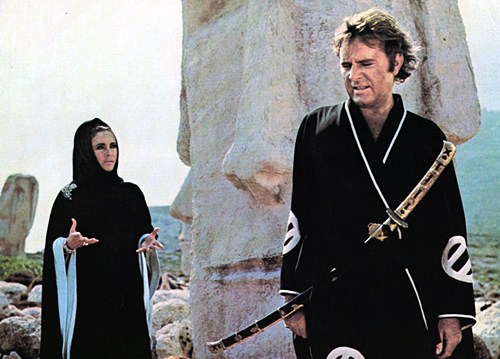
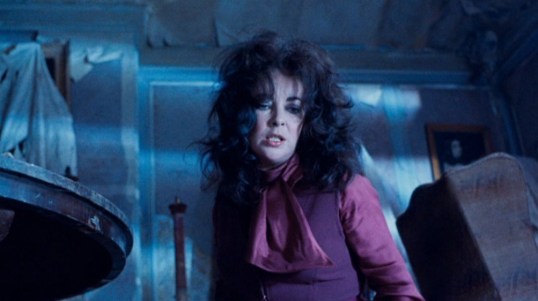
Today is the birthday of one of the greatest films stars ever, Elizabeth Taylor! And you know what that means. It’s time for….
4 Shots From 4 Elizabeth Taylor Films
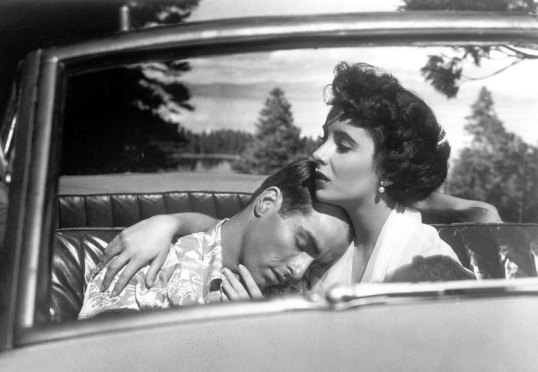
A Place in the Sun (1951, dir by George Stevens)
Suddenly, Last Summer (1959, dir by Joseph L. Mankiewicz
2019’s Long Shot is a film that truly took me by surprise.
I have to admit that, when I first saw the trailer for Long Shot, I had my concerns. First off, it was an American political comedy and it’s been a while since there’s really been a good one of those. There’s been many attempts, especially after Donald Trump was elected in 2016. But, for the most part, the American films are always at their weakest when they try to be overly political. There’s always a disturbing lack of self-awareness that, when mixed with the type of strident tone that can only be maintained by people who have never seriously had their ideas challenged, tends to make for a very boring viewing experience. And, no, don’t you dare say, “What about Vice?” because Vice was freaking terrible.
Secondly, the trailer emphasized that Charlize Theron was playing the Secretary of State and that she was running to become the first woman elected President. This led me to suspect that the film might essentially be Hillary Clinton fanfic. Over the past few years, there’s actually been quite a few films and television show that have featured idealized versions of Hillary Clinton — i.e., all of the accomplishments without the albatross of her husband or the reputation for being casually corrupt. (For six seasons, there was a TV show called Madam Secretary that basically only existed to present an idealized version of Hillary.) Hillary fanfic, with its attempt to rehabilitate the image of a candidate so inept that she actually lost to Donald Trump, is always cringey.
Finally, as much as I hate to admit it, I was concerned that the film not only starred but was produced by Seth Rogen. And don’t get me wrong. I love Seth Rogen. Seth Rogen is literally my favorite stoner. I think that, with the right material, he can be one of the funniest performers around. The problem is that, in the past, Seth Rogen has always been brilliant as long as he wasn’t talking about politics. Whenever he started talking politics, he just turned into every other wealthy and rather self-righteous progressive. While Rogen’s political tweets were never as banal as the thoughts of uberboomer Stephen King, there was still nothing about them that suggested that Rogen would be capable of producing one of the funniest and most good-hearted political comedies to come out in the past few years.
And so, like a lot of people, I skipped Long Shot when it was playing in theaters. I waited until it was released on video to watch Long Shot and you know what? It turned out that almost everything that I had assumed about Long Shot was incorrect.
Yes, it’s a very political movie but it’s also far more self-aware than I was expecting it to be. Seth Rogen apparently knows that he has a reputation for being a very loud, knee-jerk leftie because he actually does a very good job of poking fun at his own image. Rogen plays Fred Flarsky, a loud and crude journalist who quits his job when he discovers that the underground newspaper that he was working for has been purchased by Parker Wembley (Andy Serkis, playing a not-at-all disguised version of Rupert Murdoch). Fred is about as far to the Left as one can be and he tends to assume that all of his associates agree with him, even though he never bothers to ask them. One of the best scenes in the film comes when his best friend, Lance (O’Shea Jackson, Jr.), reveals to a stunned Fred that he’s not only a Republican and a Christian but that he’s been one the entire time that he’s known Fred. Fred never caught on because he just assumed that Lance, being black, would naturally be a Democrat. When Lance asks Fred why he thought Lance wore a cross around his neck, a befuddled Fred can only reply that he thought it was “cultural.” It’s a great scene and one that’s wonderfully played by Rogen and Jackson and it works precisely because it remains true to what we’ve seen of both characters. Almost everything that Lance says over the course of the movie does reflect a traditionally conservative mindset but, like Fred, we don’initially don’t notice because Lance is being played by Ice Cube’s son. When Fred discovers that Lance is a Republican, it doesn’t change Fred’s mindset but it does teach him that progressives can be just as guilty as conservatives when it comes to making assumptions about people based on where they’re from or what they look like. As a stunned and chastened Fred puts it, “I’m a racist, you’re a Republican, I don’t know what the fuck’s going on.”
Secondly, the film’s romance is incredibly charming. Charlize Theron plays Charlotte Field, the Secretary of State who used to be Fred’s babysitter. After they run into each other at a reception, Charlotte hires Fred to work as a speech writer for her nascent presidential campaign. You would not expect Charlize Theron and Seth Rogen to have a ton of romantic chemistry but they do. Theron is an underrated comedic actress and there’s a lot of fun to be had in just listening to her and Rogen bounce lines off of each other. In fact, as funny as Rogen is, I’d have to say that Charlize Theron is even funnier. One of the highlights of the film is when Fred and Charlotte sneak away to a club, where they dance and end up taking ecstacy. Over course, as soon as the drugs kick in, a major diplomatic crisis breaks out and an extremely high Charlotte has to deal with a hostage crisis. Theron appears to be having a ball with the role and really, this is the film for which she should have been Oscar nominated. Theron convinces us that 1) she’s a masterful diplomat, 2) that she could be elected President of the United States, and 3) that she could fall in love with someone as messy as Fred without sacrificing her own ambitions.
Long Shot has its flaws, of course. Andy Serkis is a bit too over-the-top in his villainy and the film has a 125-minute running time, which is way too long for what is essentially a fairly simple romantic comedy. Some of the scenes of Fred and Charlotte traveling around the world probably could have been cut without harming the story. There’s an environmental subplot that feels a bit too obvious and there’s a joke about Fred accidentally ejaculating on his own face that’s never as funny as the film seems to think that it is.
That said, Long Shot is often a surprisingly charming film. (I know what some of you are saying: “Yes. Lisa Marie, Seth Rogen ejaculating on his beard sounds really charming.” I know, I know. But the majority of the film is charming.) If you missed it when it came out the first time, give it another chance.



 Through the Shattered Lens