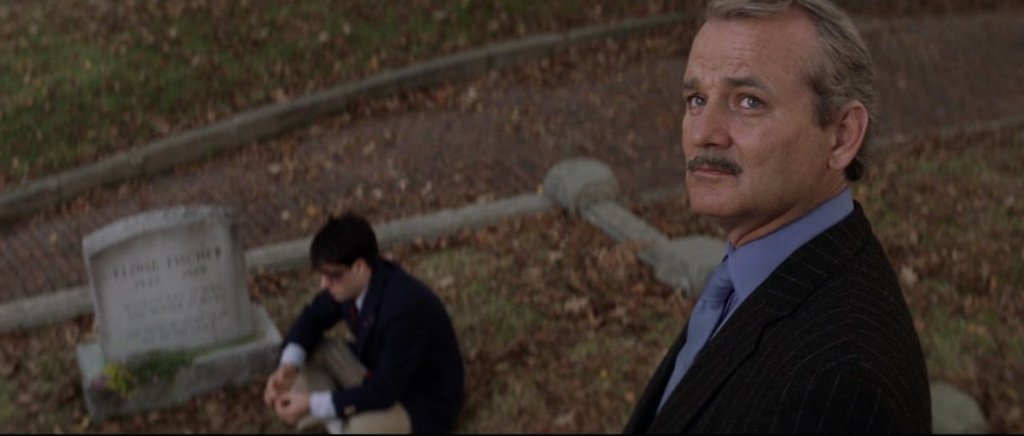
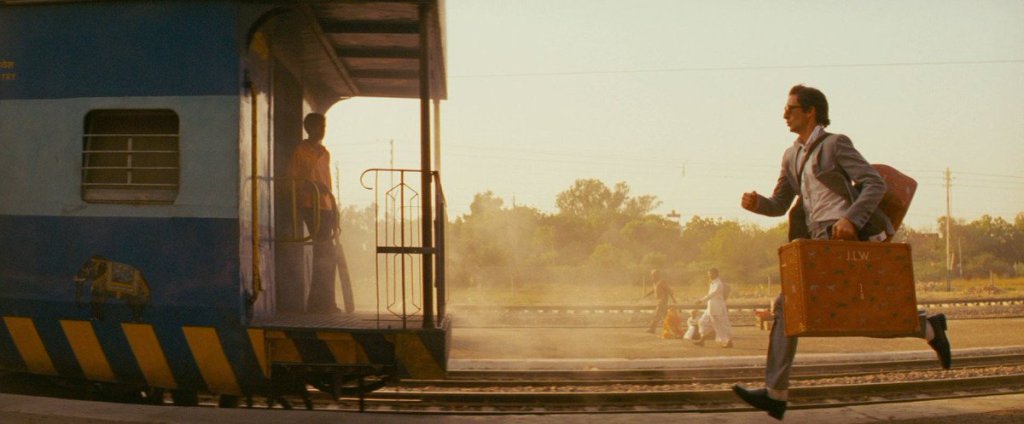
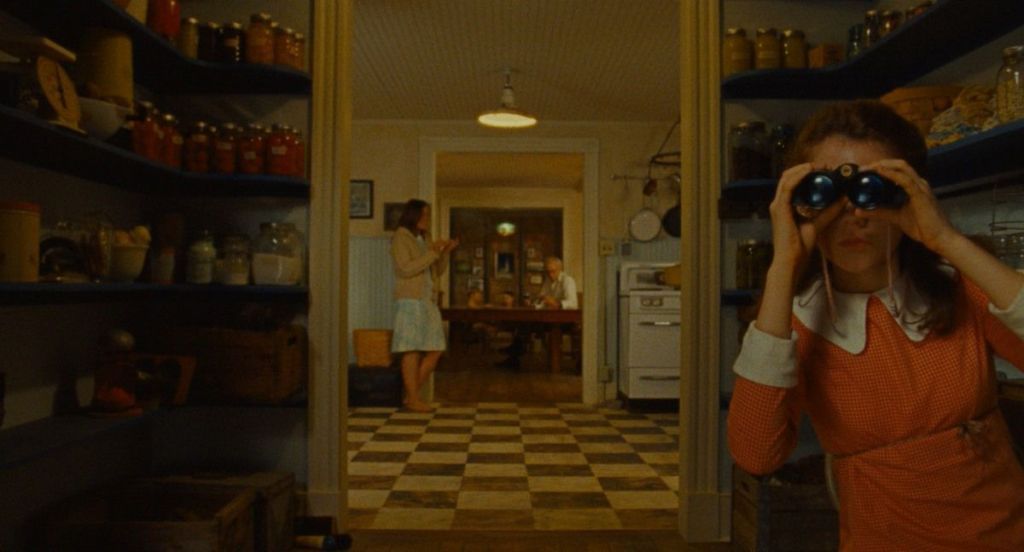
4 (or more) Shots From 4 (or more) Films is just what it says it is, 4 (or more) shots from 4 (or more) of our favorite films. As opposed to the reviews and recaps that we usually post, 4 (or more) Shots From 4 (or more) Films lets the visuals do the talking.
Wes Anderson celebrated a birthday on May 1st. Unfortunately, on that date, I was still recovering from my post-Oscar exhaustion (and I also had a few live tweet events that I was preparing to host that night) and I let the day slip past without proper observation. I apologize for that because Wes Anderson is one of my favorite directors. Visually, no one makes films like Wes Anderson and his frequent cinematographer, Robert Yeoman.
So, belatedly, here are….
4 Shots From 4 Films Directed by Wes Anderson and Shot by Robert Yeoman
Rushmore (1998, dir by Wes Anderson, DP: Robert Yeoman)The Darjeeling Limited (2007, dir by Wes Anderson, DP: Robert Yeoman)Moonrise Kingdom (2012, dir by Wes Anderson, DP: Robert Yeoman)The Grand Budapest Hotel (2014, dir by Wes Anderson, DP: Robert Yeoman)
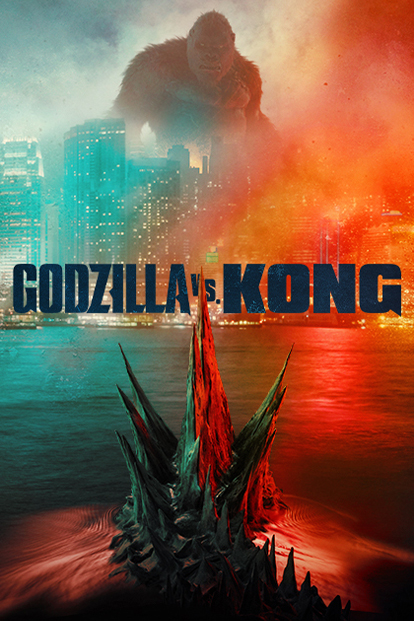
From the minute Godzilla vs. Kong was announced, I’ve been rooting for Godzilla.
I’m probably not alone in this. I mean, let’s just be honest. King Kong seems like he means well and certainly, he’s had to deal with enough dumbass humans that it’s impossible not to feel some sympathy for him. But, in the end, King Kong is just a big monkey whereas Godzilla is an atomic, fire-breathing lizard who only protects Earth because he can’t stand the thought of anyone else destroying it before he gets the chance. King Kong is cool but Godzilla is a freaking badass. (It’s not a coincidence that literally everyone hates the fact that the original, Japanese-produced King Kong vs. Godzillaended with King Kong winning.) One of my main hopes when it came to Godzilla vs Kong was that Godzilla would be declared the rightful winner of this battle of the Titans.
Obviously, I can’t tell you whether or not my hope came true, not without spoiling the film. (That said, it’s probably debatable just how much you can really spoil a film like Godzilla vs. Kong.) I can tell you that the title of the film is accurate. Kong and Godzilla meet and they fight, a total of three times. Buildings are climbed and destroyed. Radioactive fire is spewed across the Earth. The monkey and the lizard do not team up to conquer climate change. The climatic battle takes place in a city and many people are undoubtedly killed as a result but no one ever mentions anything about any of them so you’re free not to worry about them. Though the film doesn’t quite have the same charm as the sight of two men in rubber monster suits tossing miniature trees at each other, the CGI and the fight scenes are all undeniably well-done. As far as the film’s actual story goes, it’s all pretty dumb and it has none of the subversive bite of director Adam Wingard’s pervious films but Godzilla vs Kong is still undeniably entertaining. Those who have commented that there’s not much subtext to Godzilla vs Kong have a point but that’s actually a huge part of the film’s appeal. After a year of pop culture that was marinated in doom and gloom, there’s something undeniably appealing about a film that says, “Sit back, enjoy, and don’t worry about a thing.”
(I saw one negative review of Godzilla vs Kong that complained that the film didn’t have a strong environmental message, as if the filmmakers should have stopped the action so that Greta Thunberg could show up and shout “How dare you!?” at the two monsters.)
Of the two stars, Kong gets the most screentime, despite the fact that Godzilla is the more interesting of the two monsters. There are also humans in the film, played by recognizable performers like Alexandar Skarsgard, Rebecca Hall, Kyle Chandler, Millie Bobby Brown, Demian Bichir, Julian Dennison, and Brian Tyree Henry. All of the humans have their own reasons for being concerned about Kong’s fight with Godzilla but, to be honest, you really won’t care. Regardless of the talent of the individuals playing them, the human characters really aren’t important and the film is at its weakest when it tries to convince us that they are. This is a film you watch because of the monsters and it works best when it focuses on them.
As I sit here writing this, Godzilla vs Kong is on the verge of leaving HBOMax. However, it’s still playing in theaters, which is the idea way to watch an effects-driven film like this one. It’s the first true blockbuster of the post-pandemic era. Hopefully, it’ll be the first of many.
Georgetown, which is based on an actual Washington, D.C. murder, is one of those films that’s been out there for a while. Filming was completed in 2019 and it played at the Tribeca Film Festival that year. However, the film’s general release was held up by the both the pandemic and the fact that critics who saw it were fairly indifferent to it. Now, two years later, Georgetown will finally be getting a May 14th release before going to VOD a week later.
The main reason I’m curious about Georgetown is that it both stars and was directed by Christoph Waltz, an actor who sometimes seems to have kind of disappeared despite winning two Oscars and playing a Bond villain. Of course, Waltz hasn’t really disappeared. It’s just been a while since he appeared in a film that really captured the popular imagination. Along with Georgetown, he’ll be appearing in both The French Dispatch and No Time To Die in 2021.
Here’s the trailer for Georgetown, which co-stars Vanessa Redgrave and Annette Bening.
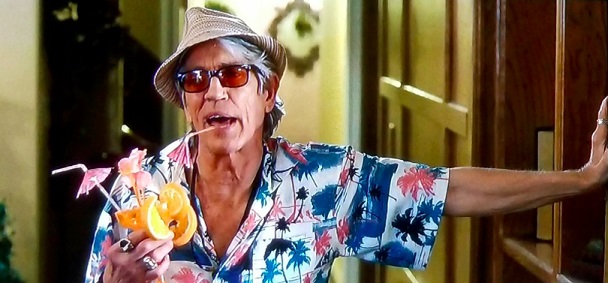
Albert Beck is the character at the center of one of Lifetime’s most successful franchises, the Stalked By My Doctor films. First introduced six years ago in the original Stalked By My Doctor, Albert Beck is a brilliant surgeon who also has a bad habit of growing obsessed with his patients, especially if they’re teenage girls. Dr. Beck tends to fantasize that his patients are in love with him and then he goes out of his way to “protect” them. This usually means kidnapping them and attempting to murder everyone else in their life. Since his first appearance, Dr. Beck has gone from being a world-renowned surgeon to being a fugitive from justice to being a patient in a mental hospital. Just as surely as you can depend on Dr. Beck to fall in love with any teenage girl with a heart murmur, you can also depend on him to always manage to escape confinement. Along the way, Dr. Beck has also developed an alter ego — Laid Back Beck. Laid Back Beck wears Hawaiian shirts, sips tropical drinks, and is always taunting Dr. Beck about his lack of success when it comes to finding love. Of course, only Dr. Beck can see and hear Laid Back Beck.
Laid Back Beck
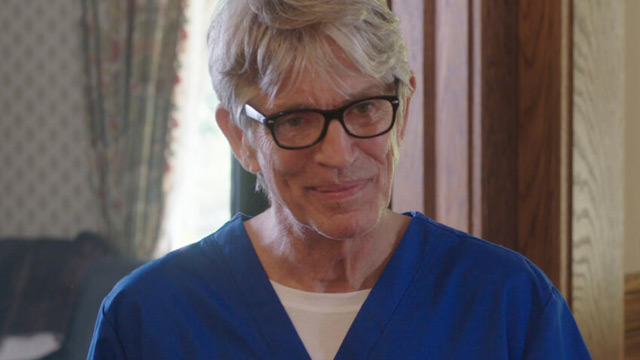
Of course, what truly sets Dr. Beck apart from other Lifetime obsessive stalker-types is that he’s played by Eric Roberts. In fact, Eric Roberts has become, late in his career, quite a popular figure with Lifetime movie fans, largely due to his performances as Dr. Beck and his appearances in a number of other Lifetime films. (Most of those non-Dr. Beck appearances have only been cameos but still, any film with Eric Roberts is going to be better than a film without Eric Roberts.) From the very first film, Roberts has been wonderfully over-the-top as Dr. Beck, playing him with just the right combination of mad sincerity, overwhelming self-pity, and self-awareness. Everything about Roberts’s performance, from his nervous smile to the rushed way he starts to speak whenever he meets someone who he feels need to be protected, comes together to make Dr. Beck into one of the most memorable and dangerous villains to ever appear in a Lifetime film. And yet, because he is so painfully needy and so convinced that he’s doing the right thing, it’s hard not to occasionally feel a little bit of sympathy for Dr. Beck. He may be a murderer but, in his mind, he’s only trying to fix a broken heart. Several broken hearts, as a matter of fact!
Just What The Doctor Ordered, the fifth film to feature the good doctor, finds Beck escaping from yet another mental institution. This time, he hides out in what he thinks is an abandoned house. However, it turns out that the house has recently been bought by Maggie Newell (Carrie Schroeder) and soon, Dr. Beck has fallen in love with Maggie’s teenage daughter, Alexa (Grace Patterson). And wouldn’t you know it — Alexa needs a heart transplant! Soon, Dr. Beck is disguising himself as a nurse and taking a very active interest in tracking down the perfect heart donor for Alexa.
And, you know what? It’s fun. Yes, you’ll be able to guess what’s going to happen but, as I’ve said before, that’s actually one of the fun things about watching a Lifetime film. As with the previous Stalked By My Doctor films, the main attraction here is Eric Roberts, chewing up the scenery and having violent fantasies about killing Alexa’s boyfriend while Alexa sweetly smiles and thanks him for protecting her. His search for a proper heart donor takes him to some unexpected places, particularly when he meets a police detective who appears to use her handcuffs for more than just arresting perps. Dr. Beck has been through a lot and he spends a good deal of Just What The Doctor Ordered looking a bit worse for wear. (Setting fire to a mental institution and then hiding in an attic for several weeks will do that to you.) But still, Eric Roberts’s unique charisma shines through. By the end of the film, you’ll eagerly be waiting to see what future adventures Albert Beck and his laid back alter ego have ahead of them!
Well, now that the latest Oscar ceremony is out of the way, I guess it’s time to focus on predicting what will be nominated next year.
(Well, it’s not really time but if you’re an Oscar-obsessive like I am, you really have no choice. Oscar speculation is an addiction that’s easily shaken off.)
Below, you’ll find my predictions for April. As always, these should be taken with several grains of salt.
First off, I haven’t seen any of these films and some of them might not live up to expectations.
Secondly, I’m not even sure whether the Academy is going to go back to the old rules of using the end of December as their eligibility cut-off or if they’re going to continue with the extended release window that they used last year.
Third, the Oscar picture is never anywhere close clear until November or December rolls around. Right now, I can only predict what I know is going to be released between now and December 31st. Obviously some of the movies below might have their release date changed and several movies will be picked up from the various film festivals. In all probability, next year’s big Oscar winner isn’t even on anyone’s radar right now. (Let’s not forget that, up until February of this year, most people were still predicting that Da 5 Bloods would be a huge Oscar player.)
Also note, the Academy is finally going back to having a set number of best picture nominees so no more of this stupid 7 or 9 nominees nonsense. In theory, that’s good news for film like Dune, which will probably get a lot of technical nominations but which probably would have struggled to make the final best picture lineup under the former rules. Of course, the Academy is also about to institute their inclusion requirements so it will be interesting to see if any of the expected contenders are disqualified from competing for best picture.
If you want to follow how my thinking has developed, be sure to check out my predictions for March!
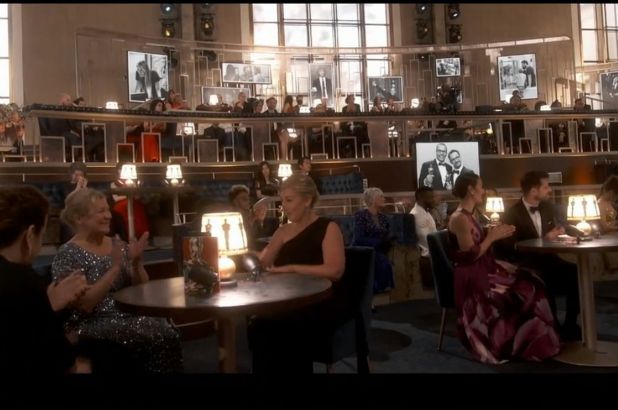
Footage of viewers doing what they had to do to make it through last night’s Oscar ceremony
This morning, I woke up and I thought about the cult of Steven Soderbergh.
Soderbergh is a filmmaker who is fervently adored by some film and cultural critics. They eagerly devour his every thought. They examine his annual list of the things that he watched during the year with the intensity of theological scholars studying an ancient-but-just-discovered religious text. The Cult of Soderbergh reacts with excitement whenever it’s announced that Soderbergh has secretly filmed an improvised comedy on his phone and that he’ll be releasing it on HBOMax. The fact that the movie itself will probably turn out to be a self-indulgent mess never really seems to concern them.
Don’t get me wrong. Steven Soderbergh has directed some very good movies. There are quite a few Soderbergh films — Out of the Past, The Girlfriend Experience, The Informant!, Logan Lucky, Magic Mike — that I really, really like. However, Soderbergh has directed and otherwise been involved with some truly mediocre films as well, films that would probably be totally forgotten if not for the fact of his involvement. Even his worst films tend to get good initial reviews, if just because people tend to assume that anything Soderbergh directs has to be good even when it’s not. But, in retrospect, many of his films are stylish and ultimately empty. Haywire is a mess. The Laundromat was self-indulgent and pretentious. Let Them All Talk was so dull that it felt as if it was specifically made to troll the type of people who proudly proclaim that they will watch Meryl Streep in anything. Contagion may have predicted a pandemic but that doesn’t make it any less of a drag to sit through. When Steven Soderbergh is good, he’s very good. When he’s bad, he’s incredibly bad. He’s one of the most frustratingly inconsistent filmmakers around. That’s something that many film fans and critics have yet to come to terms with.
It’s also why I kind of groaned a little when, last month, I read that Steven Soderbergh would be producing the Oscars this year. Everyone knows that the Oscars are struggling to stay relevant and that the ceremony needed to be jazzed up a little and, if nothing else, that seemed to be something that Soderbergh could deliver. But, even while the Cult of Soderbergh was celebrating, I was thinking about how the Oscars seemed like just the type of event that would draw out Soderbergh’s worst tendencies.
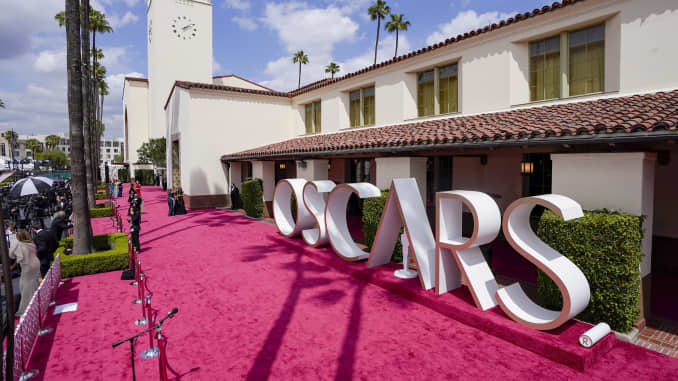
Now, at this point, I should make clear that Soderbergh did not direct last night’s ceremony. He was strictly the producer and, in fact, he was just one of three producers. That said, from the opening scene of Regina King walking through Union Station to the decision to allow the winners to ramble on for as long as they wanted (almost as if they were Meryl Streep and Candice Bergen shooting an improvised film during an ocean cruise), this definitely felt like a Steven Soderbergh production. Even more importantly, it felt like a bad Soderbergh production. This wasn’t Traffic or even Ocean’s 11. This was Solaris. This was Full Frontal. This was one of those terrible movies that he agreed to executive producer as a favor to George Clooney. This was the type of train wreck that could only have been put together by a genius who no one was willing to double guess.
We all knew that last night’s Oscars were going to be a bit different, of course. And I guess we should be glad that they didn’t make the same mistakes that the Golden Globes made. That said, the ceremony was an endurance test. Last night’s ceremony did away with a lot of the things that have been criticized about previous ceremonies but, in doing so, it only made us realize that an awards show actually does need a host. It does need a cheesy montage. It needs spectacle. It needs live performances of the nominated songs. It needs humor, even bad humor. (Glenn Close twerking after her record-setting eighth Oscar loss does not count.) And, perhaps most importantly, it needs a band that’s willing to start playing the exit music whenever a winner goes on for too long. Who didn’t want a full orchestra to drown out the Documentary Feature winners? Do we really need a filibuster from someone who probably had sex with an octopus? That’s what the Senate’s for.
As I watched the ceremony, I thought about something one of my creative writing teachers once told me. Seriously, this is one of the most important lessons that I’ve ever learned and anyone who knows how much I hate learning anything will understand that’s high praise coming for me. If you want your reader to truly feel as if they know your characters, show. Don’t tell. Show. If you want your readers to understand that someone is good at their job, don’t just say, “She was good at her job.” Instead, write a scene that shows she’s good at her job. For the most part, last night’s ceremony eschewed showing clips of the nominated films and instead, we were provided with trivia factoids about the nominees, the type of stuff that you typically find on the imdb or Wikipedia. But hearing that someone worked in a movie theater when they were a teenager doesn’t tell us anything about why they were nominated. Last night, the lack of clips made it seem as if the Academy ashamed of the films they had nominated. They kept telling us the nominees were good but, at the same time, they refused to show us.
At least they avoided this….
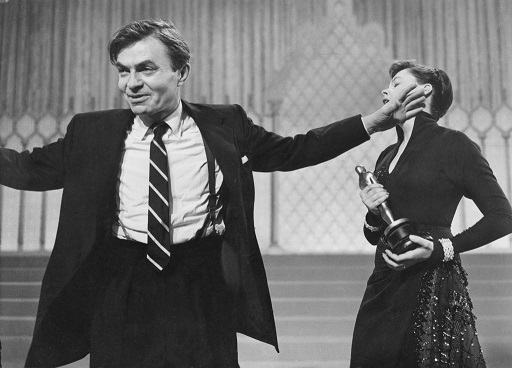
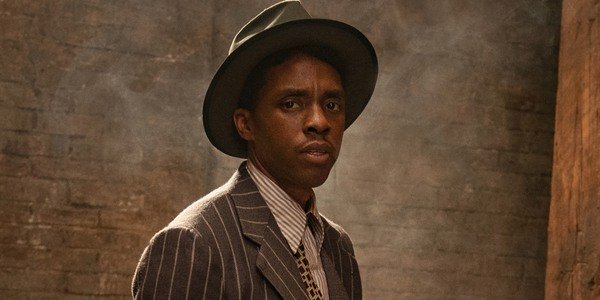
Finally, there was the weird choice to move around some of the categories. It’s obvious what the show’s producers — and I won’t lay the blame squarely on Soderbergh because there were two other credited producers on the show — were trying to do. They assumed Chadwick Boseman would win best actor. They assumed it would be a huge emotional moment, the 21st century’s equivalent of Judy Garland introducing herself as “Mrs. Norman Maine” in the 1954 version of A Star is Born. And so, they moved the categories around.
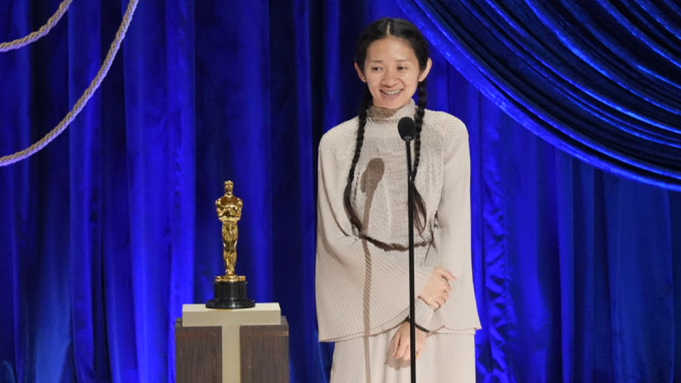
Chloe Zhao, only the second woman in 93 years to win Best Director
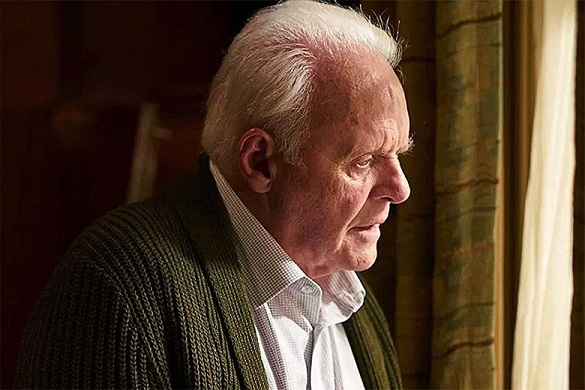
As a result, Chloe Zhao won Best Director in the middle of the show. Zhao is only the second woman to win best director and the first woman of color. It should have been a great Oscar moment but instead, it was just randomly tossed in there, with no build-up or anything else. Best Picture, which is traditionally the joyous end of the ceremony, was moved so that the final award could go to Chadwick Boseman. Of course, that didn’t happen. The final award went to Anthony Hopkins for The Father. When presenting the award, Joaquin Phoenix read the name of the winner so quickly that it actually took a few minutes for me to realize that Hopkins had won. Phoenix read the name and the end credits rolled so quickly that you got the feeling someone in the control room panicked. It was an odd moment. Obviously, Hopkins couldn’t come to L.A. for the ceremony but he was also apparently so convinced that Boseman was going to win that he didn’t even bother to stay up for the ceremony. (According to People Magazine, he was asleep when his name was called. Actually, that was true for a lot of people in America as well.)
It was an anti-climatic end to the ceremony but, putting aside the question of who should have won best actor, it was hard not to feel some schadenfreude. The show’s producers basically messed up the show’s entire momentum for a big moment that they assumed was going to happen and then it didn’t. They got a bit too clever for their own good. As more than one person pointed out on twitter, last night was proof that the producers do not know, ahead of time, who is going to win. I know some would say that it’s easy to be critical in hindsight but that if Boseman had won last night, we would be talking about what a moving moment it was. Yes, we would but it would been just as moving if Boseman had won at the end of the ceremony or at the beginning of it or in the middle. Instead, the producers took a risk that only succeeded in making Boseman’s loss the defining moment of the 93rd Academy Awards.
(Incidentally, I watched The Father on Sunday, before the ceremony. Hopkins is amazing in the film and I feel he deserved the award. At the same time, I’m also very aware that Boseman was very good in Ma Rainey’s Black Bottom and that this was literally the Academy’s last chance to honor both his performance and his legacy. So, when I say that it’s unfortunate Boseman loss, that should not be taken as criticism of Hopkins. Nor should my praise of Hopkins be viewed as criticism of Chadwick Boseman.)
Many of the changes last night felt less like they were the result of seriously considering what would improve the ceremony and more like change for the sake of change. It felt like the people in charge basically said, “This is our show and we have to do something to show that we know better than everyone who has come before us.” There was a lot of hubris involved in last night’s ceremony. There was a definite lack of understanding of why people watch the Oscars in the first place. Watching the ceremony, I was reminded of the experiencing of listening to countless Steven Soderbergh commentary tracks where he got so caught up in discussing dry technical details that he didn’t actually bother to comment much on what it was like to actually make the film and work with the actors. (One gets the feeling that Soderbergh is more comfortable talking about lenses than about human emotions.)
I’m not going to get into an argument about what the Oscars are “supposed” to be. Obviously, there’s no set rule that says the Oscars have to take place in a giant theater or that there has to be a host or a live musical performance. But I will say that, for me, the most memorable Oscar ceremonies have been entertaining to watch, even if they did inspire a bit of snarkiness on the part of many viewers. (The snarkiness, let’s be honest, is a part of what we all look forward to.) The show’s producers were so busy patting themselves on the back for not being tacky that they failed to consider that shameless tackiness is actually one of the things that makes the Oscars the Oscars. Last night’s show was boring. And beyond everything else, that was the main problem. People want to have fun. They want to escape for a few hours. They want a little spectacle. If the Academy and Hollywood at large can’t remember how to deliver that, I don’t know how much longer this yearly tradition of watching the Oscars will continue.
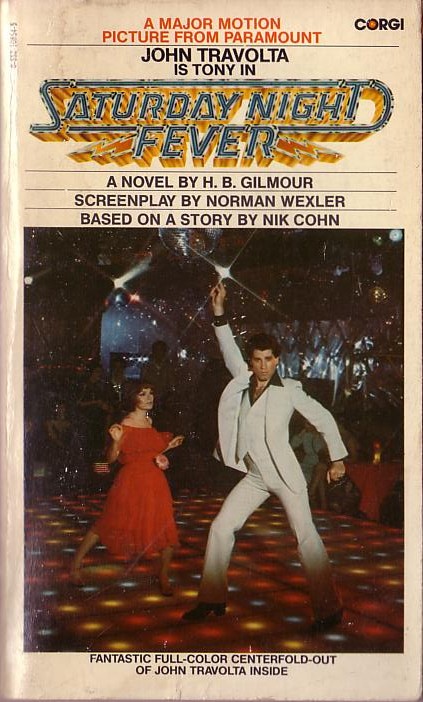
About two years ago, I came across a paperback sitting on the shelf of a Goodwill in Dallas. It was the novelization of the 1978 film, Saturday Night Fever. Naturally, as soon as I saw it, I knew that I had to buy it.
Novelizations of popular films are always an interesting read. Since they’re usually based on the early drafts of a film’s screenplay, the novelization will often include extra scenes or details that may have not been apparent in the film itself. Often, things that may have been left unclear in the completed film will be cleared up in the novelization. At the same time, as a writer, I always find it interesting to see whether or not the author of a novelization can succeed at putting their own spin on familiar material.
Take the Saturday Night Fever novelization. There are two things that everyone automatically thinks about whenever they think about Saturday Night Fever as a film. They think about the Bee Gees soundtrack and they think about the scenes of John Travolta dancing. Obviously, with the novelization, there is no soundtrack. The Bee Gees aren’t even mentioned in the book. As for Travolta’s dancing, the book doesn’t go into a great deal of detail beyond acknowledging that Tony Manero is a good dancer and that everyone wants to join him out on the dance floor. But Gilmour wisely doesn’t try to describe any of Tony’s dance moves. Instead, he focuses on how Tony feels when he’s the center of attention.
Indeed, the entire novelization focuses on Tony as a character. We spend a lot of time inside of Tony’s head and it’s not always a pleasant place to explore. At the same time, we also discover that Tony isn’t quite as clueless as he sometimes comes across as being in the movie. From the start, he knows that he’s going nowhere and he knows that his friends are losers. Without Travolta’s charismatic performance or Staying Alive playing as he struts across New York, Tony often comes across as being an even bigger jerk in the novel than he does in the movie. And yet, we still sympathize with him because the novel makes clear that Tony understands, more than his family and his friends, that he’s trapped in a life that doesn’t provide much hope. Saturday Night Fever is a dark film, even with the music. In novel form, it becomes downright existential in its portrait of Brooklyn as being a Hellish prison, both a location and state-of-mind from which there is little chance of escape.
Tony’s family is a bit more abusive in the novel, which makes the film’s famous “watch the hair” dinner scene a bit more difficult to laugh at. The novelization spends a lot of time on Tony’s brother and his decision to leave the priesthood. In the movie, Frank, Jr. just kind of vanishes. In the book, it’s explained that he went to a sort of halfway house for former priests. I assume this was all stuff that was in the screenplay but cut from the actual film. One can see why it was cut but, at the same time, it was still interesting to learn a bit more about Tony and his family.
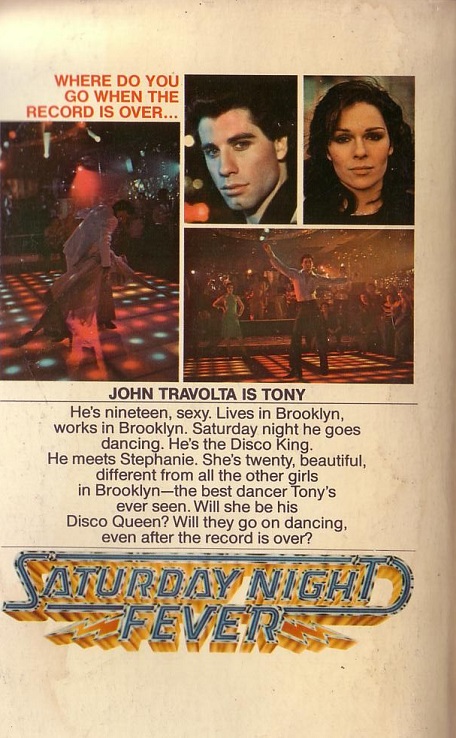
In the end, it’s not a bad novelization. At 182 pages, it’s a quick read and it not only does a good job of showing what exactly Tony is escaping from when he gets out on the dance floor but it also provides some new insight into the story. (Of course, the majority of that insight deals with Tony being a misogynistic homophobe but, then again, that’s pretty much who he was in the film too. The book just makes it even clearer, as well as showing that Tony’s prejudices are largely due to where he’s from and how he’s been raised.) It’s a good companion piece to the film and a good collector’s item. The copy that I found still had a pull-out poster of John Travolta in the middle of it!
4 (or more) Shots From 4 (or more) Films is just what it says it is, 4 (or more) shots from 4 (or more) of our favorite films. As opposed to the reviews and recaps that we usually post, 4 (or more) Shots From 4 (or more) Films lets the visuals do the talking.
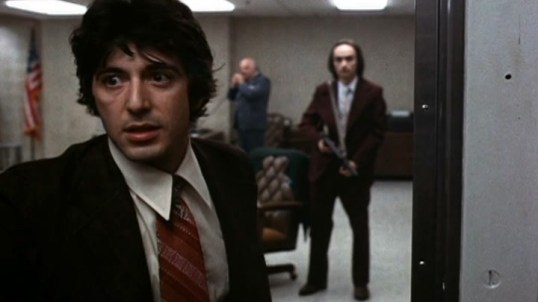
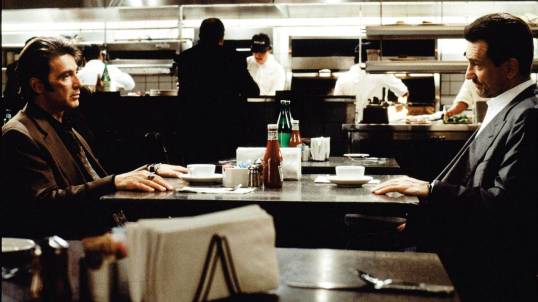
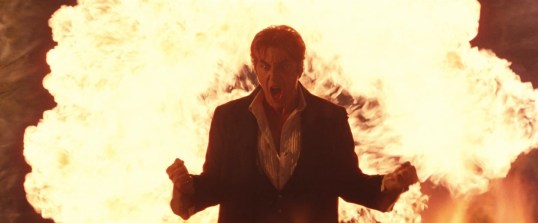
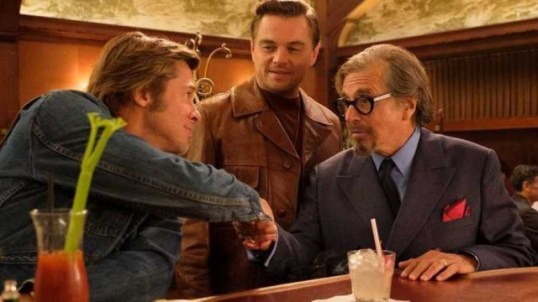
With all the excitement (or not) surrounding the Oscars, it might be easy to overlook the fact that today is also the birthdays of one of the greatest and most iconic American actors of all time! We cannot let this day end without wishing a happy birthday to the one and only Al Pacino!
In others words, it’s time for….
6 Shots From 6 Al Pacino Films
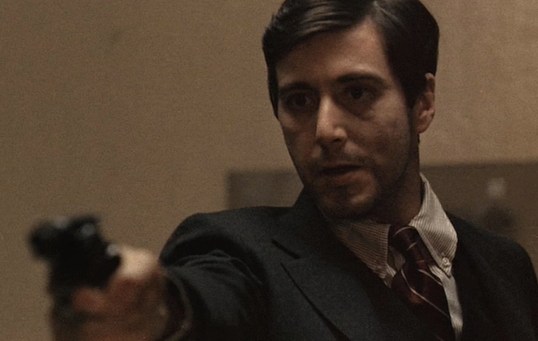
The Godfather (1972, dir by Francis Ford Coppola, DP: Gordon Willis)
Dog Day Afternoon (1975, dir by Sidney Lumet, DP: Victor J. Kemper)
Scarface (1983, dir by Brian DePalma, DP: John A. Alonzo)
Heat (1995, dir by Michael Mann, DP: Dante Spinotti)
The Devil’s Advocate (1997, dir by Taylor Hackford, DP: Andrzej Bartkowiak)
Once Upon A Time In Hollywood (2019, dir by Quentin Tarantino, DP: Robert Richardson)
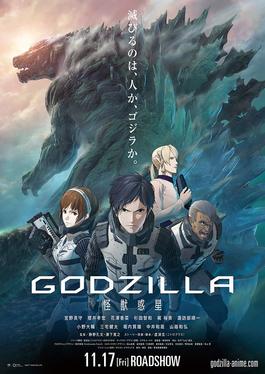
The 2017 film, Godzilla: Planet of the Monsters, takes place in the distant future. It’s been over 20 years since the constant fighting between Godzilla and a host of other giant monsters forced humanity to flee the Earth. Two different alien races offered to help the humans get rid of Godzilla but it turned out that both of them had ulterior motives and ultimately, neither one of them was a match for Godzilla. So, now, humanity is stuck floating through space, looking for another home. An entire generation has never known Earth. Meanwhile, the children who were forced to flee their home planet have grown up hating Godzilla and wondering if they’ll ever be able to return home.
One of them is Captain Haruo Sakaki. He believes that he’s come up with a way to destroy Godzilla once and for all but, in order to do so, he’s going to have to convince the ruling Central Committee to allow him (and several others) to travel back to Earth. It going to take a lot of convincing, especially since Haruo is already in jail for defying orders. But what if Haruo anonymously publishes an essay? Will that be enough to sway public opinion?
Okay, so maybe you’re getting the feeling that Godzilla: Planet of the Monsters is not a typical Godzilla film. You’re correct. This is the first animated Godzilla film. It’s also the first Godzilla film in which the key to getting people to team up against Godzilla is the publication of an anonymous essay. It’s kind of like James Madison and Alexander Hamilton singing pseudonyms to the Federalist Papers because they knew readers would be more likely to listen to Publius than to listen to Jim, the Virginia Lawyer. Godzilla: Planet of Monsters spends a lot of time on Haruo and his allies trying to convince the Central Committee to let them fight Godzilla. On the plus side, the animation is gorgeous so visually, the film holds your interest and, as someone who hates bureaucracy, I appreciated the menacing way the that Central Committee was rendered. On the negative side, this is a Godzilla movie and, in the end, that is who we’re watching to see.
That said, the film definitely deserves some credit for returning a sense of menace to Godzilla. As opposed to some of the later Toho films, where Godzilla was too obviously a man in a rubber suit to really be a credible threat, the animated Godzilla presented in Planet of the Monsters is a terrifying force of unstoppable chaos. There’s nothing cute or cuddly about this Godzilla. This Godzilla is all about mindless destruction. Like the atom bomb that was the original inspiration for the monster way back in the 50s, this Godzilla destroys the innocent and the wicked alike. When he first appears as a shadowy form reigning destruction down upon civilization, the audience is reminded that Godzilla was never meant to be a hero or a toy or any of the other roles that he’s played over the years. Godzilla is pure, mindless chaos and destruction.
Of course, he’s still the most compelling character in the film. Unfortunately, the humans in Godzilla: Planet of the Monsters are not very interesting. We’re supposed to care about Haruo but he’s so obsessed with destroying Godzilla that he becomes a bit of a bore after a while. Does he do nothing but talk about Godzilla all the time? No wonder they tossed him in jail. The other human characters all tend to blend together but then again, this is a Godzilla film. We’re not watching for the humans. We’re watching for Godzilla and his family and this film, whatever it’s other flaws, brings everyone’s favorite monsters to vibrant life. You just wish the film would be a bit quicker about getting to him.
Sadly, Godzilla will never win an Oscar. But his fans will always love him, even as he tramples them and disintegrates them with nuclear fire. In the end, that’s what fandom is all about, isn’t it?