Mel Brooks is 96 years old today! In honor of this special occasion, here he is in 1978’s High Anxiety, getting framed for murder! Fortunately, a truly great visual gag proves that he’s innocent.
Mel Brooks is 96 years old today! In honor of this special occasion, here he is in 1978’s High Anxiety, getting framed for murder! Fortunately, a truly great visual gag proves that he’s innocent.
“World Gone Wild!? What’s that about?”
Don’t ask me. I just watched the movie and I’m not particularly sure what the point of it all was. Released in 1987, World Gone Wild is one of those films that was made to capitalize on the post-apocalypse boom of the 70s and 80s. Basically, imagine a Mad Max film that sucks and you’ll have a pretty good idea of what World Gone Wild is like.
There’s been a nuclear war. Civilization has collapsed and now, there are just tiny outposts of humanity who are trying to survive. It hasn’t rained in decades. Old-timer Ethan (Bruce Dern) is in charge of a town called Lost Wells. He remembers what rain was like and he also remembers what rock music used to sound like, too. As for Lost Wells, it’s one of those dreary little desert communities that always tend to pop up in movies like this. Angie (Catherine Mary Stewart) teaches the community’s children in an abandoned school bus. They have a bunch of books on etiquette. One little girl can recite every word ever written by Emily Post. That gets annoying fast. Emily Post didn’t live on a school bus in the desert.
That etiquette doesn’t do much good when it comes to protecting Lost Wells from Derek Abernathy (Adam Ant), a cult leader who dresses in all-white and who wants to take control of Lost Wells away from Ethan. (In a somewhat clever twist, it turns out that Ethan learned how to become a cult leader by reading a book about Charles Manson.) Knowing that the majority of the people in his town are too obsessed with Emily Post to fight off Derek and his army, Ethan recruits a group of mercenaries led by George Landon ( who is played by Michael Pare, who looks like he was absolutely miserable while shooting this movie). George and his men agree to protect Lost Wells from Derek and, in the process, they regain some of their lost humanity and they start to believe in the possibility of rain. Or something like that. Fortunately, one of George’s mercenaries is played by the supercool character actor Anthony James. He doesn’t get to do much but hey, it’s still Anthony James and Bruce Dern in the same movie! Yay!
For a film called World Gone Wild, this is a strangely low-key affair. Even the most unimpressive of Mad Max rip-offs will usually have an exciting car chase or two. At the very least, there’s usually a big battle where people sacrifice their lives for the future of humanity. In World Gone Wild, the mercenaries pretty much just go to Lost Wells and then wait for Derek to come back. And when Derek returns, there’s a few explosions and some gunfire but that’s pretty much it. Neither side really puts up much of a fight, which leads me to wonder if Derek really even cared about Lost Wells.
On the plus side, the film has got Bruce Dern, doing his wild-eyed old-timer bit. That’s always fun to watch and, if nothing else, Dern appears to be having fun in this movie. At the very least, he’s having more fun that Michael Pare and Catherine Mary Stewart, both of whom seem to spend the majority of the movie looking for a way to make a quick escape. And I suppose the film does win some novelty points for casting Adam Ant as the main villain, even though Derek ultimately turns out to be not much of a threat.
In the end, World Gone Wild‘s greatest strength is Bruce Dern. He’ll make you believe in the rain again.


The Voyeurs premiered on Amazon in 2021 and I have to say that I’m a little bit angry that I didn’t bother to watch the movie until last week. Seriously, someone should have alerted me about this film because this is exactly the type of shamelessly sordid, narratively nonsensical film that I always end up enjoying. Seriously, I expect better from my friends.
The film opens with Pippa (Sydney Sweeney) trying on lingerie in a chic shop, just to suddenly realize that anyone looking through the shop’s front window would be able to see her. Pippa glares reproachfully at both the window and, presumably, the people watching this movie. That’s right, the film opens with the lead character judging you for watching. However, as we soon discover, Pippa is a bit of a hypocrite.
Pippa was buying the lingerie as a way to celebrate moving into a new studio apartment with her boyfriend, Thomas (Justice Smith). Unfortunately, Thomas is kind of a lame-o and he ends up falling asleep as soon as they move in and before Pippa can show him what she’s bought. When Thomas does eventually wake up, he and Pippa discover that they can stare straight into the the apartment across the street from them. That apartment is inhabited by a handsome and sexy photographer (Ben Hardy) and his beautiful wife (Natasha Liu Bordizzo). Pippa and Thomas find themselves obsessively watching as Thomas and Pippa make love in the kitchen and basically everywhere else in their apartment. (Meanwhile, Thomas is still complaining about how much he hates his job.) Eventually, Pippa and Thomas even figure out a way to capture the vibrations of the other apartment’s windows so that they can “hear” what the photographer and his wife are saying to each other. While Thomas worries that Pippa is becoming too obsessed with the neighbors, Pippa is busy fantasizing about the photographer and befriending his wife. When Pippa discovers that the photographer is cheating on his wife and cruelly gaslighting away her concerns, Pippa makes a decision that leads to….
Well, it leads to a lot and I certainly won’t spoil it. I will say that it’s all wonderfully melodramatic and silly. The Voyeurs has multiple twists, none of which make much sense. Indeed, it’s best not to think too much about any of the twists or the film’s rather macabre conclusion. Instead, watch it for the sex, the glamour, the spacious apartments, and the beautiful people. Don’t worry about logic. Instead, just accept The Voyeurs as a dream. Sydney Sweeney brings some much-needed sincerity to her role while Hardy and Bordizzo both appear to understand exactly the type of film in which they’ve found themselves and, wisely, they fully embrace the sordidness of it all. At times, Justice Smith seems to almost be taking the movie too seriously but even that adds to The Voyeurs off-center charm. Someone always takes things too seriously in a film like this.
The Voyeurs is the type of sordid daydream-turned-nightmare that we can all love.
Previous Guilty Pleasures

It’s the time of the month again! It’s time for me to share my brave attempts to randomly guess at what will be nominated for the Oscars next year! I do this on a monthly basis. For the first six or seven months of the year, it’s a bit of a fool’s errand. Usually, it’s not until late September and October that the Oscar race really starts to become a bit clearer and, even then, there’s always a few surprises and late additions. So, in other words, take the predictions below with a grain of salt. Actually, take them with several grains of salt. A few of these films and performers will definitely be nominated. Several probably won’t but these are the best guesses that I can currently make based on the rumors and speculation that I’ve seen online.
Probably the biggest Oscar news this month was that Top Gun: Maverick is still dominating the box office. That’s good new for Maverick, both because it reminds the Academy of how much people love the film and it will also help to keep the movie fresh on everyone’s mind as the rest of the year unfolds. To those who say that Top Gun: Maverick isn’t a traditional Oscar movie, I would say that 1) they have a point and 2) the same could have been and was said about Mad Max: Fury Road, Get Out, Joker, Black Panther, Dune, and several other recent nominees that both did well at the box office and scored several Oscar nominations. It’s probably time for us to stop thinking about whether or not a movie is a “traditional” nominee because it’s been a while since that’s really been a deciding factor. The times are changing.
Anyway, below you’ll find my nominees for the month of June! If you want to see how my thinking has progressed, be sure to check out my predictions for February, March, April, and May! They’re good for a laugh if nothing else.
Finally, if I had to predict a winner for Best Picture, I would probably go with The Fabelmans. I think Steven Spielberg making a film about his childhood will be hard to resist and I think there are some people who feel that Spielberg didn’t quite get the amount of Oscar love that he deserved for West Side Story.
Best Picture
Babylon
Empire of Light
Everything Everywhere All At Once
The Fabelmans
Killers of the Flower Moon
My Policeman
Rustin
She Said
Top Gun: Maverick
Women Talking
Best Director
Damien Chazelle for Babylon
Joseph Kosinski for Top Gun: Maverick
Maria Schafer for She Said
Martin Scorsese for Killers of the Flower Moon
Steven Spielberg for The Fabelmans
Best Actor
Tom Cruise in Top Gun: Maverick
Colman Domingo in Rustin
Brendan Fraser in The Whale
Tom Hanks in A Man Called Otto
Brad Pitt in Babylon
Best Actress
Naomi Ackie in I Wanna Dance with Somebody
Cate Blanchett in Tar
Ana de Armas in Blonde
Margot Robbie in Babylon
Michelle Yeoh in Everything Everywhere All At Once
Best Supporting Actor
Paul Dano in The Fabelmans
Tom Hanks in Elvis
Anthony Hopkins in Armageddon Time
Tobey Maguire in Babylon
Ke Huy Quan in Everything Everywhere All At Once
Best Supporting Actress
Jessie Buckley in Women Talking
Jamie Lee Curtis in Everything Everywhere All At Once
Sally Field in Spoiler Alert
Li Jun Li in Babylon
Michelle Williams in The Fabelmans
Poor Peter and Emma!
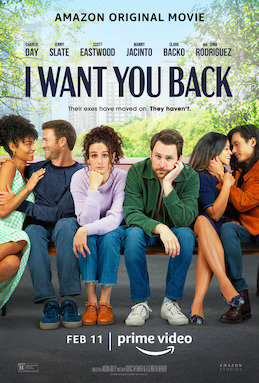
Peter (Charlie Day) and Emma (Jenny Slate) both work in the same building in downtown Atlanta. That’s one thing that they have in common. Peter works for a soulless nursing home company. At a typical meeting, Peter listens as the other executives debate whether or not it’s actually necessary to spend so much money feeding the residents. Peter dreams of starting his own nursing home, one where the elderly will be treated with the respect that they deserve. Emma is an administrative assistant in an orthodontist’s office. She lives in an apartment with two college students, even though she hasn’t been enrolled in college for years. Though they’re both in their early thirties, neither Peter nor Emma have really be able to get their lives going yet. That’s another thing that they have in common.
And there’s a third thing that they have in common. They’ve both recently been dumped. Anne (Gina Rodriguez) left Peter because she felt that Peter was stuck in a rut and she’s now dating a pretentious but dashing middle school theater teacher named Logan (Manny Jacinto). Emma’s ex, personal trainer Noah (Scott Eastwood), is now deeply in love with a pastry chef named Ginny (Clark Backo). Anne and Noah may have moved on but both Peter and Emma want their exes back.
When Emma and Peter meet each other while looking for a place to cry in the office stairwell, they strike up a quick friendship. They also hatch a brilliant scheme. Emma will volunteer to work on Logan’s production of Little Shop of Horrors and, while doing so, she’ll seduce him and cause Anne to break up with him. Meanwhile, Peter will befriend Noah and convince him that Ginny really isn’t right for him.
Of course, things don’t go as smoothly as expected. We’ve all seen Strangers on a Train enough times to know that these “You’ll help me and I’ll help you” schemes never seem to work out. Peter does manage to befriend Noah but it turns out that Noah is deeply in love with Ginny. Meanwhile, Logan is more than open to the idea of being seduced but it turns out that Anne is also interested in exploring new things. While Peter and Noah are hitting the clubs and getting taunted, for being “old,” by Pete Davidson, Emma is being forced to sing Suddenly Seymour with the 13 year-old star of Little Shop of Horrors. Peter and Emma are also growing closer, even as they try to get back with their exes.
Currently streaming on Prime, I Want You Back is an amusing romantic comedy, one that works due to a surprisingly clever script and a charming cast. For all the indignities that Peter and Emma go through in their quest to win back the exes, the film always treats their emotions with respect. The scene in which 30-something Emma wipes away tears while a bespectacled 13 year-old sings Suddenly Seymour to her is a wonderfully comedic moment but, because Emma feels like a fully realized character instead of just a comedic caricature, the film works on an emotional level as well. “I’m not ready for this,” Emma mutters as the kid starts to sing and it’s a funny line that works because it’s also a line to which everyone can relate. Everyone knows the feeling. Jenny Slate and Charlie Day are charming as the two leads and both Scott Eastwood and Gina Rodriguez bring some welcome depth to the role of the exes. No one in this film turns out to be as simple or as one-dimensional as the viewer might initially expect. Instead, we find ourselves caring about not only Emma and Peter but also about Noah and Anne, as well.
I Want You Back is a sweet-natured and genuinely funny romantic comedy. The final scene is perfect. Check it out on Prime.
Remember when William Shatner became the oldest man to go into space?
It’s okay if you’ve forgotten. It happened way back in 2021 and that was like — well, it feels like it was about 30 years ago. Add to that, Shatner went up in space as a part of Jeff Bezos’s space program and Bezos’s attempts to conquer space have pretty much been replaced by Elon Musk’s attempts to conquer space in the national consciousness.
That said, it was a really big deal when it happened. I think there were a lot of people who were concerned that, at the age of 90, Shatner wasn’t really physically fit to go into space and that it would be really depressing if Shatner didn’t make it back to Earth. There were others who pointed out that Jeff Bezos’s Blue Orbit may have gone high up in the sky but that it didn’t quite break through the atmosphere. The people on the ship, including Shatner, experienced weightlessness and got to see what the Earth looked like from space without actually literally going into space. George Takei had to be a whiny little child about it because that’s pretty much the way Takei reacts to anything positive happening to William Shatner. And, of course, many people said that Jeff Bezos should have been spending his money on fixing the Earth instead of trying to escape it. Those were the same people who, later that year, wrote positive reviews of Don’t Look Up.
That said, it was all just really cool. Star Trek may bore me to tears but even I was still moved by the thought of William Shatner going into space, even if it was just for a few minutes. It was a moment to spark the imagination and to inspire optimism. I think those are two things that the professional naysayers are incapable of possessing or understanding. But it’s imagination and optimism that will make the world a better place.
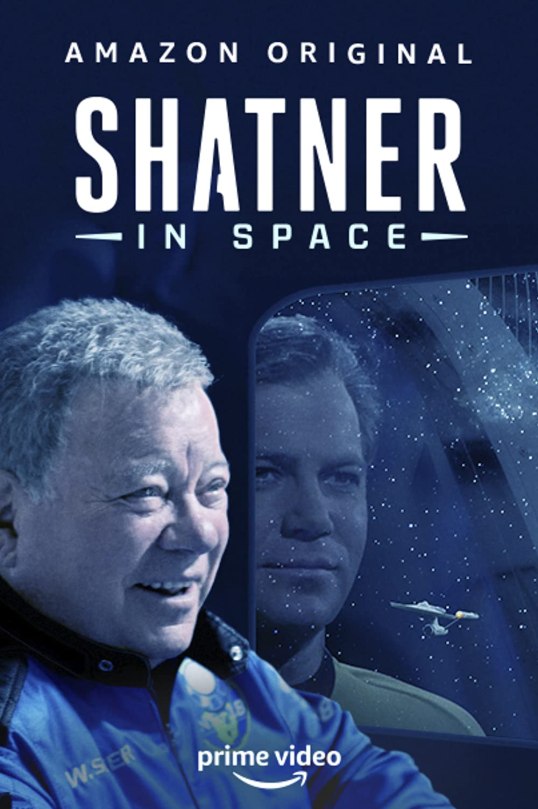
Anyway, there’s a 50-minute documentary about Shatner’s voyage into space, one that I just watched. It’s on Prime and, quite appropriately, it’s called Shatner In Space. In all honesty, Shatner In Space is largely a commercial for Jeff Bezos. There’s not point in denying that. The first half of the documentary features perhaps a bit too much footage of Jeff Bezos, one of the world’s richest men, trying to present himself as just being a humble sci-fi nerd who grew up on a ranch. Brilliant businessman that he is, Bezos is not the most charismatic person in the world and that’s especially obvious when he’s sharing scenes with William Shatner. There’s undoubtedly a lot that you can say about William Shatner but no one can deny that, even at 90, the man knows how to work a scene.
But, fortunately, Shatner himself seems to be so sincerely excited about the prospect of going into space that it even makes Bezos tolerable. The documentary doesn’t include as many scenes as one might hope of William Shatner training for his mission. Personally, I would be curious to know what type of precautions were taken before sending a 90 year-old person into space because, who knows …. I might be 90 before I get the chance to try it for myself! I did notice that, of the crew, Shatner was the only one not to really indulge in the weightless aspect of the trip. While everyone else floated around the capsule, Shatner seemed content to stay in his seat and look at the Earth below. The fact that Shatner, who has pretty much made a late-in-life career out of parodying his reputation for being a bit pompous, seems to be, at that moment, at a loss for words is actually rather touching.
Anyway, as I said, this is basically a commercial for Jeff Bezos but it’s hard not to enjoy watching Shatner go into space.
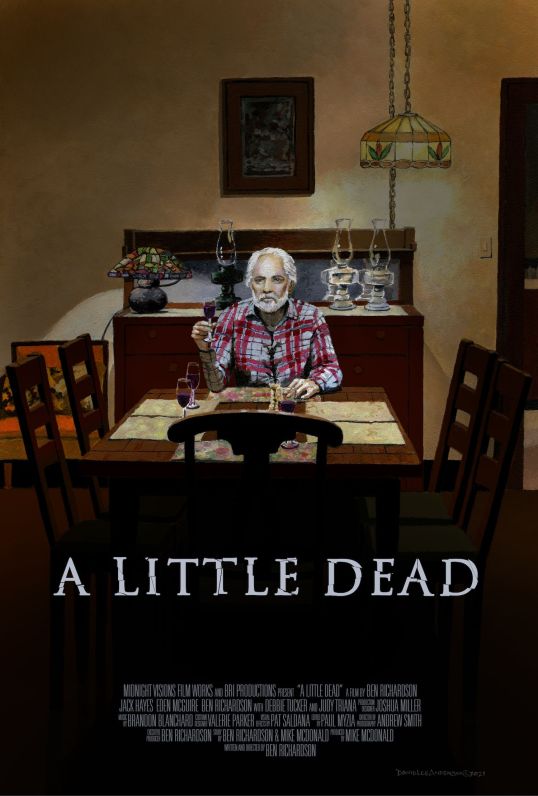 On a farm in Oklahoma, an old man who we get know as being Grandpa (Jack C. Hays) sits at a dinner table. Though he seems to be alone, he’s got three glasses of wine sitting in front of the other chairs, along with with a glass for himself.
Things haven’t been easy for Grandpa since Grandma passed away. His two grandchildren, Hailey (Eden McGuire) and Kevin (Ben Richardson, who also directed the film) arranged for a caretaker to live with him but, when they stop by for a visit, they discover that the caretaker has vanished and Grandpa seems to be convinced that there are people sitting at the table with him. When his grandchildren try to clean up the table, he snaps at them not to touch anyone’s drinks. There’s a ritual going on and his well-meaning grandchildren better not interrupt it. At times, Grandpa seems to be perfectly lucid. At other times, he expresses surprise when Kevin tells him that it’s not a good idea to keep a big box of rat poison with all of the cereal. Is Grandpa losing it or is there something else happening that only he can understand?
Clocking in at a little over 10 minutes (not including the end credits) and deliberately paced without ever being slow, A Little Dead is a nicely atmospheric piece of country gothic. On the one hand, it is a story of a man who may or may not be living with spirits. On the other hand, I think it can be argued that the film is also a metaphor for the mixed emotions that many people have about the feelings of responsibility that they feel towards older relatives and the guilt that comes from feeling that maybe they were not there as much as they should have been. There’s a lot of people like this film’s Grandpa, who are living alone and who are only occasionally visited by younger family members who are, for the most part, checking in to see if they still have their mind and if they’re still capable of taking care of themselves. Is Grandpa talking to actual “people” at the table or is he just talking to the lingering memories of the people who used to be there? And are his grandchildren correct to be concerned about him or are they just dealing with their own feelings of guilt?
A Little Dead is also an enjoyable little horror story. It’s the type of story that you would might expect to find in an old horror comic book, complete with a nice little twist at the end. The film makes good use of that old farmhouse and the desolate country landscape. If you have spent anytime in the rural midwest, you will immediately recognize the film’s milieu. If there were ghosts to be found, that’s definitely where they would probably be living.
This is one to keep an eye out for. Pour yourself a glass and relax with A Little Death.
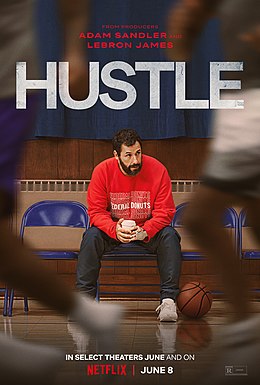
As I’ve mentioned in the past, there are essentially two Adam Sandlers.
The first Adam Sandler is the comedic actor who, after getting off to a good start with Billy Madison and Happy Gilmore, has appeared in some of the most critically-derided films ever made. This is the Adam Sandler who has won multiple Razzies for Worst Actor, whose films were often used, in the days before the MCU and DCEU, as an illustration of everything that’s wrong with Hollywood, and who is best known for keeping his friends steadily employed.
The second Adam Sandler is a sad-eyed character actor who has appeared in a string of dramatic and challenging films and who has consistently proven himself to be a sensitive dramatic lead. The second Adam Sandler plays the same type of characters as the first Adam Sandler but with an added dose of regret. If the first Adam Sandler specializes in characters with no self-awareness, the second Adam Sandler plays characters who are so self-aware that they’re often paralyzed by ennui. The second Adam Sandler would probably be a multiple-Oscar nominee if not for the first Adam Sandler.
If you only knew Adam Sandler from Punch-Drunk Love, Uncut Gems, The Meyerowtiz Stories, and his other dramatic films, you would be totally justified in thinking that he had to be one of our most acclaimed actors. By that same token, if you only know him from Grown Ups, Jack and Jill, and his other comedies …. well, you would be totally justified in having the opposite opinion. I think that’s one reason why critics get so much more frustrated with Sandler’s dumb comedies than they do with other comedies. By the point, we all know how good Sandler can be when he wants to be.
Hustle, Sandler’s latest film, casts Sandler is another dramatic role. Sandler plays Stanley Sugarman, a middle-aged scout for the Philadelphia 76ers. Stan spends almost all of his time traveling across Europe, checking out international basketball players who are hoping for a chance to come to America and play in the NBA. As a result, Stan is frequently away from his wife (Queen Latifah) and he’s missed his daughter’s last few birthdays. Stan, who was a college basketball star but who never made it into the NBA because of his own dumb decisions, may make a lot of jokes but one need only look at his perpetually downcast eyes to see that Stan is not a happy man. The only thing that’s really keeping him going is that the owner of the 76ers, Rex Merrick (Robert Duvall), is planning on making Stan an assistant coach.
Unfortunately, the same night that Rex tells Stan that he’s going to be promoted, Rex dies. Rex’s apparently sociopathic son, Vin (Ben Foster), takes over the organization and announces that Stan will continue as a scout. (When Stan mentions that he hasn’t shared a birthday with his daughter in his years, Vin smirks. You know, just in case you needed another excuse to dislike the character.) Stan heads back to Europe. In Spain, when his plans to scout a local player don’t work out, Stan stumbles across a pick-up game and discovers a local construction worker named Bo Cruz (Juancho Hernangómez, an actual basketball player who makes a surprisingly assured debut). Bo is nearly 7 feet tall, he’s got a daughter at home, and he just happens to be a phenomenal basketball player.
With the help of a Facetime call to Dirk Nowitzki (one of the many former and current basketball players to appear in Hustle), Stan is able to convince Bo that he actually is an NBA scout. Stan takes Bo back to America but it turns out that 1) Bo has a criminal record that makes the league weary of him and 2) Vin would rather humiliate Stan than give Bo a fair chance. Driven to quit his job, Stan devotes his time to trying to get Bo ready to enter the NBA draft. Not only is Stan trying to make Bo’s dreams come true but he’s also trying to find some redemption for his own past mistakes. And, of course, Stan is also trying to save his career because it’s not like his daughter’s film school is going to be pay for itself!
Basketball is my least favorite sport, largely because I can’t stand the sound of all those squeaky shoes on the court. And Hustle is a film that was definitely made for basketball fans. Between all the player cameos and the jokes about Philadelphia sports fan, Hustle has a very specific audience in mind. That said, Hustle is such a sweet-natured and sincere movie that it can be enjoyed and appreciated even by those of us who aren’t into basketball (or sports in general). Hustle hits all of the expected sports movie clichés but, wisely, it keeps the focus on Stan and Bo’s friendship. Neither Stan nor Bo are portrayed as being perfect. Instead, they’re two men who are trying to do their best, despite both carrying a lot of emotional baggage. As such, the film becomes less about getting drafted and joining team and more about making peace with both the past and the present. Sandler and Hernangómez both give heartfelt performances and director Jeremiah Zagar does a good job of framing the action. This is a film about basketball that was made be people who obviously love basketball but, fortunately, the rest of us can enjoy it too.
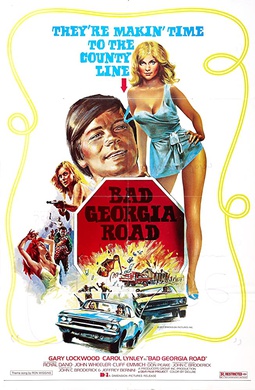
This 1977 film is, for the most part, set in Alabama so I don’t know why it opens with a shot of a car driving down a country road while someone on the soundtrack sings about running moonshine down a “bad Georgia road.” Then again, I’ve been to both Alabama and California and it’s pretty obvious that, while the film may be set in the former, it was filmed in the latter. Those hills and mountains in the background definitely belong more to Hollywood than anywhere in the South.
As for the film itself, it’s about Molly Golden (Carol Lynley), a spoiled New York fashion designer who inherits an Alabama farm from an uncle that she barely knew. When Molly finds out that the land is worth $100,000, she promptly quits her job and moves to Alabama, accompanied by her friend and assistant, Larch (John Kerry and no, not that politician with the private plane). Molly is planning on selling the land and then heading back north with her money. Unfortunately, it turns out that her uncle died owing everyone in the county money so, as a result, his farm is worthless and Molly is now in debt.
What is Molly to do? Fortunately, her uncle’s two farmhands — Leroy (Gary Lockwood, who once co-starred in 2001: A Space Odyssey) and Arthur (Royal Dano) — are onhand to explain to her that her uncle was a moonshiner. Molly decides to become a moonshiner, too! Her plan is for Leroy and Arthur to do all the work and for her to make all the money.
While all of this is going on, Molly is also falling for Leroy. She doesn’t want to admit because she’s a sophisticated New Yorker while Leroy is a redneck slob. This leads to some conflict between the two of them, as she’s always talking down to Leroy and trying to deny that she’s totally in love with him. Eventually, in a deeply uncomfortable scene (all the more so because the films attempts to play it for laughs), Leroy literally forces himself on her and Molly realizes that she could be totally happy runnin’ moonshine with a barely literate hick.
I’m a Southern girl and, perhaps even more importantly, I’m enough a country girl that I usually enjoy a good moonshine and car chase film. And Bad Georgia Road gets off to a good start with an enjoyable chase scene, even if the road that the cars are roaring down is clearly located on the West Coast instead of the Deep South. But things go off the rails as soon as Molly and Larch show up in Alabama. What there is of a plot plays out at a painfully slow pace and there’s absolutely zero romantic chemistry between Gary Lockwood and Carol Lynley. On the plus side, Royal Dano is enjoyable eccentric as Arthur, an old-timer who may not be educated but who knows everything that needs to be known about both the Bible and moonshine.
Bad Georgia Road is the type of 70s film that was specifically made to play in Southern drive-ins, where audiences would undoubtedly appreciate the film’s portrait of a clueless Yankee getting outsmarted by a bunch of country folk. (For me and probably most other people, that’s actually the main appeal of the moonshine genre.) But even if you think that Molly is a totally smug and self-righteous New Yorker, she still deserves better than to get stuck with Leroy, a man who looks like he probably reeks of chicken feed and spilled beer. Especially if you’ve seen his personable performances in films like Model Shop and 2001, it’s hard not to feel bad for Gary Lockwood while watching this film. What did that bad Georgia road do to him?
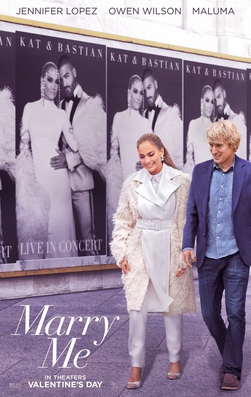
In Marry Me, Jennifer Lopez plays Kat Valdez, a superstar who has the number one single in the history of the world with Marry Me, a duet that she performs with her fiancé, Bastian (Maluma). The plan is for Kat and Bastian to marry onstage, as the climax of one of Kat’s concerts. For Kat, it will be her third marriage but she’s determined to make it work because, underneath all the glamour and show-biz glitz, Kat is a romantic at heart. However, right before Kat is due to step out on stage to get married, TMZ reports that Bastian has been cheating on Kat.
Heart-broken, Kat steps out onstage. She talks about the pain of being betrayed. In the audience, one man nods along with her. Kat sees the sympathetic look in the eyes of math teacher Charlie Gilbert (Owen Wilson) and she calls him up on stage. “Kat,” the minister asks, “Do you take this guy?” She says “I do.” Charlie says that he does. And …. they’re married!
Wait, what?
Now, of course, Charlie really isn’t sure who Kat Valdez is. He came to the concert with his daughter and his best friend (played by Sarah Silverman) and the only reason that he was holding a sign that read “Marry Me,” was because it was handed to him at the last minute. Charlie is far more interested in walking his dog, trying to connect with daughter, and coaching his students to victory in the upcoming mathalon. As they leave the concert, Charlie explains that he just said “yes” because Kat appeared to need someone at that moment and that he certainly doesn’t expect to remain married to Kat.
However, Kat’s management suggests that maybe the two of them should stay married for three months, just for the sake of good publicity….
Wait, what?
Look, I could tell you that Marry Me is a deeply silly film but you probably already guessed that. You probably guessed that from watching the trailer. It’s a determinedly old-fashioned film, with the only thing indicating that the film was made after 2014 is the fact that it’s Jimmy Fallon who is shown making jokes about Kat’s marriage instead of Jay Leno. The plot is not only silly but it’s also extremely predictable. Do I really need to tell you that Kat is going to be charmed by Charlie’s simple life and that she’s going to end up helping his students prepare for the mathalon? For that matter, do I have to tell you that Charlie is going to struggle with the feeling that he doesn’t fit in with Kat’s glamorous life style? You know where this is going.
That said, it’s an amiable film, largely due to the two leads. Jennifer Lopez is one of the few performers who can come across as being likable and down-to-Earth, even when she’s jumping into a limo and demanding that the driver take her to the airport. The film also makes good use of Owen Wilson’s goofy charm. The film’s story may be implausible but, if something that weird ever did happen, it would probably happen to Owen Wilson. While I would have preferred a film with a bit more of a satirical edge and I think it’s one of those films for which you definitely have to be in the right mood, Marry Me is a likable romantic comedy.