A Blast From The Past: Lucy (dir by Paul Glickman)


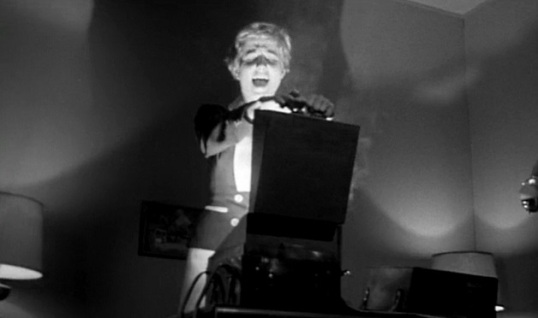
In the picture above, you can see Lucy (played by Olga Soler), the title character of the 1975 educational short, Lucy.  Lucy is 15 years old and she spends almost all of her time with her boyfriend, Joe (Michael D’Emidio).  As Lucy herself explains her narration (which is provided by an actress named Marilyn Gold), her entire life revolved around Joe.  Since Joe dropped out of school, Lucy dropped out of school too.  Since Joe wanted to spend all of his time walking around New York City, Lucy did the same.  They thought they were in love.  One discreet sex scene later and Lucy’s pregnant!

Lucy is a bit different from some of the other educational films that I’ve seen about teenage pregnancy.  Though initially shocked and angered, Lucy’s parents are eventually supportive.  Joe doesn’t run away but instead promises to do whatever he can to help, though Lucy ruefully acknowledges that it won’t be much as Joe doesn’t even have a high school diploma.  Though a friend offers to help Lucy get an abortion, Lucy decides to have her baby and social services shows up to help her.  At the end of the film, Lucy is still not sure whether she’s going to keep her baby or give it up for adoption.  She just knows that her life will never be the same.  Compared to just about every other educational film that I’ve seen about this subject, Lucy takes a rather low-key and matter-of-fact approach to its story.  It’s well-made but rather depressing.

It’s also a rather obscure film.  I couldn’t find much about the film on the IMDb.  Is the Paul Glickman who is credited as the film’s director the same Paul Glickman who edited some of Larry Cohen’s best films?  Who knows?

Now, I know I’ve probably made this film sound really depressing to sit through but there is a dance scene towards the start of the film.  That helps.

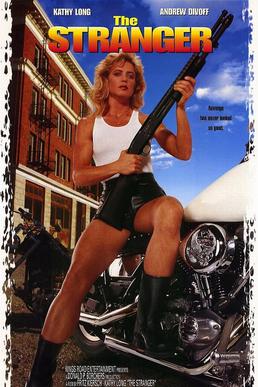
Film Review: The Stranger (dir by Fritz Kiersch)


In the desert of Arizona, there sits a town.

That town is named Lakeview, despite the fact that there is no lake nearby.  There aren’t many buildings in the town.  There’s a service station.  There’s a diner.  There’s a sheriff’s office.  There’s a general store.  There are a few houses.  Lakeview is a place that people rarely visit and which no one can escape.

There is a sheriff.  His name is Cole (Eric Pierpoint) and he spends most of his days in an alcoholic stupor.  He’s been depressed ever since his girlfriend, Bridget, was murdered.  Now, Bridget’s younger sister, Gordet (Robin Lyn Heath), is living like a feral animal while the local shopkeeper, Sally (Ginger Lynn Allen), is determined to have Cole for herself.  Cole’s deputy (Ash Adams) is in love with Sally and wants Cole’s job for his own.  That’s a lot of drama for a small town.

Of course, the real drama in Lakeview comes from the fact that the town is run by a group of bikers!  The head biker is named Angel (Andrew Divoff).  By terrorizing the citizens, Angel and his gang make their own wishes come true without ever asking anyone else if that’s something they would be interested in.  Cole is too drunk and depressed to stand up to them.  The other townspeople are …. well, I don’t know what their problem is.  One assumes that they have to be tough, as they’re living in a harsh and inhospitable desert.  But none of them them are willing to stand up for themselves.  Maybe they’ve recently moved to Arizona from California and they’re not used to the idea of self-defense.  But, for whatever reason, Angel controls Lakeview.

But then the Stranger (Kathy Long) rides up on her motorcycle.  Dressed in black leather and wearing a corset that looks like it would actually be really uncomfortable in the desert heat, The Stranger has no name but she does know how to kick ass.  She has come to kill all the members of Angel’s gang.  Unfortunately, the majority of the gang is out-of-town when The Stranger arrives.  So, the Stranger waits in Lakeview and kills who she can.  The townspeople, led by Sally, want her to leave before things get too violent.  Meanwhile, Cole comes out of his drunken stupor just long enough to notice that the Stranger looks a lot like his dead girlfriend….

1995’s The Stranger was an attempt to a modern-day spaghetti western, with a woman playing the type of mysterious figure who would traditionally have been played by Clint Eastwood or Charles Bronson.  That, in itself, is a pretty good idea.  Unfortunately, The Stranger itself is abysmally paced and the filmmakers seem to have overlooked that, in the best spaghetti westerns, the silent, nameless heroes were usually paired with a more talkative (and often much more amusing) partner.  The Good, The Bad, and the Ugly had Eli Wallach.  Once Upon A Time In The West had Jason Robards.  In The Stranger, there’s not really anyone around to fill that role.  (Cole is too full of self-pity to be amusing.  Gordet spends most of the movie running from one abandoned car to another.)  As such, The Stranger becomes fairly grim and slow.  Things are only livened up when The Stranger beats people up.  Kathy Long was a kickboxing champion and she’s strong enough in the action scenes that it makes up for the fact that she doesn’t have a particularly compelling screen presence.  She and Eric Pierpoint also have next to no romantic chemistry, making the whole question of whether or not she’s Bridget’s ghost seem a bit moot.

The best reason to see the film is to watch Andrew Divoff play Angel.  Divoff is always a good villain and he’s memorably unhinged in The Stranger.  Unfortunately, he’s not in the film as much as the viewer might hope.  Watching the film, I half expected the Wishmaster to ask if I wanted Andrew Divoff’s role to be larger.  I would have said no while thinking yes.  You know how that Wishmaster is.

Film Review: Running Red (dir by Jerry P. Jacobs)


I have to admit that I feel a little bit cheated by the 1999 film, Running Red.

I figured that, with a name like Running Red, the film would be about a redhead who did a lot of running.  Since I am a redhead that does a lot of running, I figured that I would be able to relate to this film.  Unfortunately, while it’s true that the film does feature a redhead, she doesn’t get to do much running.  In fact, she doesn’t really get to do much of anything.  Katherine (Angie Everhart) is mostly just there to support her husband, except for those moments that she thinks he’s cheating on him because he’s lied to her about being a former mercenary.

Her husband, who is played by Jeff Speakman, goes by the name of Greg.  He’s got a beard and he sells real estate and he has to go on a lot of business trips.  However, before he grew the beard, Greg’s name was Grigori and he was apparently a Russian even though, even in the flashbacks that open the film, he never had a Russian accent.  Grigori was a part of some sort of weird Russian military unit but he grew disgusted with the ruthlessness of the unit’s leader, Alexi (Stanley Kamel).  After one particularly brutal mission, Grigori dropped his submachine gun to the ground.  In the movie, this is shown to us in slow motion so we know what that this isn’t just a standard shot of a soldier carelessly dropping a loaded weapon.  No, this shot is significant.  This is the …. SLO MO OF DISILLUSIONMENT!

Anyway, a few years pass and Grigori is now Greg and he’s married to Katherine and they have a daughter.  When two meth addicts steal Greg’s SUV (with his daughter in the backseat), Greg promptly steals an ambulance and chases them down.  Using his Russian combat training, Greg beats up the two men.  He thinks that no one has seen him but it just so happens that some old busy body was outside with a video camera.  Greg makes the news!

Unfortunately, the news report is seen by Alexi.  Alexi tracks Greg down and demands that Greg help him out with a few more missions.  Wishing to protect his family, Greg agrees.  He winds up not only lying to his wife about why he suddenly has to go to Detroit but he also misses her high school reunion!  (She even had her old cheerleading outfit cleaned for the special occasion.)  Greg really should know better than to lie to a redhead.  He also should have known better than to think Alexi was ever going to leave him alone.  Greg soon discovers that Alexi isn’t going to be satisfied with just a few missions.  In fact, Alexi wants Greg to assassinate a city councilman who either supports or opposed the construction of a stadium.  To be honest, I kind of had a hard time keeping straight how everyone felt about the stadium.

It may seem as if the filmmakers weren’t that concerned with coming up with a coherent plot and that’s because they weren’t.  The entire film has a make-it-up-as-you-along feel to it.  That makes the plot impossible to follow but it also leads to a few moments that are so over-the-top and weird that you can’t help but kind of love then.  At one point, Jeff Speakman steals a bus and uses it for a high-speed chase.  A little later, he ends up getting into multiple fights on a luxury yacht.  I’m not sure who he was fighting or why they were fighting but it really didn’t matter.  All that matters is that most of the fights were well-choreographed and the action was quick-paced and didn’t have too many slow spots.  Jeff Speakman was a professional martial artist.  Judging by this film, he couldn’t act worth a damn but he could throw a convincing punch and he looked good hitting people.  It’s best not to demand too much from a film like this.  After all, Running Red never said it was going to be anything other than a silly action movie.

That said, I’m a bit disappointed that Katherine didn’t get to do more because, as played by Angie Everhart, she had the potential to be an interesting character and, like me, she was lucky enough to be one of the 2% of the population that has naturally red hair.  That said, Running Red is both frequently dumb and often entertaining.  It delivers what the majority of viewers will be watching it for (i.e., mindless action) and there’s something to be said for a film that is at peace with what it is.

On a personal note (and yes, I’m aware that it’s kind of silly for me to say that when all of my reviews are, more or less, personal notes), I watched Running Red on YouTube as a part of this week’s #MondayActionMovie live tweet.  The version that I saw featured French opening credits and the first few minutes of dialogue were also in French before abruptly switching over to English.  I have to admit that I was a little disappointed when everyone suddenly started speaking English.  I was looking forward to tweeting along in French!  Oh well!

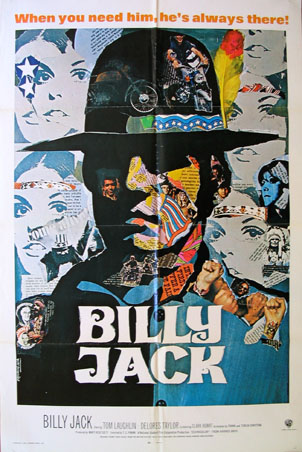
Scenes I Love: Billy Jack Defends Children And Other Living Things


Today would have been the 91st birthday of Tom Laughlin, the independent film pioneer who gave the world Billy Jack.

In honor of the day of his birth, here’s a scene that I love from Billy Jack.  The townspeople think that they can get away with humiliating the students from the Freedom School.  Well, Billy Jack’s got something to say about that and, as always, it starts with him taking off his shoes.

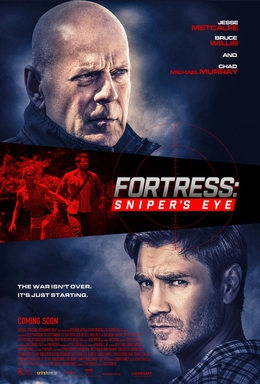
Film Review: Fortress: Sniper’s Eye (dir by Josh Sternfeld)


Fortress: Sniper’s Eye is a sequel to the 2021 film, Fortress.

If you haven’t seen Fortress, the plot goes something like this.  A group of mercenaries take over a resort that is populated by retired spies.  Robert Michaels (Bruce Willis) and his son, Paul (Jesse Metcalfe), have to set aside their difference and work together to defeat Frederick Balzary (Chad Michael Murray).

Meanwhile, the plot of Fortress: Sniper’s Eye goes something like this.  A group of mercenaries take over a now-closed resort that was once populated by retired spies.  Robert Michaels (Bruce Willis) and his son, Paul (Jesse Metcalfe), have to continue to set aside their difference and work together to defeat Frederick Balzary (Chad Michael Murray).

Now, to the film’s credit, Sniper’s Eye does admit that it’s largely recycling the plot of the first film.  When Balzary and his henchmen show up for a second time, Paul exclaims, “Didn’t any of you die!?”  It’s a funny line and one that shows that Sniper’s Eye is aware that it’s all a bit ludicrous.  Whatever other faults the film may have, you can’t complain that it’s not self-aware.

Unfortunately, when Balzary and his people invade for the second time, Paul is hosting a gathering with his fiancée and his future mother-in-law.  They’re all taken hostage.  Because Robert was wounded while rescuing Balzary’s wife from some killer Russians, he spends most of the the movie providing encouragement from a hospital bed.  Fortunately, towards the end of the movie, he is able to get out of bed and help out his son.  Paul is obviously happy to see his father and the viewers are happy to see Bruce Willis actually doing some action stuff.

Needless to say, Willis is going to be the main attraction for most viewers.  (I imagine a few One Tree Hill fans will be watching for Chad Michael Murray.)  Sniper’s Eye was one of the film that Willis completed before announcing his retirement from acting.  Knowing what we now know about Willis’s health and the conditions under which he made his final films, watching something like Fortress: Sniper’s Eye can feel awkward.  I cringed when I saw Willis in the hospital bed, looking tired and talking about how he was getting too old to play the hero.  At that moment, it felt as if the character and the actor became the same and it was a bit difficult to watch.

That said, Bruce Willis gives a convincing performance in Fortress: Sniper’s Eye.  He may not have the same charismatic swagger that he had when he was healthy but Willis does still look credible sneaking down a hallway while carrying a gun.  Even though the action scenes all use a rather obvious stunt double, Willis is still convincing in his role.

As for the rest of the film, the pacing is abysmal and the performances are uneven, with Jesse Metcalde making a bland hero and Chad Michael Murray going overboard as the main villain.  This is another film with a jumbled timeline so I feel sorry for anyone who is looking away from the screen whenever the “Two weeks later” title card flashes by.  On the plus side, the resort scenery was nice to look at and Natali Yura gave a convincing performance as Balzary’s wife.  As far as Bruce Willis’s later films are concerned, Fortress: Sniper’s Eye is superior to American Siege but comes in far below both Gasoline Alley and A Day To Die.

4 Shots From 4 Films: Special Robert Aldrich Edition


4 Or More Shots From 4 Or More Films is just what it says it is, 4 shots from 4 of our favorite films. As opposed to the reviews and recaps that we usually post, 4 Shots From 4 Films lets the visuals do the talking!

On this date, 104 years ago, Robert Aldrich was born in Cranston, Rhode Island.  The first cousin of New York Governor and Vice President Nelson Rockefeller, Robert Aldrich eschewed business and politics to pursue a career in film.  Though his wonderfully melodramatic films were often undervalued when first released, Aldrich is now seen as one of the most influential filmmakers of all time.  Tarantino loves him.

In honor of Aldrich’s career and legacy, here are….

4 Shots From 4 Robert Aldrich Films

Kiss Me Deadly (1955, dir by Robert Aldrich, DP: Ernest Laszlo)

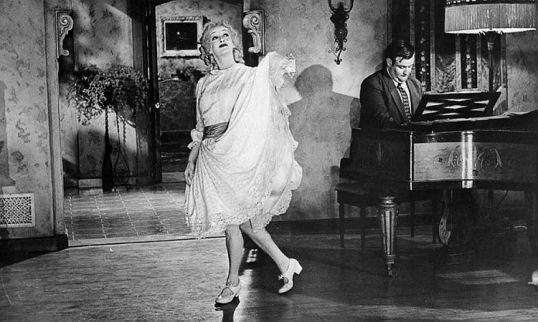
What Ever Happened To Baby Jane? (1962, dir by Robert Aldrich, DP: Ernest Haller)

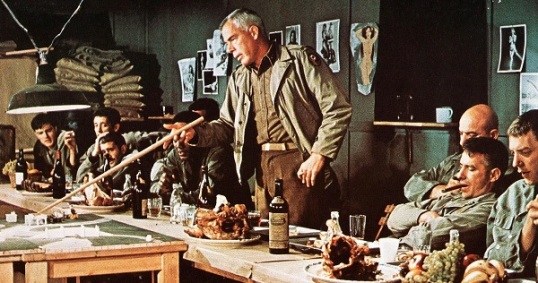
The Dirty Dozen (1967, dir by Robert Aldrich, DP: Edward Scaife)

Hustle (1975, dir by Robert Aldrich, DP: Joseph Biroc)

Scenes That I Love: Olivia Newton-John and John Travolta Perform You’re The One That I Want From Grease


I just read that Olivia Newton-John passed away earlier today.  She was 73 years old.

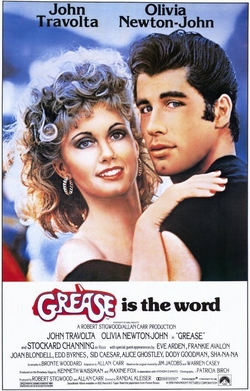
Here she is, performing You’re The One That I Want with John Travolta at the climax of 1978’s Grease.  No matter what else you may think about this film (and, to be honest, it’s not one of my favorite musicals, just because of the way that director Randal Kleiser framed most of the dance numbers), you can’t deny that both Olivia and Travolta poured their hearts into this climax.

Film Review: Minamata (dir by Andrew Levitas)


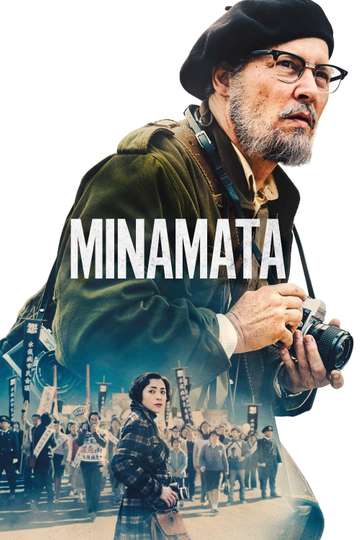
In Minamata, Johnny Depp plays Eugene Smith, a real-life photographer who found fame taking pictures for Life Magazine.  Taking place in 1971, the film opens with Smith famous but burned out.  He spends most of his time in his run-down apartment or walking the streets of New York.  His camera is always with him, a tool of both his art and a symbol of his detachment.  Smith can capture the world in a photograph but he’s still not sure that he wants to be a part of it.  Smith is outspoken, eccentric, and ultimately a bit of an idealist who hides behind a cloak of cynicism.

When Smith is asked to come to the Japanese city of Minamata so that he can photograph the effects of Mercury poisoning on the citizens, he agrees to do so.  Armed with only his camera and aided only by his translator, Aileen (Minami), Smith discovers a community that has been ravaged by environmental pollution.  Smith tries to bring the story of Minamata to the world, despite the efforts of one of Japan’s largest corporations to silence him.

As far as films go, Minamata isn’t bad.  It feels a lot like a throwback to the old social problem films of the late 70s and the early 80s.  Watching the film, it was easy to draw comparisons to similar films like The China Syndrome, Silkwood, A Civil Action, Erin Brockovich, and even Promised Land.  Like the characters at the heart of those films, Eugene Smith is an unlikely crusader but when he sees a heartless corporation destroying lives, he feels that he has no choice but to act.  The film’s narrative momentum occasionally sputters and there are a few too many scenes of Smith haranguing his editor but the film’s heart is in the right place.  Johnny Depp gives a surprisingly sincere performance as Eugene Smith, playing him as someone who is a bit of a natural screw-up but who still wants to make the world a better place.  The film’s best scenes are the ones in which Smith tries to convince the camera-shy villagers to allow him to document what’s happening to them.  Minamata is at its best when it just allows Depp (as Smith) to interact with other people.

Of course, by this point, Minamata is probably best known for the drama that went on behind-the-scenes.  Minamata was filmed in 2019 and made its debut at the Berlin International Film Festival in February of 2020.  Distribution rights were eventually purchased by MGM and it was originally slated to be released in 2021.  However, after Amber Heard accused Depp of domestic abuse, MGM took the film off of its schedule.  Due to the bad publicity surrounding Depp, it appeared that the film would be buried.  Depp’s fans reacted by voting for Minamata to win the Oscars Fan Favorite contest.  Though Minamata ultimately came in third place, that’s a good showing for a film that hardly anyone had seen and which hadn’t even been distributed in the United States.  The victory of the Snyder Cut may have gotten all the attention but Minamata‘s strong showing served to remind Hollywood that, despite the accusations, Johnny Depp still had a strong fanbase.

It’s tempting to say that Minamata got its release due to the outcome of the Depp/Heard libel trial.  It was actually released on Hulu while the trial was still going on.  Though Minamata is probably destined to be mostly remembered as a footnote in Oscar history, it is a film that shows that Johnny Depp can still give a good performance when he has the right material.

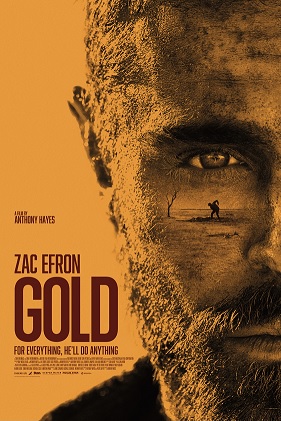
Film Review: Gold (dir by Anthony Hayes)


If you’ve ever wanted to see Zac Efron covered in flies, Gold is the film for you!

Actually, I’m being perhaps a bit more snarky than I should be.  Gold is actually a pretty good movie and Zac Efron deserves a lot of credit for trying something different.  That said, when all is said and done, I think the thing that most people will remember about this movie will be the flies.  Efron plays a character who spends several days stranded in the desert.  As we all know from watching any of the films that Clint Eastwood made with Sergio Leone, the desert is full of flies and there’s nothing they like more than to land on the blisters on someone’s sun-baked face.  So, it makes sense that Efron spends the majority of the film dealing with flies.  Of course, he also has to deal with feral desert dogs, a mysterious stranger who may or may not exist, and a freak dust storm.

Gold takes place in the near future.  Gold was filmed in Australia and, in many ways, it seems to take place in the same cinematic universe as the first Mad Max.  It’s the early days of a dystopia, when there’s still enough comforts around for people to pretend that things can still be normal.  People still watch television.  They still drive cars.  They still use telephones.  There’s still some sort of government that is supposedly in charge of things.  Society still exists but all around are clues that it is in the process of collapsing.  Things are on the verge of changing and they won’t be for the better.

Zac Efron plays Virgil, a man who wants to go to some place known as the Compound.  Keith (played by Anthony Hayes) has been hired to drive Virgil through the desert.  From the start, Keith and Virgil don’t get along.  Keith gets angry at Virgil for wasting water.  He gets even angrier when Virgil turns up the air conditioning in Keith’s truck and causes the motor to overheat.  However, when Keith and Virgil come across a giant gold nugget in the desert, they become reluctant partners.  When Keith heads to another town to get an excavator so they can dig up the gold, Virgil remains in the desert.  His job is to guard the gold, though one has to wonder who he thinks he’s guarding it from.  Virgil is literally in the middle of nowhere.

Keith leaves Virgil with a set of instructions of how to survive in the desert.  However, within hours of Keith leaving, Virgil starts to lose it.  He doesn’t have enough water.  He doesn’t have enough food.  Keith has taken the truck so it’s not like Virgil could go anywhere, even if he was willing to abandon the gold.  There are feral dogs all around.  There are flies on Virgil’s face.  And there are other scavengers in the desert as well….

There’s really not much of a story to Gold.  Virgil waits in the desert and loses his mind, all because he’s not willing to surrender that gold.  He’s a victim of his own greed, which admittedly is not the most original idea in the world.  (Consider the case of Fred C. Dobbs, for instance.)  That said, you do have to admire Efron’s willingness to allow himself to look absolutely terrible on screen.  From the flies to the dust storm to the scorching sun, the film goes out of its way to destroy Efron’s good looks but there’s a bigger meaning to it beyond Efron’s well-known desire to be taken seriously as an actor.  With each fly and speck of dust that lands on Efron’s face, Gold reminds the viewer that the desert will always win.  The desert and the animals that call it home don’t care about gold and they certainly don’t care about their prey.  In the desert, it’s all about survival.  Civilization may collapse but the desert will remain forever.

Visually, there’s a harsh beauty to Gold.  The desert is both frightening and fascinating at the same time and the scenes of Efron frame against the landscape really do drive home the film’s point.  One way or the other, the desert will always win.

What Could Have Been: George Hamilton as Travis Bickle?


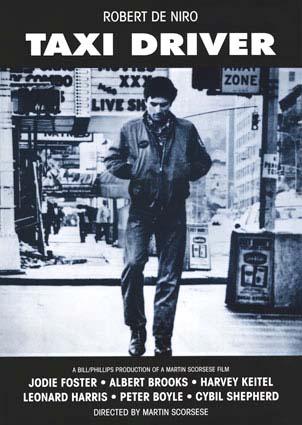
I was recently reading the IMDb trivia page for Martin Scorsese’s 1976 film, Taxi Driver. 

Taxi Driver is often held up as the being the ultimate New York horror story as well as being the quintessential Martin Scorsese/Robert De Niro collaboration.  In fact, the film is so identified with Scorsese, De Niro, and screenwriter Paul Schrader that it is easy to forget that it actually took a while for Scorsese and De Niro to become involved with the project.  Quite a few different directors showed interest in Schrader’s script before Scorsese signed on.  And, even though the role will always be associated with him, De Niro was not the only actor considered for the role of Travis Bickle.

That’s what brought me to the IMDb trivia page.  I wanted to see who else was considered for the role of Travis.  Here’s the list that I found: Jeff Bridges, Jack Nicholson, Dustin Hoffman, Warren Beatty, Burt Reynolds, Ryan O’Neal, Peter Fonda, Al Pacino, Jon Voight, Robert Blake, David Carradine, Richard Dreyfuss, Christopher Walken, Alain Delon, James Caan, Roy Scheider, Paul Newman, Marlon Brando, Martin Sheen, Elliott Gould, Alan Alda, and George Hamilton.  That’s quite a list!  And. for the most part, I don’t buy it for a second.

Don’t get me wrong.  It is known that Al Pacino was sent the script before Scorsese came on board.  And Scorsese himself has said that he offered the role to Dustin Hoffman.  (Hoffman says he turned down the role because Scorsese’s intensity freaked him out.)  Jeff Bridges was also a possibility and, if you read Schrader’s script and force yourself to forget about De Niro’s performance, you can actually imagine Bridges in the role.  I could also imagine a youngish Martin Sheen in the role.  He had just played Charlie Starkweather in Badlands so one can imagine him being considered for Travis.  Peter Fonda and Robert Blake seem possible as well.  Even David Carradine.

But some of the other names on that list …. Alain Delon?  Paul Newman?  Alan Alda?  GEORGE HAMILTON?

This George Hamilton?

Listen, I like George Hamilton.  He’s a good comedic actor.  And I know that there were a lot of directors who took a look at Paul Schrader’s script and I also know that some of Travis’s most iconic moments — like the whole “You talkin’ to me?” scene — were improvised by De Niro and were not in the original script.  Taxi Driver could have gone in a lot of different directions.  But I’m just going to say right now that there is no way that George Hamilton was ever considered for the role of Travis Bickle.  It’s totally possible that Hamilton was considered for another role in the film.  I could imagine him as the presidential candidate, Charles Palantine.  I could also imagine him in the role of Tom, Palantine’s campaign manager.  Perhaps he was offered one of those roles and someone, reading that George Hamilton had turned down Taxi Driver, got it into their head that he was considered for Travis.

Or maybe …. someone just made the whole thing up.  I enjoy the IMDb trivia pages but I’ve come across a lot of information that simply is not true.  Despite what the page for the original Halloween says, I refuse to believe that John Belushi was considered for the role of Dr. Loomis.  For that matter, I also refuse to believe that Bill Murray was a runner-up for the role of Han Solo in Star Wars.  Sorry, IMDb trivia people.  I just don’t buy it.
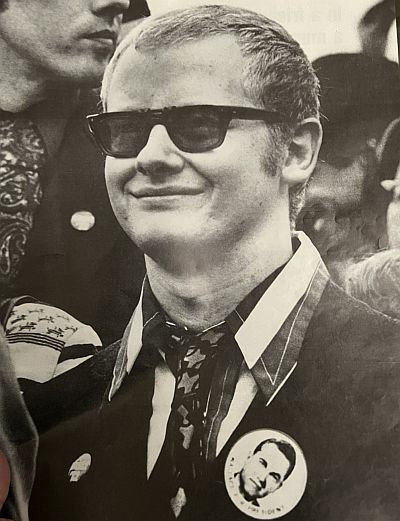
Arthur Bremer

Here’s what we do know.  Paul Schrader was originally inspired to create the character of Travis Bickle by Arthur Bremer, a non-descript 21 year-old Midwesterner who, in 1972, shot and nearly killed presidential candidate, George Wallace.  After the shooting, police turned up a diary in which Bremer wrote about his desire to be someone.  According to Bremer, he shot Wallace not as a political act but because he wanted to be famous.  Schrader later said that, while writing the script, the story became less about Bremer and more about Schrader’s own social isolation.

The script was optioned by the production team of Tony Bill and Julia and Michael Phillips.  They had just recently produced the Oscar-winning The Sting.  Originally, Tony Bill wanted to make his directorial debut with the film.  That was when the script was sent to Al Pacino.  Pacino turned down the role, reportedly because he didn’t want to work with a first-time director.  (Tony Bill, a former actor, later directed several films, most of which appeared to be taking place in a totally separate universe from Schrader’s vision of urban Hell.)

The script was eventually read by Brian De Palma, who voiced an interest in directing the film.  DePalma’s choice for the role of Travis Bickle?  Jeff Bridges.

Today, it might be hard to imagine the affable, laid-back Jeff Bridges as Travis Bickle but, if you read the script, it’s easy to see why De Palma considered him for the role.  Travis was written as being someone from the middle of the country, someone who was out-of-place in New York City.  Travis was meant to be lost in New York.  (Though Travis does say that he’s from the midwest in Scorsese’s film, Robert De Niro himself remains the prototypical New Yorker.)  At least initially, Bridges would have been a bit less obviously unstable than De Niro.  As good as Taxi Driver is, it always seems a bit strange that Betsy would agree to go out with De Niro’s Travis but it’s a bit easier to believe that she would take a chance on Jeff Bridges, with his charming smile and likable manner.  Bridges’s descent into madness would have been all the more devastating because he was such an outwardly affable presence.  I’m not saying it would have worked but I can still see what De Palma would have been going for in his version of Taxi Driver.

That said, De Palma did not make Taxi Driver.  He instead decided to do Carrie.  A young Steven Spielberg briefly showed interest in Taxi Driver (the mind boggles) before decided to do Jaws instead.  Eventually, after being introduced to Schrader by De Palma, Martin Scorsese agreed to direct the film.  After getting turned down by Dustin Hoffman, Scorsese offered the role to De Niro.
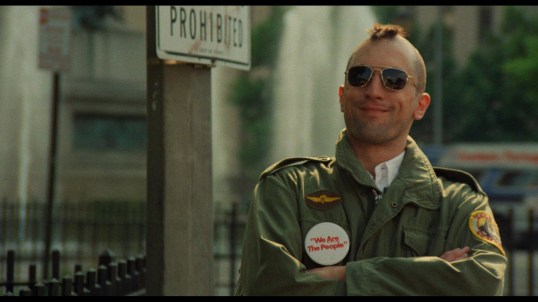
As for the rest of the cast, Rock Hudson would have been an interesting choice for the role of Sen. Palantine but he turned down the script because he was busy with a television show.  There was also some talk of casting former New York Mayor John Lindsay in the role but, in the end, the role was given to a writer named Leonard Harris.

The role of Tom was originally offered to Harvey Keitel.  Because Keitel wanted to play the pimp, Albert Brooks ended up as Tom.  Because there wasn’t much to Tom in the script, it was felt that, as a comedian, Brooks could bring some sort of life to the character.  Indeed, Brooks reportedly improvised the majority of his lines.

Despite the fact that producer Julia Phillips wanted to cast Farrah Fawcett in the role, Martin Scorsese selected Cybil Shepherd for the role of Betsy.  If you believe the IMDb, Meryl Streep was offered the role but turned it down.  (If I sound skeptical, it’s because Streep hadn’t even made her film debut at the time that Taxi Driver went into production.)  Glenn Close, Jane Seymour, and Susan Sarandon auditioned for the role.  Mia Farrow reportedly wanted the role but was turned down by Scorsese.

As everyone knows, Jodie Foster played the 13 year-old prostitute, Iris, in Taxi Driver.  A man named John Hinckley, Jr. was so obsessed with Foster’s performance that he went the same route as Travis Bickle and attempted to assassinate the president in an effort to impress her.  Foster, however, was only picked after Scorsese saw several up-and-coming actresses.  Reportedly, due to the success of The Exorcist, Linda Blair was seriously considered for the role.  Tatum O’Neal was also considered, after winning her Oscar for Paper Moon.  Scorsese came close to casting Melanie Griffith but then Tippi Hedren read the script and nixed the idea.  Among the others who supposedly read for Iris: Mariel Hemingway, Jennifer Jason Leigh, Heather Locklear, Kristy McNichol, Carrie Fisher, Ellen Barkin, Kim Basinger, Geena Davis, Michelle Pfeiffer, Brooke Shields, Debra Winger, Rosanna Arquette, Bo Derek, and Kim Cattrall.

Finally, actor George Memmoli was injured on the set of another film, which led to Scorsese playing the passenger who talks to Travis about murdering his wife.
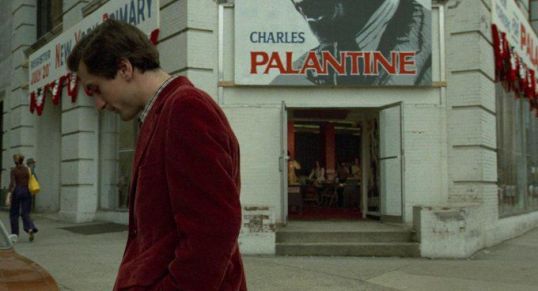
In the end, the right director and the right cast were selected and Taxi Driver became a classic of urban paranoia.  Still, it’s always fun to play What If.  On Earth-2, someone is watching Jeff Bridges, Rock Hudson, Jane Seymour, and Melanie Griffith in Brian De Palma’s Taxi Driver.  And, on Earth-3, George Hamilton is polishing his Oscars and thinking about how playing Travis Bickle changed his life.