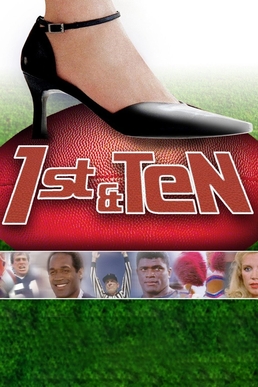
Welcome to Late Night Retro Television Reviews, a feature where we review some of our favorite and least favorite shows of the past! On Wednesdays, I will be reviewing 1st and Ten, which aired in syndication from 1984 to 1991. The entire series is streaming on Tubi.
This week, the football season begins!
Episode 1.2 “The Opener”
(Dir by Bruce Seth Green, originally aired on December 2nd, 1984)
The opening game of the season is approaching. The Bulls have trader their former quarterback (who was played, briefly, by Robert Logan in the pilot) for a new quarterback, Bob D0rsey (Geoffrey Scott). Bob Dorsey is a notorious womanizer and a veteran player with a strong arm and a bad knee. So, basically, he’s just like their former quarterback except he’s played by Geoffrey Scott instead of Robert Logan.
Dana has decided that Bob will start on opening day, instead of the quarterback that they drafted out of BYU, the ultra-religious Bryce Smith (Jeff East). (Opening Day, quarterback, drafted — look at me using all the football terminology!) Bryce is fine with not starting because he feels that it is God’s will for Bob to start.
However, the Mafia (represented by Michael V. Gazzo and Robert Miranda) is not happy! It turns out that general manager Roger Barrow has been doing business with the Arcola Brothers. He’s been giving them tickets and allowing the Arcolas to scalp them in return for a 20% commission. Dana puts an end to that, saying that all the tickets will now be sold through the box office as opposed to being held for VIPs. The Mafia wants Roger to make sure that Bob does not start. Roger convinces one of the other players to injure Bob during practice so that Bryce will be the starter.
Uh-oh! Bob injures his knee. Bryce is going to have to play …. except, right before the team hits the field, the team doctor suddenly says that Bob’s knee is at 80% and he can play if he wants to. Of course, Bob wants to! Bob takes the field and, after several minutes of stock footage, we’re told that the Bulls have won the game.
This show feels so strange. On the one hand, I get the feeling that this episode probably was realistic about the physical toll that playing football takes on a player. Bob is 35 and can barely walk. I imagine that the episode’s portrayal of the locker room being a mx of stupidity and testosterone was probably accurate as well. I’ll even give the episode credit for showing that all of the players resent the team’s owner and that Coach Denardo uses that to his advantage when it comes to motivating them. Everyone — well, almost everyone — resents their boss. (Not me! I love everyone I’ve ever worked with!)
On the other hand, the first two episodes have been so low-budget that it appears there’s only five or six players on the team and the mix of comedy and drama feels rather awkward. Dana’s friend Mona (Ruta Lee) starts drinking in the morning and tossing out pithy one liners. Meanwhile, the Mafia is threatening to kill Roger. It really doesn’t fit together. The whole thing just looks and feels cheap.
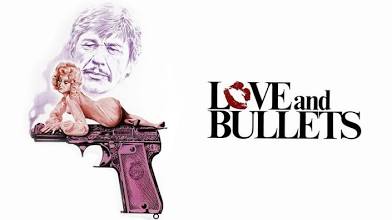
Charles Bronson is an Arizona cop who goes to Switzerland to bring back a gangster’s girlfriend (Jill Ireland). The gangster (Rod Steiger) sends a hitman (Henry Silva) to kill her so she can’t tell his crime secrets to the authorities.
This isn’t one of Bronson’s best films, but it’s still a fun movie to watch on a chilly, rainy day. There are some good action scenes set in various cold & snowy European locations. This is Bronson in “Bond” mode which is kind of fun and different. And what can you say about a stuttering Rod Steiger screaming at his advisors about the meaning of “love.” It’s fun stuff when you like Steiger as much as I do. I do deduct half a star because Steiger gets so mad at one point that he turns over a table with some of the biggest, most scrumptious looking shrimp I’ve ever seen. That was completely uncalled for and wasteful, but not quite as wasteful as Bronson and Henry Silva in the same movie without an epic battle of some sort. The fact that they didn’t fight it out on the Matterhorn itself can only be described as a missed opportunity.
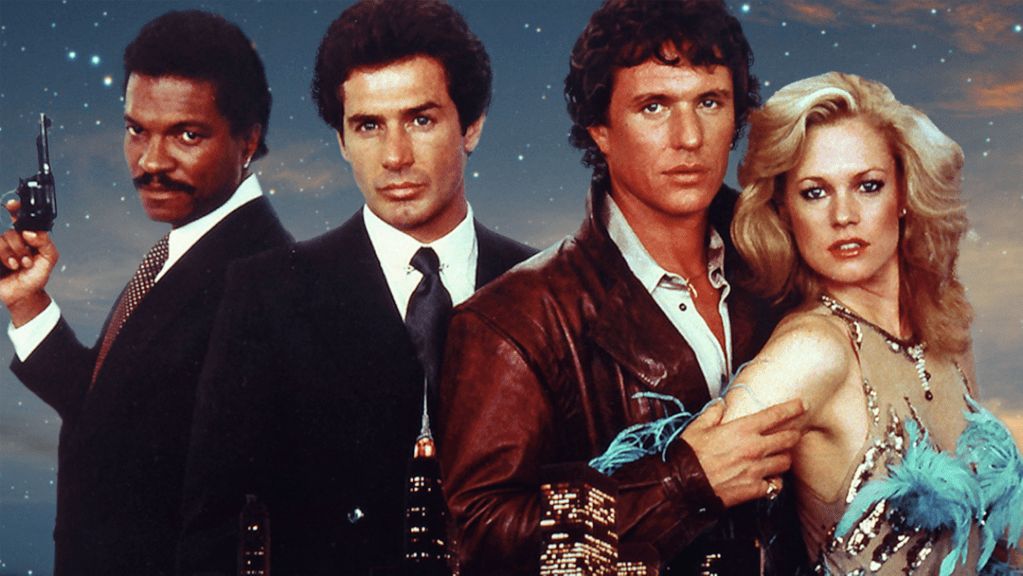
Every Monday night at 9:00 Central Time, my wife Sierra and I host a “Live Movie Tweet” event on X using the hashtag #MondayMuggers. We rotate movie picks each week, and our tastes are quite different. Tonight, Monday January 27th, we’re watching FEAR CITY starring Tom Berenger, Billy Dee Williams, Jack Scalia and Melanie Griffith.
So why did I pick FEAR CITY, you might ask?
I’m a huge fan of Tom Berenger. SOMEONE TO WATCH OVER ME (1987 with Mimi Rogers), SHOOT TO KILL (1988 with Sidney Poitier), MAJOR LEAGUE (1989 with Charlie Sheen), and LAST OF THE DOGMEN (1995 with Barbara Hershey) are some of my very favorite films. He’s an outstanding actor and screen presence. Tom Berenger is one of those actors who I always enjoy seeing on screen.
FEAR CITY is directed by Abel Ferrara. Abel Ferrara is one of those directors who makes movies about the very worst in society. His films MS. 45 (1981), KING OF NEW YORK (1990), and BAD LIEUTENANT (1992) are all movies that intrigued me greatly as I was trying to discover who I was growing up in the 80’s and early 90’s.
The sleaze is off the charts in FEAR CITY, with so many big-time stars, and set in New York City of the 1980’s. From everything I’ve read, this a time capsule of a place that no longer exists. If I ever make it to New York City, I’ll be greeted with a place that’s designed more like Disney World. I think it’s interesting to see the city as presented here!
I also think it will be interesting to see what it’s like to experience a movie like FEAR CITY as part of a group. I discovered this film as a teenager in the 80’s. I remember being a little embarrassed as I watched the film, especially with its large serving of nudity (from big stars) and graphic violence. I’ve watched films in groups with the most extreme graphic violence imaginable and no one batted an eye. I’m looking forward to seeing how this plays out.
So join us tonight to for #MondayMuggers and watch FEAR CITY! It’s on Amazon Prime.
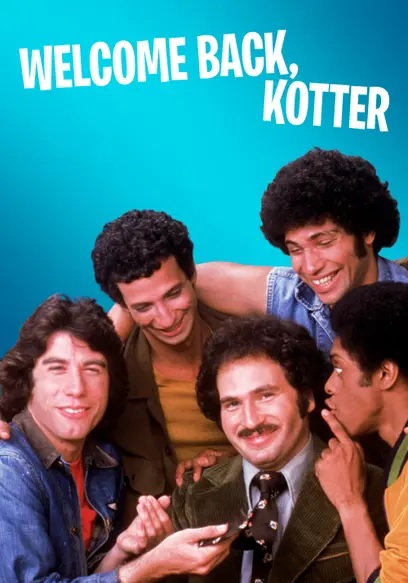
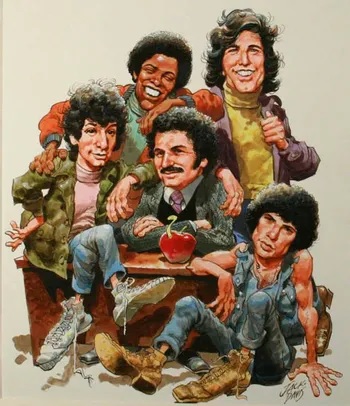
Welcome to Retro Television Reviews, a feature where we review some of our favorite and least favorite shows of the past! On Saturdays, I will be reviewing Welcome Back Kotter, which ran on ABC from 1975 to 1979. The entire show is currently streaming on Tubi!
This week, Epstein smokes and the Sweathogs learn the true meaning of Christmas!
Episode 2.11 “Sweathog Clinic for the Cure of Smoking”
(Dir by Bob LaHendro, originally aired on December 16th, 1976)
Gabe tells Julie a joke about his uncle, a doctor who used to trick his patients into sticking their tongue out and staring out his office window as a way to anger the people on the other side of the street.
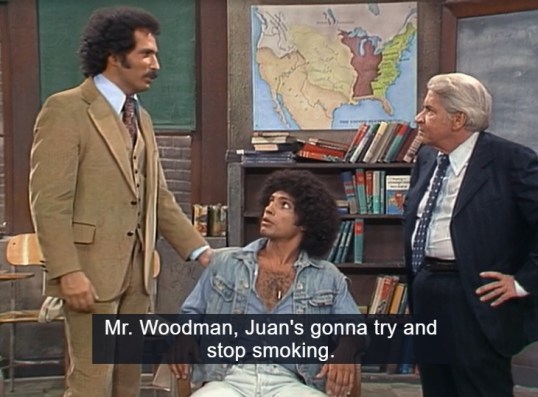
At school, Horshack is stunned to see Epstein lighting up a cigarette in the boys room. (Epstein hides his cigarettes in the paper towel dispenser.) Horshack says that he is shocked and he points out that smoking is against the school rules. (Since when do Sweathogs care about the school rules?) Epstein responds by blowing smoke in Horshack’s face. Then, Gabe and Woodman step into the restroom and Epstein desperately flushes his cigarette but not before everyone sees him exhaling a cloud of smoke.
Woodman takes Epstein to the office of the perpetually unseen Principal Lazarus. Woodman tells Gabe that he can’t wait to see how Epstein gets punished but it turns out that Epstein is the only person at the school who Lazarus likes. Disillusioned at the lack of punishment for Epstein, Woodman announces that he’s moving to Scarsdale and goes into his office. Epstein, meanwhile, promises both Gabe and Barbarino (who just happens to be in the front office for some reason) that he’ll quit smoking.
However, the next day, Gabe again catches Epstein in the boys room, smoking. Epstein confesses that he can’t quit smoking. Gabe tells a story about how, when he was 12, he was addicted to potato knishes. Gabe explains that his knish habit led him to moving onto harder junk food, like Twinkies. In order to break his habit, Gabe says he went cold turkey.
“Cold turkey!?” Epstein says.
“That’s right. For five days, I ate nothing but cold turkey!”
Gabe says that he and the Sweathogs will help Epstein break his smoking habit through aversion therapy.
“Oh yeah,” Barbarino nods, “Perversion therapy. We’ll torture Juan until he quits smoking.”
The next day, Gabe, Epstein, Woodman, and the Sweathogs gather in Gabe’s classroom to make Epstein “unlearn” smoking. After talking about his own struggle to quit smoking, Woodman leaves the classroom. It’s probably for the best because one can imagine how Woodman would have reacted to Juan smoking a cigarette while Barbarino and Freddie walked in place on a red carpet in an attempt to generate enough static electricity to shock Epstein every time that he took a puff.
When shock therapy proves ineffective (for some reason, Gabe is the one who keeps getting shocked), Horshack comes into the classroom, dressed like a doctor. While twirling his stethoscope, Horshack asks Epstein about his sex life because “I thought it would be fun to hear about.” Gabe suggests that Horshack not ask anyone about their sex life until “you get one yourself.” Freddie then says, “Hi, there,” and pretends to be someone who has been smoking for four years and can now only say a few words without coughing. Gabe then forces Epstein to smell a cup full of soggy cigarettes. They then force Epstein to smoke three cigarettes at once.
“Doesn’t taste so good, does it, Mr. Puff!?” Gabe shouts.
Epstein gives up cigarettes but, seven days later, he shows up at school with a pipe. Gabe says that he’s disappointed in Epstein but then Epstein points out that Gabe is eating a knish. Gabe agrees to give up knishes if Epstein gives up smoking. Epstein agrees and he and Gabe dramatically toss all of the tobacco and knishes into the trash. It turns out that Gabe had a knish hidden in every corner of the classroom.
Back at the apartment, a knish-free Gabe tells Julie about his uncle, who was a famous frontiersman.
This episode worked because it centered not on a guest star or a gimmick but instead on the Sweathogs acting like their usual goofy selves. The second season has, so far, been a bit more uneven than the first but the chemistry between Robert Hegyes, Lawrence Hilton-Jacobs, Ron Pallilo, and John Travolta continues to be, along with John Sylvester White’s delightfully unhinged turn as Woodman, the show’s greatest strength.
Episode 2.12 “Hark, The Sweatking”
(Dir by Bob LaHendro, originally aired on December 23rd, 1976)
Gabe tells Julie about his uncle, who got drunk at the zoo. “They don’t sell liquor at the zoo,” Julie replies.
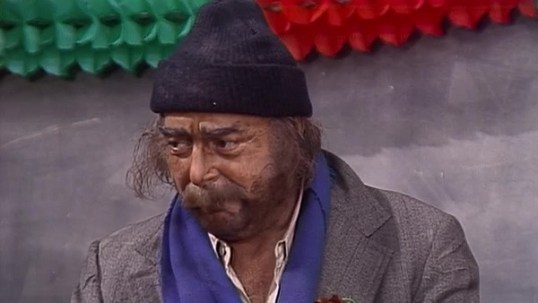
It’s Christmas in Brooklyn! Horshack is hoping that he’ll finally get a Marie Osmond doll from Santa. The other Sweathogs are more interested in Angie (Michael V. Gazzo, who played Frankie Pentangelli in The Godfather Part II), the homeless man who is hanging out in the school’s courtyard and who claims that he was once a corporate executive. Gabe reveals that Angie has been coming by the school ever since Gabe was a student at Buchanan himself. After Gabe hears the Sweathogs making fun of Angie, he decides to invite Angie to come speak to the class.
“What’s he going to teach us?” Epstein asks, “Advanced vagrancy?”
Before Angie can start his speech, Woodman steps in the room and refers to Angie as being “our Christmas hobo.” Gabe says that Woodman probably goes around from house-to-house on Christmas Eve and tells all the kids that there’s no Santa Claus.
“Someone has to do it,” Woodman says and, as always, John Sylvester White totally nails the line. One of the underrated joys of this show is watching Woodman go progressively more and more insane.
Angie finally tells his story, explaining that he was a butcher with a wife and a family but he gambled away all of his money. One night, coming home broke, Angie discovered that his wife and his kids had left. Wiping away the tears, Angie leaves the classroom.
Feeling guilty, the Sweathogs want to do something for Angie. Freddie suggests putting Angie on their “shop-lifting lists.” Horshack makes a slightly more legal suggestion, saying that they should pool the money that they were going to use to buy each other gifts and instead, do something for Angie.
What do they do for Angie? Barbarino gets him some fresh clothes. Freddie gives him a haircut while Epstein shaves his beard and mustache. And Gabe invites Angie to come to the Christmas party that Julie and he are throwing at the apartment.
The action cuts to the apartment, where Julie is complaining about having to spend Christmas Eve with Gabe’s students. Julie then gives Gabe the Hanukkah bush that she bought for the holidays while Gabe explains that he has nothing for Julie because he spent all of his money on Angie. Epstein, Freddie, Horshack, and Barbarino show up, complaining that they haven’t seen Angie since helping him out. On cue, Angie shows up at the apartment, once again dressed like he was when the Sweathogs first saw him in the courtyard. Angie thanks the Sweathogs for everything but says that, for now, he’s comfortable living on the streets. Angie leaves and the Sweathogs are angry that they spent all of their money on someone who doesn’t appreciate it. Gabe tells them that the important thing is that they tried to help another human being. And then he reveals that he has presents for all of the Sweathogs. Yay! Merry Christmas!
After everyone leaves and Julie has fallen asleep on the couch, Gabe spots Santa Claus sitting in the kitchen and tells him about his cousin Eileen, who was so skinny that she had to wear snow shoes in the shower.
“Ho ho ho!” Santa replies.
This was a sweet episode, featuring good performances from not just the regulars but also from Michael V. Gazzo. Gabe telling a joke to Santa was adorable and the perfect way to end the episode. I love Christmas shows!
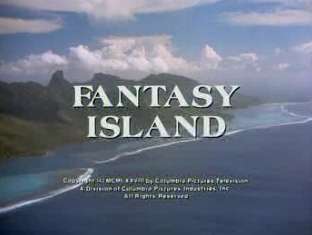
Welcome to Retro Television Reviews, a feature where we review some of our favorite and least favorite shows of the past! On Tuesdays, I will be reviewing the original Fantasy Island, which ran on ABC from 1977 to 1986. Almost entire show is currently streaming is on Youtube!
This week, Tattoo goes rogue!
Episode 3.14 “Lookalikes/The Winemaker”
(Dir by Lawrence Dobkin, originally aired on December 22nd, 1979)
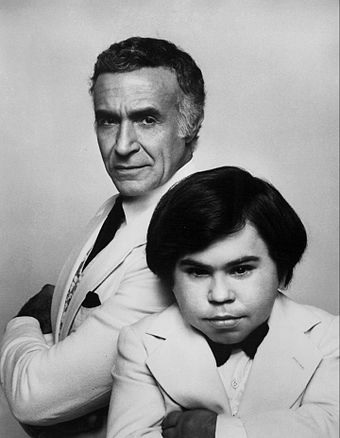
“Ah. So you thought you would handle her teeny, weeny fantasy your teeny weeny yourself,” Roarke says to Tattoo as they watch a nun depart from the plane and step onto Fantasy Island.
On the one hand, after the past few episodes, I guess we should be glad that Roarke is actually talking to Tattoo again. But, as the comment shows, it’s pretty obvious that Roarke still despises his assistant and Tattoo doesn’t have much respect for Roarke’s authority.
As for the fantasy, it involves Sister Veronica (Celeste Holm), a wine-making nun who wants to enter her wine in the Fantasy Island Wine Tasting Contest and hopefully win enough money to save her orphanage. At first, Roarke is a bit annoyed that Tattoo promised Sister Veronica a fantasy that Roarke is not sure that he can make come true. (Of course, after three seasons, we know that Roarke can do just about anything so, to be honest, Roarke’s objection mostly seems to be about having to do anything to help out Tattoo.) When Roarke tastes Veronica’s wine, he is pleasantly surprised. It’s quite good, he says. However, when he and Tattoo taste the wine a second time, they discover that it’s actually quite bad!
At first, Tattoo tries to substitute a different wine for Sister Veronica’s but Roarke catches him and tells him that the integrity of Fantasy Island cannot be compromised. However, greedy winemaker Armand Fernandel (Ross Martin) decides do to the same thing, switching the label of a bottle of his wine with the label of a bottle of Sister Veronica’s. As a result, Veronica wins the competition but has the win taken away when the judge (Jonathan Harris) discovers that the labels were switched. (Armand doesn’t get the win either, having been disqualifies for cheating.) So, it looks like Veronica’s fantasy is a bust….
….except, amazingly, oil has been discovered on the grounds of the orphanage. Yay! Everything works out and Tattoo is able to keep his promise to Sister Veronica.
As for the other fantasy, it features Ken Berry as Harry Simpson, an Idaho salesman who is convinced he has an exact double and who wants to live the double’s life for a weekend. It’s an oddly specific fantasy but somehow, Roarke pulls it off. (But if Roarke could find Harry’s double and allow Harry to live the double’s life, why couldn’t he fix a wine tasting competition?) It turns out that Harry’s double is a high-living gambler. Harry is excited to live his life until he discovers that his double is in trouble with a gangster (Michael V. Gazzo) and that he owes all of his gambling success to a 12 year-old card reader named Jimmy (Johnny Timko). In order to adopt Jimmy and give him a normal childhood, Harry has to win a game of blackjack on his own. Once again, it’s time to head down to the Fantasy Island casino! Mr. Roarke, of course, will not allow Jimmy to help Harry because the casino has a strict 18 and over age requirement. It’s strange how sometimes, Mr. Roarke is in charge of the casino and how other times, Roarke claims to have absolutely no power over the casino. Personally, I suspect the casino is a money laundering scheme.
This was an enjoyably silly episode, featuring guest stars who appeared to be having a good time. Celeste Holm is convincingly saintly as Sister Veronica while Ross Martin is enjoyably cartoonish as the greedy Armand. Ken Berry is so totally cast against type as a gambler that it actually kind of works. This episode managed to strike a balance between over-the-top silliness and melodrama and, as such, it was an entertaining weekend on the Island.
Years ago, I wrote a post called What Could Have Been: The Godfather, in which I discussed all of the actors and the directors who were considered for The Godfather.
It remains one of the most widely viewed posts that we’ve ever had on this site. I guess that shouldn’t be a surprise. People love The Godfather and they love playing What If? Would The Godfather still have been a classic if it had been directed by Otto Preminger with George C. Scott, Michael Parks, Burt Reynolds, and Robert Vaughn in the lead roles? Hmmm …. probably not. But, in theory, it could have happened. All of them were considered at one point or another.
However, in the end, it was Francis Ford Coppola who directed The Godfather and it was Marlon Brando, Al Pacino, James Cann, and Robert Duvall who brought the Corleone family to life. The Godfather, as everyone knows, was a huge hit and it went on to win the Oscar for Best Picture of the year. As the film ended with the future of the Corleone family still up in the air, there was obviously room for a sequel.
When Paramount Pictures first approached Coppola about writing and directing a sequel, he turned them down. He said he was done with The Godfather and didn’t see any way that he could improve on the story. It’s debatable whether or not Coppola truly felt like this or if he was just holding out for more money. It is known that Coppola did suggest to Paramount a possible director for Part II and that director’s name was Martin Scorsese.
What would Martin Scorsese’s The Godfather Part II have looked like? It’s an intriguing thought. At the time, Scorsese was best-known for Mean Streets and it’s probable that Scorsese’s film would have been a bit messier and grittier than Coppola’s version. If Coppola made films about the upper echelons of the Mafia, Scorsese’s interest would probably have been with the soldiers carrying out Michael’s orders. While Scorsese has certainly proven that he can handle a huge productions today, he was considerably younger and much more inexperienced in the early 70s. To be honest, it’s easy to imagine Scorsese’s Godfather Part II being critically and commercially rejected because it would have been so different from Coppola’s. A failure of that magnitude would have set back Scorsese’s career and perhaps even led to him returning to Roger Corman’s production company. As such, it’s for probably for the best that Coppola did eventually agree to shoot the sequel, on the condition that Coppola be given creative control and Paramount exec Robert Evans not be allowed on the set. While Coppola was busy with Godfather Part II, Scorsese was proving his versatility with Alice Doesn’t Live Her Anymore.
After Coppola was signed to direct, the next best question was whether or not Marlon Brando would return to play the role of Vito Corleone. The film’s flashback structure would ensure that Vito would remain an important character, despite his death in the first film. Coppola reportedly considered offering Brando the chance to play the younger version of Vito but he changed his mind after he saw Robert De Niro in Scorsese’s Mean Streets. Still, it was felt that Brando might be willing to show up in a cameo during the film’s final flashback, in which Michael tells his family that he’s enlisted in the army. Frustrated by Brando’s refusal to commit to doing the cameo, Coppola told him to show up on the day of shooting if he wanted to do the film. When Brando didn’t show, the Don’s lines were instead rewritten and given to Tom Hagen. It’s hard not to feel that this worked to the film’s advantage. A last-minute appearance by Brando would have thrown off the film’s delicate balance and probably would have devalued De Niro’s own performance as the younger version of the character.
Brando wasn’t the only member of the original cast who was hesitant about returning. Al Pacino held out for more money, which makes sense since he was literally the only cast member who could not, in some way, be replaced. Richard Castellano, who played Clemenza in the first film, however learned that he that hard way that he was not quite as indispensable as Al Pacino. In Part II, Clemenza was originally meant to have a large role in both the flashbacks and the present-day scenes. However, when Castellano demanded more money and the right to rewrite his own lines, the older Clemenza was written out the film and replaced by the character of Frankie Petangeli (played by Michael V. Gazzo).
It’s impossible to find fault with Gazzo’s performance but it’s still hard not to regret that Castellano didn’t return. Imagine how even more poignant the film’s final moments would have been if it had been the previously loyal Clemenza who nearly betrayed Michael as opposed to Frankie? Indeed, even after the part was rewritten, many of Frankie’s lines deliberately harken back to things that Clemenza said and did during the first film. Because Clemenza is a very prominent character during the film’s flashbacks, his absence in the “modern” scenes is all the more obvious.
When the role of Young Clemenza was cast, it was still believed that Richard Castellano would be appearing in that film. One of the main reasons that Bruno Kirby was selected for the role of Young Clemenza was because Kirby had previously played Castellano’s son in a television show. Also considered for the role was Joe Pesci, who was working as a singer and a comedian at the time. (His partner in his comedy act was Frank Vincnet.) If Pesci had been cast, he would not only have made his film debut in The Godfather Part II but the film also would have been his first pairing with Robert De Niro. (Interestingly enough, Frank Sivero — who played Pesci and De Niro’s henchman, Frankie Carbone, in Goodfellas, also had a small role in Godfather Part II, playing Vito’s friend, Genco.)
As for the film’s other new major character, there were several interesting names mentioned for the role of gangster Hyman Roth. Director Sam Fuller read for the role and Coppola also considered Elia Kazan. Perhaps the most intriguing name mentioned as a possible Roth was that of James Cagney. (Cagney, however, made it clear that he was content to remain retired.) In the end, the role was offered to Al Pacino’s former acting teacher, Lee Strasberg. Like Gazzo, Strasberg made his film debut in The Godfather Part II and, like Gazzo, he received his only Oscar nomination as a result.
The legendary character actor Timothy Carey (who was courted to play Luca Brasi in the first film) met with Coppola to discuss playing Don Fanucci, the gangster who is assassinated by Vito. A favorite of Stanley Kubrick’s, Carey reportedly lost the role when he pulled out a gun in the middle of the meeting.
Originally, the film was supposed to end in the mid-60s, with a now teenage Anthony Corleone telling Michael that he wanted nothing to do with him because he knew that Michael had Fredo murdered. (That famous scene of Michael bowing his head was originally supposed to be in response to Anthony walking out on him as opposed to the sound of Fredo being shot.) Cast in the role of teenage Anthony was actor Robby Benson so perhaps it’s for the best that the scene was ultimately not included in the film.
Some of the smaller roles in Part II were played by actors who were considered for larger roles in the first film. The young Tessio was played by John Aprea, who was also considered for the role of Michael. Peter Donat, who played the lead Senate counsel in Part II, was considered for the role of Tom Hagen. The rather tall Carmine Caridi, who played Camine Rosato in Part II, was originally cast as Sonny until it was discovered that he towered over everyone else in the cast. And, of course, Robert De Niro famously read for the role of Sonny and was cast in the small role of Paule Gatto before he left The Godfather to replace Al Pacino in The Gang Who Couldn’t Shoot Straight. (Of course, the whole reason that Pacino left The Gang Who Couldn’t Shoot Straight was so he could play the role of Michael in The Godfather. In the end, it all worked out for the best.)
Finally, former teen idol Troy Donahue played Connie Corleone’s second husband, Merle Johnson. Merle Johnson was Troy Donahue’s real name.
Personally, I think The Godfather Part II is one of the few films that can be described as perfect. Still, it’s always fun to play what if.
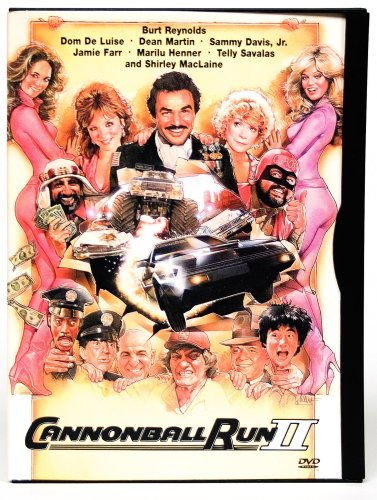
In 1981, director Hal Needham and star Burt Reynolds had a surprise hit with The Cannonball Run. Critics hated the film about a race from one end of America to the other but audiences flocked to watch Burt and a group of familiar faces ham it up while cars crashed all around them. The original Cannonball Run is a goofy and gloriously stupid movie and it can still be fun to watch. The sequel, on the other hand…
When the sequel begins, the Cannonball Run has been discontinued. The film never explains why the race is no longer being run but then again, there’s a lot that the sequel doesn’t explain. King Abdul ben Falafel (Ricardo Montalban, following up The Wrath of Khan with this) wants his son, The Sheik (Jamie Farr, returning from the first film) to win the Cannonball so he puts up a million dollars and announces that the race is back on. Problem solved.
With the notable exceptions of Farrah Fawcett, Roger Moore, and Adrienne Barbeau, almost everyone from the first film returns to take another shot at the race. Burt Reynolds and Dom DeLuise are back. Jack Elam returns as the crazy doctor, though he’s riding with the Sheik this time. Jackie Chan returns, riding with Richard “Jaws” Kiel. Dean Martin and Sammy Davis, Jr. return, playing barely disguised versions of themselves. They’re joined by the surviving members of the Rat Pack. Yes, Frank Sinatra is in this thing. He plays himself and, from the way his scenes are shot, it’s obvious they were all filmed in a day and all the shots of people reacting to his presence were shot on another day. Shirley MacClaine also shows up, fresh from having won an Oscar. She plays a fake nun who rides with Burt and Dom. Burt, of course, had a previous chance to co-star with Shirley but he turned down Terms of Endearment so he could star in Stroker Ace. Cannonball Run II finally gave the two a chance to act opposite each other, though no one would be winning any Oscars for appearing in this film.
Say what you will about Hal Needham as a director, he was obviously someone who cultivated a lot of friendships in Hollywood because this film is jam-packed with people who I guess didn’t have anything better to do that weekend. Telly Savalas, Michael V. Gazzo, Henry Silva, Abe Vigoda, and Henry Silva all play gangsters. Jim Nabors plays Homer Lyle, a country-fried soldier who is still only a private despite being in his 50s. Catherine Bach and Susan Anton replace Adrienne Barbeau and Tara Buckman as the two racers who break traffic laws and hearts with impunity. Tim Conway, Don Knotts, Foster Brooks, Sid Caesar, Arte Johnson, Mel Tillis, Doug McClure, George “Goober” Lindsey, and more; Needham found room for all of them in this movie. He even found roles for Tony Danza and an orangutan. (Marilu Henner is also in the movie so I guess Needham was watching both Taxi and Every Which Way But Loose while casting the film.) Needham also came up with a role for Charles Nelson Reilly, who is cast as a mafia don in Cannonball Run II. His name is also Don so everyone refers to him as being “Don Don.” That’s just a typical example of the humor that runs throughout Cannonball Run II. If you thought the humor of It’s A Mad, Mad, Mad, Mad World was too subtle and cerebral, Cannonball Run II might be right up your alley.
The main problem with Cannonball Run II is that there’s not much time spent on the race, which is strange because that’s the main reason why anyone would want to watch this movie. The race itself doesn’t start until 45 minutes into this 108 minute film and all the racers are quickly distracted by a subplot about the Mafia trying to kidnap the Sheik. Everyone stops racing so that Dean Martin and Sammy Davis, Jr. can disguise themselves as belly dancers to help rescue the Sheik. By the time that’s all been taken care of, there’s only 10 minutes left for everyone to race across the country. After a montage of driving scenes and a cartoon of an arrow stretching across the nation (the cartoon was animated by Ralph Bakshi!), we discover who won the Cannonball and then it’s time for a montage of Burt and Dom blowing their lines and giggling. Needham always ended his films with a montage of everyone screwing up a take and it’s probably one of his most lasting cinematic contributions. Every blooper reel that’s ever been included as a DVD or Blu-ray extra owes a debt of gratitude to Hal Needham. Watching people blow their lines can be fun if you’ve just watched a fun movie but watching Burt and Dom amuse themselves after sitting through Cannonball Run II is just adding insult to injury. It feels less like they’re laughing at themselves and more like they’re laughing at you for being stupid enough to sit through a movie featuring Tony Danza and an orangutan.
The dumb charm of the first Cannonball Run is nowhere to be found in this sequel and, though the film made a profit, the box office numbers were still considered to be a disappointment when compared to the other films that Reynolds and Needham collaborated on. Along with Stroker Ace, this is considered to be one of the films that ended Reynolds’s reign as a top box office attraction. Cannonball Run II was also the final feature film to feature Dean Martin and Frank Sinatra. This could be considered the final Rat Pack film, though I wouldn’t say that too loudly.
Cannonball Run II is a disappointment on so many levels. It’s hard to believe that the same director who did Smokey and the Bandit andHooper could be responsible for the anemic stunts and chases found in this movie. The cast may have had a good time but the audience is left bored. Stick with the first Cannonball Run.
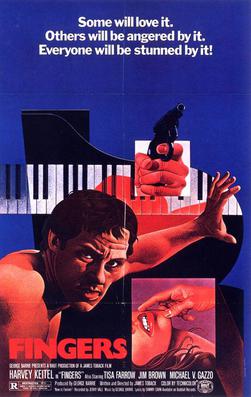
The 1978 film, Fingers, tell the story of Jimmy “Fingers” Angelilli (Harvey Keitel). Jimmy is a creep who works as a debt collector for his father, a small-time loan shark named Ben (Michael V. Gazzo). Jimmy is violent and brutal and often wanders around with a disturbingly blank-look on his face but we’re supposed to like him because he’s a talented pianist and he’s got a recital interview coming up at Carnegie Hall. Jimmy carries a radio with him wherever he goes and he’s obsessed with the song Summertime. He’s the type who will sit in a crowded restaurant and play the song and then get upset when someone tells him to turn off his radio. By the end of the movie, I was really hoping that someone would take Jimmy’s radio and smash into a hundred pieces.
Jimmy is in love with Carol (Tisa Farrow, who was a far better actress than her sister Mia and who would later appear in Lucio Fulci’s classic, Zombi 2), who doesn’t really seem to all that into him. Despite being in love with Carol, Jimmy still hits on every woman that he meets and, because this is a 70s films, he’s constantly getting laid despite being kind of a charmless putz.
Jimmy meets a former boxer named Dreems (Jim Brown). Carol is apparently one of Dreems’s mistresses. Jimmy silently watched while Dreems knocks two women’s heads together. Jimmy stands there with his little radio and a blank expression on his face. Is anything going on inside of Jimmy’s head? It’s hard to say.
Eventually, Jimmy finds out that a gangster (Tony Sirico) owes his father money but is refusing to pay. It all leads to violence.
As a film, Fingers is pretty much full of shit but that shouldn’t come as a surprise because it was the directorial debut of James Toback and there’s no American filmmaker who has been as consistently full of shit as James Toback. Fingers has all of Toback’s trademarks — gambling, crime, guilt, classical music, and a juvenile view of sexuality that suggests that James Toback’s personal development came to a halt when he was 16 years old. It’s a pretentious film that really doesn’t add up too much. Again, you know what you’re getting into when James Toback directs a film. Don’t forget, this is the same director who made a documentary where he was apparently shocked to discover that no one wanted to finance a politically-charged remake of Last Tango in Paris starring Alec Baldwin and Neve Campbell.
Fingers is a bit of an annoying film and yet it’s not a total loss. For one thing, if you’re a history nerd like I am, there’s no way that you can’t appreciate the fact that the film was shot on location in some of New York’s grimiest neighborhoods in the 70s. While I imagine it was more of a happy accident than anything intentional on Toback’s part (because, trust me, I’ve seen Harvard Man), Fingers does do a good job of creating an off-center, dream-like atmosphere where the world constantly seems to be closing in on its lead character. Jimmy is trying to balance his life as violent mobster with being a sensitive artist and the world around him is saying, “No, don’t count on it, you schmuck.”
As well, Harvey Keitel gives a …. well, I don’t know if I would necessarily say that it’s a good performance. In fact, it’s a fairly annoying performance and that’s a problem when a film is trying to make you feel sympathy for a character who is pretty unsympathetic. That said, there’s never a moment in the film where Keitel is boring. In Fingers, Keitel takes the method to its logical end point and, as a result, you actually get anxious just watching him simply look out of a window or sit in a corner. Even though Jimmy eyes rarely shows a hint of emotion, his fingers are always moving and, just watching the way that he’s constantly twitching and fidgeting, you get the feeling that Jimmy’s always on the verge of giving out a howl of pain and fury. It doesn’t really make Jimmy someone who you would want to hang out with. In fact, I spent the entire movie hoping someone would just totally kick his ass and put him in the hospital for a few weeks. But it’s still a performance that you simply cannot look away from. Watching Keitel’s performance, you come to realize that Fingers is essentially a personal invitation to visit a Hell that is exclusively populated by method actors who have gone too far.
Anyway, my feelings about Fingers were mixed. Can you tell? It’s an interesting movie. I’ll probably never watch it again.
When his little sister falls ill with sickle-cell anemia, Leon Johnson (Leon Isaac Kennedy) has to make a decision. He can either finish his education, graduate from medical school, and treat her as a doctor or he can drop out of school, reinvent himself as “Leon the Lover,” and make a fortune as a professional boxer! At first, Leon’s career goes perfectly. He is winning fights. He is making money. He has a foxy new girlfriend (played Leon Isaac Kennedy’s then-wife, Jayne Kennedy.) But then the fame starts to go to Leon’s head. He forgets where he came from. He’s no longer fighting just to help his sister. Now, he’s fighting for his own personal glory. When Leon finally gets a title shot, a crooked boxing promoter known as Big Man (former JFK in-law Peter Lawford, looking coked up) orders Leon to take a dive. Will Leon intentionally lose the biggest fight of his life or will he stay in the ring and battle Ricardo (Al Denava), a boxer so evil that he literally throws children to the ground? More importantly, will he make his trainer (Muhammad Ali, playing himself!) proud?
Leon Isaac Kennedy, Muhammad Ali, and Peter Lawford all in the same movie!? No surprise here, it’s a Cannon film. Leon Isaac Kennedy was best known for playing a jailhouse boxer in the Penitentiary films and he was a good actor with charisma to burn so it probably made perfect sense to not only cast him in a remake of John Garfield’s Body and Soul but to let him write the script too. The end result is a film that is too heavy-handed to be taken seriously but it is still an entertaining movie. Body and Soul leaves not a single sports cliché unused but Kennedy was a convincing fighter and the boxing scenes are well-directed. Muhammad Ali did a better job playing himself here then he did in The Greatest. All in all, Body and Soul is a good movie for fight fans.
Body and Soul was not a box office success and Kennedy ended his film career a few years after it was released. He is now the head of Leon Kennedy Ministries, Inc of Burbank, California.
Joe Bomposa (Rod Steiger) may wear oversized glasses, speak with a stutter, and spend his time watching old romantic movies but don’t mistake him for being one of the good guys. Bomposa is a ruthless mobster who has destroyed communities by pumping them full of drugs. Charlie Congers (Charles Bronson) is a tough cop who is determined to take Bomposa down. When the FBI learns that Bomposa has sent his girlfriend, Jackie Pruit (Jill Ireland), to Switzerland, they assume that Jackie must have information that Bomposa doesn’t want them to discover. They send Congers over to Europe to bring her back. Congers discovers that Jackie does not have any useful information but Bomposa decides that he wants her dead anyway.
Love and Bullets is an uneasy mix of action and comedy, with Bronson supplying the former and Ireland trying to help out with the latter. Not surprisingly, the action works better than the comedy. Because Charlie is an American in Switzerland, he is not allowed to carry a gun and he is forced to resort to some creative ways to take out Bomposa’s assassins. Unfortunately, the scenes where Charlie and Jackie fall in love are less interesting, despite Bronson and Ireland being a real-life couple. Ireland occasionally did good work when she was cast opposite of Bronson but here, she’s insufferable as a ditzy gangster moll with a strange accent. While everyone else is trying to make an action movie, she’s trying too hard to be Judy Holliday. Steiger’s peformance starts out as interesting but soon devolves into the usual bellowing and tics.
Love and Bullets does have a good supporting cast, though. Bradford Dillman, Michael V. Gazzo, Val Avery, Albert Salmi, and Strother Martin all pop up. The two main hit men are played by Paul Koslo and Henry Silva. Silva’s almost as dangerous here as he was in Sharky’s Machine.



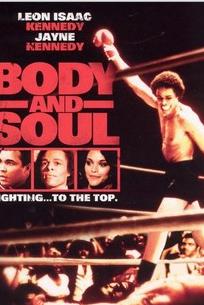 When his little sister falls ill with sickle-cell anemia, Leon Johnson (Leon Isaac Kennedy) has to make a decision. He can either finish his education, graduate from medical school, and treat her as a doctor or he can drop out of school, reinvent himself as “Leon the Lover,” and make a fortune as a professional boxer! At first, Leon’s career goes perfectly. He is winning fights. He is making money. He has a foxy new girlfriend (played Leon Isaac Kennedy’s then-wife, Jayne Kennedy.) But then the fame starts to go to Leon’s head. He forgets where he came from. He’s no longer fighting just to help his sister. Now, he’s fighting for his own personal glory. When Leon finally gets a title shot, a crooked boxing promoter known as Big Man (former JFK in-law Peter Lawford, looking coked up) orders Leon to take a dive. Will Leon intentionally lose the biggest fight of his life or will he stay in the ring and battle Ricardo (Al Denava), a boxer so evil that he literally throws children to the ground? More importantly, will he make his trainer (Muhammad Ali, playing himself!) proud?
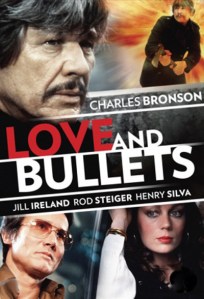 Joe Bomposa (Rod Steiger) may wear oversized glasses, speak with a stutter, and spend his time watching old romantic movies but don’t mistake him for being one of the good guys. Bomposa is a ruthless mobster who has destroyed communities by pumping them full of drugs. Charlie Congers (Charles Bronson) is a tough cop who is determined to take Bomposa down. When the FBI learns that Bomposa has sent his girlfriend, Jackie Pruit (Jill Ireland), to Switzerland, they assume that Jackie must have information that Bomposa doesn’t want them to discover. They send Congers over to Europe to bring her back. Congers discovers that Jackie does not have any useful information but Bomposa decides that he wants her dead anyway.
 Through the Shattered Lens