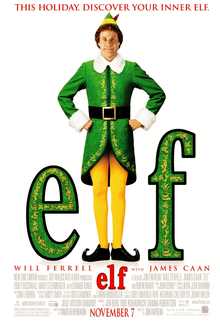
Why I Love Elf (2003, Dir. by Jon Favreau)


I love Elf!

I’m an adult and I learned the truth about Santa Claus a long time ago but I still put up the tree the day after Thanksgiving, still hang stockings with the names of my sisters on them, and I still get excited when I see the Christmas lights going up across the neighborhood.  I am unapologetically, deliriously in love with Christmas. And every single year, without fail, I curl up with the same worn-out blanket, the same bowl of freshly-popped popcorn, and I watch Elf.  I don’t watch it because it’s cool or ironic.  I watch it because it’s as unabashedly in love with Christmas as I am.

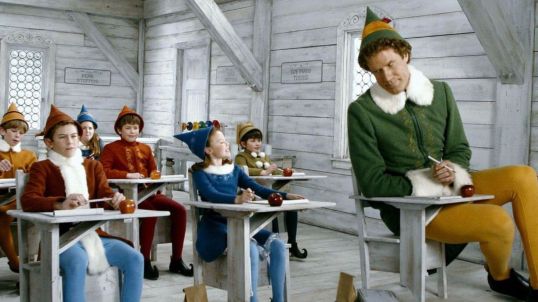
The older you get, the more cynical the world wants you to be about everything.  Elf doesn’t have time for cynicism.  Will Ferrell plays Buddy, a human who was raised by Santa’s elves and who goes to New York City to find his real father (James Caan) and who never loses his innocence and Christmas spirit, no matter what the world throws at him.  Buddy isn’t dumb, not really.  He’s someone who still believes in giving and celebration and love.  When he tells the fake Santa that he sits on a throne of lies, he’s not trying to make trouble.  Buddy knows the real Santa and he’s not going to let some fake in a beard steal the credit for his work.  (Especially when he’s played by Artie Lange!) Buddy is ridiculous. He’s too tall, too loud, too earnest, too everything. He puts maple syrup on spaghetti and calls it gourmet. He spins in revolving doors until he’s dizzy with joy.  Everyone should be as lucky as Buddy.  Everyone should be as filled with joy and wonder as Buddy.  Buddy doesn’t let the world get him down but, even more importantly, he never loses his belief.  Just as Linus will always wait for the Great Pumpkin, Buddy will always believe that Santa is coming.

This is my favorite Will Ferrell performance.  The way he throws himself into every moment makes me smile every time.  But I like everyone in this film, from Bob Newhart as Buddy’s adopted father to James Caan as his real father to Ed Asner as Santa.  When Zooey Deschanel starts singing Santa Claus Is Coming To Town, I feel it in my heart because I believe it.  Elf believes it too, without apology.  That’s what makes Elf a great movie.

I’m an adult.  I’ve been an adult for a while.  I still love Elf and I always will!

BORDERLINE (1980) – Charles Bronson battles human smuggler Ed Harris (in his first major film role)!


After a couple of decades of toiling away in TV and supporting roles, Charles Bronson became a huge international film star in 1968 when he starred in the films FAREWELL, FRIEND (with Alain Delon), and Sergio Leone’s ONCE UPON A TIME IN THE WEST (with Henry Fonda). For the next 5 years, Bronson would star in successful international co-productions, before hitting it big in the United States with the influential 1974 blockbuster, DEATH WISH. From 1974 to 1977, Bronson had his pick of any role that he wanted. This was probably the most interesting time in his career as he truly tried to expand his range with films like the depression-era HARD TIMES (1975), the romantic comedy FROM NOON TILL THREE (1976), the Raymond Chandler-esque ST. IVES (1976), and the surreal western THE WHITE BUFFALO (1977). But after 1977’s TELEFON and a series of underwhelming box office returns in the states, Bronson’s star was on the wane. He wouldn’t have his next #1 box office hit until he joined forces with the infamous Cannon studios in 1982 for the sequel to his biggest hit and DEATH WISH II. Cannon Studios would provide Bronson with a guaranteed paycheck and a non-stop presence on cable TV and at the video store for the remainder of the decade. I call the films that Bronson made between 1977 and 1982 the in-betweens. They don’t really fit into his European phase (1968-1973), his post-DEATH WISH phase (1974-1977) or his Cannon phase (1982-1989). To be completely honest, it seemed his career was somewhat in limbo at this point, and the movies he made during these years are some of his least well-known.

One of the movies that Charles Bronson made during the in-between years was 1980’s BORDERLINE. In this film, he plays Jeb Maynard, a border patrolman and expert tracker who will stop at nothing to find the human smuggler responsible for killing his friend and fellow patrolman Scooter, played by Wilford Brimley. I like this lower-key Bronson film. Director Jerrold Freedman has made a more realistic film than a lot of the movies in Bronson’s filmography. Outside of the murder that gets the story going, and the final showdown with the lead smuggler (a young Ed Harris), most of the film is made up of good old-fashioned field work and investigation. Bronson even based much of his performance on the technical advice of legendary border patrolman Albert Taylor. Now that doesn’t mean there aren’t some solid, action-packed scenes during the movie. My favorites include a scene where an undercover Maynard goes into Mexico with the mother of a young Mexican boy who was accidentally killed at the same time as Maynard’s friend Scooter. Maynard poses as a family member of the woman in hopes of being smuggled across the border so he can see how the illegal immigrants are being brought in. When thieves intercept the group, all hell breaks loose, and Maynard and the woman must fight their way out. Another badass moment occurs when Bronson beats needed information out of one of the smugglers in a nasty bathroom. This last scene is especially enjoyable for us Bronson fans.

There are so many good actors in this film. Outside of Bronson, Brimley, and Ed Harris, the cast is filled out by other veterans like Bruno Kirby, Bert Remsen, Michael Lerner, John Ashton, and Charles Cyphers. On a side note, Ed Harris gets the “introducing” credit here, even though he had appeared in several TV shows, as well as the movie COMA with Michael Douglas. This was his first major role in a feature film though. I also want to throw out special mention to Karmin Murcelo. She’s not a household name, but she’s excellent as the mother of the young boy who gets killed with Wilford Brimley’s character, who then helps Bronson in his quest to find the killer. Her career extended over 3 decades, and it’s easy to see why based on this performance.

BORDERLINE may not be an explosive action film like some of Bronson’s other work, but it’s an effective drama with a good performance from the star. I think he embodies the character perfectly. It’s also just as relevant in 2025 as it was in 1980, and I give the film a solid recommendation.

Horror Film Review: Godzilla (dir by Roland Emmerich)


There’s a giant lizard rampaging through New York, the result of a mutation that happened as a result of being exposed to radiation.  The military tries to stop the lizard but it turns out that stopping a giant lizard is not that easy.  Scientists try to understand the lizard and how it came to be a destructive giant.  The media breathlessly reports from the scene as two wisecracking cameramen do their best to record every second of the mayhem.  The reporters call this lizard …. GODZILLA!

But is it Godzilla?

No, it’s not.  Oh, it may be called Godzilla.  And the movie itself may be called Godzilla.  But the creature at the center of the 1998 American film Godzilla is definitely not Godzilla.

Godzilla was released with a great deal of fanfare in 1998, with commercials and toys and a lot of hype.  Diddy, back when he was still calling himself Puff Daddy, recorded a song for the soundtrack and upset thousands of Led Zeppelin fans like my Dad who found themselves having to deal with kids who thought Kashmir was called Follow Me.  (Diddy singing, “Follow me?”  AGCK!  How cringey is that!?)  But, like many of the film of Roland Emmerich, it’s been almost totally forgotten in the years since.

And why not?  It’s a forgettable film.  It’s the epitome of an assembly-line action blockbuster, the type of thing that Roland Emmerich is known for.  There’s comic relief, in the form of Hank Azaria.  There’s a nerdy scientist hero in the form of Matthew Broderick.  Broderick’s scientist has an ex-wife and yes, Godzilla’s invasion of New York gives them a chance to get back together.  There’s a mysterious Frenchman who is played, somewhat inevitably, by Jean Reno.  The Mayor of New York is a fat guy named Ebert (Michael Lerner) and he has an assistant named Gene (Lorry Goldman) and they get a lot of screentime because Emmerich wanted to make fun of two films critics who didn’t care much for his work.  In fact, the Mayor and his assistant get so much screentime that it distracts from the rest of the film.  Emmerich was directing a multi-million dollar reboot of a beloved franchise and he was more concerned with a petty feud.

He certainly wasn’t concerned with Godzilla.  Personally, I like the giant lizard and one of the only effective moments in the film is when the lizard discovers that its children have been killed by the military.  But that lizard is not Godzilla and the fact that Emmerich made a Godzilla film without Godzilla indicates that he didn’t really care about the monster or its fans.  This film has no love for its source material and that’s a shame.  The Godzilla films are fun!  And the fact that the majority of the ones made up until the release of this film looked kind of cheap and featured a Godzilla who was obviously a man in a rubber suit only added to the fun.  There’s not much fun to be found in this version of Godzilla.  The movie looks great without ever making much of an impression.

And you know what?  Having gotten this review out of the way, I’m ready to get back to reviewing the true Godzilla films.  They may not have cost as much as Emmerich’s film but they’ve got heart.

Previous Godzilla Reviews:

  1. Godzilla, King of the Monsters (1958)
  2. Godzilla Raids Again (1958)
  3. King Kong vs Godzilla (1962)
  4. Mothra vs. Godzilla (1964)
  5. Ghidorah: The Three-Headed Monster (1964)
  6. Invasion of the Astro-Monster (1965)
  7. Godzilla vs. The Sea Monster (1966)
  8. Son of Godzilla (1967)
  9. Destroy All Monsters (1968)
  10. All Monsters Attack (1969)
  11. Godzilla vs Hedorah (1971)
  12. Godzilla vs Gigan (1972)
  13. Godzilla vs Megalon (1973)
  14. Godzilla vs Mechagodzilla (1974)
  15. The Terror of Mechagodzilla (1975)
  16. Cozilla (1977)
  17. Godzilla 1985 (1985)
  18. Godzilla vs. Biollante (1989)
  19. Godzilla vs King Ghidorah (1992)
  20. Godzilla vs. Mothra (1992)
  21. Godzilla vs Mechagodzilla 2 (1994)
  22. Godzilla vs SpaceGodzilla (1994)
  23. Godzilla vs. Destoroyah (1995)
  24. Godzilla, Mothra, and King Ghidorah: Giant Monsters All-Out Attack (2001)
  25. Godzilla (2014)
  26. Godzilla: Planet of the Monsters (2017)
  27. Godzilla, King of the Monsters (2019)
  28. Godzilla vs Kong (2021)
  29. Godzilla Minus One (2023)

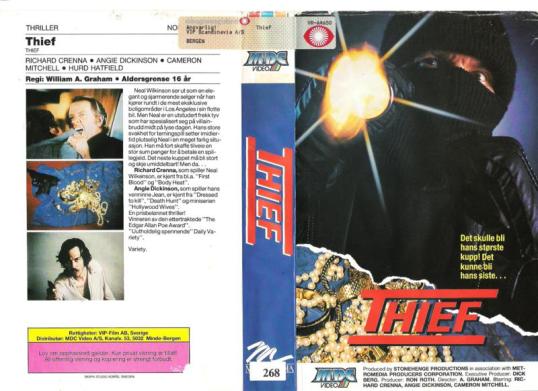
Retro Television Review: Thief (dir by William A. Graham)


Welcome to Retro Television Reviews, a feature where we review some of our favorite and least favorite shows of the past!  On Sundays, I will be reviewing the made-for-television movies that used to be a primetime mainstay.  Today’s film is 1971’s Thief!  It  can be viewed on Tubi and YouTube.

Neal Wilkinson (Richard Crenna) would appear to be living a great life.  He has a nice house in the suburbs.  He has a beautiful girlfriend named Jean Melville (Angie Dickinson).  As he heads into middle-age, he is still fit and handsome and charming.  He dresses well, or at least well by the standards of the early 70s.  (By the standards of today, a few of his ties are a bit too wide.)  Everyone believes that Neal has a nice and comfortable job as an insurance agent.

Of course, the truth is far different.

Neal is a veteran con man and a thief.  He’s just recently been released from prison and his deceptively friendly parole officer (played by the great character actor, Michael Lerner) is convinced that Neal will screw up again eventually.  And, of course, Neal has screwed up.  A gambling addict, he is $30,000 in debt.  Can Neal steal enough jewelry from enough suburban homes to pay off his debt?  Can a man like Neal change his ways?

This is a surprisingly somber made-for-TV movie.  Just from the plot description and the film’s first few minutes, you might expect Thief to be a light-hearted caper film in which Neal and Jean work together to pull off one last heist so that Neal can retire.  Instead, Neal spends almost the entire film lying to Jean and there’s hardly a light moment to be found.  Neal says that he wants to retire from his life of crime but, as the film makes clear, that’s a lie that he’s telling himself.  Neal cannot stop stealing and gambling because he’s as much of an addict as the wild-haired junkie (Michael C. Gwynne) who briefly confronts Neal at the parole office.  At one point, Jean tells Neal, “The more I know you, the less I know you,” but the truth of the matter is that Neal is so deep in denial about the futility of his life that he doesn’t even know himself.

It’s not a particularly happy film.  Richard Crenna is ideally cast as Neal, playing him with enough charm that the viewer can buy that he could talk his way out of being caught in a stranger’s backyard but with also with vulnerability that the viewer can see his fate, even if he can’t.  Thief also provides a rare opportunity to see Cameron Mitchell playing a sympathetic role.  Mitchell is cast as Neal’s attorney, who continually tries to get Neal to stop messing up but who ultimately knows that his attempts to reform Neal are just as futile as Neal’s attempts to go straight.

The movie ends on a surprisingly fatalistic note, one that suggests that there’s only one way to truly escape from a life of crime.  I can only imagine how viewers responded in 1971, when they turned on their television and found themselves watching not a light-hearted caper film but instead a bleak examination of criminal ennui.  It’s not a happy film but it is more than worth watching for Richard Crenna’s lead performance.

Maniac Cop 2 (1990, directed by William Lustig)


Maniac Cop 2 picks up where the first Maniac Cop ended.

The NYPD thinks that the undead maniac cop Matt Cordell (Robert Z’Dar) has been destroyed but he is actually still alive and killing civilians and cops in New York.  He has even teamed up with a serial killer named Steven Turkell (Leo Rossi, ranting and raving like a pro).  Jack Forrest (Bruce Campbell) and Theresa Malloy (Laurene Landon) both return from the first film but both of them are killed by Cordell before the movie is even halfway over.  Maniac Cop 2 is not playing around.

With Jack and Theresa gone, it falls to Detective Sean McKinney (Robert  Davi) and Officer Susan Riley (Claudia Christian) to discover what the rest of the audience already knows, that Cordell is seeking revenge against the system that abandoned him in prison.  The new police commissioner, Ed Doyle (Michael Lerner), is determined to cover up what happened but Cordell is even more determined to have his vengeance.  Working with Turkell, Cordell heads to the prison where he was unjustly incarcerated and murdered.

Maniac Cop 2 is a marked improvement on the first film.  Cordell is no longer a lumbering and slow monster.  He is now a ruthless, Terminator-style executioner who, in the film’s best-known scene, wipes out an entire police precinct in a matter of minutes.  Cordell is so ruthless that he won’t even stop when he’s on fire.  His partnership with Turkell adds a new twist to the Maniac Cop saga.  Turkell views Cordell as his partner-in-crime but Cordell is only interested in getting his revenge.  (Turkell was originally meant to be Frank Zito, the main character from Lustig’s Maniac.  When Maniac star Joe Spinell died before shooting began, the role was changed to Leo Rossi’s Steven Turkell.)

Stepping into the shoes of the main investigation, Robert Davi gives one of his best performances.  As opposed to the boring heroes of the first film (sorry, Bruce!), Davi’s Sean McKinney is just as obsessive and ruthless as Cordell.  Cordell sets fire and McKinney uses those fires to light his cigarettes.

William Lustig has described Maniac Cop 2 as being his best film and he’s probably right.  It is definitely the best of the Maniac Cop films and the only one to fully take advantage of its premise.

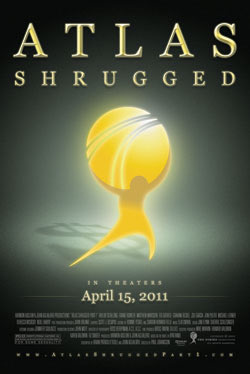
Film Review: Atlas Shrugged, Part One (dir by Paul Johansson)


The year is 2016.  A global depression has crippled the world’s economy.  While the middle class struggles to exist from day to day, the poor are getting poorer and the rich are getting richer.  Across the world, countries are nationalizing their industries, instituting price controls, and passing burdensome regulations.  Though the government officials and the academics claim that all of this is being done “in the name of the people”, it’s hard not to notice that the people are the one who are suffering as a result.  It’s also hard not to notice that most of the regulations seem to result in the bureaucrats getting not only more powerful but also wealthier.  Throughout the world, people who have started businesses or who have otherwise stood up to the government are vanishing without a trace.  In the shadows people ask, “Who is John Galt?”

Because gasoline now costs $37.00 a gallon, railroads have made a big comeback.  But the government, which claims to know what’s best and to be infallible, has done a terrible job maintaining the nation’s railways.  Dagny Taggart (Taylor Schilling), the vice president of Taggart Transcontinental Railways, is determined to rebuild the aging tracks with Rearden Metal, a new type of metal that is somehow both stronger and lighter than steel.  The inventor of the new metal is Hank Rearden (Grant Bowler).  And while that may sound like a good plan that will preserve the the nation’s supply chain, the government is angry that Rearden will not hand Rearden Metal over to them.  When Dagny’s weaselly brother, James (Matthew Marsden), announces that Taggart Railways will continue to use an inferior metal, Dagny goes into business for herself.  Despite the attempts of the government to stop them with bad publicity and excessive regulation, Dagny and Hank construct the John Galt Line.  Unfortunately, the success of the John Galt Line does not matter to Wesley Mouch (Michael Lerner, giving the film’s best performance), the former corporate lobbyist-turned-economics czar.  Mouch only sees the success of others as being a threat to his own power.

Meanwhile, people like oil tycoon Ellis Wyatt (Graham Beckel, giving the film’s second-best performance) continue to ask, “Who is John Galt?”

The first part of a trilogy of films based on the Ayn Rand novel of the same name, Atlas Shrugged Part One was released in 2011.  At that time, it received overwhelmingly negative reviews.  That, in itself, wasn’t really a shock.  There was no way that a Libertarian-themed film released at the height of the “good government” era was going to get positive reviews.  To some, it was a bigger shock that the film itself didn’t do particularly well at the box office but, again, it should have been expected.  I think Libertarians always tend to overestimate the amount of people who have 1) read Ayn Rand and 2) liked what they read.

Myself, I thought the film suffered due to its low-budget and the bland performances of Taylor Schilling and Grant Bowler in the lead roles.  At the same time, I felt that the film accomplished what it set out to do, in that it entertained the anti-government folks while annoying the MSNBC crowd.  (That said, I doubt anyone from the latter group voluntarily watched the film.)  With everything that has happened over the past seven years, it can be easy to forget just how idealized the government was in 2011.  In 2011, we were continually told that the solution to every problem could be found in a government agency populated by wonky bureaucrats.  It was like being trapped in a never-ending Aaron Sorkin fanfic.  Whatever flaws Atlas Shrugged Part One had, there was something enjoyably subversive about the film’s suggestion that the government was staffed by fools and aspiring authoritarians.  The film may have been heavy-handed when it came to portraying the greed and the stupidity of its villains but one could argue that it was no more heavy-handed than the typical Hollywood film.  It’s just, in this case, the villains of Atlas Shrugged Part One were the people who would have been the heroes of any other film.

Of course, when viewed today, Atlas Shrugged lands a bit differently.  Now that we’ve lived through the COVID era, the film’s portrayal of arrogant bureaucrats and politicians barking out orders and claiming that anyone who questions them is an enemy of the people no longer feels quite as over-the-top.  As well, it’s no longer easy to laugh off the idea of corporations working hand-in-hand with the government or the supply chain being disrupted.  The film itself still comes across as being a bit silly with its attempts to recreate the world of the rich and powerful on a very limited budget but it’s definitely more relatable today than it was in 2011.  Much of what originally felt subversive about this film now feels a bit prophetic.  If the film were released today, it would probably appeal to a mix of anti-government activist and transcontinental rail enthusiasts.  The critic wouldn’t be any nicer but it would definitely do better at the box office.

Retro Television Reviews: Sarah T — Portrait of a Teenage Alcoholic (dir by Richard Donner)


Welcome to Retro Television Reviews, a feature where we review some of our favorite and least favorite shows of the past!  On Sundays, I will be reviewing the made-for-television movies that used to be a primetime mainstay.  Today’s film is 1975’s Sarah T — Portrait of a Teenage Alcoholic.  It  can be viewed on YouTube!

In 1975, two years after shocking audiences in and receiving an Oscar nomination for The Exorcist, Linda Blair played Sarah Travis.  Sarah is fourteen years old.  She has a high IQ.  She lives in a nice suburban home.  She has an older sister named Nancy (Laurette Sprang) and she makes a good deal of money working as a babysitter.  Sarah lives with her mother, Jean (Verna Bloom) and her stepfather, Matt (William Daniels).  She misses her father, a chronically unemployed artist named Jerry (Larry Hagman).  Jerry is the type who will complain about how no one is willing to give him a chance while he’s day drinking early in the morning.  Jerry’s an alcoholic.  That’s one of the many things that led to Jean divorcing him.  (Matt is fairly regular drinker as well but it soon becomes apparent that he can handle his liquor in a way that Jerry cannot.  Matt has a glass of Scotch after work.  Jerry has his daughter by a slushy so he can pour his beer in the cup.)  Jean is always quick to keep Sarah from drinking.  When someone offers her a drink at a party, Jean replies that Sarah only drinks ginger ale.

Of course, the name of this movie is Sarah T. — Portrait of a Teenage Alcoholic so we already know that Jean is incorrect about that.  When we first meet Sarah, she is fourteen and she’s been regularly drinking for two years.  She’s even worked out a system where she gets liquor delivered to the house and then tells the deliveryman that her mother is in the shower but she left the money for the booze on the dining room table.  Like many alcoholics, Sarah has become very good at tricking people and hiding her addiction.  Of course, Sarah doesn’t think that she’s an alcoholic but …. well, again, just check out the title of the film.

When Sarah goes to a party with Ken (Mark Hamill, two years before Star Wars), the handsome captain of the school’s swim team, she ends up having too much to drink.  Nice guy Ken not only takes her home but also takes the blame, telling Jean and Matt that he was the one who gave Sarah the alcohol.  Jean, convinced that this is the first time that Sarah has ever gotten drunk, forbids her from spending any more time with Ken.  In the morning, Jean comments that Sarah will probably have a terrible hangover and maybe that’s punishment enough.  The joke, of course, is on Jean.  Sarah doesn’t even get hangovers anymore.

Soon, Sarah’s grades start to slip and she starts to skip class so that she can drink.  Still blaming Ken for all of Sarah’s problems, Jean finally takes Sarah to a psychologist, Dr. Kitteridge (Michael Lerner).  Dr. Kitteridge announces that Sarah is an alcoholic and recommends that she start attending A.A. meetings.  Sarah does go to one meeting, in which she meets a surprisingly cheerful 12 year-old alcoholic.  However, Sarah still has a way to go and so does the movie.  I mean, we haven’t even gotten to the scene where Sarah begs a group of older boys to give her the bottle of wine that they’re clumsily tossing in the air.  By the end of the film, she’s even managed to hurt poor, loyal Ken.

Myself, I hardly ever drink.  Some of that is because, like Sarah, I’m the daughter of an alcoholic and a child of divorce and I’ve seen firsthand how difficult it can be to live with an addiction.  (My Dad has been sober for five years and I am so proud of him!)  Of course, another reason why I hardly ever drink is because my tolerance for alcohol is amazingly low.  I get drunk off one sip of beer.  Long ago, I realized my life would be a lot easier and simpler if I just didn’t drink and so I don’t.  Watching the film, I wondered if I was watching what my life would have been like if I had gone the opposite route.  Would I have ended up like Sarah T?

Probably not.  Sarah T is one of those films that was obviously made with the best of intentions but it just feels inauthentic.  A lot of that is due to the performance of Linda Blair, who often seems to be overacting and trying too hard to give an “Emmy-worthy” performance.  There’s not much depth to Blair’s performance and, as a result, the viewer never really buys into the story.  At her worse, Blair brings to mind Jessie Spano shouting, “I’m so excited!” during that episode of Saved By The Bell.  (Blair was far better served by B-movies like Savage Streets, in which she got to kick ass as a vigilante, than by films like this.)  As well, the film’s portrayal of A.A. is so cheerful, upbeat, and positive that it almost felt like a Disney version of InterventionWho are all of these happy addicts? I wondered as I watched the scene play out.

Because I’ve been a bit critical of his acting abilities in the past, I do feel the need to point out that Mark Hamill gives the best performance in this film.  He plays Ken as being a genuinely decent human being and it’s hard not to sympathize with him as he gets in over his head trying to deal with Sarah.  If Blair plays every emotion on the surface, Hamill suggests that there’s a lot going on with Ken.  Deep down, he knows that he can’t help Sarah but he still feels like he has to try.  Though Blair may be the star of the film, it’s Hamill who makes the biggest impression.

As a final note, this film was directed by Richard Donner, who is best-known for directing The Omen, Superman and Lethal Weapon.  This was Donner’s final made-for-TV film before he moved into features.  There’s nothing particularly special about Donner’s direction of Sarah T.  If anything, the film’s pacing feels a bit off.  Fortunately, just as Linda Blair would get to prove herself as one of the queens of exploitation cinema and Mark Hamill would go on to achieve immortality as Luke Skywalker, Donner would get plenty of opportunities to show himself to be one of Hollywood’s premier, big budget maestros.

As for Sarah T., I would recommend watching it on a double bill with Go Ask Alice.
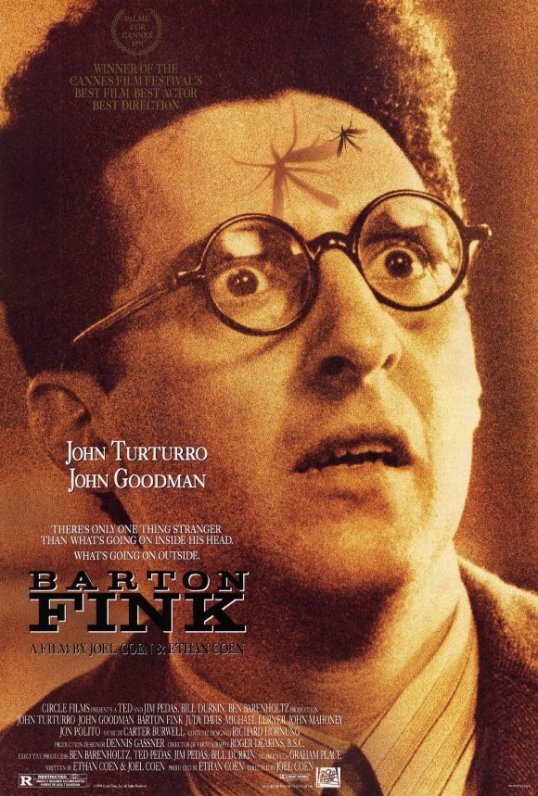
Lisa Reviews A Palme d’Or Winner: Barton Fink (dir by Joel and Ethan Coen)


With the Cannes Film Festival underway in France, I decided that I would spend the next few days watching and reviewing some of the previous winners of the Palme d’Or.  Today, I got things started with the 1991 winner, Barton Fink.

Directed by the Coen Brothers and taking place in the mythological Hollywood of 1941, Barton Fink tells the story of a writer.  Played by John Turturro, Barton Fink is a playwright who has just had a big hit on Broadway.  We don’t see much of the play.  In fact, we only hear the final few lines.  “No,” one the actors says, in exaggerated “common man” accent, “it’s early.”  From what we hear of the reviews and from Barton himself, it seems obvious that the play is one of those dreary, social realist plays that were apparently all the rage in the late 30s.  Think Waiting for Lefty.  Think Hand That Rocks The Cradle.  Think of the Group Theater and all of the people that Elia Kazan would later name as having been communists.  These plays claimed to tell the stories of the people who couldn’t afford to see a Broadway production.

Barton considers himself to be the voice of the common man, an advocate for the working class.  He grandly brags that he doesn’t write for the money or the adulation.  He writes to give a voice to the voiceless.  When his agent tells him that Capitol Pictures wants to put Barton under contract, Barton resists.  His agent assures Barton that the common man will still be around when Barton returns from Hollywood.  There might even be a few common people in California!  “That’s a rationalization,” Barton argues.  “Barton,” his agent replies with very real concern, “it was a joke.”  Barton, we quickly realize, does not have a sense of humor and that’s always a huge problem for anyone who finds themselves in a Coen Brothers film.

In Hollywood, Barton meets the hilariously crass Jack Lipnik (Oscar-nominated Michael Lerner).  Lipnik is the head of Capitol Pictures and he is sure that Barton can bring that “Barton Fink feeling” to a Wallace Beery wrestling picture.  Barton has never wrestled.  He’s never even seen a film.  The great toast of Broadway finds himself sitting in a decrepit hotel room with peeling wallpaper.  He stares at his typewriter.  He writes three or four lines and then …. nothing.  He meets his idol, Faulknerish writer W.P. Mayhew (John Mahoney), and discovers that Mayhew is a violent drunk and that most his recent work was actually written by his “secretary,” Audrey (Judy Davis).  He seeks help from producer Ben Geisler (Tony Shalhoub), who cannot understand why Barton is having such a difficult time writing what should be a very simple movie.  Barton sits in his hotel room and waits for inspiration that refuses to come.

He also gets to know Charlie Meadow (John Goodman).  Charlie is Barton’s neighbor.  Charlie explains that he’s an insurance agent but he really sells is “peace of mind.”  At first, Barton seems to be annoyed with Charlie but soon, Barton finds himself looking forward to Charlie’s visits.  Charlie always brings a little bottle of whiskey and a lot of encouragement.  Charlie assures Barton that he’ll get the script written.  Barton tells Charlie that he wants to write movies and plays about “people like you.”  Charlie shows Barton a wrestling move.  Barton tells Charlie to visit his family if he’s ever in New York.  Charlie tells Barton, “I could tell you some stories” but he never really gets the chance because Barton is usually too busy talking about his ambitions to listen.  Charlie tells Barton, “Where there’s a head, there’s hope,” a phrase that takes on a disturbing double meaning as the film progresses.  Just as Barton isn’t quite the class warrior that he believes himself to be, Charlie isn’t quite what he presents himself to be either.  Still, in the end, Charlie is far more honest about who he is than Barton could ever hope to be.

When it comes to what Barton Fink is actually about, it’s easy to read too much into it.  The Coens themselves have said as much, saying that some of the film’s most debated elements don’t actually have any deeper meaning beyond the fact that they found them to be amusing at the time.  At its simplest, Barton Fink is a film about writer’s block.  Anyone who has ever found themselves struggling to come up with an opening line will be able to relate to Barton staring at that nearly blank page and they will also understand why Barton comes to look forward to Charlie visiting and giving him an excuse not to write.  It’s a film about the search for inspiration and the fear of what that inspiration could lead to.  Towards the end of the film, Barton finds himself entrusted with a box that could contain his worst fears or which could cpntain nothing at all.  There’s nothing to stop Barton from opening the box but he doesn’t and it’s easy to understand why.  To quote another Coen Brothers film, “Embrace the mystery.”

There’s plenty of other theories about what exactly is going on in Barton Fink but, as I said before, I think it’s easy to overthink things.  The Coens have always been stylists and sometimes, the style is the point.  That said, I do think that it can be argued that Barton Fink’s mistake was that he allowed himself to think that he was important than he actually was.  Self-importance is perhaps the one unforgivable sin in the world of the Coen Brothers.  Like most Coen films, Barton Fink takes place in a universe that is ruled by chaos and the random whims of fate.  Barton’s mistake was thinking that he could understand or tame that chaos through his art or his politics.  Barton’s mistake is that he tries to rationalize and understand a universe that is irrational and incapable of being explained.  He’s a self-declared storyteller who refuses to listen to the stories around him because those stories might challenge what he considers to be the “life of the mind.”

Barton Fink is a film that people either seem to love or they seem to hate.  Barton, himself, is not always a  particularly likable character and the Coens seem to take a very definite joy in finding ways to humiliate him.  Fortunately, Barton is played by John Turturro, an actor who has the ability to find humanity in even the most obnoxious of characters.  (As obnoxious as Barton can be, it’s hard not to want to embrace him when he awkwardly but energetically dances at a USO club.)  Turturro has great chemistry with John Goodman, who gives one of his best performances as Charlie.  It’s putting it lightly to say that most viewers will have mixed feelings about Charlie but the film makes such great use of Goodman’s natural likability that it’s only on a second or third viewing that you realize that all of Charlie’s secrets were pretty much out in the open from the start.  Michael Lerner deserved his Oscar nomination but certainly Goodman deserved one as well.  The rest of the cast is full of Coen Brothers regulars, including Jon Polito as Lerner’s obsequies assistant and Steve Buscemi as Chet, the very friendly front deskman.  And finally, I have to mention Christopher Murney and Richard Portnow, who play two of the worst cops ever and who deliver their hardboiled dialogue with just the right mix of menace and parody.

Barton Fink won the Palme d’Or at Cannes, defeating such films as Spike Lee’s Jungle Fever and Lars Von Trier’s Europa.  It also won awards for the Coens and for John Turturro.  It’s perhaps not a film for everyone but it’s one that holds up well and which continues to intiruge.  Don’t just watch it once.  This isn’t a film that can fully appreciated by just one viewing.  This isn’t a Wallace Beery wrestling picture.  This is Barton Fink!

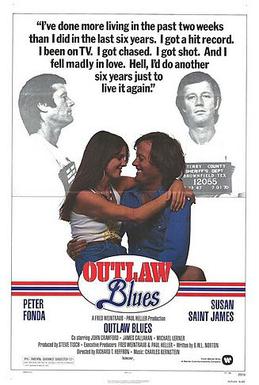
Cleaning Out The DVR: Outlaw Blues (dir by Richard T. Heffron)


The 1977 film, Outlaw Blues, opens in Huntsville State Prison. An arrogant country music star named Garland Dupree (James T. Callahan) is about to perform for the prisoners. He’s hoping his Huntsville concert will do for him what playing at Folsom did for Johnny Cash. The warden insists that Garland listen to a song written and performed by a soft-spoken prisoner named Bobby Ogden (Peter Fonda). A visibly annoyed Garland agrees but he doesn’t actually listen while Bobby performs. Instead, Garland is too busy arguing with the manager of his record label, Hatch (Michael Lerner). However, the members of Garland’s backup band record Bobby as he sings.

Several months later, Bobby is about to be released from prison when he learns that Garland is performing his song. Not only has Garland made it a hit but he’s also taking credit for writing it! Garland and Hatch even copyrighted the song, something that Bobby was never able to do because he was in prison.

Released from prison, Bobby ends up in Austin. He wants to stay out of prison and get his life straightened out. He wants to pursue a career as a singer. And he wants Garland to admit that he stole Bobby’s song. Unfortunately, when Bobby confronts Garland, things escalate and Garland ends up accidentally getting shot. Garland survives but now Bobby has the police after him. With the help of one of Garland’s former backup singers, Tina Waters (Susan Saint James), Bobby tries to become a star while staying one step ahead of the cops. Like the outlaws of old, Bobby and Tina sneak around Texas, performing where they can. (Knowing that any publicity is good publicity, Tina often calls the cop just as Bobby finishes his show, all the better for her and Bobby to make a dramatic escape.) Hatch is eager to record and release a Bobby Ogden record but both Bobby and Tina know that he can’t be trusted. But with the cops closing in, what choice do they have?

For a film about criminals on the run, Outlaw Blues is a surprisingly loose and laid back movie. It’s definitely a product of the 70s. It celebrates rebellion and doing your own thing, it mixes drama and comedy and, because it was made in the 70s, you know there’s always a good chance that, regardless of how pleasant the majority of the film may be, everyone’s going to die at the end of the movie. That definitely adds some tension to the film’s story that might not otherwise be there. For the most part, though, this is an enjoyable little lark of a drive-in movie. It celebrates individualism while also finding time for a few songs and a car chase or two.

A good deal of the film’s charm is the result of the chemistry between the two stars. Peter Fonda and Susan Saint James just seem as if they belong together and they both play characters who are written with slightly more depth than you might otherwise expect from what was obviously meant to be a cheap, drive-in film. Tina may appear to be a hippie but, as played by Saint James, she eventually turns out to be a clever businesswoman and promoter. As for Peter Fonda, he definitely had his acting limitations but he also had a nice smile and a far more likable screen presence than you might suspect if you only know him from his remote performance in Easy Rider. In Outlaw Blues, Fonda’s inexpressive manner feels right for someone who has spent most of his life in prison and who is still adjusting to being on the outside. Fonda wins you over and, once his character falls in love with Saint James, Fonda starts to relax and you get the feeling that both he and Bobby Ogden are having fun.

Outlaw Blues may be a minor 70s film but it’s likable. It has an amiable spirit which makes it worth watching.

Anguish (1987, directed by Bigas Luna)


John Pressman (Michael Lerner) is a mentally unbalanced, middle-aged, diabetic mama’s boy who is losing his eyesight.  When his mother (Zelda Rubinstein) orders John to go out and collect healthy eyes, it leads to John going on a rampage that eventually brings him to a movie theater.  After he barricades everyone inside, he starts to pick off the patrons one-by-one, removing their eyes with a scalpel.

Meanwhile, in another theater, an audience watches John’s rampage on the big screen.  Is the story of John Pressman just a movie?  Maybe.  But in the audience, people start to react strangely.  A woman breaks down in tears.  When John Pressman starts to kill people in his movie, a man in the audience starts to kill people in the real theater.  When the mother in the movie-within-a-movie sends her son out to get eyes, is she after the eyes of the people in her movie or the people watching in the audience?  Has the madman in the audience been possessed by the movie or is he just another spree killer, an ever-present threat in both the movies and the real world?  And how will his rampage be stopped?

Anguish is a clever, multi-layered Spanish horror film.  Watching the film, it’s important to remember that it was produced in the middle of a worldwide moral panic about whether or not people could experience violent movies without becoming violent themselves.  At first, it seems like the film is saying that horror movies are a bad influence but then there’s a twist ending that turns the entire premise on its head.  As the movie peels away layer after layer of plot, you’ll find yourself wondering what’s real and what’s just a movie.

An unheralded horror classic, Anguish is two good movies in one.  Obviously, the film about John Pressman and his crazy mother is considerably more cheesy than the one about the madman in the “real” world but both films are full of atmosphere, suspense, and a some surprisingly grisly violence.  The movie-within-a-movie also features Michael Lerner and Zelda Rubinstein, two actors who just seem like they were destined to play a henpecked son and his crazy mother.  Lerner is one of the best character actors around and Anguish gives him a rare leading role.  Lerner makes the most of it, carefully cutting out eyeballs while his mother’s voice echoes in his head.

Anguish is a good head trip of a film.  It’s long been rumored that Anguish contains subliminal images and sounds that are designed to make the people watching feel nervous.  I don’t know if that’s true, though the film does open with the following classic warning:

During the film you are about to see, you will be subject to subliminal messages and mild hypnosis.

This will cause you no physical harm or lasting effect, but if for any reason you lose control or feel that your mind is leaving your body — leave the auditorium immediately.

Luckily, Anguish is available on DVD and Blu-ray so you can watch it in the safety of your own home.