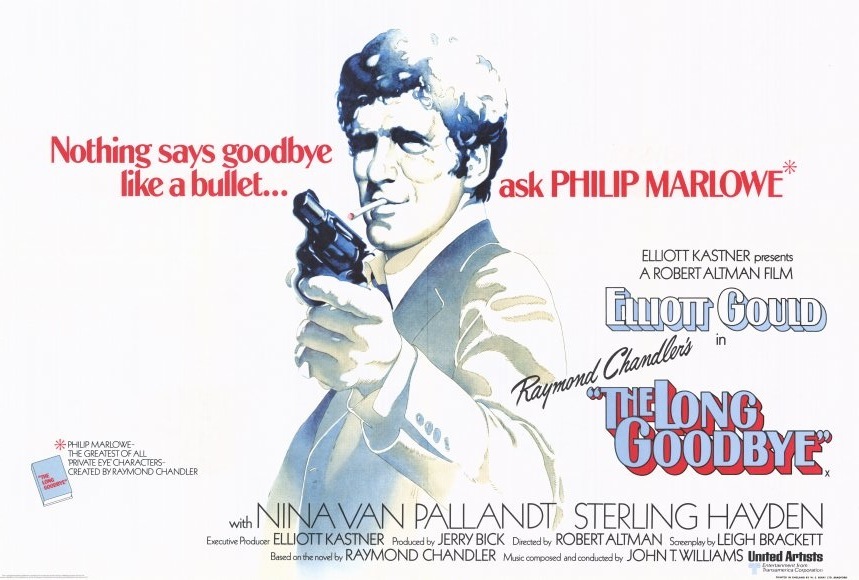
The Unnominated #10: The Long Goodbye (dir by Robert Altman)


Though the Academy of Motion Picture Arts and Sciences claim that the Oscars honor the best of the year, we all know that there are always worthy films and performances that end up getting overlooked.  Sometimes, it’s because the competition too fierce.  Sometimes, it’s because the film itself was too controversial.  Often, it’s just a case of a film’s quality not being fully recognized until years after its initial released.  This series of reviews takes a look at the films and performances that should have been nominated but were, for whatever reason, overlooked.  These are the Unnominated.

Elliott Gould is Phillip Marlowe!

If I had to pick one sentence to describe the plot of 1973’s The Long Goodbye, that would be it.  Robert Altman’s adaptation of the Raymond Chandler detective novel loosely follows Chandler’s original plot, though Altman did definitely make a few important changes.  Altman moved the story from the 50s to the then-modern 70s, replacing Chandler’s hard-boiled Los Angeles with a satirical portrait of a self-obsessed California, populated by gurus and hippies.  And Altman did change the ending of the book, taking what one could argue is a firmer stand than Chandler did in the novel.  In the end, though, the film really is about the idea of Chandler’s tough detective being reimagined as Elliott Gould.

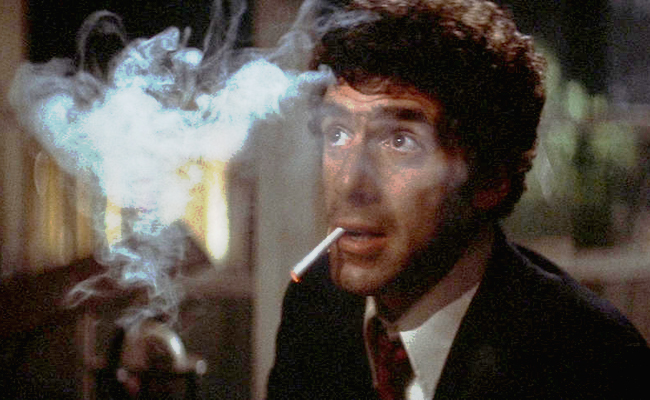
Rumpled, mumbling, and with a permanent five o’clock shadow, Gould plays Marlowe as being an outsider.  He lives in a shabby apartment.  His only companion is a cat who randomly abandons him (as cats tend to do).  With his wardrobe that seems to consist of only one dark suit, Marlowe seems out-of-place in the California of the 70s.  When Marlowe’s friend, Terry Lennox (Jim Bouton), asks Marlowe to drive him to Mexico, one gets the feeling that Lennox isn’t just asking because Marlowe’s a friend.  He’s asking because he suspects Marlowe would never be a good enough detective to figure out what he’s actually doing.

After Terry’s wife is murdered, Marlowe is informed that 1) Terry has committed suicide and 2) Marlowe is now a suspect.  Convinced that Terry would have never killed himself, Marlowe investigates on his own.  He meets Marty Augustine (Mark Rydell), a gangster who demands that Marlowe recover some money that he claims Terry stole.  Marty seems like an almost reasonable criminal until he smashes a coke bottle across his girlfriend’s face.  (One of Marty’s bodyguards is played by a silent Arnold Schwarzenegger.)  Meanwhile, Terry’s neighbors include an alcoholic writer named Roger Wade (Sterling Hayden) and his wife, Eileen (Nina van Pallandt).  Like Marlowe, Roger is a man out-of-time, a Hemingwayesque writer who has found himself in a world that he is not capable of understanding.  Henry Gibson, who would later memorably play Haven Hamilton in Altman’s Nashville, appears as Wade’s “doctor.”

Marlowe, with his shabby suits and a cigarette perpetually dangling from his mouth, gets next to no respect throughout the film.  No one takes him seriously but Marlowe proves himself to be far more clever than anyone realizes.  Elliott Gould gives one of his best performances as Marlowe, playing him as a man whose befuddled exterior hides a clear sense of right and wrong.  Gould convinces us that Marlowe is a man who can solve the most complex of mysteries, even if he can’t figure out where his cat goes to in the middle of the night.  His code makes him a hero but it also makes him an outsider in what was then the modern world.  The film asks if there’s still a place for a man like Phillip Marlowe in a changing world and it leaves it to us to determine the answer.

Frequently funny but ultimately very serious, The Long Goodbye is one of the best detective films ever made.  Just as Altman did with McCabe & Mrs. Miller, he uses the past to comment on what was then the present.  And, just as with McCabe & Mrs. Miller, The Long Goodbye is a film that was initially released to mixed reviews, though it would later be acclaimed by future viewers and critics.  Whereas McCabe & Mrs. Miller received an Oscar nomination for Julie Christie’s performance as Mrs. Miller, The Long Goodbye was thoroughly snubbed by the Academy.  Altman, Gould, Hayden, and the film itself were all worthy of consideration but none received a nomination.  Instead, that year, the Oscar for Best Picture went to The Sting, a far less cynical homage to the crime films of the past.
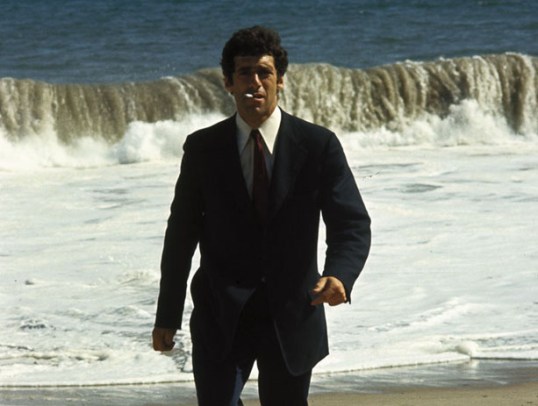
The Long Goodbye (1973, directed by Robert Altman)

Previous entries in The Unnominated:

  1. Auto Focus 
  2. Star 80
  3. Monty Python and The Holy Grail
  4. Johnny Got His Gun
  5. Saint Jack
  6. Office Space
  7. Play Misty For Me
  8. The Long Riders
  9. Mean Streets

Insomnia File #36: Punchline (dir by David Seltzer)


What’s an Insomnia File? You know how some times you just can’t get any sleep and, at about three in the morning, you’ll find yourself watching whatever you can find on cable? This feature is all about those insomnia-inspired discoveries!

Last night, if you were up at 12 midnight and couldn’t get to sleep, you could have turned over to Movies TV and watched the 1988 film, Punchline.

Sally Field is Lilah, a New Jersey housewife who, in between getting her children ready for school and helping her husband (John Goodman) throw dinner parties, is pursuing a career as a stand-up comedian.  Everyone says that she has a lot of stage presence but she struggles with her material.  She’s even resorted to buying jokes from a seedy man who hangs out in a grimy diner.

Tom Hanks is Steve Gold, the youngest member of a family of doctors.  When we first meet Steve, he’s getting kicked out of medical school for cheating on an exam.  That’s probably for the best, though.  Steve doesn’t want to be a doctor.  He wants to make people laugh!  Every night, he performs at a comedy club known as the Gas Station.  Audiences love him almost as much as he hates himself.

Together … they solve crimes!

No, actually, they don’t.  I wish they had but they don’t.  Instead, in the tradition of A Star is Born, Steve ends up mentoring Lilah and helping her develop her own voice as a comedian.  Lilah attempts to balance her loyality to her family with her friendship with Steve.  It’s not always easy, largely because Steve isn’t exactly emotionally stable.  On stage, Steve may be in control but offstage, he’s frequently selfish and self-destructive.  Complicating things is the fact that, even as he watches her talent threaten to eclipse his own, Steve thinks he might be falling in love with Lilah.

Punchline is an uneven movie, largely due to the fact that, while one role is perfectly cast, another one most definitely is not.  Not surprisingly, Tom Hanks is believable as a stand-up comedian.  It’s not just that he’s obviously comfortable on the comedy club stage.  Hanks also shows that he knows how to tell a joke.  To put it simply, he has good timing.  As played by Tom Hanks, you can look at Steve Gold and imagine people actually paying money for him to make them laugh.

But then you’ve got Sally Field.  At no point is Sally Field believable as a stand-up comedian.  That’s not so much a problem at the beginning of the film when Field is supposed to an inexperienced amateur.  But, as the film progresses, we’re asked to believe that Lilah could conceivably win a spot on television over Hanks and there’s nothing about Field’s performance that suggests that would be possible.  When we laugh at Sally Field’s jokes, it’s because she’s Sally Field and she’s talking about multiple orgasms.  However, the comedy club audience doesn’t know that she’s Sally Field.  Instead, they just know that she’s a comedian who has absolutely no timing.

Much like The Comedian and the Showtime TV series I’m Dyin’ Up Here, Punchline is one of those films that really goes overboard with the audience reaction shots.  The only thing worse than listening to an unfunny comedian is then being assaulted by a shot or the sound of an audience dying of laughter.  If someone’s not funny, showing some random guy doing spit take isn’t going to help.  One thing that directors rarely seem to take into account is that laughter is rarely neat.  It’s rare that a huge group of people both start and stop laughing at the exact same moment.  There’s usually a stray chuckle or two to be heard, both before and after the punchline has been delivered.  Even Tom Hanks, who actually is funny in the movie, is sabotaged by one scene where a group of patients at a hospital are way too amused by his act.

The film’s a bit too long and it takes its dramatic moments way too seriously but it’s almost worth watching for Tom Hanks. Hanks plays a real bastard in Punchline but you still care about Steve because he’s a likable bastard.  As you watch the film, you hope Steve becomes a star even if he doesn’t really deserve it.   I mean, he’s Tom Hanks!

Previous Insomnia Files:

  1. Story of Mankind
  2. Stag
  3. Love Is A Gun
  4. Nina Takes A Lover
  5. Black Ice
  6. Frogs For Snakes
  7. Fair Game
  8. From The Hip
  9. Born Killers
  10. Eye For An Eye
  11. Summer Catch
  12. Beyond the Law
  13. Spring Broke
  14. Promise
  15. George Wallace
  16. Kill The Messenger
  17. The Suburbans
  18. Only The Strong
  19. Great Expectations
  20. Casual Sex?
  21. Truth
  22. Insomina
  23. Death Do Us Part
  24. A Star is Born
  25. The Winning Season
  26. Rabbit Run
  27. Remember My Name
  28. The Arrangement
  29. Day of the Animals
  30. Still of The Night
  31. Arsenal
  32. Smooth Talk
  33. The Comedian
  34. The Minus Man
  35. Donnie Brasco

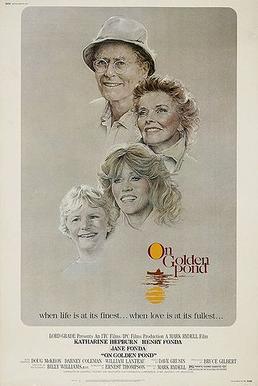
Lisa Reviews An Oscar Nominee: On Golden Pond (dir by Mark Rydell)


(With the Oscars scheduled to be awarded on March 4th, I have decided to review at least one Oscar-nominated film a day.  These films could be nominees or they could be winners.  They could be from this year’s Oscars or they could be a previous year’s nominee!  We’ll see how things play out.  Today, I take a look at the 1981 best picture nominee, On Golden Pond!)

On Golden Pond takes place in a cottage that’s located on a lake called Golden Pond.  Hence, the title.  As far as title’s go, it’s not a bad one.  It’s a film about an elderly couple who spends every summer in that cottage.  They’re in their golden years so I guess it makes sense that they would feel an affinity for Golden Pond.

That said, I think that an even better title for the film would be Everything Annoys Norman.

Norman Thayer, Jr. (Henry Fonda) is a cantankerous old man.  He’s 79 and not particularly looking forward to celebrating his 80th birthday.  He’s a retired college professor.  His wife claims that the last time Norma was really happy was when Franklin Roosevelt was elected president.  Norman likes to fish and still brags about the time he caught a legendary trout named Walter.

What Norman doesn’t like is having to deal with the world.  When he stops to get gas, he loudly complains that, “in his day,” gas only cost eighty-five cents.  When he’s told that there’s another “middle-aged” couple on the lake, he says that, unless he’s going to live to be 150, he’s not middle-aged.  He gets frustrated because his memory isn’t as good as it used to be.  When he goes out for a walk in the woods, he forgets where the path is and he has to return to the house.  Sometimes, he calls people by the wrong name.  At one point, he struggles to use a landline phone.  (I can only imagine how annoyed Norman would be if he was alive today.)  Norman doesn’t like to deal with anyone other than his wife.

Ethel (Katharine Hepburn) is Norman’s wife.  She loves him.  When she hears Norman referred to as being “a son of a bitch,” she replies, “That son of a bitch is my husband.”  Ethel is used to Norman and his ways.  As she puts it, she understands that he’s like a “lion” who has to roar just to remind himself that he still can.  Ethel is … well, basically, she’s Katharine Hepburn.

Ethel has invited their daughter, Chelsea (Jane Fonda), to celebrate Norman’s birthday with them.  Norman and Chelsea have a strained relationship.  It’s implied that Norman was an emotionally distant and overly critical father and that Chelsea has never been able to forgive him.  When she shows up with her new boyfriend, Bill Ray (Dabney Coleman) and his 13 year-old son, Billy Ray (Doug McKeon), Norman barely bothers to acknowledge her.  With Bill and Chelsea planning on vacation in Europe, they ask if Billy can stay at the cottage with Norman and Ethel.  Ethel agrees.  Norman acquiesces.

On Golden Pond is a film that I wanted to like more than I actually did.  After all, the film features two classic actors, Henry Fonda and Katharine Hepburn, appearing in their only film together.  (Both Henry Fonda and Hepburn won Oscars for their work here.)  Henry Fonda gives a good performance as a strong-willed man who is struggling to deal with his own mortality.  As for Hepburn, it’s not a great performance, largely because Ethel is a thinly written role, but she’s Katharine Hepburn so it doesn’t matter.  But almost everything about the film — from the tasteful music to the pretty but not overwhelming cinematography — feels more like something you’d expect to find in a television production instead of a feature film.  On Golden Pond was based on a play and, with almost all of the action set in that cottage, it really doesn’t escape its theatrical origins.  That said, it’s a sweet movie.  The love between Norman and Ethel feels real.  If nothing else, the film gave the great Henry Fonda his only Oscar.

On Golden Pond was nominated for Best Picture but lost to Chariots of Fire.

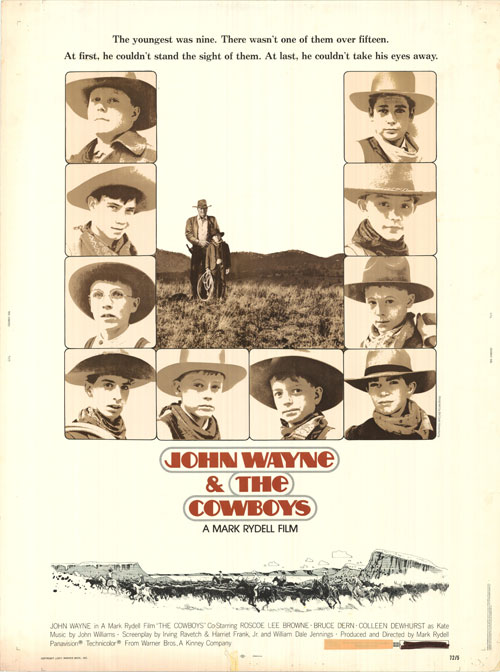
Young Frontier: John Wayne in THE COWBOYS (Warner Brothers 1972)


gary loggins's avatarcracked rear viewer

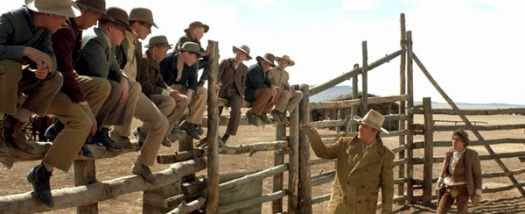
THE COWBOYS is not just another ‘John Wayne Movie’ from the latter part of his career. Not by a long shot. Duke had read the script and coveted the part of Wil Andersen, who’s forced to hire a bunch of wet behind the ears adolescents for a 400 mile cattle drive across the rugged Montana territory. Director Mark Rydell wanted George C. Scott for the role, but when John Wayne set his sights on something, he usually got what he wanted. The two men were at polar opposites of the political spectrum, and the Sanford Meisner-trained Rydell and Old Hollywood Wayne were expected to clash. They didn’t; putting their differences aside, they collaborated and cooperated  to make one of the best Westerns of the 70’s.

Andersen’s regular hands have all deserted him when gold is discovered nearby, leaving the aging rancher in the lurch. He heads for Boseman to look…

View original post 797 more words

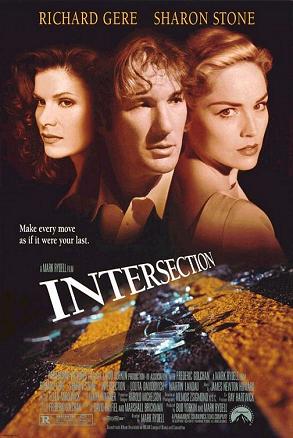
A Movie A Day #69: Intersection (1994, directed by Mark Rydell)


This one is just dumb.

Vincent Eastman (Richard Gere) and his wife, Sally (Sharon Stone), own an architectural firm.  Vincent is supposed to be creative and passionate but mostly he’s just Richard Gere in mom jeans.  Sally is a brilliant businesswoman but she is also emotionally repressed to the point of being frigid.  Vincent eventually starts having an affair with a travel writer named Olivia (Lolita Davidovich), who is everything that Sally is not.  Despite Martin Landau telling him that he has to make a decision because, and I quote, “Keep everything under one roof. That’s a basic rule of architecture,” Vincent cannot choose between his hateful wife and his loving mistress.  First he writes a letter to Olivia, telling her that he can not leave his wife.  Then, he sees a little girl who, like Olivia, has curly red hair and he takes that as a sign that he should leave his wife.  He calls Olivia and leaves a gushing message on her machine, telling her that he’s leaving Sally.  But before the letter is sent or the message is heard, Vincent is in a car crash that leaves him in a coma.  As both his wife and his mistress wait outside his hotel room, Vincent has visions of his two lovers swimming by him and struggles to decide who to follow.  Even in a coma, Vincent is an indecisive prick.

Intersection was on HBO while I was sick.  I watched it and it just made me feel worse.  Intersection was made during a weird period of time when Richard Gere was a romantic star and Sharon Stone was trying to prove that she was a serious actress.  Stone lobbied to be cast against type as Sally but she plays the role as so hard and bitchy that there’s never any question as to whether or not Vincent should leave her for Olivia.  Lolitia Davidovich (whatever happened to her?) does what she can with Olivia but the character never has any existence beyond her relationship with Vincent.  As for Richard Gere, when he starts hyperventilating about seeing a little girl who looks like his mistress, you’ll want to report him to social services.

Sadly, Intersection was directed by Mark Rydell and written by Marshall Brickman, two people who did great work before Intersection and have done very little since.

Marlowe at the Movies Pt 3: THE LONG GOODBYE (United Artists 1973)


gary loggins's avatarcracked rear viewer

lg1

Elliott Gould was a hot Hollywood commodity in the early 1970’s. The former Mr. Barbra Streisand broke through in the 1969 sex farce BOB & CAROL & TED & ALICE, earning an Oscar nomination for supporting actor. He was marketed as a counter-culture rebel, quickly appearing in MOVE, GETTING STRAIGHT, LITTLE MURDERS, and Robert Altman’s M*A*S*H. But his flame dimmed just as fast, and his erratic onset behavior and rumored drug abuse caused him to become unemployable. When Altman decided to make the neo-noir THE LONG GOODBYE, he insisted on casting Gould as Philip Marlowe. The film put Gould back on the map, and though critics of the era weren’t crazy about it, THE LONG GOODBYE stands up well as an artifact of its era and a loving homage to Raymond Chandler’s hard-boiled hero.

lg2

Philip Marlowe is clearly an anachronism is 70’s LA, with his ever-present cigarette, cheap suit, beat-up ’48 Lincoln…

View original post 583 more words