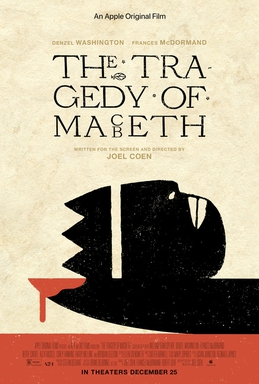
The Central Florida Critics Honors The Tragedy of Macbeth!


The Critics Association of Central Florida (CAFC) is a new group of critics.  Today, they announced their picks for the best of 2021 and it was a victory for a film that, so far, has been a bit quiet on the precursor front, Joel Coen’s The Tragedy of Macbeth.

Here are all the winners from Central Florida:

Best Picture
Winner: The Tragedy of Macbeth
Runner-up: Licorice Pizza

Best Director
Winner: Denis Villenueve – Dune
Runner-up: Joel Coen – The Tragedy of Macbeth

Best Actor
Winner: Andrew Garfield – tick, tick… BOOM!
Runner-up: Peter Dinklage – Cyrano

Best Actress
Winner: Renate Reinsve – The Worst Person in the World
Runner-up: Alana Haim – Licorice Pizza

Best Supporting Actor
Winner: Bradley Cooper – Licorice Pizza
Runner-up: Troy Kotsur – CODA

Best Supporting Actress
Winners (tie): Ann Dowd – Mass/Aunjanue Ellis – King Richard
Runner-up: Ariana DeBose – West Side Story

Best Cast
Winner: Dune
Runner-up: Mass

Best Documentary
Winner: Flee
Runner-up: Summer of Soul (… or, When the Revolution Could Not Be Televised)

Best International Film
Winner: A Hero
Runner-up: Drive My Car

Best Animated Film
Winner: The Mitchells vs. the Machines
Runners-up (tie): Flee/Luca

Best Screenplay
Winner: Fran Kranz – Mass
Runner-up: Aaron Sorkin – Being the Ricardos

Best Cinematography
Winner: Greig Fraser – Dune
Runner-up: Bruno Delbonnel – The Tragedy of Macbeth

Best Score
Winner: Hans Zimmer – Dune
Runner-up: Johnny Greenwood – Spencer

Best Original Song
Winner: “No Time to Die” – No Time to Die
Runner-up: “Be Alive”- King Richard

Best Central Florida FIlm
Winner: King Richard

Best Achievement in Diversity
Winner: Eternals

Book Review: The War For Late Night by Bill Carter


Remember when Conan O’Brien was the host of The Tonight Show?

It occurred back in 2009, back when the Shattered Lens was just starting out.  After hosting the show for 17 years, Jay Leno stepped down as host of The Tonight Show.  Though he was never popular with critics and I don’t think I’ve ever met anyone who actually made it a point to watch him, The Tonight Show with Jay Leno was the number one in the late night ratings.  David Letterman may have had more cultural cachet but Jay Leno was the host that most late night viewers were watching.  Other comedians may have mocked Leno for his safe and non-controversial hosting but, obviously, it worked.

When Leno first left The Tonight Show, no one was surprised by Leno’s retirement because he had announced it five years earlier.  In 2004, NBC renewed Leno’s contract as host with the condition that Leno would step down in 2009 and that Conan O’Brien would become the new host of the Tonight Show.  The fear was that, otherwise, Conan would switch to another network and compete directly against Leno.  At the time, Leno privately complained that he felt he was being fired but, publicly, he announced that he was happy to hand the show over to Conan in 2009.  In words that would come back to haunt him, Leno announced, “It’s yours, buddy!”

In 2009, Conan took over last night while Jay Leno got his own primetime talk show, which aired every weeknight.  It was an odd arrangement, one that was undertaken to keep Leno from going to another network.  (NBC was apparently very paranoid about its talent hopping to to other networks.)  Not only did NBC have to rearrange its schedule to make room for 5 days of Leno but many observers suspected that the whole thing was essentially some Machiavellian network scheme to eventually once again make Leno host of The Tonight Show while destroying Conan’s viability as a potential competitor.  Regardless of why NBC did what they did, it didn’t work out.  Leno’s primetime ratings quickly tanked.  So did that ratings for The Tonight Show with Conan O’Brien.  O’Brien’s supporters said that Conan’s bad ratings were due to Jay being a bad lead-in.  Jay’s supporters said that Conan just wasn’t ready for the 11:30 slot and that Conan’s ratings had been going down for a while.  And while most television critics sided with Conan, NBC obviously sided with Jay, who had always been viewed as being a good and loyal company man.

NBC’s solution to the problem made about as much sense as any of their other actions.  It was announced that Jay would have a new late night show, a thirty-minute variety show that would air before The Tonight Show.  The Tonight Show would be bumped back by half-an-hour.  O’Brien objected to getting stuck with a later start time but it turned out that his contract gave NBC the right to move the show back by 30 minutes.  O’Brien resigned, writing an open letter to “the people of Earth,” in which he said that he would not take part in the “destruction” of The Tonight Show.  Depending on which side you were on, Conan was either being heroic or overdramatic.

How big was this story?  It was so big that even I knew about it, despite the fact that I didn’t watch any of the late night shows.  It was one of the first big cultural conflicts that I can remember blowing up on Twitter.  Twitter was almost 100% pro-Conan.  Meanwhile, Leno’s supporters tended to be older, they tended to not have much use for social media, and they tended to be a bit more pragmatic.  Jerry Seinfeld sided with Jay, saying that the only problem was that Conan wasn’t getting the ratings.  Jimmy Kimmel very publicly sided with Conan.  David Letterman let everyone know that they were now seeing the Jay Leno that he had always known.

It was a mess and no one came out of it untouched.  Leno returned to hosting The Tonight Show but his reputation with now irreversibly tarnished.  Conan moved to TBS and, while the critics respected him and his fans continued to love him, he never quite regained the cultural prominence that he had before The Tonight Show debacle.  Most of all, NBC came out of it looking worse than ever.  The entire reason for Jay’s early retirement announcement was to avoid conflict and controversy.  Needless to say, that didn’t work out.

Looking over it all, one can’t help but wonder how a group of industry professionals, people with television experience who were paid to know what they were doing, could have so dramatically screwed everything up.

Bill Carter’s The War For Late Night is probably the best place to look for the answer.  Published in 2010, mere months after Leno replaced Conan as the host of The Tonight Show, The War For Late Night provides an insider’s look at what went down in the corporate offices of NBC as well as what was happening in both the O’Brien and the Leno camps.  Carter also examines what was going on with the other late night hosts while O’Brien and Leno was battling for the future of Late Night.  The book deals with the unsuccessful attempt to blackmail Letterman (remember that?) and also provides an interesting reminder of how likable Jimmy Kimmel was before he got all self-important.

Though Carter appears to be Team Coco, the book itself is relatively even-handed.  Leno is not portrayed a monster and Conan is not transformed into a saint.  (Indeed, the books makes clear that the real villains were the NBC executives, who first screwed Leno by forcing him out when he was at the top of the ratings and then screwed Conan by refusing to give his version of The Tonight Show time to grow.)  Instead, the book suggests that the main reason for the conflict between the two hosts was that Leno and Conan had two very differing ways of looking at their job as host of The Tonight Show.  Jay viewed it as a job.  Conan viewed it as almost a holy calling.  In the end, Jay was incapable of understanding why Conan was so upset about what was happening while Conan couldn’t understand how anyone couldn’t be upset.  After reading Carter’s book, it seems like a foregone conclusion that NBC would side with Jay.  Management always prefers an employee who doesn’t make waves compared to one who does.

Towards the end of the book, when David Letterman tries to arrange for Conan to appear in a Super Bowl commercial with him and Jay, Conan snaps that Letterman doesn’t understand how upset Conan still is over what happened.  Conan says that he will never be ready to laugh about it and, having read The War For Late Night, you don’t doubt it.  The book succeeds at both explaining what happened and also revealing the human beings behind the conflict.  In the end, even if you understand Jay’s position, your heart breaks for Conan.

Cleaning Out The DVR: An American Dream (dir by Robert Gist)


Loosely based on a novel by Norman Mailer, the 1966 film, An American Dream, tells the story of Stephen Rojack (Stuart Whitman).  Rojack’s a war hero, a man who has several medals of valor to his credit.  He’s married to Deborah (Eleanor Parker), the daughter of one of the richest men in the country.  He’s an acclaimed writer.  He’s got his own television talk show in New York.  He’s been crusading against not only the Mafia but also against corruption in the police department.  He has powerful friends and powerful enemies.  You get the idea.

He’s also got a marriage that’s on the verge of collapse.  Deborah calls Rojack’s show and taunts him while he’s on the air.  When Rojack goes to her apartment to demand a divorce, the two of them get into an argument.  Deborah tells him that he’s not a hero.  She says he only married her for the money and that she only married him for the prestige.  She tells him that he’s a lousy lover.  Being a character in an adaptation of a Norman Mailer novel, the “lousy lay” crack causes Rojack to snap.  He attacks Deborah.  The two of them fight.  Deborah stumbles out to the balcony of her apartment and it appears that she’s on the verge of jumping.  Rojack follows her.  At first, he tries to save her but then he lets her fall.  She crashes down to the street, where she’s promptly run over by several cars.  The cars then all run into each other while Rojack stands on the balcony and wails.  There’s nothing subtle about the first 15 minutes of An American Dream.

Actually, there’s nothing subtle about any minute of An American Dream.  It’s a film where everything, from the acting to the melodrama, is so over-the-top and portentous that it actually gets a bit boring.  There’s no relief from the screeching and the inauthentic hard-boiled dialogue.  When a crazed Rojack starts to laugh uncontrollably, he doesn’t just laugh.  Instead, he laughs and laughs and laughs and laughs and laughs and …. well, let’s just say it goes on for a bit.  It’s like a 60s version of one of those terrible Family Guy jokes.

Anyway, the police don’t believe that Deborah committed suicide but they also can’t prove that Rojack killed her.  Meanwhile, within hours of his wife’s death, Rojack meets his ex-girlfriend, a singer named Cherry (Janet Leigh).  Rojack is still in love with Cherry but Cherry is also connected to the same mobsters who want to kill Rojack.  Meanwhile, Deborah’s superrich father (Lloyd Nolan) is also on his way to New York City, looking for answer of his own.

An American Dream is a very familiar type of mid-60s film.  It’s a trashy story and it’s obvious that the director was trying to be as risqué as the competition in Europe while also trying to not offend mainstream American audiences.  As such, the film has hints of nudity but not too much nudity.  There’s some profanity but not too much profanity.  Rojack, Deborah, and Cherry may curse more than Mary Poppins but they’re rank amateurs compared to the cast of Who’s Afraid of Virginia Woolf?  It’s an unabashedly melodramatic film but it doesn’t seem to be sure just how far it can go in embracing the melodrama with alienating its target audience so, as a result, the entire film feels somewhat off.  Some scenes go on forever.  Some scenes feel too short.  The whole thing has the washed-out look of an old cop show.

All of that perhaps wouldn’t matter if Stephen Rojack was a compelling character.  In theory, Rojack should have been compelling but, because he’s played by the reliably boring Stuart Whitman, Rojack instead just comes across as being a bit of a dullard.  He’s supposed to be a charismatic, two-fisted Norman Mailer-type but instead, as played by Whitman, Rojack comes across like an accountant who is looking forward to retirement but only if he can balance the books one last time.  There’s no spark of madness or imagination to be found in Whitman’s performance and, as a result, the viewer never really cares about Rojack or his problems.

Noman Mailer reportedly never saw An American Dream, saying that it would be too painful to a bad version of his favorite novel.  In this case, Mailer made the right decision.

Scenes That I Love: Nicolas Cage in Wild At Heart


Today is Nicolas Cage’s birthday!

How old is Nicolas Cage today?  It doesn’t matter.  Nicolas Cage is timeless.  He has no age.  You could say that Nicolas Cage has always been there and will always be there.

On a more realistic note, you could say that Nicolas Cage is the nephew of director Francis Ford Coppola and that he started his film career as Nicolas Coppola.  (That was the name he used when he made his film debut with a small role in Fast Times At Ridgemont High.)  Not wanting people to assume that he only got work because of his family connections, Nic soon changed his last name to Cage in honor of Marvel’s Luke Cage.  Nicolas Cage has gone on to become one of the best-known actors in the world, an iconic figure of sorts.  When he’s good, Nicolas Cage is great.  When he’s appearing in a bad film, Nicolas Cage is often fascinating.  Cage may have a reputation for being an eccentric and for appearing in almost anything but often Cage’s brand of weirdness is just what is needed to elevate a film like Mandy or Pig from good to great.

In honor of his birthday, here are two scenes that I love from a very good film, David Lynch’s Wild At Heart.  Watch as Nicolas Cage explains the meaning of his snakeskin jacket.  Stick around to watch Nicolas Cage serenade Laura Dern with the world’s greatest Elvis impersonation.

Happy birthday, Nicolas Cage!

Music Video of the Day: Disco Inferno by The Trammps (1976, dir by ????)


Burn, baby, burn!

I kid you not when I say that this song was supposedly written after a viewing of the 1974 Best Picture nominee, The Towering Inferno.  Now, of course, the song is also about the heat that rises from the dance floor while everyone’s out there moving and apparently, there are some who think that the song was meant to be a reference to the counter-culture’s cry of “burn, baby burn!”  Myself, though, I will always assume that this song is all about Paul Newman, Faye Dunaway, William Holden, Steve McQueen, OJ Simpson, and a cast of thousands trying to survive that towering inferno.

“You keep building them,” McQueen said to Newman, “and I’ll keep putting them out.”

Disco Inferno became a hit when it was included on the Saturday Night Fever soundtrack.  More recently, it’s become a hit-of-a-different-sort because of the Bernie Sanders presidential campaigns.  It turns out that “Burn, Baby, Burn” can also be heard as “Bern, Baby, Bern.”  I mean, no wonder he won Iowa.

(Did Bernie win Iowa?  I can’t recall.  Hey, remember when I said that I was going to vote for Marianne Williamson and everyone thought that I was being serious?  What was that all about?)

Anyway, The Trammps is one of those bands that actually had a few hits in their heyday but will probably always be associated with just this one song.  The Trammps are still performing, though they’ve split into two different groups, each one using the Trammps name.  The fires of the disco inferno will never be extinguished.

Enjoy!

International Film Review: Kapo (dir by Gillo Pontecorvo)


What turns someone into a collaborator?

That’s the question that is at the heart of the 1960 Italian-French film, Kapo.

The film opens in Nazi-occupied France, with 14 year-old Edith (played by 22 year-old Susan Strasberg) practicing the piano at her teacher’s house.  Edith wears the yellow star on her dress and, as she finishes her lesson, her teacher instructs her to be careful returning home.  Edith cheerfully states that she and her family have nothing to worry about.  Edith walks home and, as the opening credits roll, we follow her as she walks through what appears to be a very robust and busy city.  Other than the yellow star on Edith’s dress, there are no outward signs of the occupation in the city.  However, when Edith finally reaches her neighborhood, she sees that her family and her neighbors are being rounded up the Germans.

Edith and her parents are sent to a concentration camp but get separated as soon as they arrive.  Wandering around the camp, Edith meets another prisoner named Sofia (Didi Perago).  Sofia takes Edith to the camp doctor.  He arranges for Edith to switch identities with a non-Jewish prisoner who has just died.  Edith’s new name is Nicole and her yellow star is removed and replaced by a black triangle, which designates Edith/Nicole as being “asocial.”

Edith is transferred to another concentration camp, this one in Poland.  She comes to think of herself as being Nicole.  When another prisoner, Terese (Emmanuelle Riva), asks her is she’s Jewish, Nicole replies that she’s not.  Nicole quickly grows hardened to life in the camp and exchanges sex for food.  She becomes the lover of a guard named Karl (played by future spaghetti western mainstay Gianni Garko) and is made a Kapo, a prisoner who also works as a guard.  However, when Nicole then falls in love with a Russian prisoner-of-war and he asks her to help him and his comrades escape, she is forced to finally decide whether she is Nicole or whether she’s Edith.

To return to the question that started this review: What makes someone a collaborator?  That’s the question that Kapo attempts to answer and it’s a question that was undoubtedly close to  Director Gillo Pontecorvo’s heart.  Pontecorvo was one of the most political of the post-World War II Italian filmmakers.  He was born in 1919 and, as a child, saw firsthand the rise of Mussolini.  As a Jew, he also experienced anti-Semitism firsthand and, in 1938, he left Italy for France.  In France, he befriended Sartre and many other key members of the International Left.  He was reportedly emotionally and politically moved by his friends who left France to fight on the Republican side during the Spanish Civil War.  During World War II, he joined the Italian communist party and fought in the resistance.  It’s perhaps not a surprise that, in Kapo, Nicole’s chance at redemption comes about as a result of falling in love with a communist soldier.

Unfortunately, Kapo struggles to answer the question of why one would collaborate with the enemy.  The main problem is that Susan Strasberg is miscast of Edith/Nicole, never convincing us that she’s a naïve teenager or a hardened collaborator.  She’s also not helped by a script that continually reduces everything down to who Edith/Nicole happens to be in love with at any given point of time.  It also doesn’t help that Strasberg find herself acting opposite Emmuelle Riva, Gianni Garko, and other actors who all authentic in a way that she’s not.

Kapo is more valuable as an examination of the horrors of the camps than as a character study.  The film’s most powerful moment comes early on, when Edith/Nicole learns that, in the eyes of the Nazis, it’s preferable that someone be a criminal to being a Jew.  In that moment, the film captures both the brutal horror and the arbitrary absurdity of prejudice.  The scene is followed by another harrowing moment, in which Edith can only helplessly watch as her parents are marched to gas chambers.  In those brief moments, Kapo becomes an important film.  You may not remember much about Edith/Nicole but you will remember those scenes.

I should also note that, regardless of its flaws, the film does end on a powerful note, one that will leave many viewers asking how much they would be willing to sacrifice to do the right thing.  Would you sacrifice your life to save hundreds of others?  It’s a question that Edith/Nicole has to answer, though the film leaves it ambiguous as to whether her final decision was made by her or if it was made for her.  Still, the film’s final images do stay with you.

In America, Kapo received a nomination for what was then known as the Best Foreign Film Oscar.  In Europe, though, many critics criticized Pontecorvo for making a film that they felt sentimentalized the Holocaust.  Stung by their criticism, Pontecorvo’s next film, which would be considered by many critics to be his masterpiece, would be the documentary-style The Battle of Algiers, one of the most resolutely anti-sentimental political films ever made.

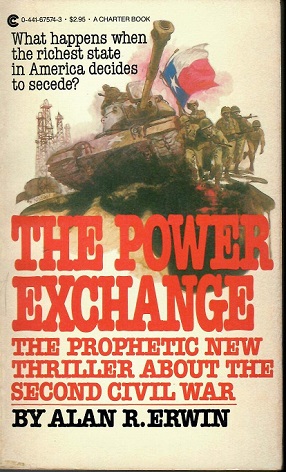
Novel Review: The Power Exchange by Alan R. Erwin


The Northern states are hit by a harsh and deadly winter, one that leads to a nation-wide blackout.  The residents of a Buffalo nursing home die while waiting for help that never comes.  Panics sets in across the nation as citizen realize that the federal government can’t solve all of their problems.  The President, a craven politician, puts the blame on the state of Texas, saying that the state has been hoarding its energy resources and not contributing their fair share to keep the rest of the country running.

With the President determined to make Texas into a scapegoat and proposing a series of new regulations designed to take control of the state’s natural resources, the people of Texas rebel.  The newly elected governor fights back, announcing that Texas is prepared to take advantage of the controversial clause in the article of annexation that he says gives the state the right to secede.  China and OPEC are quick to offer aide to the new Republic of Texas.  While the courts and Congress debate whether or not Texas has the right to leave the union, the CIA decides to take action into their own hands….

That may sound like a particularly paranoid take on today’s headlines but it’s actually the plot of a 1979 novel called The Power Exchange.  As a Texan, what can I say?  The idea of seceding from the Union has always been a popular one down here, even if it’s not something that we necessarily take seriously.  After all, we know that the rest of the States don’t really like us and, for the most part, we don’t like them either.  (Not me, though!  I love every state in the Union.)  So, why not secede and close the northern border and basically kick out anyone who complains about the weather or demands to know why we don’t have a Waa Waa on every street corner?  It’s an enjoyable little fantasy, even if it’s probably for the best that it will never happen.  For one thing, if Texas actually did secede, Austin would probably then want to secede from the Lone Star Republic and form the People’s Collective of Travis.  And if Austin seceded, Dallas would definitely follow, just so we could brag about how much better The Free Republic of Dallas was when compared to all of the other new nations on the North American continent.  Things would get messy.

The whole point of The Power Exchange is that it would be very difficult for Texas to secede.  Not only would there by legal issues but there would also be military conflict.  The new nation would have to make some deals with some less than savory characters.  In the book, it may be Governor Jack Green who masterminds the secession but it falls to Lt. Gov. Margaret Coursey to actually pull it off and she quickly learns that there is no easy way to declare your independence.  The book was written by political journalist so, needless to say, the sections about how secession actually works tend to get a bit overly technical.  Fortunately, there are also secret agents, assassins, and one out of nowhere sex scene that is tossed in to keep things from getting too dry.  One thing I’ve learned from reading old paperbacks is that every novel, regardless of the subject matter, had to have at least one sex scene randomly tossed in.  It’s kind of like when a character in a movie suddenly curses just to make sure that the movie gets at least a P-13 rating.

The Power Exchange was among the many paperbacks that I inherited from my aunt.  I read it the week after Christmas.  It was a quick read and fun little “what if?” scenario.

4 Shots From 4 Films: In Memory of Peter Bogdanovich


4 Or More Shots From 4 Or More Films is just what it says it is, 4 shots from 4 of our favorite films. As opposed to the reviews and recaps that we usually post, 4 Shots From 4 Films lets the visuals do the talking!

I just read that director Peter Bogdonavich passed away earlier today.  He was 82 years old.

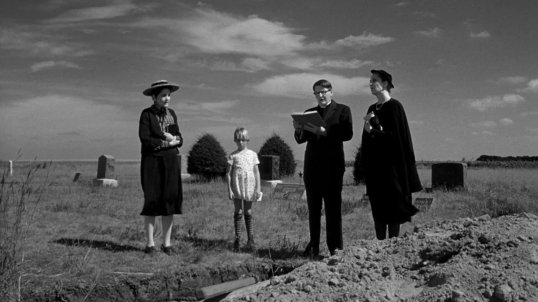
Bogdanovich’s directorial career serves as both an inspiration and a cautionary tale.  He achieved the dream of many a film journalist by making the jump from writing about films to actually making them.  He went from interviewing Orson Welles to being declared the next Orson Welles.  His first film, Targets, allowed him to give Boris Karloff one final, great role.  His second film, The Last Picture Show, was nominated for Best Picture.  With his next film, Paper Moon, he directed Tatum O’Neal to an Oscar.  At a time when the so-called “movie brats” were rejecting the old ways of making films, Bogdonavich paid homage to the classic films of the past.  At his height, he made films that were both entertaining and, if you got all the references, educational.

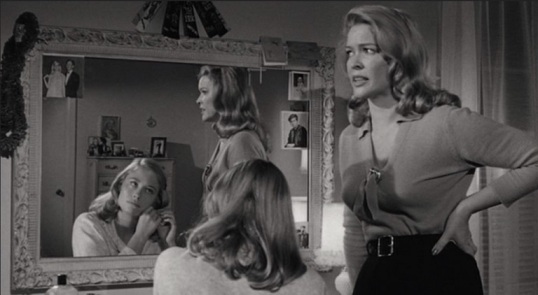
Unfortunately, Bogdanovich’s later films were not as successful with critics or audiences.  Bogdanovich himself would later say that he underestimated just how much some of his former colleagues resented both his early success and his very public relationship with actress Cybil Shepherd.  In short, the critics were waiting for him to slip up and they attacked films like Daisy Miller and At Long Last Love like sharks in a feeding frenzy.  By the end of the 70s, he often found himself struggling to raise the money to make the movies that he wanted to make.  So determined was he to see that his film They All Laughed was released that he distributed it himself, at great financial cost.

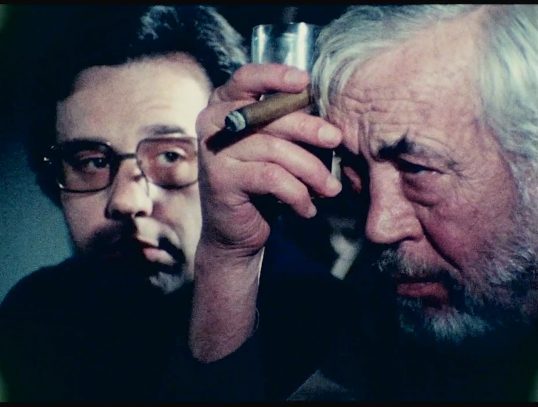
Regardless of his later career struggles, Bogdanovich remained a tireless advocate for watching and appreciating the films that were produced during the the Golden Age of Hollywood and he was a regular fixture on TCM, where he would discuss the films of Welles, John Ford, John Huston, Howard Hawks, and others.  He oversaw the release of Orson Welles’s long-delayed The Other Side of the Wind, a film in which he co-starred with John Huston.  Along with directing, Bogdanovich was a reliable character actor and those who don’t know him as a director might know him as Dr. Melfi’s therapist on The Sopranos.

Finally, a lot of the Bogdanovich films that were initially dismissed have subsequently been positively reappraised.  Bogdanovich was correct when he said that many of his later films were unfairly criticized or dismissed.  If nothing else, Bogdanovich’s love of the movies came through in everything that he did.  He will be missed for film historians everywhere.

Here are….

4 Shots From 4 Peter Bogdanovich Films

Targets (1968, dir by Peter Bogdanovich, DP: Laszlo Kovacs)

The Last Picture Show (1971, dir by Peter Bogdanovich, DP: Bruce Surtees)

Paper Moon (1973, dir by Peter Bogdanovich, DP: Laszlo Kovacs)

The Thing Called Love (1993, dir by Peter Bogdanovich, DP: Peter James)

The Power of the Dog Wins In North Carolina!


Yesterday, the North Carolina Film Critics Association became the latest critic group to announce that Jane Campion’s The Power of the Dog was their pick for best picture of 2021!

Here are all of the winners and the nominees from North Carolina!

(Winners are in bold!)

BEST NARRATIVE FILM
Drive My Car
Dune
The French Dispatch
The Green Knight
Licorice Pizza
Mass
Pig
The Power of the Dog
West Side Story
The Worst Person in the World

BEST DOCUMENTARY FILM
Flee
The Sparks Brothers
Summer of Soul
Val
The Velvet Underground

BEST ANIMATED FILM
Encanto
Flee
Luca
The Mitchells vs. The Machines
Raya and the Last Dragon

BEST FOREIGN LANGUAGE FILM
Drive My Car
A Hero
Riders of Justice
Titane
The Worst Person in the World

BEST DIRECTOR
David Lowery – The Green Knight
Denis Villeneuve – Dune
Jane Campion – The Power of the Dog
Paul Thomas Anderson – Licorice Pizza
Steven Spielberg – West Side Story

BEST CINEMATOGRAPHY
Dune
Nightmare Alley
The Power of the Dog
The Tragedy of Macbeth
West Side Story

BEST ACTOR
Andrew Garfield – tick, tick… BOOM!
Benedict Cumberbatch – The Power of the Dog
Dev Patel – The Green Knight
Nicolas Cage – Pig
Will Smith – King Richard

BEST SUPPORTING ACTOR
Alex Wolff – Pig
Jason Isaacs – Mass
Jeffrey Wright – The French Dispatch
Kodi Smit-McPhee – The Power of the Dog
Woody Norman – C’mon C’mon

BEST ACTRESS
Alana Haim – Licorice Pizza
Jessica Chastain – The Eyes of Tammy Faye
Kristen Stewart – Spencer
Olivia Colman – The Lost Daughter
Renate Reinsve – The Worst Person in the World

BEST SUPPORTING ACTRESS
Aunjanue Ellis – King Richard
Ann Dowd – Mass
Ariana DeBose – West Side Story
Kirsten Dunst – The Power of the Dog
Ruth Negga – Passing

BEST VOCAL PERFORMANCE IN ANIMATION OR MIXED MEDIA
Abbi Jacobson – The Mitchells vs. The Machines
Danny McBride – The Mitchells vs. The Machines
Jacob Tremblay – Luca
Kelly Marie Tran – Raya and the Last Dragon
Stephanie Beatriz – Encanto

BEST ACTING ENSEMBLE
Dune
The French Dispatch
Licorice Pizza
Mass
The Power of the Dog

BEST ORIGINAL SCREENPLAY
C’mon C’mon
The French Dispatch
Licorice Pizza
Mass
Pig

BEST ADAPTED SCREENPLAY
Drive My Car
Dune
The Green Knight
Passing
The Power of the Dog

BEST EDITING
Dune
The French Dispatch
The Last Duel
The Power of the Dog
West Side Story

BEST SPECIAL EFFECTS
Dune
The Green Knight
The Matrix Resurrections
Spider-Man: No Way Home
The Suicide Squad

BEST STUNT COORDINATION
Black Widow
The Matrix Resurrections
No Time To Die
Shang Chi and the Legend of the Ten Rings
Spider-Man: No Way Home

BEST COSTUME DESIGN
Cruella
Dune 
Last Night in Soho
Nightmare Alley
Spencer

BEST HAIR & MAKE-UP
Cruella
Dune
The Eyes of Tammy Faye
House of Gucci
Nightmare Alley

BEST PRODUCTION DESIGN
Dune
The French Dispatch
The Green Knight
Nightmare Alley
West Side Story

BEST SCORE
Don’t Look Up
Dune 
No Time To Die
The Power of the Dog
Spencer

BEST ORIGINAL SONG
Every Letter – Cyrano
Guns Go Bang – The Harder They Fall
Just Look Up – Don’t Look Up
No Time To Die – No Time To Die 
So May We Start – Annette

BEST SOUND DESIGN
Dune 
Nightmare Alley
No Time To Die
tick, tick… BOOM!
West Side Story

BEST DIRECTORIAL DEBUT
Fran Kranz – Mass
Lin-Manuel Miranda – tick, tick… BOOM!
Maggie Gyllenhaal – The Lost Daughter
Michael Sarnoski – Pig
Rebecca Hall – Passing

BEST BREAKTHROUGH PERFORMANCE
Alana Haim – Licorice Pizza
Cooper Hoffman – Licorice Pizza
Emilia Jones – CODA
Woody Norman – C’mon C’mon
Rachel Zegler – West Side Story

KEN HANKE MEMORIAL TAR HEEL AWARD
Anthony Mackie (Falcon and the Winter Soldier; Synchronic; Outside the Wire; The Woman in the Window) – Studied at the University of North Carolina School of the Arts
Ariana DeBose (West Side Story; Schmigadoon) – From Raleigh, North Carolina
Brian Tyree Henry (Eternals; The Woman in the Window; Godzilla vs. Kong) – From Fayetteville, North Carolina
Jonathan Majors (The Harder They Fall, Loki) – Studied at the University of North Carolina School of the Arts
Stephen McKinley Henderson (Dune; Bruised) – Studied at the University of North Carolina School of the Arts

Licorice Pizza Wins In Oklahoma


The Oklahoma Film Critics Circle have named Paul Thomas Anderson’s Licorice Pizza the best film of 2021!

Actually, I really like the OFCC’s picks.  They spread the wealth pretty evenly between Licorice Pizza and The Power of the Dog and they remembered two of my favorite films of the year, Pig and The Green Knight.  They also gave out an award for Most Disappointing Film Of The Year and how can I not cheer their selection of Don’t Look Up?

Here are the winners in Oklahoma!

Best Picture
“Licorice Pizza”

Top 10 Films
1. Licorice Pizza
2. The Power of the Dog
3. West Side Story
4. The Green Knight
5. Summer of Soul
6. The French Dispatch
7. Tick, Tick…Boom!
8. C’mon C’mon
9. Dune
10. Nightmare Alley / Pig / Red Rocket (TIE)

Best Director
Winner: Jane Campion – “The Power of the Dog”
Runner-Up: Paul Thomas Anderson – “Licorice Pizza”

Best Actress
Winner: Alana Haim – “Licorice Pizza”
​Runner-Up: Jessica Chastain – “The Eyes of Tammy Faye”

Best Actor
Winner: Benedict Cumberbatch – “The Power of the Dog”
​Runner-Up: Andrew Garfield – “Tick, Tick…Boom!”

Best Supporting Actress
Winner: Kirsten Dunst – “The Power of the Dog”
​Runner-Up: Ariana DeBose – “West Side Story”

Best Supporting Actor
Winner: Kodi Smit-McPhee – “The Power of the Dog”
Runner-Up: Ciaran Hinds – “Belfast”

Best Adapted Screenplay
Winner: “The Power of the Dog” – Jane Campion
​Runner-Up: “Dune” – Jon Spaihts, Denis Villeneuve & Eric Roth

Best Original Screenplay
Winner: “Licorice Pizza” – Paul Thomas Anderson
​Runner-Up: “The French Dispatch” – Wes Anderson

Best Animated Film
Winner: “The Mitchells vs the Machines”
​Runner-Up: “Encanto”

Best Documentary
Winner: “Summer of Soul (…Or, When the Revolution Could Not Be Televised)”
​Runner-Up: “The First Wave”

Best Foreign Language Film
Winner: “Drive My Car” (Japan)
​Runner-Up: “The Worst Person in the World” (Norway)

Best First Feature
Winner: “The Lost Daughter” – Maggie Gyllenhaal
​Runner-Up: “Tick, Tick…Boom!” – Lin-Manuel Miranda

Best Ensemble
Winner: “The French Dispatch”
​Runners-Up: “Licorice Pizza” & “The Power of the Dog” (TIE)

Best Cinematography
Winner: “Dune” – Greig Fraser
​Runner-Up: “The Power of the Dog” – Ari Wegner

Best Score
Winner: “The Power of the Dog” – Jonny Greenwood
​Runner-Up: “Dune” – Hans Zimmer

Best Body of Work
Winner: Lin-Manuel Miranda (“Tick, Tick…Boom!,” “Encanto,” “In the Heights” & “Vivo”)
​Runner-Up: Andrew Garfield (“Tick, Tick…Boom!,” “The Eyes of Tammy Faye” & “Spider-Man: No Way Home”)

Most Disappointing Film
Winner: “Don’t Look Up”
​Runners-Up: “Halloween Kills” & “Spencer” (TIE)