6 Trailers For May 4th


Star Wars not only launched an entire expanded universe.  It also launched a few thousand rip-offs.  For this weeks edition of Lisa Marie’s Favorite Grindhouse and Exploitation Film Trailers, we’ve got six trailers that might seem just a little familiar….

  1. Battle Beyond The Stars (1980)

From Roger Corman comes this film, which is as much a rip-off of The Magnificent Seven as it is of Star WarsBattle Beyond The Stars was a surprise box office success when it was first released.

2. Space Raiders (1983)

Also from executive producer Roger Corman, Space Raiders tells the story of what happens when a quirky band of intergalactic outlaws pick up an annoying (and frankly, rather stupid) kid.

3. The Humanoid (1979)

From director Aldo Lado, The Humanoid features the great Richard Kiel as the title character.  There’s also a cute robot, an older mystic, and an evil Empire.

4. Message From Space (1978)

Do you remember another film that had a message from space?

5. Flash Gordon (1980)

Interestingly enough, Star Wars was as inspired by the original Flash Gordon as the Flash Gordon reboot was inspired by Star Wars.

6. Starcrash (1978)

And finally, we have Starcrash, the Star Wars rip-off that is actually better than Star Wars!

The TSL Grindhouse: The Spook Who Sat By The Door (dir by Ivan Dixon)


1973’s The Spook Who Sat By The Door opens with Senator Hennington (Joseph Mascolo) in a panic.

The Senator is running for reelection and is struggling to appeal to white voters and minority voters at the same time.  White voters are happy that the Senator recently gave a speech in favor of “law and order” but now, he’s polling weakly with black voters.  His wife (Elaine Aiken) suggests that the Senator win back black voters by demanding that the CIA hire more black agents.

The CIA responds to the political pressure by hiring Dan Freeman (Lawrence Cook) to be their first black agent.  Freeman is given the standard CIA training and taught how to start revolutions in other countries.  However, after he completes his training, Freeman is assigned no real responsibilities.  He is given a desk job and spends most of his day making copies.  Whenever a senator or a reporter visits CIA Headquarters, Freeman is trotted out so that the CIA can claim to be diverse.  Freeman understands that he’s a token.  He knows that his job is to basically sit by the door and be seen.  But Freeman actually has bigger plans.

After spending a few years at the CIA, Freeman resigns and heads back to Chicago to work as a social worker.  Using what he learned at the agency, he starts to recruit young black men as freedom fighters.  He and the Cobras (as they’re called) launch their own guerilla war against the establishment in Chicago.  Some of their tactics are violent and some of them are not.  Freeman understands the importance of winning both hearts and minds and he recruits Willy (David Lemieux) to serve as his lead propagandist.  Because Willy is light-skinned, he is also assigned to rob a bank because Freeman knows that both the witnesses and the police will mistake him for being white and will be less likely to fire on him.  (The other members of the Cobras wear whiteface during the robbery.)

Freeman hopes that he will be able to recruit his childhood friend, Dawson (J.A. Preston), to the cause.  Dawson, however, now works as a detective for the Chicago PD and has been assigned to beak up the Cobras.  Will Freeman be able to bring over Dawson and what will happen if Dawson resists?

Based on a novel by Sam Greenlee (who was one of the first black men to be recruited to work with the United States Information Agency and who based many of Freeman’s CIA experiences on his own), The Spook Who Sat By The Door has achieved legendary status as a film that the FBI reportedly tried to keep out of theaters.  Theater owners were pressured to either not book the film or to only book it for a week before replacing it with a less incendiary film.  As a result, The Spook Who Sat By The Door became a difficult film to see.  As often happens, the efforts to censor the film only added to its revolutionary mystique.

Of course, in 2024, one can go on YouTube and watch the film for oneself.  It’s definitely uneven film, one that has pacing issues (especially at the beginning) and also one that suffers due to its low budget.  Depicting the overthrow of the government on a budget will always be a challenge.  Some of the acting is a bit amateurish but Lawrence Cook broods convincingly as Freeman and he’s well-matched by J.A. Preston’s portrayal of the more down-to-Earth Dawson.  At its best, there’s a raw authenticity and anger to the film that immediately captures the viewer’s attention.  It’s the rare political film to actually feature conversations about actual politics and it’s a film that asks how far people would be willing to go to accomplish change.  The Spook Who Sat By The Door suggests that the true villains are the members of the establishment who cynically embraced the civil rights struggle in their words but not in their actions.  In the end, Dan Freeman becomes a bit of a fanatic but the film suggests that perhaps a fanatic was what the times demanded.

Robert Englund as Han Solo? A Little May 4th Trivia


Can you imagine how things might have played out if Robert Englund had played Han Solo?

It’s not as far-fetched as it might sound.  In his autobiography, Hollywood Monster: A Walk Down Elm Street with the Man of Your Dreams, Englund mentions that he was one of the many actor who, in 1975, auditioned for a role in the first Star Wars film.  It’s often forgotten that, before he became famous as Freddy Krueger in A Nightmare In Elm Street, Englund was a busy character actor who had roles in several big studio productions in the 70s.  He was definitely a part of the “new Hollywood” that included people like George Lucas, Steven Spielberg, and Jon Milius.

Though Englund doesn’t go into much detail, he does say that he read for the roles of both Han Solo and Luke Skywalker.  At the time, Englund didn’t feel that he was right for either role and he went back to his apartment under the correct impression that he would not be cast.  However, he did feel that his friend and then-roommate Mark Hamill would be a good pick for Luke Skywalker and Englund writes that he encouraged Hamill to try out for the role.

Would Mark Hamill have been cast if Robert Englund hadn’t told him about the audition?  Probably.  Given that Star Wars was Lucas’s follow-up to the very popular American Graffiti, it’s probable that every struggling young actor in Hollywood was hoping to audition.  As well, Hamill was not totally unknown to George Lucas, having early read for a role in American Graffiti.  Still, it’s nice to think that, long before he was cast as Freddy Krueger, Robert Englund may have played a role in casting one of the most successful films of all time.

What would Robert Englund have been like as Han Solo?  He definitely would not have been as grouchy as Harrison Ford’s Han.  Indeed, one of the striking things out about Englund’s pre-Nightmare career was how he was usually cast as friendly characters who were almost shy.  Englund would have been friendlier and rather eccentric Han Solo but I think he would have been entertaining in his way.
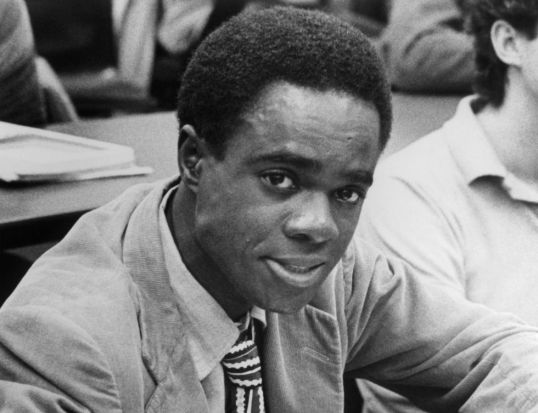
Because of the film’s success, it can be a bit difficult to know who was actually considered for a role in Star Wars.  Lucas has said that he originally wanted to cast Black actor Glynn Turman as Han Solo but he feared audiences would not accept the possibility of an interracial romance between him and Leia, even in a galaxy far away.  (Lucas’s regret over that decision is one of the things that led to the casting of Billy Dee Williams as Lando Calrissian.)  The film’s IMDb trivia page insists that everyone from Al Pacino to Bill Murray to Marlon Brando to Chevy Chase was considered for the role of Han Solo and I have to say that this is a case where I doubt the accuracy of the IMDb.  Harrison Ford, who had originally been hired only to read with people at the auditions, eventually got the role despite telling Lucas, about the script, “You can type this shit but you can’t say it.”
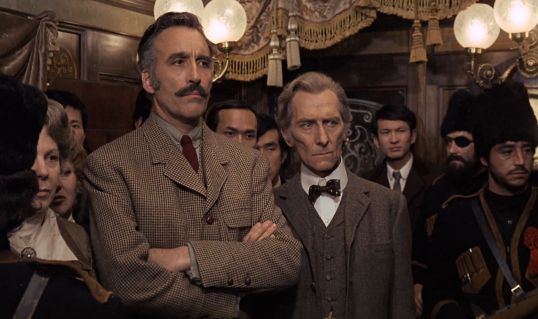
In several interviews, Christopher Lee expressed regret at having turned down the role of Grand Moff Tarkin, which was instead played by Lee’s best friend Peter Cushing.  Interestingly enough, Cushing was also one of Lucas’s choices for Obi-Wan Kenobi so it’s easy to imagine a universe in which Star Wars reunited two Hammer films legends, along with setting box office records.

Famously, Lucas held joint-auditions with his friend Brian De Palma.  De Palma was casting Carrie and just about everyone who read for one of the films also read for the other.  Reportedly, William Katt came close to getting the role of Luke before instead being cast as Carrie’s doomed prom date.  Amy Irving was also a strong contender for Leia, before instead ending up as Sue Snell in De Palma’s film.  Some source that that Sissy Spacek also read for Leia, though I’ve also read that Spacek was not a part of the joint-auditions.  That’s one thing about collecting trivia about classic films.  It’s often hard to know what’s true and what’s just wishful thinking.
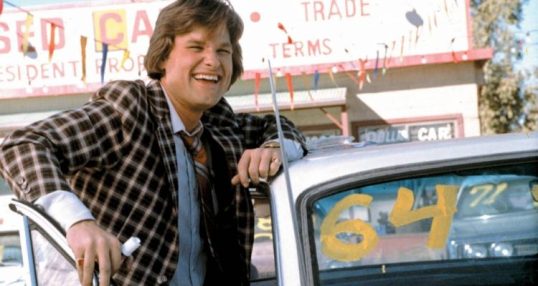
I should mention that another strong contender for Han Solo (and reportedly Luke as well) was Kurt Russell.  It’s actually easy to imagine Kurt Russell as Han and, just as with Englund, it leads to an intriguing game of what if.  Would Kurt Russell have gone on to have Harrison Ford’s career if he had been cast in Star Wars?  Would Russell have gone to play Indiana Jones and Jack Ryan if he had been cast as Han Solo and would Harrison Ford have ended up helping the President to Escape from New York?  Or is it just as possible that Star Wars have not worked without the chemistry of Harrison Ford, Carrie Fisher, and Mark Hamill?  Would a Kurt Russell, Amy Irving, and William Katt version of Star Wars captured the imagination of audiences?

It’s a question to which there is no real answer, a bit like wondering if The Godfather would have been as big a hit if it had starred George C. Scott, Martin Sheen, and Burt Reynolds.  Still, it’s interesting to consider.

Live Tweet Alert: Watch The Wicker Man with #ScarySocial


As some of our regular readers undoubtedly know, I am involved in a few weekly live tweets on twitter.  I host #FridayNightFlix every Friday, I co-host #ScarySocial on Saturday, and I am one of the five hosts of #MondayActionMovie!  Every week, we get together.  We watch a movie.  We tweet our way through it.

Tonight, for #ScarySocial, Deanna Dawn will be hosting 1973’s The Wicker Man!

If you want to join us on Saturday night, just hop onto twitter, start the film at 9 pm et, and use the #ScarySocial hashtag!  The film is available on Prime and Tubi.  It’s a friendly group and welcoming of newcomers so don’t be shy.

Scenes That I Love: Audrey Hepburn in Two For The Road


Today would have been the 95rd birthday of one of my favorite actresses, the wonderful Audrey Hepburn!

We’re all Audrey Hepburn fans here at the Shattered Lens.  How could we not be?  Long before she made her film debut, Audrey Hepburn literally risked her life as a part of the Dutch Resistance during World War II.  After she retired from regularly appearing in the movies, she devoted herself to humanitarian causes and brought attention to the plight of refugees the world over.  She was one of the greats and, for that reason, today’s scene that I love comes from one of her best films, 1967’s Two For The Road.

In this scene, Albert Finney and Audrey Hepburn play a married couple who discuss their troubled but loving marriage while on the road.  This film features one Audrey’s best performances.

4 Shots From 4 Films: Special Star Wars Edition


4 Or More Shots From 4 Or More Films is just what it says it is, 4 shots from 4 of our favorite films. As opposed to the reviews and recaps that we usually post, 4 Shots From 4 Films lets the visuals do the talking!

Today, we wish all of our readers a happy May The Fourth Be With You Day!  It’s time for….

4 Shots From 4 Star Wars Films

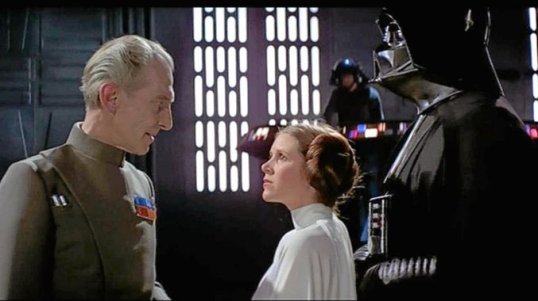
Star Wars Episode IV: A New Hope (1977, dir by George Lucas, DP: Gilbert Talyor)

The Empire Strike Back (1980, dir by Irvin Kershner, DP: Peter Suschitzky)

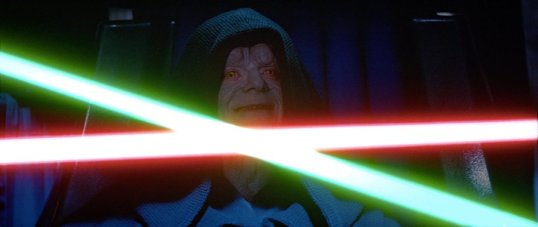
Return of the Jedi (1983, dir by Richard Marquand, DP: Alan Hume and Alec Mills)

Rogue One (2016, dir by Gareth Edwards, DP: Greig Fraser)

Late Night Retro Television Review: Friday the 13th: The Series 2.2 “The Voodoo Mambo”


Welcome to Late Night Retro Television Reviews, a new feature where we review some of our favorite and least favorite shows of the past! On Fridays, I will be reviewing Friday the 13th: The Series, a show which ran in syndication from 1987 to 1990. The show can be found on YouTube!

This week, Micki, Ryan, and Jack get involved in voodoo!

Episode 2.2 “The Voodoo Mambo”

(Dir by Timothy Bond, originally aired on October 7th, 1988)

This episode opens with Micki and Ryan watching a street party that just happens to be taking place in front of Curious Goods.  It’s a Haitian voodoo party and, judging from Micki and Ryan’s comments, it is apparently some sort of annual event that takes place wherever this show is supposed to be set.

(If Curious Goods was set in New Orleans, I could maybe buy this without giving it too much thought.  But the show is filmed in Canada and, judging from the states that were specifically mentioned over the course of the first few episode, it appears that Curious Goods is meant to be located in the Northeast.  How many voodoo street parties do you see in New Jersey?)

Micki and Ryan want to join the party but Jack insists that they first meet his old friend, Hedley (Joe Seneca).  Hedely is a powerful voodoo priest and he has traveled to the city so that his daughter, Stacy (Rachael Crawford, who was on the first season of T & T until her character vanished), can become a priestess.  Ryan is obviously attracted to Stacy but the attraction goes nowhere, which I guess is good considering that every woman who likes Ryan ends up dying in some terrible way.

Meanwhile, good-for-nothing Carl Walters (David Matheson) is in danger of losing the mansion that has been in his family’s possession ever since their days as plantation overlords.  Carl finds a voodoo mask in the basement.  Whenever he puts the mask on, the spirit of a voodoo priestess named Laotia (Suzanna Coy) rips out someone’s throat.  Laotia wants to rip out the throats of the city’s top voodoo priests so that she can gain their powers.  Carl agrees to help because part of the deal is that Carl will get what he wants as well.  I’m not sure what Carl wants, though.  Money, I guess.  But it doesn’t matter because, of course, Laotia is really only concerned with what she wants.

This episode had some atmospheric moments, especially in the scenes featuring the big party outside of Curious Goods.  There’s also some black-and-white footage of actual voodoo ceremonies that is randomly inserted throughout the episode.  I assume that black-and-white footage is meant to be a flashback or something like that, though the show never really makes it all that clear.  That said, this episode was a bit on the dull side.  Carl and Laotia were not particularly interesting and this is the second episode this season to feature an old friend of Jack’s.  (That wouldn’t be a problem, except for the fact that we’re only two episodes in.)  This episode felt a bit tired, as if someone entered the production office and shouted, “I need an episode about Voodoo!  You’ve got 48 hours!”

Next week, hopefully, thing will be a bit more interesting.

The Film of 2024: Lola (dir by Nicola Peltz Beckham)


Lola (Nicola Peltz Beckham) works her days working in a convenience store and her nights dancing at a strip club.  It’s not enjoyable work but she’s trying to raise money so that she can enroll her little brother, Arlo (Luke David Blumm) in a special arts school in Dallas.  At present, Arlo is being homeschooled by their religious fanatic mother, Mona (Virginia Madsen).  Heavy-drinking Mona throws a fit whenever she sees Arlo putting on makeup or wearing a dress but she doesn’t do a thing about the way her boyfriend (Trevor Long) leers at Lola.  She’s the type who gives people doughnuts with “God” written in icing.

Lola thinks that it is a film about poor people but actually, it isn’t.  Written by, directed by, and starring the daughter of billionaire Nelson Peltz, Lola is less a film about poor people and more a film about what rich people think being poor is like.  As such, everyone smokes and everyone lives in either a trailer or a one-story house but the inside of those houses are perfectly lit and not the least bit cluttered.  Lola may have to work two jobs and she may be hooked on cocaine but her hair and her makeup are always perfect.  Lola’s homelife may not be perfect but, as all poor white girls do in movies like this, she has a super-loyal Black friend (Raven Goodwin) who doesn’t appear to have a life outside of obsessing on Lola’s problems.  Lola also has a dumbass boyfriend (played by Richie Merritt, the star of White Boy Rick) who keeps her supplied with cocaine but who also gets upset when Lola says she’s not ready to lose her virginity to him.

The film follows Lola from one trauma to another.  We’re supposed to sympathize with her because her life is so bad but the film itself doesn’t seem to realize that Lola is often her own worst enemy.  For instance, knowing that she cannot afford to lose her job at the convenience store, she still tries to steal from the store in the most obvious way possible.  When she gets caught, her boss fires her.  Even when she offers to get the stolen stuff out of her locker (seriously, she put it in her locker?), her boss tells her that she’s fired.  The film sets this up as if the boss is somehow being unfair but actually, he’s doing what any boss would do to an employee stealing products from his shelf.  He has every right to fire her and if he didn’t, he would basically be inviting everyone else who works for him to steal from him as well.  Losing the job sends Lola into a spiral of depression and desperation but again, it was her own fault so how sorry am I supposed to feel for her?

Eventually, there is a tragedy.  It’s not great shock when it happens but it does lead to scene of Lola sobbing while portentous string music playing on the soundtrack.  Much like everything else in the film, the music choice is so obvious and heavy-handed that it’s more like to inspire a chuckle than a tear.  The right to portentous string music is something that a movie has to earn.  Requiem For A Dream earned Lux AeternaLola is no Requiem For A Dream.

Instead, Lola has more in common with Ryan Gosling’s directorial debut, Lost River.  Both Lola and Lost River are films about poverty that try way too hard to be profound.  The difference is that Lola lacks the spark of madness that made Lost River interesting, albeit incoherent.  That said, I do think that Nicole Peltz Beckham does have some talent as a director.  There are a few impressive shots to be found in Lola, even if Beckham doesn’t really seem to yet understand how to use them to tell a compelling story.  But with some experience and a script written by someone other than herself, Nicole Peltz Beckham seems like she has the potential to be a worthwhile director.

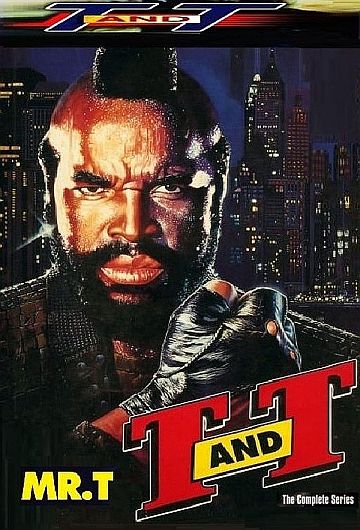
Retro Television Review: T and T 3.7 “A Lesson In Values”


Welcome to Retro Television Reviews, a new feature where we review some of our favorite and least favorite shows of the past! On Fridays, I will be reviewing T. and T., a Canadian show which ran in syndication from 1987 to 1990.  The show can be found on Tubi!

In this episode, Terri finally get to show what she can do in court.

Episode 3.7 “A Lesson In Values”

(Dir by Clay Borris, originally aired on February 17th, 1990)

While working late at the courthouse, Terri stumbles across a homeless man named Nesmith.  Nesmith explains that he’s not a drug addict or a drunk or a criminal or anyone dangerous.  He’s just a man who lives on the streets and travels the country, jotting down his thoughts in notebooks.  Terri is charmed by Nesmith and offers to find him room at a nearby hostel.  Nesmith accepts the offer but then drops dead of a heart attack.

Terri takes it upon herself to serve as executor of his estate.  In his will, Nesmith asks that all of his money — several thousand dollars — be left to his friend and traveling companion, Junior Grayson.  Turner tracks down Grayson, which is about all T.S. Turner does in this episode.  Instead, the entire episode revolves around Terri trying to prove that Nesmith’s will is legitimate.  Nesmith’s wife (Fran Gebhard) and her sleazy attorney (John Stocker) want the money for themselves, despite the fact that Nesmith left home 12 years previously and had little contact with her afterwards.

It took seven episodes but Terri finally gets to be at the center of an episode.  Unfortunately, it’s a pretty predictable episode and it’s also one that presents the homeless as being not people in need of support but instead as whimsical truth-tellers who enjoy living on the streets.  As played by Kristina Nicoll, Terri is not a particularly credible attorney.  I mean, Amy was definitely an underused character but you never doubted that she knew what she was doing in court.  Terri, on the other hand, seems to think that suggesting that the judge will be a big meany head if she doesn’t find for Grayson is an effective argument.

In the end, Grayson does get the money but, because Nesmith’s owed a bunch of back taxes (Come on, Canada, the mans dead!), Grayson will only be getting a few dollars.  That’s okay, though.  Grayson knows that there’s more to life than money.  Grayson gives Terri all of Nesmith’s notebooks and the episode ends with Terri starting to read them while Turner and Decker box in the background.  (Seriously, Turner does next to nothing in this episode and, from what we do see of him, he just seems to be annoyed in general.)  Personally, I was hoping that the episode would end with Terri announcing that she was going to get the notebooks published so that everyone could know who Nesmith was.

Another strange thing about this episode is that the actors playing Nesmith and Grayson were not credited.  I sat through this show a handful of times, looking for their names but they were never listed.  (And they’re not listed at the imdb either.)  The actor playing Grayson gave a heartfelt performance and was this episode’s redeeming factor.  I wish I could credit him.

Live Tweet Alert: Join #FridayNightFlix For Rolling Thunder!


As some of our regular readers undoubtedly know, I am involved in a few weekly live tweets on Twitter and Mastodon.  I host #FridayNightFlix every Friday, I co-host #ScarySocial on Saturday, and I am one of the five hosts of #MondayActionMovie!  Every week, we get together.  We watch a movie.  We tweet our way through it.

Tonight, at 10 pm et, we’ve got a classic, 1977’s Rolling Thunder!

If you want to join us this Friday, just hop onto twitter, start the movie at 10 pm et, and use the #FridayNightFlix hashtag!  It’s a friendly group and welcoming of newcomers so don’t be shy.

Rolling Thunder is available on Prime and Tubi!  See you there!