Lisa Reviews An Oscar Nominee: Moonstruck (dir by Norman Jewison)


Nominated for Best Picture of 1987, Moonstruck is a film about love, romance, New York City, and being Italian.

Loretta Castorini (Cher) is a widow and a bookkeeper who lives with her parents, Cosmo (Vincent Gardenia) and Rose (Olympia Dukakis) in Brooklyn.  When her boyfriend, Johnny (Danny Aiello), asks Loretta to marry him, Loretta says yes even though she knows that, while she likes him, she’s not really in love with him.  After he proposes, Johnny reveals that he has to go to Sicily to see his “dying” mother.  He asks Loretta to pay a visit to his estranged brother, Ronny (Nicolas Cage), and invite him to the wedding.  Loretta, a strong believer in family and the importance of following tradition, agrees.

Loretta finds Ronny working in the bakery that he owns.  Ronny is not thrilled to learn that his brother has gotten engaged.  Ronny reveals that he has a wooden hand.  He lost his real hand when he accidentally placed it in a bread slicer while having a conversation with Johnny.  After he lost his hand, Ronny’s then-fiancée left him.  Ronny has never forgiven Johnny for the loss of his hand.  “I lost my hand!  I lost my bride!”  Ronny yells to the heavens.  Loretta, however, immediately understands that Johnny actually hurt his hand to get his fiancée to break up with him.  A conversation at Ronny’s apartment leads to the two of them impulsively sleeping with each other.  The next day, Ronny promises to never bother Loretta again if she agrees to go the opera with him.

What the guilt-stricken Loretta doesn’t know is that her father is having an affair himself and it turns out that Cosmo and Mona (Rose Gilette) enjoy the opera as well.  Meanwhile, Rose finds herself tempted by a lecherous college professor named Perry (John Mahoney).

There’s a lot of stereotypes to be found in Moonstruck.  Of course, passionate Ronny loves the opera.  Of course, the simple but well-intentioned Johnny abandons his fiancée so that he can rush to Sicily to be with his “dying” mother who, it turns out, isn’t dying at all.  Of course, Loretta slaps Ronny and tells him to snap out of it.  (I should note that I’m a fourth Italian myself so I could definitely relate to some of this film.  I’ve never liked opera, though.)  Fortunately, the film’s cast is so perfectly chosen and John Patrick Shanley’s script so adroitly maintains the balance between the broad comedy and the small dramatic moments that it doesn’t matter that all of the characters are a bit stereotypical.  The film comes to a wonderful life.  It’s impossible not love these characters, flaws and all.  Cher and Olympia Dukakis deserved the Oscars that they both won for this film.  Vincent Gardenia deserved the nomination that he received.  Nicolas Cage, Danny Aiello, and John Mahoney were not nominated but they should have been.  In particular, John Mahoney is heart-breaking in his small role, playing the type of lecherous character that most films would have just portrayed as being a cardboard buffoon.  As for Nicolas Cage, Moonstruck is a film that features both his trademark eccentricity and his ability to show the real and vulnerable human being underneath all of the bluster.  Moonstruck is a film about the search for love and the glory of finding it.  It’s a wonderfully romantic film, even if almost all of that love seems to involve infidelity.  As directed by Norman Jewison, Moonstruck not only celebrates falling in love but also celebrates being lucky enough to do so in New York City.  It’s a love letter not just to its characters but to the city as well.

Moonstruck was nominated for Best Picture but it lost to a far more epic production, The Last Emperor.


Retro Television Review: Fantasy Island 5.22 “The Ghost’s Story/The Spoilers”


Welcome to Retro Television Reviews, a feature where we review some of our favorite and least favorite shows of the past!  On Tuesdays, I will be reviewing the original Fantasy Island, which ran on ABC from 1977 to 1984.  Unfortunately, the show has been removed from most streaming sites.  Fortunately, I’ve got nearly every episode on my DVR.

This week, season 5 comes to an end.

Episode 5.22 “The Ghost’s Story/The Spoilers”

(Dir by Don Chaffey, originally aired on May 8th, 1982)

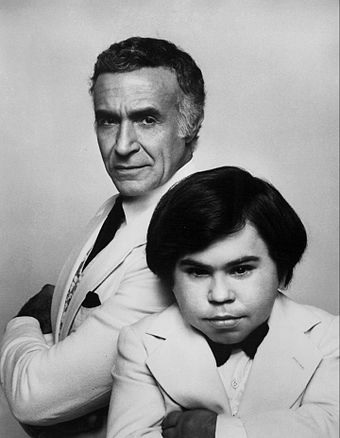
The latest batch of guests are arriving and Julie is nowhere to be seen!  Perhaps that’s because, as Mr. Roarke explains to Tattoo, Julie is helping out a guest who has an invisibility fantasy.  Tattoo and Roarke watch as the guest walks by.  His body may be invisible but his pants are not.

This is the final episode of the fifth season and it’s also the final episode in which Wendy Schaal will be credited as a part of the cast.  I wasn’t a huge fan of the Julie character but it still seems like a bit of a shame that she didn’t get to do anything in the finale.  Then again, this episode doesn’t really feel like a finale.  I don’t know what was going on behind the scenes during the fifth season but it’s hard not to feel, with the way that Julie and Tattoo have randomly shown up in different stories, that the season’s episodes were not shown in the order in which they were filmed.  Maybe all the Julie episodes were filmed at one time, while Herve Villechazie was off doing something else.  Who knows?  It’s just been a strange season.

That’s all wonderful and interesting, Lisa …. But what about this week’s fantasies!? you may be asking.

They both feel a bit familiar.  That’s not always a bad thing, of course.  Fantasy Island is a comfort show and a part of the comfort is knowing that things are always going to play out in a certain way.  But, with this episode, both fantasies felt as if they had been done better in the past.

Harry (Bo Hopkins) is a bounty hunter who comes to the Island to track down fugitive Nick Tanner (Robert Fuller).  Nick has been accused of robbing a bank and is hiding out on a nearby island.  Harry goes to the island but he soon discovers that Nick is innocent and that the real bank robbers have also come to the island in search of Nick.  Luckily, there’s a widow named Juliet (Jo Ann Pflug) who is also living on the island.  Harry and Nick hide out at her place before they all team up to defeat the real bank robbers.  Nick and Juliet fall in love and Mr. Roarke performs one of his trademark wedding ceremonies.  Nick and Juliet then board the plane back to America and …. wait a minute, what about Harry?  It was his fantasy!  We don’t ever see Harry leave Fantasy Island.  Maybe he’s still living there.

(Personally, I think he married Julie and that’s why she was no longer working there once season six began.  I like that.  Consider it to be canon.)

The other fantasy is a haunted house story.  Amanda Parsons (Tanya Roberts) comes all the way from Baltimore to spend 24 hours in one of Fantasy Island’s many haunted houses.  Two other paranormal investigators attempt to do it before Amanda but they end up fleeing after two minutes.  I’m not sure why.  The manor looks creepy but it turns out that the ghost is a rather wimpy and not at all frightening guy named Timothy Black (Dack Rambo).  Cursed by his own father after Timothy refused to fight a duel with Captain Fitzhugh Ross (John McCook), Timothy has spent two hundred years haunting the old manor.  Amanda takes sympathy on him.  It turns out that Ross’s descendant is also on the Island.  Timothy challenges him to a duel, causing the latest Ross to run in fear.  Timothy and his ghost dad (John Myhers) realize it’s okay to be scared of getting shot.  Ghost Dad asks Roarke to bring Timothy back to life so that he can pursue his romance with Amanda.  Roarke does just that, despite the fact that, in many previous episodes, Roarke has specifically said that he cannot bring the dead back to life.

Usually, I enjoy Fantasy Island‘s haunted house fantasies but this one didn’t do much for me.  I think it’s because the ghost was just too wimpy.  There’s nothing more annoying than a whiny a dead guy,

And so ends this very odd season.  Next week, we being season 6!

The Eric Roberts Collection: Bonnie And Clyde: Justified (dir by David DeCoteau)


2013’s Bonnie and Clyde: Justified opens with a long-haired Eric Roberts introducing himself as legendary Texas Ranger Frank Hamer.  Speaking straight to the camera, Roberts-as-Hamer warns us against idolizing the notorious Depression-era outlaws Bonnie and Clyde.  They were murderers!, Hamer tells us with all the fervor of a tent revival preacher.

We then flashback to Bonnie (Ashley Hayes) and Clyde (Jim Poole) driving down a country road.  Clyde is behind the wheel.  Bonnie, a redhead like me!, reads aloud her latest poem about what it’s like to be a notorious outlaw.  Suddenly, Hamer and his men appear on the roadside and open fire.

We then start yet another flashback.  15 year-old Bonnie marries good-for-nothing Roy (Julian Brand) while Clyde and his brother Buck (Hagen Mills) steal a truck full of turkeys.  Jump forward to 1929 and Bonnie is unhappily married and working in a diner that we’re told is in Dallas, Texas.  Oddly enough, there’s a lot of mountains in the background.  I live in North Texas and I can assure you that, as much as things have changed here over the past few years, one thing has always remained the same.  There are no mountains in Dallas County.

Eventually, Bonnie meets Clyde, they fall in love, and they rob banks.  At least, that’s what we’re told.  The majority of the film is told through sepia-toned still shots and newspaper headlines.  Clyde attempts to escape from prison but we don’t actually see him do it.  Instead, we just see a headline.  Bonnie and Clyde rob banks but, again, we don’t really see it as much as we hear about it.  Even when people die during the robberies, we don’t really learn the exact circumstances that led to Clyde opening fire.  Ashley Hayes actually gives a good performance as Bonnie and her scrappy interpretation of the character is probably closer to the truth than Faye Dunaway’s.  As for Jim Poole, he’s much better-looking than the real Clyde Barrow and that’s a good thing.  Who wants to watch an ugly bank robber?  There’s a reason why my distant-relation Pretty Boy Floyd remains a legend.  As for the title, you may be wondering what exactly was justified about Bonnie and Clyde.  You can argue that they were justified in doing what they had to do in order to survive during the Great Depression.  Or you can argue that Frank Hamer was justified in ambushing them.  Or you can assume the film was trying to appeal to (or perhaps just tricks) fans of the Justified television series.  Or you can just not worry about it.

This is the story of Bonnie and Clyde on a budget.  It came out in 2013, presumably to coincide with a 4-hour Bonnie and Clyde miniseries that was airing on A&E at the time.  To be honest, you have to respect the nerve of a film about Bonnie and Clyde that doesn’t actually feature much of them doing what they were famous for.  Cheers to director David DeCoteau for sticking with it and giving Eric Roberts top-billing for a cameo appearance.  And cheers to Eric Roberts for just being Eric Roberts.

Previous Eric Roberts Films That We Have Reviewed:

  1. Star 80 (1983)
  2. Blood Red (1989)
  3. The Ambulance (1990)
  4. The Lost Capone (1990)
  5. Love, Cheat, & Steal (1993)
  6. Love Is A Gun (1994)
  7. Sensation (1994)
  8. Dark Angel (1996)
  9. Doctor Who (1996)
  10. Most Wanted (1997)
  11. Wolves of Wall Street (2002)
  12. Mr. Brightside (2004)
  13. Six: The Mark Unleased (2004)
  14. Hey You (2006)
  15. In The Blink of an Eye (2009)
  16. Enemies Among Us (2010)
  17. The Expendables (2010) 
  18. Sharktopus (2010)
  19. The Dead Want Women (2012)
  20. Deadline (2012)
  21. The Mark (2012)
  22. Miss Atomic Bomb (2012)
  23. Lovelace (2013)
  24. The Mark: Redemption (2013)
  25. Self-Storage (2013)
  26. This Is Our Time (2013)
  27. Inherent Vice (2014)
  28. Road to the Open (2014)
  29. Rumors of War (2014)
  30. Amityville Death House (2015)
  31. A Fatal Obsession (2015)
  32. Stalked By My Doctor (2015)
  33. Enemy Within (2016)
  34. Joker’s Poltergeist (2016)
  35. Prayer Never Fails (2016)
  36. Stalked By My Doctor: The Return (2016)
  37. The Wrong Roommate (2016)
  38. Dark Image (2017)
  39. Black Wake (2018)
  40. Stalked By My Doctor: Patient’s Revenge (2018)
  41. Clinton Island (2019)
  42. Monster Island (2019)
  43. The Savant (2019)
  44. Seven Deadly Sins (2019)
  45. Stalked By My Doctor: A Sleepwalker’s Nightmare (2019)
  46. The Wrong Mommy (2019)
  47. Exodus of a Prodigal Son (2020)
  48. Free Lunch Express (2020)
  49. Her Deadly Groom (2020)
  50. Top Gunner (2020)
  51. Deadly Nightshade (2021)
  52. Just What The Doctor Ordered (2021)
  53. Killer Advice (2021)
  54. The Poltergeist Diaries (2021)
  55. The Rebels of PT-218 (2021)
  56. A Town Called Parable (2021)
  57. Bleach (2022)
  58. My Dinner With Eric (2022)
  59. Aftermath (2024)
  60. The Wrong Life Coach (2024)

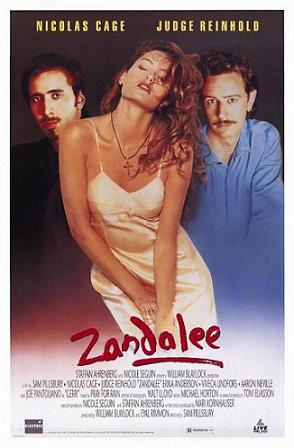
Scenes That I Love: Nicolas Cage in Zandalee


Today, the Shattered Lens wishes a happy 61st birthday to the great Nicolas Cage.  Over the years, Cage has become an icon of everything that we love about the movies.  He’s appeared in great films.  He’s appeared in bad films.  He’s done films that barely had a budget and he’s appeared in blockbusters.  He can do drama.  He can do comedy.  He can do horror.  He can do action.  His performances are often so wonderfully bizarre that will sit through the worst films ever made just to catch a Nicolas Cage cameo.  And yet, for every strange Cage performance, there’s a Cage performance that is undeniably brilliant, like his performance in Pig.

Today’s scene that I love comes from 1990’s Zandalee.  In this scene, Nicolas Cage and Judge Reinhold share a dance on a Louisiana pier.

4 Shots From 4 Films: Special Roger Pratt Edition


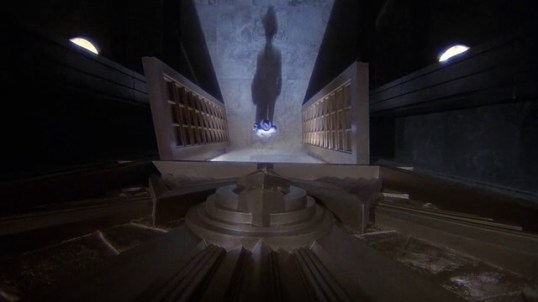
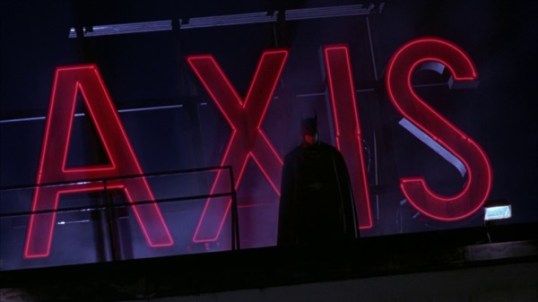
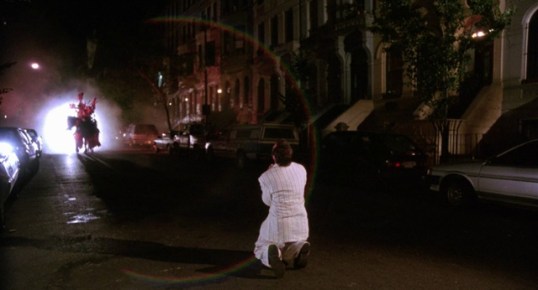
4 Shots From 4 Films is just what it says it is, 4 shots from 4 of our favorite films. As opposed to the reviews and recaps that we usually post, 4 Shots From 4 Films lets the visuals do the talking.

Yesterday, it was announced that the veteran cinematographer Roger Pratt passed away in December.  Known for his work with Terry Gilliam and Tim Burton, Pratt left behind a legacy of visually stunning films.  It’s time for…

4 Shots From 4 Roger Pratt Films

Brazil (1985, dir by Terry Gilliam, DP: Roger Pratt)

Batman (1989, dir by Tim Burton, DP: Roger Pratt)

The Fisher King (1991, dir by Terry Gilliam, DP: Roger Pratt)

12 Monkeys (1995, dir by Terry Gilliam, DP: Roger Pratt)


Film Review: The Great Smokey Roadblock (dir by John Leone)


First released in 1977, The Great Smokey Roadblock tells the story of Elegant John Howard (Henry Fonda).

Elegant is not really his first name.  It’s a nickname, one to let us know that, in the world of independent truckers, John Howard was one of the good guys.  He never crashed his rig.  He never overcharged for a job.  He always arrived on time and in good shape.  John Howard was a good man but then he turned 60 and he got sick.  He spent months in the hospital, unable to work.  His truck was repossessed.  The movie starts with John sneaking out of his hospital room, stealing back his truck, and hitting the road in search of one final job.  Though John says he just wants to make enough money to get his truck back, the truth is that John is terminally ill.  If he’s going to die, he wants to die doing what he loves.  Of course, dying while driving could lead to some trouble for anyone else who happens to be on the road at the time but still, you have to respect John’s determination.  He’s a true American, independent to his core.

(My Dad occasionally made a living driving a truck so perhaps that’s why I’m partial to films like this one.)

John picks up a hitchhiker, a religious young man named Beebo Crozier (Robert Englund).  John picks Beebo up because Beebo was walking through the desert in a suit.  Beebo claims that he’s walking to Florida but John tells him that he can’t do that.  John will drive Beebo to Florida.  Of course, John also expects Beebo to pay for the gas that his truck uses because it’s not like John has any money.  At first, Beebo accuses John of cheating him.  (Henry Fonda cheating someone!?  Perish the thought!)  Soon, however, John has become Beebo’s mentor.

Everyone respects John but no one wants to hire him.  The only offer that John gets is from sleazy Charlie Le Pere (Gary Sandy), who has an agenda of his own.  Finally, John visits his old friend, Penelope (Eileen Brennan).  Penelope is a madam whose brothel has just been closed down.  John agrees to transport Penelope and her girls (including Susan Sarandon) to a new location on the East Coast.  Penelope offers to help John pay the bills.  Elegant John’s a pimp now!  (I was about to say that this seemed like an odd turn-of-events for Henry Fonda but then I remembered that he starred in The Cheyenne Social Club with Jimmy Stewart.)

There’s not really much of a plot to The Great Smokey Roadblock.  John, Beebo, Penelope, and the girls travel from one location to another.  They get thrown in jail by a notoriously corrupt deputy named Harley Davidson (Dub Taylor).  After they escape, they become minor celebrities.  Two counterculture journalists (played by Austin Pendleton and John Byner) show up and help them broadcast their story and the film comes to a halt while Pendleton and Byner exchange what sounds like improvised dialogue.  The police attempt to set up a roadblock to stop Elegant John and his Six Mystery Women.  I guess that’s the Great Smokey Roadblock of the title.

It’s a weird movie, in that the humor is extremely broad and often crude but Henry Fonda is playing a man who is not only terminally ill but who actually looks like he’s terminally ill.  (Henry Fonda himself was reportedly very ill during the filming of The Great Smokey Roadblock.)  As such, it’s a rather melancholy comedy, one in which every joke seems like it might be the last one that Elegant John will ever hear.  In the 70s, not even a trucker comedy could have a happy ending and, as such, The Great Smokey Roadblock feels like a drive-in film for the existential set.  The film’s plot doesn’t really add up to much and is full of plot holes that serve as evidence of a troubled production.  That said, there’s something rather charming about seeing a pre-Nightmare On Elm Street Robert Englund playing a gentle guy who ends up as Henry Fonda’s protegee.  Fonda and Englund play off each other well and their scenes together are the best thing about The Great Smokey Roadblock.

Music Video of the Day: Footloose by Kenny Loggins (1984, dir by Brian Grant)


Today, we wish a happy 78 birthday to signer Kenny Loggins.  Our music video of the day is for the Oscar-nominated theme song from 1984’s Footloose, which was written and performed by Mr. Loggins.

Enjoy!

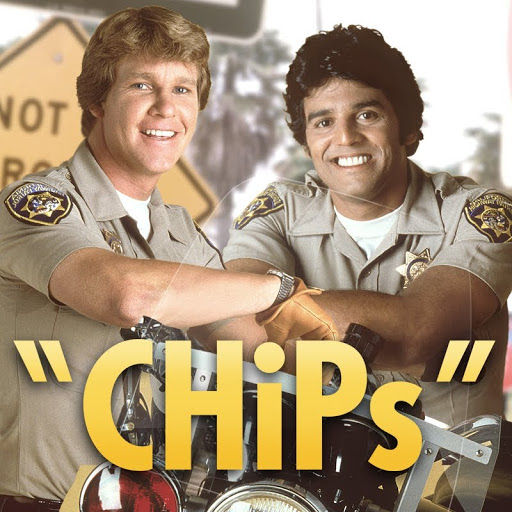
Late Night Retro Television Review: CHiPs 3.3 “Valley Go Home!”


Welcome to Late Night Retro Television Reviews, a feature where we review some of our favorite and least favorite shows of the past!  On Mondays, I will be reviewing CHiPs, which ran on NBC from 1977 to 1983.  The entire show is currently streaming on Prime!

This week, Ponch and Jon go to the beach!

Episode 3.3 “Valley Go Home!”

(Dir by Barry Crane, originally aired September 29th, 1979)

There’s been a string of thefts at the beach.  Someone is stealing radios out of cars and then making a fast getaway.  Somehow, this thief is able to blend in so well with everyone else that no one even notices him breaking into the cars until it’s too late.  Jon and Ponch have been assigned to patrol the beach and keep the radios safe.

Of course, Jon and Ponch don’t just worry about radio thieves.  When two women lose control of their car while towing a sailboat, Jon and Ponch are there to not only help them stop the car but also to ask them out on a windsurfing date.  (Every episodes of CHiPs found a way to promote the so-called “California lifestyle.”  It was probably one of the most effective tourism commercials ever filmed.  I don’t even swim and this episode still made me want to go wind surfing.)  They also get involved in the rivalry between three local white surfers and a group of Latino teenagers from the Valley.  Both groups drive Chevy vans with ornate decals.  One gets the feeling that the blonde surfers call their van the “Second Base Mobile.”

This is an episode of CHiPs that takes place at the beach so you’ve probably already guessed that it doesn’t take long for Ponch to find an excuse to put on a speedo.  Baker and Ponch not only work together but they also hang out together.  On the show, they’re best friends.  (Behind-the-scene, Larry Wilcox and Erik Estrada were not quite so close.)  They spend a lot of time at the beach, eating ice cream.  Baker wears modest swim trunks.  Ponch walks around in his speedo and shows off his dazzling smile.  One gets the feeling that, if this episode had been made in 1999 instead of 1979, Ponch would have been handing out AOL CDs to everyone he met and saying, “When you sign up, I get fifteen free minutes to talk to you.”

Ponch has a theory that the radio thief is disguising himself as someone who works at the beach.  (Needless to say, Ponch comes up with the theory while Baker agrees because, on CHiPs, everything was much pretty much about Ponch.)  Ponch suspects that the thief might be the local ice cream man.  Ponch and Baker eat a lot of ice cream in this episode.  Eventually, it turns out to be the local trash collector.  The ice cream man is off the hook!

As far as the surfers and the Valley kids are concerned, it all works out.  Of course, it works out in the most dangerous way possible, with the surfers and the Valley kids chasing each other in their vans and both crashing their vehicles.  After 48 hours in jail, all of them are back on the beach.  The surfers agree to teach the Valley kids how to handle a board.  The Valley kids agree to take the surfers to Mexico.  Ponch and Jon have a good laugh before going windsurfing.  How can you not love California?

This was a pretty silly episode but the beach scenery was nice.  It’s hard for me to not enjoy a show that features not one but two vans.  All hail the 70s!

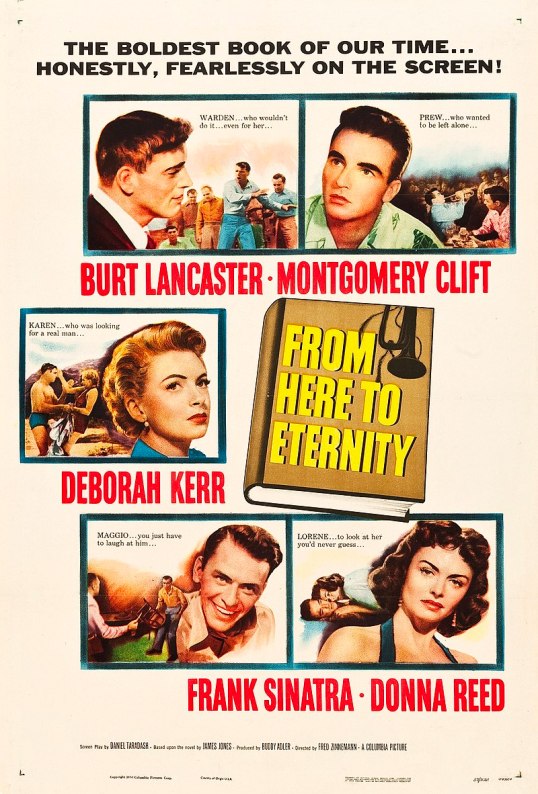
Lisa Marie Reviews An Oscar Winner: From Here To Eternity (dir by Fred Zinnemann)


“The boldest book of our time,” shouts the poster art for 1953’s From Here To Eternity, “honestly, fearlessly brought to the screen!”

And indeed, James Jones’s novel was brought to the screen about as boldly as a studio film could be brought in 1953.  The book told the story of several soldiers in the days immediately before the attack on Pearl Harbor.  The Production Code was still in effect and, as a result, a few changes were made to the film’s plot.  Donna Reed played Lorene, a character who is described as being a “hostess” at social club but who, in the book, worked at a brothel that was popular with the soldiers from a nearby army base.  In the book, an unfaithful husband gives his wife a venereal disease that leads to her getting a hysterectomy.  In the movie, Karen’s (Deborah Kerr) hysterectomy was the result of a miscarriage that occurred after she discovered her husband was being unfaithful.  The book was critical of the Army and featured officers who faced no consequences for their actions.  The movie definitely presents the enlisted men as being at the mercy of officers but the worst of the officers is ultimately disciplined.  The movie was made with the cooperation of the U.S. Army and, as a result, the film’s villains — like Captain Holmes (Philip Ober) and the monstrous Fatso Judson (Ernest Borgnine) — were portrayed as being aberrations who did not represent the Army as a whole.  That said, the film version of From Here To Eternity is still a powerful, moving, and daring film.  What couldn’t be shown on screen is still suggested.  One might not see the specifics of what Fatso Judson does to Maggio (Frank Sinatra) in the stockade but it’s not difficult to figure out.

The film follows one company of soldiers as they laugh, fight, and fall in love while stationed in Hawaii.  They spend time training for a war that most of them think will never come.  Captain Holmes is more concerned with his regimental boxing team than the prospect of going to war and is confused when Private Prewitt (Montgomery Clift) refuses to stop back into the ring.  Prewitt, who takes pride in his ability as a bugler, quit boxing after he blinded an opponent in the ring but Holmes doesn’t care.  Holmes wants another trophy for his office.  He orders Sgt. Warden (Burt Lancaster) to make life Hell for Prewitt until Prewitt agrees to box.  Warden, who has seen a lot of officers come and go and who has been tempted to become an non-commissioned officer himself, is having an affair with Holmes’s wife, Karen.  Meanwhile, Prewitt and his friend Maggio spend their time looking forward to the weekends they’re allowed to spend off the base.  Prewitt has fallen in love with Lenore but, as with all the men in From Here To Eternity, Prewitt’s true love is for the army.  Even with Holmes pressuring him to box, Prewitt’s loyalty is to the men with whom he serves.  There’s a lot of drama, a lot of death, and a lot of romance.  This is the film in which Burt Lancaster and Deborah Kerr make out on the beach while the tide rolls in.  But, when Pearl Harbor is attacked, all of the drama and all of the romance is forgotten as America goes to war.

From Here To Eternity is one of the best films of the 1950s and certainly one of the more worthy winners for Best Picture.  Intelligently directed, wonderfully acted, deliriously romantic, and finally rather sad, it’s a film that embraces the melodrama without ever hitting a false note.  Burt Lancaster’s rugged weariness, Montgomery Clift’s method sensitivity, Frank Sinatra’s naturalism, Ernest Borgnine’s crudeness, Deborah Kerr’s classiness, and Donna Reed’s earnestness all come together to create a film in which the characters feel real and alive.  Warden, Prewitt, Lenore, Karen, and Maggio are all interesting, multi-faceted people, trying to find some sort of happiness in the shadow of an inevitable war.  The viewer may sometimes have mixed feelings about their actions (and Borgnine’s Judson is one of the most loathsome roles that the normally likable Borgnine ever played) but you never cease to care about them and their stories.  With all of the characters and the affairs and the secrets, From Here To Eternity can feel like a soap opera but it’s also a portrait of a world that is on the verge of changing forever.

A few years ago, I attended a screening of From Here To Eternity at the Dallas Angelika.  This is a film that definitely deserves to be seen on the big screen.  From the famous scene on the beach to the attack on Pearl Harbor to the tragic final moments, this is a big movie that deals with big emotions and big moments.  It’s one of the best.