Lisa Marie Reviews An Oscar Nominee: Born On The Fourth of July (dir by Oliver Stone)


In 1989, having already won an Oscar for recreating his Vietnam experiences in Platoon, director Oliver Stone returned to the war with Born On The Fourth Of July.

Based on the memoir of anti-war activist Ron Kovic, Born on the Fourth of July stars Tom Cruise as Kovic.  When we first meet Kovic, he’s growing up on Long Island in the 50s and 60s.  He’s a clean-cut kid from a nice family.  He’s on the school wrestling team and he’s got a lot of friends.  When he was just 15, he heard John F. Kennedy telling people to ask what they can do for their country and he was inspired.  He decided he wanted to join the Marines, despite the fact that his father (Raymond J. Barry) was still haunted by the combat that he saw in World War II.  (In one of the film’s better scenes, a young Kovic notices that the elderly veterans marching in the Independence Day parade still flinch whenever they hear a firecracker.)  He enlists in the Marines after listening to a patriotic speech from a recruiter (played by Tom Berenger).  Ron runs through the rain to attend his prom and has one dance with Donna (Kyra Sedgwick), on whom he’s always had a crush.  There’s nothing subtle about the way that Stone portrays Kovic’s childhood.  In fact, one might argue that it’s a bit too idealized.  But Stone knows what he’s doing.  The wholesomenss of Kovic’s childhood leaves neither him nor the viewer prepared for what’s going to happen in Vietnam.

Vietnam turns out not to be the grand and patriotic adventure that Kovic thought it would be.  After Sgt. Kovic accidentally shoots one of his own men in a firefight, he is ordered to keep quiet about the incident.  After he is wounded and paralyzed in another firefight, Kovic ends up in a Hellish VA hospital, surrounded by men who will never fully recover from their mental and physical wounds.  Kovic is eventually returns home in wheelchair.  The film then follows Kovic as he goes from defending the war in Vietnam to eventually turning against both the war and the government.  At one point, he ends up with a group of disabled vets in Mexico and there’s a memorable scene where he and another paraplegic (Willem Dafoe) attempt to fight despite having fallen out of their chairs.  Eventually, Kovic returns to America and turns his anger into activism.

There’s nothing subtle about Born On The Fourth Of July.  It’s a loud and angry film and Oliver Stone directs with a heavy-hand.  Like a lot of Stone’s films, it overwhelms the viewer on a first viewing and it’s only during subsequent viewings that one becomes aware of just how manipulative the film is.  Tom Cruise gives a good performance as Ron Kovic but his transformation into a long-haired, profane drunk still feels as if it happens a bit too abruptly.  A good deal of the film centers on Kovic’s guilt about accidentally killing one of his men but the scene where he goes to the soldier’s family and asks them for forgiveness didn’t quite work for me.  If anything, Kovic came across as being rather self-centered as he robs the man’s mother and father of the belief that their son had at least died heroically in combat as opposed to having been shot by his own sergeant.  Did Kovic’s need to absolve himself really give him the right to cause this family more pain?  Born on the Fourth Of July is an effective work of agitprop.  On the first viewing, you’ll want to join Kovic in denouncing the military and demanding peace.  On the second viewing, you’ll still sympathize with Kovic while also realizing that he really owes both his mother and father an apology for taking out his anger on them.  By the third viewing, you’ll be kind of like, “Wow, I feel bad for this guy but he’s still kind of a jerk.”  That said, when it comes to making an effective political film, Adam McKay could definitely take some lessons from Oliver Stone.  Born On The Fourth of July is at its best when it simply captures the feeling of living in turmoil and discovering that the world is not as simple a place as you once believed.  As idealized as the film’s presentation of Kovic’s childhood may be, anyone who has ever felt nostalgia for an earlier and simpler world will be able to relate.

Oliver Stone won his second Best Director Oscar for Born On The Fourth Of July.  The film itself lost Best Picture to far more genteel version of the past, Driving Miss Daisy.


Retro Television Review: Miami Vice 3.15 “Duty and Honor”


Welcome to Retro Television Reviews, a feature where we review some of our favorite and least favorite shows of the past!  On Mondays, I will be reviewing Miami Vice, which ran on NBC from 1984 to 1989.  The entire show can be purchased on Prime!

This week, another figure from Castillo’s past comes to Miami.

Episode 3.15 “Duty And Honor”

(Dir by John Nicollela, originally aired on February 6th, 1987)

There is apparently some controversy over what this episode should be called.  When it originally aired in 1987, it was called The Savage, after the serial killer who is pursued by Castillo.  When the episode later turned up in syndication, the title was changed to Duty and Honor, a reflection of the fact that the episode links back to Castillo’s (and, to a lesser extent, Crockett’s) service in Vietnam.  Since the imdb has chosen to go with Duty and Honor, I’ve decided to do the same.

The episode opens in Saigon, in the early 70s.  A clean-shaved Castillo (with a pony tail!) investigates the ritualistic murder of a prostitute.  It’s one of several murders that have occurred over the past few days, with all of the victims being sex workers.  Jump forward to Miami in the 80s and prostitutes are now once again being murdered.  Castillo recognizes the M.O. and soon, Crockett and Tubbs are investigating the local VA.  The doctor (Gary Basaraba) refuses to compromise the confidentiality of what his patients have told him but he does allow Crockett and Tubbs to speak to some of them.  One of the patients talks about a mysterious man who was known as The Savage, who was used as an assassin by the CIA.  The Savage was obsessed with killing and hated women because one violent encounter led to him getting castrated.

Tranh (Haing S. Ngor), who investigated the Saigon murders with Castillo, comes to Miami and shows Castillo that, whenever an enemy or critic of the United States has been assassinated overseas, it’s always coincided with a serial killer targeting prostitutes.  Tranh believes The Savage has come to Miami to assassinate a South American activist who is in town to give a speech.  Tranh and Castillo’s investigation leads them to the Savage’s CIA handler, Jack Colman (Brad Sullivan).  Colman makes clear that he really doesn’t care what The Savage does on his own time.

And yes, The Savage (played by Michael Wright), is indeed in Miami and he is killing prostitutes.  As played by Wright, The Savage is one of the most frightening villains to show up on Miami Vice.  He’s a relentless and sadistic killer who has no control over his impulses.  The CIA turned him into a weapon of war and now that the war is over, he no longer has a place in the real world.  Instead, he’s a nightmare creature who exists to execute anyone who Colman considers to be a threat.

(Around the same time this episode aired, Michael Wright also played the high school gang lord in The Principal.)

Up until the final twist, this episode is Miami Vice at its best — dark, moody, thought-provoking, and morally ambiguous.  After spending most of the season staring at the floor, Edward James Olmos finally gets to be the center of the action.  Unfortunately, the film ends with Tranh revealing that he was actually a spy for North Vietnam and that he’s now a colonel in the Vietnamese army.  He leaves Castillo a note, saying that he hopes they can still be friends and promote the type of peaceful world where nations will not create men like The Savage.  And while I agree that the CIA should not be breeding assassins, I still have to say, what’s up with all the pro-commie crap this season, Miami Vice?

Anyway, other than that, this was a good episode.  I should mention that Helena Bonham Carter briefly appears as Sonny’s new girlfriend.  Apparently, she’ll be the center of next week’s episode.

Monday Live Tweet Alert: Join Us for Extreme Justice!


As some of our regular readers undoubtedly know, I am involved in hosting a few weekly live tweets on twitter and occasion ally Mastodon.  I host #FridayNightFlix every Friday, I co-host #ScarySocial on Saturday, and I am one of the five hosts of Mastodon’s #MondayActionMovie!  Every week, we get together.  We watch a movie.  We snark our way through it.

Tonight, for #MondayActionMovie, the film will be 1993’s Extreme Justice!

It should make for a night of fun viewing and I invite all of you to join in.  If you want to join the live tweets, just hop onto Mastodon, pull up Extreme Justice on YouTube, start the movie at 8 pm et, and use the #MondayActionMovie hashtag!

Enjoy!

Scenes That I Love: Mozart Meets The Emperor in Amadeus


Today is Mozart’s birthday so, of course, today’s scene from the day comes from 1984’s Amadeus.  In this scene, the Emperor (Jeffrey Jones) delivers his critique to Mozart (Tom Hulce) and anyone who has ever had to deal with an idiotic critic will be able to relate.

“There’s too many notes!”

What really makes this scene work, along with Hulce’s reaction, is Jones’s blandly cheerful manner.  The Emperor really thinks he’s being helpful!

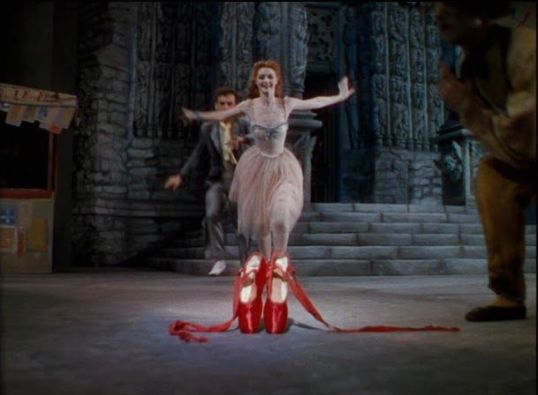
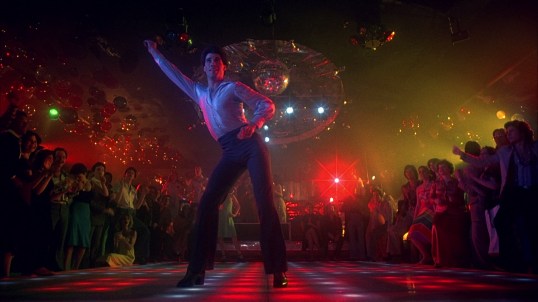
4 Shots From 4 Films: Special Dancing Edition


4 Shots From 4 Films is just what it says it is, 4 shots from 4 of our favorite films. As opposed to the reviews and recaps that we usually post, 4 Shots From 4 Films lets the visuals do the talking!

4 Shots From 4 Films

The Red Shoes (1948, dir by Michael Powell and Emeric Pressburger, DP: Jack Cardiff)

Saturday Night Fever (1977, dir by John Badham, DP: Ralf D. Bode)

Flashdance (1983, dir by Adrian Lyne, DP: Donald Peterman)

Chicago (2002, dir by Rob Marshall, DP: Dion Beebe)

Film Review: The Cardinal (dir by Otto Preminger)


The 1963 film, The Cardinal, opens with an Irish-American priest named Stephen Fermoyle (Tom Tyron) being instituted as a cardinal.

In a series of flashbacks, we see everything that led to this moment.  Stephen starts out as an overly ambitious and somewhat didactic priest who, over the years, is taught to be humble by a series of tragedies and mentors.  It’s a sprawling story, one that encompasses the first half of the 20th Century and, as he did with both Exodus and Advice and Consent, Preminger tells his story through the presence of several familiar faces.  Director John Huston plays the cardinal who takes an early interest in Stephen’s career.  Burgess Meredith plays a priest with MS who teaches Stephen about the importance of remaining humble and thankful.  When Stephen is in Europe, Romy Schneider plays the woman for whom he momentarily considers abandoning his vows.  When Stephen is assigned to the American South, Ossie Davis plays the priest and civil rights activist who teaches Stephen about the importance of standing up for those being oppressed.  In the days leading up to World War II, Stephen is sent to Austria to try to keep the local clergy from allying with the invading Nazis.  Stephen also deals with his own family drama, as his sister (Carol Lynley) runs away from home after Stephen counsels her not to marry a good Jewish man named Benny (John Saxon) unless Benny can be convinced the convert to Catholicism.  Later, when his sister becomes pregnant and Stephen is told that she’ll die unless she has an abortion, Stephen is forced to choose between his own feelings and teachings of the Church.  Along the way, performers like Dorothy Gish, Cecil Kellaway, Chill Wills, Raf Vallone, Jill Haworth, Maggie McNamara, Arthur Hunnicut, and Robert Morse all make appearances.

All of the familiar faces in the cast are used to support Tom Tryon and Tryon needs all the support that he can get.  Despite Otto Preminger’s attempts to make Tom Tyron into a star, Tryon eventually retired from acting and found far more success as a writer of the type of fiction that Stephen Fermoyle probably would have condemned as blasphemous.  Tryon gives a stiff and unconvincing performance in The Cardinal.  The entire film depends on Tryon’s ability to get us to like Stephen, even when he’s being self-righteous or when he’s full of self-pity and, unfortunately, Tryon’s stiff performance makes him into the epitome of the type of priest that everyone dreads having to deal with.  Tryon gives such a boring performance that he’s overshadowed by the rest of the cast.  I spent the movie wishing that it would have spent more time with John Saxon and Burgess Meredith, both of whom give interesting and lively performances.

The Cardinal is a long and rather self-important film.  The same can be said of many of Preminger’s films in the 60s but Exodus benefitted from the movie star glamour of Paul Newman and Eva Marie Saint and Advice and Consent was saved by an intelligent script.  The Cardinal, on the other hand, is a bit draggy and makes many of the same mistakes that many secular films make when they try to portray Catholicism.  Oddly enough, The Cardinal received more Oscar nominations than either Exodus or Advice and Consent.  Indeed, Preminger was even nominated for Best Director for his rather uninspired work here.  Considering the number of good films for which Preminger was not nominated (Anatomy of a Murder comes to mind), it’s a bit odd that The Cardinal was the film for which he was nominated.  (Of course, in 1944, the Academy got it right by nominating Preminger for his direction of Laura.)  The Cardinal is largely forgettable, though interesting as a type of self-consciously “big” films that the studios were churning out in the 60s in order to compete with television and the counterculture.

Film Review: Exodus (dir by Otto Preminger)


First released in 1960 and based on a novel by Leon Uris, Otto Preminger’s Exodous is two films in one.

The first half of the film takes place in Cyprus in the days immediately following World War II.  A young war widow named Kitty (Eva Marie Saint) is sightseeing when she learns of the Karaolos Internment Camp, where the British are interning thousands of Jewish refugees who demand to be allowed to go to the land that will eventually become the State of Israel.  Kitty visits with General Sutherland (Ralph Richardson), who oversees the camp and who is rumored to secretly be Jewish because of his relatively benevolent attitude towards the internees.  Disgusted by the anti-Semitism displayed by many of the British officers (one of whom is played by Kennedy in-law Peter Lawford), Kitty volunteers at the camp and learns about the Holocaust from those who survived it.  She also meets Ari Ben Caanan (Paul Newman), a former officer in the British army.  Ari manages to get control of a cargo ship, one that is renamed Exodus.  Six hundred refugees stage a hunger strike, vowing that they will willingly starve to death rather than be returned to Europe.

The second part of Exodus takes place in what will become the modern State of Israel.  It follows Ari, Kitty, and several of the passengers of the Exodus as they adjust to life and continue to fight for a land of their own, despite the opposition of the British and much of the rest of the world.  Karen (Jill Haworth) is a young woman who searches for her father, a brilliant man who has been driven into a nearly catatonic state by the horrors of the Holocaust.  Dov Landau (Sal Mineo) is an explosives expert who survived Auschwitz as a Sonderkommando and who was repeatedly raped by the guards at the camp.  Dov joins the Irgun, a paramilitary organization that the British consider to be terrorists.  Leading the Irgun is Ari’s uncle, Akiva (David Opatoshu), and Dov soon finds himself being targeted by both the British and the Arabs who, despite the moderating efforts of men like Taha (John Derek, who would later direct Ghosts Can’t Do It), want to violently force the Jews out of the land.

Legend has it that, after a private screening on Exodus, comedian Mort Sahl turned to director Otto Preminger and said, “Otto, let my people go.”  And it’s true that Exodus is a very long film.  Preminger, who started out making film noirs like Laura, spent the latter part of his career making “important” epics and, like many Golden Age directors struggling to compete with television and the 60s counterculture, he tended to make long, star-studded films that dealt with current events and which pushed the envelope just enough to be controversial without actually being radical.  However, I would argue that the three-hour running time of Exodus is justified.  To understand why Ari, Dov, Karen, and the other passengers of the Exodus would rather risk their lives by staying in what will become the State of Israel, one has to understand both what they went through to get there and also the anti-Semitism that they faced even in post-World War II Europe.  If Exodus were made today, it would be a mini-series.  Since it was made in 1960, it was instead a 3-hour film with an intermission.

Exodus holds up relatively well, with the sprawling action anchored by the presence of a cast of familiar faces.  Paul Newman and Eva Marie Saint bring a good deal of movie star glamour to scenes that would have otherwise just been dry exposition.  The film’s heart truly belongs to Jill Haworth and Sal Mineo, both of whom bring two life characters who have very differing views of the world.  Karen remains an optimist, one who is convinced that people can live together.  Dov, fueled by his own guilt and anger, has no room for negotiations and compromises.  Mineo received his second and last Oscar nomination for his performance in Exodus, though he lost to Peter Ustinov’s showy turn in Spartacus.  Exodus itself was clearly made with a hope for Oscar glory.  While Exodus did pick up a handful of nominations, it was left out of the five movie Best Picture slate.  The Academy only had room for one historical epic and they went for John Wayne’s The Alamo.  The eventual winner was The Apartment, the best of the nominated films.  (Indeed, even if Exodus had taken the Alamo’s spot, The Apartment would still be the best of the nominees.)  The Oscars aside, Exodus remains a good example of the type of epic filmmaking that once defined the Hollywood studios.

Late Night Retro Television Review: Degrassi High 1.9 & 1.10 “Sixteen”


Welcome to Late Night Retro Television Reviews, a feature where we review some of our favorite and least favorite shows of the past!  On Sunday, I will be reviewing the Canadian series, Degrassi High, which aired on CBC and PBS from 1989 to 1991!  The series can be streamed on YouTube!

This week, we have a special one-hour episode of Degrassi High!

Episode 1.9 and 1.10 “Sixteen”

(Dir by Kit Hood, originally aired on January 9th, 1990)

Everyone’s turning sixteen at Degrassi High and they’re all dealing with in their own different ways.

Snake and Joey, for instance, are old enough now to take Driver’s Education.  Snake is nervous. Joey says that he’s been driving since he was twelve.  Both of them end up failing their driving test.  Don’t feel bad, guys!  It took me a few tries too!  Snake actually turns out to be an even worse driver than Joey and even takes out a cardboard family at one point.  Thanks to Joey and Snake’s bad driving, their poor driving instructor ends up with two black eyes and wearing a neck brace.  Nancy (Arlene Lott) finally get her first storyline in forever as she easily shows up Joey and Snake and gets her license on the first try.

(When I was learning how to drive, the instructor claimed that I had a lazy eye and yelled at me so much that I went home in tears.  My mom went to the driving school and raised Hell.  I never had to drive with that instructor again.)

Michelle, meanwhile, celebrates her birthday by moving out of her house.  Apparently, in Toronto, you only have to be sixteen to leave your parents and live on your own.  Michelle moves out because her racist father (Richard Krovsky) is upset with her for dating BLT.  Michelle gets her own apartment but she also has to take a job to pay the rent and she soon finds herself exhausted and sleeping through school.  Concerned with his physical and academic well-being, BLT sets aside his differences with Michelle’s father and tells him where to find her.  Michelle and her dad have a conversation.  Michelle is going to continue to live on her own but her father is going to help with the rent.  So …. okay.  I mean, Michelle left him because she didn’t want to live under her father’s rules and that was understandable because Michelle’s father really is a jerk.  But now that she’s on her own, Michelle’s father is going to pay her rent.  So, presumably, Michelle is once again in a position where her Dad can make the rules.  What if he tells her that he won’t pay her rent if she keeps seeing BLT?

While that’s going on, Lucy shoots a video for LD’s 16th birthday.  LD is still in the hospital, battling Leukemia.  LD doesn’t want anyone to know that she’s sick or that she’s lost all of her hair.  Still, Lucy does tell the Farrell twins about what’s going on.  Anyway, there’s a sweet scene in which Lucy, the twins, and Alexa visit LD in the hospital and bring her a birthday cake.  It was a nice scene and well-acted by Anais Granofsky (who plays Lucy) and Amanda Cook (who plays LD).  This episode was LD’s final appearance on Degrassi High which …. well, that’s kind of ominous, isn’t it?

Finally, Alexa can only watch helplessly as everyone announces that they will be missing her sweet sixteen birthday party.  Even her boyfriend, Simon, is going to be busy filming a commercial on Alexa’s birthday.  “Fine!” Alexa shouts, after cancelling her part, “I’ll be fifteen forever!”  In fact, the cake that Alexa brings to the hospital for LD was actually supposed to be for Alexa’s party.  “I’ll just have my mother bake another,” Alexa says.  Good for you, Alexa!

This was a bit of an uneven episode.  I actually preferred the driving class scenes to all of the birthday drama.  Of course, as a longtime Degrassi fan, I know that Joey is going to grow up to be a used car salesman.  Watching him struggle to drive made me smile.

Next week: Caitlin discovers that Claude is no good!  It’s about time!